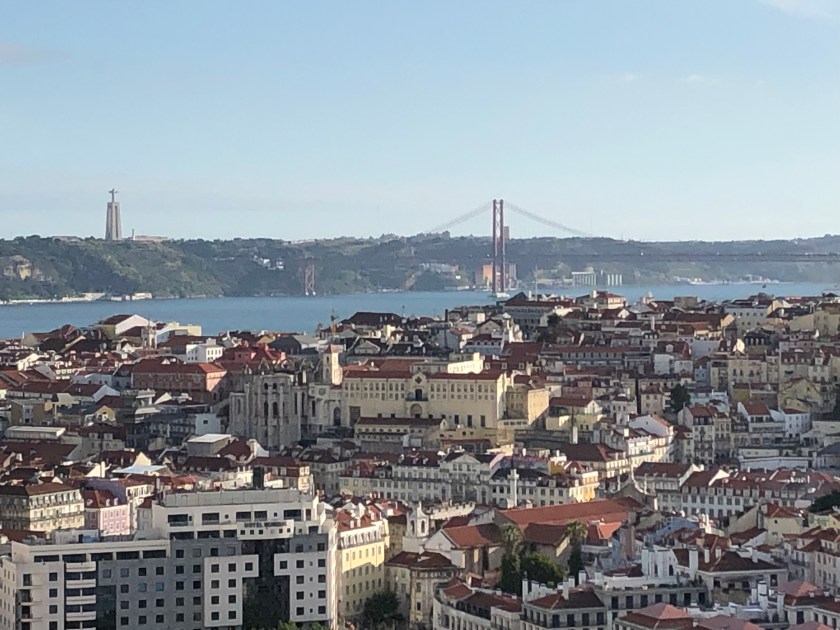
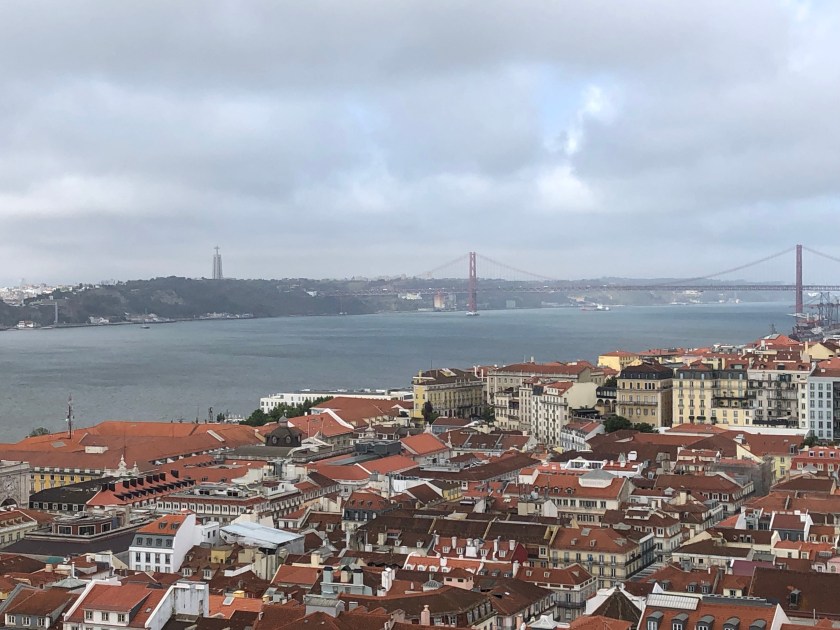
After a week in the bustling city of Lisbon, it was a relief to escape into the Portuguese countryside. We left via the Ponte 25 de Abril, almost the spitting image of the Golden Gate Bridge, for the region of the Alentejo, about a 90 minute drive southeast.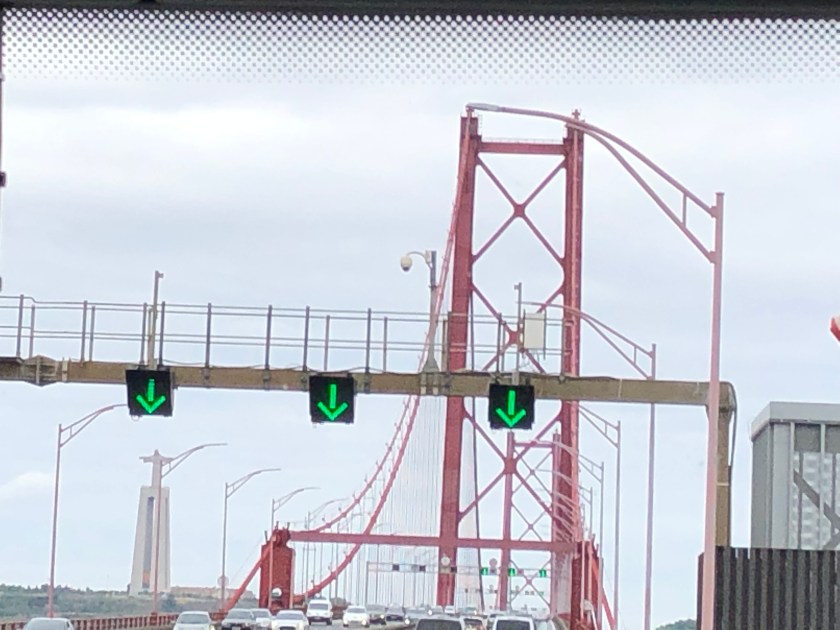
The landscape gradually changes from verdant hills to flat dry fields of wheat, vineyards, and farms of cork oak trees and eucalyptus groves. Nests of storks can be seen perched on high tension electric towers because these fields provide a never ending supply of bugs to eat.
We arrived at our hotel, the Mar d’Ar, located just inside the old town, at around 10:30 am. This five-star hotel opened in 2008 and was previously a 16th century palace. The remodel turned it into a sleek modernist structure with a portion of the town’s medieval aqueduct in its garden.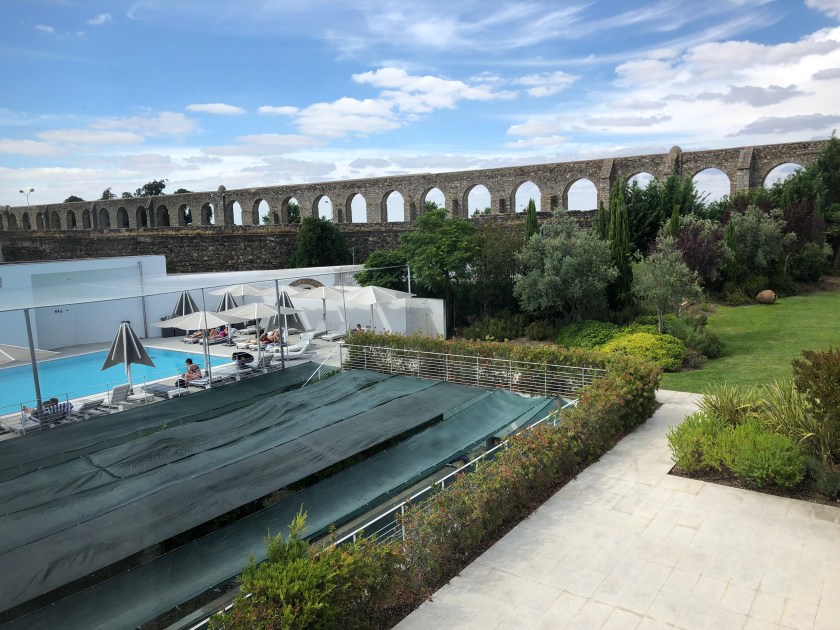
Our local guidenfor the morning walking tour was María, a charming woman with a wicked sense of humor and the characteristic demeanor of someone of the Alentejo (i.e. slow and deliberate and never in a hurry).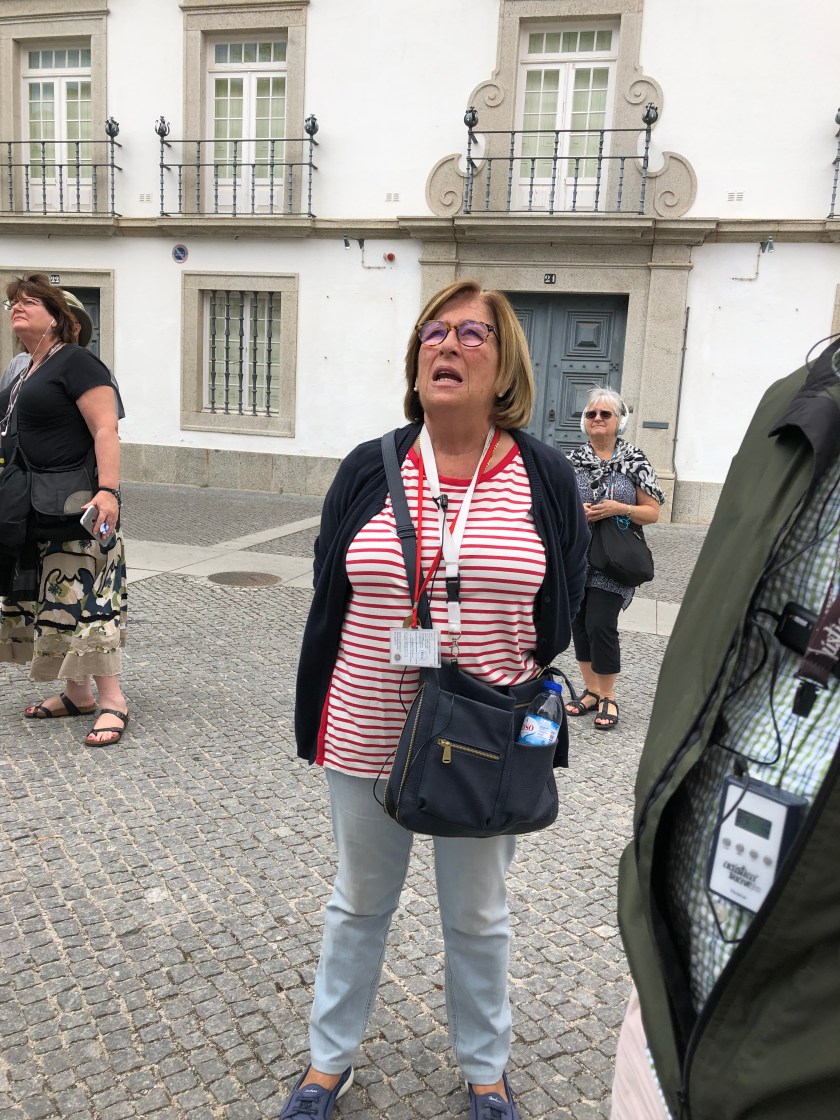
This town dates back to the time of the Romans (2nd Century BC) but megalithic ruins dating back to 4000 BC can be found in the area. The old town is surrounded by a 16th century aqueduct that was built on the remains of an ancient Roman one.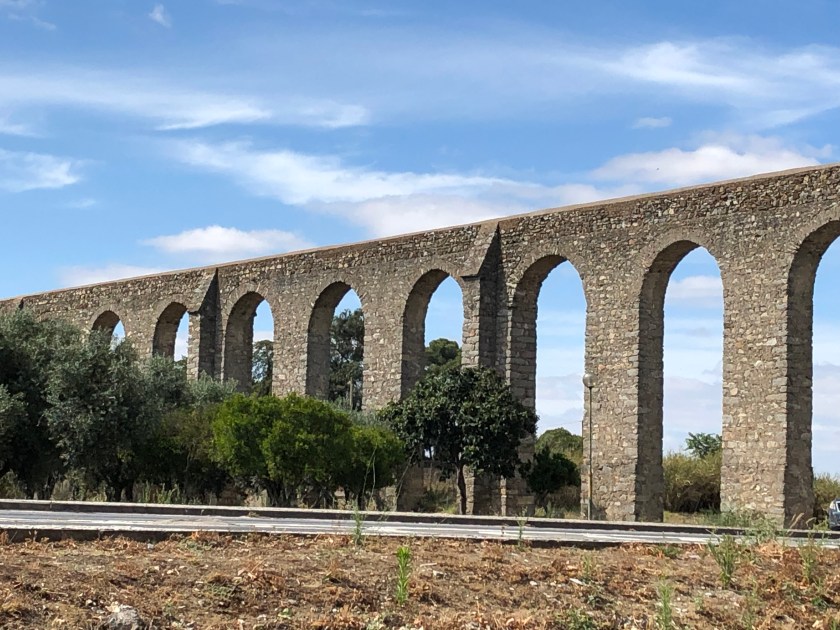
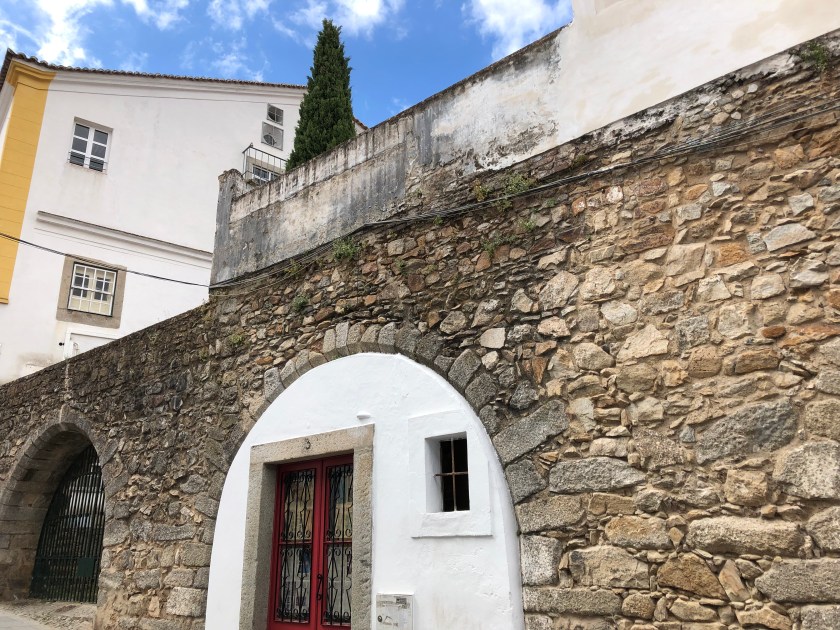
The architecture shows a Moorish influence, with arched and wrought iron balconies and the buildings are whitewashed and painted yellow and blue.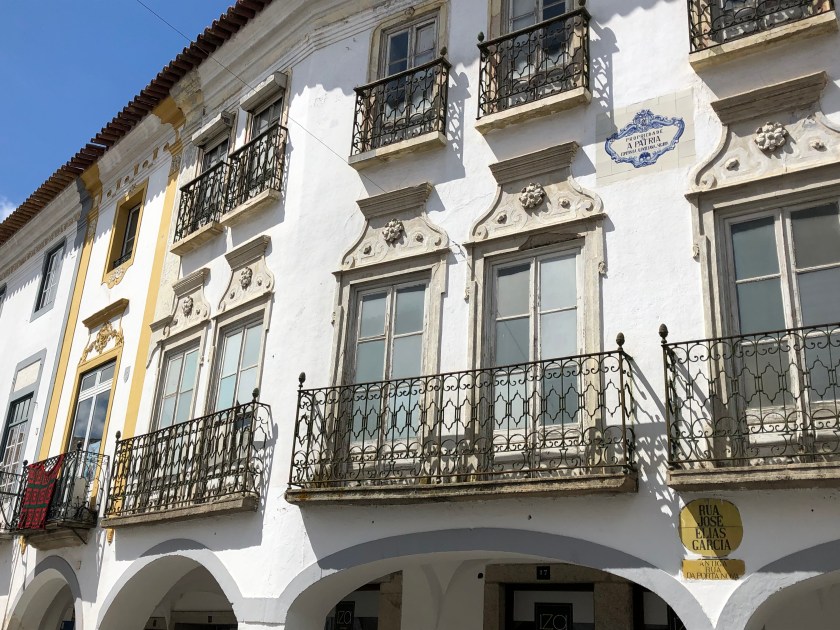
We saw the remnants of a Roman temple at the top of the town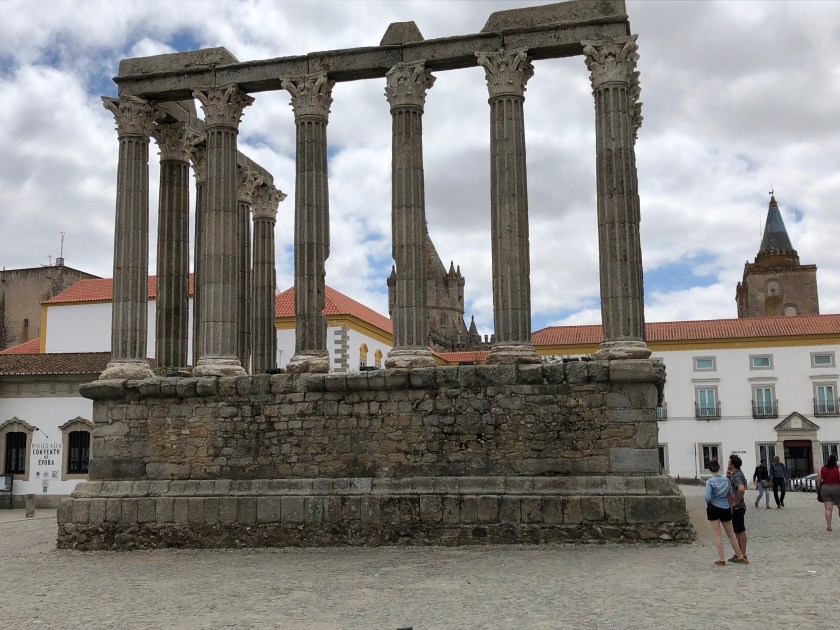
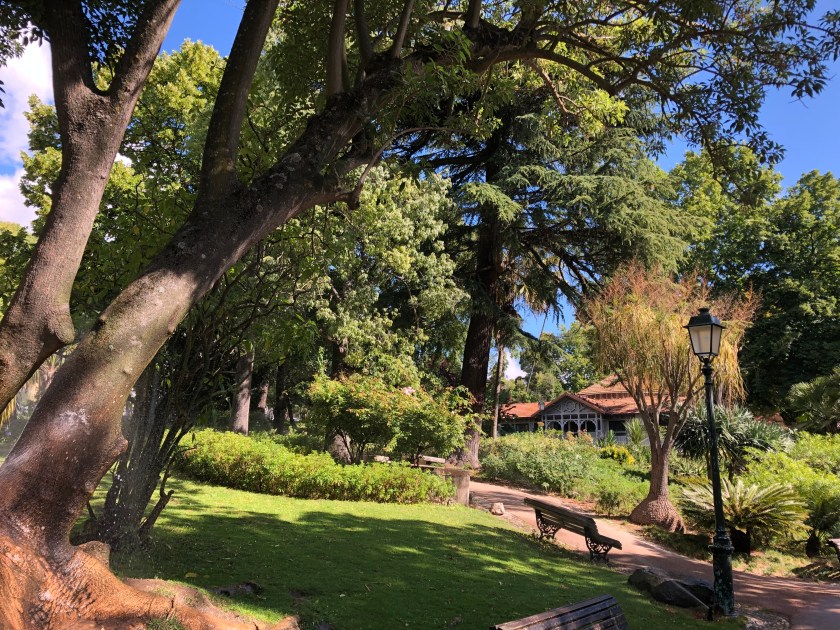
and there was an adjacent park with a magnificent view of the surrounding countryside.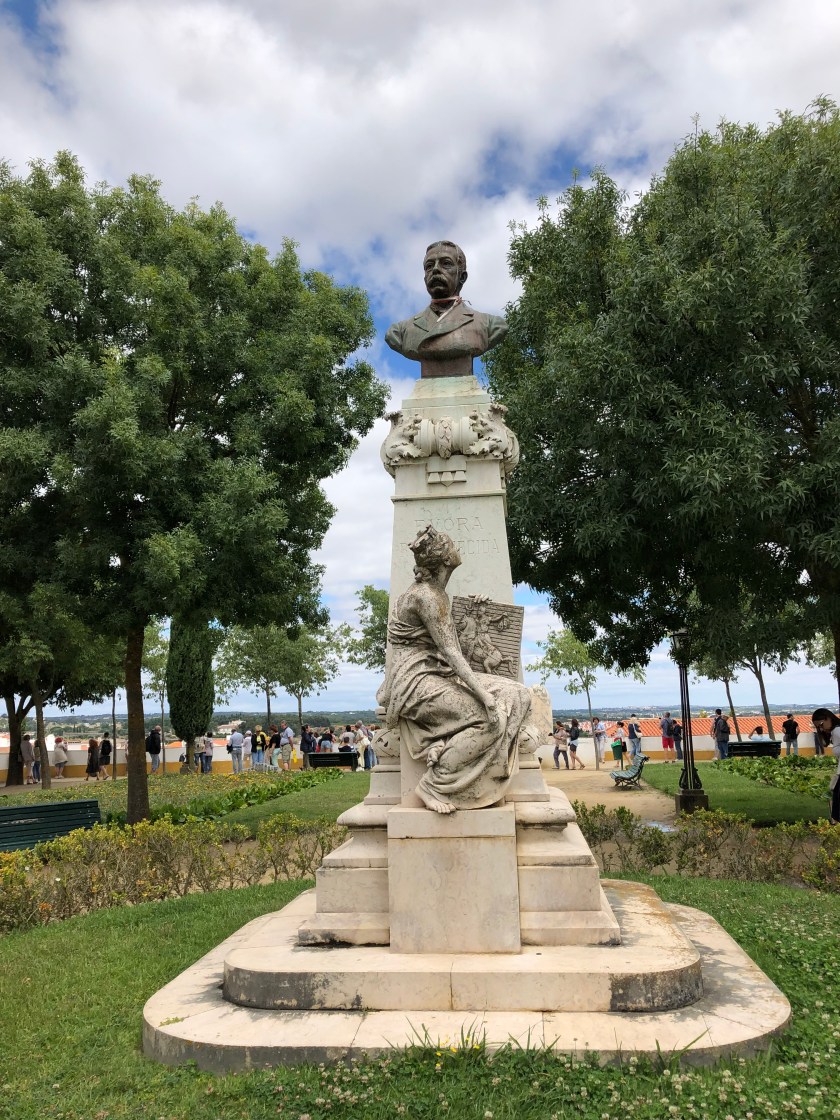
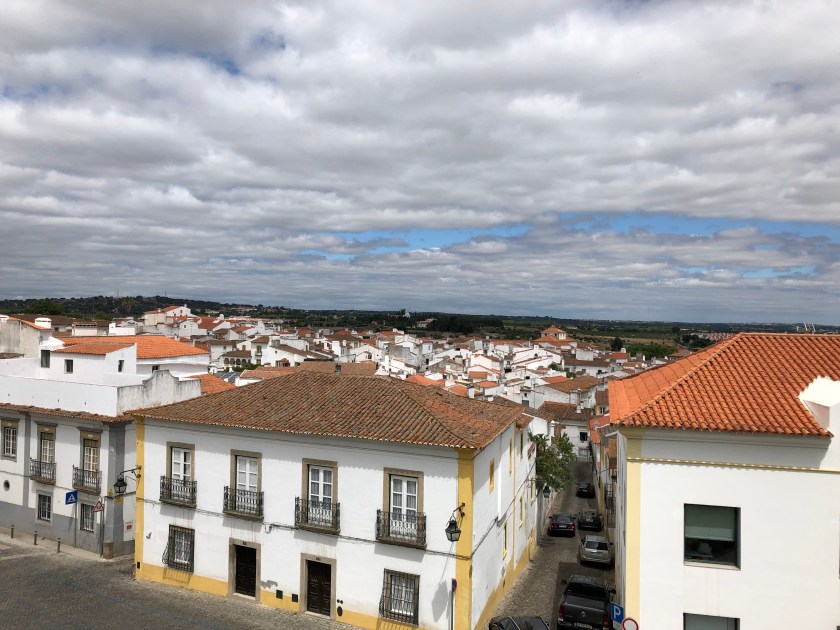
Other sights on our walking tour included the Church of St. James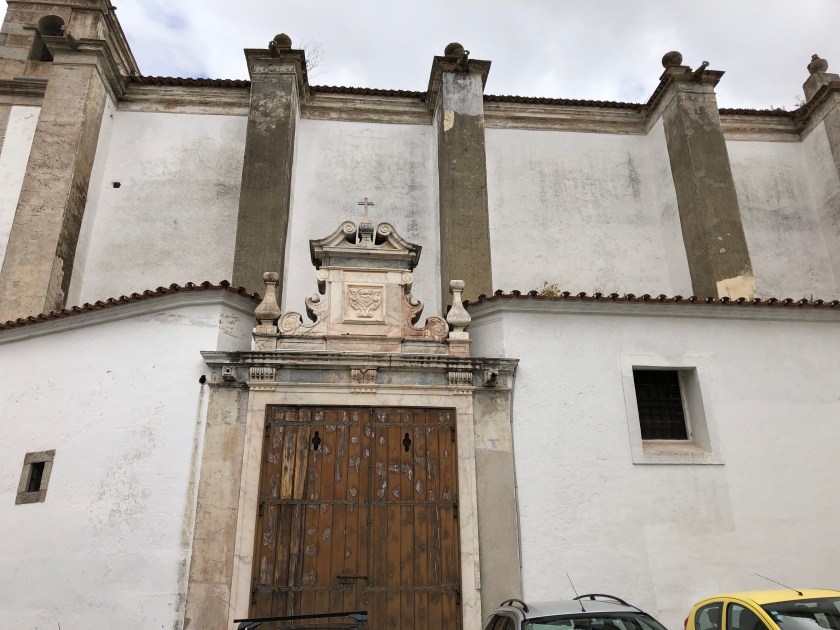
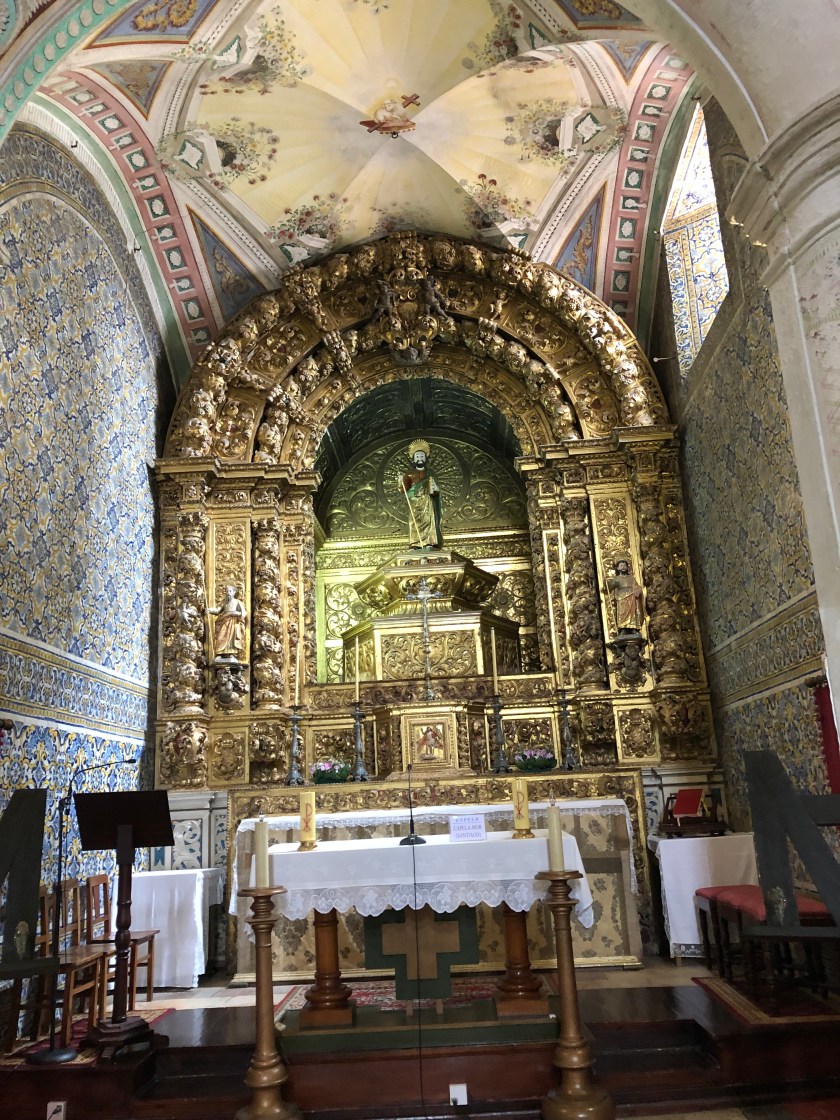
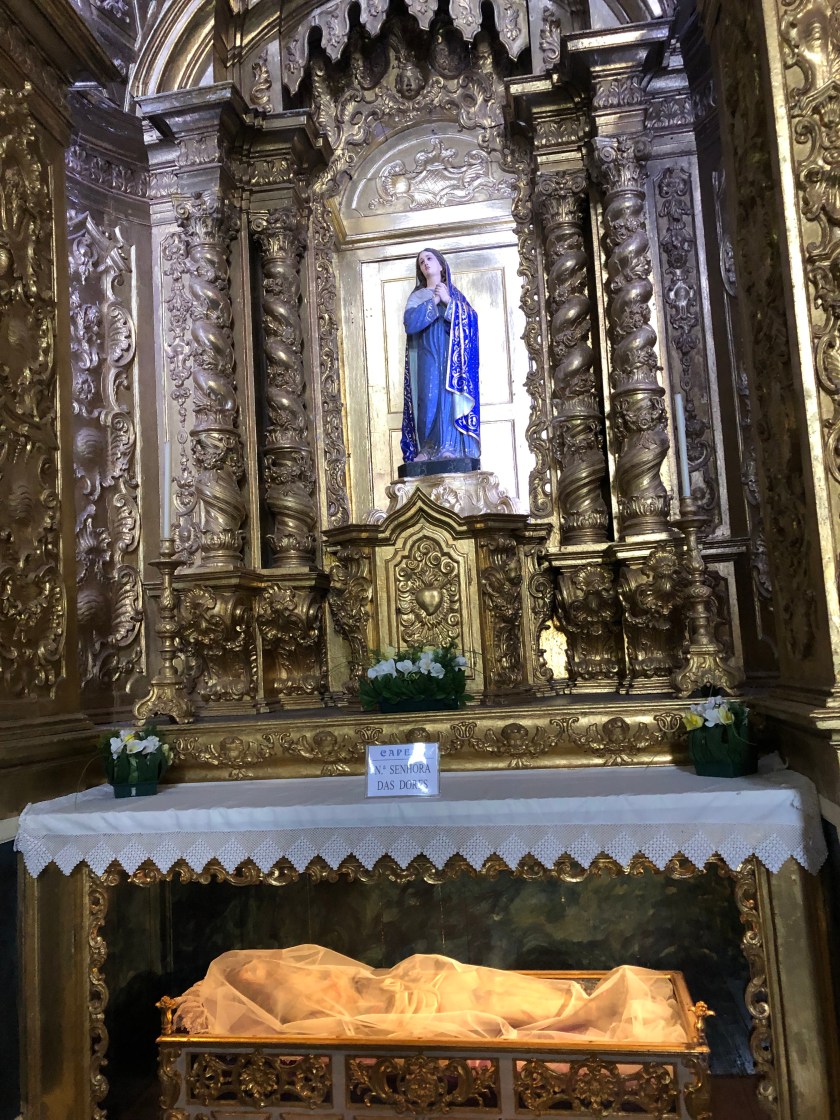
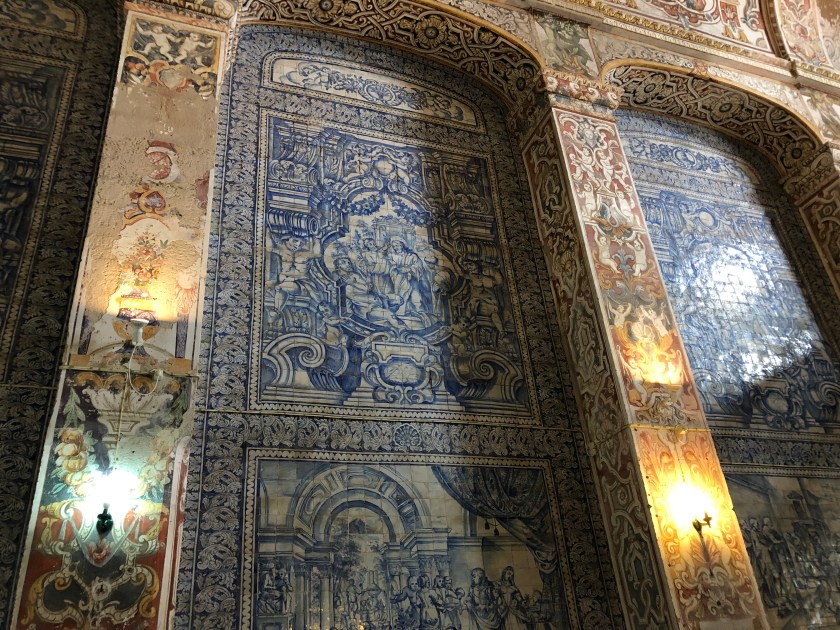
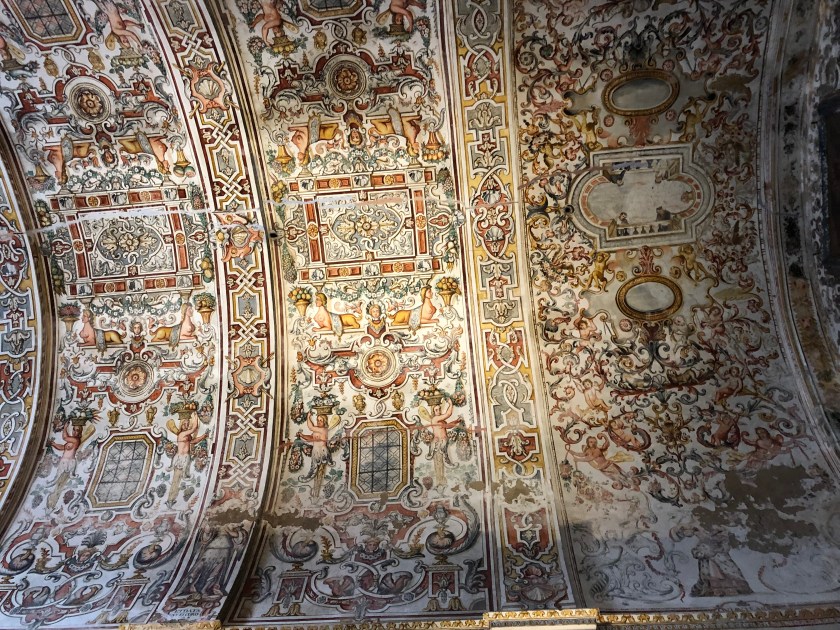
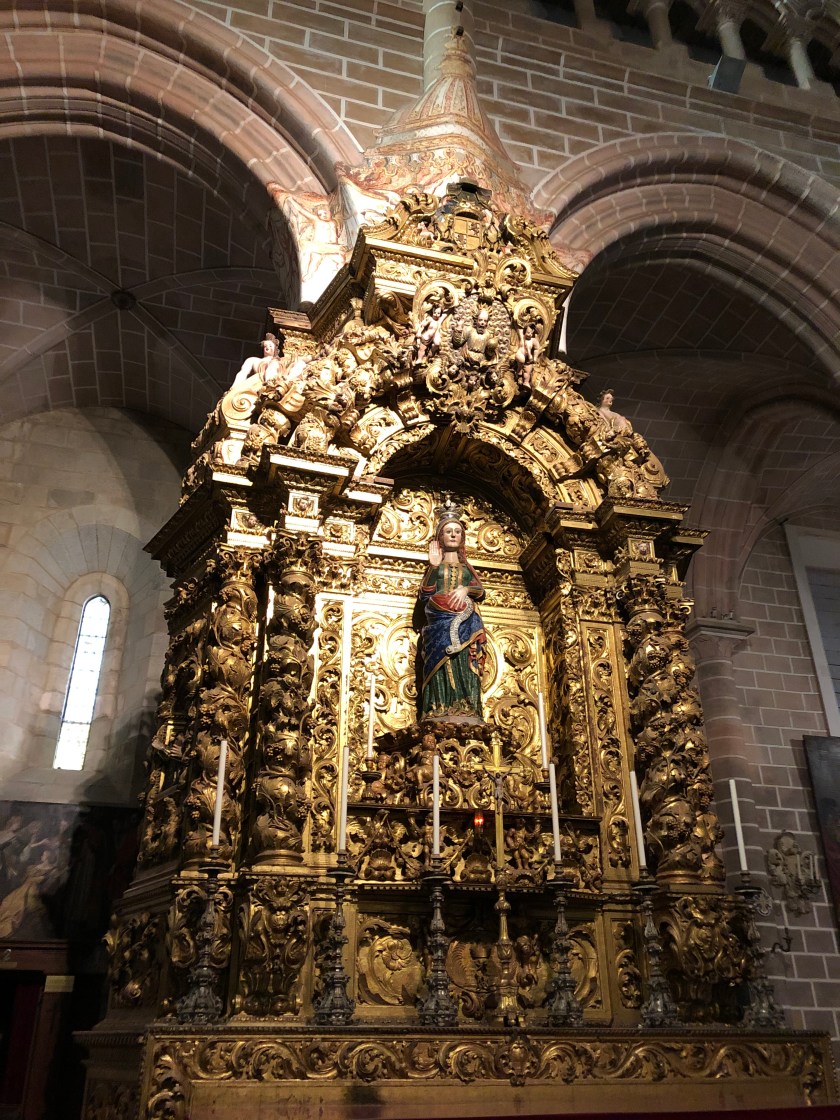
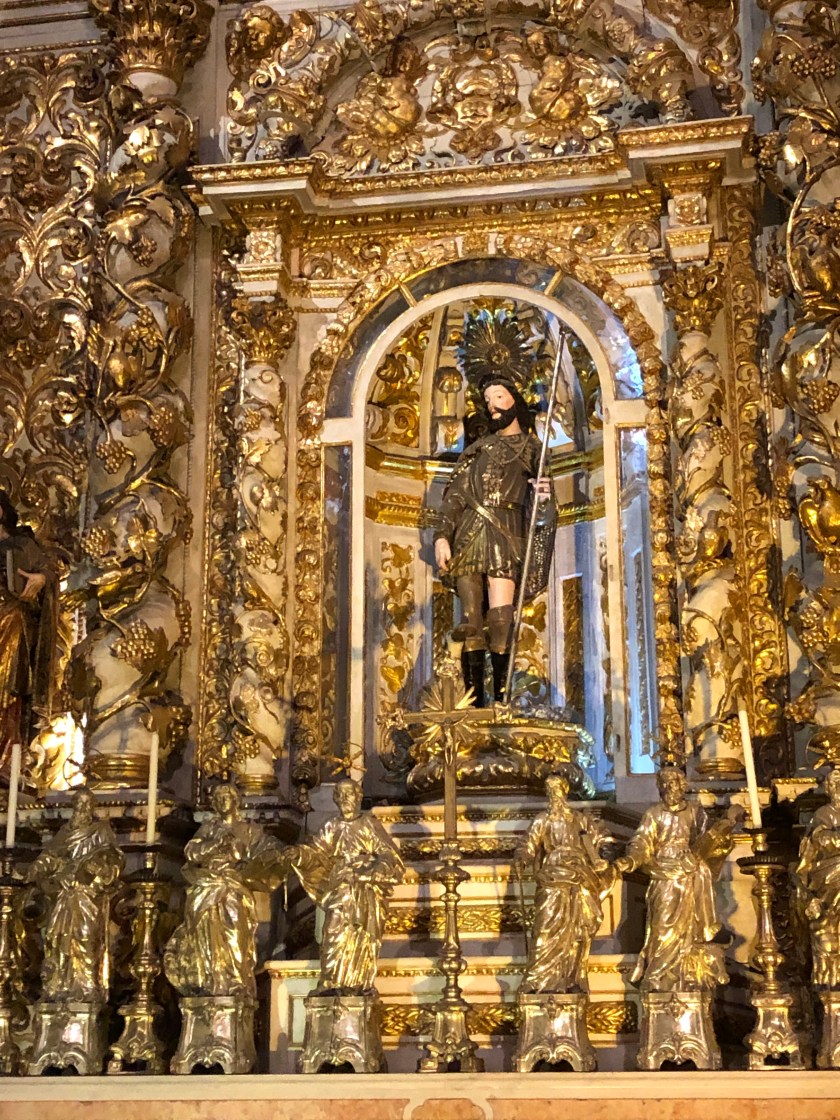
with its magnificent Baroque altar and chapel, tile covered walls and painted ceiling; the Basilica of the Virgin of the Assumption, built in the 12th-13th centuries on the remains of a Moorish mosque in the Romanesque-Gothic style with its unusual statue of a pregnant Virgin Mary,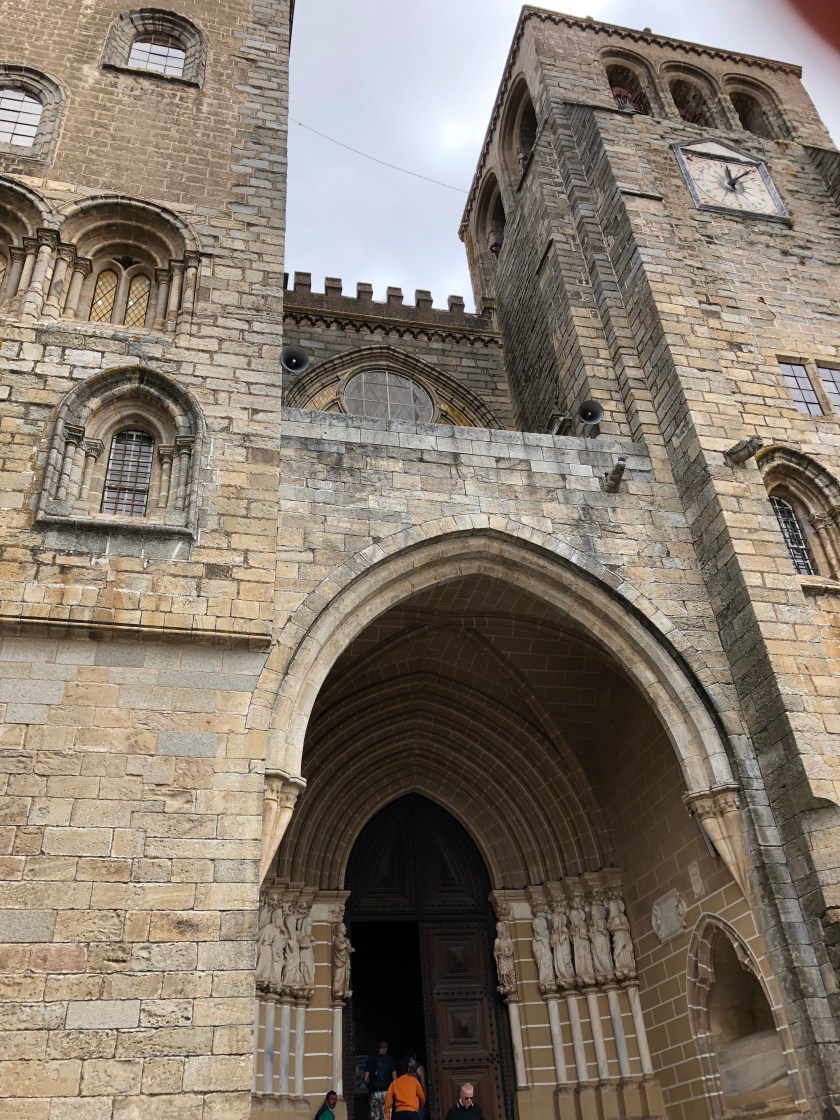
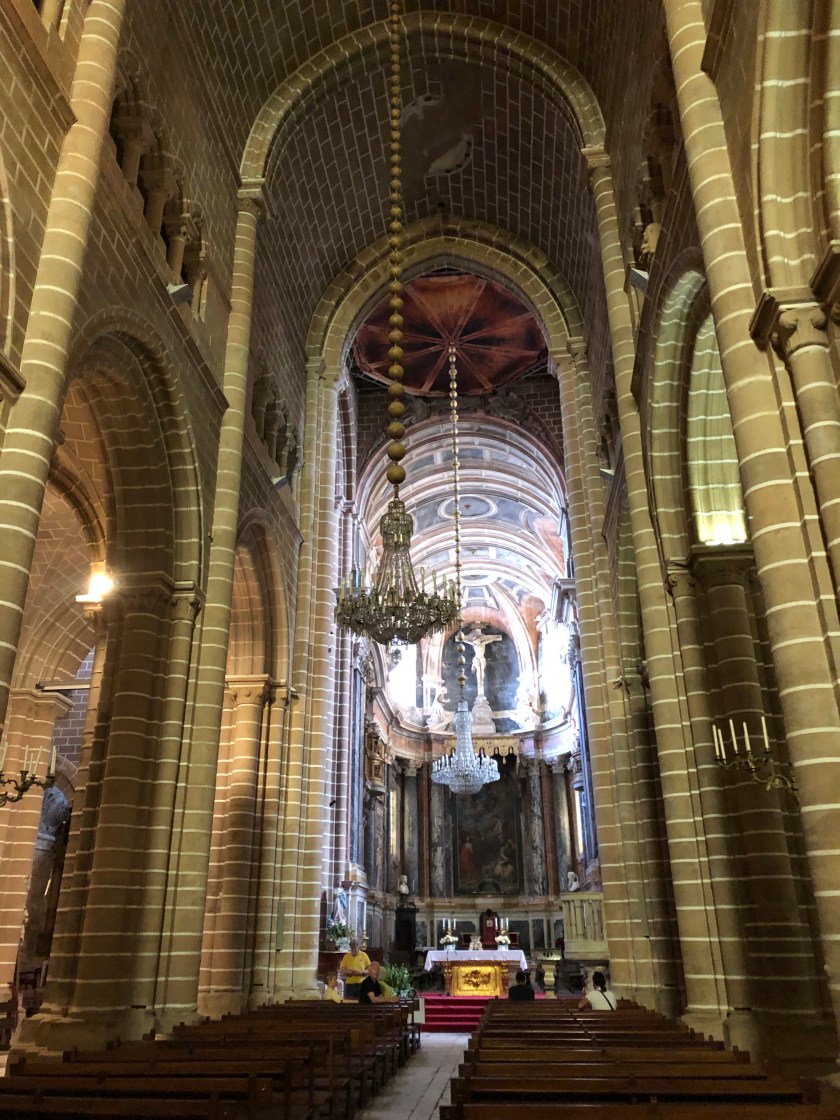
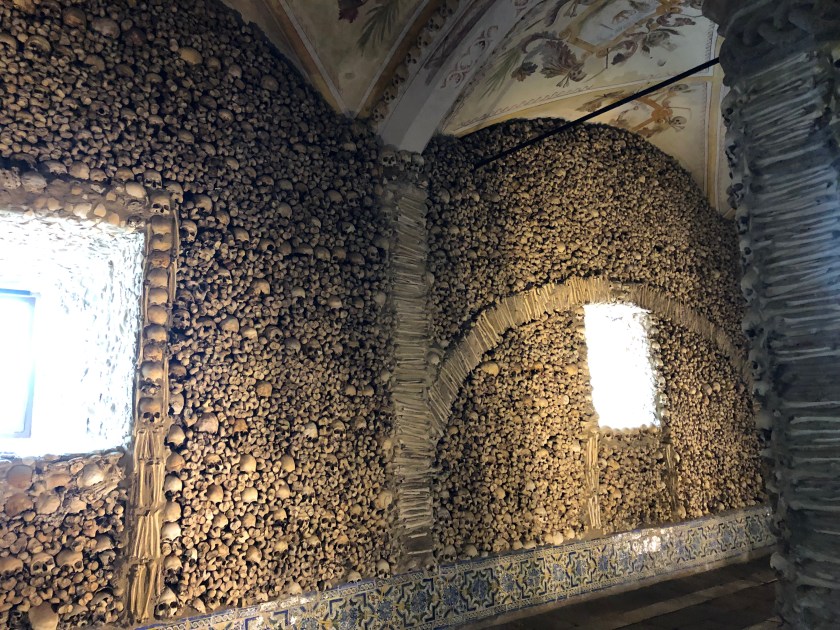
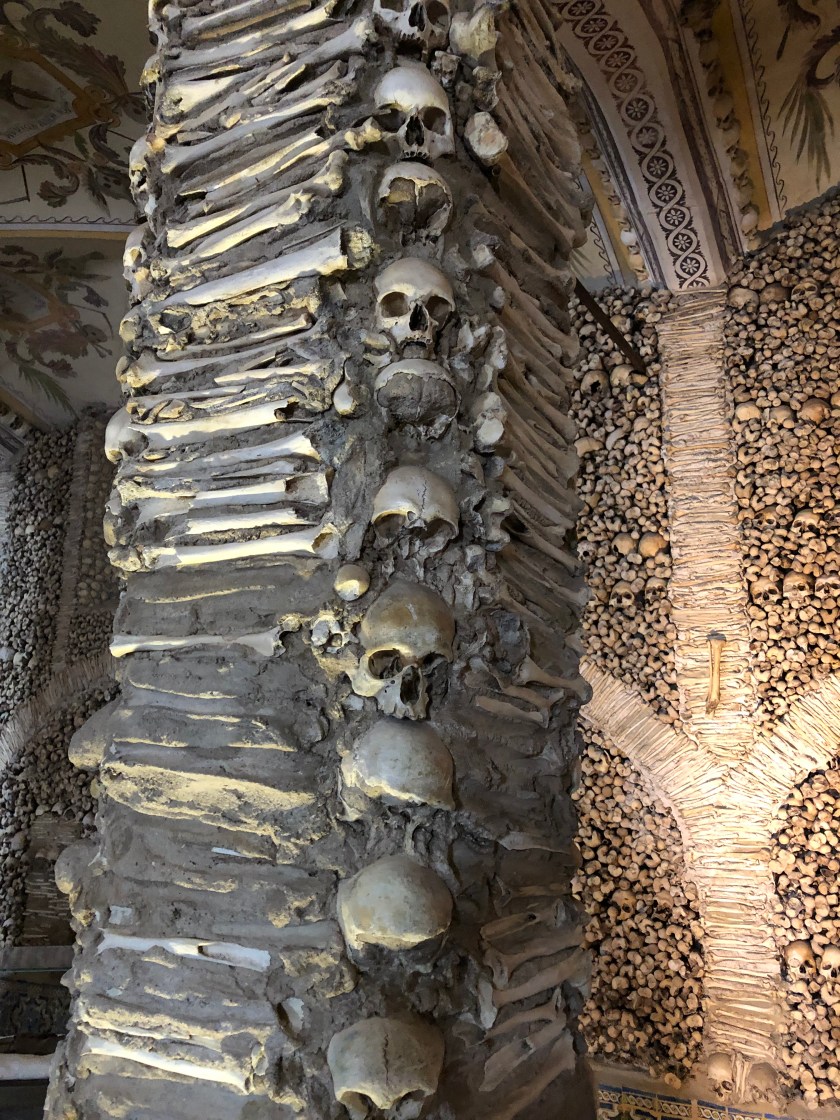
and the Chapel of the Bones in the Cloister of the Church of St. Francis Assisi.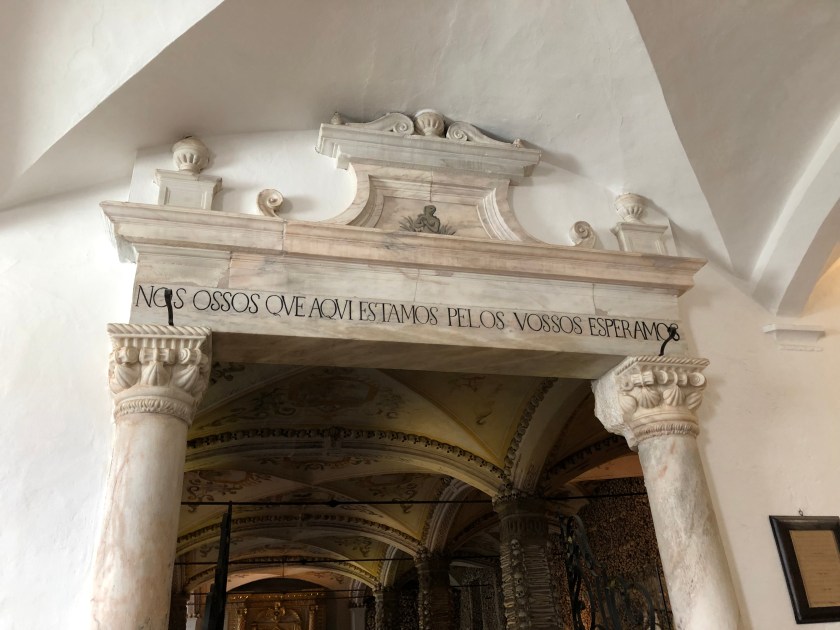
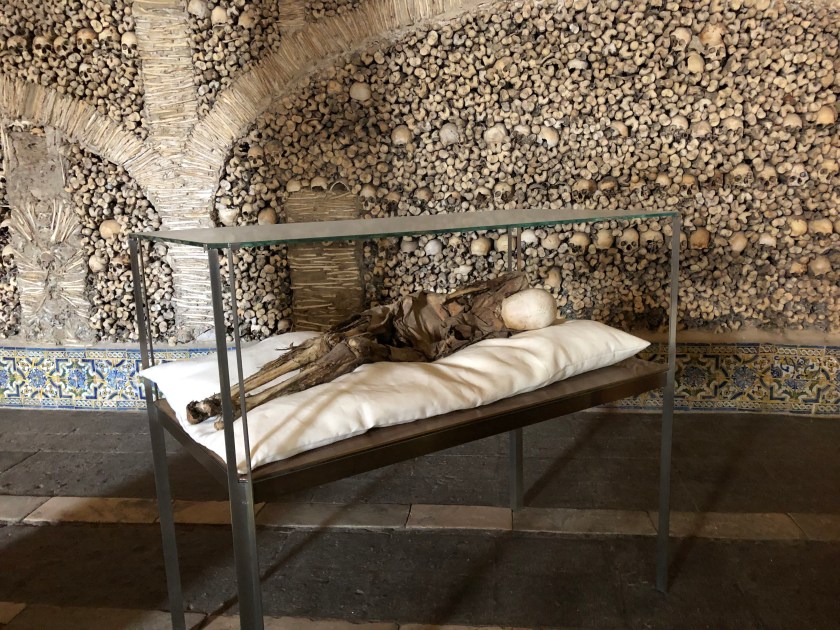
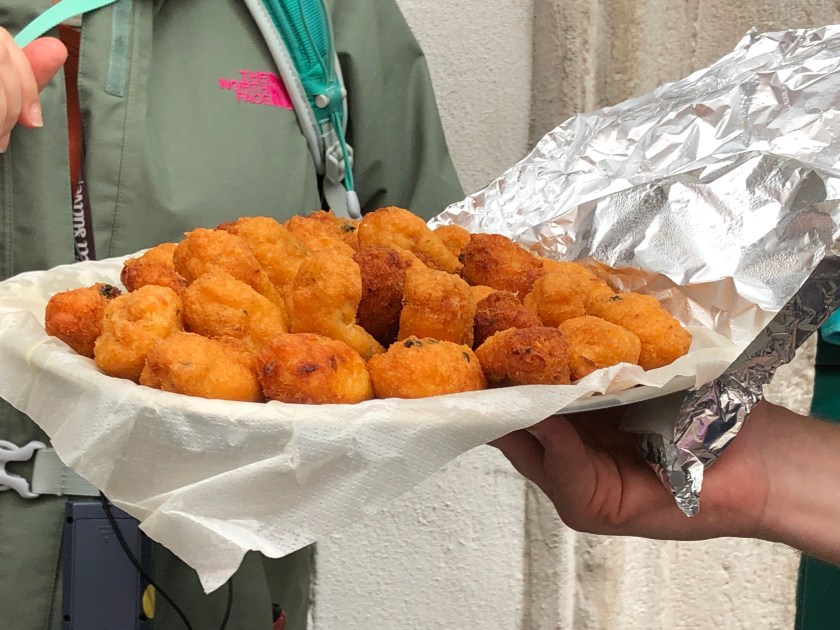
Midway through the tour, Raphael, our Rick Steves tour guide, surprised us with an impromptu treat of queijadas de Évora- a cheesecake-like pastry.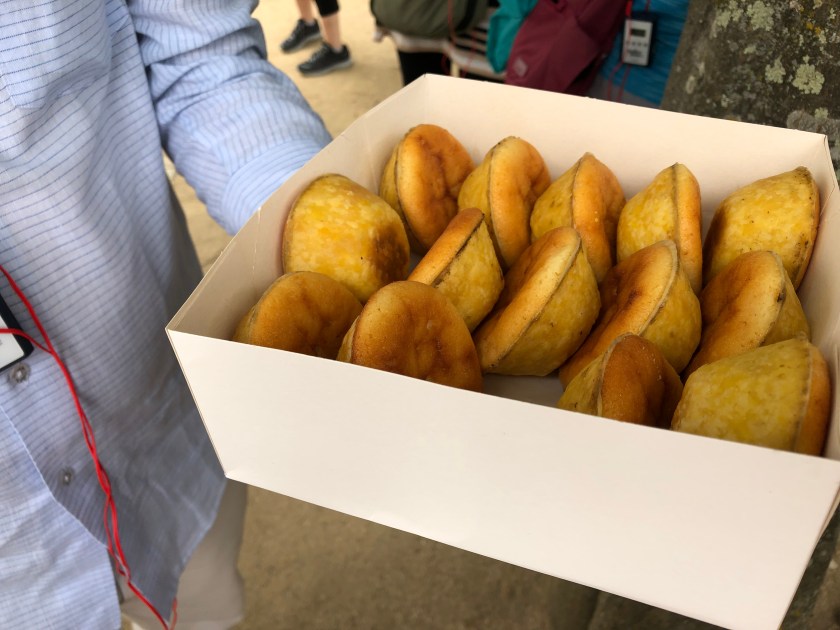
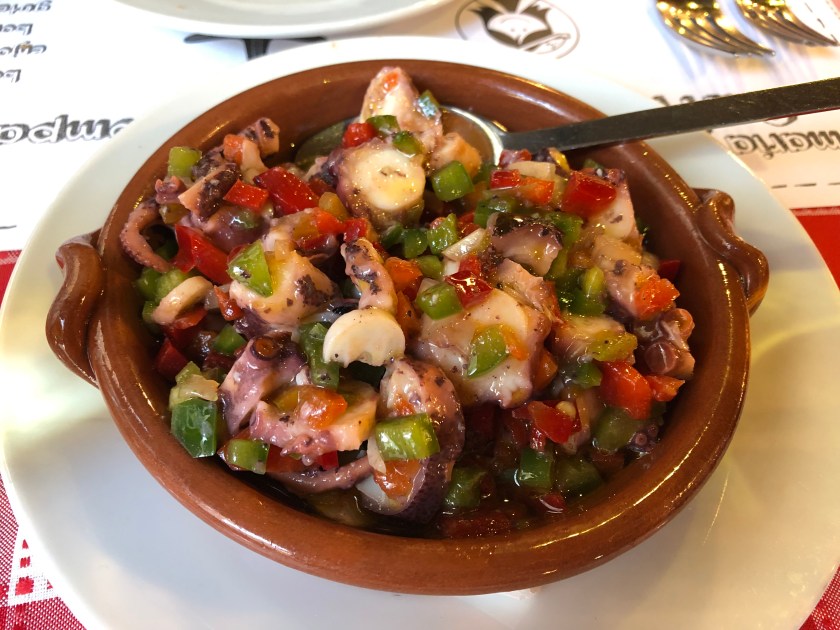
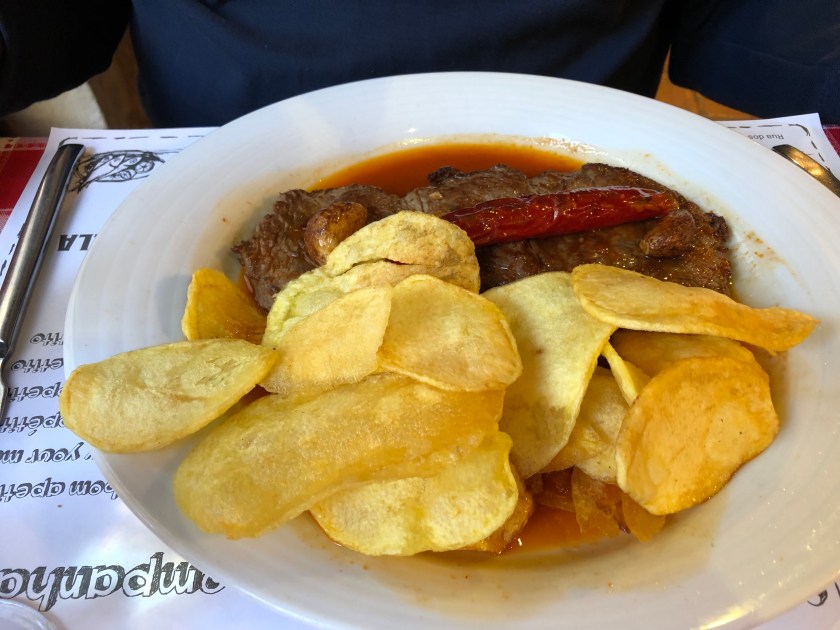
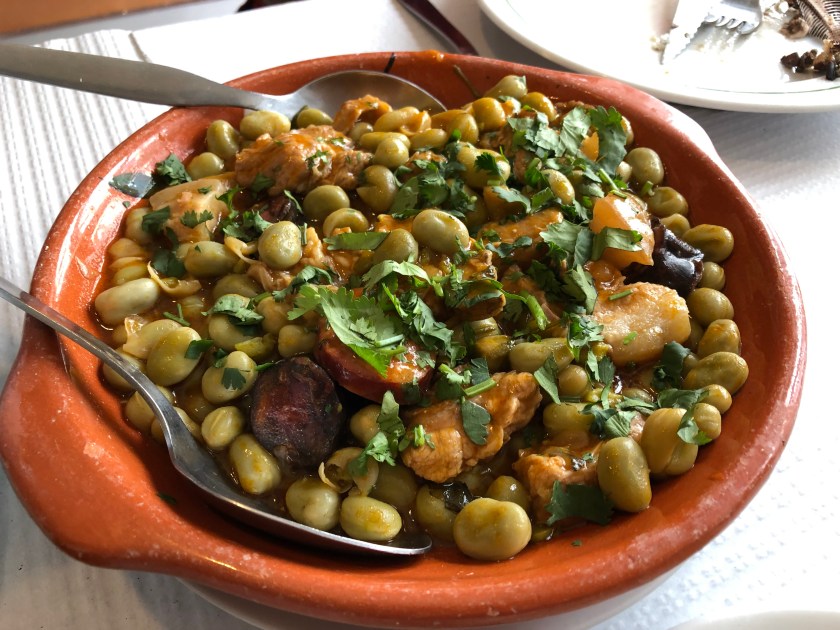
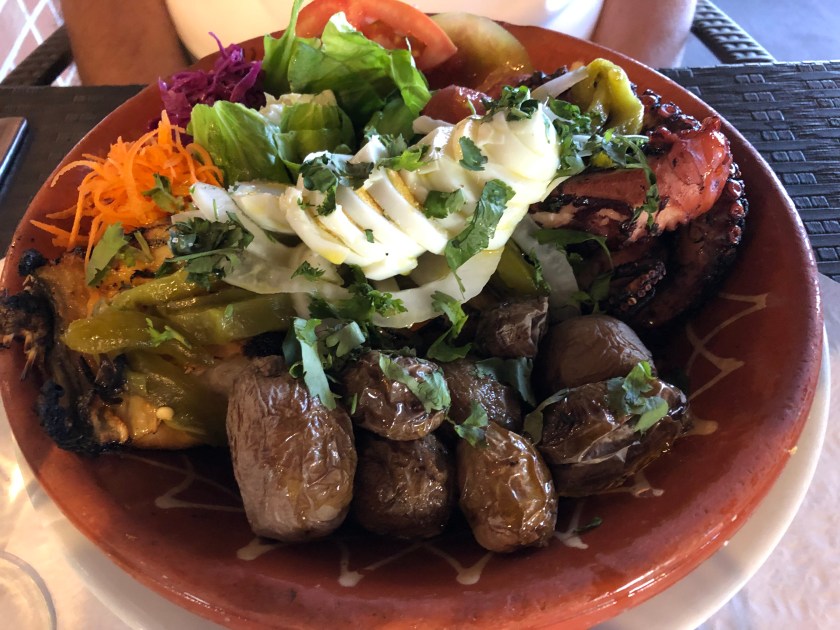
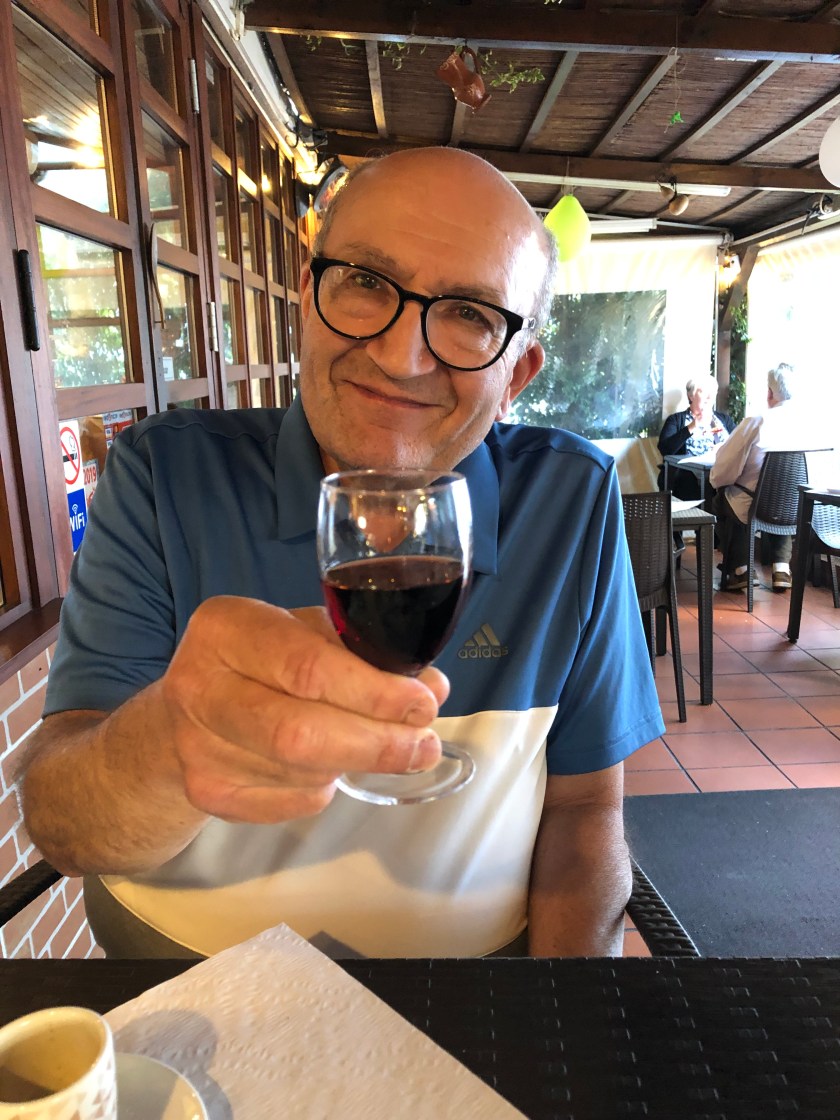
Despite this treat, our stomachs were rumbling so we decided to lunch at Cafe Alentejo, feasting on the local specialty of pork cheeks, from the local black pigs, braised in wine and the crusty local bread with olives and local red wine.
There was some time for shopping (no, we did not buy this cow!) and just relaxing in the main Praça 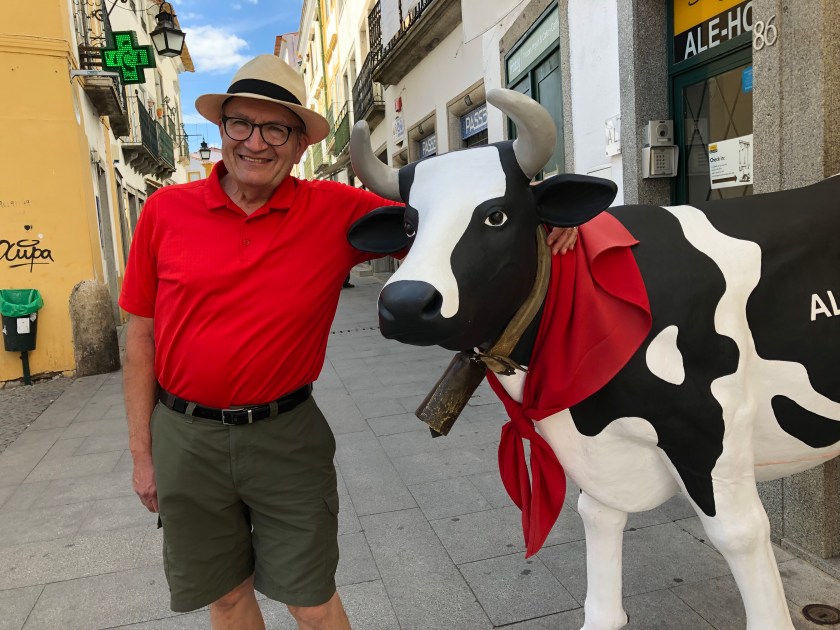
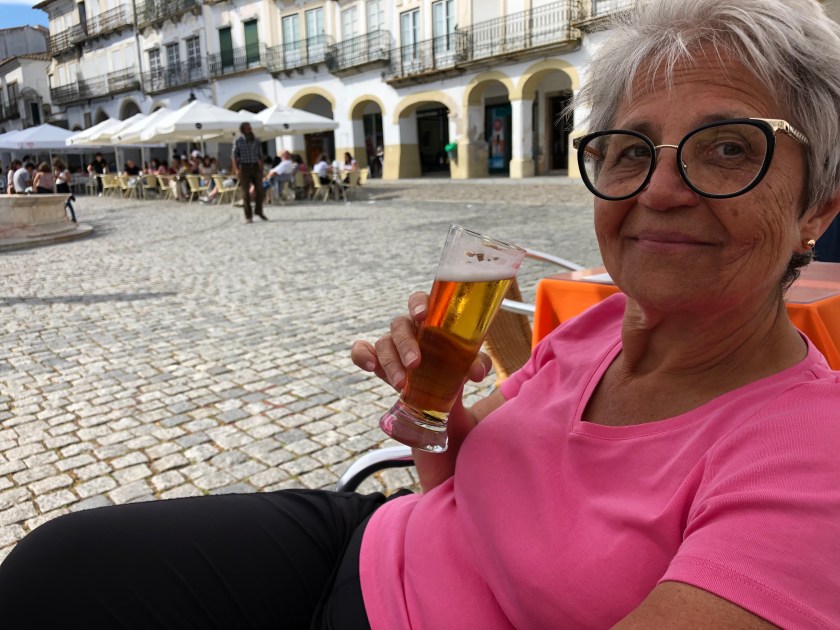 before the annual religious procession for the Feast of Corpus Christi.
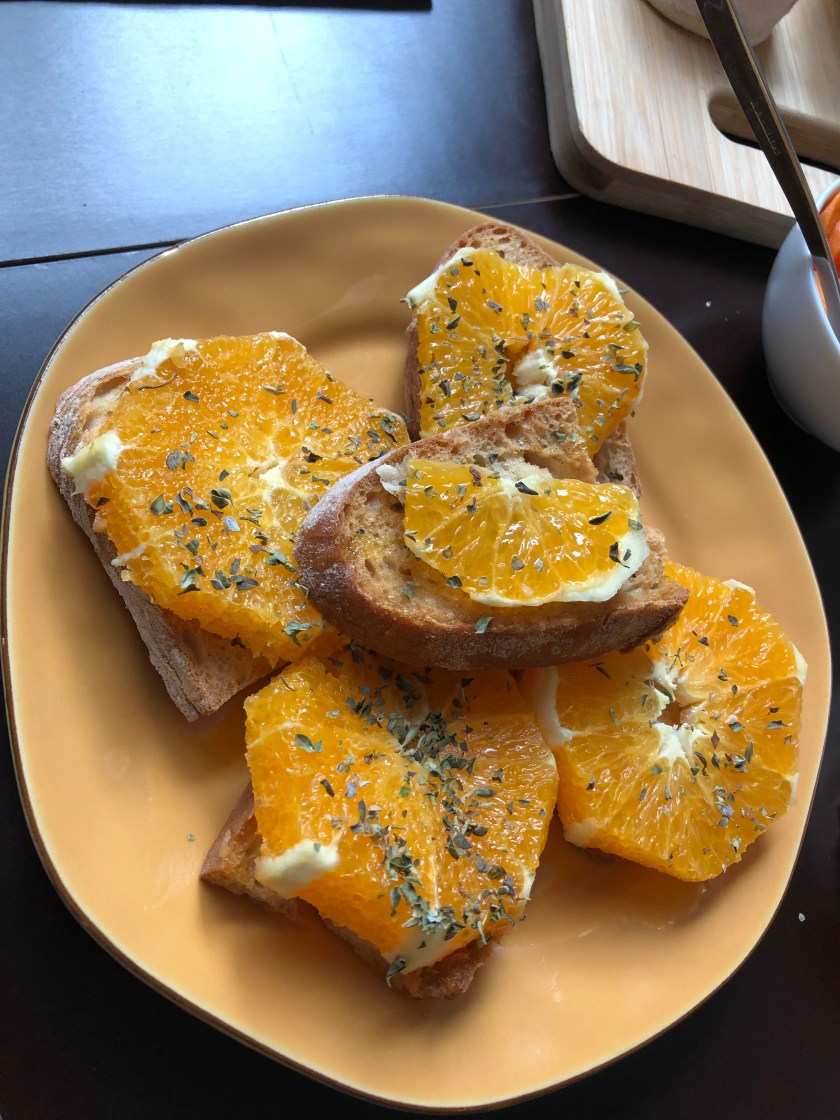
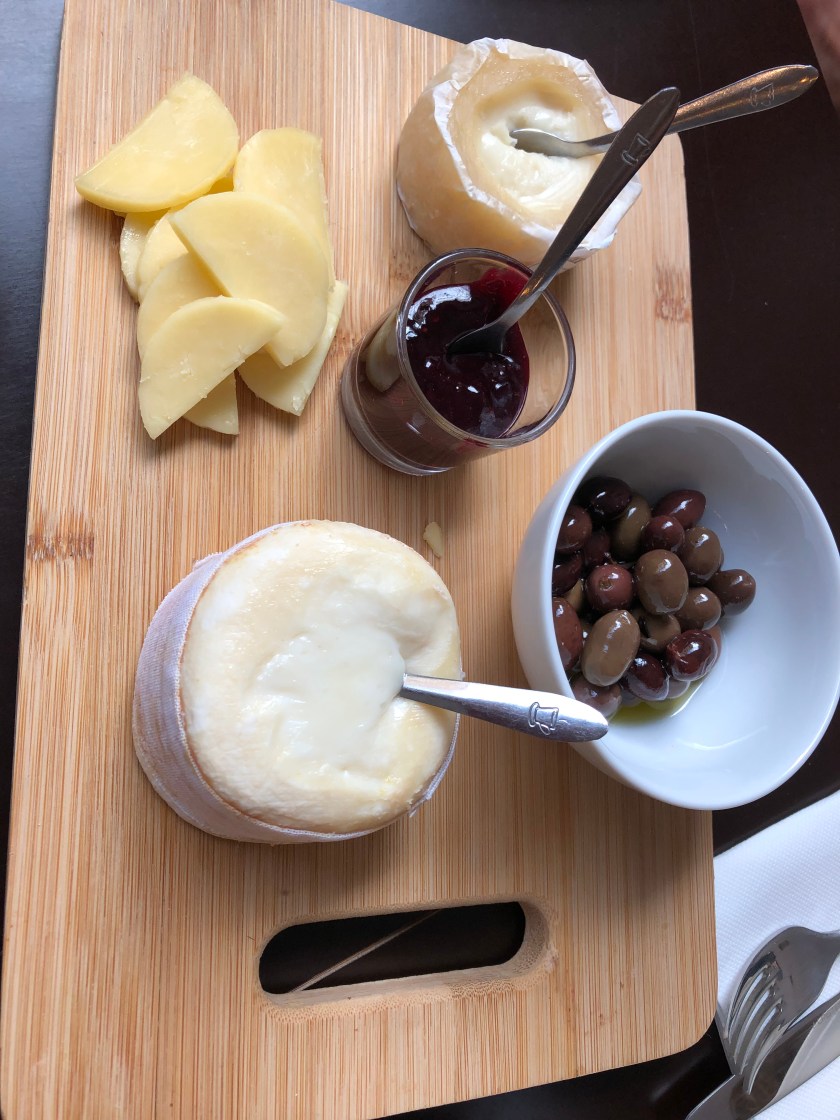
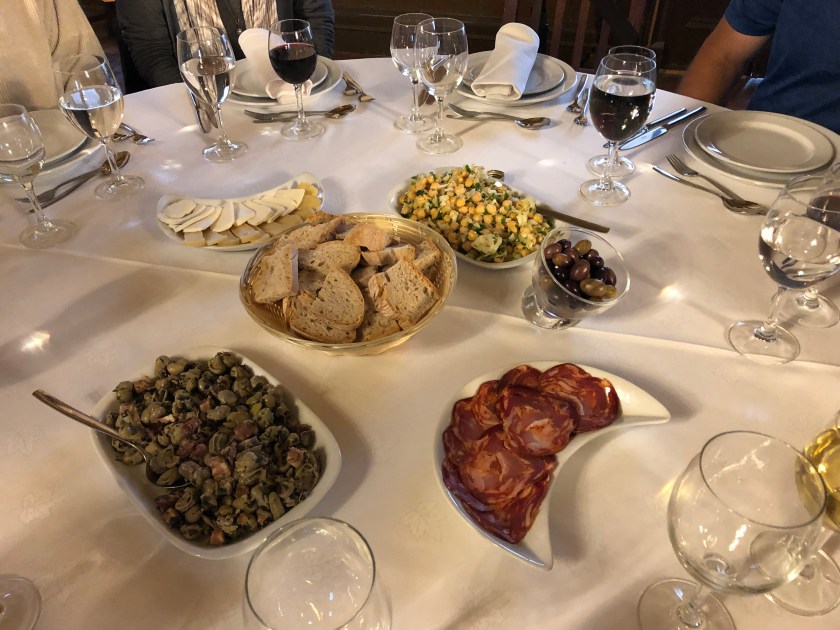
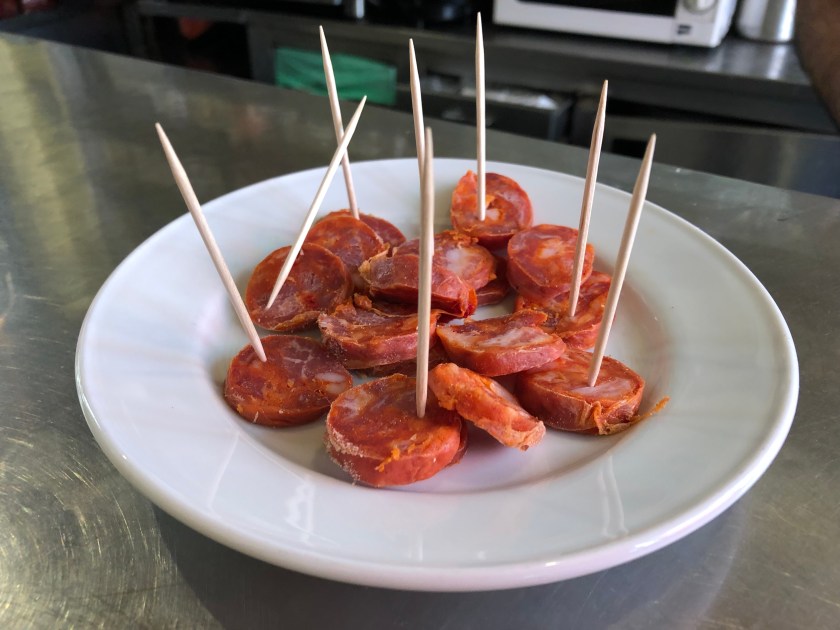
We ended the evening at our hotel with a happy hour of local wines, bread, cheeses and cured meats, fresh cherries and figs. No need for dinner tonight!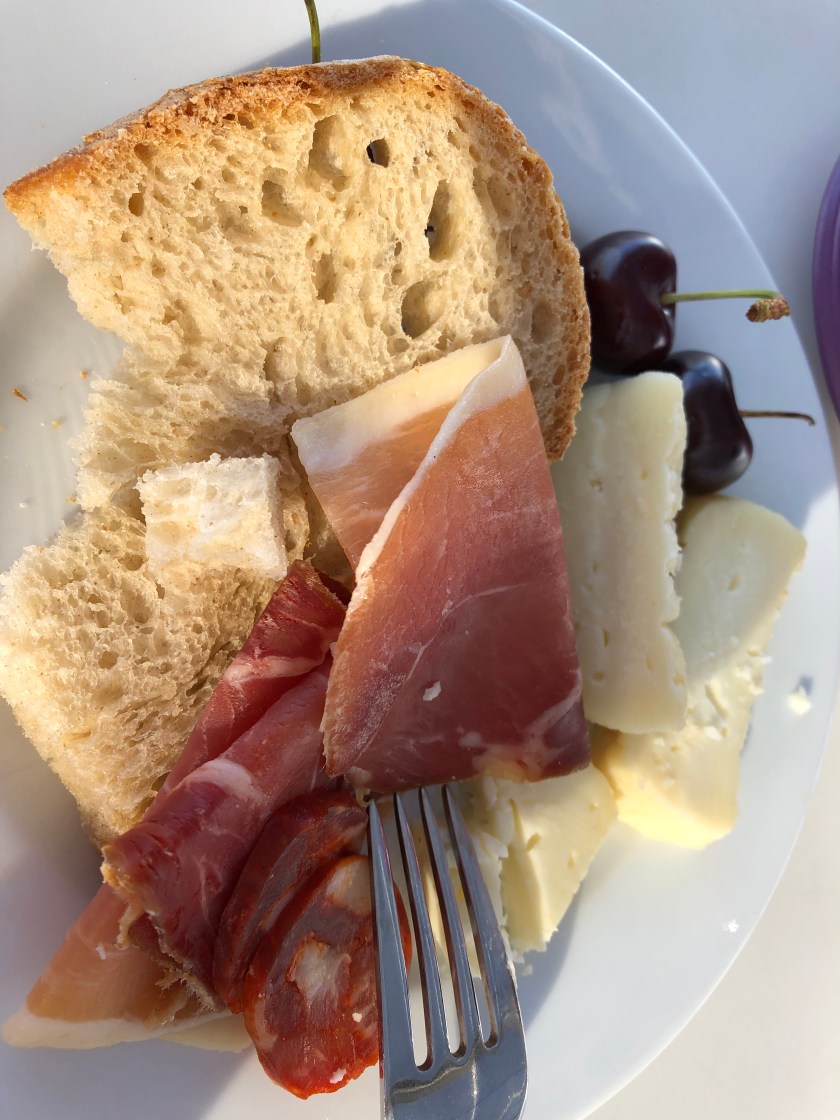

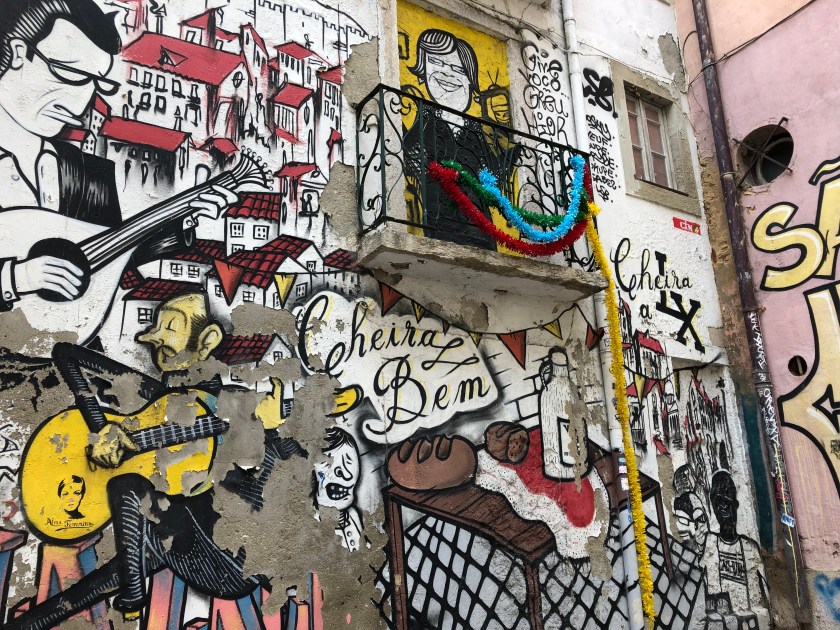
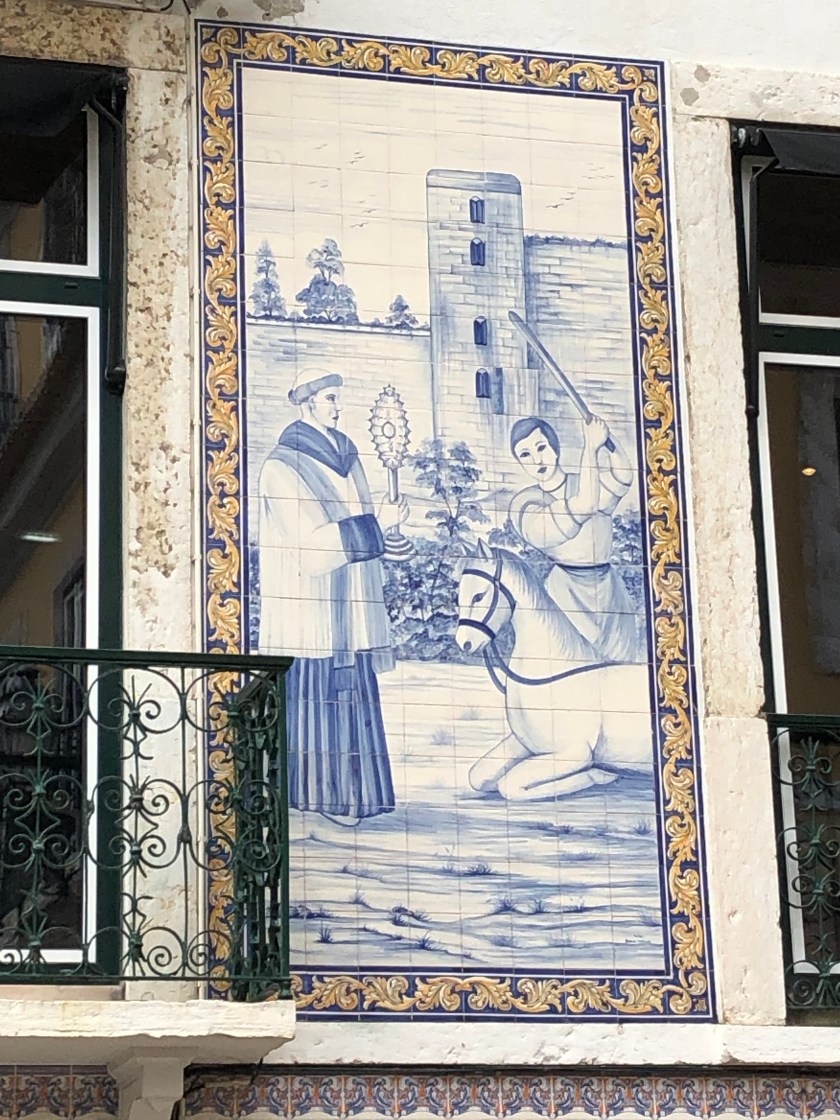
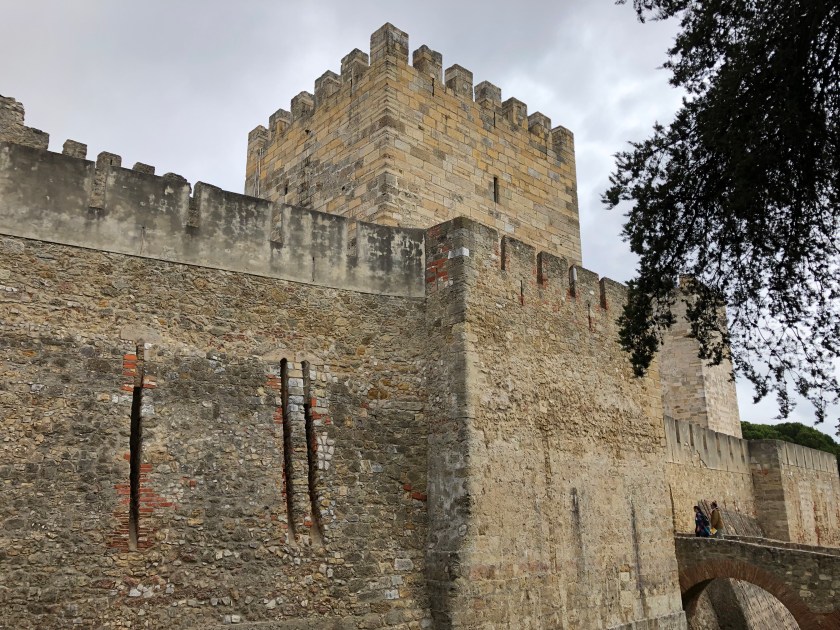
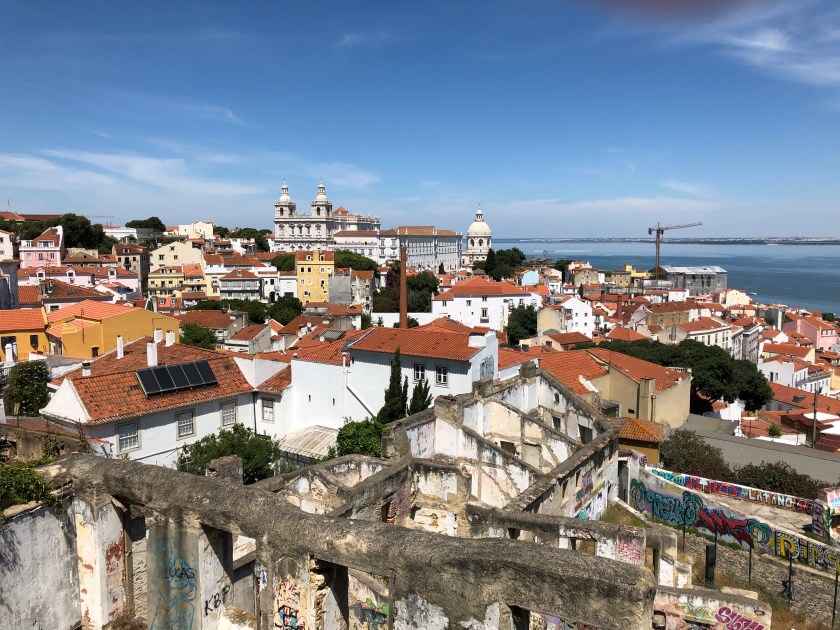
 Actually it’s just like every other subway (except for the beautiful tile murals that grace the walls) I’ve used – wave the fare card over the sensor and walk through the open turnstiles! After an introduction to the Rossio and Figueroia plazas, we began our climb up to the Castelo S. Jorge, which has a great view but virtually nothing remaining if the original structure. It was rebuilt in the 1940s by the Salazar government to resemble the original 1500s fortress. With its crenellations it certainly has a Moorish appearance. On the way up the hilly streets and many steps, examples of street art can be seen.

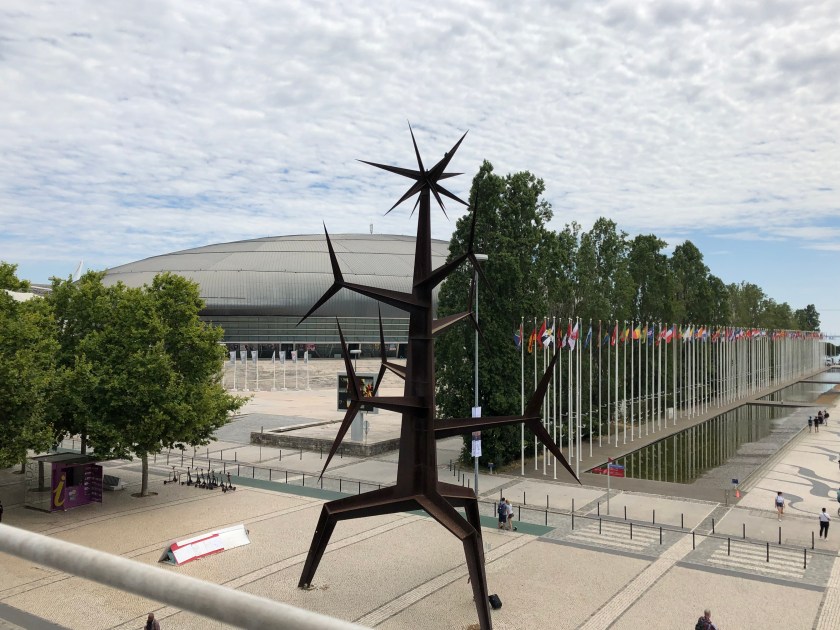 It really wasn’t that interesting- basically the old shipping port area that was the site of the world fair had been transformed into a shopping and residential area with an impressive train station (Oriente station)
 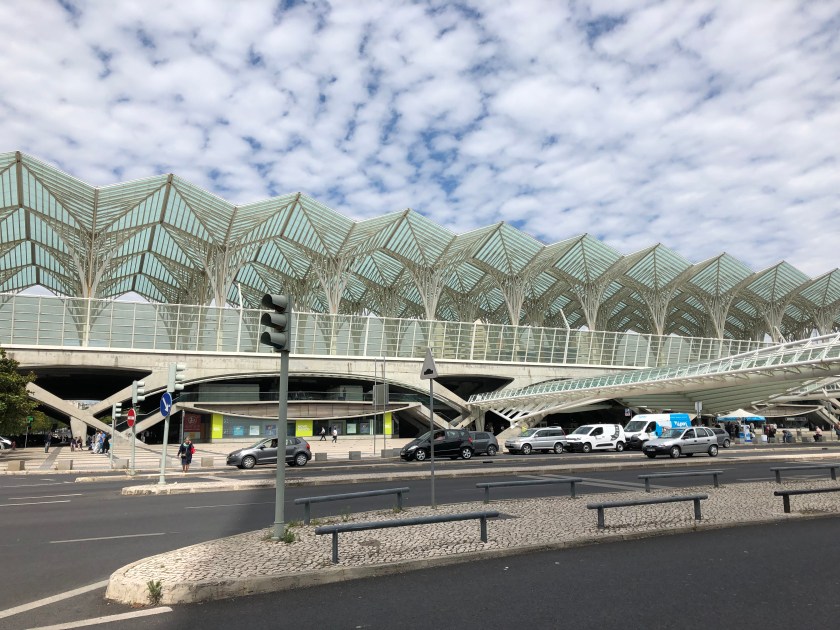 and a gigantic shopping mall that rivals anything you see in the States.
  Since we still had quite a bit of time to kill and we didn’t want to walk around, we stayed on the bus for a second round. The most exciting part of the ride was dodging the branches of the overhead trees! We did get to see a cruise ship (the Aida) in port
 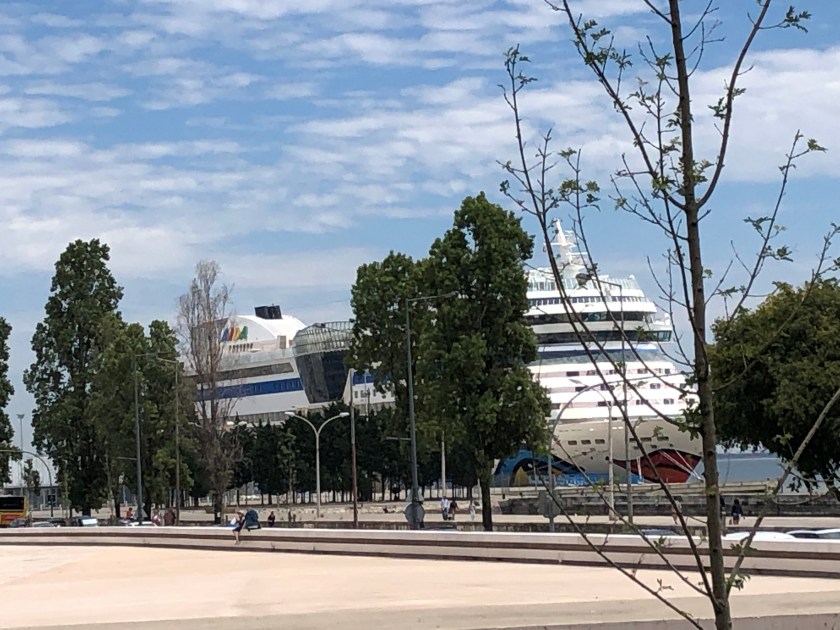 but as our bus tour itinerary was pretty mundane it did not attract any of the cruise passengers! Despite the coolish temperature (70ish) and the brisk wind at the top level of the double decker, I look like I spent the afternoon at the beach without benefit of sunscreen!
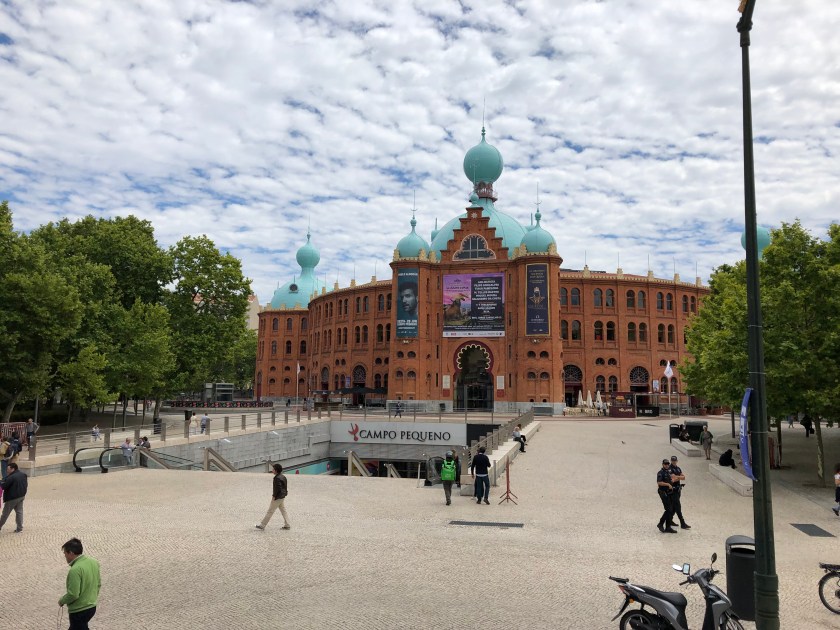 and some interesting street art
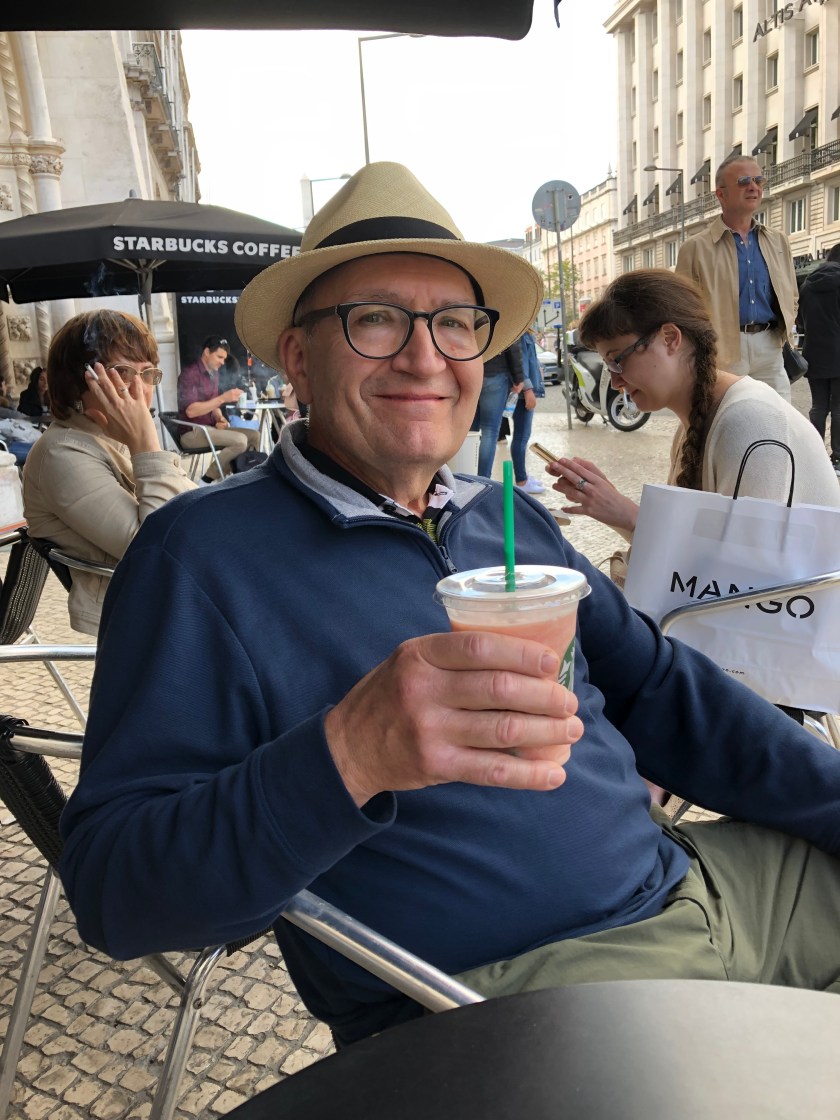
 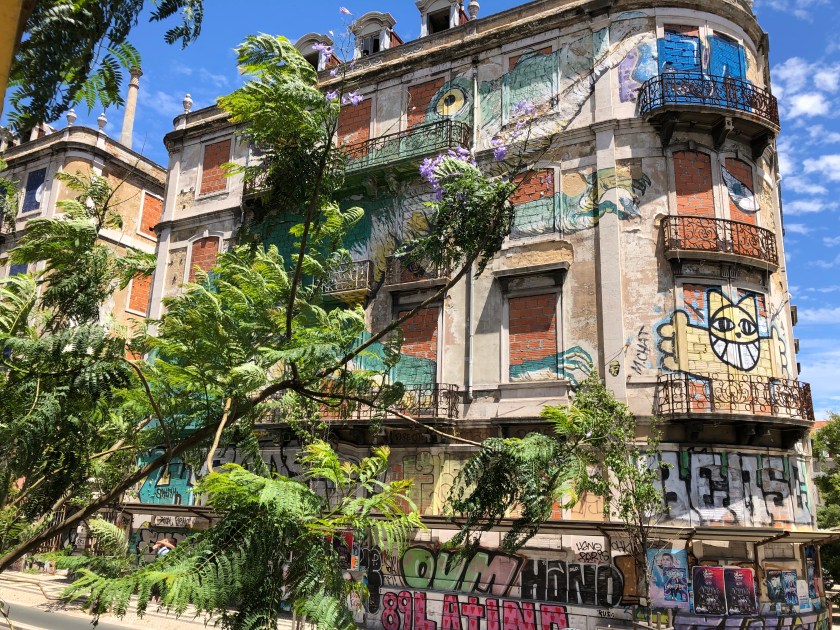 we disembarked near the Rossio train station. Tony was obsessed with sampling the bacalhau (salted codfish) and potato fritter and we still had about an hour before we could pick up our clean laundry. A pitstop at Starbucks (to use the rest room, one needs to purchase an item and then there is a restroom access code on the receipt) was necessary and then he got to try the “interesting” combination of fish, mashed potatoes, and gooey cheese!
 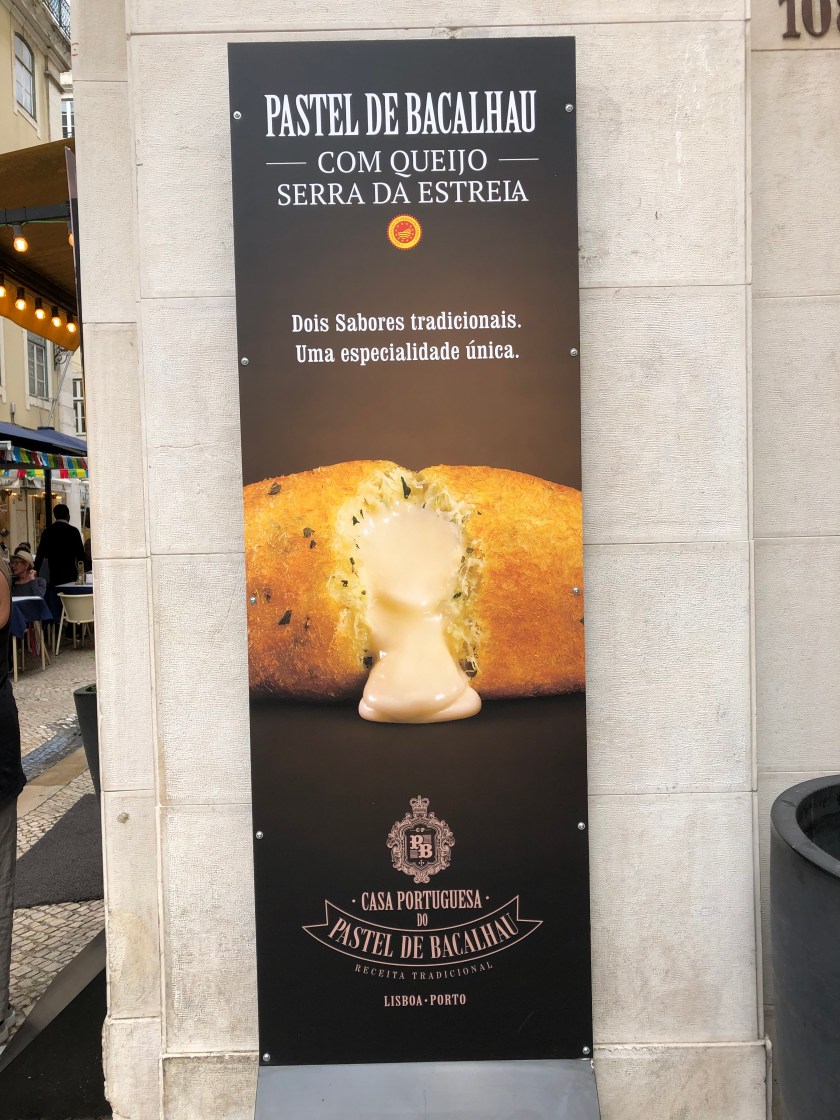 The Italians are absolutely correct that fish and cheese are not compatible 🤮.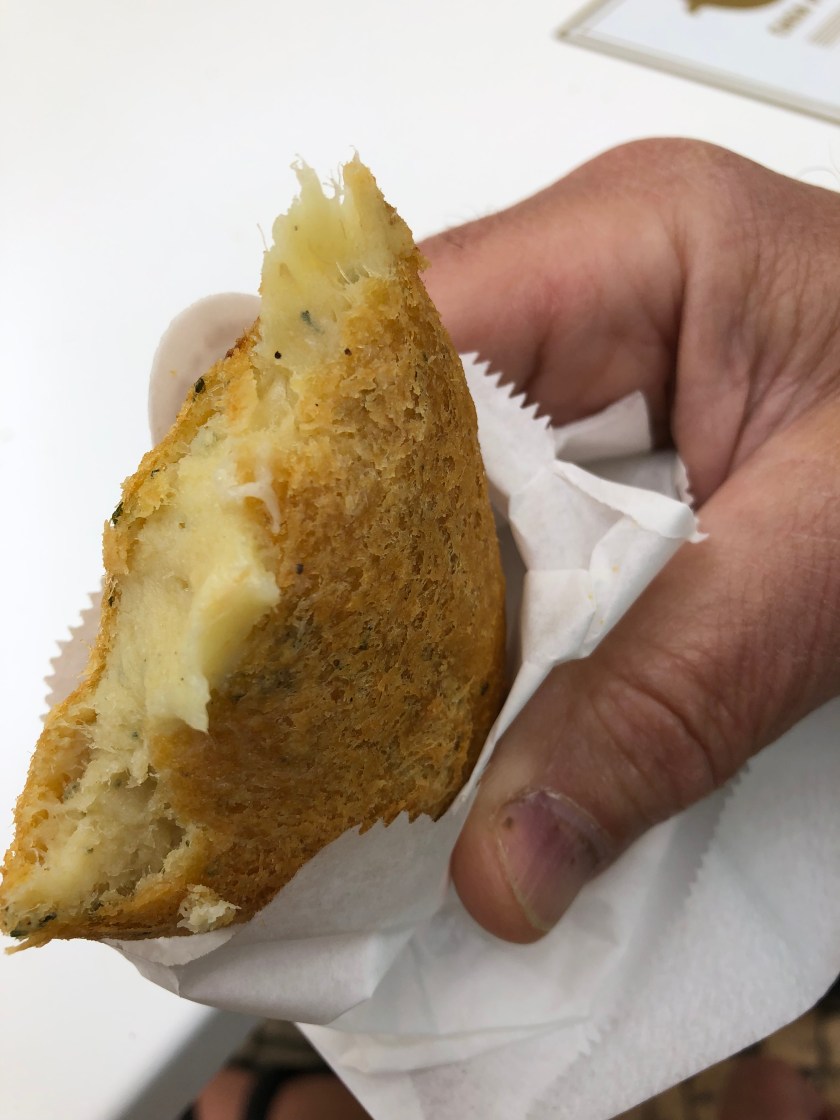
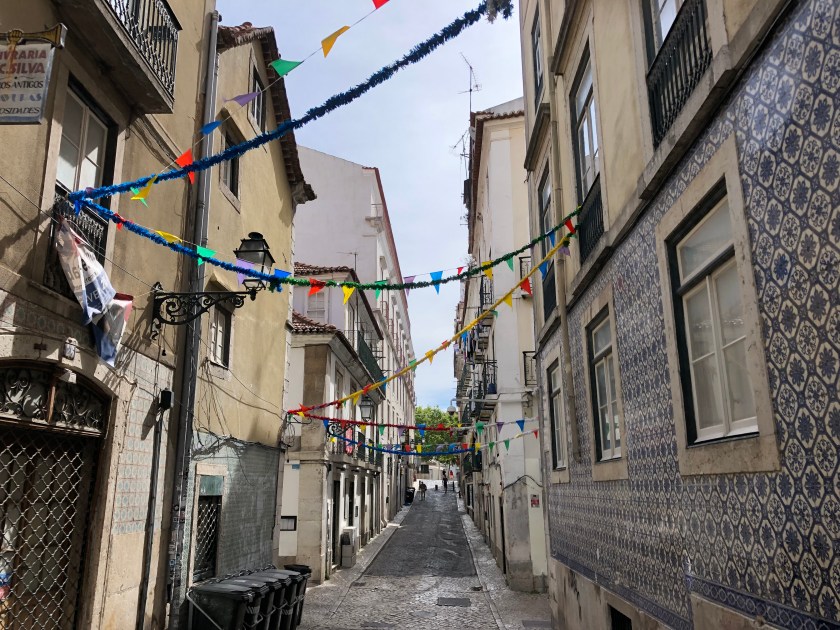
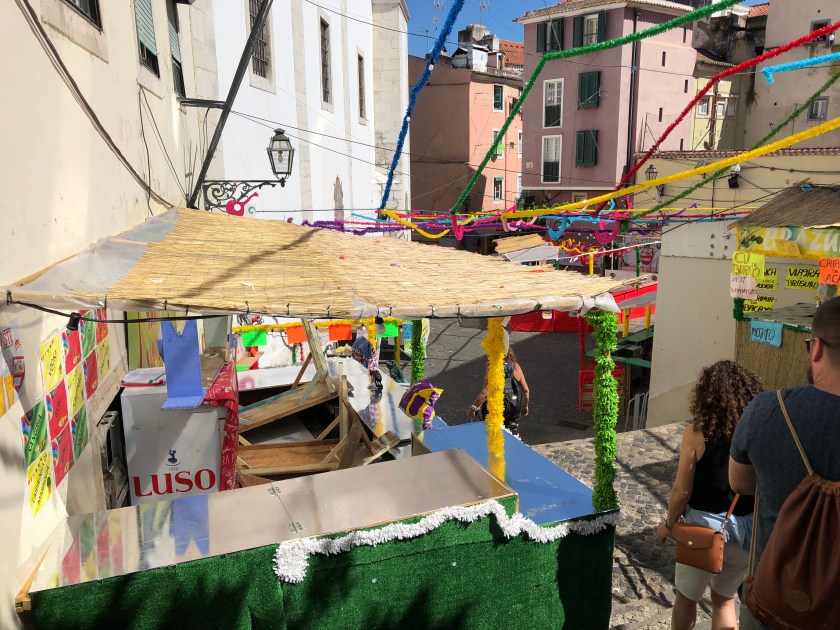
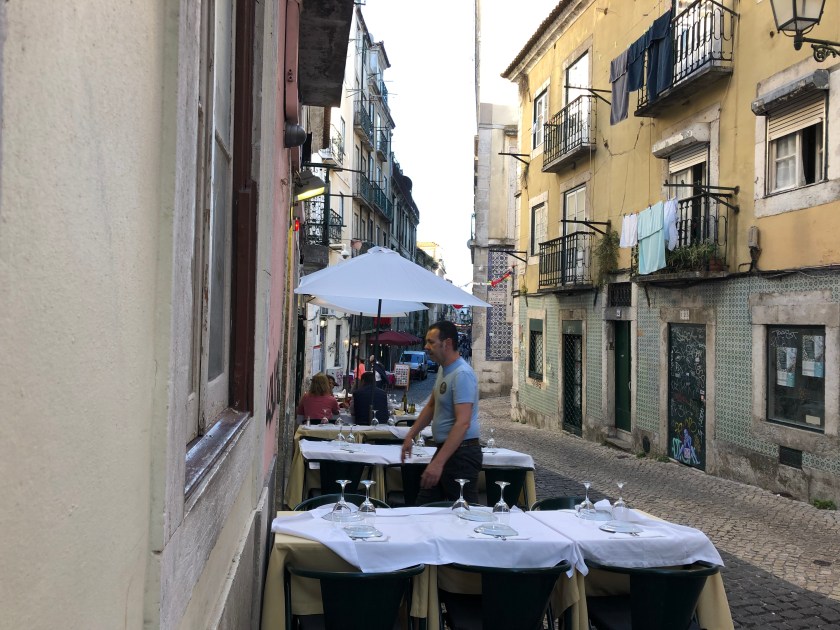 Of course, the St.Anthony feast was still going on and we even got to see some street poetry.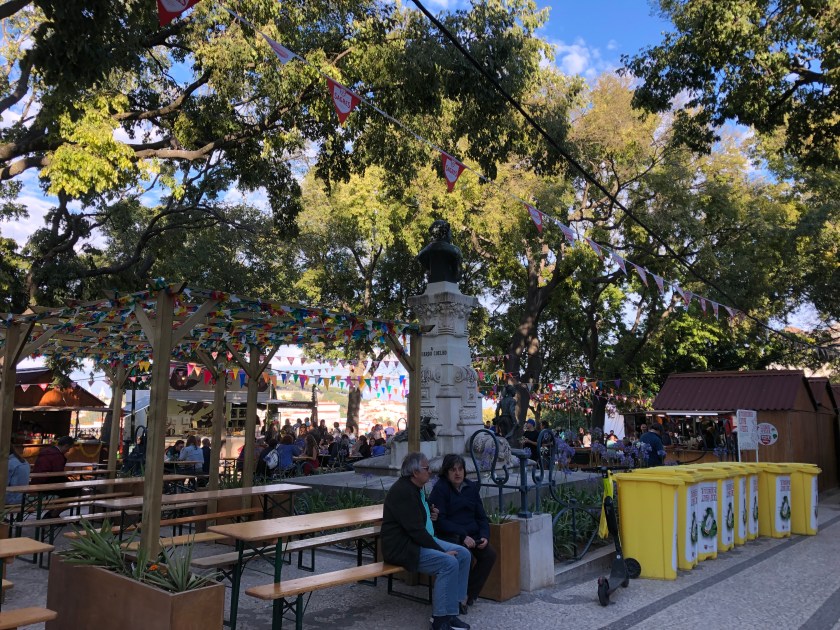
 The highlight was Rafaele’s recitation of a poem by Portugal’s most famous poet, Fernando Pessoa.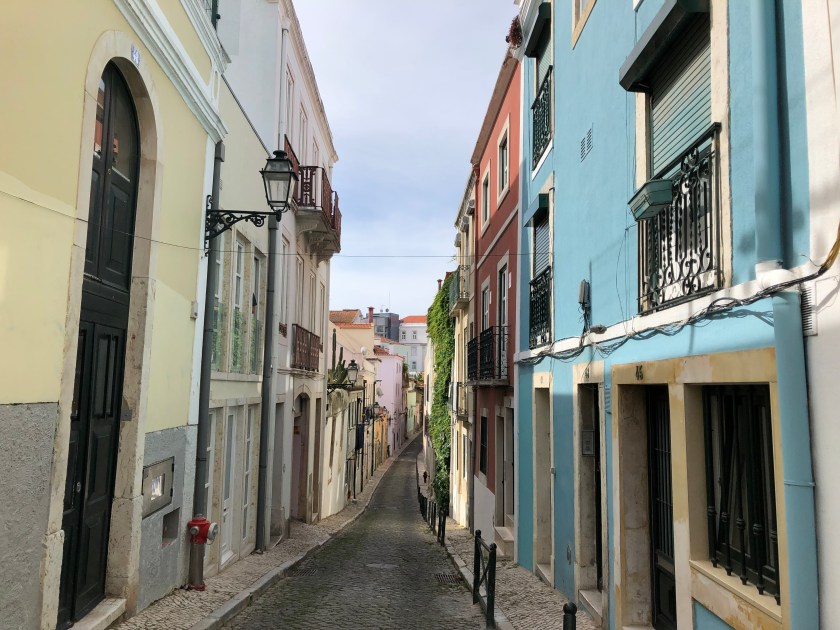
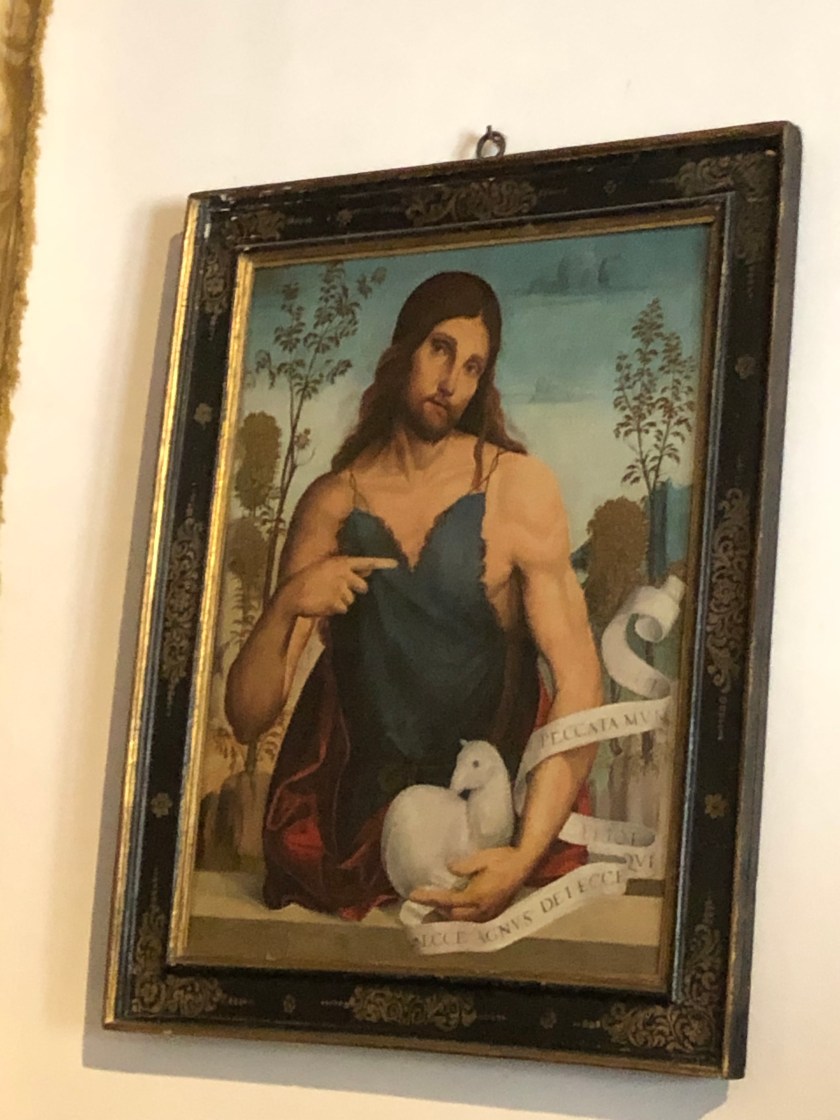
 The most expensive chapel in Portugal was also constructed in Rome and transported to this church – the Chapel of St. John the Baptist. It is rich in precious materials such as gold, blue lapis, and marble and the “paintings” on the walls are actually mosaics!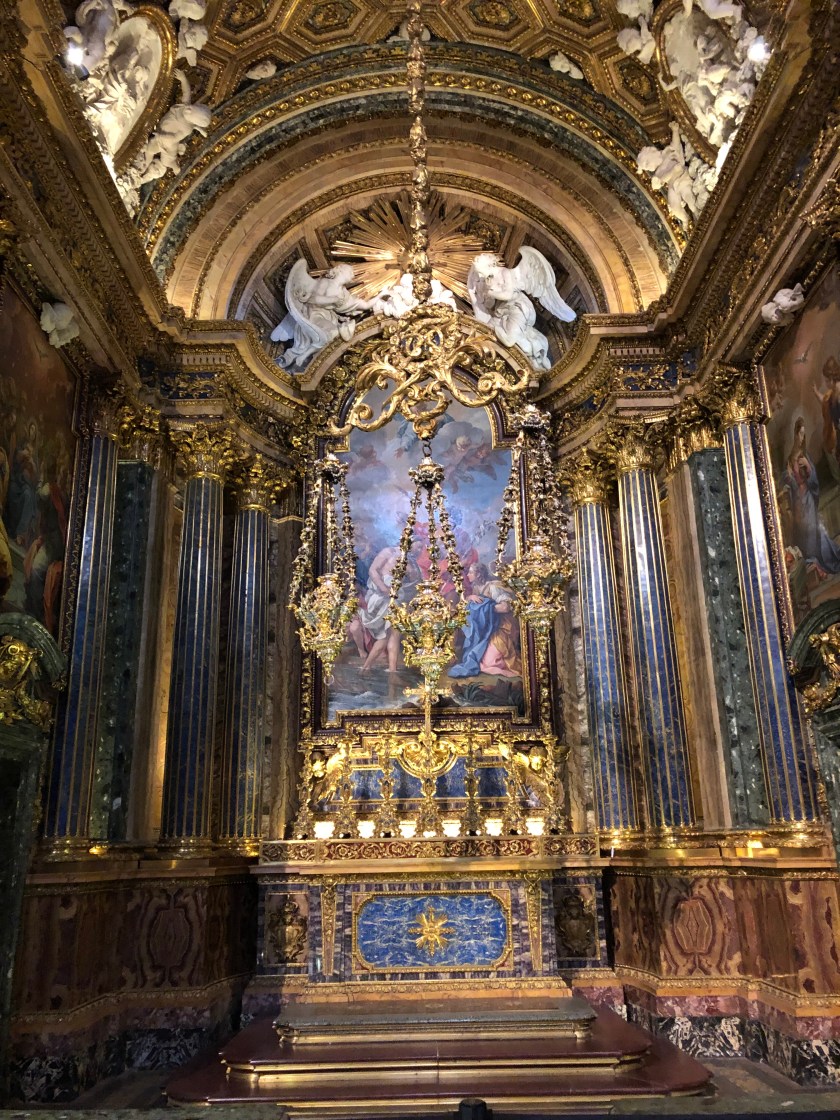
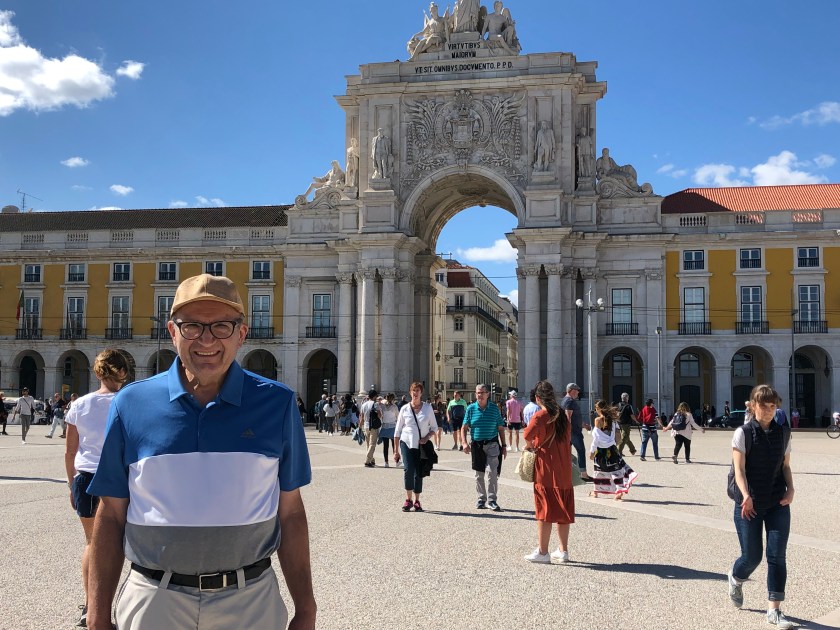
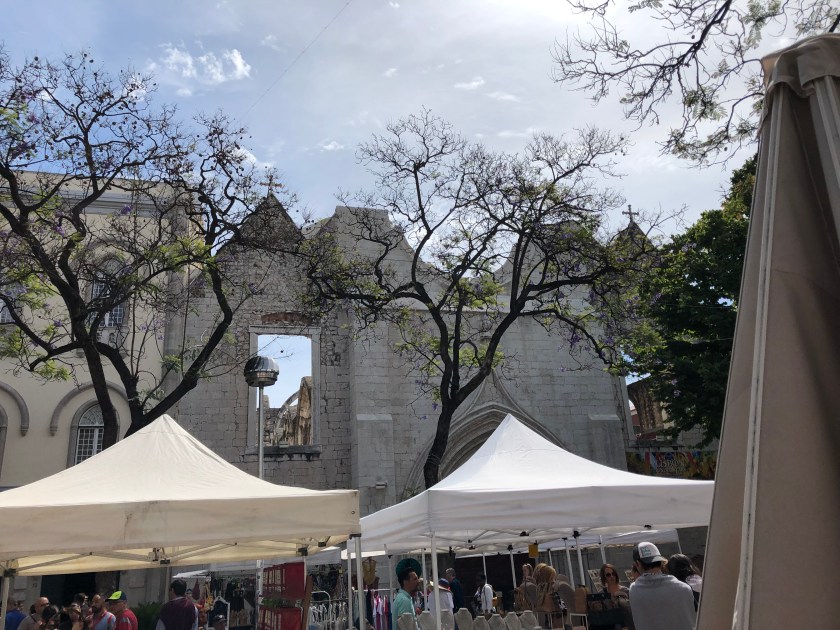 We then descended to the Baixa and walked down to the Praça do Comércio along the River, where our morning tour ended. We had a quick lunch break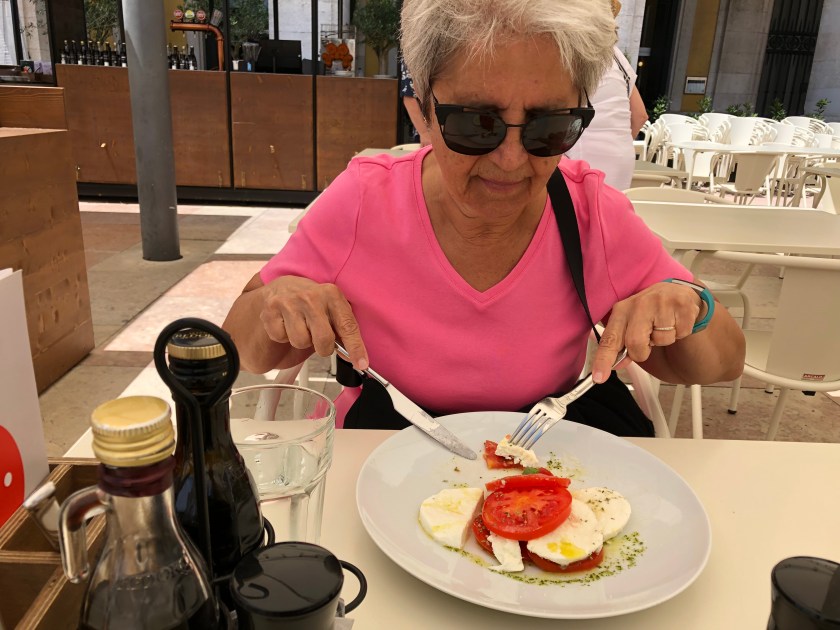
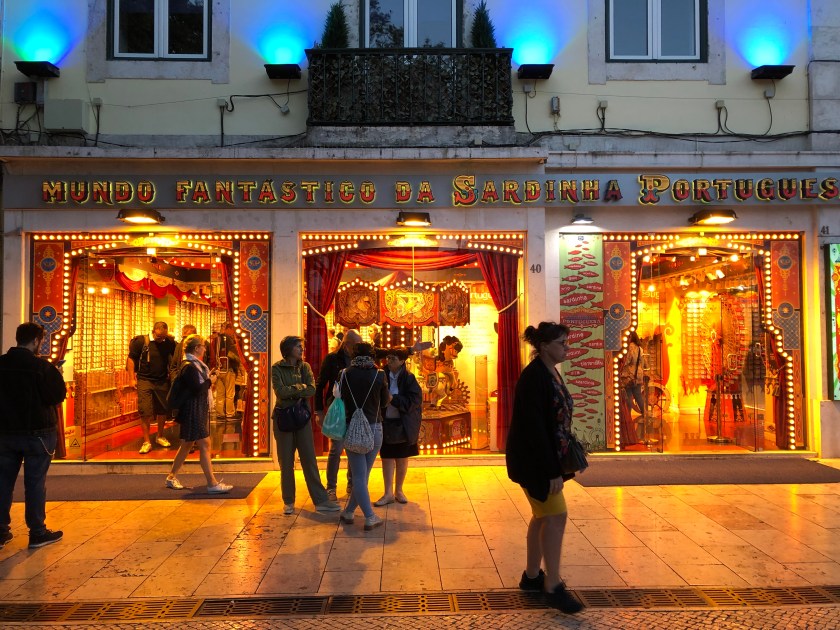
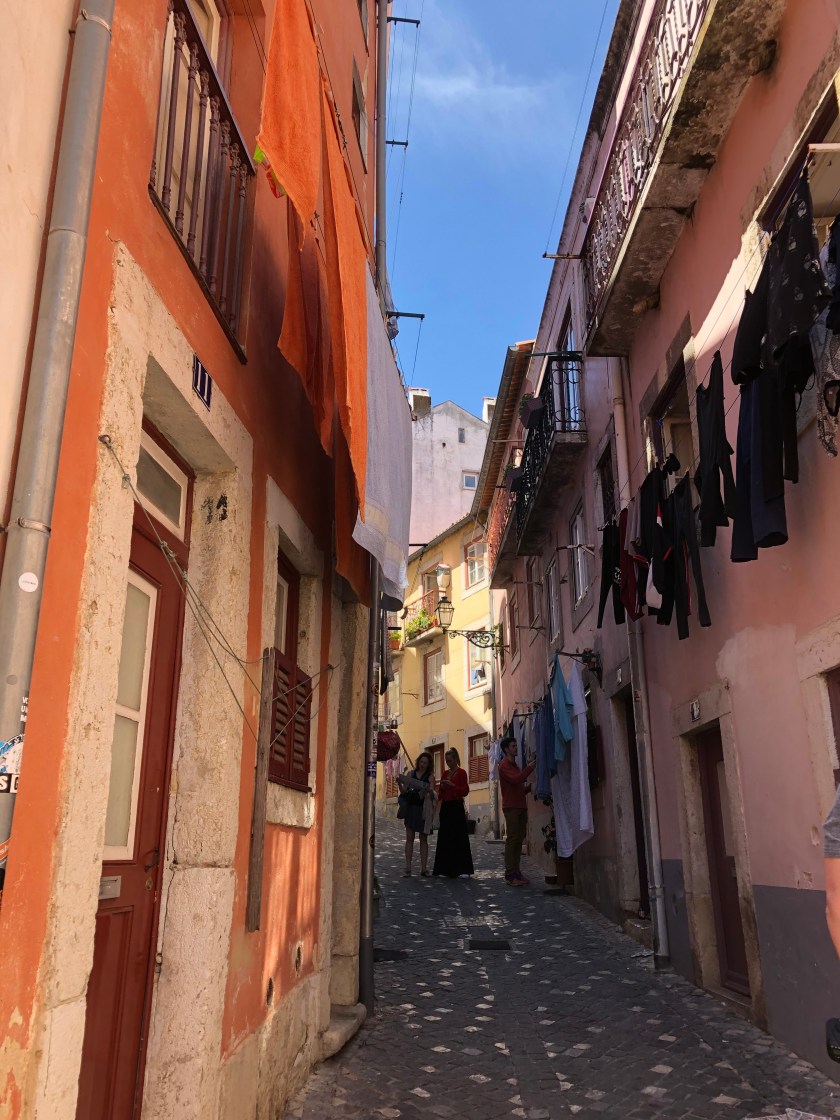 The area directly adjacent to the Castelo Sao Jorge, however, has transformed into a tourist Mecca, filled with air B&Bs, restaurants and souvenir shops. On the way up, we saw ruins of a Roman theater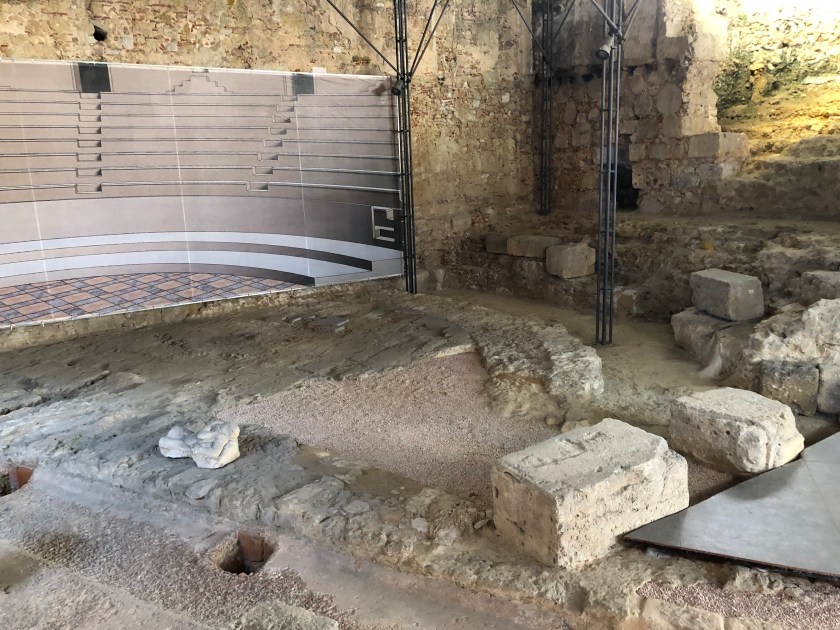



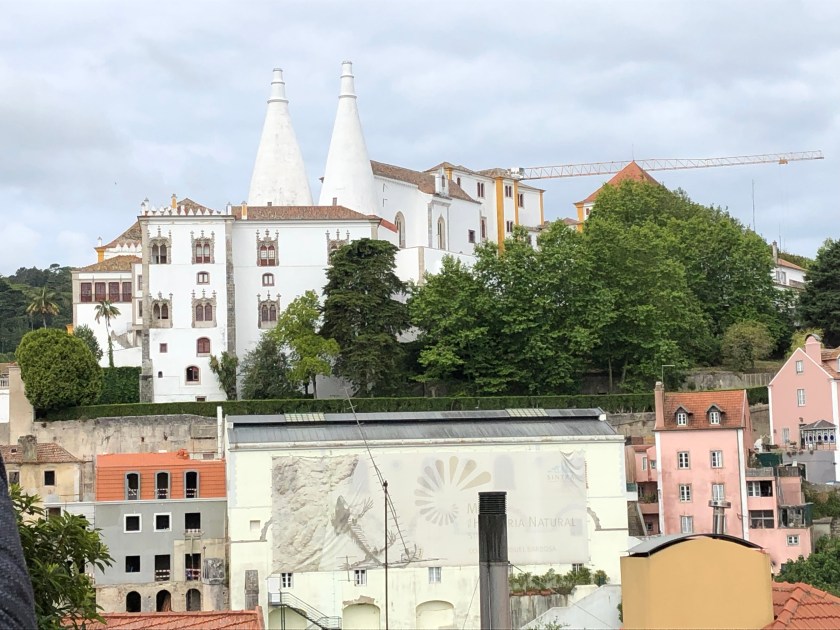
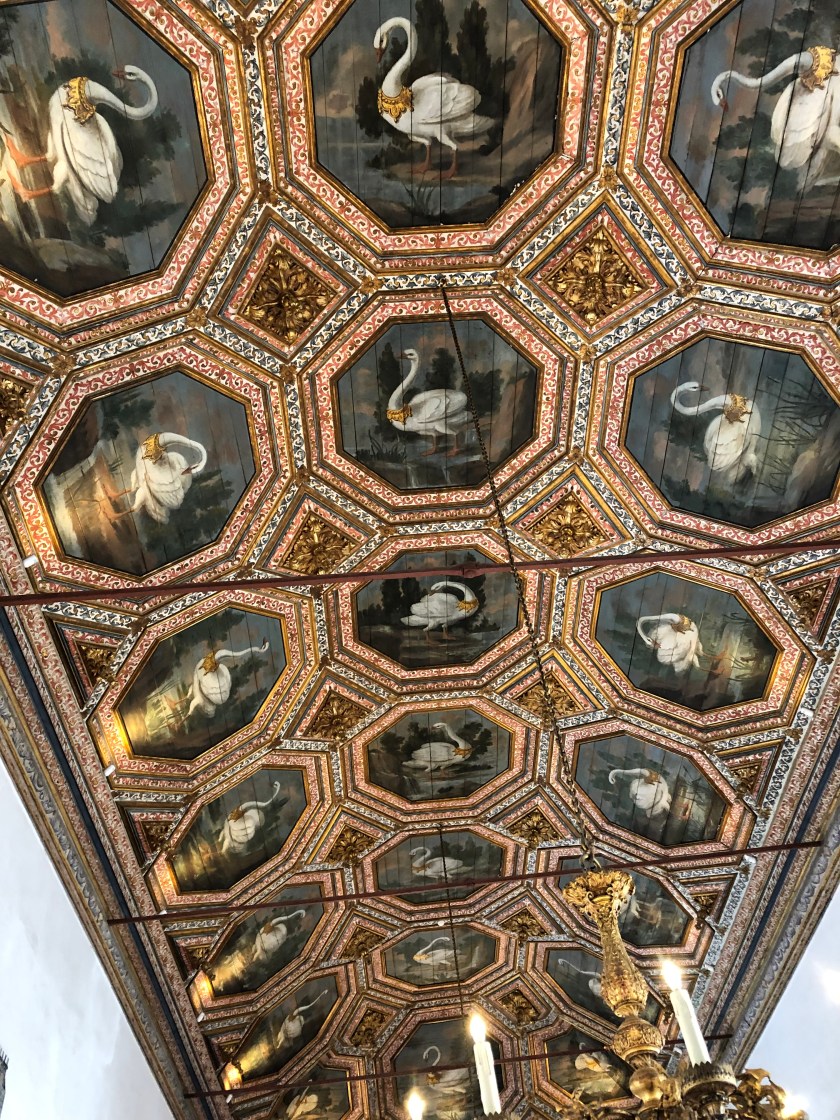
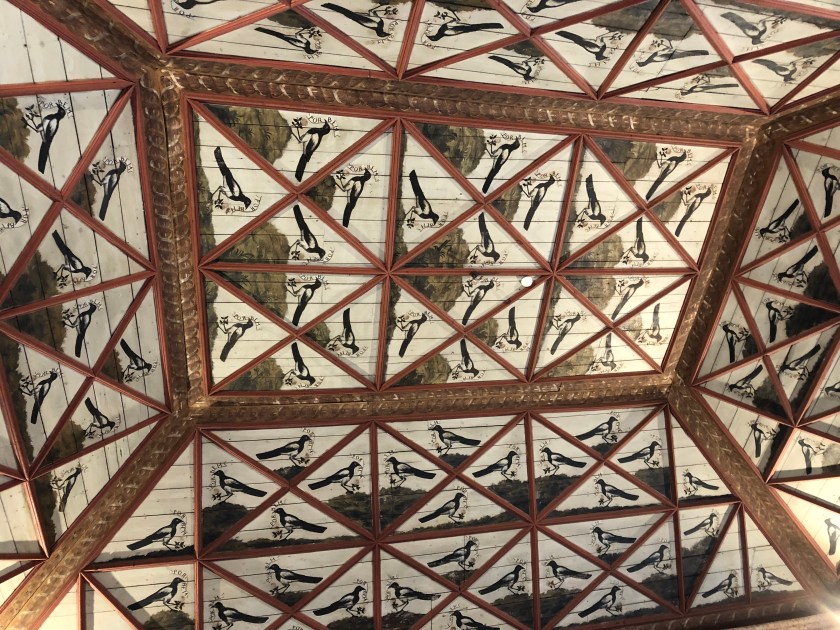
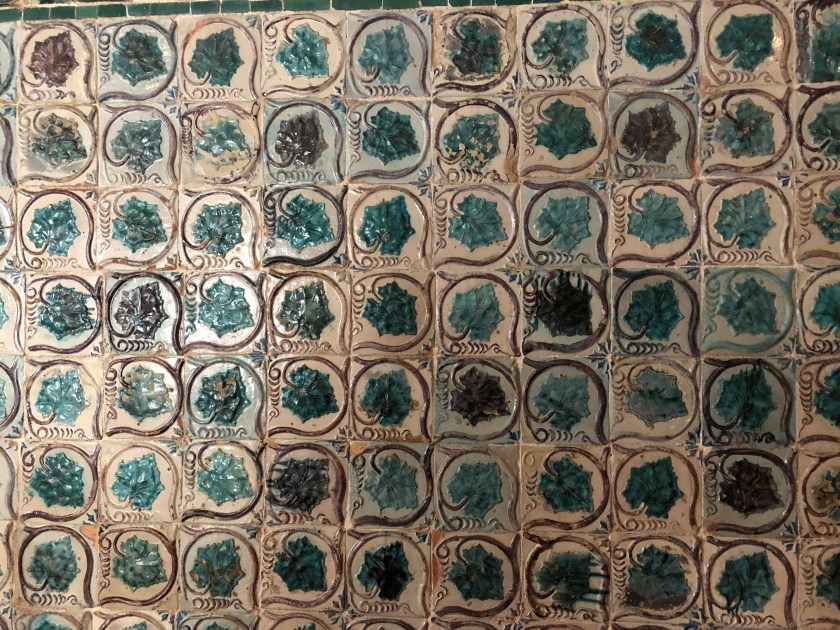
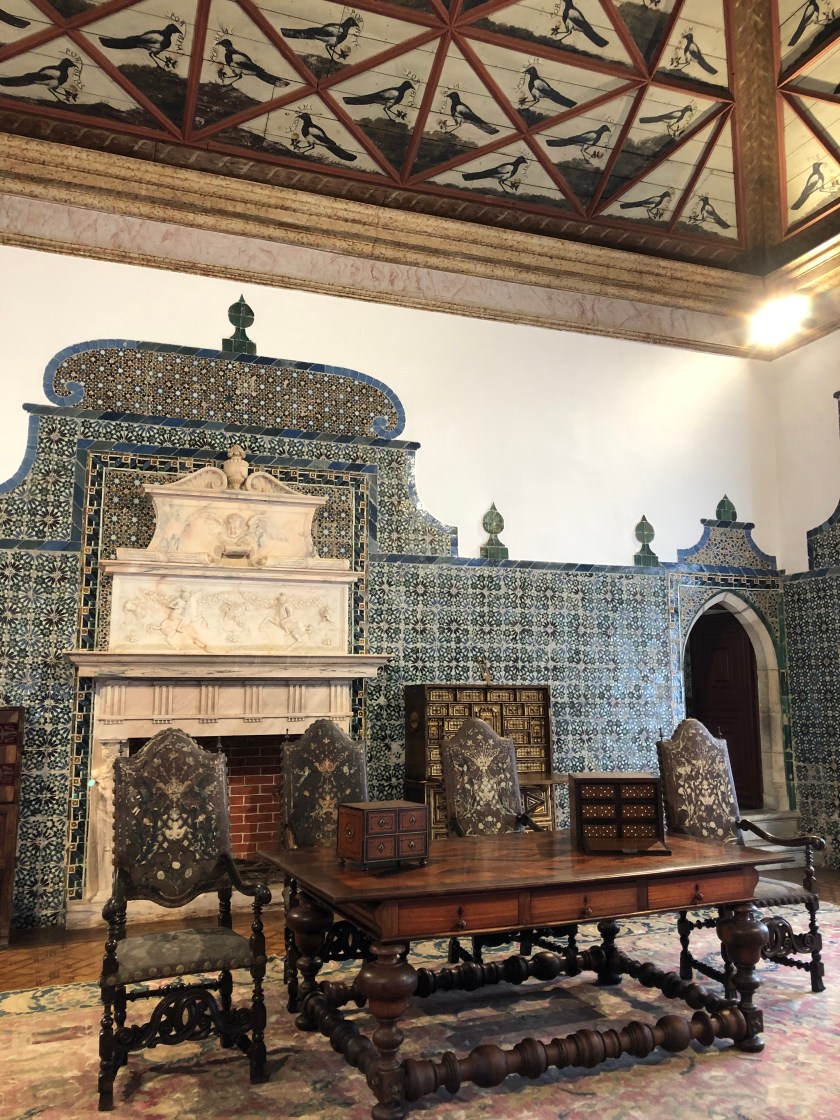
 we began the long climb to the Quinta da Regaleira. The mansion and its elaborate gardens were built between 1896 and 1910 by a billionaire, Antonio Carvalho Montero, who made his fortune in Brazil, and designed by an Italian set designer, Luigi Manini, in a weird melange of Manueline, gothic and Renaissance styles. The gardens are magnificent, with waterfalls, exotic plants, tunnels, and a spiral staircase enclosed well that was reportedly used in the initiation rituals of the order of Masons.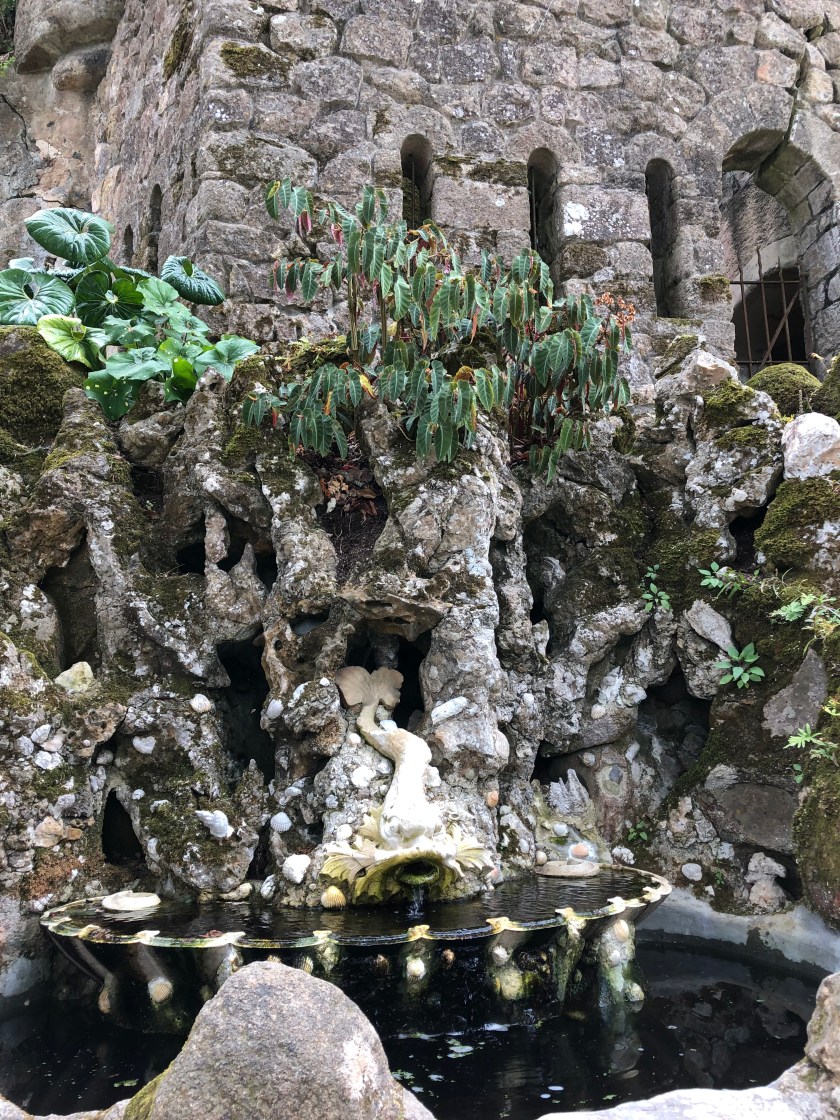
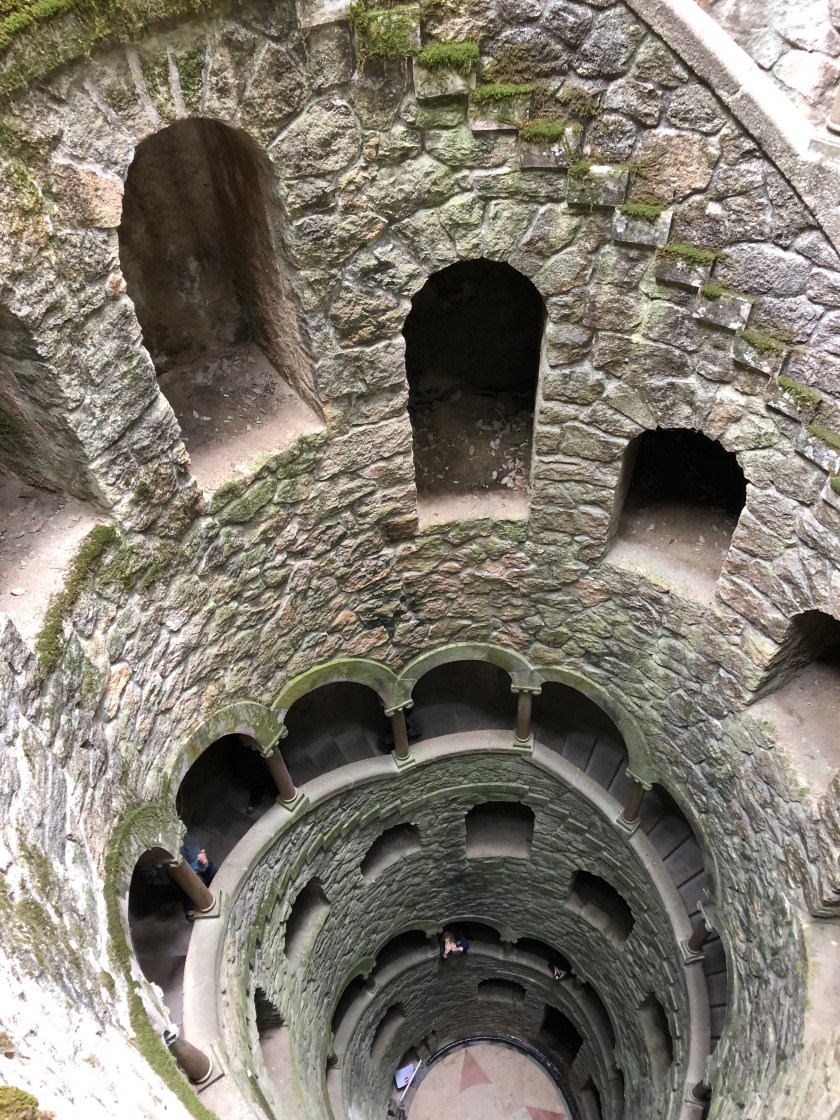 We descended the depths of the well and explored the tunnels before touring the less impressive mansion.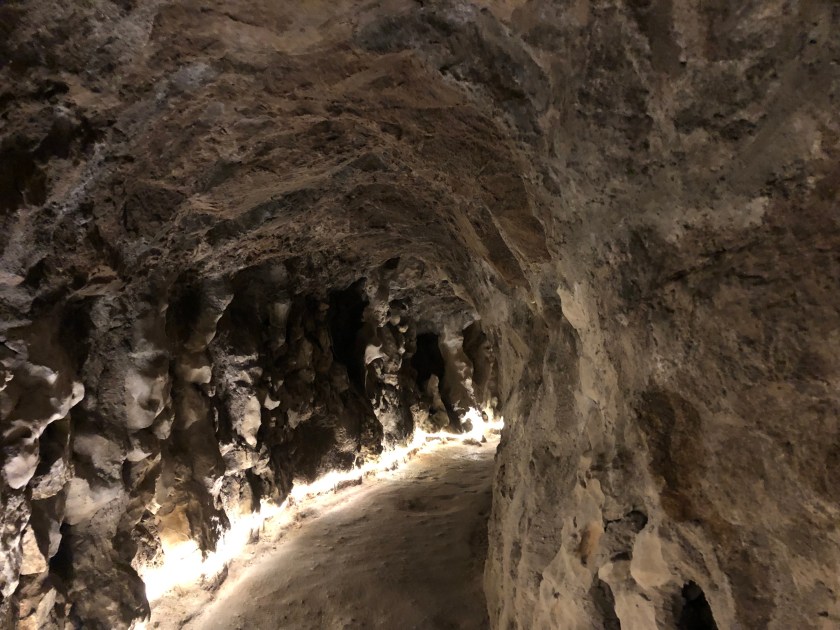
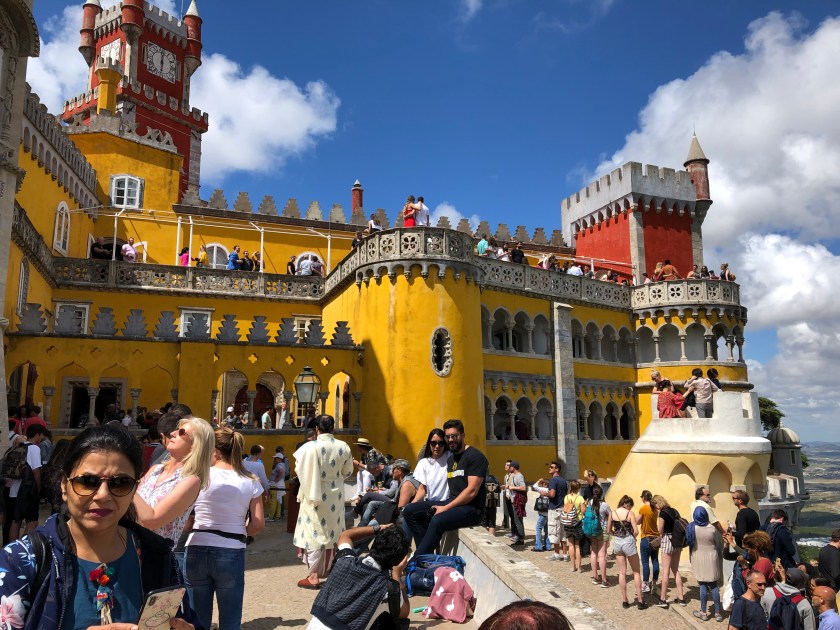 The castle is perched at the top of one of the many hills and a 15-minute hair raising taxi ride was preferable to a one hour uphill climb! There was still an additional 10 minute steep climb through the gardens to the castle. We decided to forgo the visit to the castle but the view of the surrounding countryside was amazing!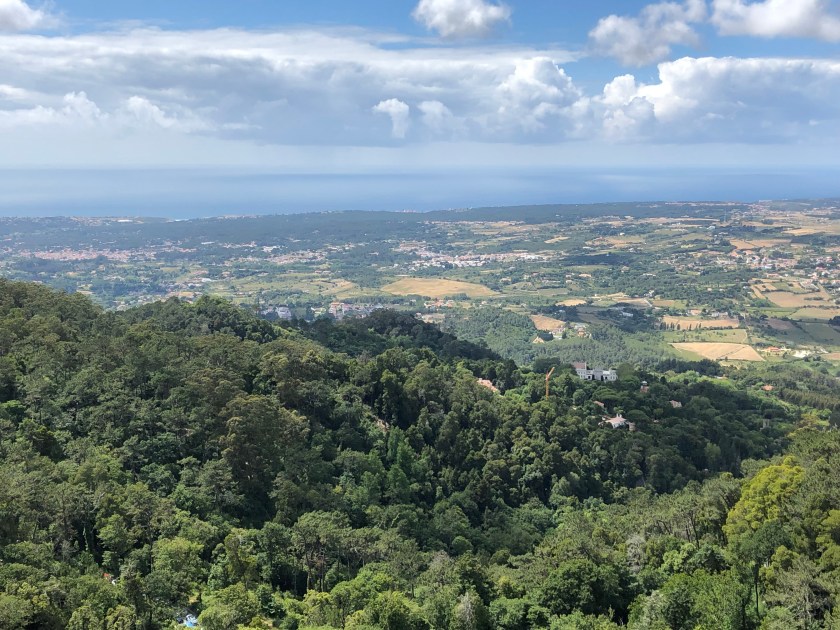
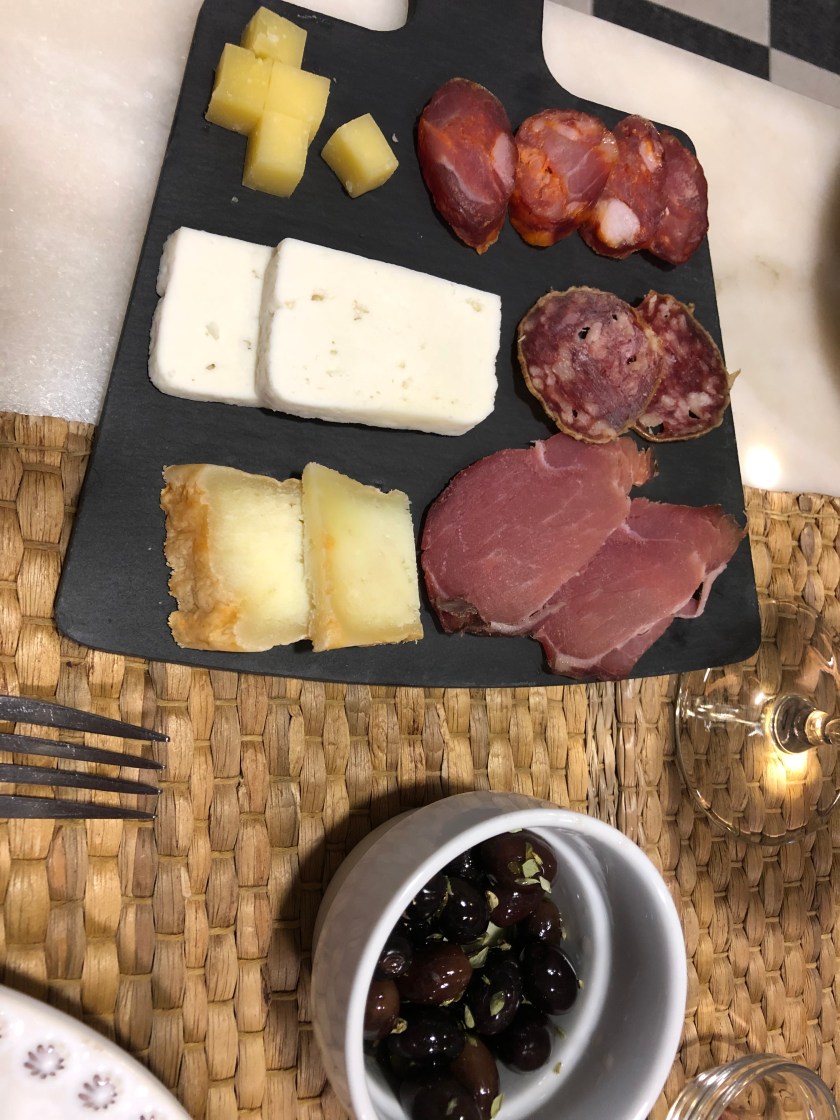 and an after dinner stroll to the waterfront.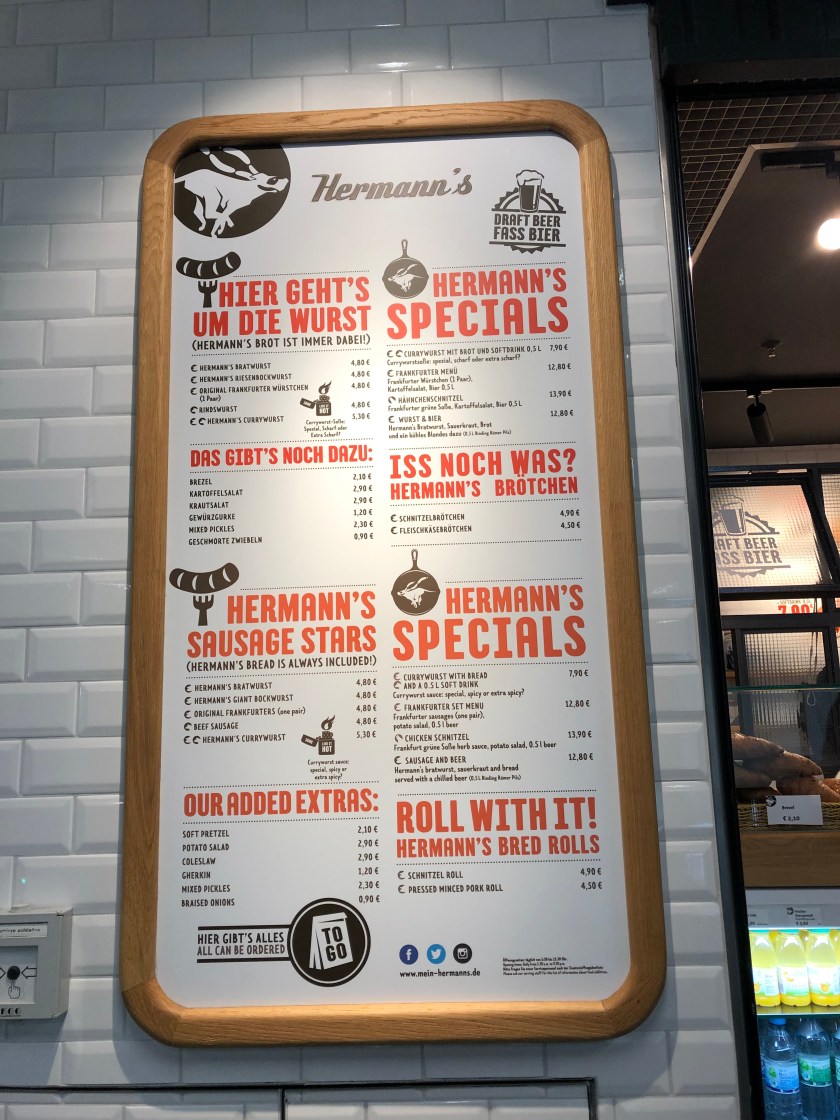
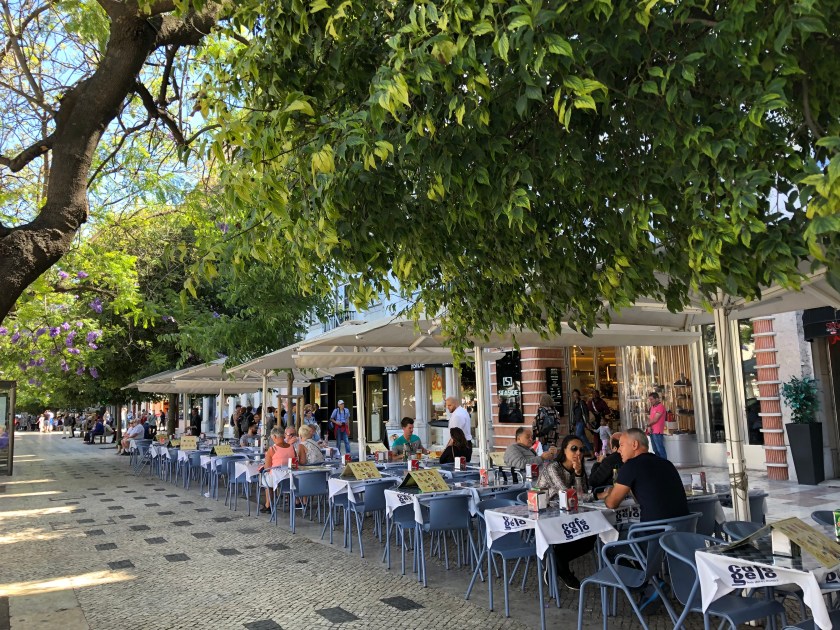
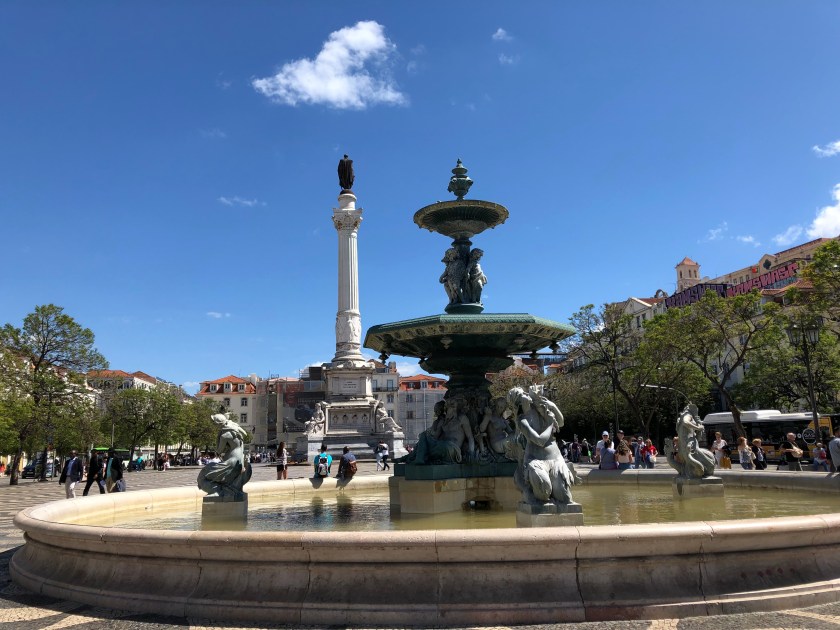
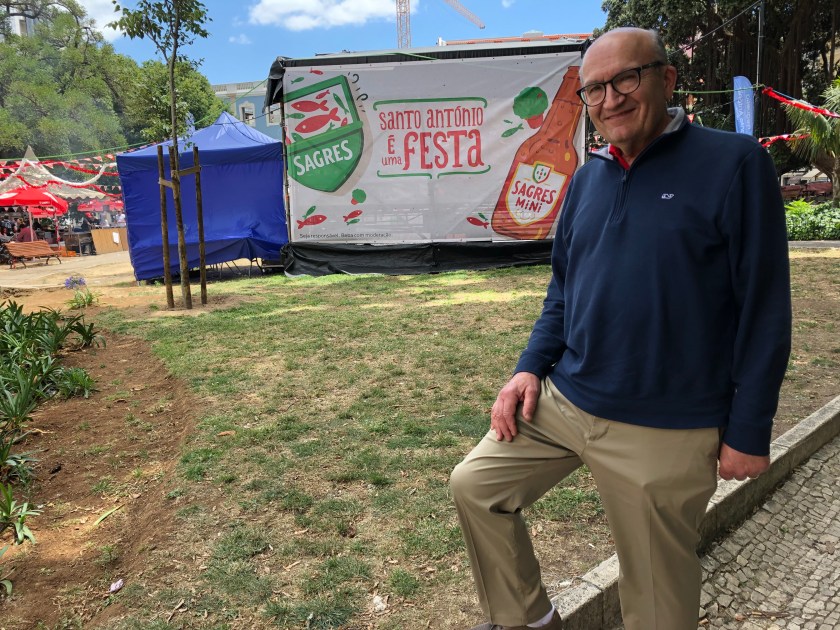 The city has been in celebration mode for the past couple weeks and many of the parks scattered throughout the city have set up musical stages and food booths.
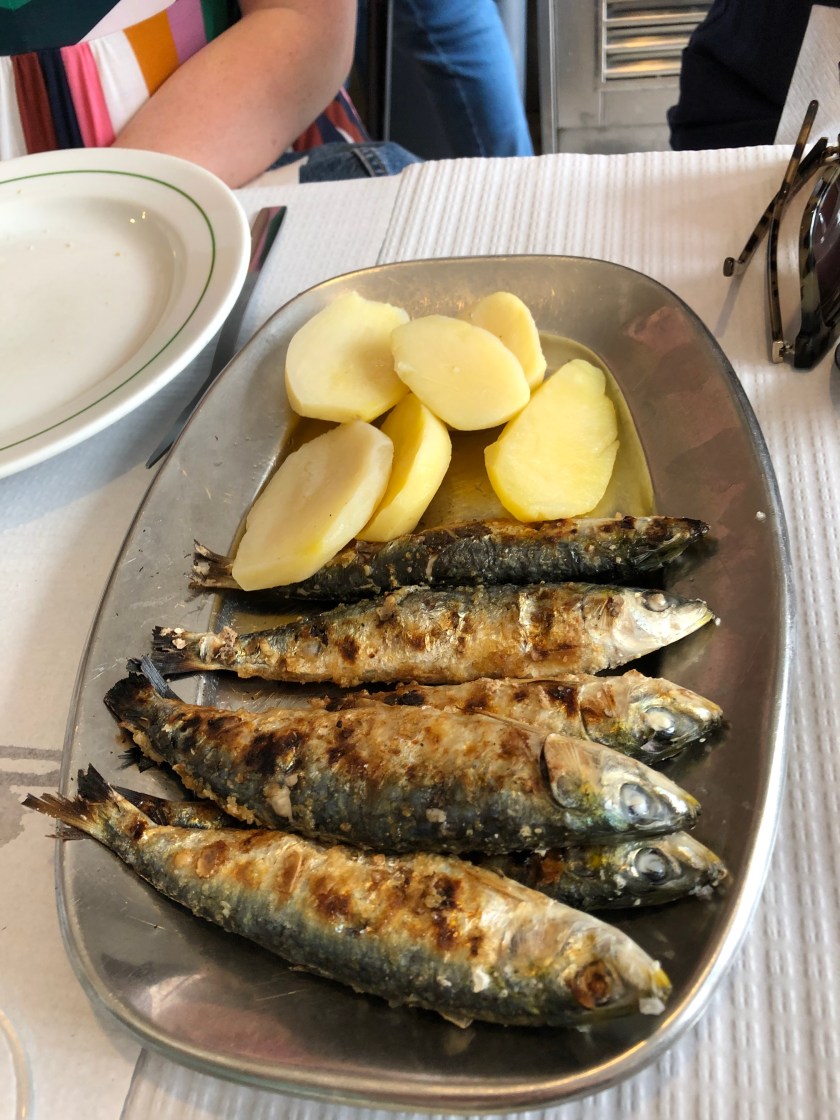
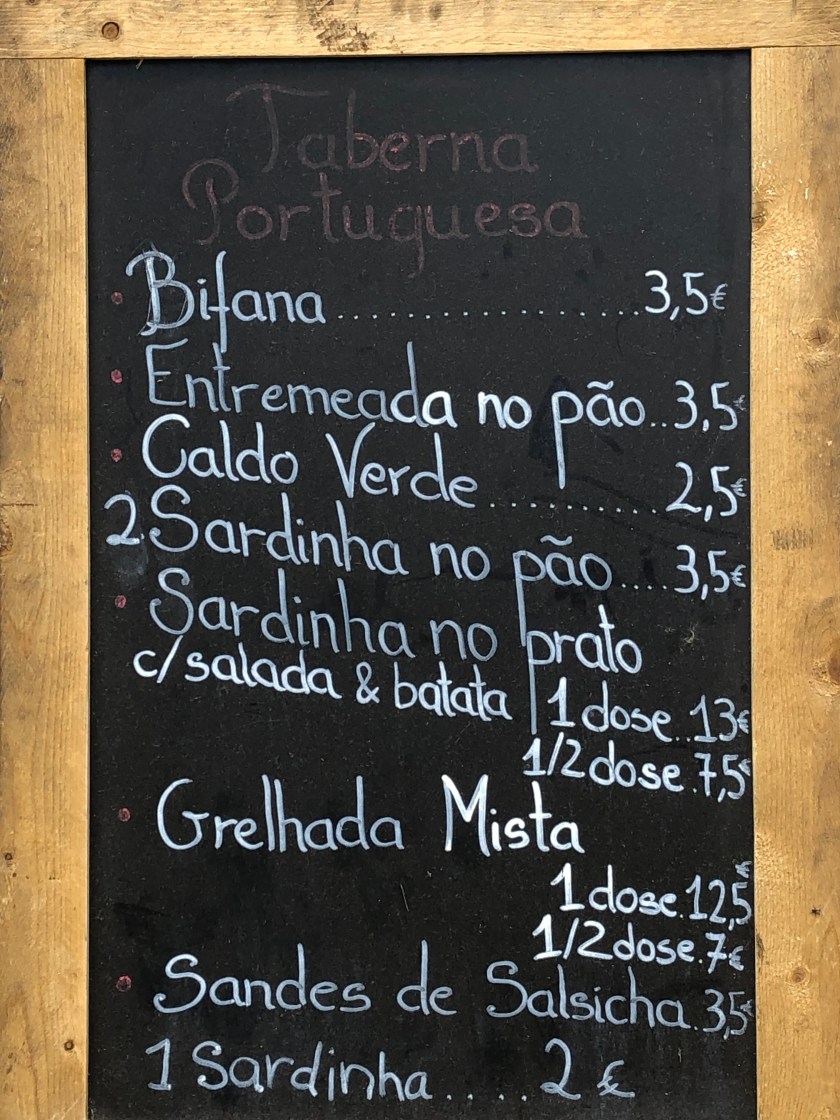
 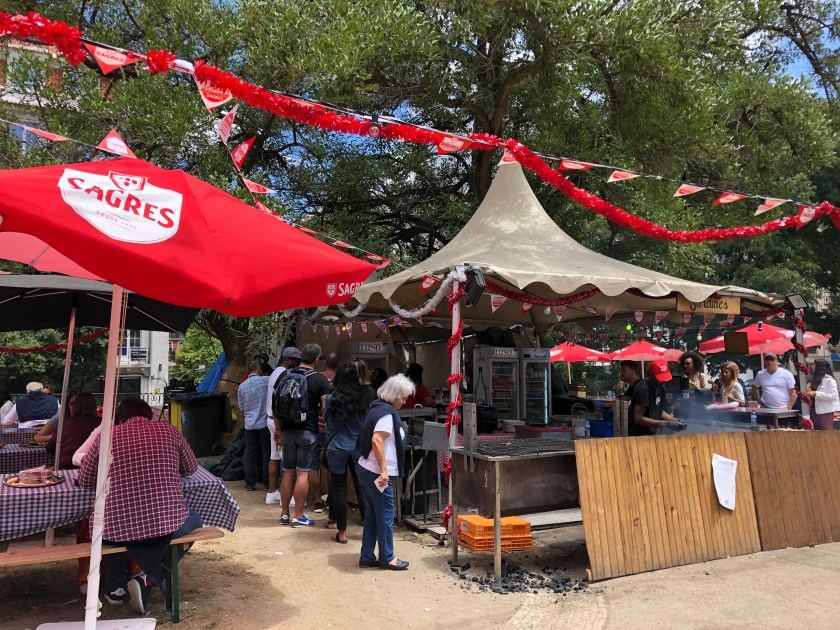 One of these is just a block away from our hotel. We couldn’t resist trying one of the traditional specialties, grilled sardines. They are cooked over coals, head and all, and can be served alone, with bread, or with other grilled fish and meats. The bones are very fine and can be eaten, but I refuse to snack on fish heads!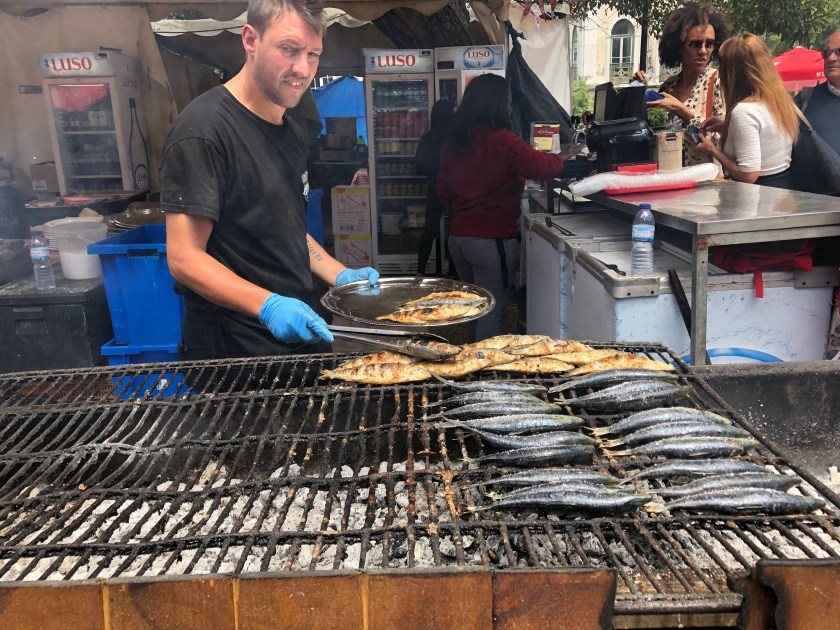

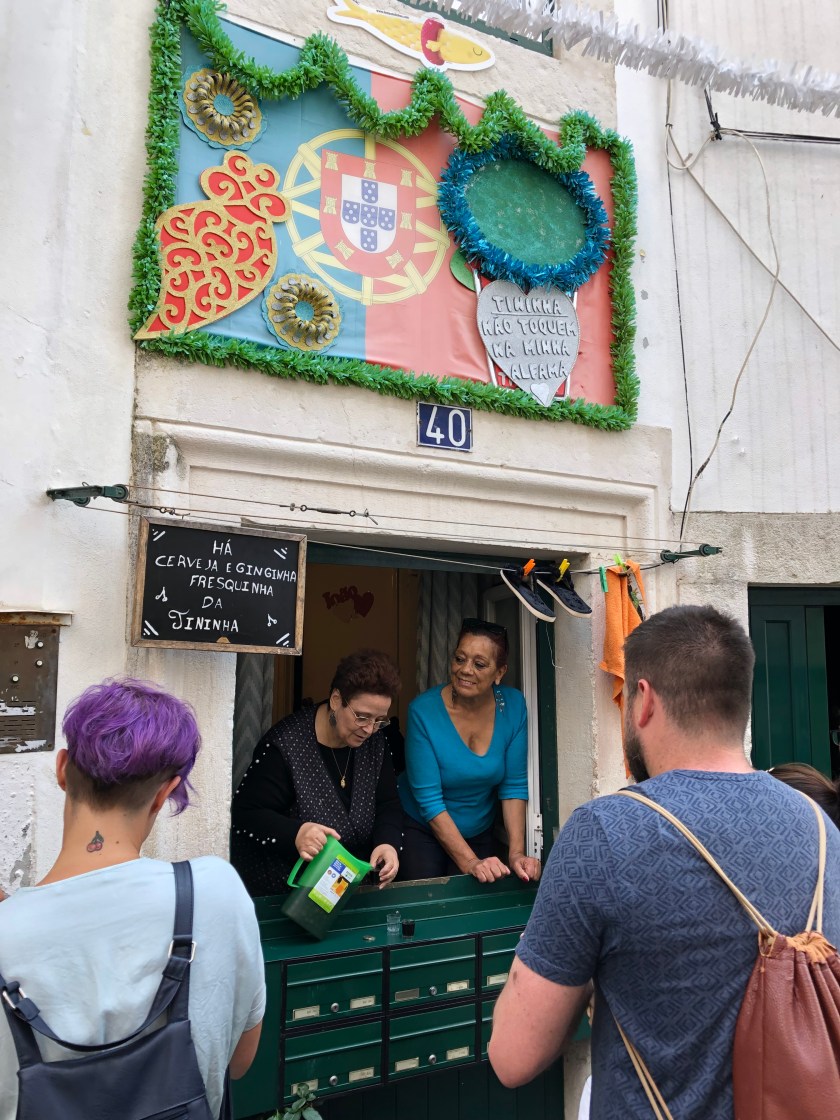
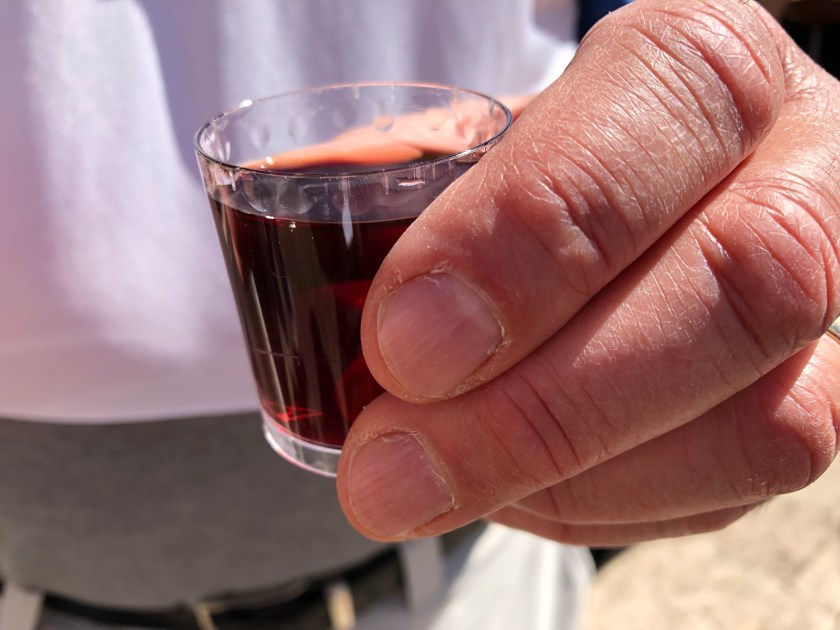
 Along the way we sampled the traditional liqueur called ginjinha, made from a berry that tastes like sour cherries
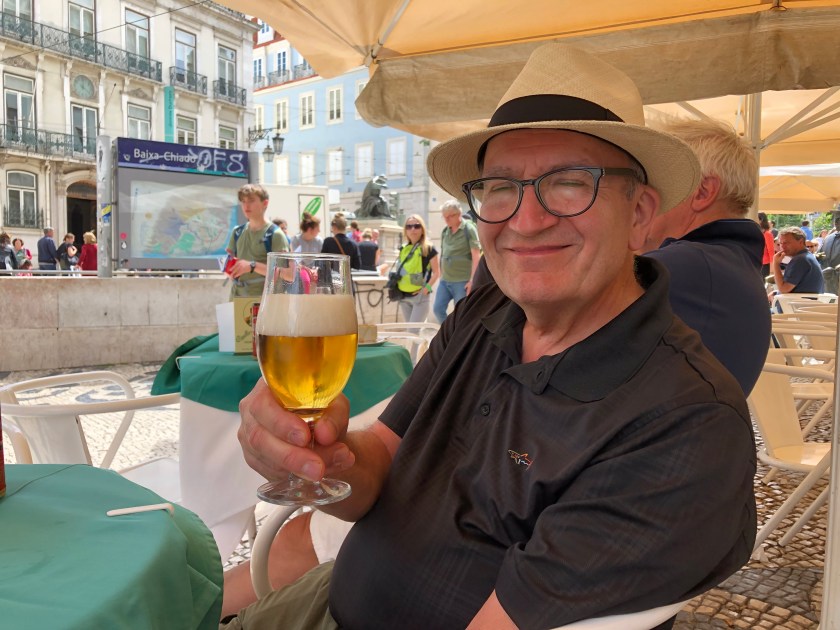
  and a local draft beer at the Museu (yes, that’s Museum) of Beer.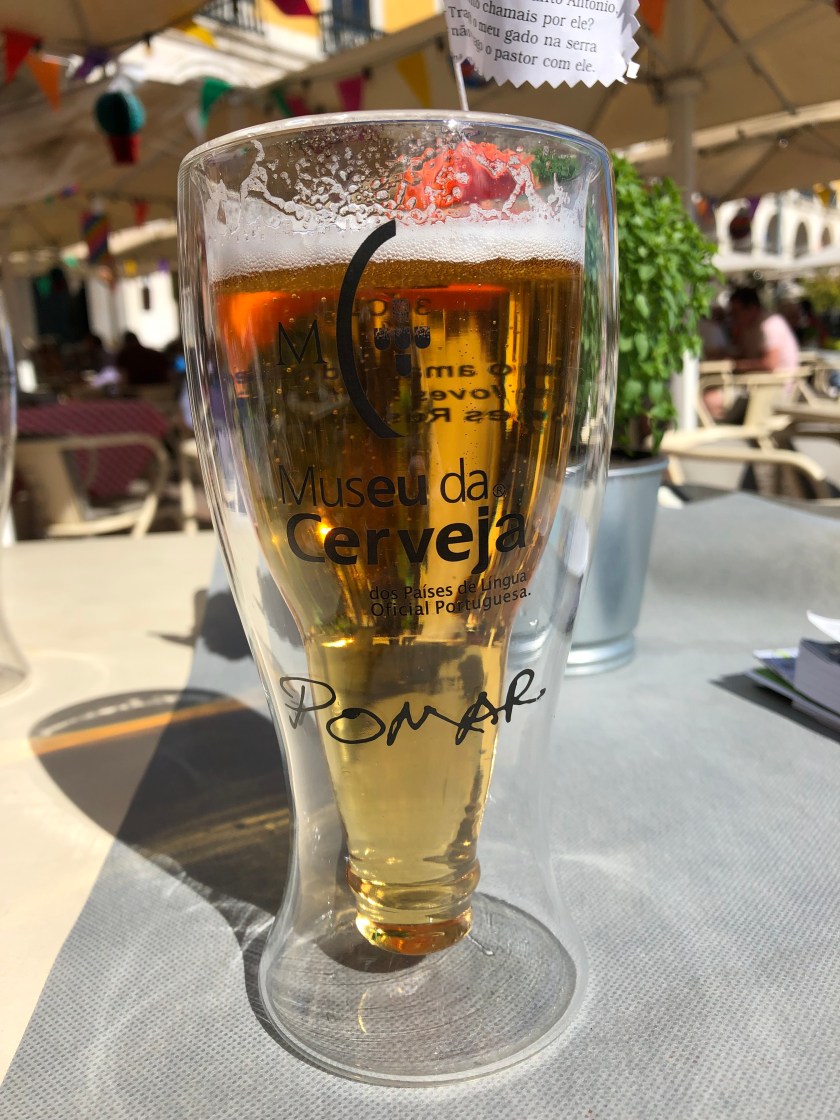



 she prepared lunch and we took the dog for a messy and muddy romp in a nearby park.
 Camino Musings