On the road again…

Well, it’s been about a year since our pilgrimage to Santiago de Compostela. We still remember fondly the memories of our 135 mile trek through northwest Spain – the physical challenges, the friendships made, the feeling of accomplishment of making it to Santiago not too worse for wear. I’m still processing the experience of the journey, hopefully incorporating the positive lessons learned.

This year, we are being tourists rather than pilgrims, although we will still carry the pilgrim philosophy. We are off the Prague, then joining a Rick Steves Best of Eastern Europe tour with 24 other travelers. We will be visiting Kraków, Poland, Auschwitz, Budapest, Croatia and Slovenia, where the tour ends. Then we will be going to Vienna for 3 days before returning home.

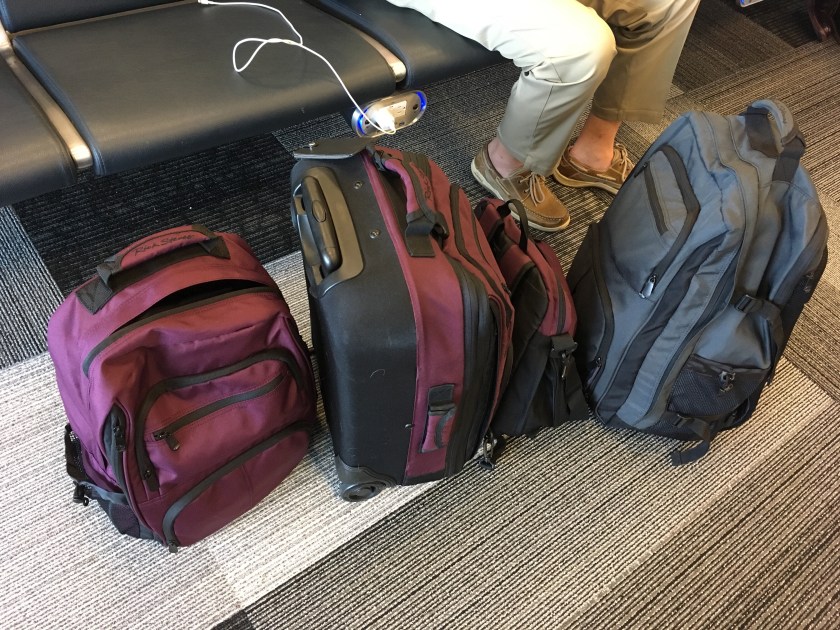
We are trying to embrace the packing light philosophy- three weeks in a 21 inch carry- on and a day pack. Needless to say I’ll be doing some laundry.

This blog has been resurrected from the ashes of the day-to- day routine of our typical American lifestyle- we are back on our pilgrimage!

Dare Caritatem, Requiescat in Pace

I admit it. Reading the obituaries has become part of my daily newspaper reading regimen. I suspect a lot of people of a “certain age” do the same thing. Oh yeah, the usual retort is “I read the obits to make sure I’m not in them”, or some other variation of the adage attributed to the great old (and dead!) comedian George Burns, who said “I get up every morning and read the obituary column. If my name’s not there, I eat breakfast.” But I prefer the quote from David Levithan – “If you start the day reading the obituaries, you live your day a little differently.” 

As I read the pages of the “recent deaths” a maelstrom of thoughts and feelings develops as these individuals who have been previously unknown to me now become real people and not just a list of names on a newspaper page. Some obituaries are quite brief, perhaps just mentioning that there were few next-of-kin and that there would be no funeral service.  Perhaps a beloved pet was the only survivor. Others celebrate a life filled with remembrances of family celebrations, the kindness and generosity of the deceased and how much she will be missed. Other obituaries are replete with personal and professional accomplishments. Then there are the ones that speak of the young person who dies in their 20s or 30s, perhaps leaving a young child to grapple with the loss of a parent. Drug overdose or suicide? Sometimes you get a clue in the text of the obituary as to how or why the person died, directly stated that so-and-so died of cancer, or as result of the struggle with substance abuse, or that in lieu of flowers a donation should be directed to a non-profit organization like the Lymphoma and Leukemia Society. But usually one is left wondering as to the circumstances surrounding the death, and more importantly one is left wondering about the impact of that person’s life on family, friends, colleagues, and society.

Few of us have the opportunity to write our own obituary. For what would we want to be remembered? What would be our legacy? Did my presence have a positive impact on something, or someone? Will I leave a footprint in this world?

More important than personal financial prosperity, accolades for professional achievements, and public notoriety is the ability to be able to connect at some level with another human being. This world has many truly amazing people – they have such generosity of spirit and a innate ability to make one feel respected and loved and to feed the soul. What a gift it would be to be able to give so unselfishly of oneself! 

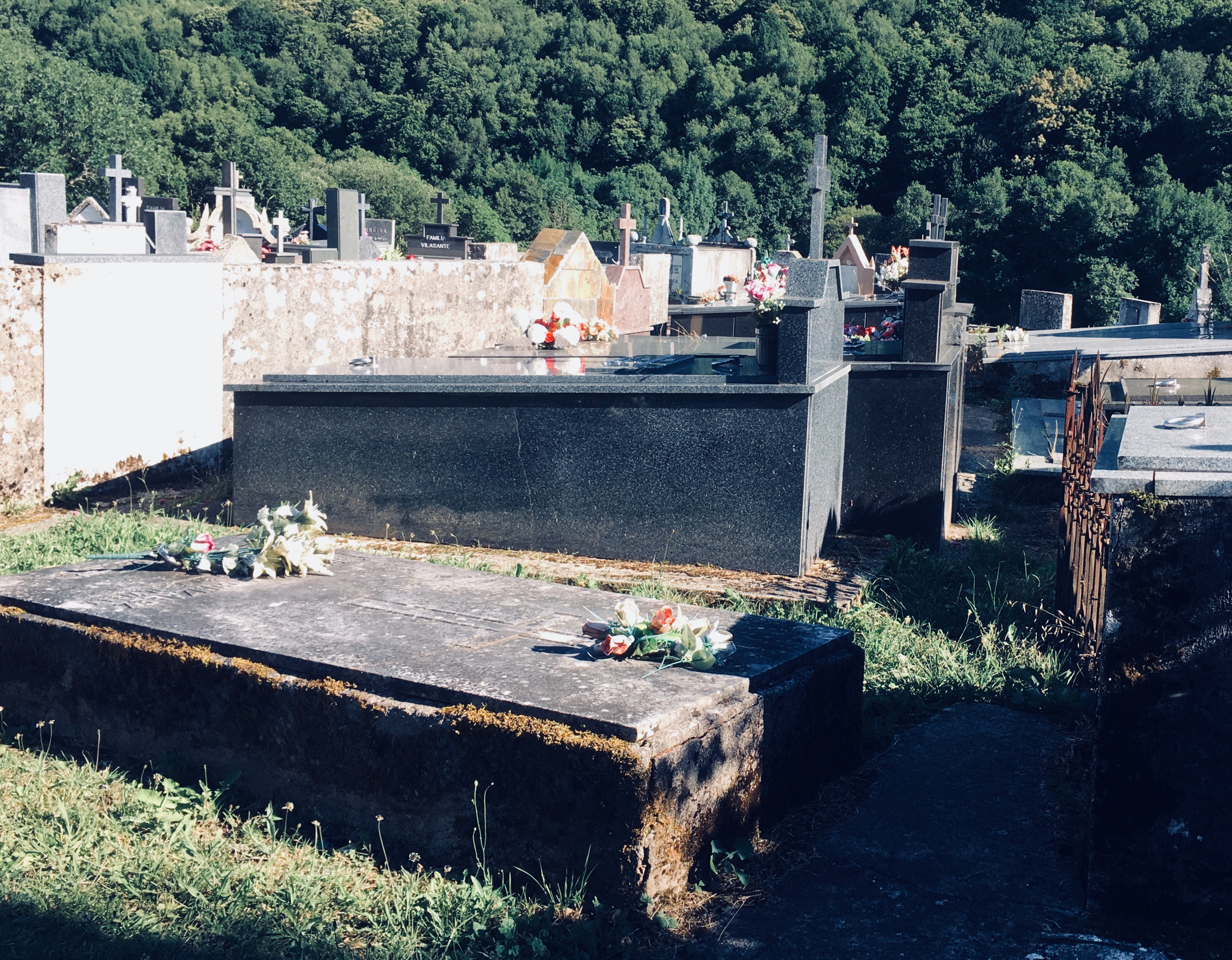
(Photo: Camino de Santiago, Triacastela, cemetery at the Iglesia de Santiago)

All that most of us will ever leave on this earth after we die is a tombstone in a cemetery or a memorial plaque in a mausoleum and perhaps an obituary published in the local newspaper. As we get older and really begin reflecting back on our lives, can we recall the times we made that “connection”, whether it was a word of encouragement, an unsolicited act of kindness, a warm embrace, a simple smile? These are the things to be celebrated in our own obituary.

Life’s a bowl of cherries- if you can avoid the pits!

One of my favorite fruits, the simple cherry – yet luxuriously rich with succulent sweet juices entrenched within the soft burgundy colored flesh confined beneath its slightly taught skin – is a harbinger of summer. Along with the huge cardboard cartons of watermelons that seem to be omnipresent in supermarkets beginning around Memorial Day, displays of sweet cherries are a welcome sight in the produce department, replacing the displays of citrus that have held court over the winter months and past the vernal equinox. Do you remember the mountain of cherries, unrestrained by plastic bags, lying with loose abandon on the display counter? It’s been a while, right? Nowadays they are found in ziplock bags, with a sign nearby.
Well, there’s a reason for the plastic bags and the attendant signage. Believe me, I know from personal experience!

Several years ago, during a trip to the supermarket, I had a close encounter with my favorite fruit. Wearing flip flops can be a hazard in the produce department, especially when an errant cherry finds itself on the floor. There’s nothing like the sensation of stepping on said cherry with its incredibly slippery pit and landing flat on one’s back after hitting one’s head on the sharply angled metallic edge of the display shelf. Along with feeling incredibly embarrassed, the results include a scalp laceration, a trip to the emergency department in an ambulance and a hell of a headache for a couple of days!

So what’s the point of this little parable? Don’t wear flip flops in a grocery store? Beware of vicious small fruits? Well, maybe flip flops aren’t the safest footwear off the beach, but perhaps there is a lesson to be learned from this freak “accident”. 

We tend to stride through life, not really paying attention to the details of our surroundings, unaware of the possible dangers to our well being, whether physical, emotional or spiritual. But in addition to being incognizant to perils, we also are oblivious to the little things that can bring us joy. That pesky little cherry of many years past resulted in a sutured scalp, but it certainly continues to be an amusing anecdote of how I was taken down by a cherry pit. Heaven knows, my kids thought it was hilarious. And yet I still look forward to the joys of eating my favorite fruit every summer.

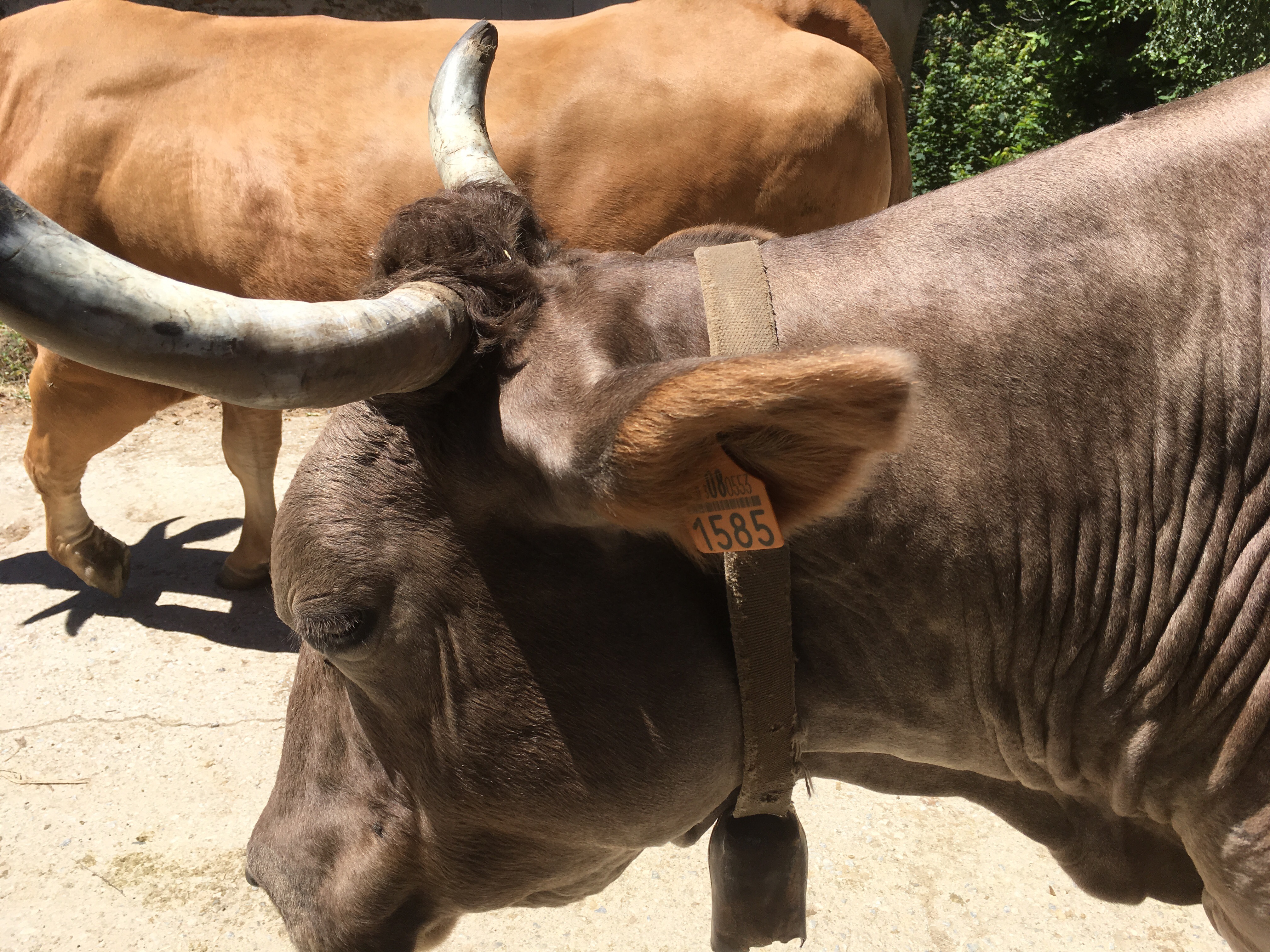
Walking the Camino this past summer, we strolled under numerous cherry trees with their pits strewn along the path. It brought back (un)pleasant memories as I walked prudently, not wishing to re-experience my cherry pit episode of many years past. Other perils were also encountered along the Way – slippery gravel, crazy Spanish drivers, steep rocky ascents, narrow stone bridges, herds of cattle, and  innumerable cow patties!  (Yes, the photo above is photographic evidence of the most common/aromatic obstruction on the Camino.)

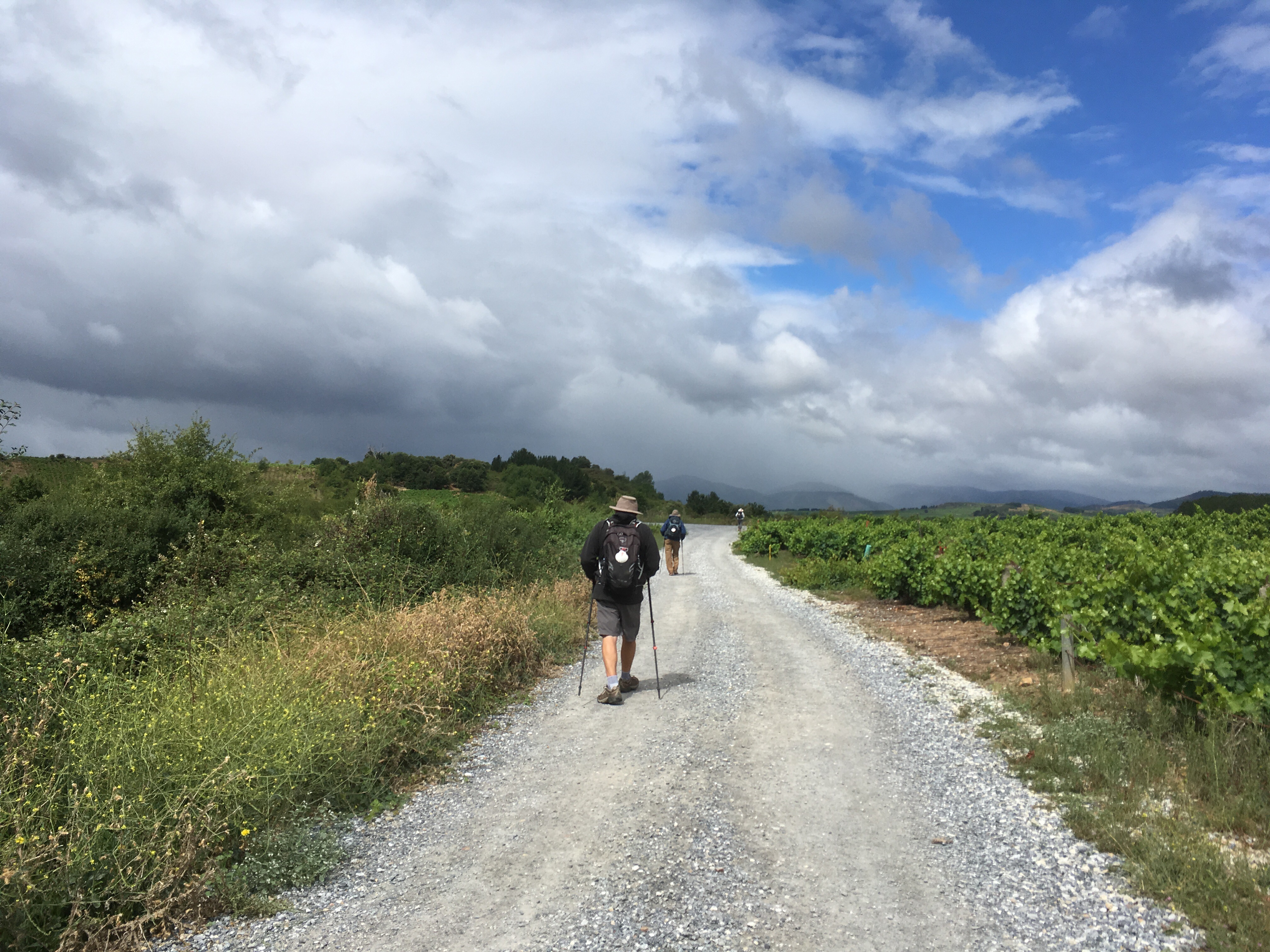
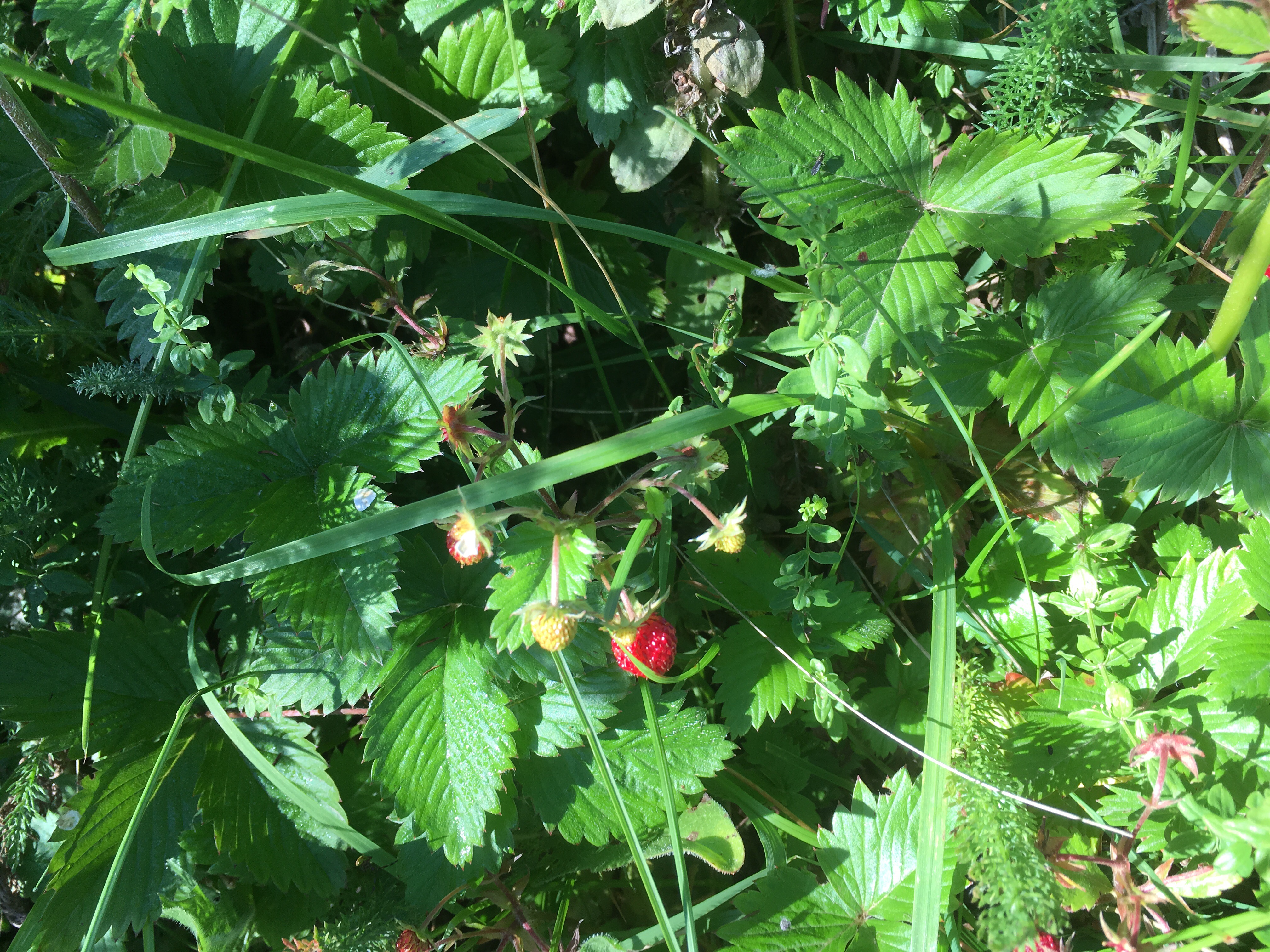
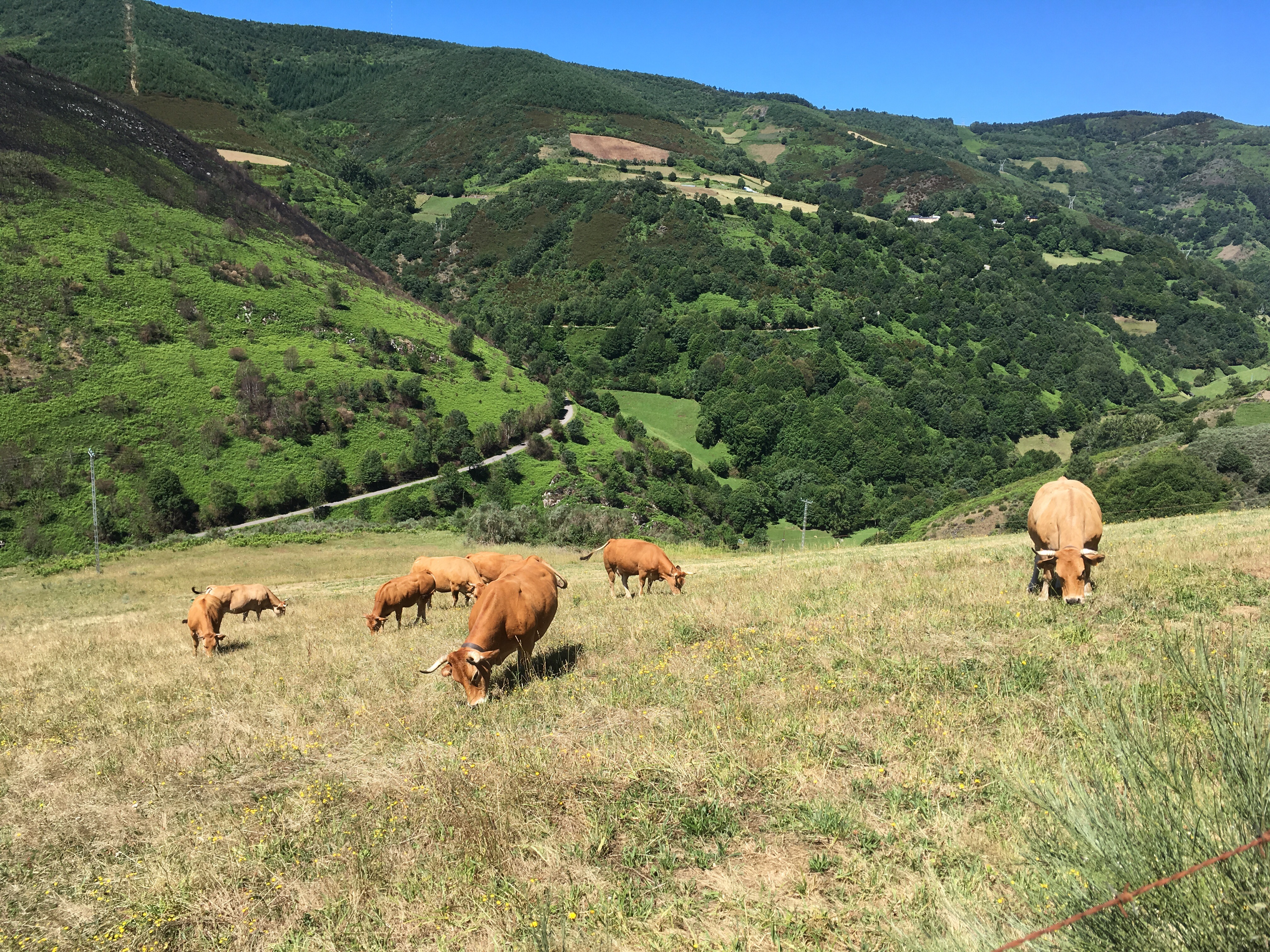
We stepped carefully, using our trekking poles with every carefully planted footfall, steadying our bodies, maintaining our balance and avoiding potentially disastrous tumbles on the trail. Attentive to each step, we avoided physical injury. There was no rushing along, no schedule to keep, no race to the finish. Truly in the moment, we also started to really pay attention to the little joys around us- the wild strawberries and lovely wildflowers on the wayside, the slugs crawling across the path, the sounds of nature, the plethora of cows grazing on the mountaintops on the way to O Cebreiro!

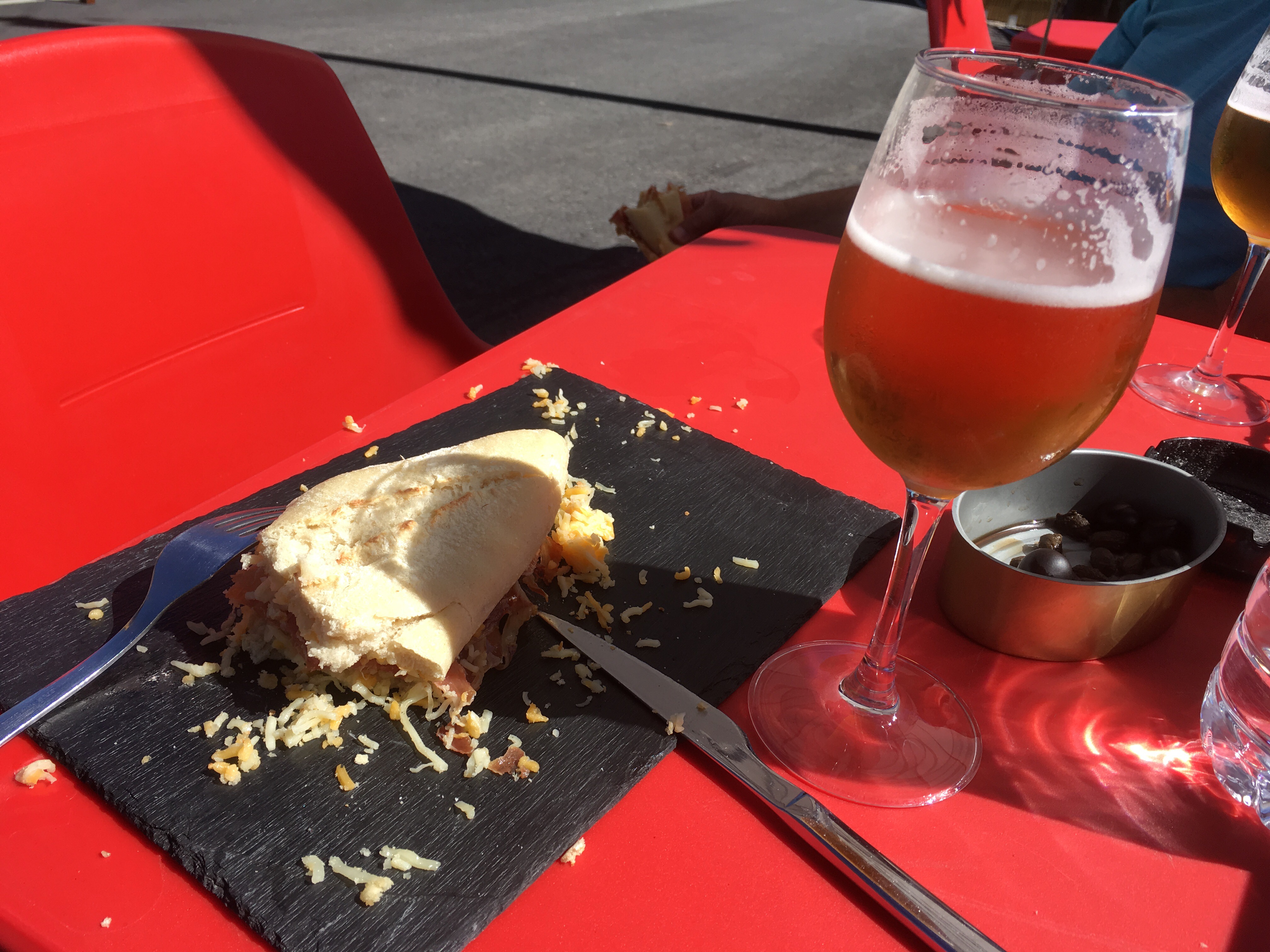
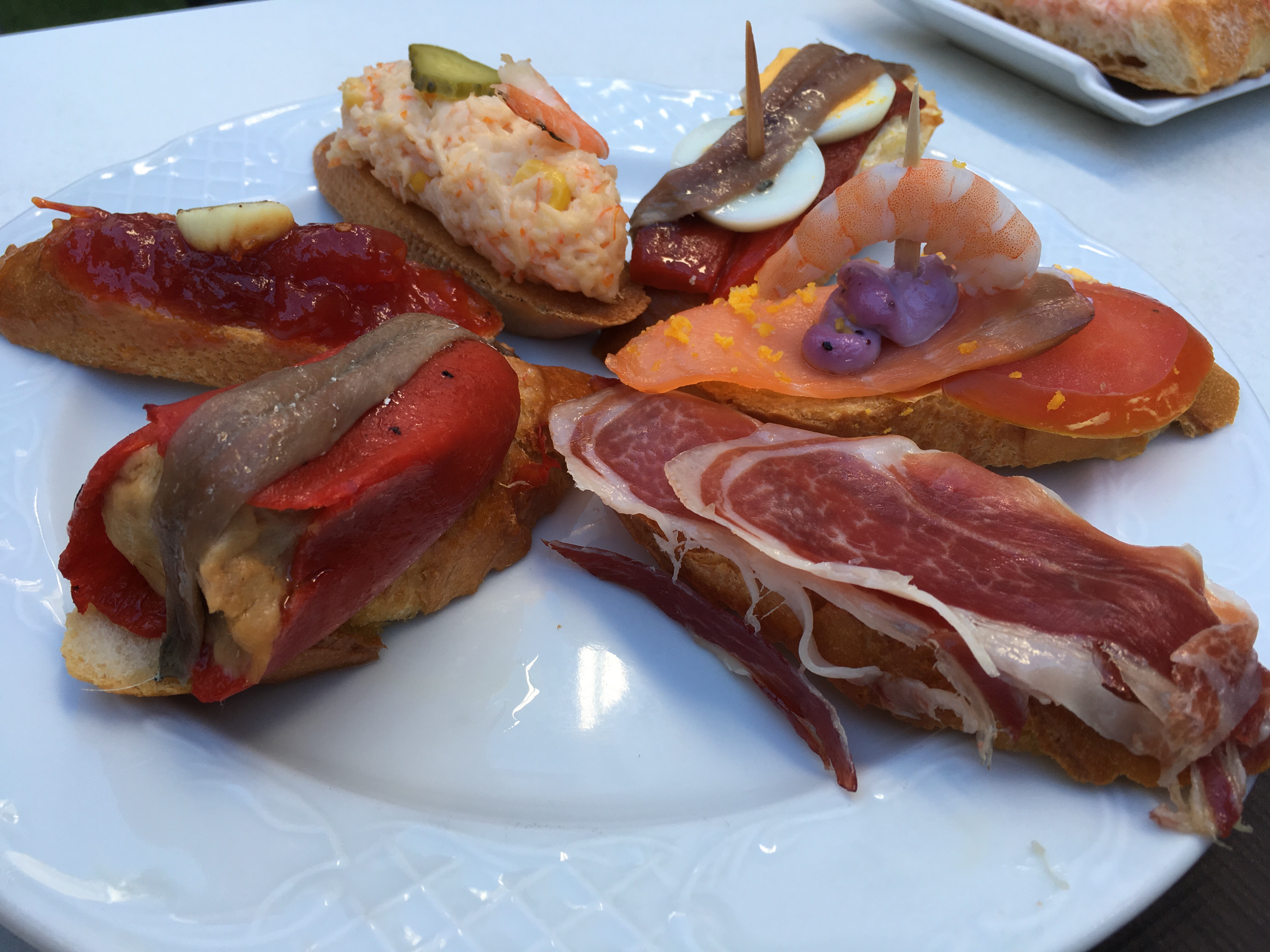
Despite our blistered feet, sore muscles, woefully out-of-shape bodies, and occasional misstep into some cow poop, we began to appreciate the majesty of God’s handiwork. And then there was the sense of accomplishment at the end of each day’s 10 or 12 or 15 mile trek – the rewards of perseverance and determination! We actually completed each day’s stage without spraining an ankle or taking a header into the brush! The reward of a cold beer and some tapas at the end of the day was infinitely better than a gourmet meal at a three-Michelin-star restaurant!

So be attentive- watch your step, be aware of the world around you, don’t be in such a rush- so you don’t get tripped up by a stray cherry pit and end up flat on your back. But don’t let the potential perils of life take away from enjoying all the “little things” that bring so much joy!

Joy of Sandwich

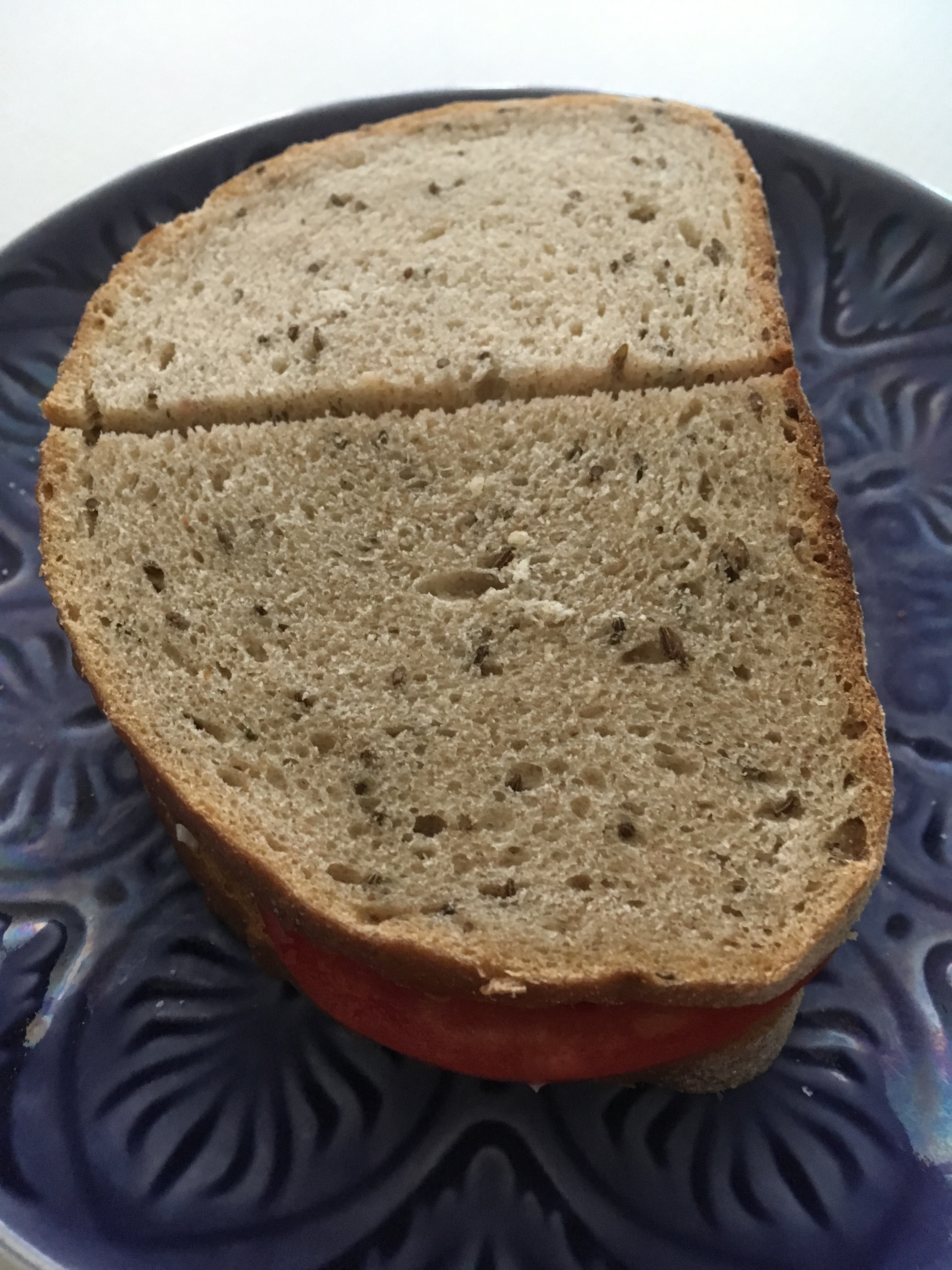
It’s peak tomato season! And that means we get to feast on the simple, yet heavenly, tomato sandwich. Everyone has their own favorite version: on white bread or Italian, toasted or not, mayo or butter…or both! But whatever version, the most important component is the fruit of the Solanum lycopersicum, the pomodoro (“golden apple”), the simple unassuming tomato. Of course. we now have a plethora of different varieties of this fruit that masquerades as a vegetable – from the hybrids developed for their ability to be mechanically harvested, picked before fully ripe, and gassed with ethylene to give them the bright red color to attract the supermarket shopper to the multitude of heirlooms with such intriguing monikers as “Green Zebra”, “Mortgage Buster”, “Black Krim”,  and “Rosella Purple Dwarf”. But everyone knows that THE best tomato is the one just picked from the backyard garden (or from the potted tomato plant on the patio). 

Warmed by the sun’s rays, firm, brilliantly hued, with that heavenly slightly acid and slightly sweet aroma, the homegrown version far outstrips any tomato one can purchase from the neighborhood grocery. To craft the perfect tomato sandwich, all one needs are two slices of bread (bowing to my paternal Eastern European heritage, I prefer seeded rye), a condiment (regular Hellman’s mayonnaise for me), a sprinkle of kosher salt and a big fat juicy homegrown tomato. That first bite practically screams out “SUMMER!” as the tastebuds are overwhelmed by the sweet/slightly acidic with a touch of umami tomato juices admixed with the silky and slightly sweet mayo spiked with the mere hint of saltiness, all embraced by two spongy pillows of bread. There’s no need to add bacon, or lettuce, or even the oh-so-trendy avocado, not when the fruit of the vine is so perfect.


On the Camino, it is the ubiquitous bocadillo that brings joy to the pilgrim. A simple sandwich of baguette, cheese (queso) and/or ham (jamon), and maybe a few slices of tomato (no mayo or butter or other condiment), the bocadillo is an inexpensive, substantive meal that costs only a few Euro but provides needed nourishment for body and soul. After hiking uphill for countless kilometers with sore and probably blistered feet, this unembellished concoction of carbohydrate and protein represents a delectable feast. The crunch as one bites through the bread crust with its slightly nutty and carmelized taste, the soft air pockets of the bread’s interior, the chewiness and umami and saltiness of the cured meat and cheese, the sweet/slightly acidic (optional) tomato in concert make the lowly bocadillo a symphony for the senses. It is the Camino counterpart of the celestial summer tomato sandwich.

It takes so little to construct the perfect sandwich – bread, ham, cheese, tomato – yet, what ecstasy emanates from consuming such an unpretentious food. It takes little to nourish our bodies. A simple sandwich suffices. And it takes little to nourish our souls – small acts of kindness, a smile, a word of encouragement – the things experienced daily on the Camino de Santiago. May we all share these simple “things” on our own life Camino!

Meditation on Celebrating Life

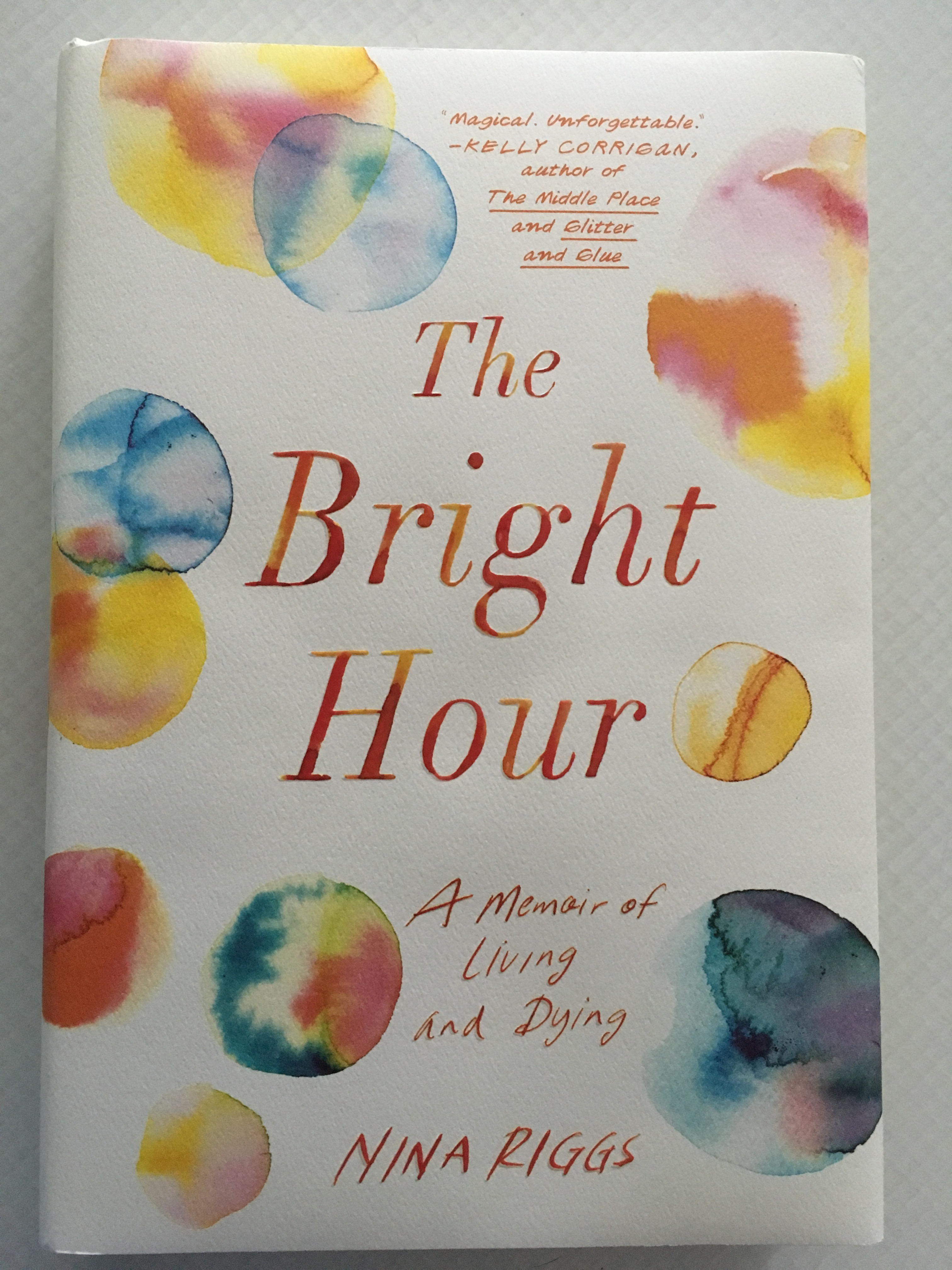
“We are breathless but we love the days. They are promises. They are the only way to walk from one night to the other.” – from The Bright Hour: A Memoir of Living and Dying, by Nina Riggs.


The author, diagnosed with Stage 4 metastatic breast cancer at age 37, a poet, wife, mother of two young sons, did not survive to see her words immortalized in this recently (June 6, 2017) published memoir. You may be thinking, “Oh no, another depressing cancer book!” – but this book is not only a legacy for her family but also truly a gift to us all.

Why did I choose to read this seemingly depressing work after having such a life reaffirming experience as walking the Camino? Well, certainly the accolades in the New York Times Book Review played a role. But this book is not about dying, but rather a treatise on how to seize the opportunities of each day we are alive. It was as life reaffirming as the Camino. 

Each of us, with each passing day, is one day closer to the end of our lives on earth. For Nina Riggs, this time was more finite, knowing that the ravages of her rapidly spreading malignancy would soon take her away from her seven year old and ten year old sons, her adoring husband, her close circle of family and friends. Yet she approaches this devastating situation with the focus on truly experiencing and celebrating each day, with its simple joys, profound sorrows and insurmountable fears. During her two-year struggle, she also must endure the pains of losing her own mother to cancer (multiple myeloma), yet relishing the lessons her mother taught her on how to die with grace and dignity. Through it all she will draw you into her life, and I suspect that you too will learn to appreciate each day as a gift – and as a promise that helps us in the bright hours to go from one night to the next.

Sounds of Silence – Learning to Listen

I have a significant hearing loss. As a consequence of a combination of otosclerosis (hardening of the tiny bones in the middle ear) and auditory nerve damage, I can perceive only about 60% of what a “normal” person hears. This has been a slowly progressive disability, and for years I compensated for this by pretending to hear/understand and by unconsciously learning how to lip read. “Look at me so I can hear you!” was being said with increasing frequency. So about five years ago I swallowed my pride and conceded that I needed a little “help”. Ergo, for me hearing aids were no longer a stigma of getting old. 

These little digital wonders were ridiculously expensive and not covered by health insurance (I guess deafness isn’t as important as erectile dysfunction!). But WOW did they change my auditory perception of the world around me! The first time I popped those little guys in my ears, I heard sounds that I hadn’t heard in years – like the whirring of the washer during the spin cycle, the constant on and off rumbles of the furnace fan, the rustle of leaves underfoot and the incessant traffic on the nearby road. The television speakers no longer had to strain at their decibel limits and the neighbors no longer knew what programs we were viewing that evening. And I actually could discern the subtle “ssss” and “fffff” sounds that I was voicing! 

The world is an absurdly noisy place. It actually was too much auditory stimulation for me in those first few weeks as my brain was retraining itself to discriminate meaningful sounds from ambient clamor. After a long day at work, I occasionally longed for some quiet and I made it a habit to remove the hearing aids in the early evening. On Sundays, part of my celebration of the Sabbath was to escape all the ruckus in this crazy world by eschewing the hearing aids for the entire day. I longed for my sounds of silence.

Not so on the Camino, though, as I wore the hearing aids from sunrise to sunset. Most of our days were spent outside in God’s glorious creation, and, except for the brief periods that the Camino paralleled a highway, one could focus on the sounds of Nature – the hoot of an owl, the whoosh of the wind, the crunch of gravel underfoot, the cowbells in the distant fields, the dissonant crowing of the roosters- and the need to focus on the sounds of bicycle pilgrims approaching rapidly from behind to avoid a peregrino-bicigrino collision! There were also long periods of true silence, even when walking with others, when one could exercise contemplation or listen to the music in one’s own head. I had no desire to take a break from wearing hearing aids because every sound or every silence was the pure unadulterated joyful “noise” of what is important in life.

In our lives, we need to learn the difference between hearing and listening. Hearing is a function, a result of sound waves causing movement in the tiny bones of the middle ear, stimulating small hairs in the inner ear to send impulses via the auditory nerve so the brain can perceive sound. But listening is a totally different concept – it is the interpretation and appreciation of the sounds we hear. People talk at each other and hear each other, but many times do not listen to what each is saying – certainly so much more so in this present political climate. Reasonable and respectful discourse is dying, as each side steadfastly clings to its “facts”, not even amenable to listening to, understanding and appreciating what the other side has to say. Maybe we all need to remove our hearing aids once in a while, savor the sounds of silence, and insert our listening aids instead!

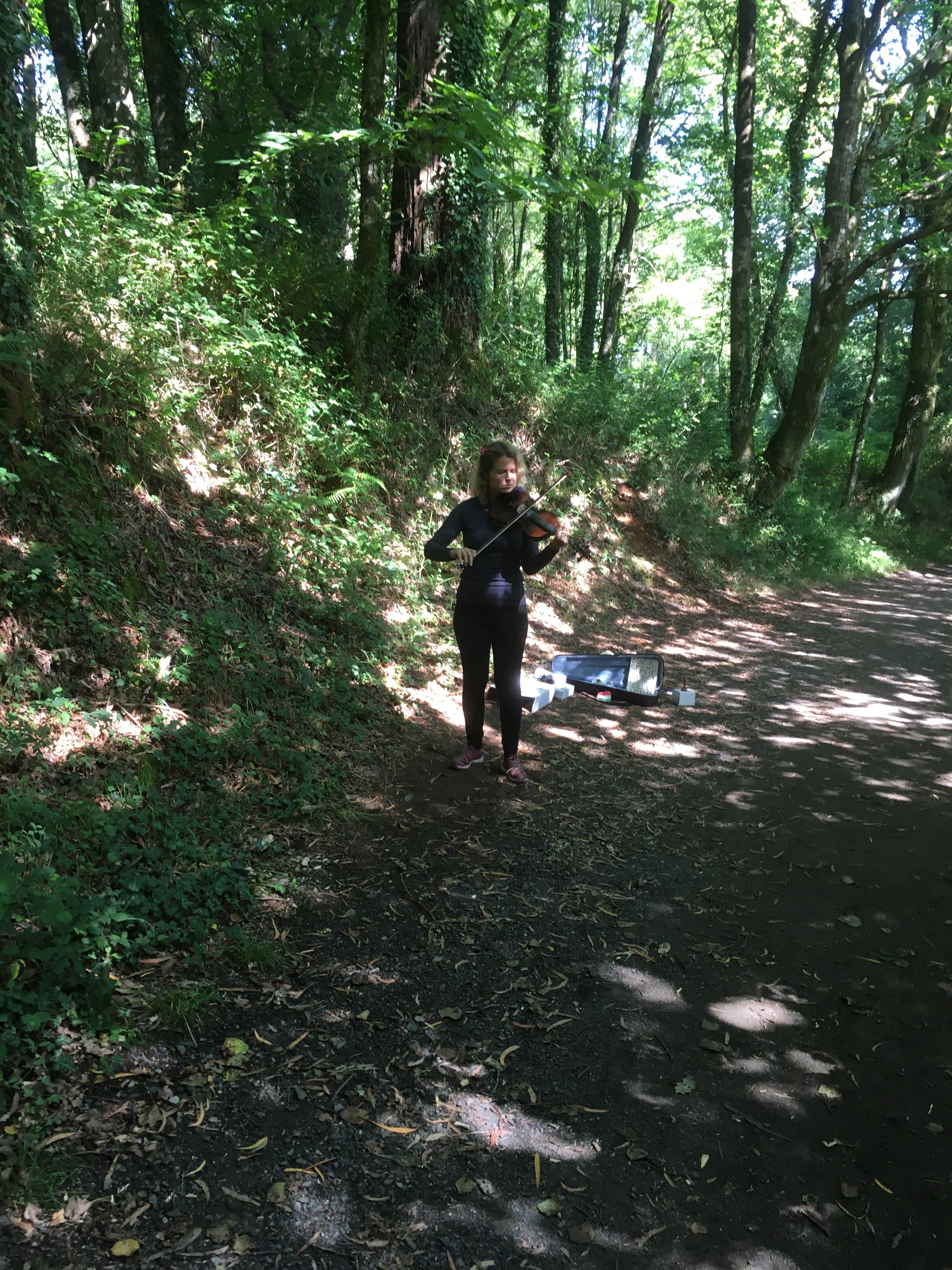
The joyful strains of music are frequently heard on the Camino-the lone fiddler in the woods, the bagpiper at the pilgrim’s portal to the cathedral square, or a traditional Galician band in Santiago. Enjoy this uplifting performance!

“You don’t choose a life, you live one”

Image result for the way martin sheen

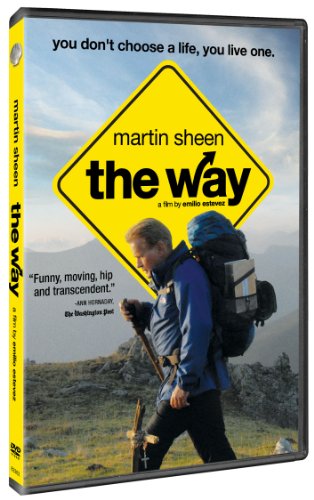
It’s been almost two weeks since we completed the Camino de Santiago. I thought it would be neat to watch this movie again to see if we could recognize places we had just recently visited. For those of you unfamiliar with this film, it is the story of a father and son, the dad (Martin Sheen), a physician and widower who has never left his safe and tidy world in California, and his son (Emilio Estevez, Sheen’s actual son), a dreamer who has decided to abort his doctoral studies and travel the world. The son decides to walk the Camino de Santiago, but in the first day climbing over the Pyrenees succumbs to hypothermia. The dad travels to St. Jean Pied de Port, France to claim his son’s remains and is inspired to walk the Camino in his son’s place. The popularity of this movie, released in 2011, has likely played a significant role in the surge of Americans on the Camino in recent years.

I was particularly struck, on this viewing of the film (the fourth time, by the way, but the first time post-Camino) by a statement made by the son to the dad in the beginning of the movie as the son is being driven to the airport to start his Camino – “You don’t choose a life, you live one.” How many of us “choose a life”, mindlessly plodding through each day, sunrise to sunset, going “through the motions” of life. We wake up, shower, maybe grab some breakfast, drive to work, spend eight hours on a job for which we may not be particularly enamored, drive home, eat dinner (likely in front of the television) or grab some take-out on the way home, and go to bed – day after day after day! Americans live a lonely life, separated from family because job opportunities take them far from home. We are addicted to internet, video games, Netflix, television – activities that truly isolate us from other human beings. To rise the corporate ladder, one must devote many hours to our occupation, to the detriment of relationships with one’s spouse/partner/offspring. We long for the day we can retire from the job so we can finally enjoy life.  Then before you know it, that’s it! One is either too sick or too old or too financially strapped, or all of the above, to enjoy the “fruits of one’s labors” and the  “golden years” of retirement are either compromised by ill health or a depleted pension account,  or cut short by an untimely demise.

The American lifestyle, centered on one’s job and the pursuit of the “American dream” – a large home, two SUVs in the garage, and a large stock portfolio – and the predominance of social media, the internet, the smartphone in our everyday lives has contributed to our social isolation and demise of social interaction. The lack of mere civility between individuals is lost. It is so easy to viciously attack another person on Facebook or Twitter because it is so impersonal. Even at dinner (if the family even deigns to eat at the same table), parents and children are more focused on their smartphones instead of actually talking to each other, face-to-face.

On the Camino, sure, people have smartphones, but the mere act of doing a pilgrimage results in an escape from the distractions of the outside world. The smartphones are tucked away in pockets and backpacks. Pilgrims from Spain, Italy, Germany, Korea, Australia, USA, and pretty much every corner of the planet communicate with each other, face-to-face – exploring meaningful discussions in a sort of jumbled mélange of their native tongues and English (which is a second language to some degree of the majority of Europeans).  One is transported back in time, in rural Spain, where families and friends participate in the evening paseo, strolling the plazas in the evening, enjoying wine, beer, and tapas at the neighborhood cafes and restaurants, visiting, chatting, and enjoying each other’s company. As pilgrims, we also participated in this wonderful custom. No one rushes home after work and squirrels themselves away in their homes, glued to television or the internet!

And the focus is not on “living to work” but rather “working to live.” The concept of the afternoon siesta persists in Spain – a time of relaxation after a hearty lunch at home with family. Perhaps we can learn something from the Spanish (and Italians and Greeks and French….). Moments are to be savored, not rushed through – truly living a life, not choosing a life.


Back to the “real world”?

It’s been eight days since we arrived in Santiago, physically exhausted but exhilarated. I’ve been back home for four days, trying to get over the jet lag from the 22-hour return travel day and getting back into the daily routine of workaday life. In researching the Camino and reading accounts of some of individuals who took this journey, the one common thread is that the Camino is a life-altering experience. For some, it was the culmination of a dream, for others the experience of the Camino had a more subtle effect, taking weeks to months to manifest its magic.

The  brief time walking the Camino, to be able to escape all the drama and turmoil of this crazy world, was such a gift. With the onslaught of social media, talking heads on television, and mindless political hubris that pollutes our society, it is virtually impossible to focus on what is truly important. The Camino, distant both geographically and culturally from all this turmoil, provides an opportunity to focus on oneself and upon the glory of God’s dominion.

The Camino is truly a metaphor for life. We all start at a beginning and we trudge along, sometimes quite slowly, toward the goal, the endpoint of our life’s journey. Much of the time we are alone, even if walking with others, in our thoughts. Placing one foot in front of the other, we are almost in a hypnotic state, yet able and excited to make little discoveries that would have been missed in our everyday world full of external distractions. The tiny wild strawberries along the trail, the stork nest on the top of the telephone pole,  the golden butterfly on the rose bush, the black slug slowly pulling itself across the path, the heron in the distance, the ridiculous amount of cow manure on the footpath- all observed because there is endless time to actually see. 

The crunching of the gravel underfoot, the hooting of the owls in the forest, the endless birdsong, and yes, even the strains of bagpipe or fiddle music from a lone musician at the bend of the path accompany the pilgrim who has nothing better to do than listen to the world around him/her.

We are given direction, yellow arrows and milestones on the Camino, sage words of advice from mentors in the non-Camino world. Whether or not we choose to follow this direction impacts the future path our life takes. We are faced with choices, not knowing which is the correct path to follow but trusting our instincts hoping that the choice will have positive consequences.

There are good days and there are bad days on the Camino, as in life. Sometimes it takes every ounce of energy, every last breath, to make it up the steep grade to the top. Sometimes we are faced with an obstacle so great that we fear that we cannot go on.  But we learn the benefits of perseverance, step-by-step, breath after breath, that reap the benefits of our efforts. And we learn to appreciate the brief respites to catch our breath, rehydrate with cool water and re-energize with a simple bocadillo of rustic bread and locally produced cheese.

The Camino is a microcosm of our world- people from all over the globe – Korea, New Zealand, Czech Republic, Italy, Denmark, Canada, USA – Christian, Jewish, Muslim, Buddhist, agnostic-yet all getting along, helping and supporting each other, non- judgemental, all united in their common goal. Rich and poor, young and old, irrespective of race, religion, sexual orientation, all walking toward the same end. And all willing to help and support each other, whether with a kind word or an offer of a bandage to cover a painful blister. Would it not be an ideal world if it mirrored what occurs on the Camino?

It takes a while to process the Camino experience, lessons to be learned and executed. So the Camino truly is a lifelong journey. Although my Camino in Spain has ended, my Camino in life continues.

More to follow…………..

Post Camino Day 3: Still in Spain but to the End of the Earth

Sure, the official Camino de Santiago  ends in Santiago de Compostela, whether it is the Camino Francés (the oldest and the most traveled Camino starting in the Pyrenees) or the Camino Portugues (obviously starting in Portugal) or the Camino Primitivo (traversing the northern coast of Spain) or the multitude of other pilgrimage routes to Santiago, but some pilgrims choose to extend their journey to Finisterre, approximately 80 km west of Santiago. Finisterre (translated to “end of the earth”) is the farthest western point in Spain, and this was considered by the peoples that originally populated the northwestern Iberian peninsula as the true end of the earth, the place where the sun disappeared into the horizon at sunset. Therefore, it was quite appropriate for us to end our Camino (at least our Camino in Spain, more to follow on that later) at the tip of the western coast of Spain overlooking the Atlantic Ocean.

No, we did not don our hiking shoes nor did we pick up our trekking poles that were tidily packed away in a suitcase! We took a bus tour – well, not actually a bus, more like a passenger van, as the buses were on strike – to Finisterre and Muxia, further north on the Costa da Morte, along with a van full of other pilgrims from Lithuania, Russia, Czech Republic, Canada, and Germany, a veritable United Nations crammed into a Citroen minivan.

Our driver/guide was an intriguing young man from Santiago who has walked the Camino many times. The Camino (“the Way”, as he called it) becomes addictive and many pilgrims return, either to repeat the same route or follow one of the other Caminos to Santiago. With dreadlocks gathered into a sort of “man bun” and pierced tongue, he was most certainly not the stereotypic version of the pious religious pilgrim, rosary beads in hand, praying novenas! But truly the spirit and passion of the Camino lived within him as he enthusiastically shared how the Camino changed his outlook on life.

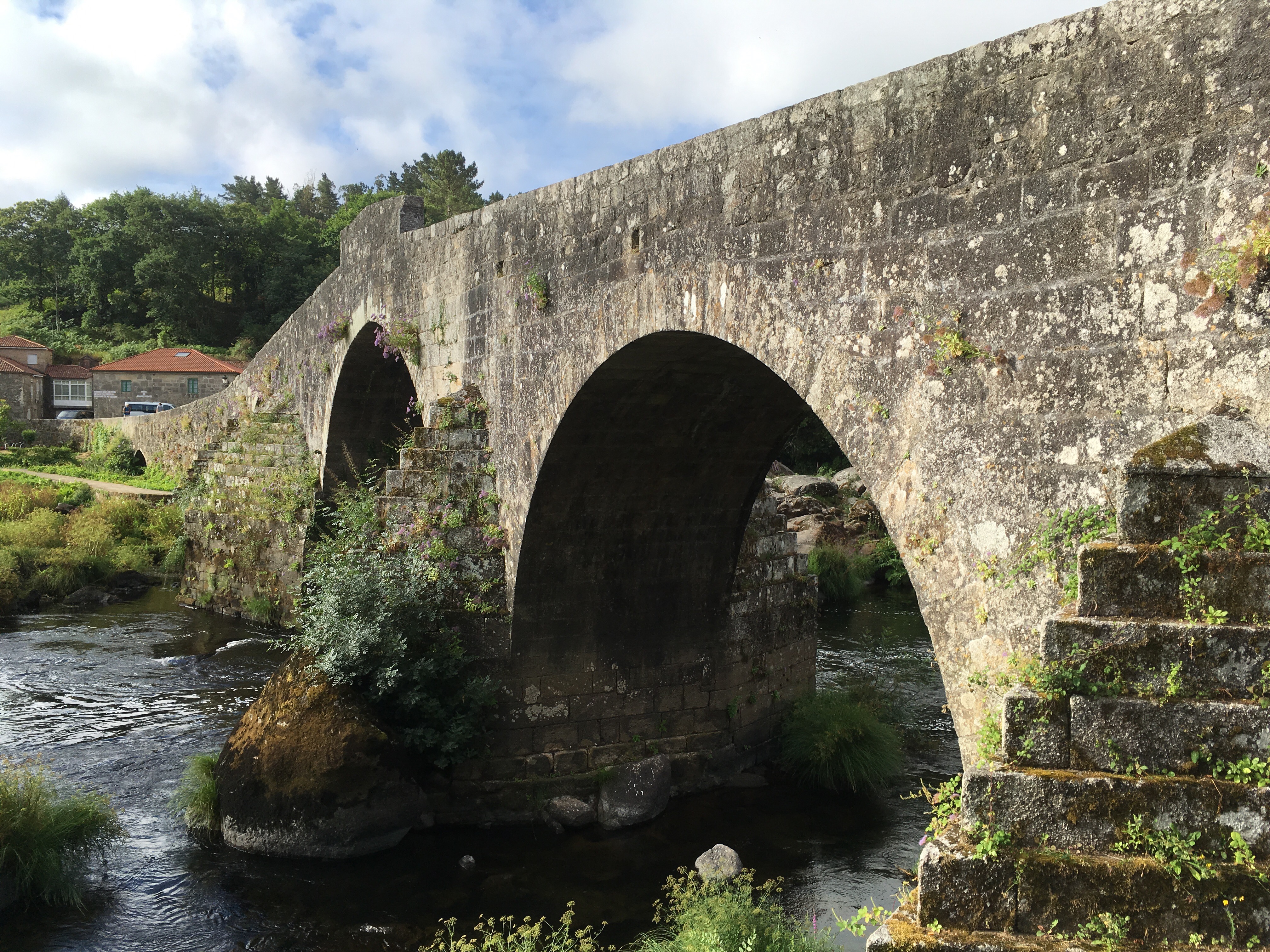
As we traveled the Costa da Morte (so named because of all those who have perished in the violent waves crashing this mostly rocky shoreline), we made several stops. We first visited Pontemaceira, an ancient Roman bridge traversing a small waterfall with an adjacent water mill.

Then we had a brief stop in the fishing village of Moros, famous for being the second largest producer of  mussels that are grown on platforms offshore ( the largest producer of mussels is China, by the way) and also known for tiny clams that are harvested from the beach at low tide by the local women (men are too clumsy, and probably not meticulous enough to gather these mollusks that are the size of a dime!).

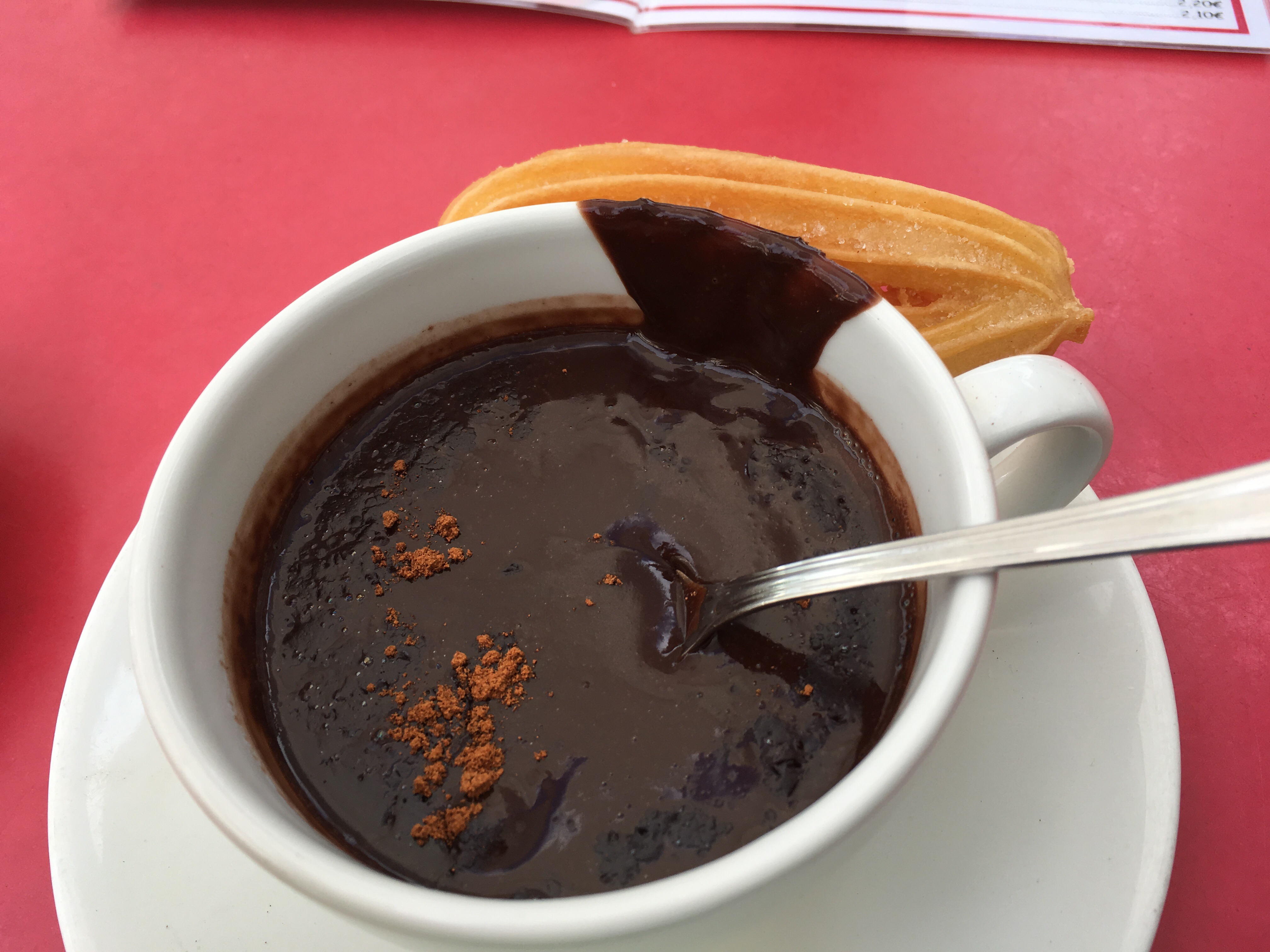
It was here in Moros that we finally had an opportunity to sample chocolate con churro, a thick warm chocolate pudding-like beverage, usually eaten with a spoon, garnished with a bit of cinnamon and accompanied by a fried crispy donut-like pastry sprinkled with sugar. 
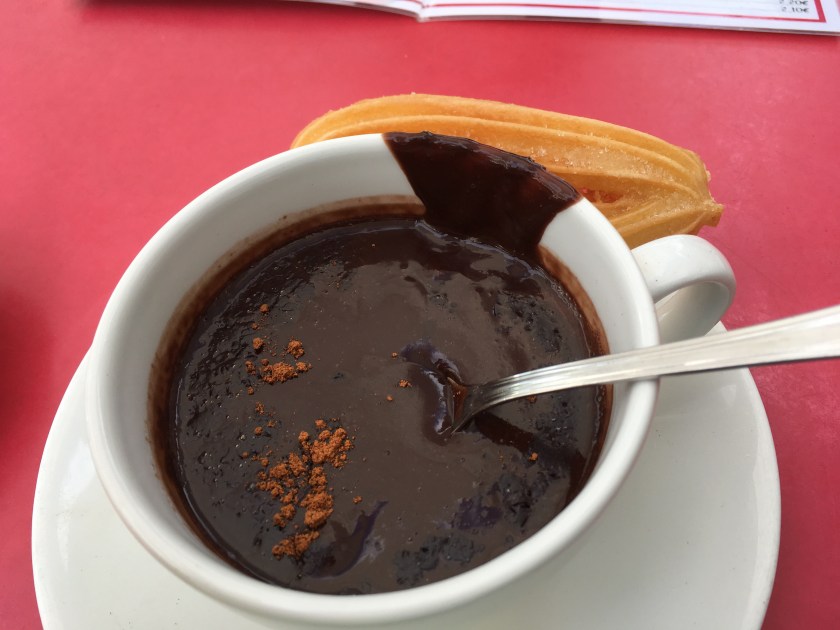
And it only cost 1 euro 70 cents – about $2.00 (USD)!

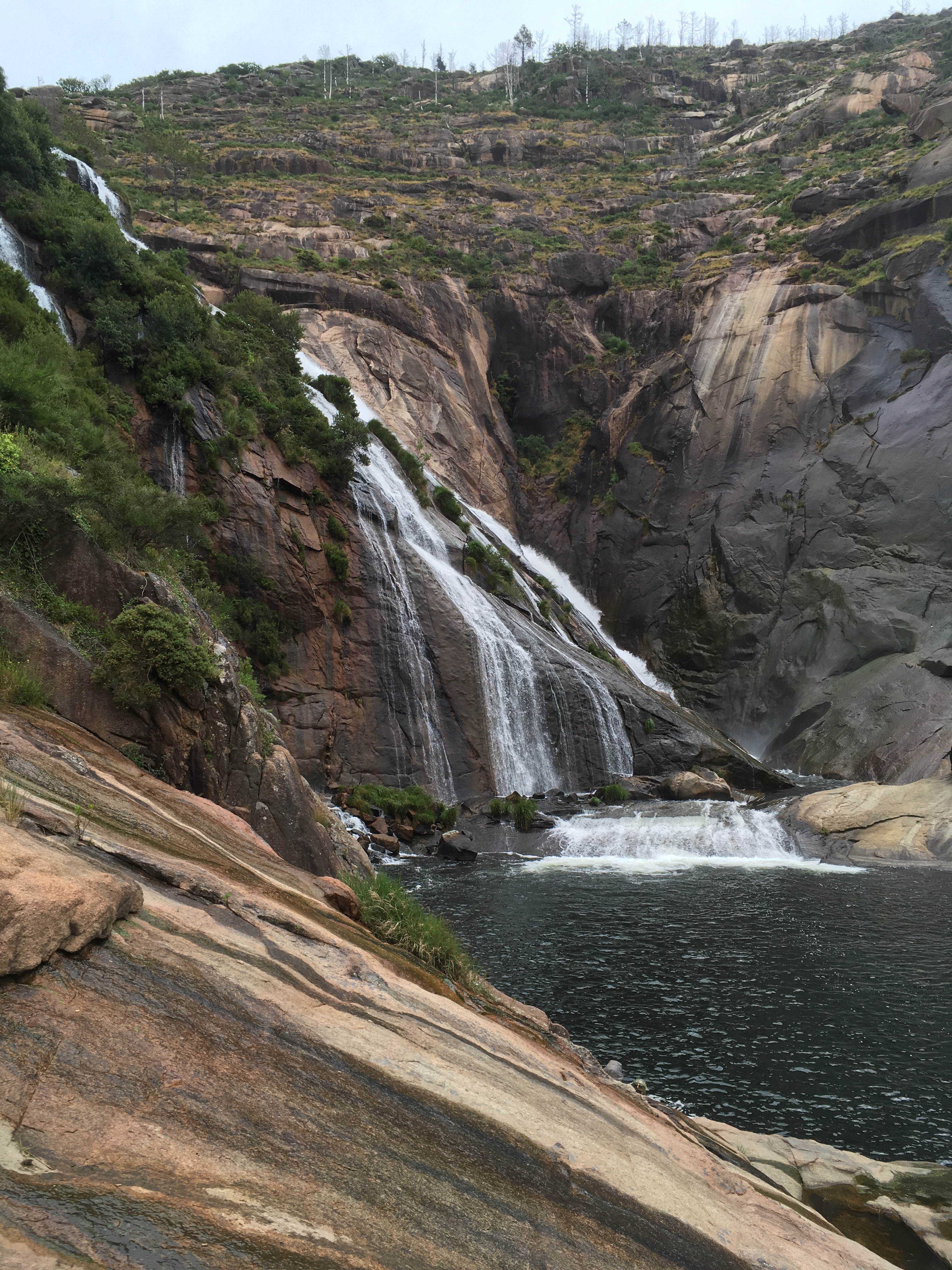
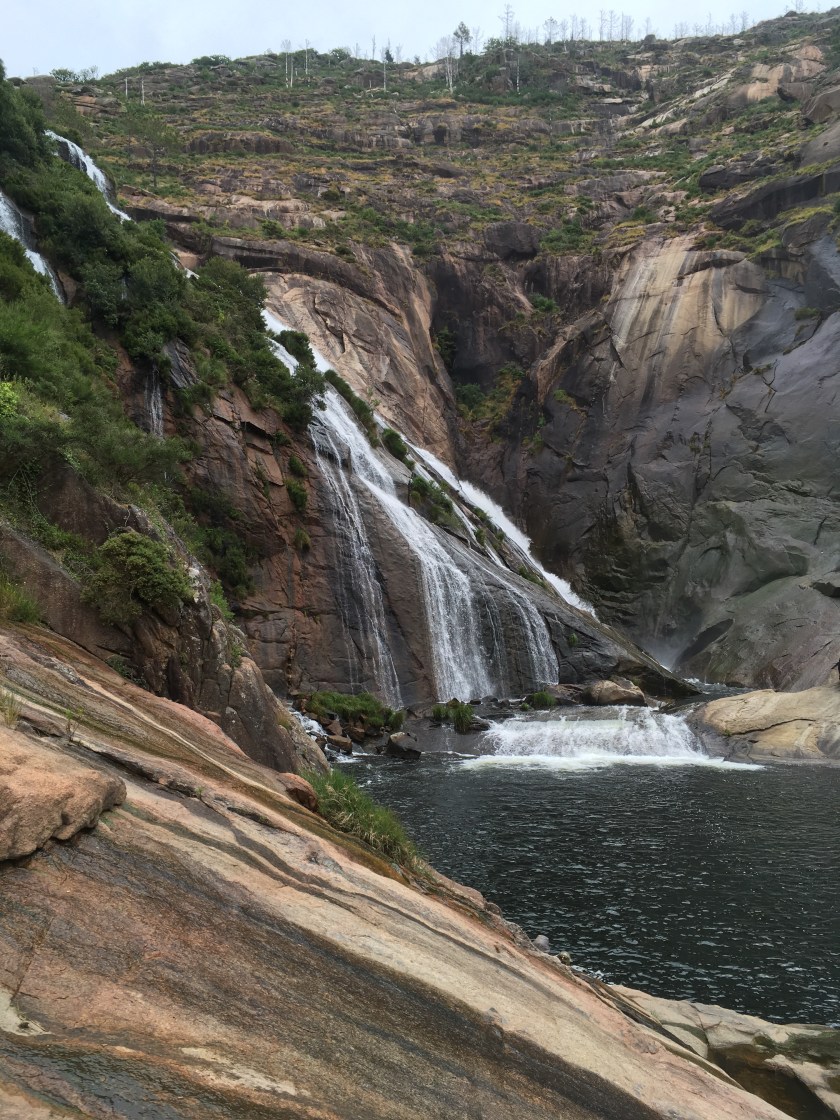
The next stop was Cascada do Ezaro, the only waterfall in Europe that cascades into the saltwater ocean. Because there has been a drought in Galicia, Antonio (our driver) informed us that we were witnessing only a fraction of the volume of water that normally crashes through this ravine. It was still impressive, nonetheless.
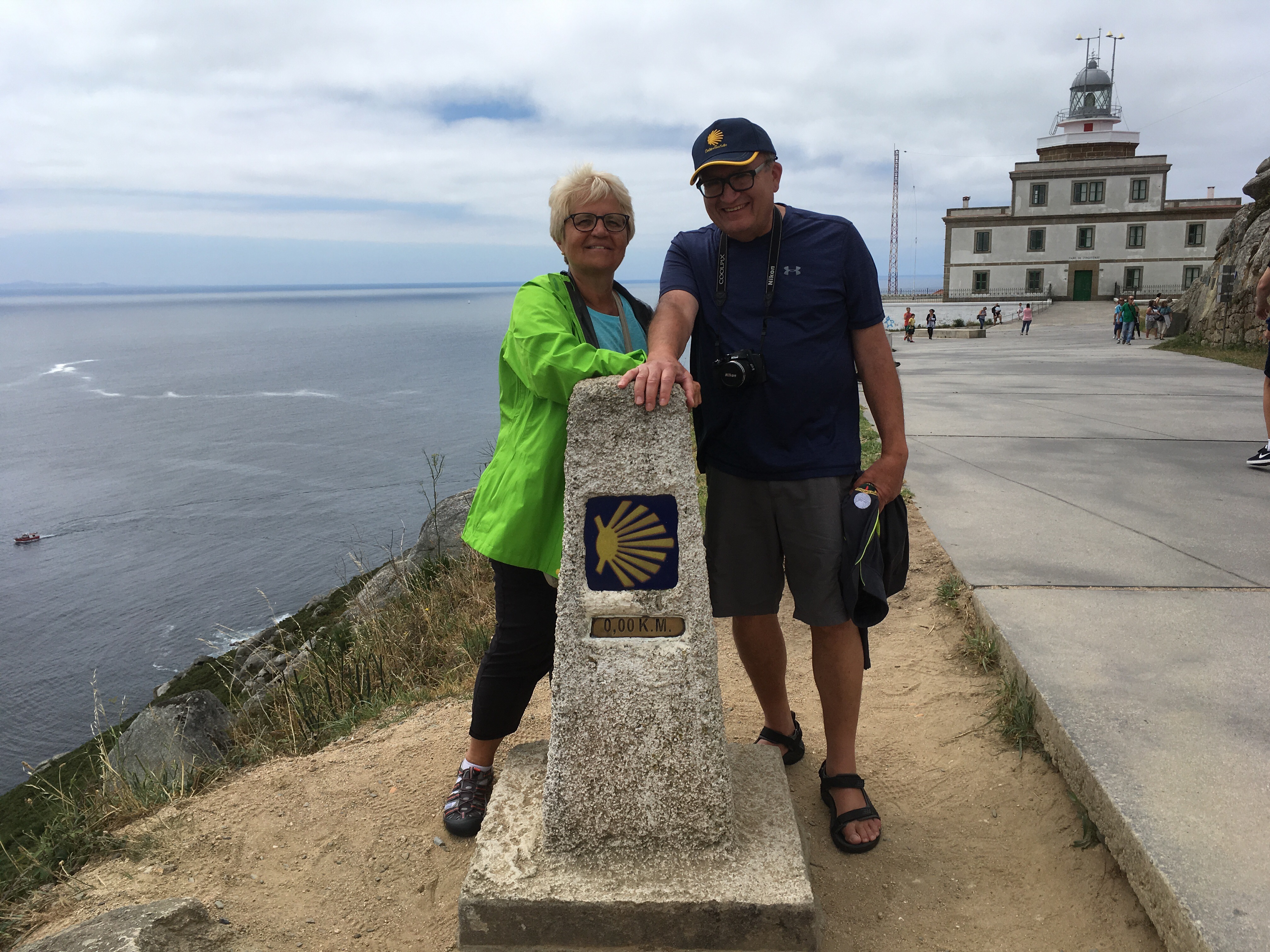
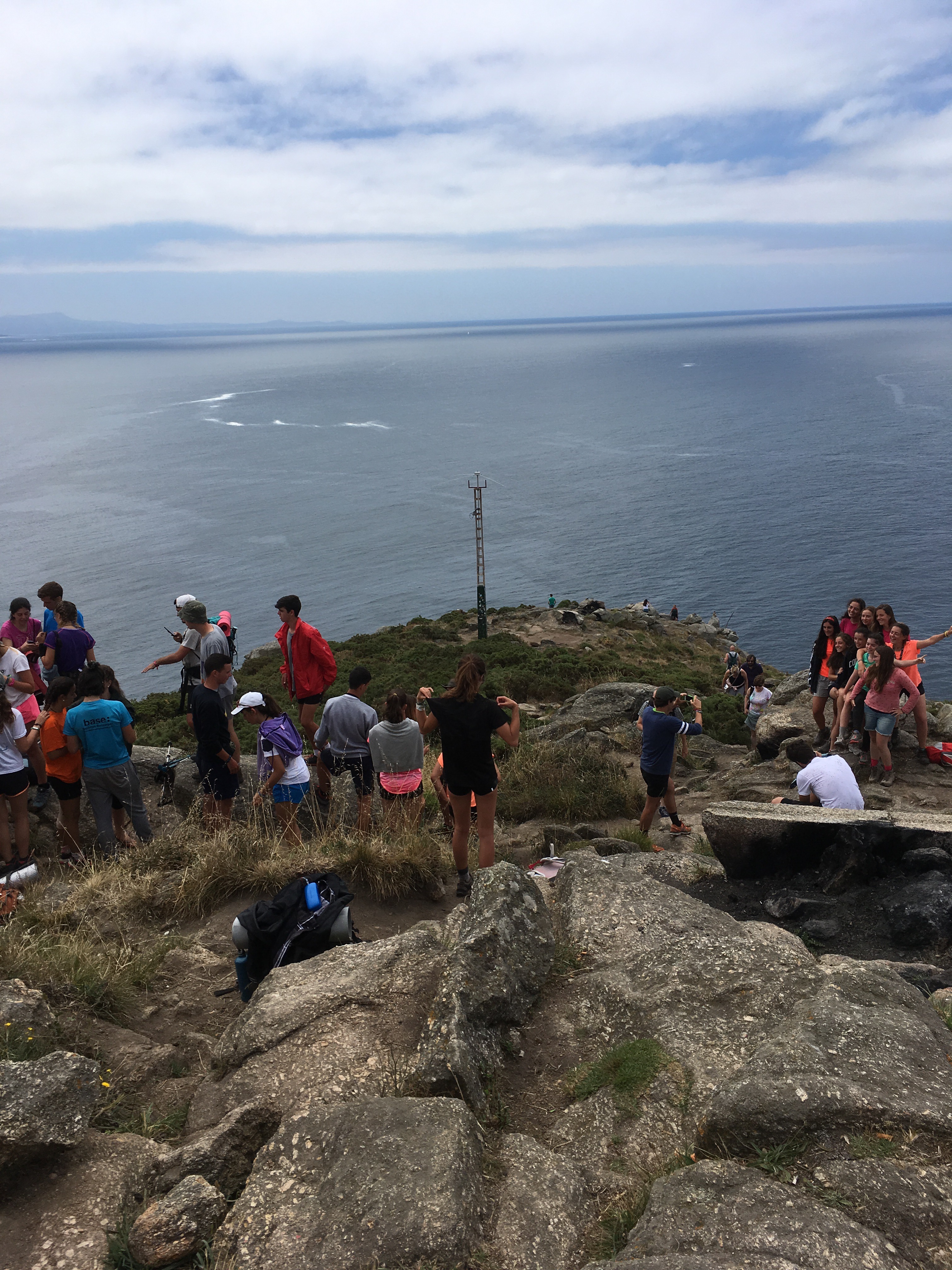
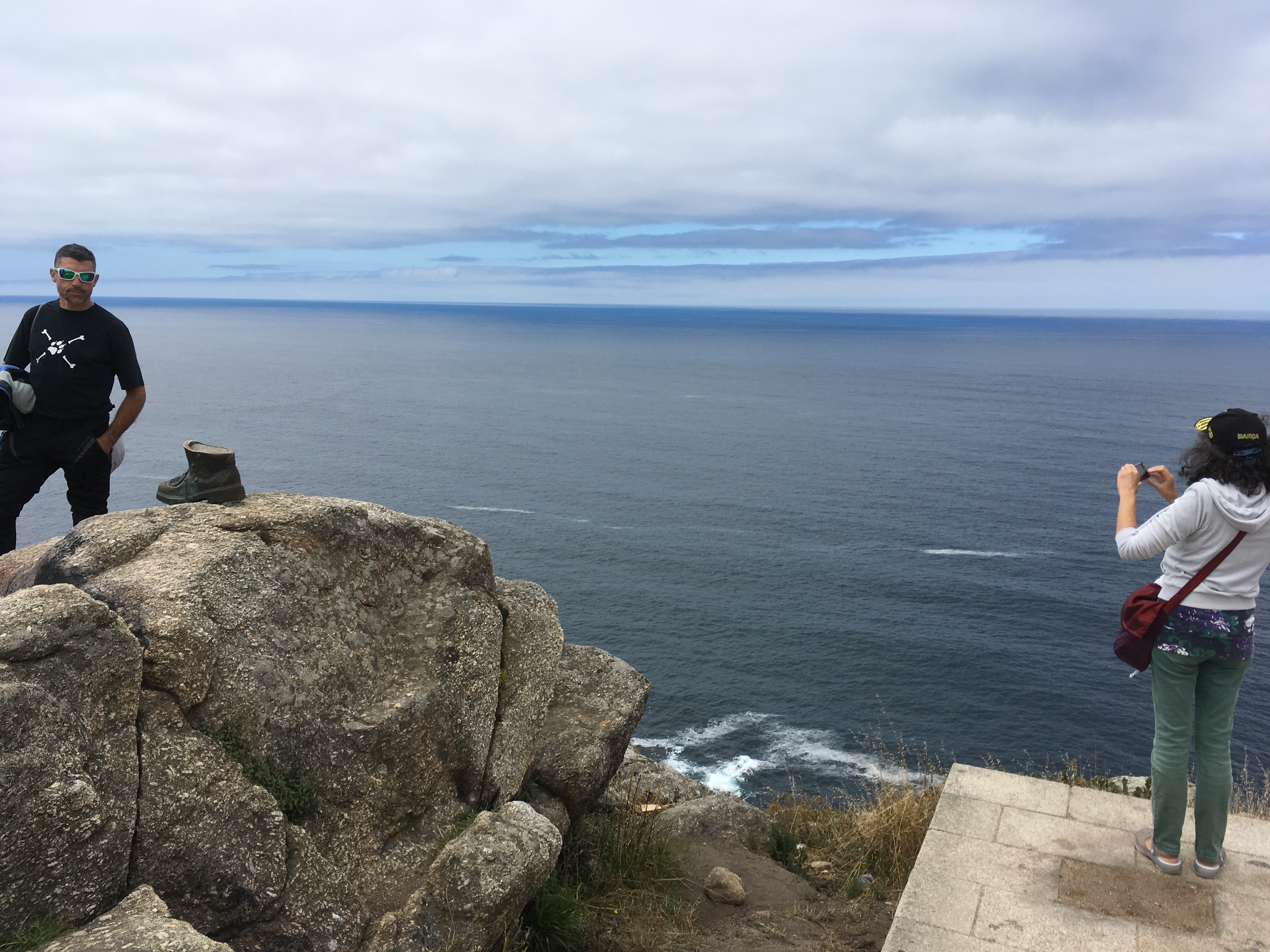
After a scenic drive along the coast, passing by lovely and unpopulated sandy beaches ( among the cleanest and unadulterated in the world), we reached Finisterre, designated “0 km” on the Camino milestone marker. A lighthouse teeters at the edge of the rocks. This is the place that pilgrim’s traditionally would burn the clothes they had worn on their journey. But no more – it is expressly forbidden because of the risk of burning down the lighthouse.   A bronzed man’s shoe sits upon one of the highest rocks, commemorating the shoe worn by Martin Sheen in the film, “The Way”, released in 2010 and probably responsible for the dramatic increase in numbers of Americans on the Camino. A group of teenagers was singing and celebrating their arrival at Finisterre so we were unable to approach the statue of St. James located at the edge of the coastline.
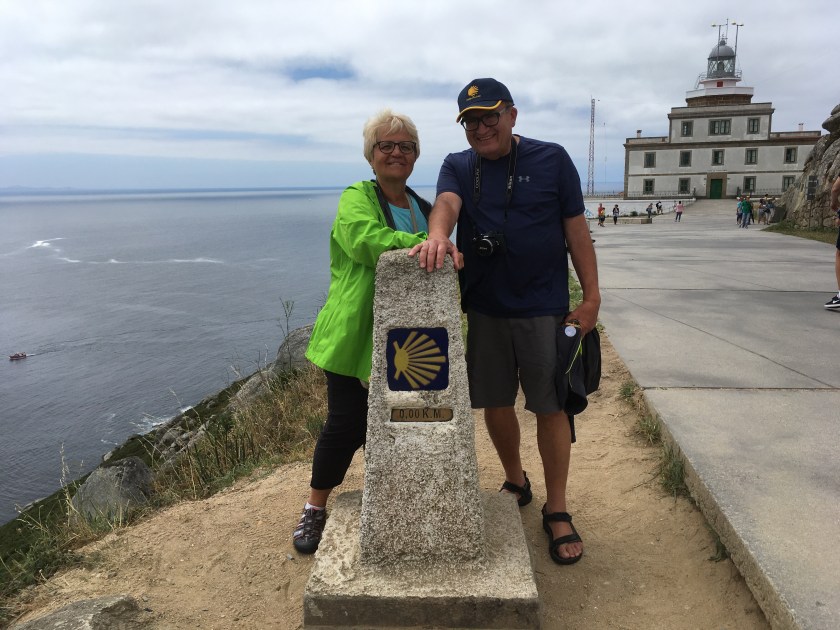
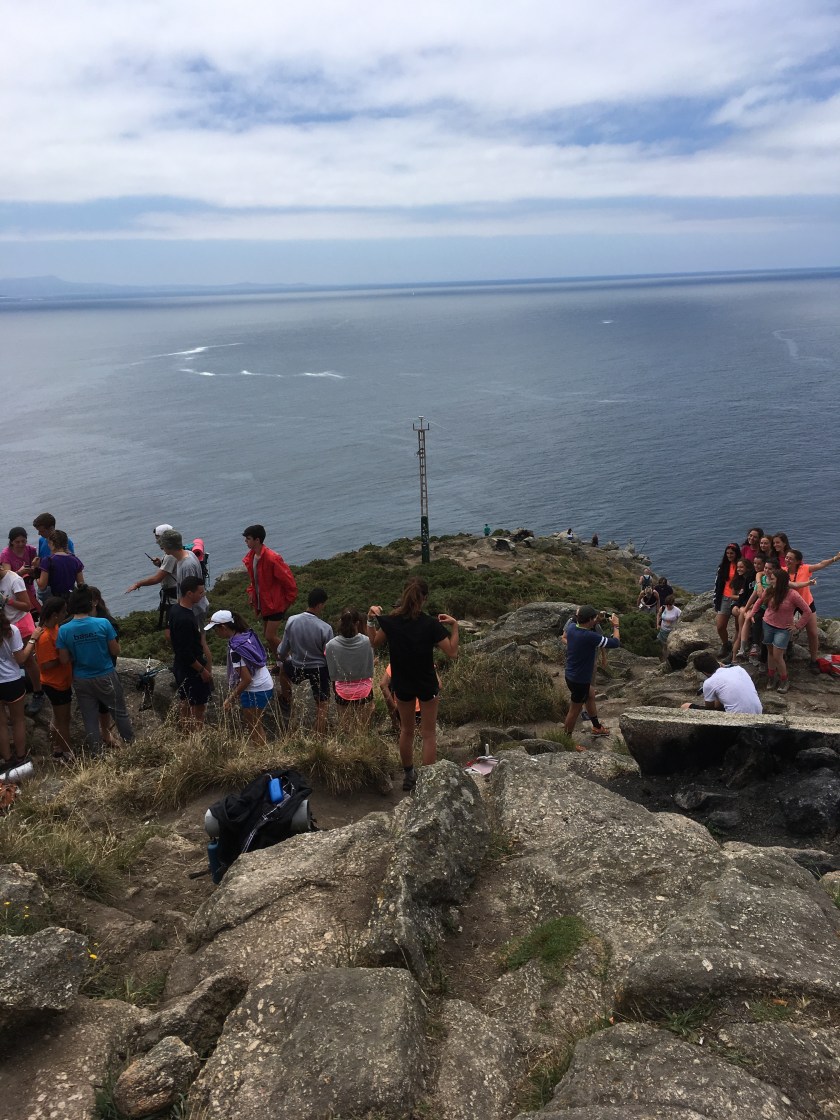
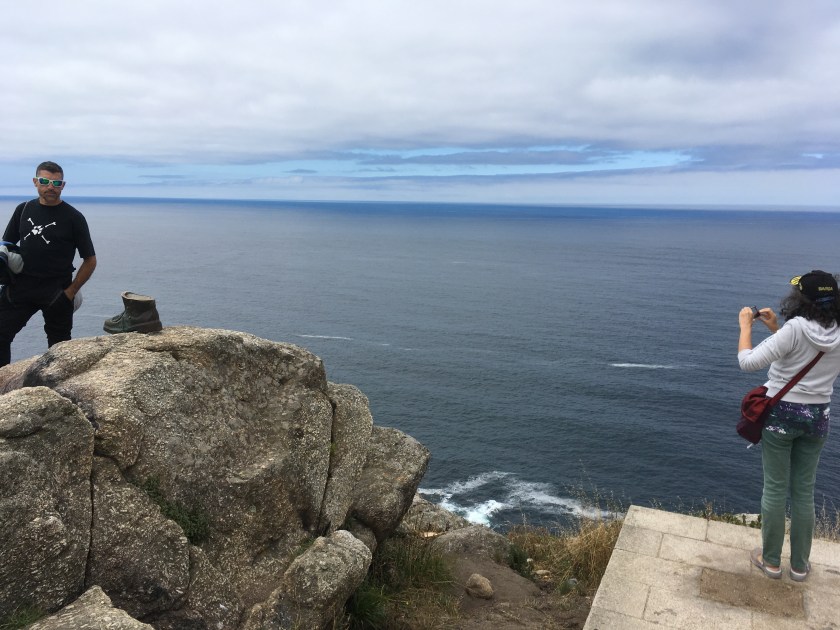
See the shoe on the left side of the photo above?

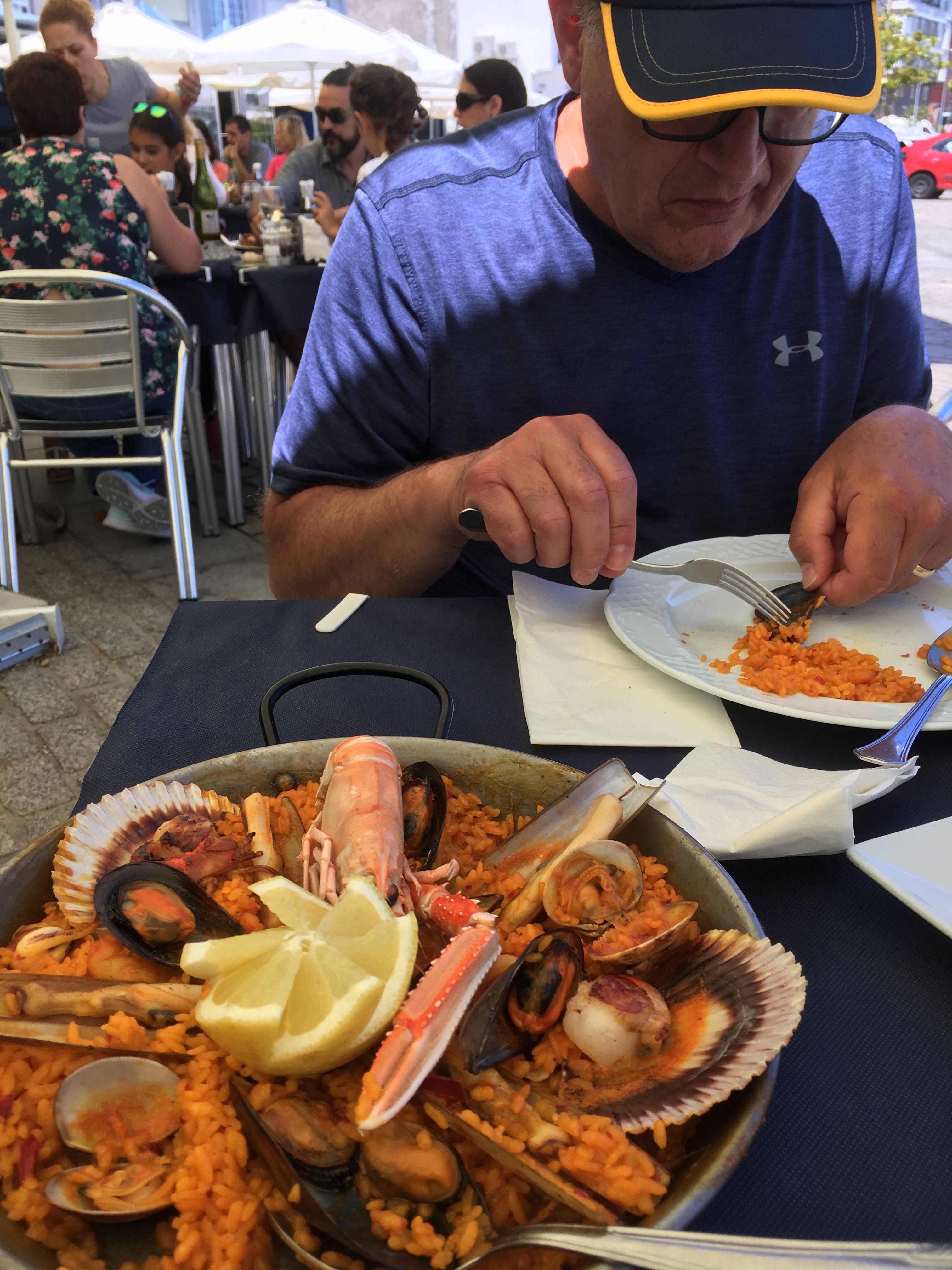
We stopped for lunch along the beach. Tony was craving paella, on his list of “must-haves”, so since it was on the menu, he was able to sample this specialty of Valencia along the eastern coast of Spain.Fully sated and feeling pretty mellow after polishing off a bottle of Albariño (characteristic  wine of the Galicia region), we were off to our final stop, Muxia. This is the site, where according to legend the remains of the apostle St. James washed ashore in a boat of stone. 
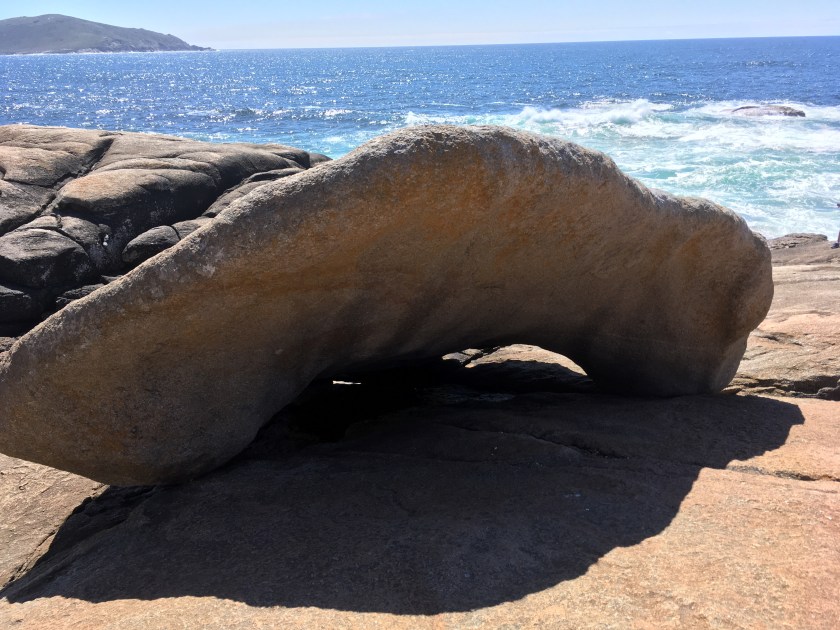
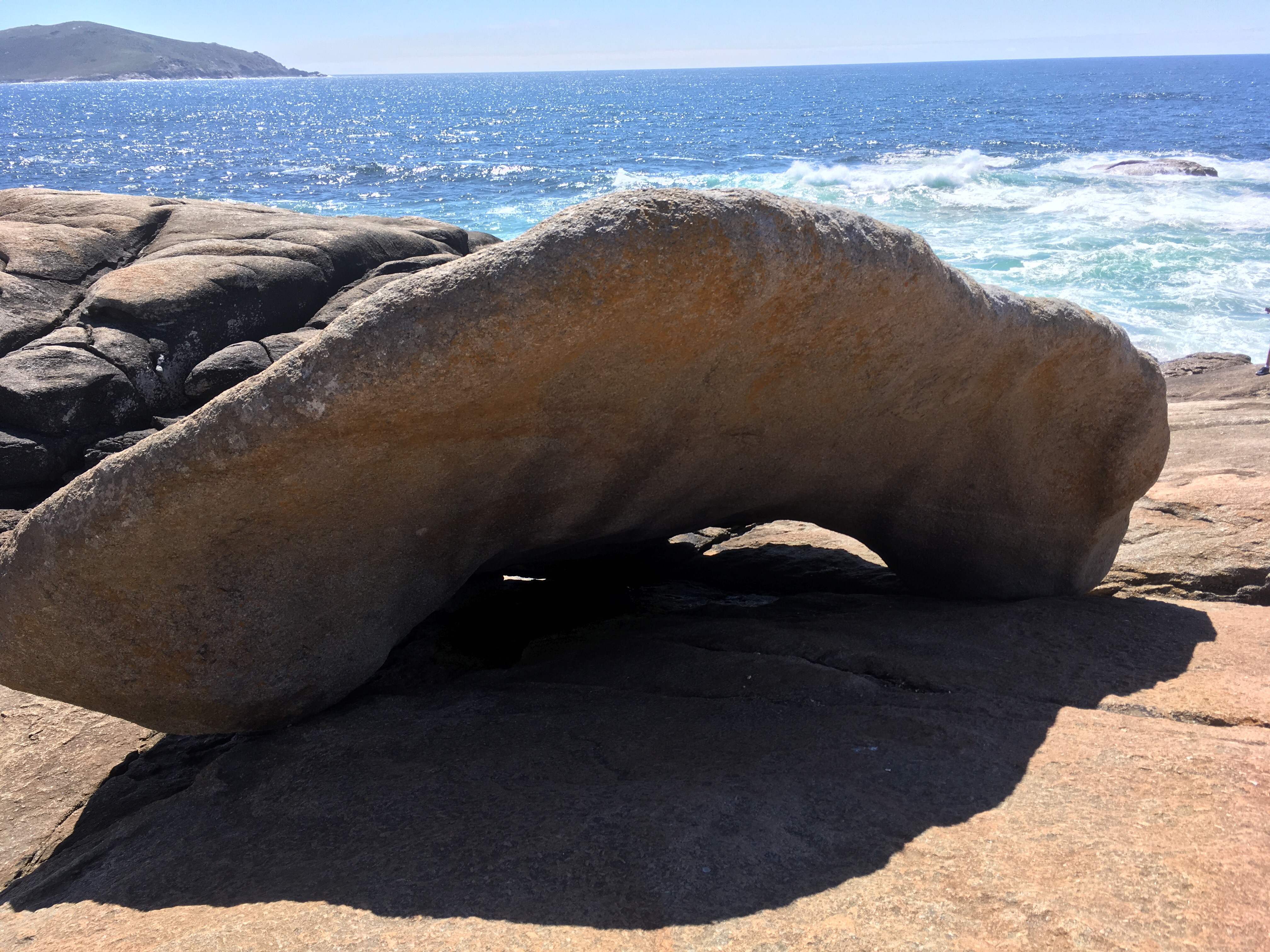
This giant stone is thought to be the hull of the aforementioned boat. The other legend related to this petrous structure is that is one crawls under it three times, all back and kidney health issues are cured. Frankly, if I crawled under this I would probably end up with back problems!

The other claim to fame of Muxia is that this is the actual site in the film “The Way” where Martin Sheen’s character throws the cremated remains of the son that perished in the Pyrenees during his Camino. (In the film, Sheen does this in what was referred to as Finisterre – artistic license!).


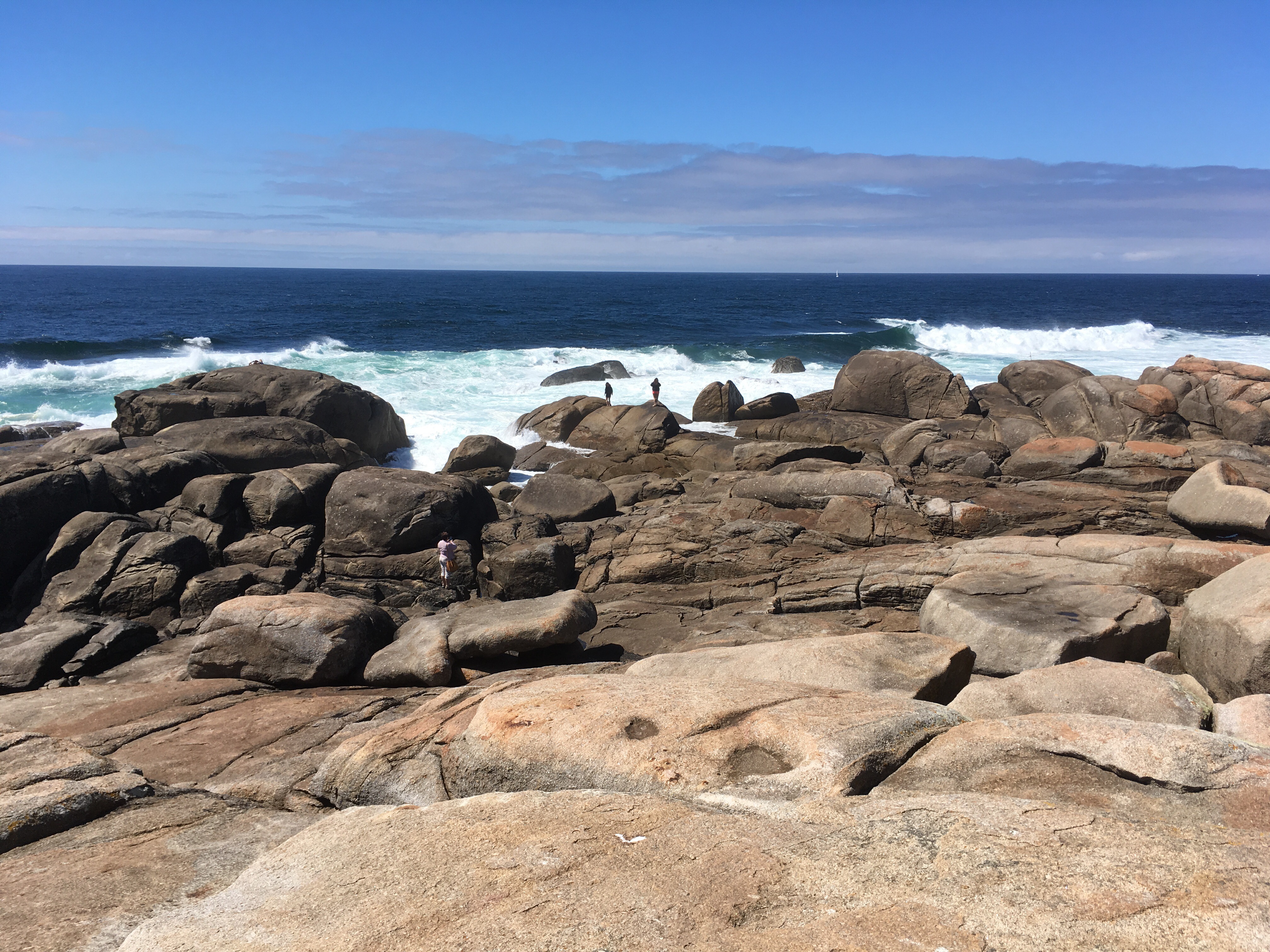
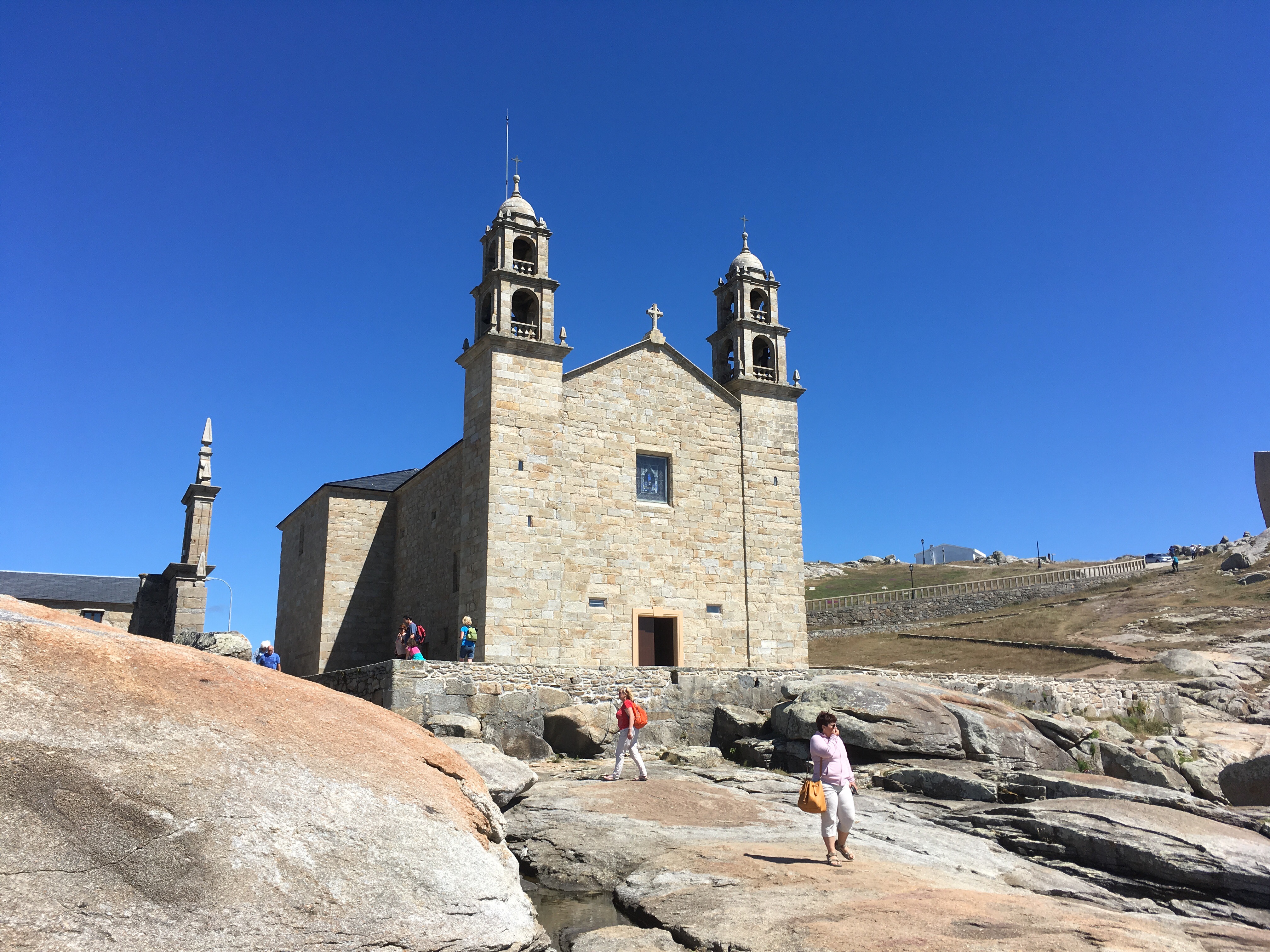
Muxia is a truly dramatic location – huge waves crashing on gigantic rock formations. A church perched near the shoreline was destroyed by lightening a few years ago and was promptly rebuilt because of public (and probably pilgrim) demand.

We returned to Santiago after a glorious day, emotionally refreshed and ready to continue our trip home. We had one last dinner of tapas, packed our bags and set the alarm for 3:30 am in anticipation of the taxi ride to the airport at 4:15 am.
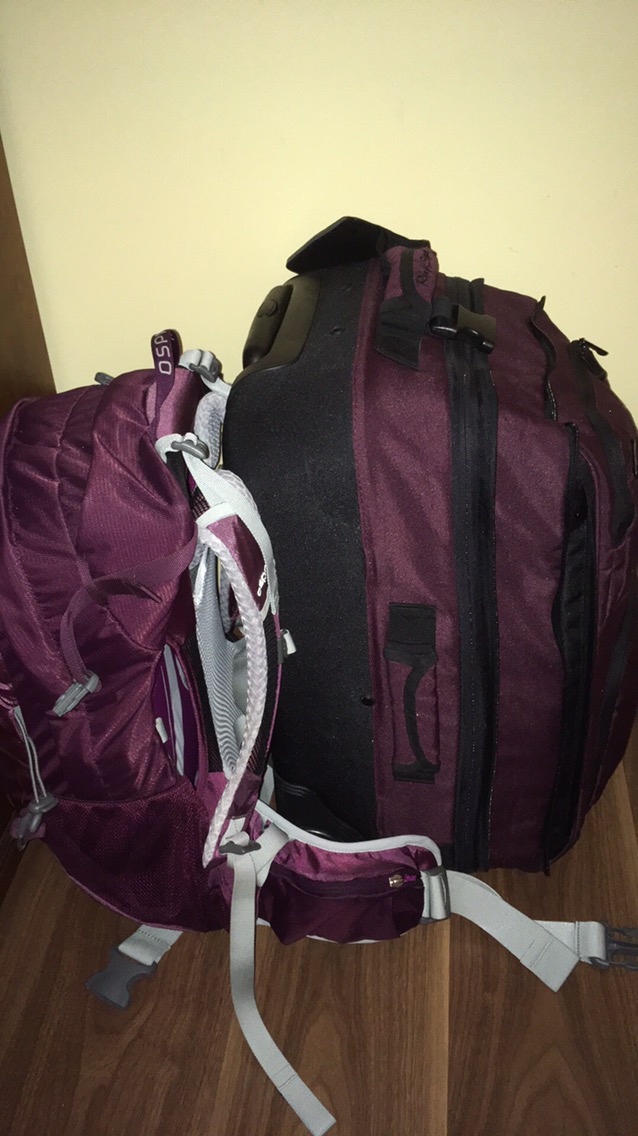

This journey to the coast truly culminated our Camino in Spain. It was the physical end of our Camino, but it was in reality a commencement of our Camino of life. As we contemplate the experiences of the past several weeks, we will strive to effect the lessons learned along this brief physical journey. 

Post Camino reflections will follow. This is most DEFINITELY not the end of our Camino!