As mentioned in the last post, the city of Budapest is divided by the Danube River; Buda is the hilly portion on the west side and Pest is located on the flats of the east. The city center is located in Pest – that’s where the action is – restaurants, shopping, museums, the government offices.
After a hearty breakfast in the hotel ( scrambled and fried eggs, weird looking “bacon” that looked like chipped ham, funky little wiener sausages, baked beans for all those British tourists, and the usual sliced meat and cheese selection, mini- croissants, yogurt, and watermelon), we met our local guide Monika in the hotel lobby. We headed out, following her red polka dot umbrella. She pointed out the Hungarian version of the Statue of Liberty, a Communist statue celebrating the defeat of the Germans in WW2, high up on the hill in the Buda section across the river. Unlike most of the other statues erected in the Communist era which were taken down and relocated out of town (in Monument Park), this particular statue remains but the wording on it slightly altered to focus more on Hungary and less on the Communists. 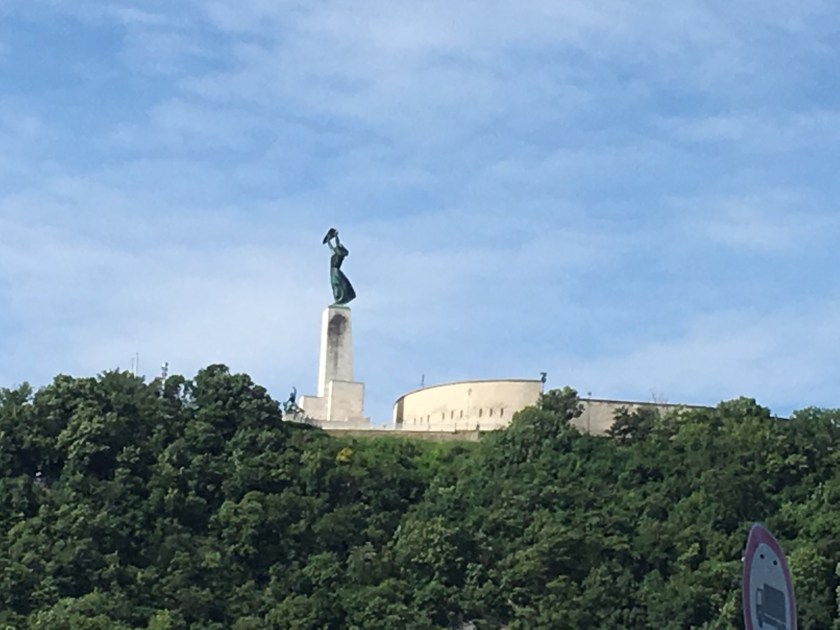 She also explained the early history of the country with the Magyars from Central Asia settling in the area in the year 896 and the eventual conversion of the country to Christianity in 1000 A.D. with the deal made between King István (Steven) and the pope. (So much for the separation of Church and State!!!😉) One of the pope’s archbishops was diverted from his pilgrimage to Jerusalem to assist Istvan. When Istvan died, Archbishop Gellart met an untimely end as he was placed in a barrel, long nails driven in, and the barrel rolled down the tall hill of Buda. Ouch!!!! Another important date is October 23, 1956, the date Hungarian students staged an uprising against the Communist regime. They marched to City Park, tore down the Stalin statue, and the following day Soviet troops descended upon the city. In the area near the Parliament, Hungarian and Soviet soldiers opened fire, killing at least 72 and injuring hundred. Bullet hole can still be seen on the second and third floor levels of buildings as the soldiers also targeted the innocent inhabitants of the buildings. The uprising lasted for another week and 2500 Hungarians were killed, 20,000 injured. It was not until the Velvet Revolution in 1989 that Hungary, along with the other countries behind the Iron Curtain, became independent from Russian control.
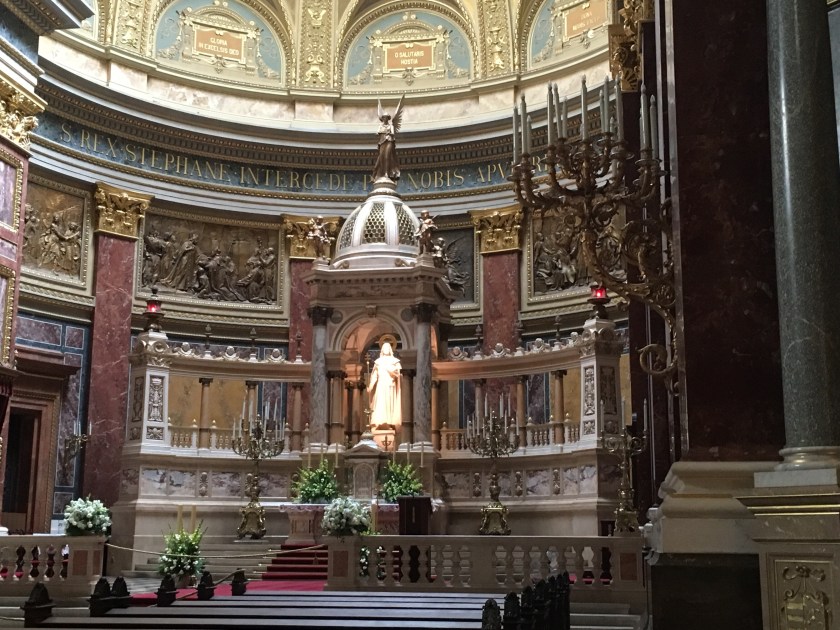
St. Istvan’s Cathedral, the second largest church in Hungary. It was built to celebrate the city’s survival after a flood with 50 types of marble, completed in 1868, and the dome promptly collapsed, and the architect died one week prior. It was eventually completed in 1906. 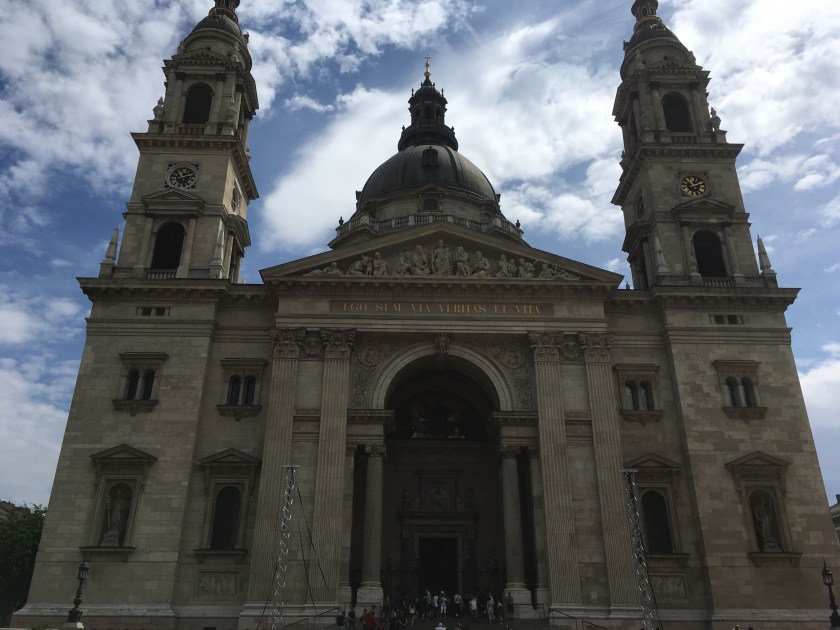 The altar features St. Istvan, rather than Jesus.
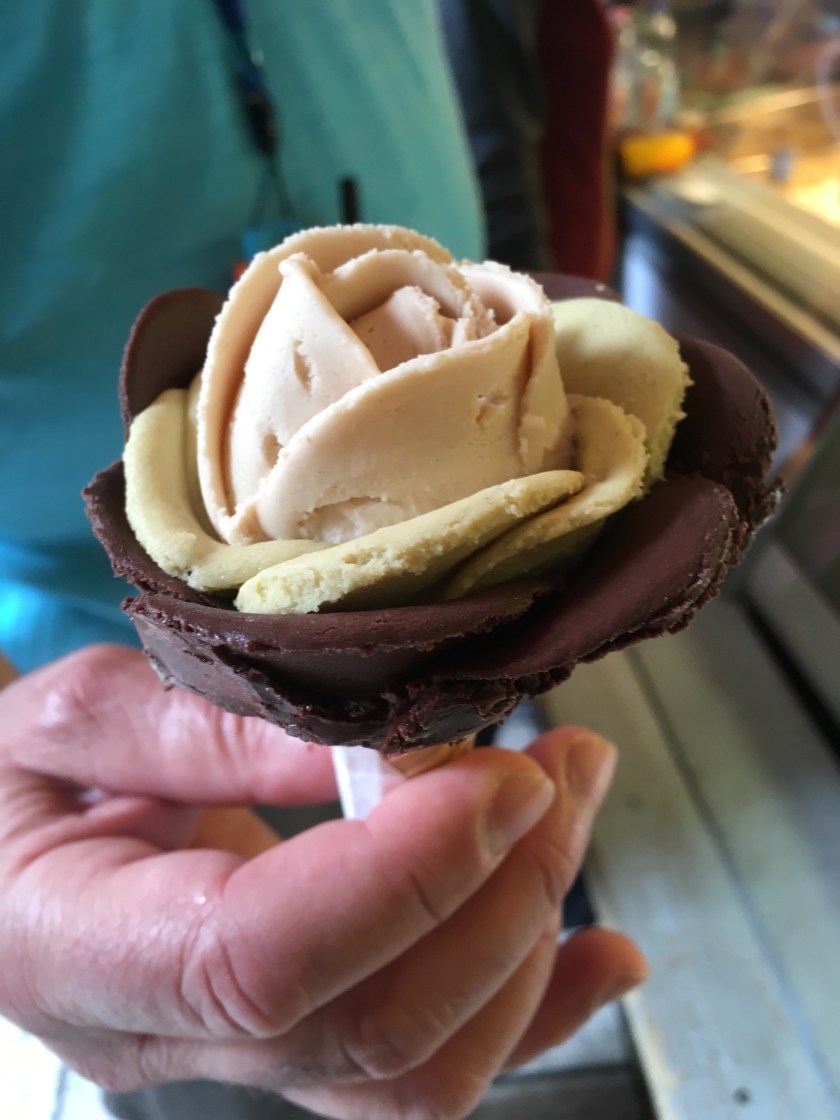
  A brief break for coffee ( or for some of us some artfully created gelato cones)
  before proceeding to one of the main squares where a controversial monument to the Hungarians who died in WW2 was described. The monument to lives lost depicts an eagle (representing Germany) trying to suppress an angel (representing a Catholic Hungary), entirely ignoring the loss of Jewish, Roma, and other individuals. This elicited an angry response by the local population, with an unofficial remembrance consisting of notes, mementos and other symbols that commemorate lives list in the Holocaust.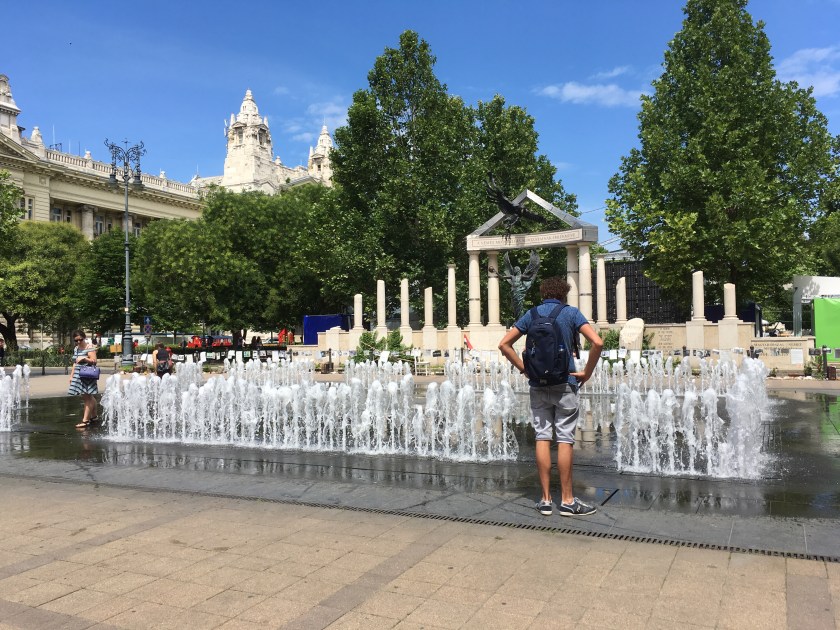
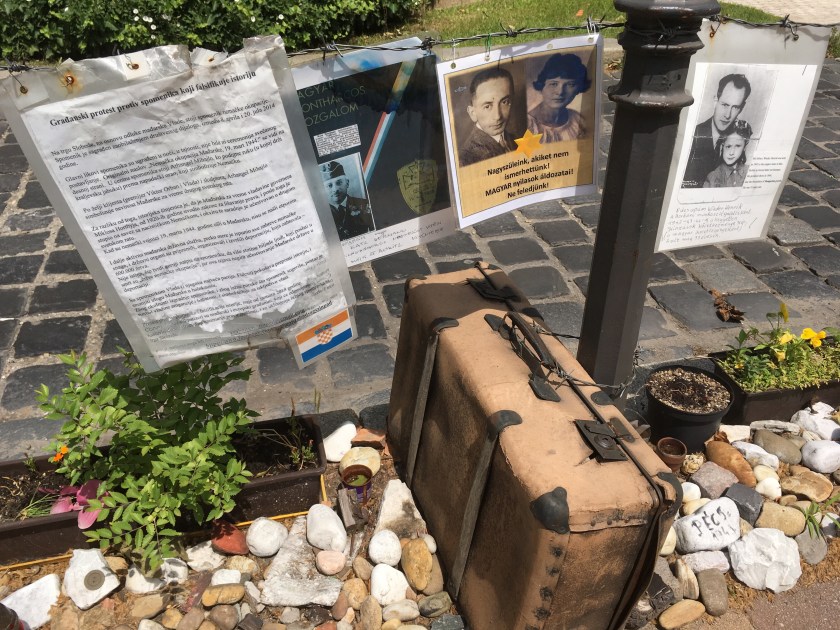 Because Hungary aligned itself with Germany in WW2, its citizens did not suffer the fate of the Poles and Czechs, at least until March 1944. Certainly there was no love for the Germans and in fact the Nazi soldiers used Hungarian military as human shields. Up until then, General Horte, the Hungarian overseer of the Nazis, was able to shield Hungarians, especially Budapest Jews, from the extermination camps. As such, there was no ghetto in Budapest. This uneasy marriage ended when the “cordial” arrangement between the General and Hitler ended. The result: Jews lined up along the banks of the Danube in their stocking feet, shot and killed. A monument of 23 pairs of shoes lined up along the bank memorializes this tragedy. After March 1944, Hungarians- Jews, gays, Roma, political enemies, were sent to join the millions of Poles, Czechs, French, Dutch, and other “undesirables” in the extermination camps.
Budapest has the world’s third oldest subway (New York and London are the first two). Line 1 is quite shallow, as horse drawn carriages were the vehicles used when the subway opened. Descending about 20 steps, you are in a well-lit ornate tunnel with hard wood ticket booths and immaculate tile-lined walls. 
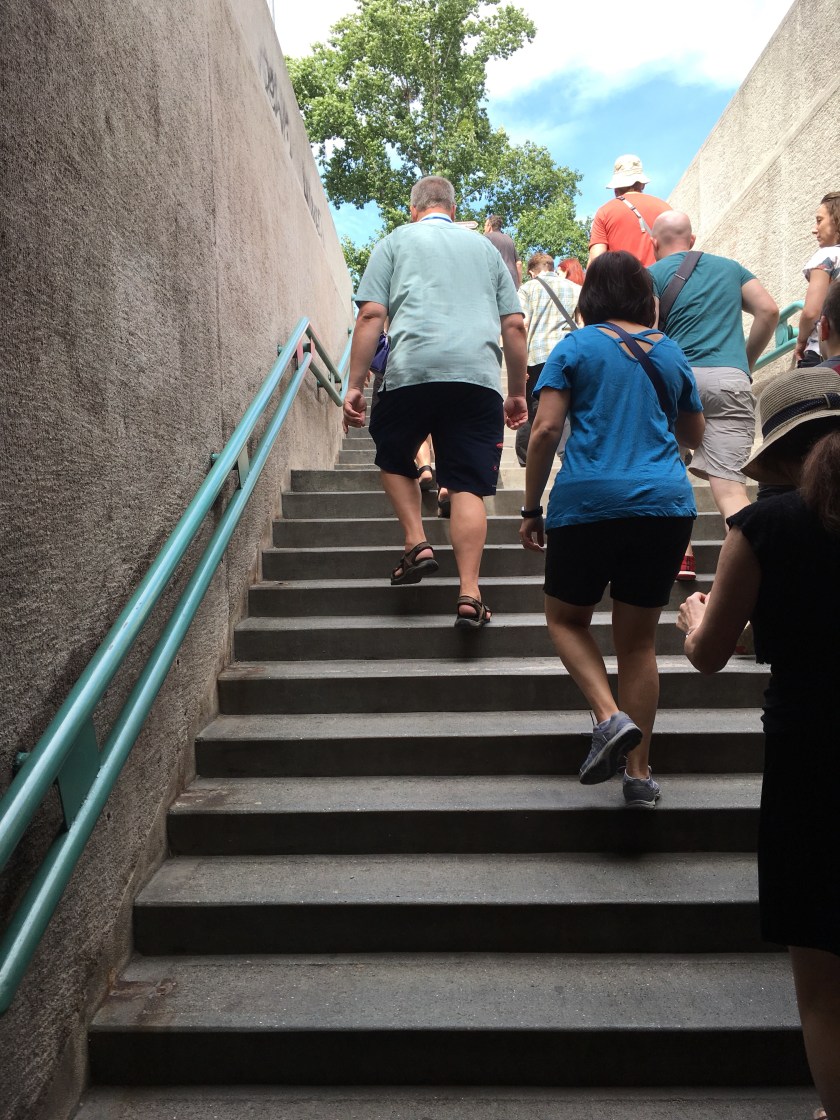 We traveled 8 stops in a short amount of time to the City Park, location of the public baths (Hungary sits on a geothermal basin), a zoo, a circus, and a lake.
 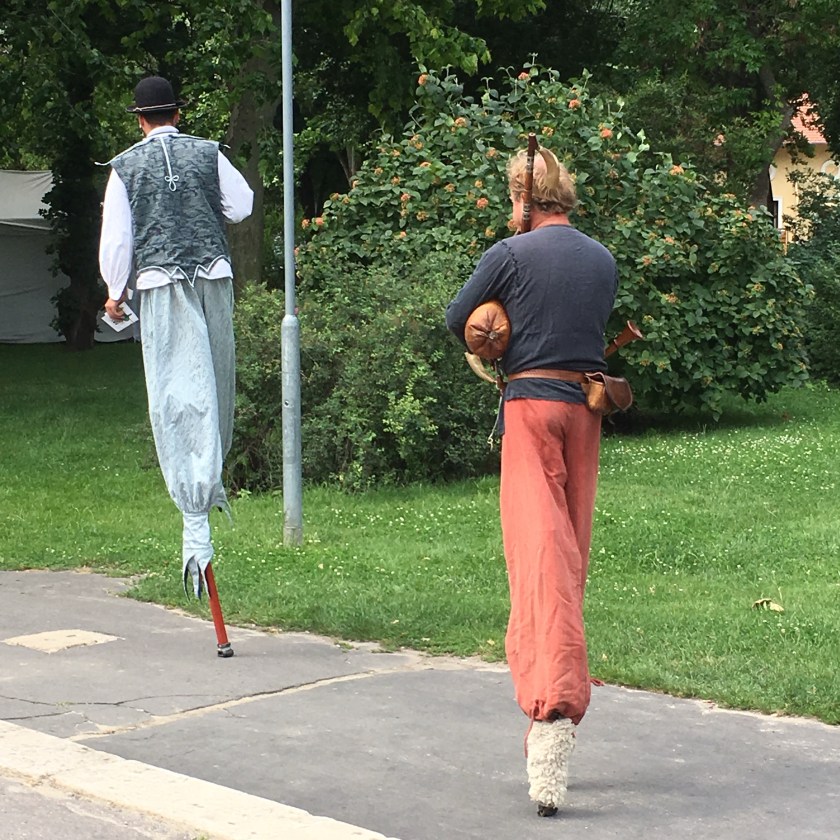 We peeked into the Széchenyi public baths – the site of an outdoor pool, numerous heated pools, and saunas, and Monika described the procedure if we wanted to take advantage of this typical Hungarian experience.
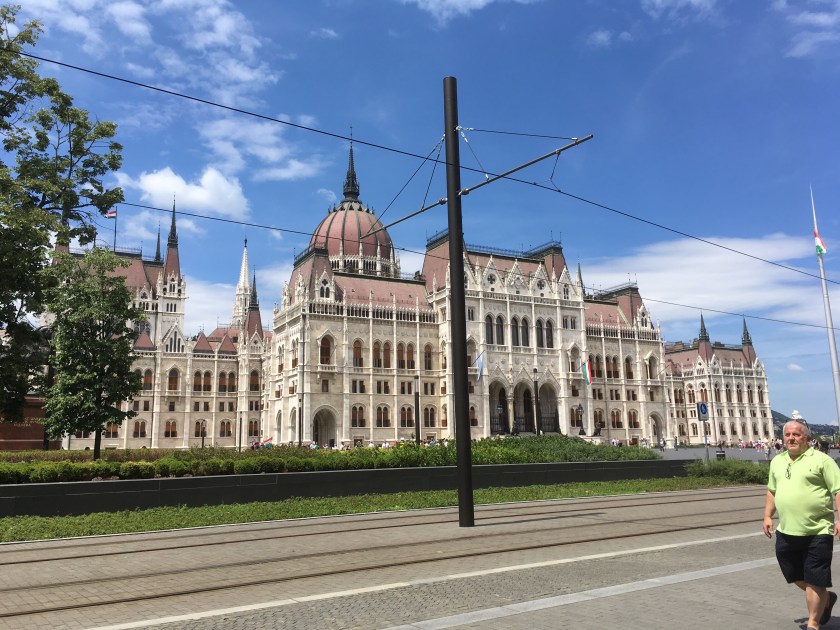
  Other sites included the Parliament
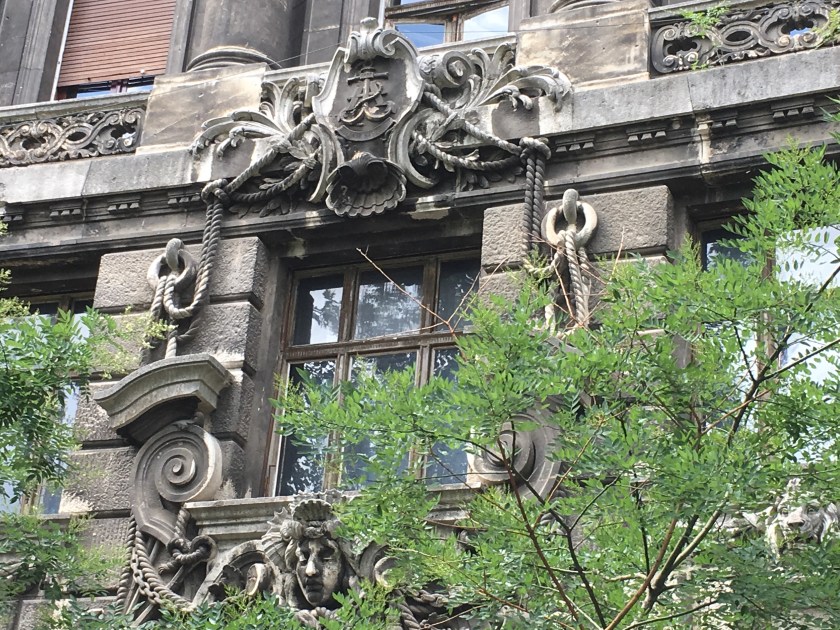
  a discussion of the art nouveau architecture
  and the large screen TVs scattered throughout the city showing the World Cup.
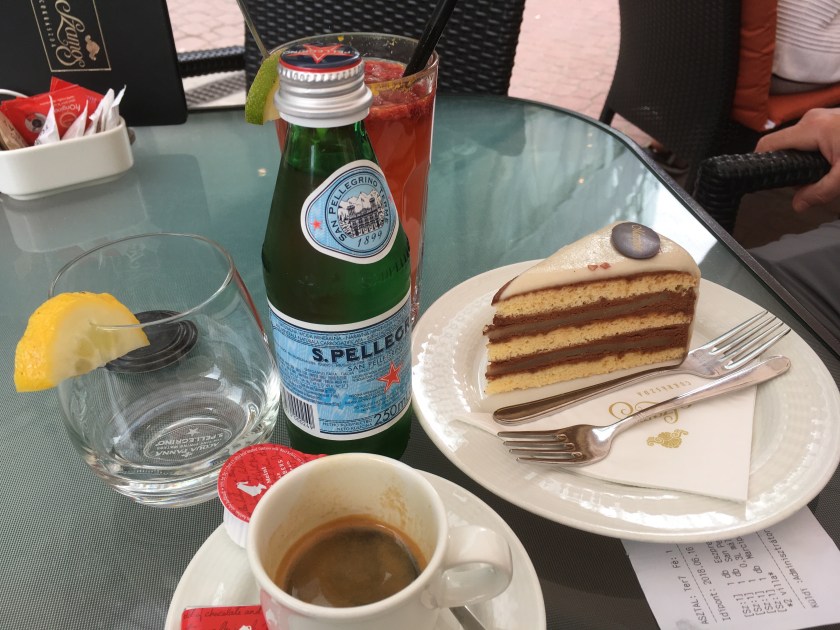
 Of course, we also learned where to sample amazing pastries (at Szamos)
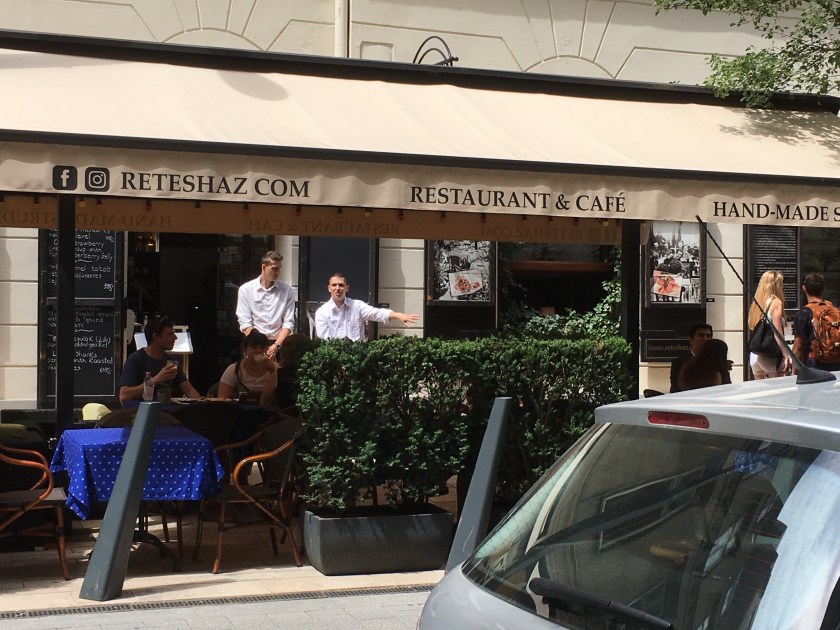
 and where to get great and authentic Hungarian strudel made with phyllo pastry.
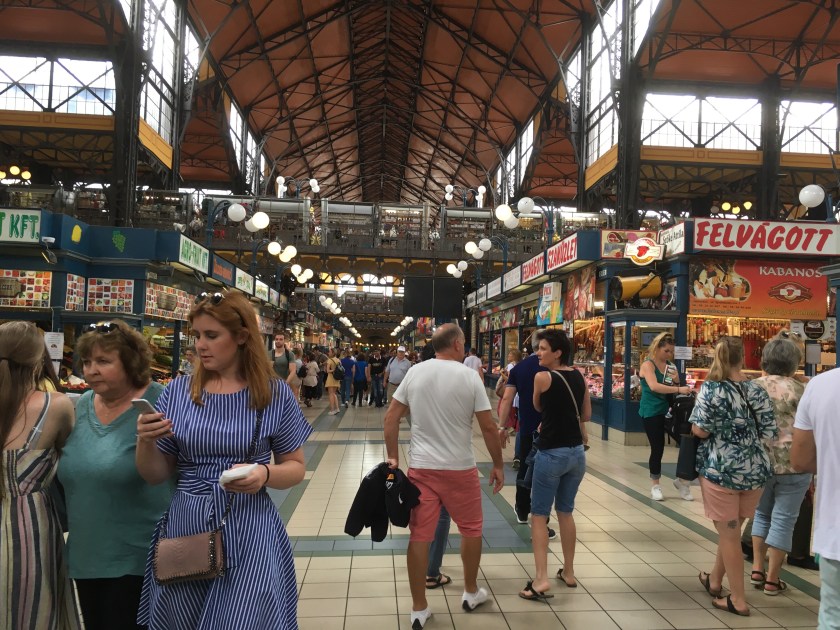
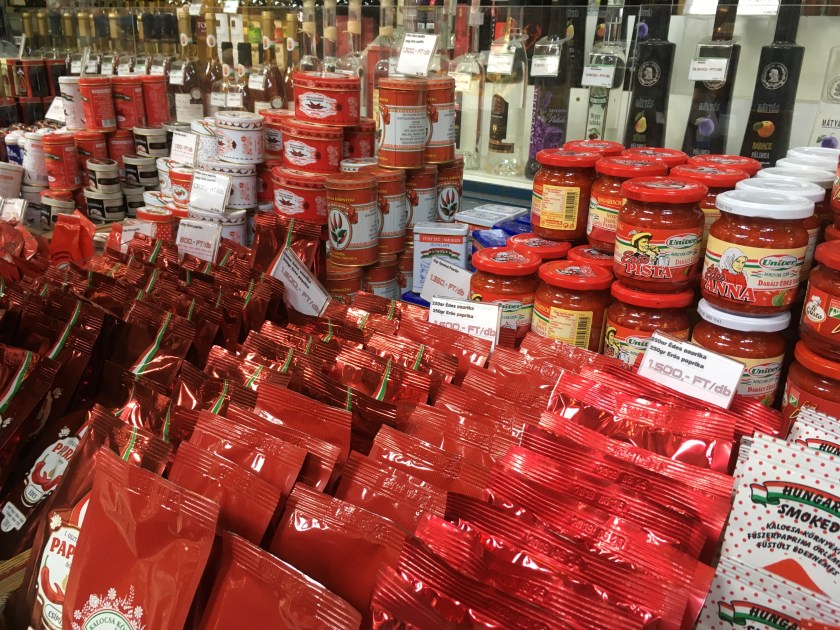
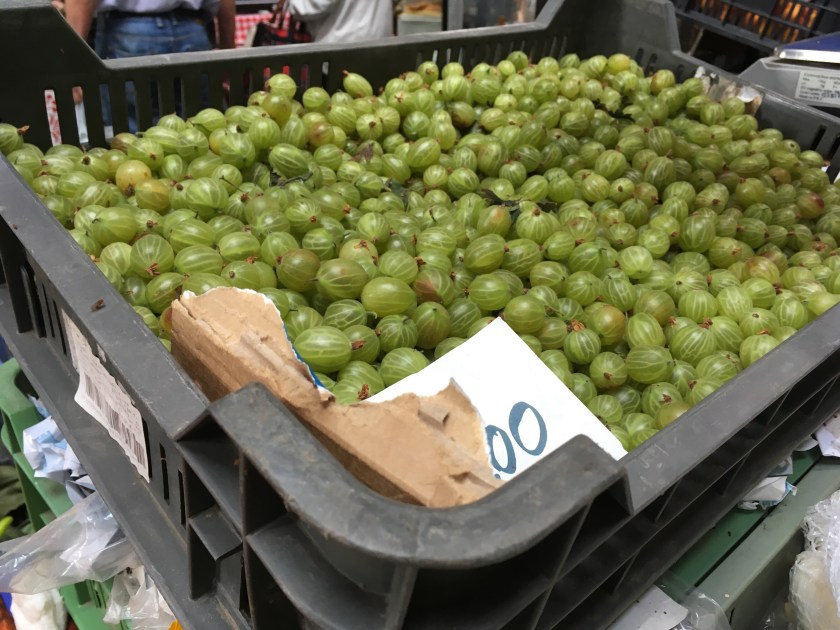
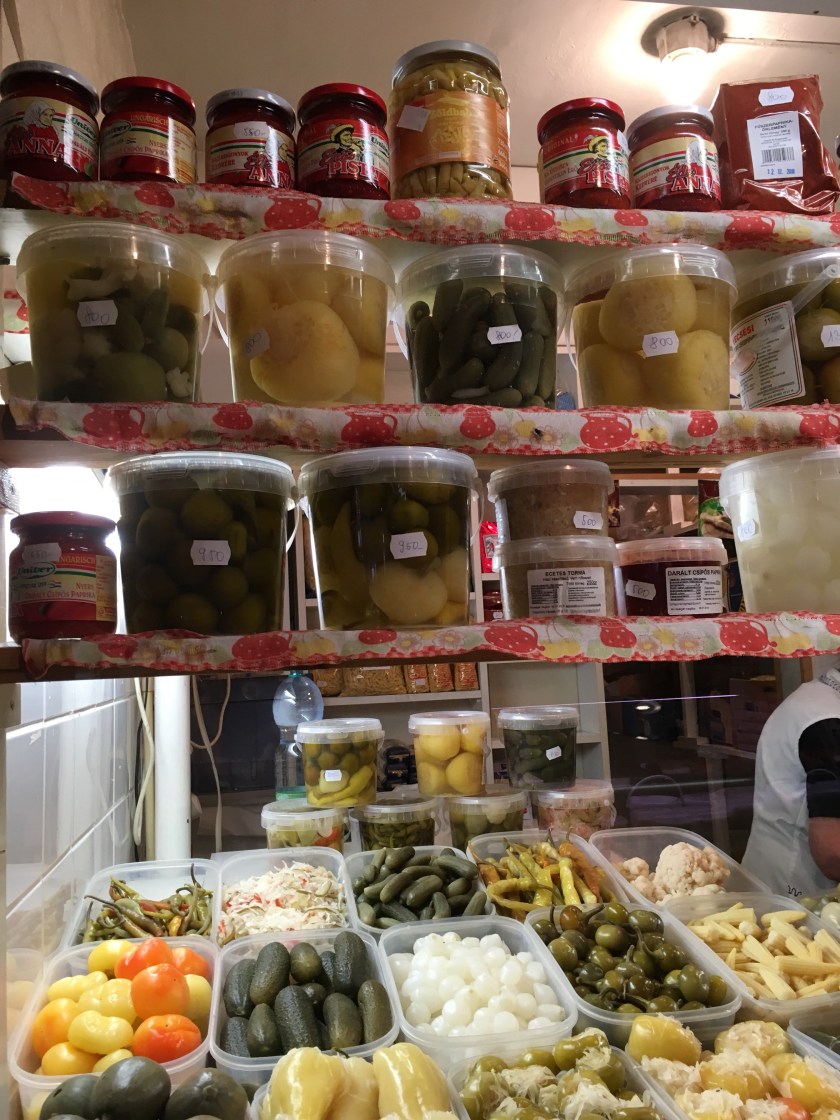
 Back on the metro, we ended at the Great Market Hall, one of the largest in Europe, with its fruit and vegetable stands, placed to buy all versions of paprika, and souvenir stands with local goods such as embroidered table cloths in addition to the usual schlocky stuff.
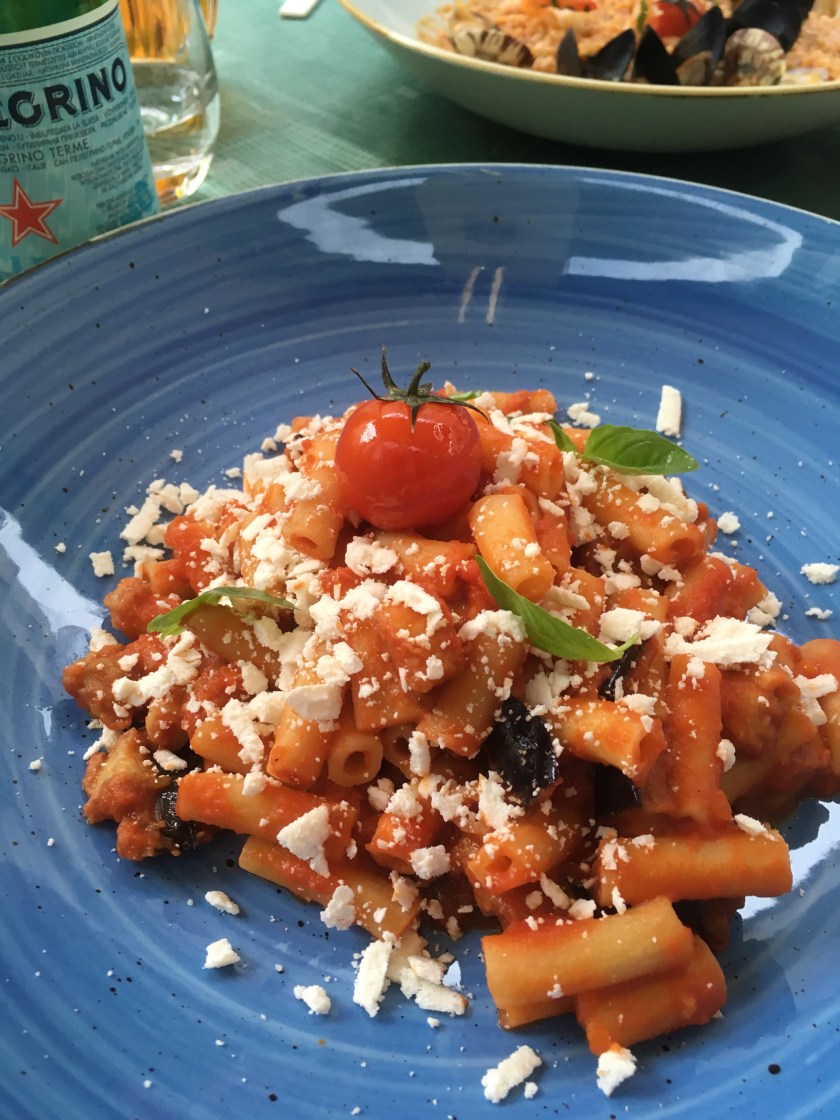
 The afternoon was free to do whatever one chose. We just walked all over the town center and strolled along the Danube. As we were getting pretty tired of pork, cabbage, potatoes and goulash, dinner was at La Coppola, a Sicilian trattoria. Seafood risotto and pasta alla Norma (with eggplant) were welcome alternatives to the past week’s Slavic cuisine.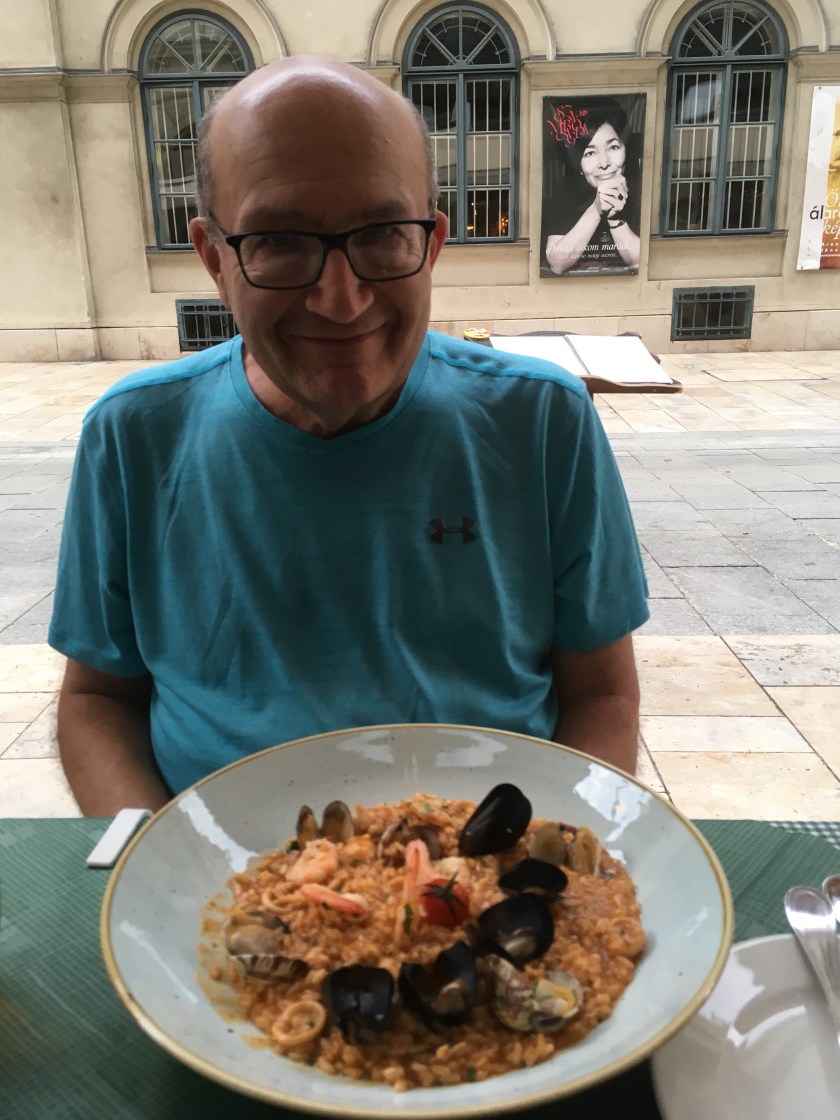
The evening activity was a boat cruise on the Danube. The hour long journey took us past many of the buildings we saw earlier in the day, now lit up against the evening sky, imparting an aura of enchantment. 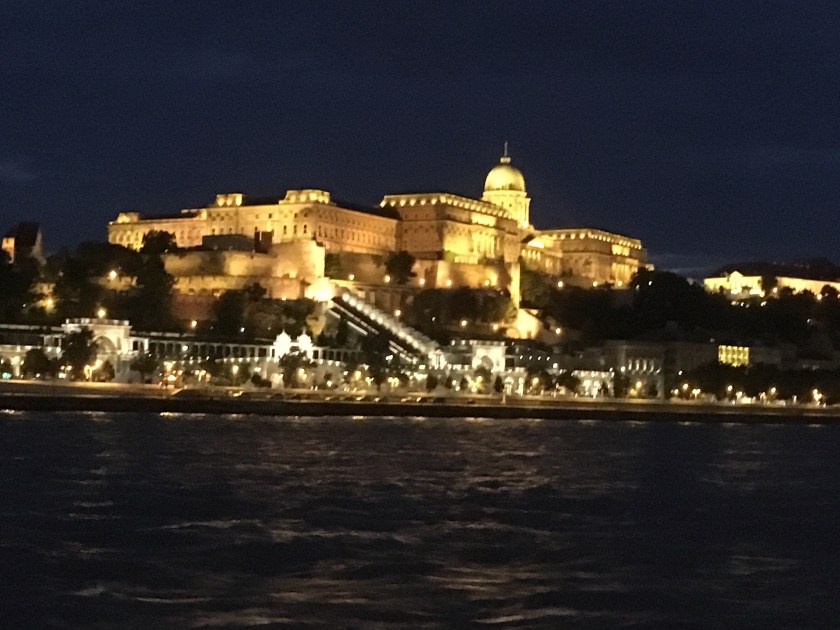
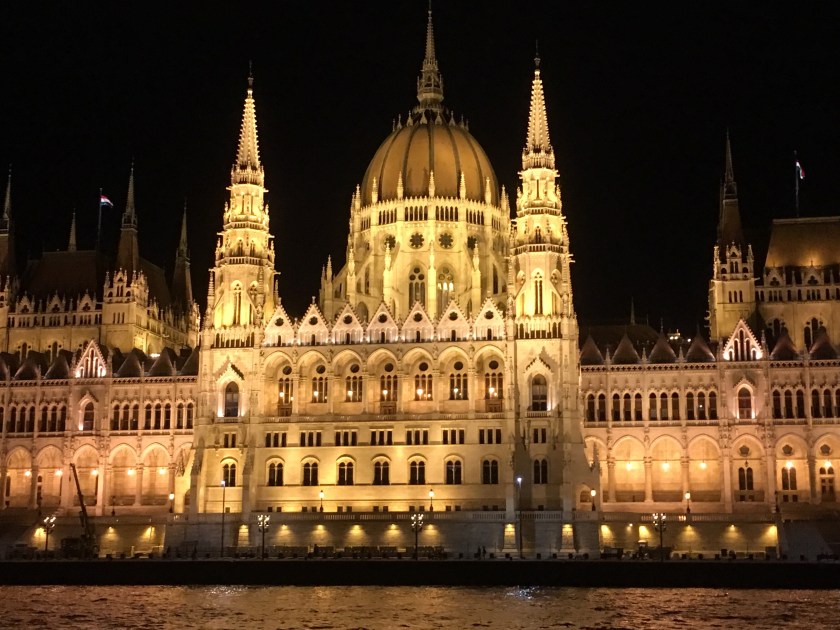
 A quick stroll back to the hotel ended this busy day in Pest. We get to sleep in as we congregate at 10 a.m. tomorrow.
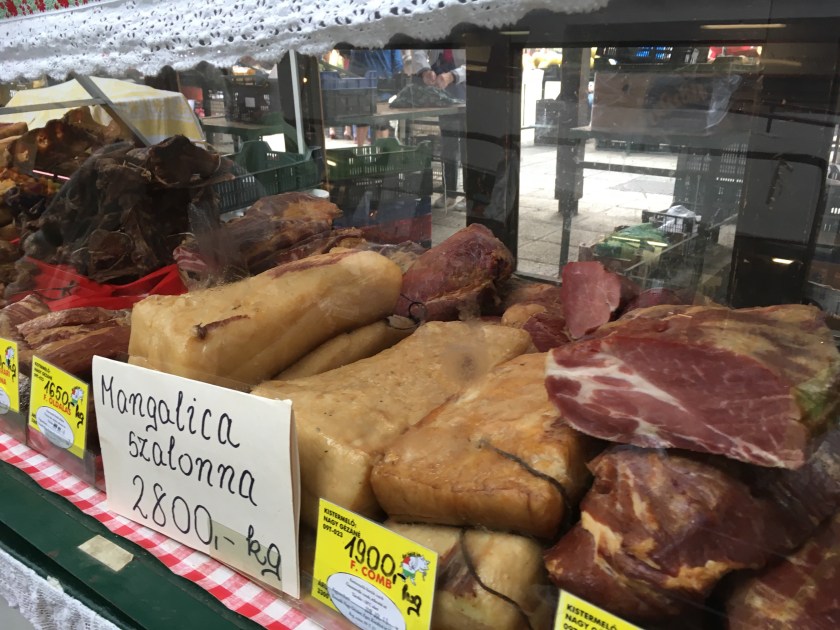 Cured meats!

 We strolled back to the main square, the site of the statue of Istvan Dobos,
 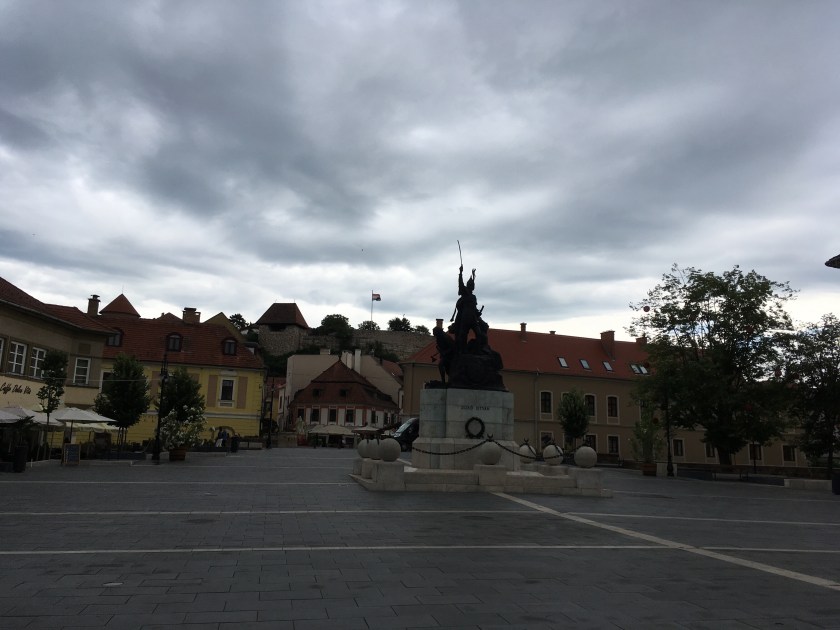 and enjoyed a cappuccino while watching a group of costumed high school students perform the Macarena.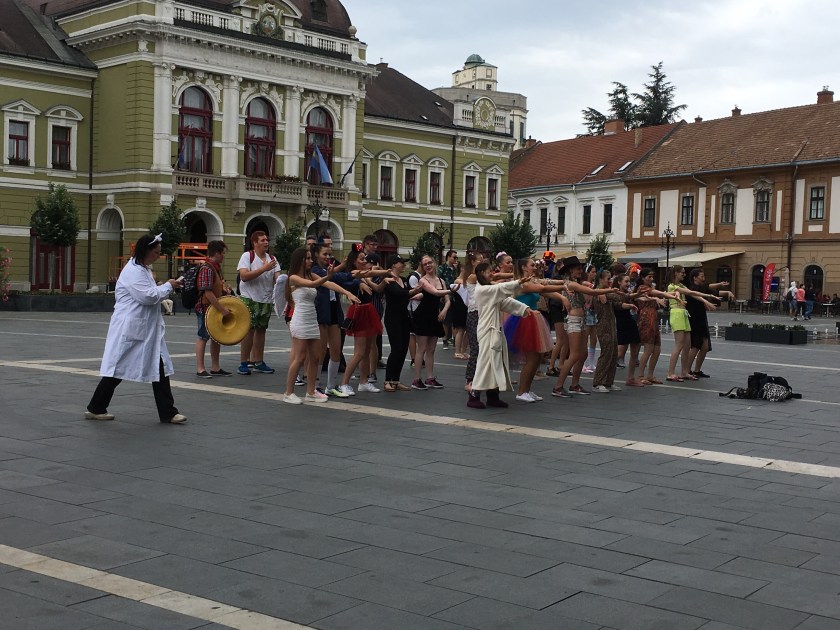
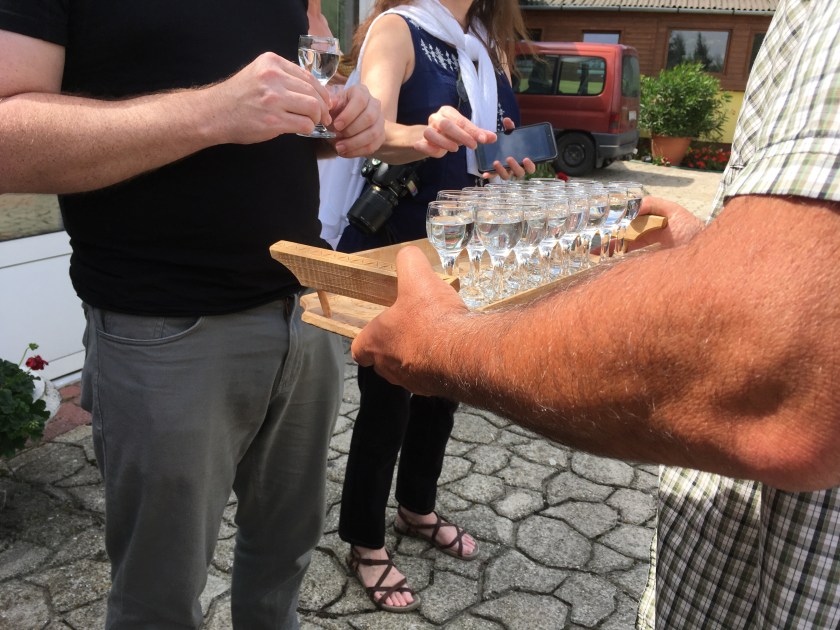 Seated at two long tables, we sampled (with generous pours) two white wines (Leanyka and Je t’aime) and three reds (Turan, Madame Menoire and Cabernet Sauvignon).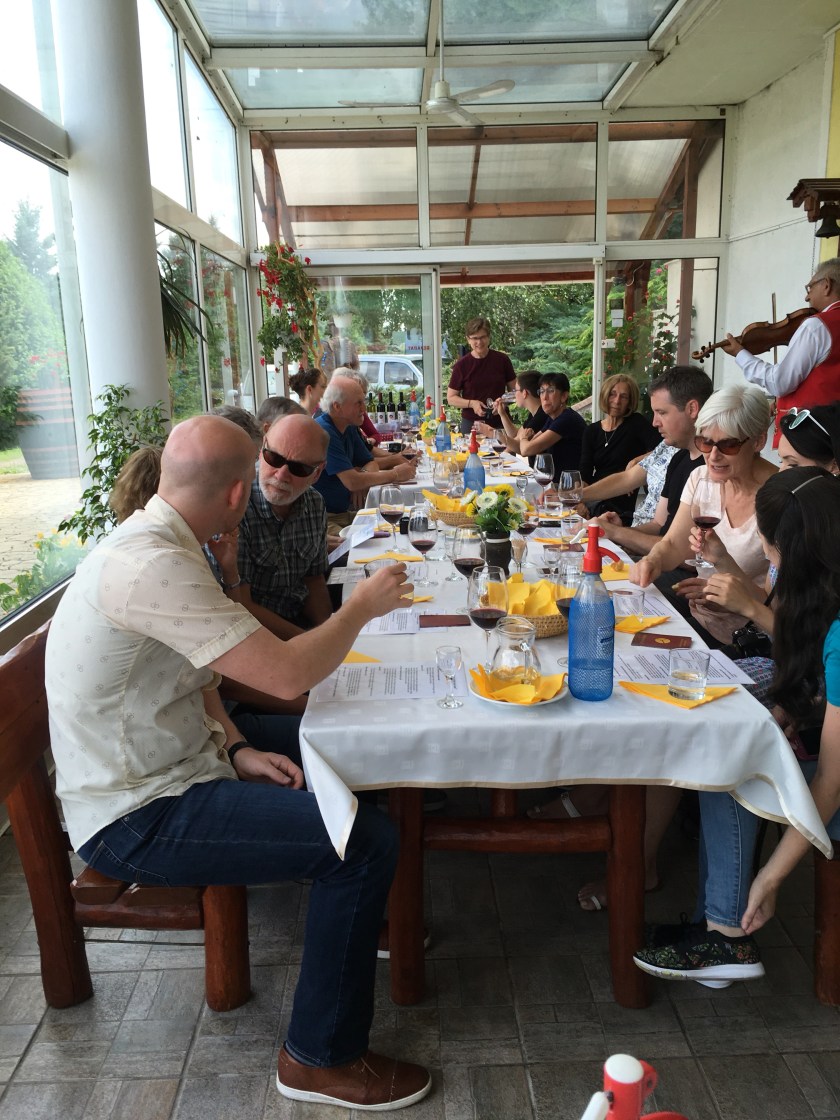
 There was musical accompaniment, Tony, a retired violinist from a very famous Gypsy band.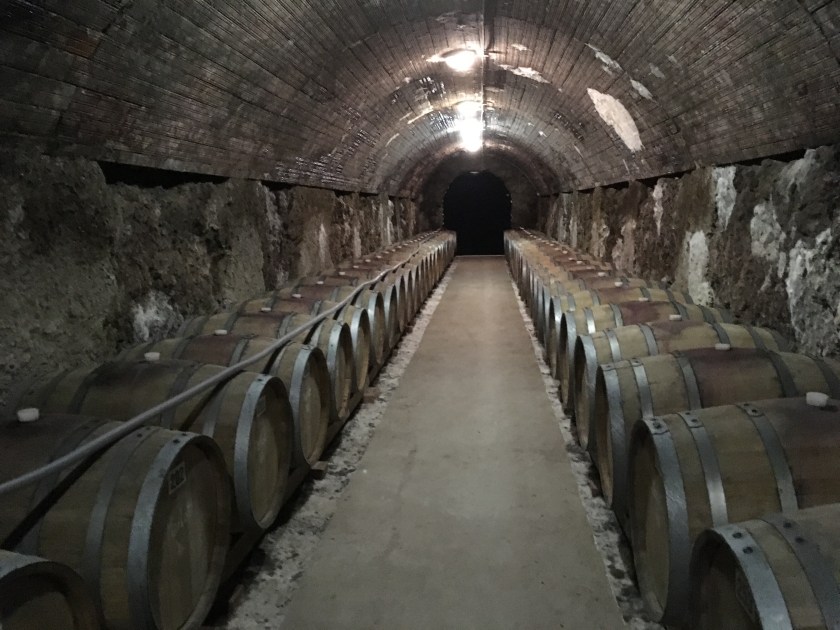
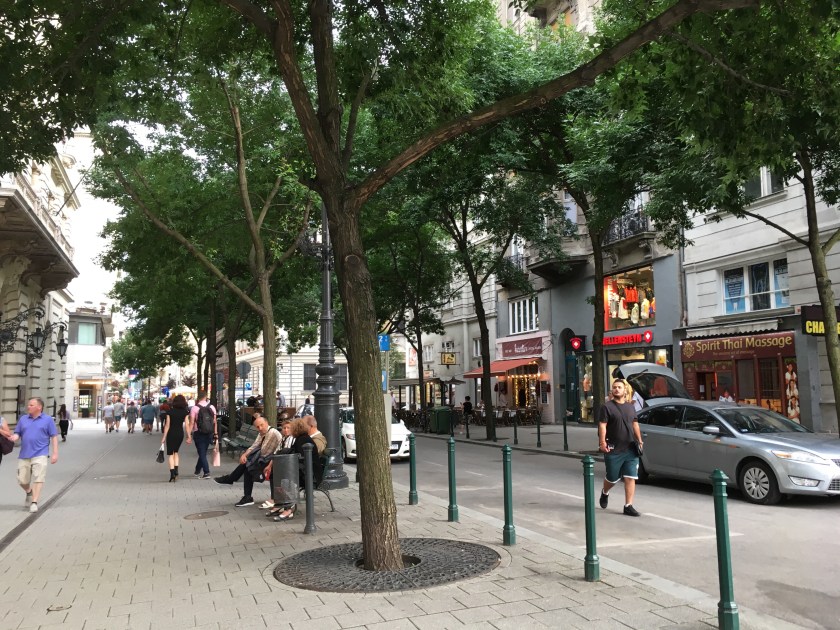 We are staying at the Hotel Erzsebet, conveniently located in Pest ( the city is divided into two parts, Buda and Pest, by the Danube River). We are just steps away from one of the main boulevards and the Great Market Hall, the city’s largest and most expansive market that not only sells fruits and vegetables but also embroidered goods and the famous Hungarian paprika.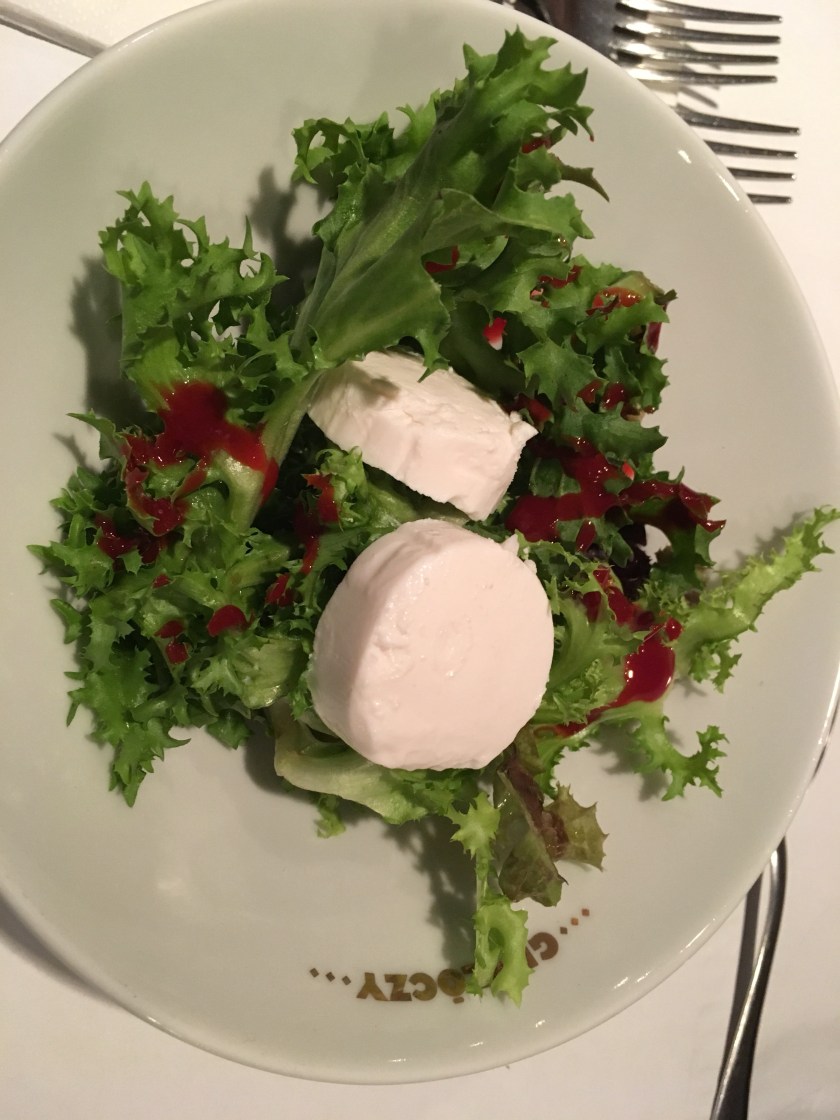
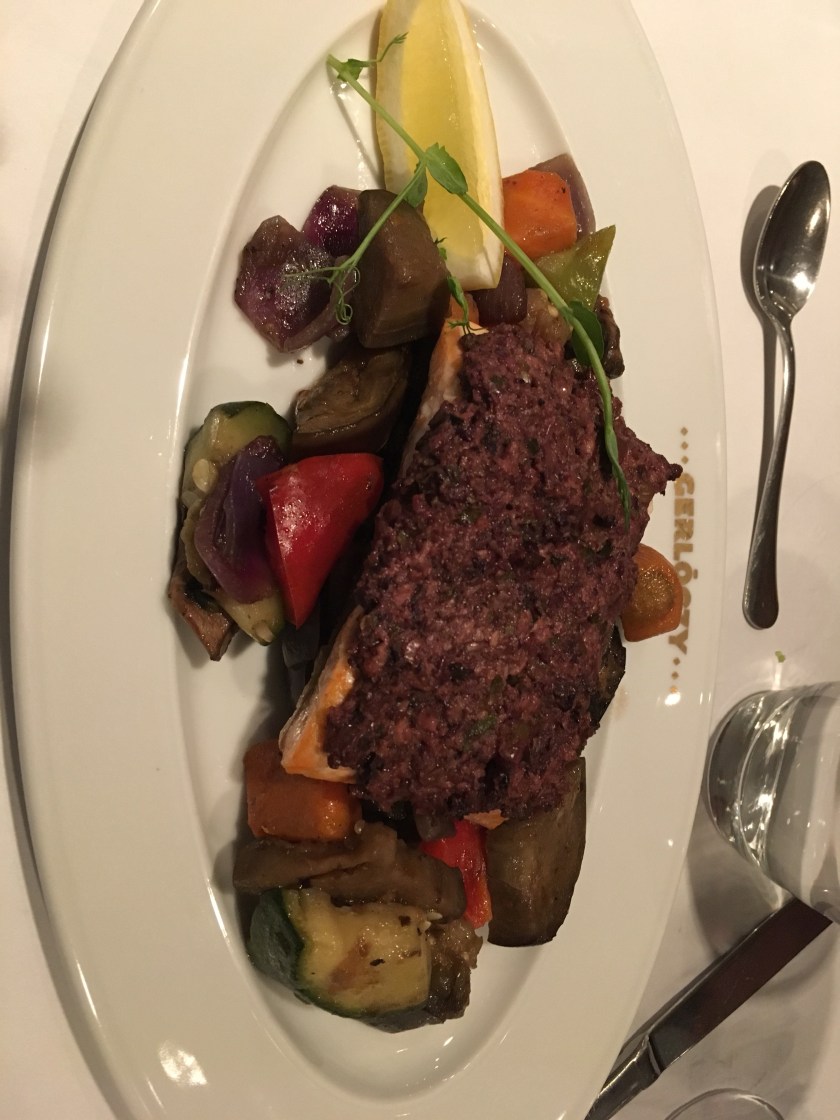
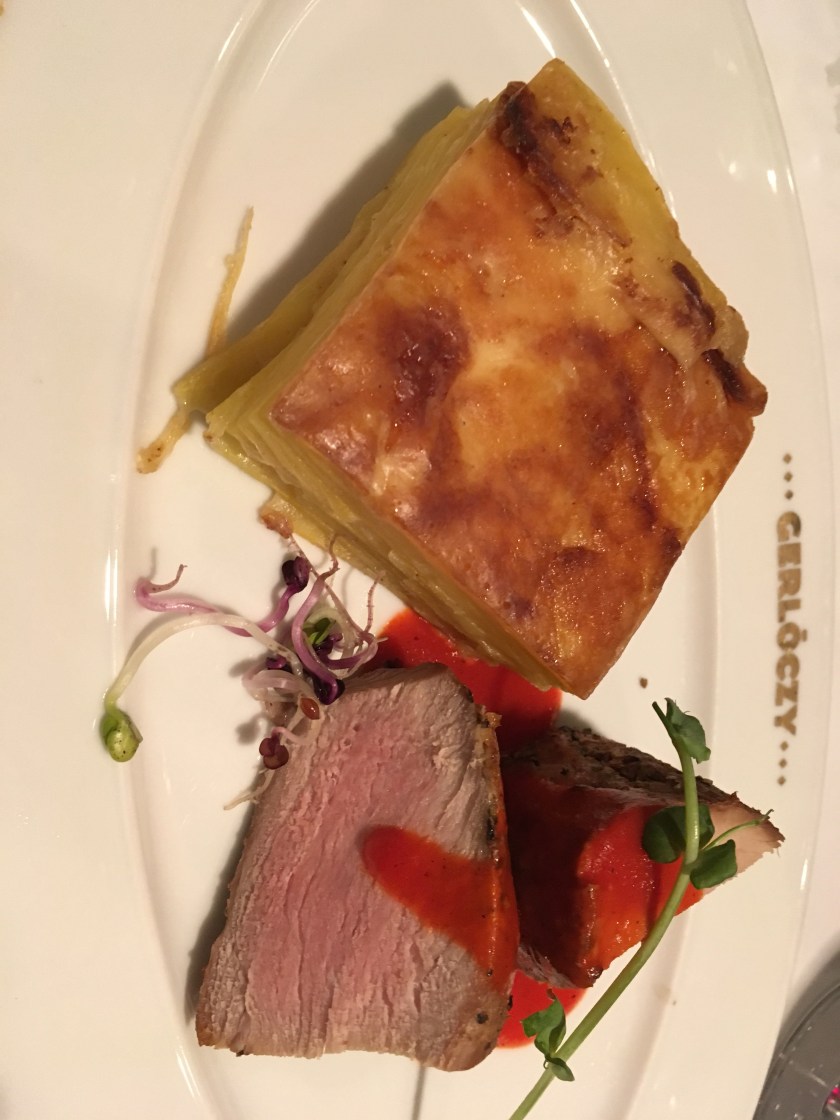 We had musical entertainment with a piano player performing throughout the meal. We all joined in a verse of Billy Joel’s “Piano Man” near the end of the evening. A short walk brought us back to the hotel where we will rest up for our tour of Pest tomorrow morning.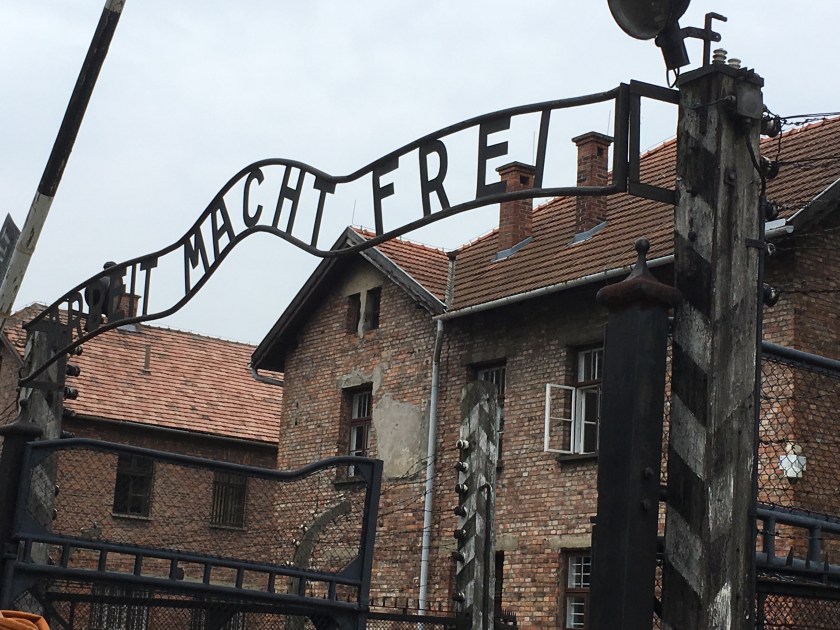
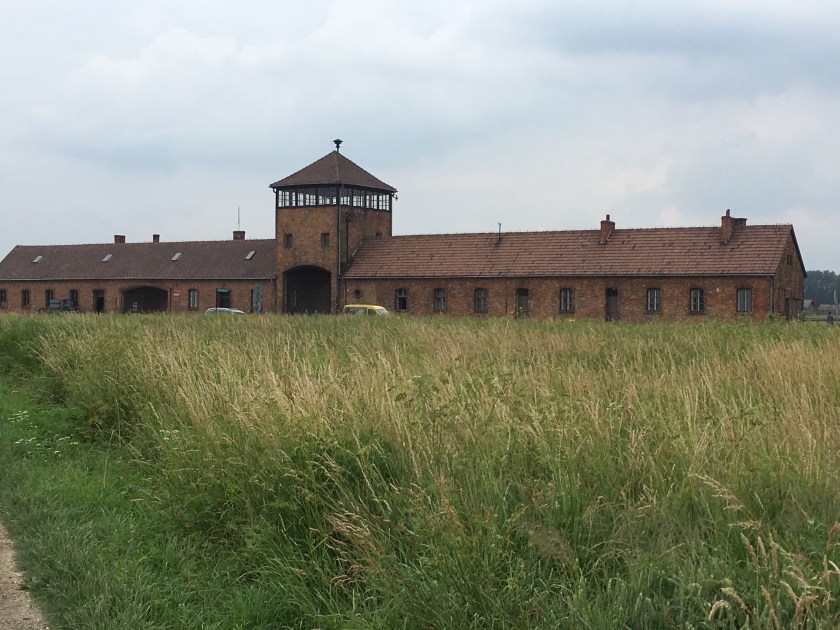 (Entry gate to Birkenau – was seen in movie Schindler’s List)
 One had a choice of apple juice as a mixer, but straight up one could get the sense of a grassy essence. A bag lunch from a deli (Chimera) from Krakow was distributed – two sandwiches, bag of fresh veggies ( celery, pepper, tomato) an apple, and a piece of rhubarb crumble/crisp- was enjoyed on board the bus. We passed through rural Poland- rolling fields of wheat and potatoes, small towns, homes scattered throughout the countryside with their red tile roofs or red metal roofs on the newer homes. The houses have three stories, one for each generation, as multigenerational homes are common. The bus drove through Wadowice, the home town of Karol Woytyla, the future pope. A traffic accident in the mountainous area of southern Poland delayed us for about an hour, and construction delays were frequent, but people read or snoozed or played a card game or worked on a blog😉. It has started to rain – perfect for a travel day. There hasn’t been much sun on the past four days, with rain on and off or scattered thunderstorms earlier in the week.
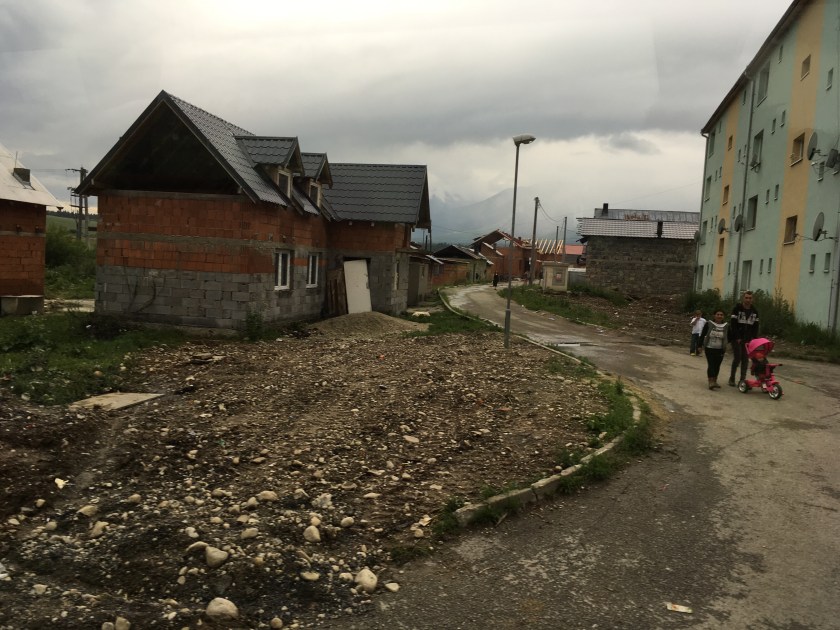 The Roma (gypsies) make up about 10% of the Slovakian population. They live in ramshackle settlements, have large families and discourage education for their children as they fear that it will encourage their offspring to abandon the community. As we proceed we are now constantly climbing up a mountain road on our route to Hungary. With a truck hauling logs ahead of us, our driver deftly maneuvers the bus down the narrow and windy road.
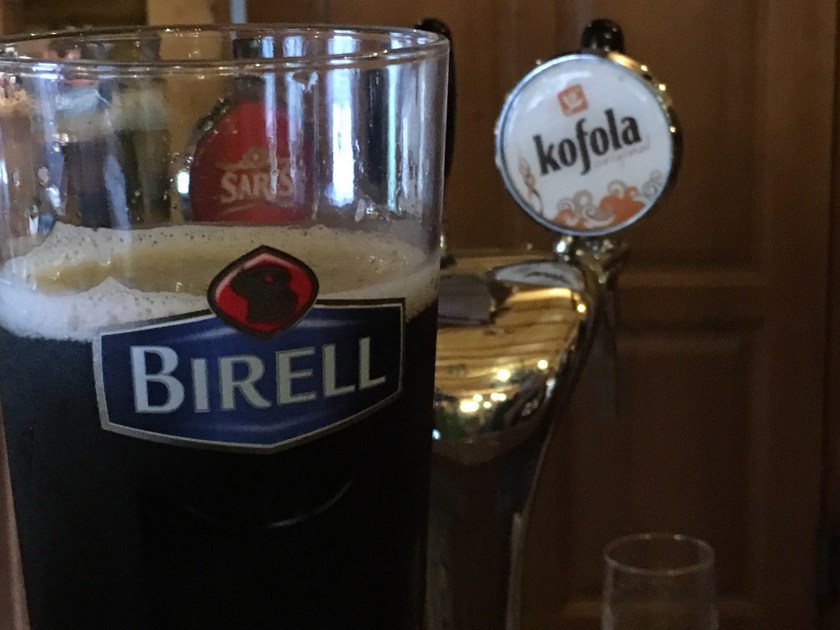
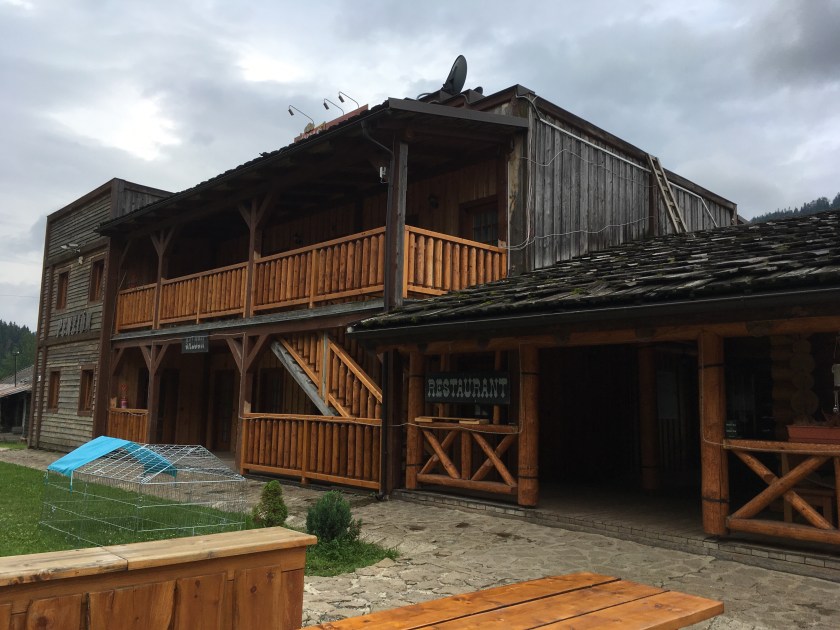 As we bellied up to the bar, Katka treated us to a drink – beer, wine or maybe even Kofola! It looks like Guinness and is even found on tap.
  A group of children were playing soccer outside with a very talented dog that was quite adept at “heading” the ball. Back on the bus after our 30 minute break, the road wound down the mountain with amazing vistas.
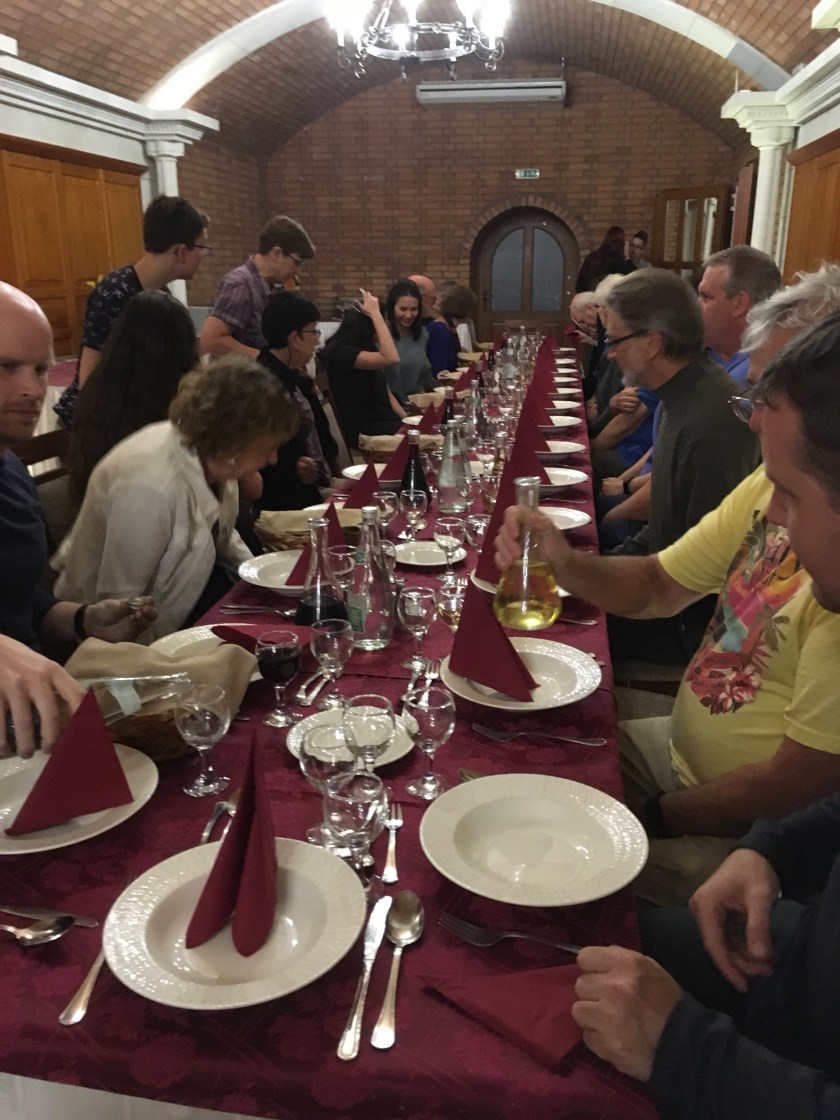 Much laughter accompanied this hearty traditional Hungarian meal.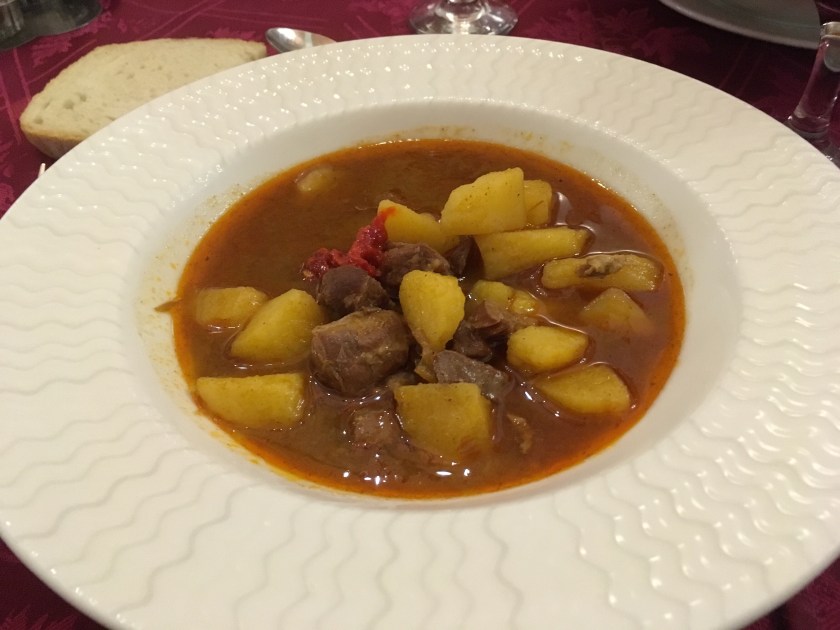
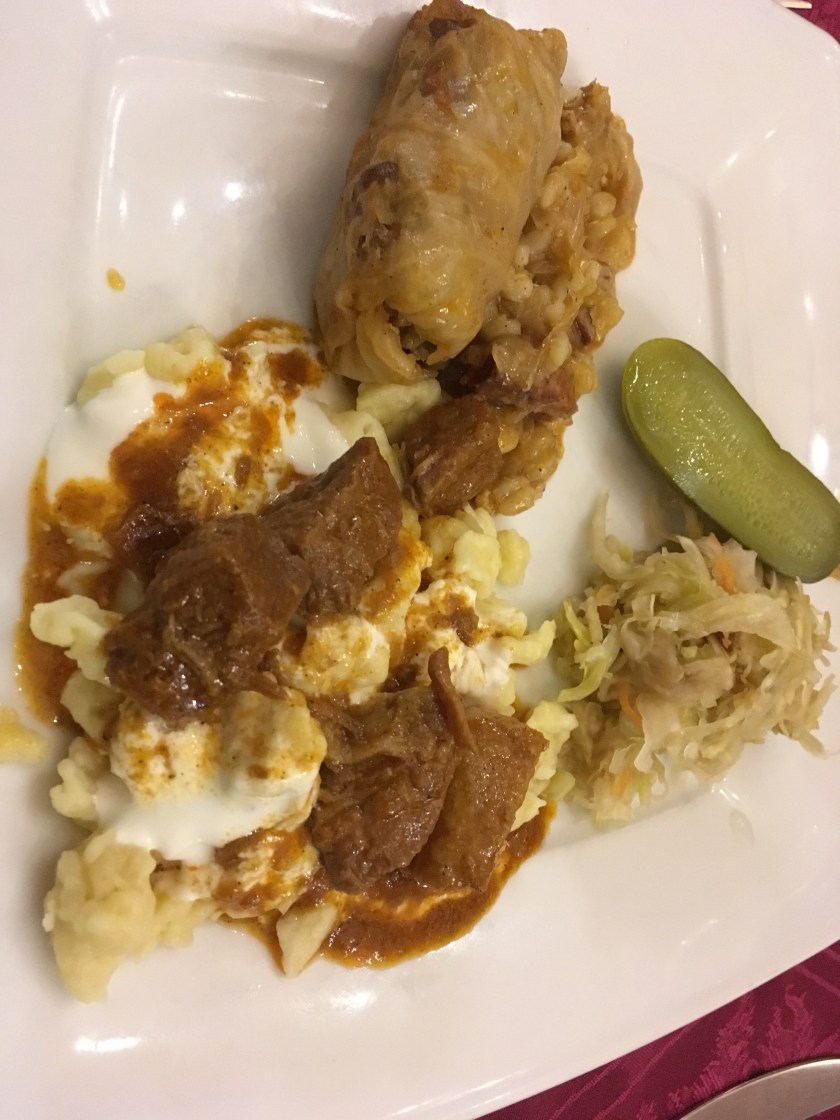 What a treat after this long and emotional day!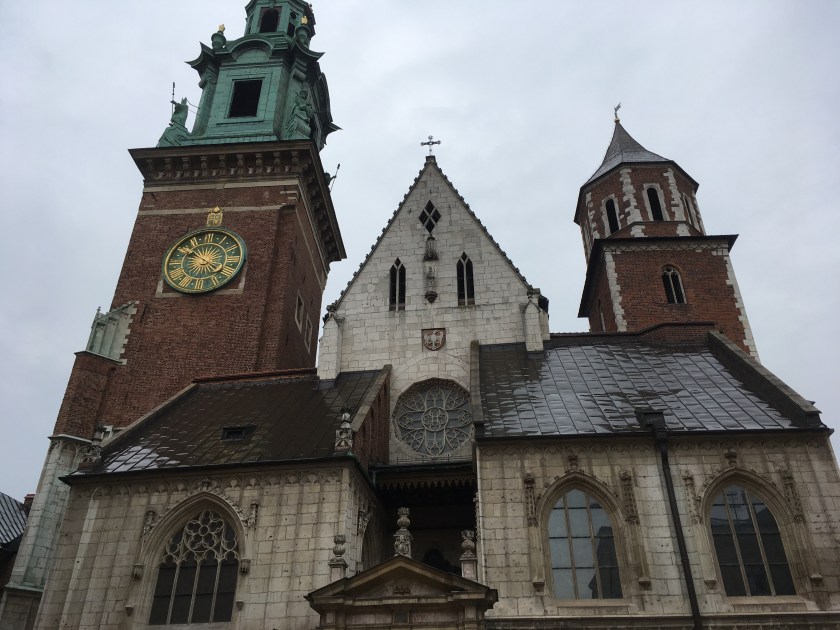
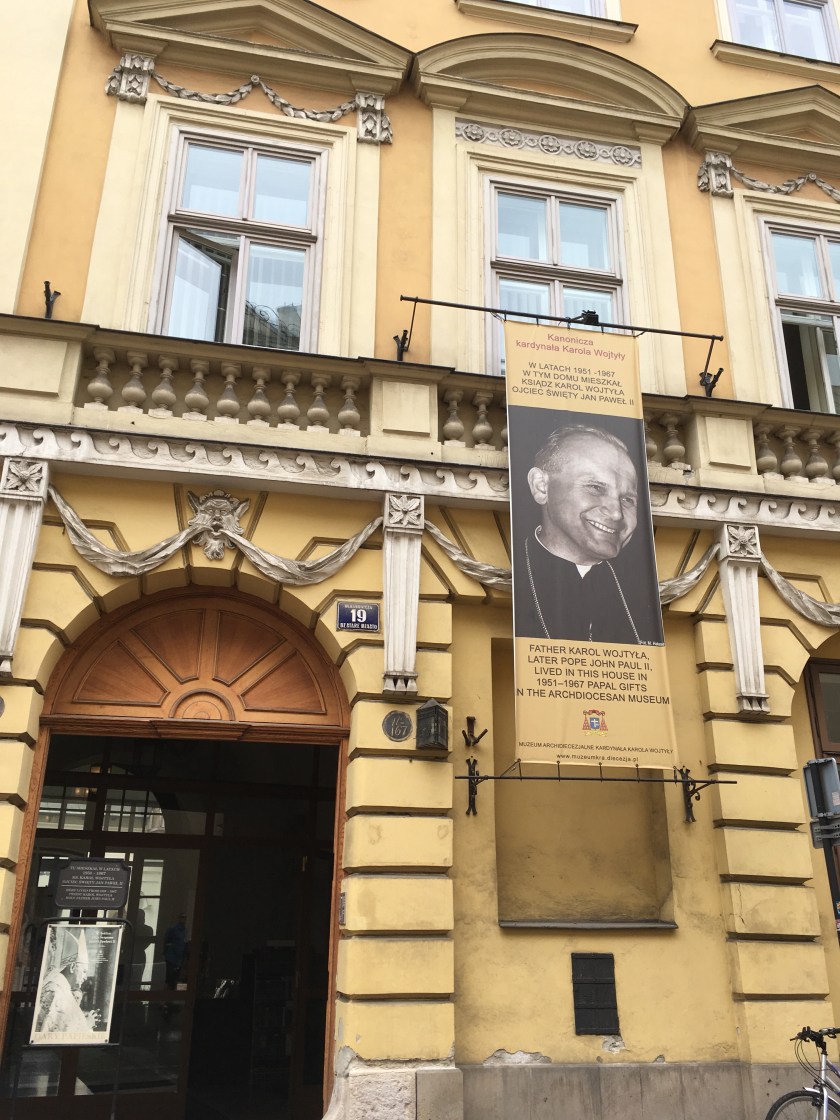
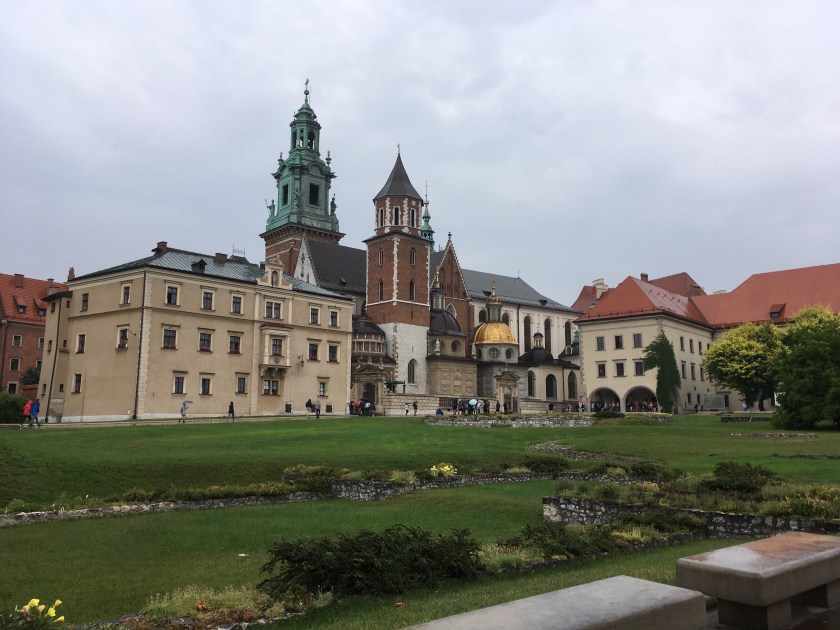 We were lucky that the line for the cathedral was short. This is the home church for the bishop of Kraków and was the church of Karol Woytyla – later to be Pope (and now Saint) John Paul II.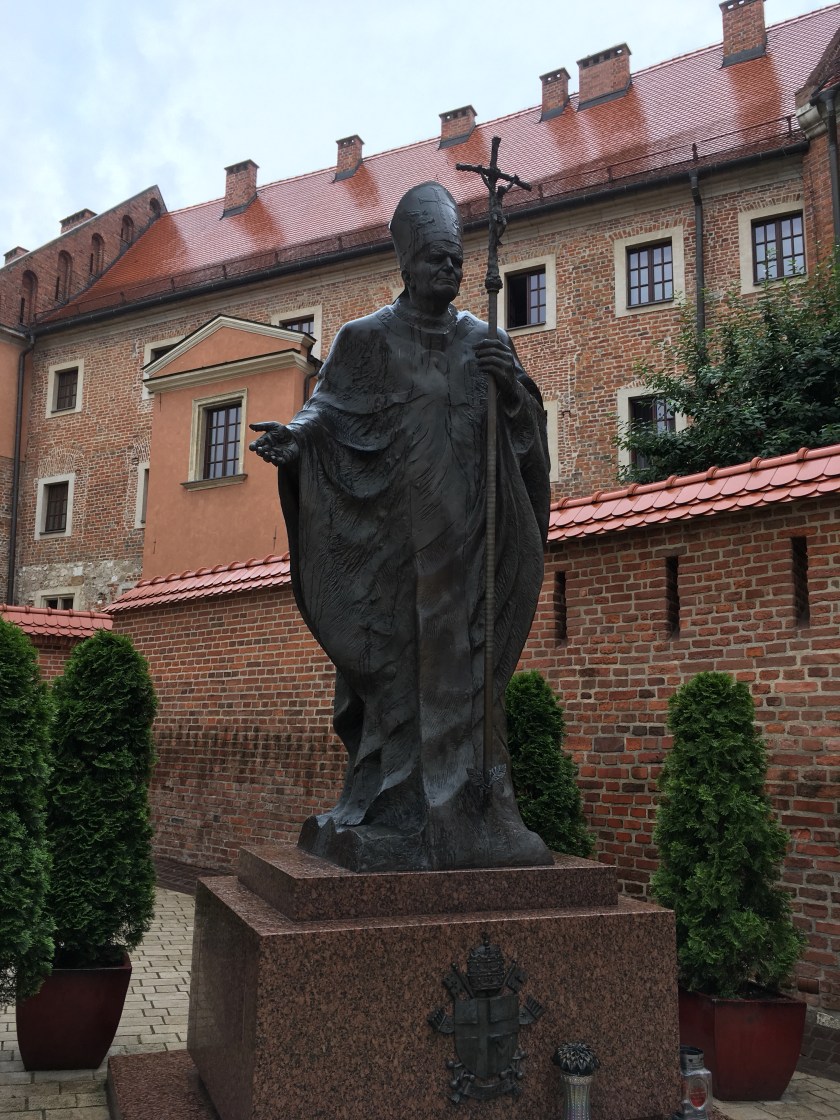
 Although he is buried in the Vatican, there were many other important Poles entombed there- kings and queens as well as important clergy. The church exhibits many styles, including baroque and Romanesque. We strolled the grounds and enjoyed the view of the Vistula River.
  Our next destination was St.Mary’s Church in the Old Town Square. It has the largest altar carved out of wood ( predominantly linden wood) and instead of the usual triptych seen in Renaissance churches, this altar has 5 panels.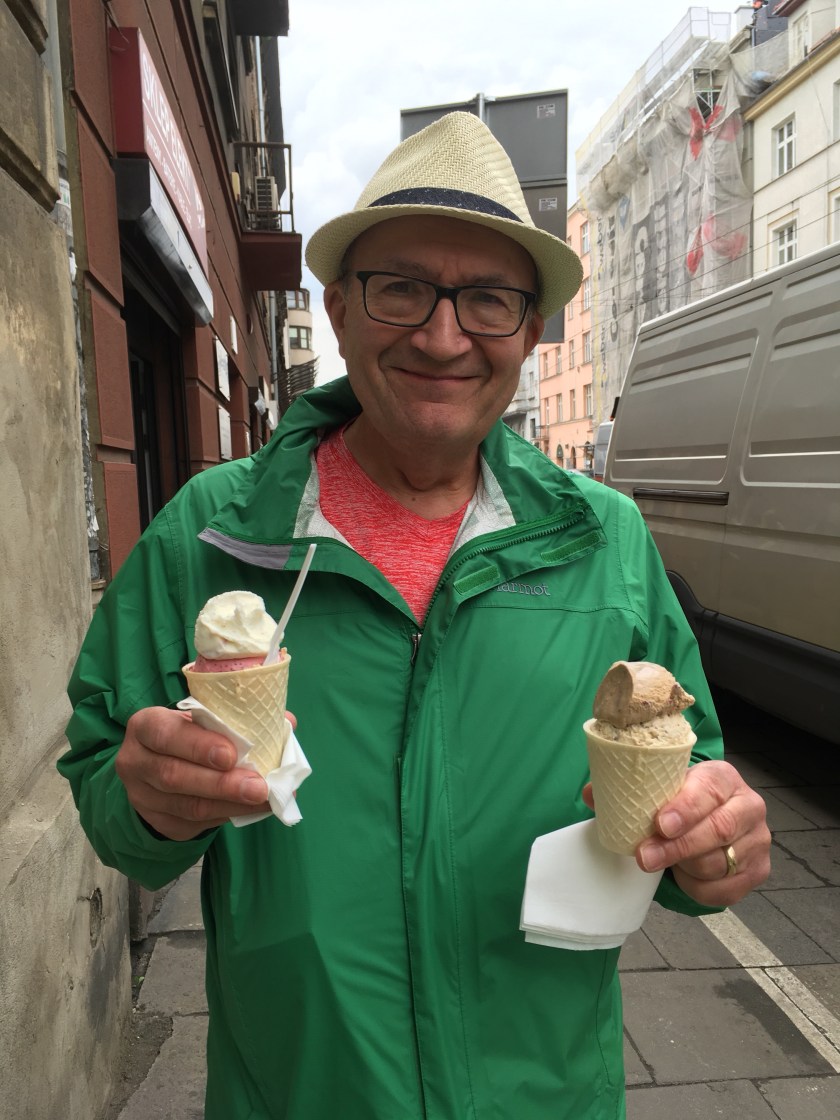
 We have an early morning wake up as we leave to see Auschwitz and head through Slovakia to Eger, Hungary.
 The local specialty is a type of gingerbread shaped into a cone called “usci” or ears – it refers to the ears cut off by the Mongols who terrorized this area over a thousand years ago. These “cones” are usually filled with fruit and cream. Since we are leaving the Czech Republic, any leftover Czech crowns would be of no use so we were encouraged to at least get rid of our coins.
 We had lunch in the local brewery- the owner gave us some of the homemade beer brandy as an aperitif. It tasted a bit like grappa. The usual stuff was on the menu – goulash, roasted pork, pork knuckle, bread dumplings. Tony had a garlic soup and sauerkraut with his roasted pork ribs. I had salad (iceberg lettuce, cherry tomatoes with mustard vinaigrette topped by a savory spiced and grilled chicken breast. We hiked up to the top of the town to see the tower and the amazing views. As our group reconnected Katka had us toast farewell to the Czech Republic with Slivovice, the traditional plum brandy. Back on the bus, Katka informed us about the region, part of the Sudetenland (“land of the wild boars”) – the Nazis evicted the Czechs from their homes in the lands bordering Germany and Austria under the pretense that the Czechs were mistreating the Germans living there. Rather they desired the rich natural resources, coal and steel mills to strengthen their military prowess. In the little hamlet we just visited, 70% of the inhabitants had two weeks to evacuate, most moving to Prague with the meager possessions they could transport with them. After the war, the Germans were evicted and sent back to East Germany.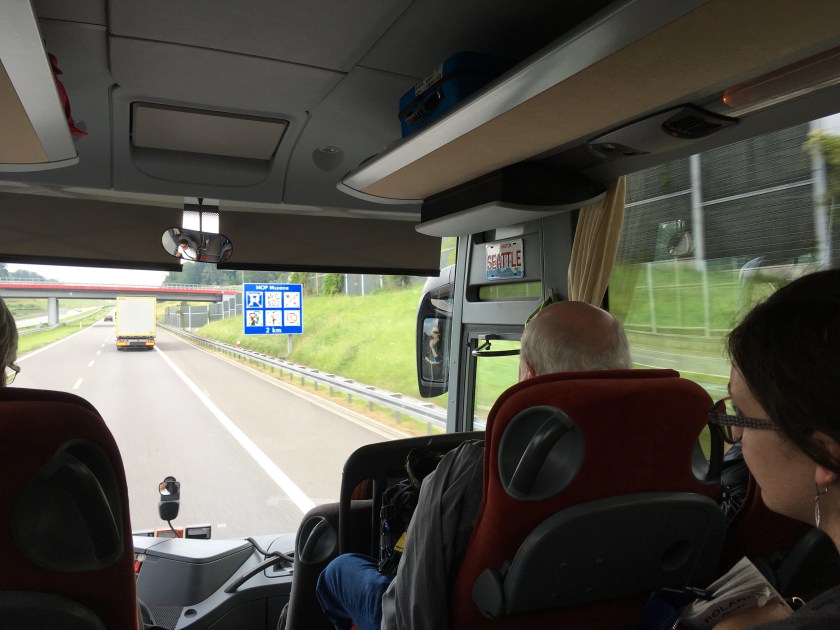
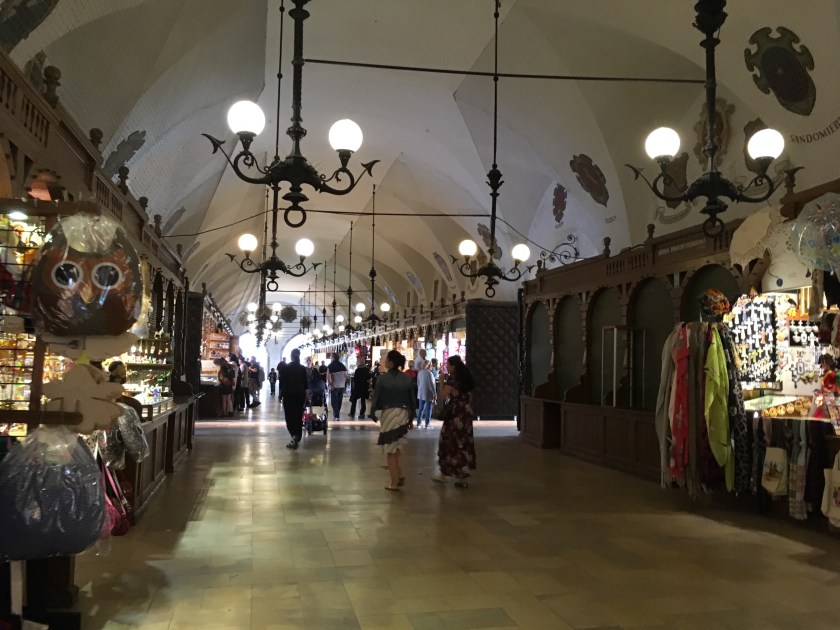 St.Mary’s Church is known for being the parish of Karol Wotyla (otherwise known as John Paul II) and every hour on the hour a trumpeter plays a song out of the four sides of one of the towers.
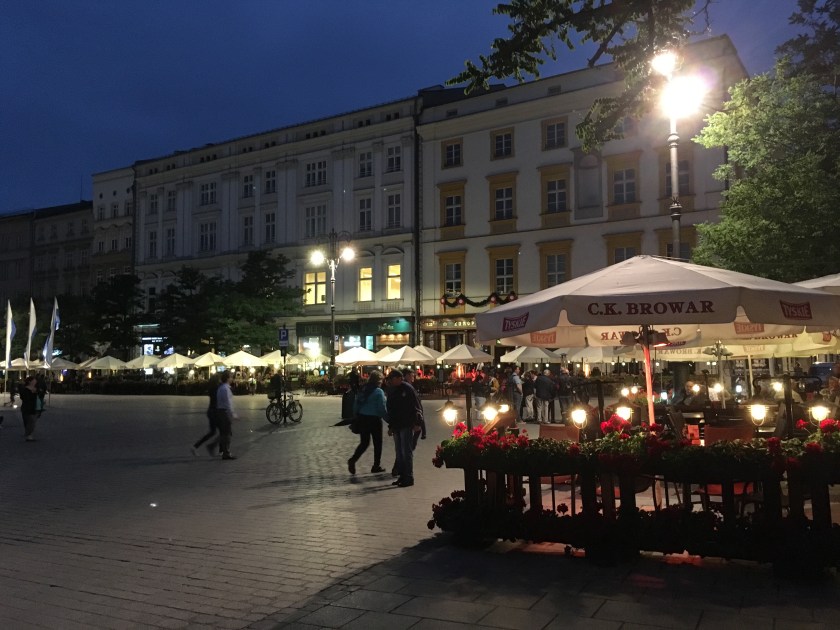
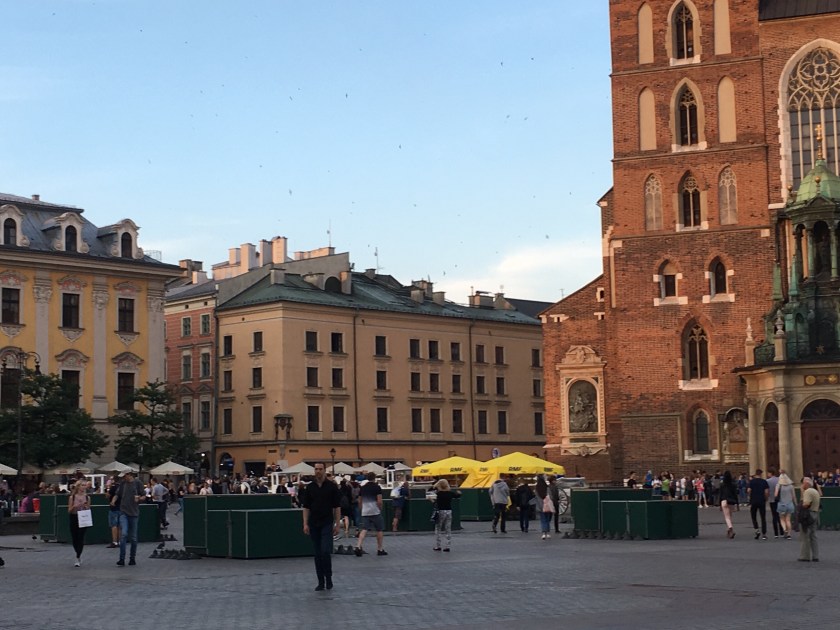 The Square is lined by cafes and is bustling with strolling tourists and buskers.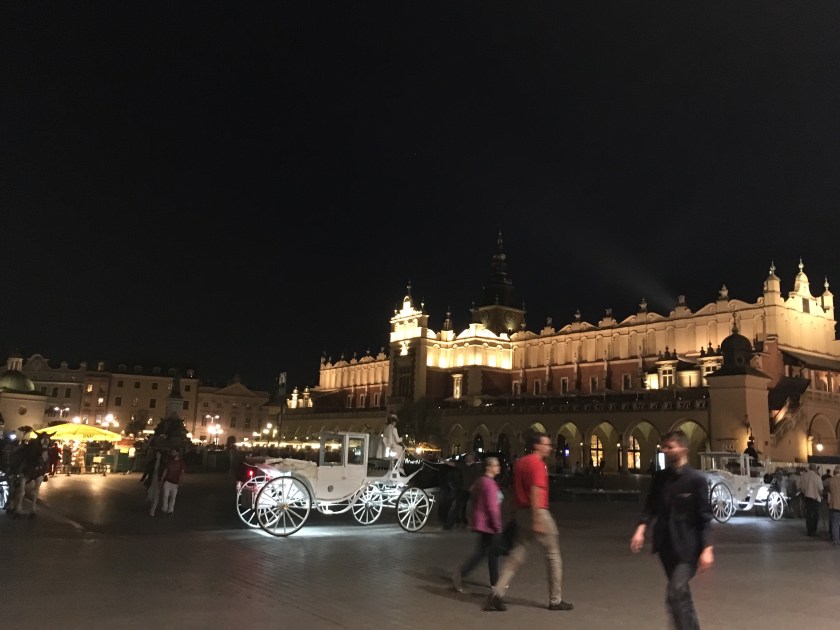


 Above is St. John’s tomb, over one ton of silver. The confessor to the queen, he was killed in the 11th century because he would not reveal to the king if she had a lover. Notice the image of a tongue on the shield to which the angel is pointing. The saint’s relic of a tongue ( how ironic for the priest who would not talk) was found to actually be brain tissue upon further research by anthropologists.
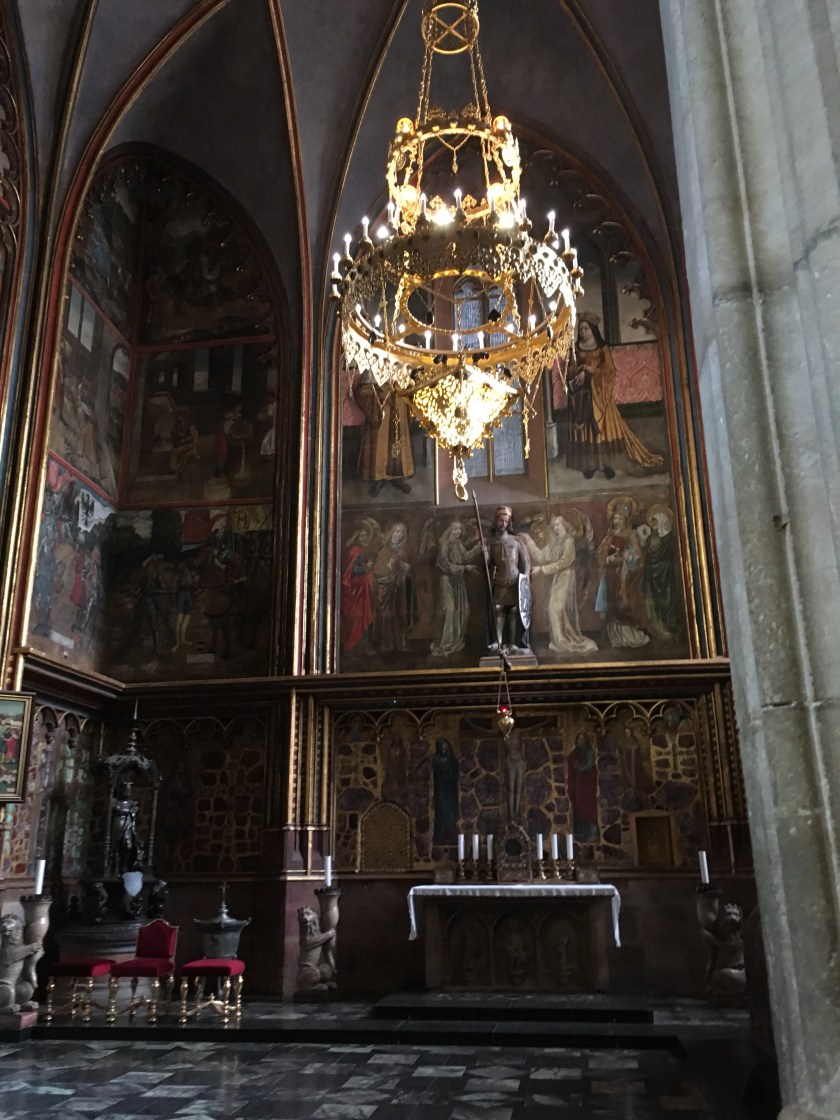 Above is the tomb of King Wenceslas, famous in Britain and the United States because of the Christmas carol, he lived in the early 10th century and brought Christianity to the region. He is the patron saint of the Czech Republic, the most unreligious country in the world (20% Catholic, 80% atheist/agnostic)!
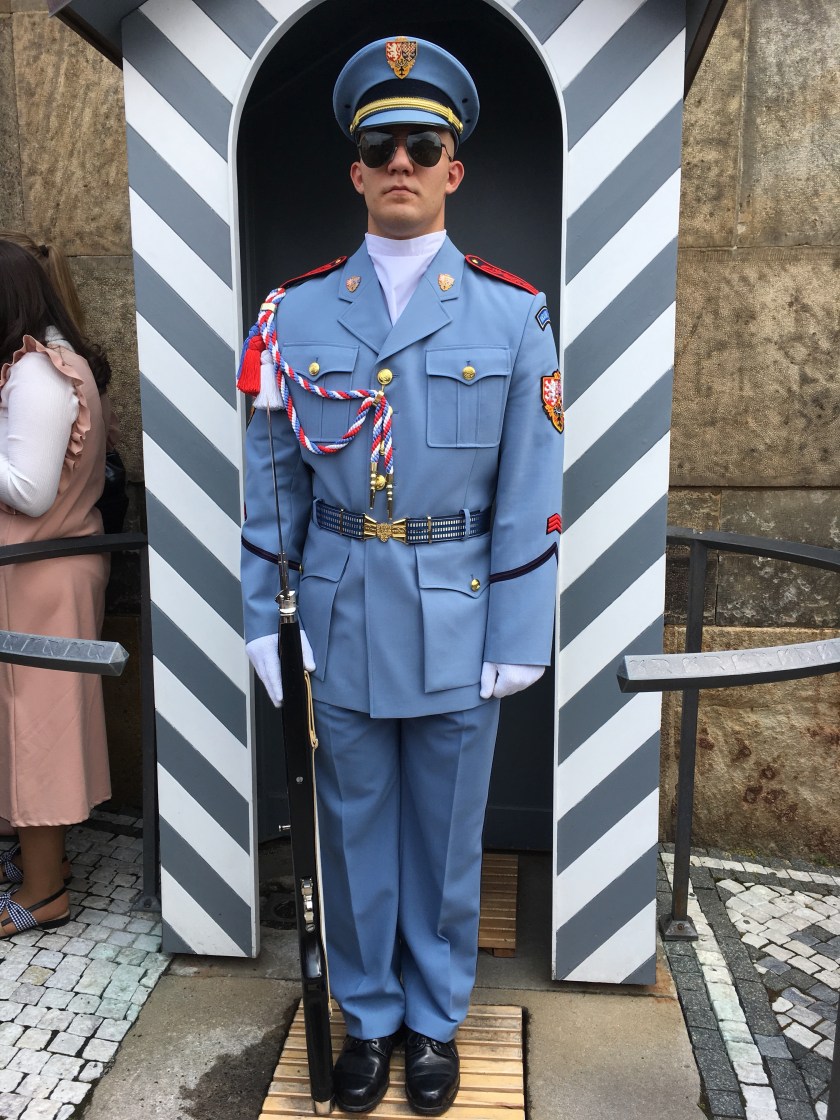
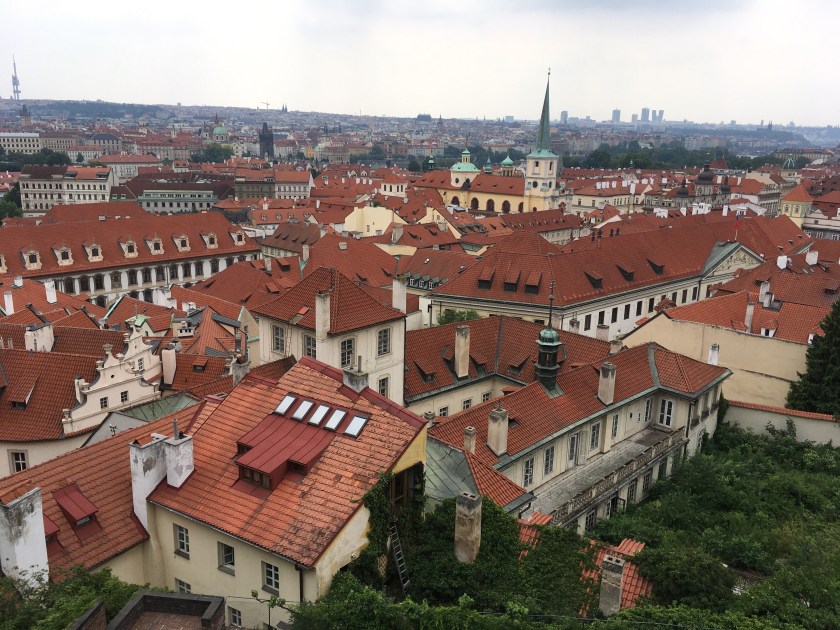 Our official touring for the day was over. We continued up the hill with three of our tour mates (Chris and Angela, Frank) to a monastery that has a brewery (surprise!) as it was approaching lunchtime. We caught the changing of the guard en route.
 Lunch was the usual – meat, cheese and beer. I couldn’t find anything with chlorophyll or fiber on the menu. I had a potato soup (in a bread bowl that I did not eat), Tony had the Czech version of goulash, a beefy stew with bread dumplings, and we shared a cheese plate.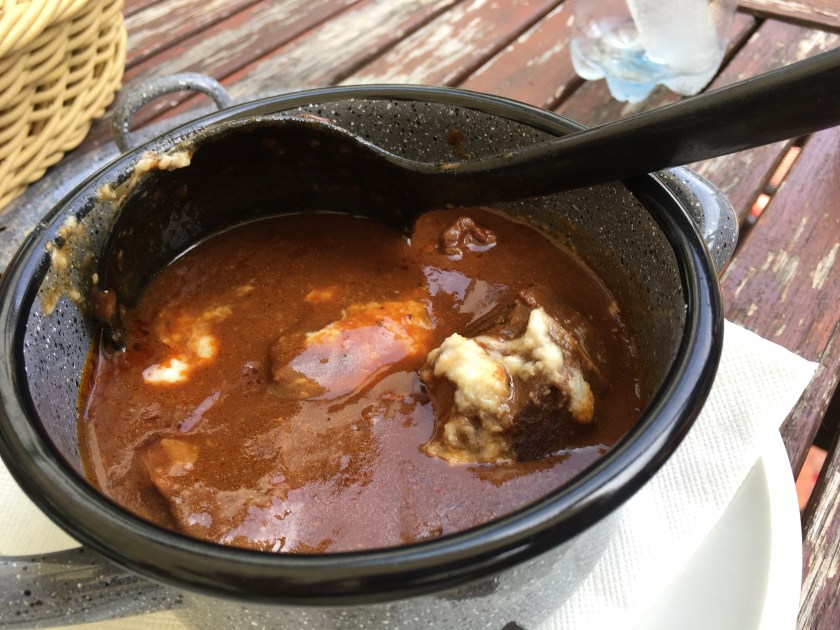
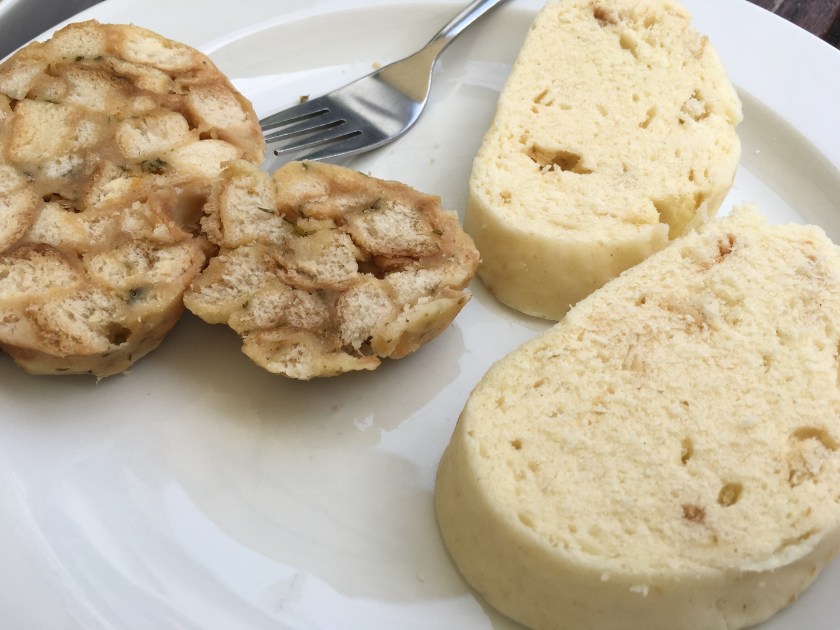 (Typical bread dumplings)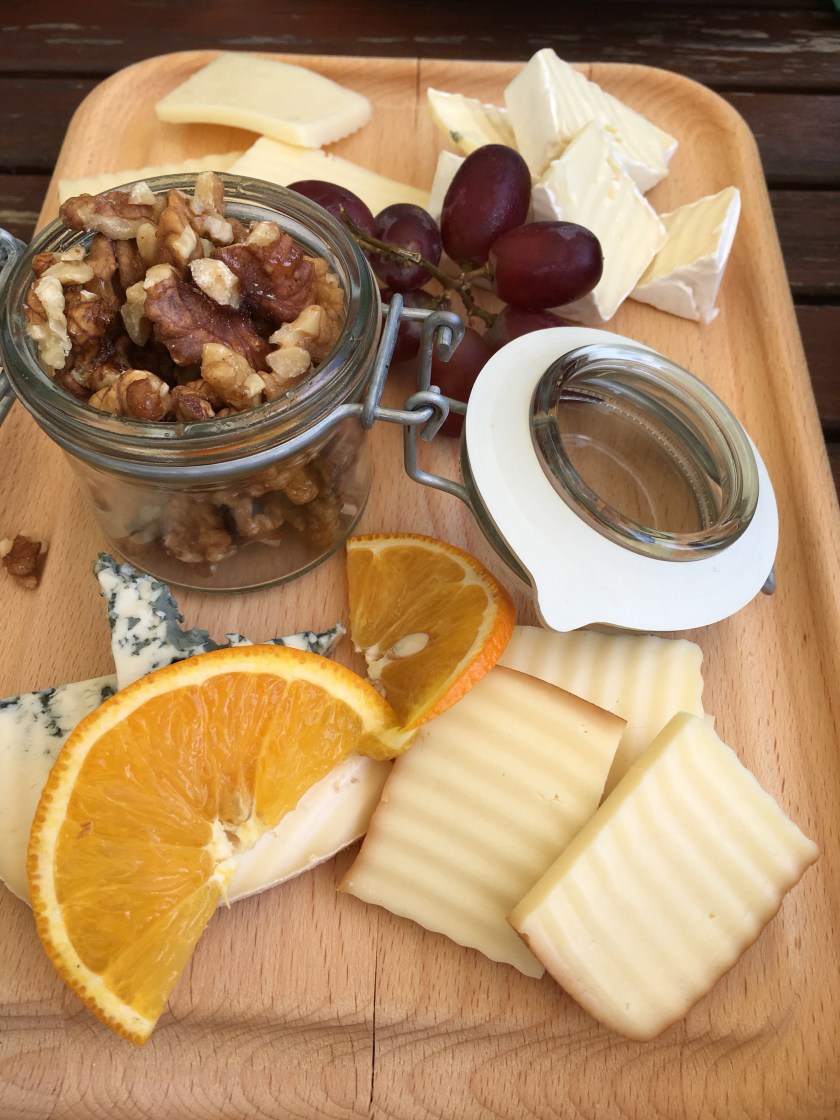
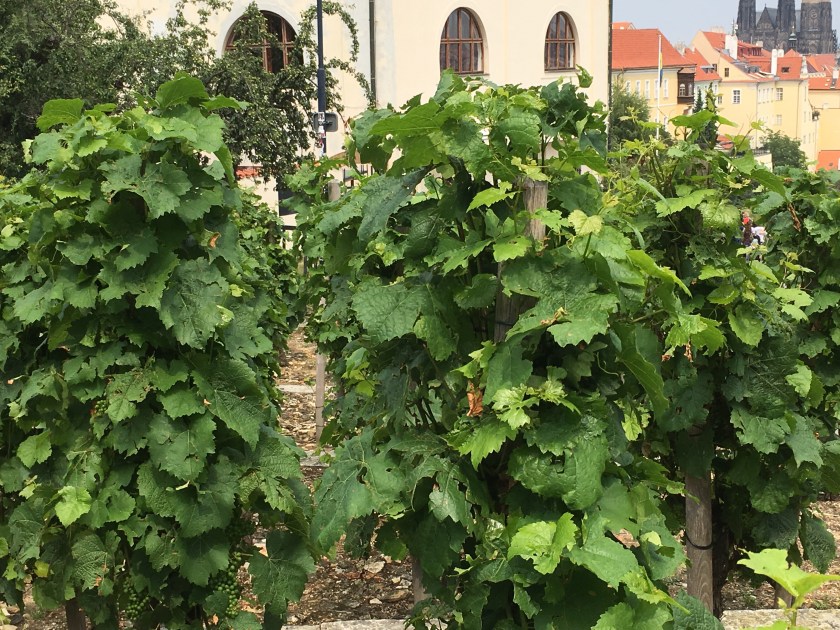 Back at the hotel after almost 6 miles of walking for the day, it was time for a little rest before an evening stroll and dinner.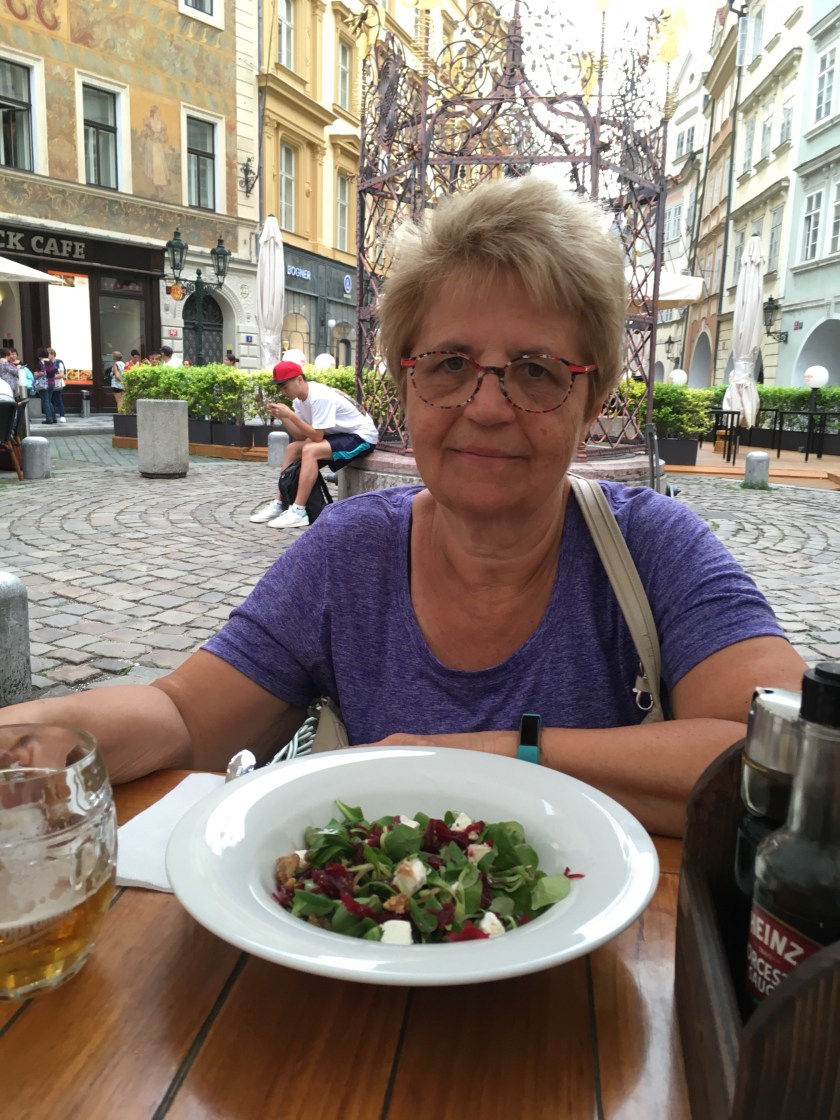
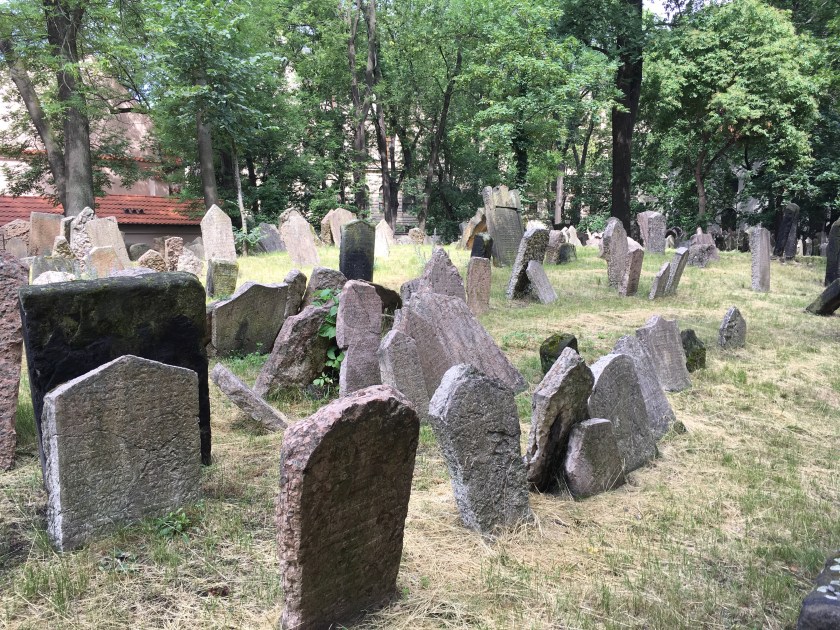 (Jewish Cemetery above)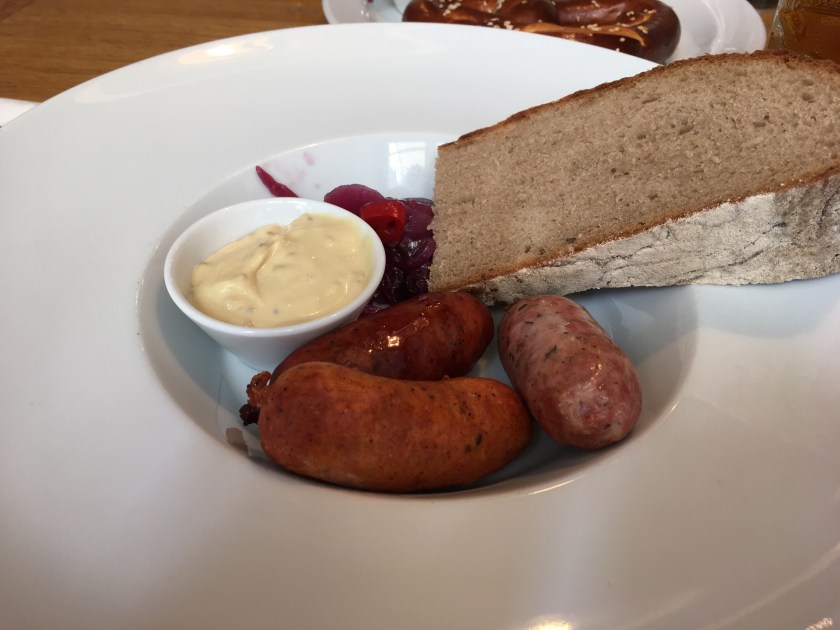
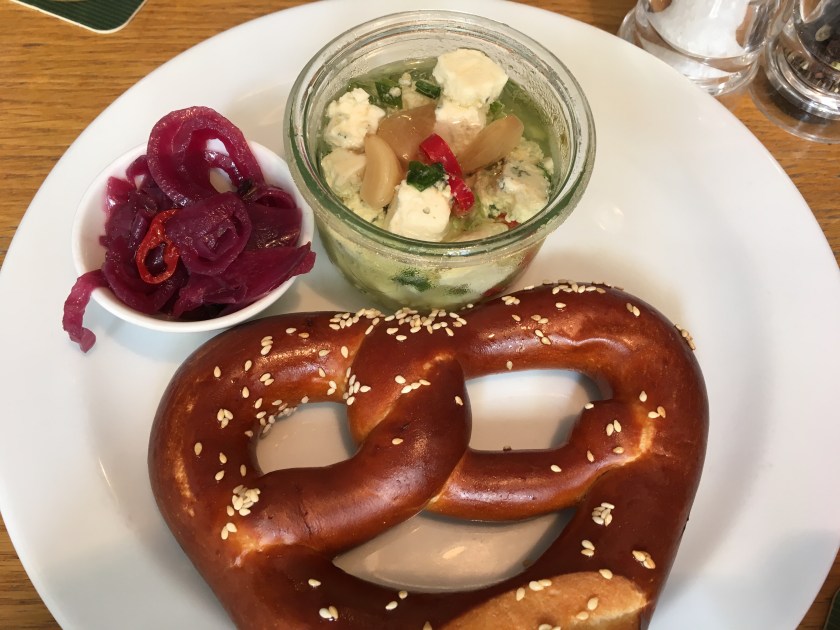 before resting up before meeting up with our Rick Steves tour group later that afternoon.
 that was the unsanctioned (by the government) people’s response to his death, honoring his vision of world peace, and to our final destination, Konirna Restaurant, for a typical Czech wedding party dinner- ham with pickled veggies, beef ( sort of like a pot roast) with bread dumplings and a puréed brown gravy, and instead of a wedding cake raspberry sorbet. Nothing green in the meal except for a mint leaf decorating the sorbet! Veggies and especially salads are not part of traditional Czech cuisine. Of course, we had beer again! After dinner, we were treated to an impromptu concert by 2 of the 4 members of the Prague Castle orchestra – the flautist and accordion player ( the same guys in the Rick Steves Prague CD video).
 When we arrived, our prearranged car transfer to the hotel was waiting and we were quickly whisked into the center of the Old Town through narrow cobblestone streets. Our room at the Hotel Metamorphis is huge, appearing even more so because last night’s accommodations were the size of a shoebox with the bathroom door hitting the toilet. We actually have a triple, and we’re using the twin bed to hold our luggage. The room is in an annex overlooking a quiet back street, which is great because Prague is a”hopping town” that apparently is a prime destination for stag parties of young drunk males from all over Europe, especially Great Britain.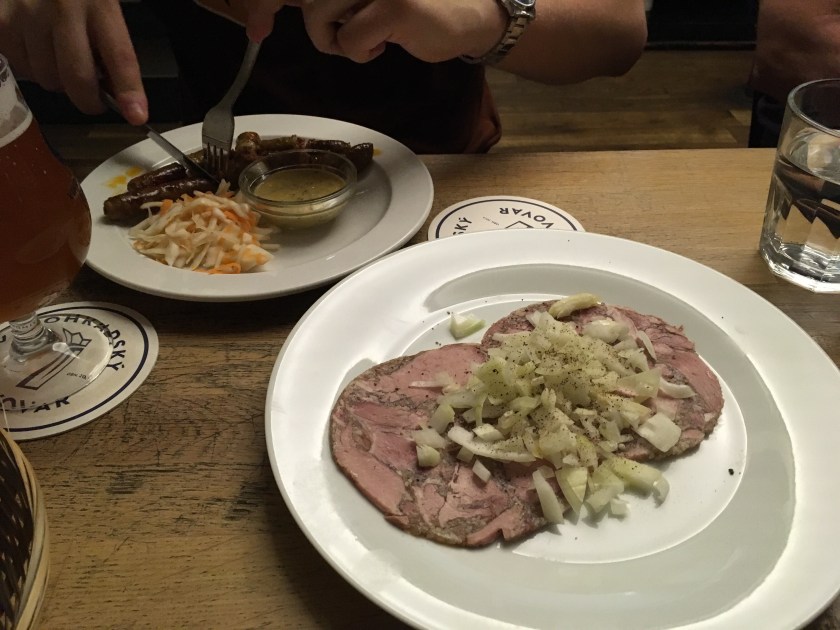
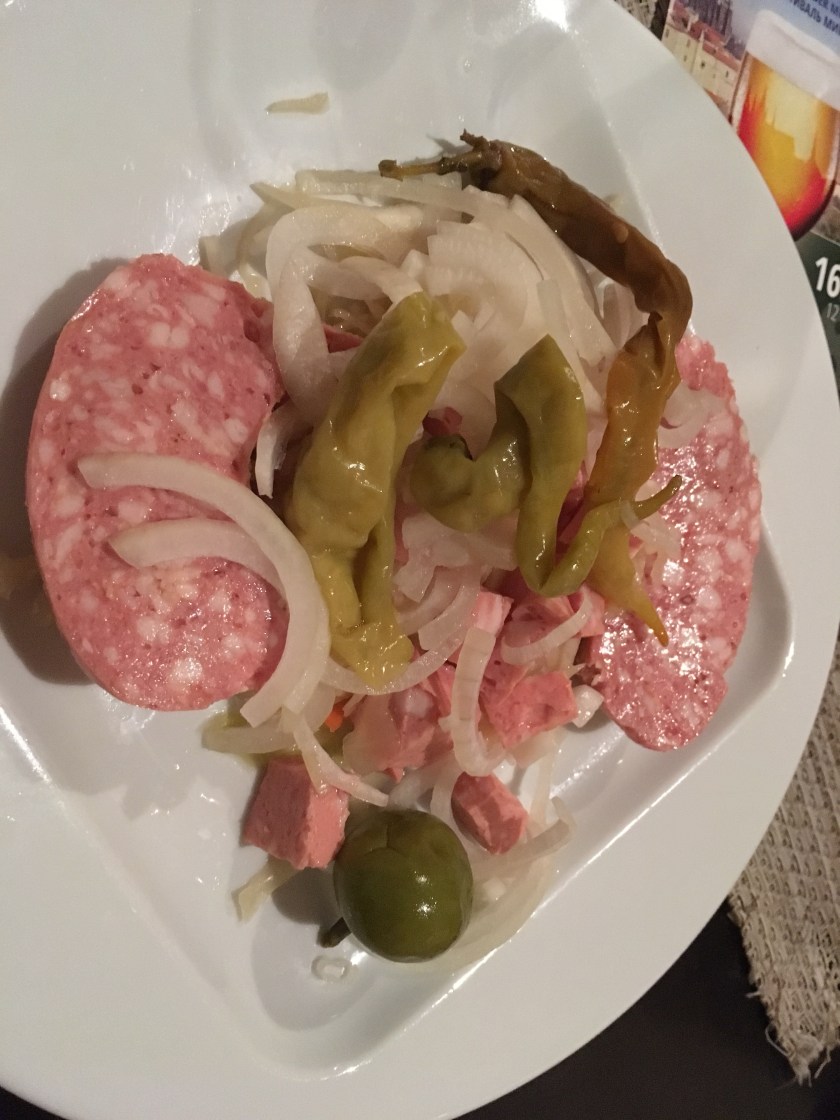 We also feasted on roast duck with cabbage and potatoes at the Basta pub – best roast duck in Prague.
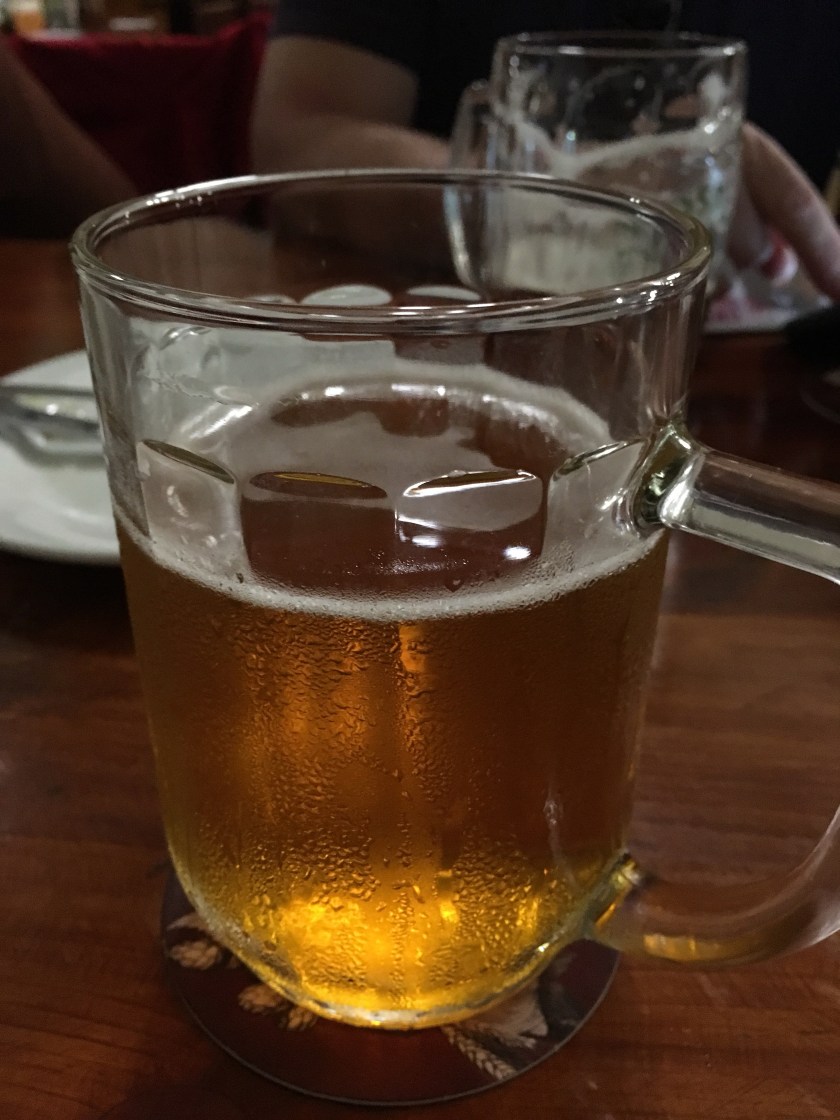
 All the pubs visited were outside the tourist area and were frequented by the locals. We spent over five hours traveling between the pubs, drinking beer, eating meat, and even venturing into a little political discussion.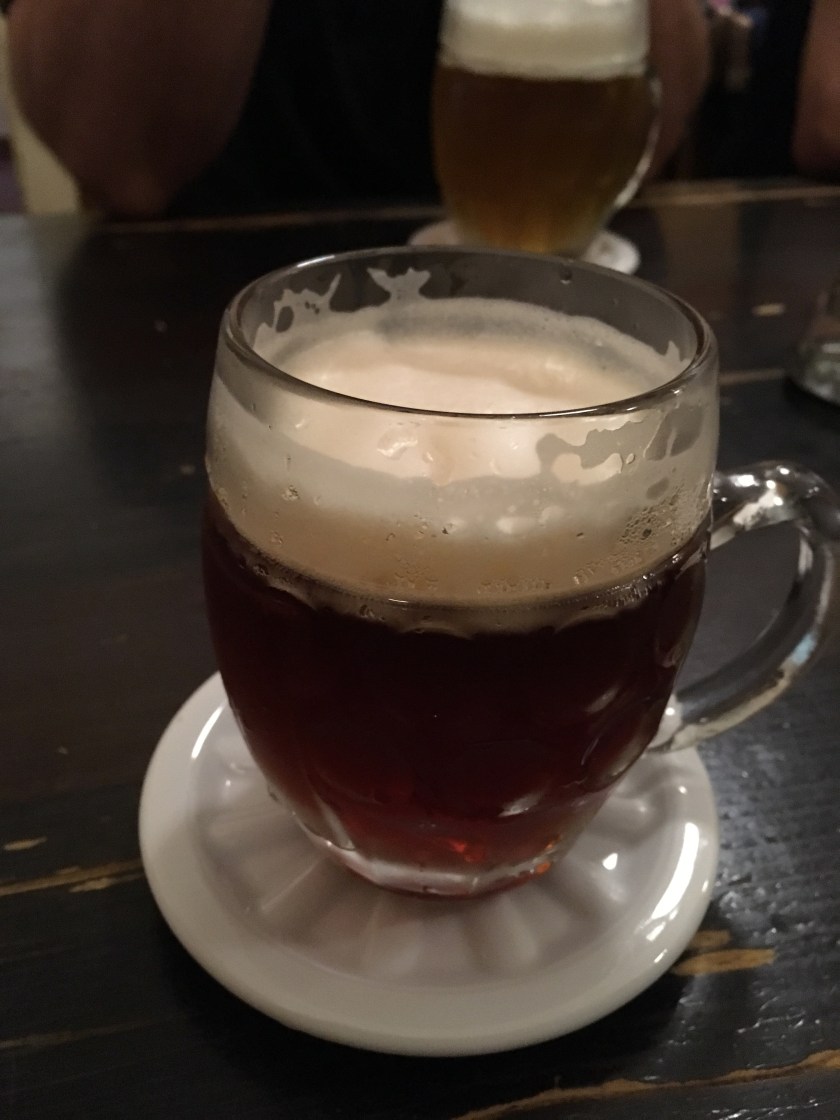
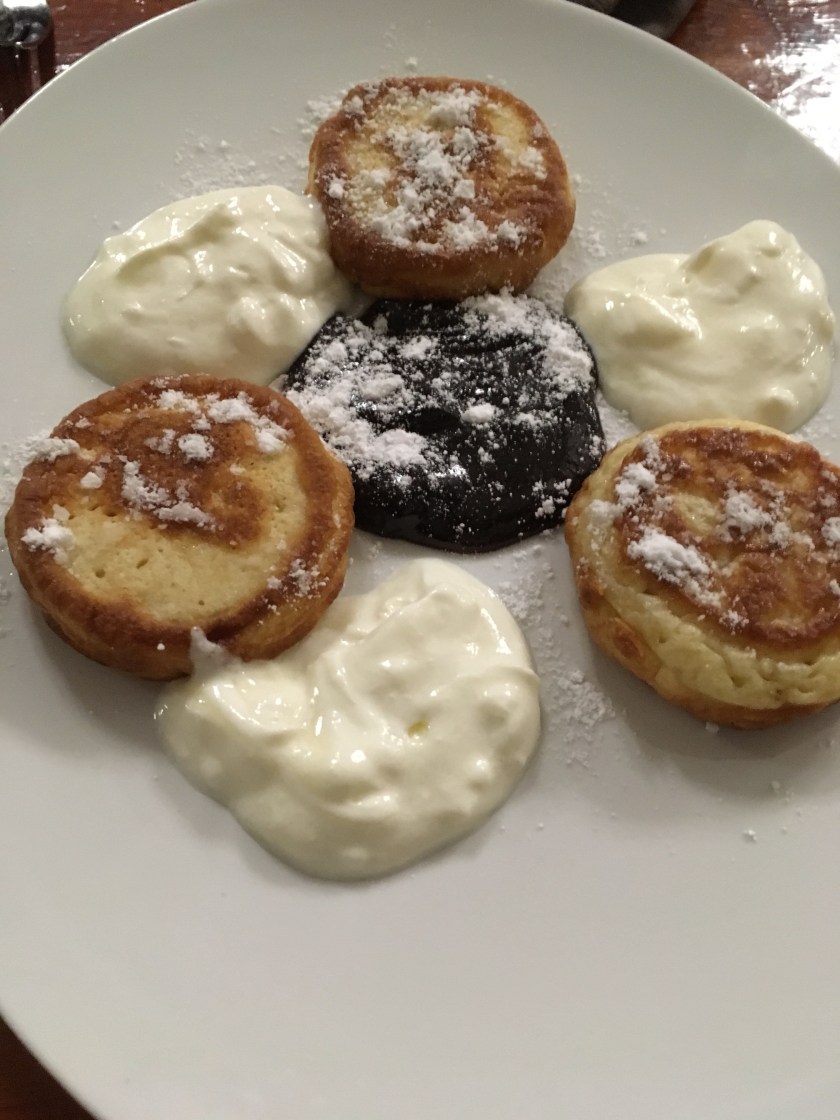
 We also tried a traditional dessert, a pancake-like dessert with sour cream and plum jam.
 At that point we were 5 and 1/2 hours in, and ready to pack it in! The rain finally stopped and we walked back to our hotel, although I must admit we had a little trouble finding it. Tomorrow morning we have a private tour of the Jewish Quarter and then meet up with our Rick Steves tour.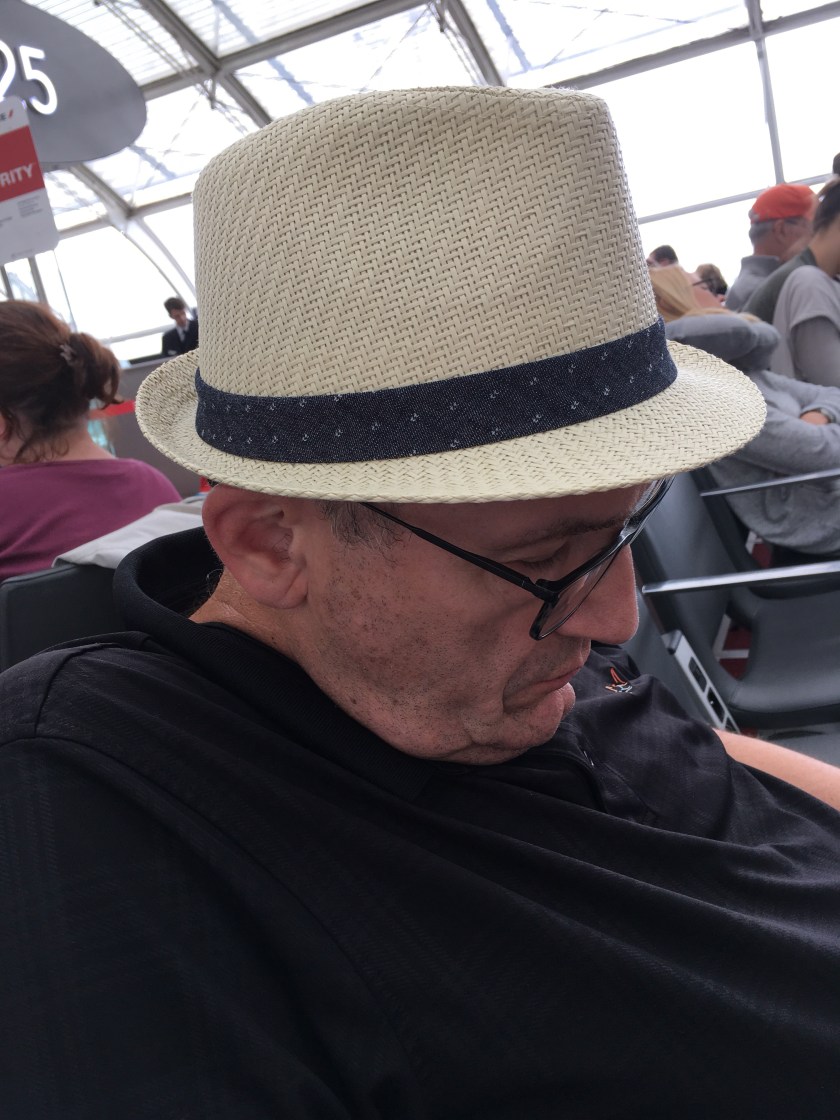
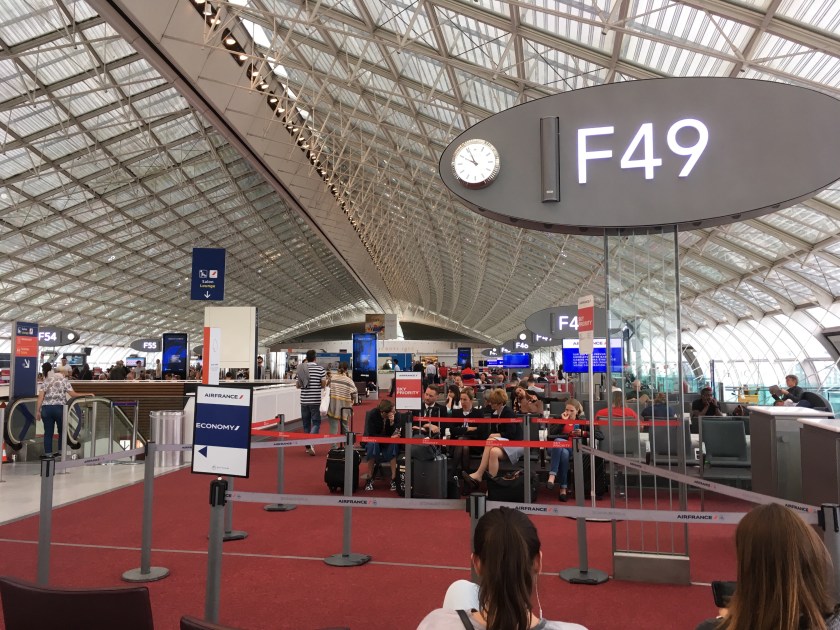
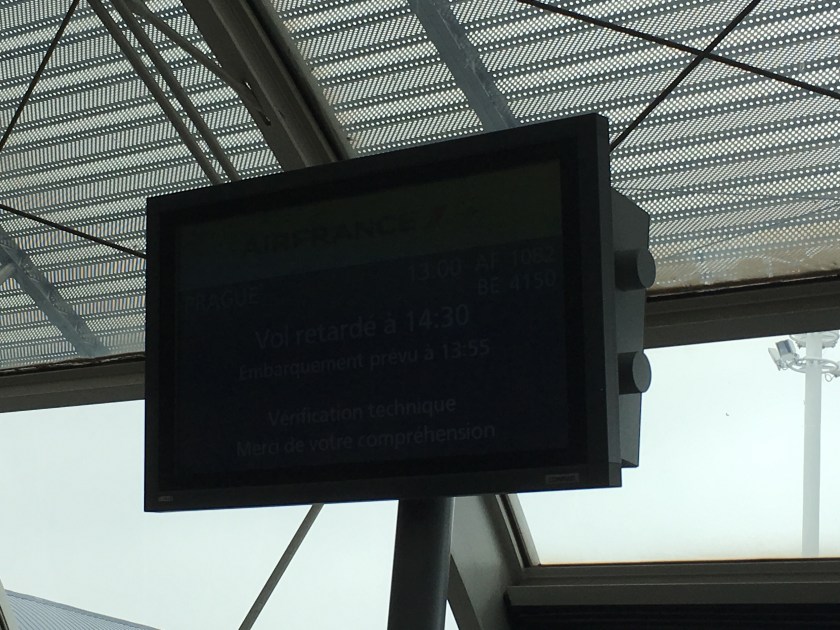 Oh, a half hour delay for a “verification on the aircraft”……which stretched to 90 minutes, two hours, and – you guessed it- le vol annule’. So we high-tailed it to the customer service desk where we were directed to exit the terminal and re-enter in the departures terminal, where there was absolutely NO ONE at the Air France desks. Post haste about 150 disgruntled and frustrated would be passengers showed up. Eventually three Air France customer service people appeared, and after about 15 minutes of talking amongst themselves (probably clueless on how to handle re-booking all those unhappy souls), they stationed themselves at the Sky Priority desks, ready to handle the dozen or so frequent flyers while totally ignoring the huddled masses snaking along behind the ropes. After another 15 minutes, one more Air France representative showed up. We were lucky to be near the head of the line, so we were booked on the next available flight….TOMORROW! So we are spending the night in the Ibis Styles Hotel, courtesy of Air France. It’s sort of like a Holiday Inn Express with a tiny bathroom, very firm beds, and no bidet! Hey, aren’t we in France?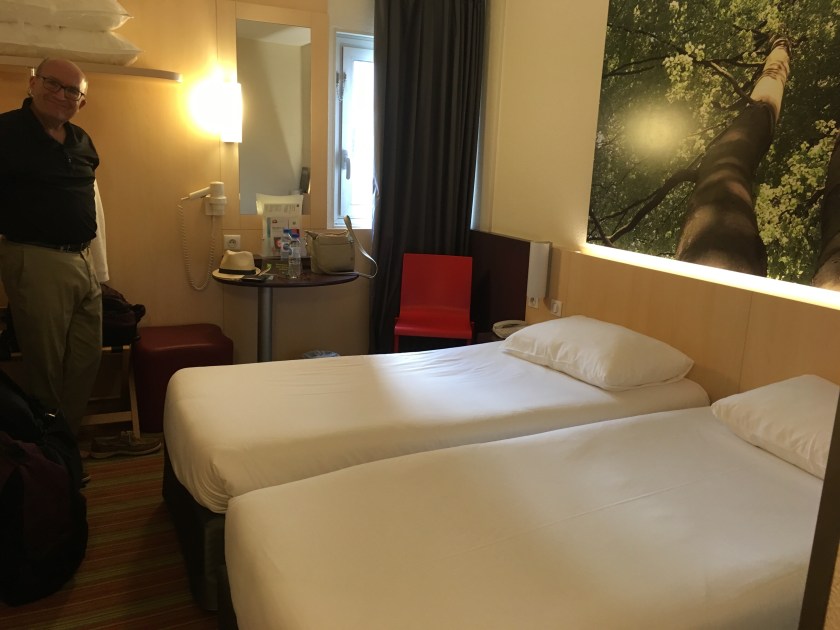
 Camino Musings