There are virtually no cats in Central/Eastern Europe….at least no feral cats. In Italy and especially Greece, you can’t walk ten feet (three meters) without encountering a feral (or pet) feline. They sun themselves on terraces, slink amongst ancient ruins, slither up to you while you are dining at an outdoor café hoping for a handout, snooze in the shade of shrubbery. But not in the Czech Republic, Poland, Slovakia, Hungary, Slovenia, Croatia or Austria! During the three weeks we traveled, I can count on one hand the total number of cats I spotted – three kittens at the Hotel Plitvice in Croatia and two adult kitties in Slovenia – a tortoise shell cat in Radovljica, and a weird 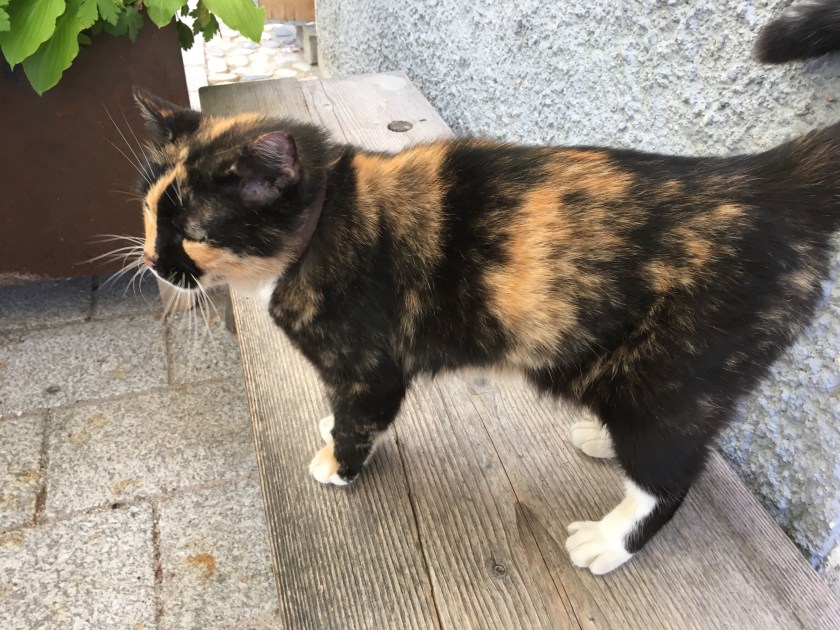
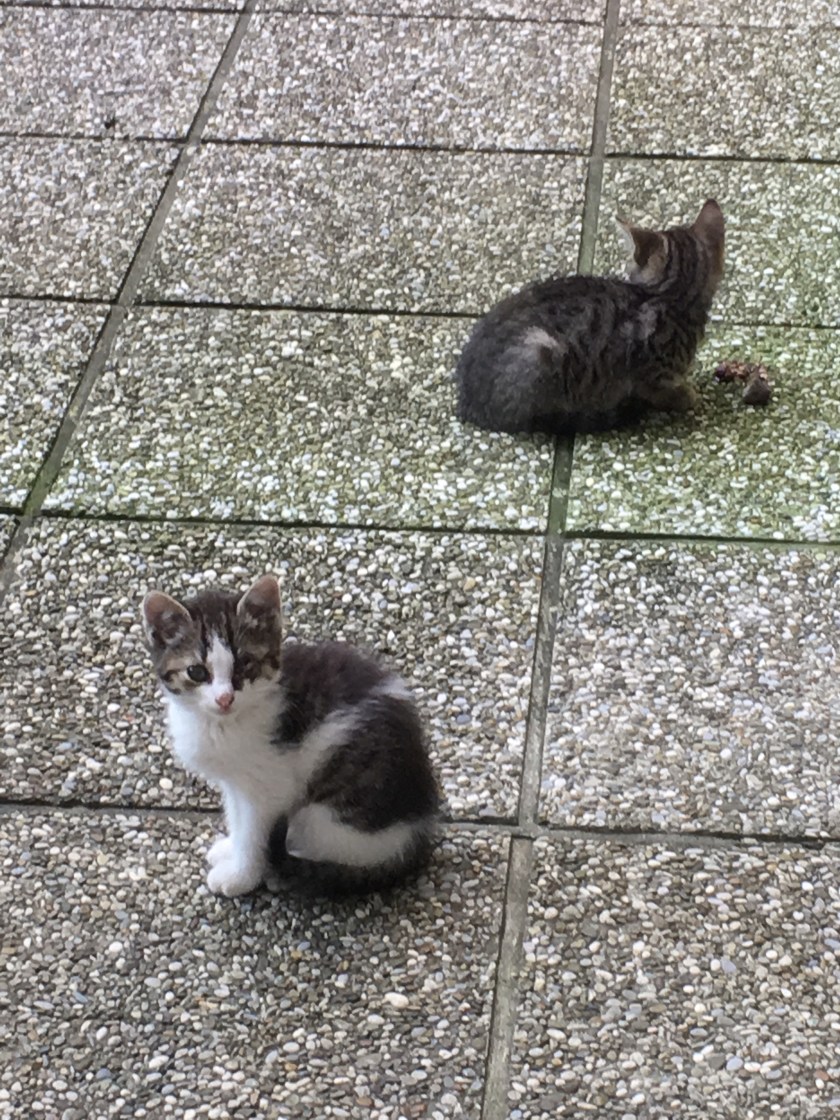 hairless creature in Lake Bled.
 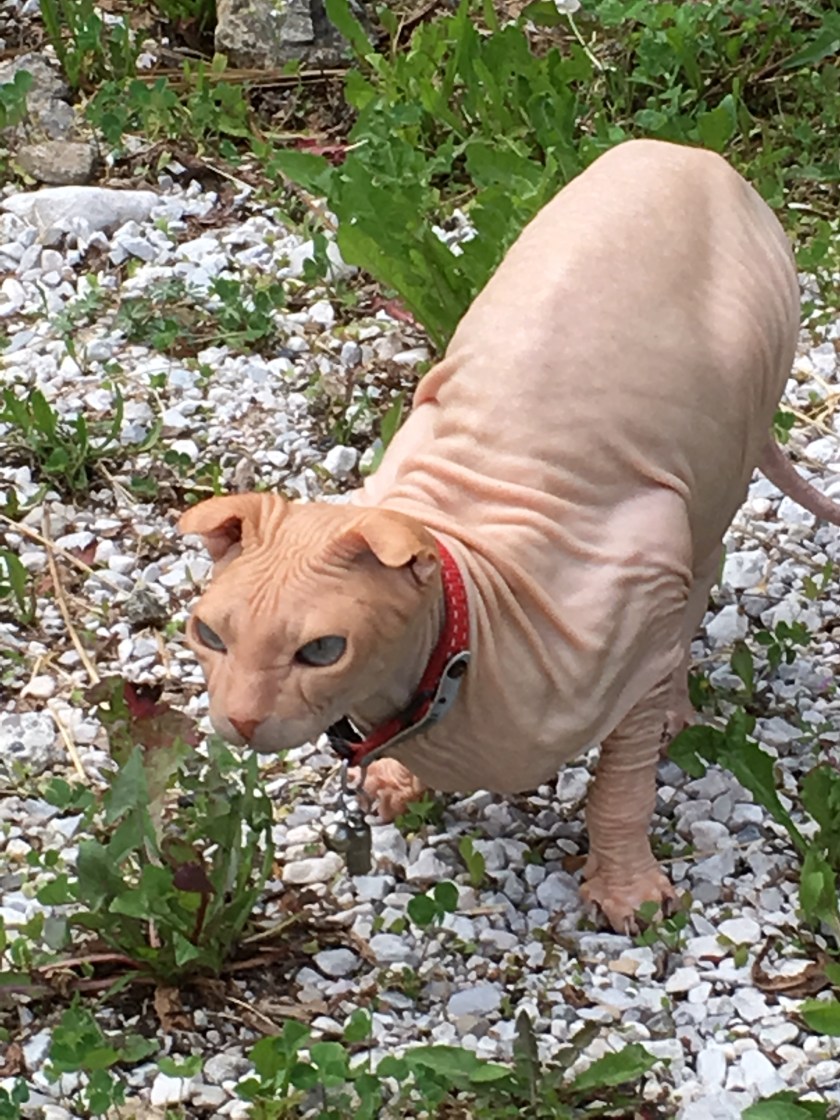 Maybe it’s the climate (too cold?), or the food (Mediterranean mice are tastier?), or the willingness of the human population to contribute to the kitty food supply (we witnessed many instances of elderly Greek women leaving a feast of kibble and leftovers on their doorsteps).
Why does a suitcase shrink as the vacation progresses? Or is it that dirty laundry is bigger/heavier than clean clothing?
The voltage converter (not plug adapter) is not necessary for a cell phone, iPad, Fitbit, battery charger or electric shaver. And the plug adapter for most of Europe is the two prong pin type. Then why do I continue to pack the bulky voltage converter apparatus with plug adapters for each of the seven continents?
When beer is cheaper than water (in Czech Republic, Poland), you end up drinking a hell of a lot of beer.
If your flight gets delayed for 15 minutes, then 30, then one hour, then two hours, the airline is easing you into the fact that they will cancel the flight. For an unspecified reason. Just because, I guess.
Public transportation is amazing in Europe. Trams, buses, subways negate the need for a personal vehicle (other than possibly a bicycle). And tickets are inexpensive and the subway tunnel walls are not covered in graffiti. And there isn’t very much graffiti in this part of Europe, anyway.
In the countries of the prior Communist bloc, no one checks (or it is rarely checked) to see if you actually have a ticket to ride on public transportation. On numerous tram and metro trips, we had tickets checked twice – both times in Budapest.
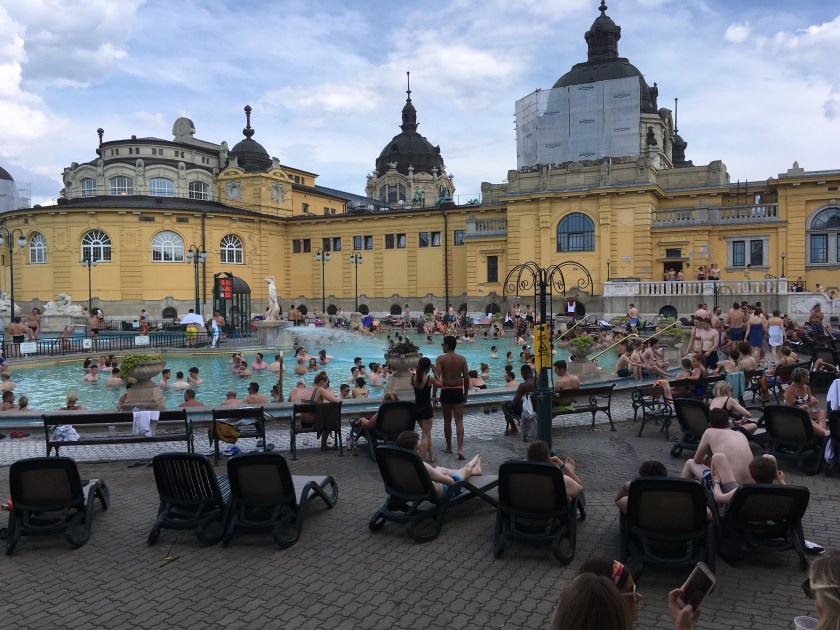
Despite the supposed love for Speedos by European men, at the public baths in Budapest, regular swim trunks were in mode. We saw only one Speedo, of course on an older gentleman, but the Speedo was hidden by the abdominal paunch, so he might have been naked for all we know! And Europeans are not so obsessed with body image at the baths or the pool or beach. There’s cellulite galore!
This blog has been fairly apolitical but since it is MY blog and I DO have some opinions, here goes! If you don’t agree, you can humor me or skip the next paragraph. But this is not a political discussion forum, so I am not engaging in any dialogue (i.e. Bots can stay away ’cause I ain’t taking the bait!).
In conversing with Europeans, when they discover that you are American, they will “feel you out” as to your political leanings. Trump supporters beware – he is not respected by most of the Europeans, at least the ones to which we spoke. Actually, he is considered to be a joke, albeit a quite dangerous one. His face was plastered all over the television news- the immigrant situation, separating children from parents at the border, the tariffs he put into effect on EU products- and the similarities between his agenda (nationalism, isolationism, suppression of the free press, “false news”) and his “tactics” are eerily similar to those used by Adolf Hitler and the Nazis during the 1930s. We witnessed the results of the fascist ideology at Auschwitz and Birkenau and in the Jewish ghettos of this part of Europe. We must be aware of our history, we must be educated ( considered as “elitist” to Trump), and we must be vigilant to not repeat the mistakes of the past.
All of the countries we visited still bear the emotional scars of World War II, fascism, and decades of Russian occupation. Although most of the physical damage caused by gunfire and bombing has been repaired and restored, the psyche needs longer to rebound from Communist oppression. Rumblings of rebellion against the occupiers started in 1956 in Hungary and in 1989 in Czechoslovakia, but it was not until the Velvet Revolution of 1989 and the immediate years following that the countries behind the Iron Curtain gained their independence from the USSR. Most of the Soviet statues have been relinquished to “memorial parks”, but many of the stark and austere Communist buildings remain as a reminder of a bygone era. Many of the people to whom we spoke recounted how their parents and grandparents were (and are still) affected by decades of fear and suspicion, living “schizophrenic” lives, voicing official party doctrine in public but real opinions at home. And the next door neighbor could turn you in to the authorities, if you weren’t careful! Although basic needs were provided. smuggling goods into the country was commonplace as luxury items ( like blue jeans and leather jackets and toilet paper) were not available.
Okay, now back to the frivolous content.
Australians can talk really loudly! Their exuberance manifests quite often in restaurants, with the other patrons “eavesdropping” on their conversations (but you’d have to be totally deaf not to do so!).
Asian tourists tend to travel in large groups, have selfie sticks permanently adhered to hands, and really like to shop (especially at high end designer stores).
American tourists can also be loud (though commonly not as loud as Australians), they consistently complain that they can’t get “good coffee”, and are not quite as addicted to selfie sticks.
Canadians are really polite🇨🇦. (Sorry, I couldn’t think of anything derogatory!)
Okay, now that I have insulted everyone except for Canadians (who aren’t too keen on Trump, either), I’ll continue on.
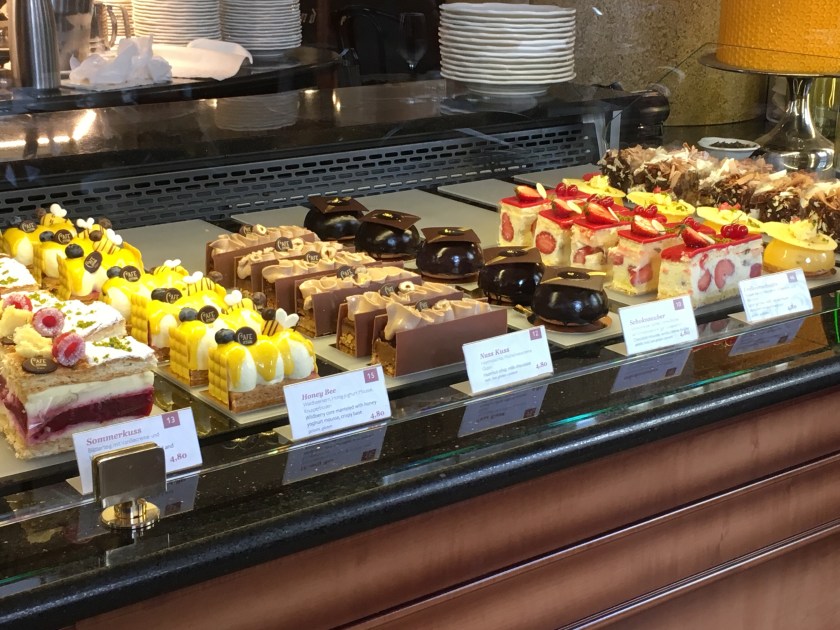
Fancy pastries always look better than they taste. The famous Sacher torte in Vienna, a must try according to guide books, is just a slightly dry piece of faintly chocolate tasting cake with a layer of apricot jam, covered in a glaze of dark chocolate. 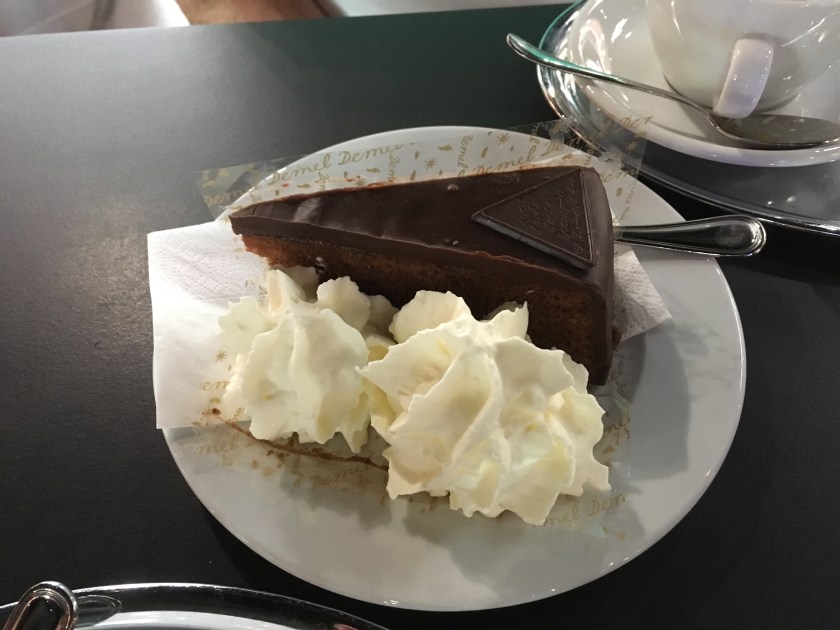 It’s the same for all those other froufrou desserts – meh!
 Except for the strudels- apple, cherry, poppy seed, cheese- all delicious!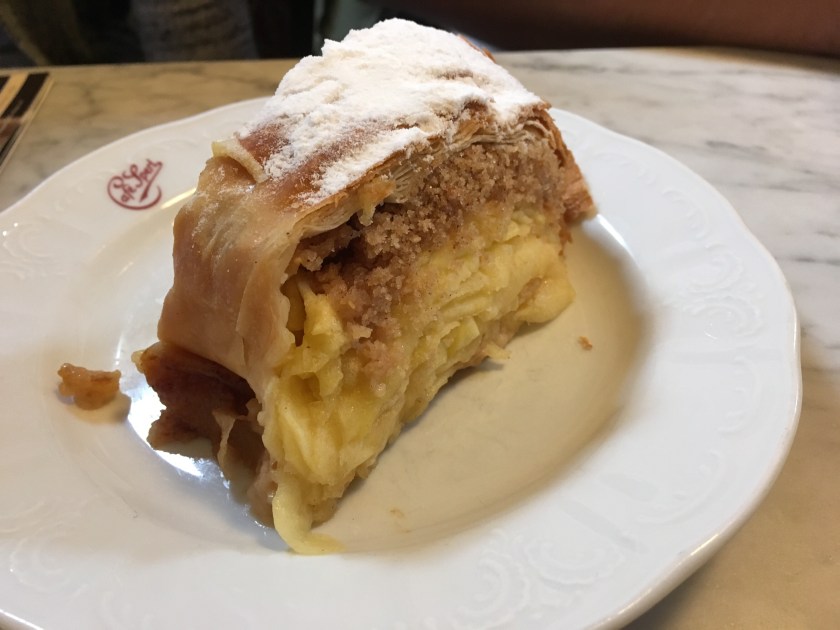
 Hungarian goulash in Hungary is not the goulash we think of in the States. It is a savory beef -based broth with chunks of potatoes and beef, flavored with paprika. It is not a beef stew over egg noodles! Also, goulash is different in the Czech Republic- it’s more like a meat with gravy instead of broth, but still no noodles.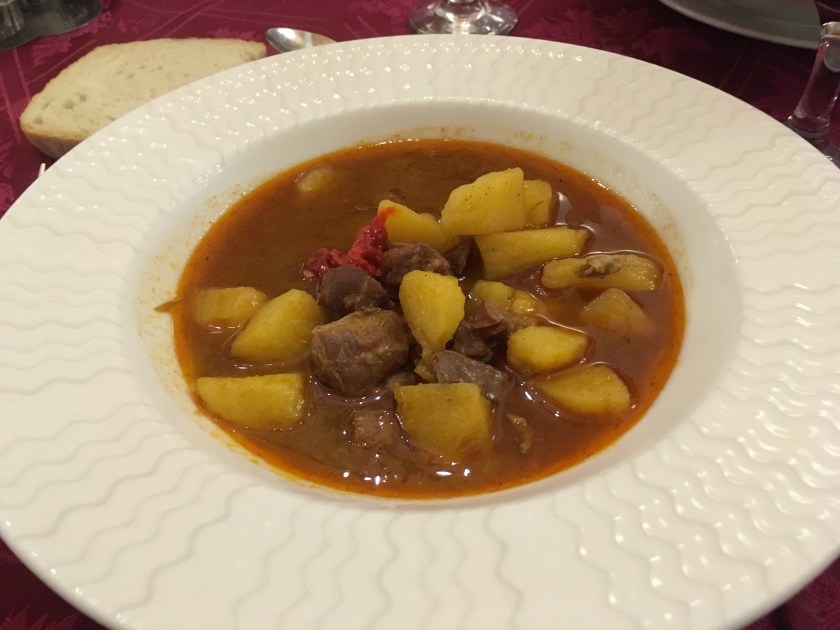
There are only two types of Hungarian paprika- sweet and hot – so forget about that smoked paprika stuff – if it’s smoked, it isn’t Hungarian.
It’s virtually impossible to be a vegetarian in this part of Europe – and a vegan, forget it! The cuisine is centered on meat, predominantly pork. 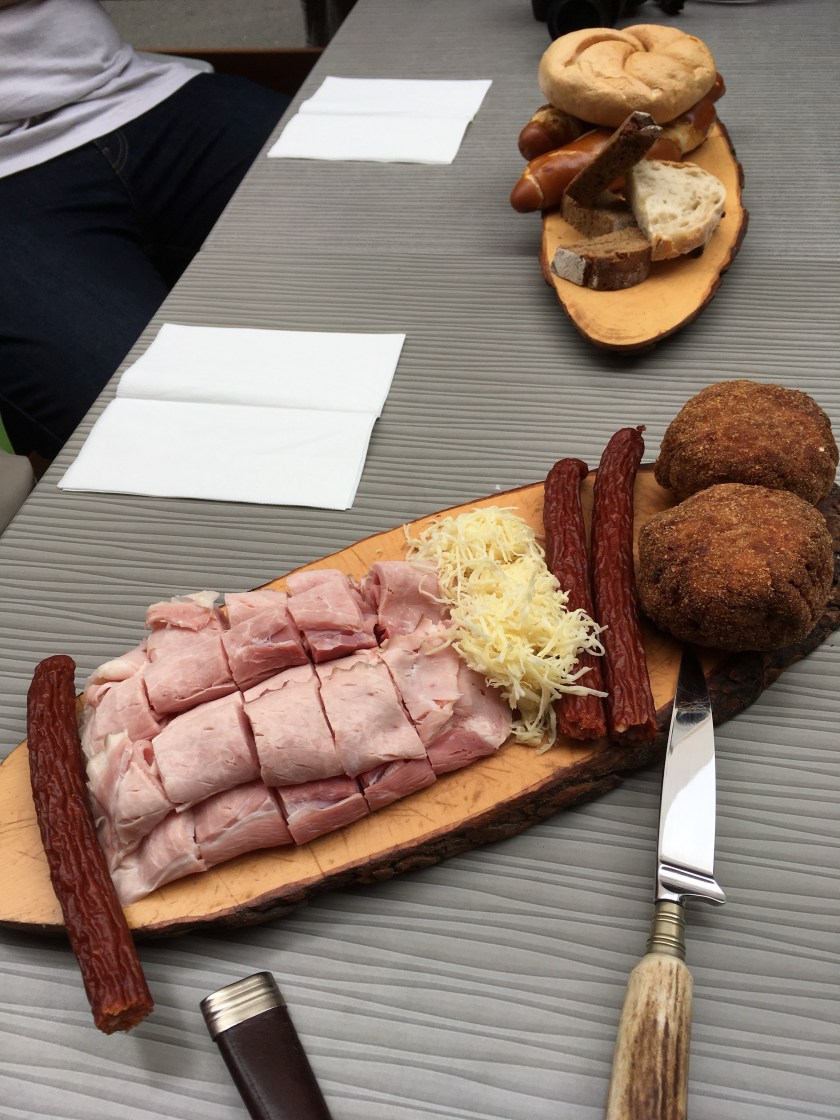 Sausages of all shapes and sizes, cured or smoked, served with mustard, shaved fresh horseradish, and/or pickled cabbage (AKA sauerkraut), on a roll or naked on a platter are ubiquitous.
  Pork cutlets, roasted pork, and pork ribs are also joined by variations of cooked beef- braised, boiled, pounded thin and fried as a cutlet
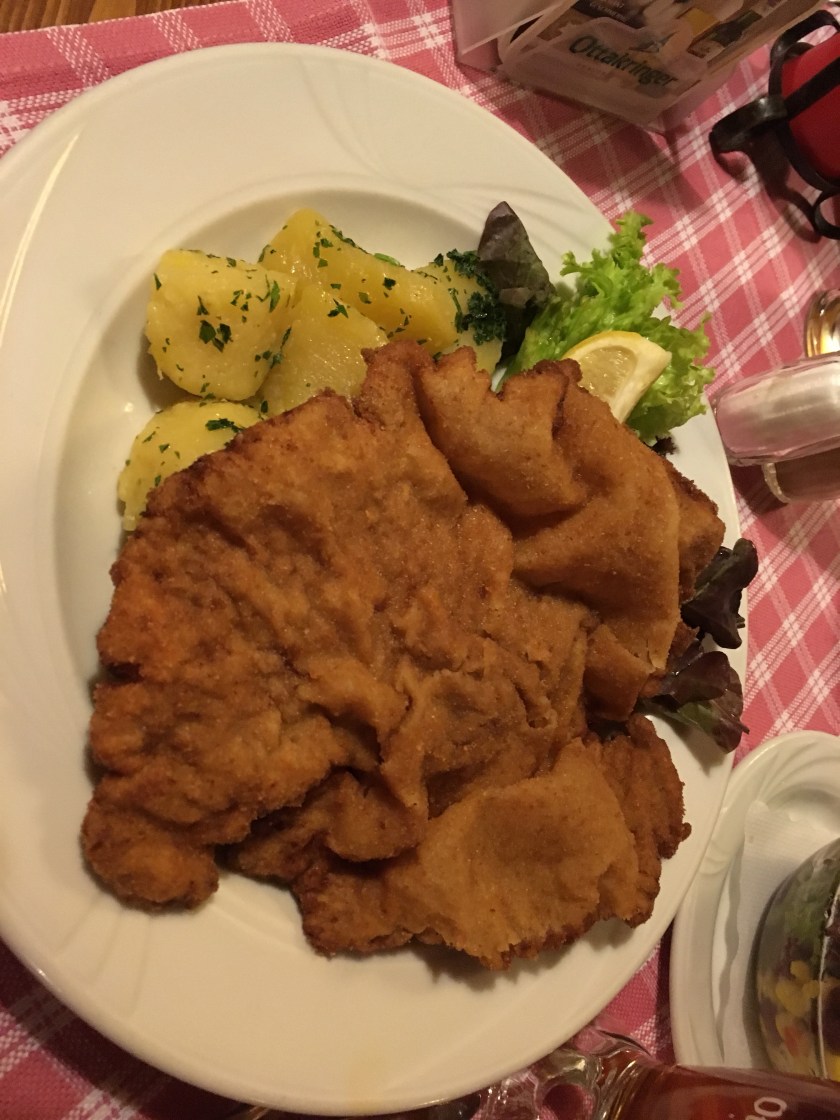
 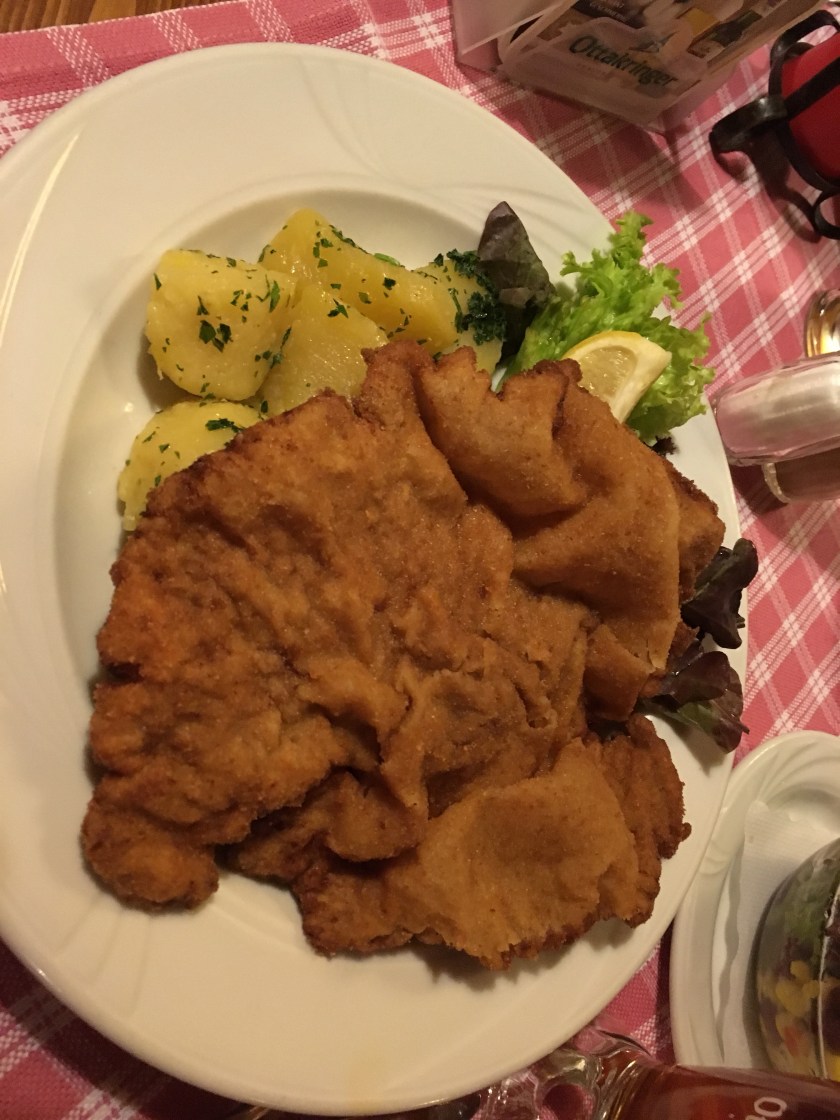 (Wiener schnitzel)- all served with potatoes (boiled, fried or as potato salad) and usually cabbage. Forget that low carb diet! When vegetables are listed as the accompaniment, it is frequently puréed into a gravy in which the meat will swim laps! Roasted duck is popular in Poland and the Czech Republic, also served with potatoes and cabbage. A Czech “dumpling” is not what we Americans consider a dumpling (a boiled doughy matzoh ball or gnocchi) but more like a boiled bread.
  It is made with flour, water, and yeast and is boiled in water or broth and it truly looks like boiled bread! A carrot or parsnip may rear its ugly head but there ain’t a drop of chlorophyll on that plate – nothing green for miles! A salad is composed of pickled cucumbers and cabbage with some kernels of corn thrown into a picking brine with perhaps a thin slice of tomato. Dairy products, like cheeses and yogurt, are also a significant part of the diet. Mushrooms, although a fungus, could be considered as a vegetable and are quite popular in Polish cuisine. But mushrooms aren’t green and they don’t have much fiber! Metamucil or laxatives must be big sellers! (Eastern Europeans tend not to be lactose intolerant, thank goodness!)
So, the food is brown or beige or variations thereof, in a nutshell (which would fit into the cuisine quite well as it is also brown).
But enough with the joking….the food is quite delicious, albeit heavy. It does “stick to your ribs” and hangs around the colon a bit longer than it should. The cuisine is a reflection of the climate (not conducive to warm weather veggies), the economic and political history ( basic, inexpensive, based on the agrarian lifestyle) and the need for calorie-rich nourishment. Unfortunately, tourists don’t expend a lot of calories, walking around looking at historical monuments instead of working out in the fields. So, the weight lost from all the dieting and exercise before going on vacation has been negated. Back to the gym tomorrow!
We had a great trip. But as Dorothy, in “The Wizard of Oz”, so astutely noted, “There’s no place like home.”
 from Prague, who acted as guide, advisor, teacher, and friend. At times, we proceeded at an exhausting pace, but it was a blast! And we made some wonderful friends to top it off!
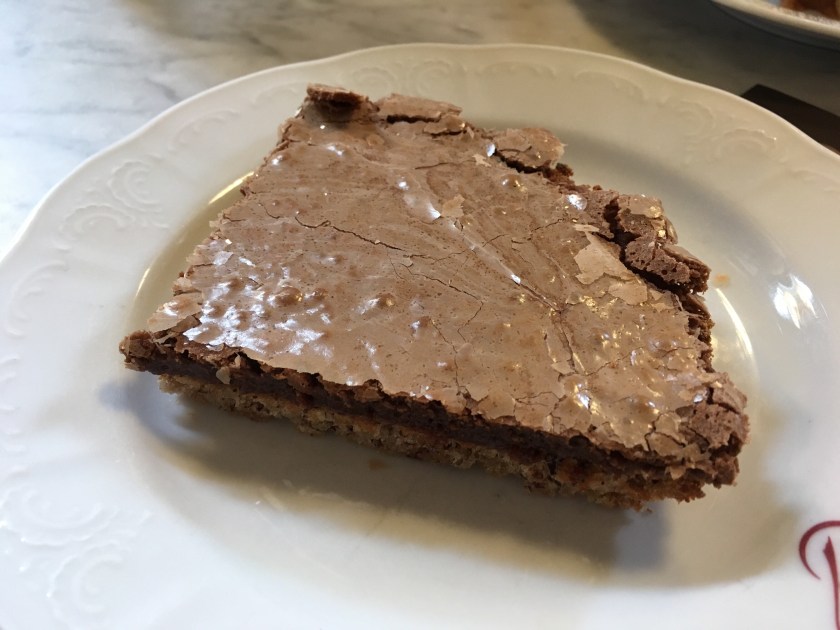
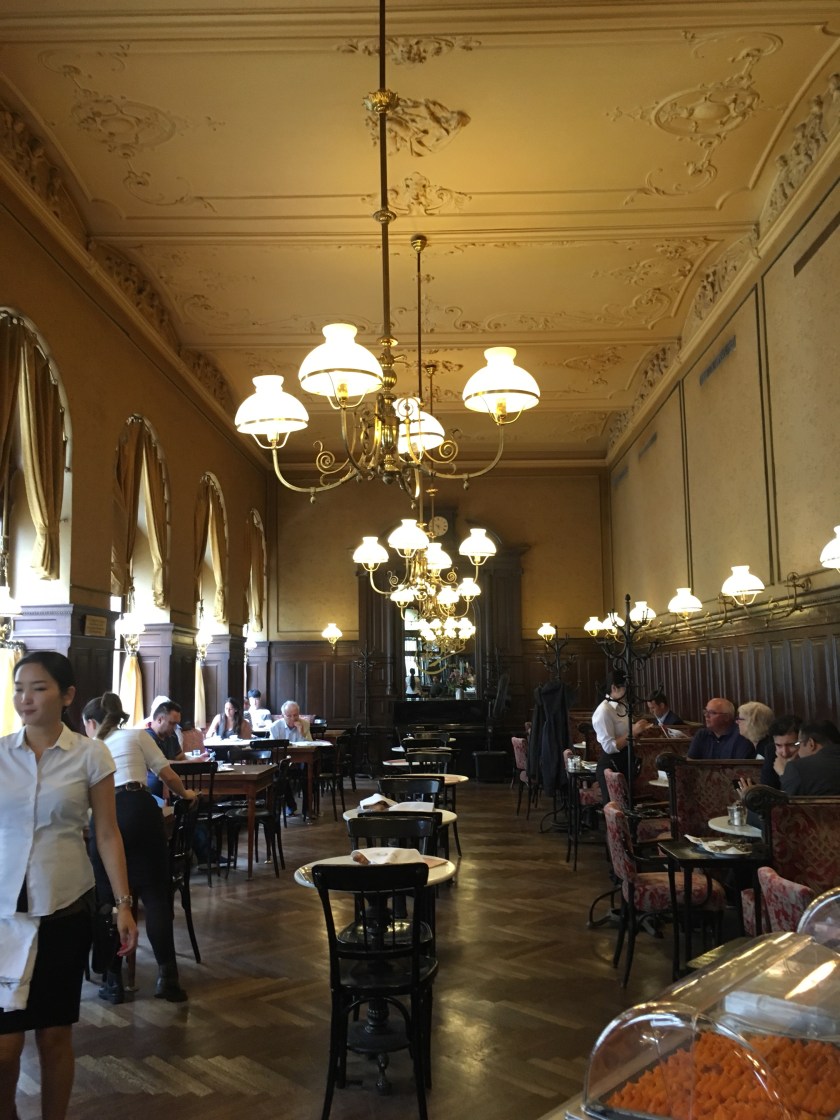 We had our choice of coffee,from an espresso (called a moka) to a melange (cappuccino), of even a Marie-Theresa (coffee with orange liqueur and whipped cream). Of course there was apple strudel ( with a layer of bread crumbs under the flaky crust) and the specialty of this café, a cake of chocolate meringue and marzipan.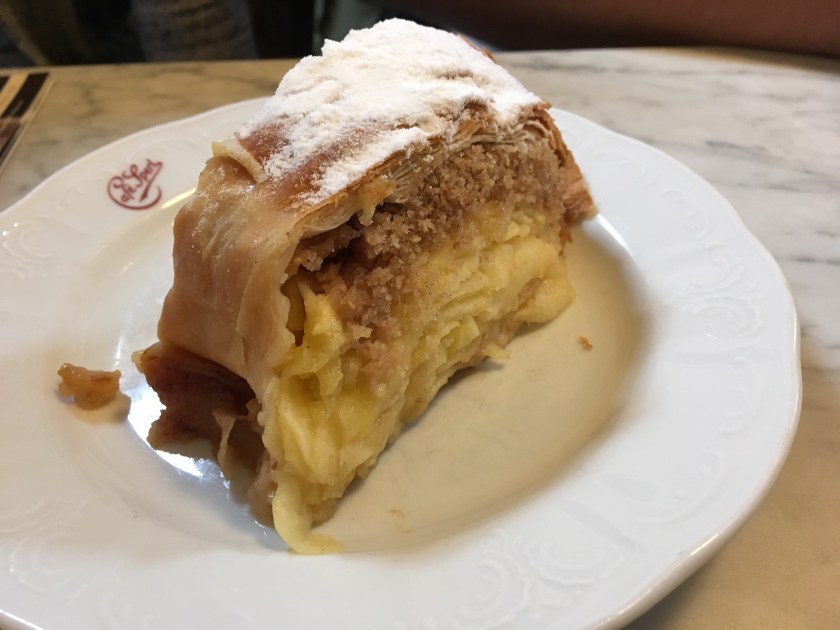
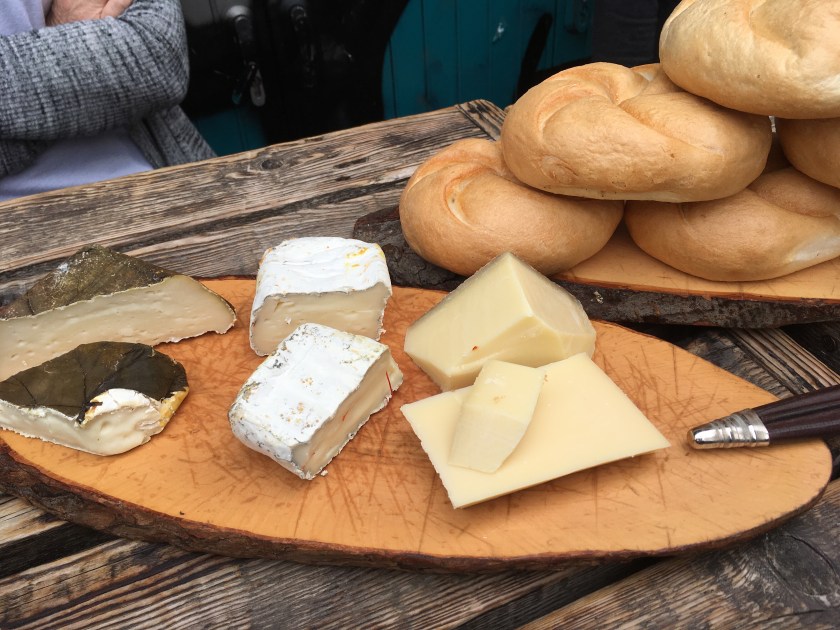
 Then it was off to the Naschmarkt, the city outdoor market (actually covered market stalls) that extends for 1/3 mile over the Wien River. Although not frequented by the locals due to the high prices and touristy bent, there are some specialty shops to which that local chefs still shop. We sampled Austrian cheeses
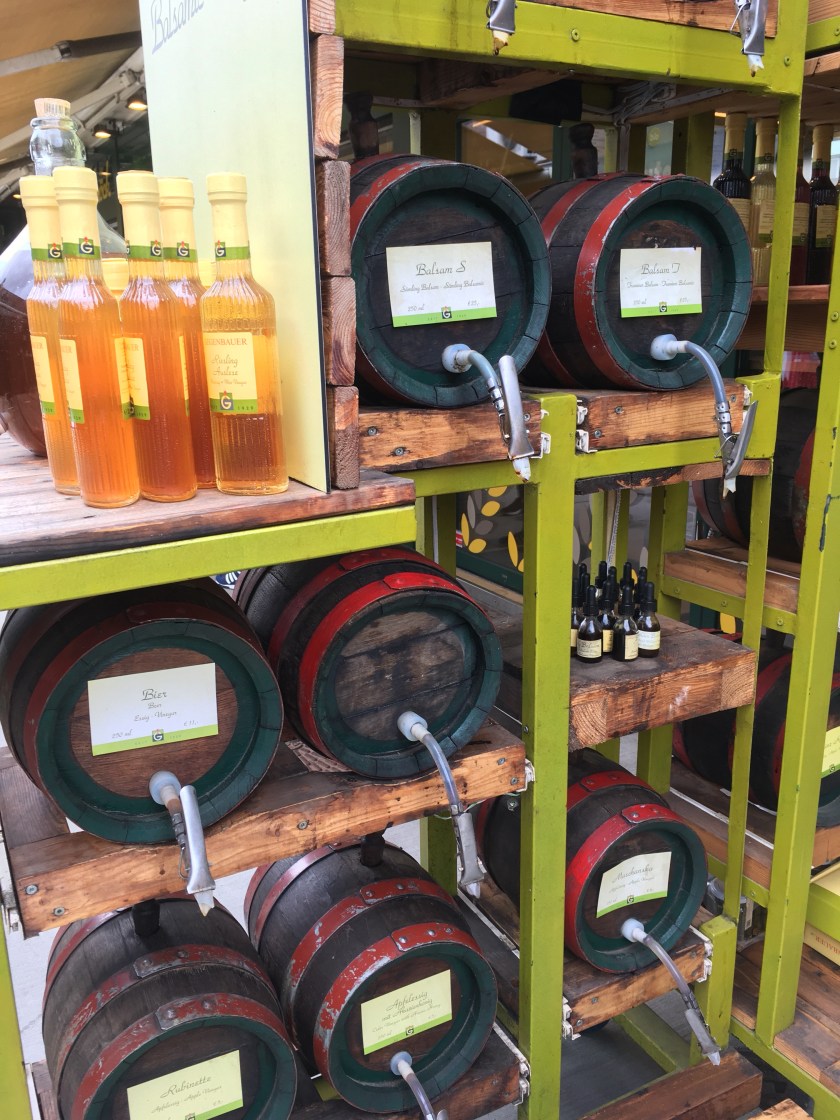
  and flavored vinegars,
  and then proceeded to a meat shop that specializes in using the “lesser” cuts of meat to produce a baked meat loaf- type product.
  Sort of like bologna on steroids, these mostly pork-based products had chili peppers or pickles of spinach added. Besides pork, there was a horse meat variation, which I was told tasted like a hot dog. (I can’t stomach the thought of eating horse meat!)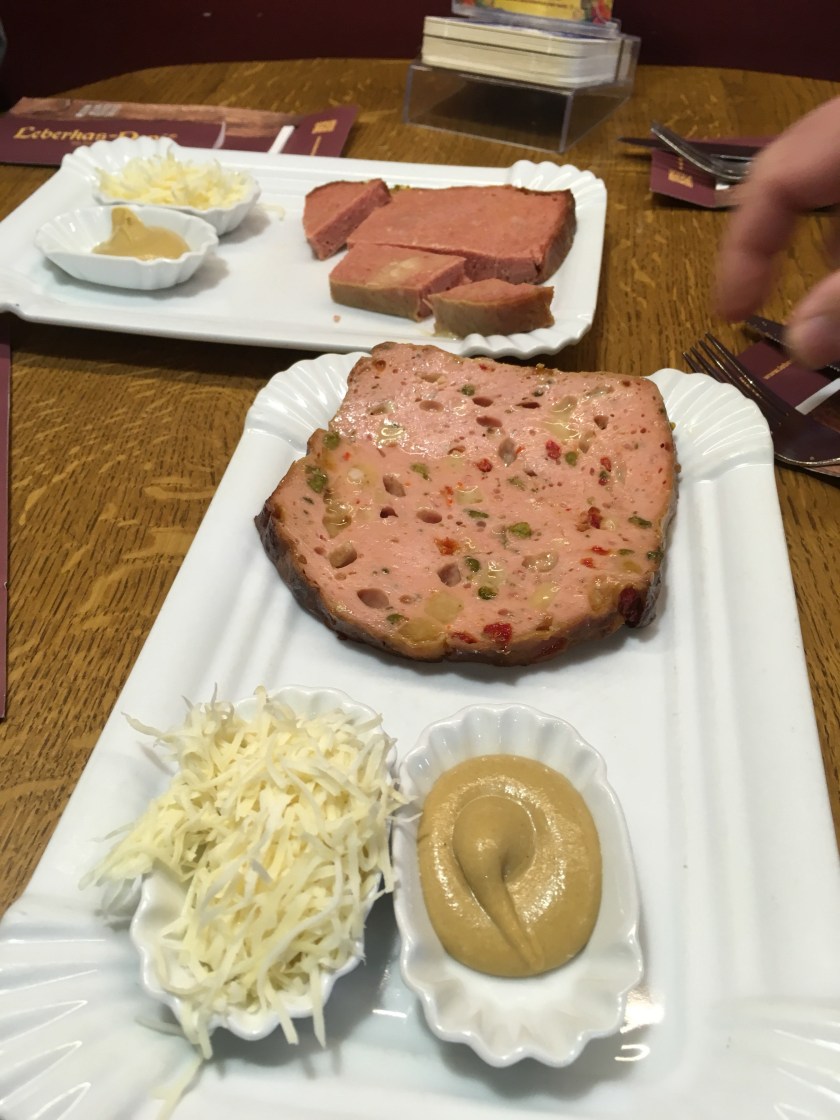
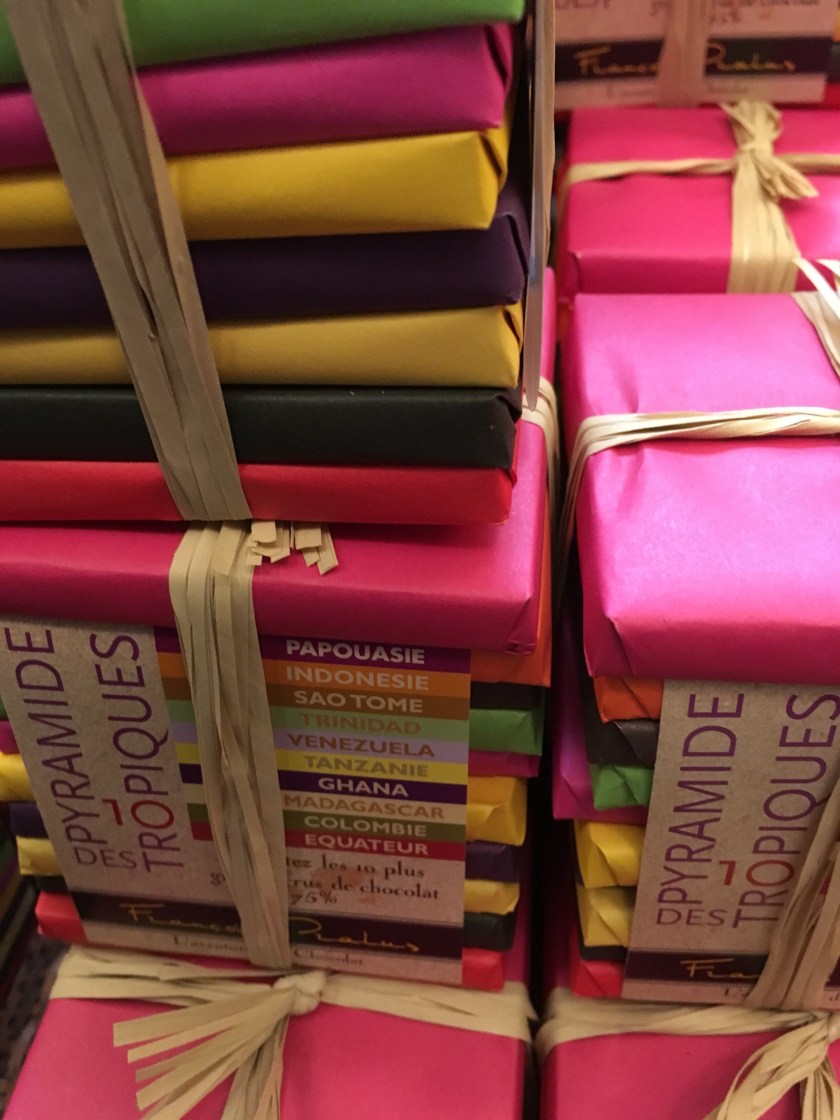
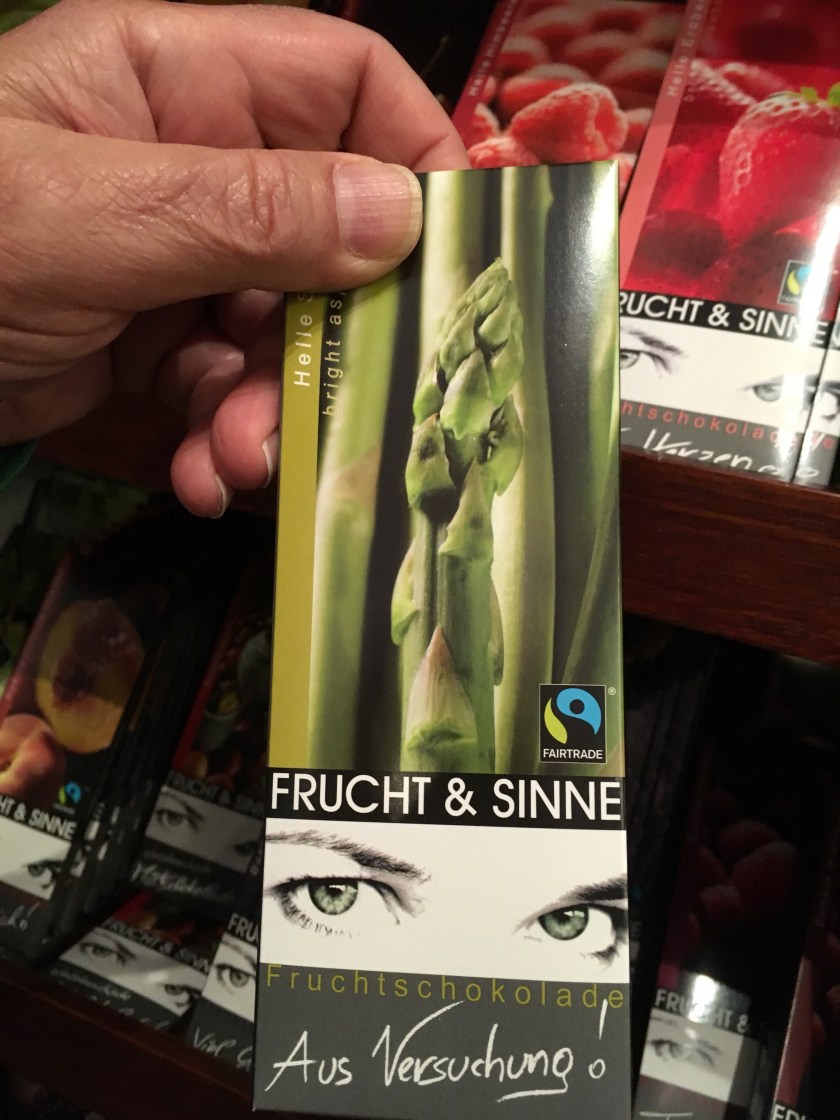 in Vienna (Xiocolat) to taste an apricot truffle. )We did not try the asparagus chocolate.) The oldest bakery in the city (Grimm) was the next stop where four different local breads were sampled ( a rye sourdough, one with fennel and cumin, a ciabatta and a 100% dark rye).
  The last stop was at the last remaining butcher shop in Vienna where the characteristic ham, a dried sausage, and a fried meat loaf were on the plate, along with shredded fresh horseradish.
 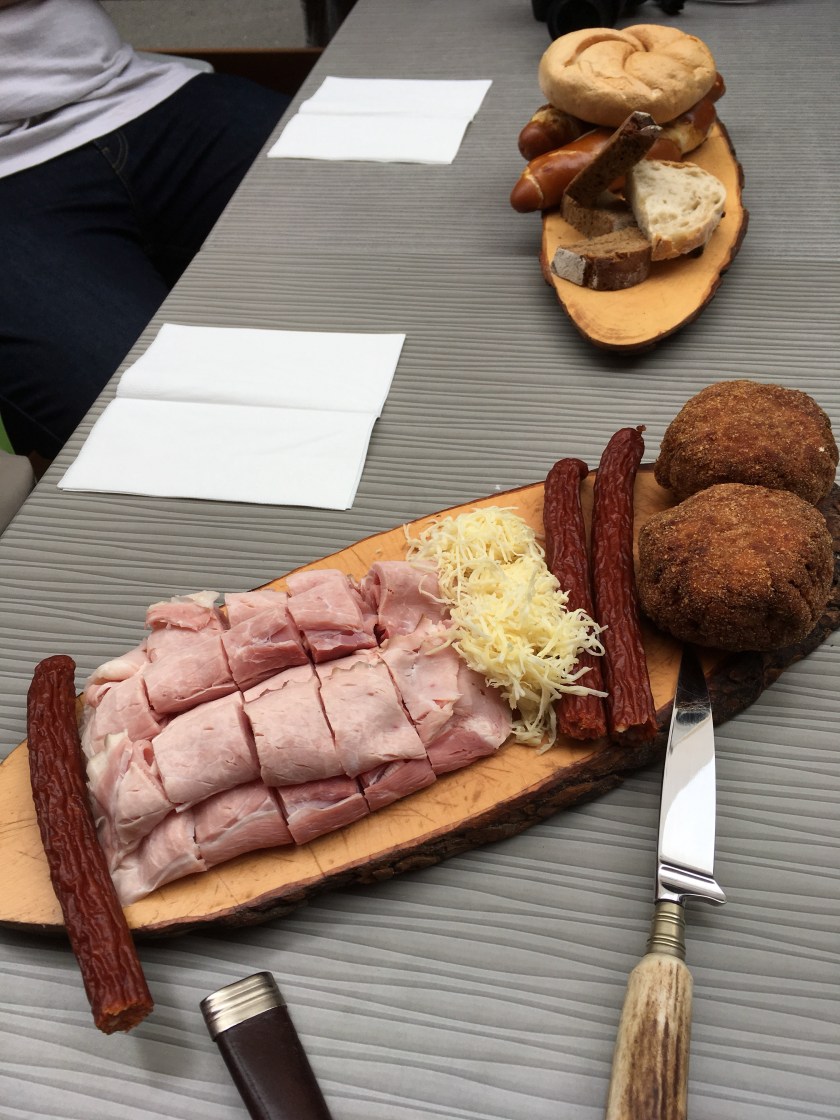 Tour over, we strolled back to the hotel for a rest before dinner. We are meeting two of our Rick Steves tour mates who are also here in Vienna. Then it’s packing time – the challenge, how to jam all the liquor and chocolate into two already full suitcases!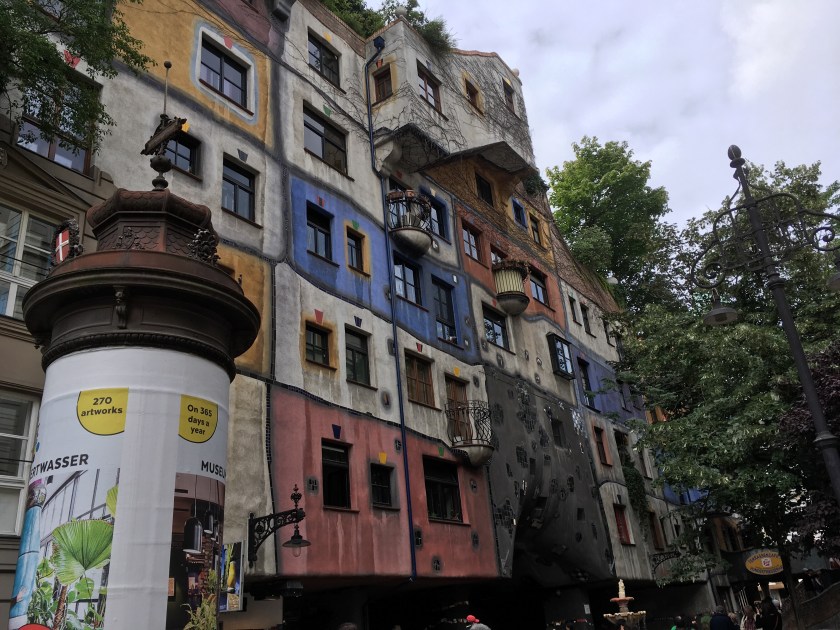
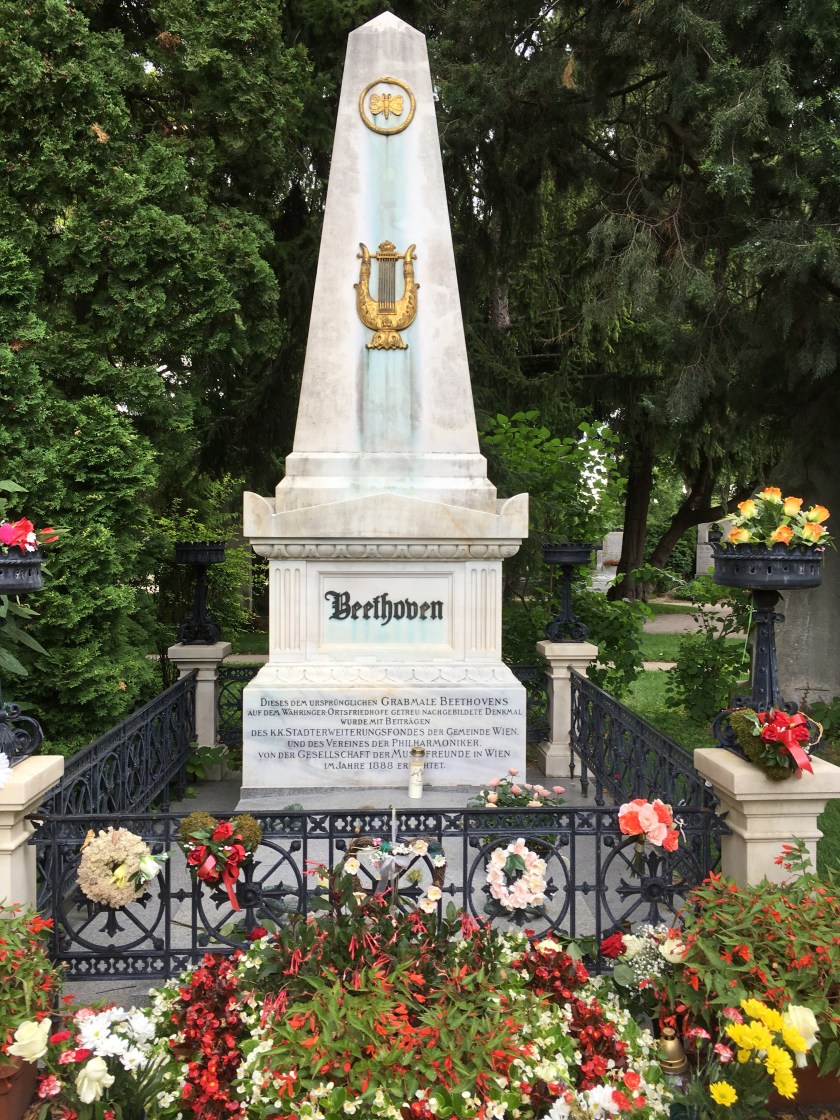
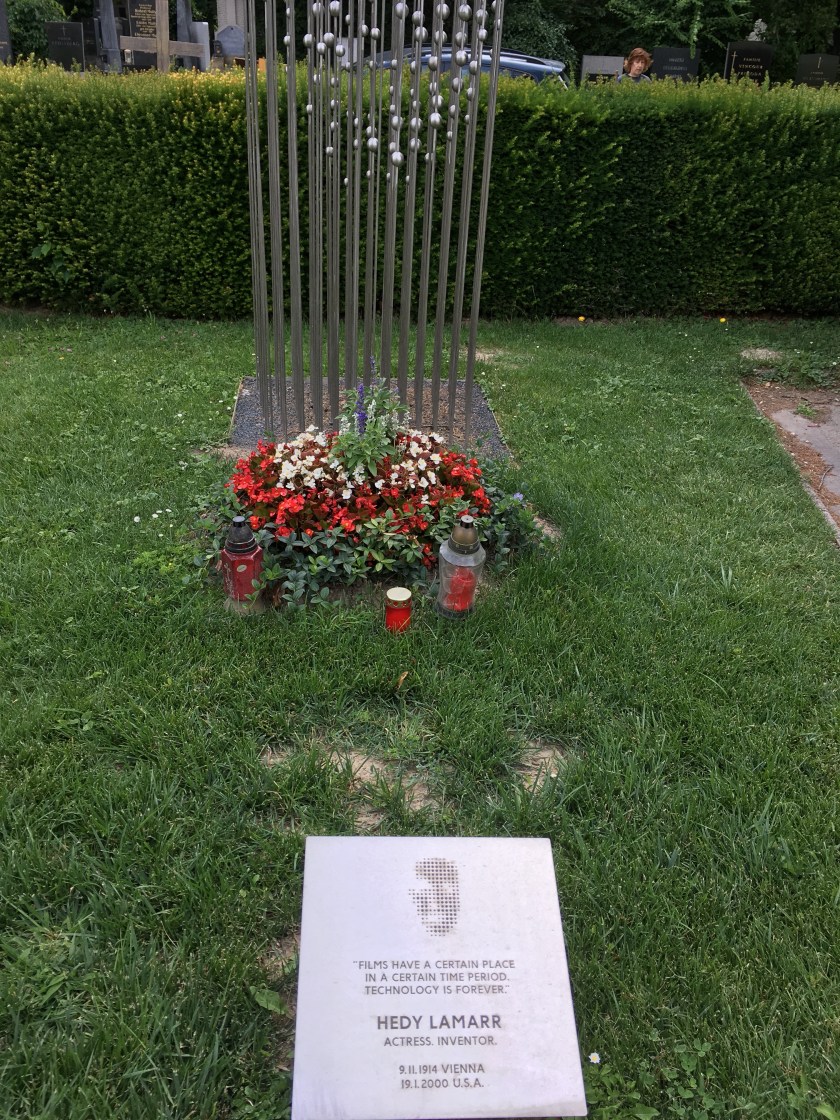
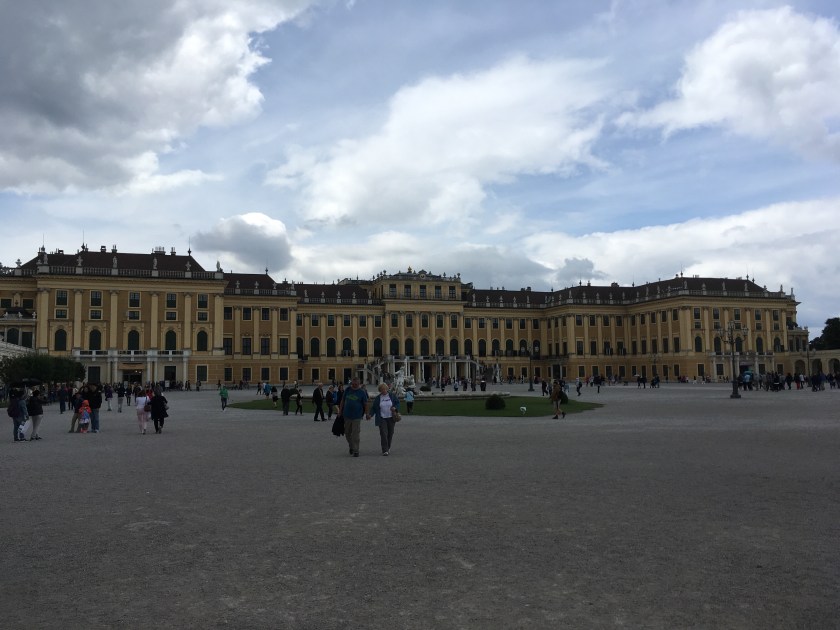

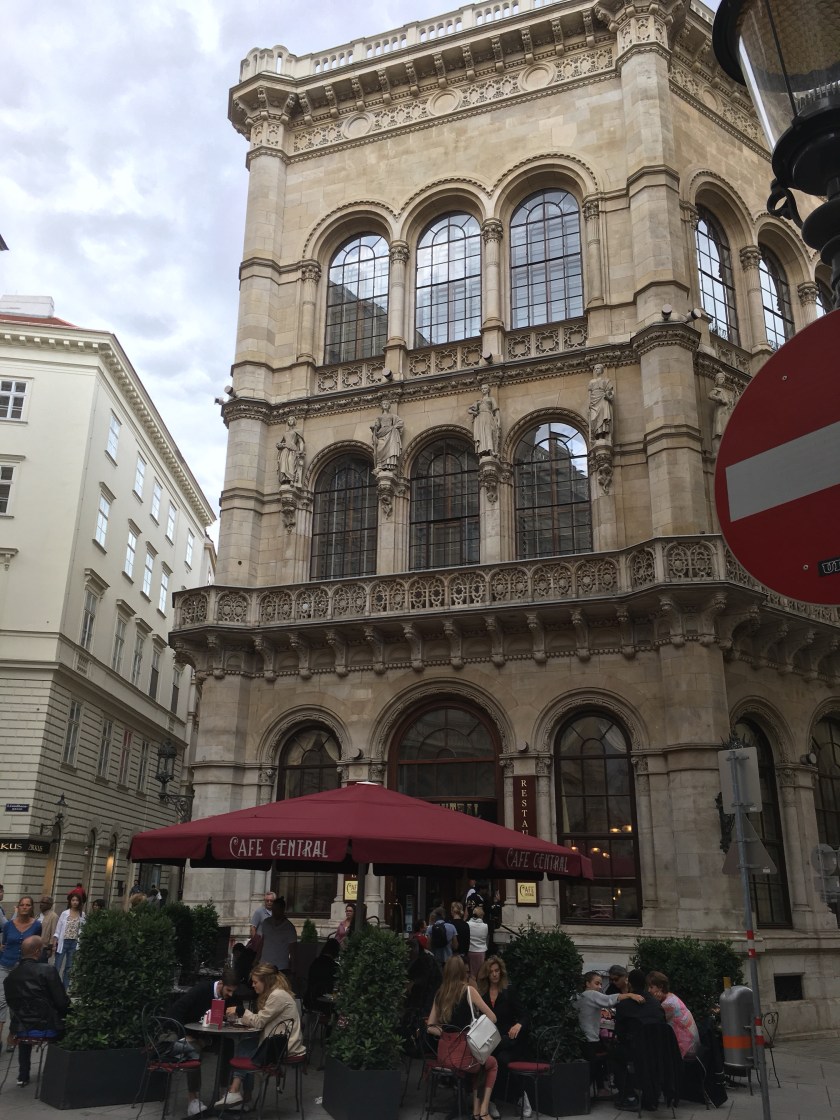
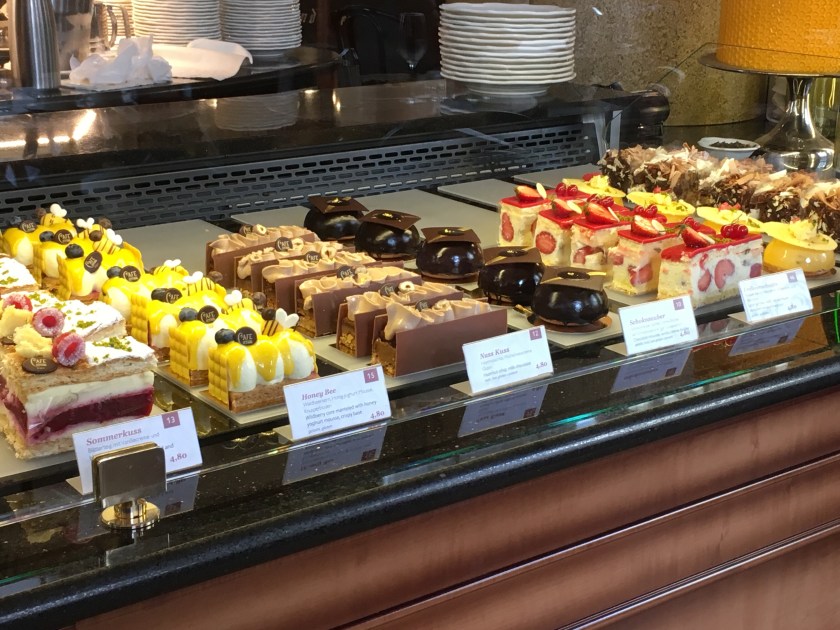
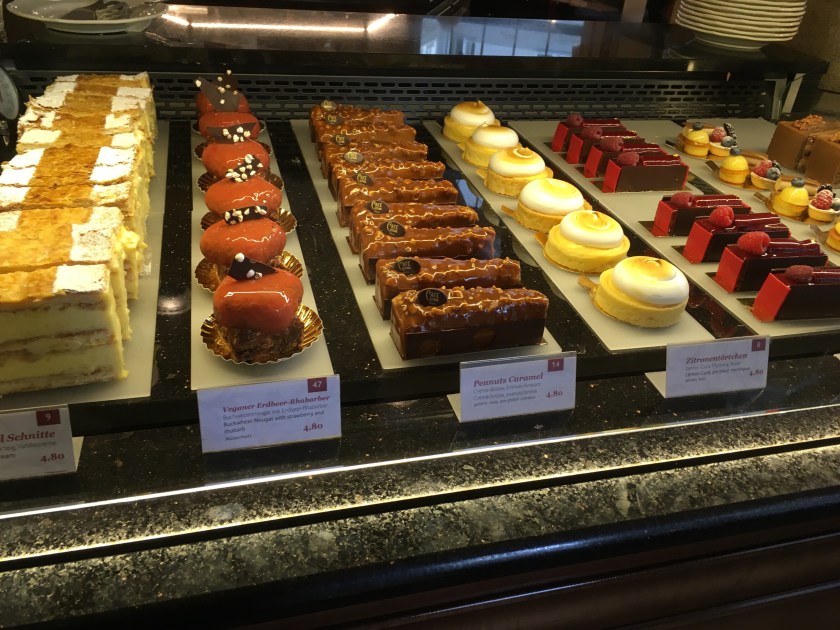

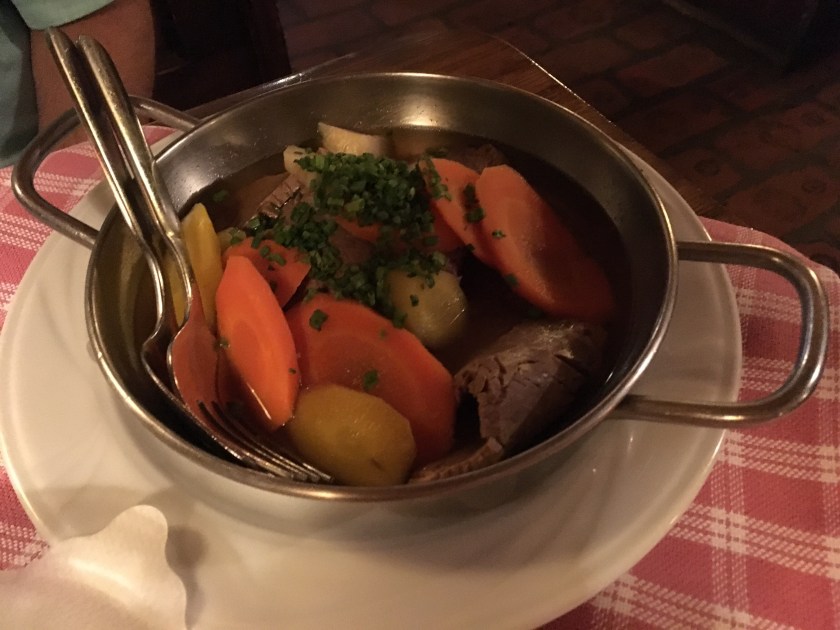
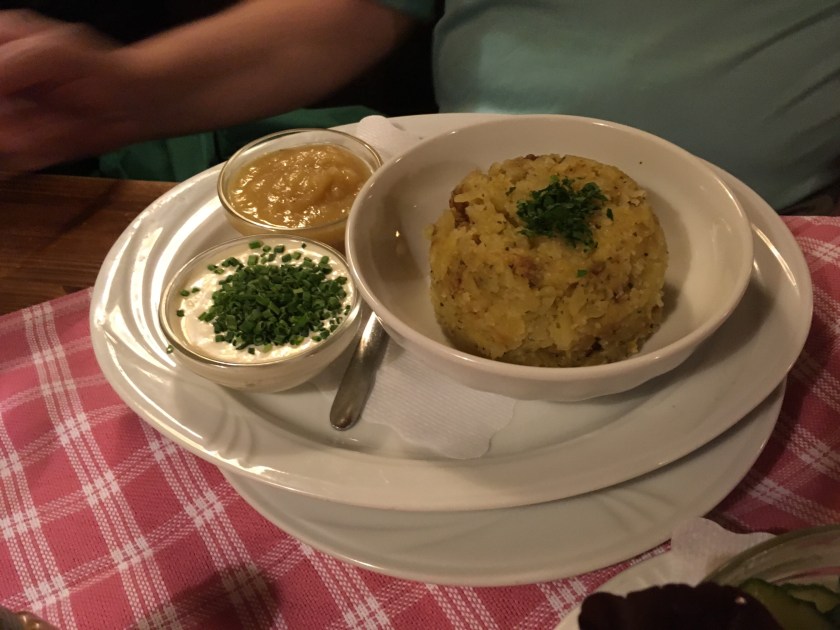
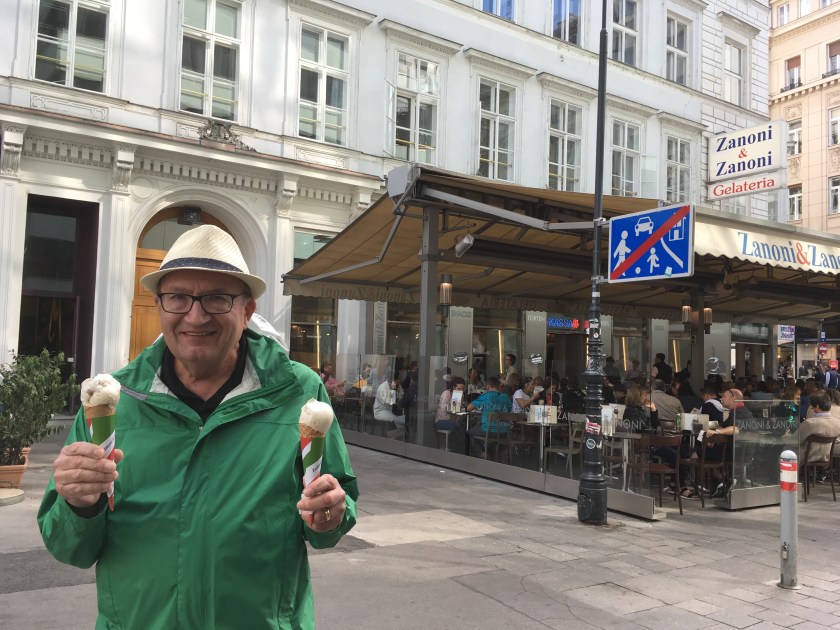
 Even though we were too full for dessert, we had to stop at Zanoni&Zanoni for a gelato while we were on our evening stroll. Tomorrow is the last day of our trip😢, but we’re ready to go home and see our pup and kitties again. Going back to work, on the other hand, I’m not so keen on that.
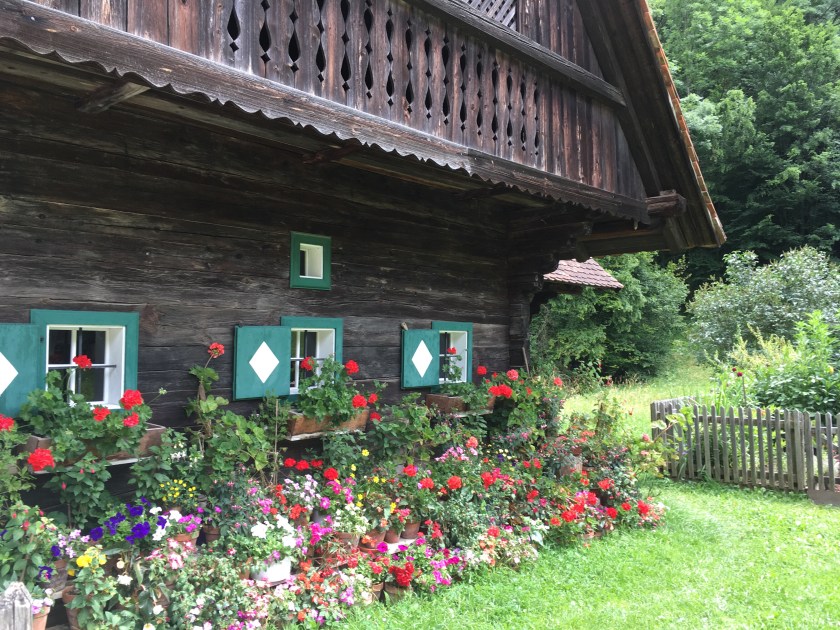
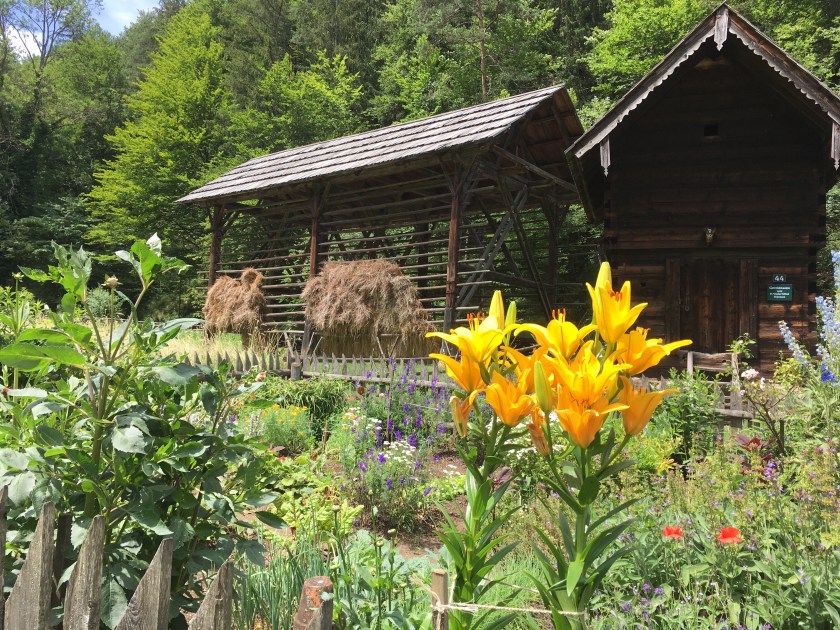
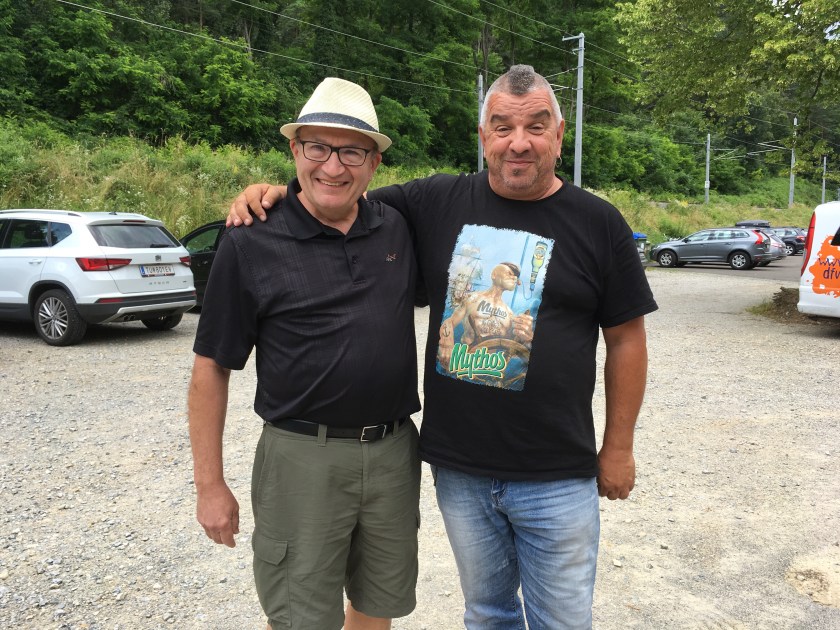 He pretty much talked nonstop for four hours, imparting his opinions on politics, Victor Orban ( the authoritarian prime minister recently re-elected for a third term in Hungary), ice hockey in Europe, the World Cup, his recent vacations to Greece, and a blow-by-blow summary of his life. The monologue was interrupted by a prescheduled visit to Stübing, an open air museum depicting Austrian life in the 18th and 19th centuries. It is the Austrian version of Colonial Williamsburg, but without the re-enactors, restaurants, and huge crowds. It was mildly entertaining but the labels and explanations were exclusively in German.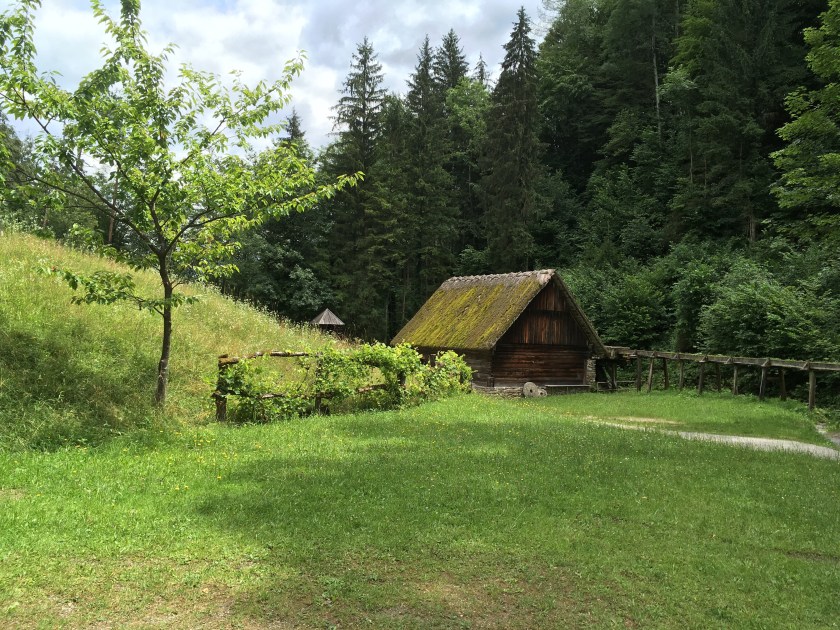
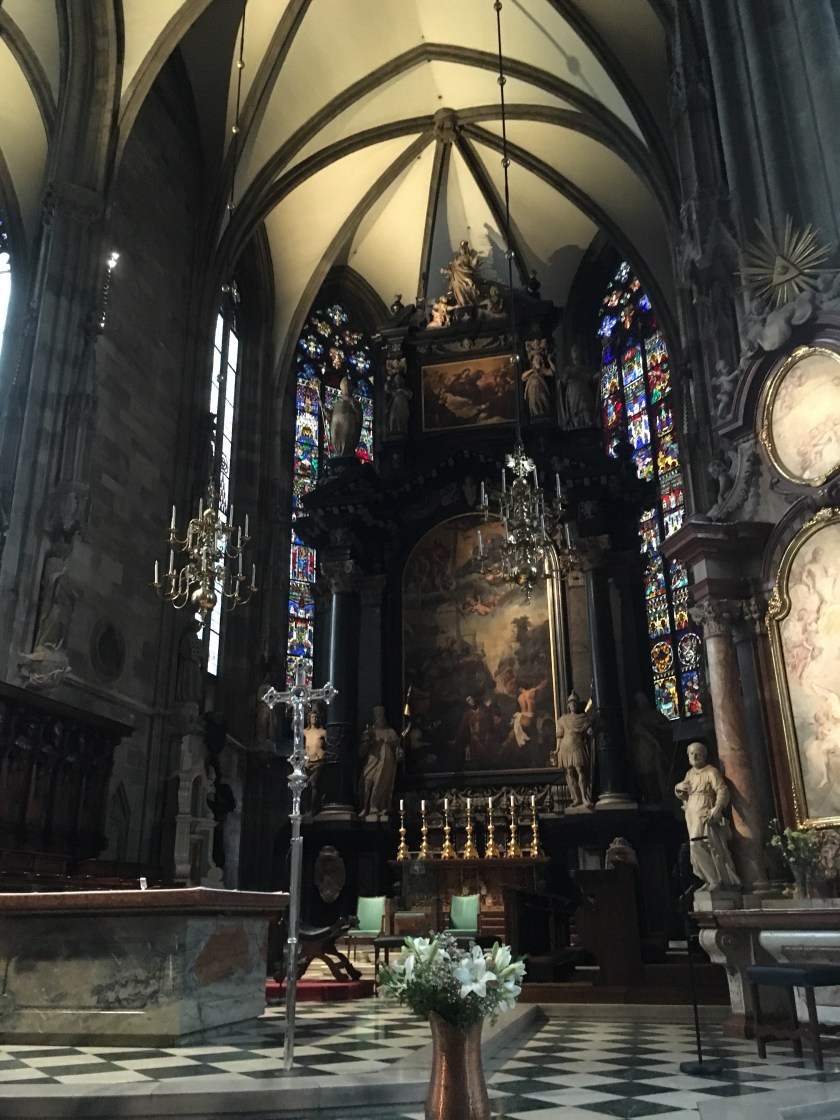
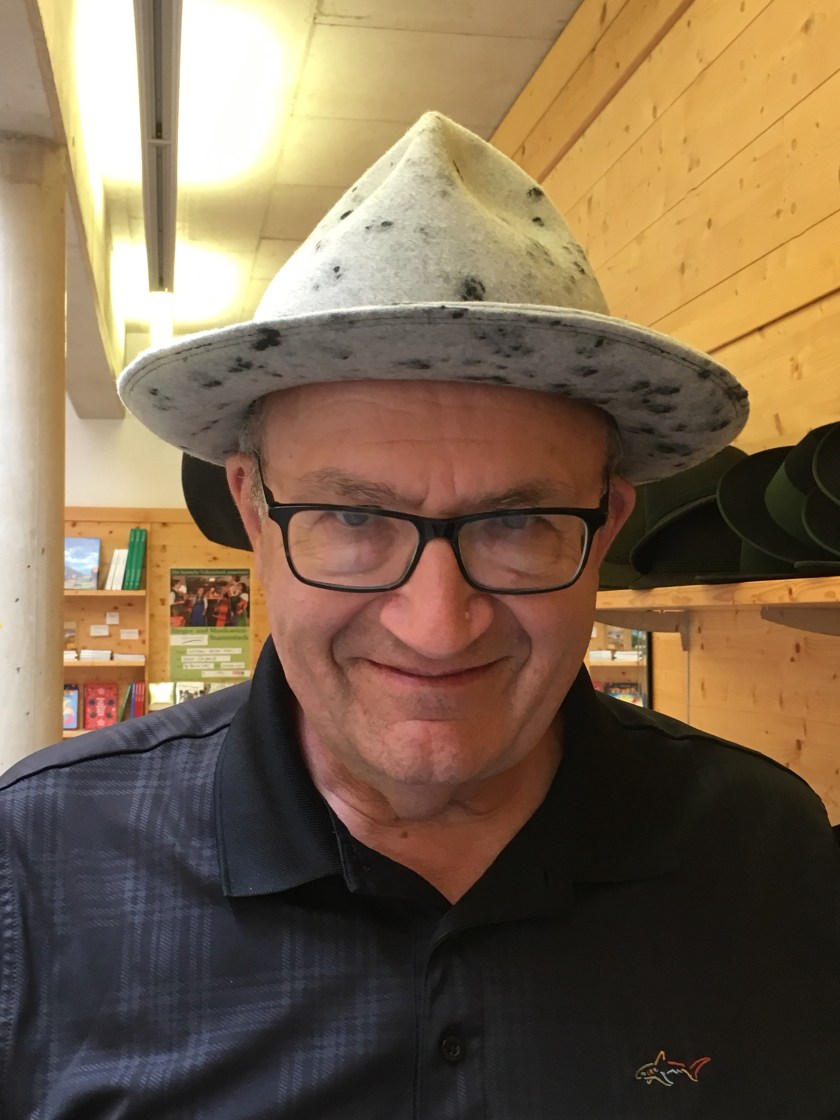 Tony even got to try on some Tyrollean hats! We arrived in Vienna at 3:30 pm, checked in to the Marriott (I used up some Marriott points) and took a quick orientation stroll. We found the main church, St. Stephen’s,
 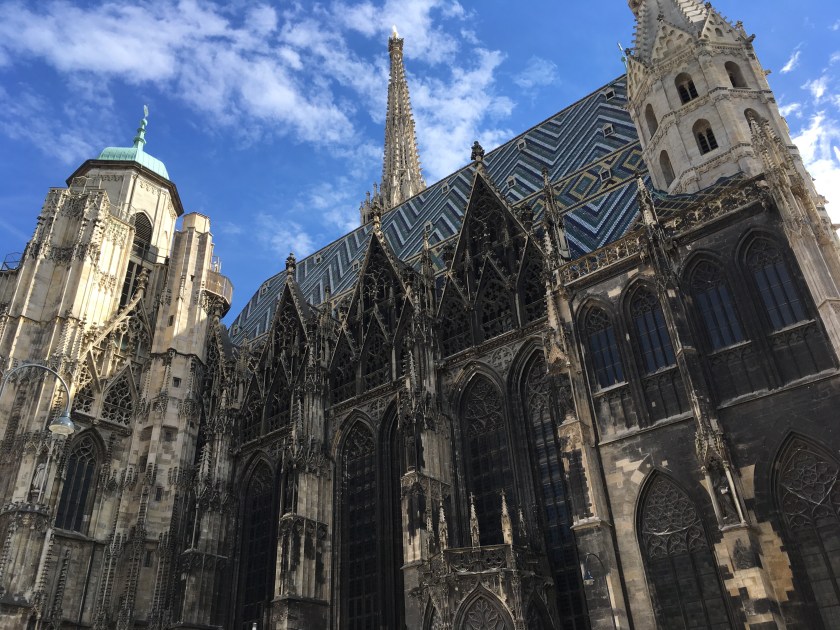 and more importantly we searched out the famous ice cream parlor, Zanoni & Zanoni. Gelato – pistachio anc chestnut for me and chestnut and raisin (Malaga) for Tony- was a welcome treat and our lunch substitute.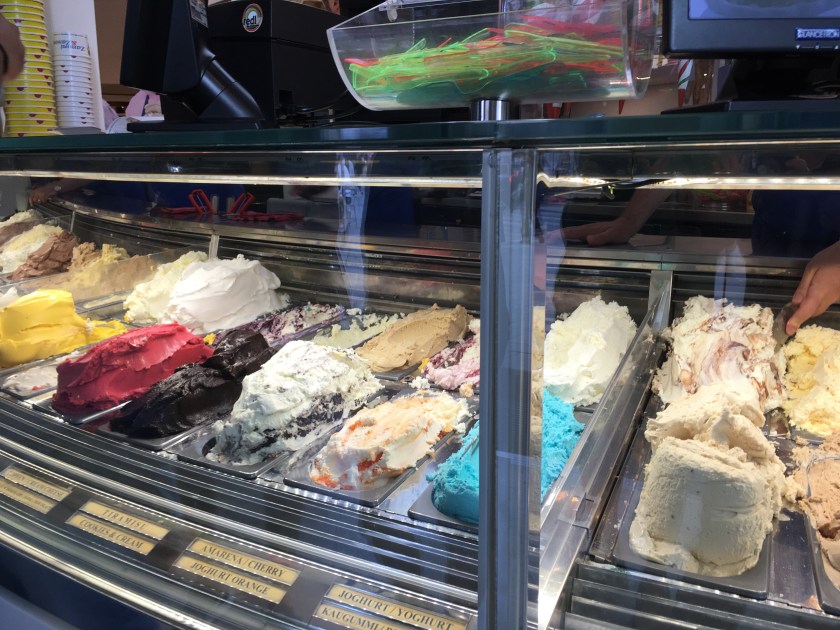
 We strolled down the main pedestrian shopping street, stopped by the Opera House gift shop ( I bought a CD of “Placido Domingo sings John Denver”….really!!!), and went to an Italian restaurant for dinner at Cantinnetta La Norma, located a few blocks from our hotel and recommended it the Rick Steves guidebook.
 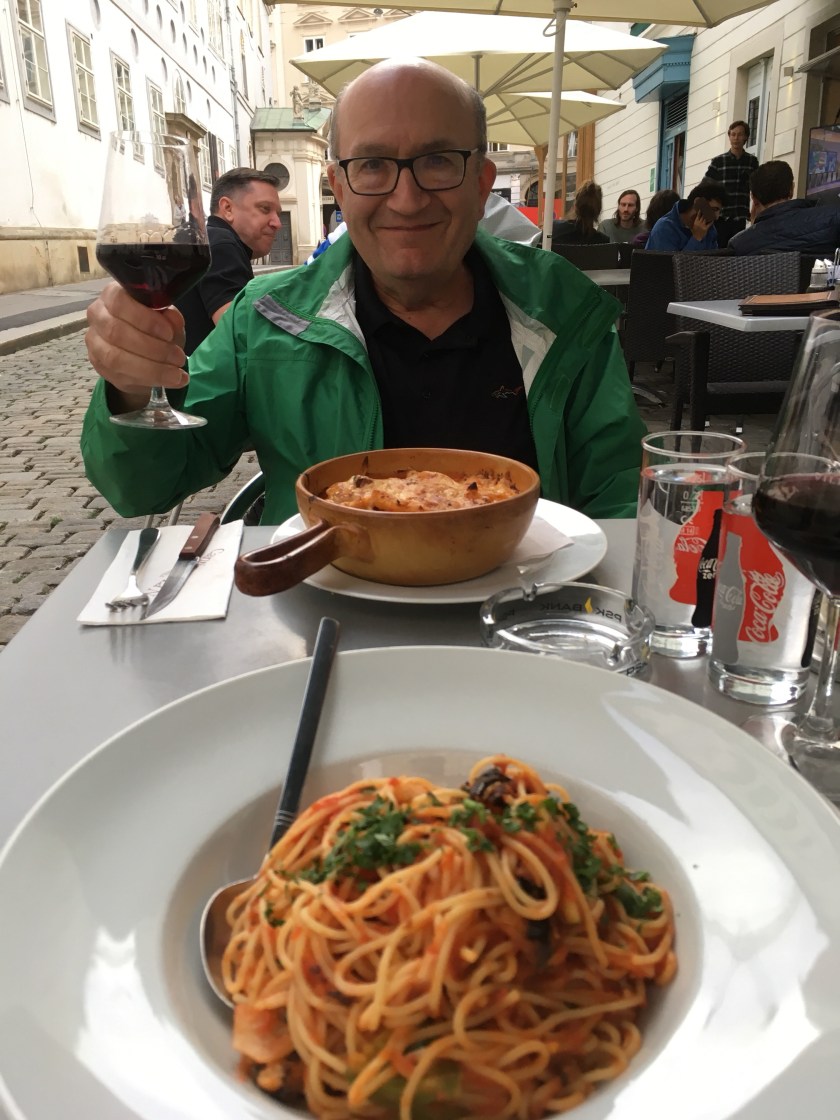 The past few days, we have eaten more Italian food than Eastern/Central European cuisine but tomorrow we have a dinner reservation at a place recommended by the hotel for typical Viennese food – schnitzel, I guess! After dinner, another stroll through the old town center brought us back to the Opera House where tonight’s opera was live streamed on a huge TV screen attached to the building’s exterior.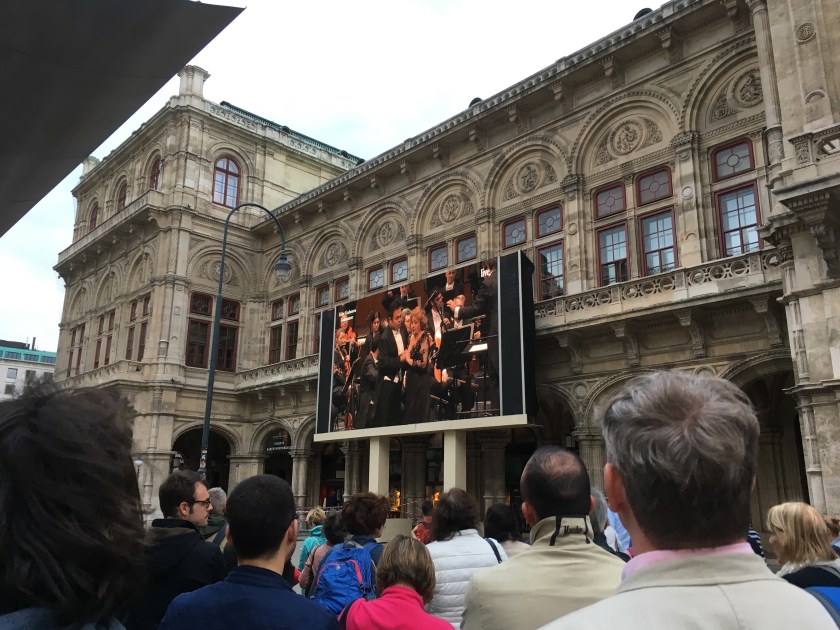
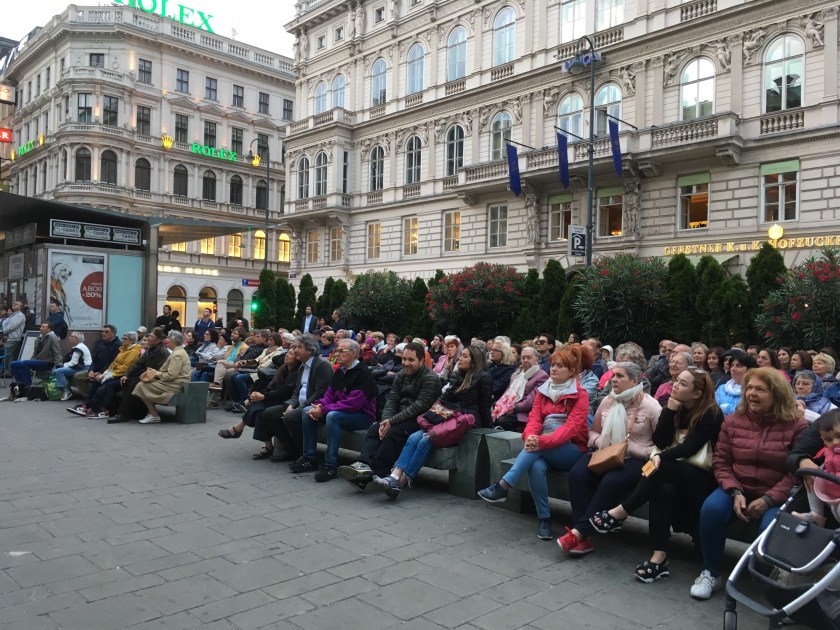 Scores of people were seated on folding chairs enjoying the performance for free! Back at the hotel, our night cap was a couple of fancy coffee drinks (always served on a silver tray with water and a sweet treat) and a slice of apple strudel.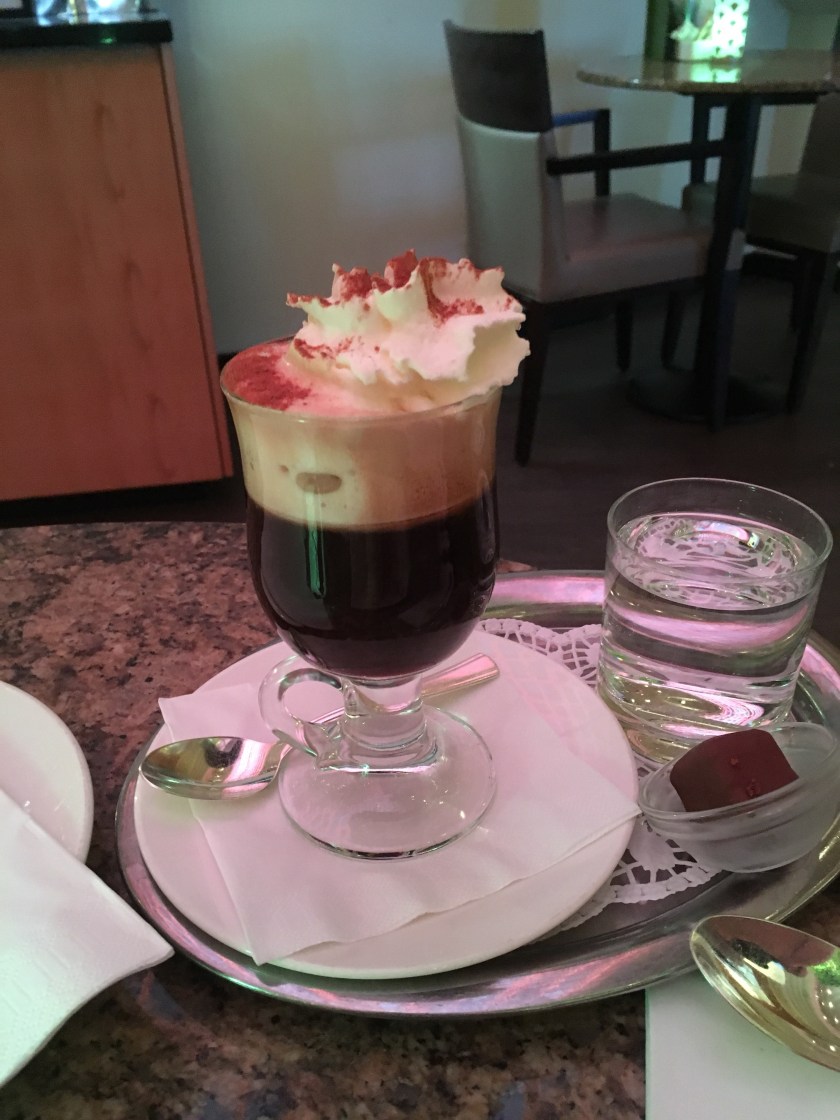
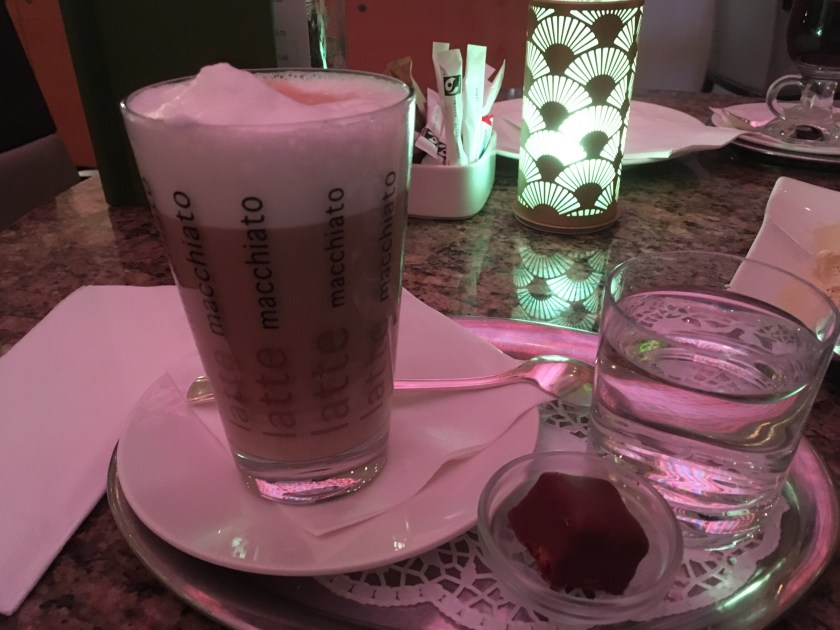 We are doing an informal strudel tasting contest – let’s see which café wins!
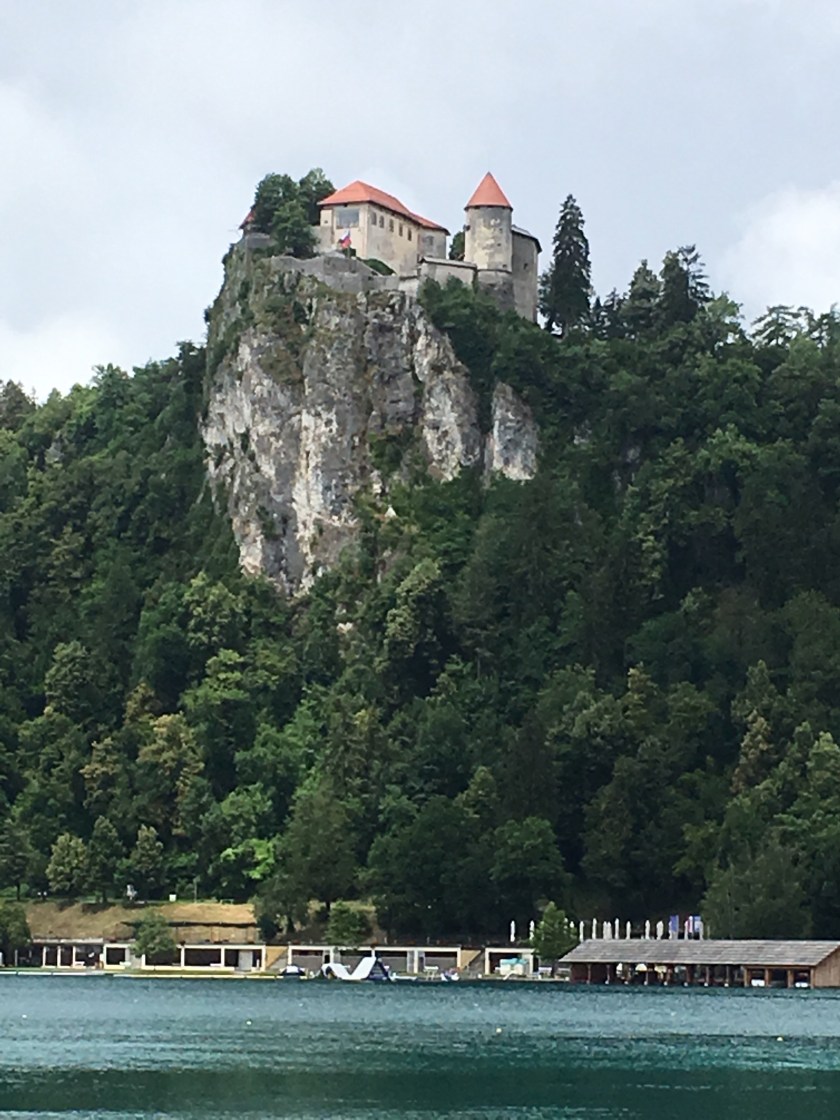
 The two reserved pletna boats were almost ready except for the several inches of rainwater on the boats’ floors. We waited on the sidewalk while the boat owners bailed out the water. After a towel wipe down, the seats were “dry”, sort of, and we boarded. Balancing passenger weight is crucial as we were instructed as to the side of the boat where we were to sit. The boat guy would do quite well as a “guess your weight” carnival worker!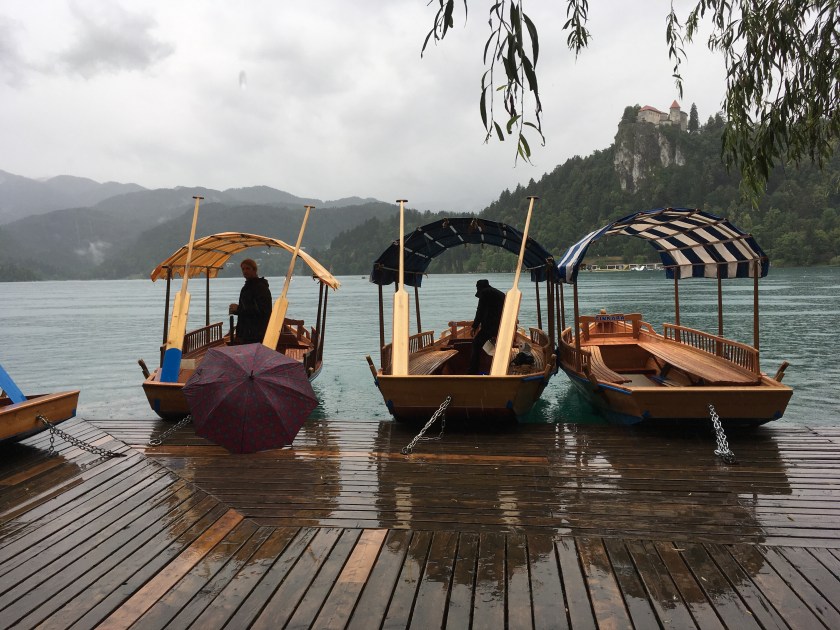
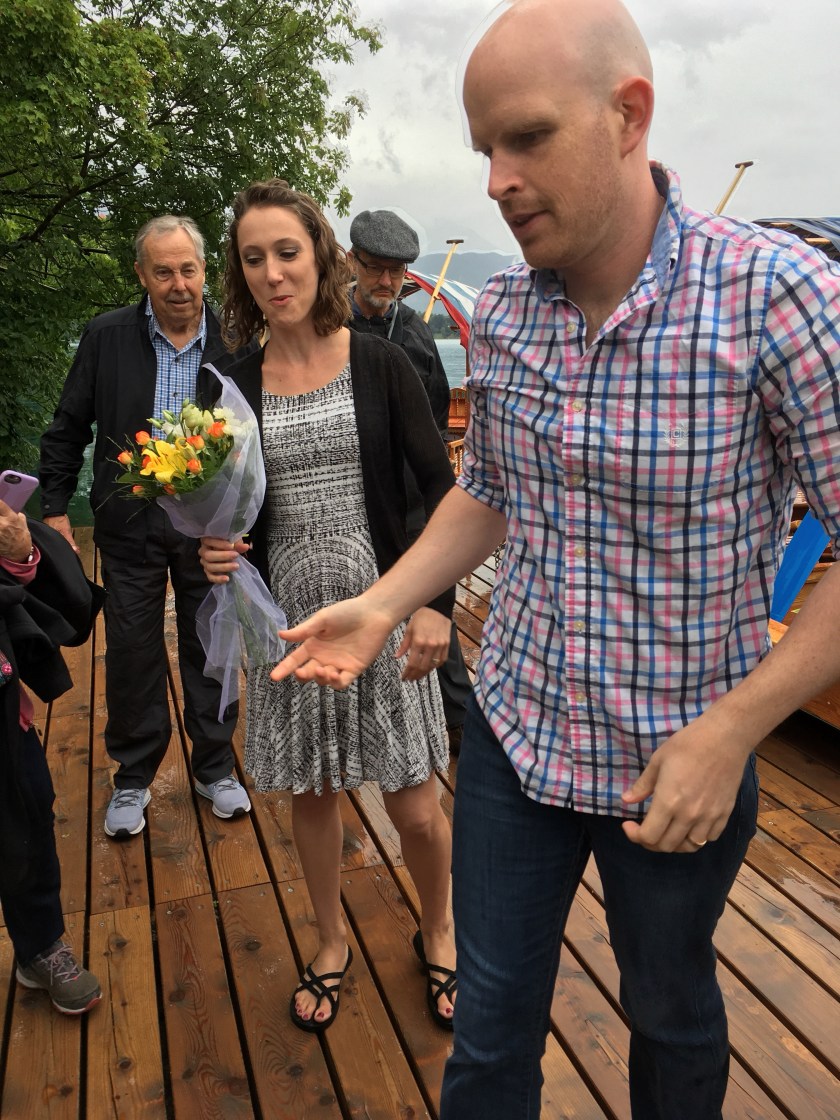
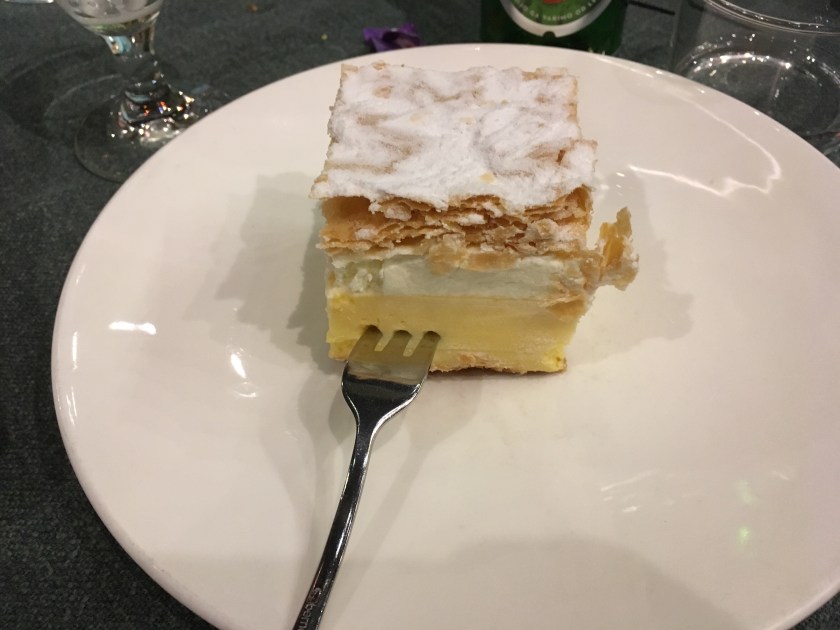 filled us up as we conversed with our new friends. A contest of who had brought the most useless object ( the winner…a Fitbit charger with the Fitbit left at home) and personal anecdotes were shared by Katka.
  As the evening wound down, we reluctantly bid each other farewell as departure times varied over the next couple days. Many are planning to attend the annual Rick Steves tour alumni weekend (us included) and email addresses were shared. This group of travelers became a family and I’m certain that these new friendships will endure.
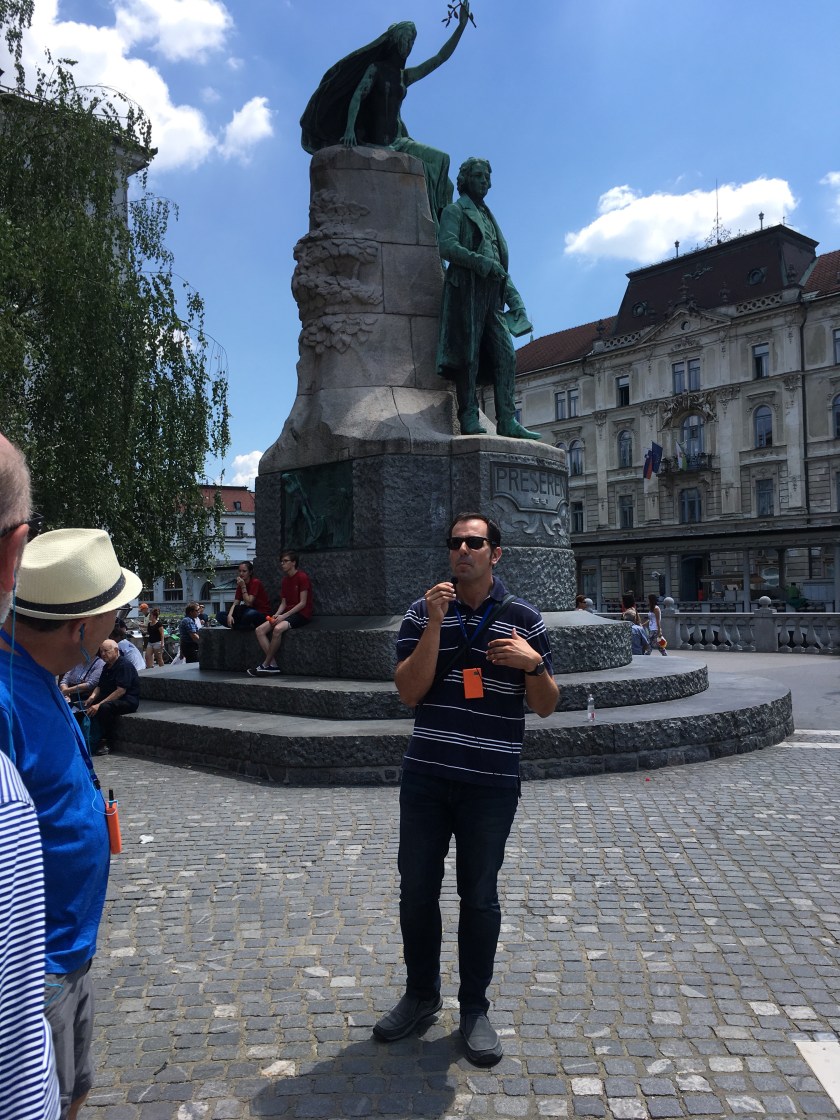 We were given a two-hour walking tour of the city center. Ljubljana is a charming city of about 250,000, the capital of Slovenia. The town center is almost exclusively pedestrian. A river passes through the center, with several bridges traversing the banks. An earthquake in 1895 caused major destruction, with many of the buildings rebuilt and exhibiting the baroque or art nouveau style. It is not a major tourist destination, but most certainly has a vibrant feel, with a bustling public market, cafés and restaurants along the river banks and around the main squares, and an amazing variety of shopping venues.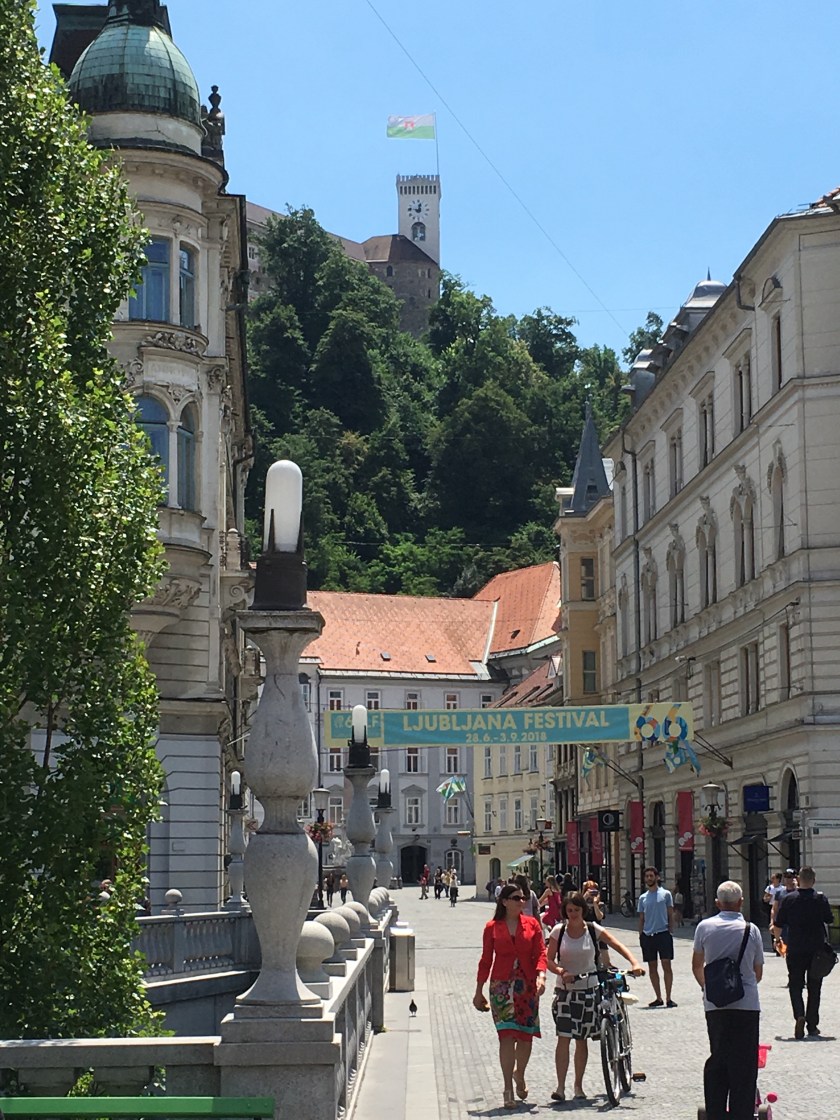
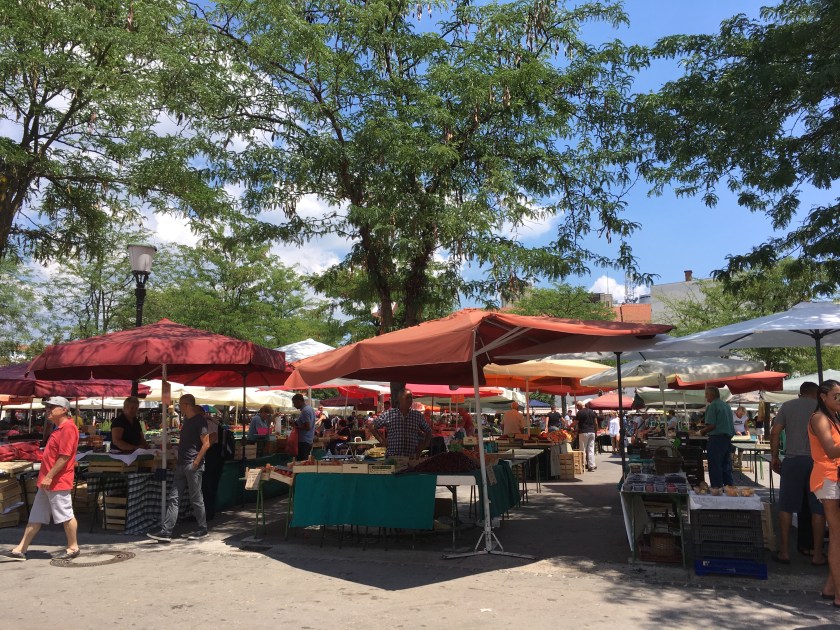
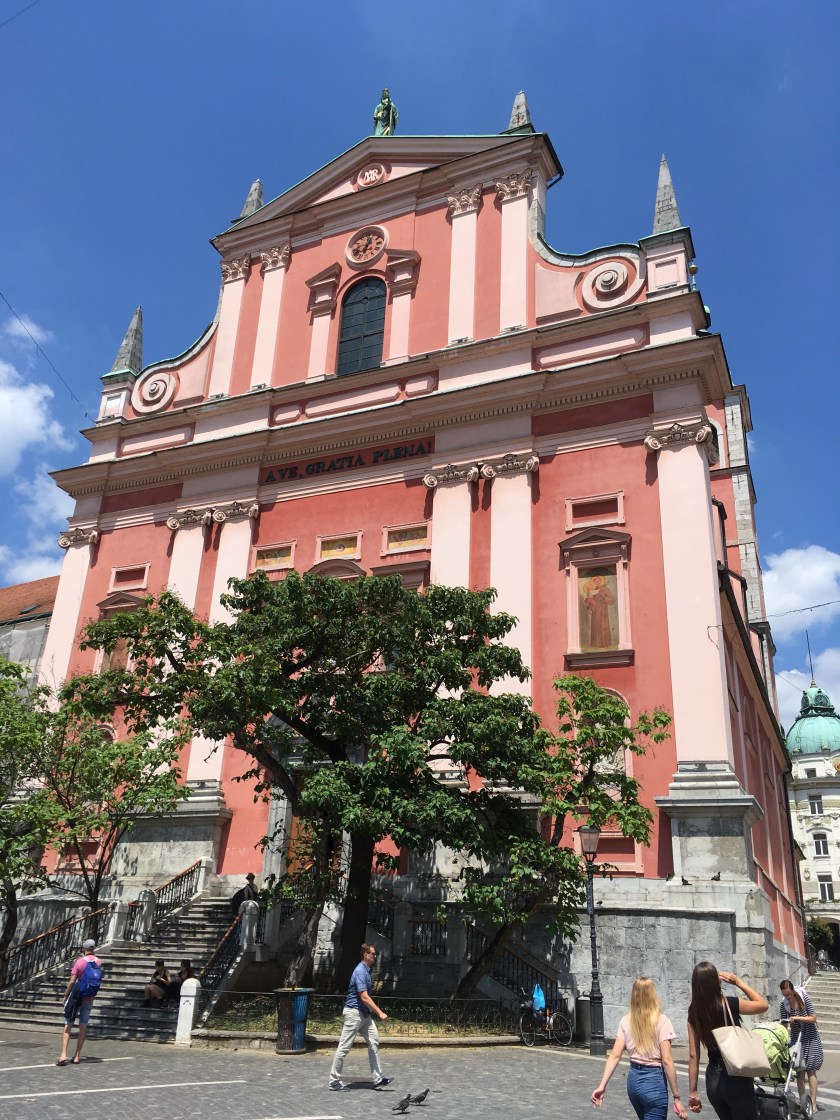 The citizens fill the streets, strolling, shopping, sipping coffee, eating gelato. Since the town center is free of cars, commuters use bicycles, and bike-dodging (or pedestrian-dodging) is commonplace. We were also treated to some local delicacies (Carnolian sausage with mustard and horseradish, fried frog legs, a fig and a blueberry liqueur, fresh unpasteurized milk from a machine dispenser, and a dessert described as “strudel on steroids”).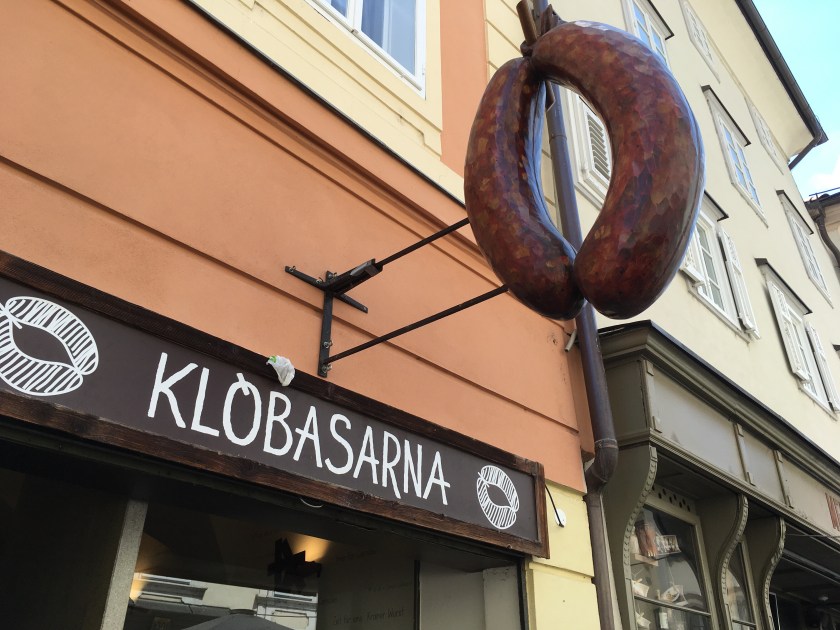
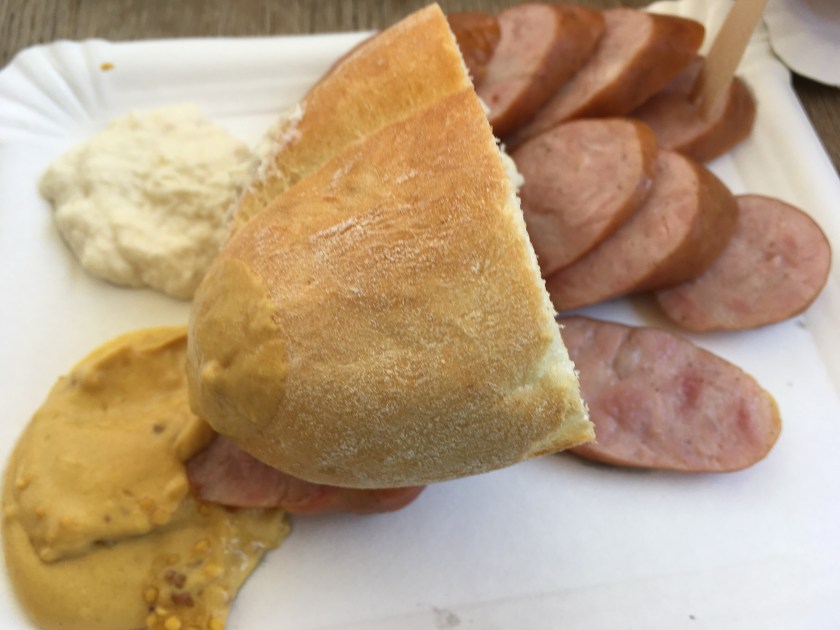
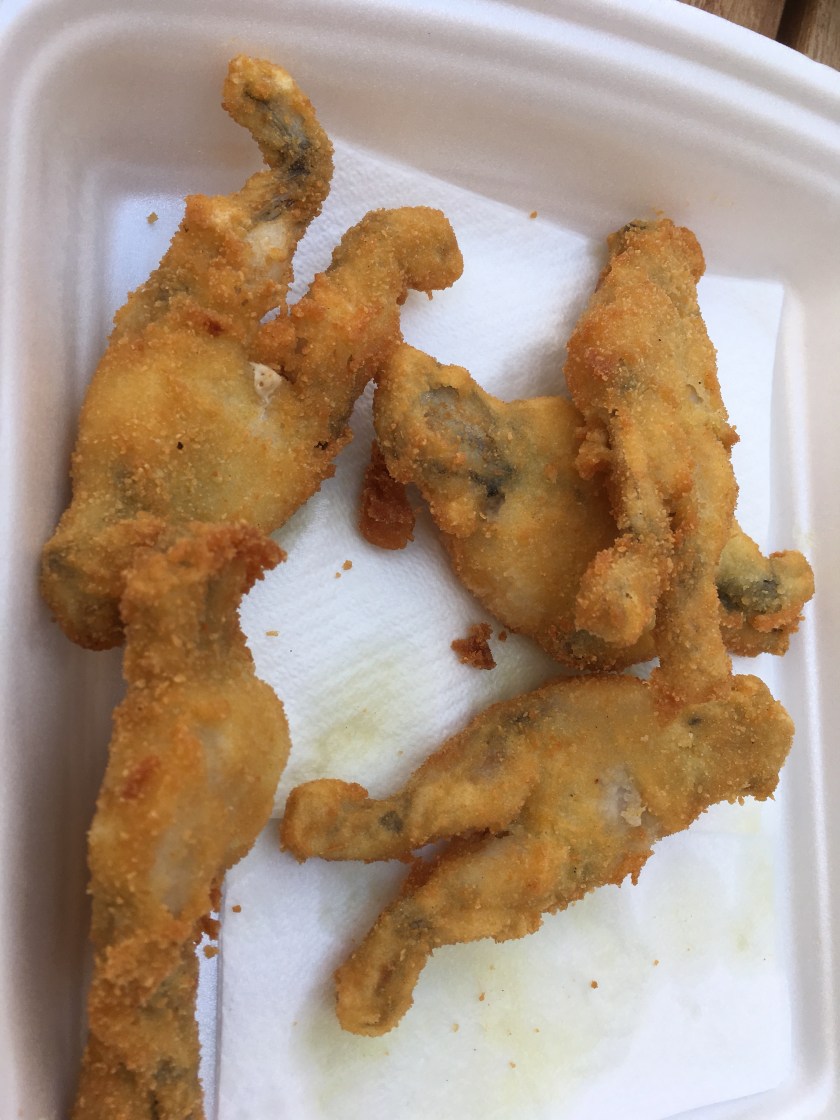

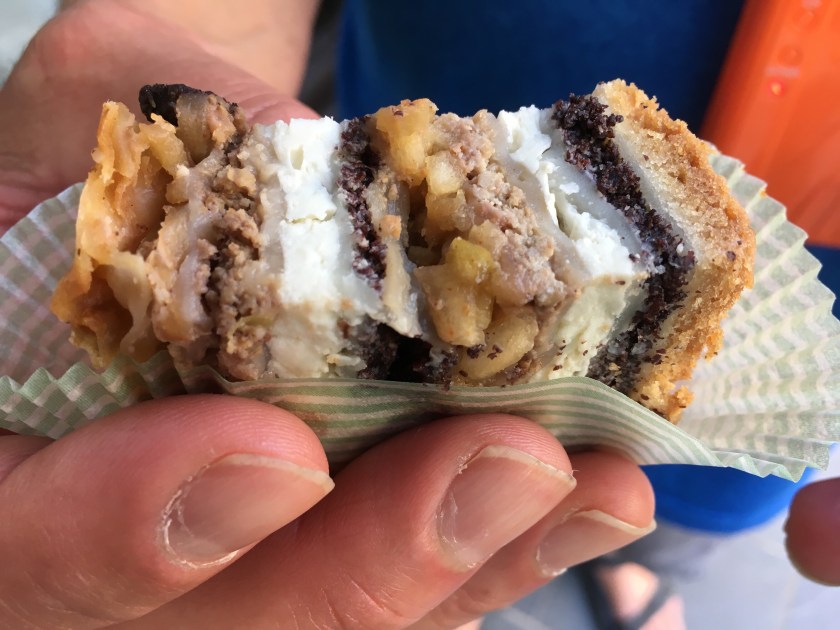
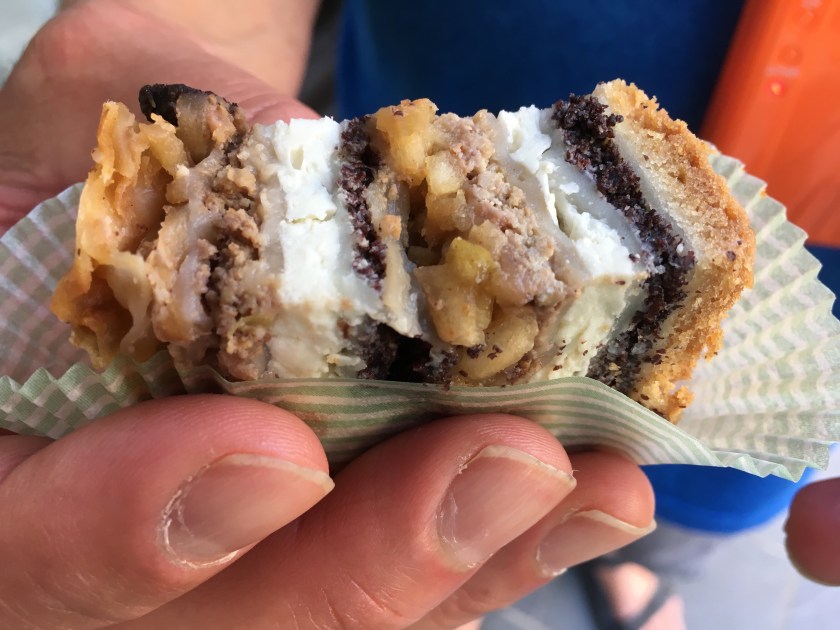 Above are: homemade sausage place, Carnolian sausage, frog legs, Katka getting milk from a milk dispenser and typical Slovenian dessert with poppy seeds, apples, cream cheese and flaky pastry (gibanica – pronounced ” gee-bah-neet-sah”).
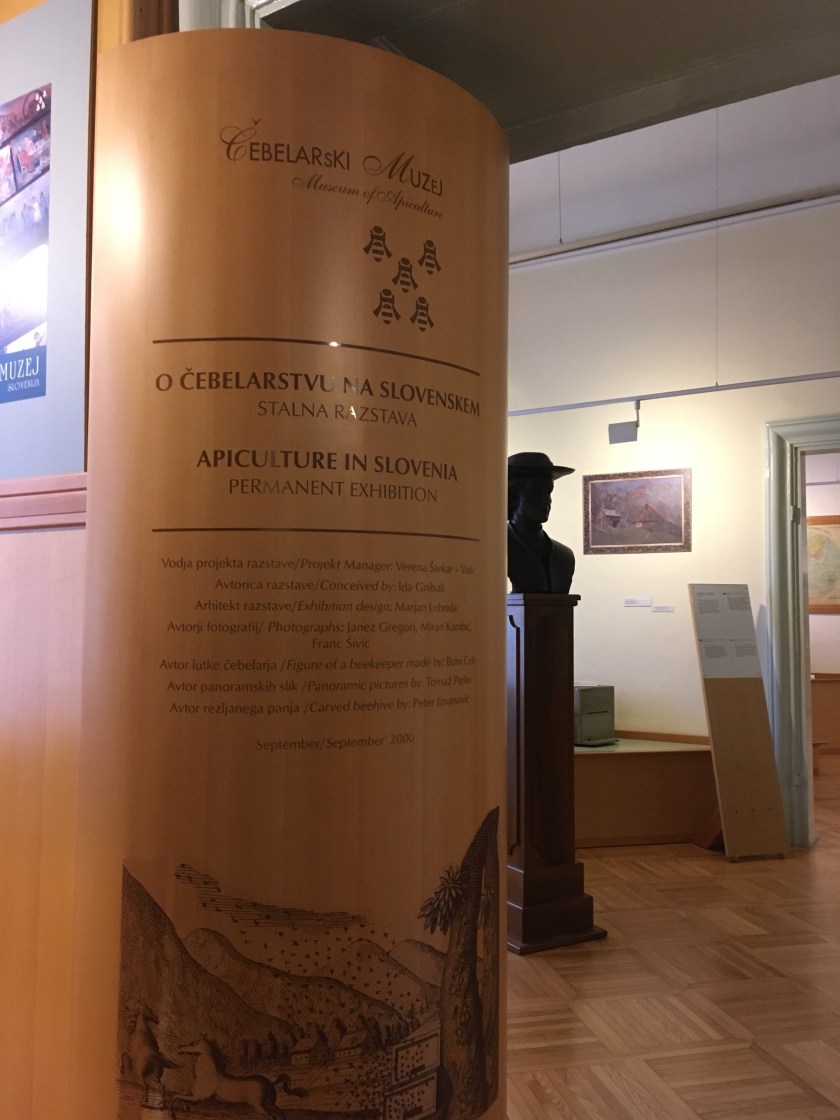 (Slovenia is a center of apiaries and the art of beekeeping was refined here) and a shop that has been baking decorated honey gingerbread hearts since 1766. They are usually given as gifts.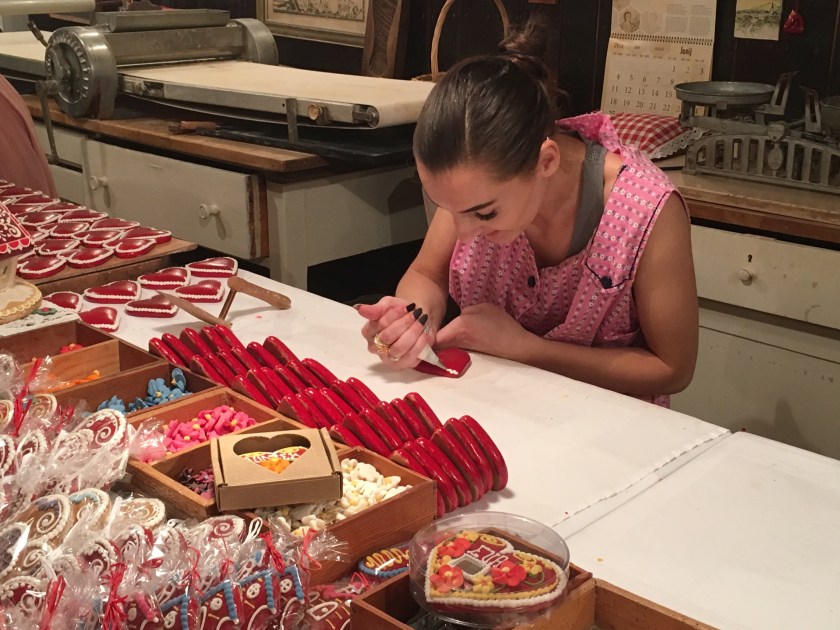
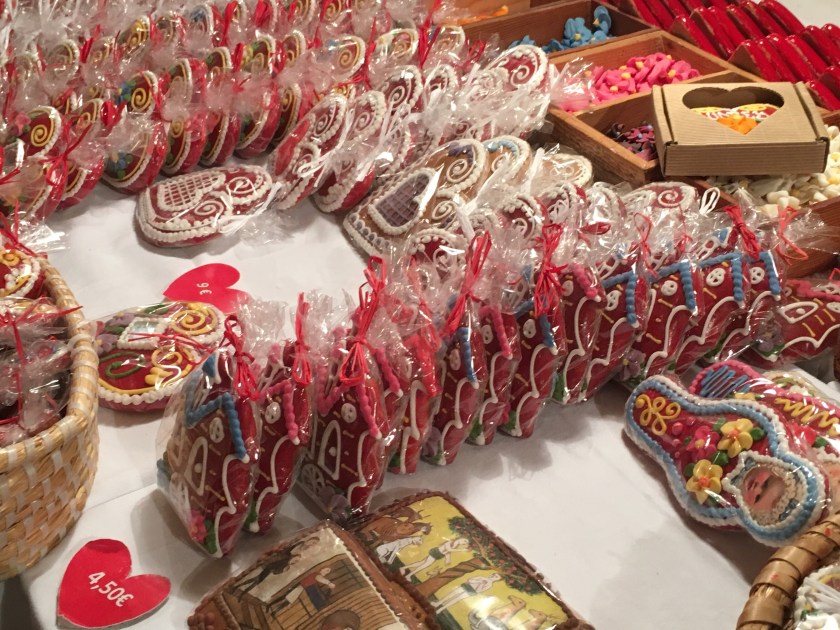 Elaborately decorated, an advisory sticker states that they are not food products! However, they make great mementos or Christmas tree ornaments. One of the owners described the process of baking – flour, honey, ginger, cloves, cardamon and water are combined into a dough that “ages” for 14 days. The dough is rolled out with a machine roller and cookie cutters, some decades old, are used to shape the cookies. They are iced with a potato starch, water and food coloring frosting (no sugar) after the cookies are baked and left to air dry. He even treated us to an accordion solo after his presentation. We purchased a couple of the undecorated edible version , but I must say they did not taste anything like the gingerbread we have in the USA- they were like dry soft bread with a faint essence of ginger and cloves.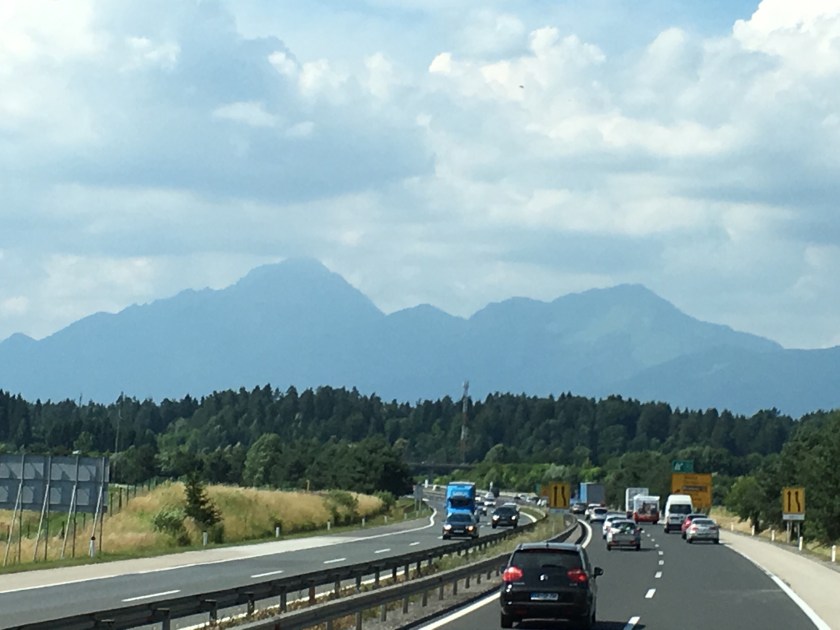
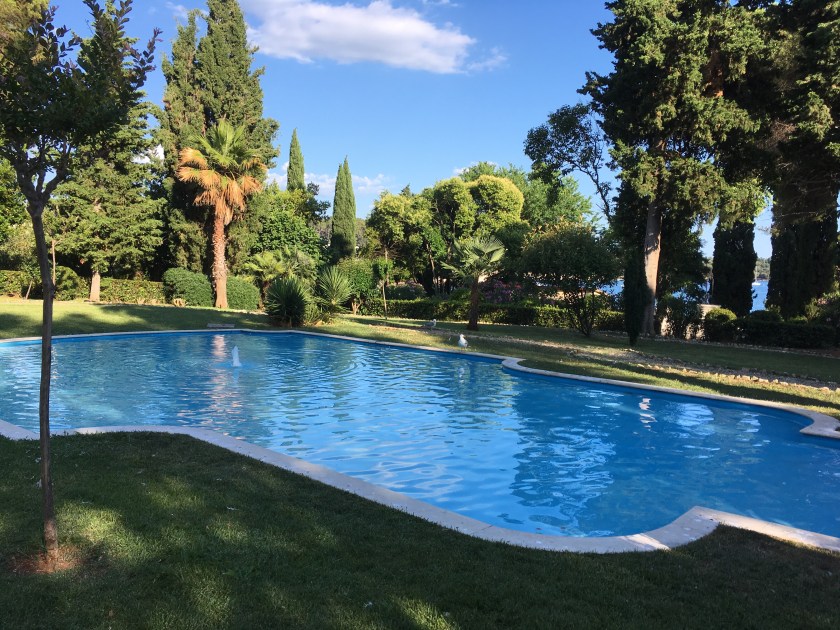
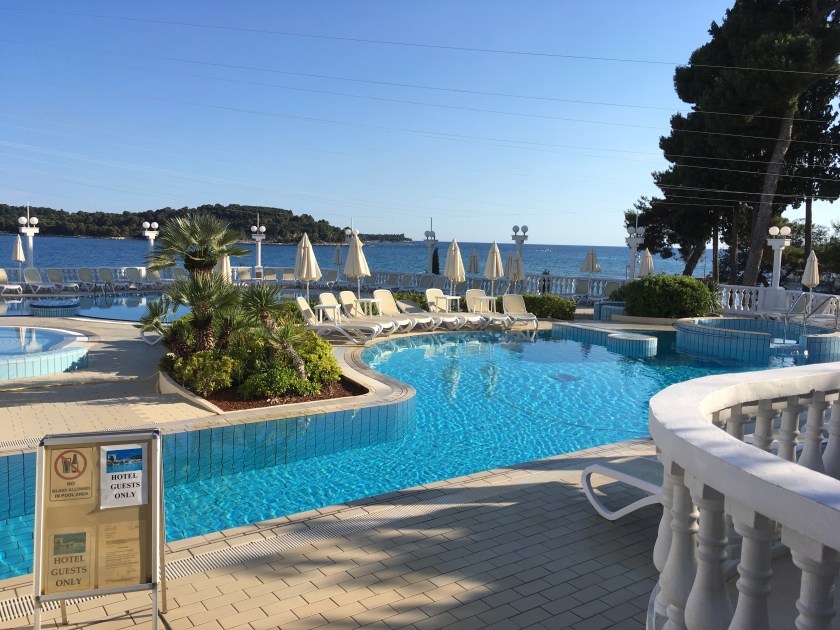
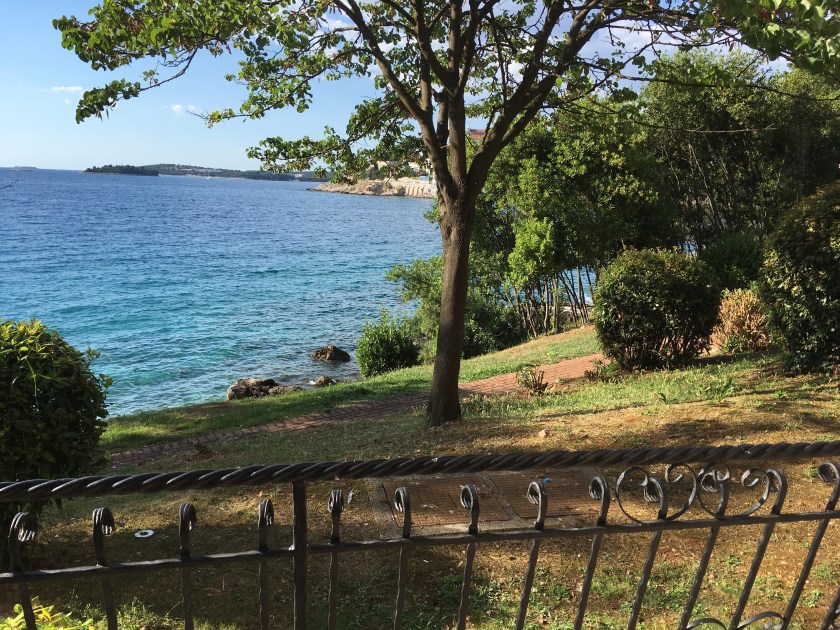
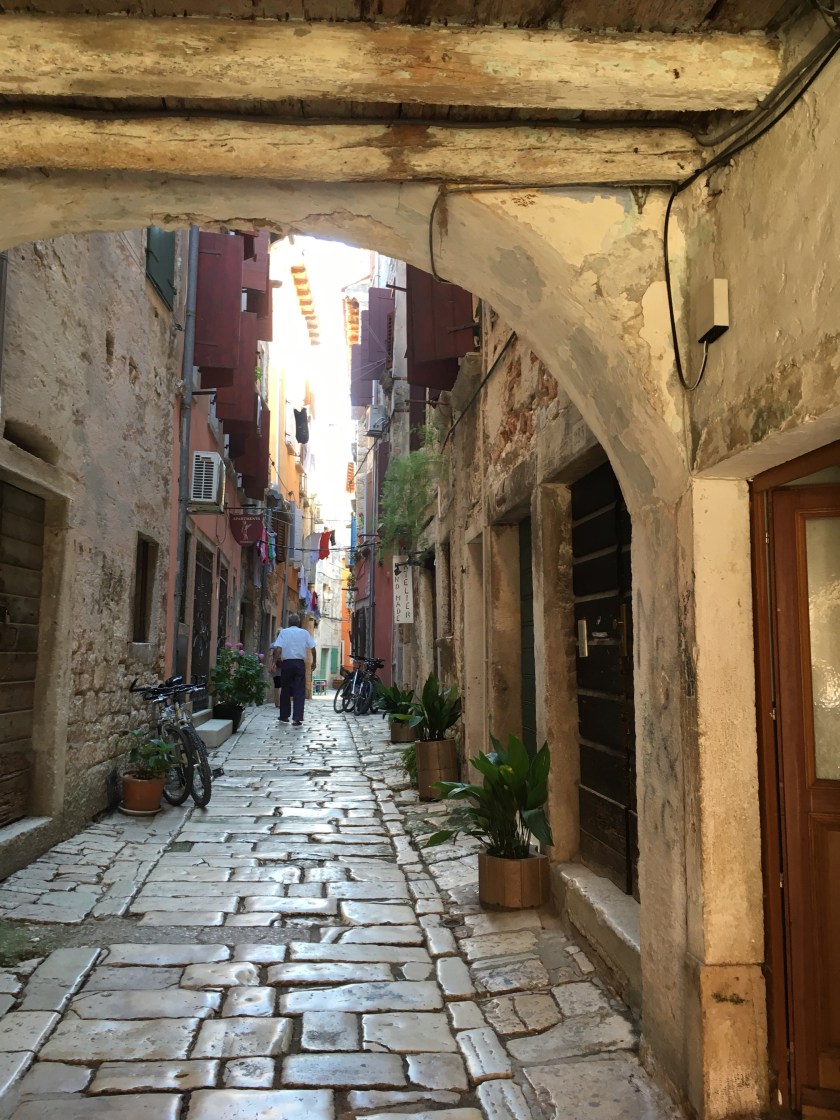 The streets were lined by cafés, souvenir shops, jewelers, clothing boutiques ( Moda Italiana), and small art galleries. There was an Andy Warhol exhibit at the small art museum. I bought a summer dress and Tony got a linen shirt to add to our summer wardrobe.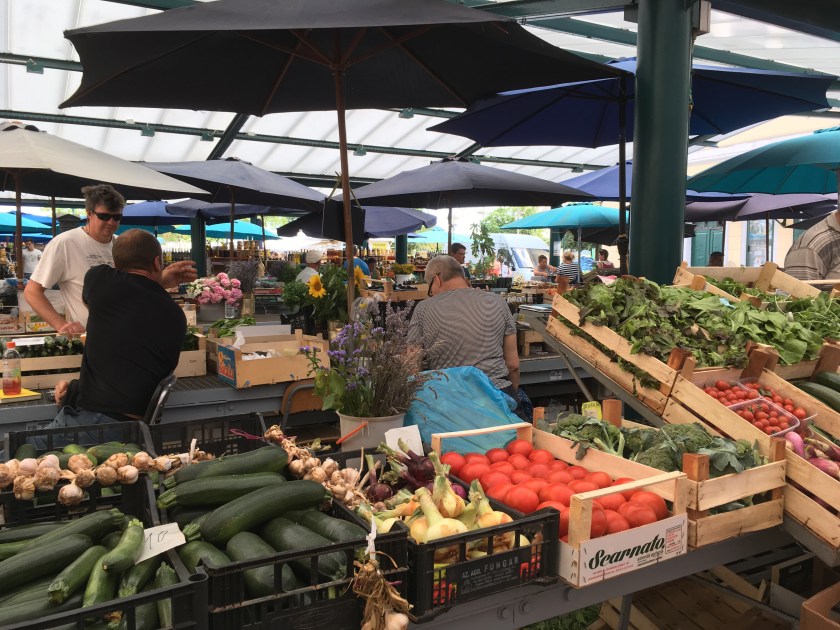
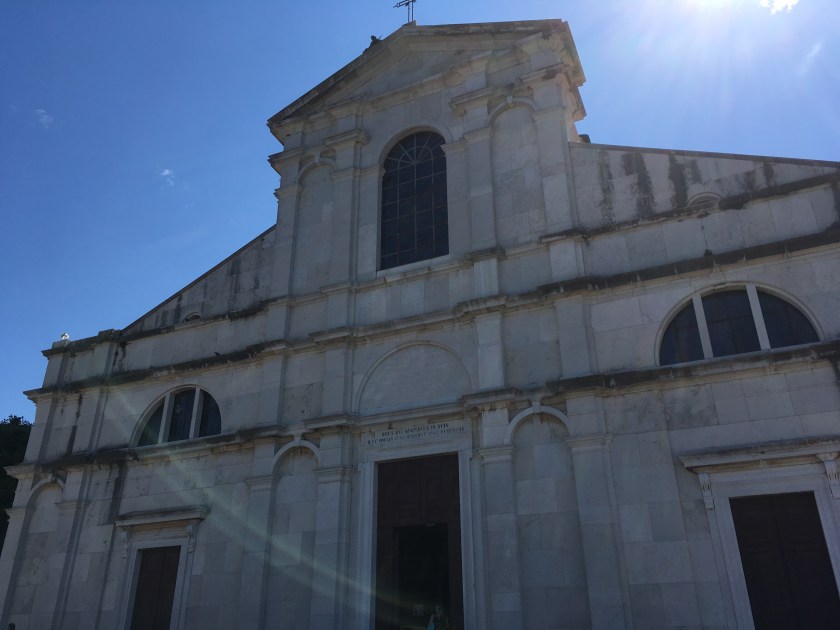
 We hiked up the steep hill to the Baroque Church of Sant’Euphemia.
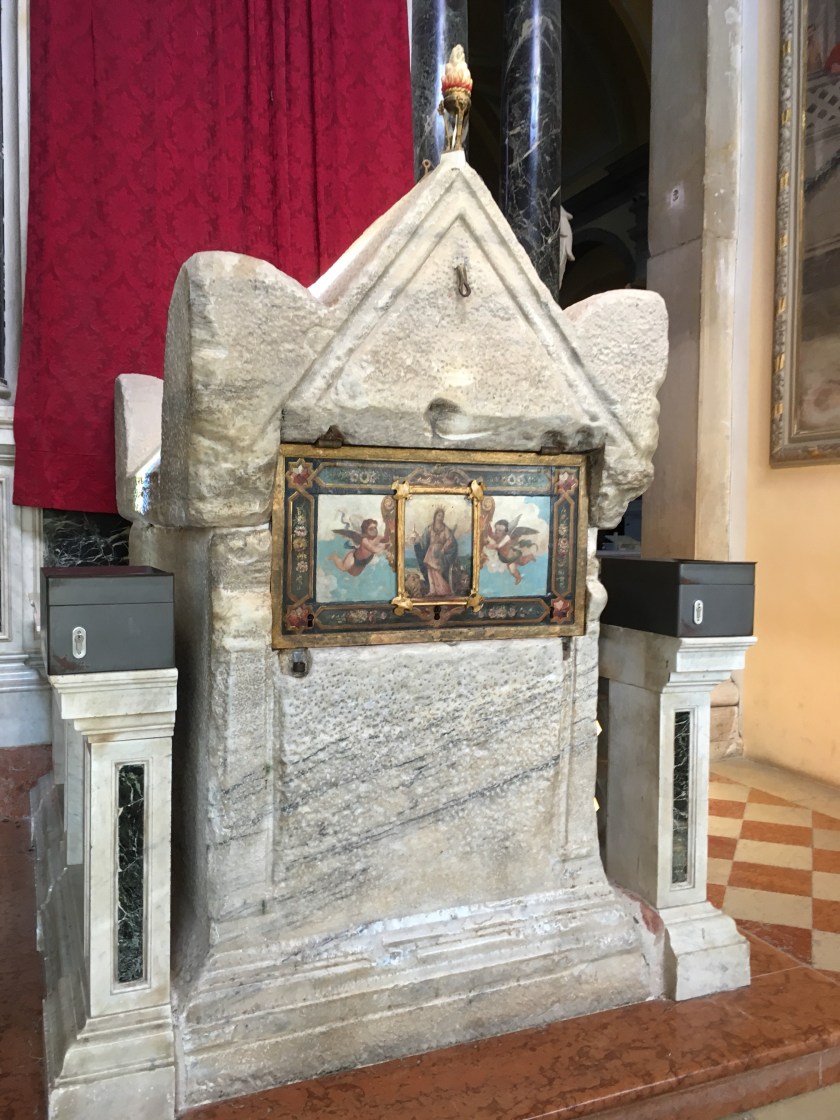
  She was martyred in the fourth century and her sarcophagus, which had been interred in Constantinople, mysteriously was found “floating” in the seas near Rovinj in the 9th century. A young man dragged it out of the water and supposedly is in the side altar.
  She is the patron saint of the town and Euphemia is the most commonly encountered girl’s name.
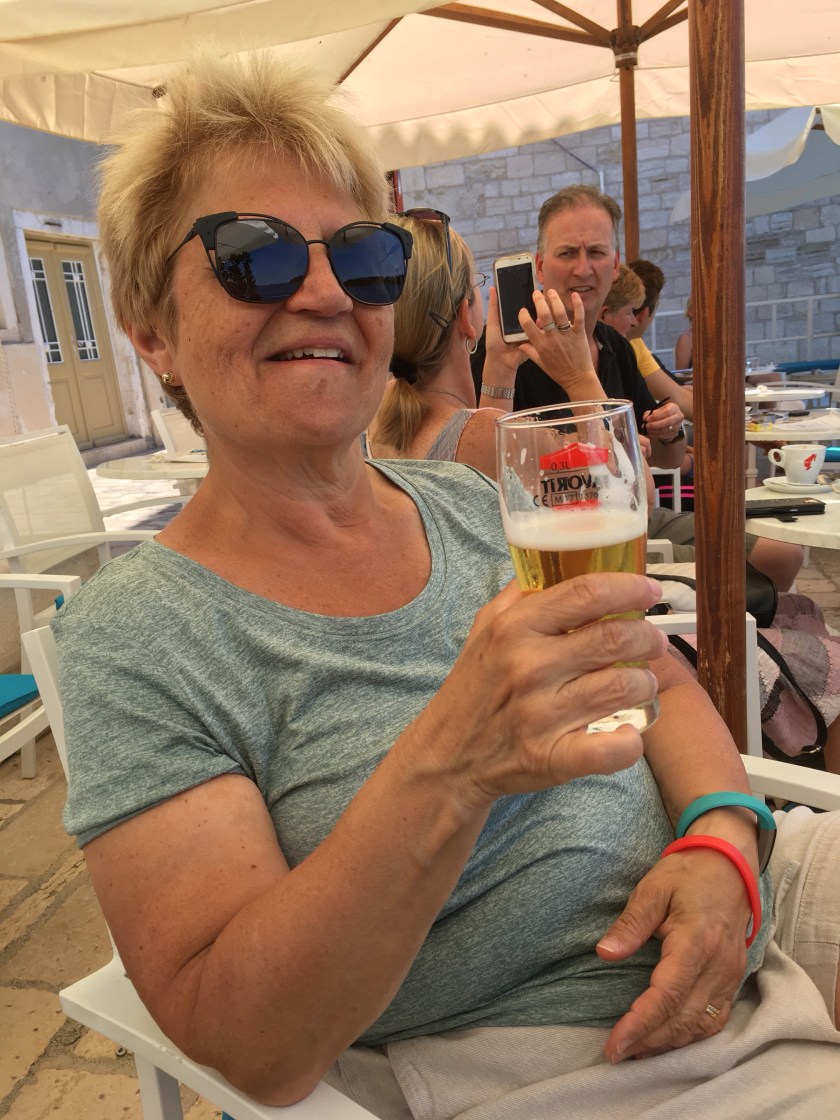
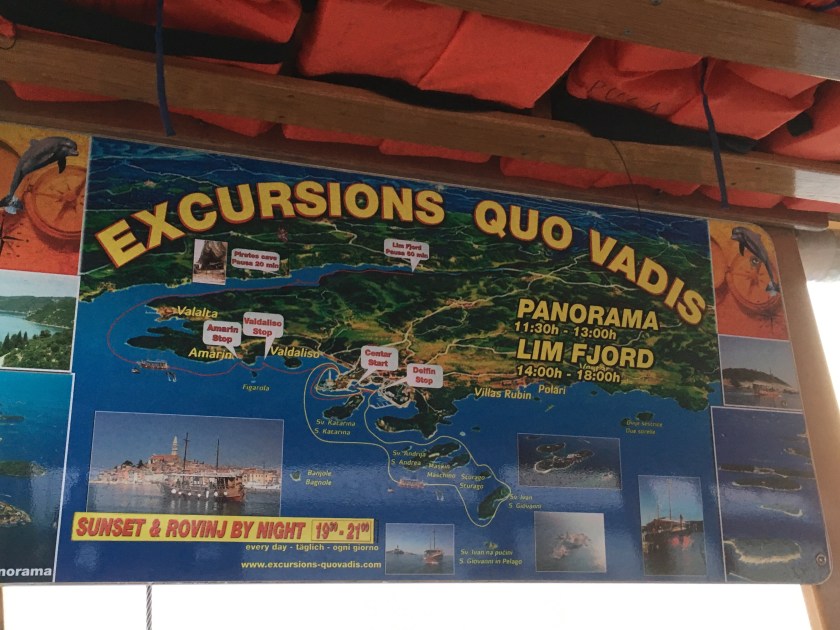
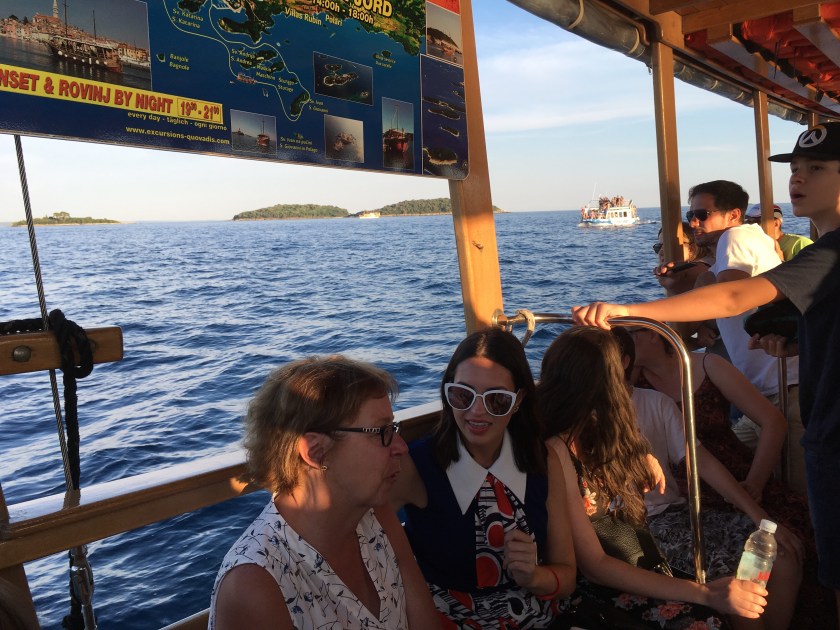 Then tomorrow morning, we have an early start (again) to our next (and last on the Rick Steves tour) destination, Lake Bled in Slovenia. Finally we will get to use those Euros I’ve been carrying since we left Pittsburgh.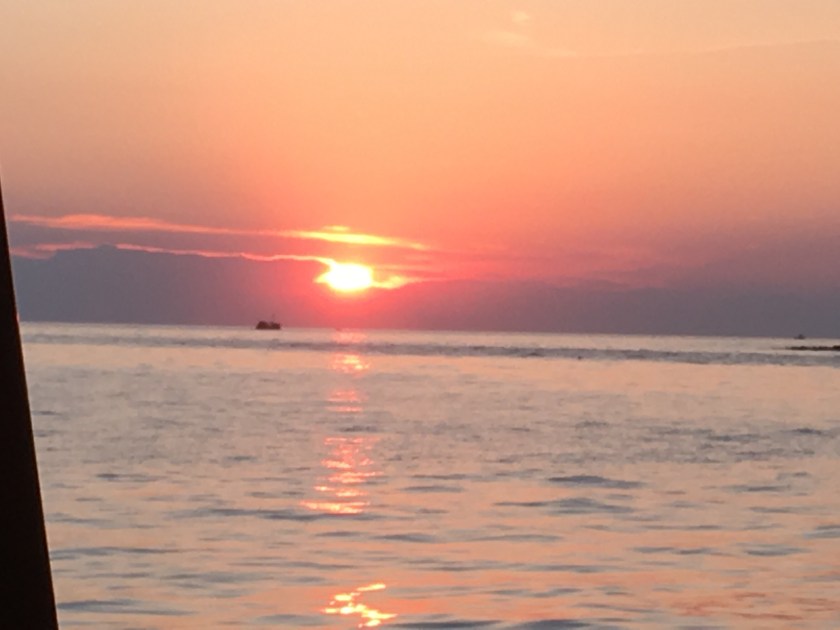
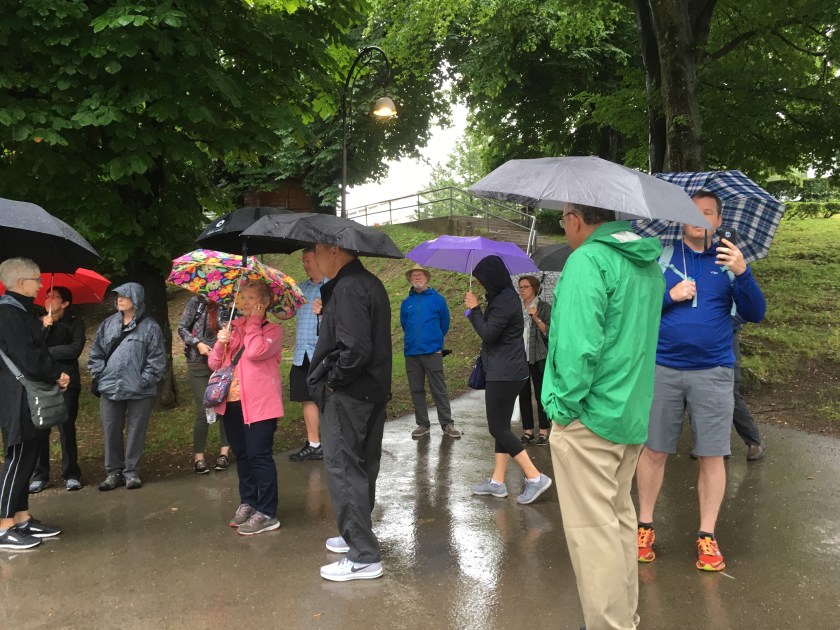
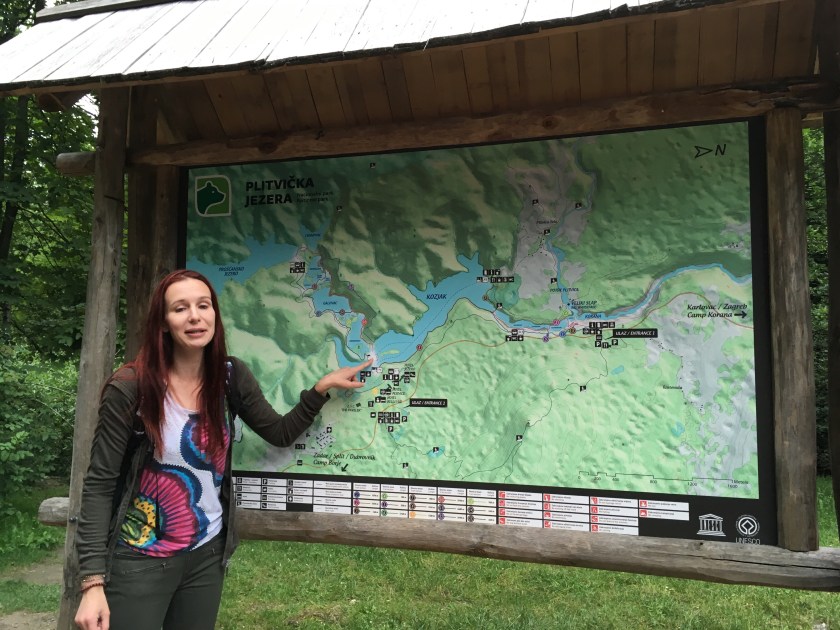 We were starting at the upper lake entrance so we would avoid (at least for the first half of the hike) the hordes of tourists who begin the trail at the lower entrance. It was cool, a bit humid, with threatening clouds but Katka assured us that, according to her very accurate Norwegian weather website, it would not rain.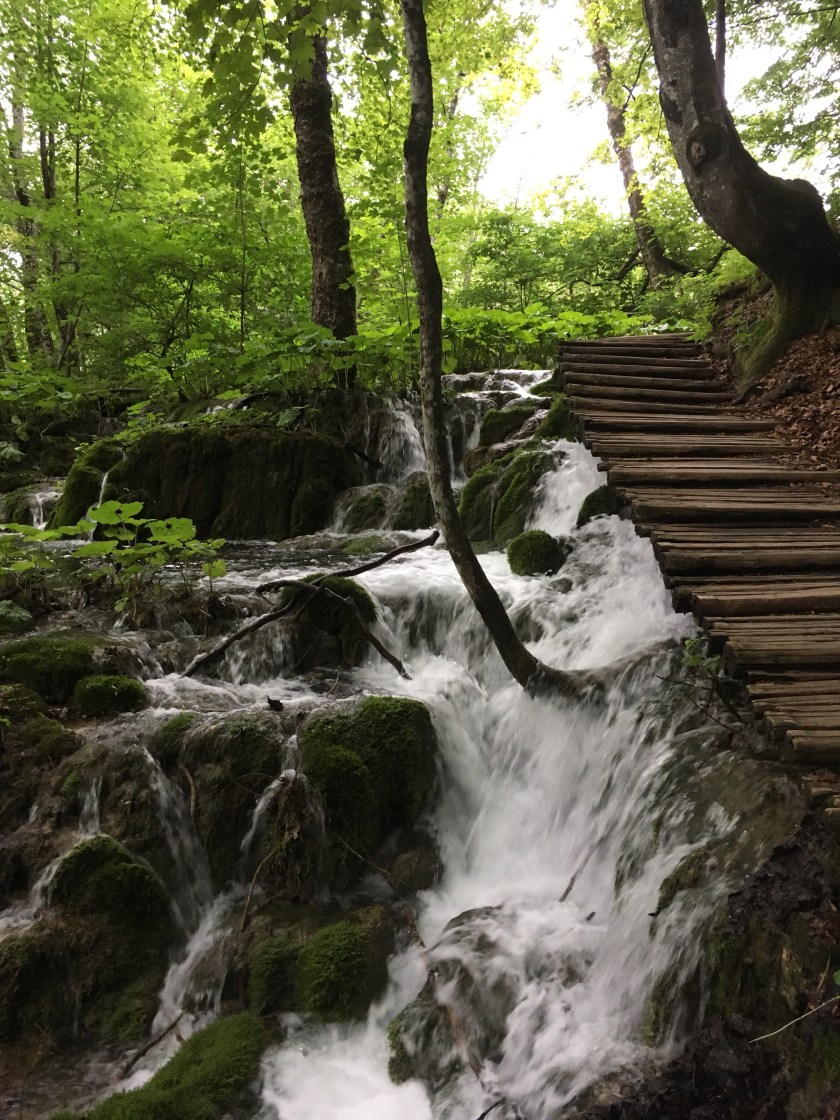
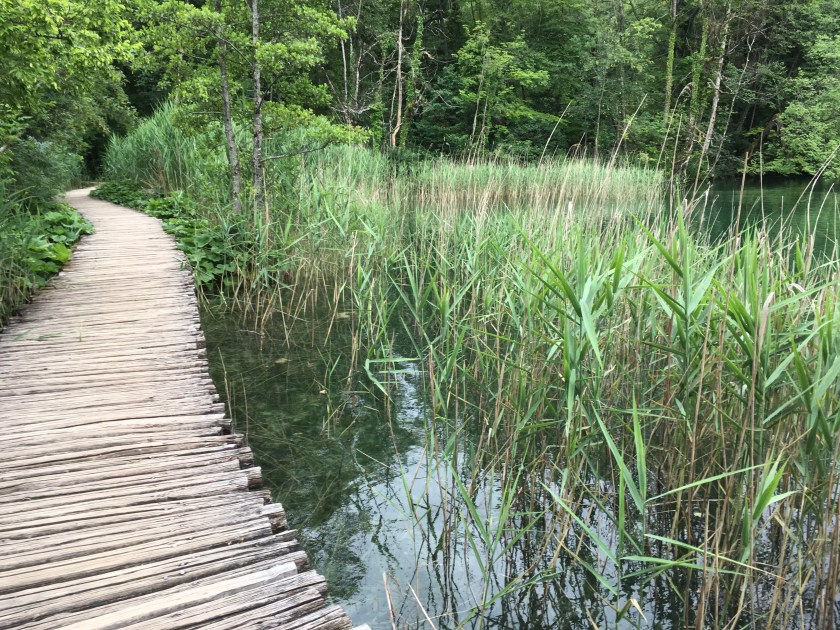
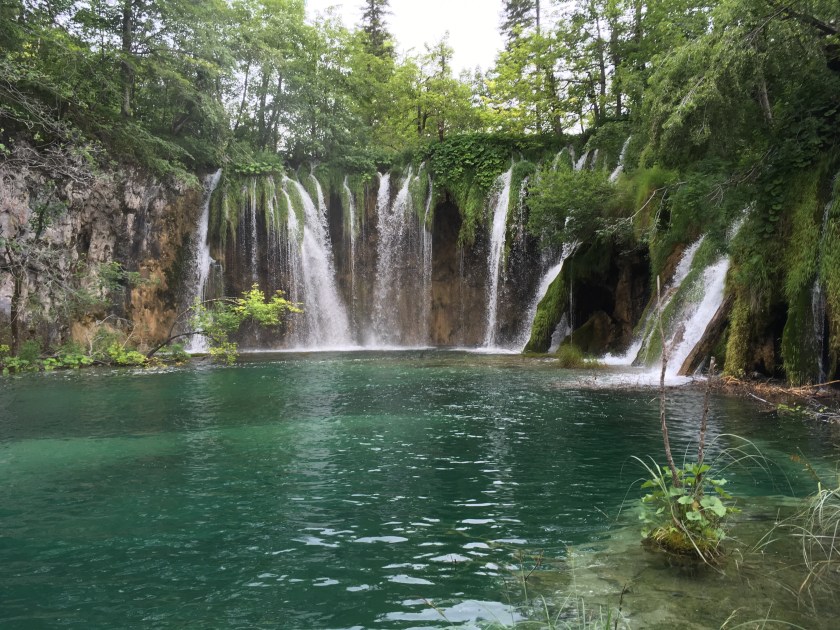
 About half way, at the large middle lake, we boarded a boat to the other side of the lake. One of our tour members got waylaid, and Katka went back to look for her as the rest of the group was instructed to continue onward to the entrance parking lot (our exit point) and to grab a quick lunch.
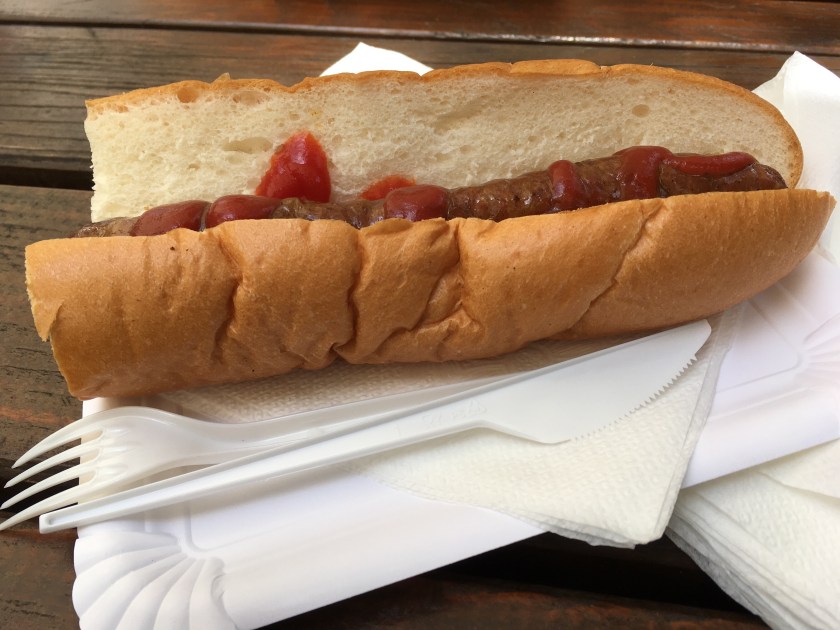 Coke, no Pepsi (shades of Saturday Night Live!), no fries – they ran out!
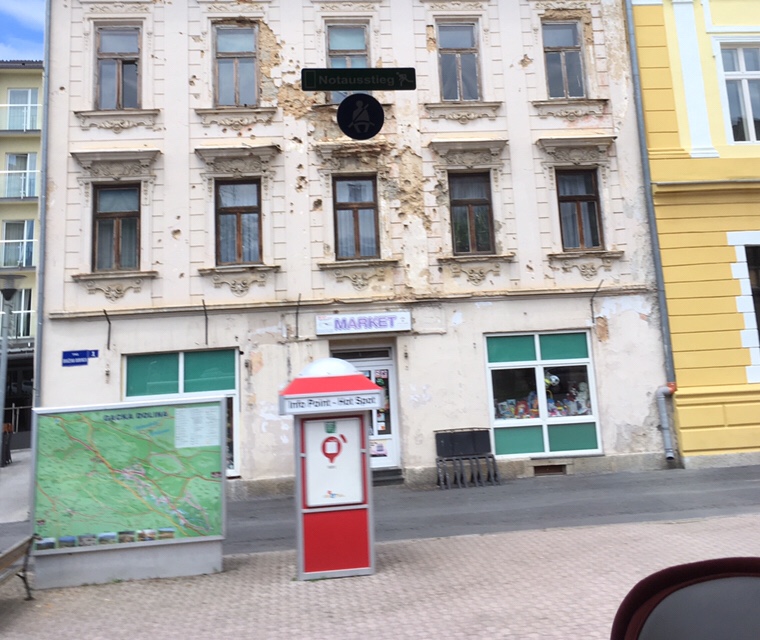 We passed through the Narik (spelling?) Alps, and as we passed over the crest, the Adriatic Sea came into view! After miles of switchbacks, Peter, our bus driver, maneuvered the bus safely down to sea level.
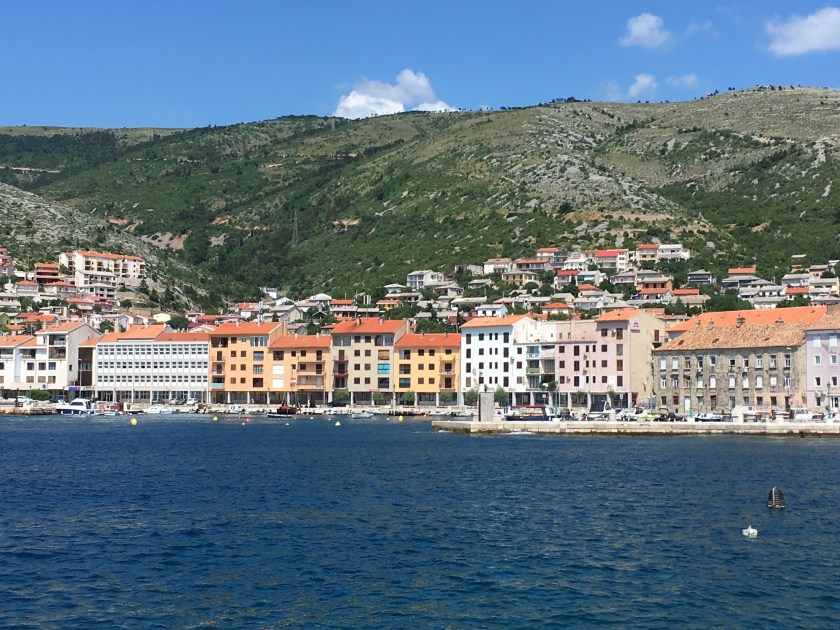 Interestingly, there are Tesla charging stations in the seaside parking lot (he was a Serbian Croatian). Leaving town, we followed the coast road to Rovinj.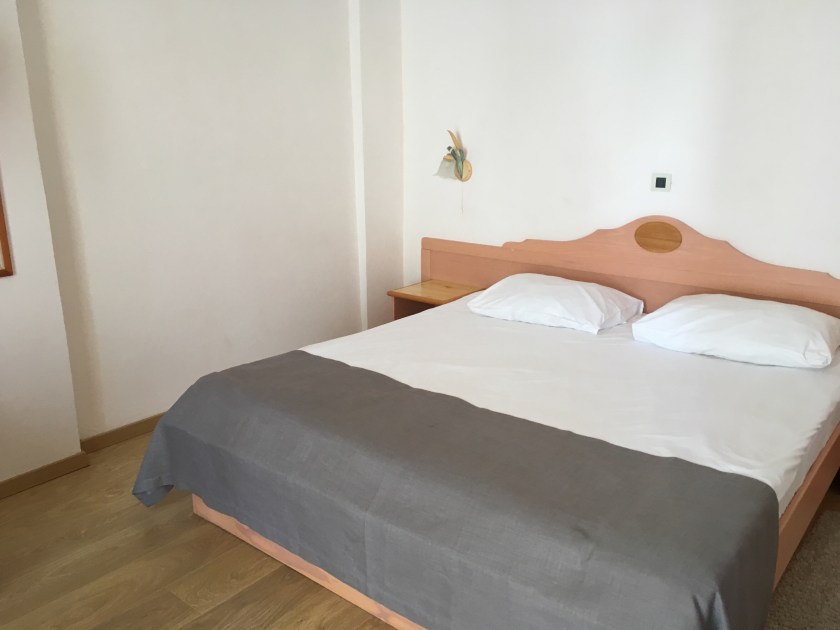
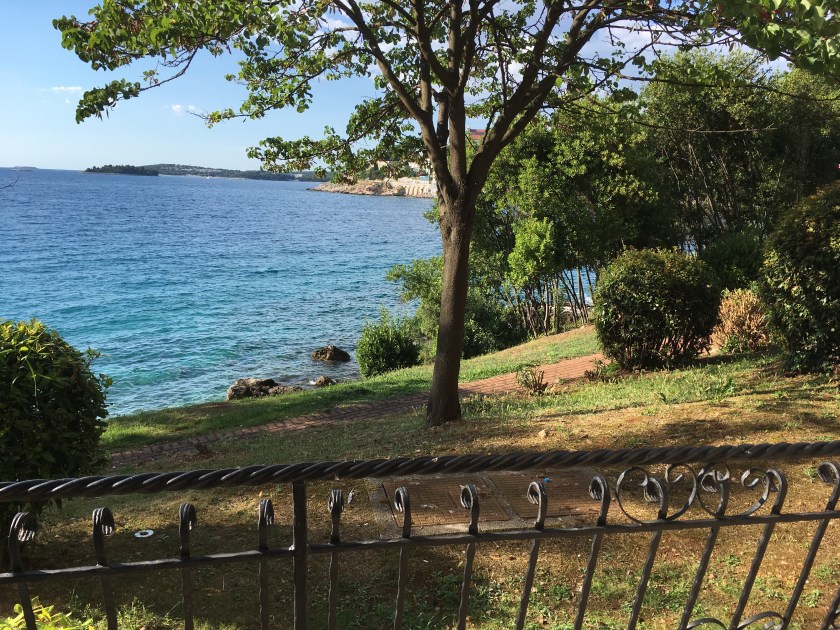
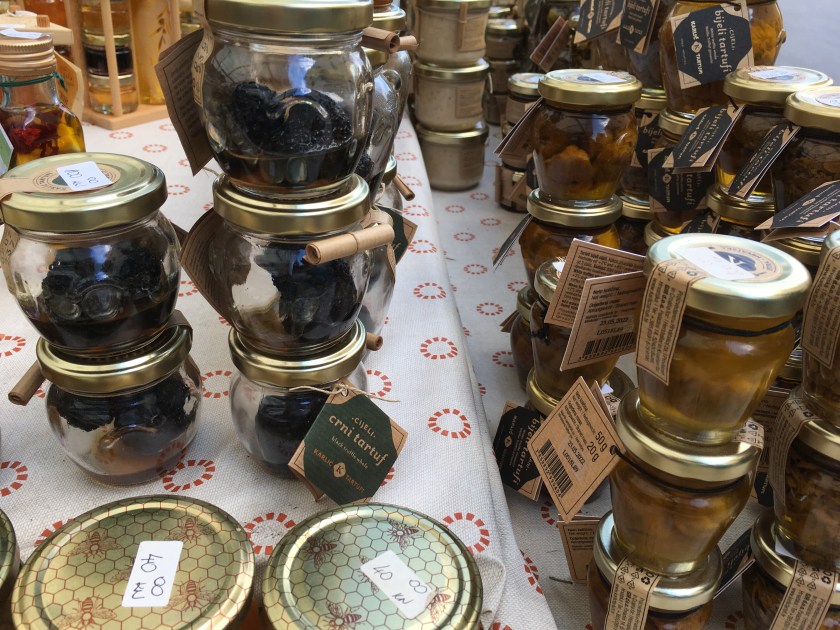
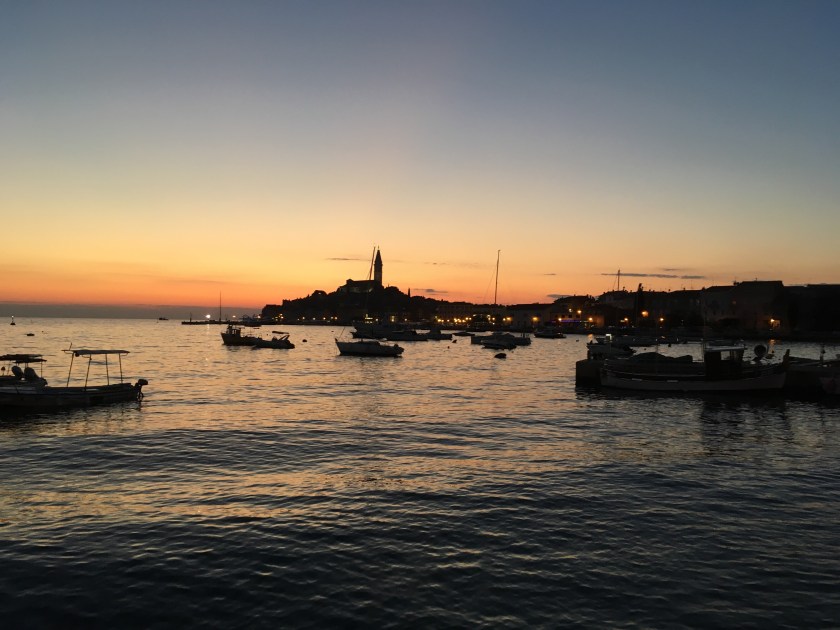
 This is a resort town with a decidedly Italian feel. In fact at one time it was under Italian (Venetian) rule. Olive trees are prevalent and the area is known for black truffles. The ferry between the mainland and the island leaves every hour (top of the hour from the island, at half past the hour from the town, although the Italian dolce vita attitude prevails and schedules are not strictly adhered to .
  We met for a delicious seafood- themed dinner (appetizer with grilled zucchini, anchovies, pickled fish, a primo piatto of seafood risotto, a fish filet with truffle cream sauce and grilled veggies and lemon sorbet for dessert) at Mastaral. Our dinner companions, Chris, Angela, Becky, Ruth, Abby, JoAnn, Sarah, and Katka , and several glasses of the local white wine (Malvasia) made for a wonderful and entertaining evening. We took the 9:30 pm ferry back to the hotel.
  Tomorrow will be a totally free day- a vacation from our vacation- and I think that some beach/pool time is on the agenda!
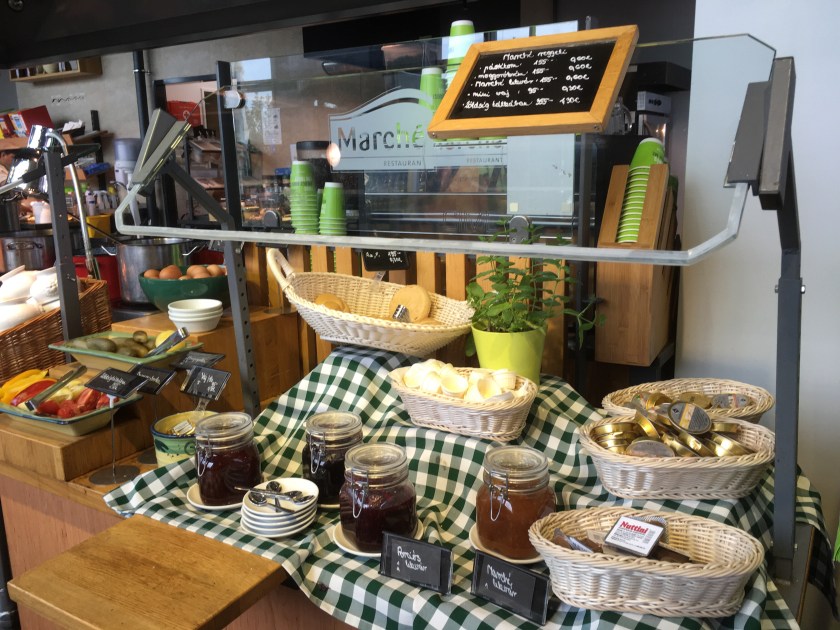
 Encouraged to use up our Hungarian currency, especially the coins, we went on a shopping spree, purchasing chocolate, candy bars, nuts- the stuff I never buy at gas stations at home. The cappuccinos weren’t bad. And we used up some forints in addition to the 100 forint receipt/coupon from using the WC.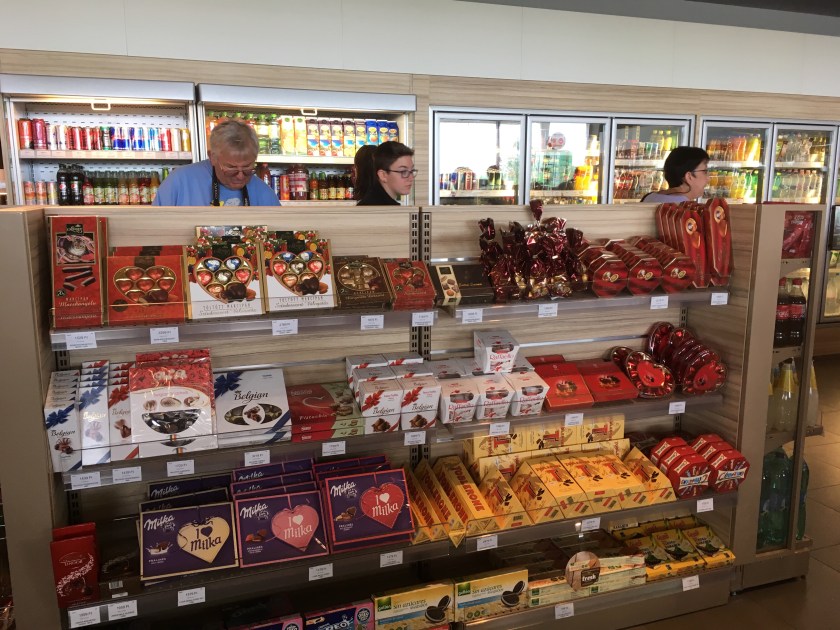
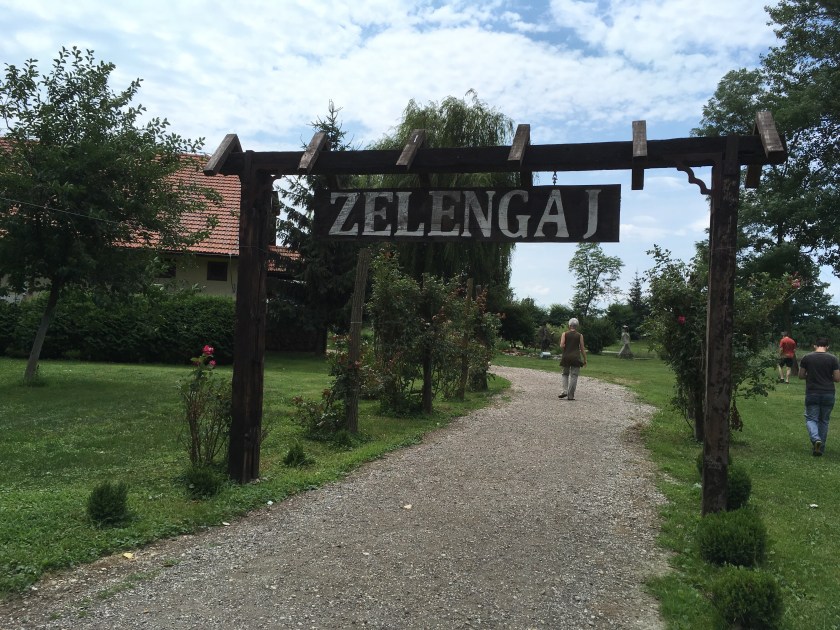
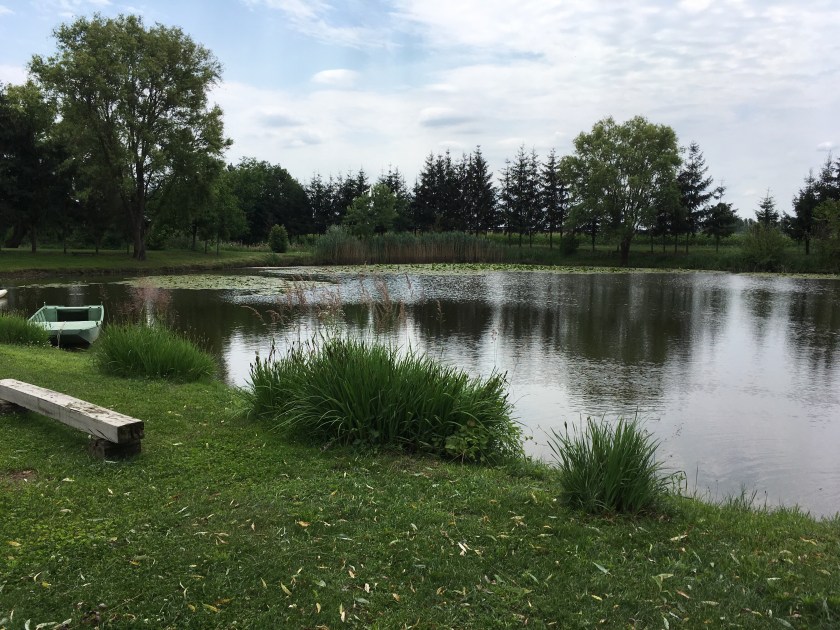
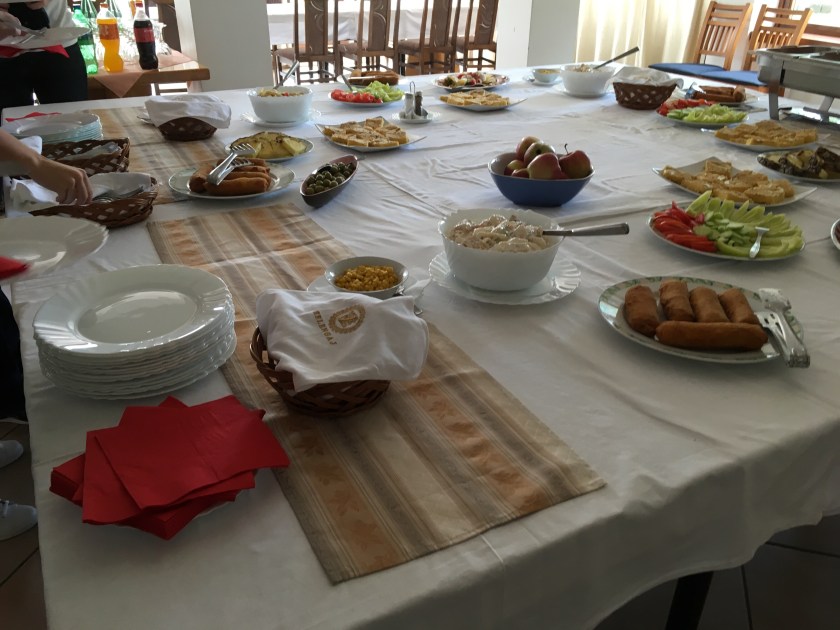
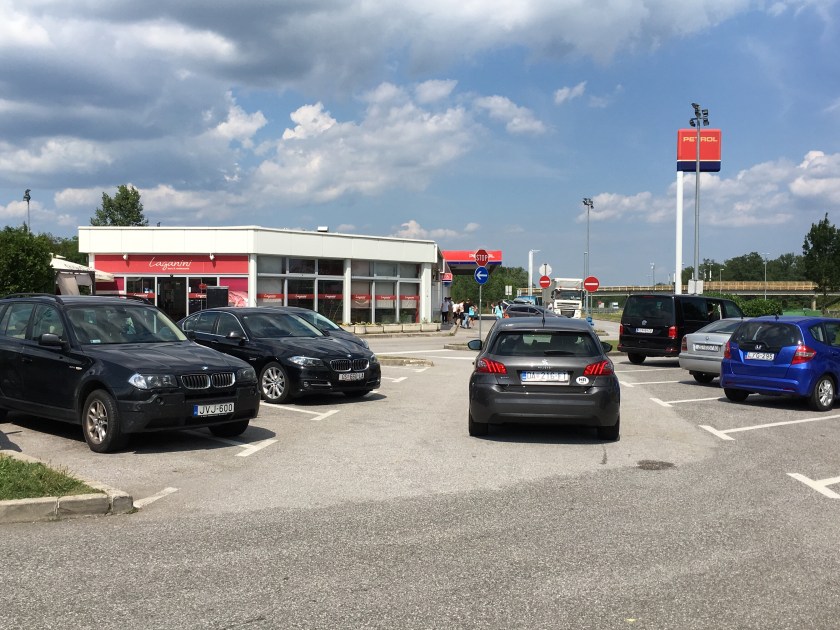
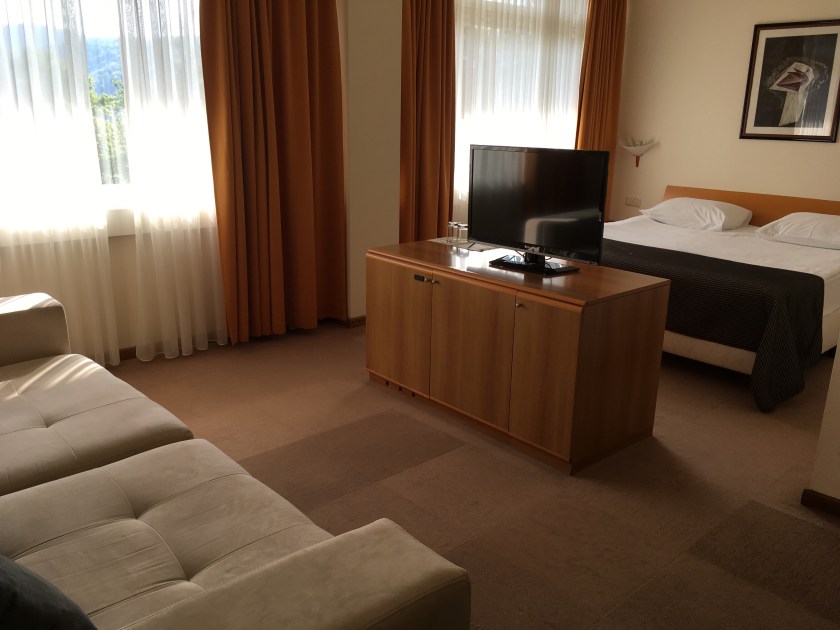 Tonight we are having a happy hour prior to dinner. The agenda for tomorrow is a hike to see the waterfalls and lakes. It will be a welcome respite from the bustling cities of the first half of the trip. Stay tuned for the photos tomorrow!
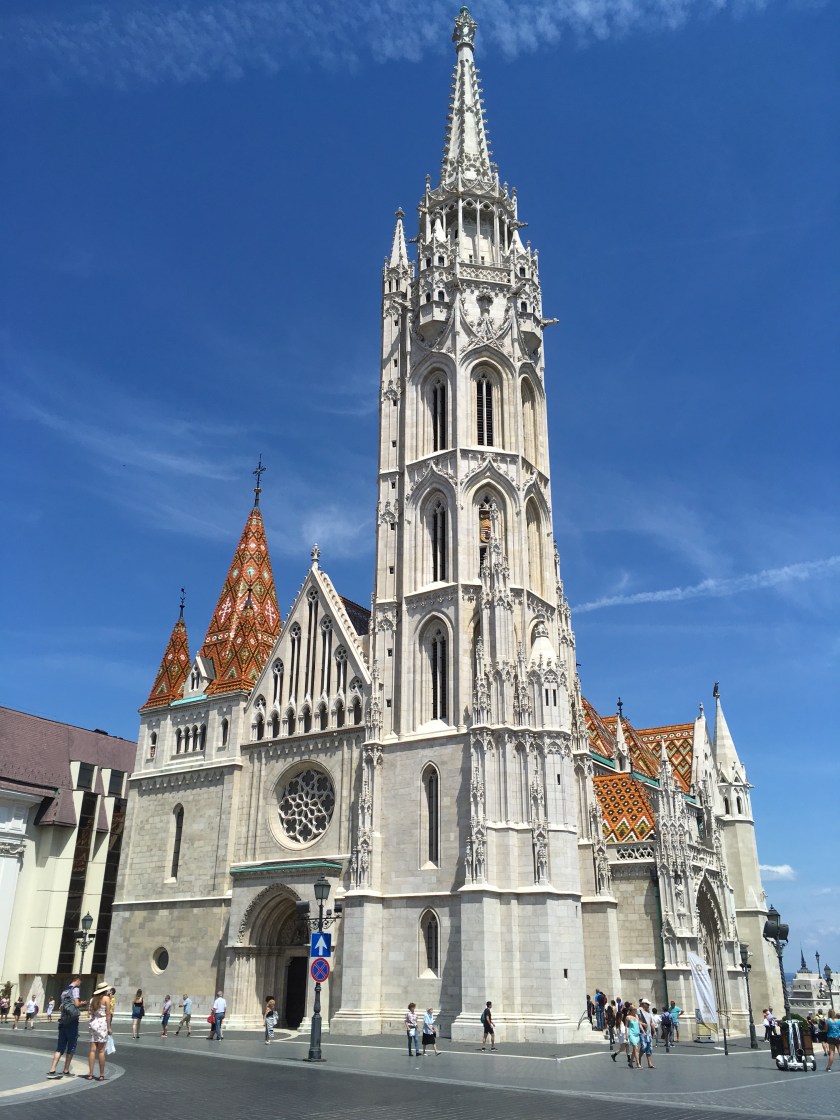
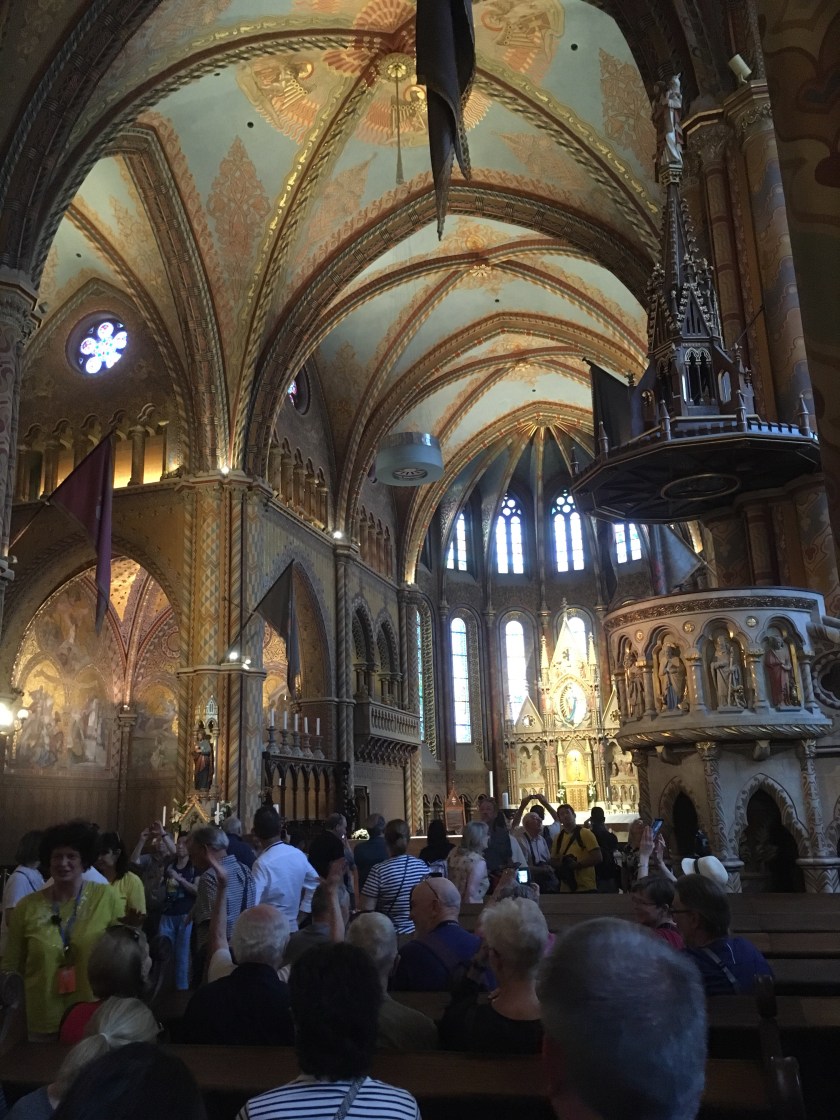
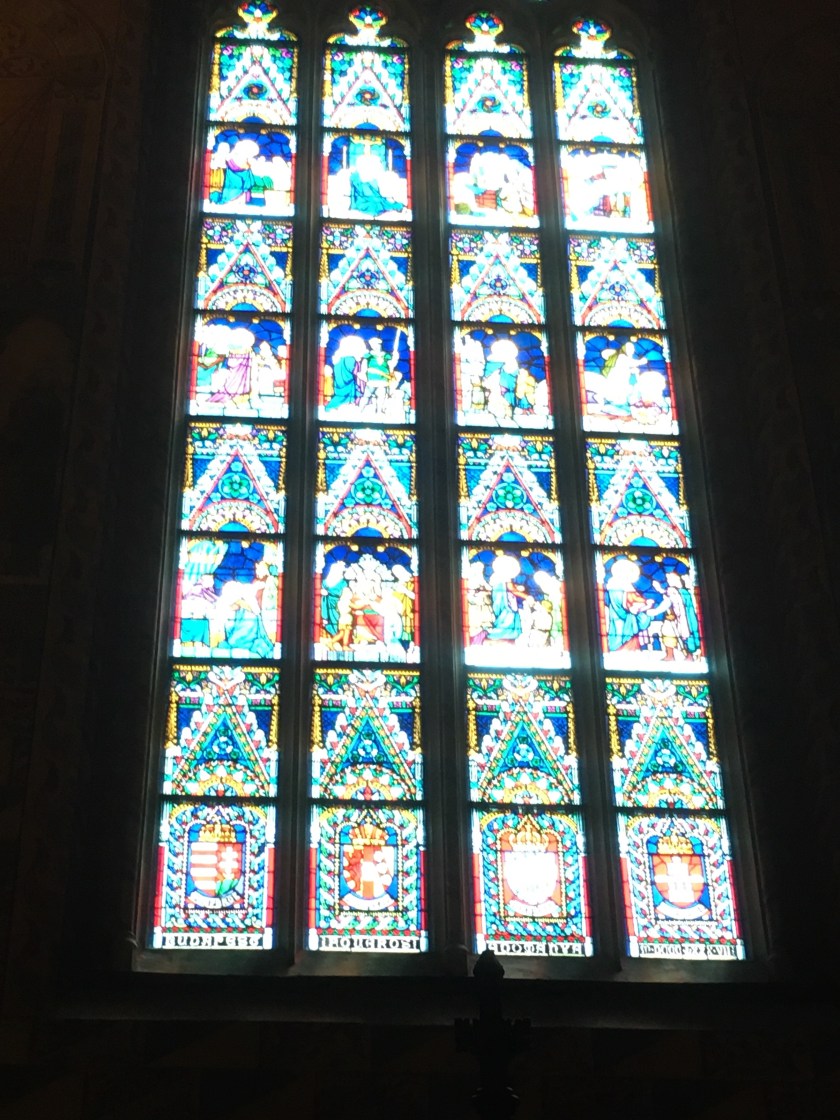
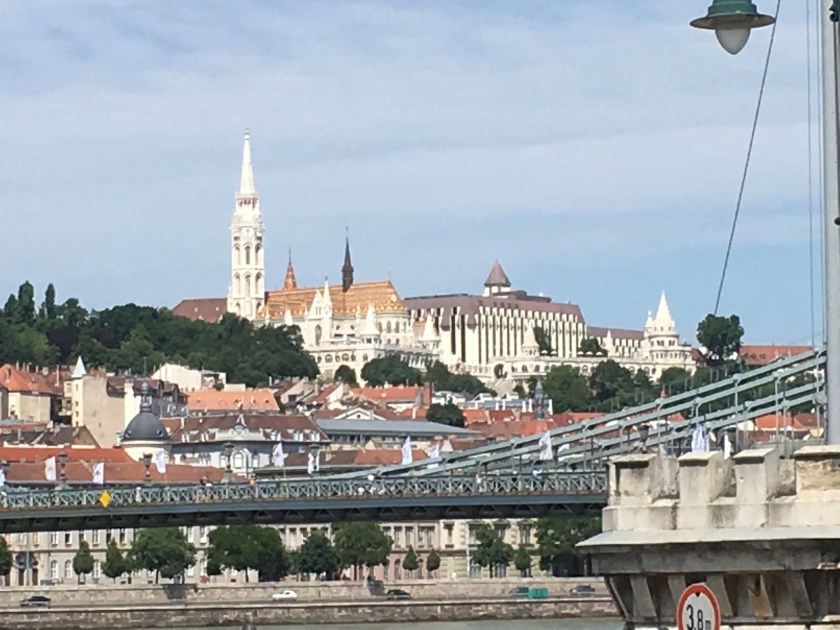 Since it is Sunday and the final destination, St. Mathias Church, is closed to tourists until after mass (1 p.m.), we had the opportunity to sleep in as our scheduled meeting time with local guide, Monika, was at 10 a.m. We walked over towards the Danube to catch the #2 tram to the Chain Bridge.
 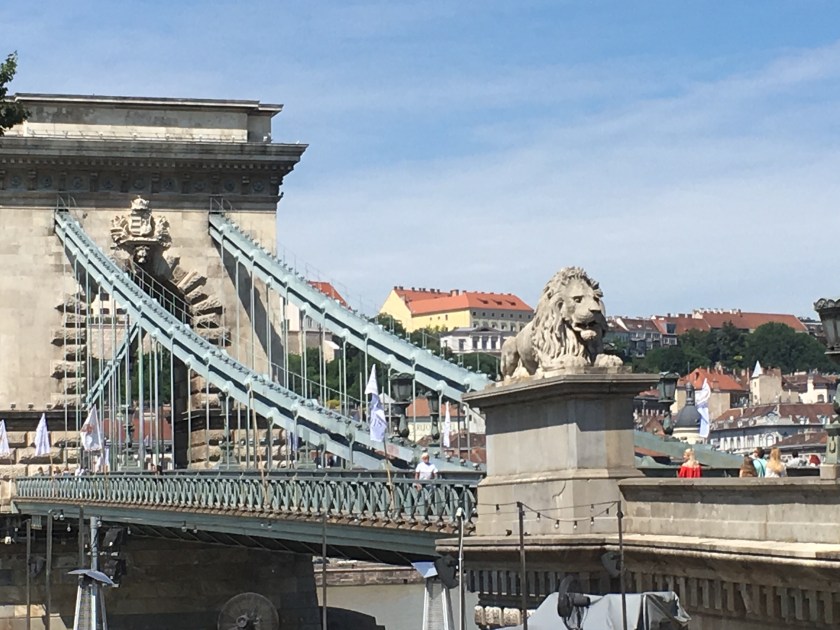 This bridge was originally built in the 19th century because a rich nobleman could not cross the river to attend a funeral as there were no bridges over the Danube. This one as well as all the other main bridges spanning the Danube underwent reconstruction as they were all bombed in WW2. We walked over the bridge to the funicular that climbs Castle Hill.
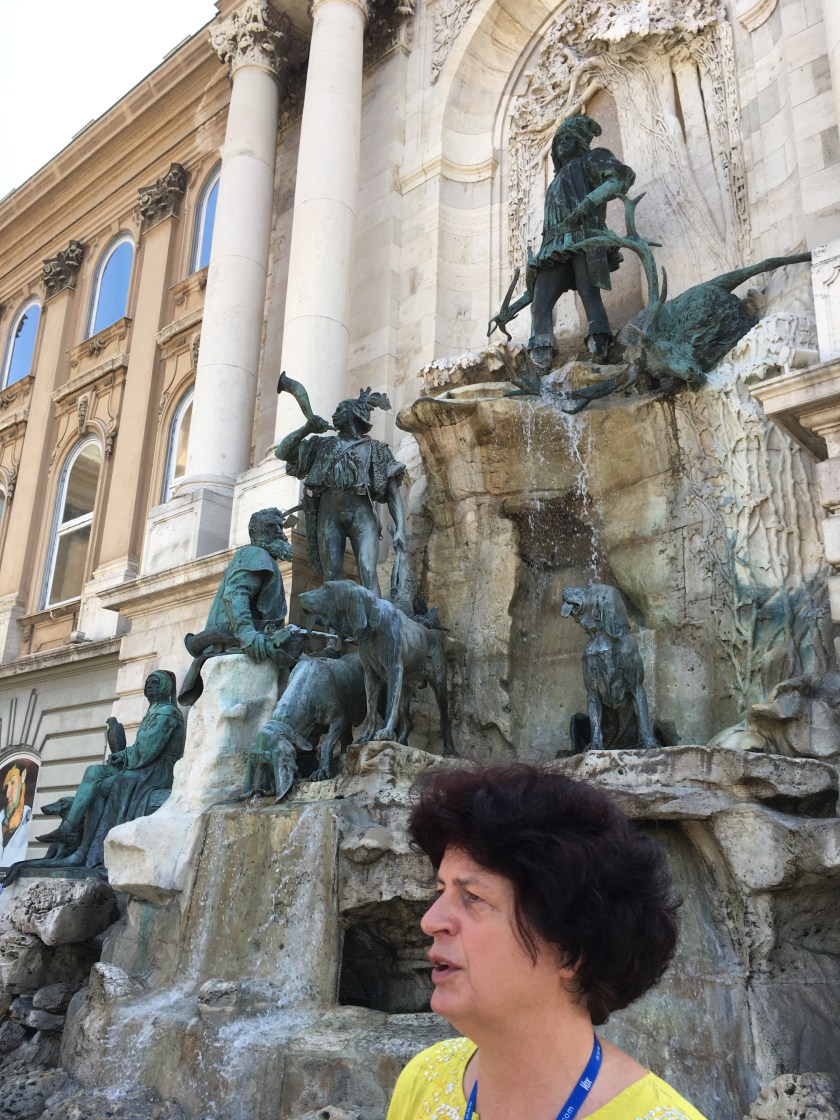
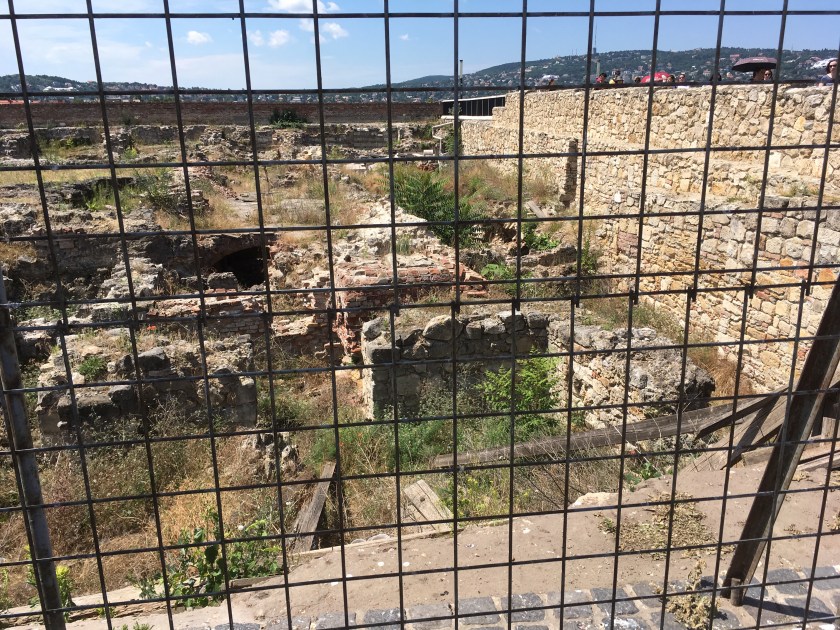
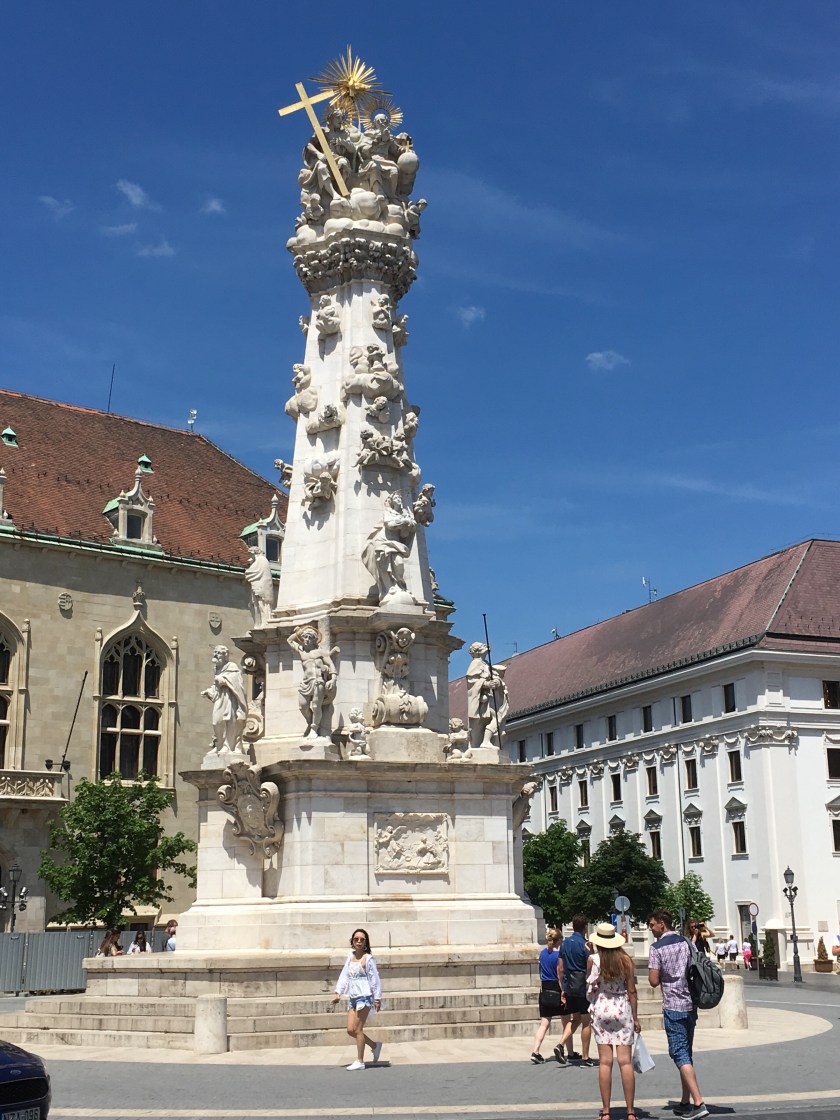
 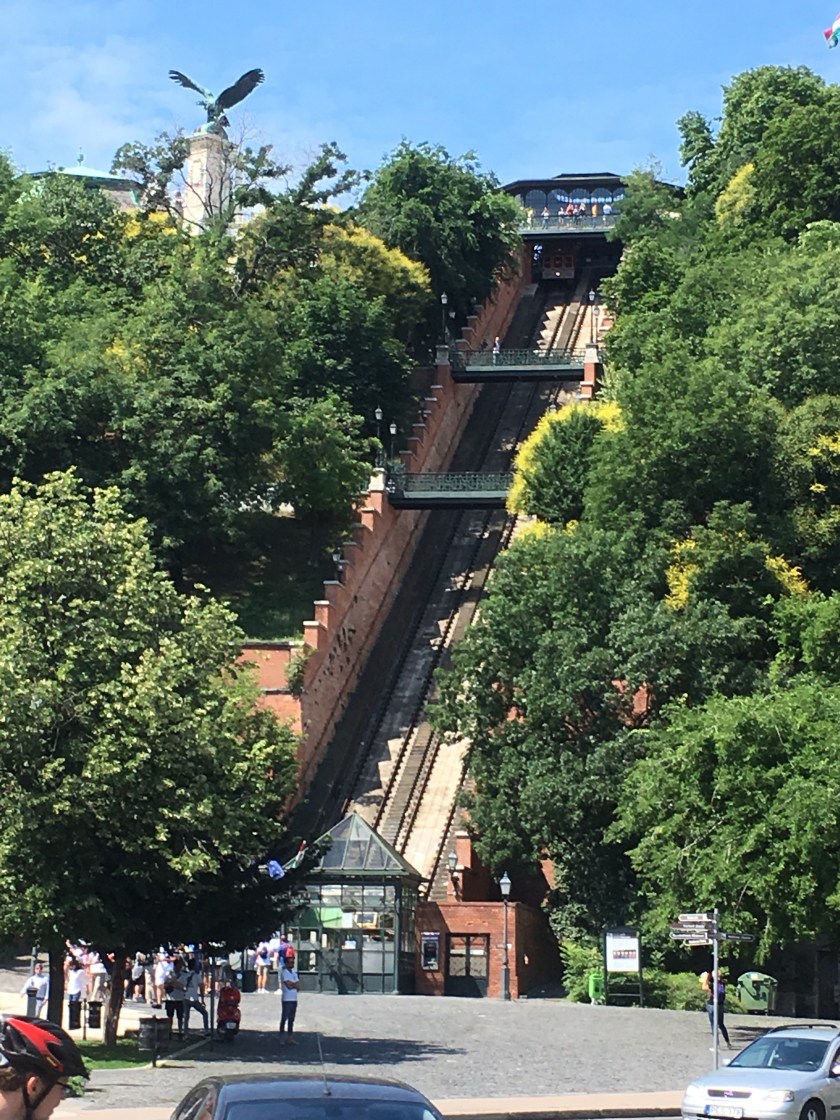 The floral display next to the incline, in Communist era, was planted with exclusively red flowers. During the Hungarian uprising, a group of students under cover of night rearranged the design. Since no flowers were damaged, they could not be charged with vandalism. We rode up the incline to the top of the hill/mountain that overlooks the Danube and the bustling (and flat) city center of Pest.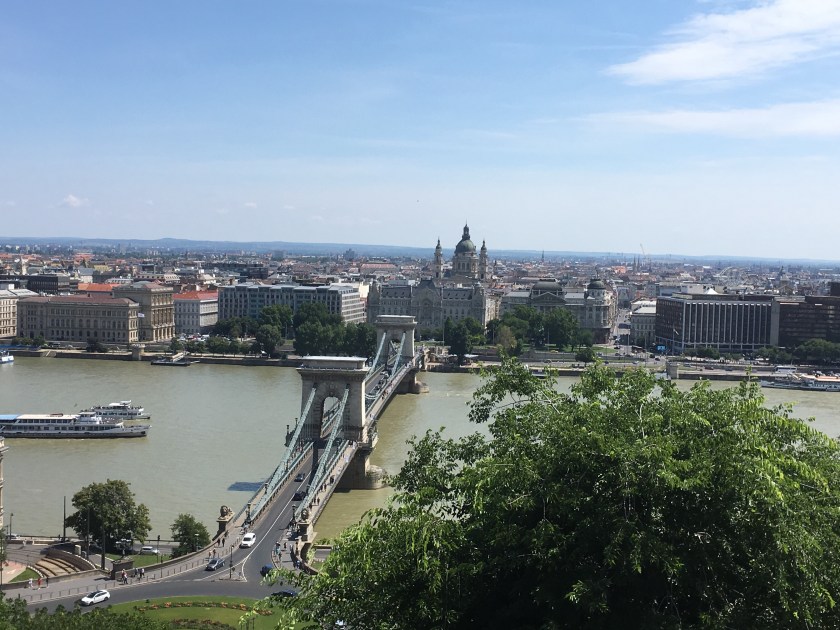
 Camino Musings