We are back in Italy, for me a year after my one-month stay in Salerno to study Italian but after a 20-year hiatus for husband Tony. This will be an epic journey, at least in terms of complexity of the itinerary. We are spending an entire month traversing south (i.e. bottom of the “boot”) Italy and Sicily. It will be a mishmash of independent travel, an organized tour (Rick Steves of PBS game) and traveling with another couple. Our stops will be Pescara (Abruzzo region, but on the Adriatic coast, not the mountains), Lecce and environs (in the Puglia region in the “heel” of the boot), a lot of Sicily (birthplace of my mother) and, of course, the eternal city of Roma.
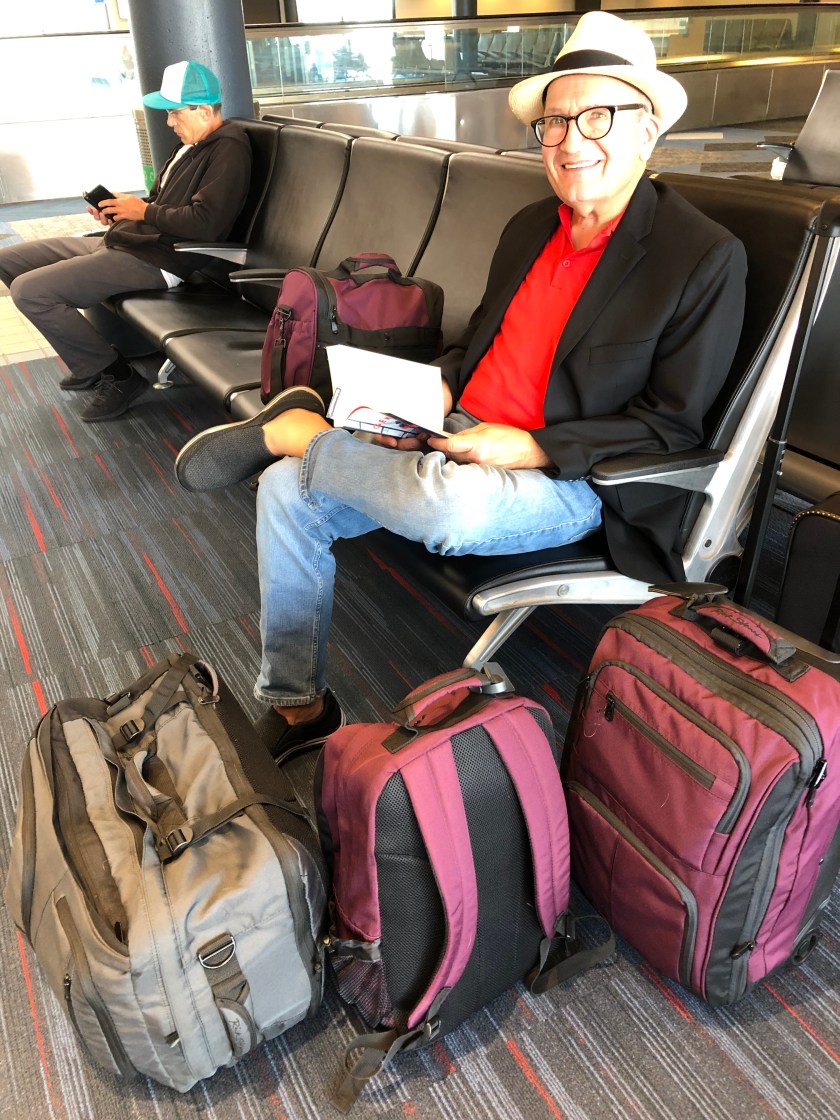
We have packed “light” for this month-long journey- two 21 inch carryons and two “personal items that fit under the seat”, at least theoretically fit under the plane seat. In our case, since we had bulkhead seats, everything went into the overhead bins. There will surely be a few laundromat visits in our near future!
The American Airlines transatlantic flight from Philadelphia to Rome was predictably late (by two hours), since 50% of the time it leaves late, so our “tight” connection from Pittsburgh ended up bring luxuriously loose!
Passport control at Fiumicino (officially Leonardo Da Vinci Aeroporto) was surprisingly efficient but picking up the rental car was the epitome of inefficiency. Despite the prepaid reservation made online months prior, with printed voucher in hand, one is required to take a number and join the huddled masses crammed into a space that serviced at least eight different car rental agencies – and in typical Italian fashion, the concept of a “line” or queue or any other sense of order does not exist. Bodies and luggage are strewn about, faces of exhaustion and frustration, but at least there is a coffee bar right in the car rental area to infuse some caffeine into the veins!
Once the car is assigned (after they “suggest” an upgrade from a Fiat 500 to an Audi 6 for a mere 40 additional euros per day, which would more than double the original weekly rental and would be impossible to park anywhere in the country), the next challenge is to find the car pickup area. Signs are non-existent so you wander around asking (in passable but certainly not fluent) Italian where the hell are the cars? So, about two hours after landing, we exit the rental car parking garage with our Fiat 500, albeit the largest cinquecento that Fiat manufactures (and apparently not sold in the USA as I’ve never seen one that comfortably fits two adults in the back seat like this one!).
Getting out of Rome airport was a breeze, thanks to Google maps and driving predominantly on the speedy autostrada. Sleep deprived and hungry (especially after the “gourmet” airline cuisine), we stopped at an Autogrill for a panino.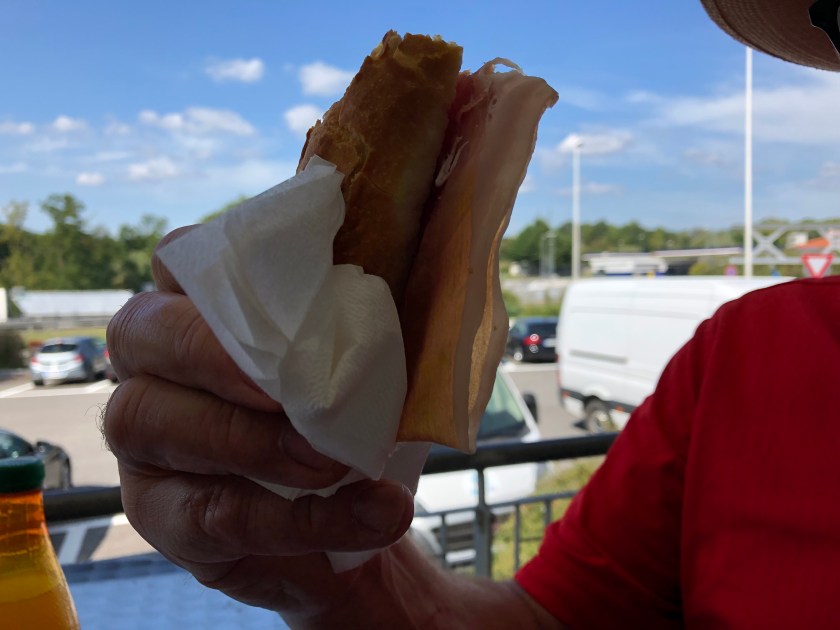
The best rest stops in the world are in Italy. Forget fast food chain burgers, Auntie Ann’s pretzels and Starbucks! At the Autogrill, one can feast on panini, pasta, the best cappuccino, and pastries as well as visiting clean restrooms, and purchasing everything from gourmet chocolate, wine, pasta, olive oil, electronics, toys for the kids, best seller novels and a six-pack of Peroni beer.
Once one cheers off the autostrada, however, driving becomes a survival skill. Narrow streets, horrendous traffic, notorious roundabouts (the dreaded “rotatorie” or as we call them “rotunda”) and the concept of traffic rules being mere “suggestions” can make even the most calm and collected drive a frazzled mess! But we made it safe and sound to Villa Ida B&B in Pescara, about 3 hours later.

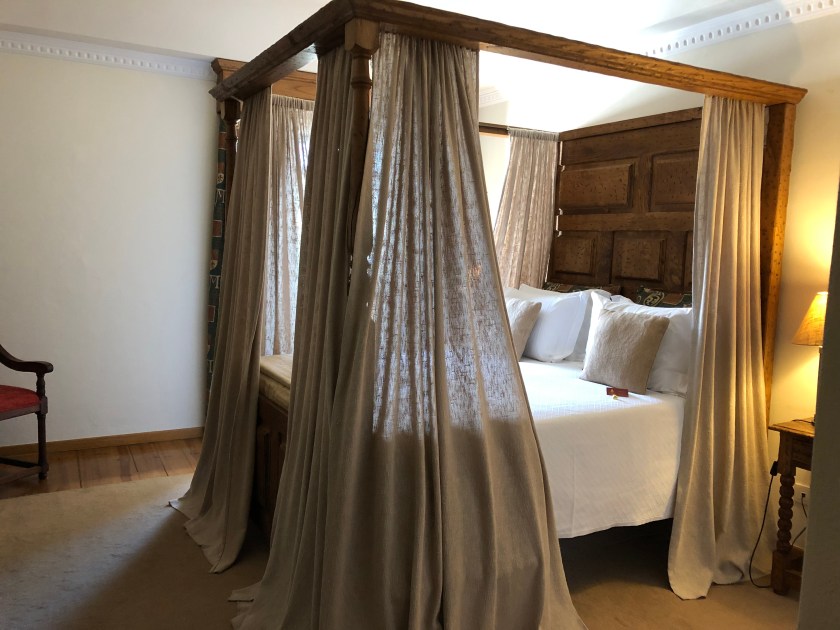
It’s located close to the center of the city, two blocks from the beach and in a very upscale neighborhood. There’s a courtyard in the back where we can have breakfast and the room is clean and the bed is firm yet comfy.
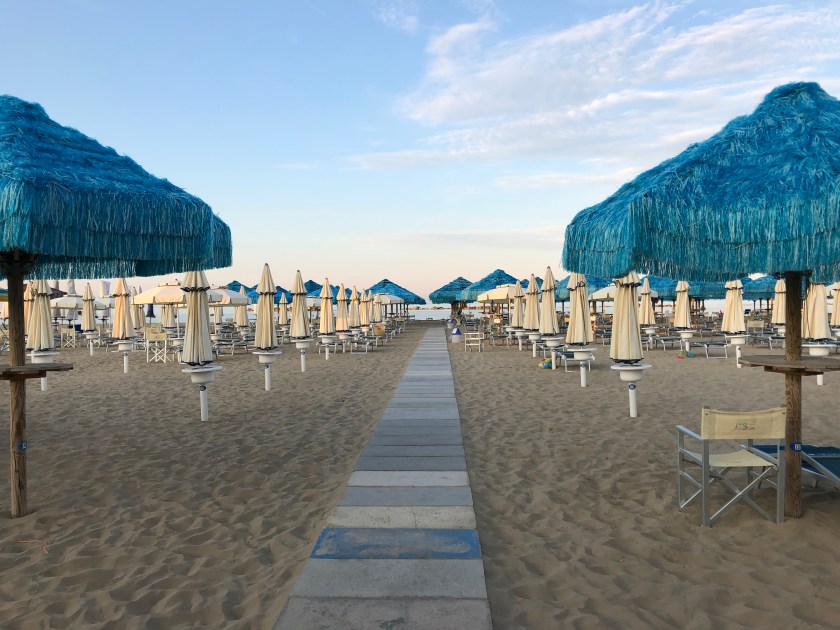
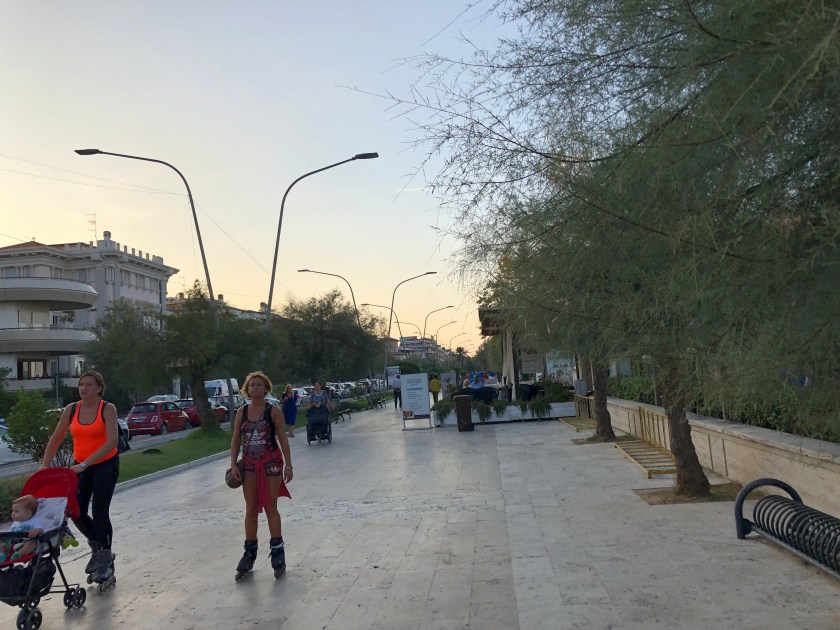
After a quick shower to freshen up, we took a stroll along the beach. It is wide and sandy and is lined by an almost never ending row of restaurants and beach cabanas. As it is the middle of September, despite the warm and sunny weather, there is virtually no one sunbathing or swimming although many are taking advantage of the pleasant weather to take their evening stroll or jog, some with the beloved dog on leash.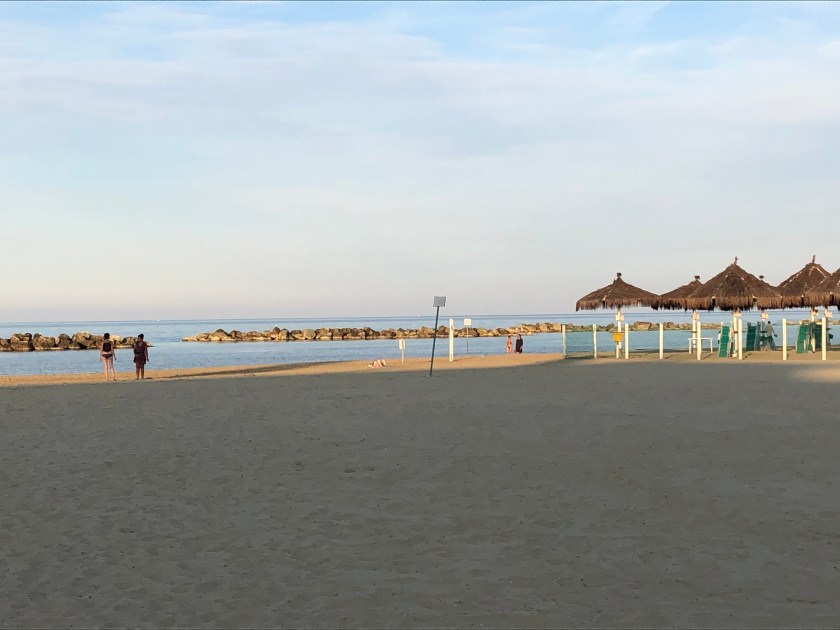
It was difficult to find a restaurant open for dinner, especially since it was a Monday. After a cool beer in one of the piazzas in the center of the city, we found The Miramar (doesn’t every beach resort have one?) had an outdoor dining area so we joined the few guests in the place. The grilled sea bream was tasty and just enough to satisfy the hunger. It was the back to the B&B by 9:30 pm for an early bedtime.






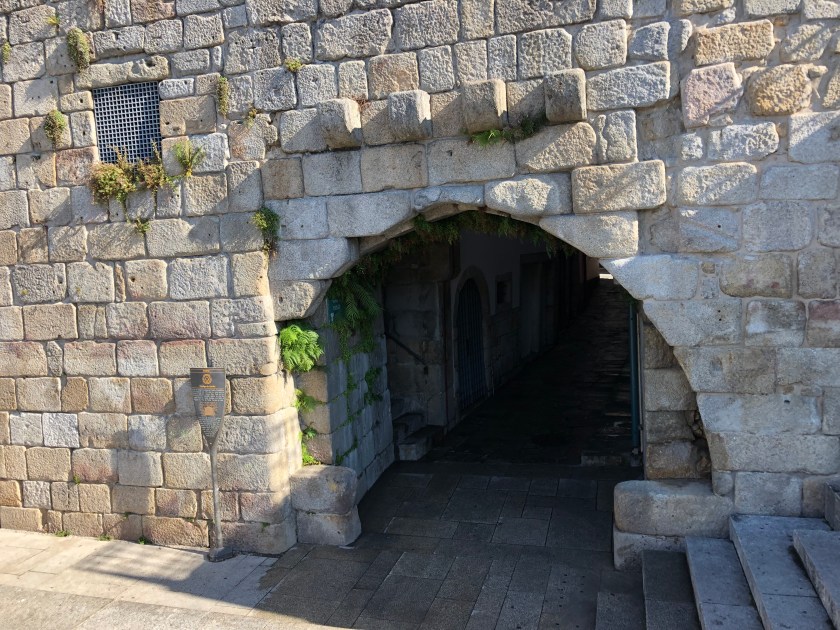
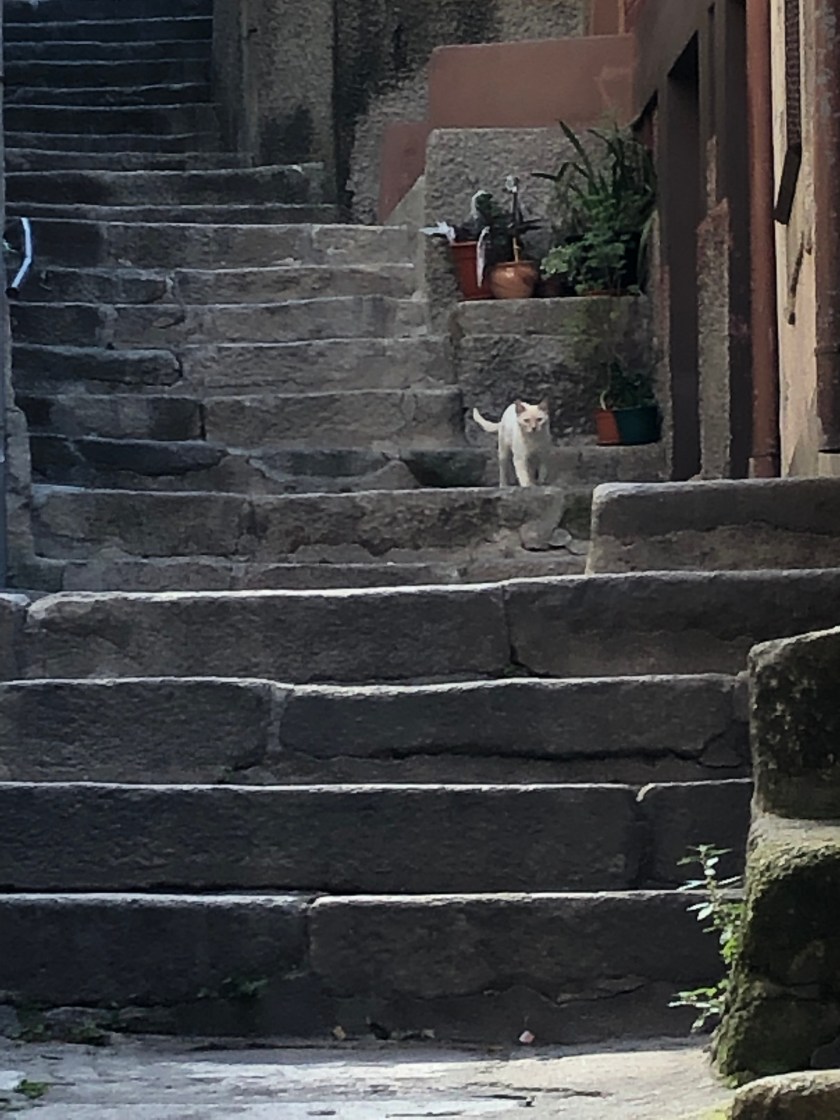

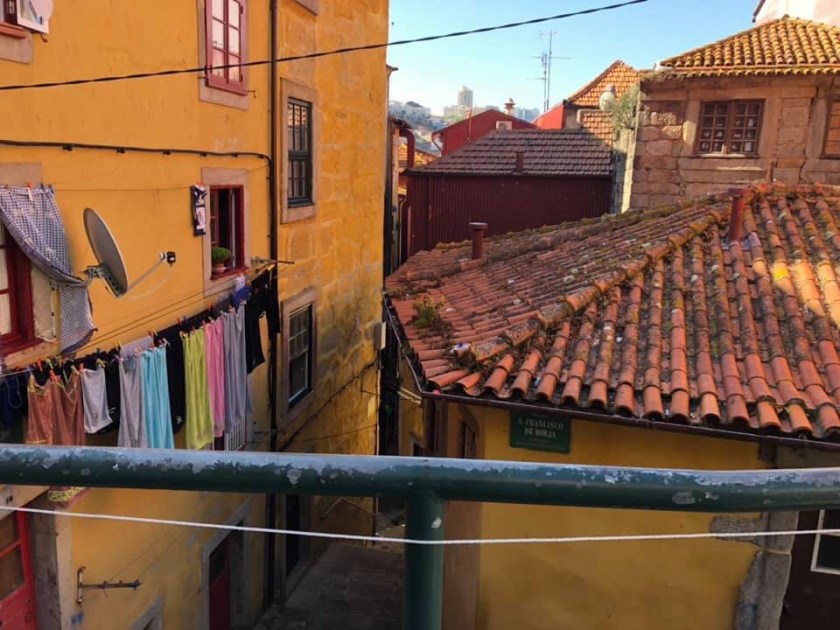
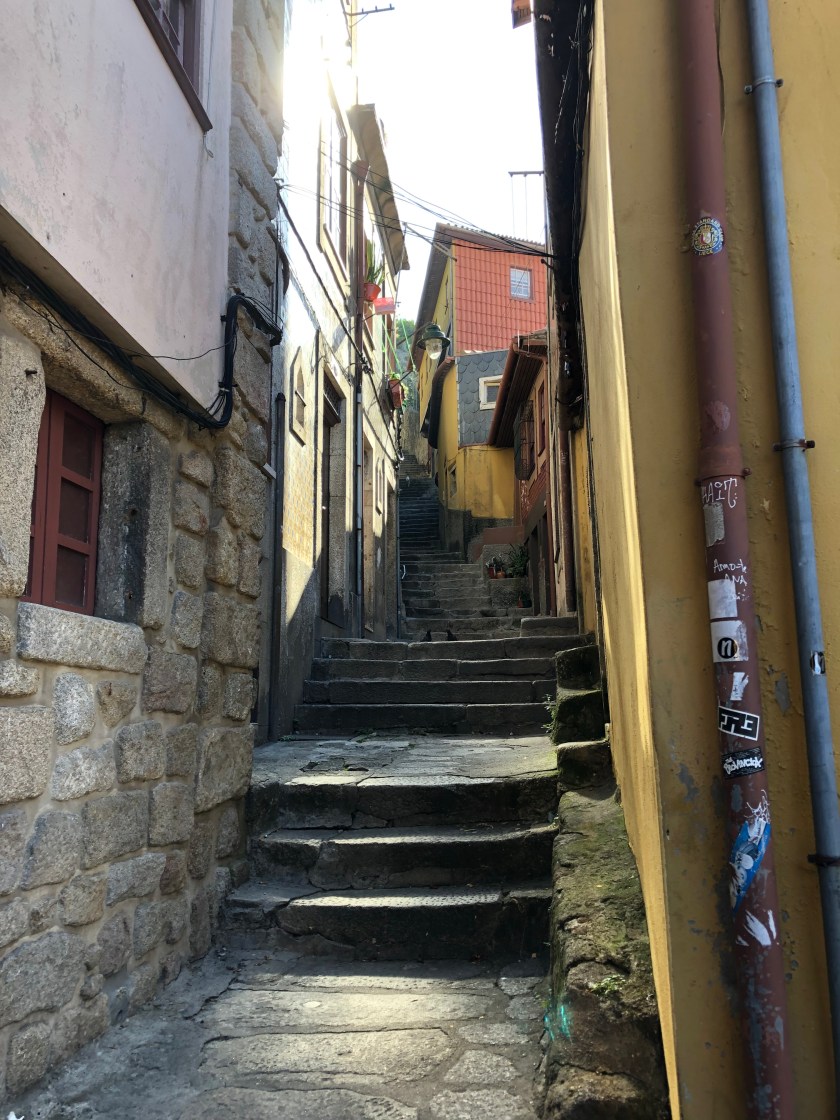

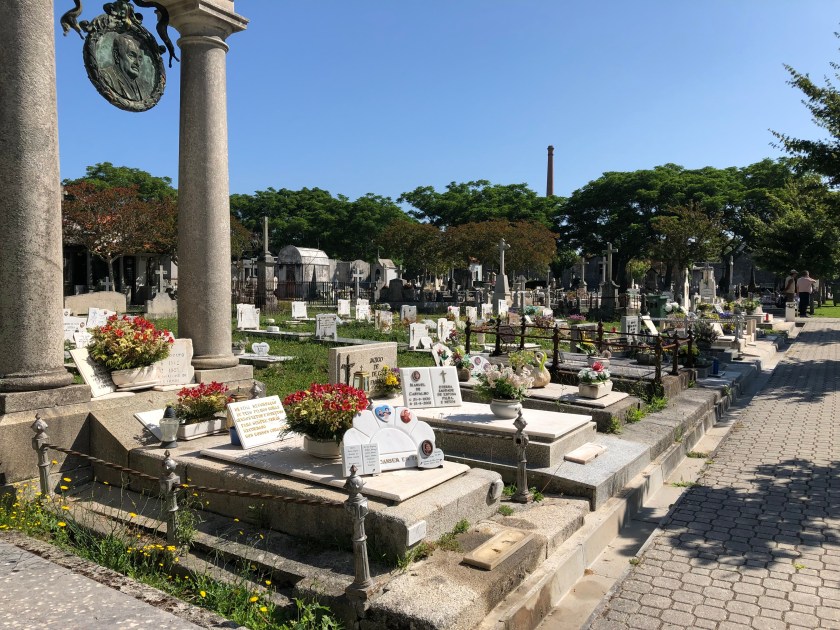

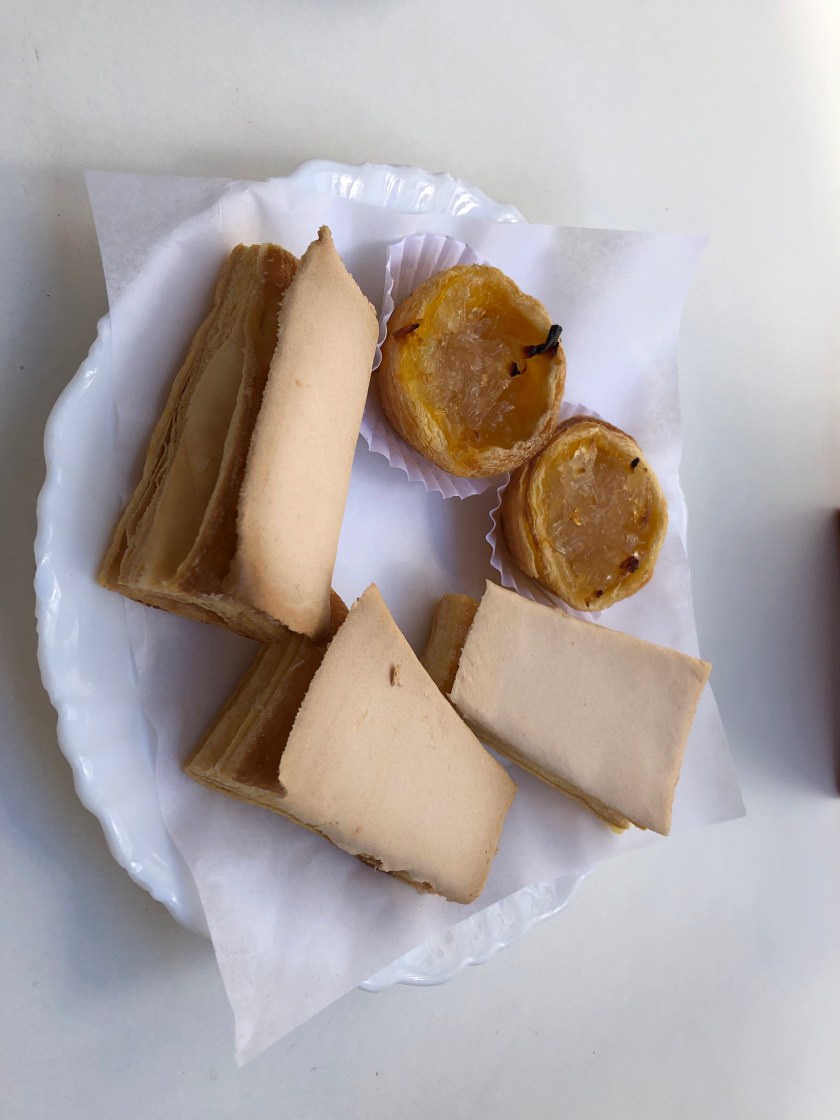 He had a little surprise planned! We strolled over to see the first library in Portugal- the national Library is located in a previous convent that was taken over by the government in the 1834. King Fernando II, at the conclusion of the Portuguese Civil War (absolutists vs. liberals – he fought against his brother), seized all the properties owned by the Catholic Church, closing all the monasteries (banishing the monks) and convents (confiscating them after the last nun died at each convent). All the books owned by the Bishop (and it was a pretty amazing collection), including texts from the 10th century, were seized and placed in the National Library. The remnants of the cloister can still be appreciated.
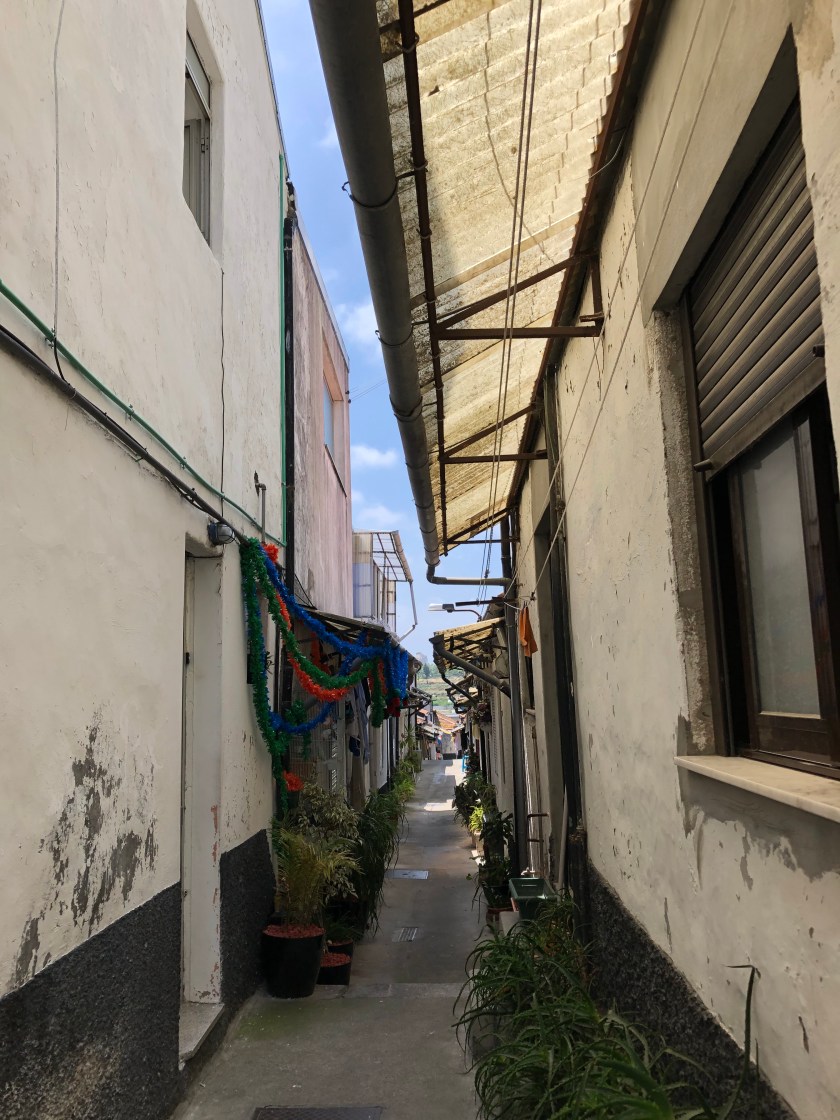
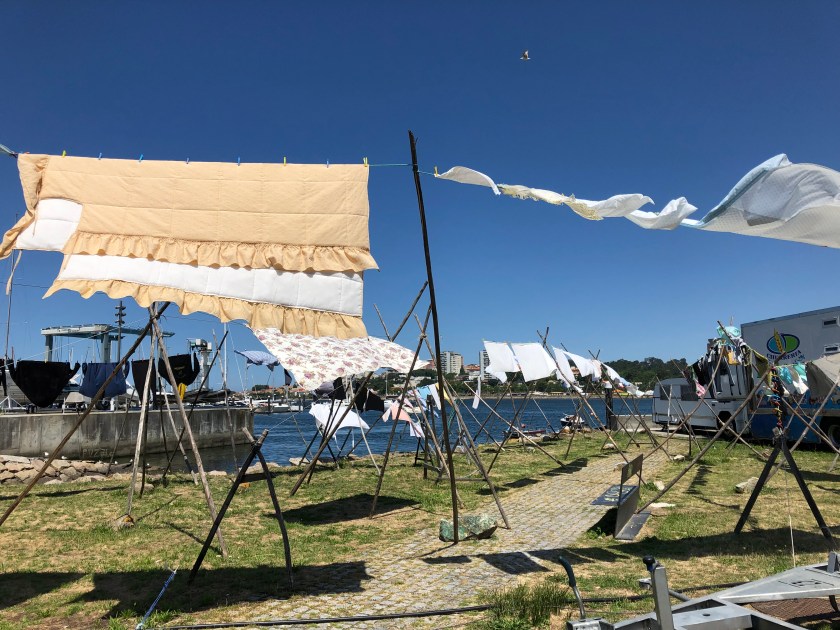 and the communal washing tubs that are still used by the inhabitants.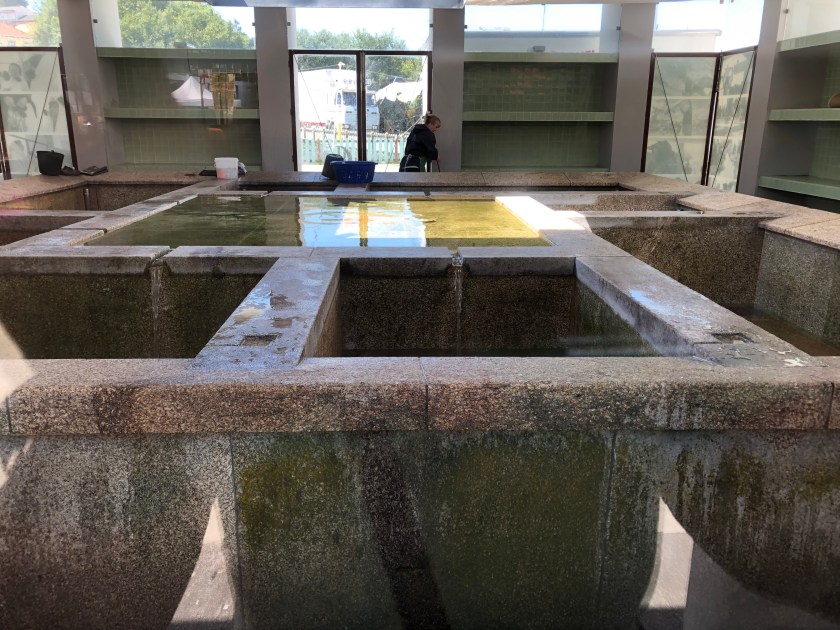
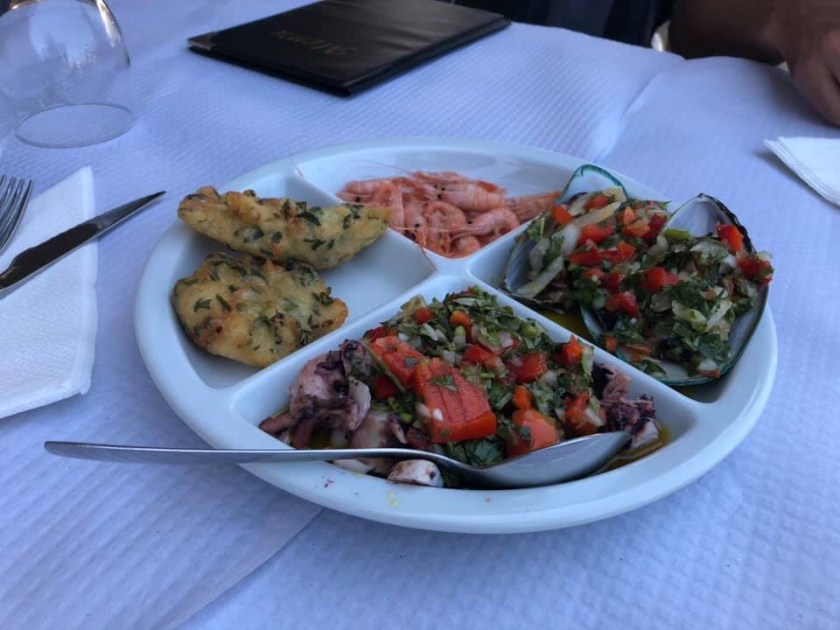
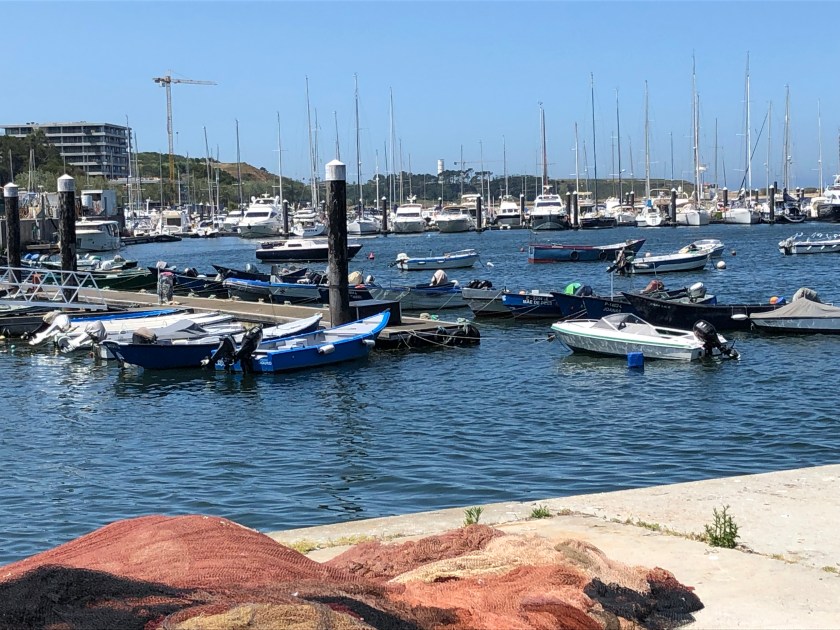 Then we joined the locals at a small restaurant that specializes in grilled fish. Ricardo has reserved an outside table! Within the hour, the place was packed. We started with a platter of starters- tiny shrimp (to be eaten shell and all), octopus salad, cod fritters and oysters with parsley and minced peppers – accompanied by a delicious rustic bread.
  Then the main attraction- grilled calamari.
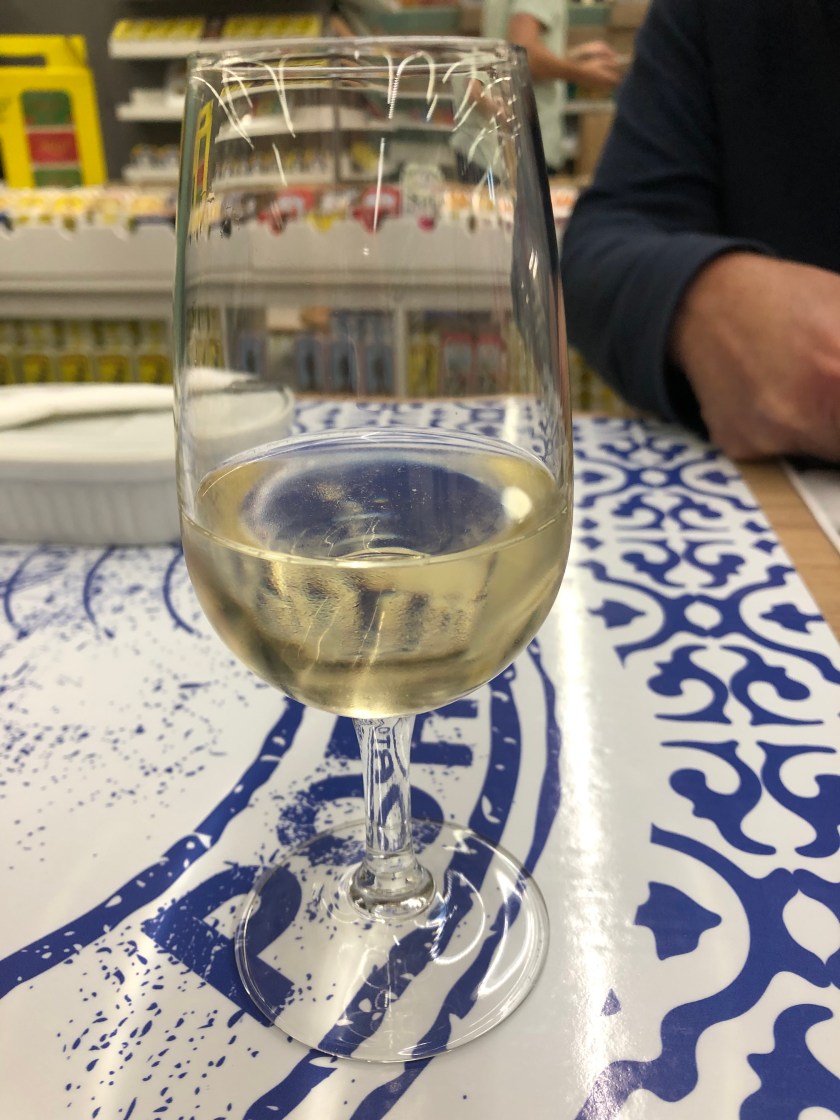
 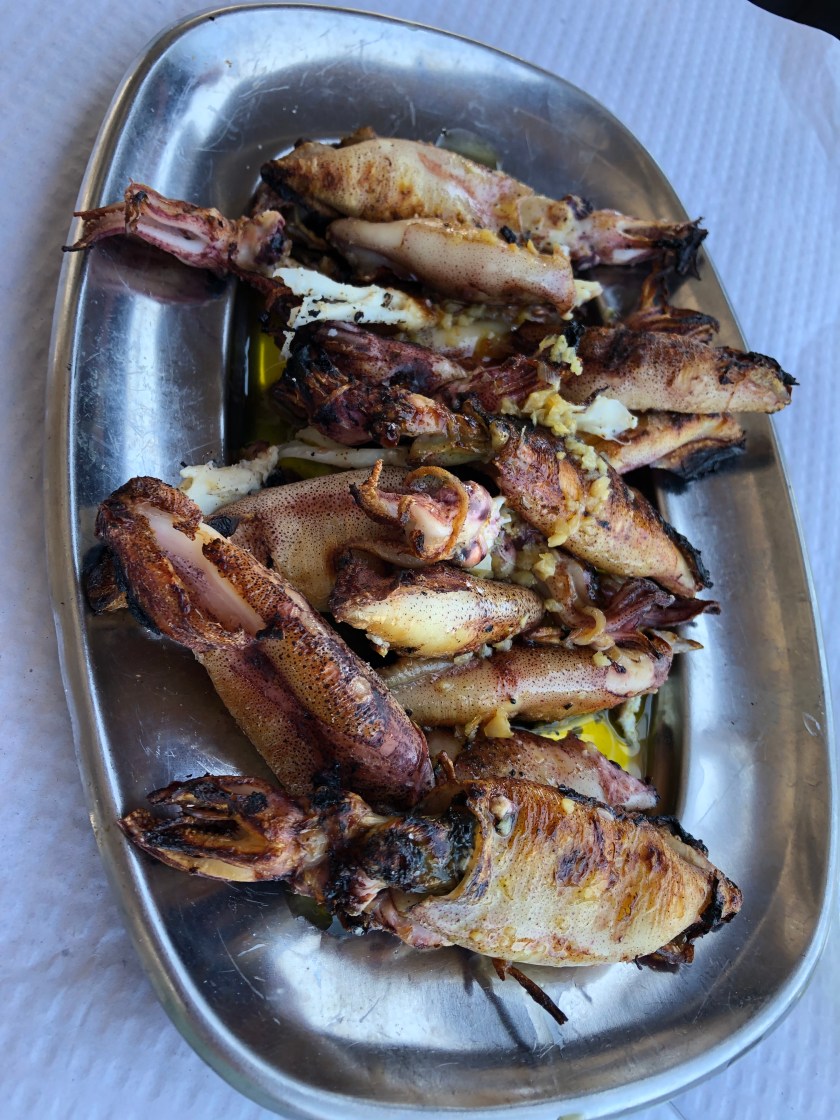 With a crisp vinho verde, this was a perfect (typical, non-tourist) meal. We then took a ferry across the river where we bid adieu to Ricardo and proceeded to the Atlantic waterfront.
 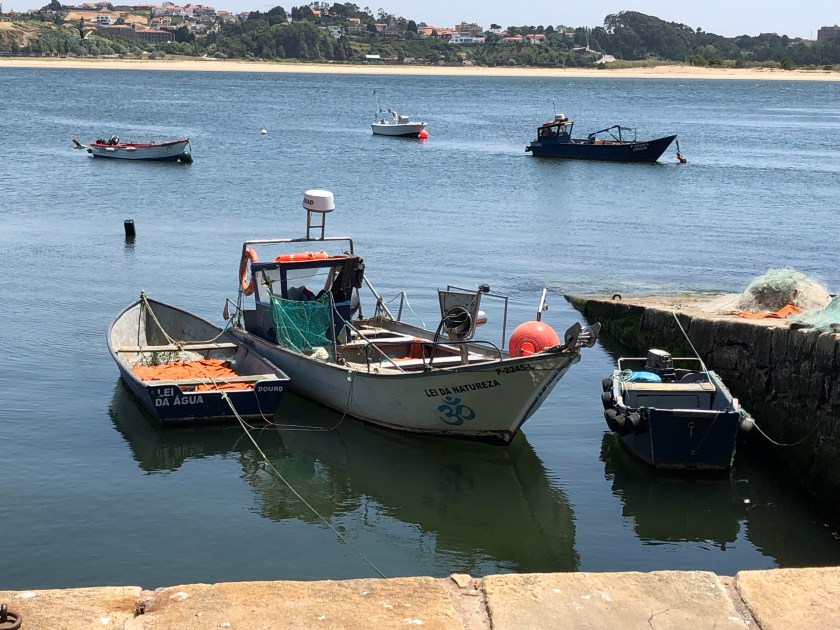 We strolled a bit of the promenade, returning on the #1 tram.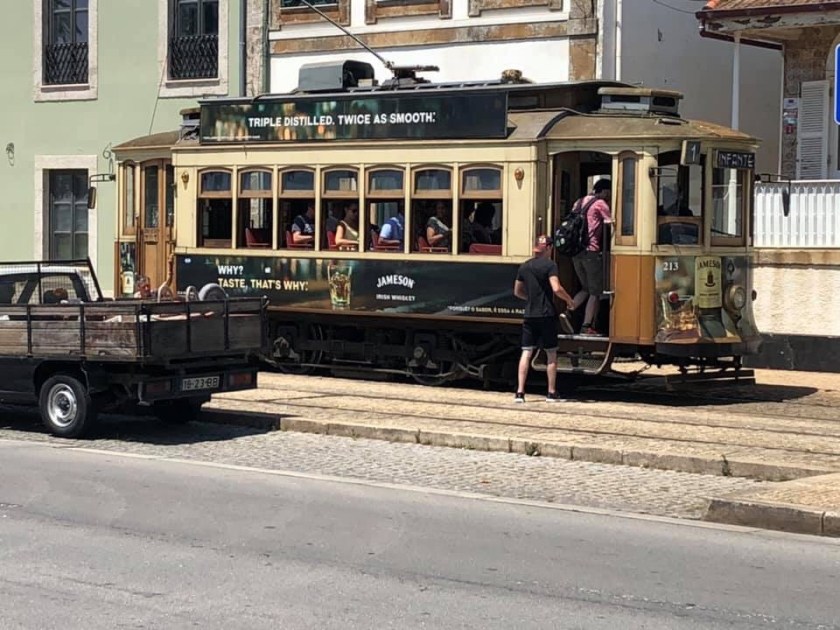
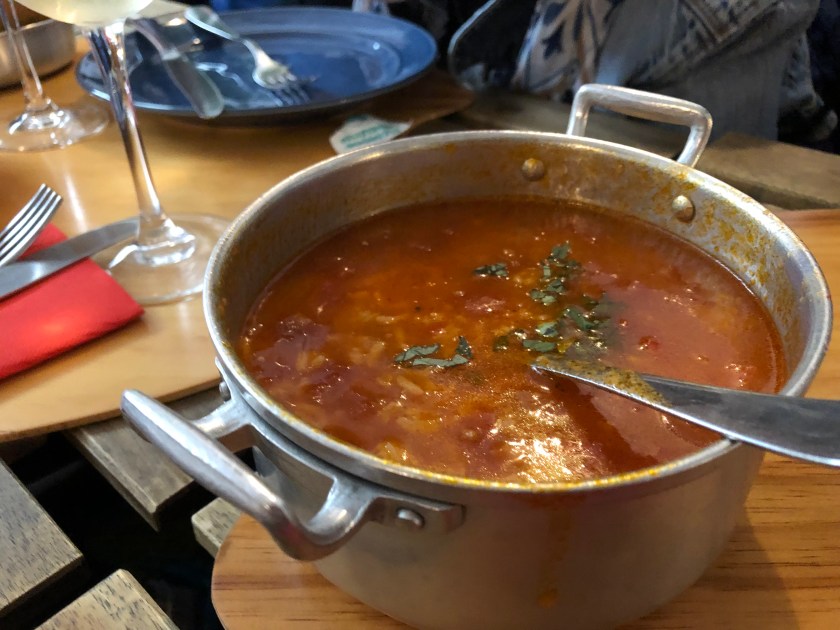
 We had grilled fish, the usual starters of cheese, bread and olives, and a lime pie for dessert. Then we took an after dinner stroll along the river before bedtime.



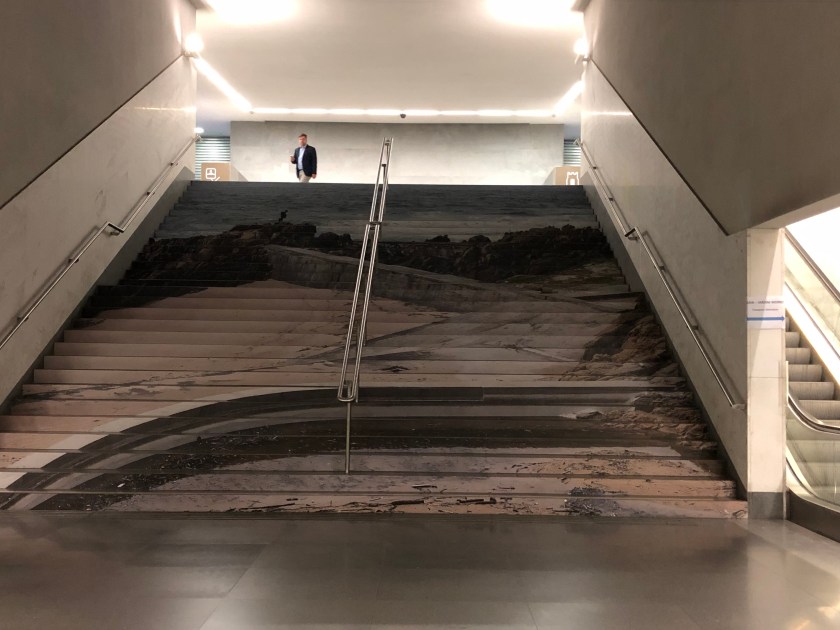







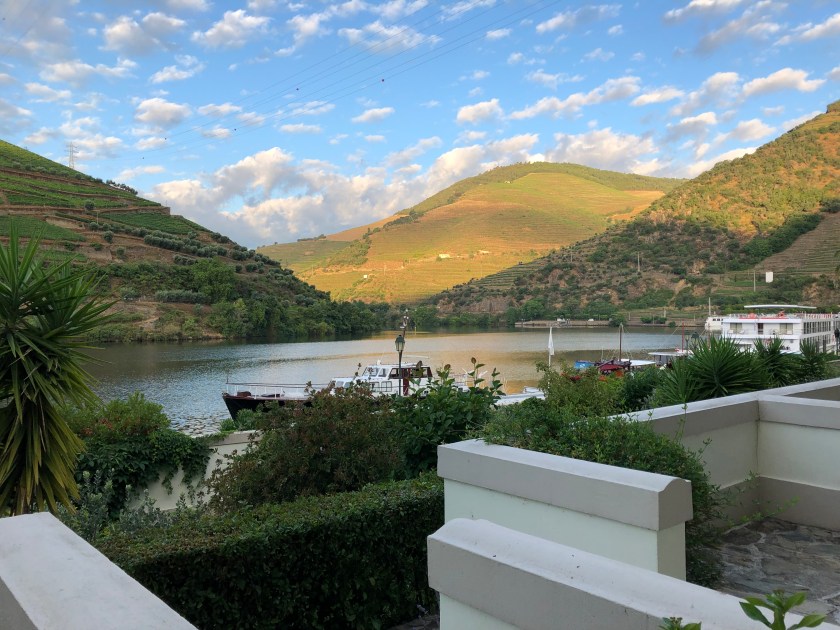 We needed to be on the road at 8 am because of traffic restrictions in the historic center that restricts larger vehicles from entering after 11am would prevent delivery of our luggage to the hotel. As soon as we exited from the 3.5 mile tunnel in the mountain range between the Douro Valley and Porto, we entered a fog bank that persisted until we entered Vila Nova de Gaia, the city directly across the Douro River from Porto.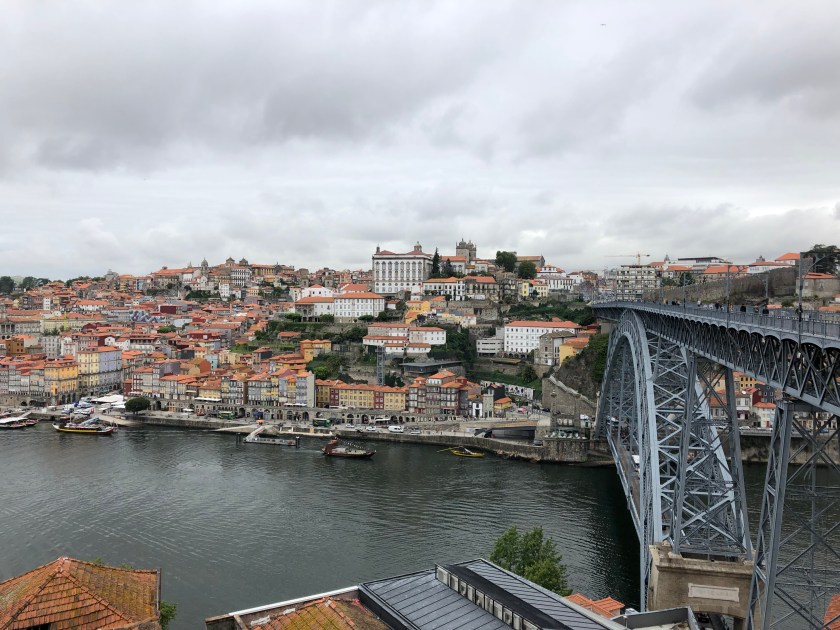
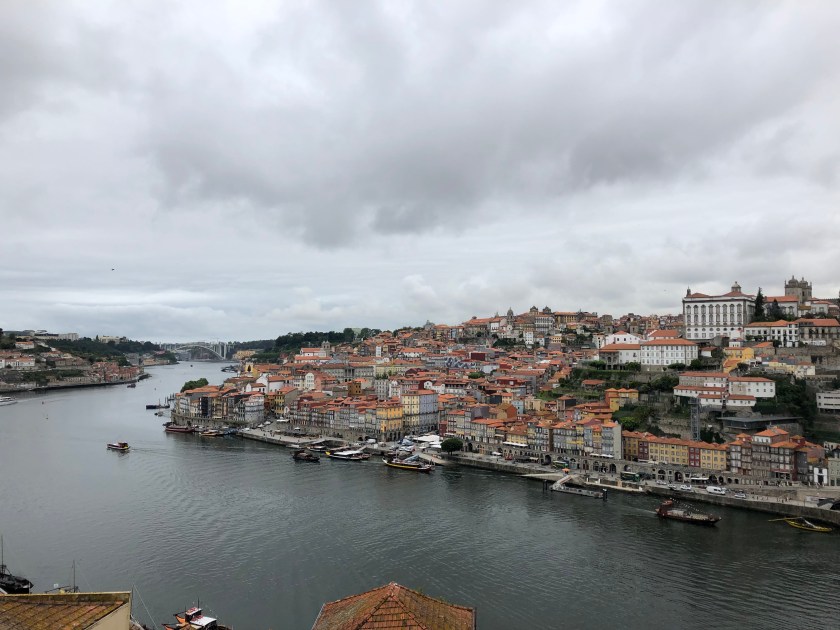
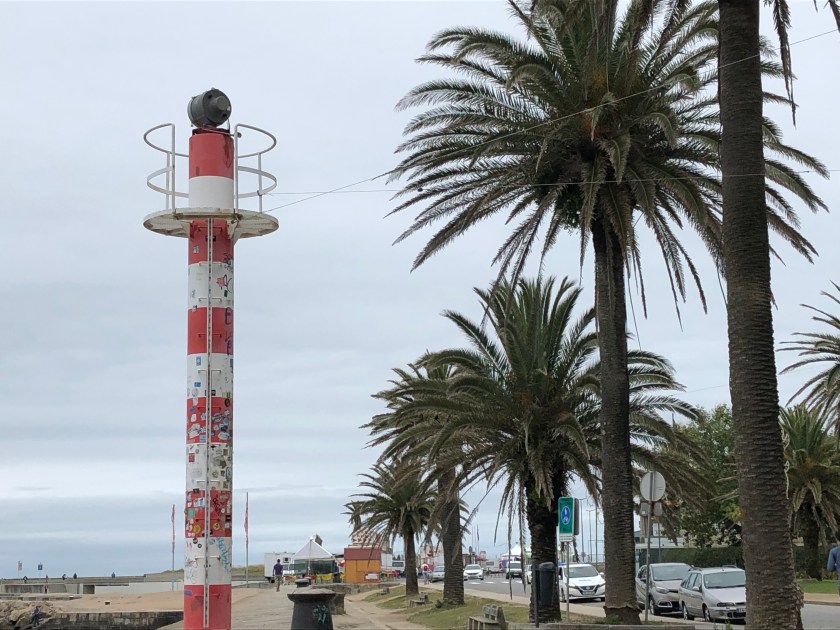
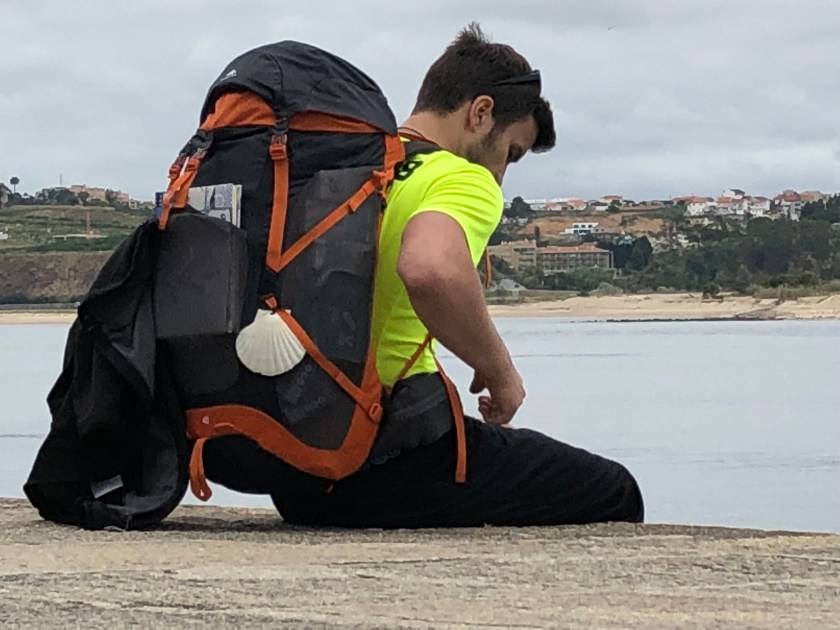
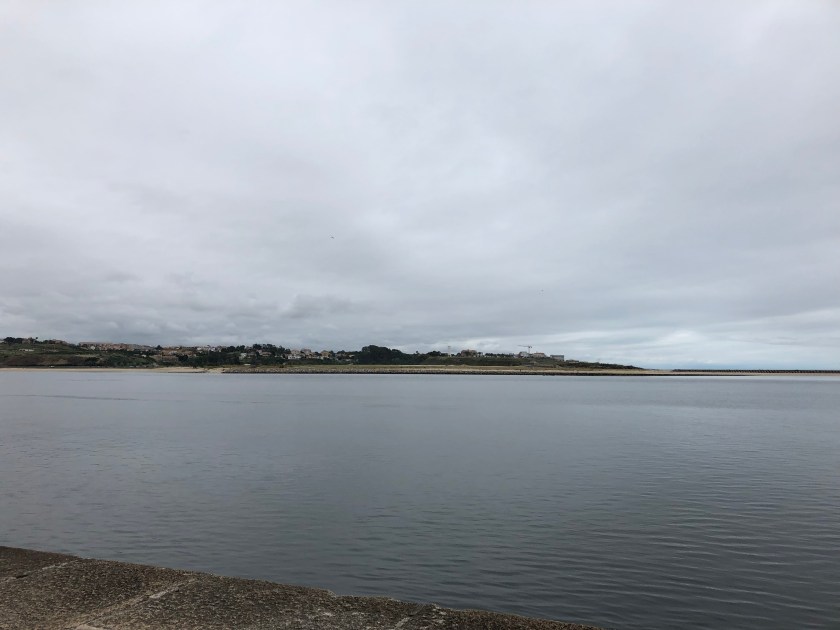 Remnants of the June 23-24 festivities for the feast of St. John could be seen in the form of closed booths and amusement rides. At our rest stop, we saw a mini golf and a Camino de Santiago pilgrim.
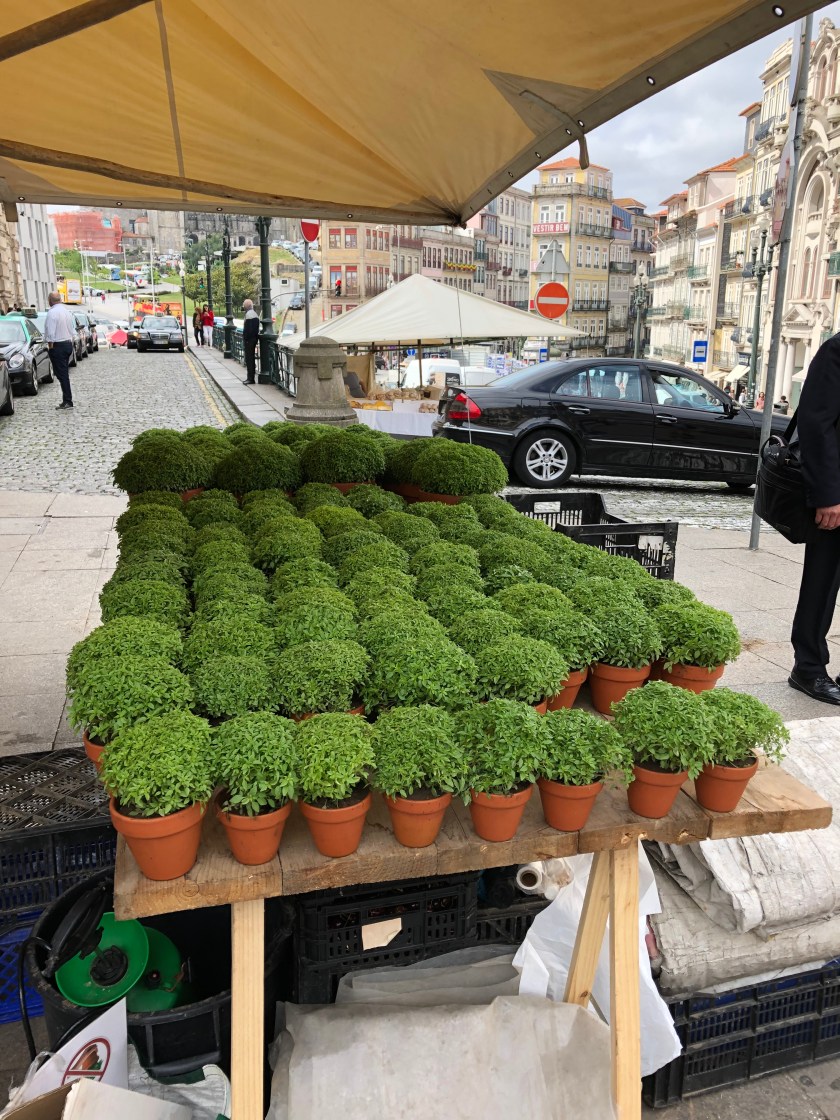
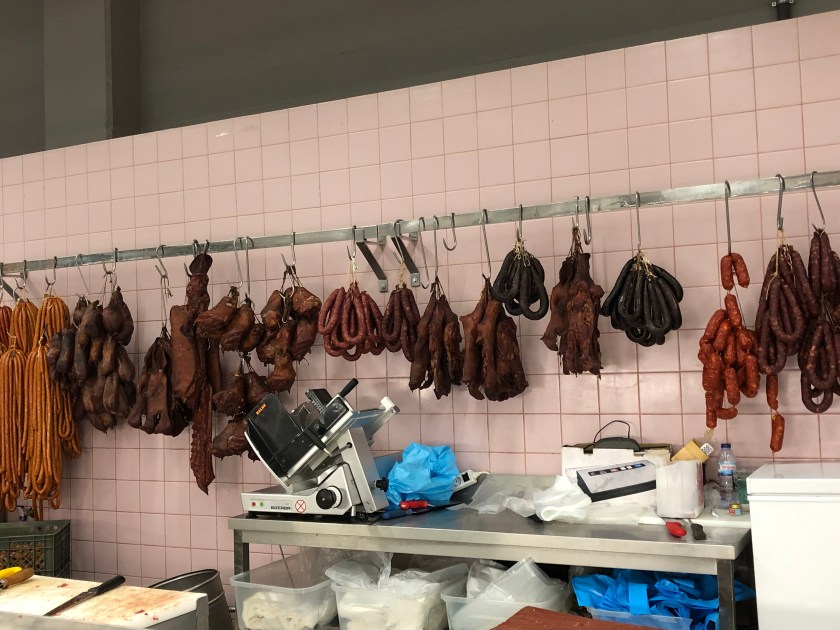
 The market is clean, bright and full of vendors.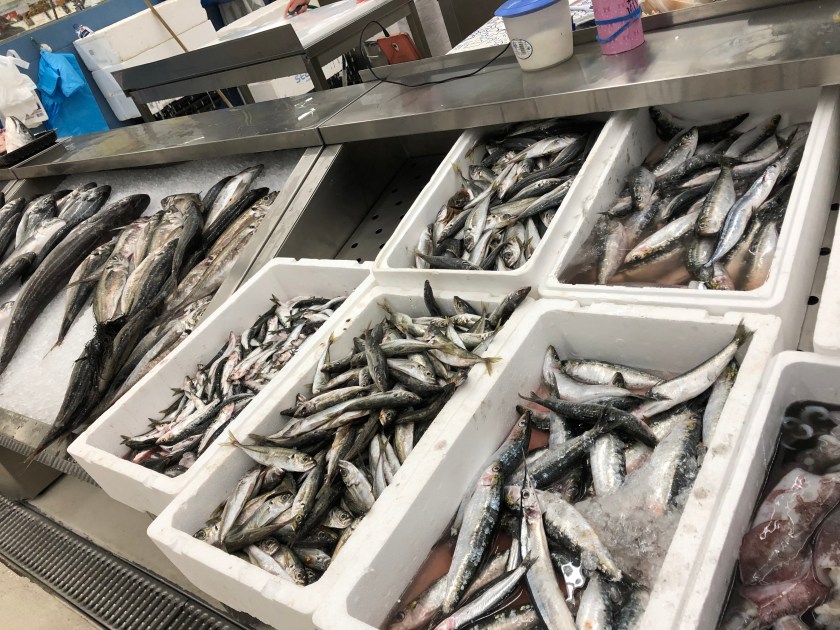











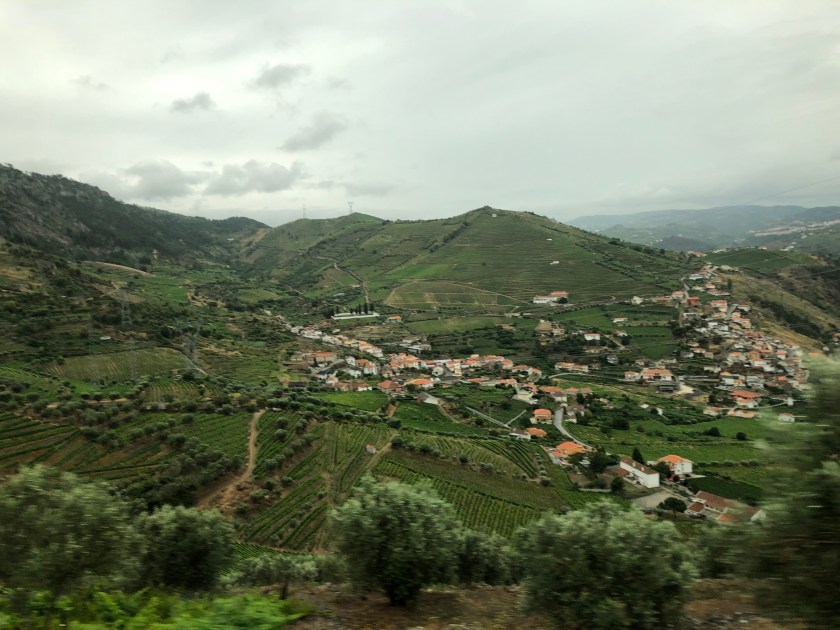
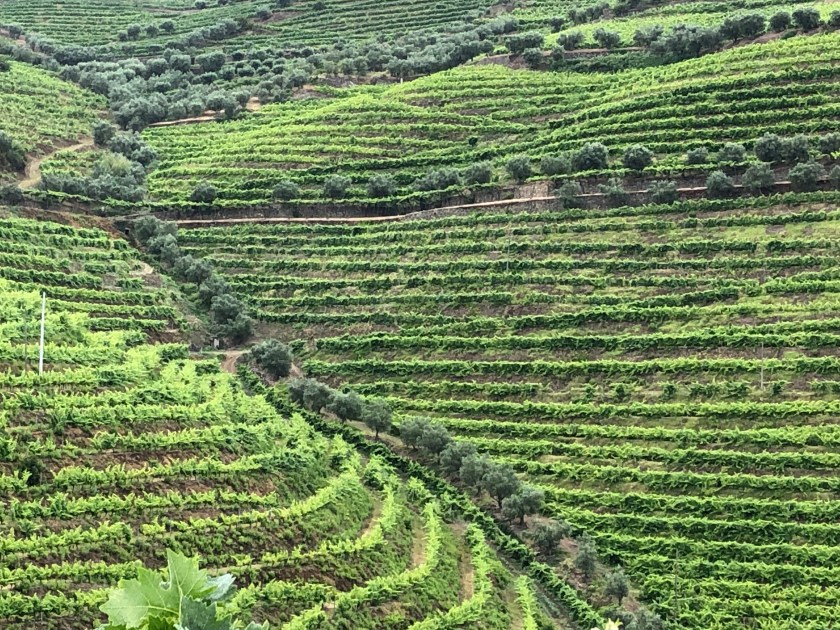 Grapes have been growing in this region since 4000 BC, and with the arrival of the Romans in the first century AD, agriculture became an important activity, with some villages dedicated to the production of wine. In 1757, the Marques de Pombal created the first regulated wine region in the world, thereby forever changing the economic situation. Evidence of this regulation can still be seen in the form of granite stone markers that demarcated the boundaries of this wine producing region.
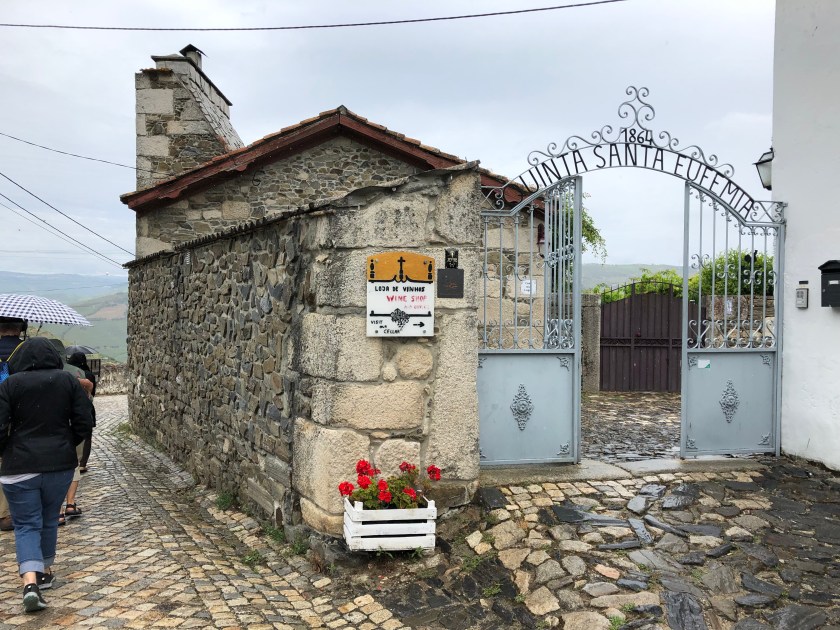 The ride to the vineyard was a serpentine narrow two lane road with many switchbacks, first uphill and then down. The remarkable driving skills of Alex, our bus driver, were certainly tested today.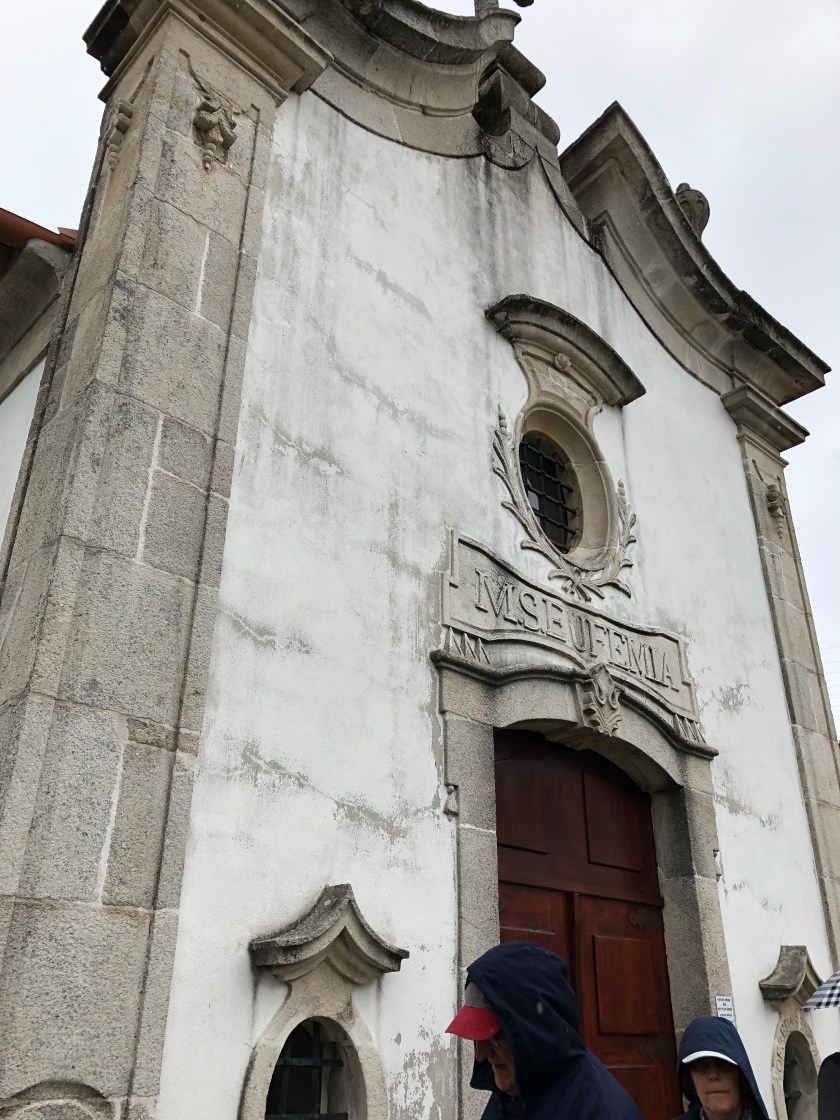
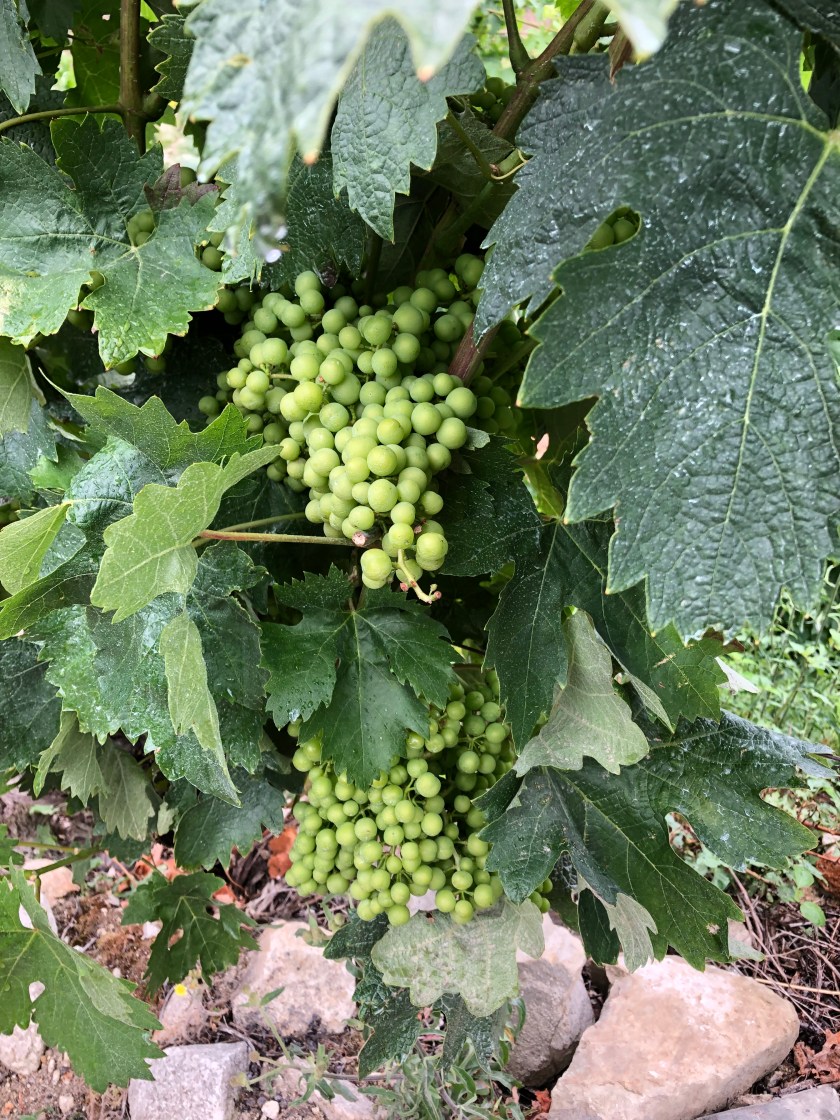
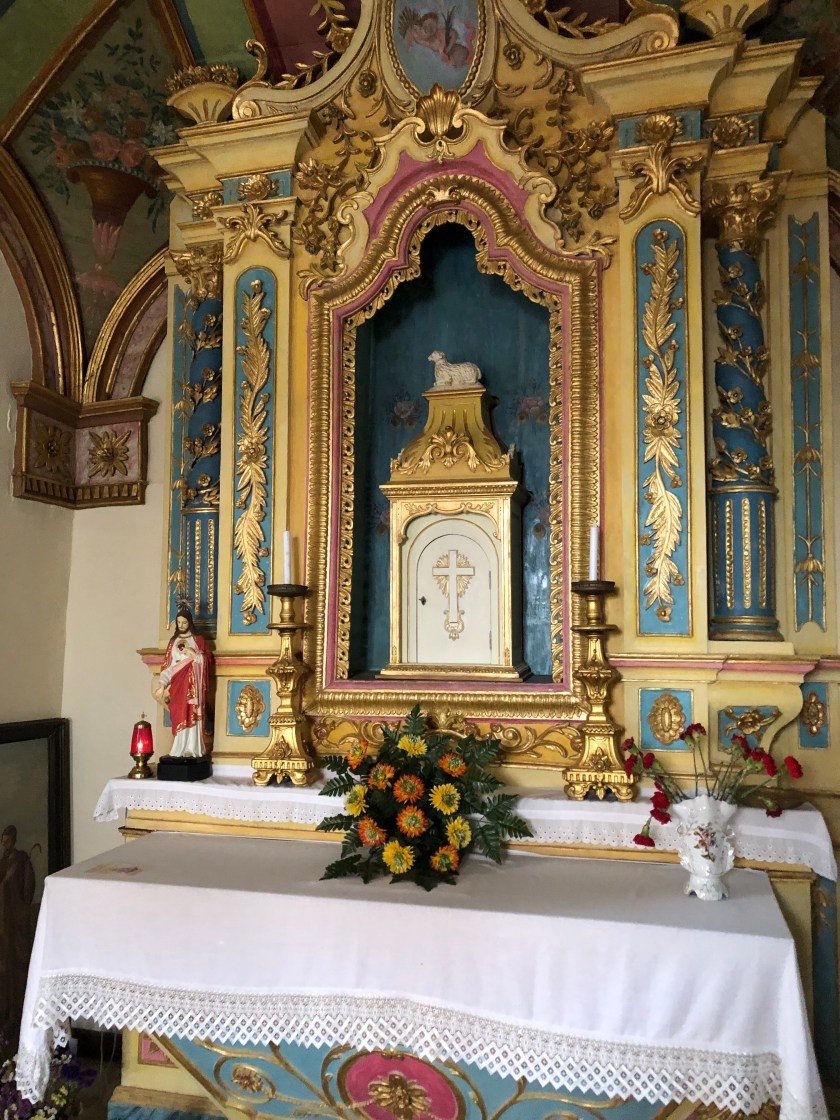 She then walked us through the rows of grapevines, despite the raindrops, explaining the different varieties and how they are grafted.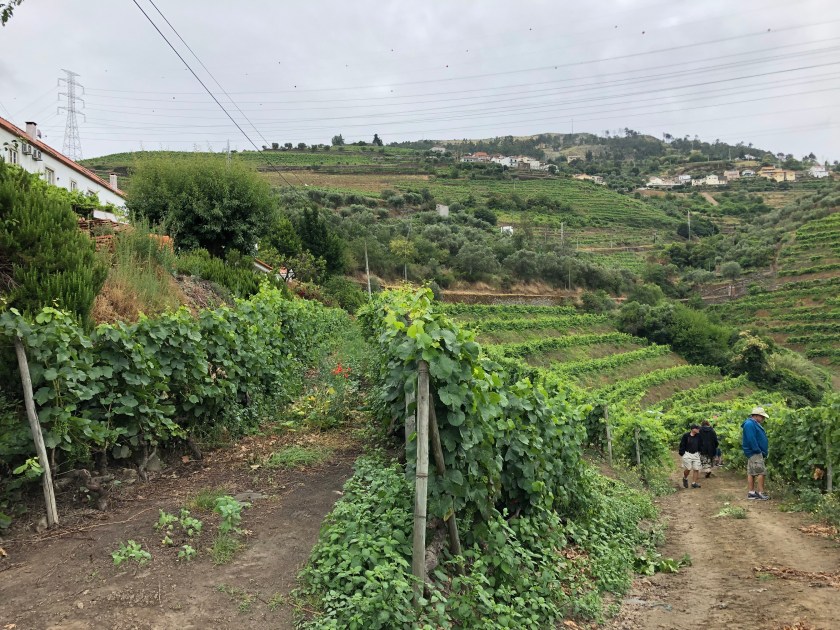
 We were then shown the huge granite vats where the grapes for port wine are stomped by feet (shades of Lucille Ball/I Love Lucy).


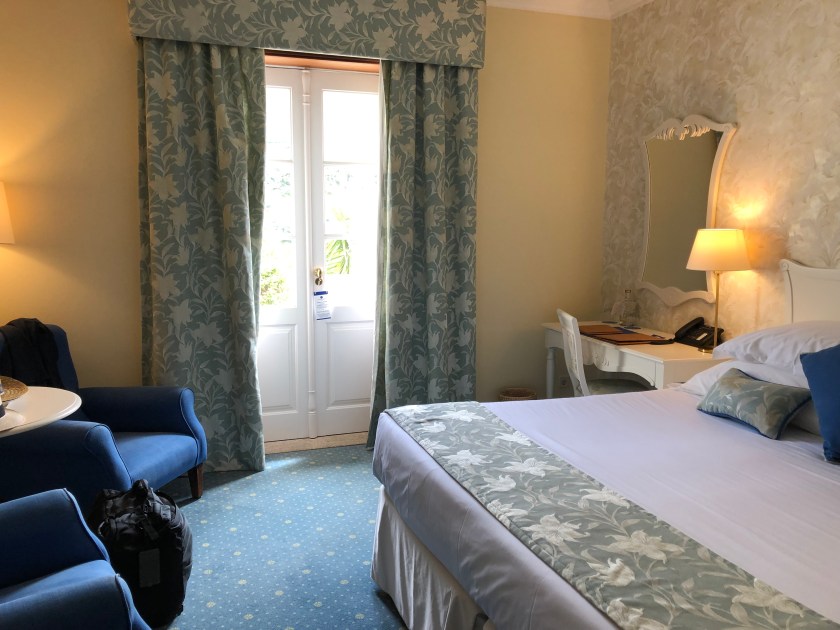
 There’s not much to see in the town (a few shops am small nondescript restaurants)
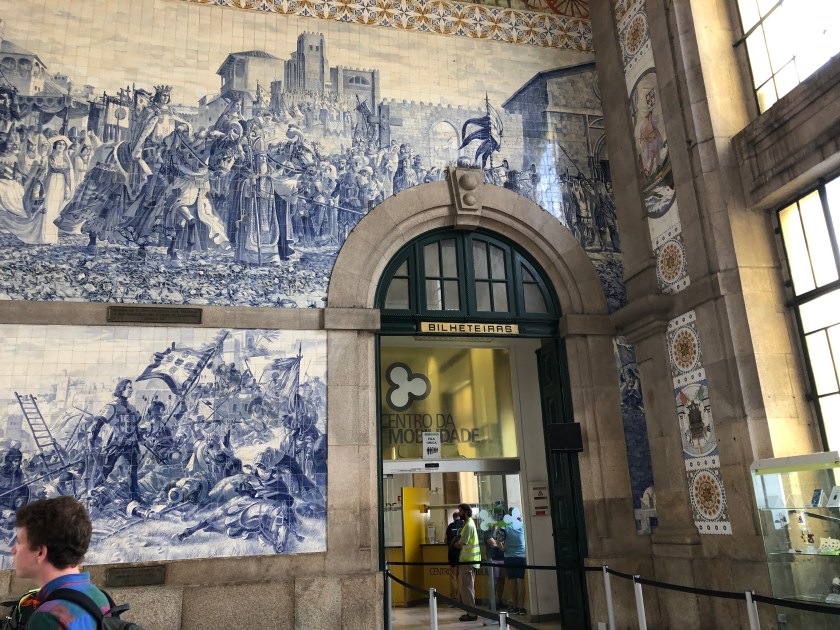
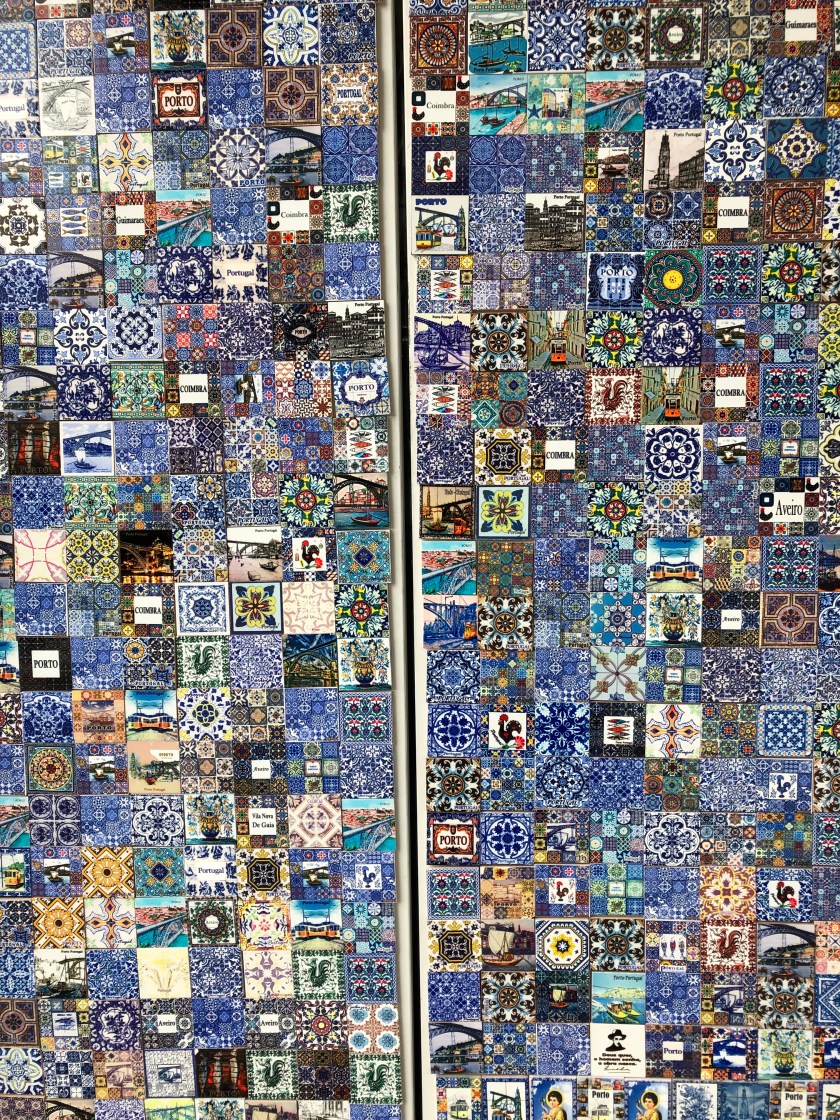
  but the train station did have beautiful blue and white tiles on the facade.
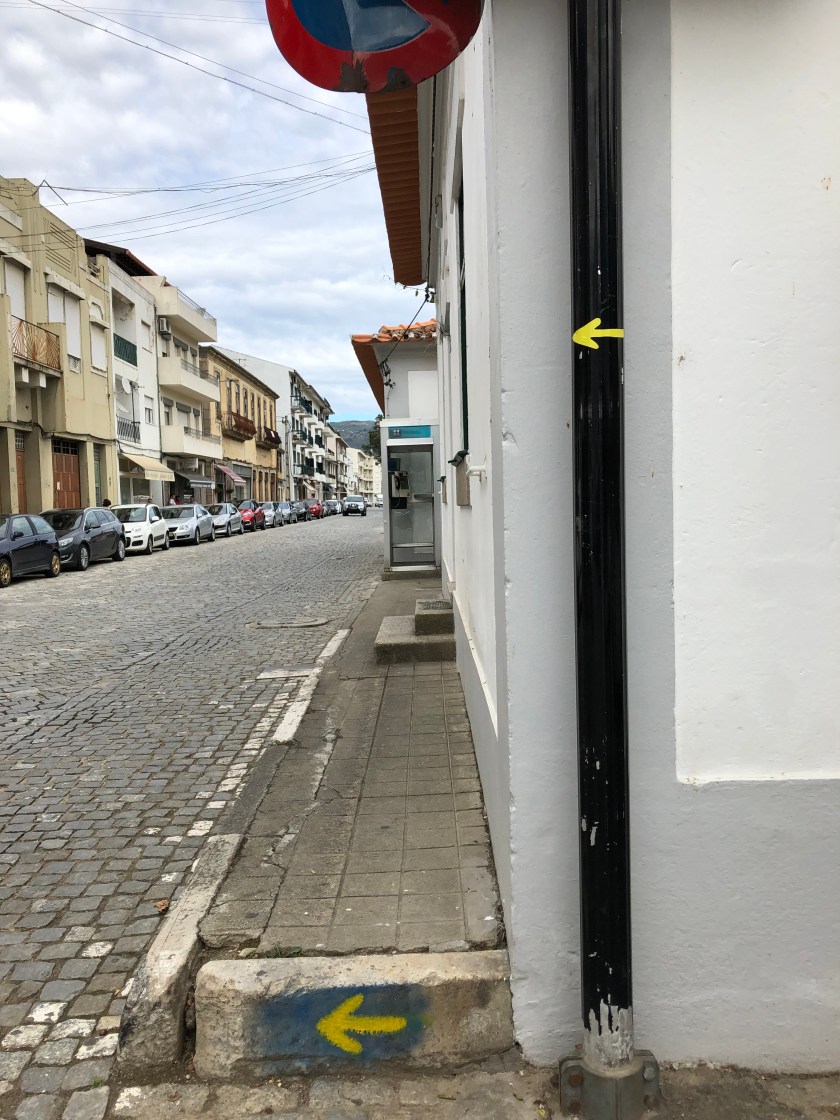

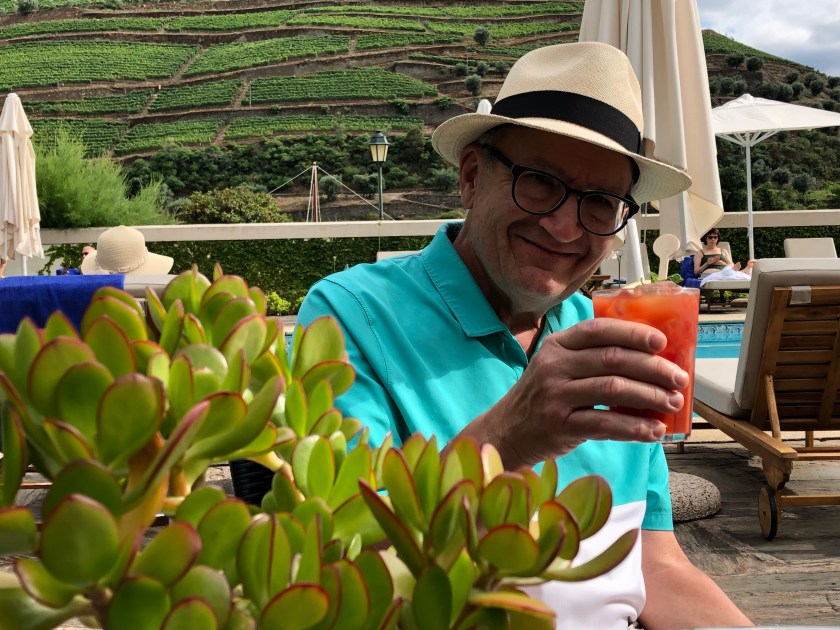
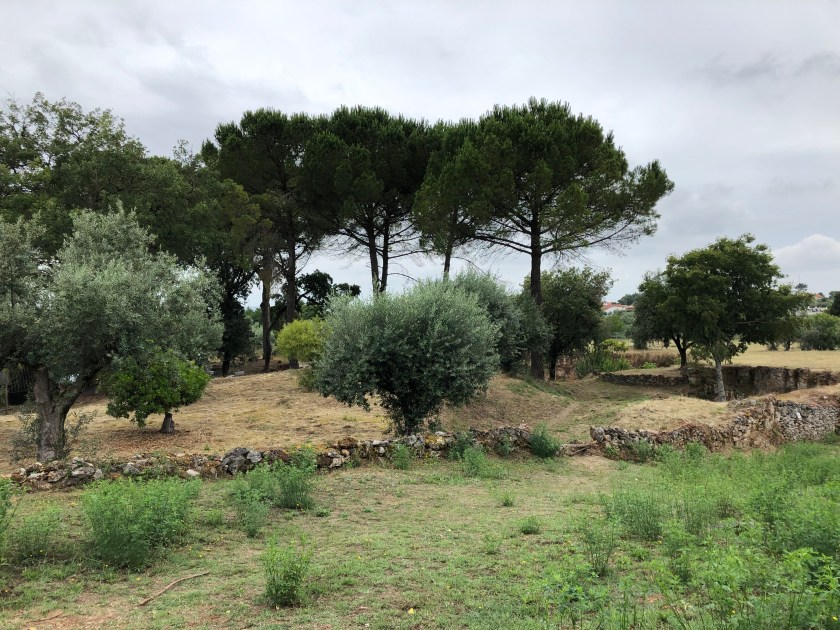










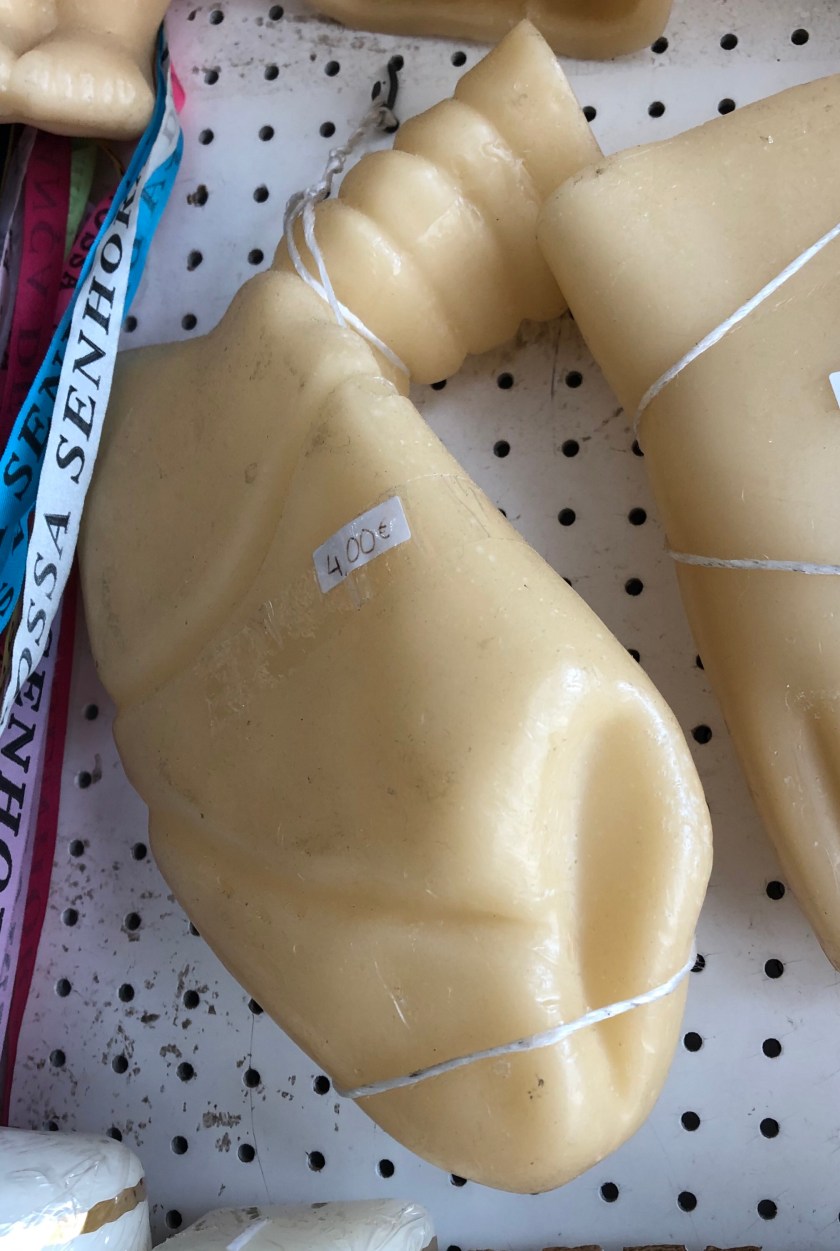


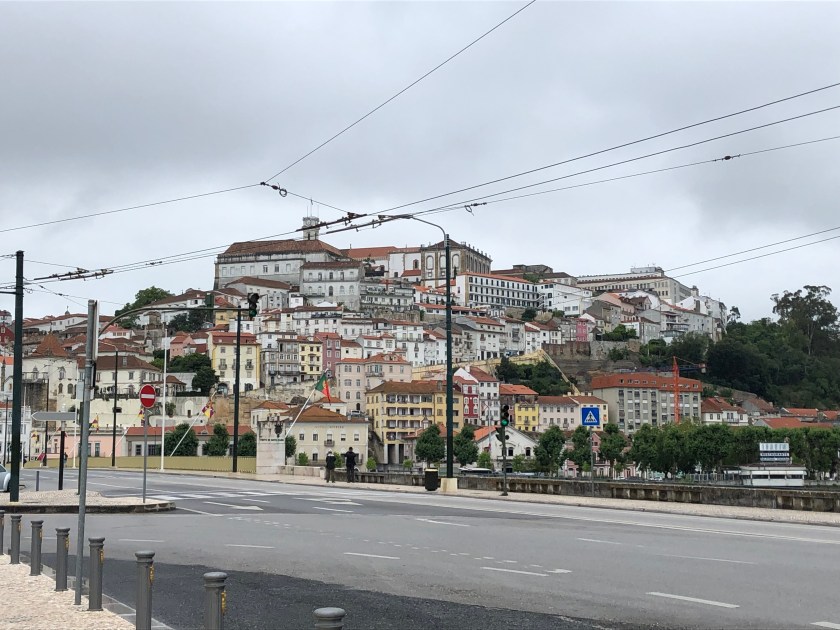


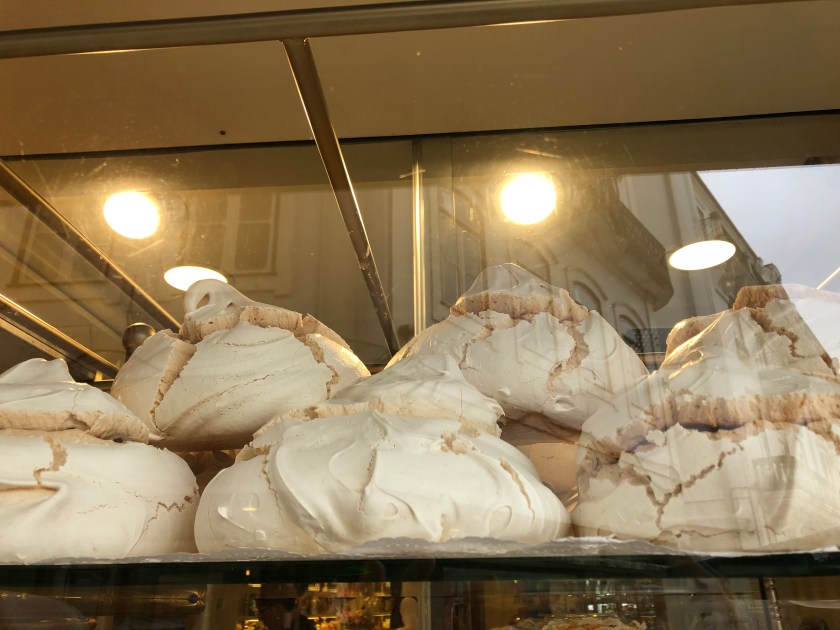


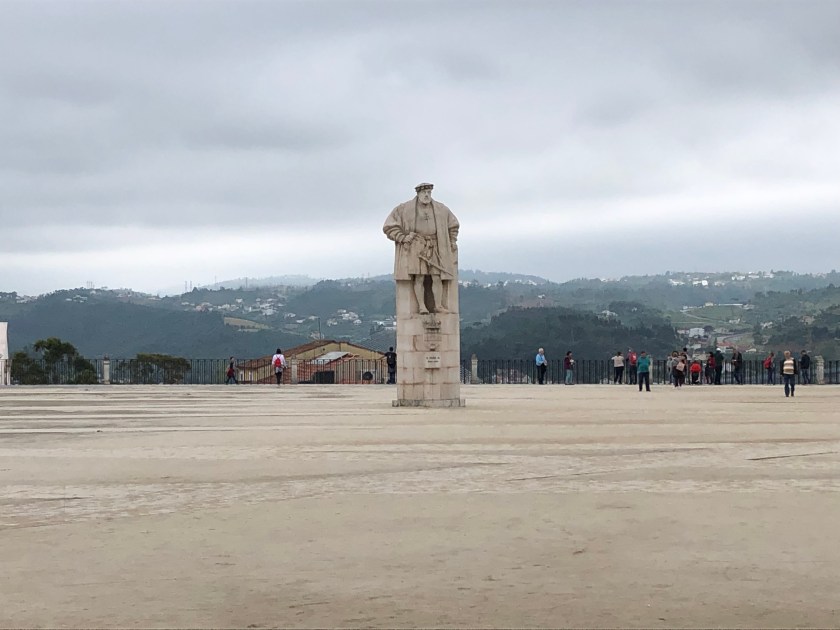
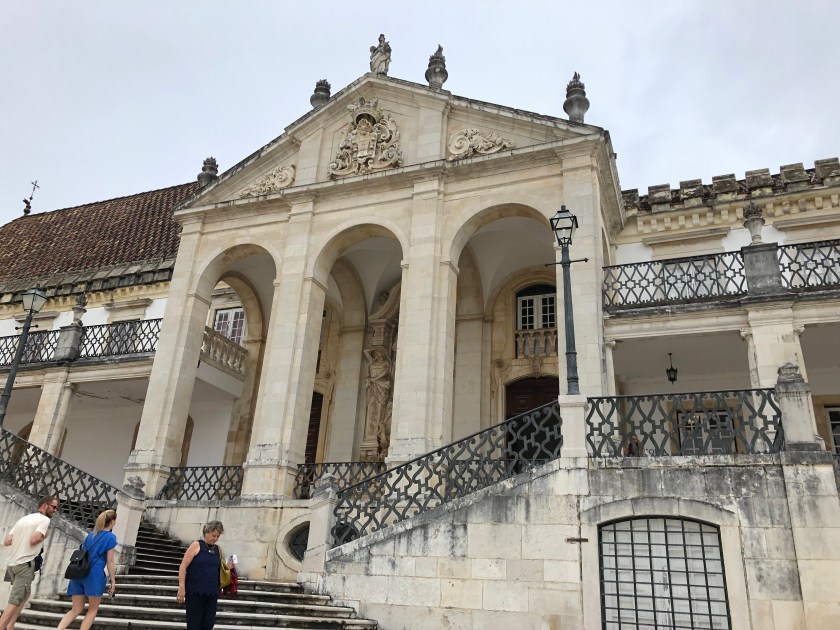
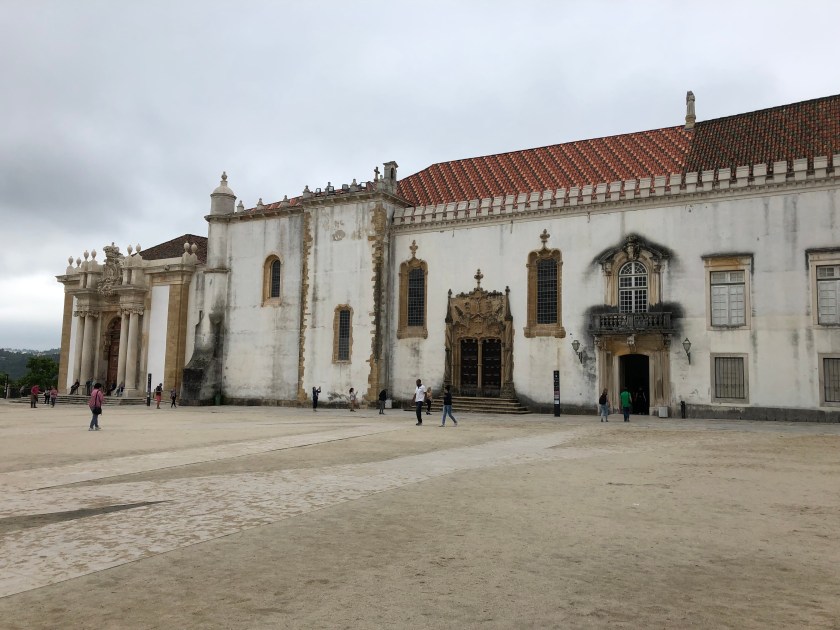
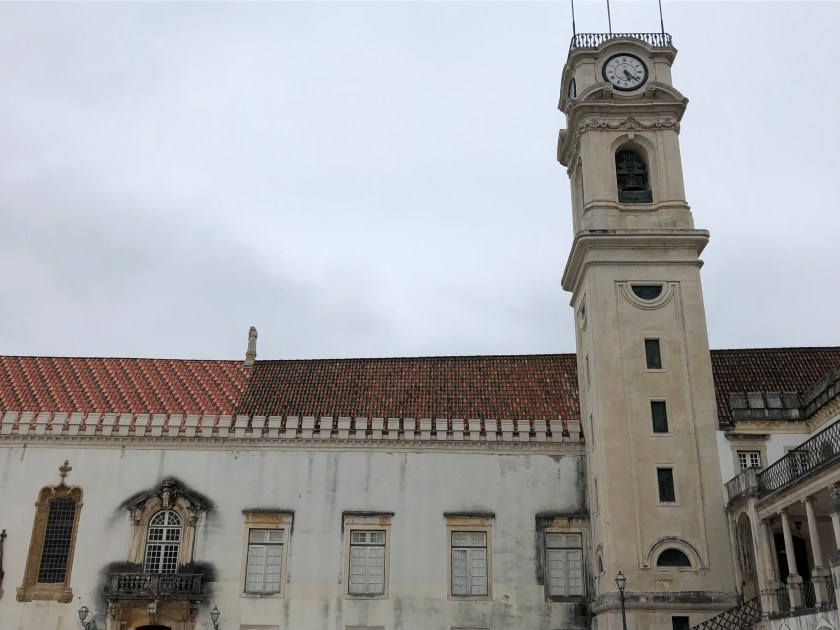
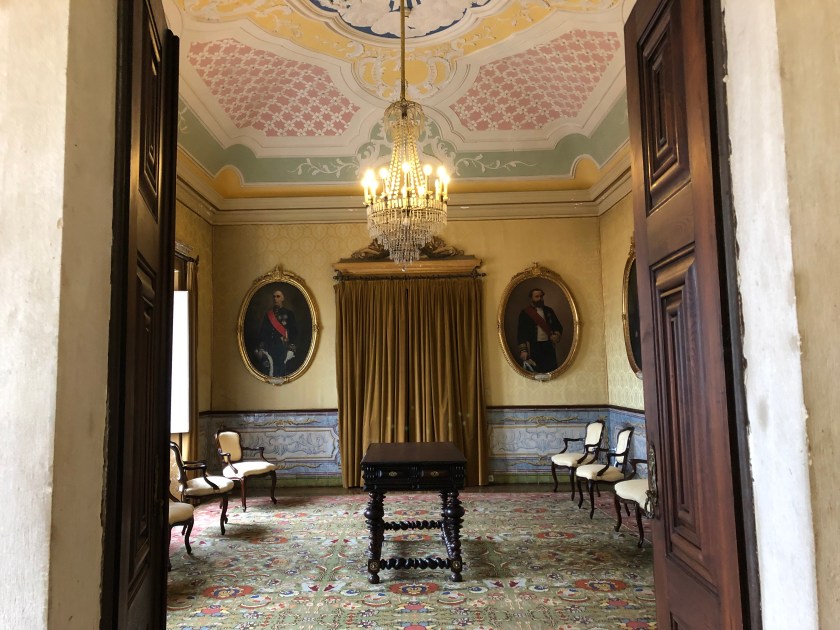
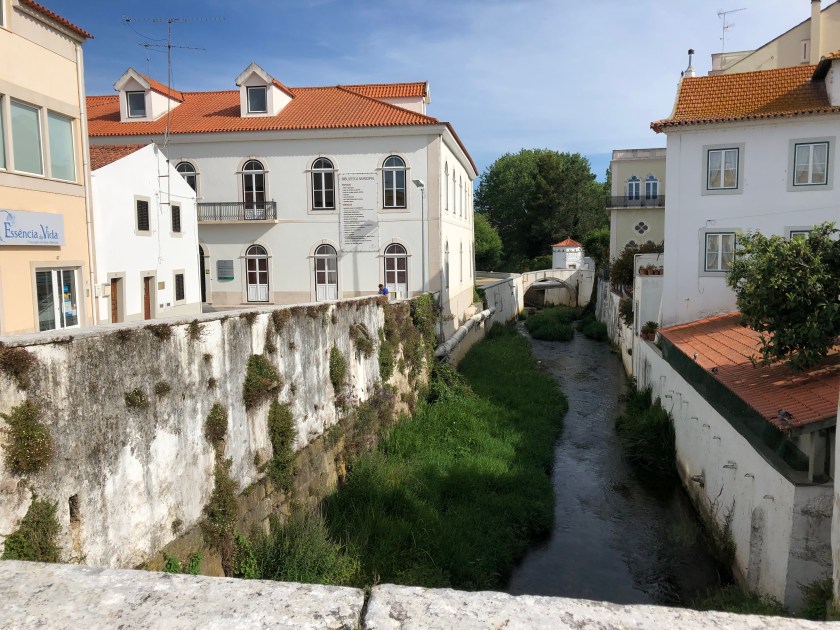
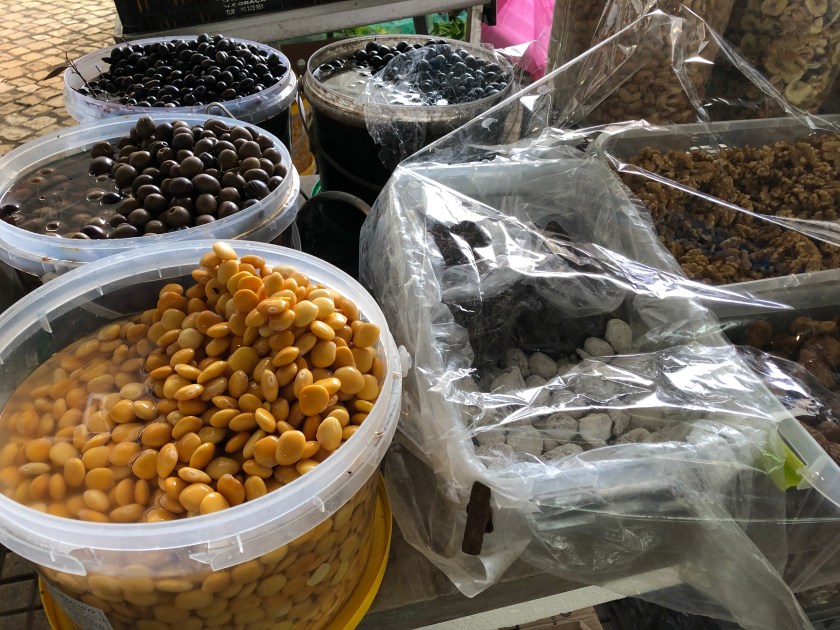
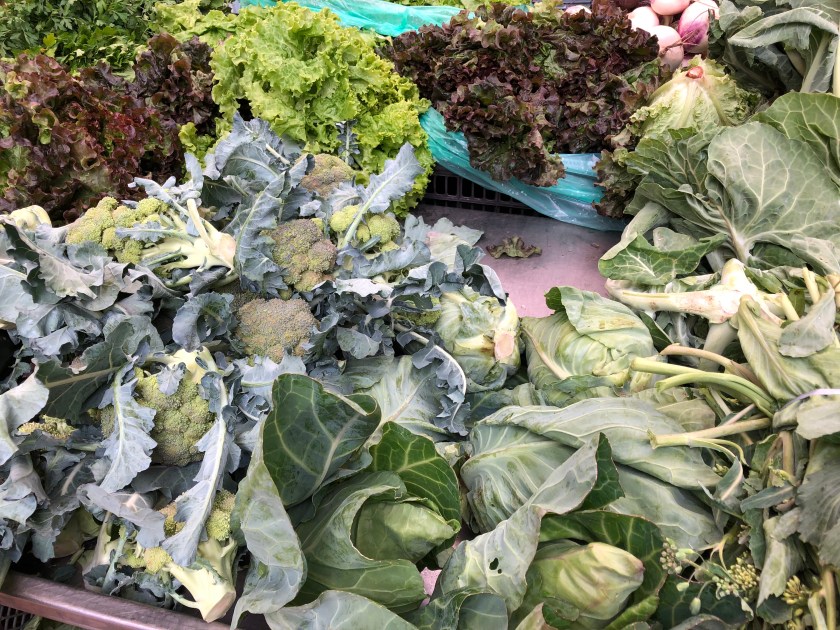
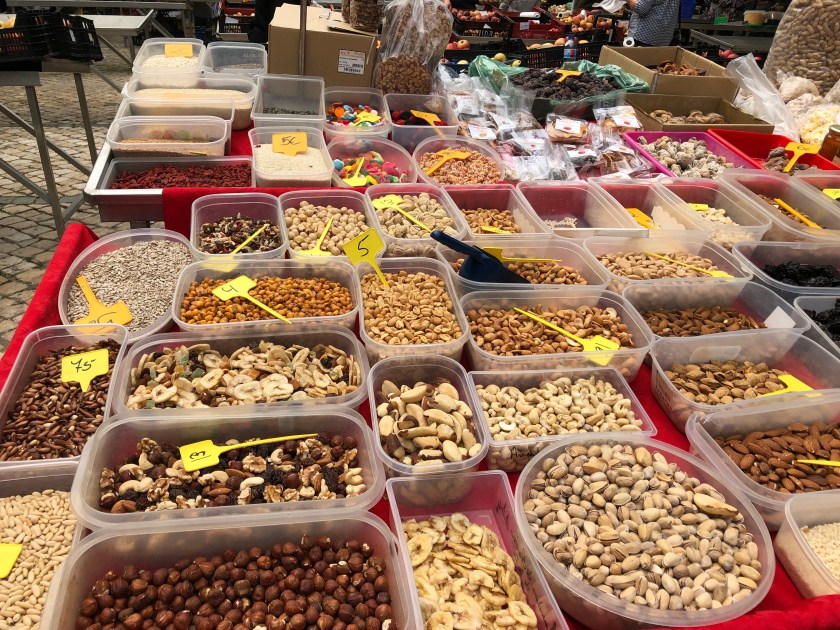
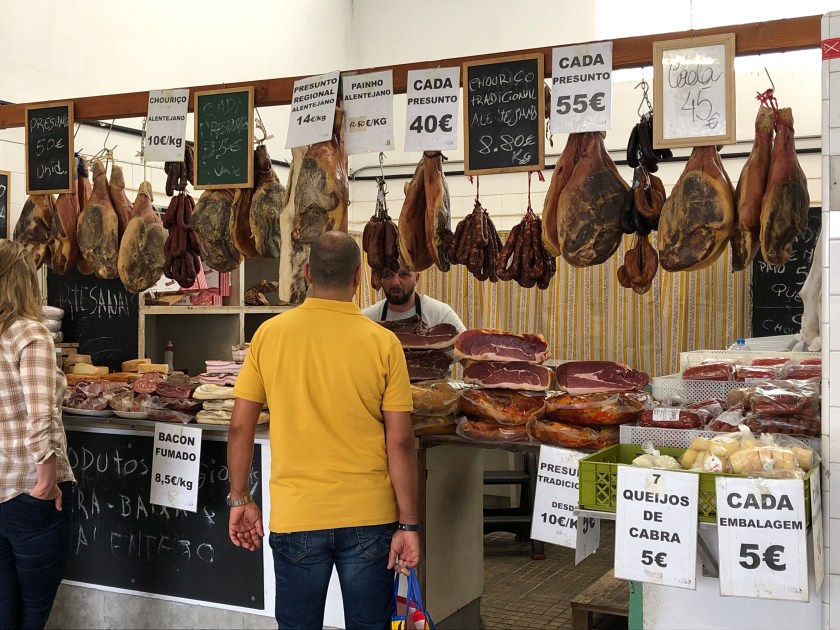
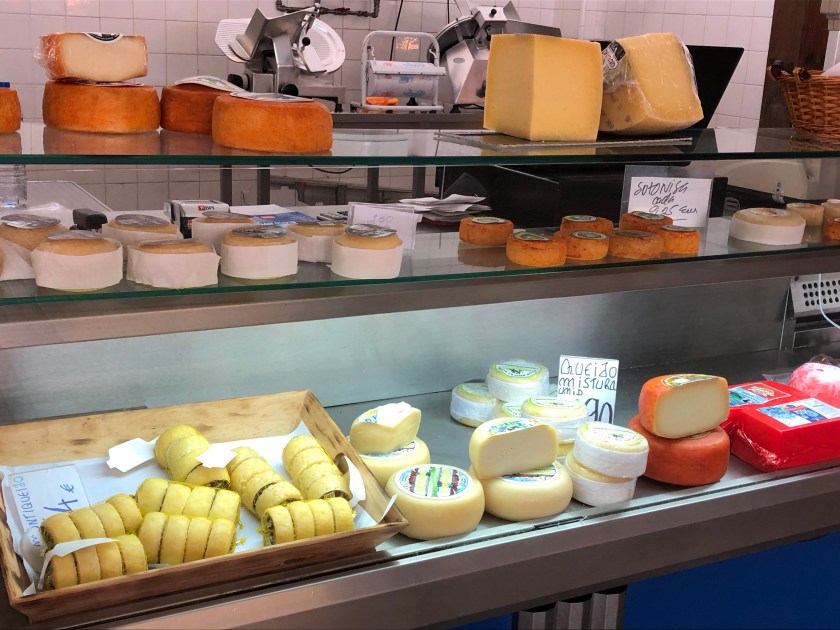
 There is a vibrant daily market near the center of town.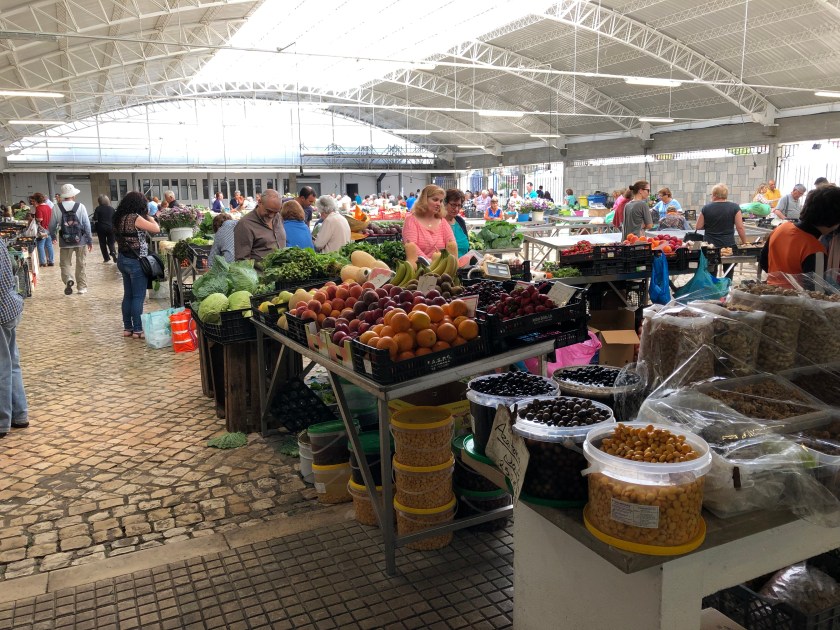



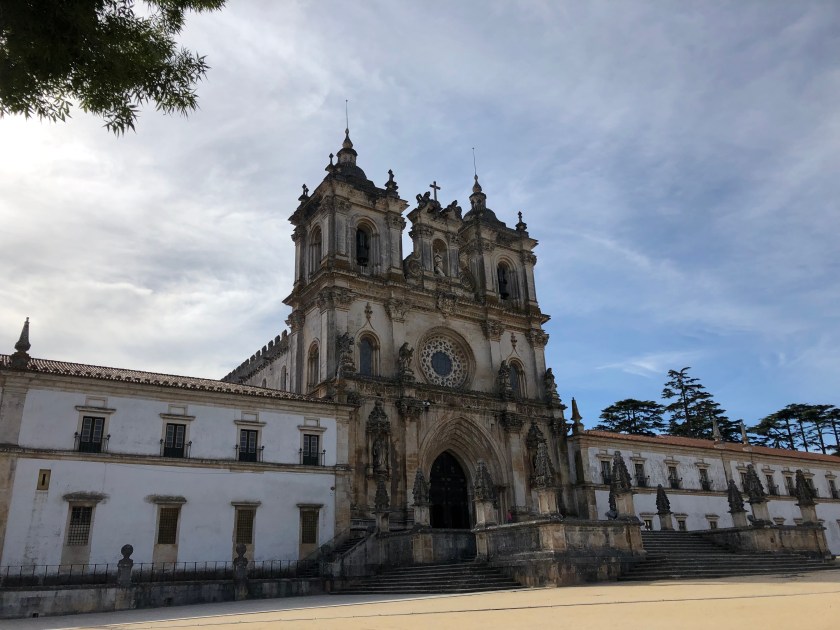

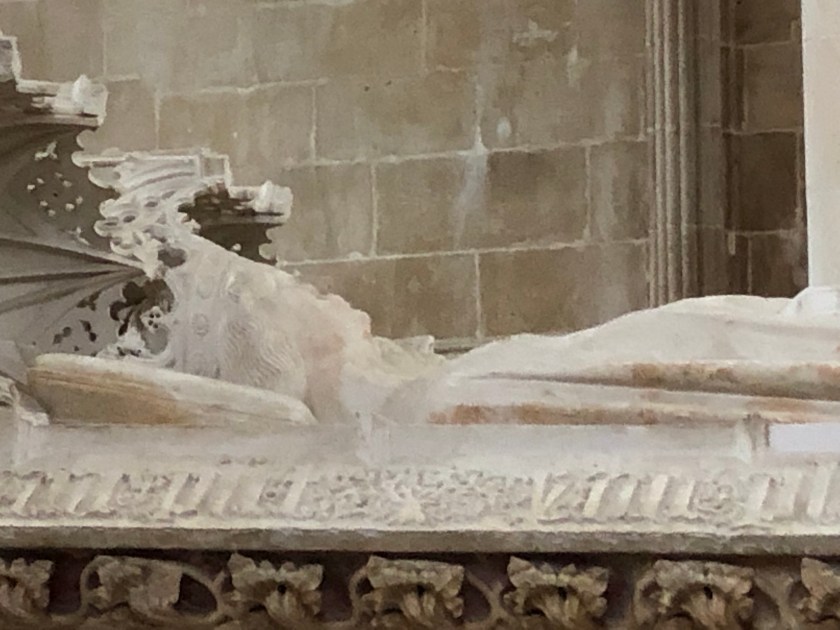
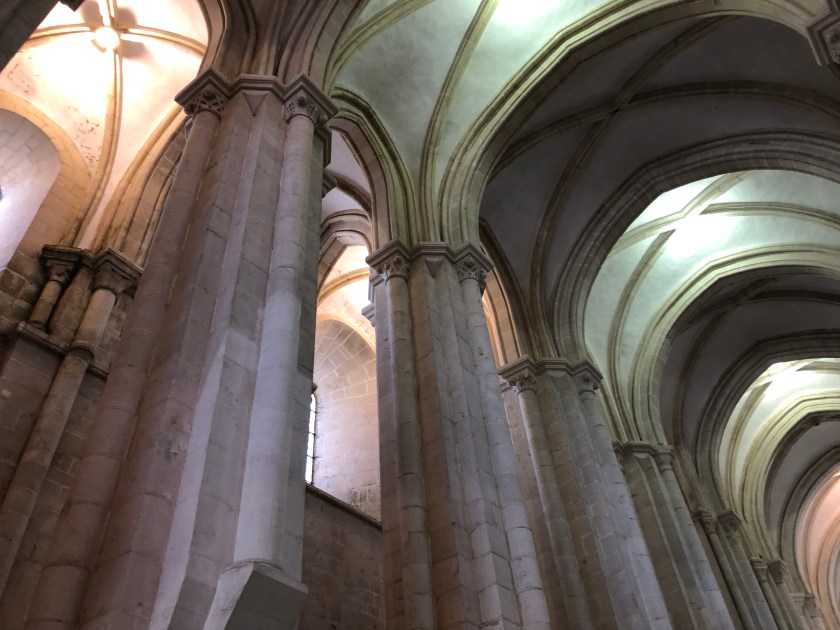 and is renowned for housing the tombs of King Pedro I and his murdered mistress- later wife Ines.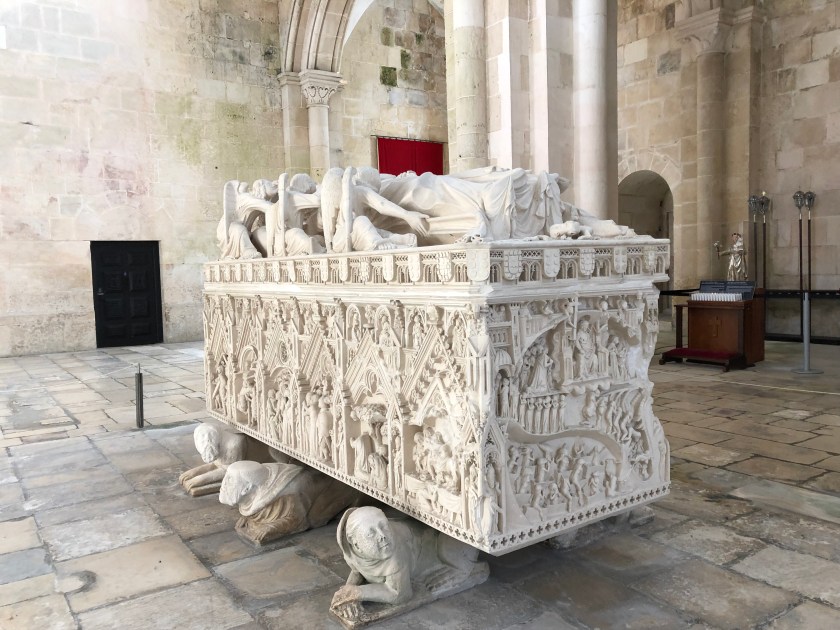
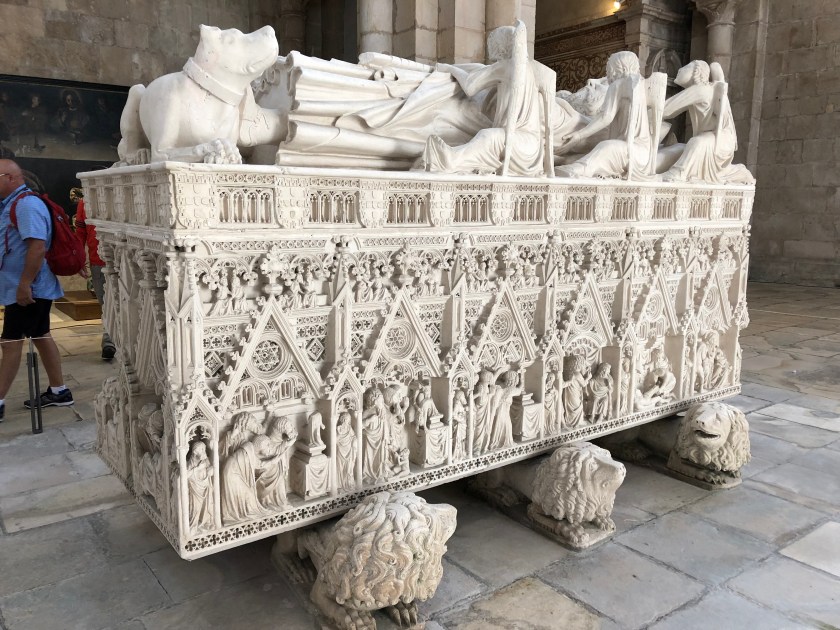 Pedro’s first marriage was arranged to a noblewoman he did not love (Constanza), but instead he became enamored with one of her ladies-in-waiting. After Constanza died in childbirth, Pedro married Ines and they had three children together. Pedro’s father did not approve of the union and had her beheaded. Pedro, after his father’s death and his own ascension to the throne, had Ines’s body exhumed and the nobility were required to bow before their dead and decaying queen.
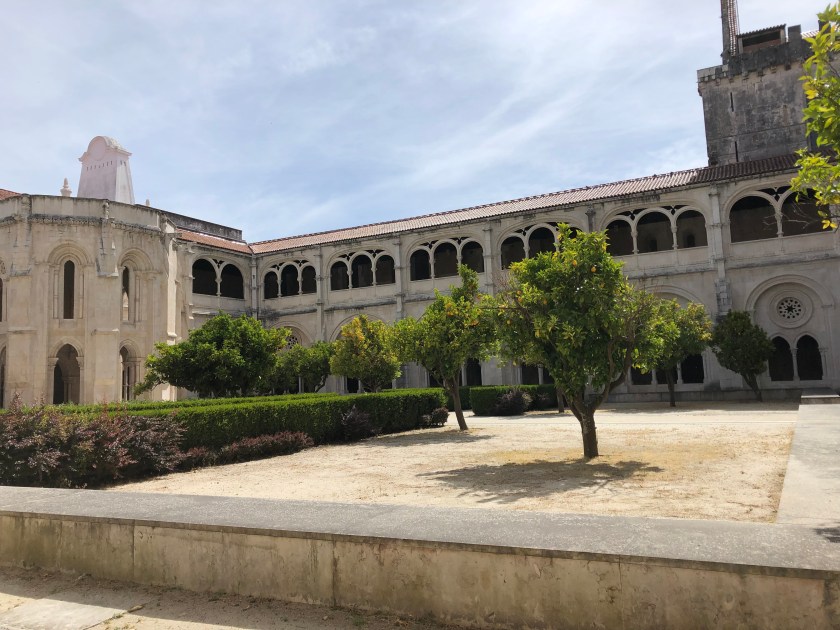
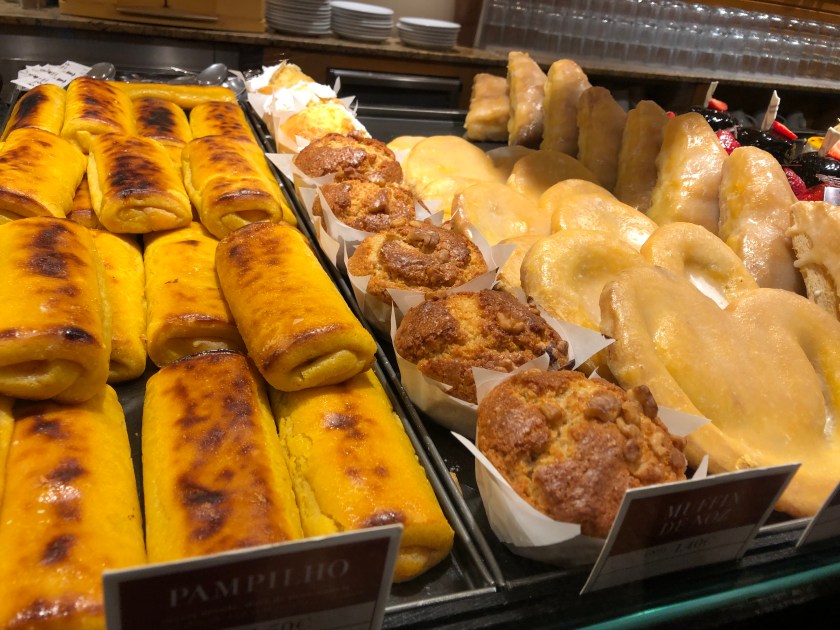
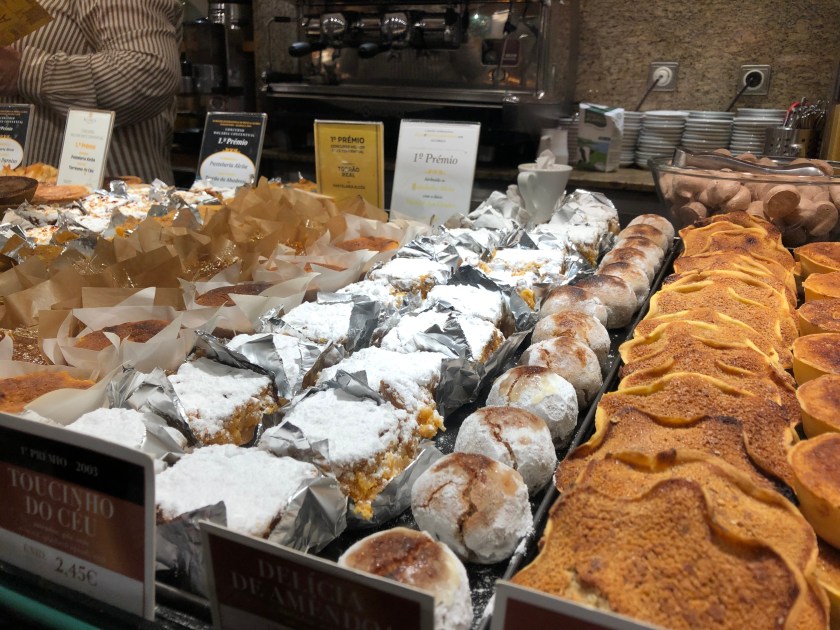
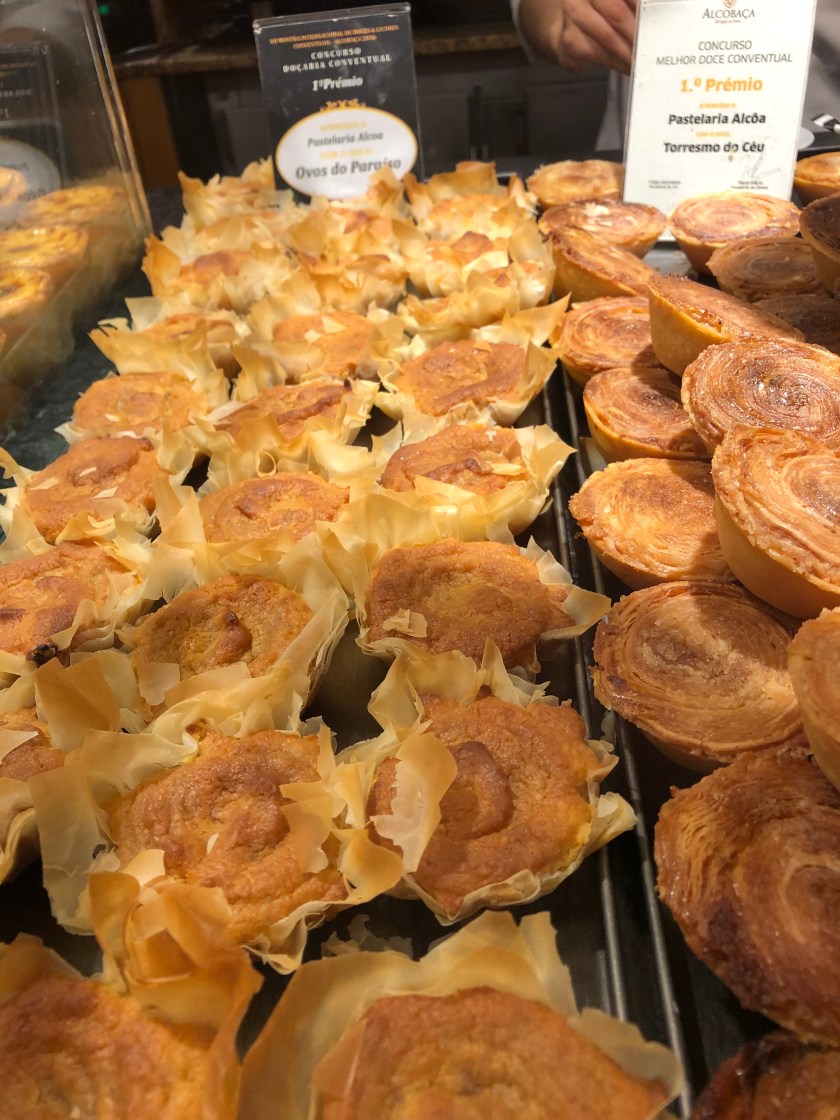
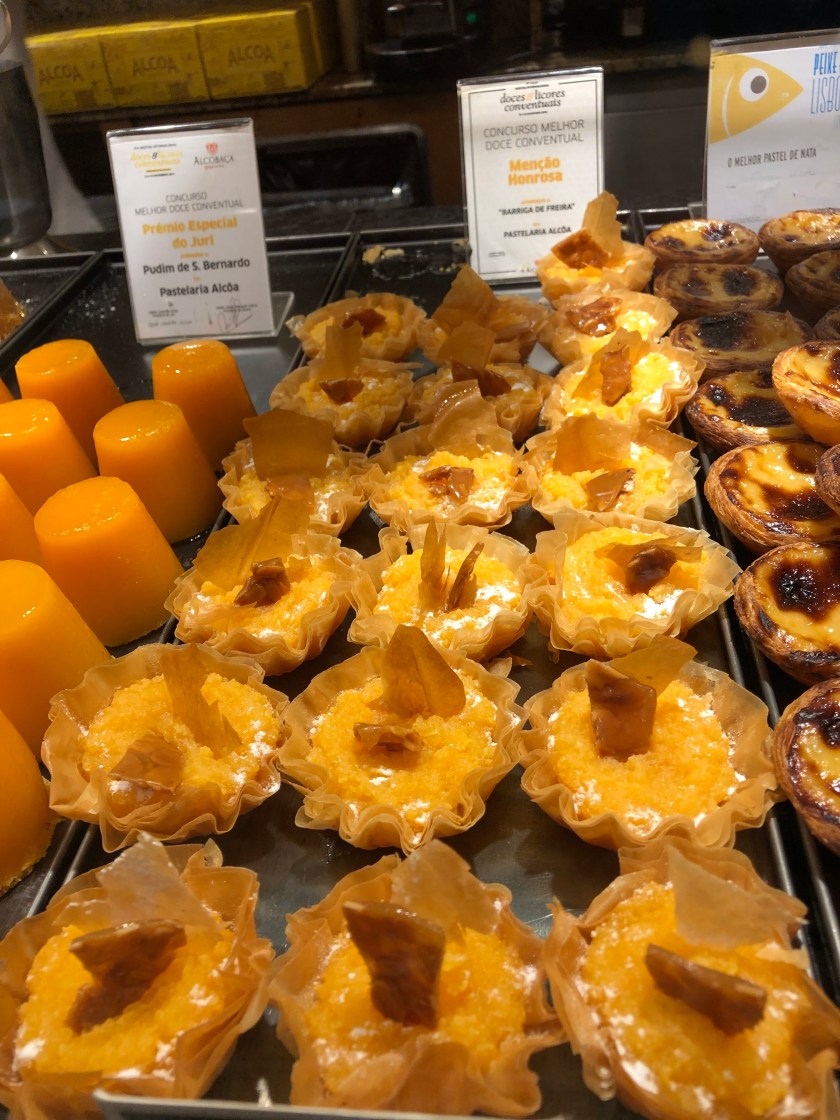
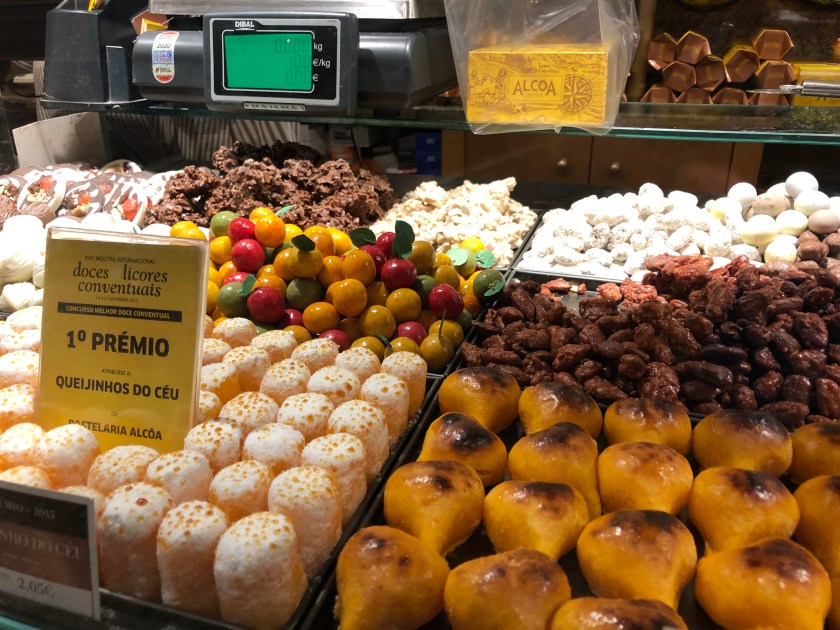
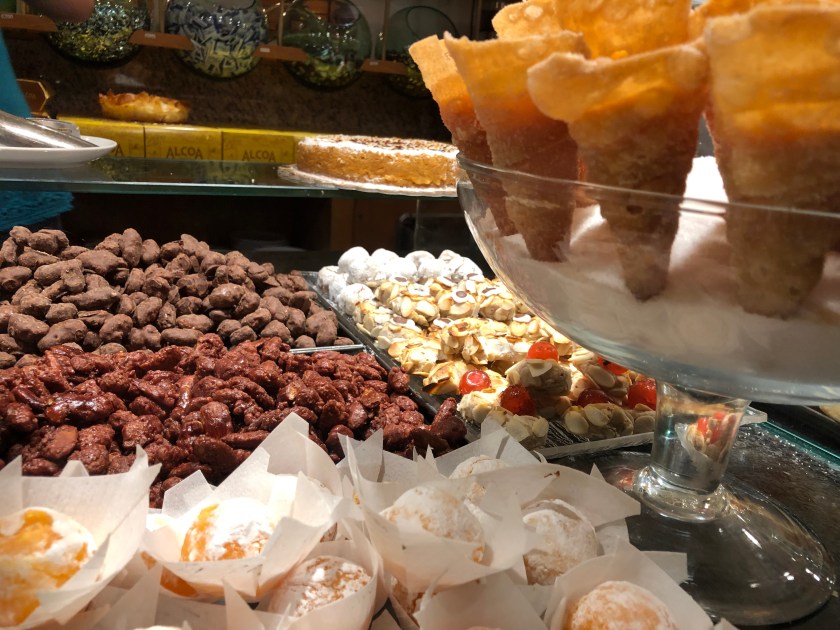
 There were also many shops and, of course, the market to visit and there was not enough time to really experience this charming city.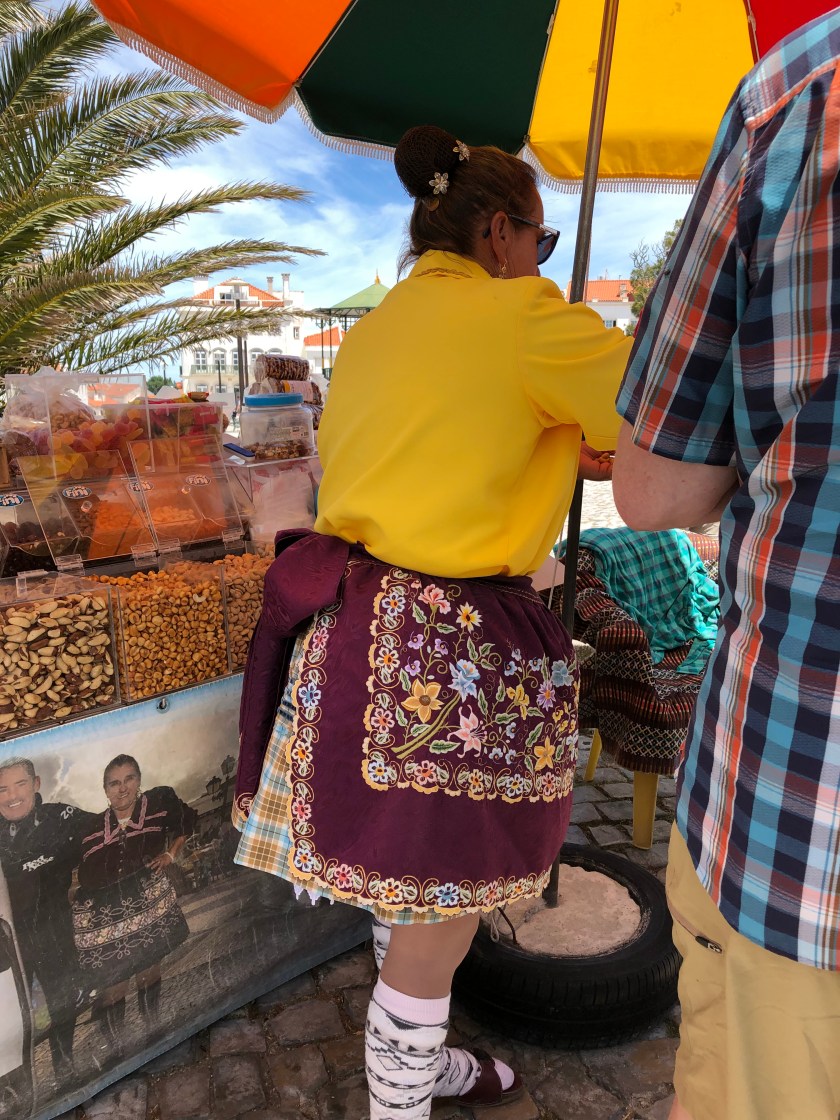








 Camino Musings