Pago chi non paga

The most powerful and damaging stereotype associated with Sicily is that of the Mafia. Movies like “The Godfather” trilogy have romanticized this network of organized crime that permeated all corners of this island and has spread across continents. But there is nothing romantic or the least bit acceptable about the Mafia (Cosa Nostra in Sicily, ‘Ndrangheta in Calabria, Camorra in Naples). The anti-Mafia movement in Palermo started in the 1980s but it was not until the murders of Giovanni Falcone and Paolo Borsellino in 1992 that the population became mobilized and united in the fight against organized crime.

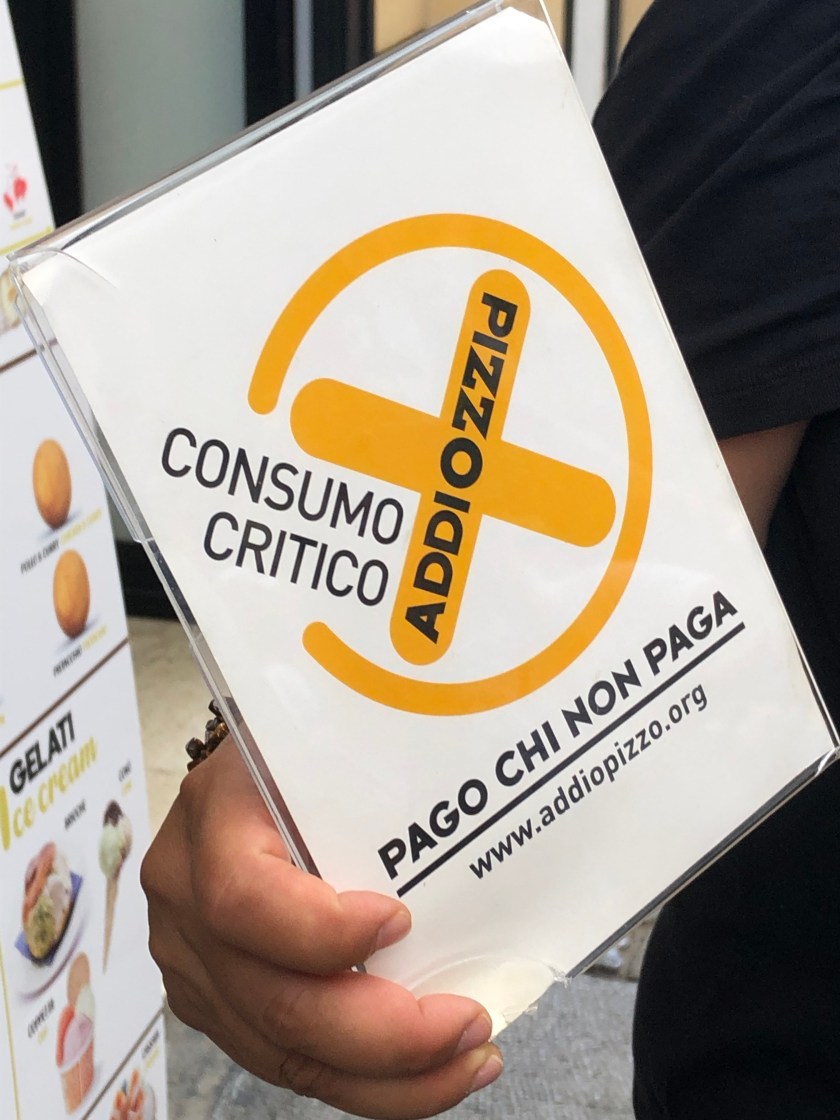
In 2003, a group of young Palermitans in their efforts to open a small business was approached to pay the pizzo (protection money) and decided that it was time to change the status quo by organizing entrepreneurs together to refuse to pay the pizzo. They started by plastering the city with stickers
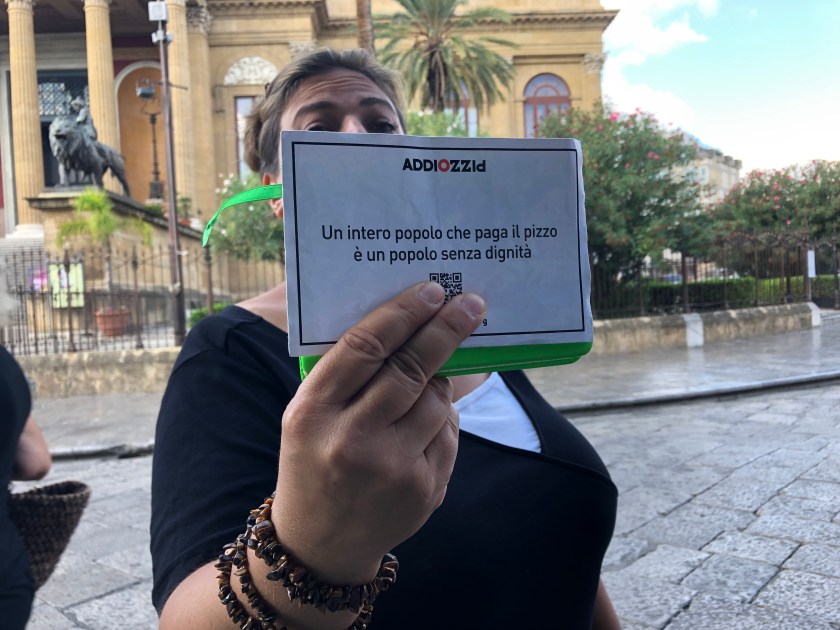
and within a couple of years had about 100 businesses on their side. Their number has increased ten-fold (although still a small percentage of all businesses). The organization called itself Addiopizzo, and in addition to supporting businesses who resist the Mafia influence by means such as encouraging customers and assistance in filing police reports of extortion attempts, they also now run anti-Mafia tours. Linda, our Addiopizzo guide, spent three hours passionately explaining the effects of the Mafia on Sicily and the attempts to fight against this organized crime network.We visited the monument to the fallen anti-Mafia magistrates, all assassinated for the cause.
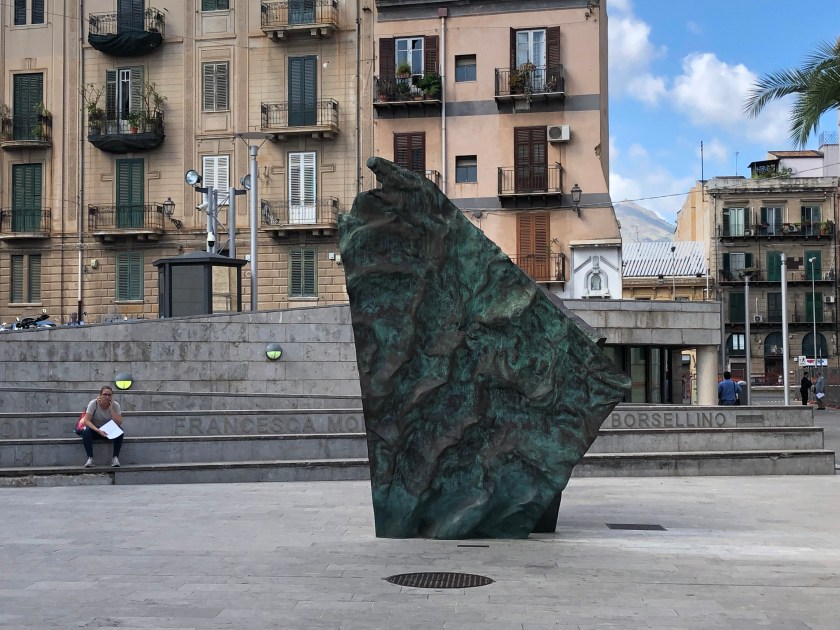
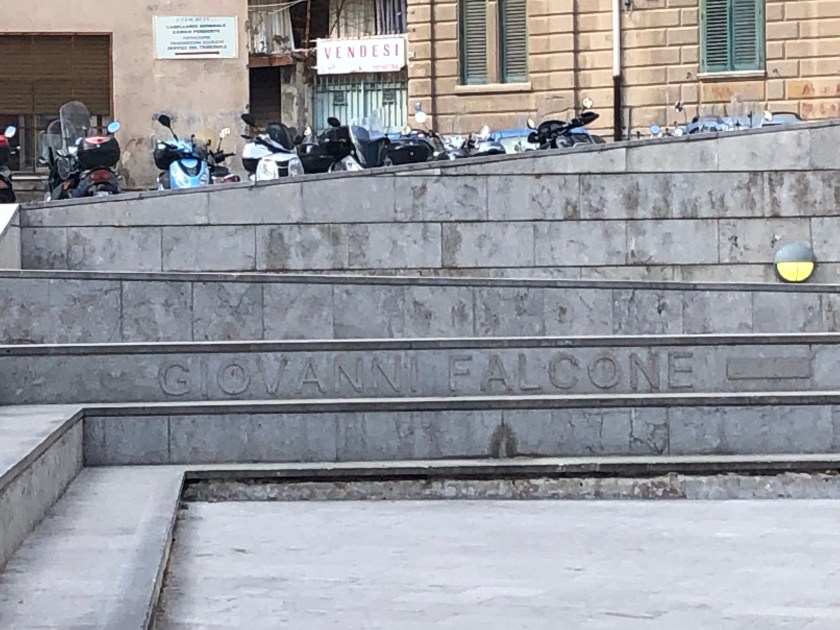
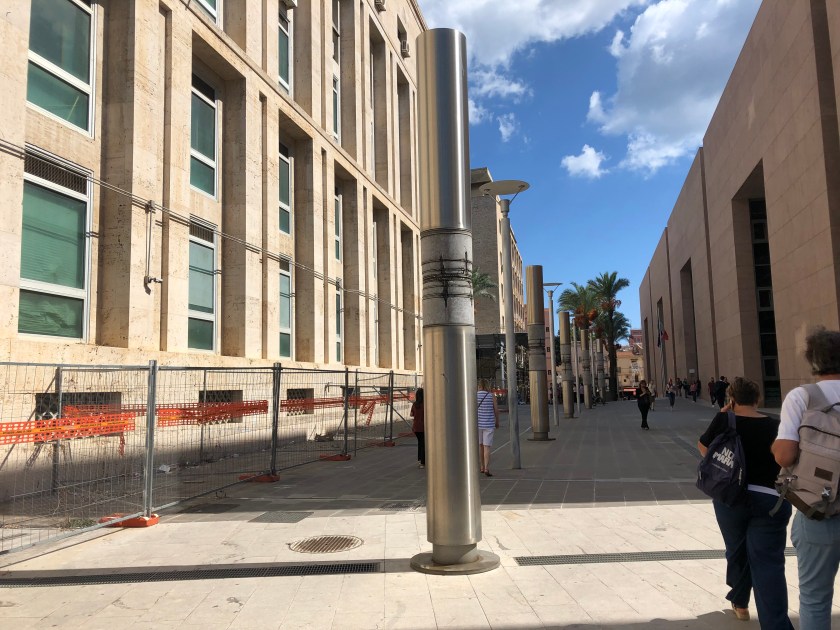
We also visited several merchants who proudly display the Addiopizzo logo on their shop windows.
We ended at Piazza San Francesco at the first restaurant that resisted the pizzo.
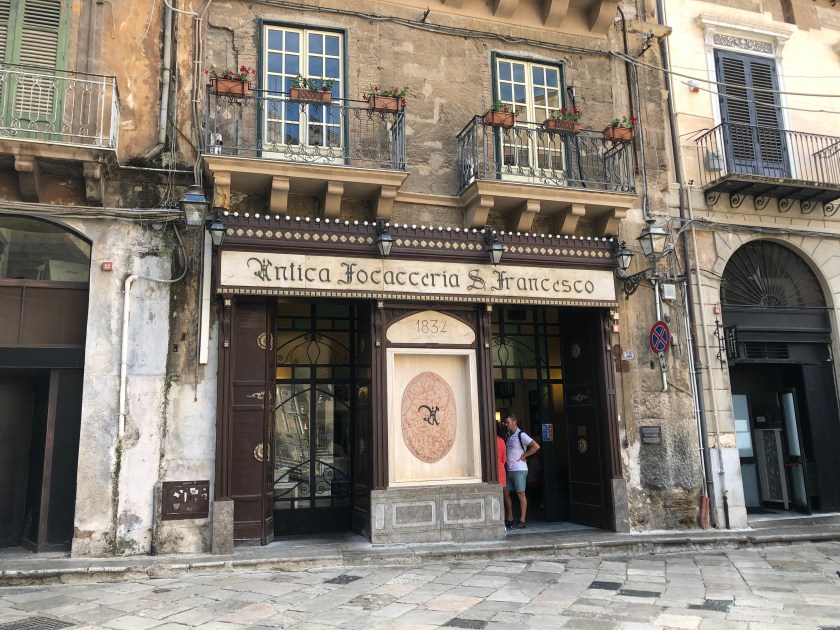
The restaurant has been around since 1834 and was a atmospheric spot for a typical Sicilian lunch – pasta with anchovies and pasta a la sarde (sardines).
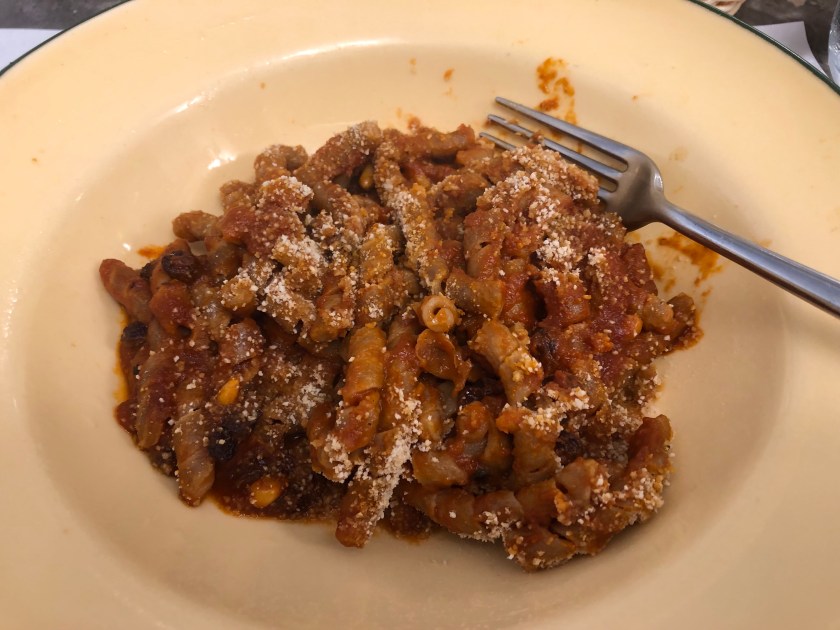
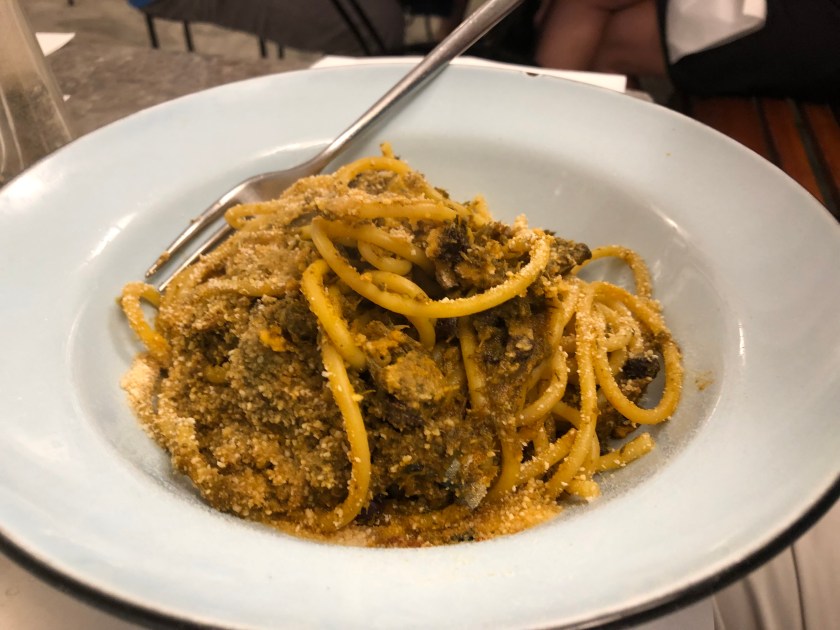
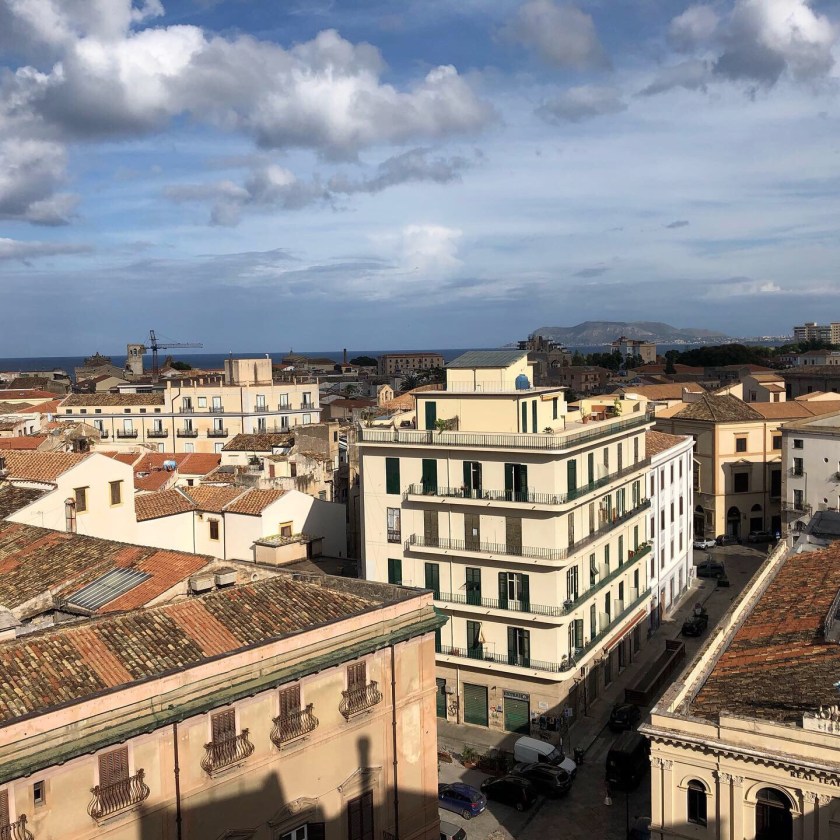
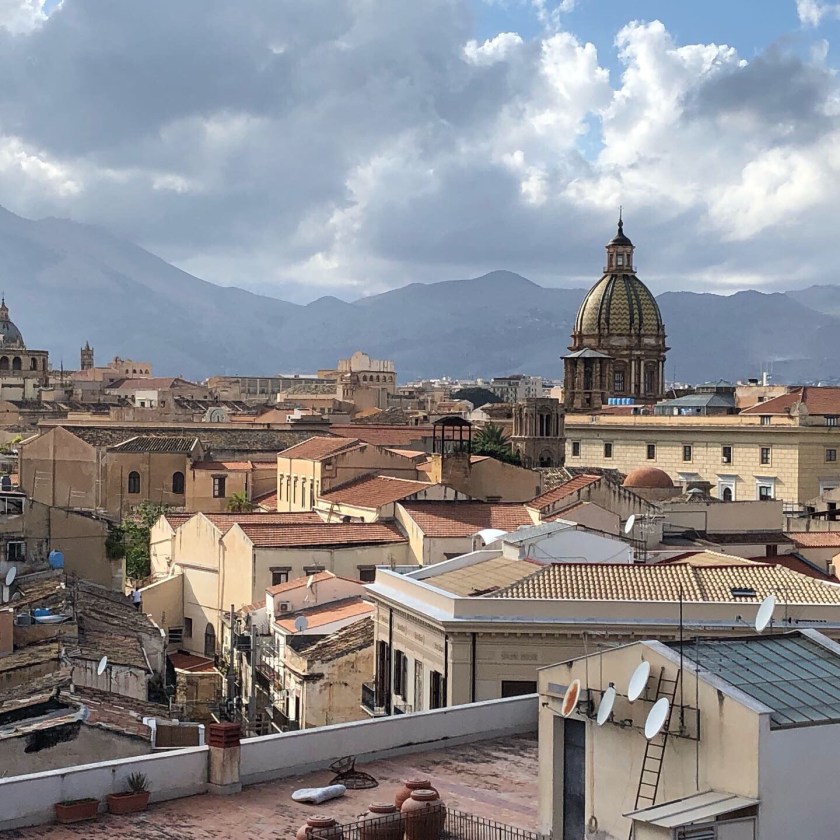
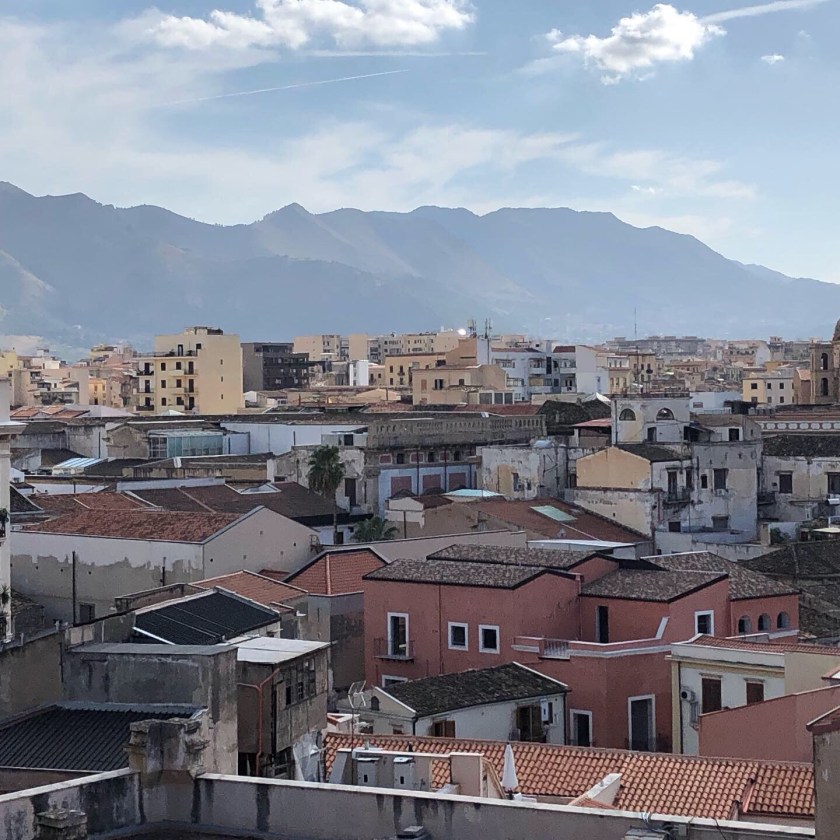
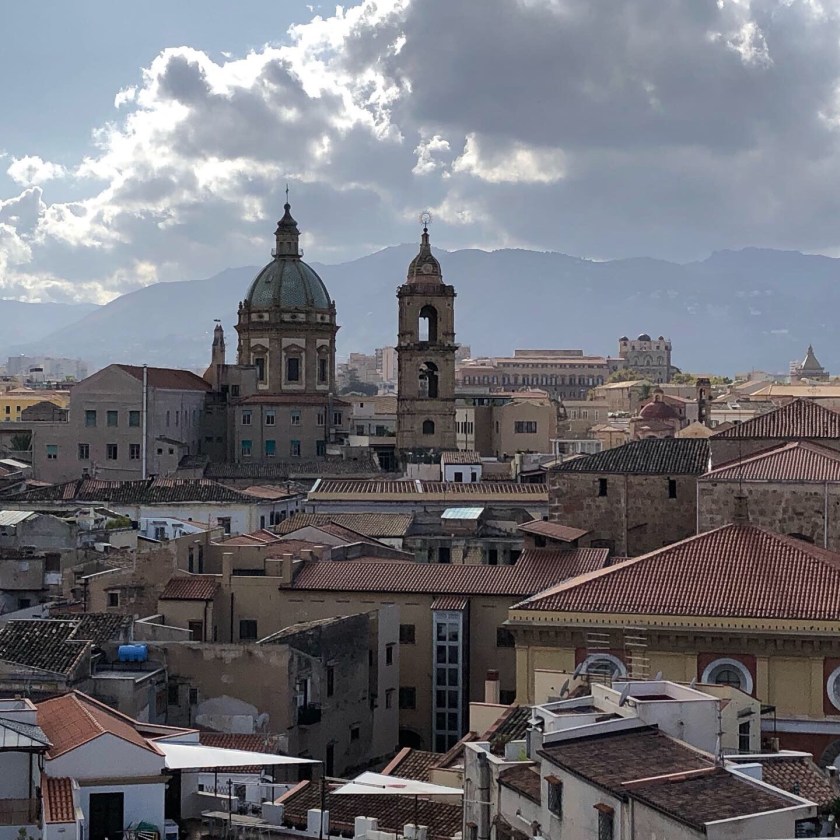
We then returned to the B&B to pick up our luggage to transport to our next hotel (Ambasciatori) a 10 minute walk away. This hotel is the 180 degree opposite – old fashioned rooms, nothing sleek or modern about it but it does have an amazing rooftop bar and restaurant, with amazing views of city and port.
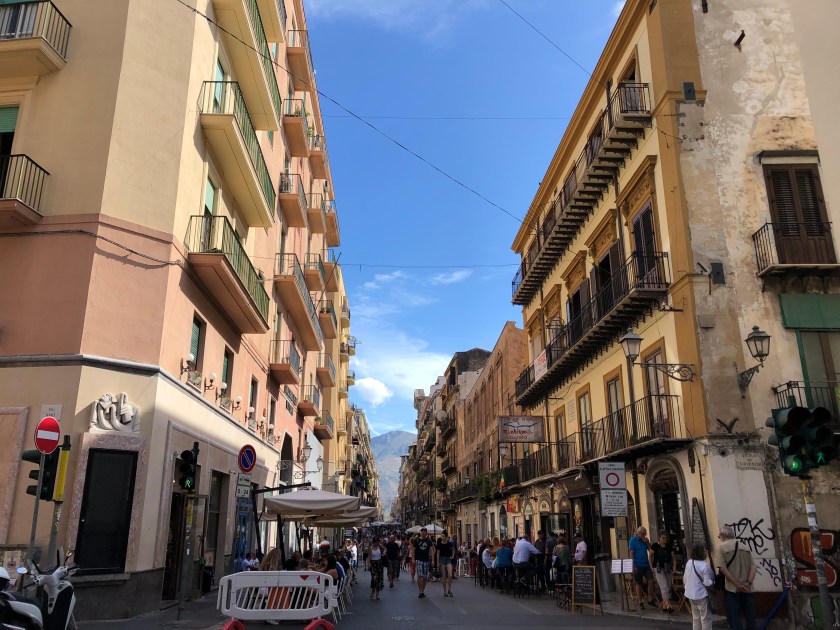
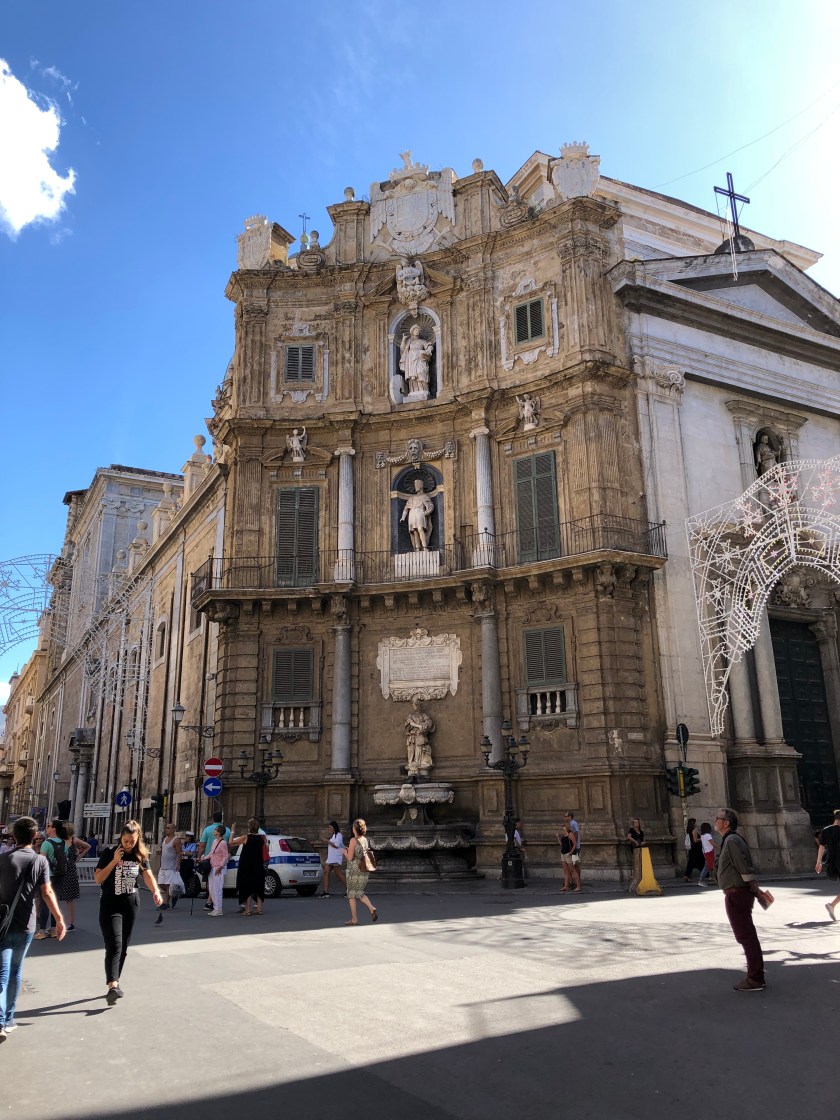
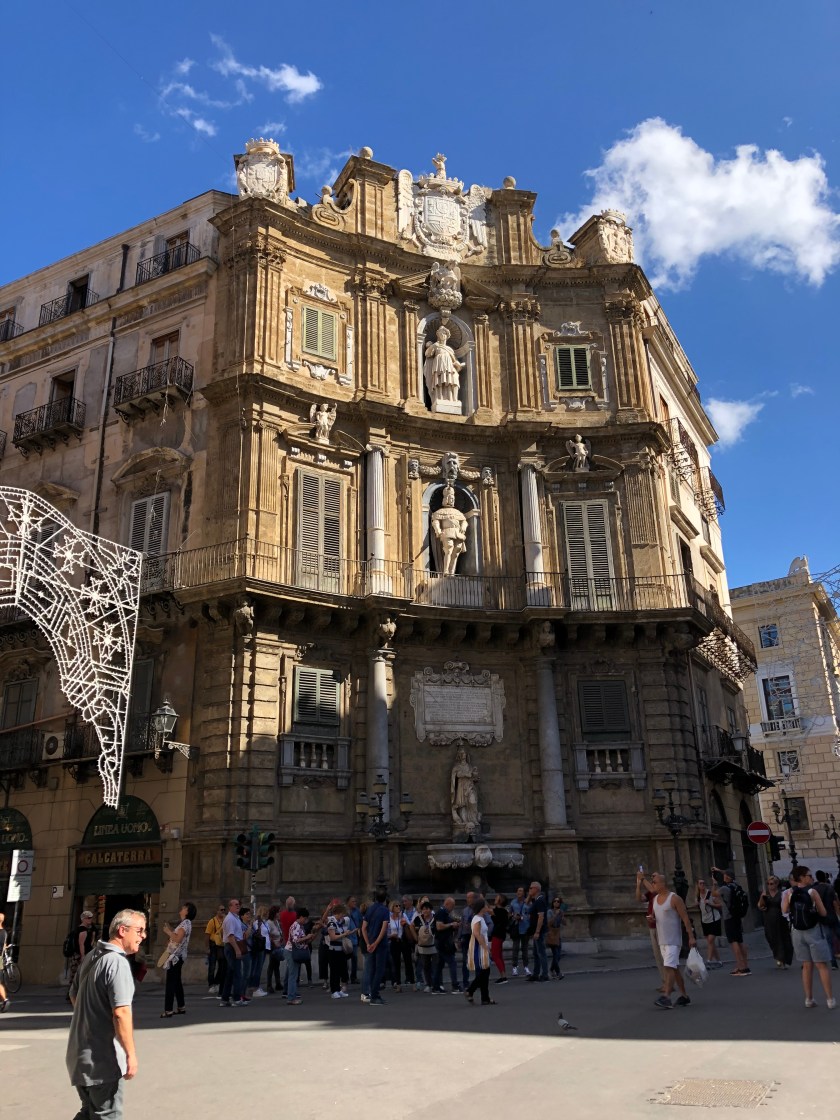
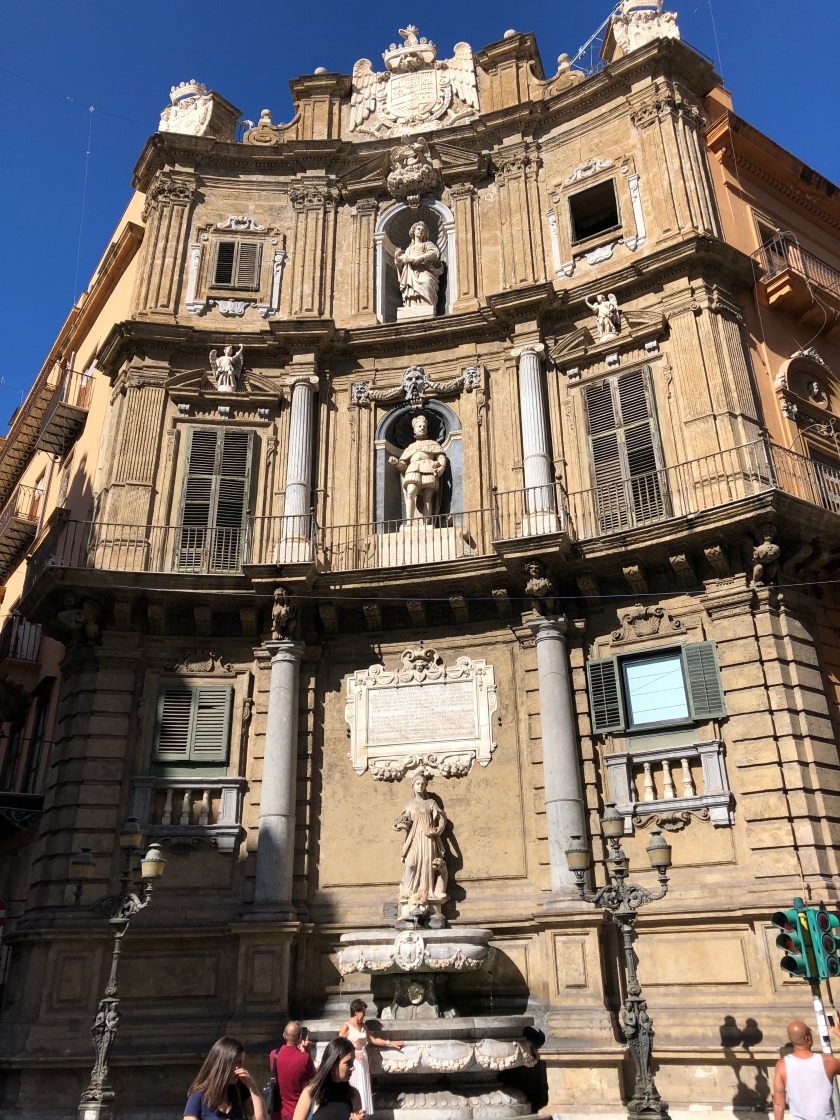
We had dinner at Bisso Bistrot again – again great food at great prices. The day ended with a stroll on the via Maqueda
Streets of Palermo

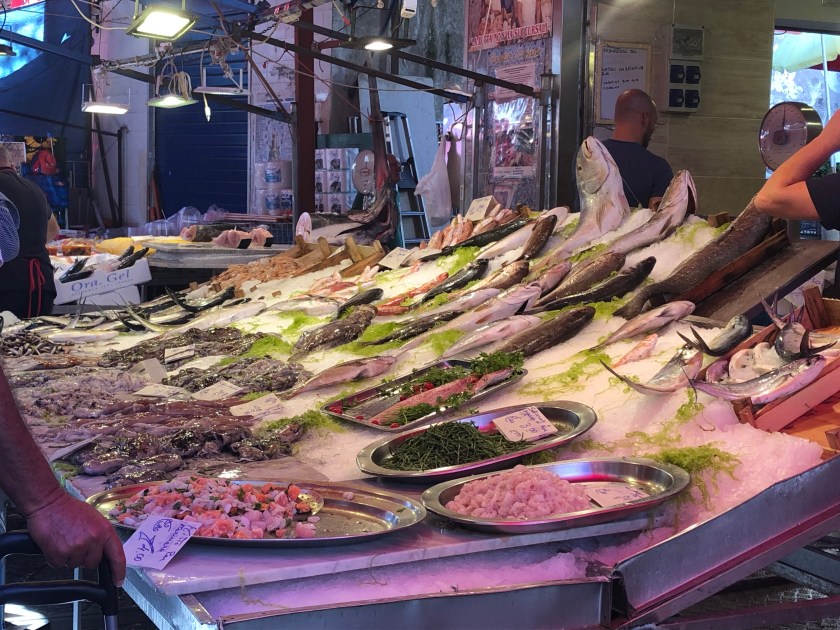
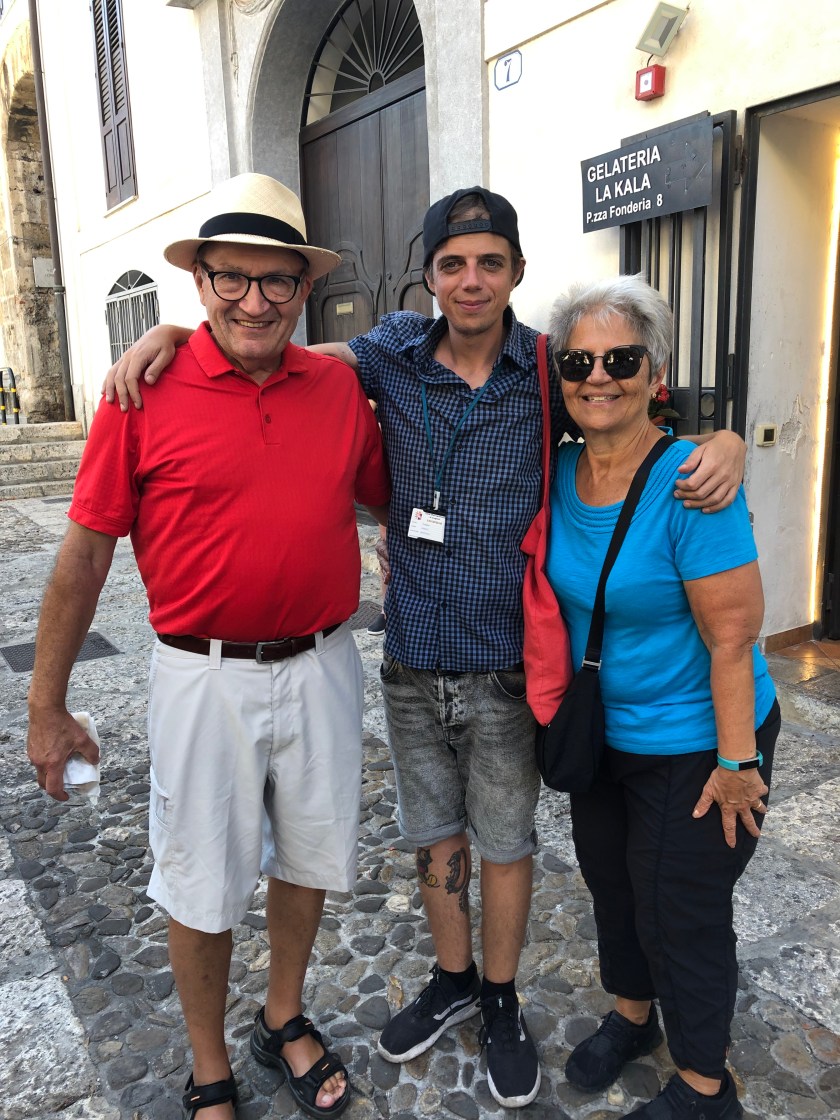
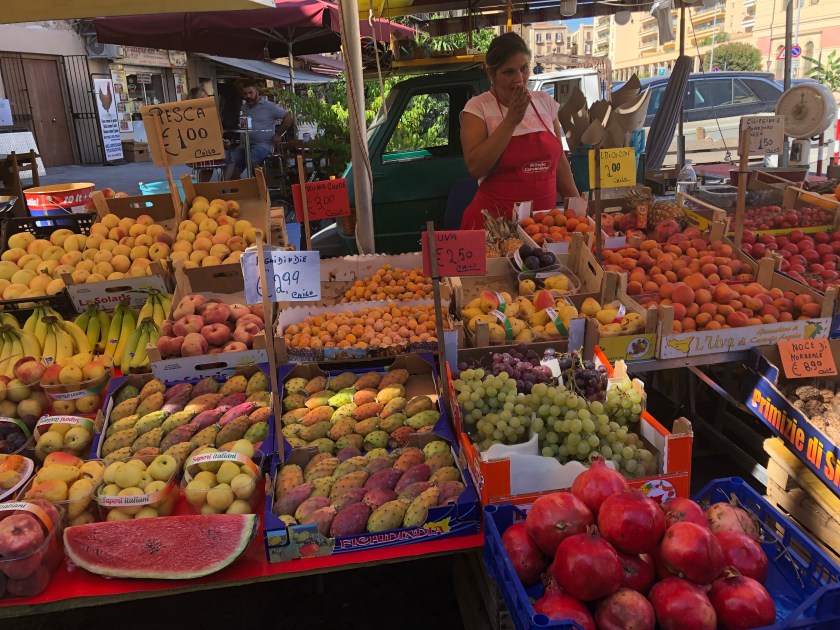
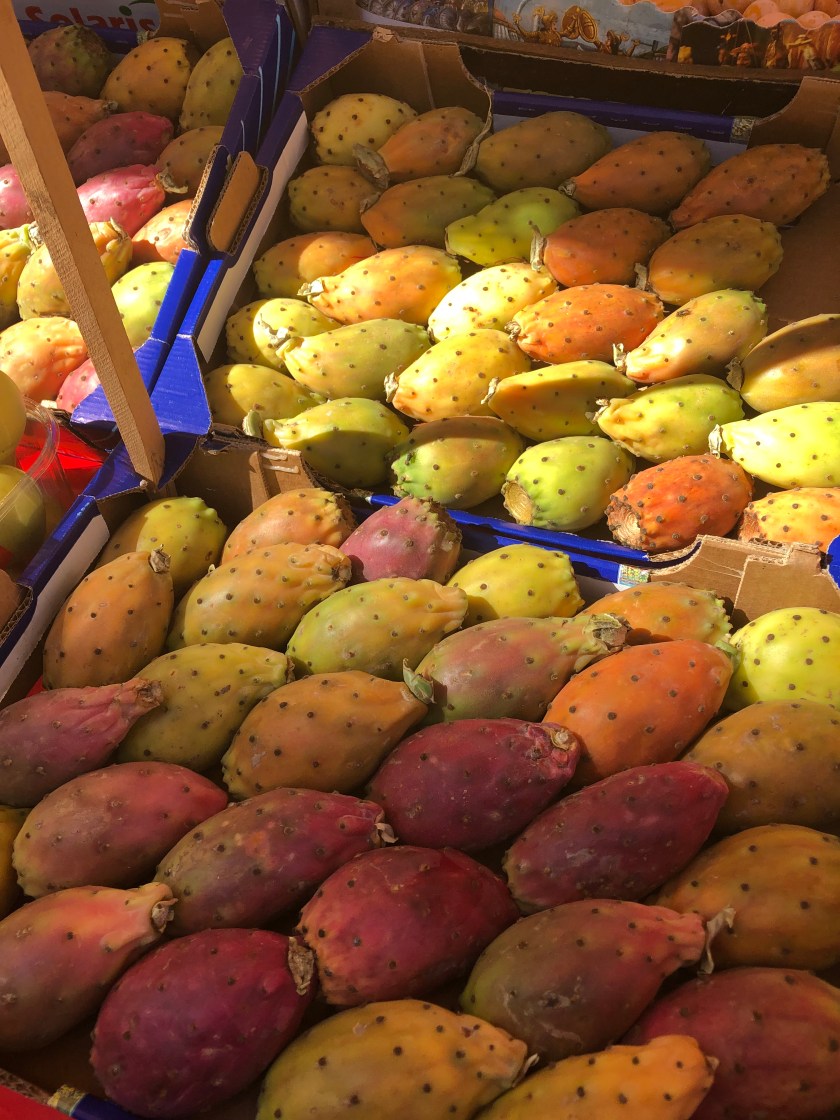
Street food has become the rage of the contemporary culinary scene, from the plethora of food trucks at local festivals to street carts selling quick snacks to passers by. But in Palermo, street food has been around for centuries and this city , as well as other cities in Sicily, is renowned for the variety and quality of these inexpensive, filling treats that are sold from street corner carts or small storefronts. Today was our introduction to Palermitan street cuisine via a food tour run by Streaty ( a local tour company started by a young Palermo native). We met our guide,Angelo, in front of the opera house. He was young (looked like a boy but was in his 30s), thin, generously tattooed, and passionate about his city and its food. We started in the Capo market, located near the opera house. It is one of three city markets (il Ballarò is the largest and the Vucciria is now pretty much an evening dining scene). The five senses are in a heightened state of awareness while walking by the stalls of produce, fish, cheeses and prepared foods.

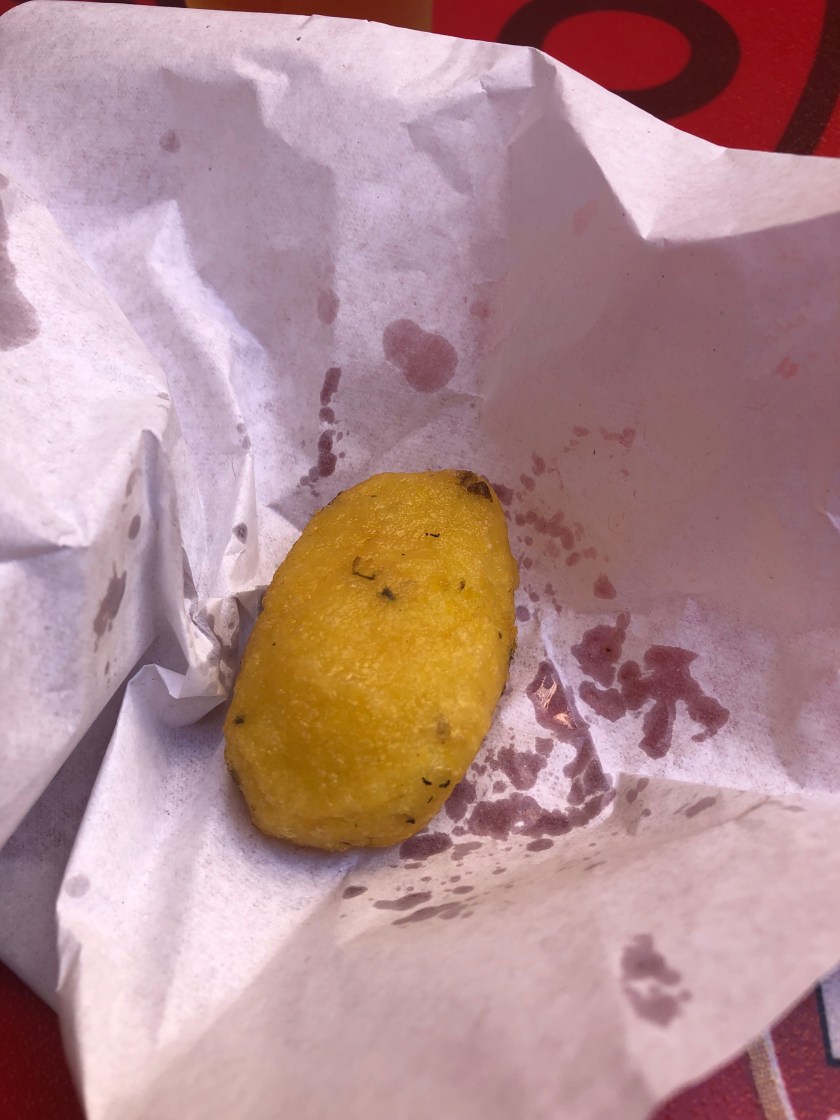
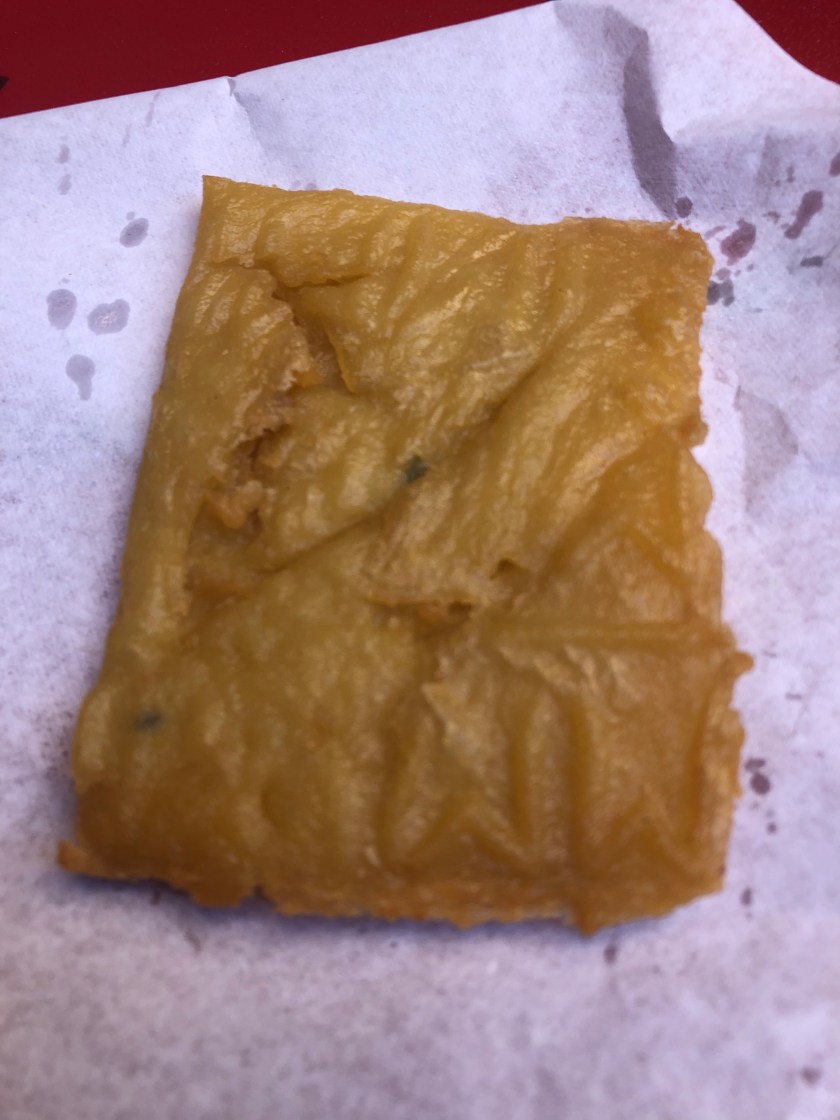
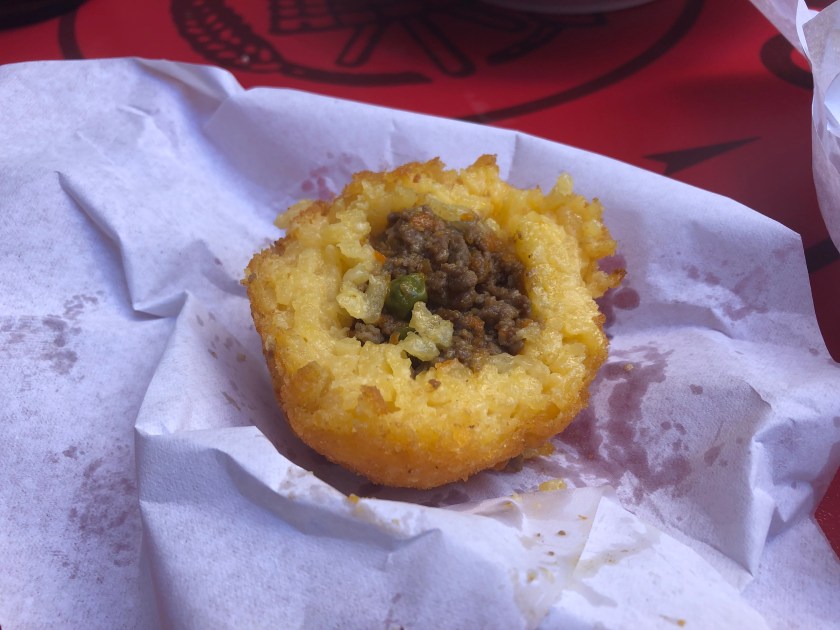
Our first food sampling stop was for a triple treat of fried foods- cazzilli (potato croquettes), panelle (chickpea flour flat fritters) and arancine (fried balls of rice seasoned with saffron and filled with meat and peas).

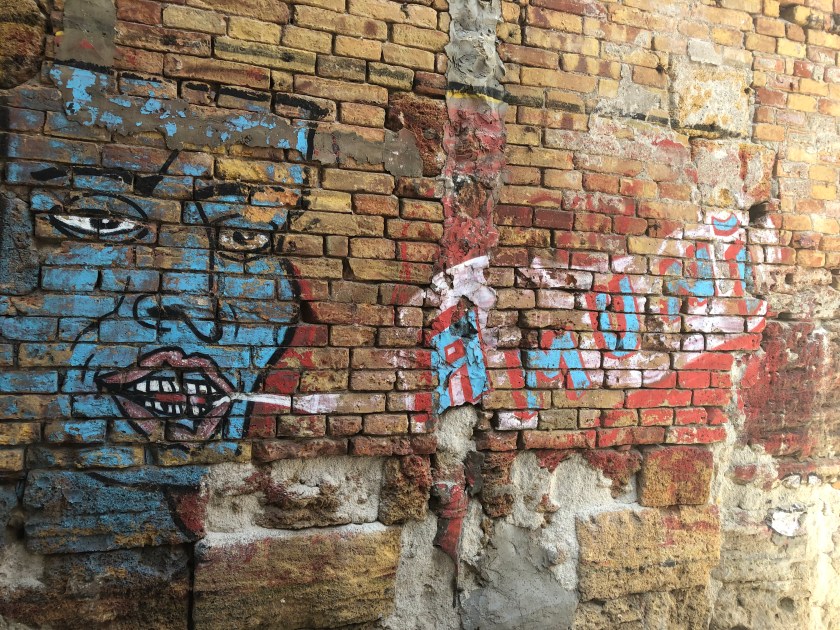
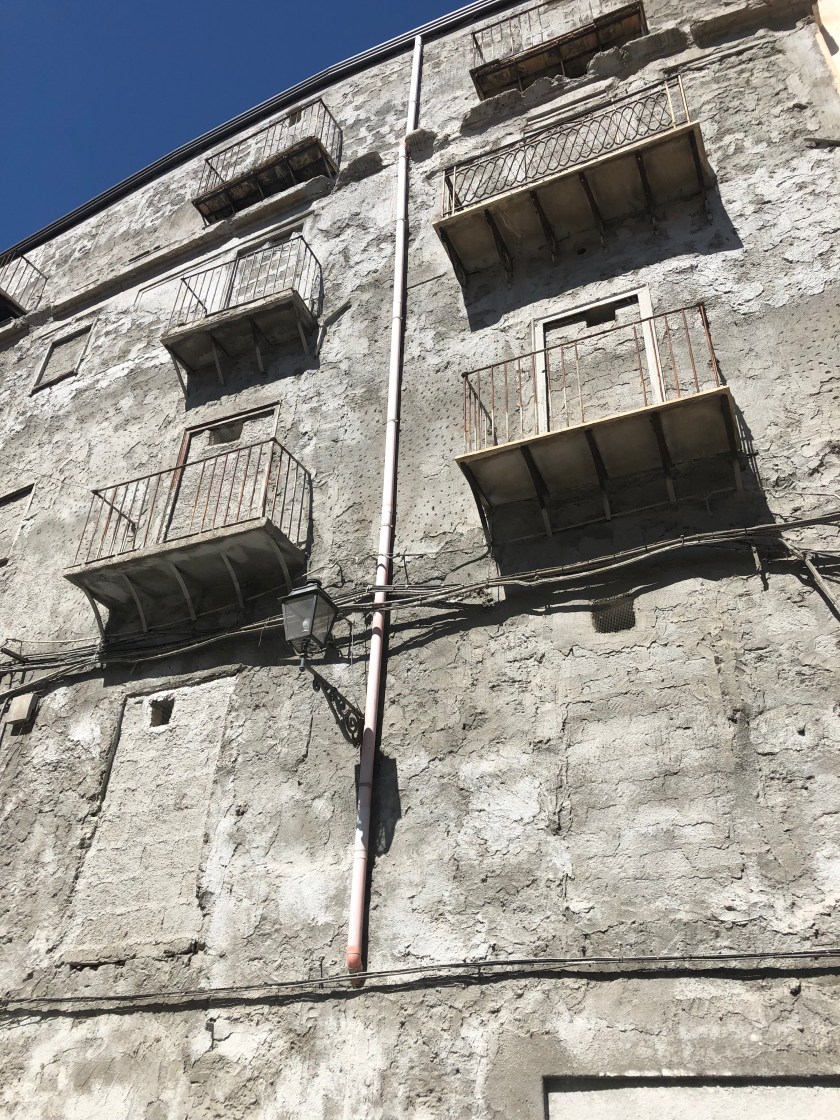
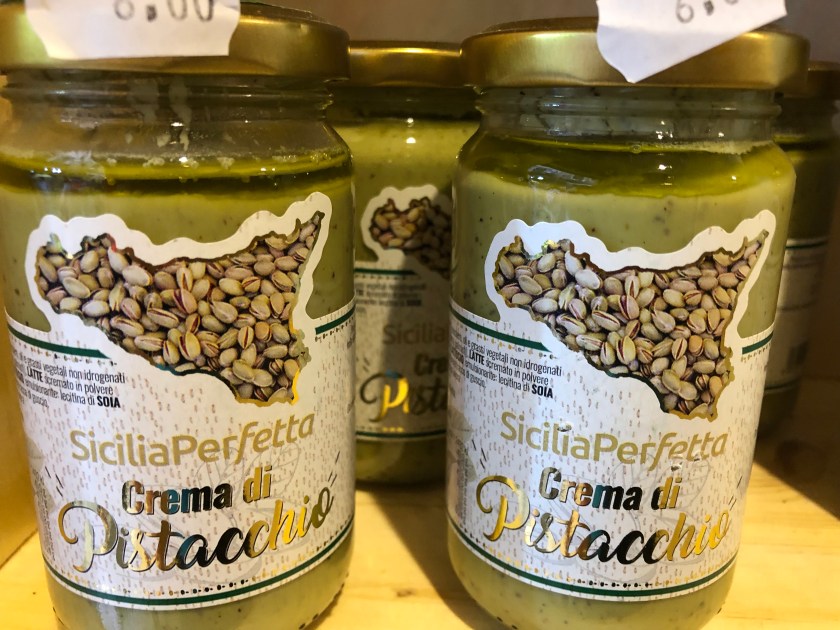
We also sampled shaved ice, creme di pistacchio and swordfish balls. As we exited the market, on the way to our next food destination, there was an informal history lesson – discussions of the residual evidence of the extensive bombing of the city during WW2,

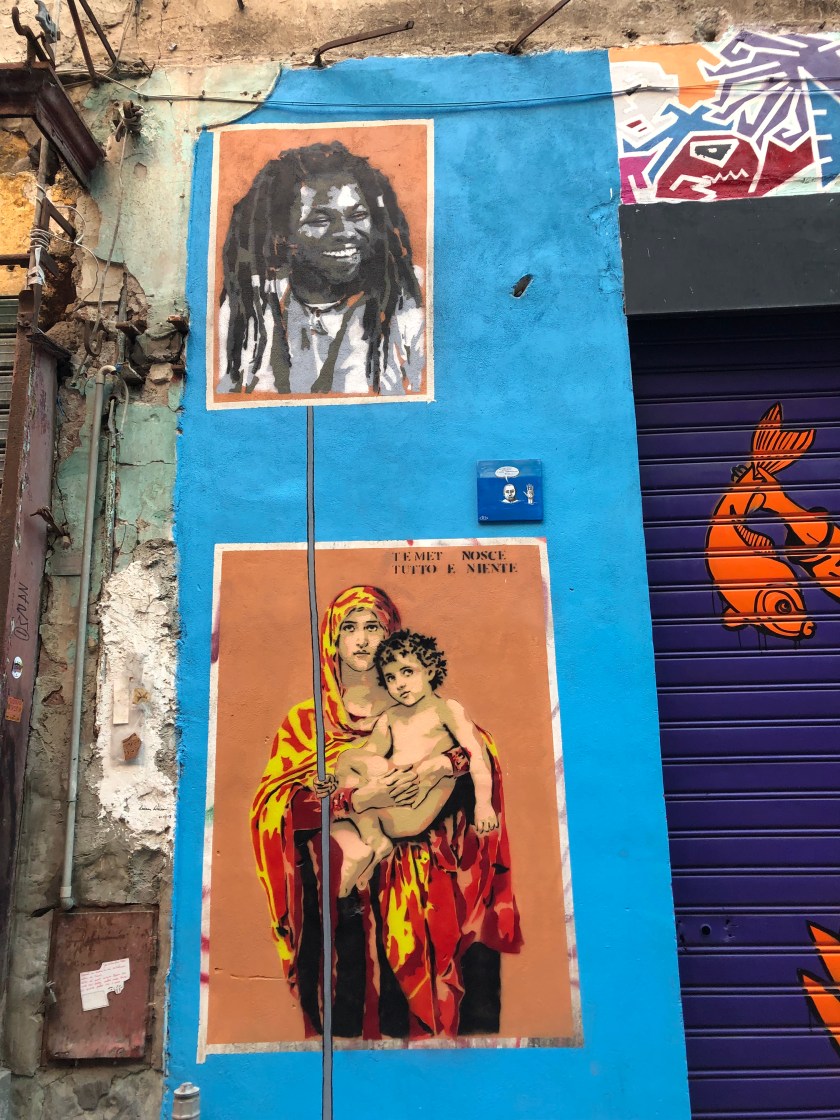
street art,

the immigrant situation ( and the government’s blocking off of abandoned buildings to keep out squatters), and the decline of the business in the markets due to shopping malls.

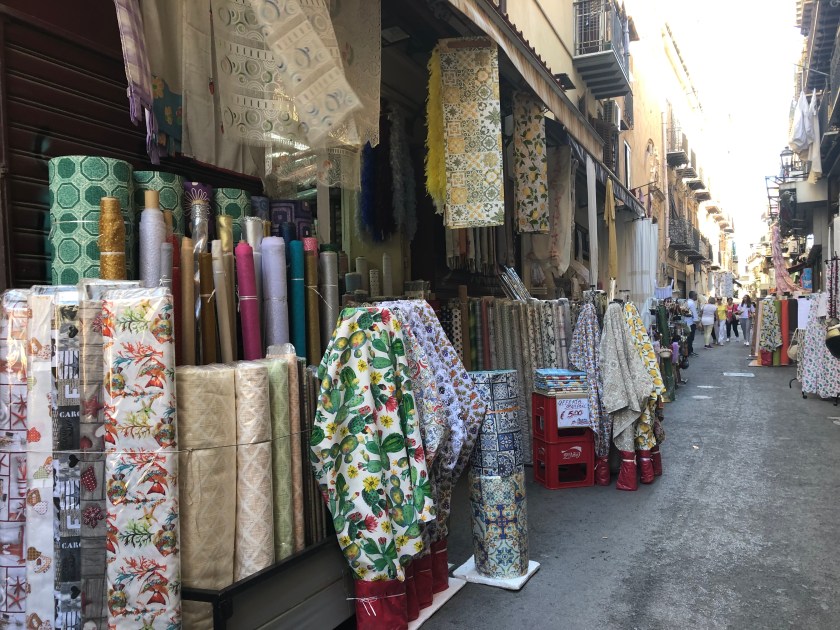
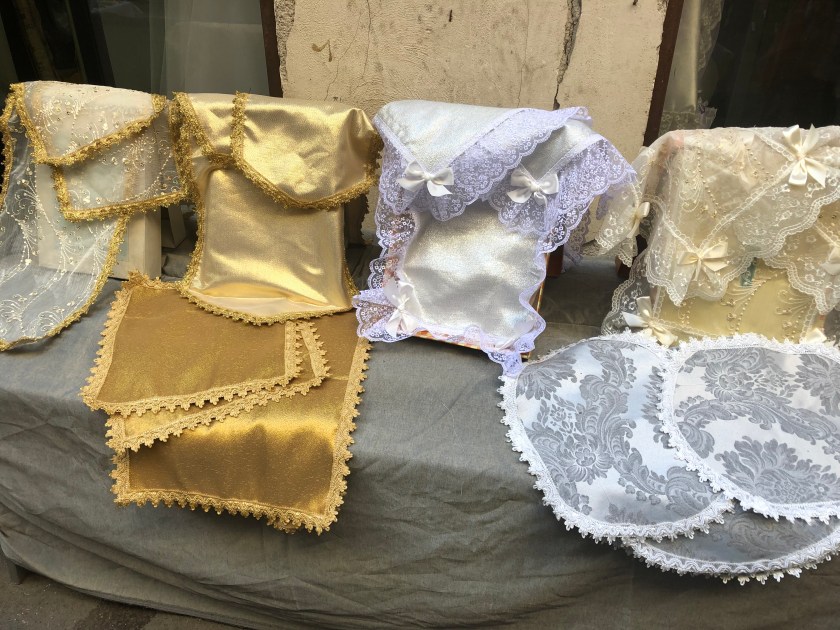
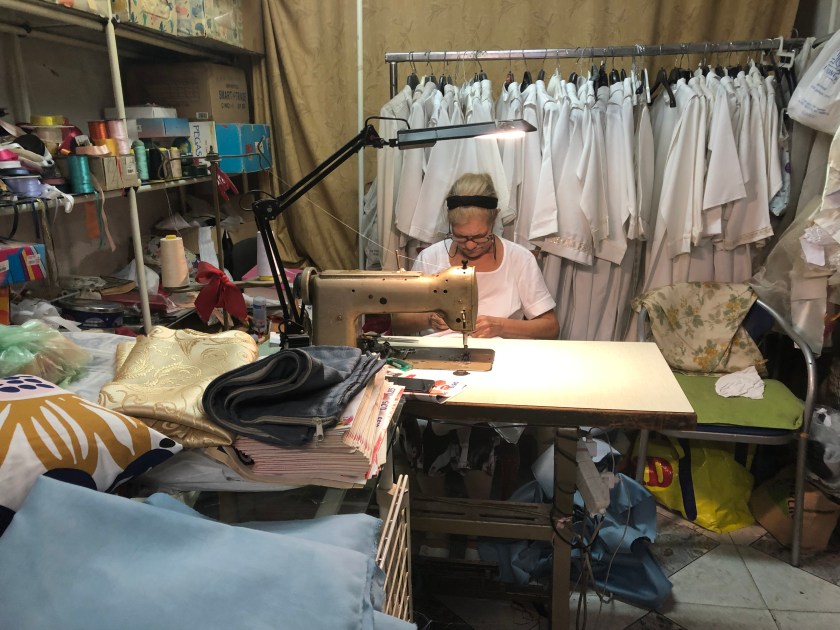
We also saw the textile area with shop after shop displaying huge bolts of amazing fabrics and displays of embroidered tableware and mer one of two women who is still crafting machine embroidered clothing using a foot pedal sewing machine.

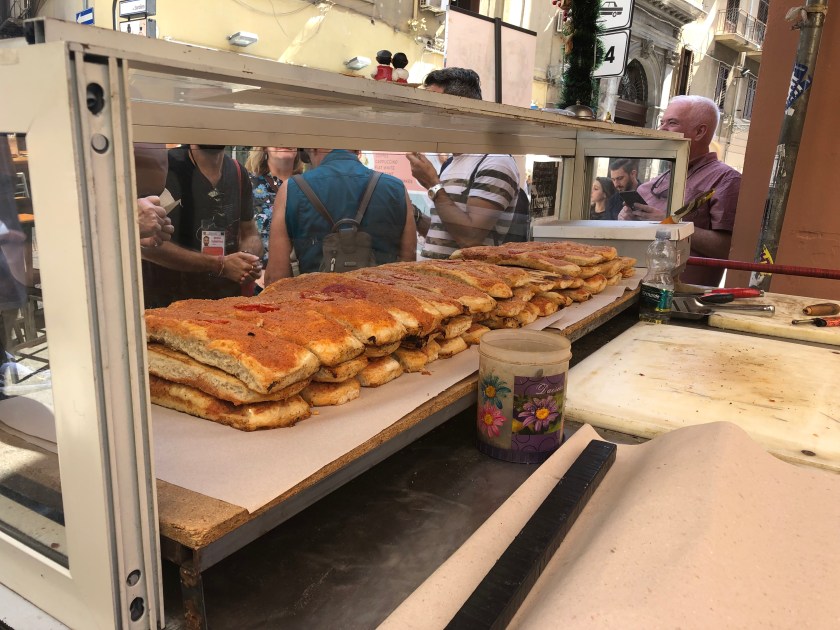
Next food stop was for sfincione, a peasant style pizza with tomato, onion, and breadcrumbs- the poor couldn’t afford cheeses or anchovies!

Along the way, there was more street art

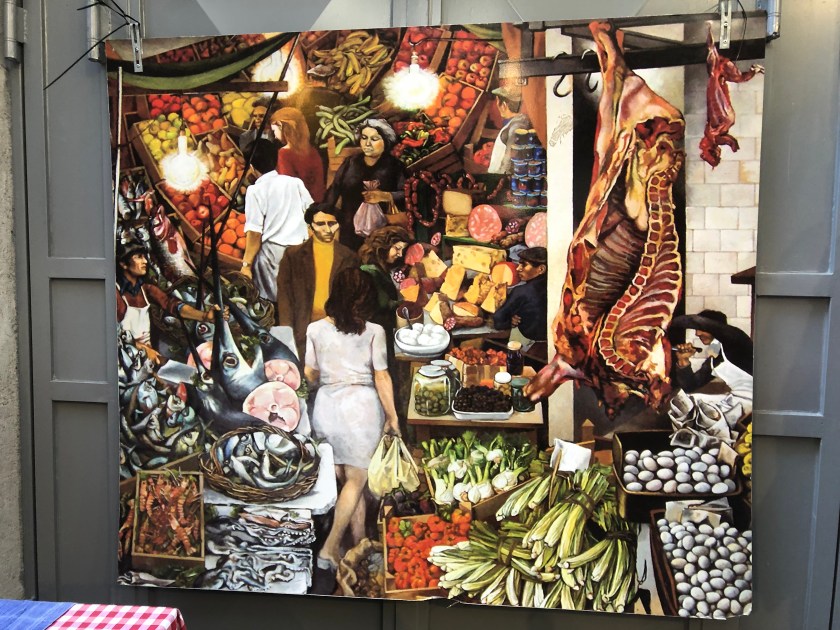
before we reached la Vucciria, traditionally the oldest market but now more of an evening entertainment district. There are few remaining vendors, it the most famous is Rocky Basile who sells the infamous pani ca’meusa (sandwich with spleen, lung and trachea cooked in lard).

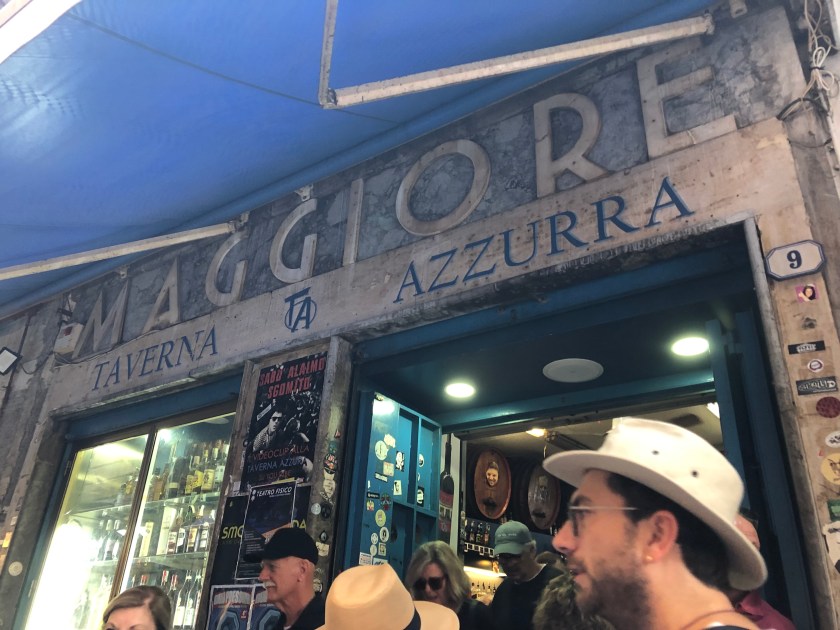
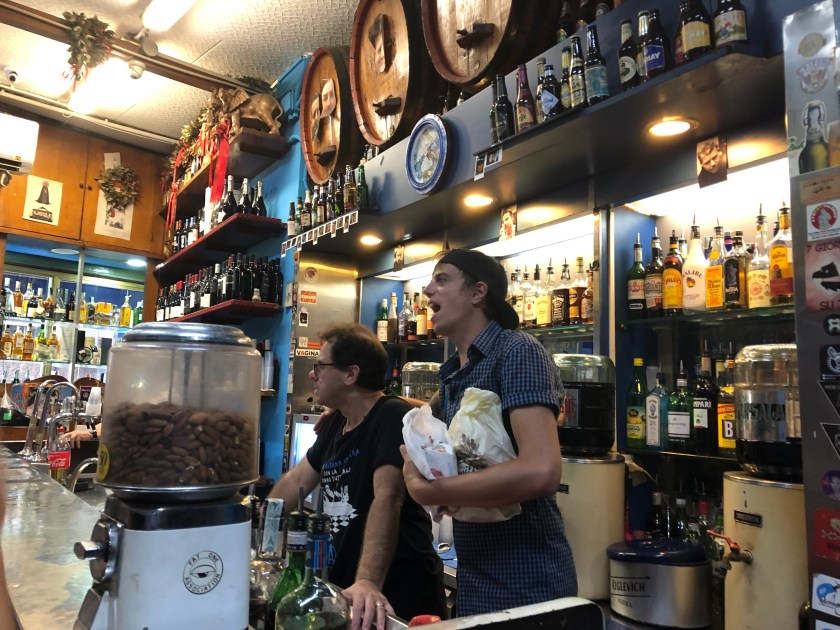
After the spleen sandwich we went to a century old taverna for a sampling of Sangue- a fortified wine made of raisins.

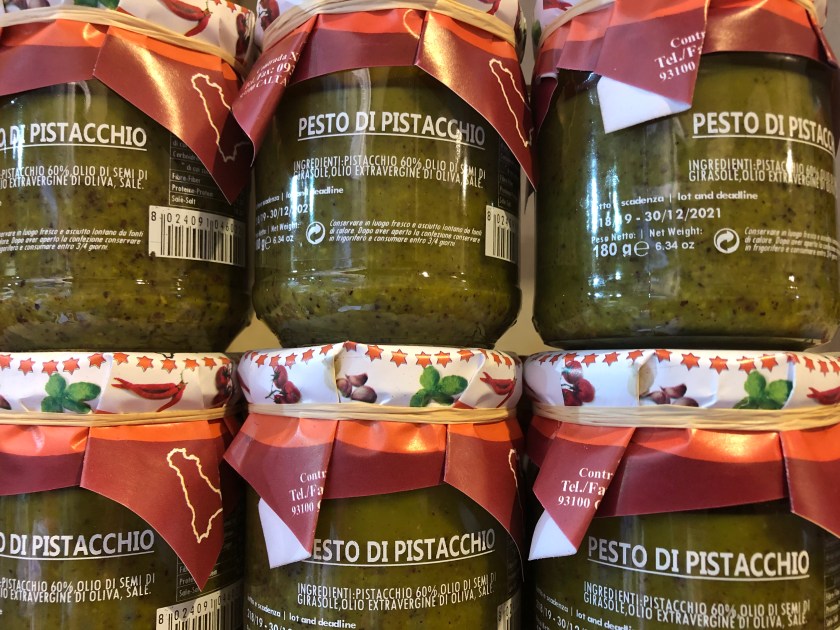
A taste of crema di pistacchio was a treat.

We ended at the port (la Kalsa) for a gelato in brioche.

Our guide Angelo bid us farewell and we returned to the B&B for a rest.

And to drop off dirty laundry at a little hole in the wall where a little old Sicilian mamma would wash it and we would several hours later pick up dry but very wrinkled clothing!

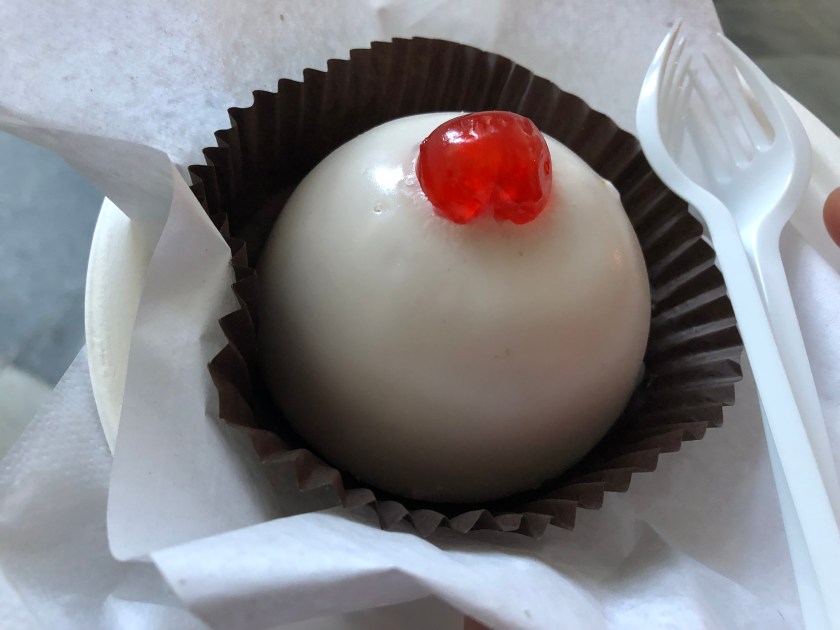
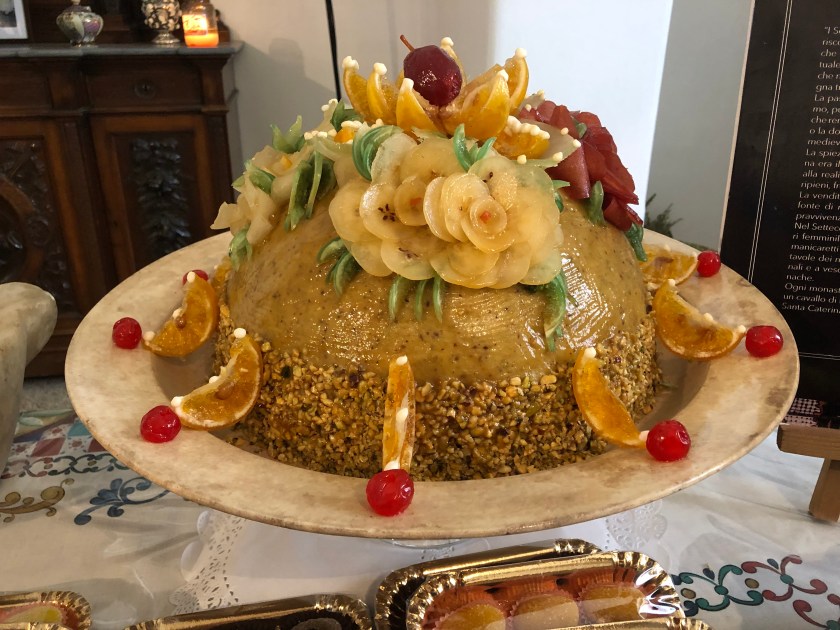
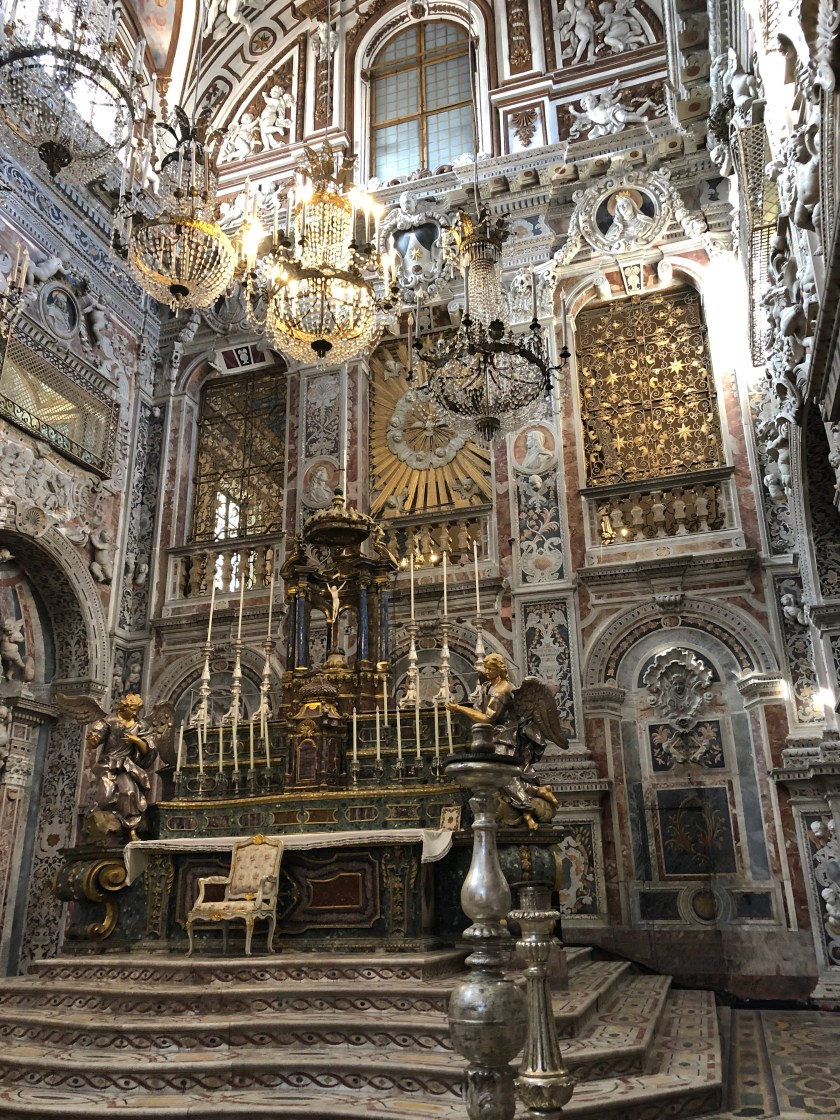
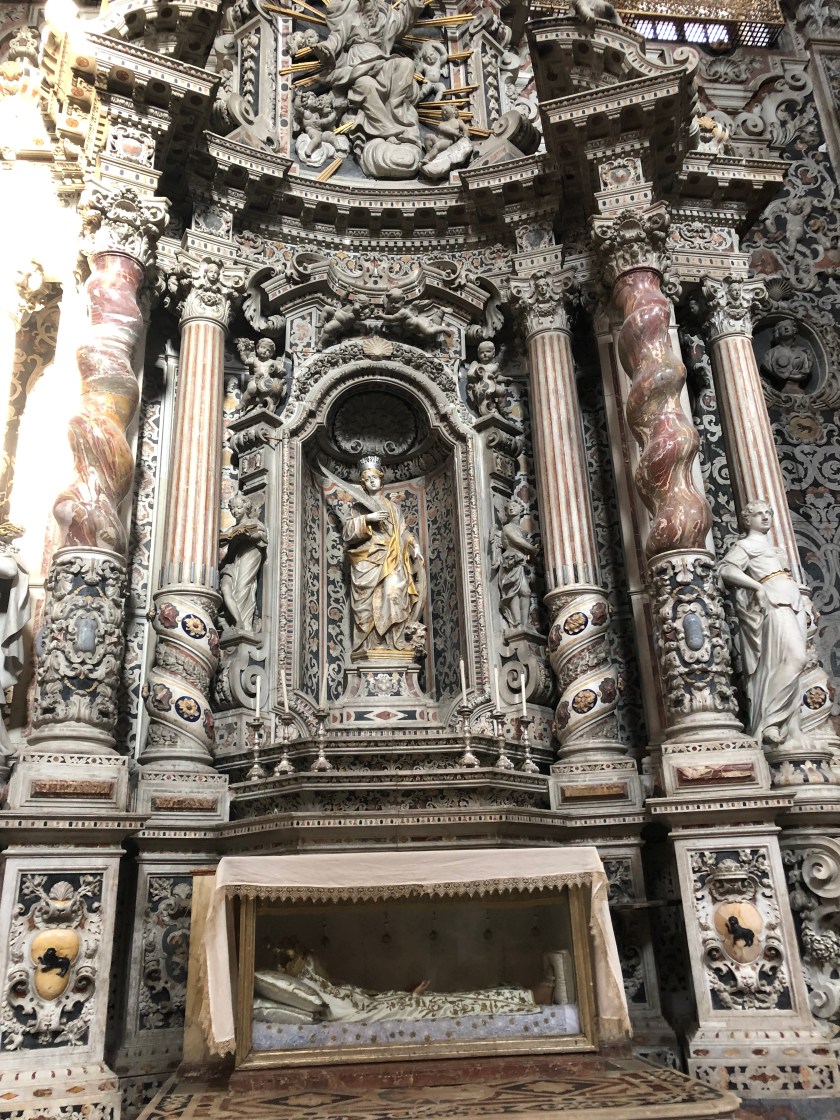
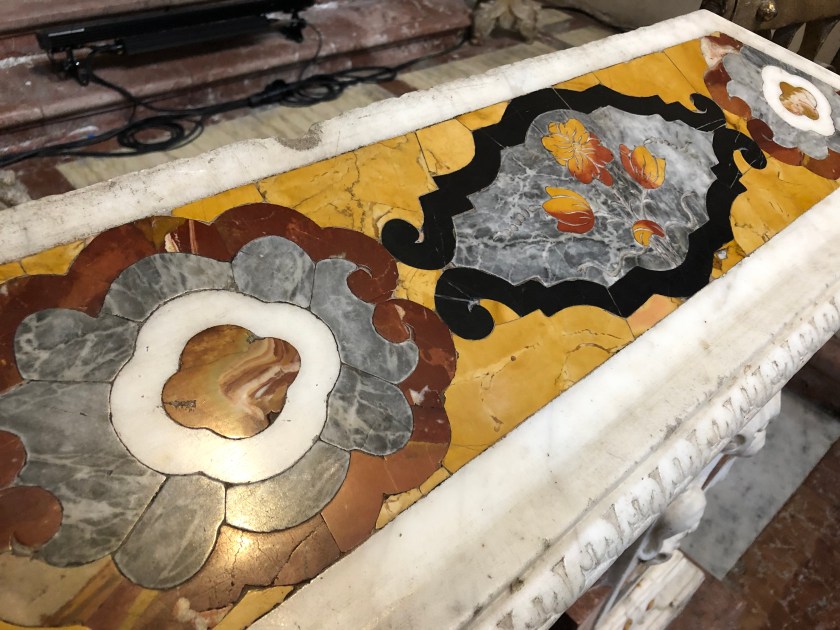
The rest of the day we visited some of the major churches. Santa Caterina is a Baroque gem, not impressive from the outside but an explosion of intricate inlaid marble on the inside. The nuns of the convent no longer live here but their pastries are world renowned as they perfected the method of creating realist fruit and vegetables from marzipan. Pastry are still sold here, especially famous sate the minne di vergine.

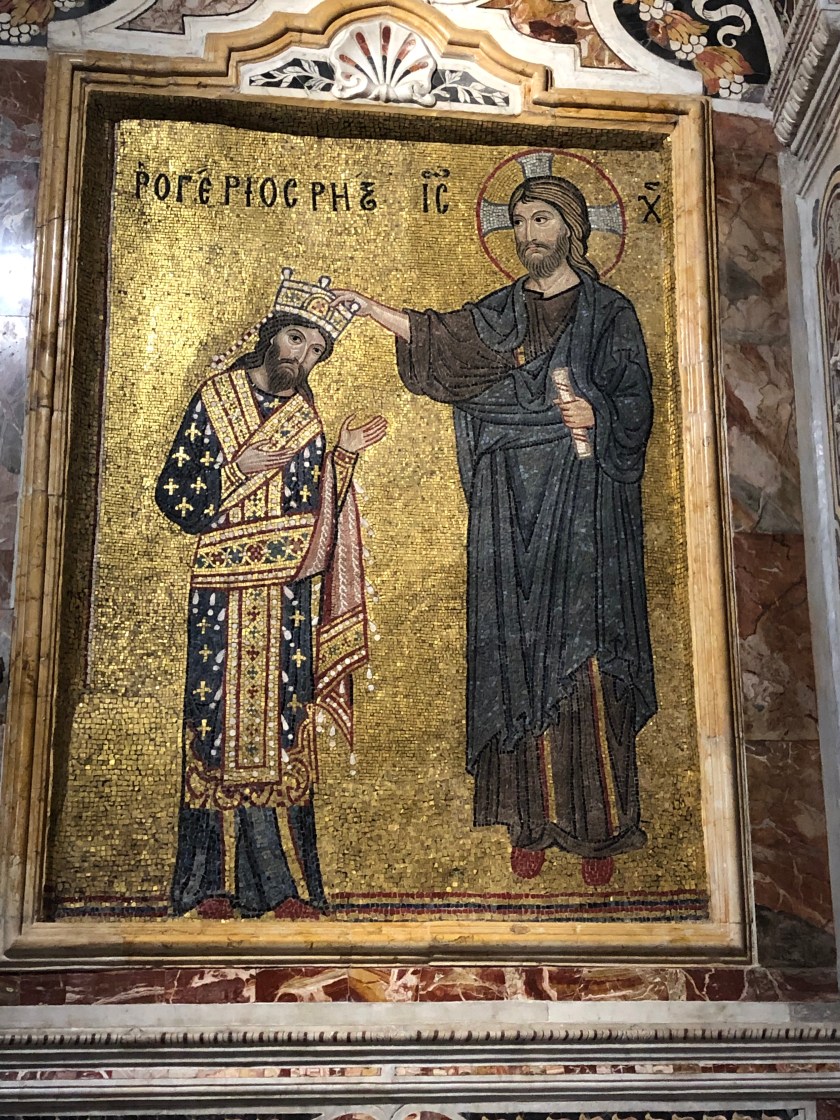
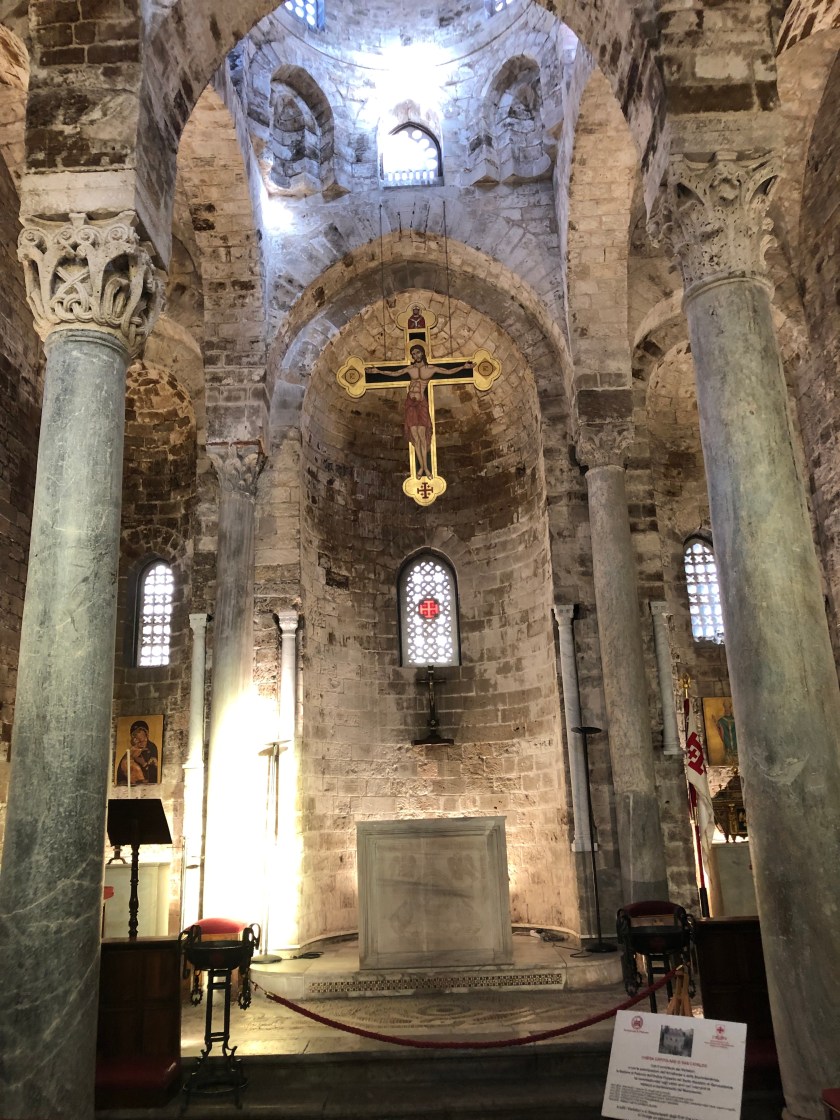
Across the piazza are two other churches of the Norman-Arabic style – La Martorana and Chiesa of San Cataldo, the first a mix of Byzantine and Baroque and the second with a stark almost Gothic appearance. Both churches date from the 11-12th centuries.

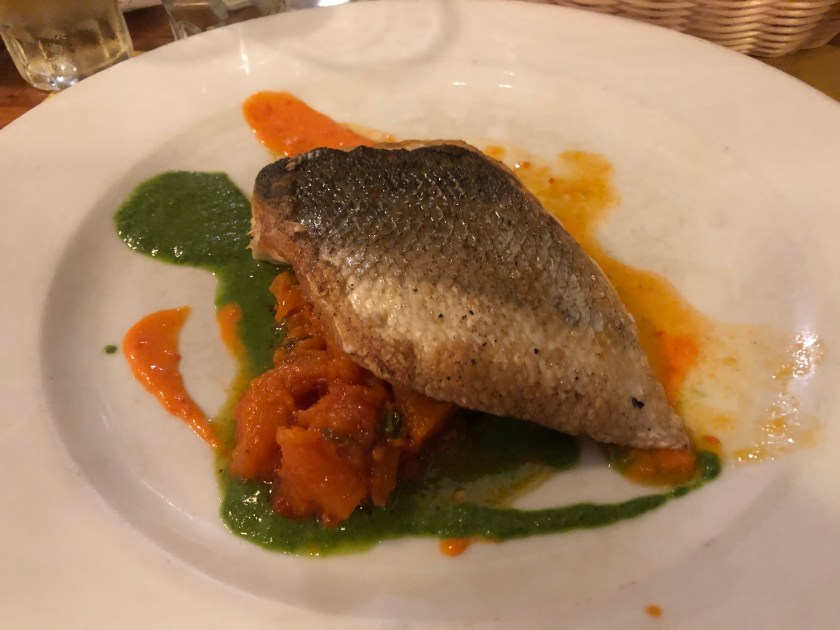
  • We ended the day with a delicious and inexpensive dinner at Bisso Bistrot on via Maqueda. It’s a funky place where you may sit at communal tables while feasting on couscous, house made pastas and fish. We had a grilled fish with carrots and zucchini puree
  • seafood couscous
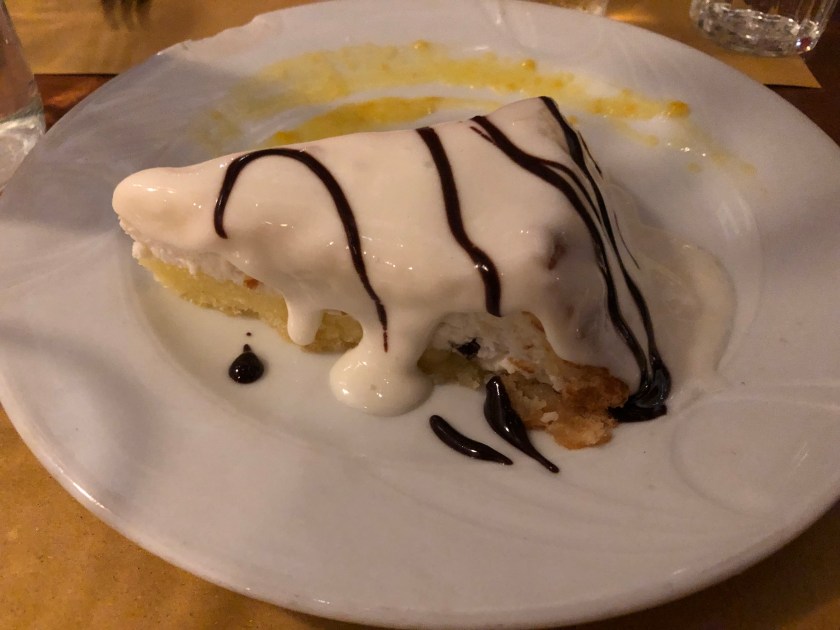
  • and cassata siciliana
  • After dinner we strolled to the Piazza Verdi where the opera was letting out and a street performer entertained the crowd.
  • Ritorno in patria- Back to the motherland

    After nine days on the mainland, today I returned to the birthplace of my mother – bella Sicilia! We had an 11:45 a.m. Alitalia flight out of Fiumicino airport that, despite being an Italian airline, left on time and arrived a couple of minutes early! And flights within Europe are ridiculously inexpensive when compared to flights originating in or within the United States. It cost only $178 for two one way tickets, including the extra fees for early seat selection and checked bags! The plane ticket was less expensive than taking the train (which would have been a miserable 10 or 12 hour overnight ride.

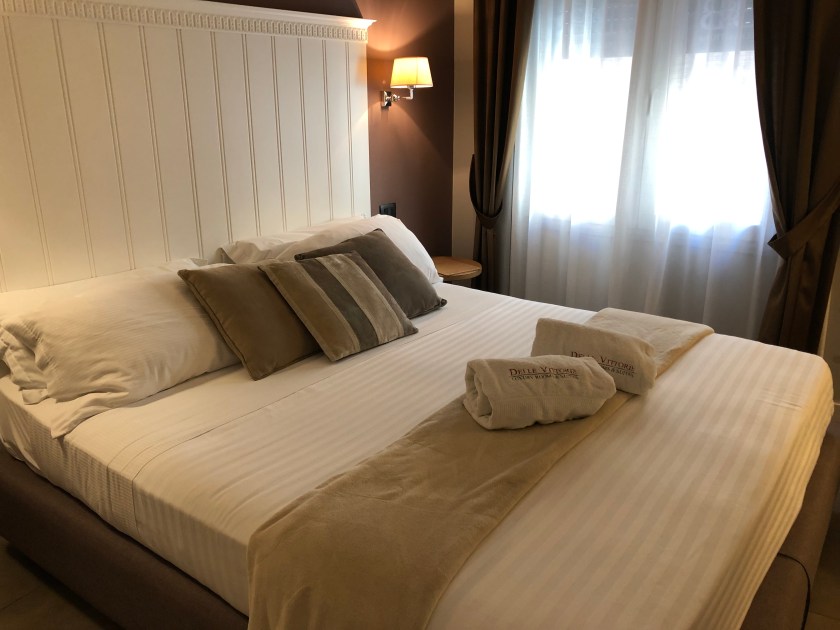
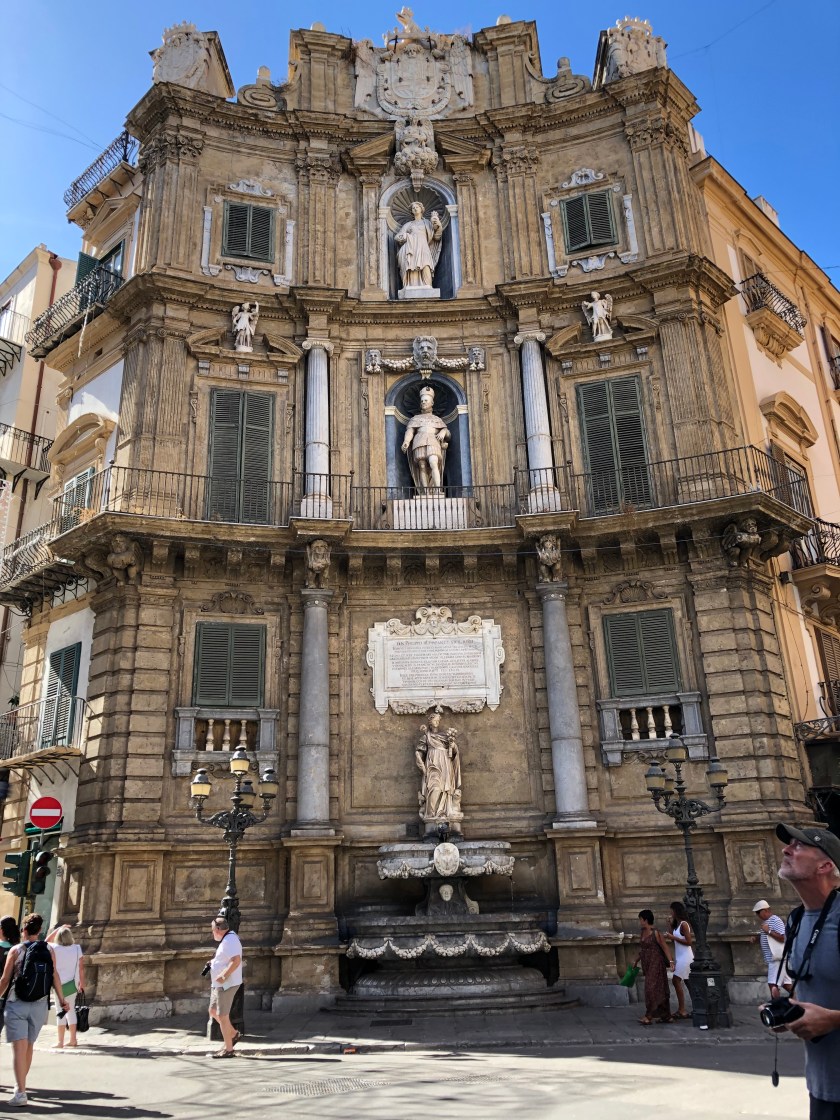
    The prearranged driver was waiting for us at the arrival area and we were quickly swept off, in a large van, to the bustling city of Palermo, the capital of the region of Sicily. The traffic was crazy, as is anyone who would actually choose to drive in this city. The driver wove in and out of traffic lanes, dodging cyclists, motorcyclists and other cars in this ridiculously large (for Italy) van. Within an hour, we arrived at B&B Delle Vittorie, just around the corner from via Maqueda, a main pedestrian thoroughfare lined with restaurants, shops, and bars and only a five minute walk to the Teatro Massimo, the third largest opera house in Europe and a magnificent architectural wonder.

    The B&B is gorgeous- located on the 2nd (1st in Europe) floor of an early 20th century palazzo. The rooms are modern and the bathroom is quite spacious.Much of Palermo was bombed in WW2 and the city has been the site of conquests over thousands of years, so most of the buildings are fairly new in relative Italian terms, i.e. 17th through 20th centuries. The city has a gritty and bustling vibe, much like Naples.

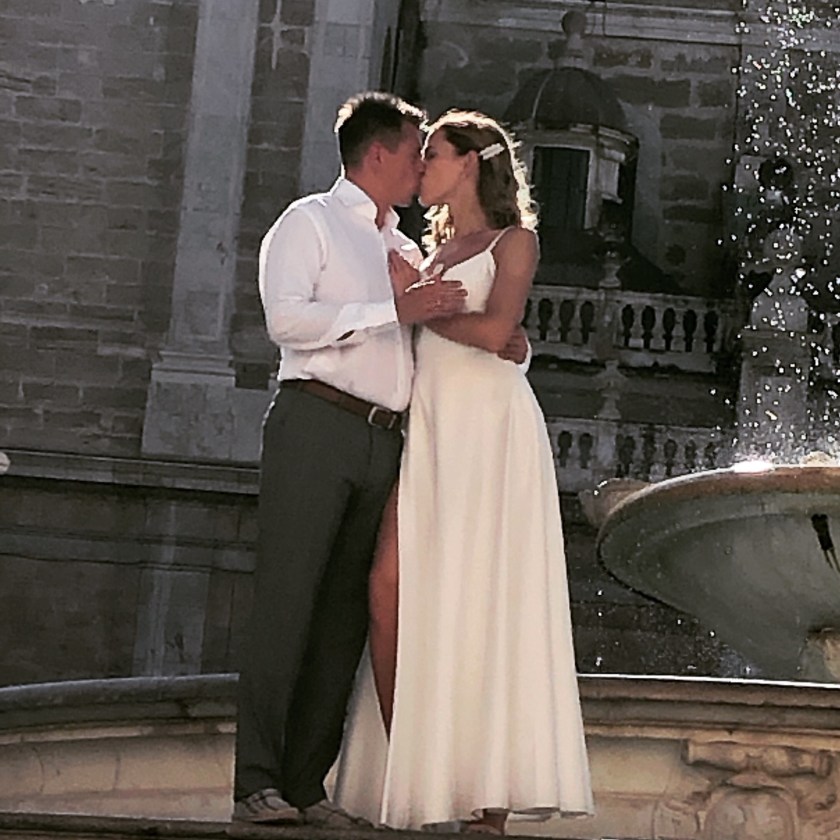
    After a quick lunch at the bar on the first (ground) floor (eggplant parmigiana and couscous) we took a walk to get oriented to this part of the city. We had our first granita (a typical Sicilian treat of a fruit ice, traditionally lemon) and spotted the first bride in Sicily.

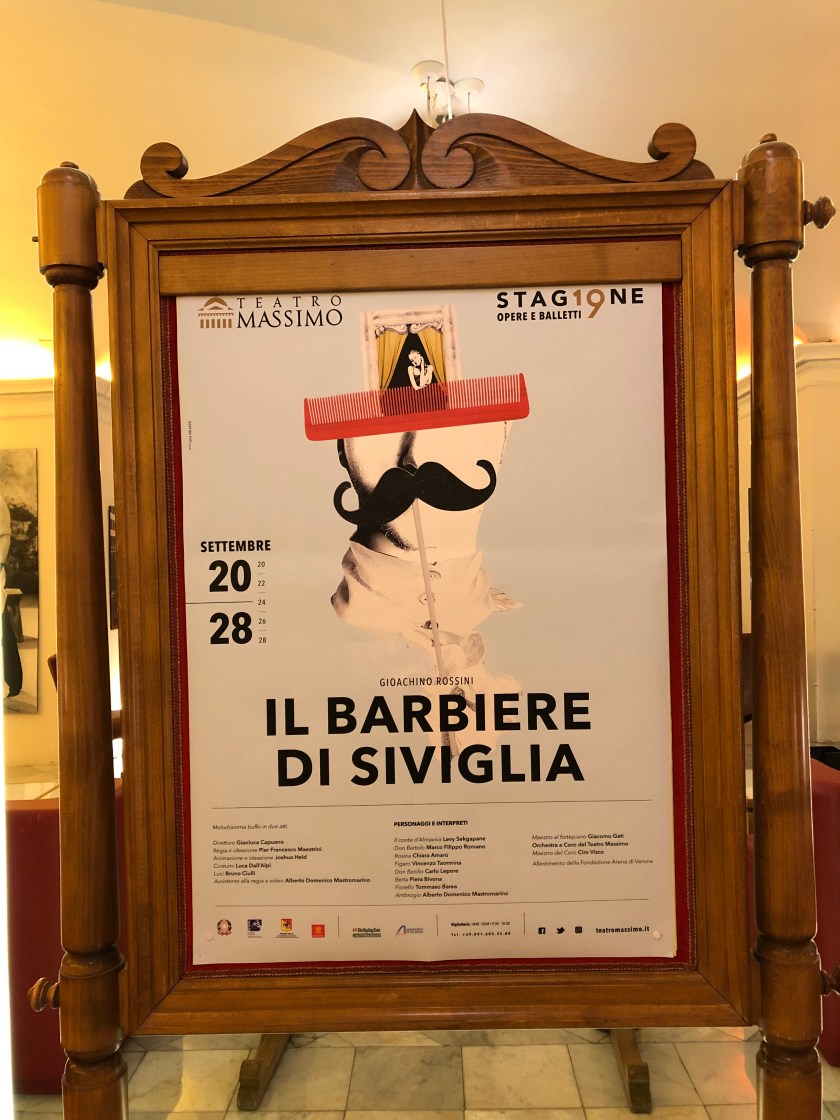
    Then we returned to the B&B to get ready for our night at the opera, the Barber of Seville.

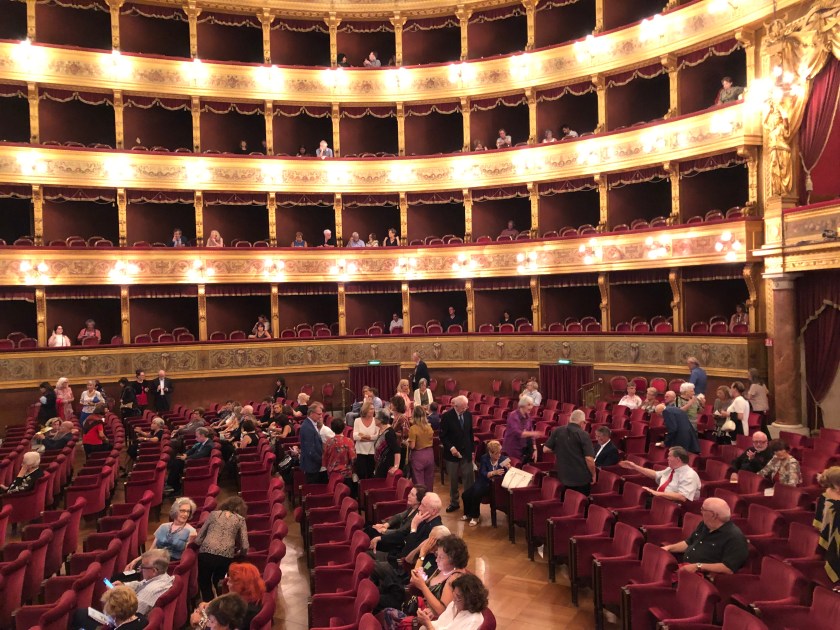
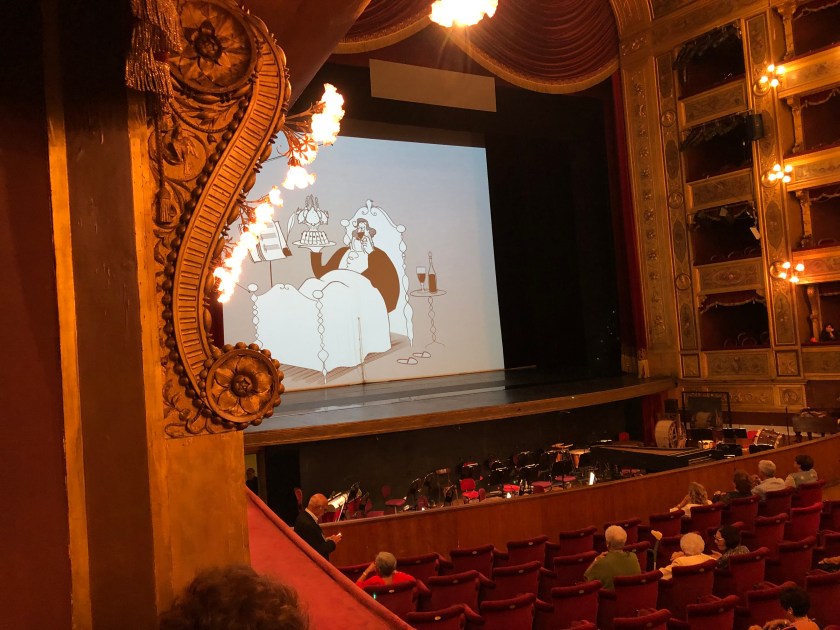
    The opera house is a magnificent structure, with seating boxes rather than the balconies we see in American theaters.

    The performance was unique in the sense that it incorporated animation as a background rather than a traditional set.

    The theater was impressive but so was the temperature- no air conditioning– explaining why most of the women carried fans!

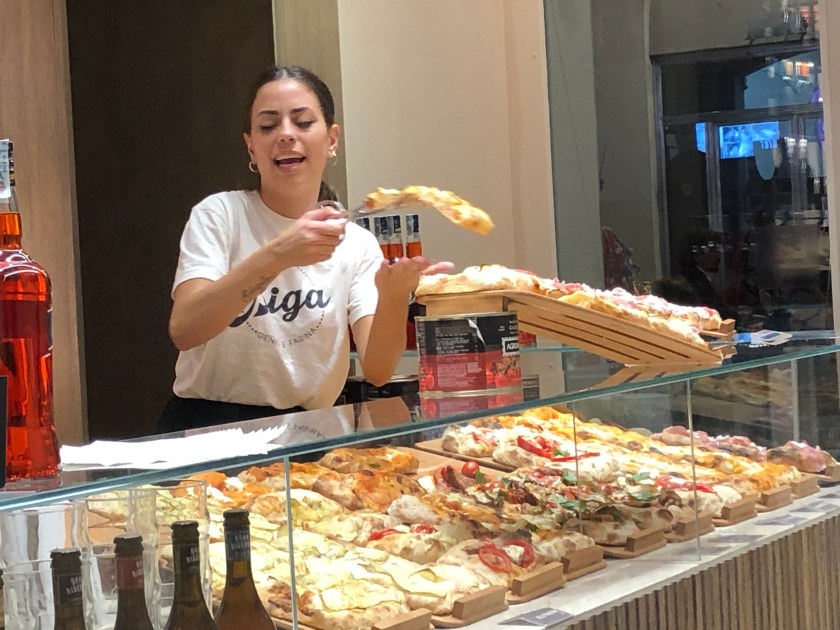
    Afterwards we took a stroll down via Maqueda and just had a slice of delicious Sicilian style pizza at Biga, just around the corner of the B&B.
    Tomorrow starts our 17 day trip around the island, revisiting some place we saw 21 years ago and exploring some new sites.

    Retracing Steps in Rome

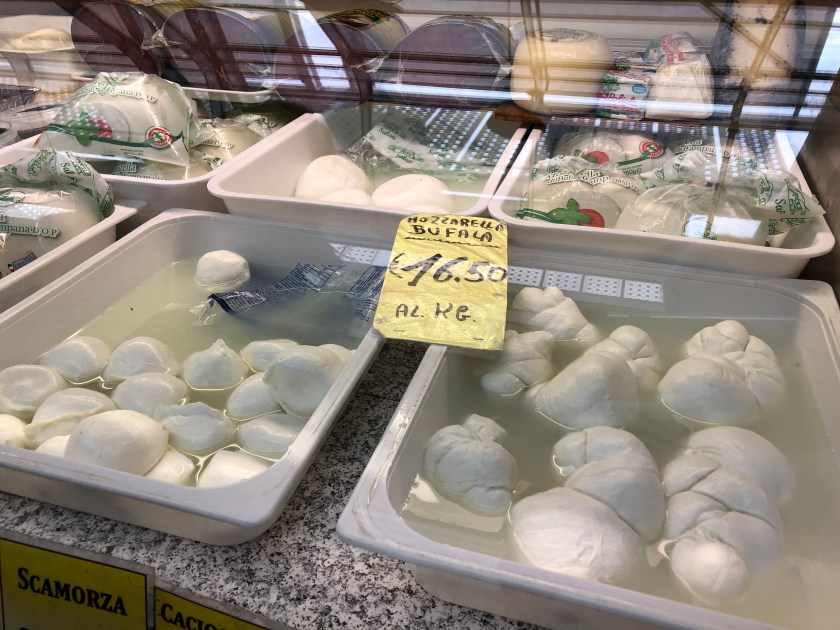
    Today was a day of reprises – repeating things I’ve done in prior trips to Rome, but with some variations. I love food tours…..because I love all aspects of food (eating, cooking, taking Instagram photos) and because it gives me a sense of the culture, history and people of the place I’m visiting. In prior visits to Rome, I have taken a private tour of Testaccio with Katie Parla (2012), Eating Italy Food Tours (2018), and this time a private Testaccio tour with Sophie Minchilli. The Testaccio market building is new (2012) to me as it had not yet moved to its present location when I took the tour in 2012. The initial public outcry to relocating the market to a modernist rather sterile building has alleviated and this new market is an integral part of this non-tourist working class neighborhood. The collection of vendors and their products, most from local farms and farm-related industries, is a visual potpourri of color and aromas.

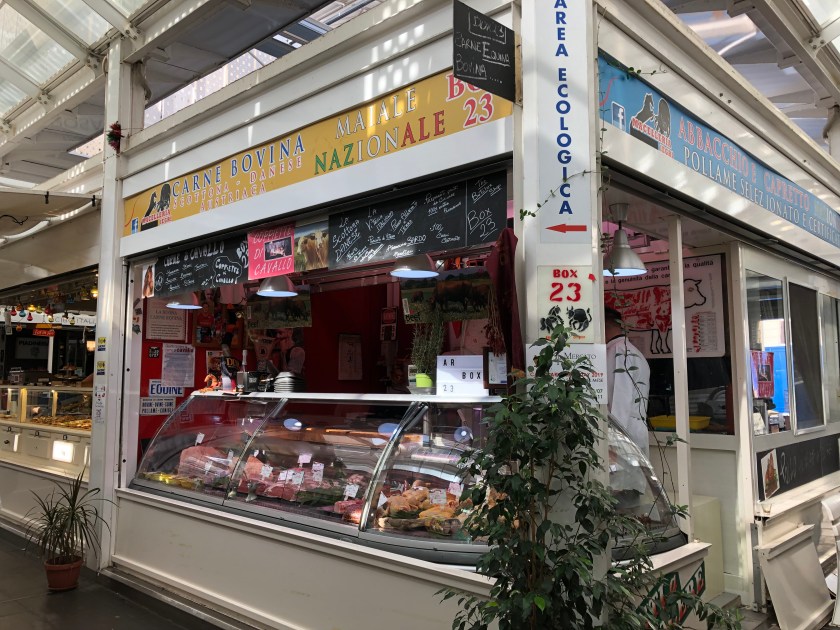
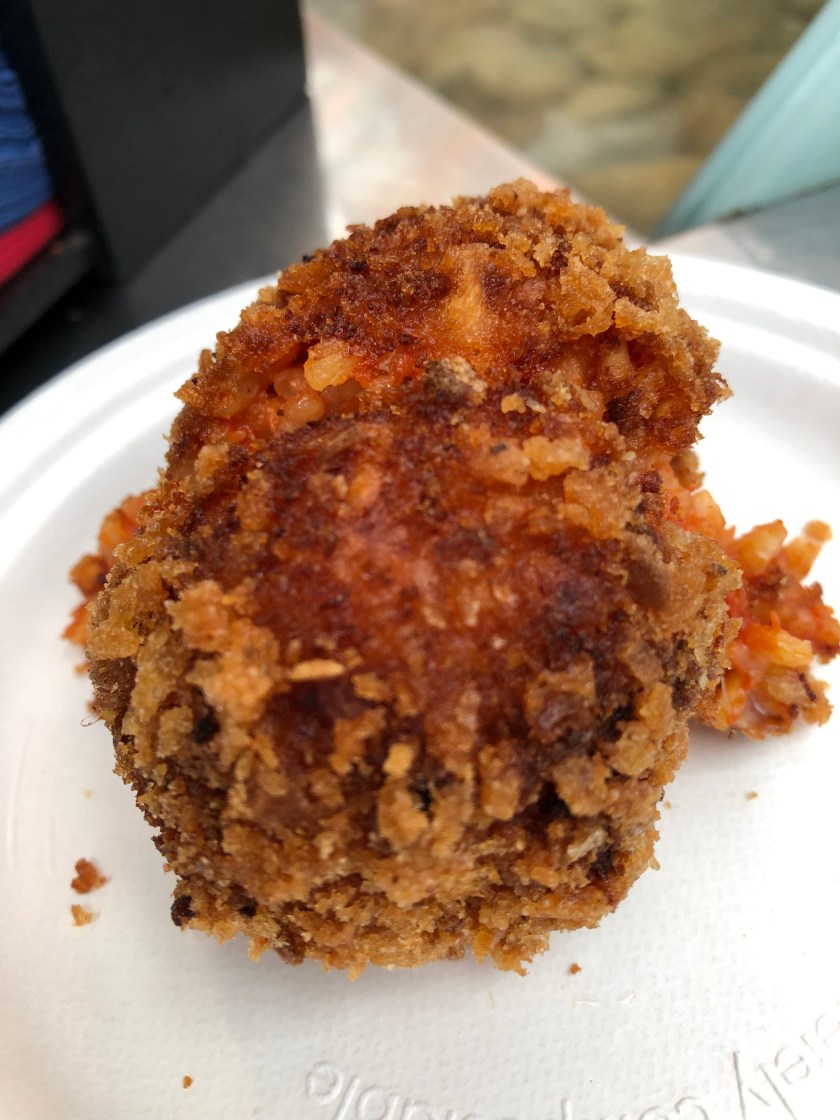
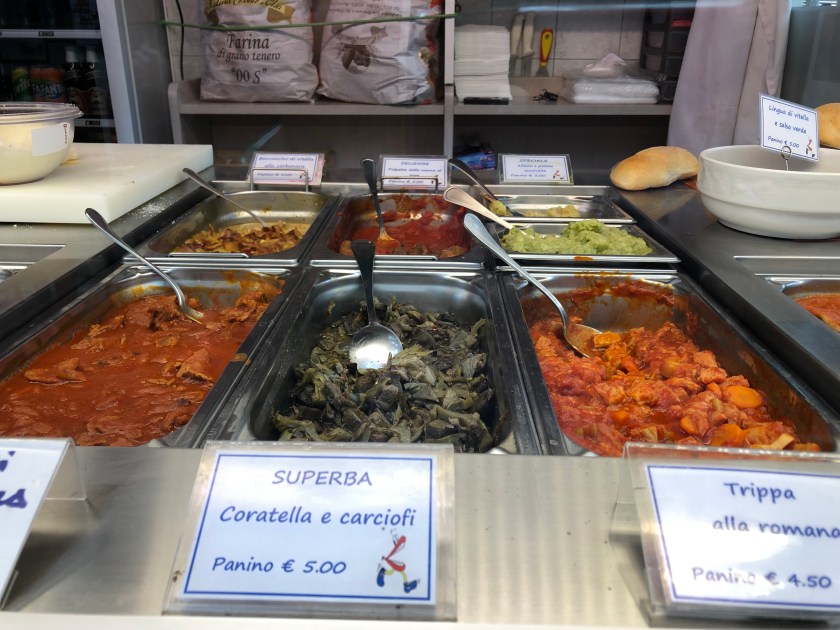
    Not only are there produce, meat and cheese stalls, but there is a selection of prepared foods that can be purchased to be taken home or eaten on site, like the characteristic suppli.

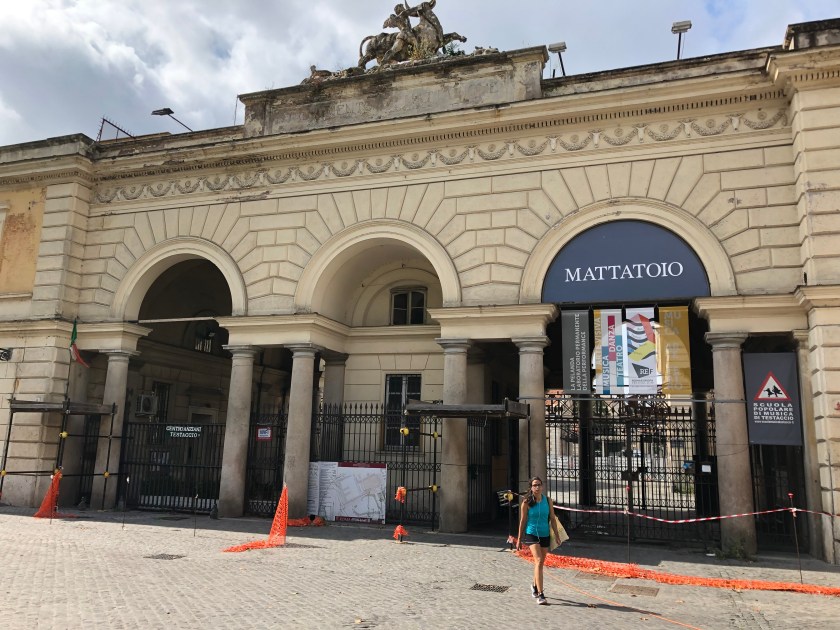
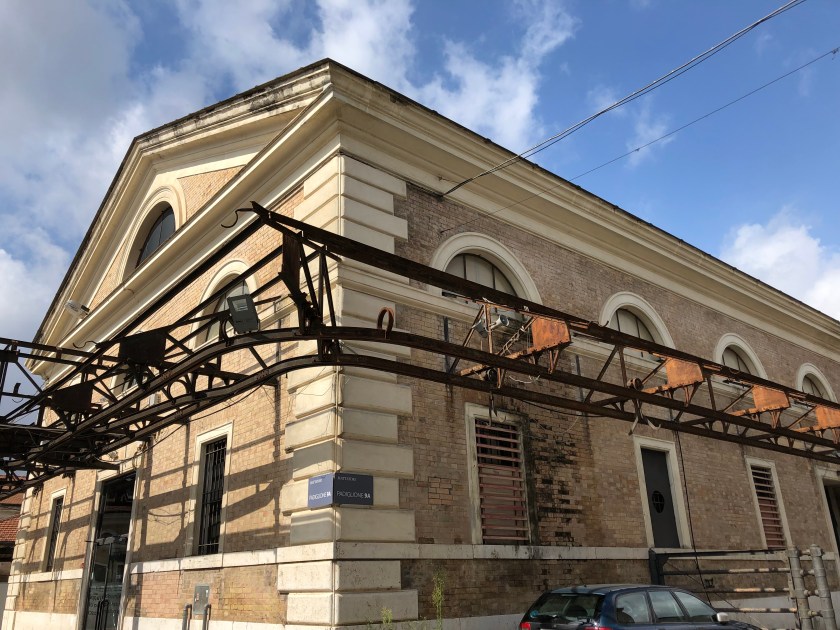
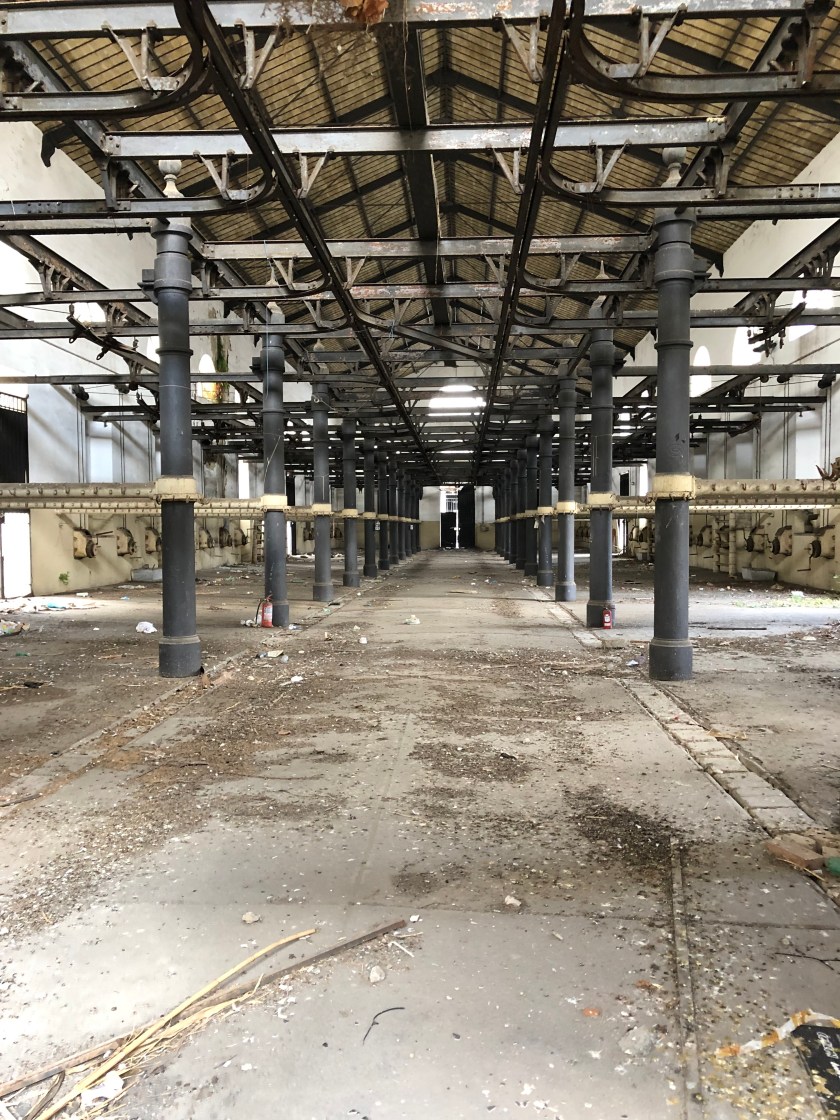
    We also walked through the old slaughter house, that functioned from the 1800s up to the 1960s.

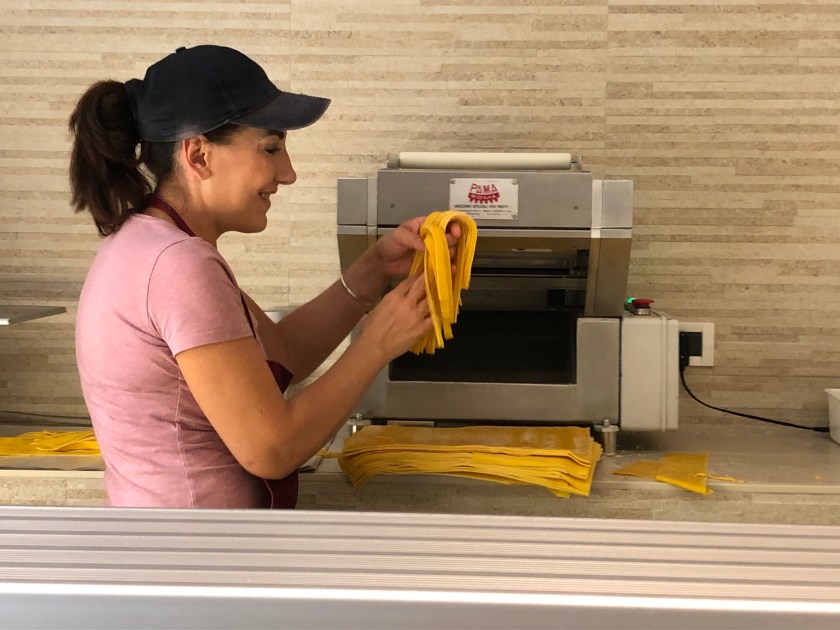
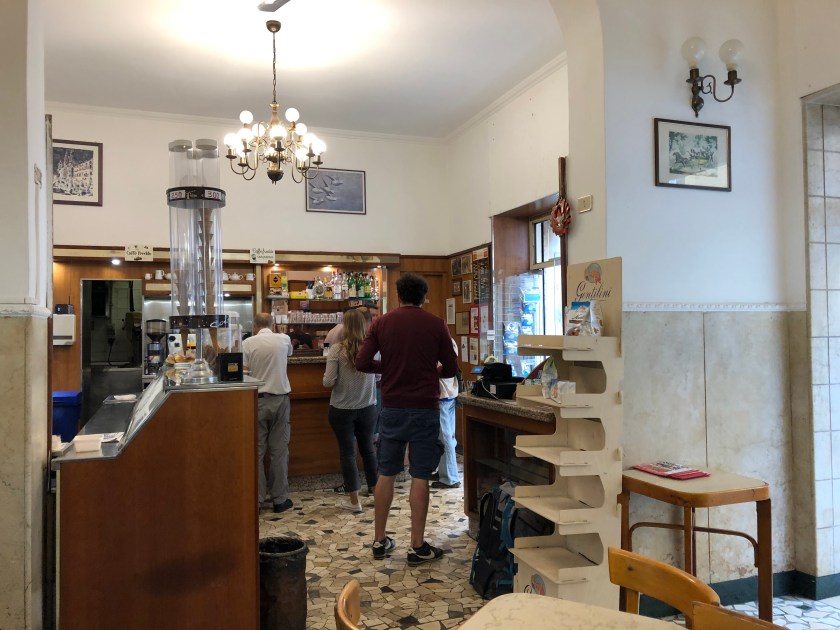
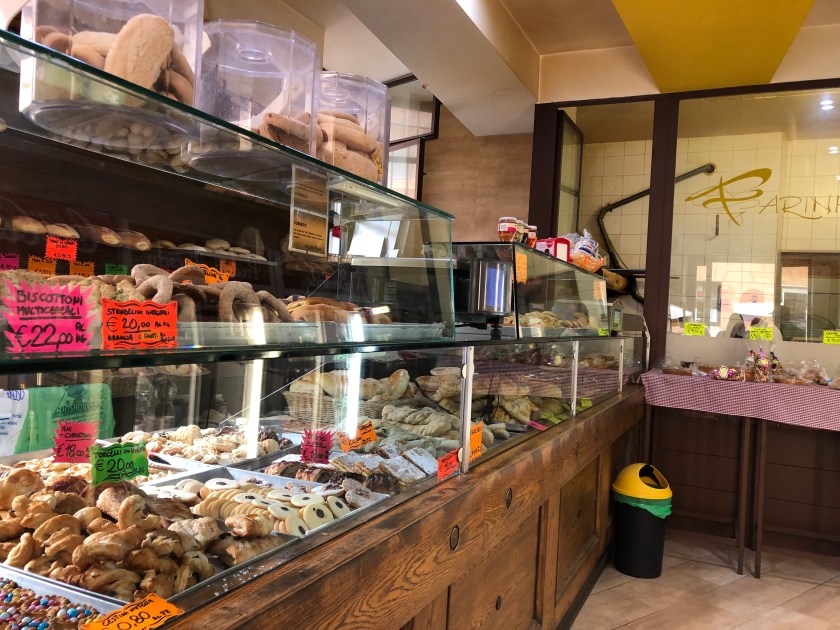
    There were also visits to a fresh pasta shop, bar and pastry shop.

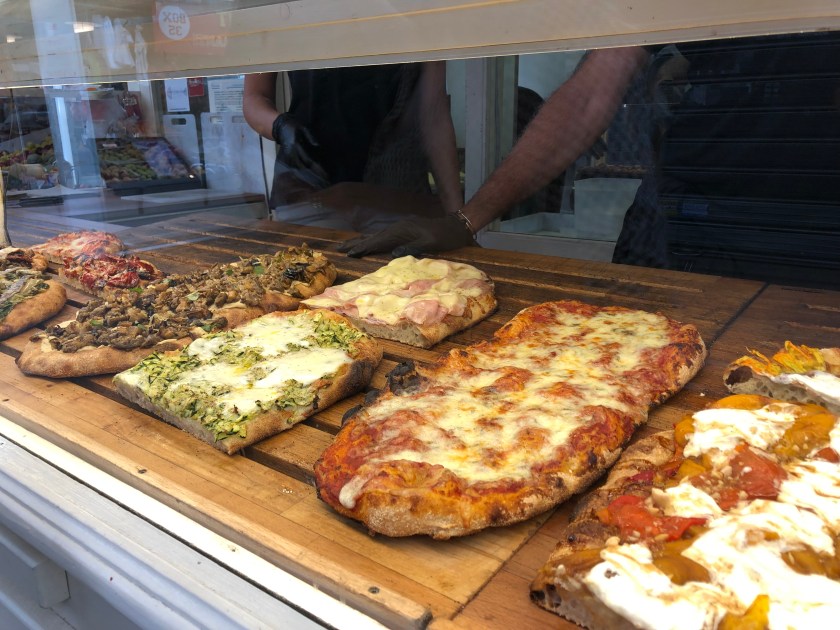
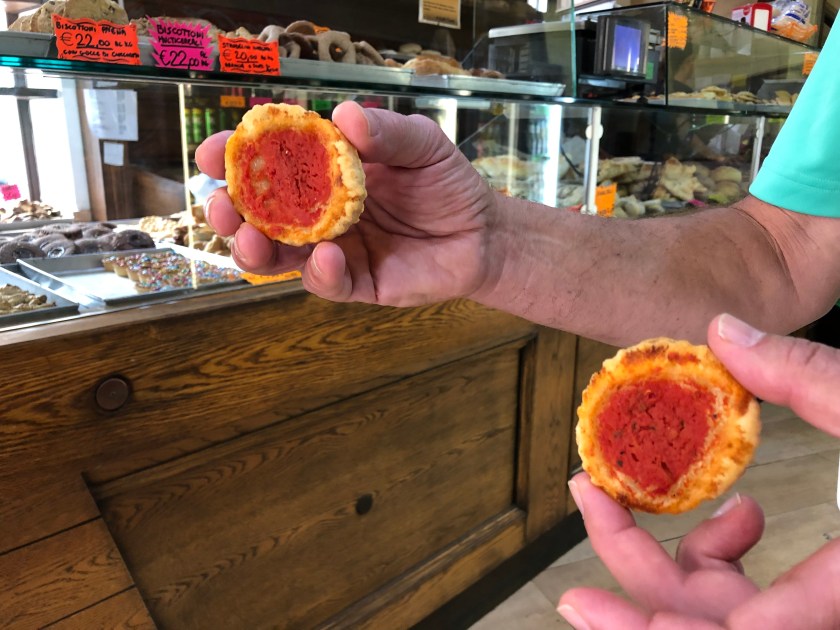
    These small round things are pizze tondo, little pizza snacks popular with kids.

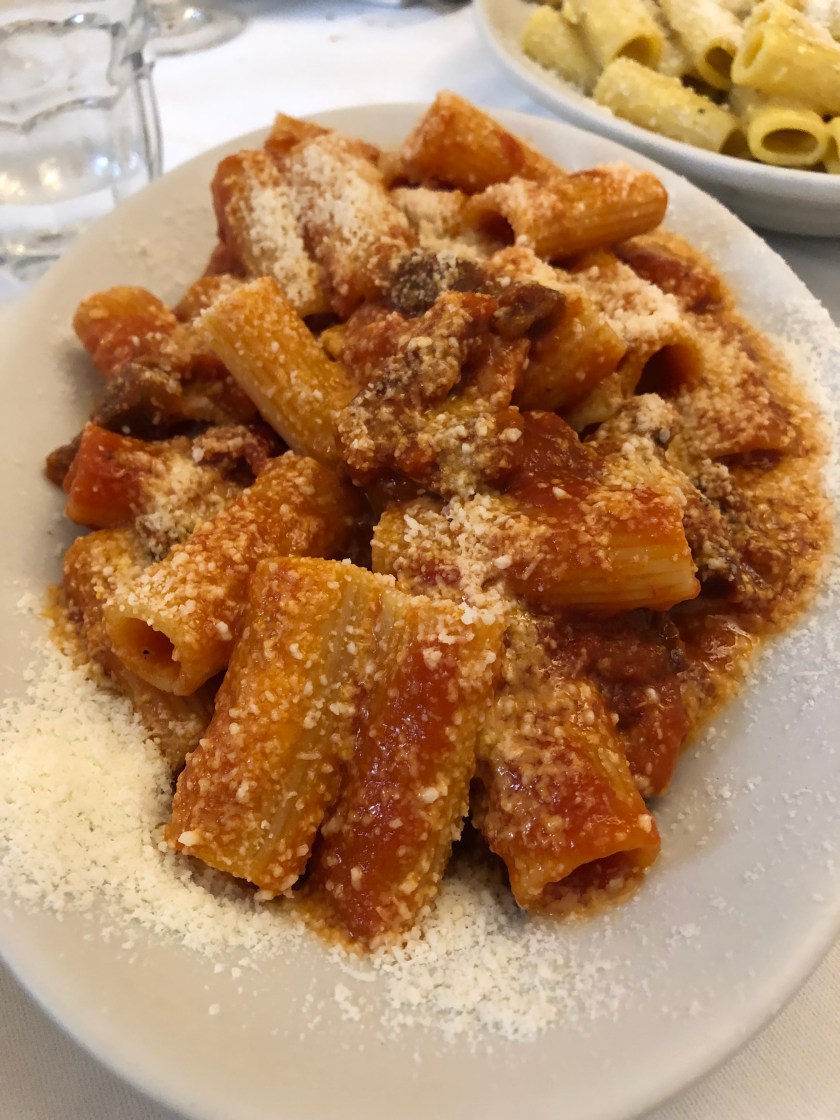
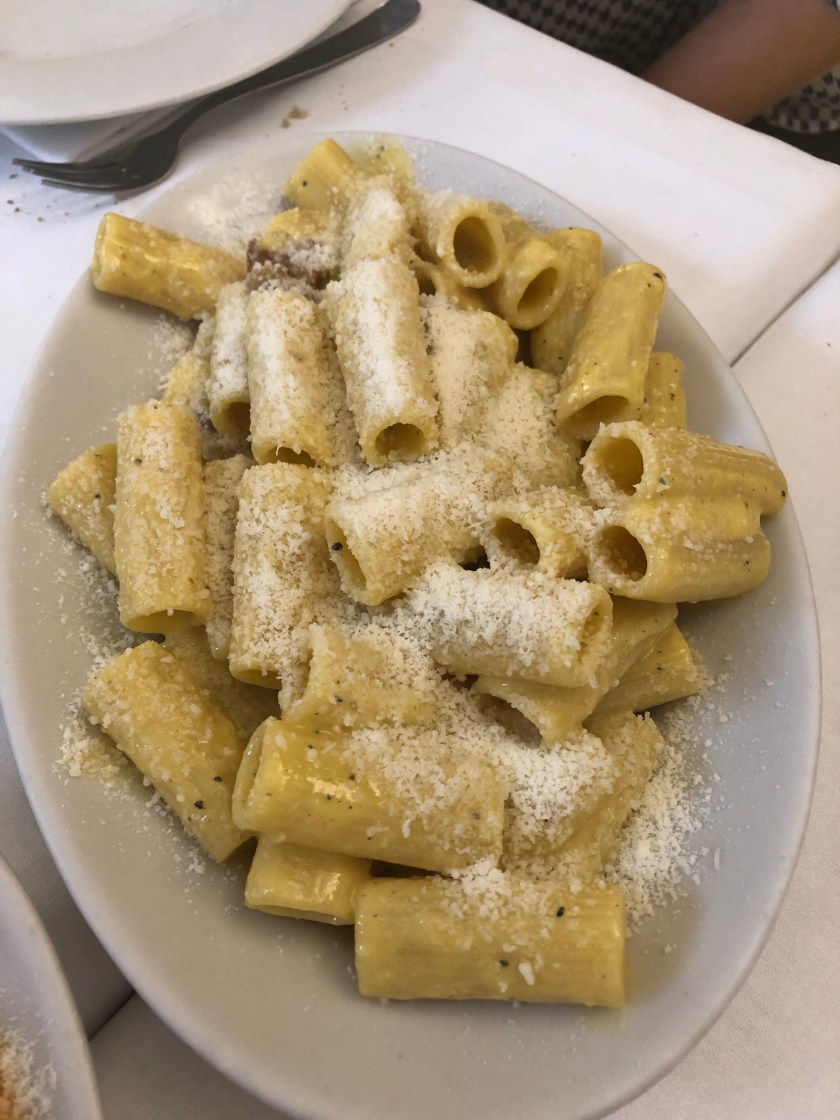
    The tour ended with lunch (pranzo) at Flavio al Velavevodetto featuring typical Roman pastas like all’Amatriciana and Carbonara.

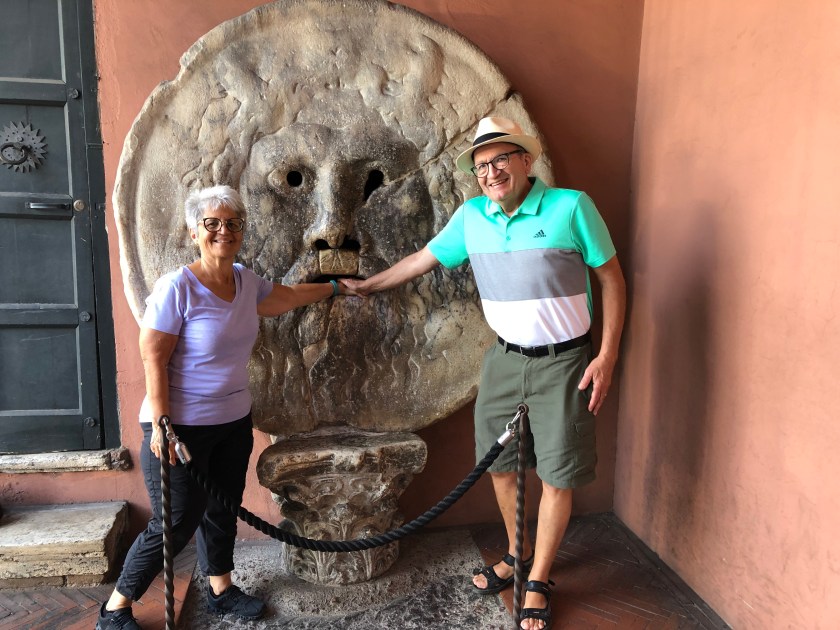
    We also (re)visited la bocca della verità (as seen in the movie Roman Holiday)

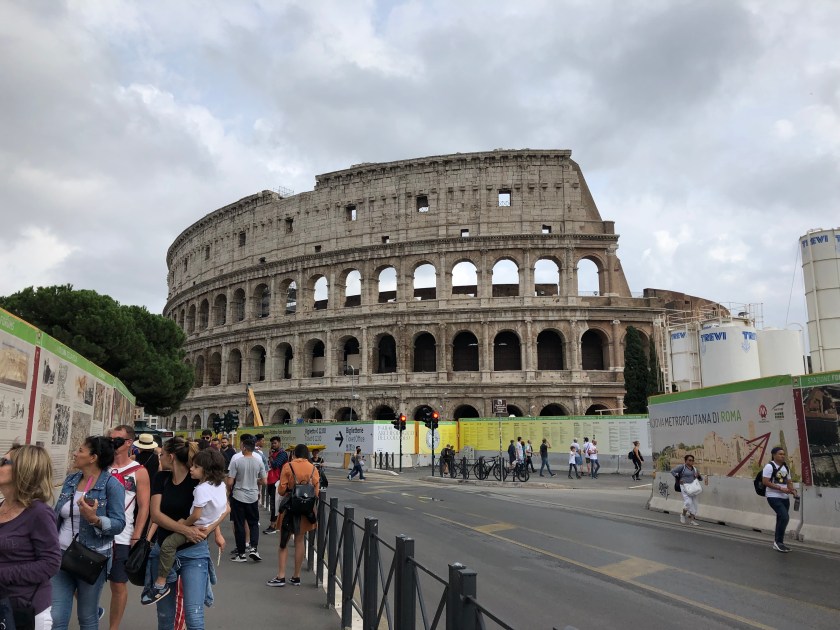
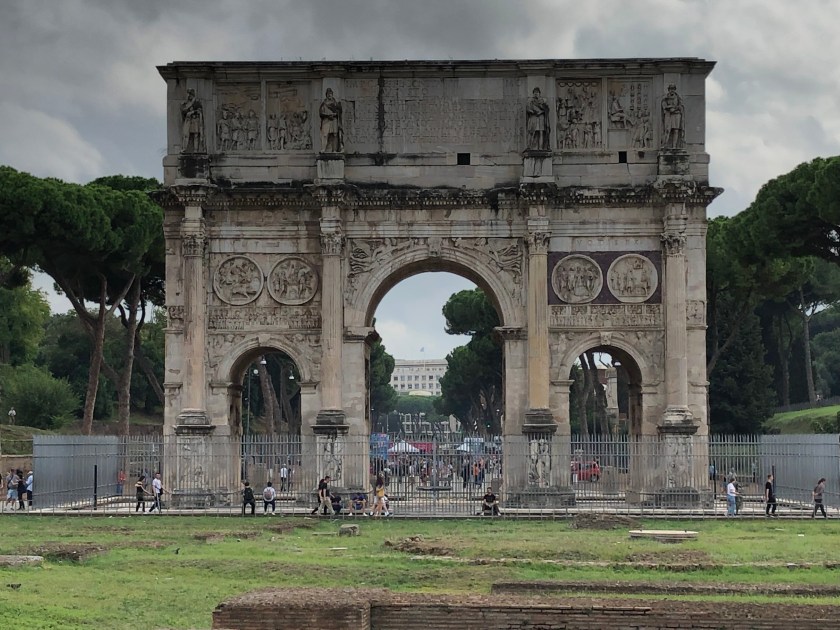
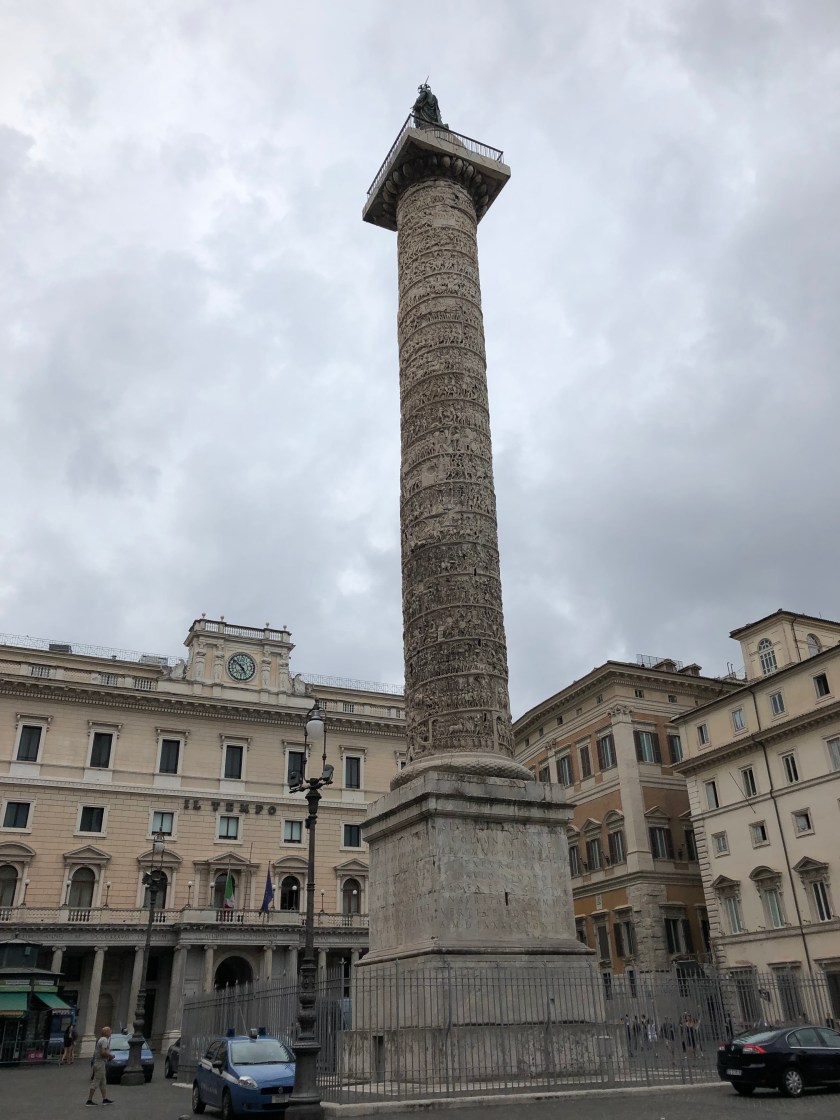
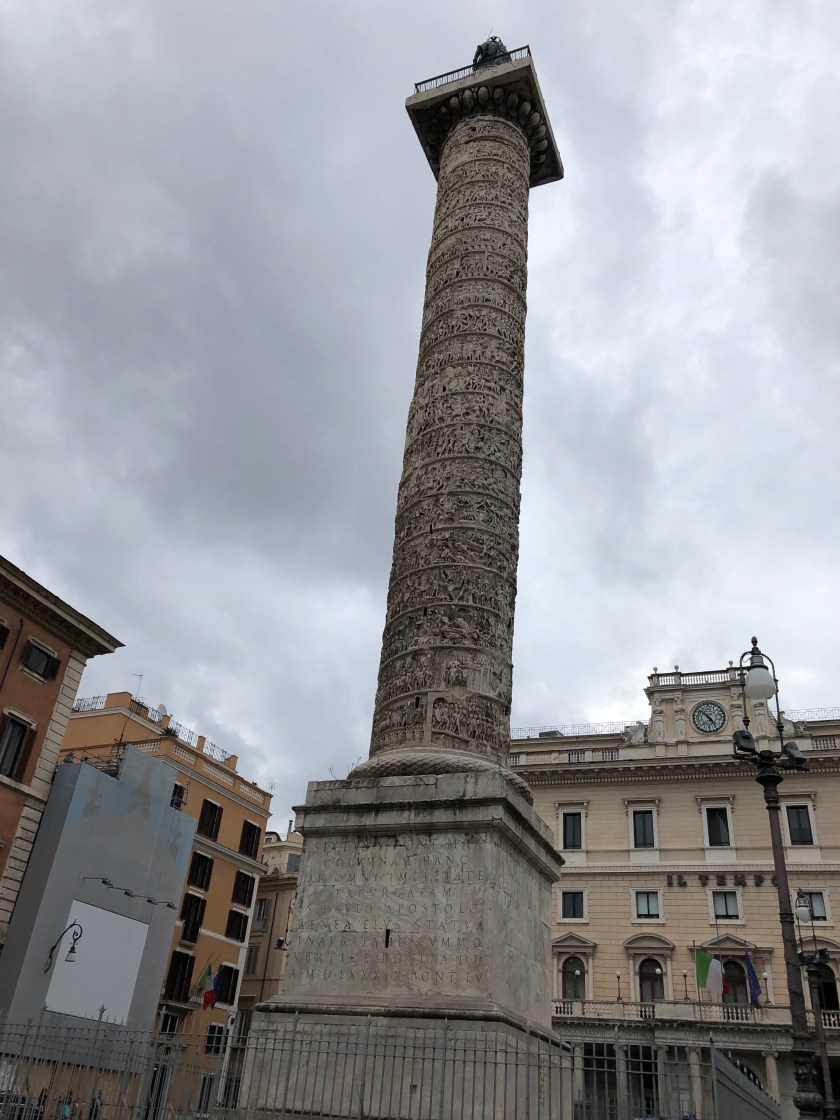
    the Coliseum, Arch of Constantine, Trevi Fountain and a couple of obelisks/columns.

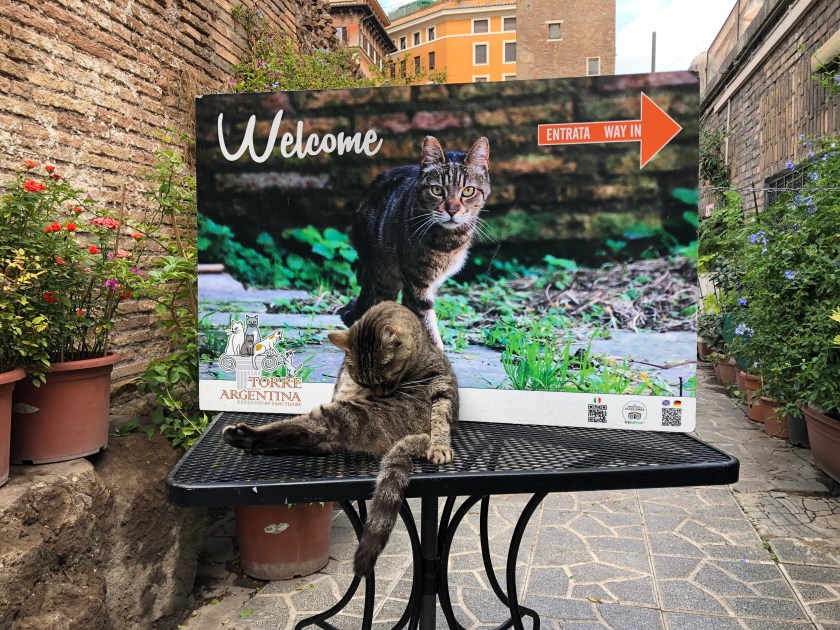
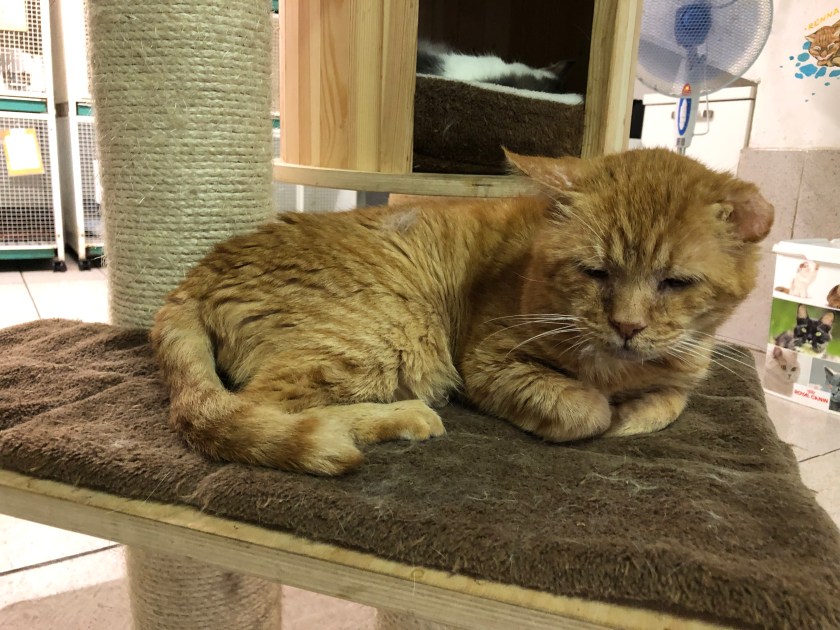
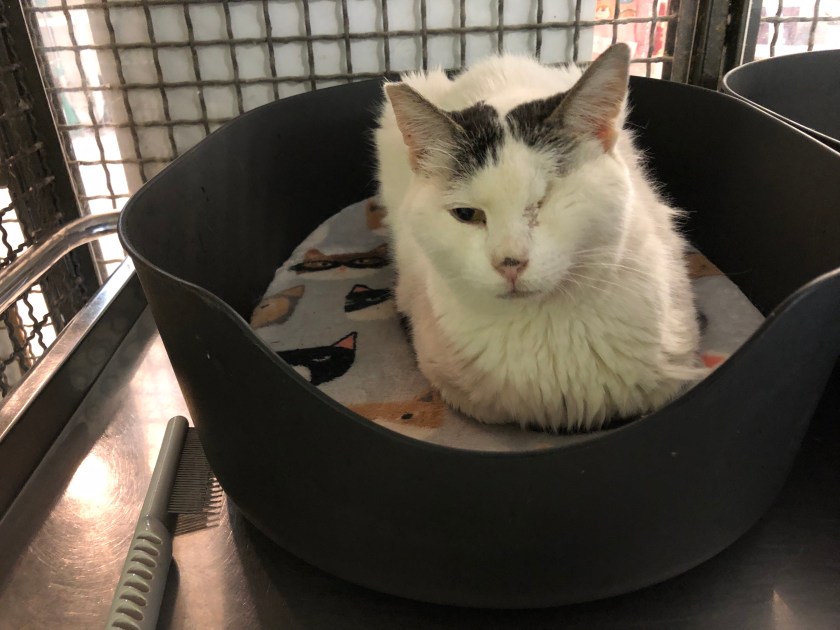
    Of course, a (return) trip to the Cat Sanctuary at Largo Argentina has become a tradition for me. And I bought a couple of books at Feltrinelli bookstore.
    Although threatening clouds hung overhead and the humidity was at times uncomfortable, the rains held off . We ended the evening with a visit with family and a wonderful dinner in the Jewish Ghetto.

    All roads lead to Rome- at least on the autostrada

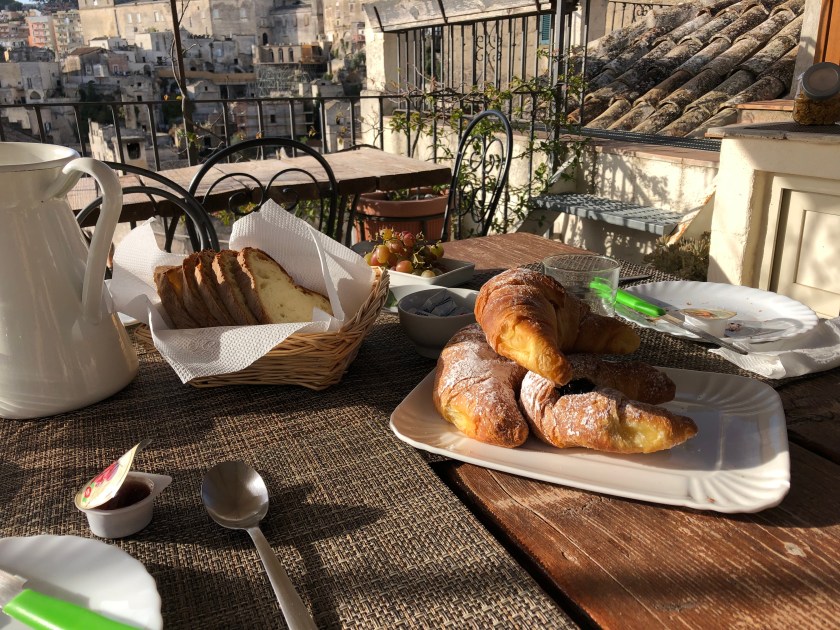
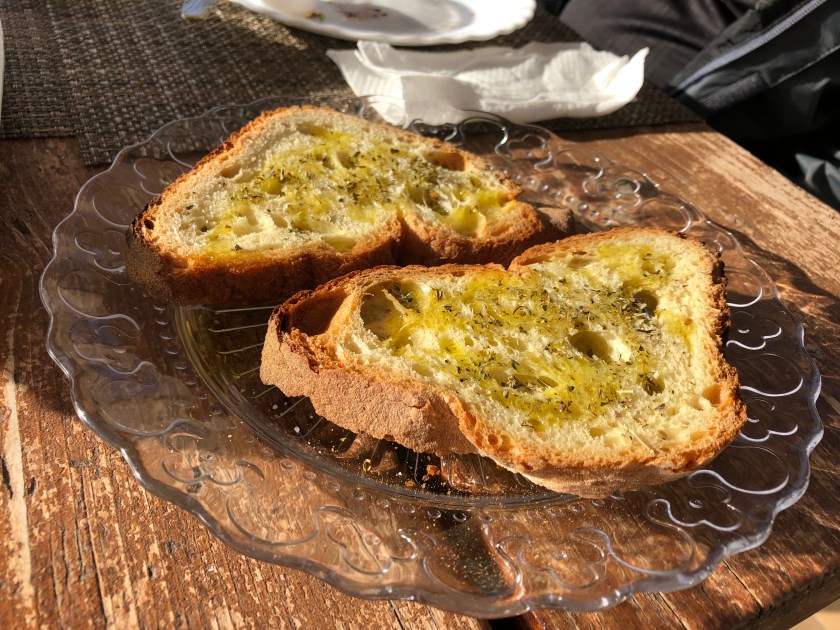
    Our brief tour of southern Italy (at least the mainland) has come to an end. It was a hectic seven day sojourn in Abruzzo, Puglia and Basilicata, with overnights in Pescara, Lecce and Matera and day trips to Alberobello, Ostuni and Otranto, described in prior blog posts. Today was our long haul drive from deep in the instep of the boot to somewhere around the knee (i.e. Rome). After a traditional prima colazione (on the rooftop terrace) of cornetto (filled with cream and marmalade), a local bread with a crunchy caramelized crust and a taste similar to challah with butter and jam, and toasted bread with olive oil, salt and dried oregano, and of course cappuccino, we packed up our belongings and trudged up (and I DO mean up) the steep cobblestone stairs from the B&B to the blessedly level Piazza del Sedile and then onto the parking garage, where we saw this little cutie!
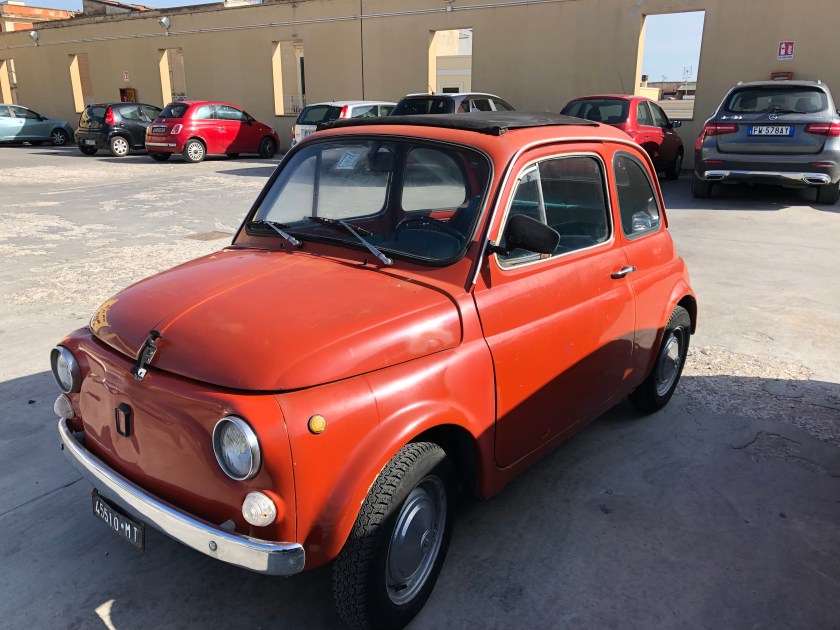
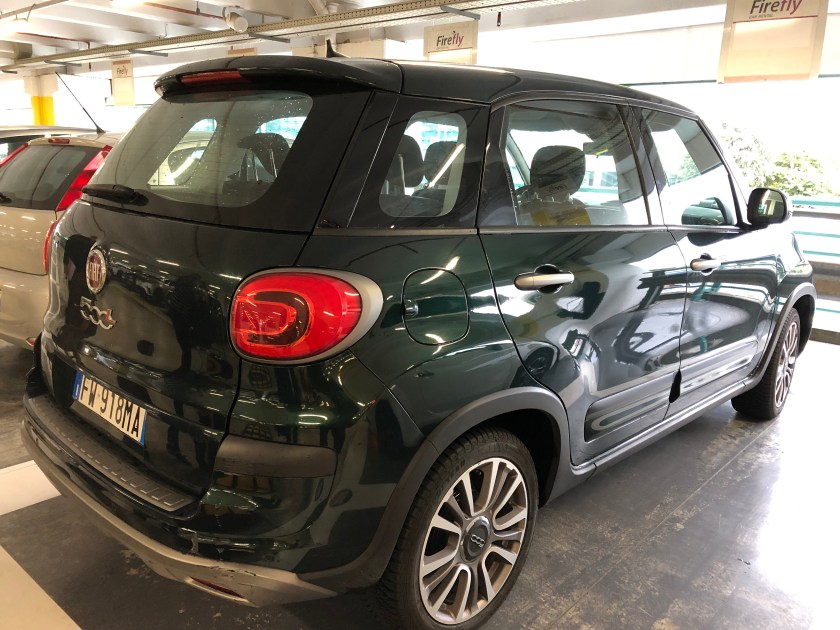
    There is something endearing about an older model Fiat cinquecento that just begs for a photo!

    It was quite simple to get to Fiumicino airport, about an hour west of Rome, to drop off the rental car, a much newer and roomier version of the same car model!

    We took a van (a Mercedes) to the Hotel Smeraldo, but had to walk a block as the van could not maneuver the narrow streets around the hotel.

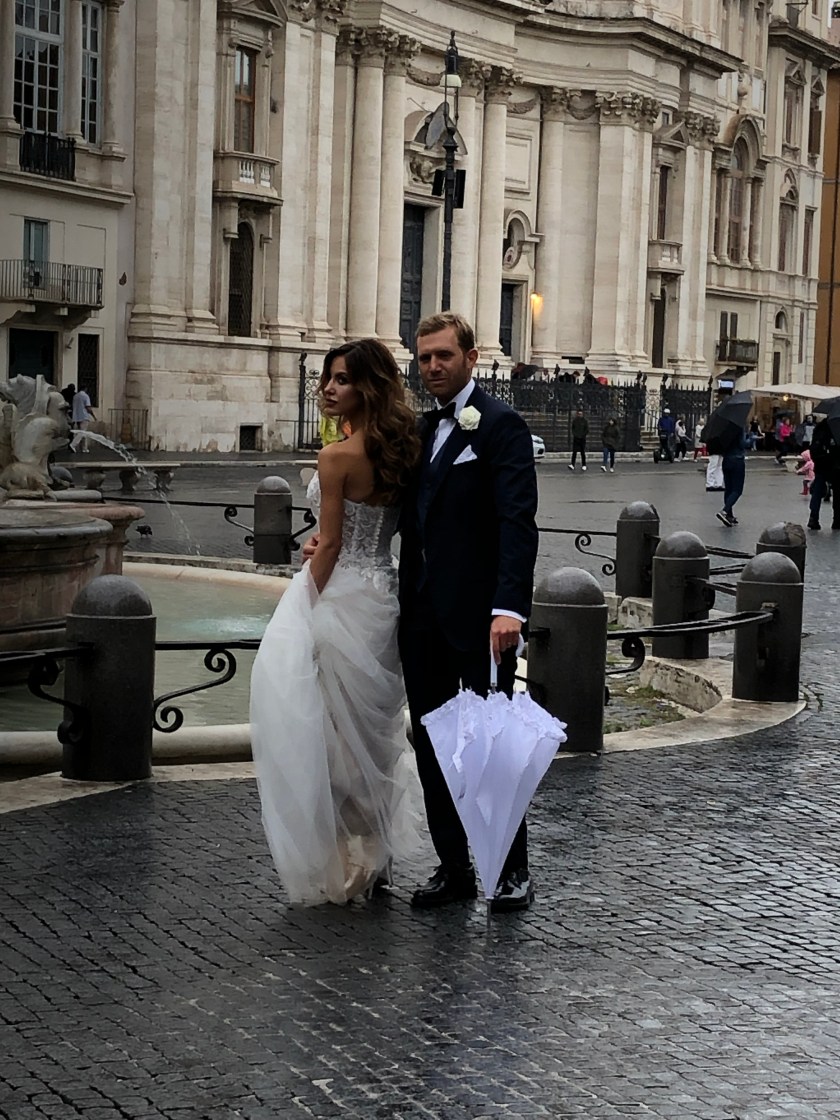
    The hotel’s location is ideal, in my opinion – short walking distance to all the major sights of the historic area. The weather was overcast but the rain held off (although the large puddles were evidence of some pretty significant precipitation earlier in the day. We walked over to Piazza Navona where the crowds were diminished due to the earlier rain. There was another bride encounter (the third this week) and the poor young woman was struggling to keep her dress from getting wet!

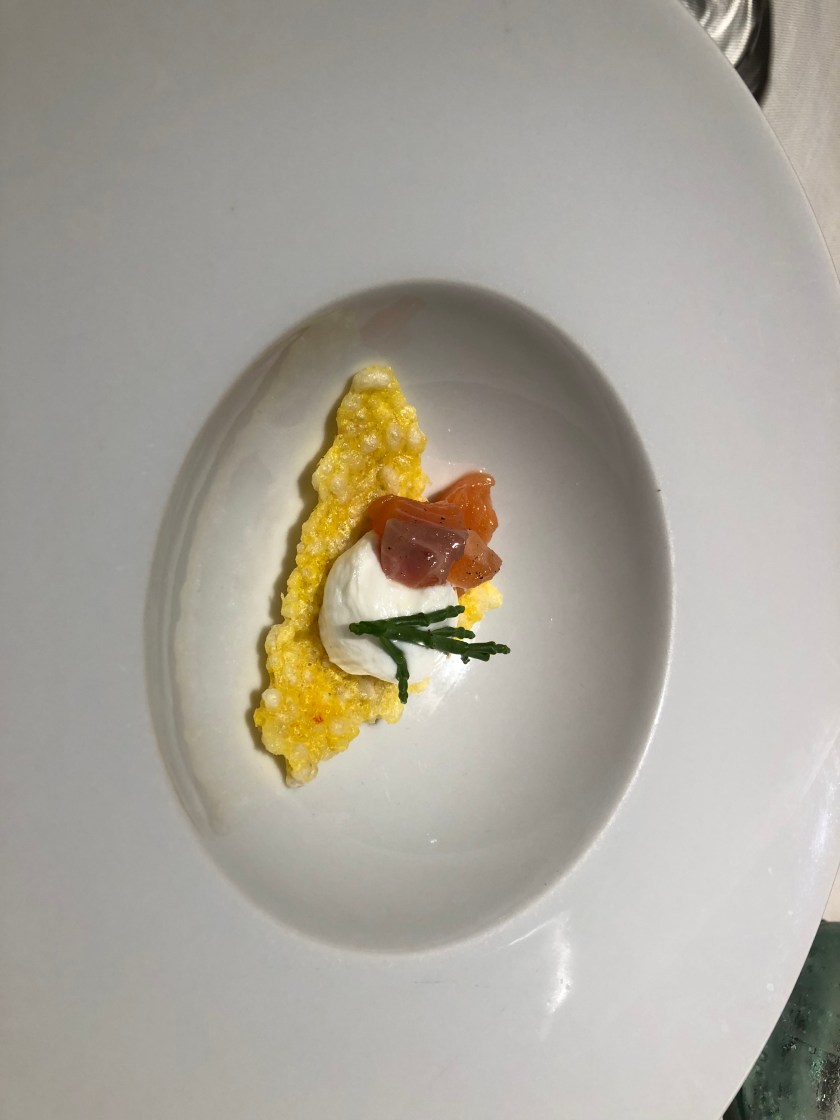
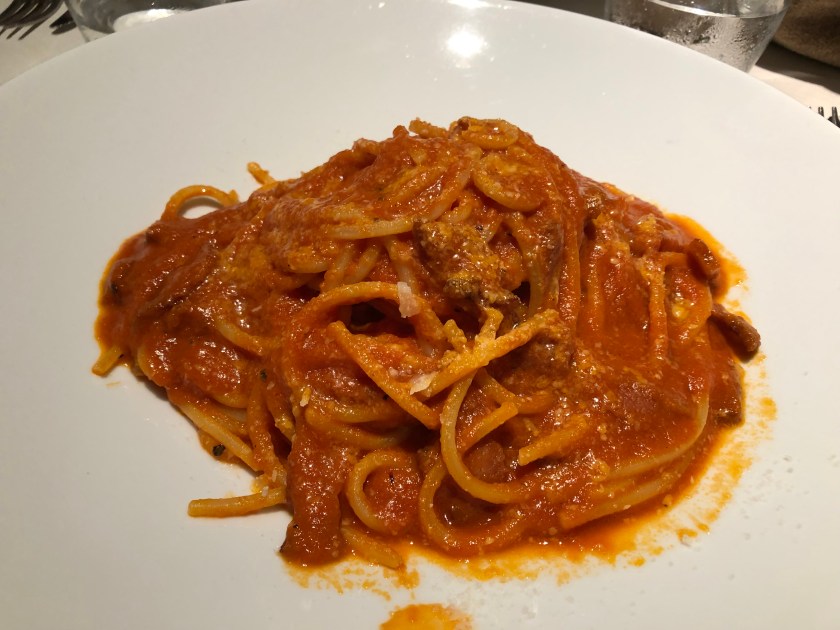
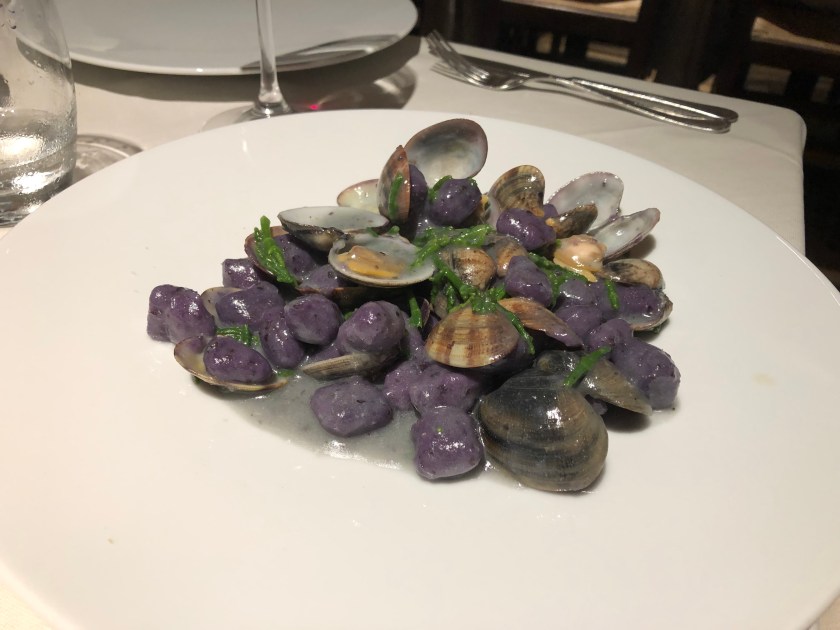
    A visit and aperitif at La Botticella, the Roman Steeler bar, preceded dinner at Ai Bozzi, one of my favorite restaurants in Trastevere. We had an amuse bouche of salmon crudo with lemon ricotta on a rice cracker, fried Jewish artichoke, spaghetti all’Amatriciana, and gnocchi made with purple potatoes, clams and sea asparagus.

    After dinner, we took a quick walk to some nearby sights before calling it a night.

    Matera – la città sotterranea (the underground city)

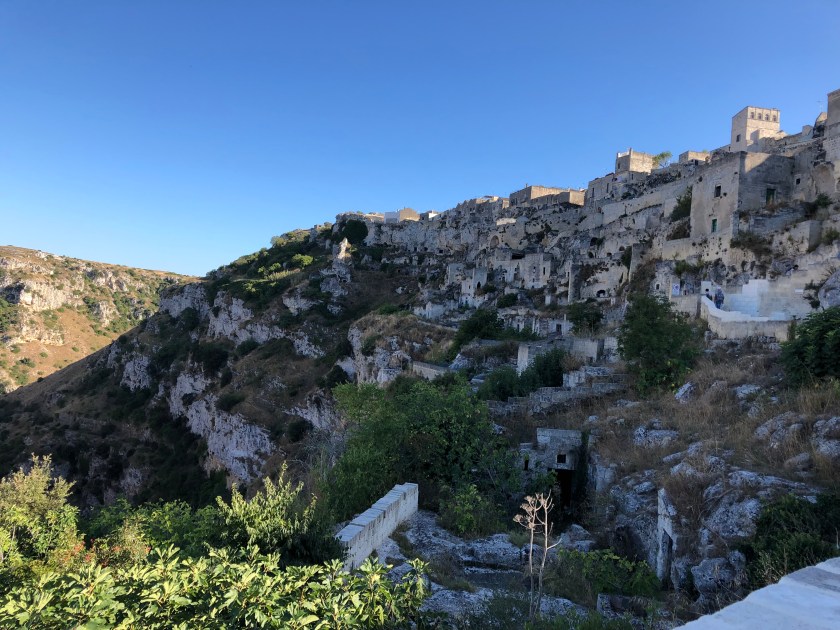
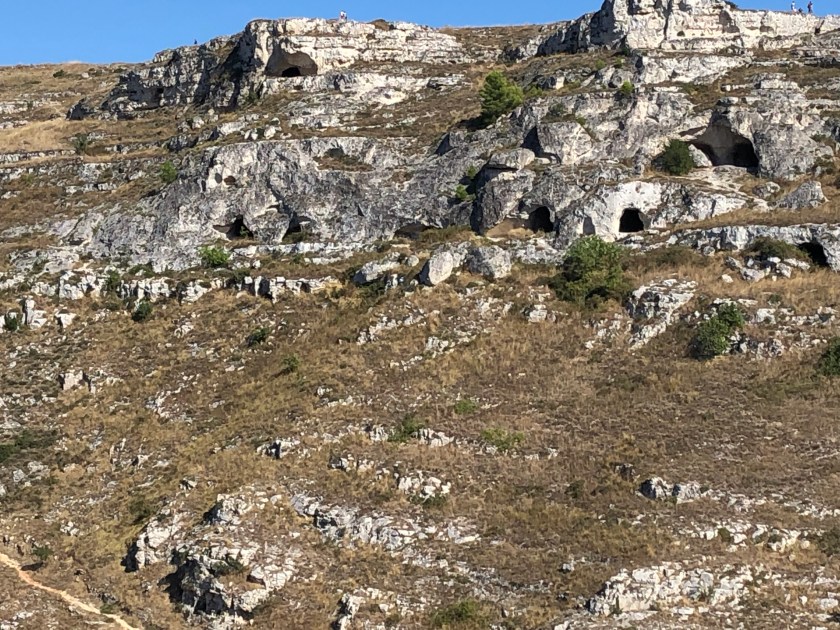
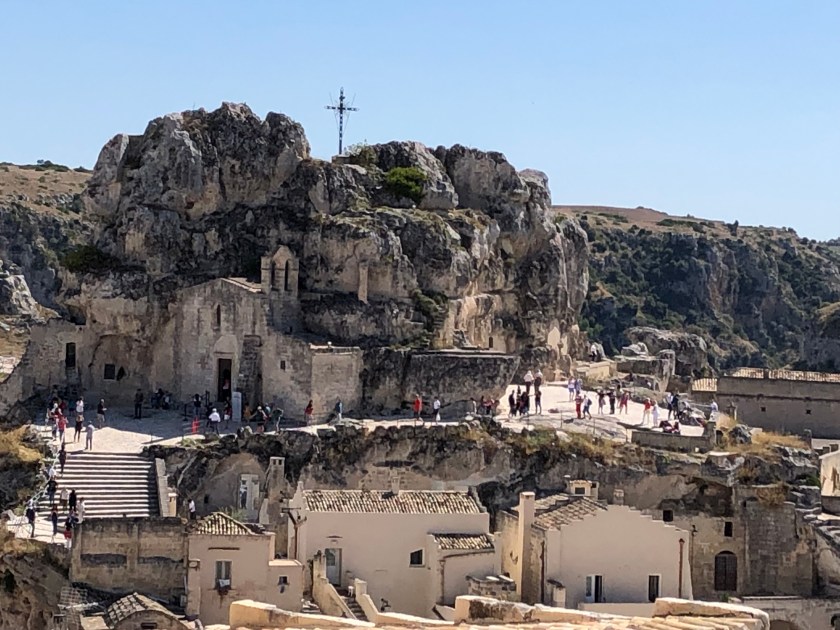
    Up in the hills of Basilicata, the poorest region of Italy, located in the “instep” of the peninsular boot, is an ancient town of Paleolithic origin composed of cave dwellings carved into the sandstone and limestone cliffs. These “sassi” cover both sides of a ravine formed by the Gravina River gorge and are considered to be evidence of the first human habitation of what is now Italy.

    These caves were inhabited up until the 1950s, albeit with a standard of living well below the poverty line, with infant mortality greater than 50%. Long considered the shame of Italy, the government constructed a new city nearby, providing subsidized housing to the inhabitants who were banished from the caves. These dwellings continued to deteriorate until the 1980s when enterprising local government officials began to encourage the local population to return to the sassi to renovate and move back. Many of the sassi have now converted into hotels, vacation homes, shops and restaurants.

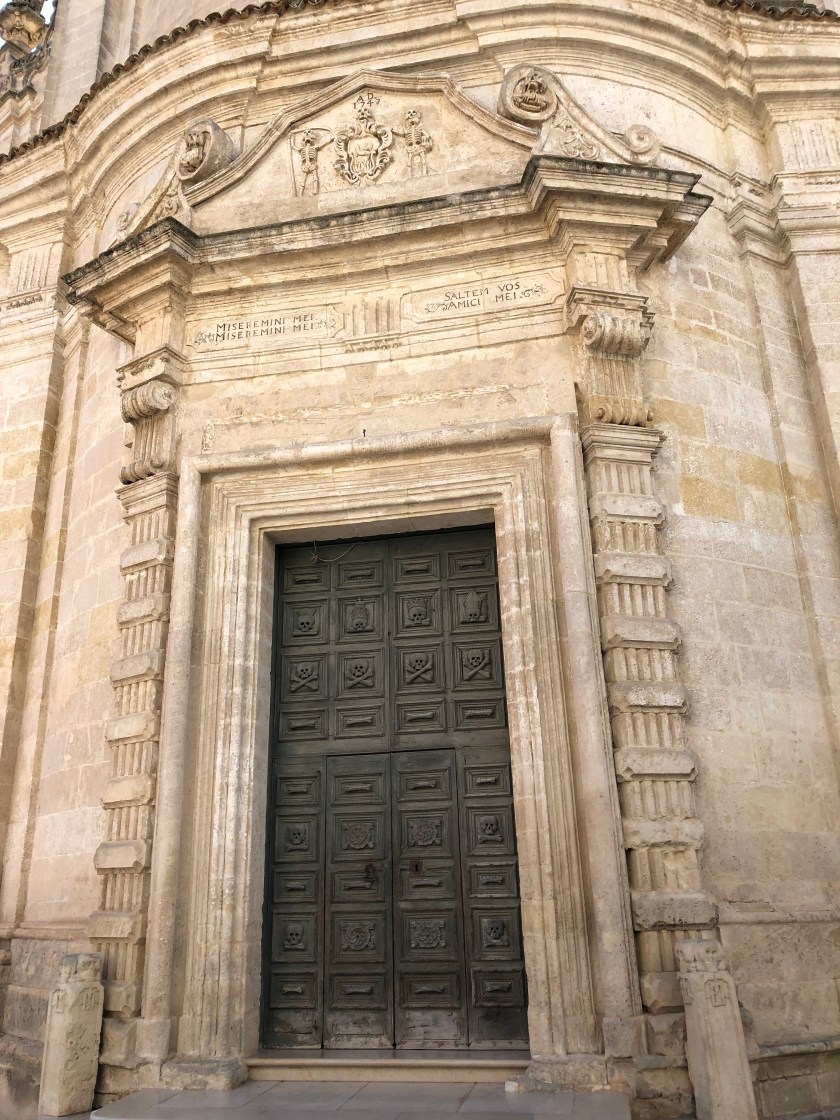
    Lying between the two Sassi regions is a “modern” town, circa 16-17th centuries, with a bustling shopping district, banks and a collection of churches that range in architectural style from Romanesque to Baroque (but nothing like the Uber Baroque seen in Lecce).

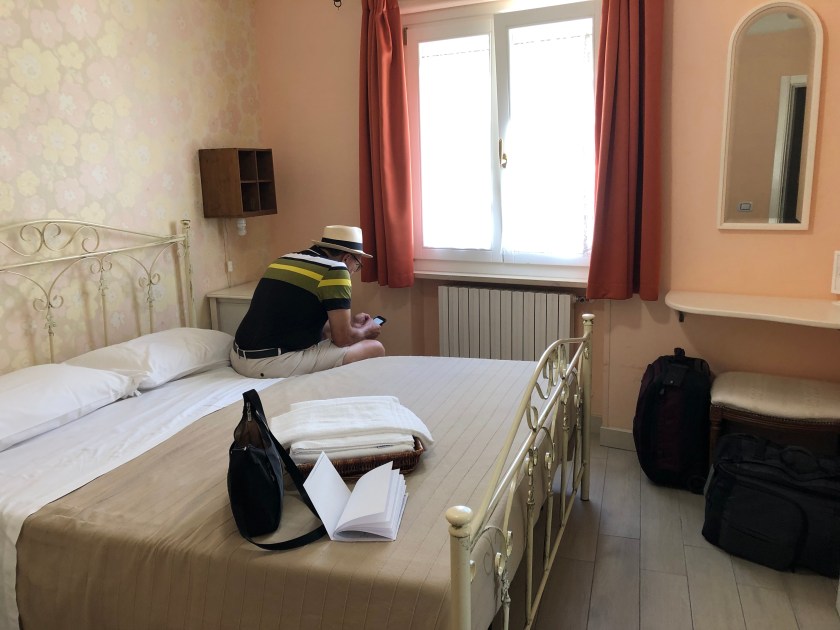
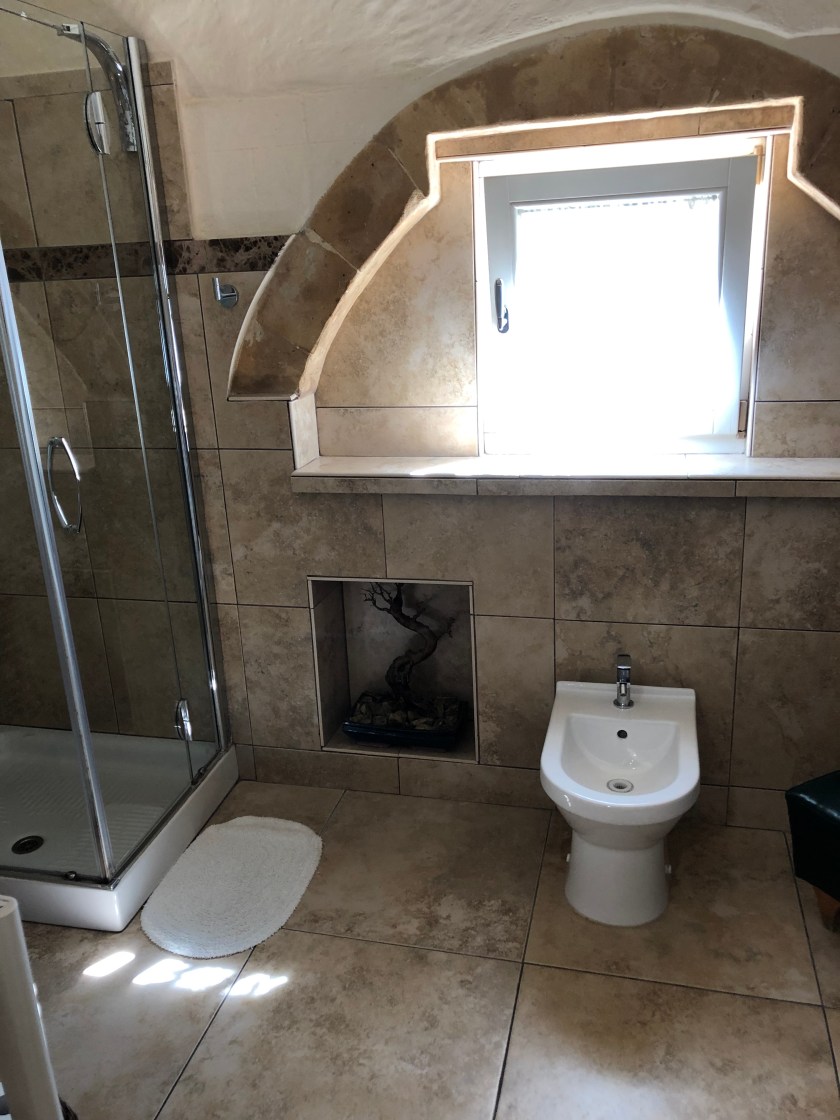
    We arrived in Matera (from Lecce) around 11 a.m., grabbing the last parking spot in the parking garage (a typical Italian garage with very tight spots and very inconvenient large posts between the parking spaces). It took a while to find the B&B Gradelle Pennino, which was located down a very steep cobblestone lane (again Google maps is not your friend!). Giuseppe, our host, met us and oriented us to the B&B, with its spacious bedroom and bathroom (originally the kitchen in this house where he was born in the 1980s) and breathtaking views from the rooftop terrace (up a narrow almost spiral staircase with a very low overhang).

    Then we met our private tour guide, Alessandro Perrone, for a four hour walking tour of Matera. This town is most definitely not handicap accessible as it is pretty much a jumbled maze of slippery cobblestone stairs! He gave us an overview of the history of Matera and we took in panoramic views, and visited a few churches, including one that was carved into the stone, and a replica of a characteristic cave dwelling, where mule and sheep are housemates.
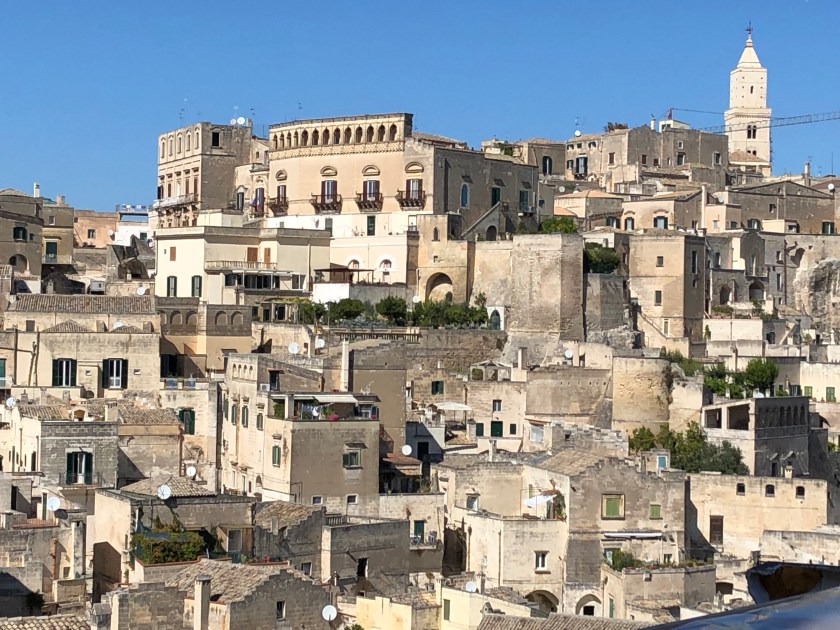
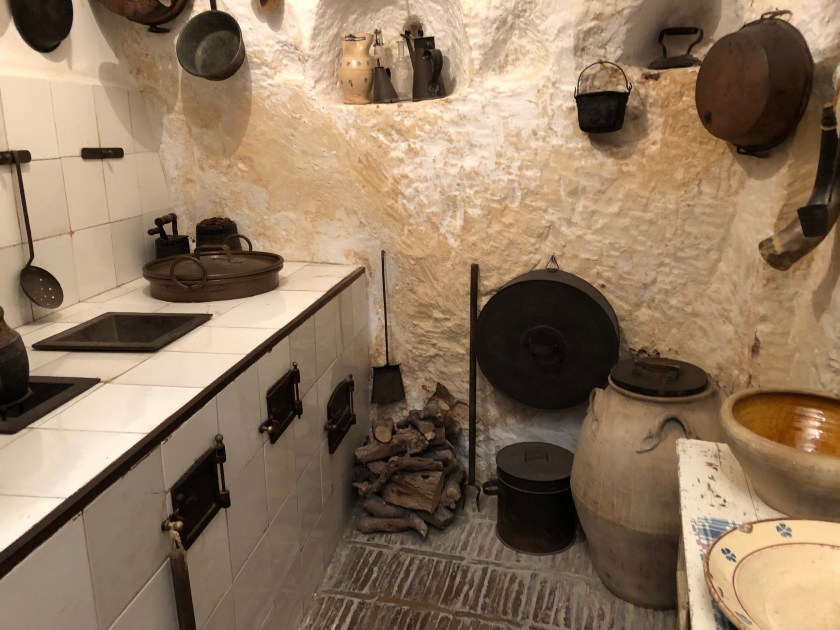
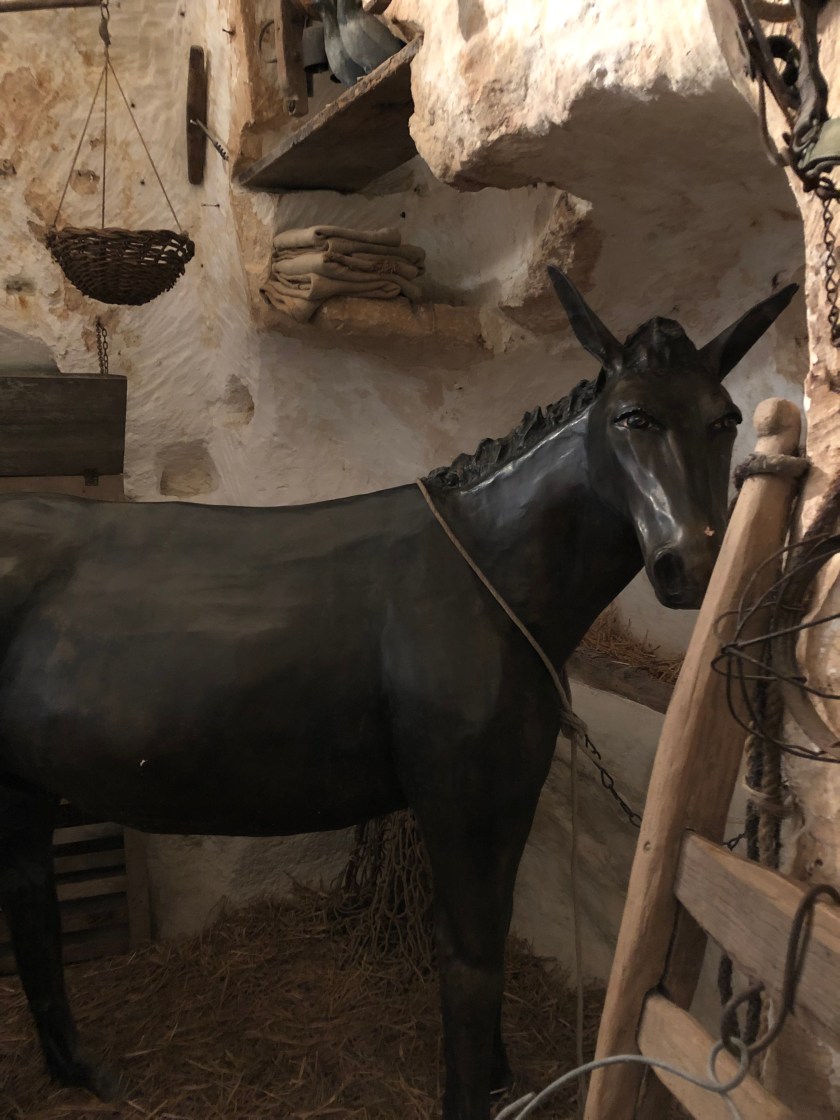
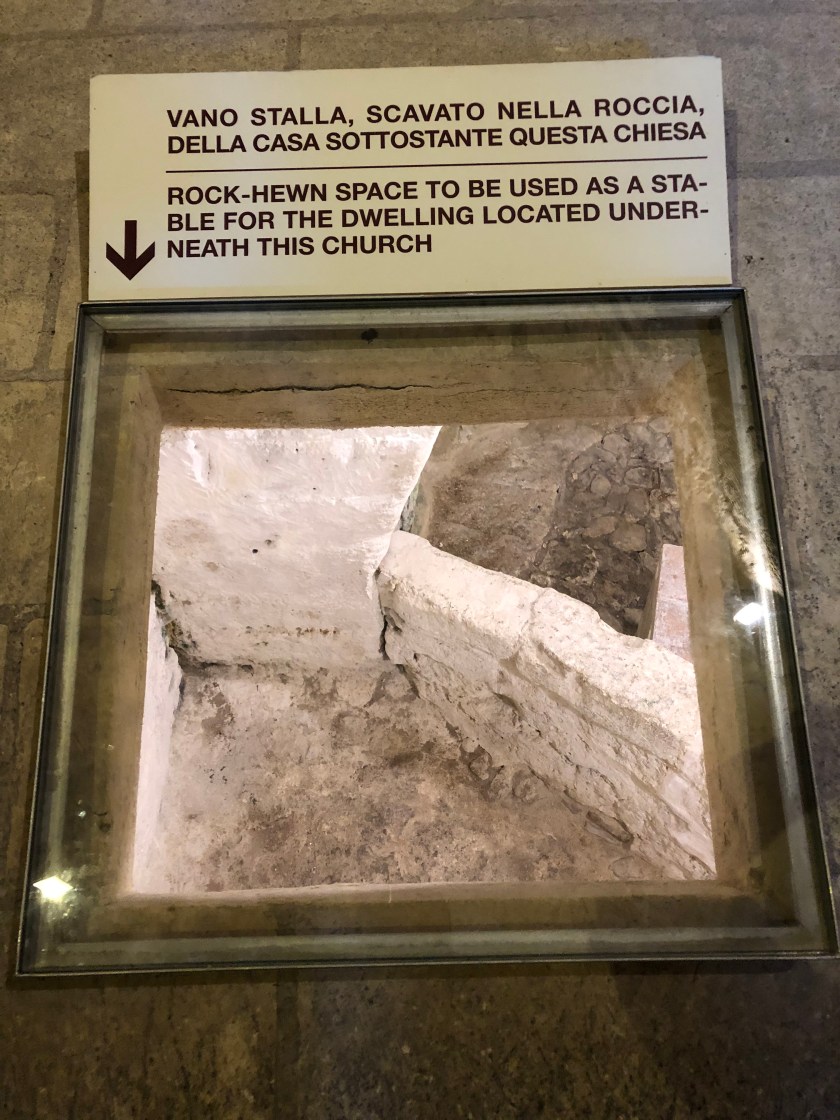
    The cave dwellings are built on top of one another, with the floor of one building acting as the roof of another. An ingenious primitive heating system using manure was described to us. The new James Bond movie is being filmed in the area and a portion of the set could be seen.
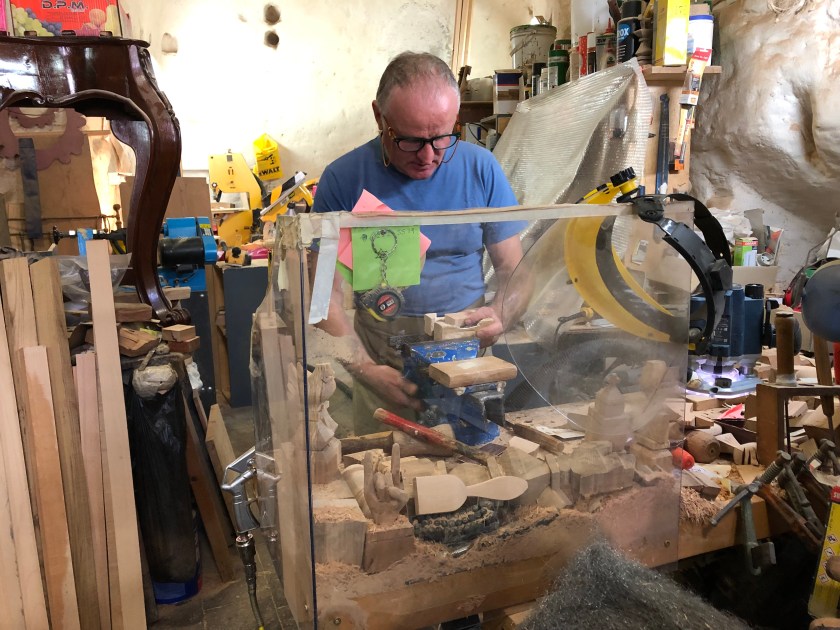
    We also learned of the wooden stamps made to identify to whom loaves of bread belonged after being baked in the town oven.
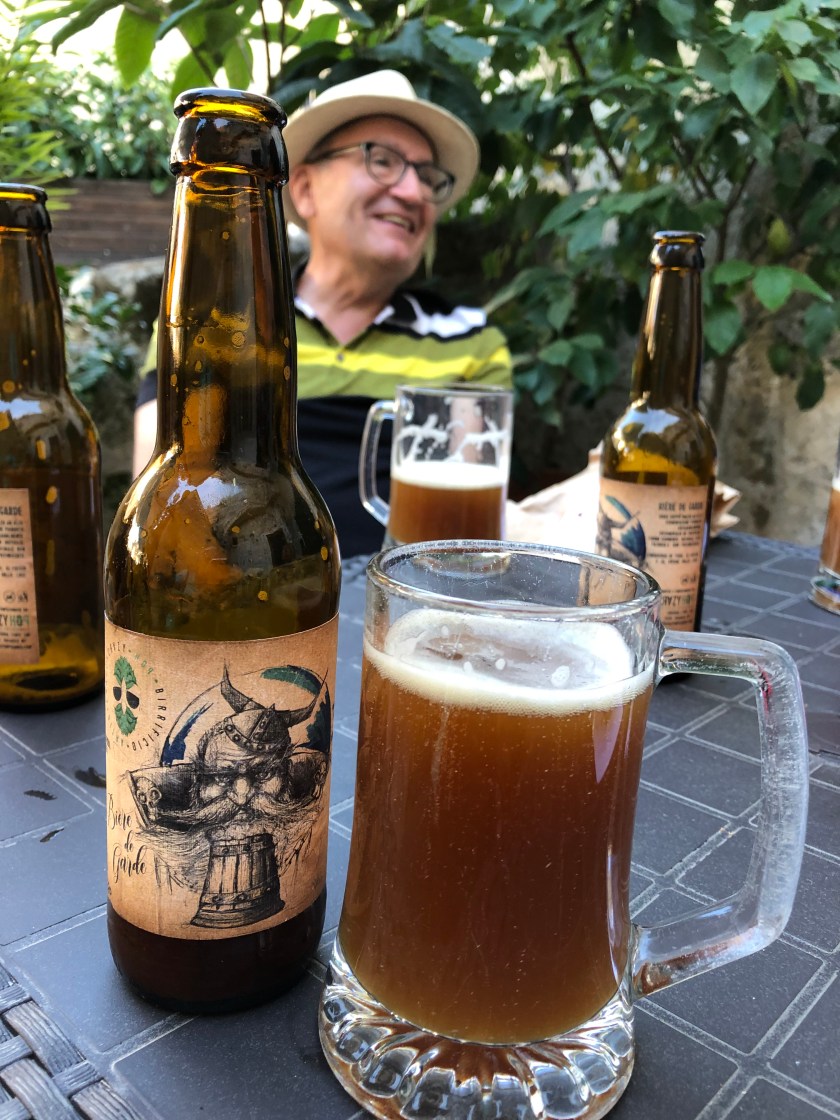
    A much need refreshment break (local craft beer) hit the spot before we finished the final leg of the tour.

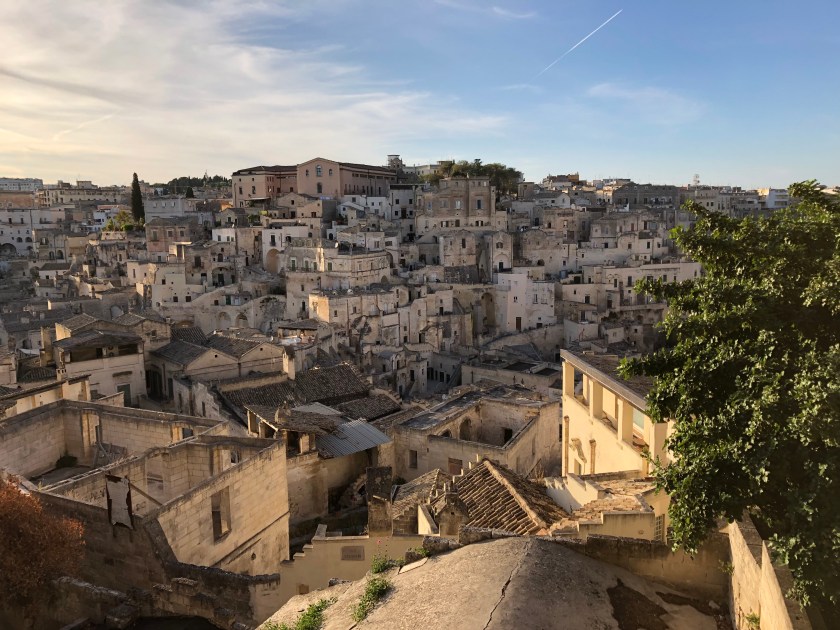
    We finished with another panoramic view.

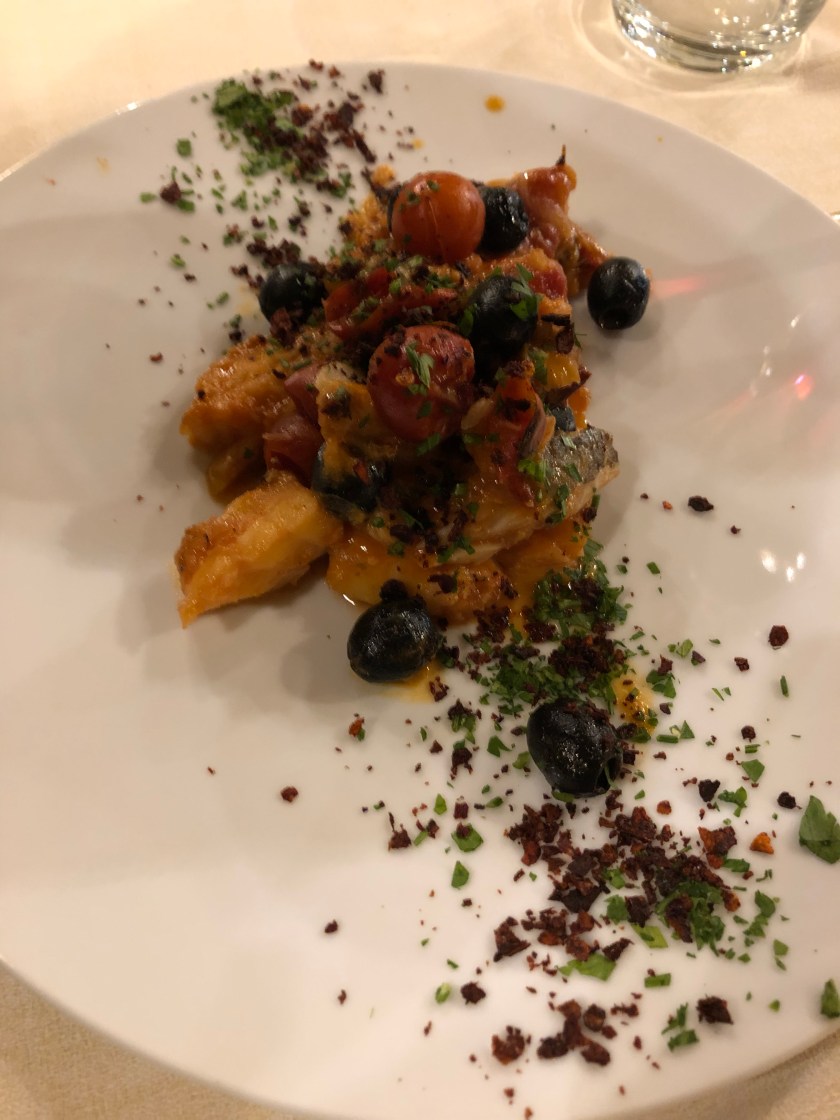
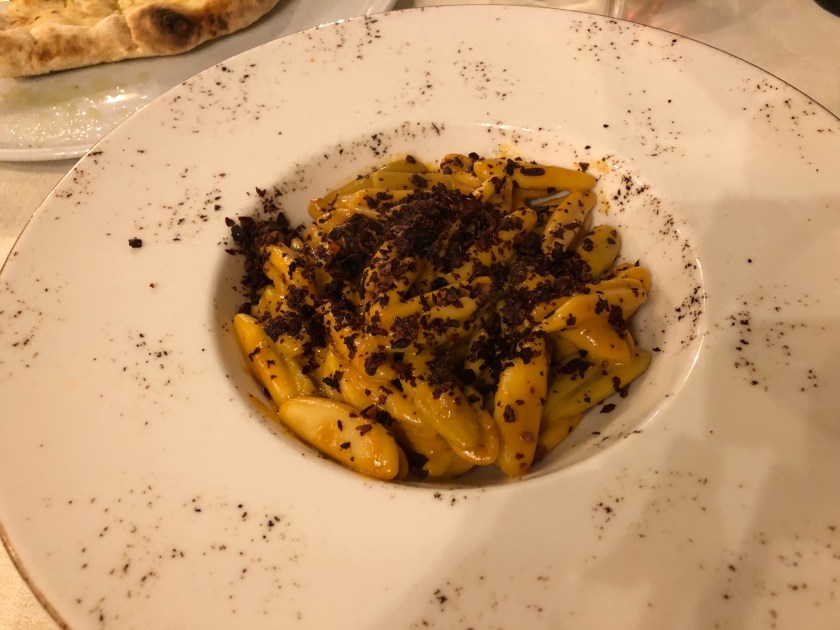
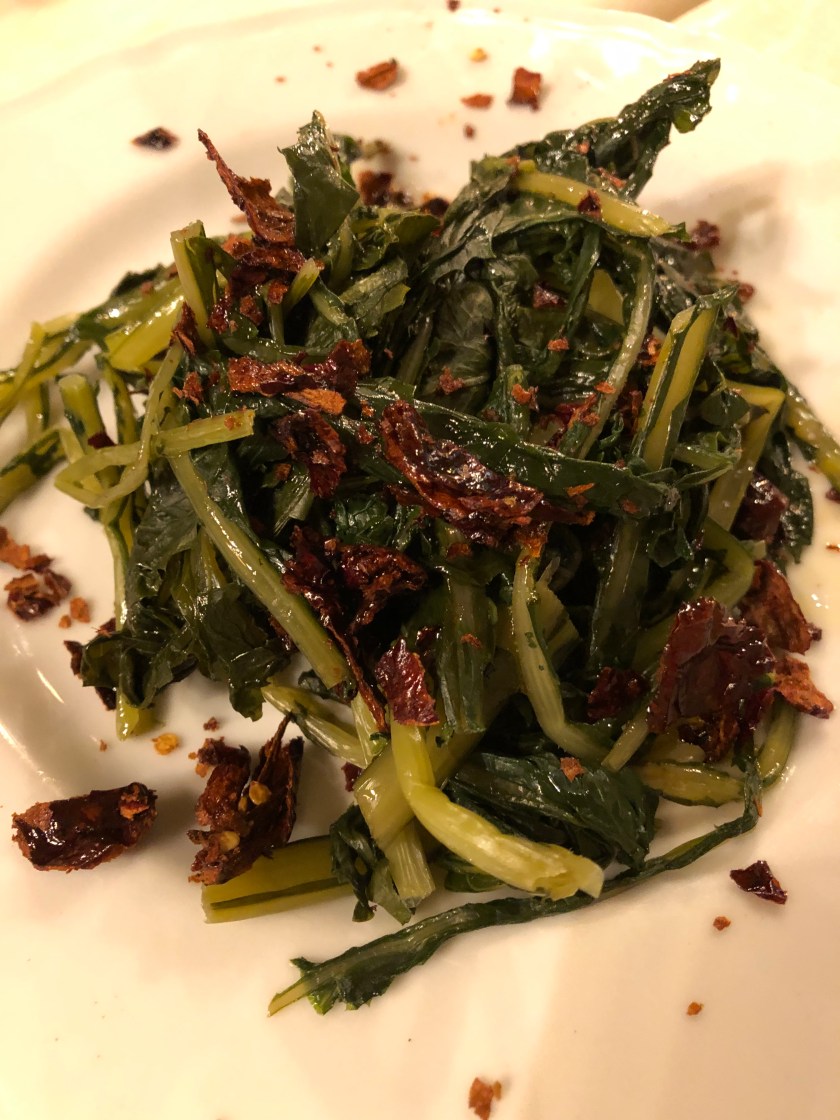
    Dinner was at La Talpa, recently reviewed in The NY Times. Local specialties were featured, like a bacala and a pasta with ricotta and a bitter green sautéed in olive oil.

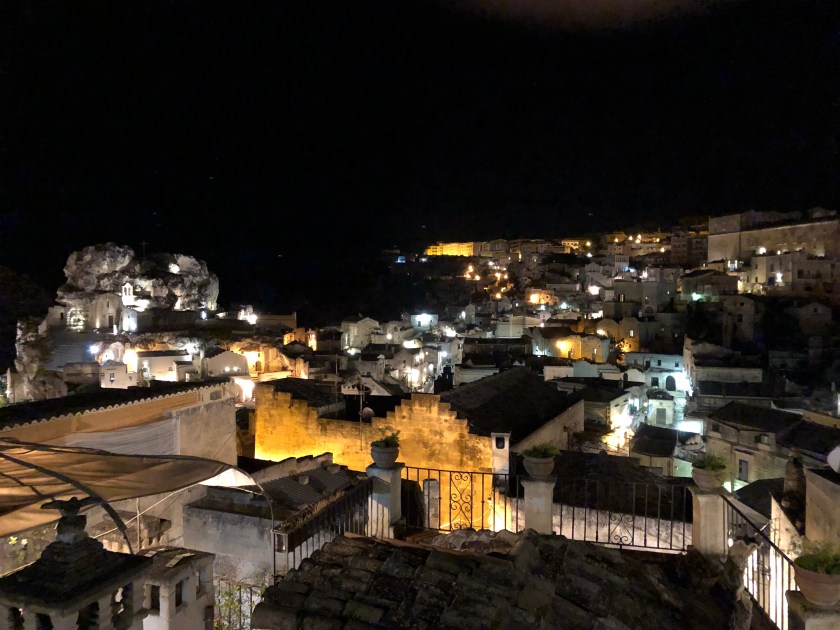
    The evening ended with a brief passeggiata, joining the thousands of locals and tourists enjoying the cool autumn evening.

    Ending with an evening vista-

    Travels with Siri: seeing Puglia with an iPhone Navigator

    How did we ever manage to find our way around Italy (or Pittsburgh for that matter) before the invention of the iPhone (or GPS)? Italy is notorious for confusing road signs ( or lack of signage) and before the days of GPS navigation systems in our cars or on our phones, we either used paper maps, asked directions from the locals or just got lost!

    Today we relied on Google maps to help us get around some small cities/towns in Puglia. The plan was to start in Lecce, visit Alberobello, then drop off travel companions in San Pietro Vernotico, backtrack up to Ostuni, return to San Pietro and then to Otranto for dinner before returning to Lecce for the night.

    The sweet dulcet tones of Siri’s voice can really be irksome when she tells you to proceed where it is physically or legally impossible, like across a road divider or the wrong way on a one-way street.

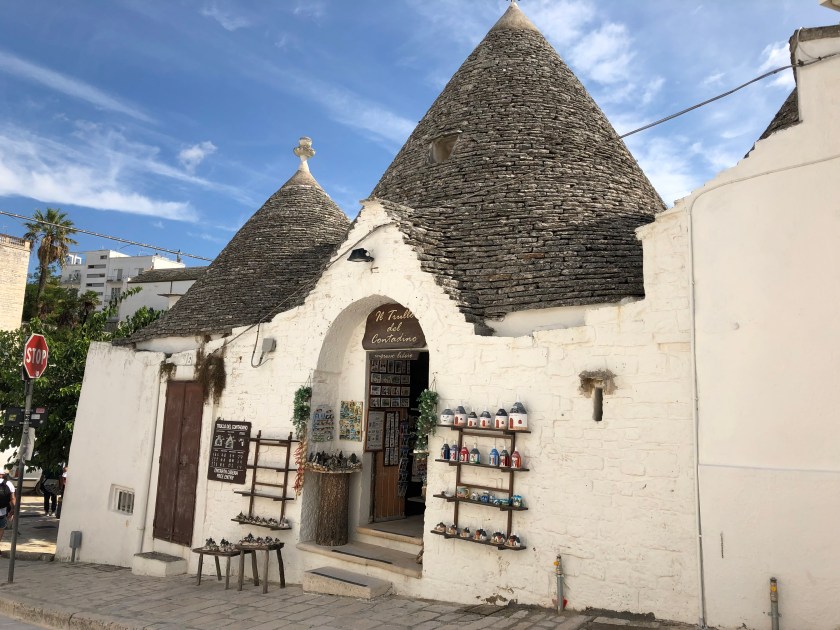
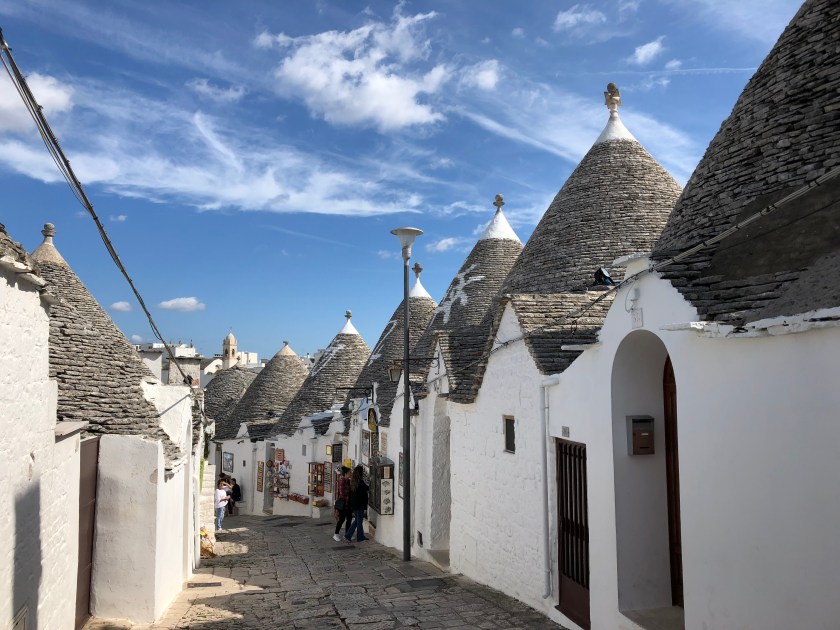
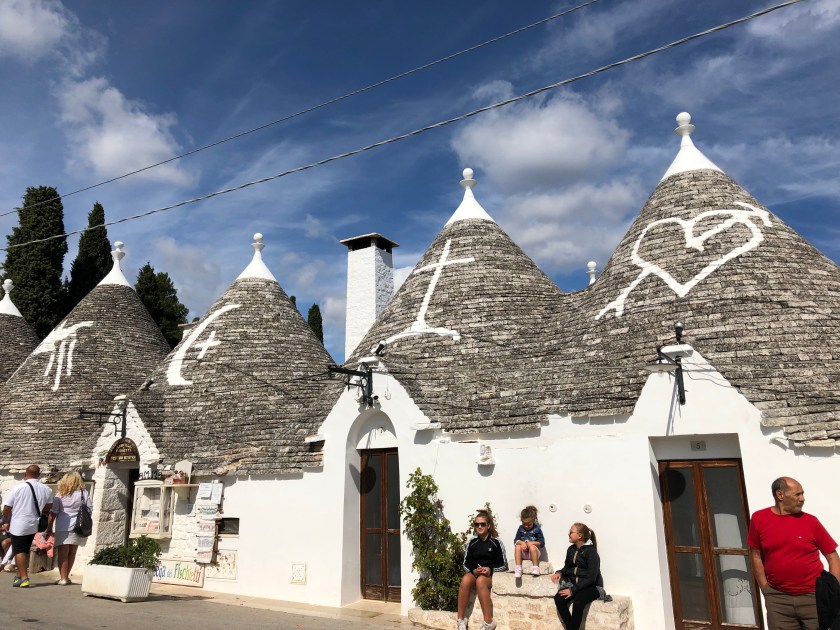
    The road Google maps picked for Alberobello included a steep uphill climb on a winding narrow road that had a stop sign at the top – we have a manual transmission without a clutch but almost stalled out ( and there was a car behind us). But we made it and joined the tourists enthralled by the trulli that are now essentially all souvenir shops of restaurants.

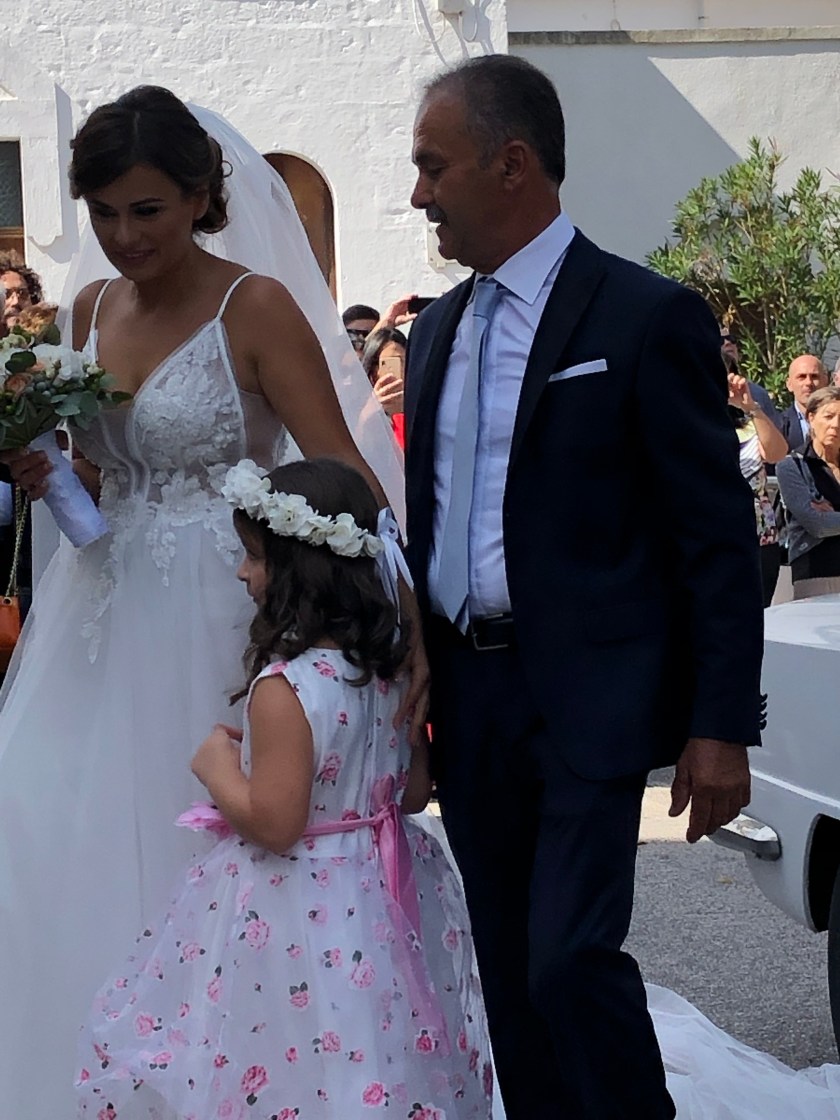
    We came upon another wedding (saw on two days ago in Lecce)

    and bought a refrigerator magnet and Christmas ornament. There are 1400 trulli in town and many others scattered throughout the region, many renovated into vacation homes or hotels. They were originally constructed in the 16th century to avoid paying taxes because they could be dissembled when the tax collectors came around. The road out of town thankfully avoided serpentine switchbacks!

    However, Google maps thinks that San Pietro is a car body repair shop off the main highway. But we eventually figured it out.

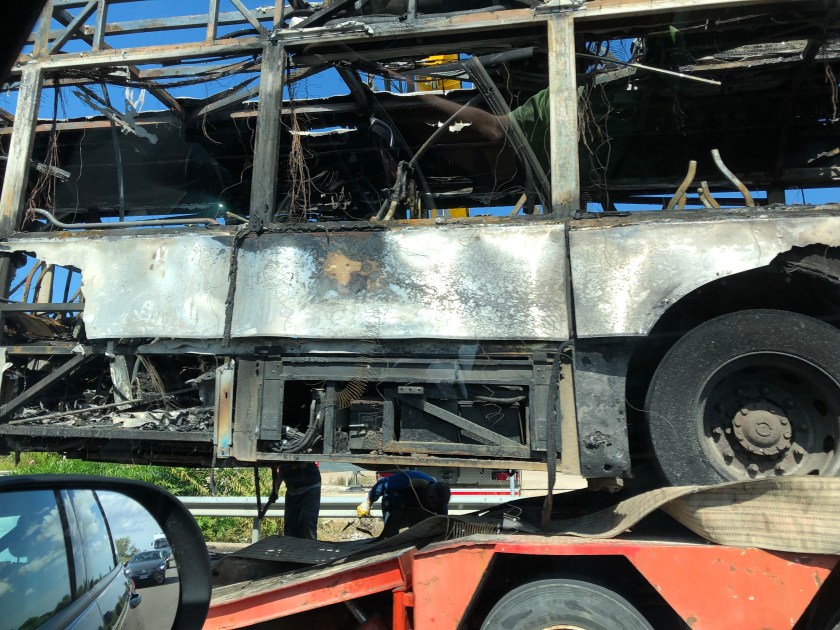
    On the highway near Brindisi, we had a religious experience as we saw a tour bus burnt to a crisp on the side of the road!

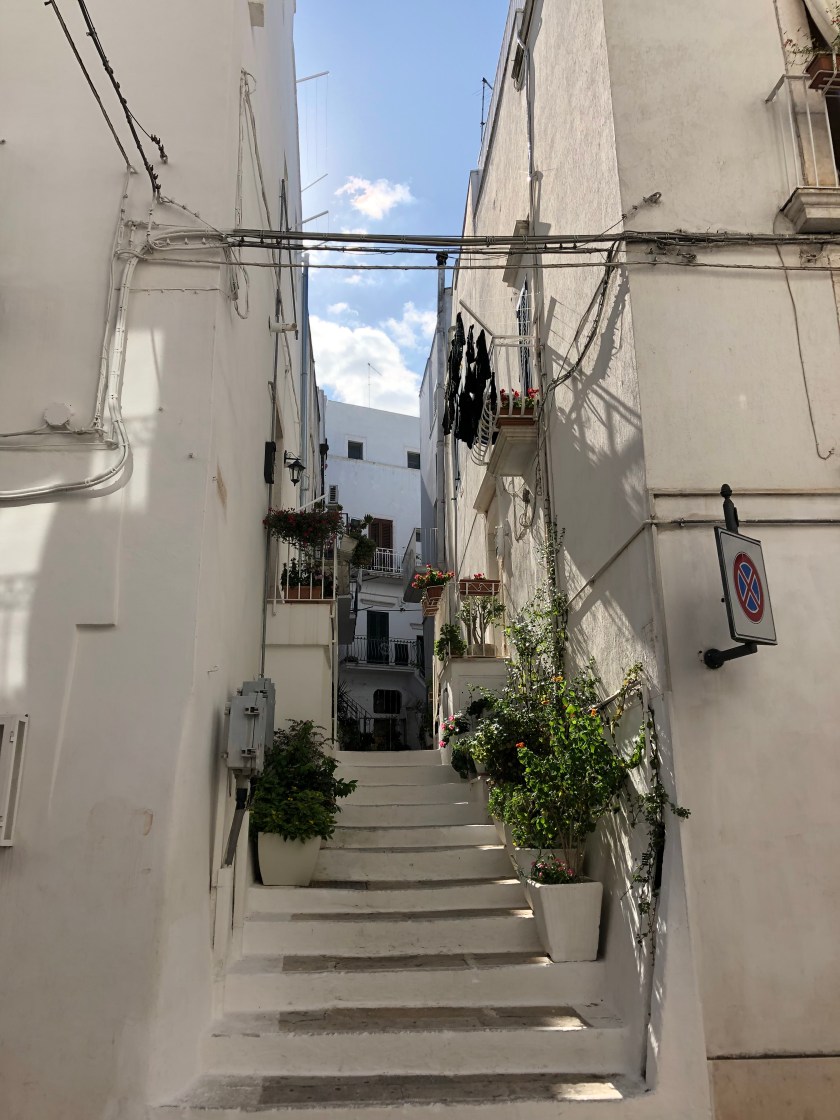
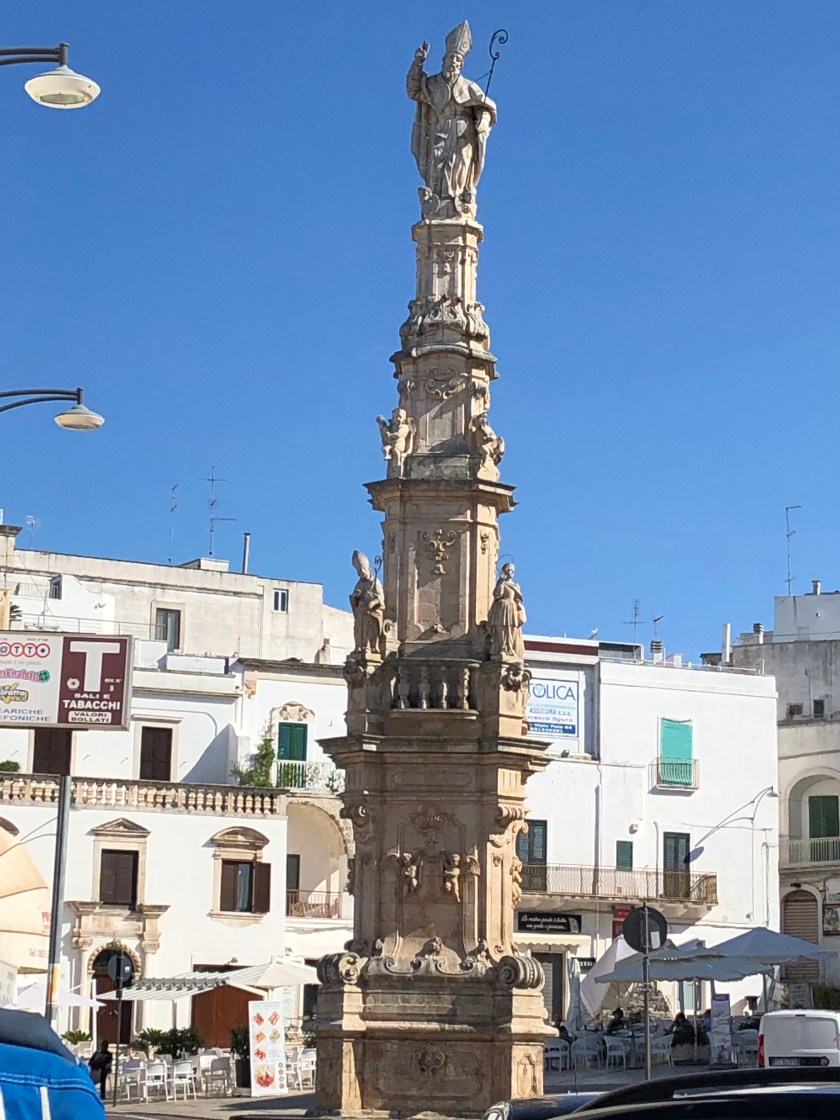
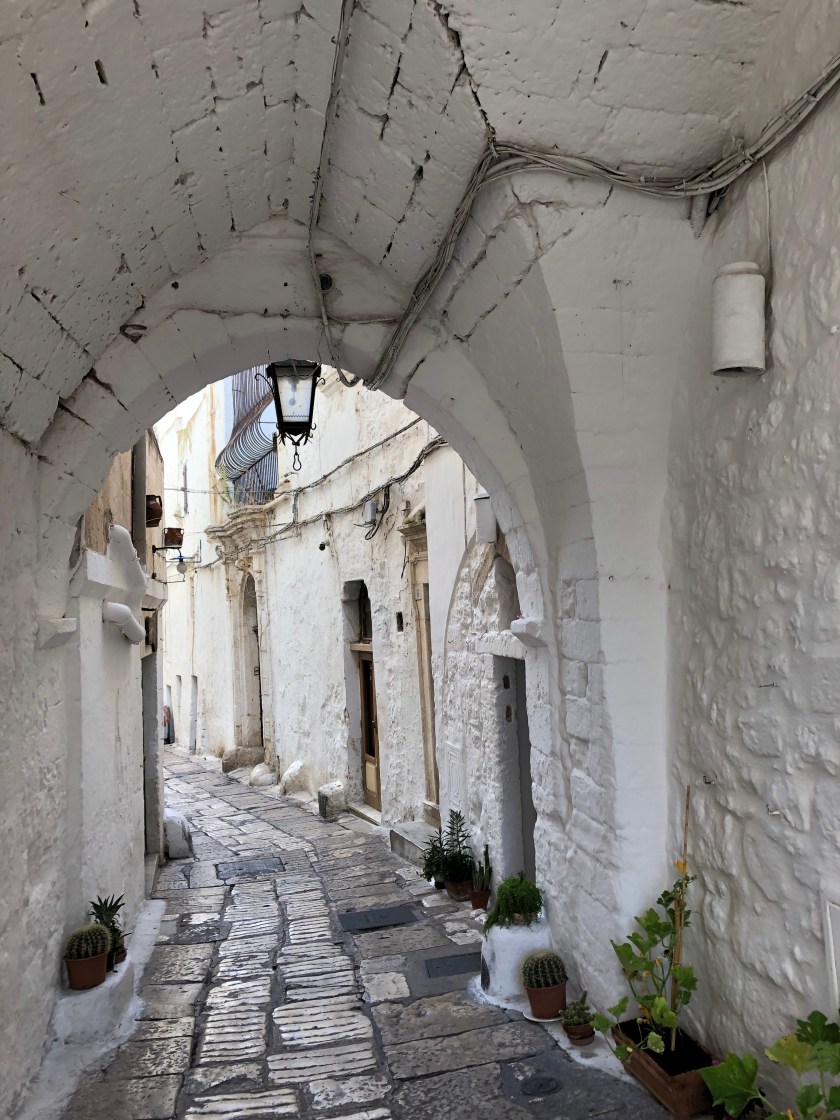
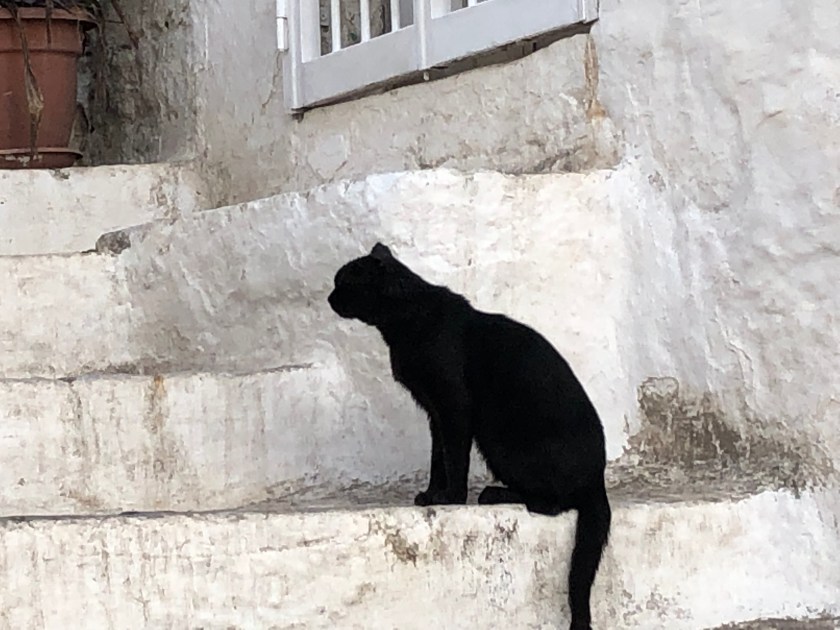
    The next town was Ostuni, the “white city” perched up in the hills overlooking the Adriatic. Narrow cobblestone streets, alleyways, arches and whitewashed buildings fill the centro storico, again mostly shops and eating places.

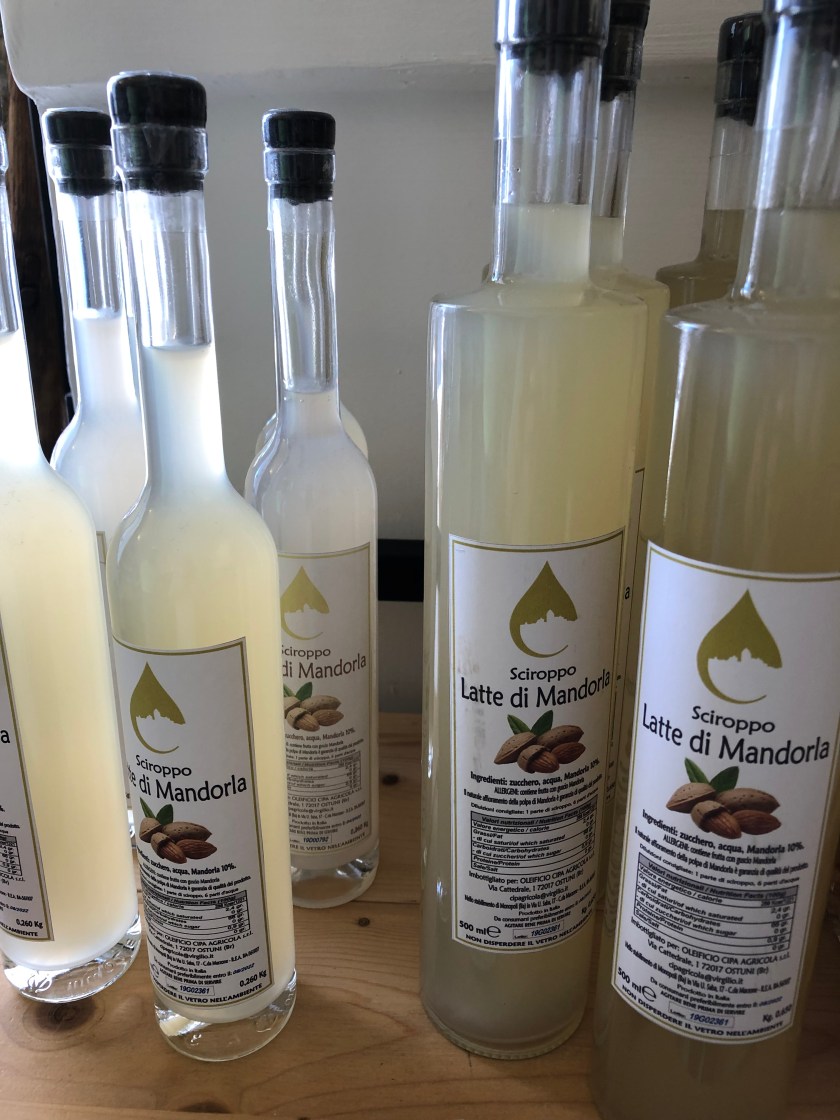
    We had a quick lunch, a gelato and a latte di mandorla (almond milk specialty ).

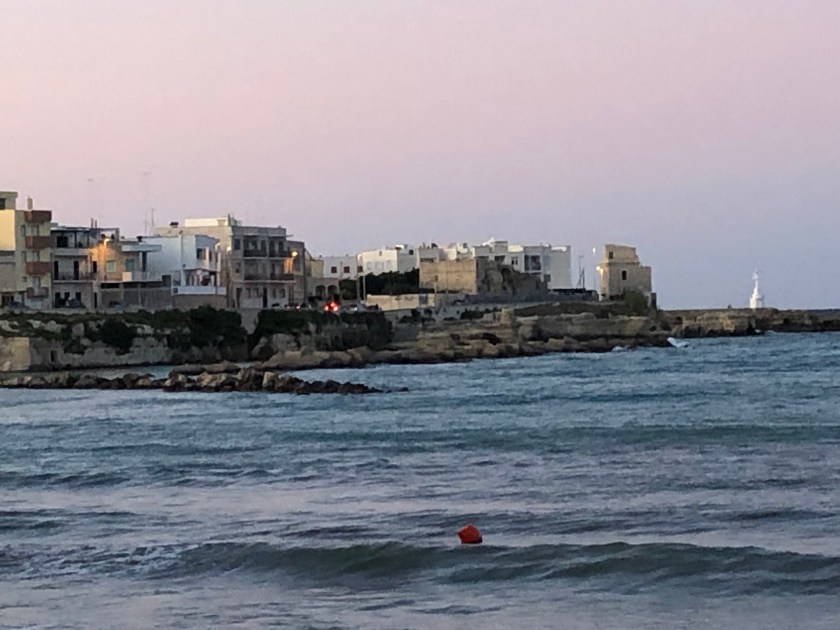
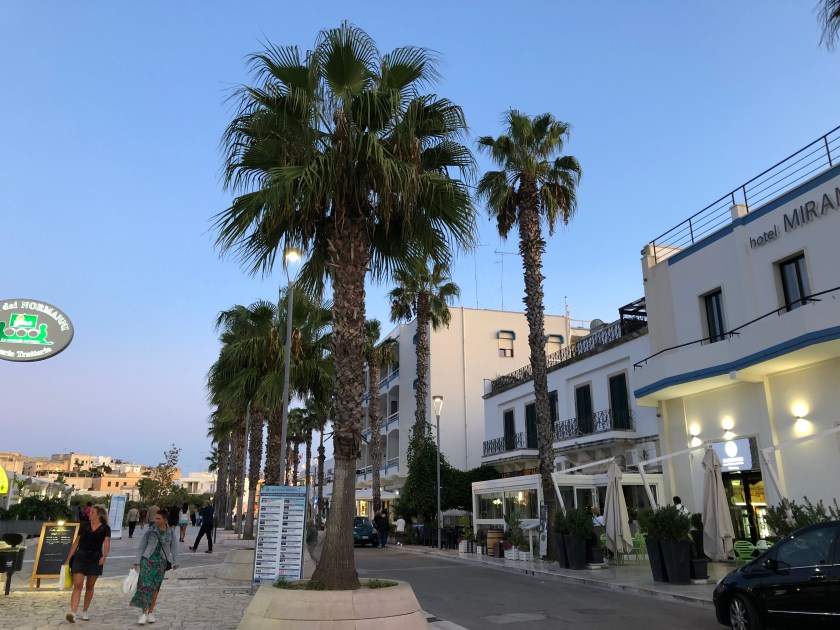
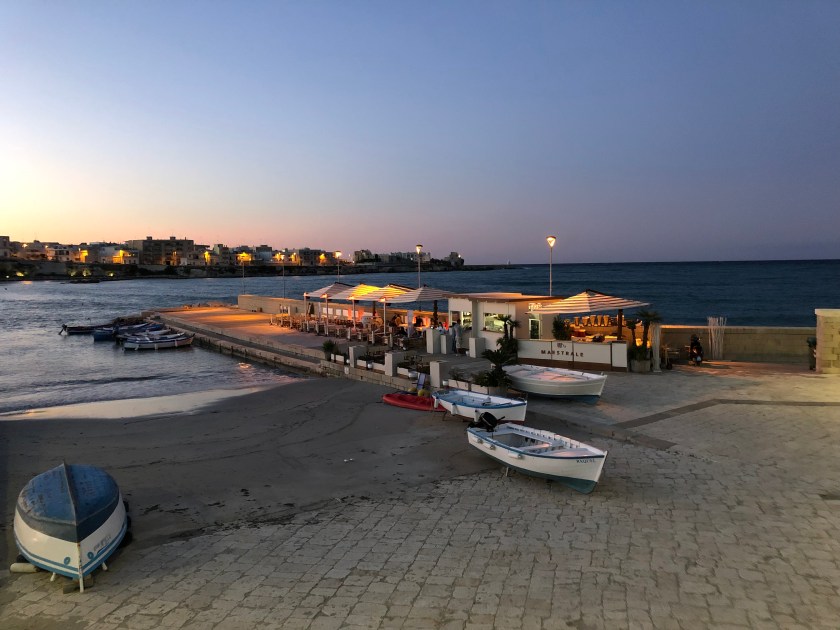
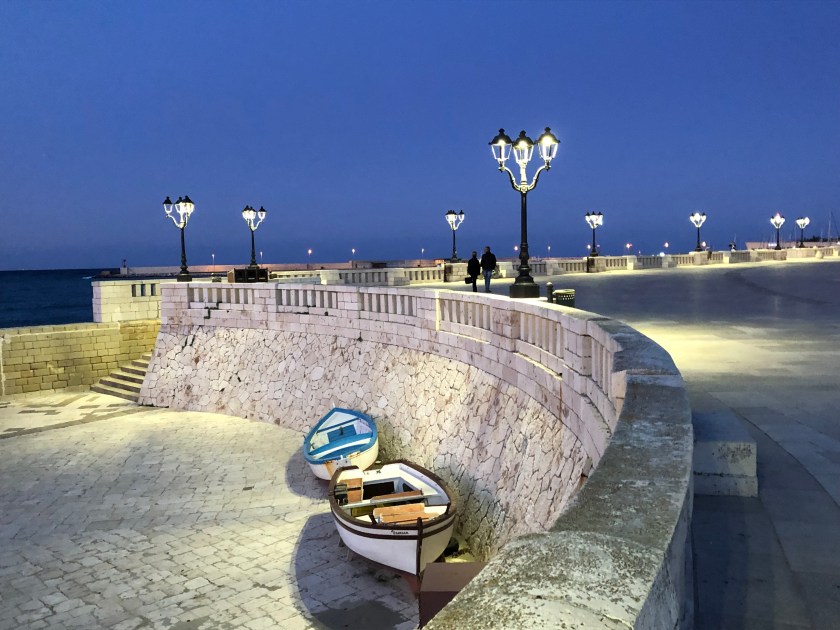
    After picking up our travel companions, and pretty much traveling down every narrow one way street in San Pietro, we made it to Otranto just at sunset. It is a lovely seaside town with a gorgeous lungomare for an evening stroll. It was a bit chilly and not crowded at all as it is off season.
    After a pizza dinner, we left for Lecce with only one misdirection and found probably the last parking spot within walking distance of the apartment. We’re off to Matera in the morning.
    Lecce, la città barocca

    After yesterday’s travel day, we decided to give the car a rest, especially since we didn’t want to lose our “primo” parking spot, and we spent the entire day here in Lecce. Although Lecce is predominantly renowned for its Baroque architecture from the 16th and 17th centuries, this city of 95,000 dates back to Ancient Greece, was conquered by the Romans in the 3rd century BC and was subsequently by the Normans in the 11th century. It was part of the Kingdom of Sicily and was one of the most important cities in southern Italy well into the 17th century.

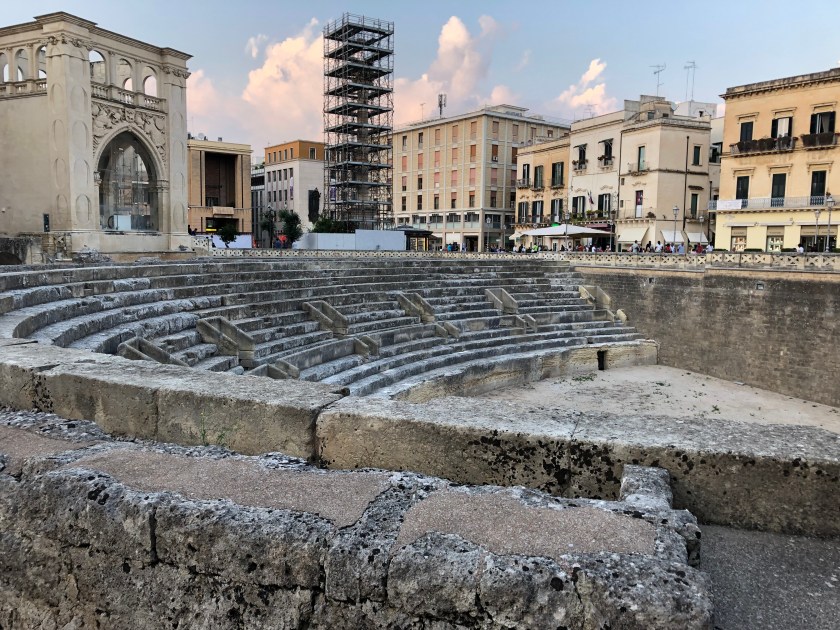
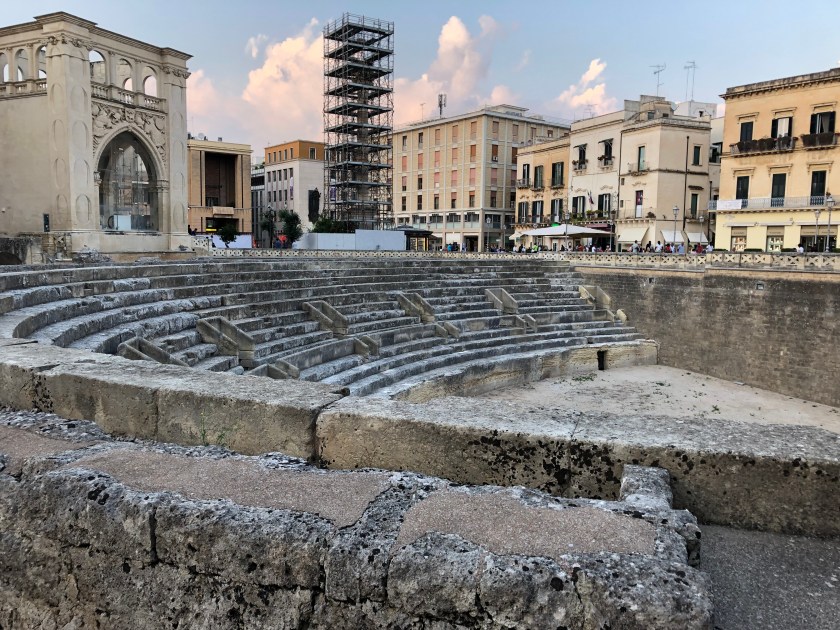
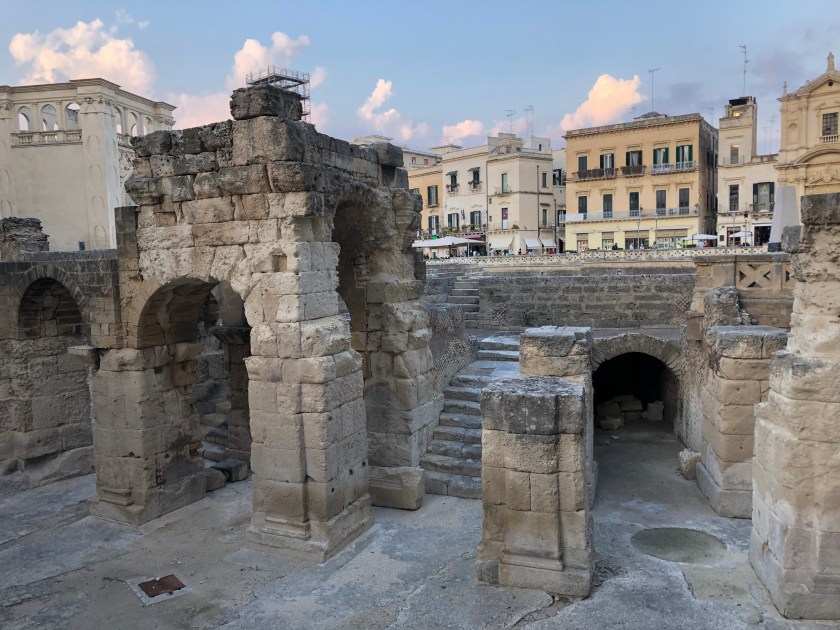
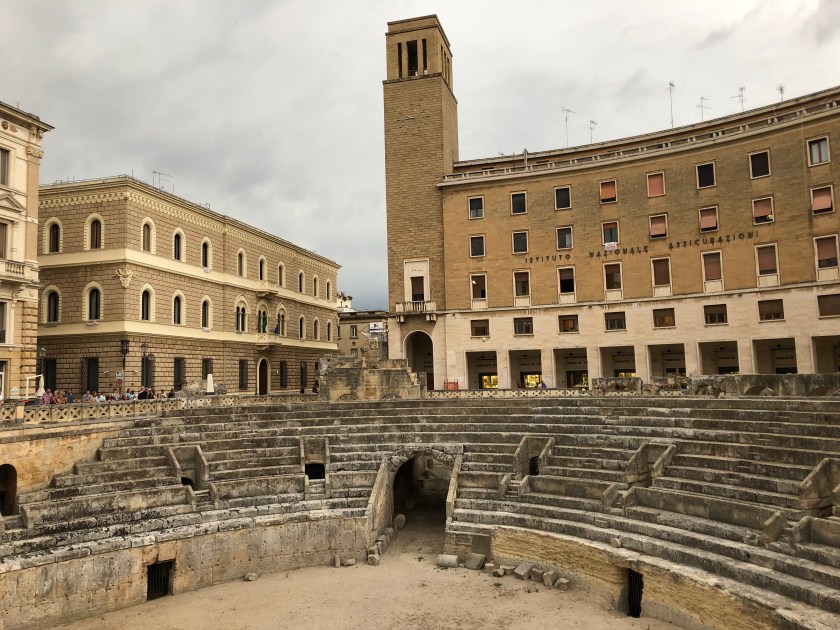
    Certainly one can see remnants of this rich and complex history in the remains of a Roman amphitheater (2nd C AD) in the Piazza D’Oronzo.

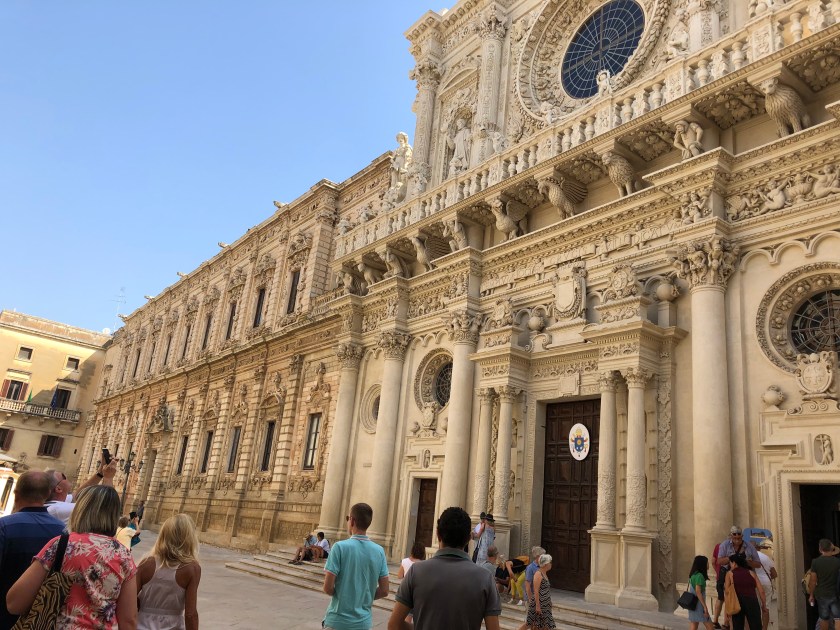
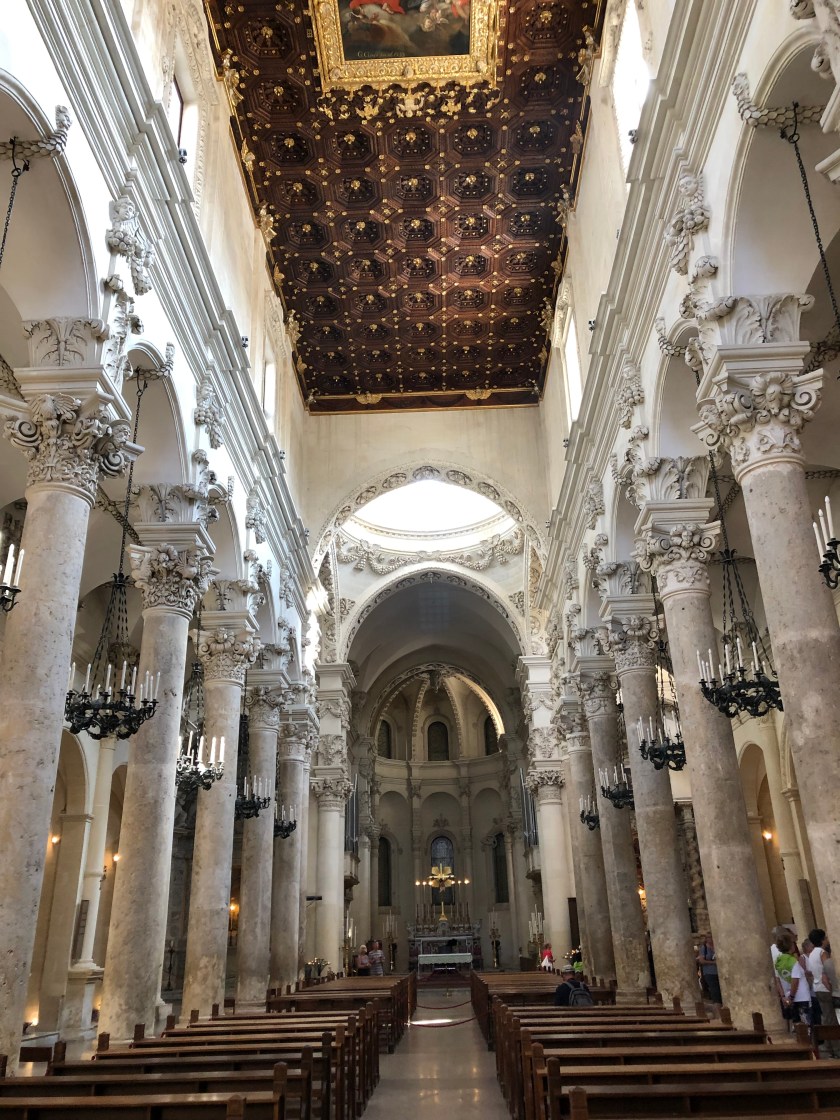
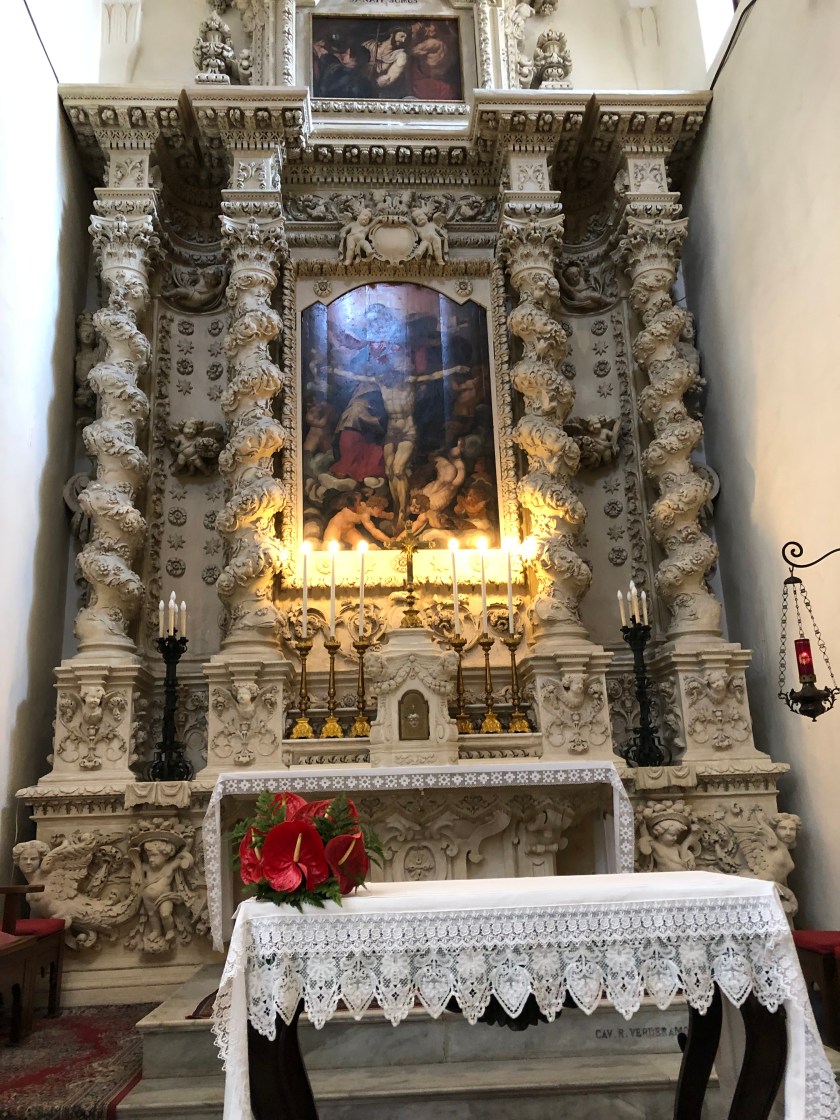
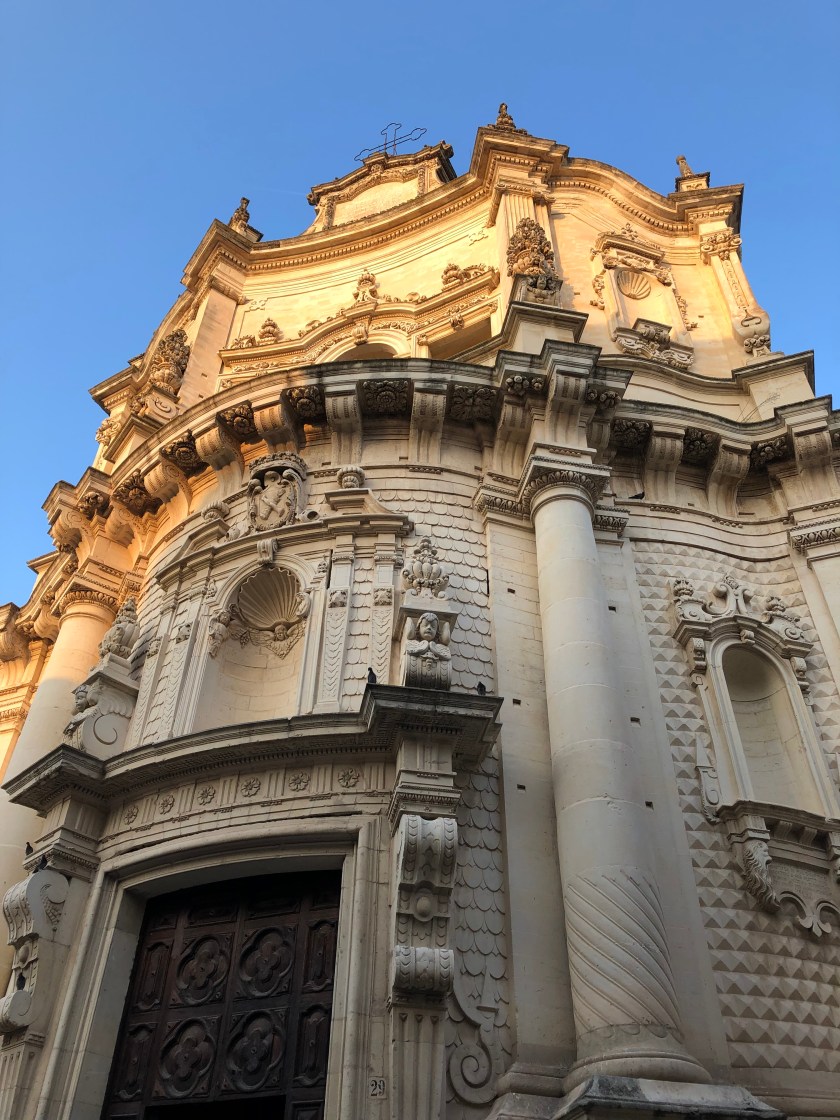
    The importance and wealth of this city in the 16th and 17th centuries, however, was demonstrated by the opulence of the Baroque churches and palazzos that overwhelm the senses. There are 40 churches in the city, each covered in facades overflowing with saints, cherubs, mythical creatures and intricate patterns on the facades as well as the altars. In most cities, the Duomo is the biggest and fanciest house of worship.

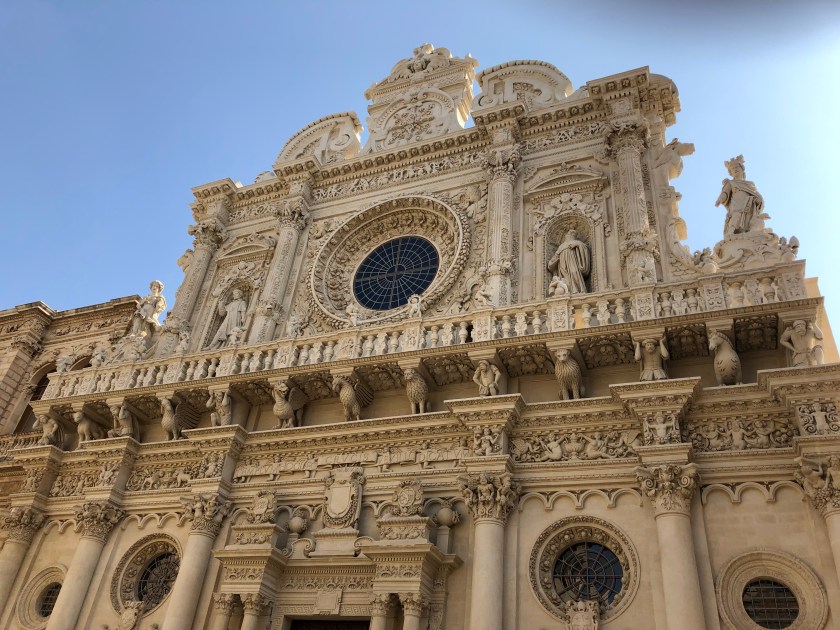
    But in Lecce, it is the Church of Santa Croce that woes the senses.

    Construction began in 1353 but it took over 350 years the finally complete. Giuseppe Zimballo was the mastermind behind the Barocco Leccese style of these churches and the characteristic pietra leccese (a limestone that weathers to a yellow color) causes this city to have a golden yellow aura, especially at sunset.

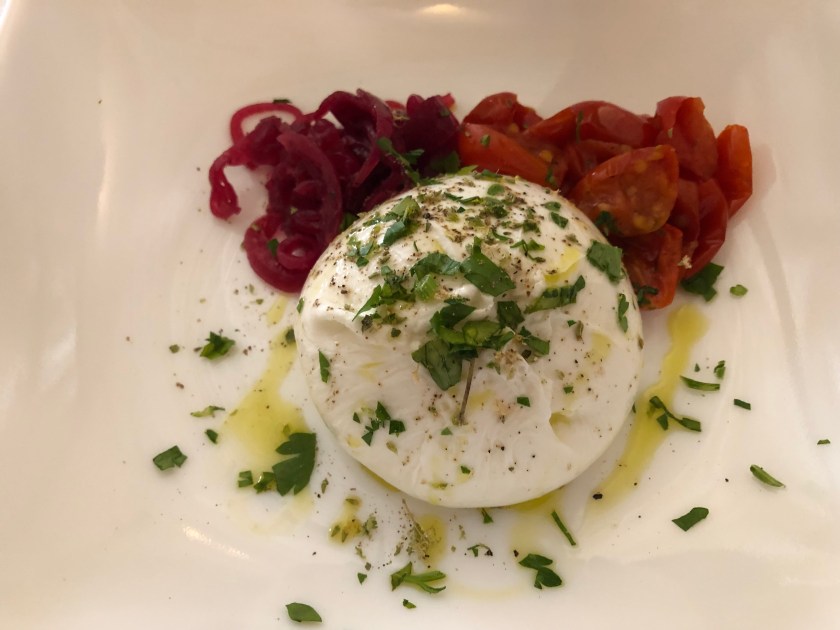
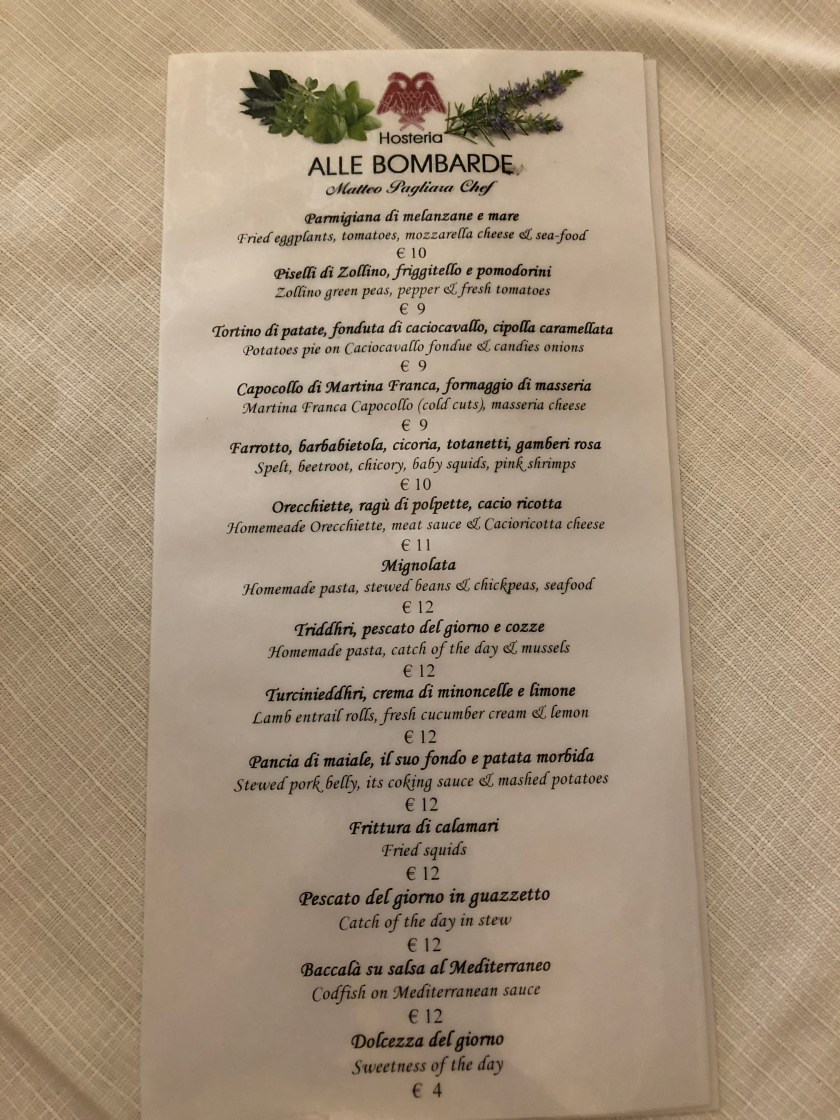
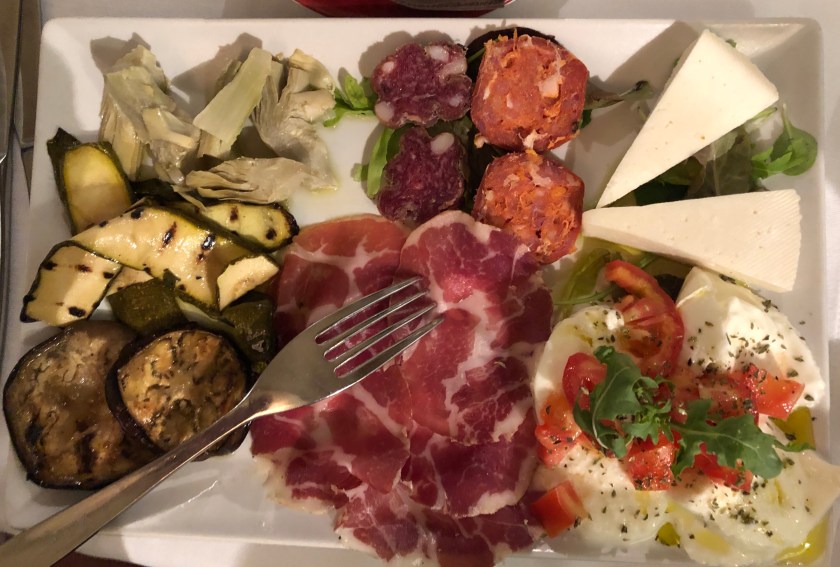
    We had lunch at Hosteria alle Bombarde ( recommended by a Russian friend I met in Salerno last year), enjoying a charcuterie platter of local specialties and a mozzarella filled with gorgonzola.

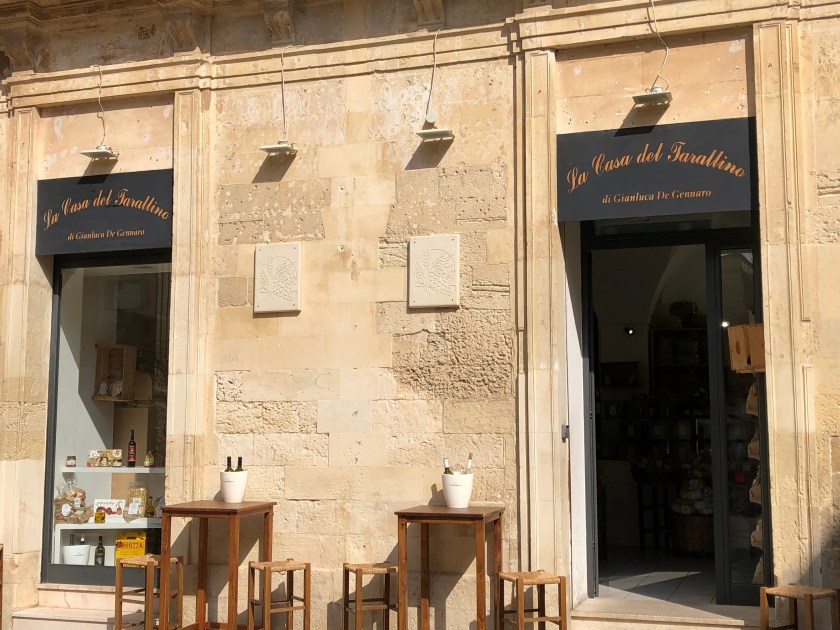
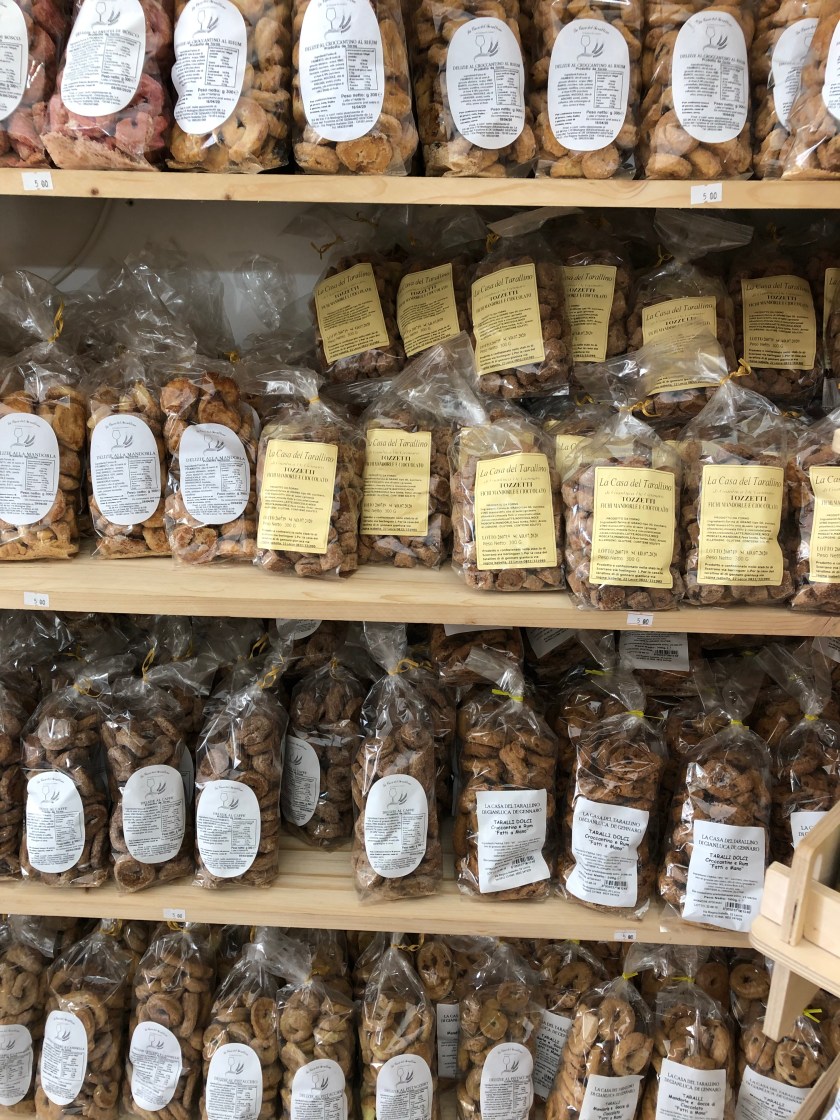
    We also found a shop that sells almost any possible variety of taralli, a local crunchy snack.

    We also visited the public gardens

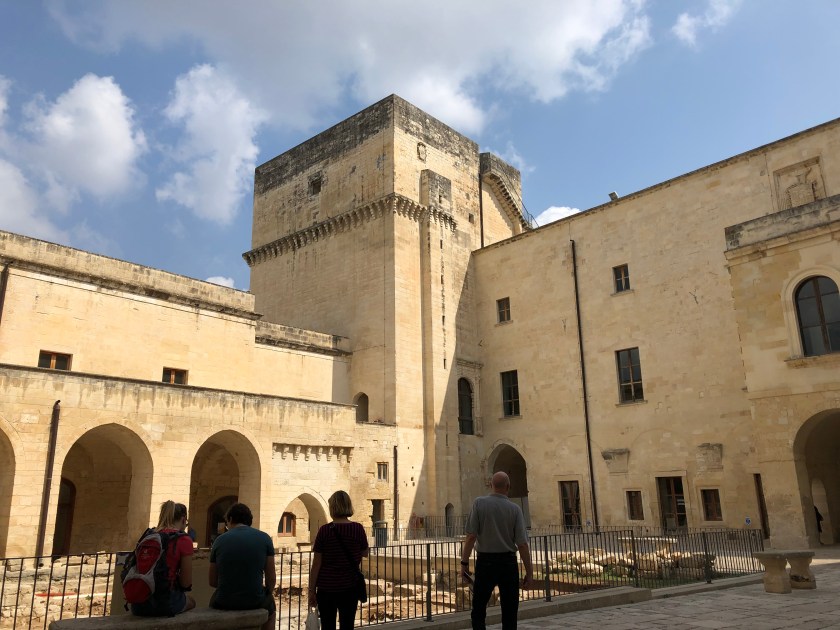
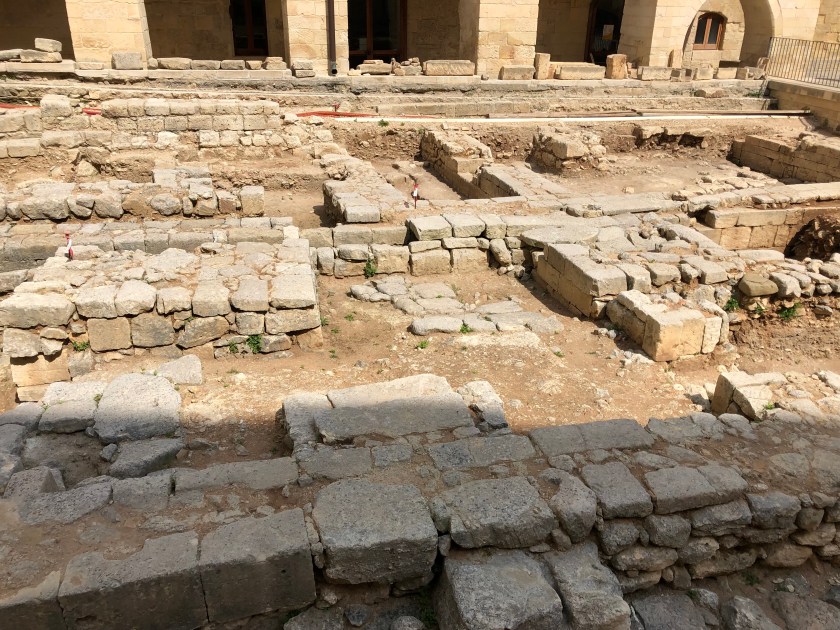
    and the castle of King Carlo V, from the 15th century (but built on the ruins of a Norman castle).

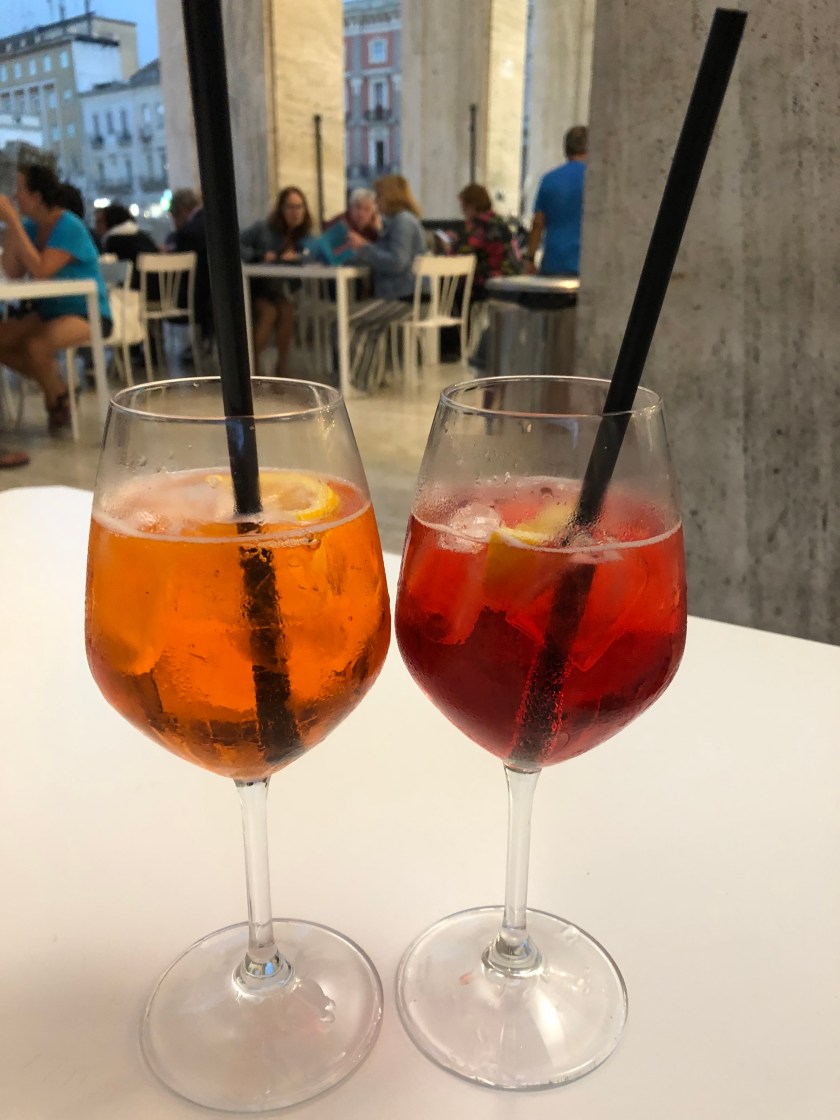
    After the busy morning and late lunch, we rushed back to the apartment trying to beat out an impending storm. After a two hour pausa (siesta), we ventured out again before dinner for an aperitif. The storm which threatened all afternoon finally broke through as we were enjoying an Aperol and Campari

    spritz.

    After a two hour storm, we ventured out for dinner at Trattoria Nonna Tetti, an out-of-the-way local restaurant that filled up in a matter of an hour. The food was simple and delicious

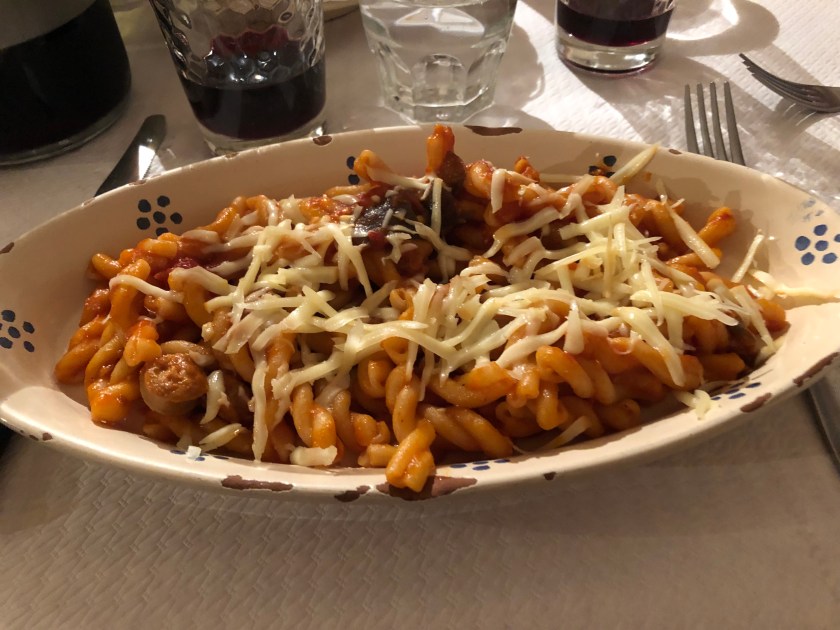
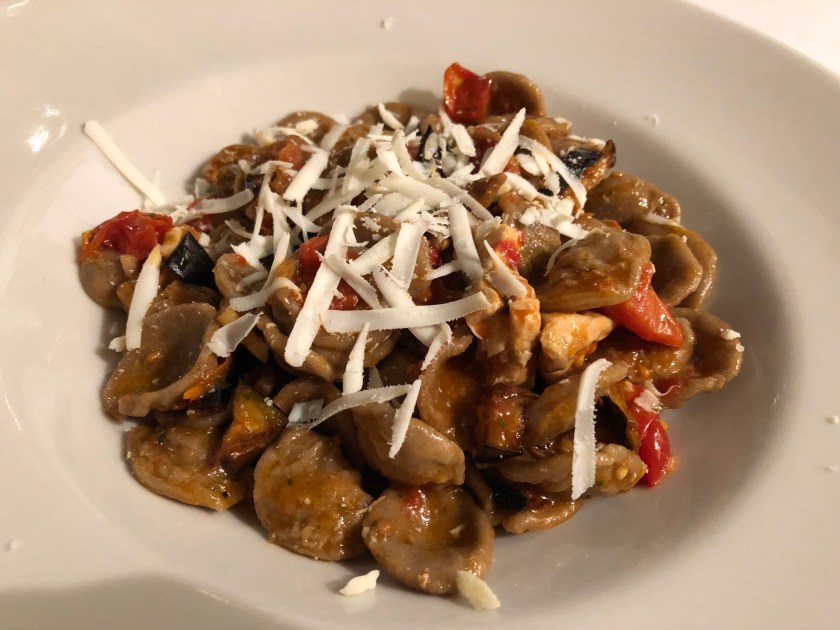
    with a plate of fusilli with tomato sauce, eggplant and sausage and a local red wine.

    After the rain, the temperature dropped significantly and we had our first cool evening of the trip, conducive to a good night’s sleep!

    Lecce, not really the “Firenze del Sud” (Florence of the South)

    We departed Pescara around 10:30 a.m., a little later than planned, due to our loquacious B&B host. Paolo, as mentioned in a prior blog post, is a huge Springsteen and rock music fan and we were his captive audience this morning as he regaled us with stories of his experiences at rock concerts he attended. Getting out of Pescara on this humid warm morning was much easier than coming in – taking a route along the lungomare (beachfront), there was nary a rotario (roundabout) encountered and it was smooth sailing to the autostrada.

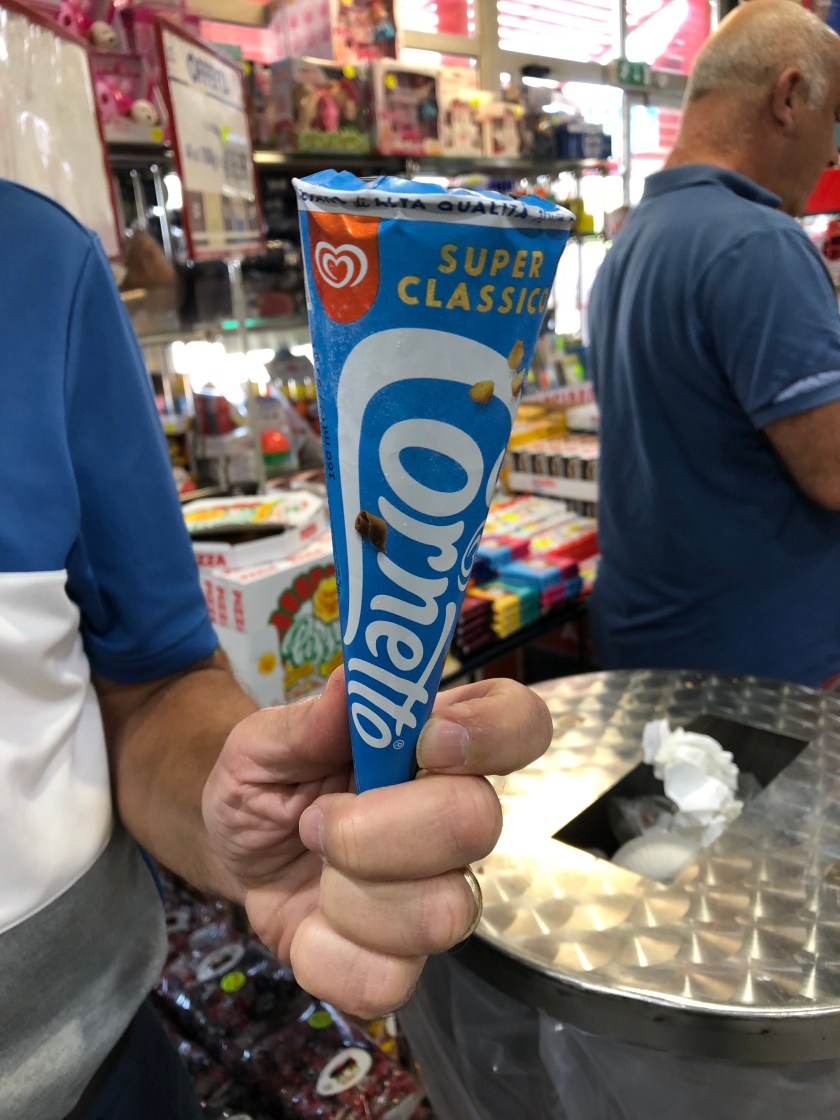
    The road to Lecce followed the Adriatic coast through groves of olive trees and fields of vegetables, with the mountains far off to the west. A rest stop for a panino and a “Cornetto” ( AKA drumstick or ice cream cone) broke up the five hour journey. We circumvented the port cities of Bari and Brindisi and arrived in Lecce around 4:30pm, faithfully using Google maps as our guide. We should have been unfaithful as it is not always correct! Google maps told us that we had reached our destination on the right- WRONG! Thank goodness I was sent instruction- with pictures- on how to find the apartment, as we tried to match up the photo with what Google was telling us. A parking space was found, and we were set.
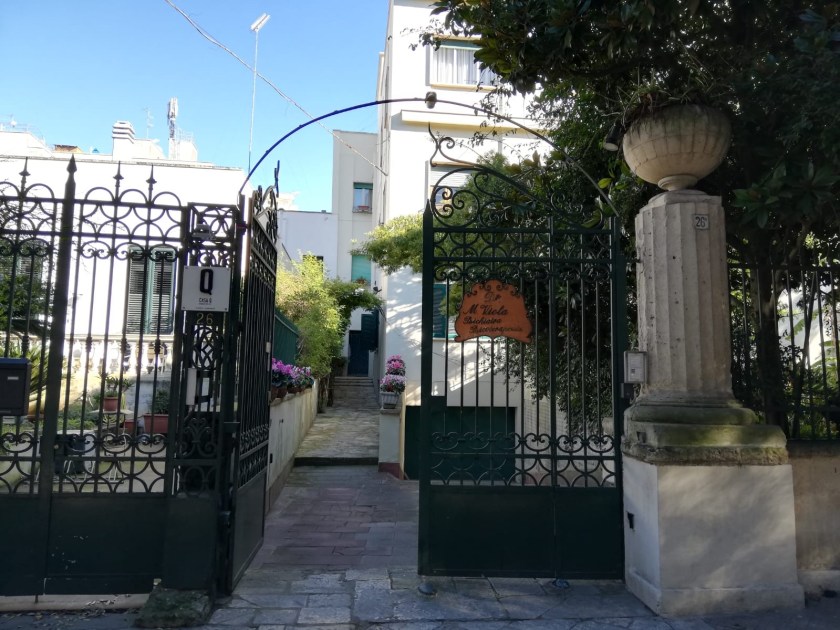
    The apartment is a spacious 3 bedroom in a condominium complex, about 10 minutes walking distance from the historic center. After unloading luggage, we ventured out to explore.

    The streets are cobblestone and there is barely room for cars to pass the narrow lanes. Many areas are pedestrian only. The city is the epitome of Baroque, with its over-the-top elaborate limestone facades. The prevalent color of the buildings is a golden yellow, accentuated at sunset. The main square is Piazza Sant’Oronzo, with the remnants of a Roman amphitheater in its center.

    Lecce looks nothing like Florence (Firenze)- not a bit of Renaissance influence, no major art museums, no river running through the city, no marble in any of the buildings. Perhaps this was a marketing ploy to draw tourists to the most southern of Italian mainland cities?

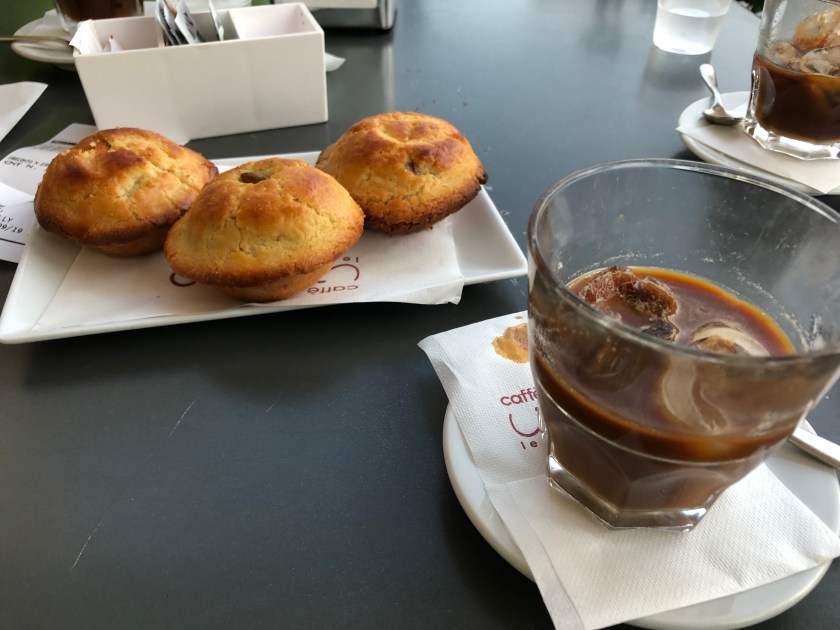
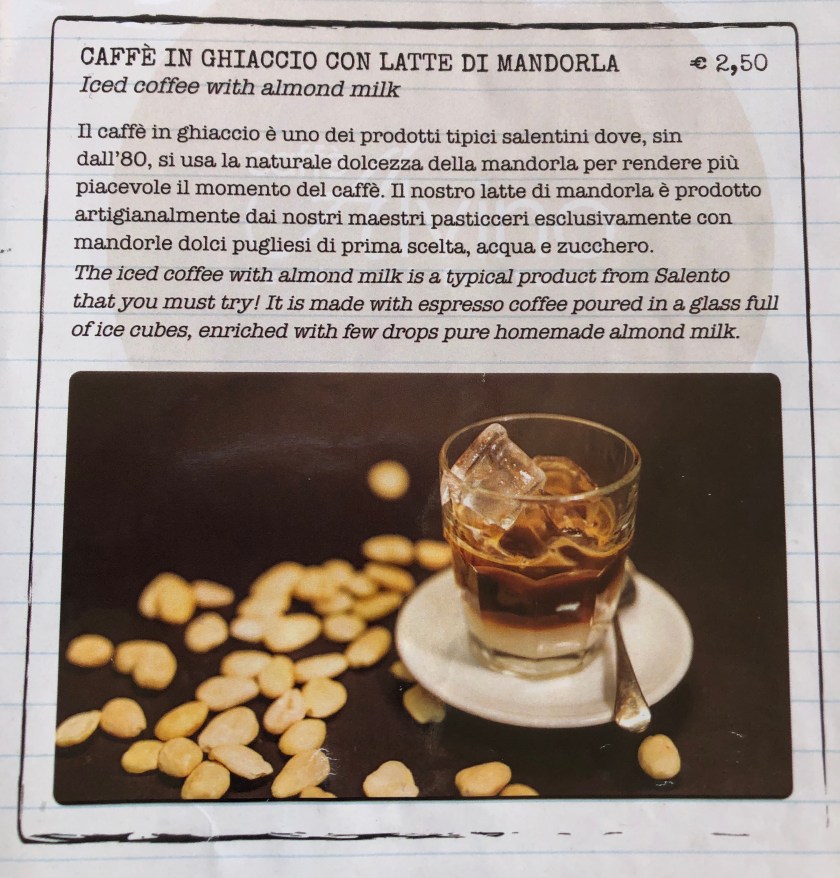
    The Cafe Alvino, facing the amphitheater, is famous for caffè leccese (caffè al ghiaccio e latte di mandorla), an iced expresso with almond milk, and a pasticciotto, a shortbread crusted tart filled with pastry cream. We tried the pistachio and amarena (cherry) variations.

    We then set off for dinner after having our dessert! We stumbled upon Ristorante Blu Notte, a charming place with terrace seating, but as we did not have a reservation, we sat inside on this warm and muggy night. The meal was excellent/ a charcuterie plate, orecchiette pasta with tomatoes, swordfish and eggplant, roasted veggies.

    An Aperol spritz was a complimentary aperitif.

    Lesson of the day: Do not have an espresso after 10 pm!

    Pescara – Abruzzo by the sea

    Many of the Italian immigrants to Pittsburgh came from Abruzzo, a mountainous region in south-central Italy. Glancing at the map of Italy, one can see that it dits right in the middle of the Apennine mountain range but there is a small portion that includes the Adriatic coastline. Pescara is the most populous city of the region with around 120,000 inhabitants and it was this seaport that we spent our first full day in Bella Italia.

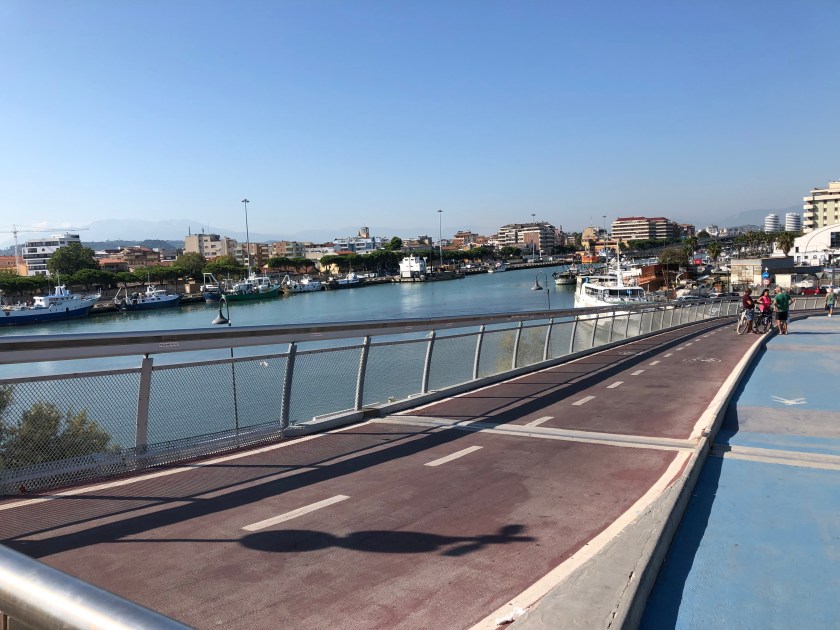
    After a typical Italian breakfast of coffee, a cornetto (croissant) and yogurt (which is very different from American yogurt), we headed out to explore the old part of the city south of the Pescara River. Paolo, our loquacious B&B host (who has seen more of the USA than I have – Arkansas, Missouri and Oklahoma as vacation destinations I cannot understand!) gave us some advice regarding walking instructions and restaurant recommendations and then we were off. The day was becoming quite warm and humid, even at 9 a.m. We walked along the lungomare until we reached a pedestrian and cyclist bridge that spanned the river.

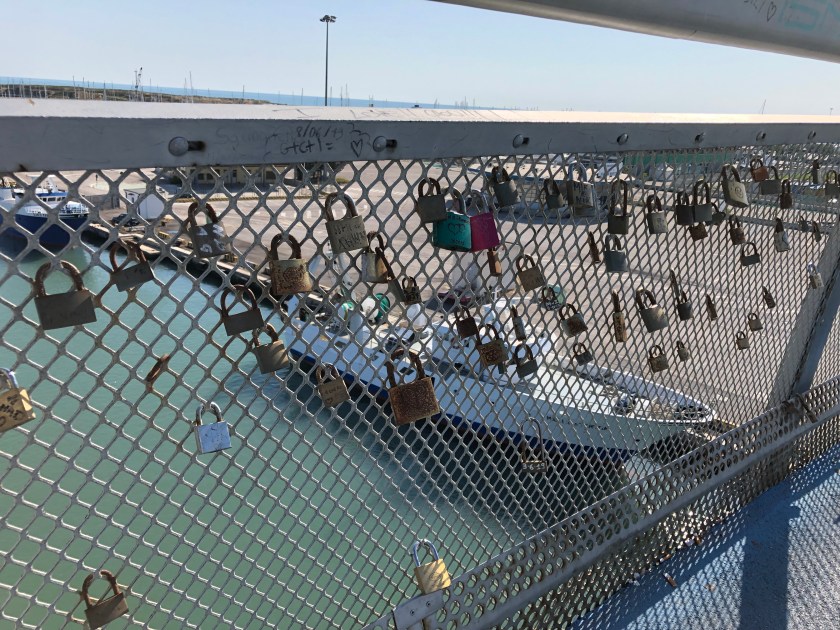
    The view of the river and city was stunning. Little locks were scattered along the entire length of the bridge’s fence, similar to what’s seen in most other countries

    and even on the Panther Hollow Bridge in Pittsburgh.

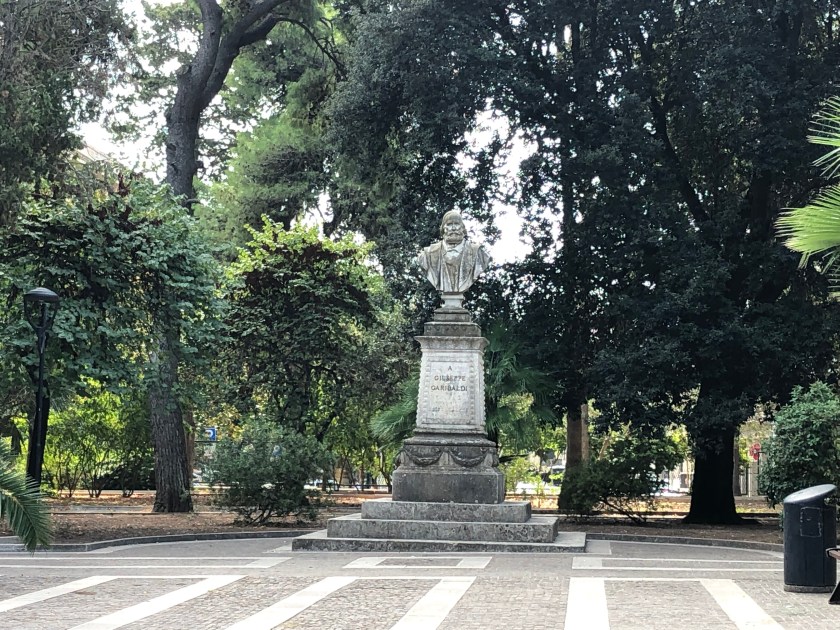
    The south shore of the river is the centro storico (historic center) whereas the north side is called the Porto Nuovo. The city dates back to pre-Roman times, an important port for trade with the eastern part of the Ancient Greek Empire. By the 11th Century it was a fishing village, invaded by the Normans and then by successive invasions of Venetians, ottoman Turks and Spanish. Part of the Kingdom of Naples, it was invaded by the French in 1800 and eventually liberated by Garibaldi in 1860. Little is left of the historic center as the city was heavily bombed during World War 2. The Porto Nuovo has a post-war ambience, albeit with a busy business district on the Corso Vittorio Emmanuele, an impressive miles- long lungomare beach scene, and upscale shops and elaborate villas on the viale Regina Margherita.

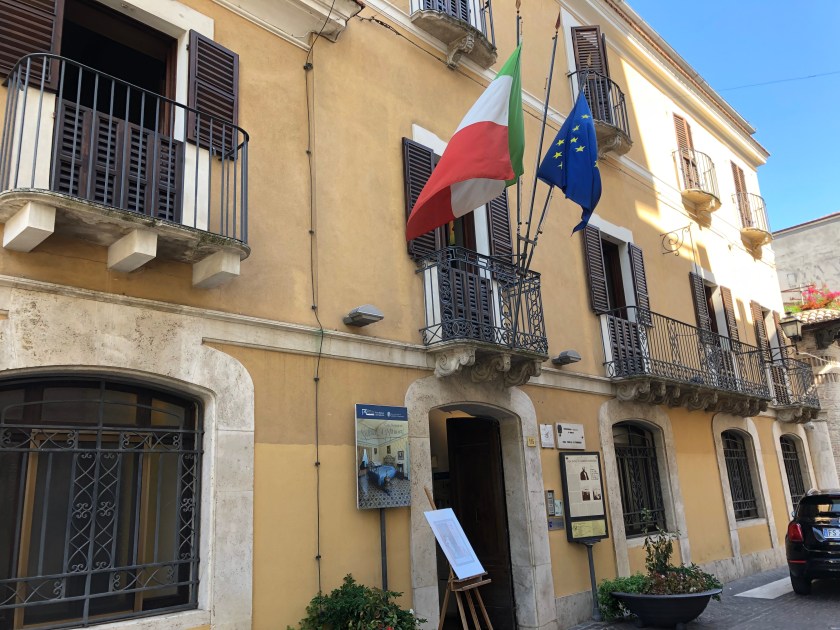
    We spent several hours wandering the small yet charming old city, birthplace of Gabriele D’Annunzio, one of Italy’s most famous poets/writers/WW1heroes/politicians (he did it all!) whose “sensuous” poetry was quite scandalous for the times. His casa natale is located on a small hidden street two blocks from the river and houses a museum.

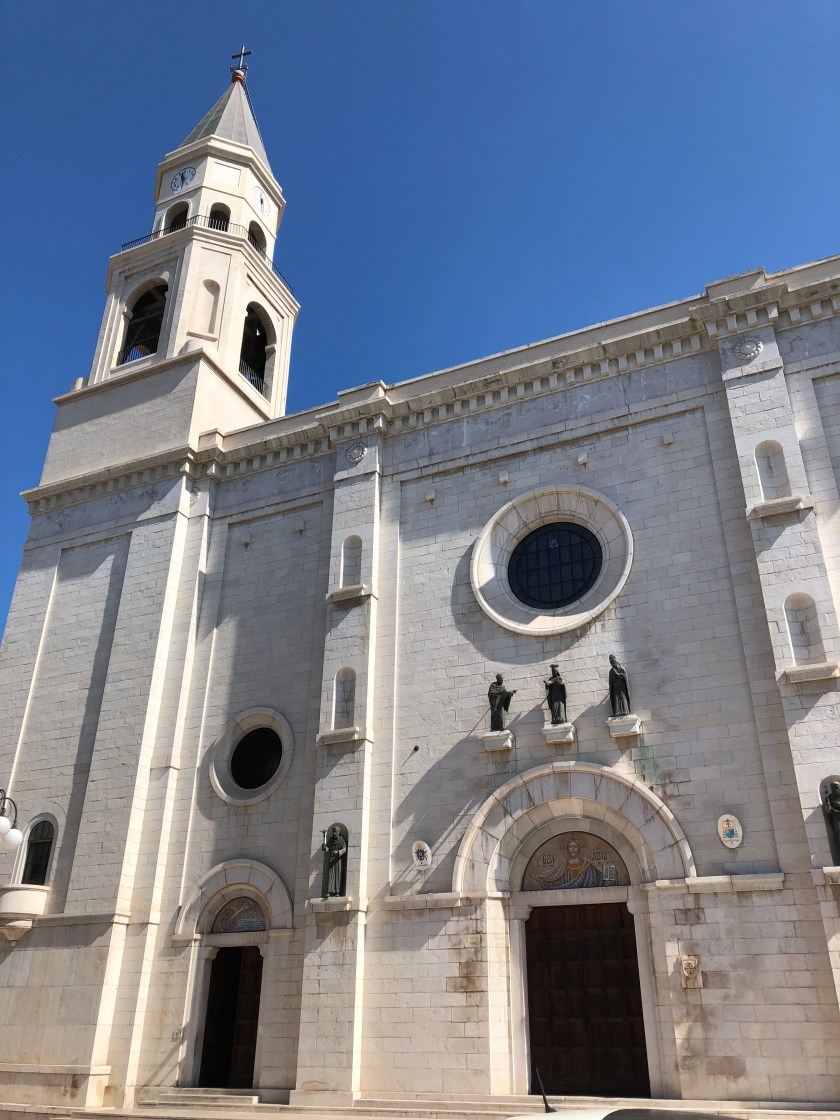
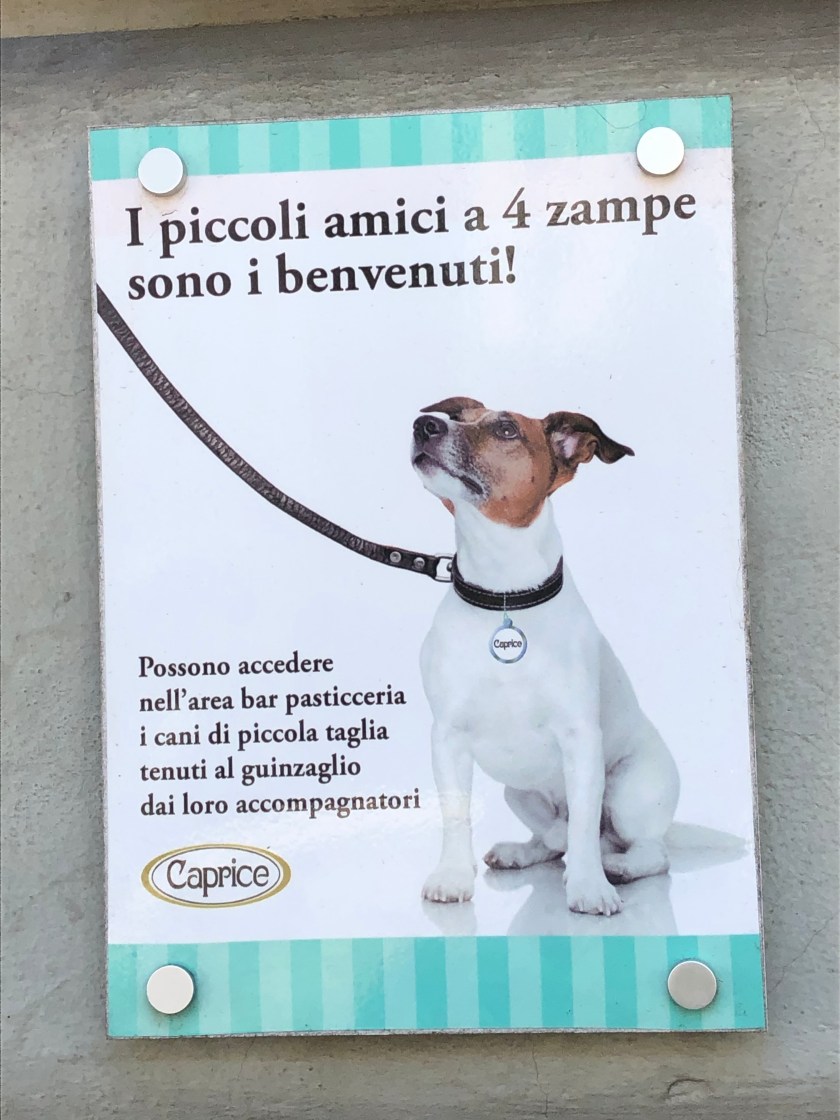
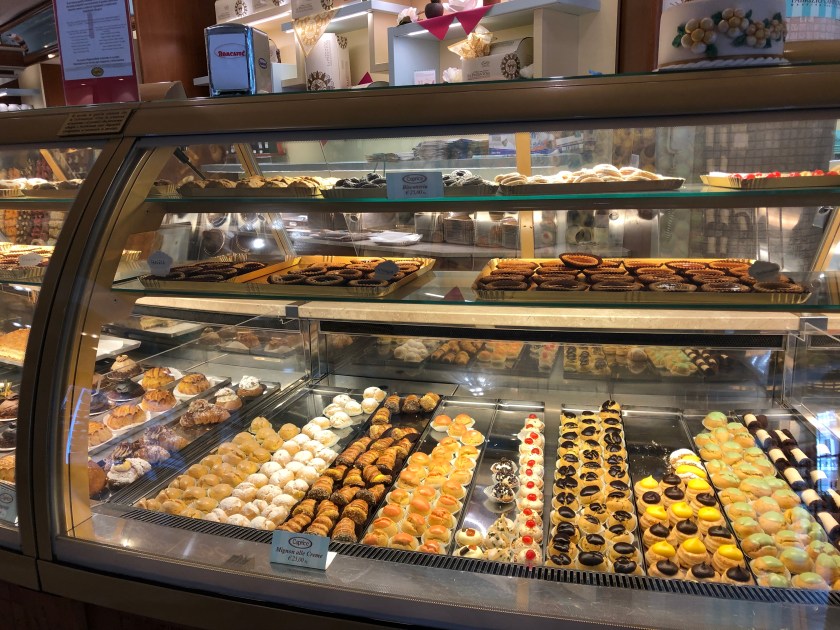
    Nearby are the Catedrale di San Cetteo, patron saint and bishop of Pescara in the 6th century who was martyred by being thrown off a bridge into the river (his body floated to Pescara), a museum of Abruzzo history and folklore and a great pastry shop that welcomes your pooch to share your sweet treat!

    Back on the north shore, it was time for a lunch break at Turchi (via Trento) -it was not a Turkish restaurant but rather a tavola calda – sort of like a cafeteria where you choose three items from a buffet of veggies, pastas, meats or fish and the plate is warmed in the oven and brought to your table. A delicious and crunchy corn bread was brought as an accompaniment. This made for an inexpensive and filling lunch. As we are in southern Italy where there is a dopo pranzo pausa (AKA siesta), we headed back for a two hour rest.
    At 5 pm, a cousin of one of our traveling companions arrived at the B&B for a visit. They had not seen each other for 50 years so it was a heart warming and emotional visit. After two hours of reminiscing, the family members bid farewell.

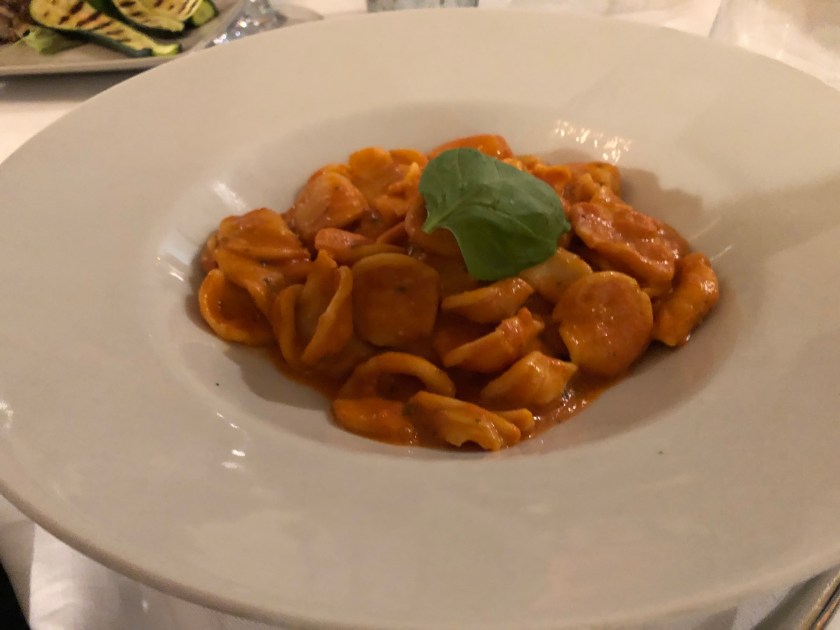
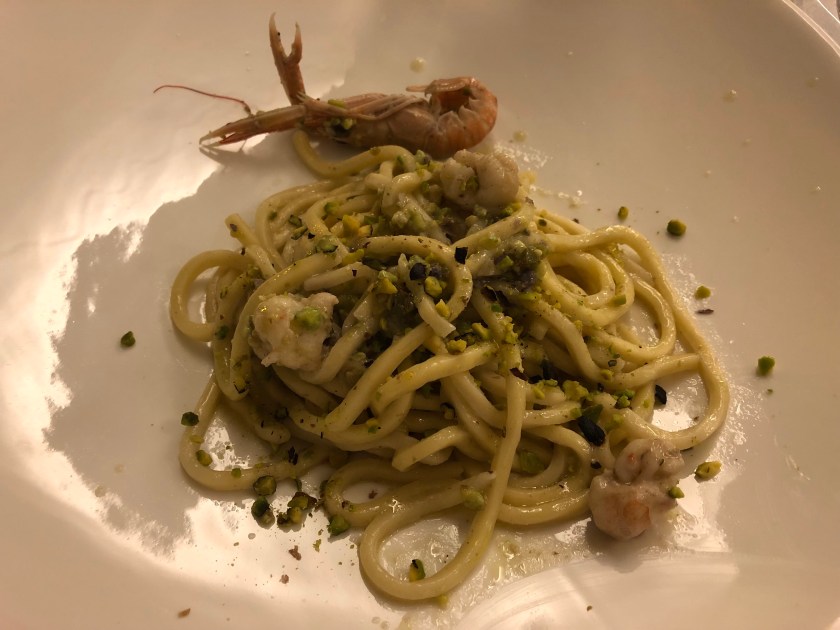
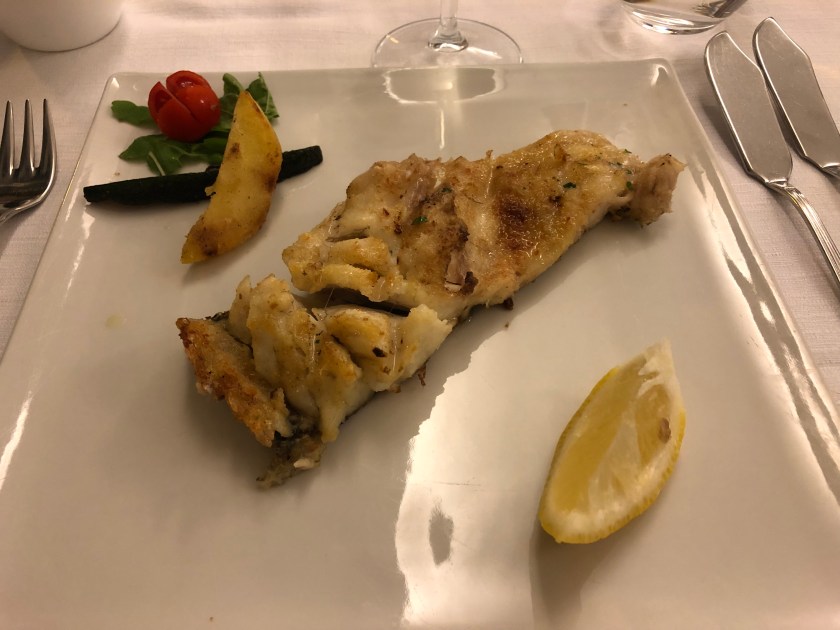
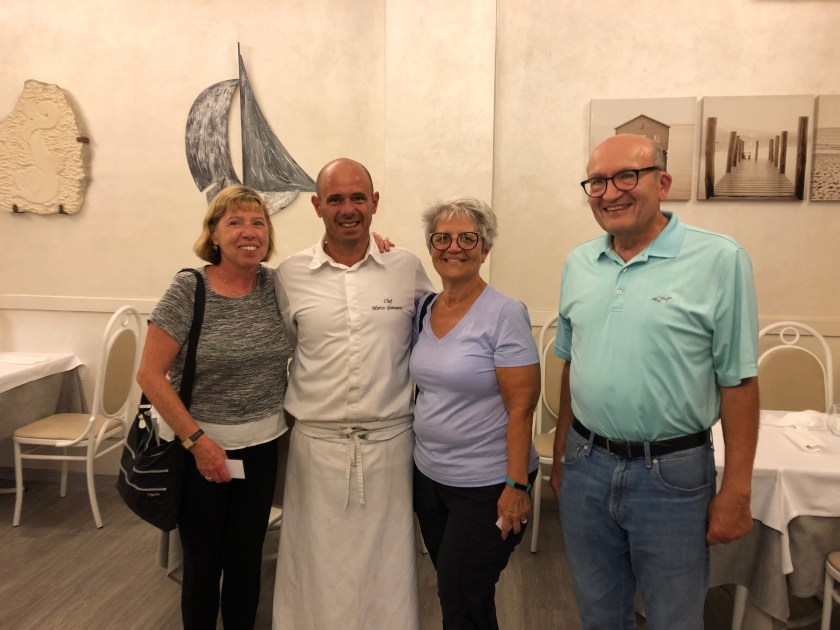
    Our dinner this evening was at a place recommended by our B&B host ( who by the way is a huge Springsteen fan, and a groupie who has seen “the Boss” 21 times, all over Europe and the USA!). La Rete specializes in seafood ( naturally, as we are by the sea) and as the first of only a few customers this evening, we were treated to some personal attention by the chef. He sent out a chickpea and shrimp purée and sea asparagus as an amuse bouche, two different pastas as our primi piatti (the pasta chitarra with prawns and pistachios from Bronte Sicily was amazing) and a grilled ombrina (fish) with roasted potatoes. A selection of fresh fruit was the perfect dessert. We headed home fully sated and ready for a long deserved rest.