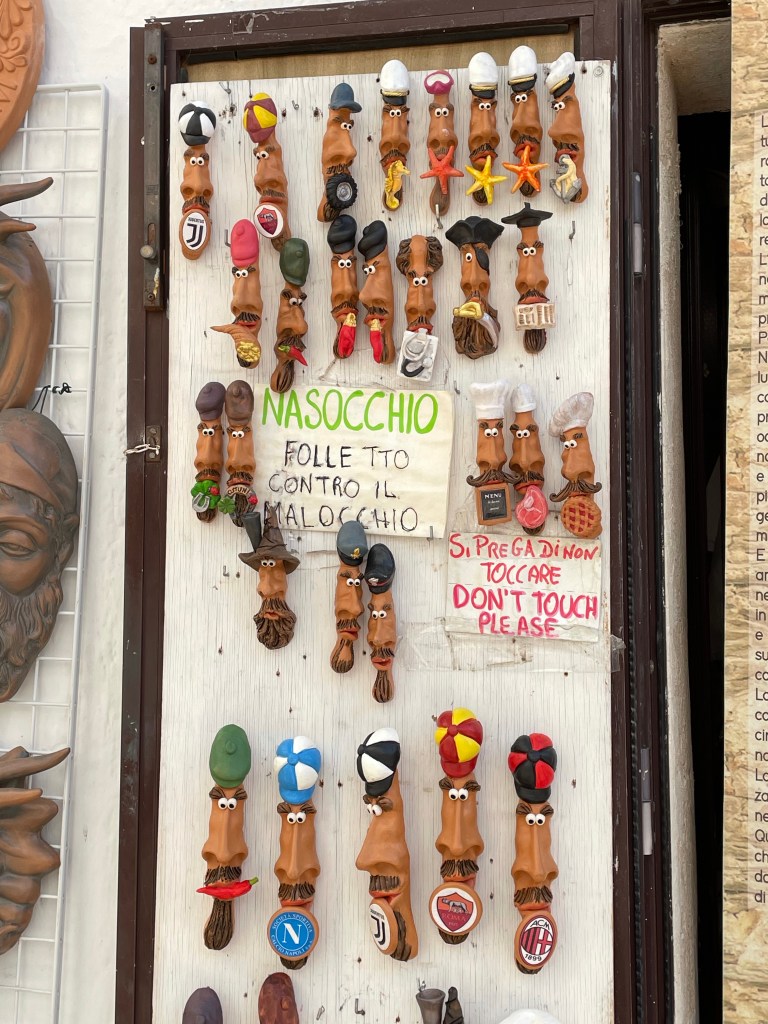
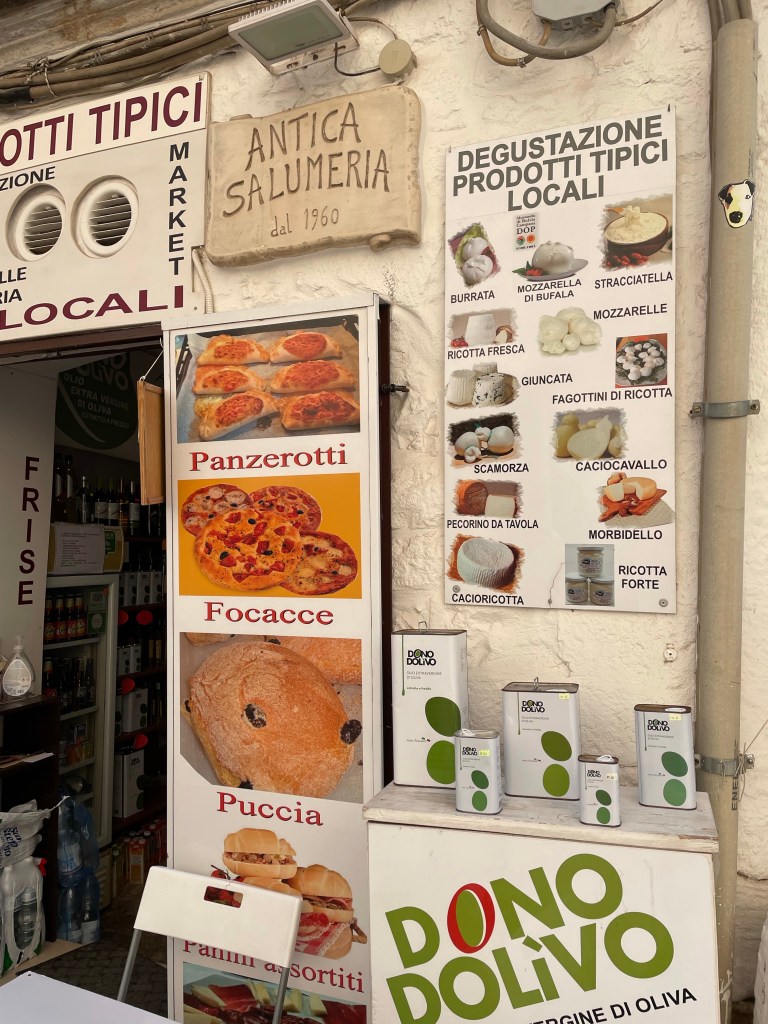
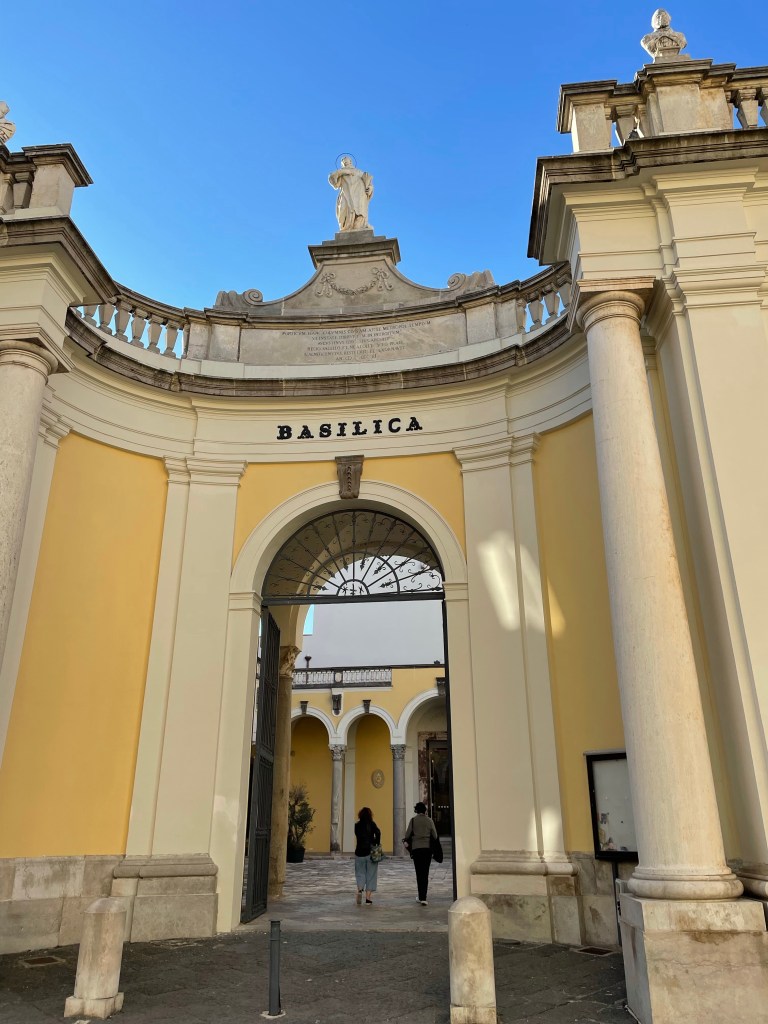
Hilltop and seaside villages – Ostuni and Polignano al Mare

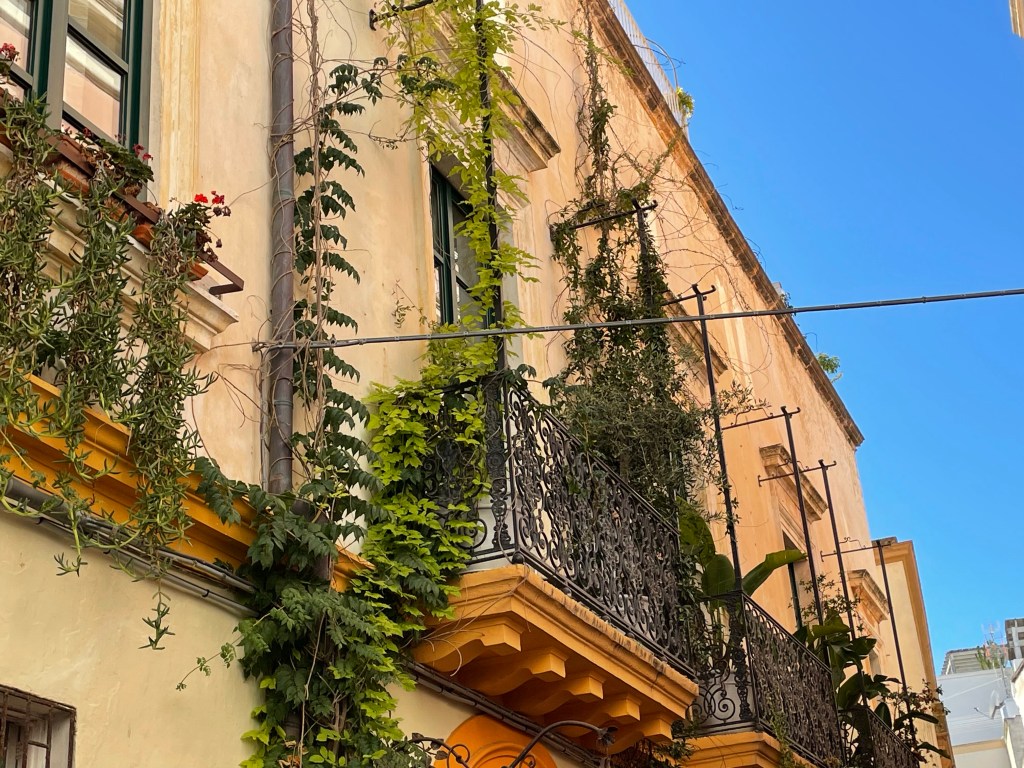
One of the most visited and famous towns in Puglia is the town of Ostuni. Its whitewashed buildings are suggestive of the Greek island of Santorini. Located up in the foothills of the southern end of the Apennine mountain range, it overlooks the olive groves that span the entire region of Puglia. We had a walking tour with Dorothea, a transplanted Sicilian from Catania who married an ostensibly snobby (according to her) Ostuni native. The town has been historically whitewashed to wash away the Black Death (plague of the 15th century). An impressive white castle sits at the edge of the centro storico, built by a wealthy and lazy Spanish noble who wanted to do a pilgrimage to Santiago de Compostela but never got around to doing it.

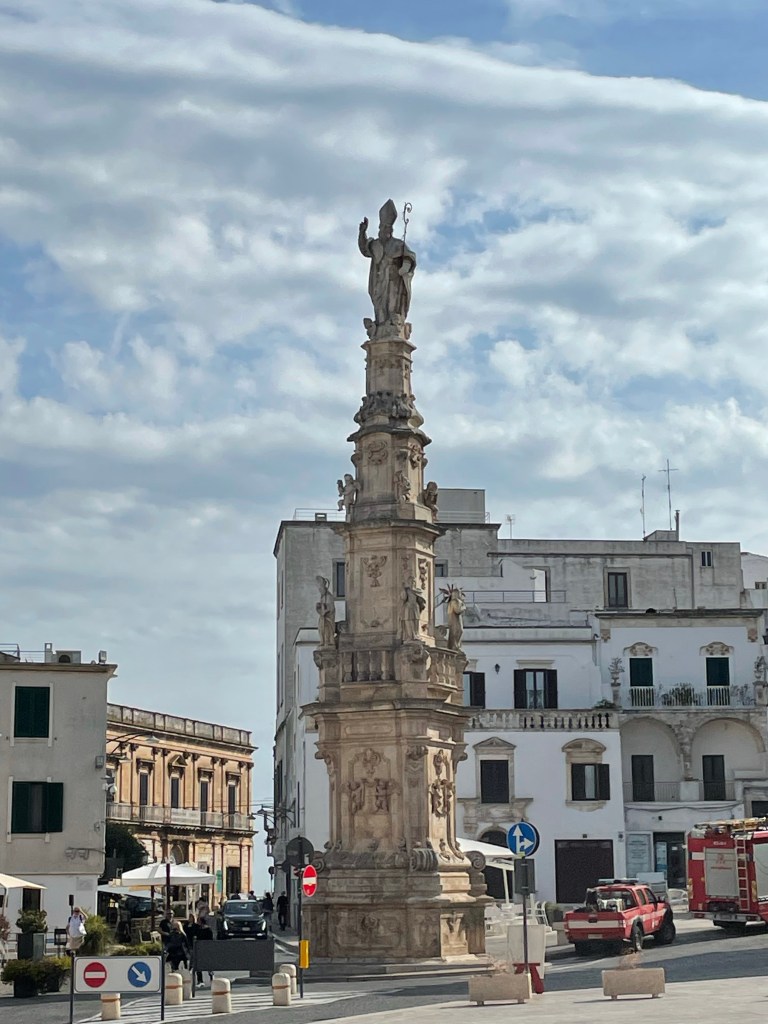
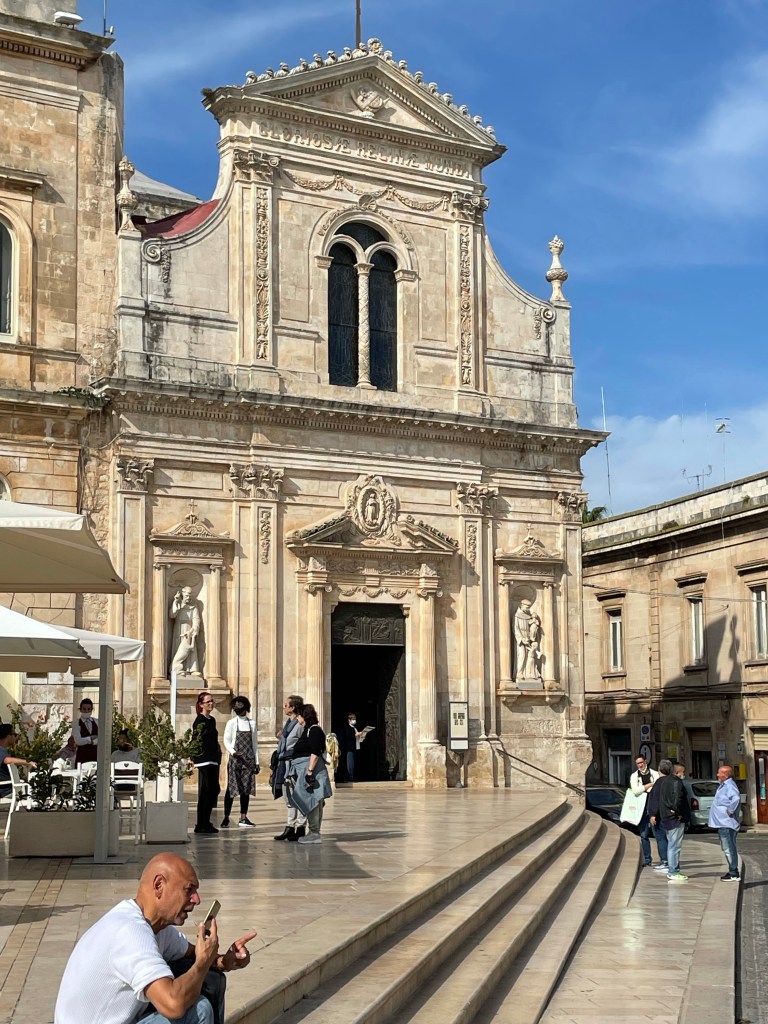
The main piazza is triangular in shape, bringing in symbolism of the trinity. A statue of one of the town’s patron saints, Sant’Orazio, overlooks the piazza and Church of San Francesco.
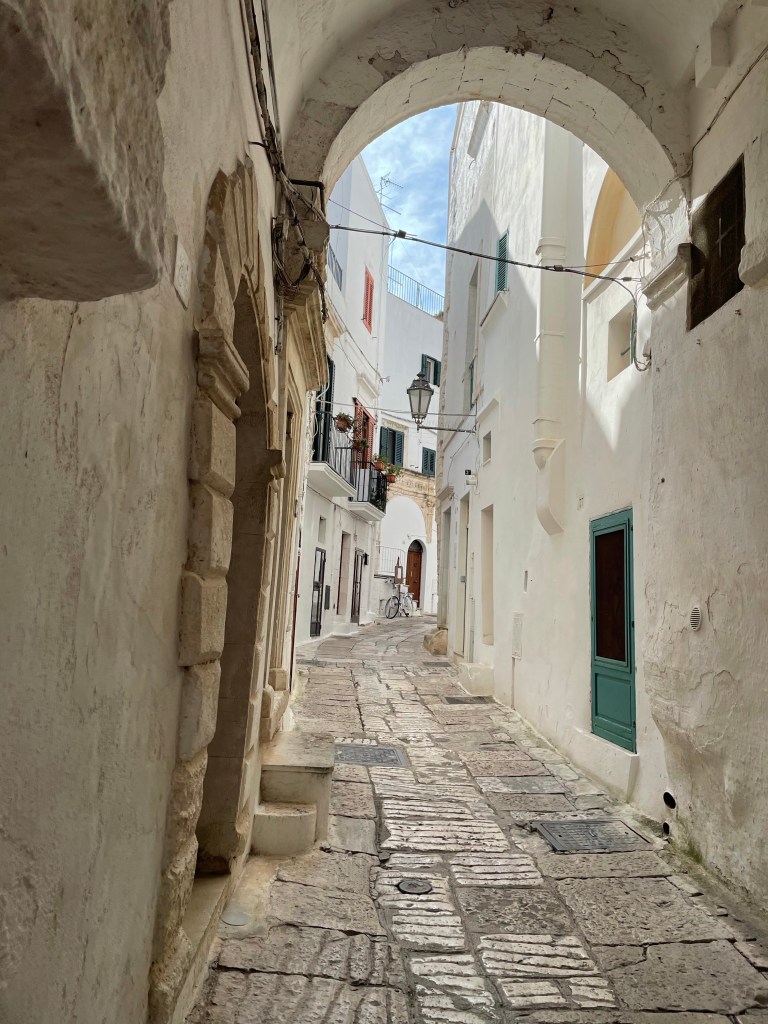
The cobblestoned, hilly and narrow streets are a labyrinth of homes, shops, restaurants and old olive oil mills now converted to commercial uses.
The Duomo was built during the Romanesque period but the interior had been remodeled to a baroque style, unfortunately covering the rose window.
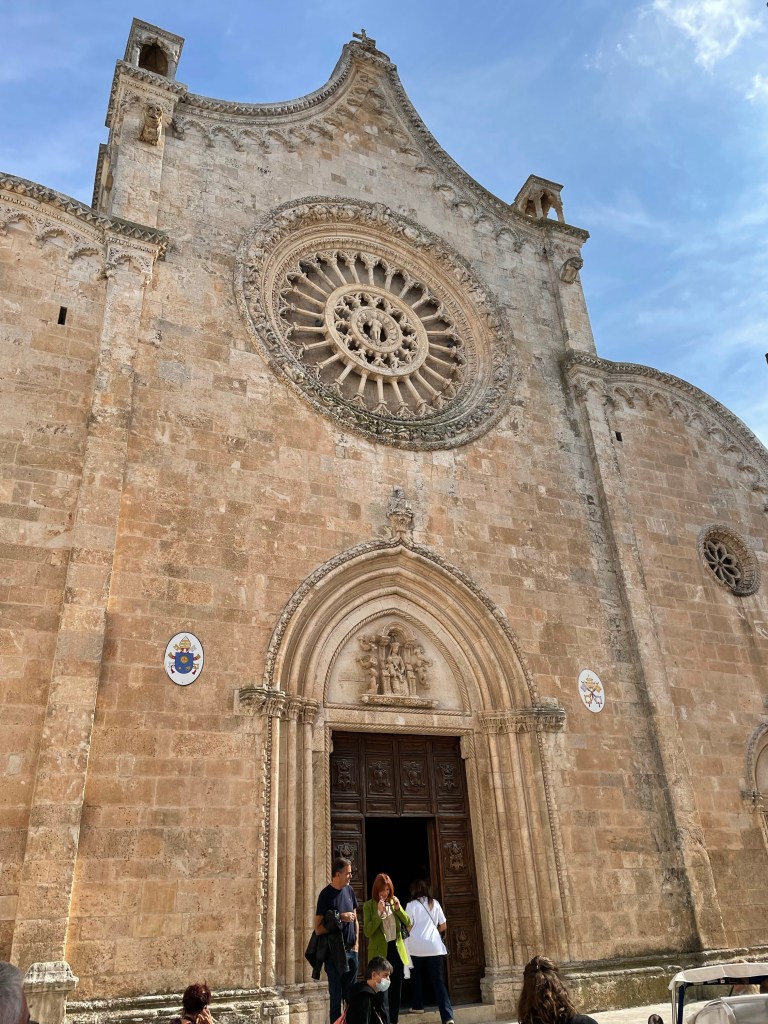
We enjoyed wandering the shops and people watching while enjoying a beer at an outdoor cafe.
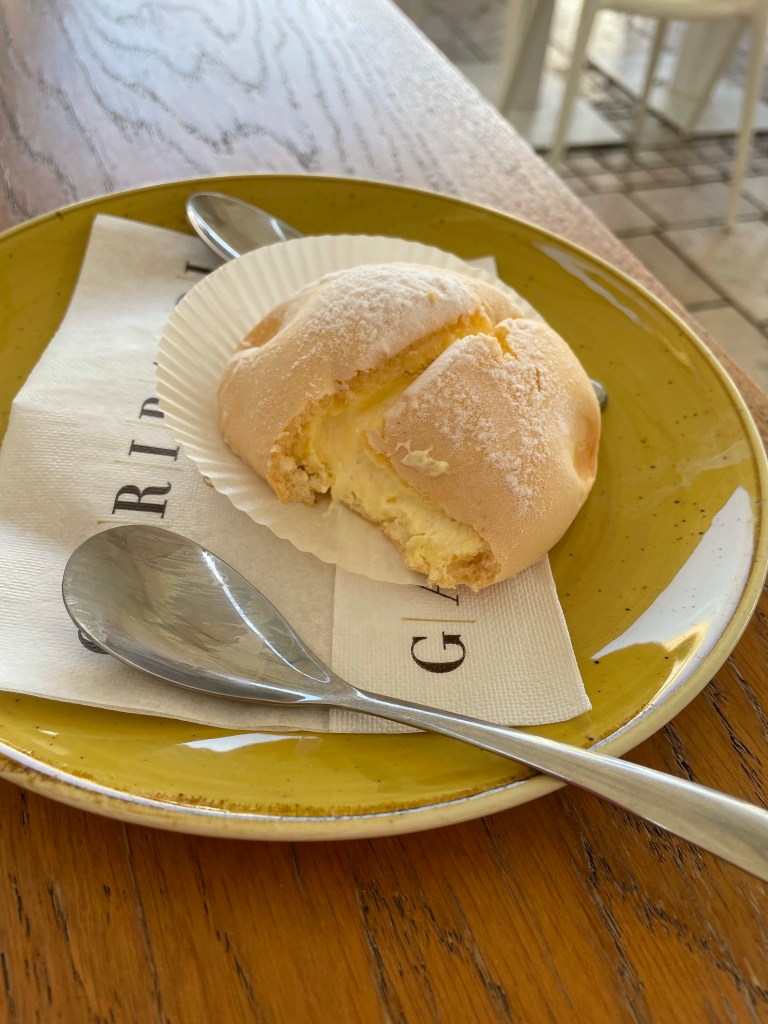
A typical pastry is a tetta di monaca, filled with a pastry cream.
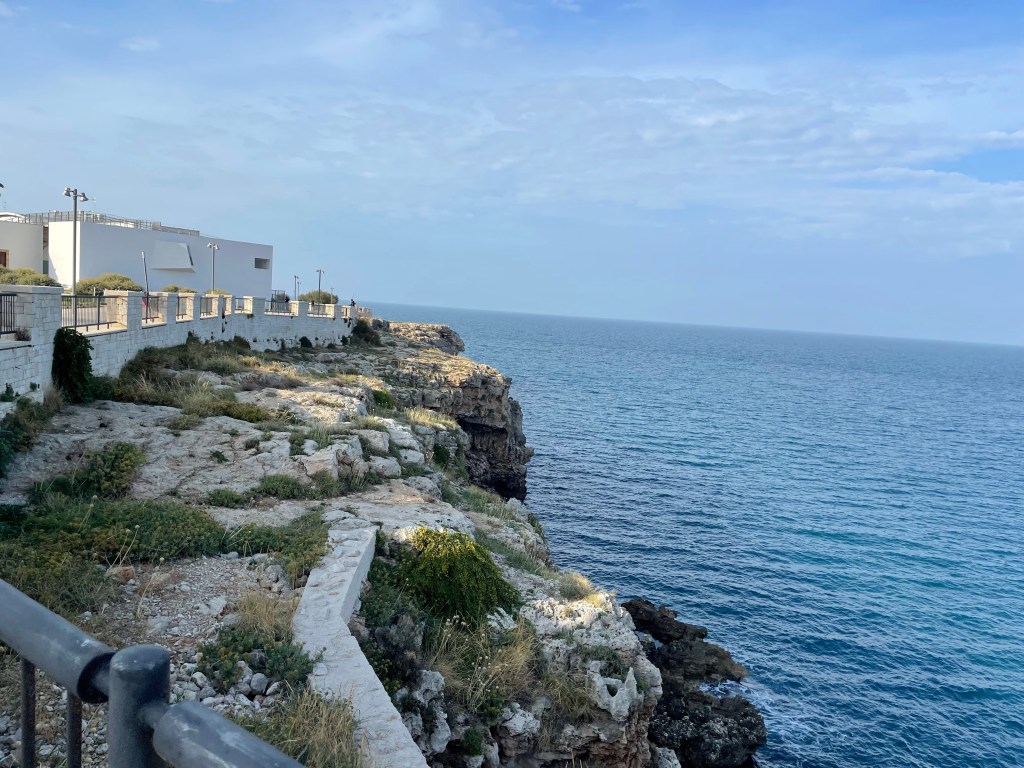
The next stop was the seaside resort of Polignano al Mare. Although it is off season, the sunny and cool weather enticed many (mostly) Italians to visit the town center and stroll the lungomare.
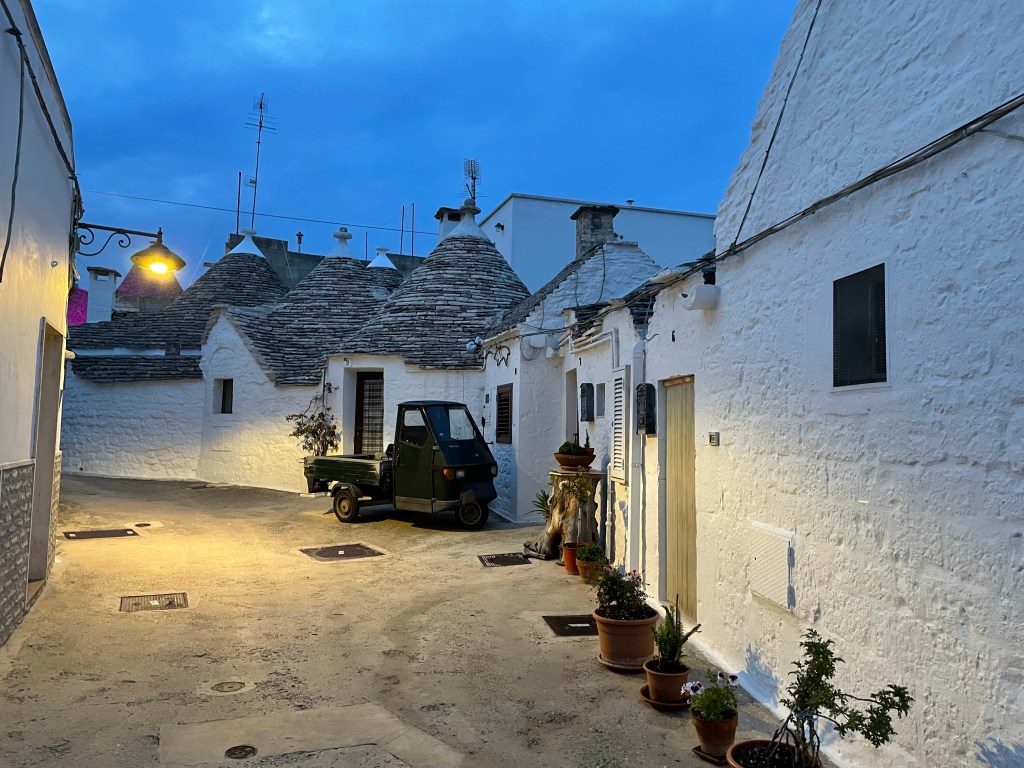
Our destination for the next two nights is Alberobello. A tortuous road climbs up again into the hillls to the village of characteristic buildings called trulli. These circular structures with cone shaped roofs are found scattered in the countryside and many of them have been converted to accommodations. In fact, we are staying in a trullo that has been renovated.
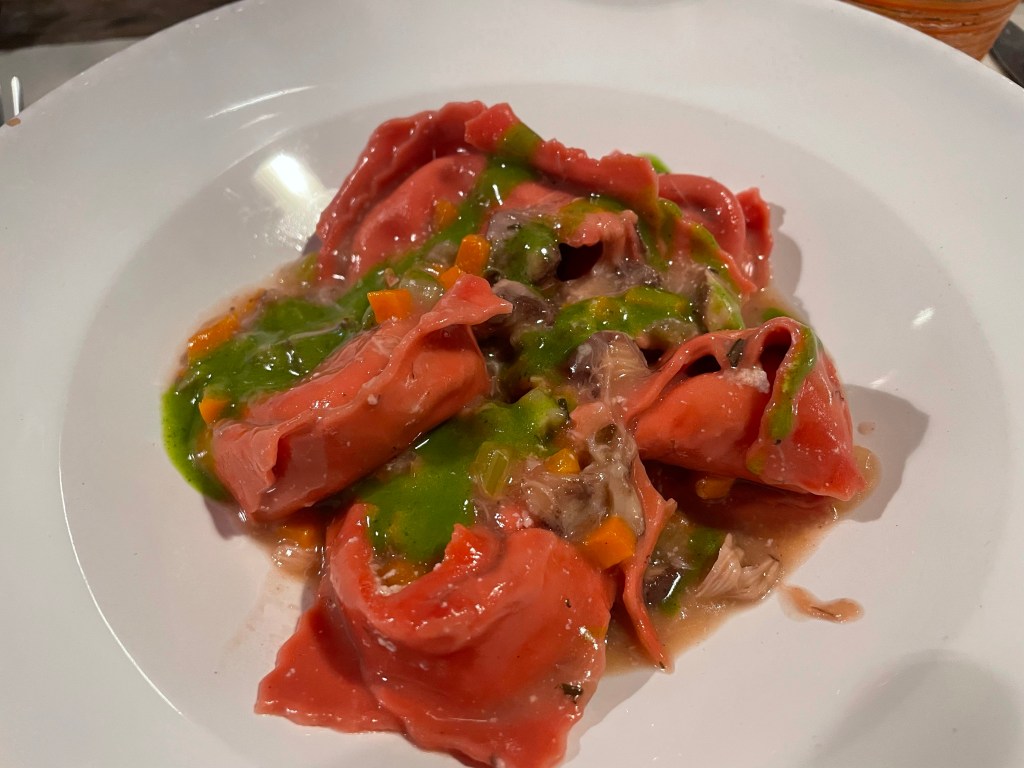
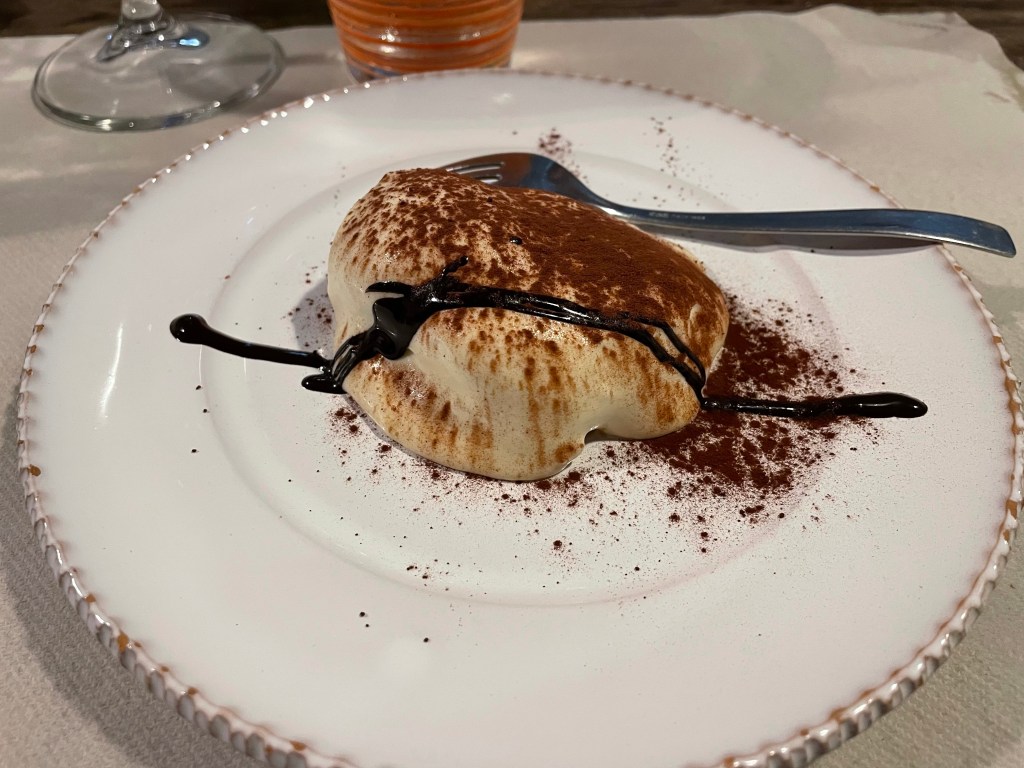
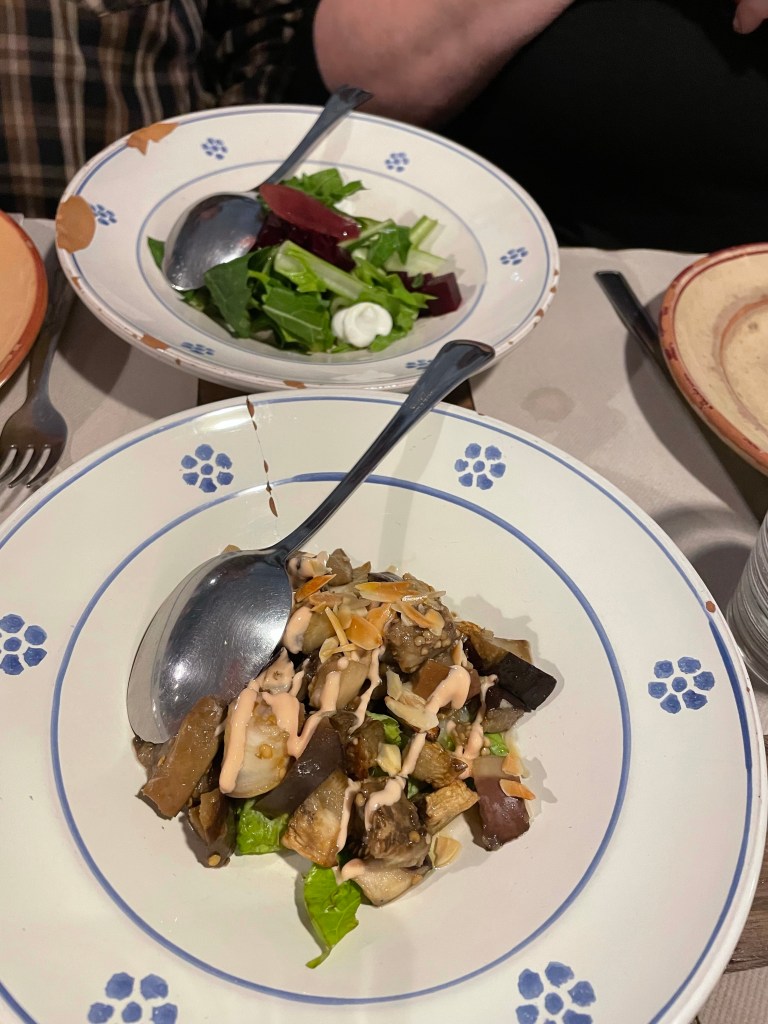
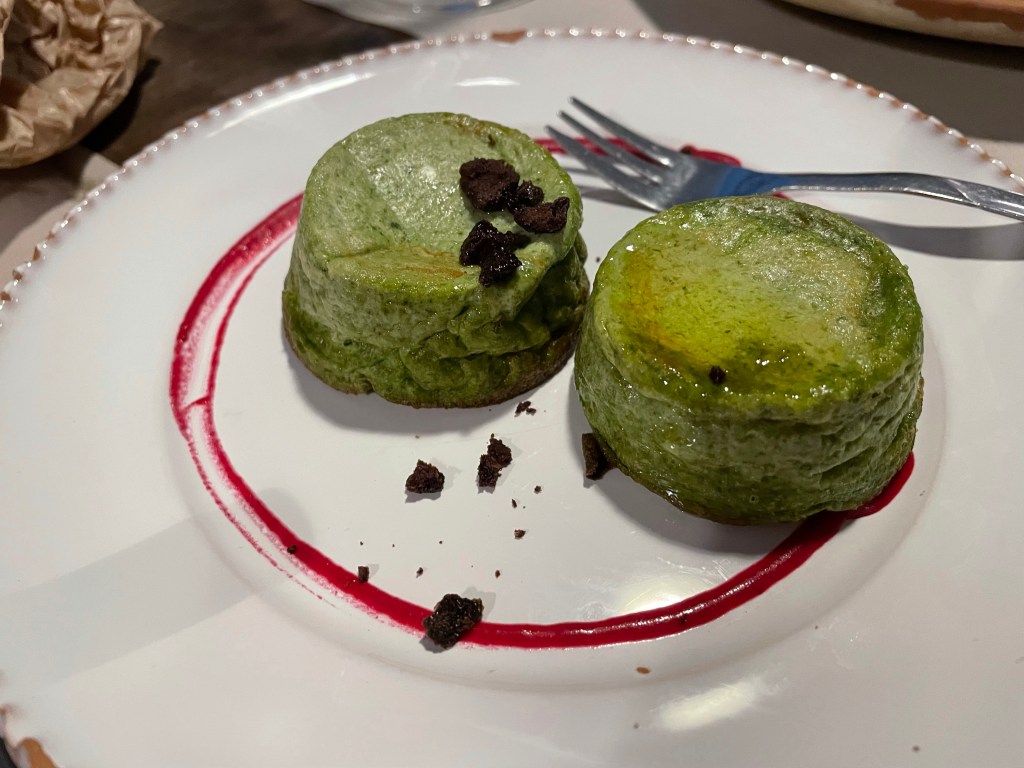
After we settled in, we had a great dinner at the Trattoria Terra Madre, a place that served only locally sourced food. We had the vegetable tasting (multiple seasonal dishes), beet tortelloni filled with local cheese with a braised rabbit sauce and a tiramisu.
Tortelloni
Tiramisù

Desperate to get some clothes washed, we found a laundromat and after dinner managed to get our laundry done before 11pm.
Brindisi- imPORTant for centuries

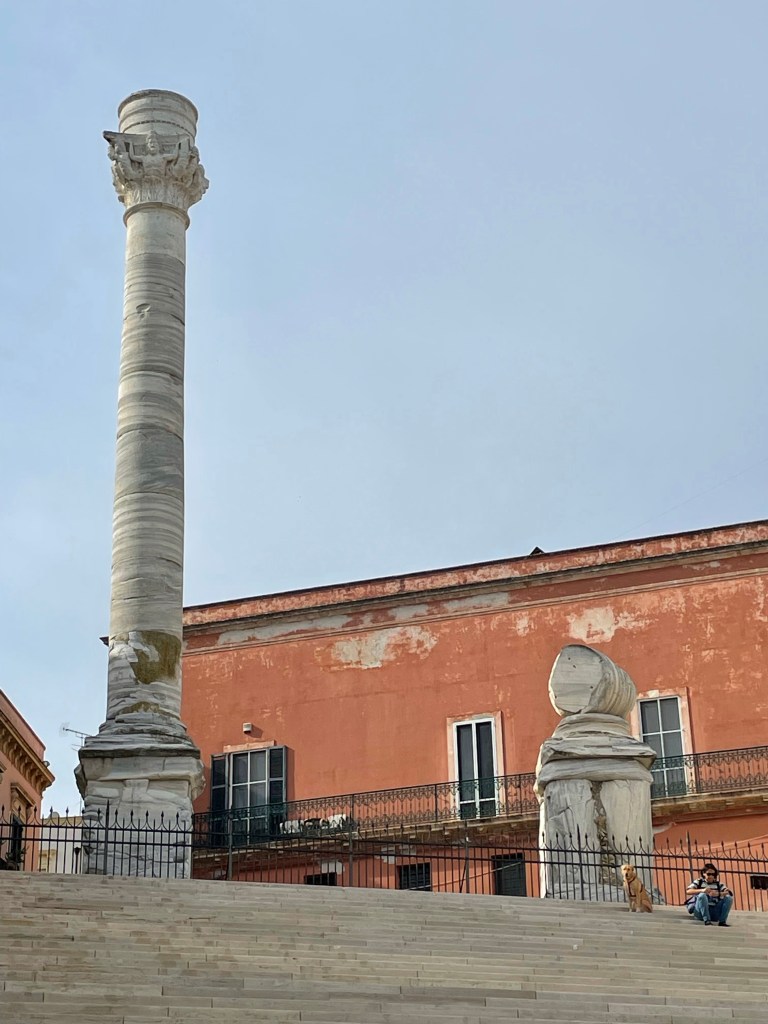
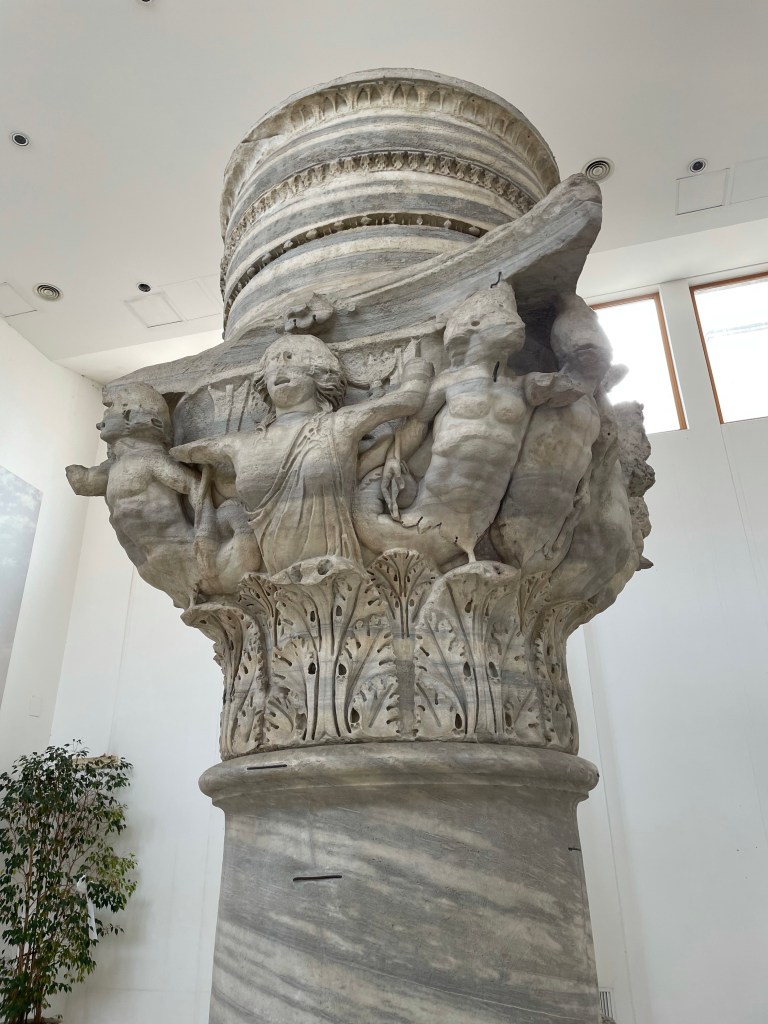
Brindisi is a port city on the Adriatic Sea that mist tourists never consider visiting. It doesn’t have any iconic sights or amazing beaches. It was originally a Messapian settlement (original inhabitants of the Salento region, predating the Ancient Greek and Romans. After it became a Roman colony in the 3rd century BC, it became a major port and center of trade. Few people know that this city was the southern terminus for the Roman Appian Way. It was also an important starting point for many of the Crusades of the 12th and 14th century. The Knights of Templar had a major presence here.

Site of one of the two pillars marking the end of the Appian Way (replica)
Original column now in museum
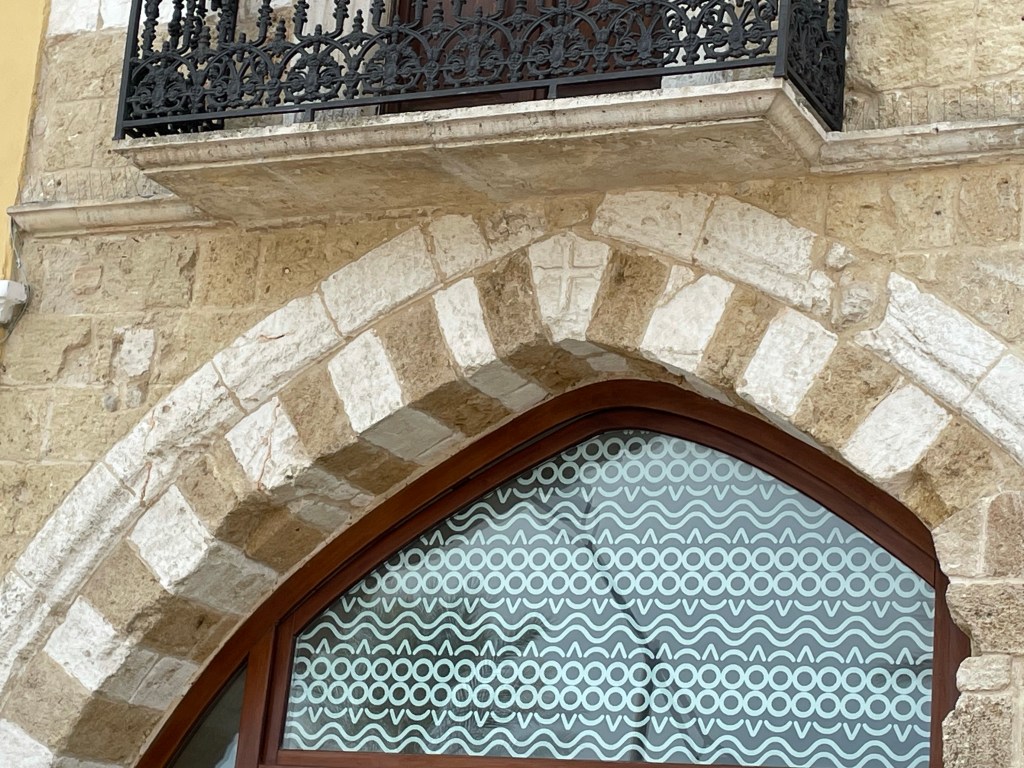
Cross at top of arch is mark of Knights Templar

The port is still important for commerce and ferries travel on a daily basis to Albania.

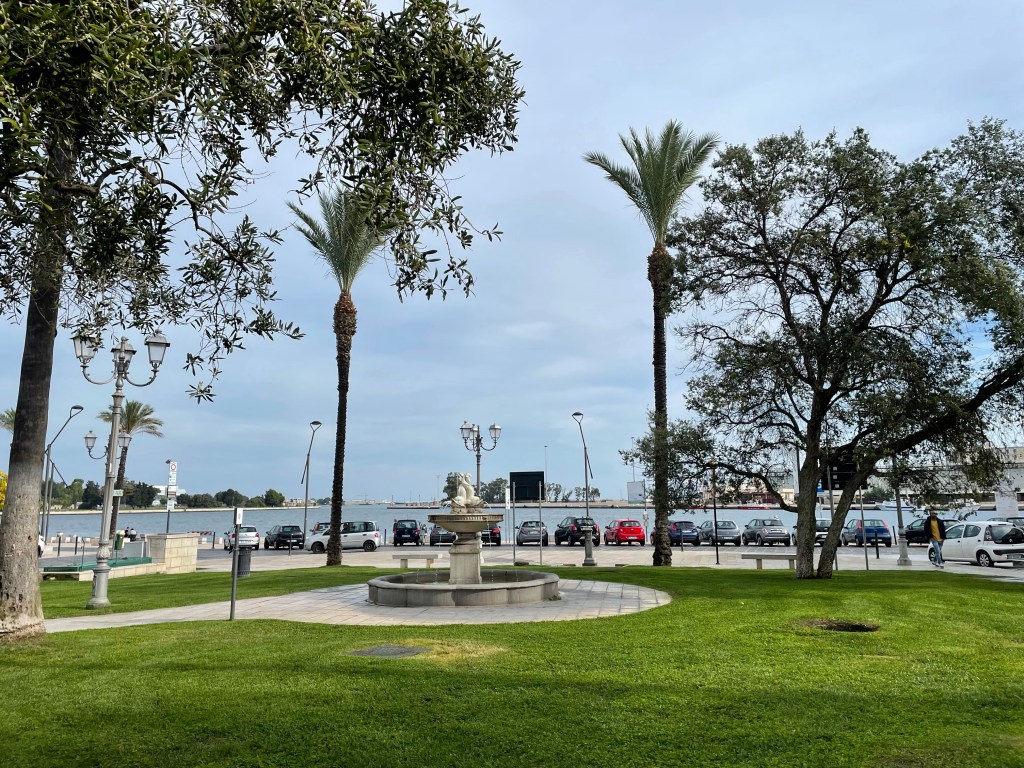
Restaurants are found along the lungomare although there were few people frequenting them.

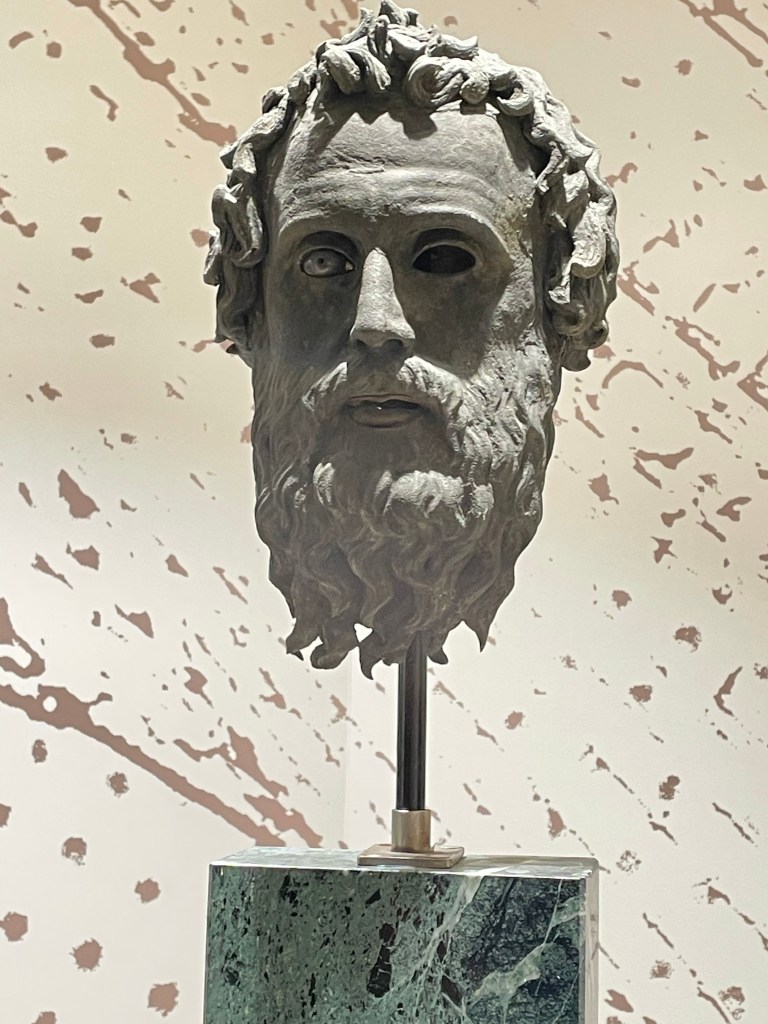
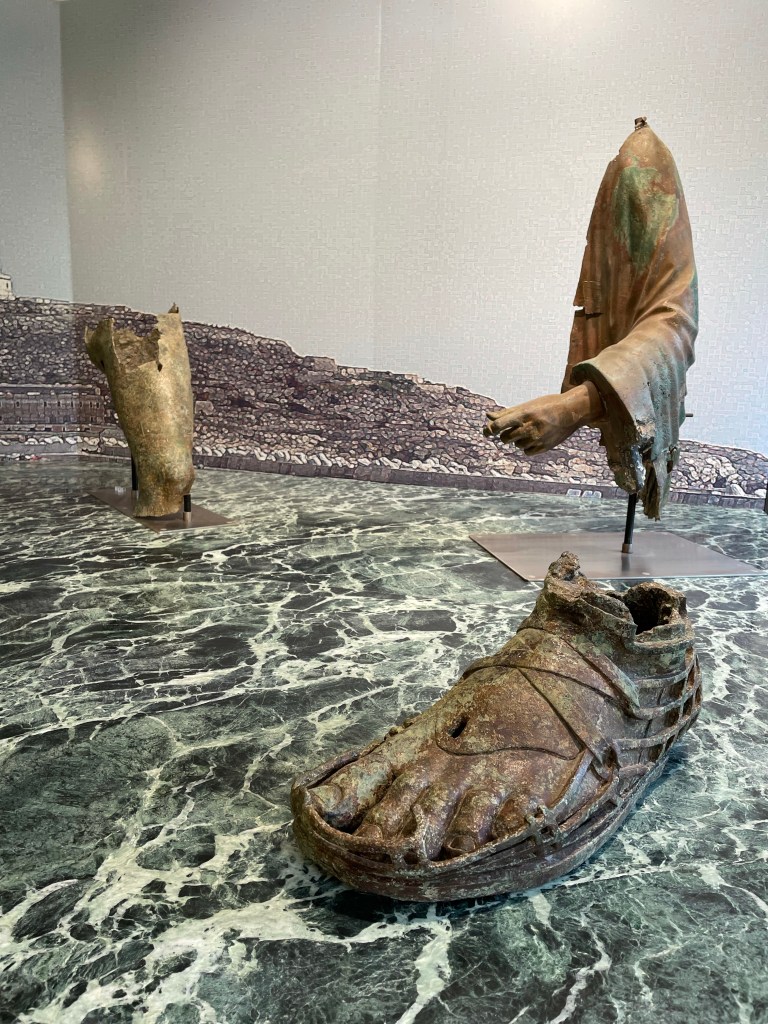
There is an excellent (and free of charge) archeological museum next to the Duomo that has an outstanding collection of Greek, Messapian, and Roman artifacts, including bronze statues recovered from offshore archeological exploration.

Greek vases
Messapian pottery
Bronze statue
Bronzes

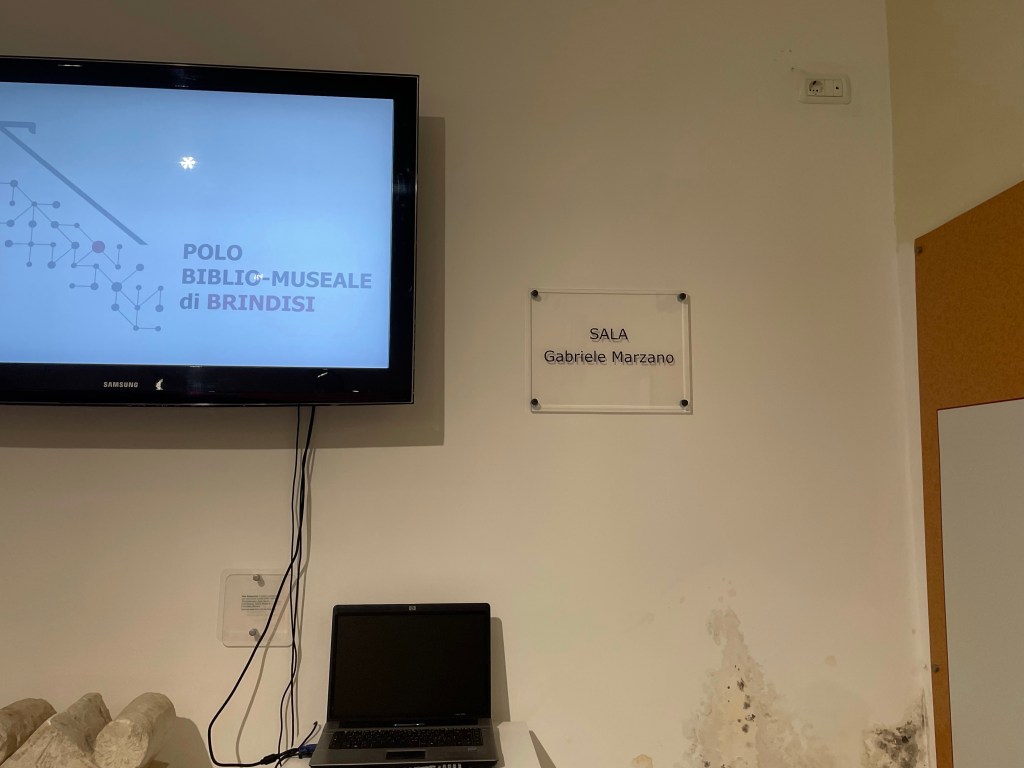
Interestingly, the grandfather of our guide donated many objects to the collection and has a room dedicated in his honor.

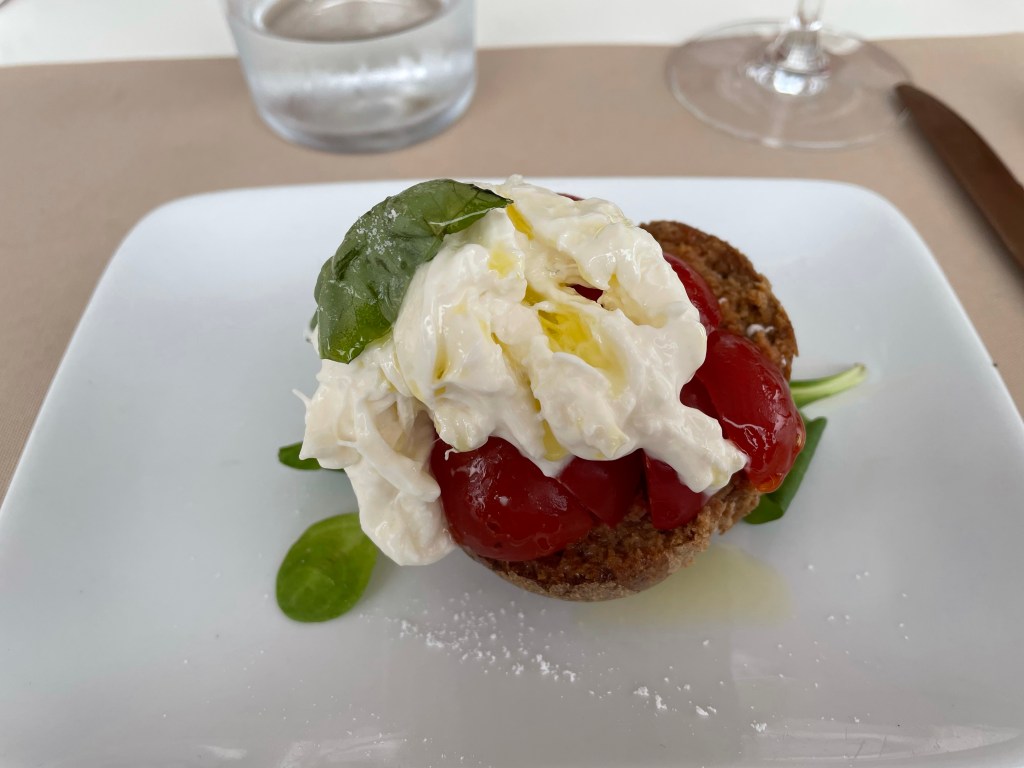
We then had a light lunch and tasting of three local wines.

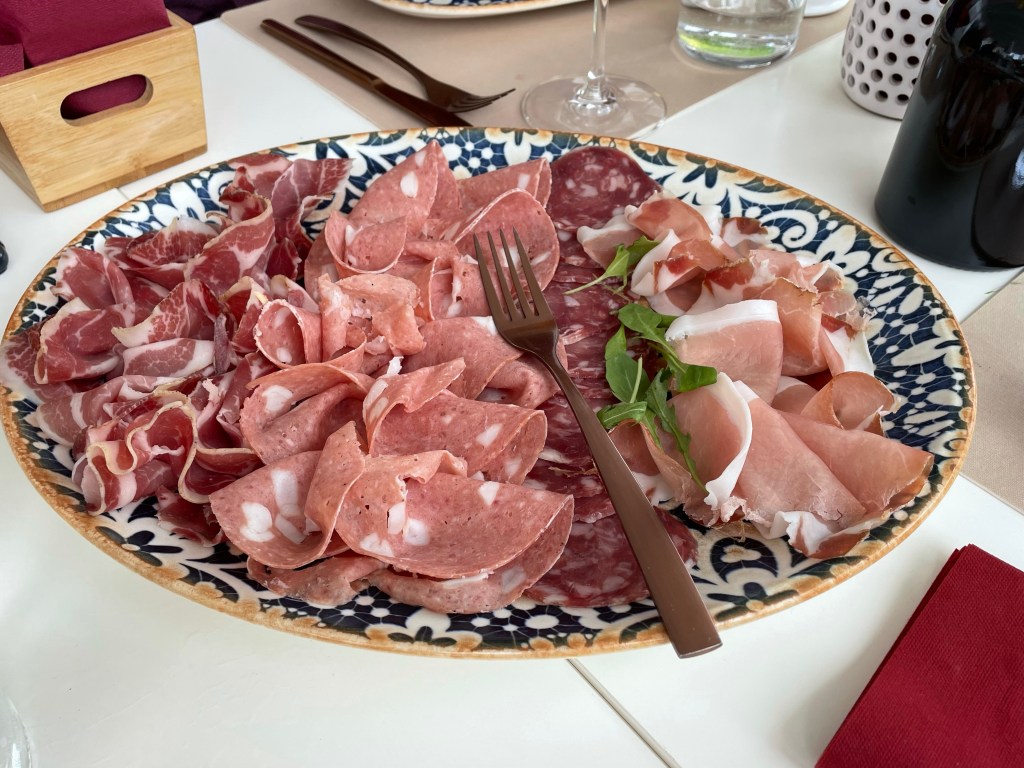
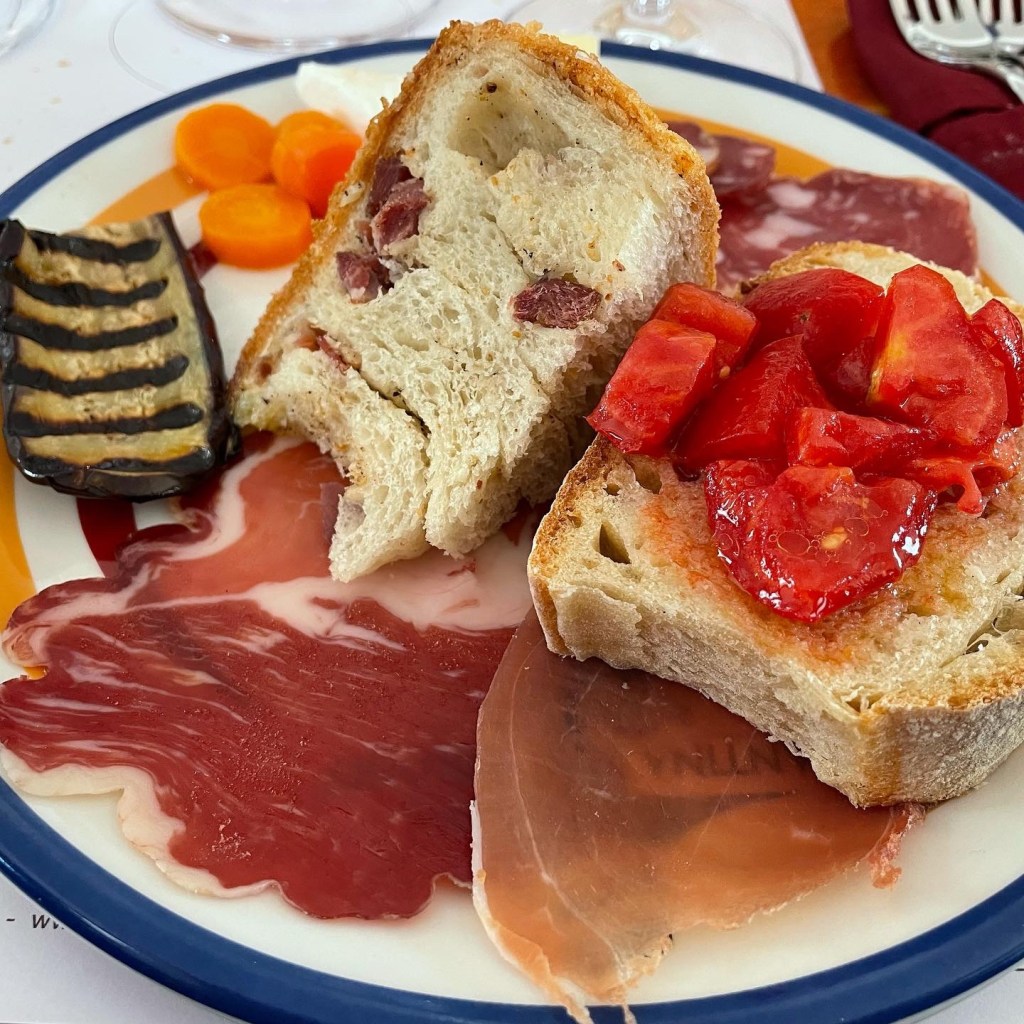
Capacolla (from nearby Martina Franca), mortadella, salame, prosciutto
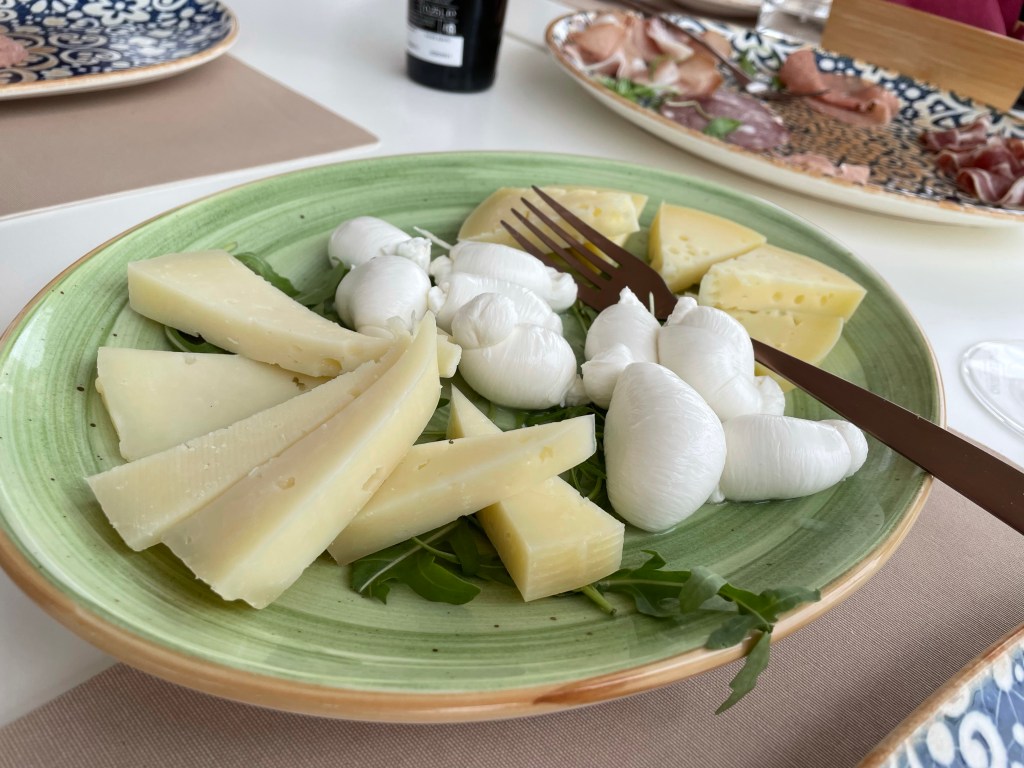
Local cheeses

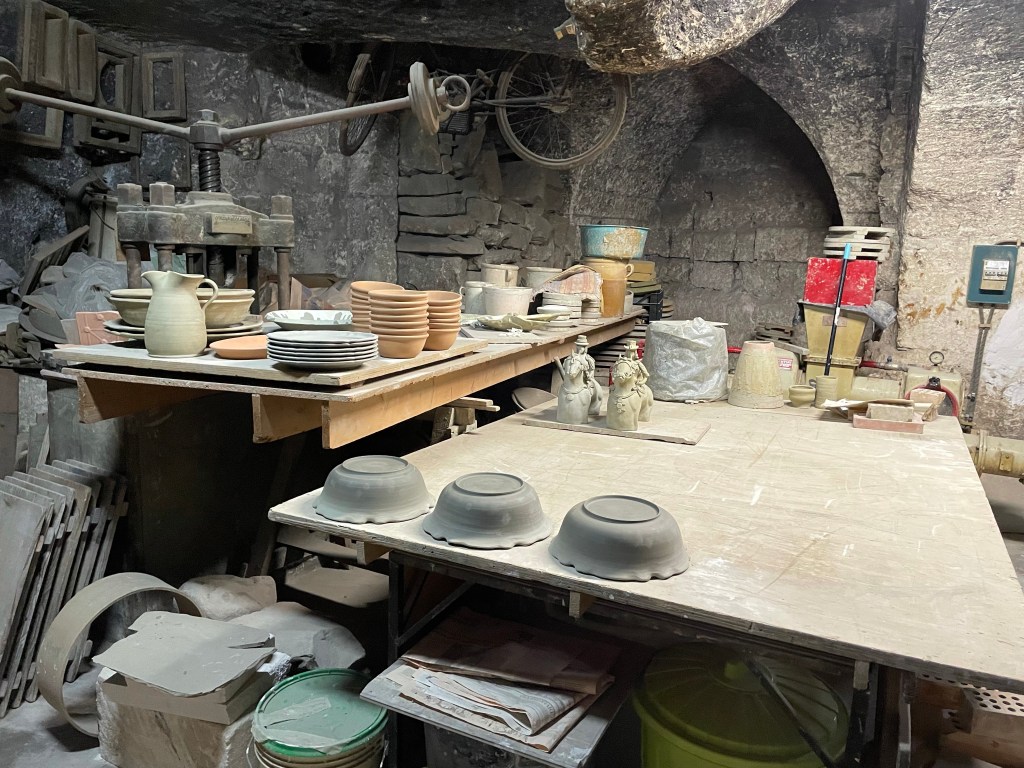
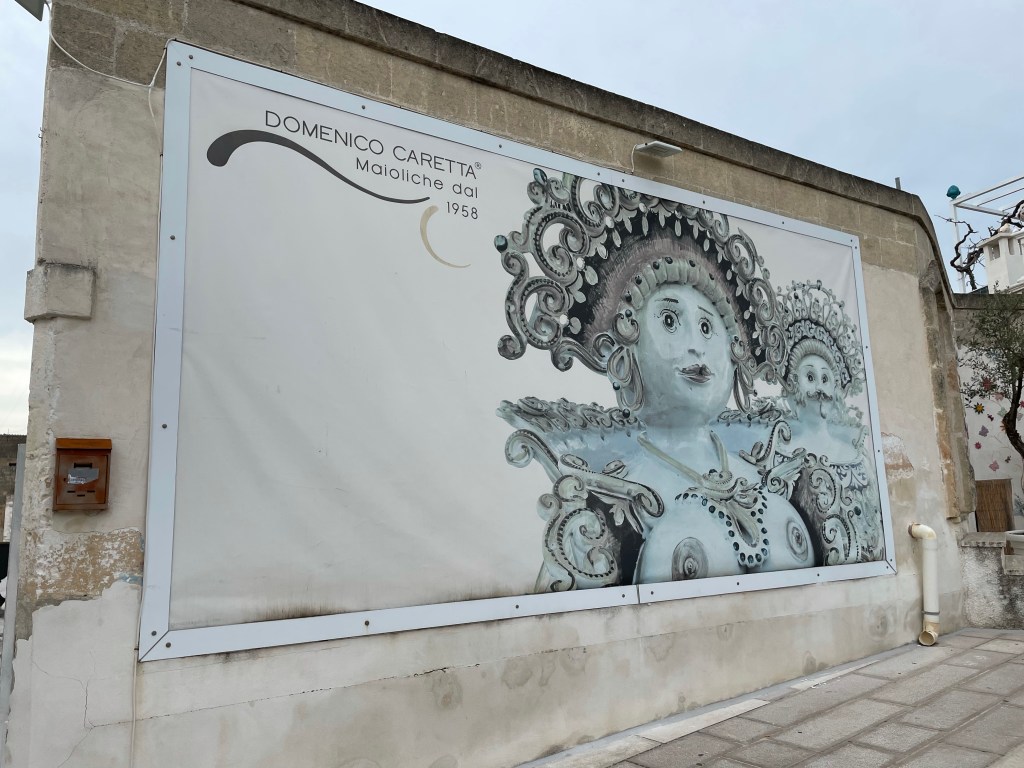
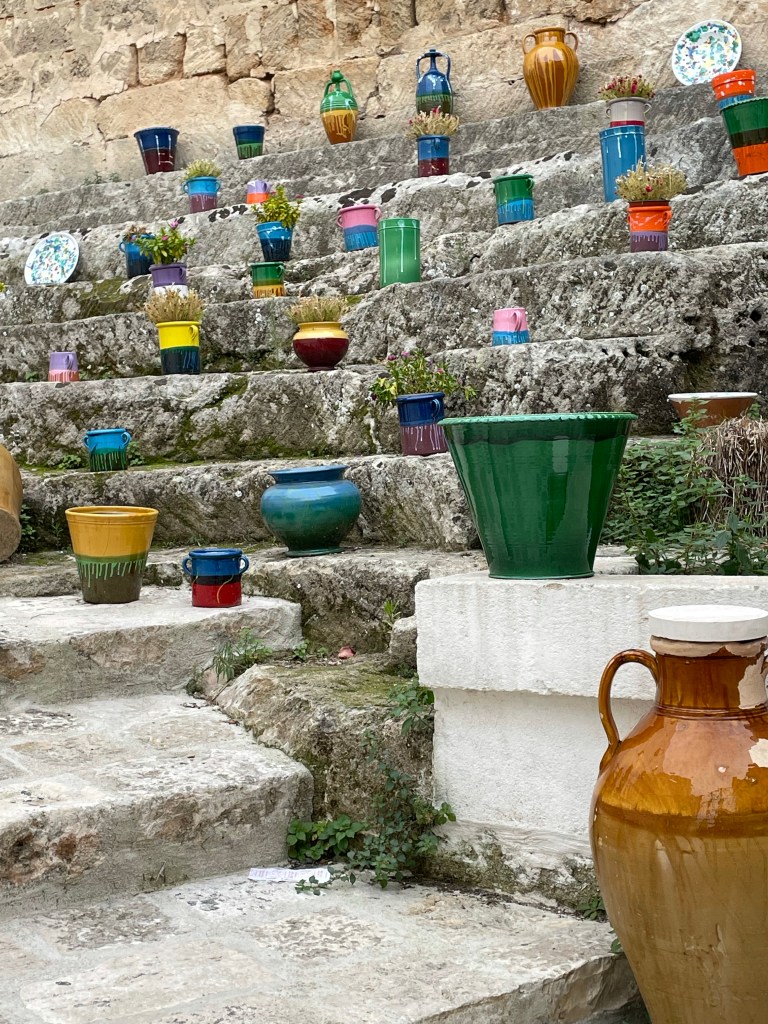
Our next destination was Grottaglie, the ceramic capital of Puglia and one of 28 designated centers of ceramic artistry. There are over 40 ceramic shops in this small town near Taranto. There is a castle and very small centro storico- rather unimpressive. However I did gave a nice conversation in Italian with a Polish woman who was visiting the town with her Italian husband.

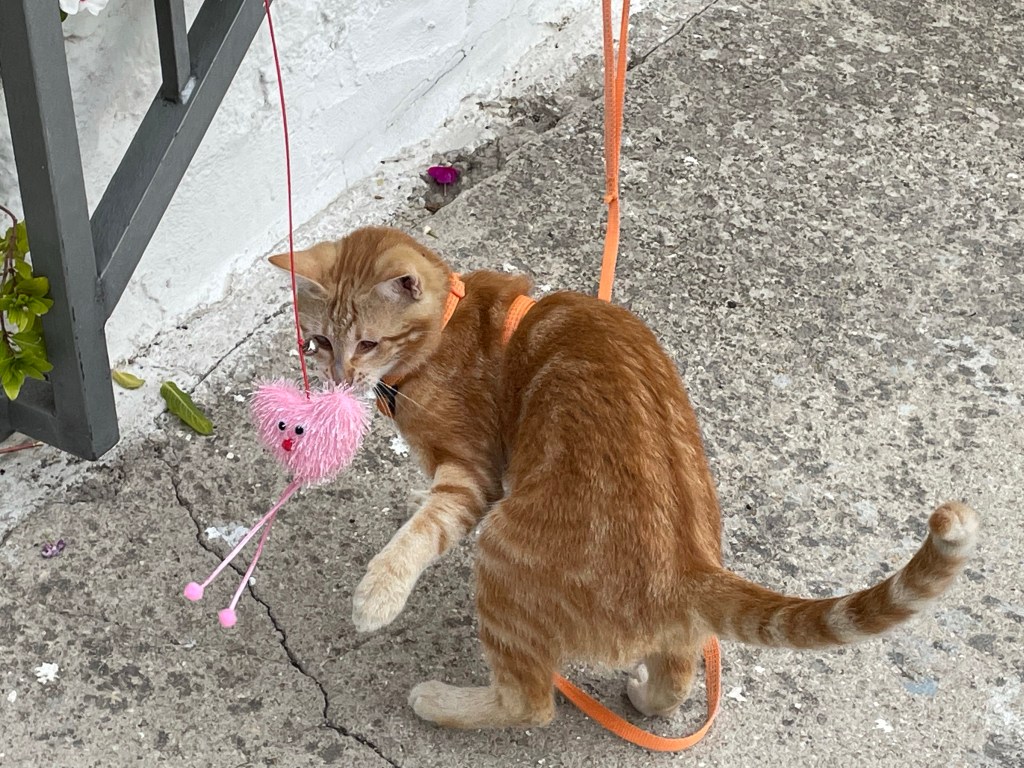
A cute ginger cat with a harness was probably the high point for me as the style of the ceramics was not something I liked.

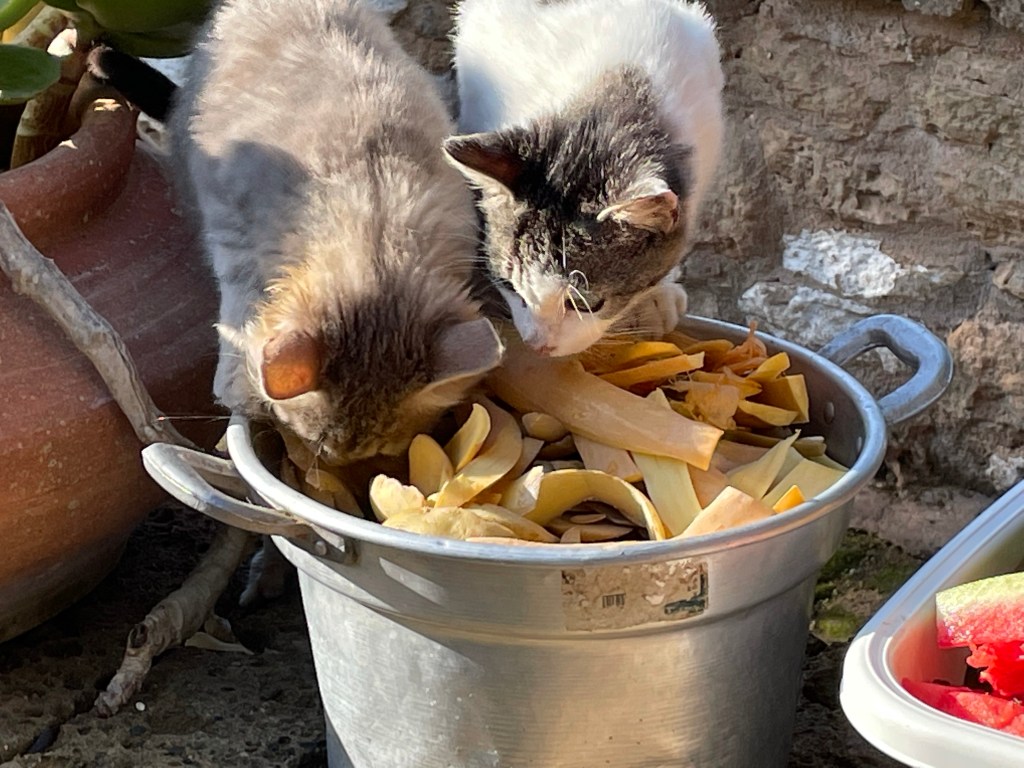
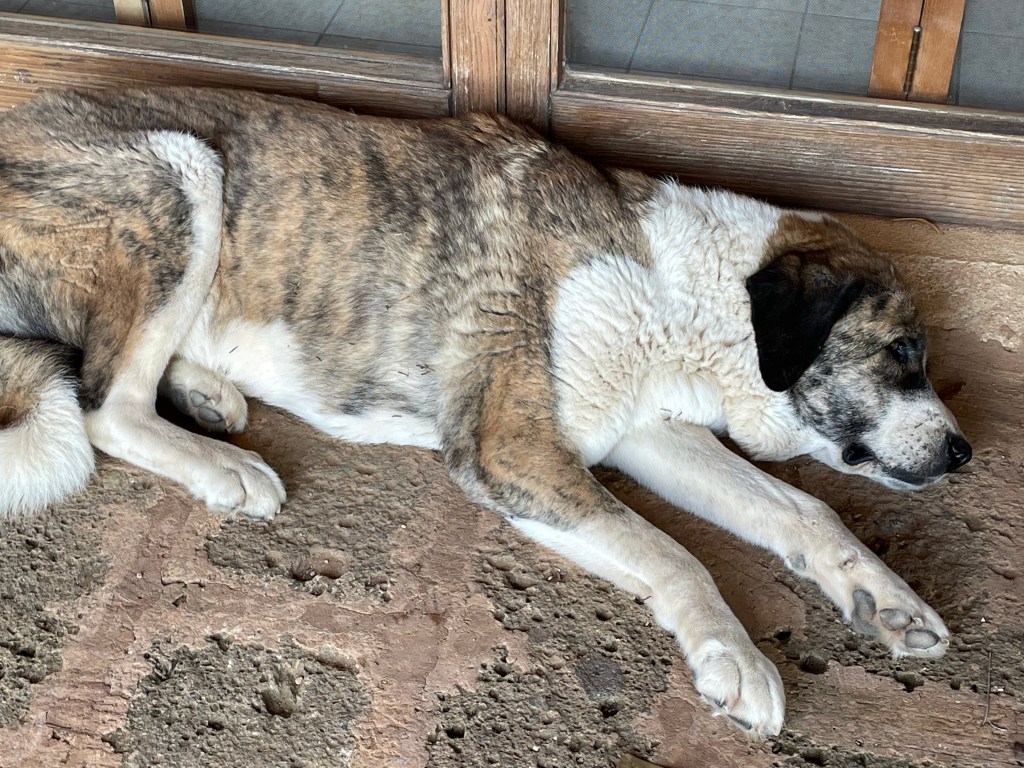
We returned to the Masseria for dinner on this last night of our stay there. The meal was not particularly memorable but we will never forget the kittens and dogs that ruled the farm.

Galloping along the southeastern coast

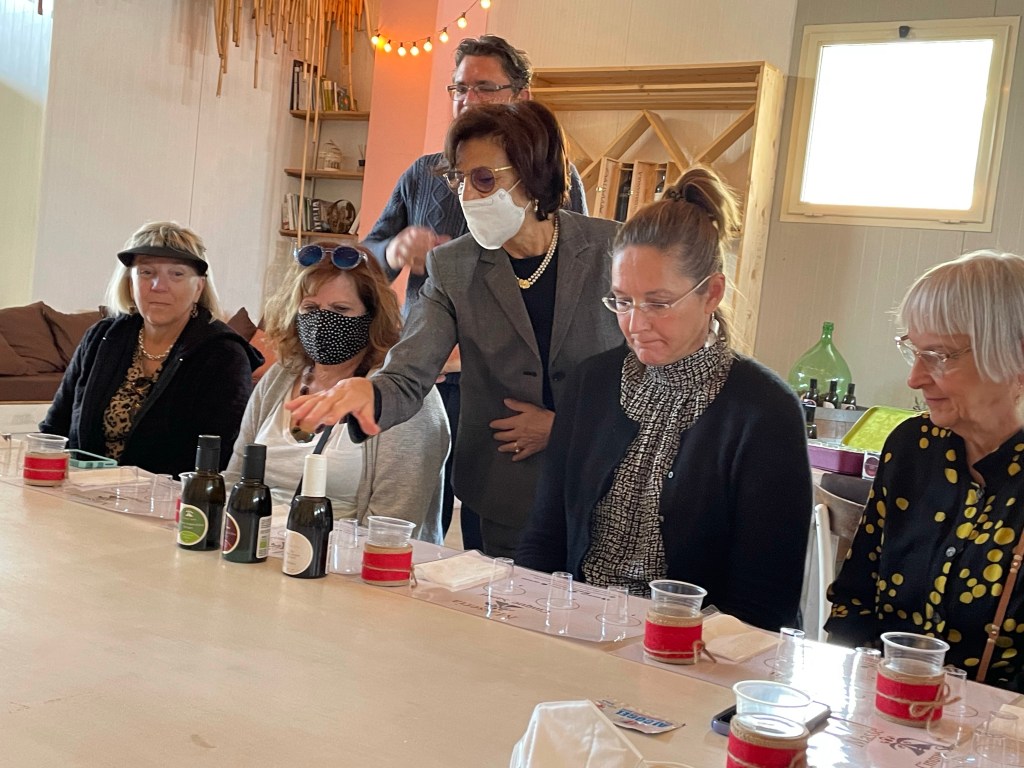
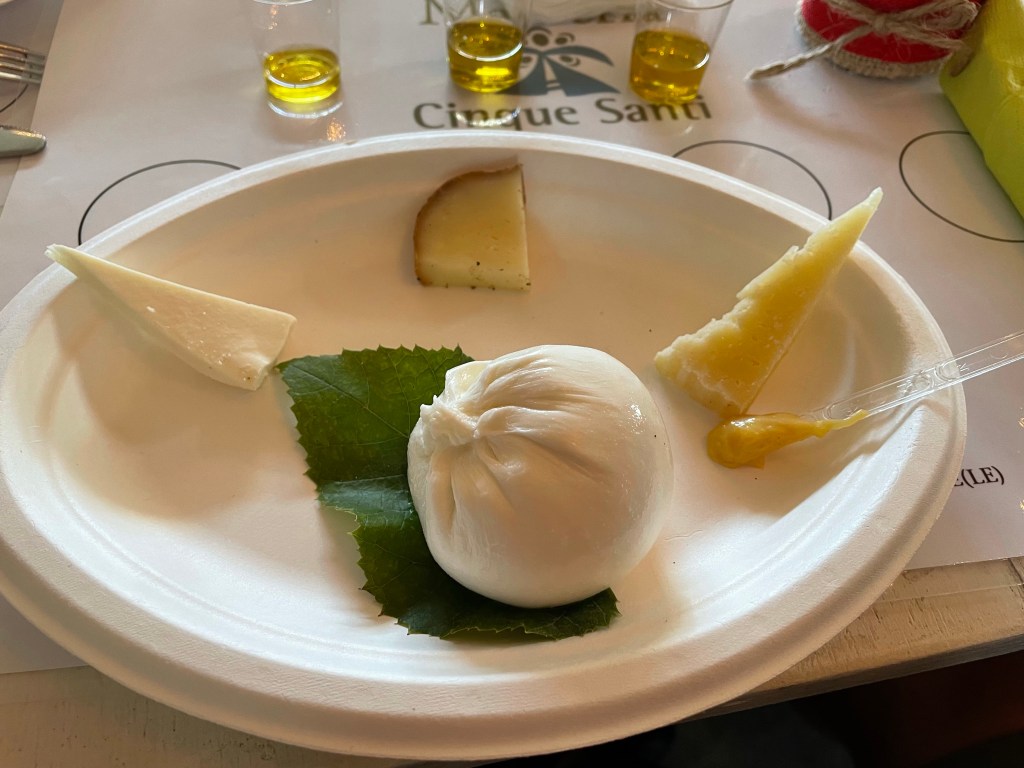
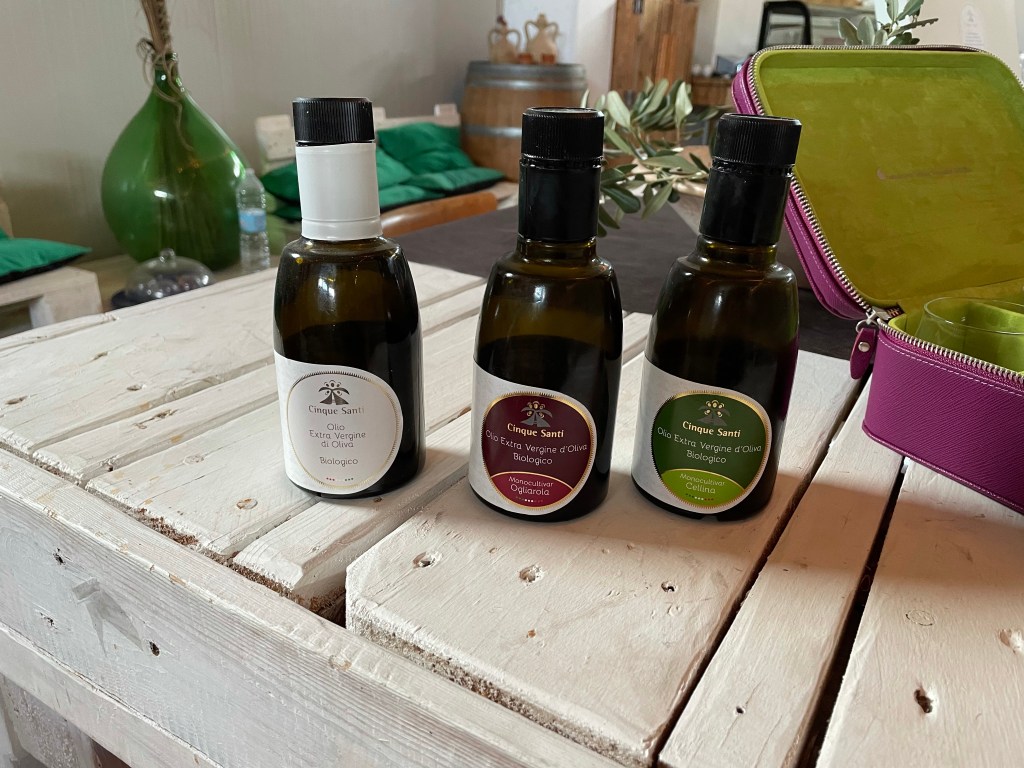
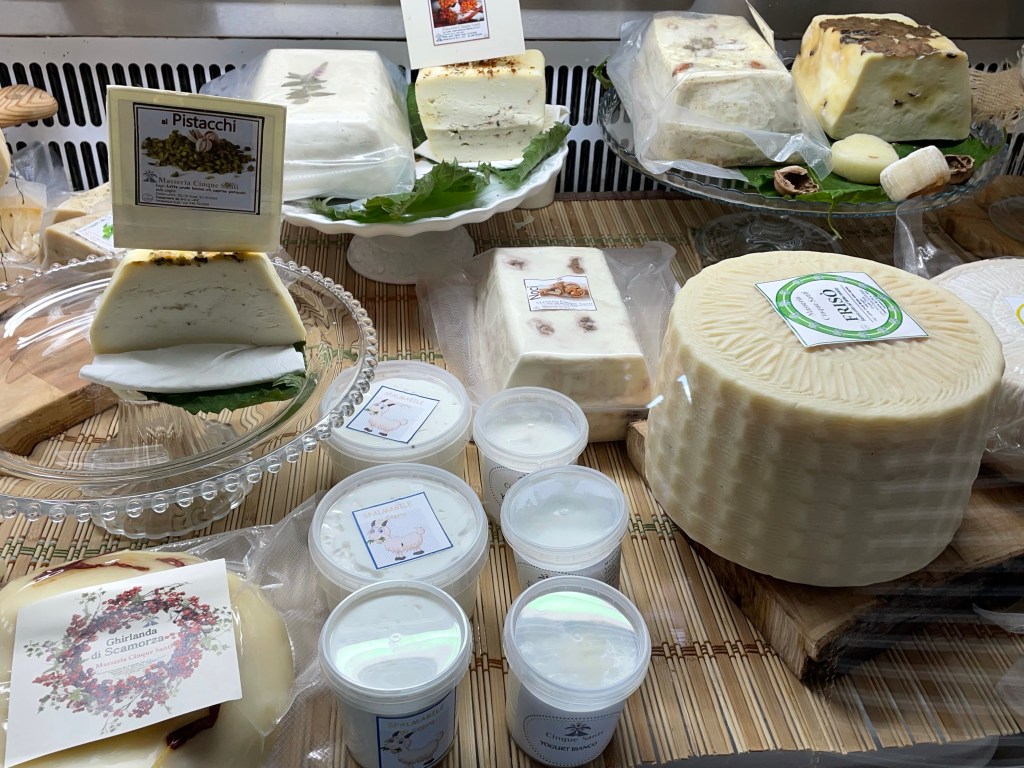
This morning we headed south to the Masseria Cinque Santi for an olive oil and cheese tasting. With the decimation of about 90% of the olive trees in southern Puglia due to a bacterial disease brought here from Costa Rica via Gallipoli , this organic farm has been relying on its cheese production to survive. We were met by the third generation owner who explained how the process of tasting the oil and expounded on its health benefits. We tried three different oils, followed by a sampling of their cheeses, a buttery burrata, a scamorza (smoked mozzarella), a mild ricotta salata and an aged cheese, along with a unique condiment made with orange and ricotta.

The olive oils
Some of their cheeses

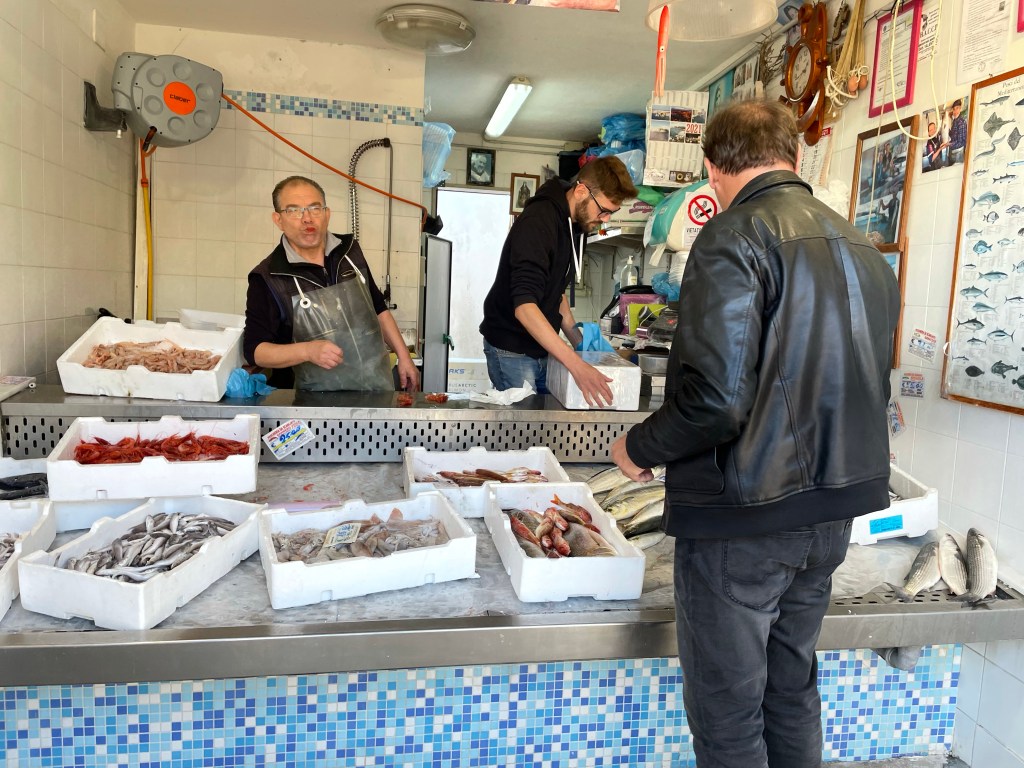
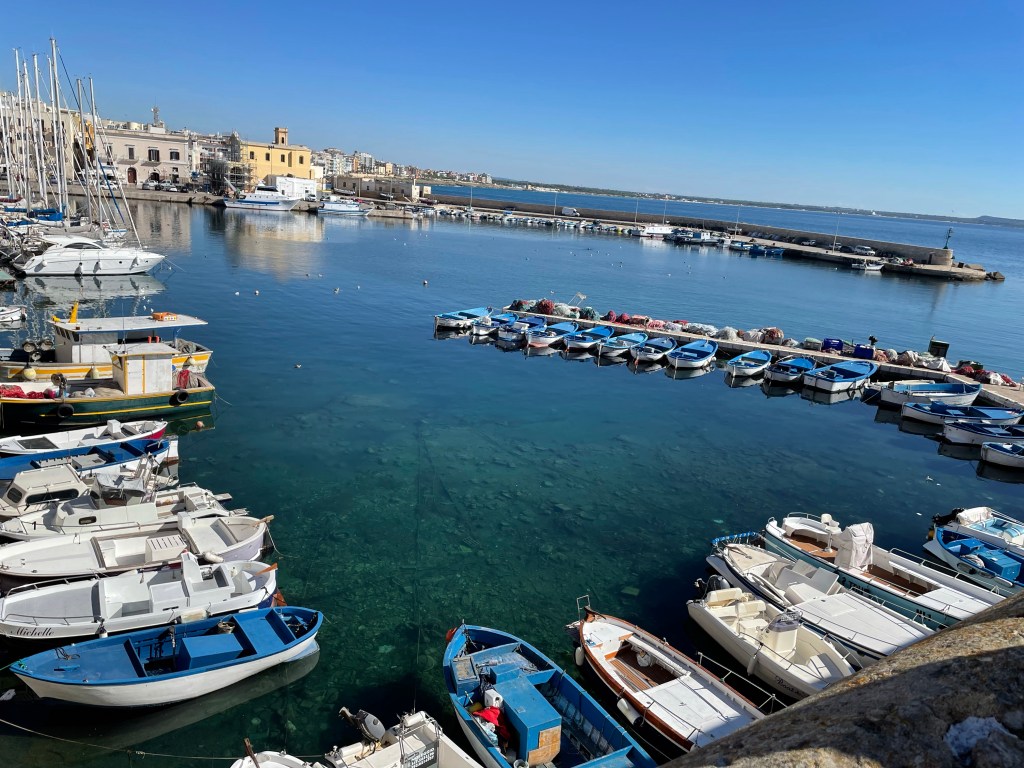
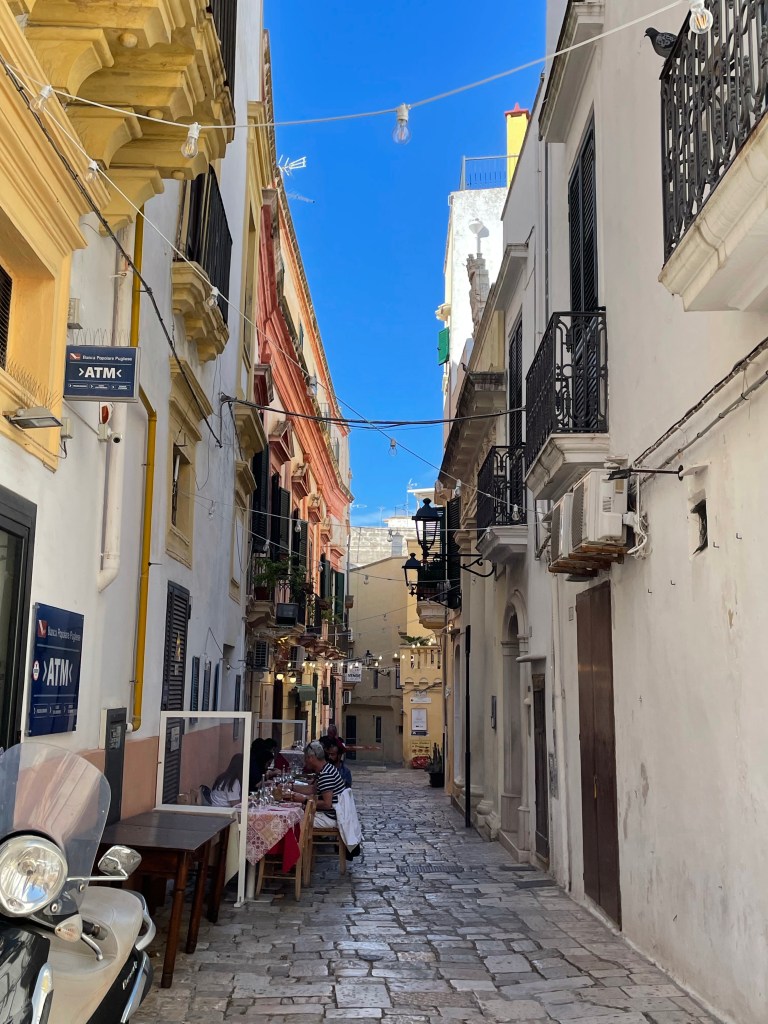
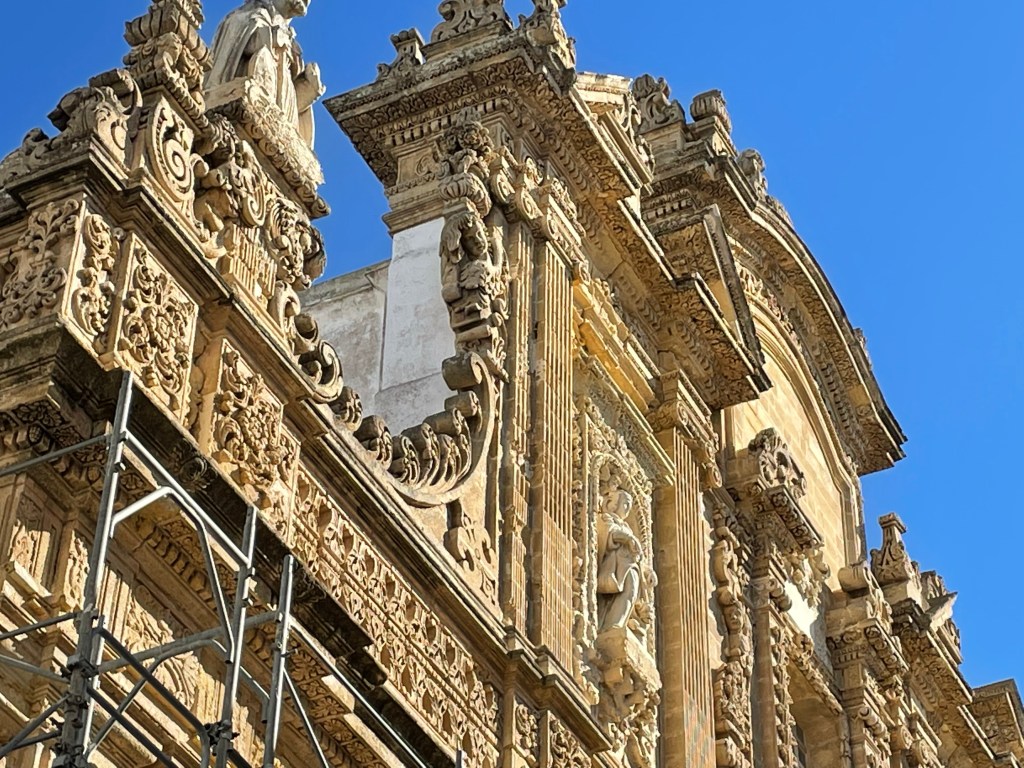
Then we headed to the coast of the Ionian Sea to the seaside town of Gallipoli. Nearly deserted as it is now off season, this charming town has a vibrant fishing port, several baroque churches, seaside restaurants and charming shops. Although emigration took a huge toll on the population, the town is reinventing itself as a resort town, tripling from 15,000 to 45,000 during the summer months.

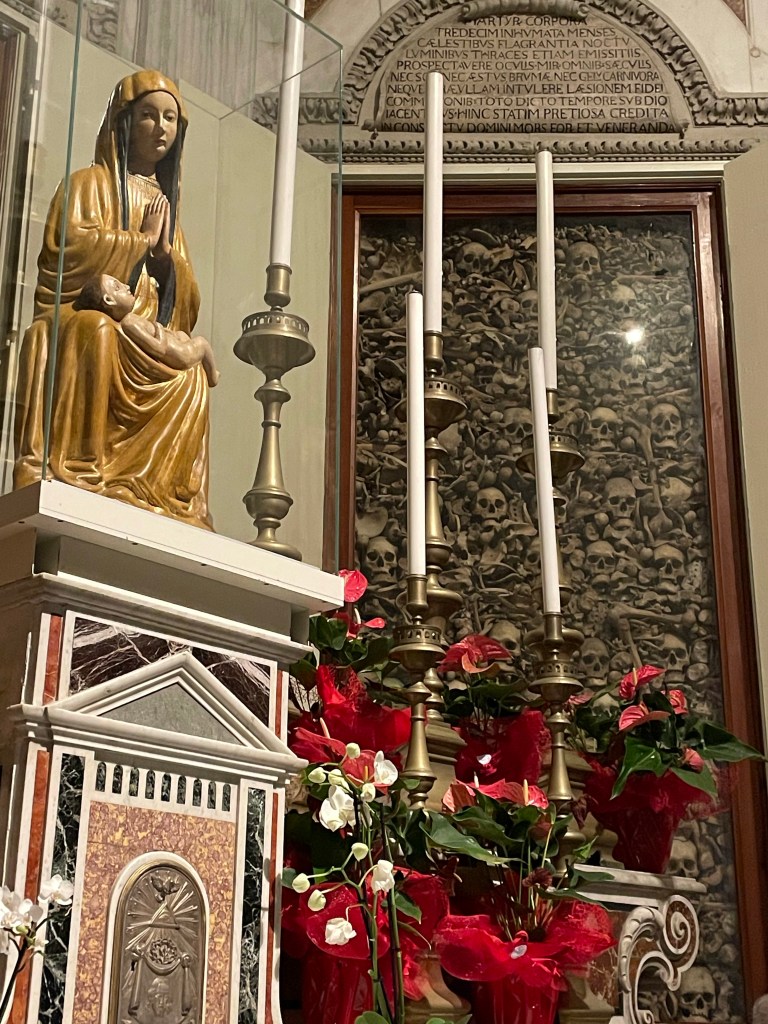
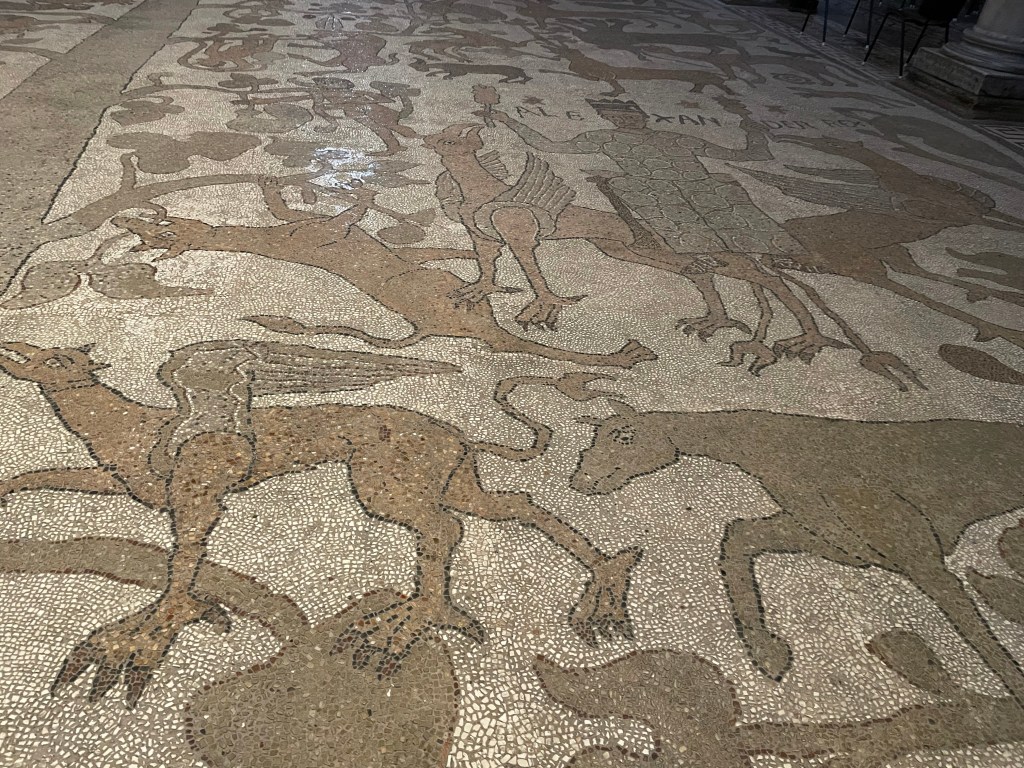
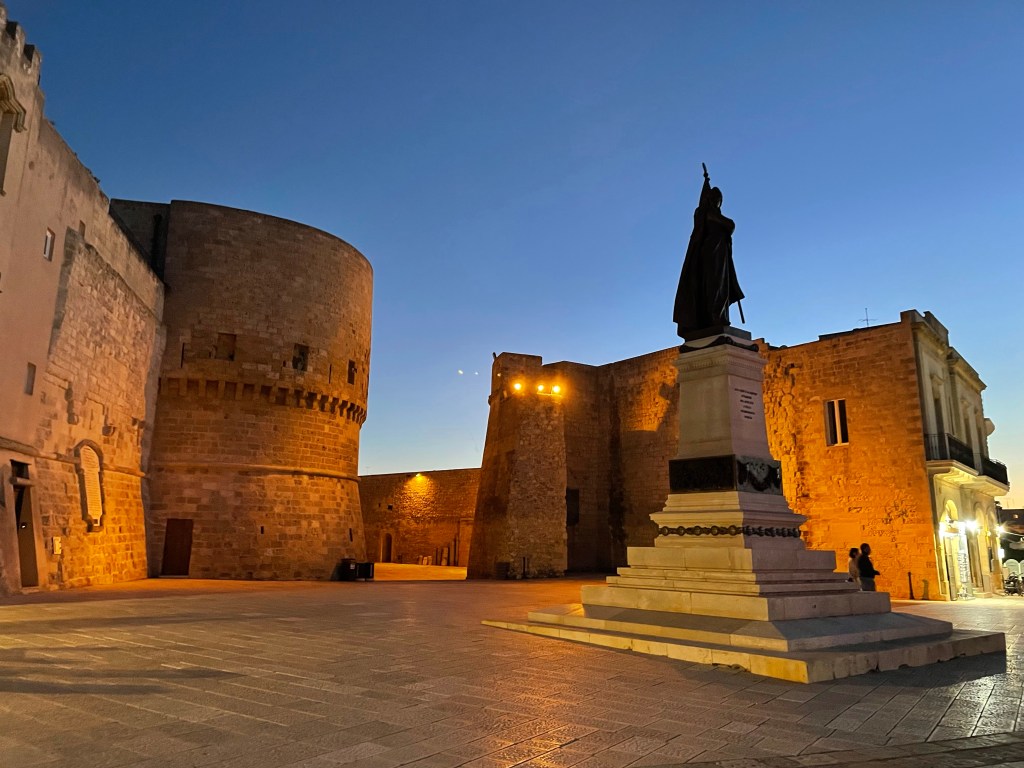
After a seafood lunch, we drove to Otranto, the town in the Salento region furthest south on the Adriatic . It is a charming and very clean town with a duomo dating from the 12th century with the famous Tree of Life floor mosaic created in 1164 and the altar dedicated to the 400 inhabitants killed by the invasion of the Ottoman Turks in the 1400s.

Altar
Duomo

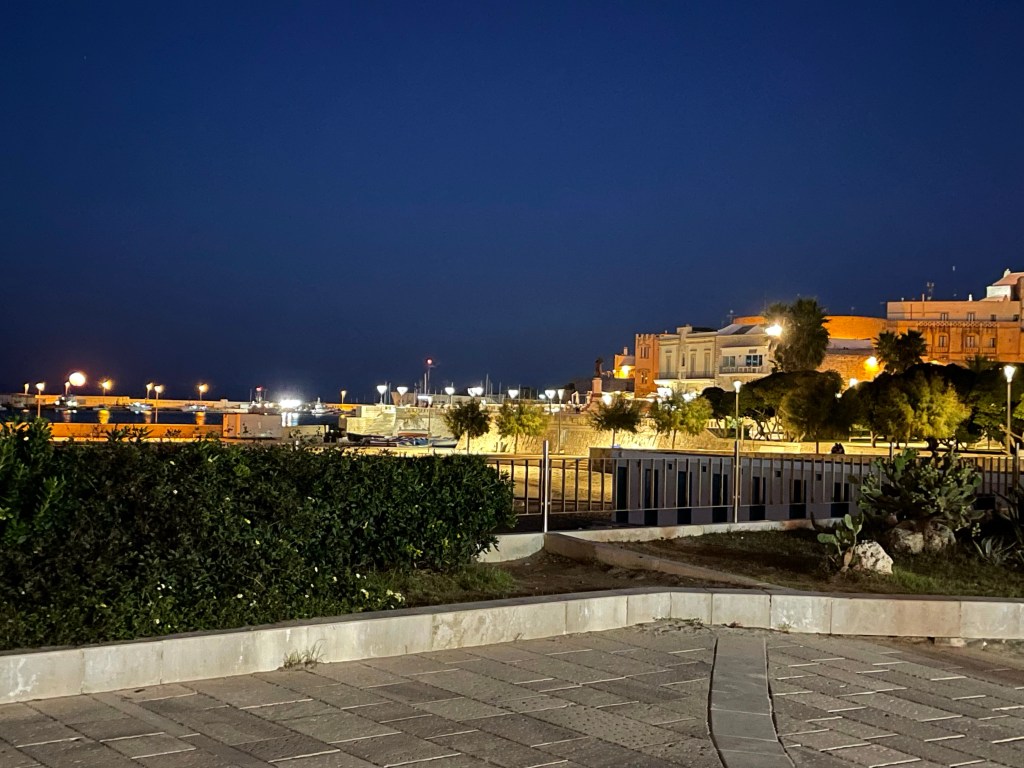
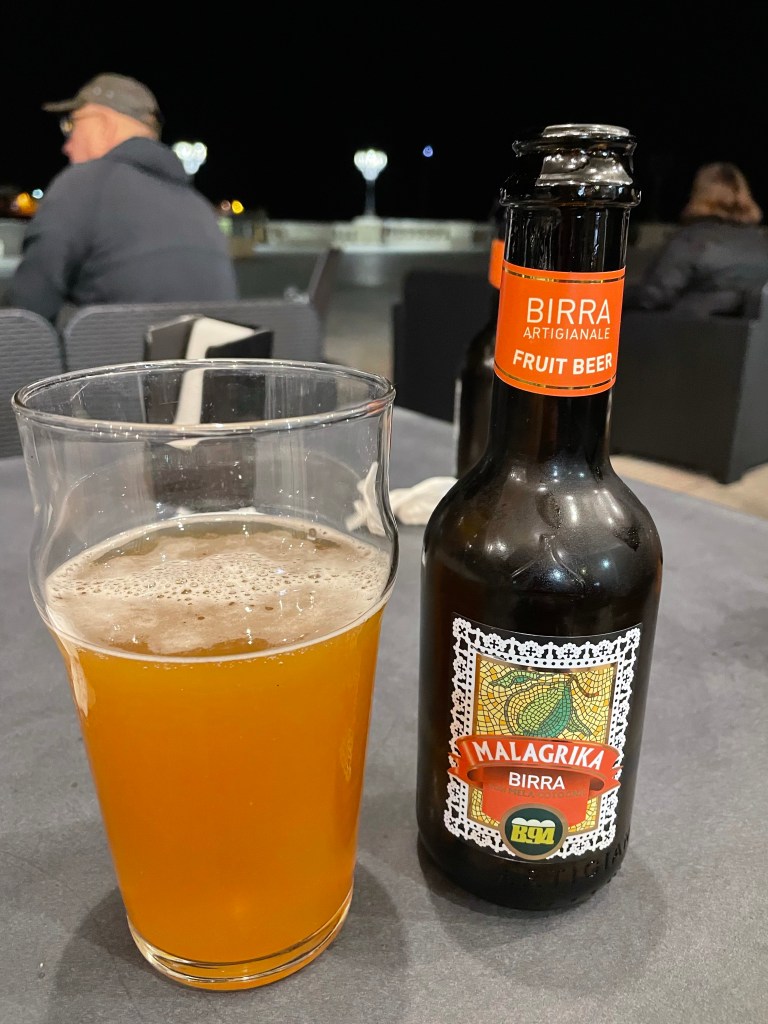
The town has a lovely seaside lungomare for evening strolls, lined by restaurants and gelaterie. We stopped for a local beer and some snacks as we weren’t hungry after the substantial lunch.

Lecce – going for baroque

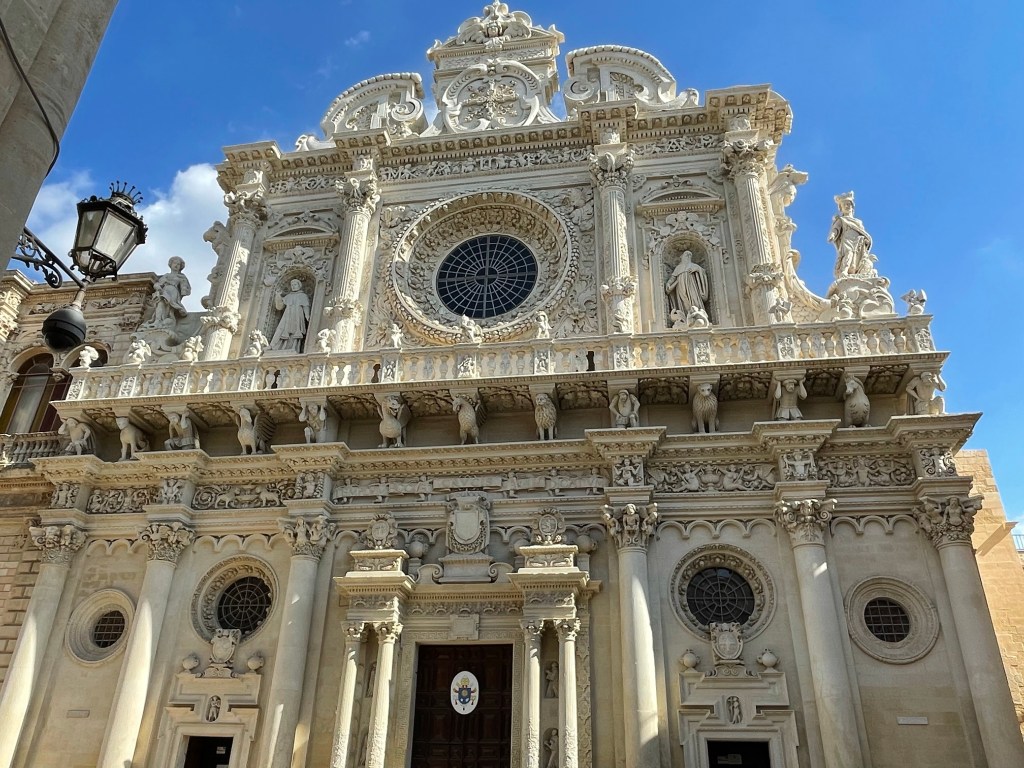
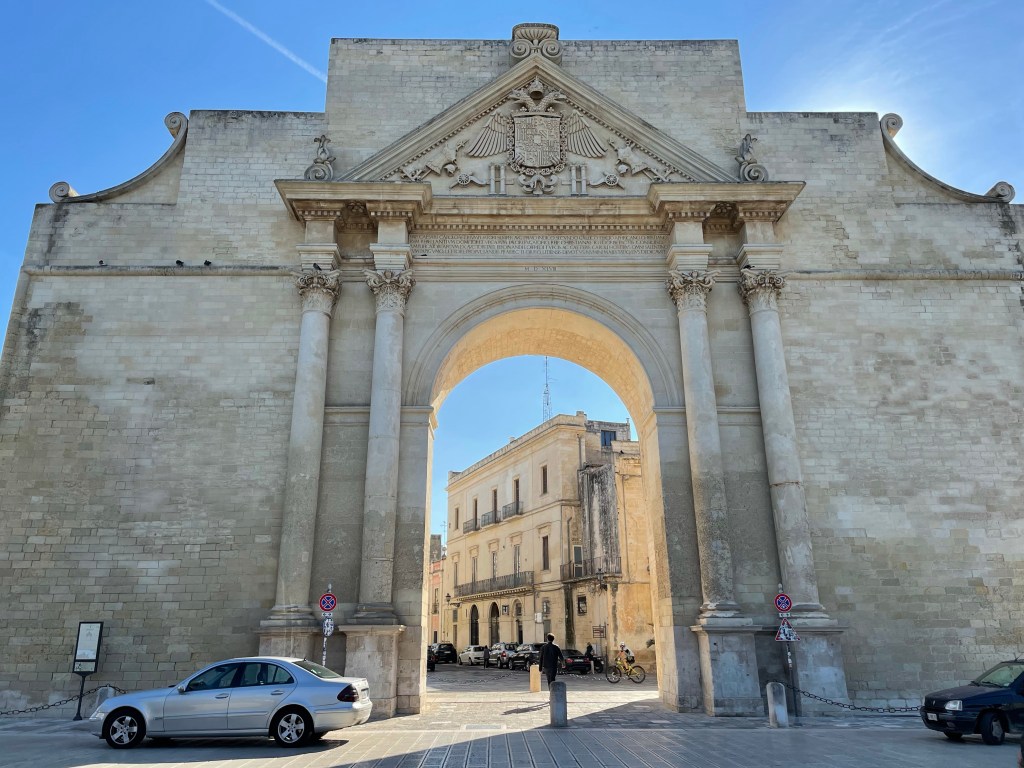
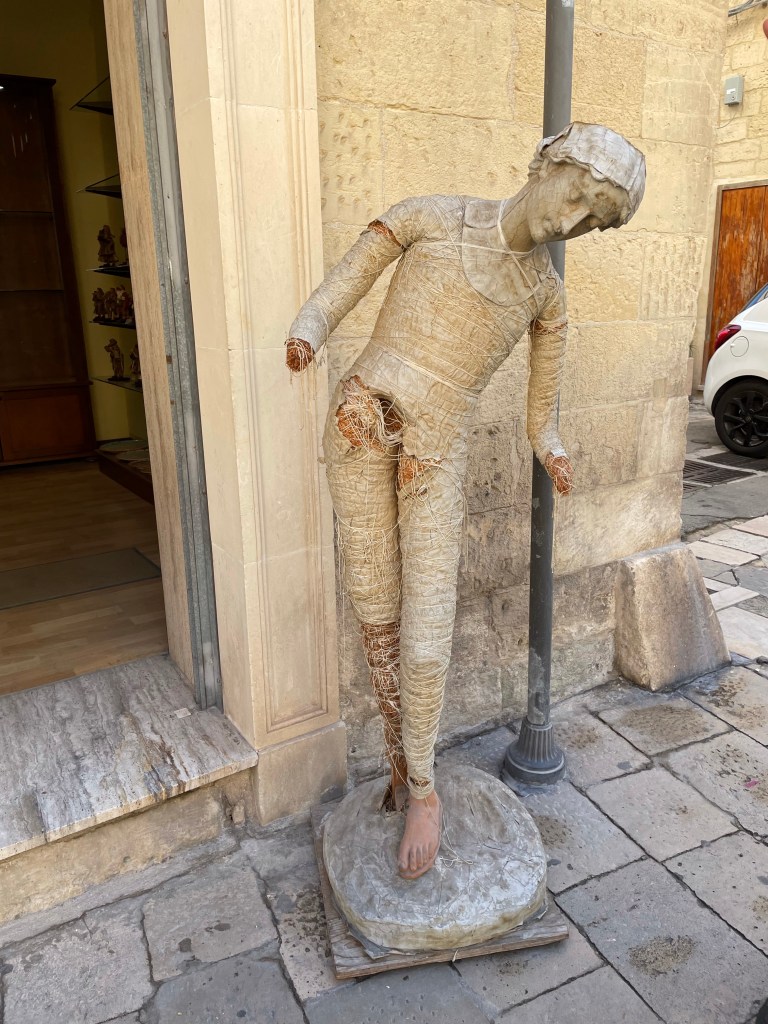
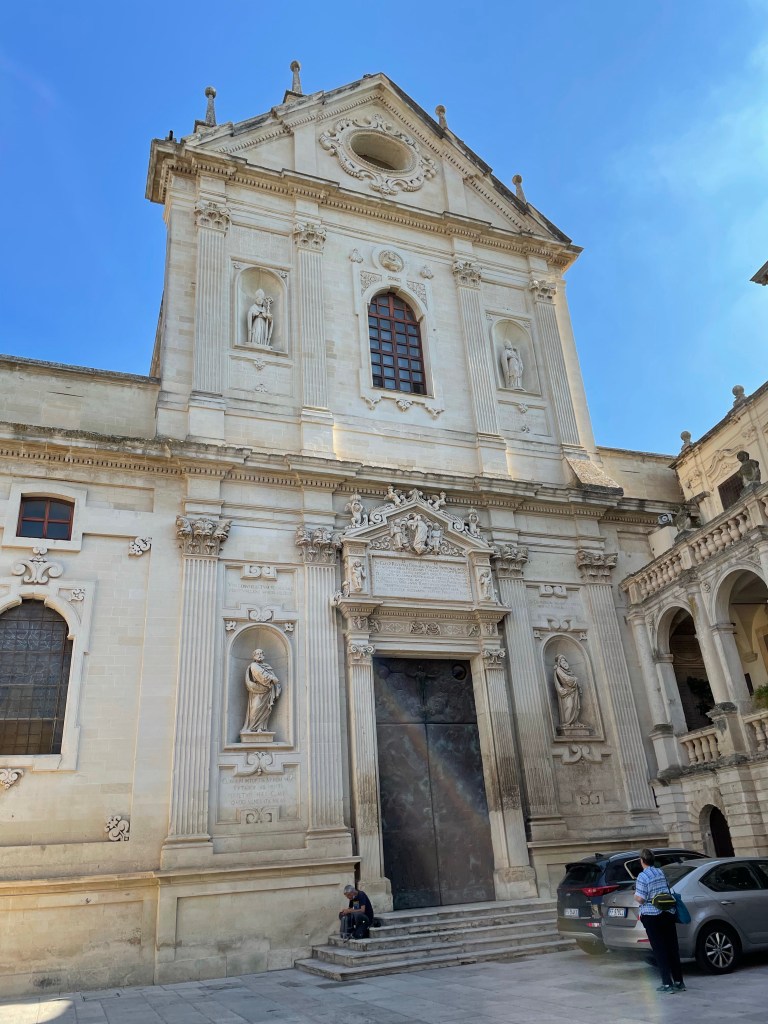
Lecce is considered to be the Florence of the South (Italy). But honestly, it looks nothing like Firenze- nary a Renaissance building or River or iconic bridge or world renowned art museum in sight. But what one does see is a city celebrating it’s own renaissance about 200 years after the one in Firenze. Under the Spanish Bourbon royal family, palazzi and churches with elaborate facades of the characteristic golden Lecce stone (limestone) were built to celebrate the power of this dynasty and as a reaction to the Protestant Reformation of the early 16th century. The intricate, over-the-top Baroque style predominates in the church facades, as well as the altars of the Duomo, Chiesa di Santa Chiara and Chiesa di Santa Croce. As the craft of papier-mâché (cartapesta) is still practiced by artisans in Lecce, many of the church statues are not composed of marble or granite but of paper, straw and a pasty glue.

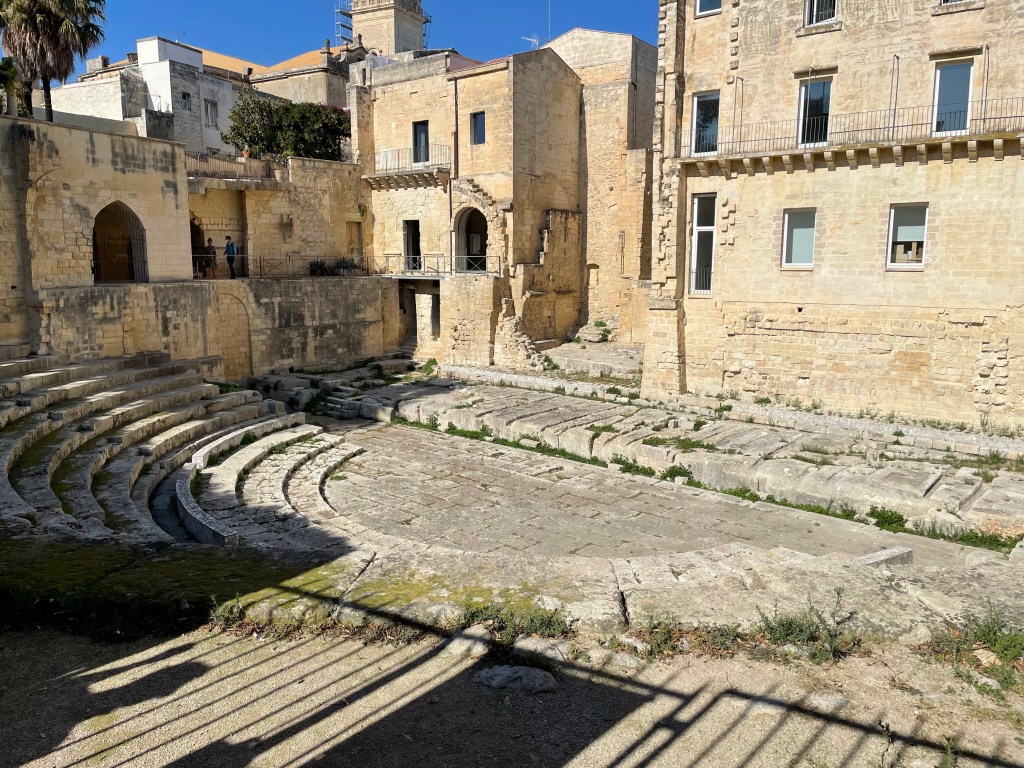
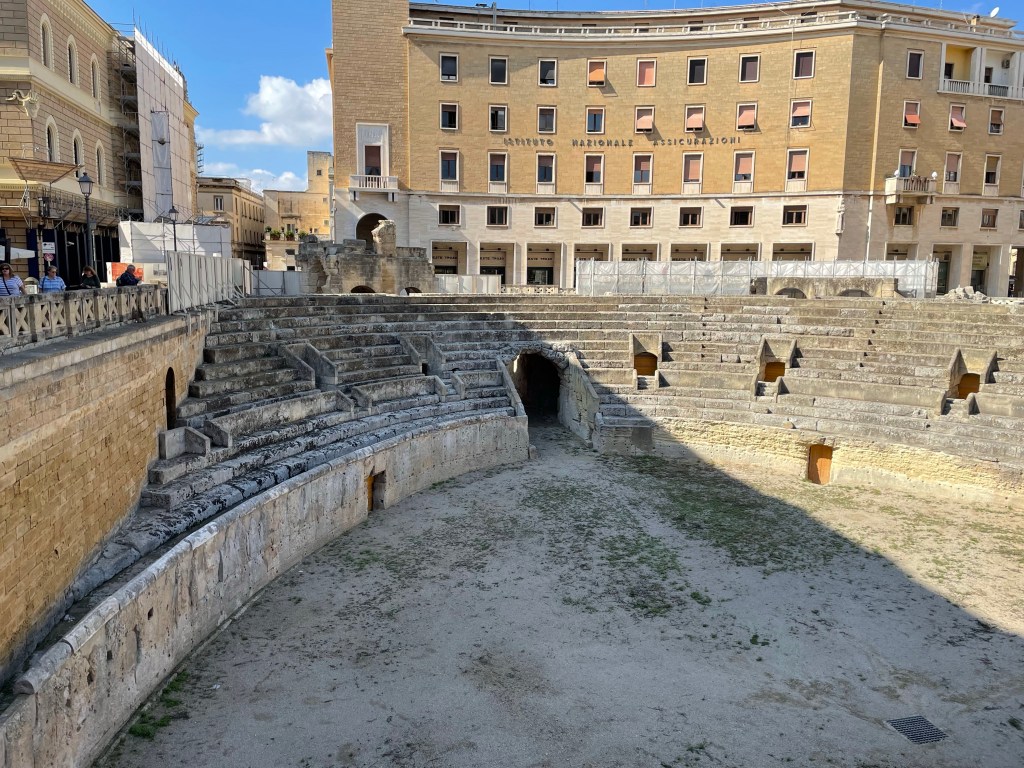
We arrived around 10:30 and were guided by Carlo, who showed us the aforementioned churches, as well as the seminary museum, Roman theater and Roman amphitheater, the last of which is located right in the center of the main piazza.

Around 1 pm, we had a lunch of a tagliere (charcuterie plate), eggplant parmigiana, fava bean purée, cichoria, and a potato casserole and a pasticciotto for dessert. We then had the next three hours free.

We decided to visit the Feltrinelli book store, one of the few open for business during the traditional afternoon “pausa” that generally lasts from 1:30 to 4:30 pm. I purchased a historical novel, written in Italian. Then we went wild in the taralli store. Taralli are round crunchy snacks, larger than a cheerio, that are traditional in this part of Italy. They are a great accompaniment to an aperivo. This shop has a huge selection of both sweet and savory and we ended up with peperoncino, pistacchio, mixed sweet variety and a black pepper and almond type.
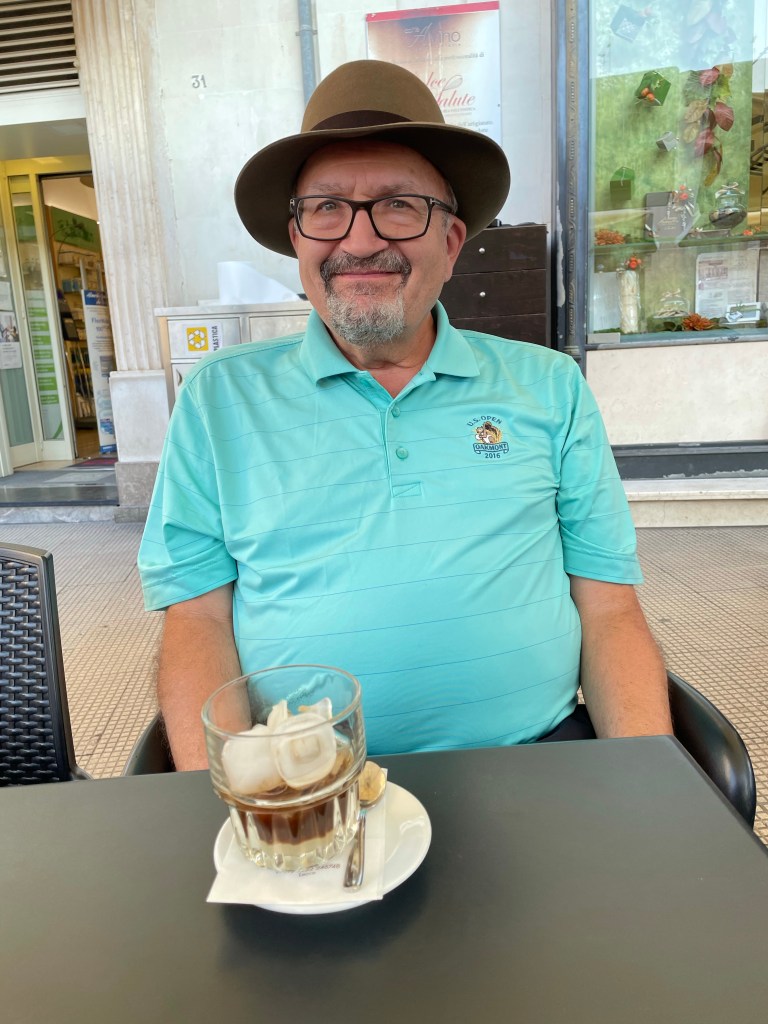
We then went to Cafe Alvino, known for the caffè leccese- espresso over ice served with latte di mandorle- for aperitivo. At the appointed time, we boarded our minibus back to the masseria where Sarah and some of our group prepared a potluck dinner of two pastas (orecchiette with sausage, capers, grapes and yellow pepper and a fettuccine al limone), meatballs, salads, prosciutto, cheeses and local wines.

After dinner, a few of us just hung around chatting about history and politics and our trip.

Duomo
Porta di Napoli- one of the entrance gates
Papier-mâché artisans (Carta pesta) are a tradition
Church of Santa Chiara contains the mist over the top of baroque interior
Roman theater
Roman amphitheater in Piazza Oronzo
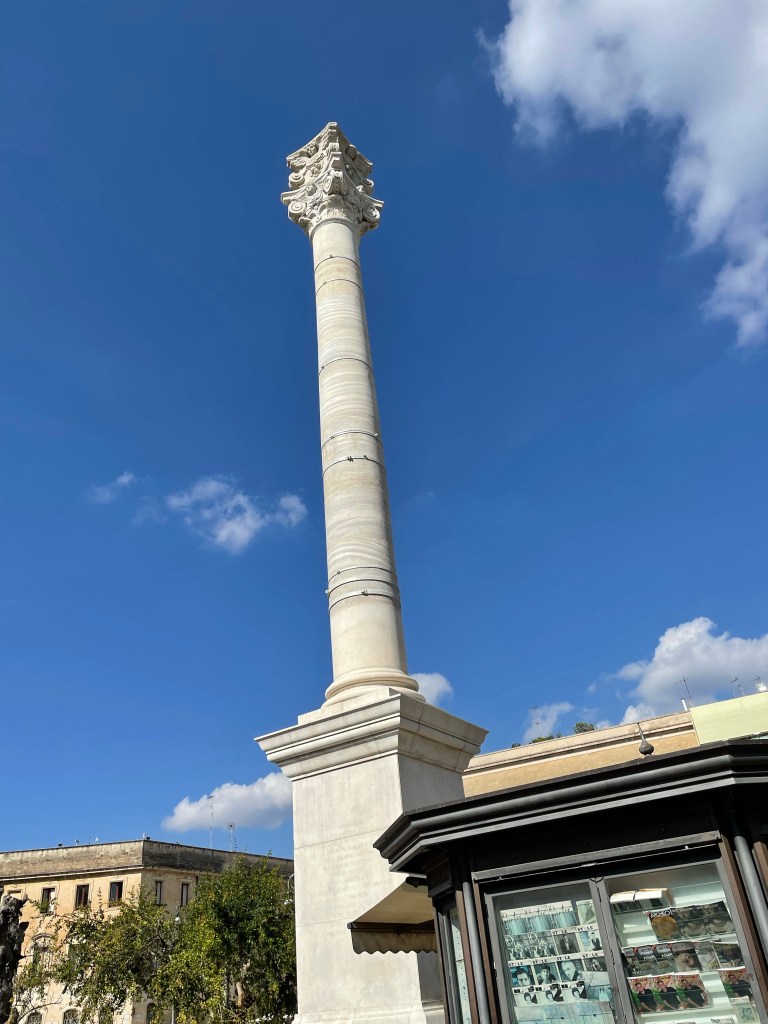
Column (1of 2, the other is in Brindisi) that marked the end of the Appian Way
Church of Santa Croce – Uber – baroque facade
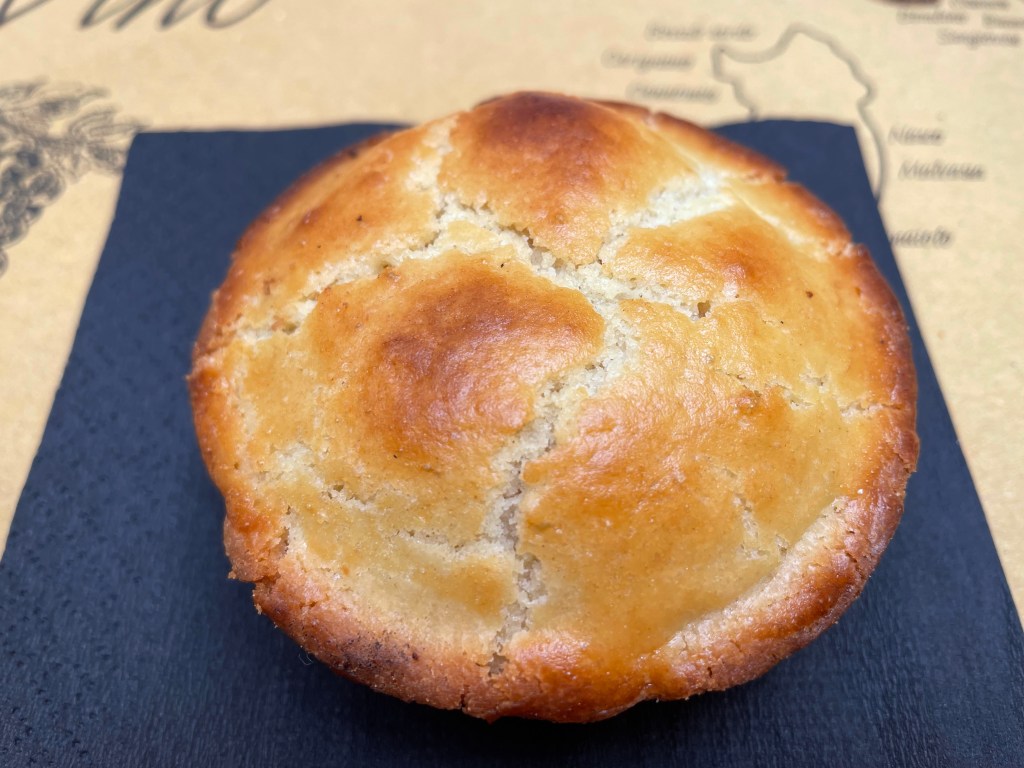
Pasticciotto – classic dessert of Lecce
And caffè leccese

Cooking on the farm

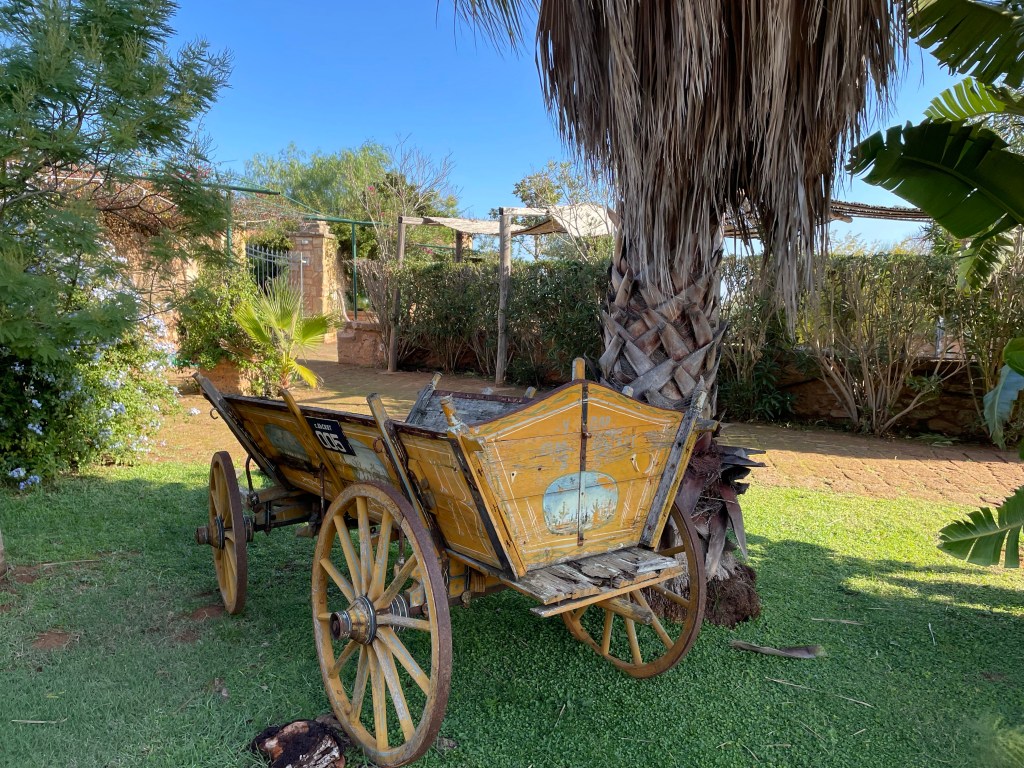
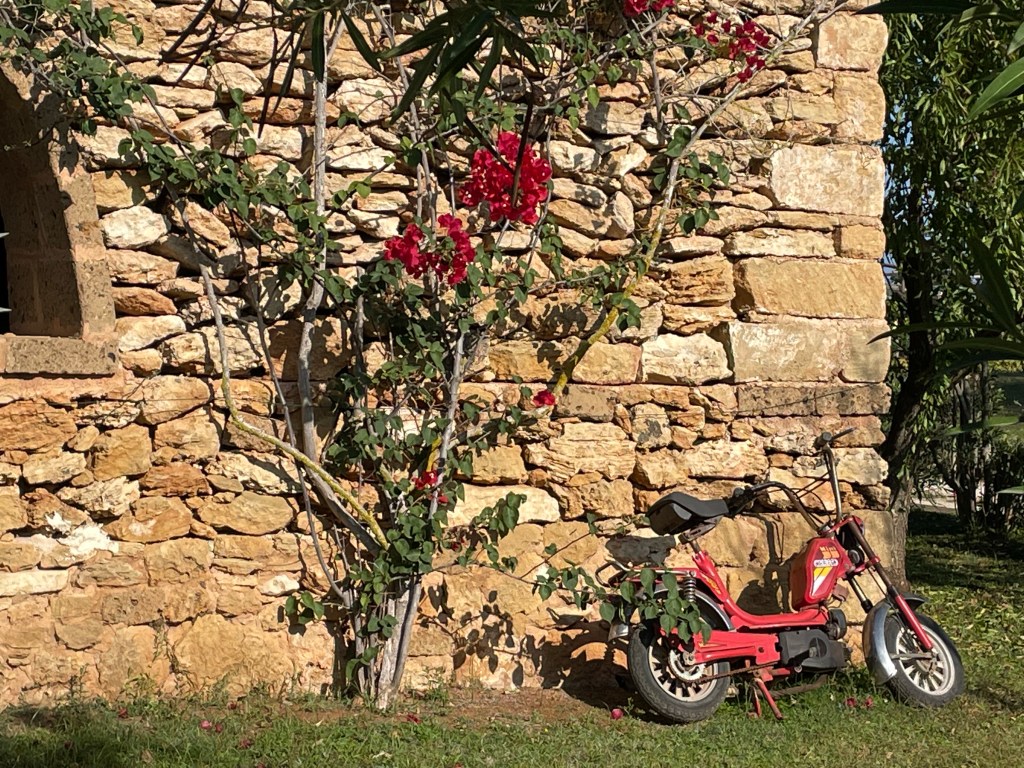
It was nice to actually sleep in a bit as we did not have to be ready to leave until 10:45 am. Breakfast was in the dining room – a variety of crostatas and cakes as well as yogurt and sliced ham and cheese, simpler than the one served at our hotel in Naples. After breakfast, a stroll on the grounds revealed antique carts, wine presses, an Ape (3-wheeled vehicle), a swimming pool, chickens, ducks, roosters, and a couple more dogs.
The day was gorgeous, pleasantly cool, with few clouds. Kittens were scampering about and Chiara, the old dog who had served with the Italian army in Afghanistan, lumbered back to her doghouse. It was an idyllic setting for a more relaxed day than we’ve had yet on this journey.

Chiara- served in Italian army in Afghanistan

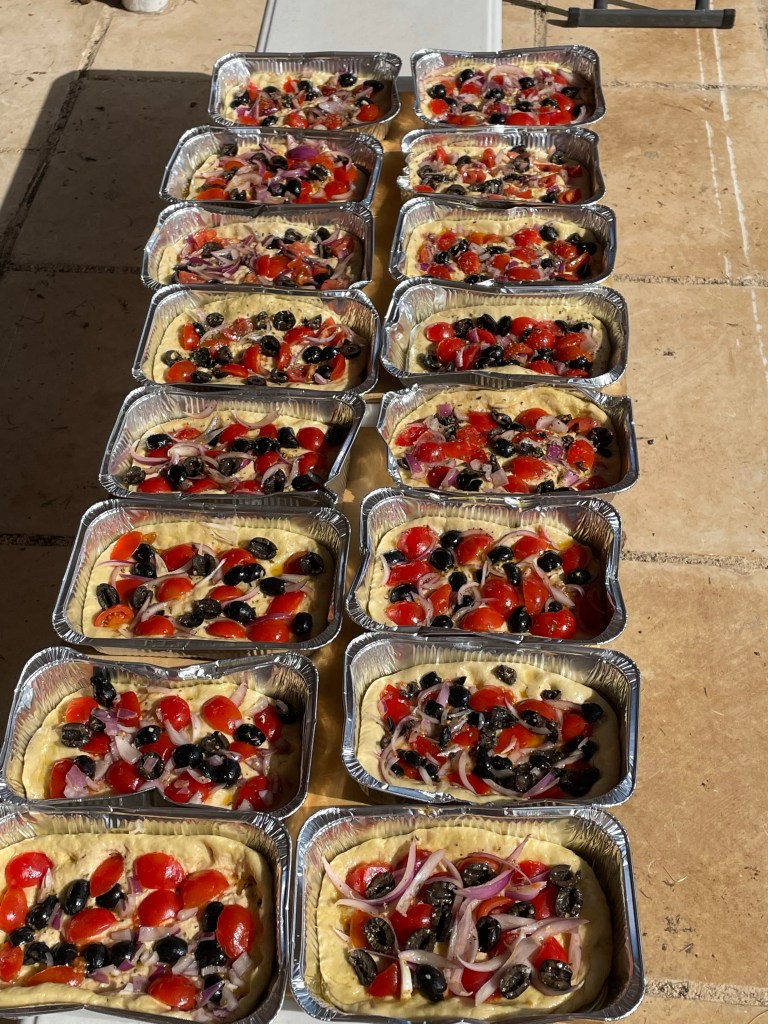
Instead of visiting a archeological site or a picturesque village, today’s adventure was a cooking lesson at an equestrian center somewhere in rural Puglia. As the bus, pulled up into the parking lot, I was afraid that we would be going horseback riding but instead we were met by the owner who said that she had relocated her cooking lessons out to her horse farm. Tables were set up outside and two “mammas” (who didn’t look very old to me) guided us in preparing focaccia barese, taught us how to make orecchiette and a simple dessert of pastry puff dough and brown sugar. Already prepared focaccia was served to us as ours were baking, and the orecchiette with zucchini, peppers, red onion , tomato and feta sauce most definitely did not include the orecchiette that we made!
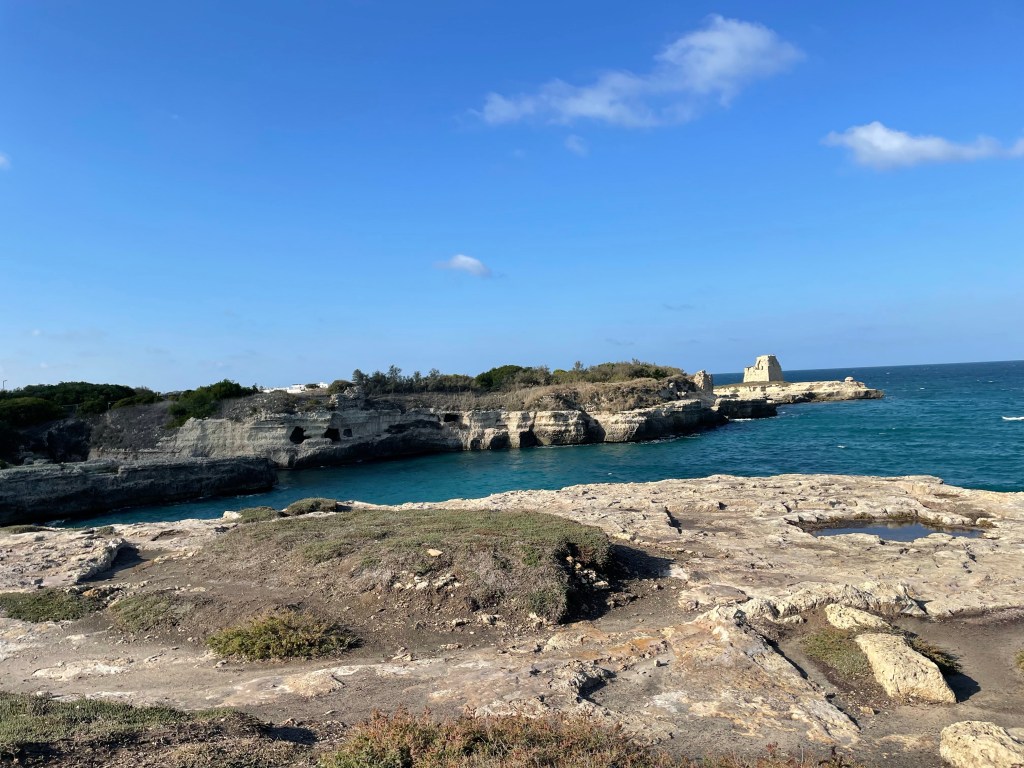
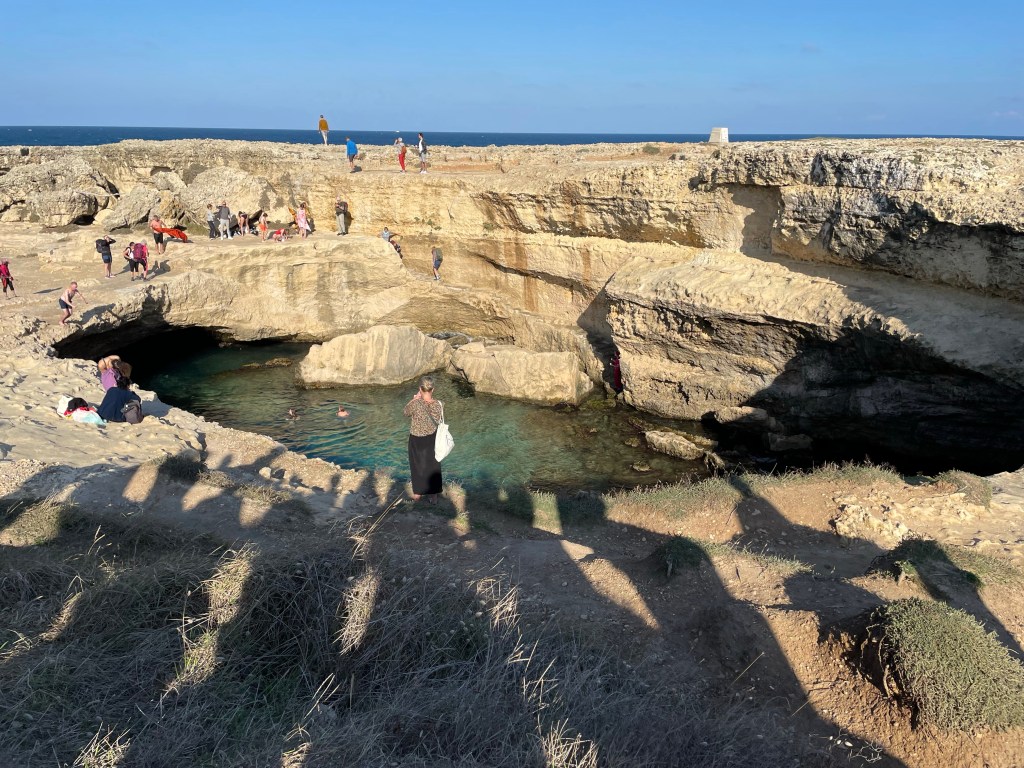
After lunch, we took a drive to the Grotte della Poesia, natural limestone caves along the sea that contain petroglyphs from the Massapians, Greeks and Romans, in Medadugno. A stone tower from the 15th century built during the times of the Ottoman Turk invasion can be seen along the shore of the Adriatic.

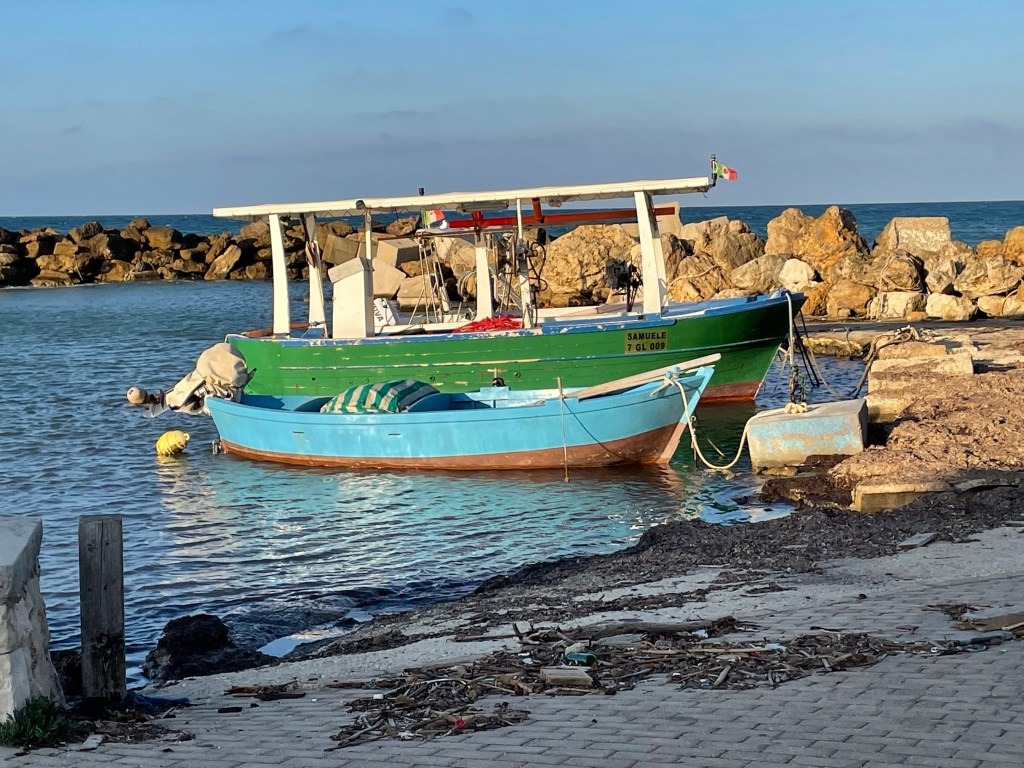
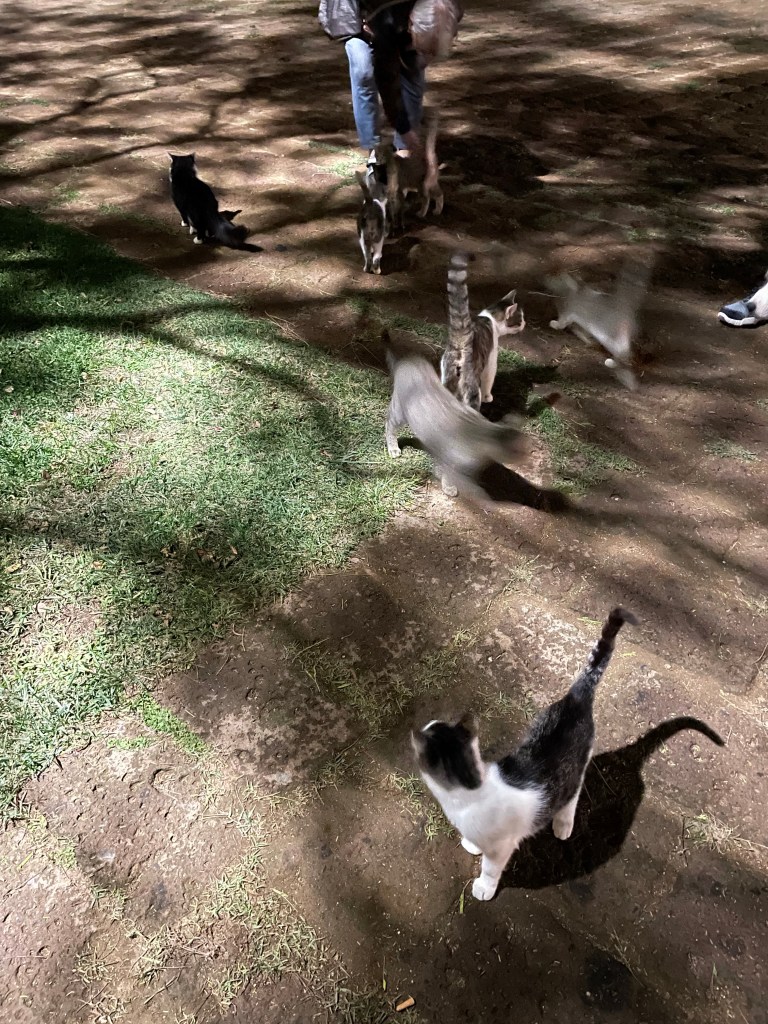
We stopped briefly at a small seashore town, pretty much devoid of activity except for a fruit stand, a combination bar and grocery and a few stray cats. Provisions were purchased for our evening apericena- prepared by Sarah and Susan (one of our group, who happens to be a chef/caterer). We enjoyed some salads, charcuterie, olives, melon and lots of local wine (Primitivo and Neroamaro). The big challenge was keeping the kittens and pups away from the food.

Lots of good conversation accompanied the food and wine and a sense of comaraderie is certainly developing in the group.

Making focaccia barese
Grotta della Poesia
Anyone for a swim?
Small seaside village

On to the heel of the boot

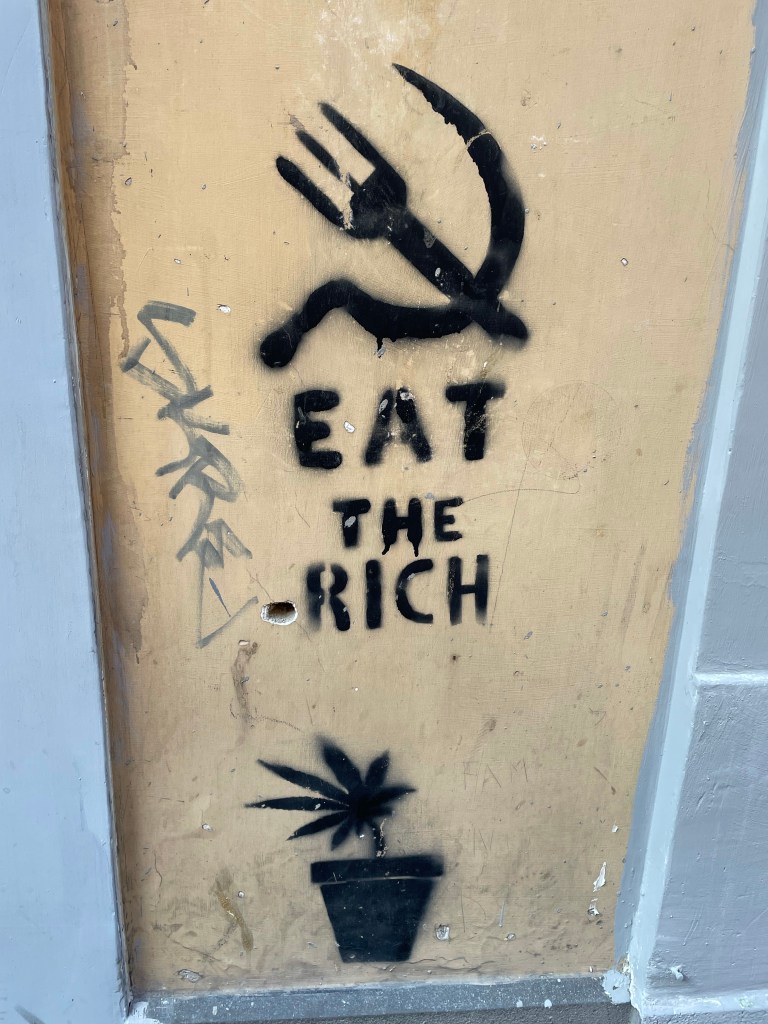
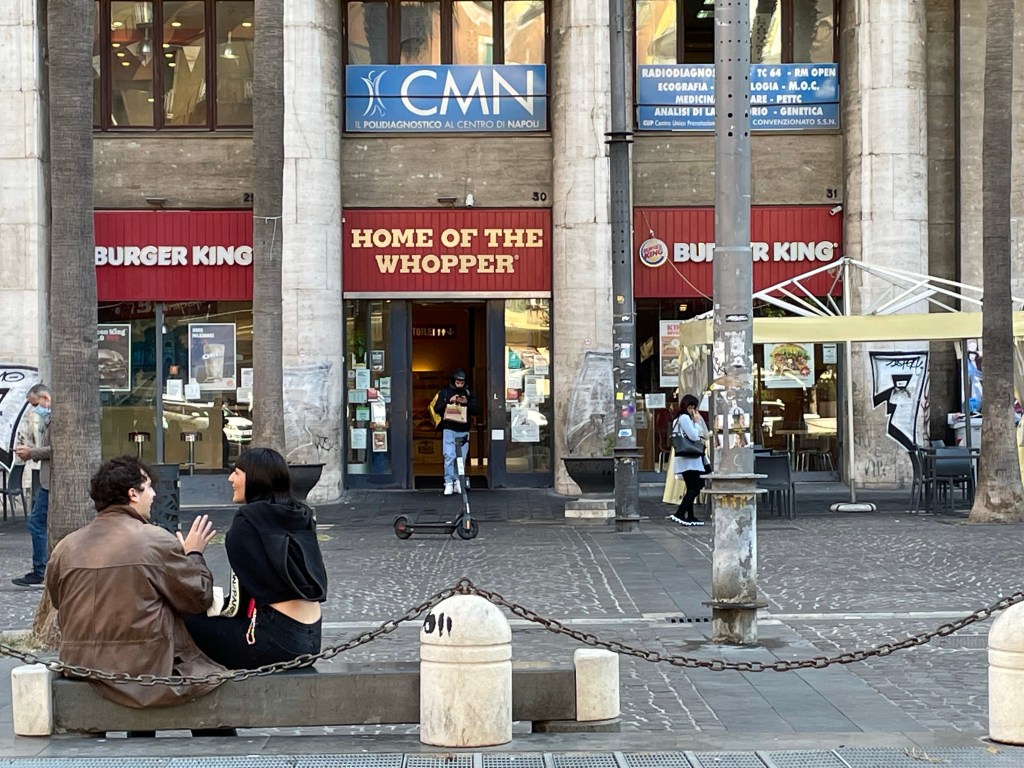
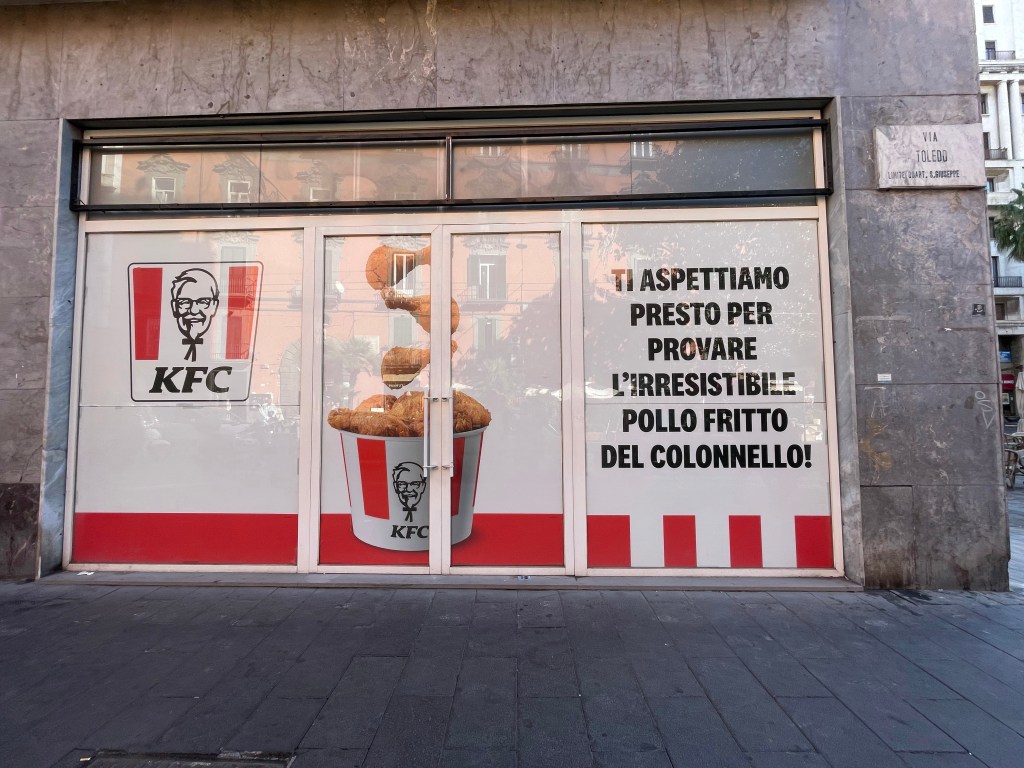
Our last morning in Naples was certainly more relaxed than the prior seven. With no activities planned until noon, we got to sleep in until 8am, had our last hotel breakfast and checked out. One last stroll down via Toledo turned up some interesting sights –

a Burger King, an announcement for a new KFC, and some interesting street art that you probably would never see in the USA.

We returned back to the hotel to meet our travel companions- we are a group of 13 women and 2 (token) males, many of whom (not us, though) had traveled together before. Ironically, there were two women who had been on our Rick Steves Sicily tour in 2019!

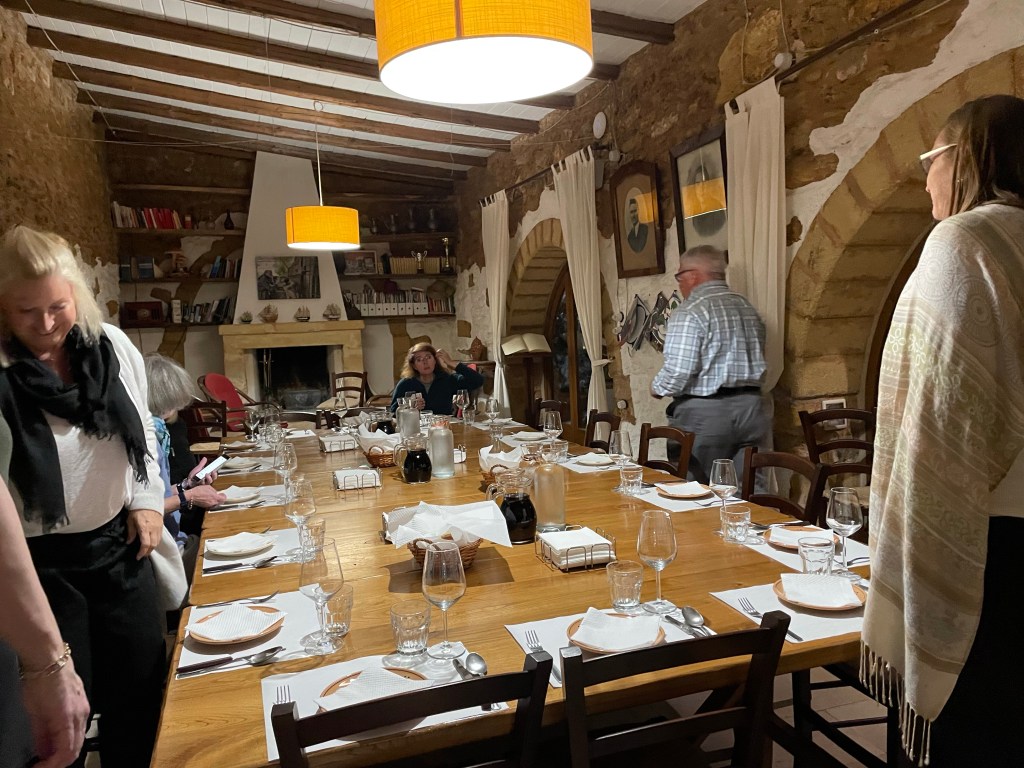
After the obligatory meet-and-greet, we shared a simple lunch of insalata caprese, prosciutto and mozzarella di bufala and mixed salad. Then we piled on our minibus for a five hour ride to Puglia, the “heel” of the Italian boot. We drove through the Appenine mountain range, passing agricultural fields and windmill farms. We arrived at our destination, Masseria Provenzani, an agriturismo near Lecce, at sunset. It is located down a country road amidst olive groves. A clowder of 9 kittens was our welcome committee to this rustic 16th century manor house that gas been converted to a guest house. We didn’t have time to explore as it was dark and we were to have dinner in a short while.

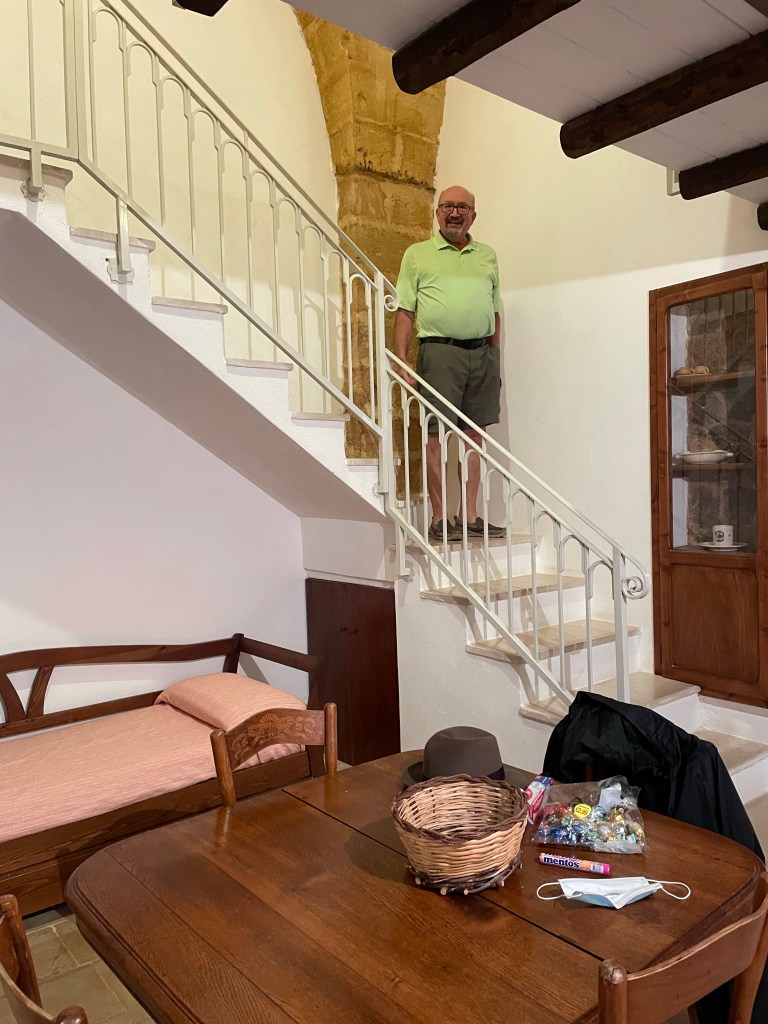
The rooms are all different- we actually have an apartment with a kitchenette, sitting area and bathroom on the first floor and loft bedroom.

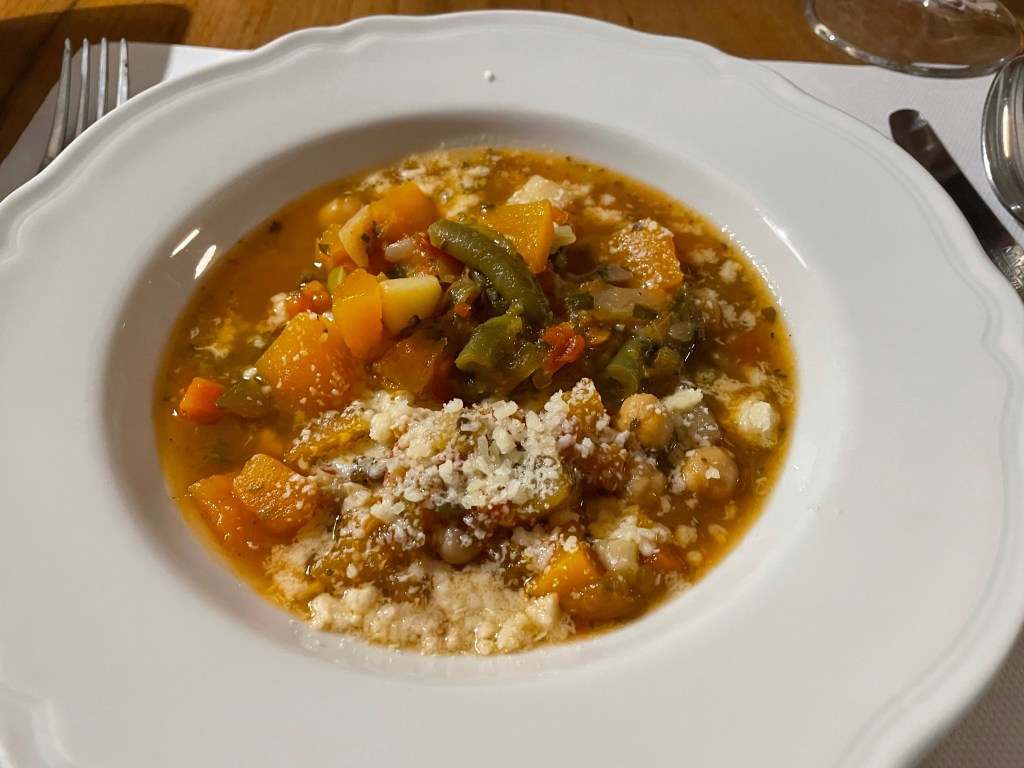
Our dinner was a simple minestrone, roasted chicken and potatoes, a cabbage and sausage casserole and tangerines for dessert- a welcome change from the multi-course meals of the past week.

The itinerary for rest of the week will be a surprise. Stay tuned!

Farewell to Naples

It’s been a hectic week. We’ve visited museums, churches and catacombs, wandered ancient ruins, and sat in taxi in gridlocked traffic. We’ve averaged 17,000 steps a day and realized we’re not as young as we used to be as the pounding of feet on cobblestone really does a number on backs and hips!

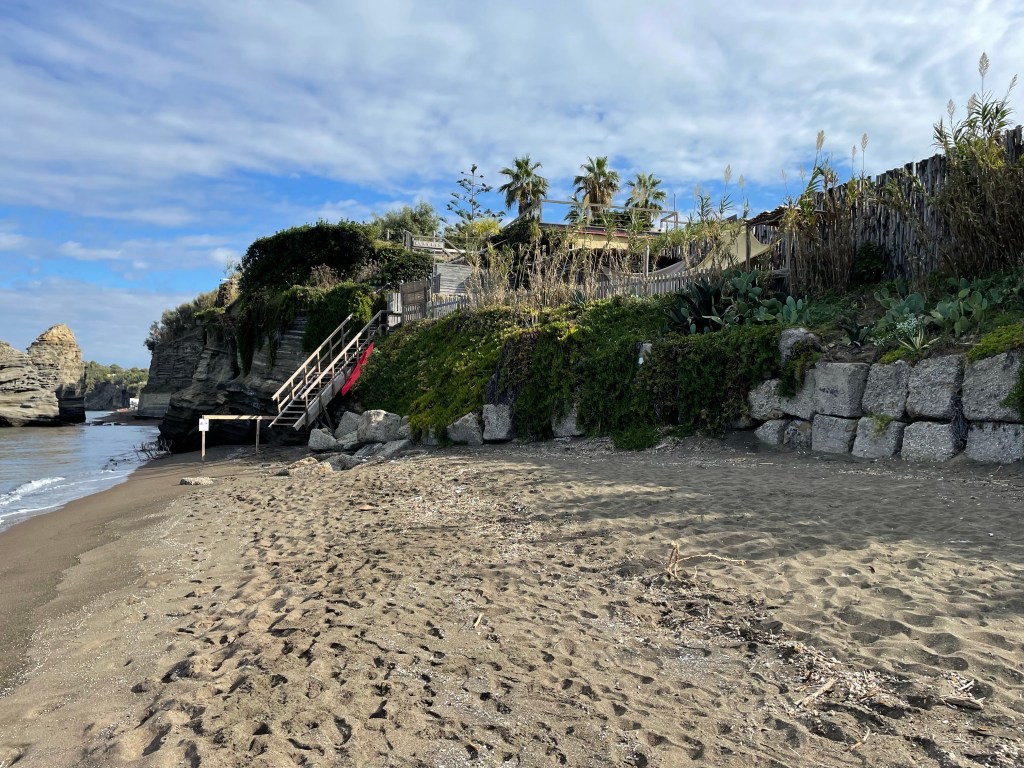
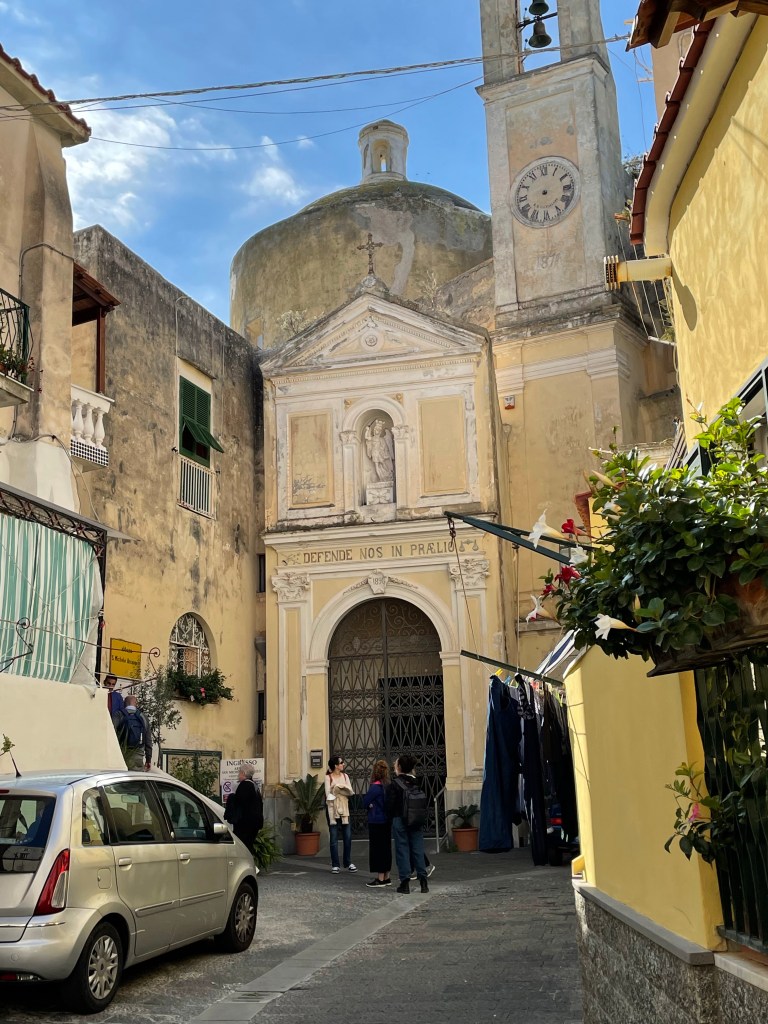
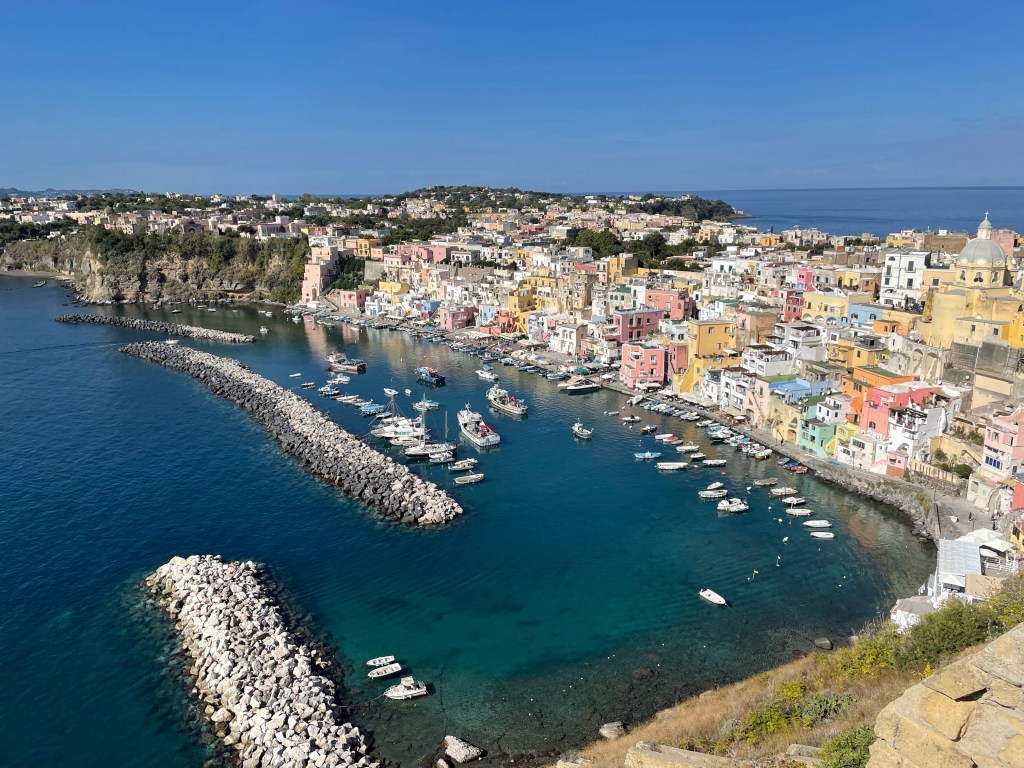
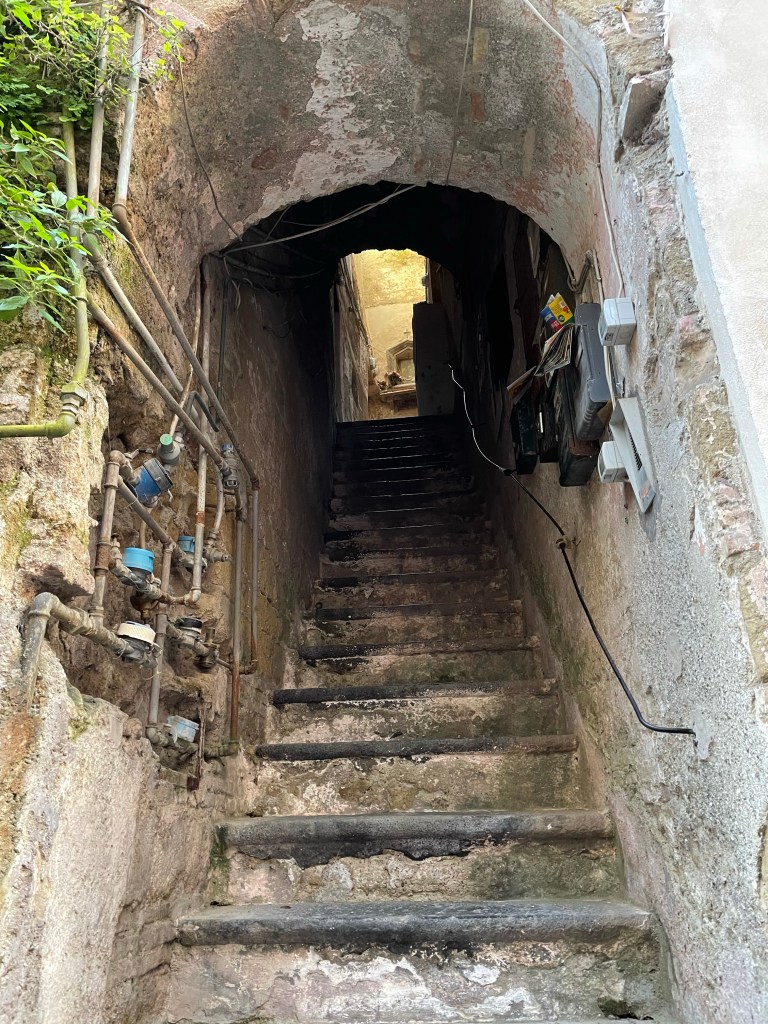
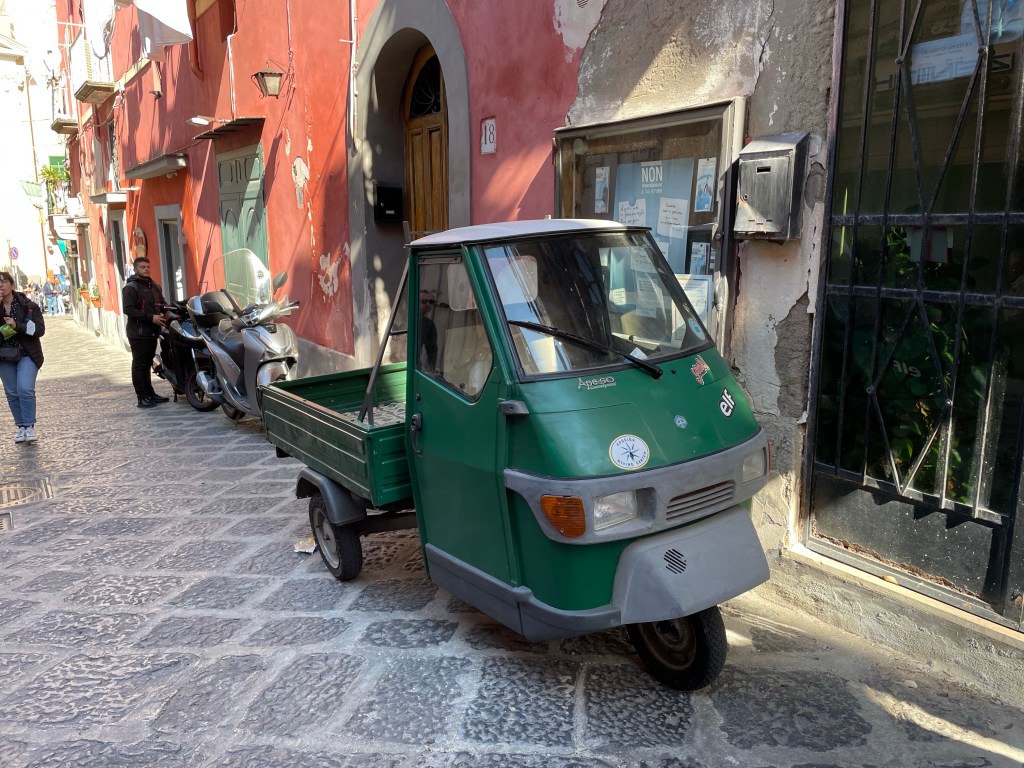
For a change of pace, we visited the island of Procida. The least famous of the three islands (Capri and Ischia are the other two) in the Bay of Naples , Procida has the largest year round population (11,000). Tourism is the third (rather than the the greatest) source of income. There is only one town composed of narrow treacherous cobblestone lined streets that seem haphazardly arranged. Cars and motorbikes careen through at seemingly breakneck speed! The views are magnificent of the black sand beaches and boat-filled ports.

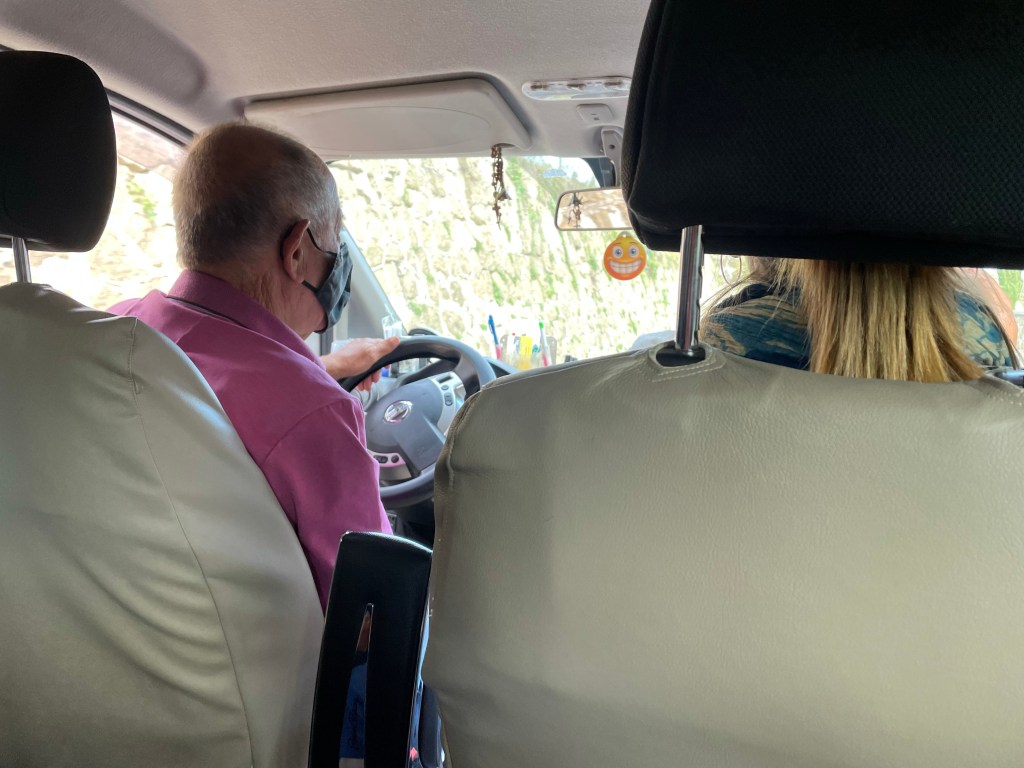
We hired at taxi, driven by Vincenzo, a young 74 year old born on the island. It was quite a ride, squeezing through narrow streets and archways.

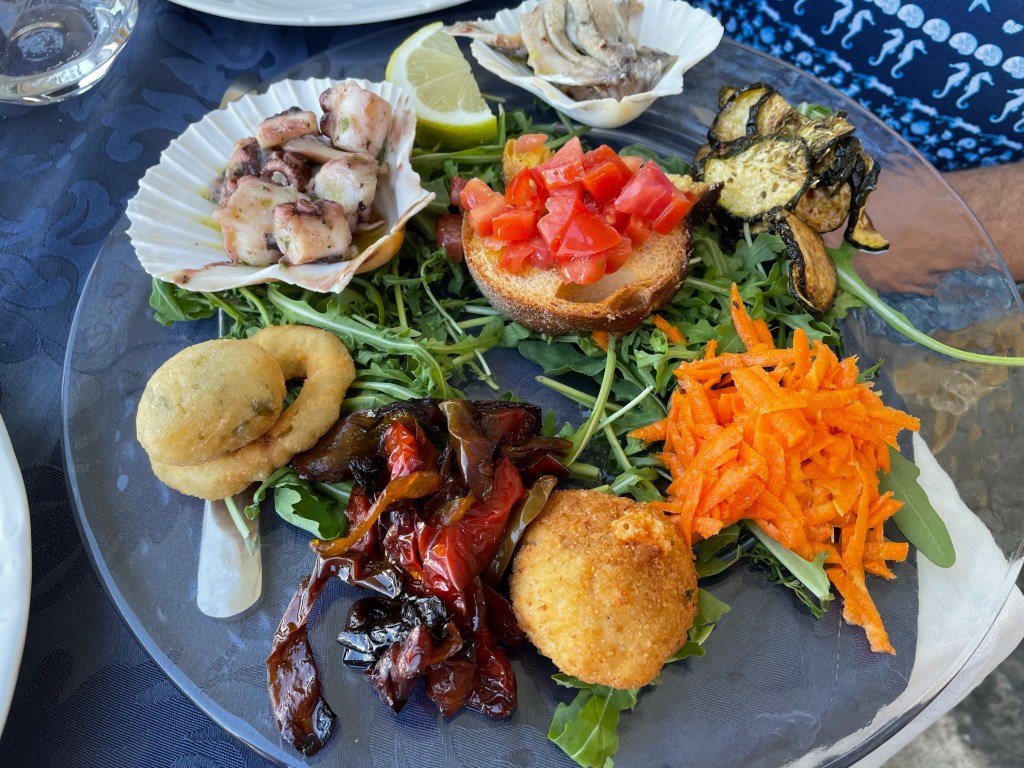
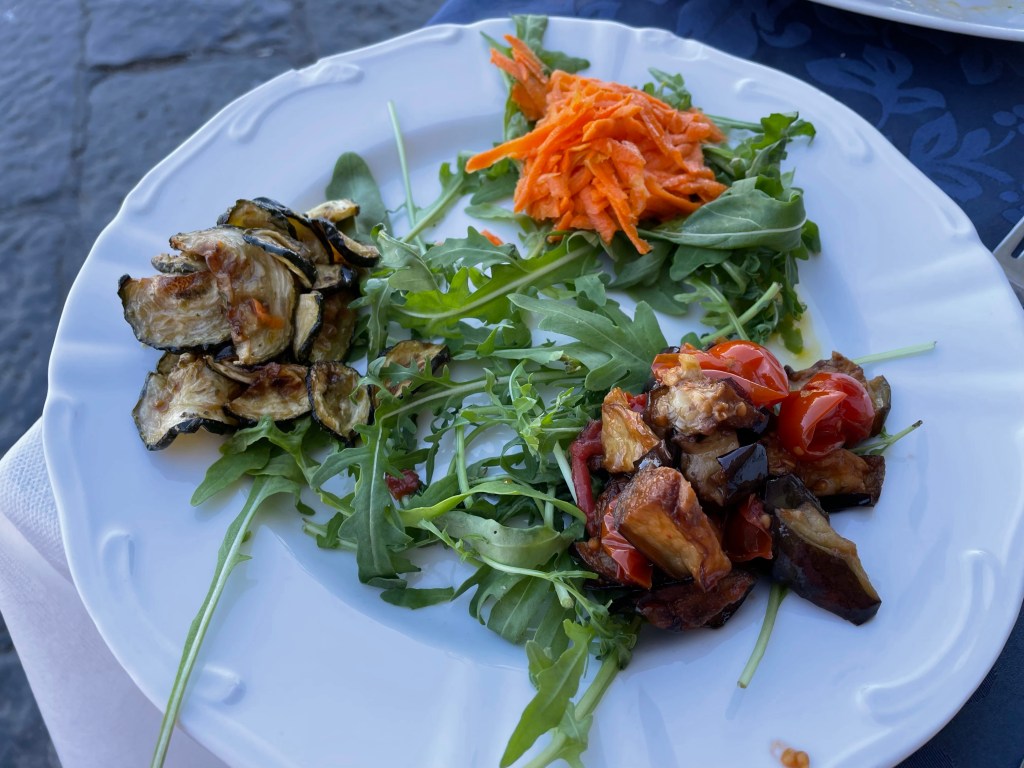
We stopped for lunch at a seaside restaurant – choosing to share antipasti and vegetables.

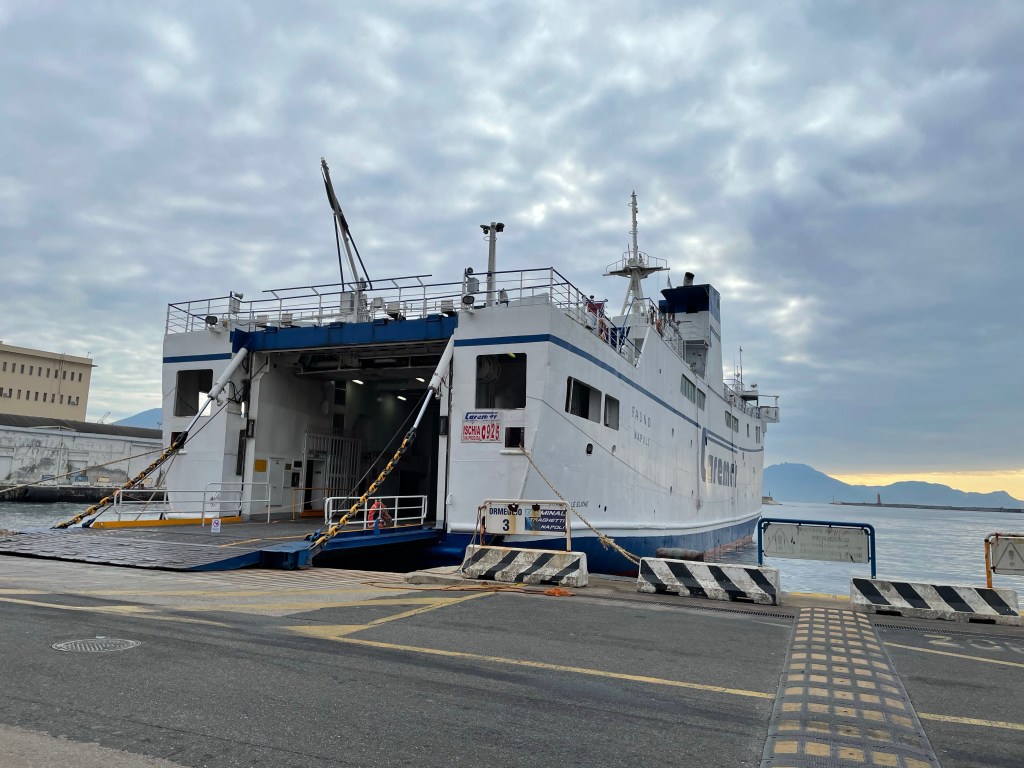
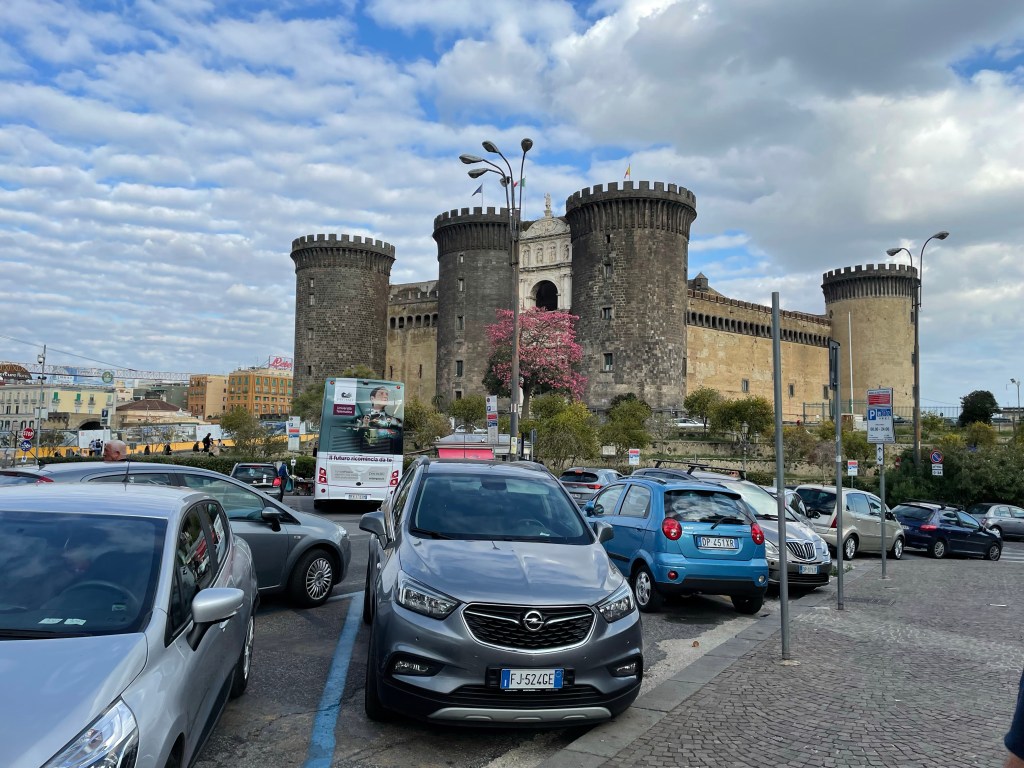
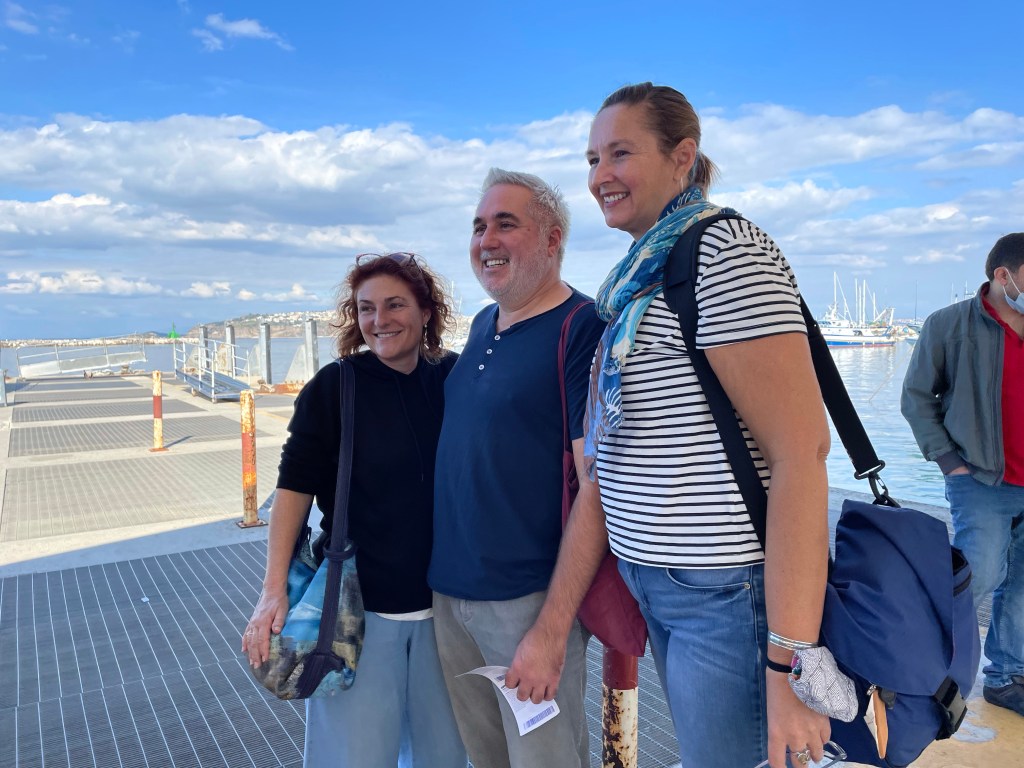
We then took the hydrofoil back to Naples- a quick 30 minute ride. Our walk back to the hotel took us past the Castel Nuovo.

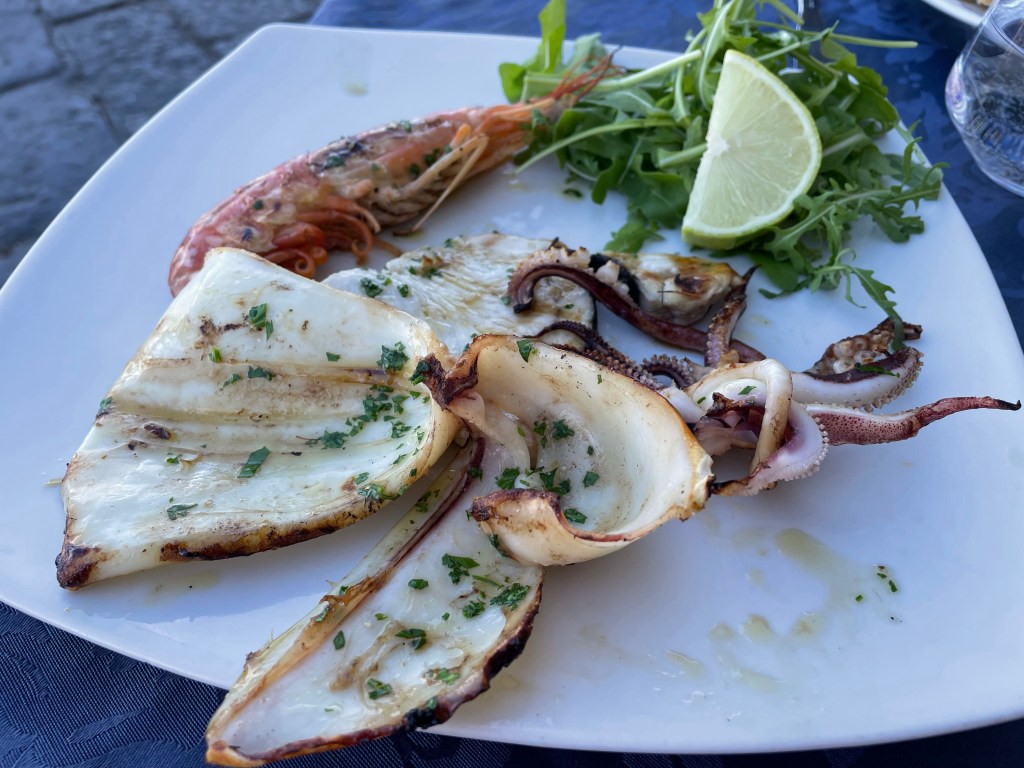
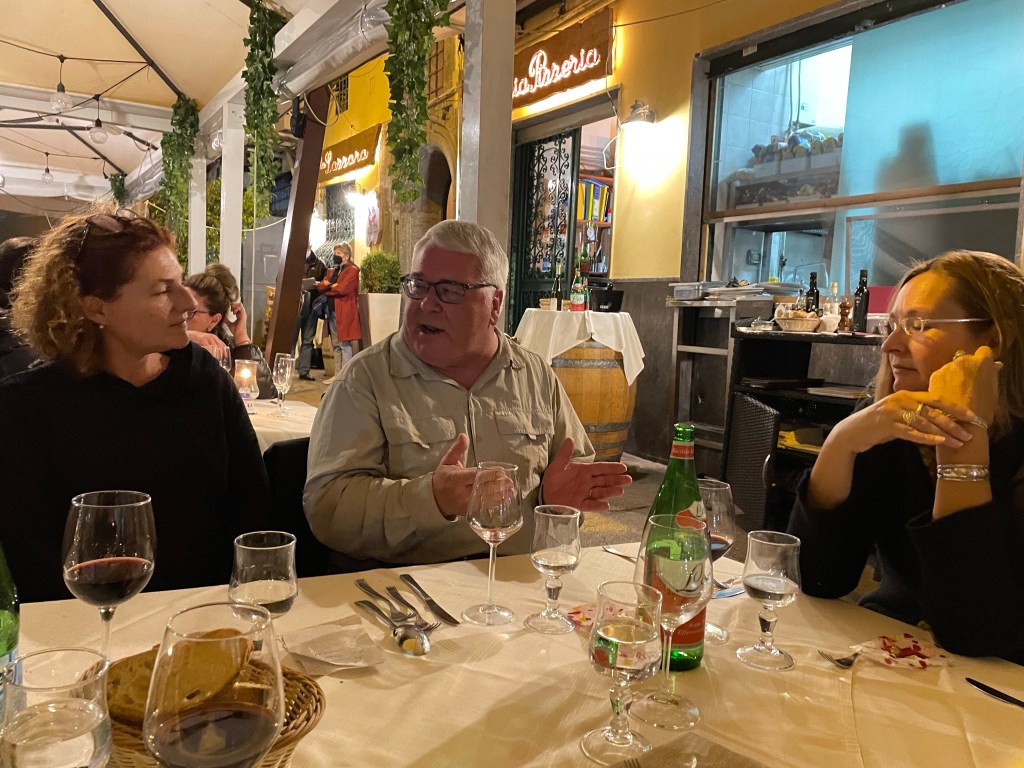
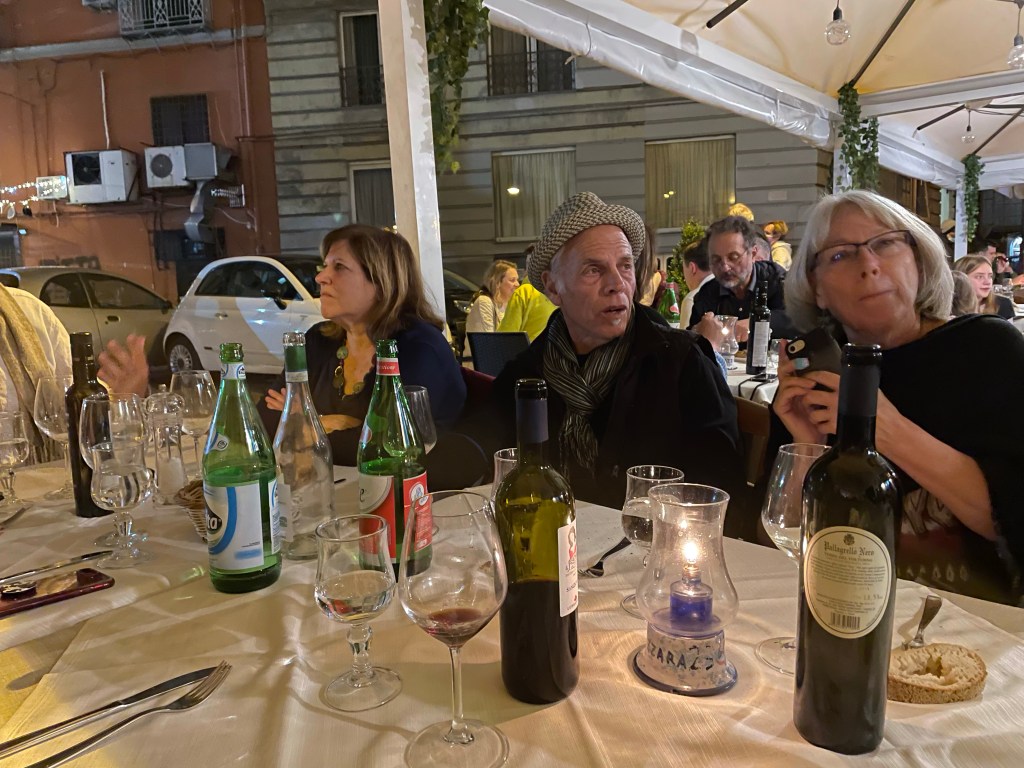
Tonight we had our farewell dinner for the Naples staycation (Adventures with Sarah) – selection of antipasti and we shared risotto with porcini and sausage, a platter of mixed grilled meats, and a platter of mixed grilled fish. Dessert was a choice of chocolate cake, baba rhum cake, or ricotta cheese cake. Farewell to a great tour leader, Lisa Anderson, and the AWS organizers, Sarah Murdoch and Andrew Villone will be our guides for our tour of Puglia.

Lisa, Andrew, Sarah

From North to South

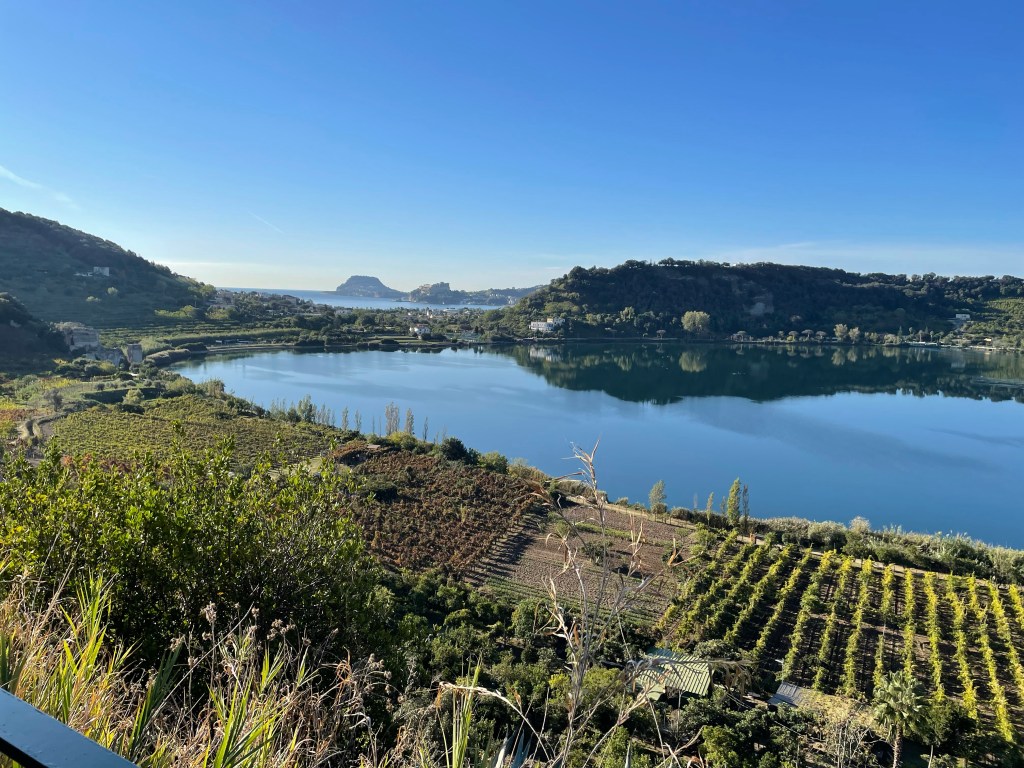
Our morning started with a ride north of Naples to the town of Cuma, the site of the first Ancient Greek settlement outside Greece in the 8th century BC. This area is the most volcanically active in Europe, with 24 active volcanos, and poses the greatest risk to the city of Naples. The Ancient Greeks thought that this area was the gateway to the underworld. On the way, we passed Lake Avernus, a crater lake, which emanated a faint aroma of sulfur.

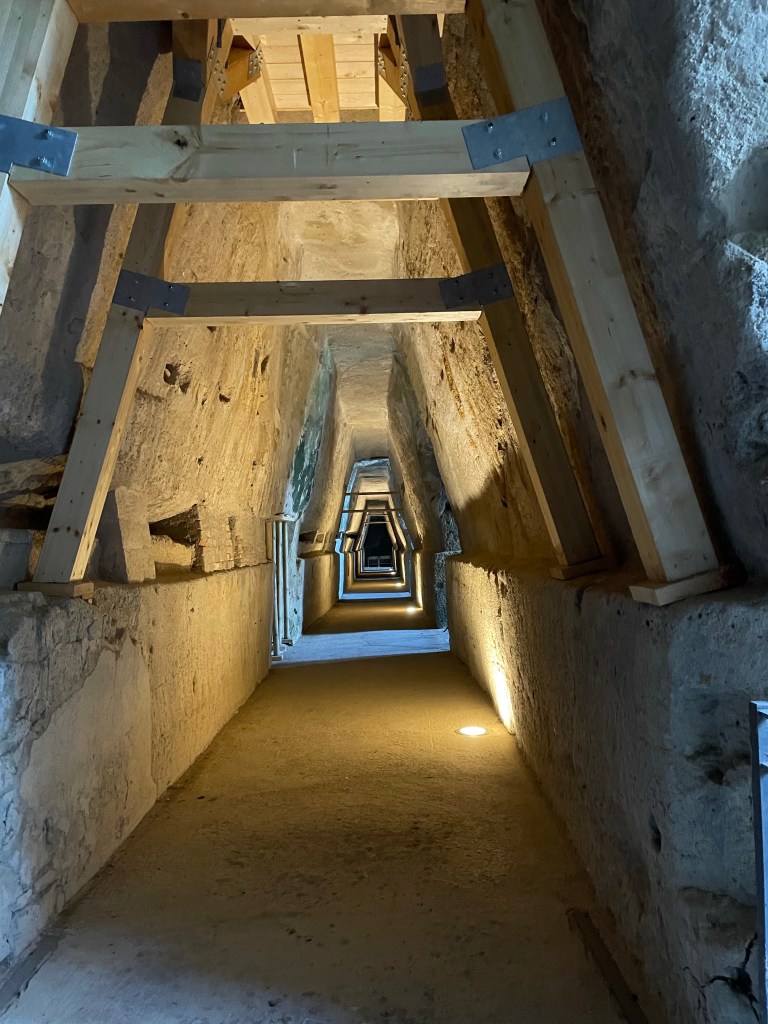
The site of the ancient city of Cumae was recently excavated and contains an extensive tunnel as well as an Acropolis. Like in the Greek city of Delphi, oracles were consulted to predict the future.

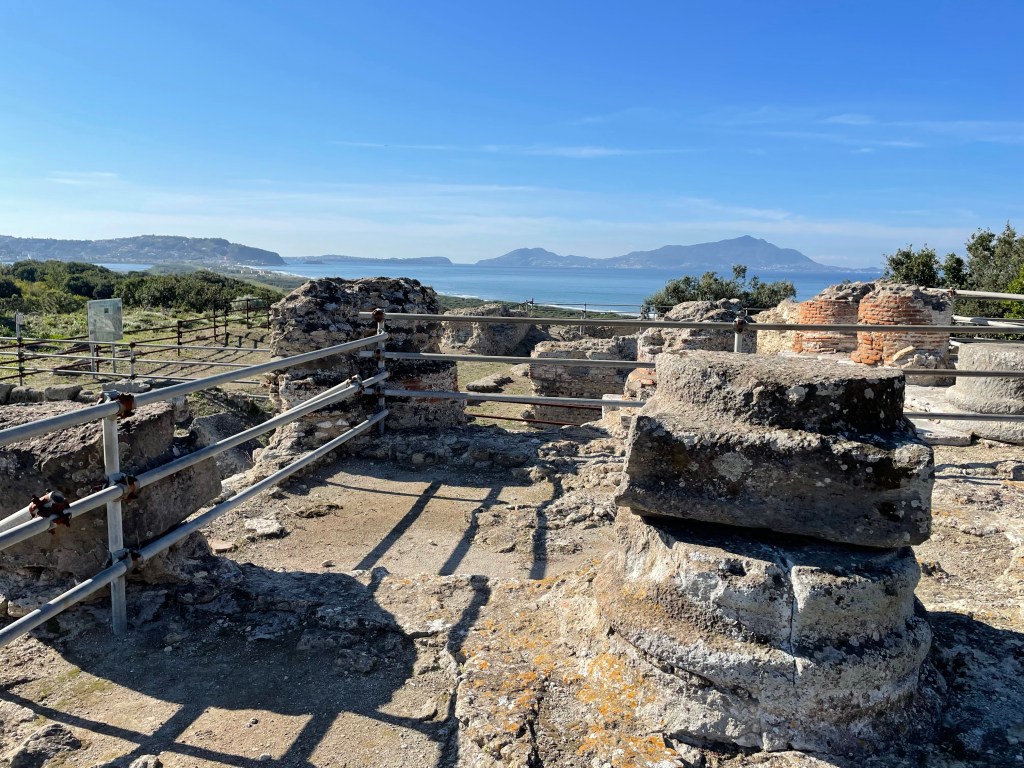
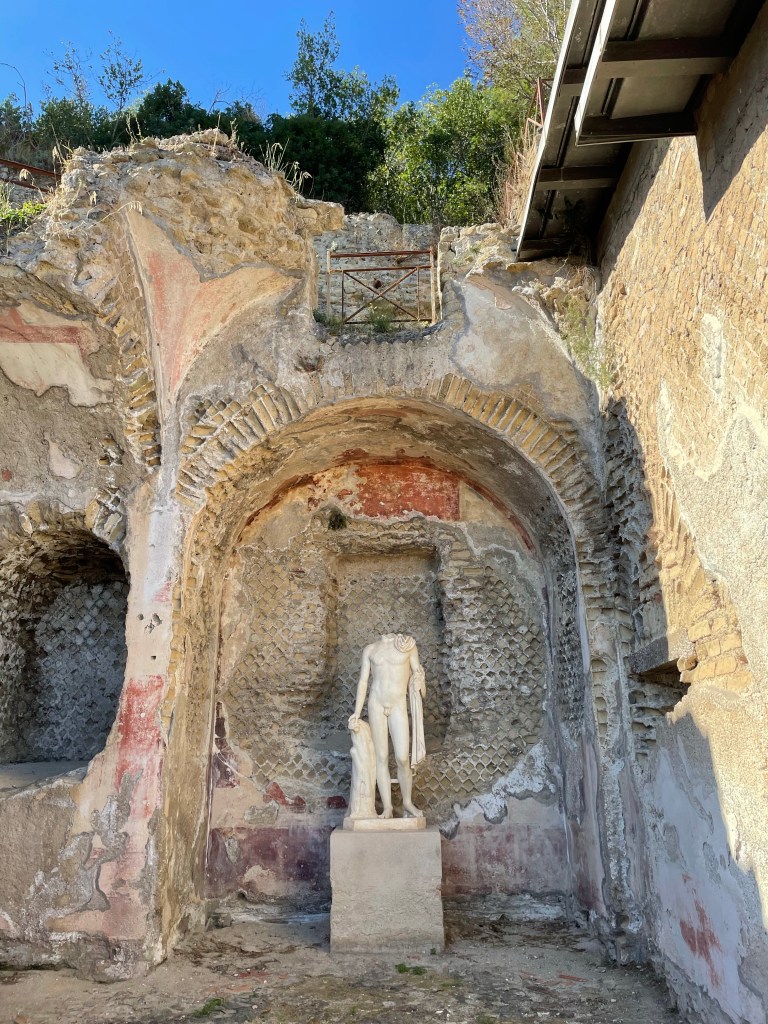
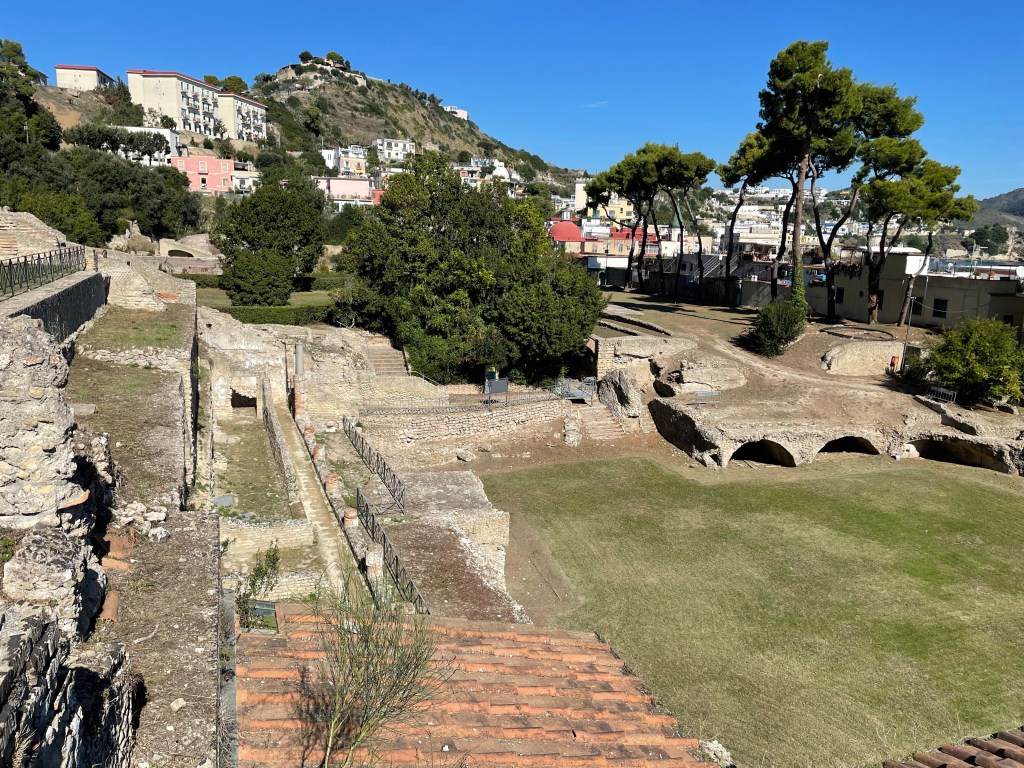
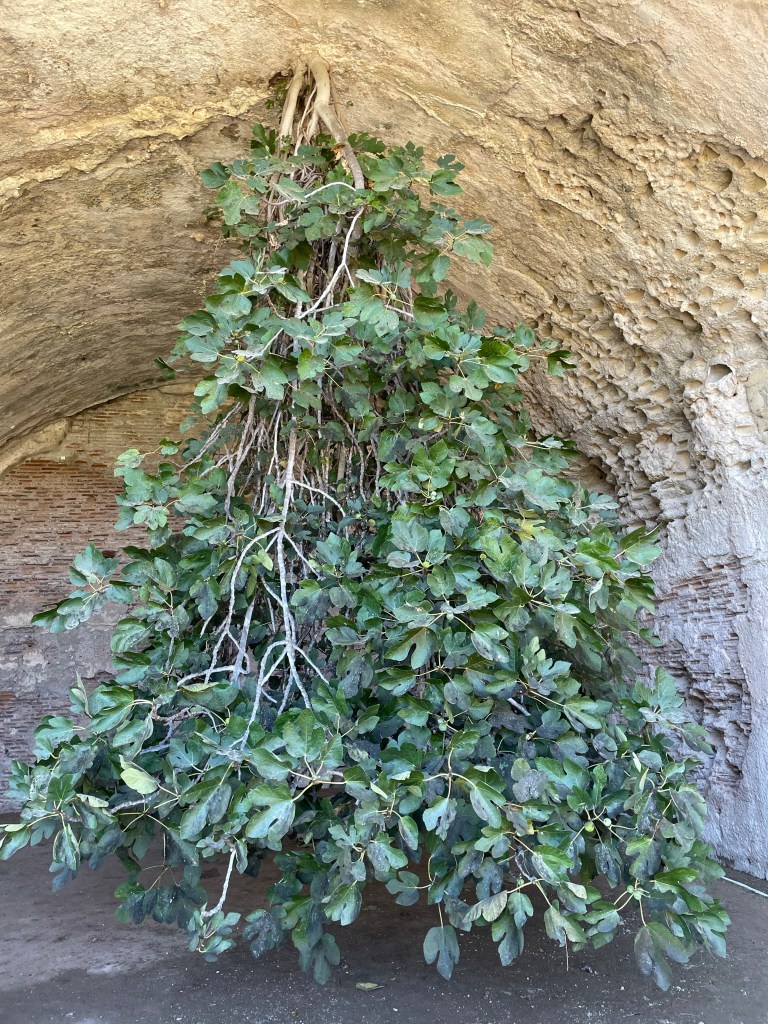
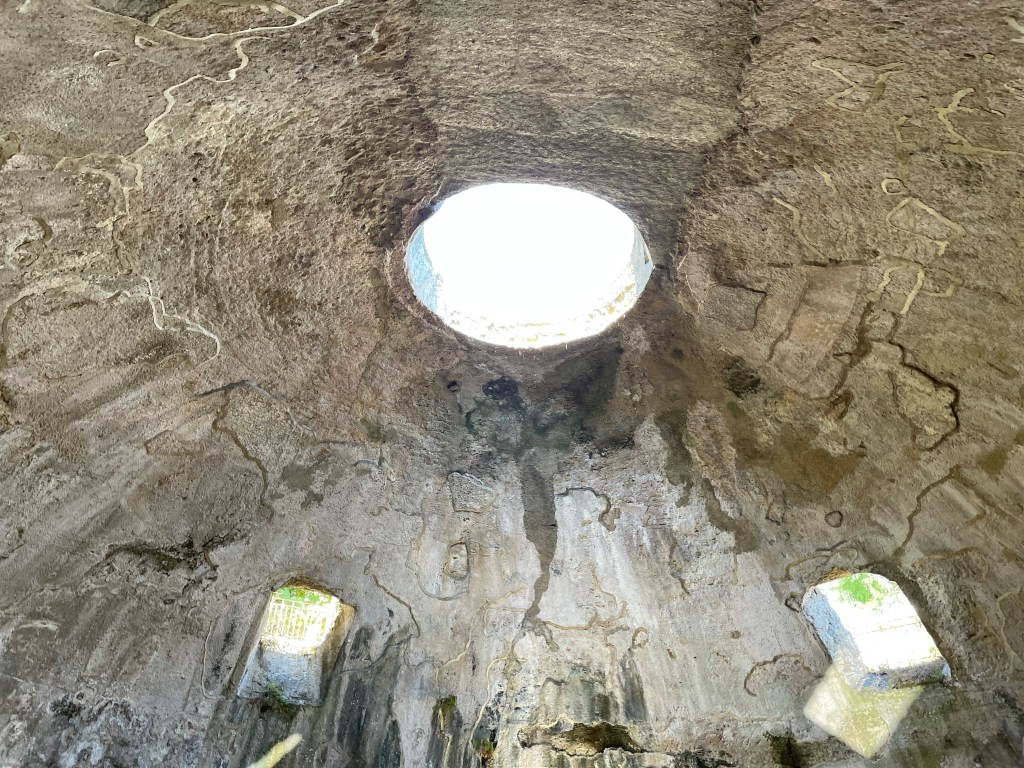
Close by, on the Bay of Baia, we move from the Greeks to the Romans as Roman spas and homes were built there in the 1st century AD. Among the most interesting things are the upside down fig tree and a Parthenon-like dome.

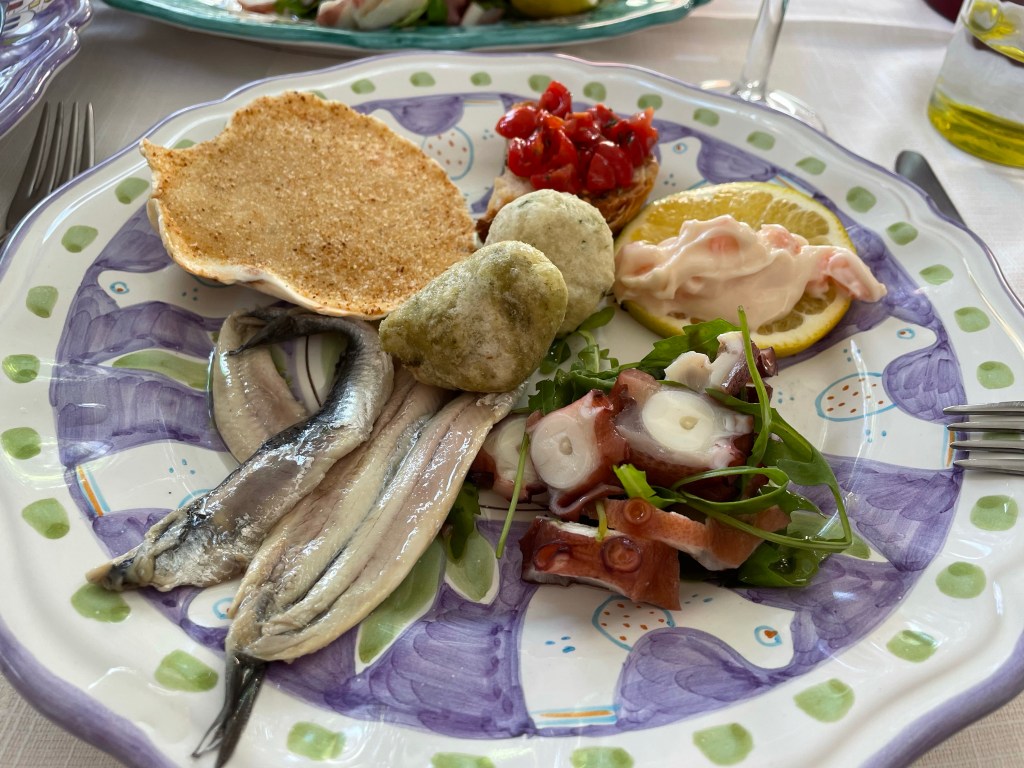
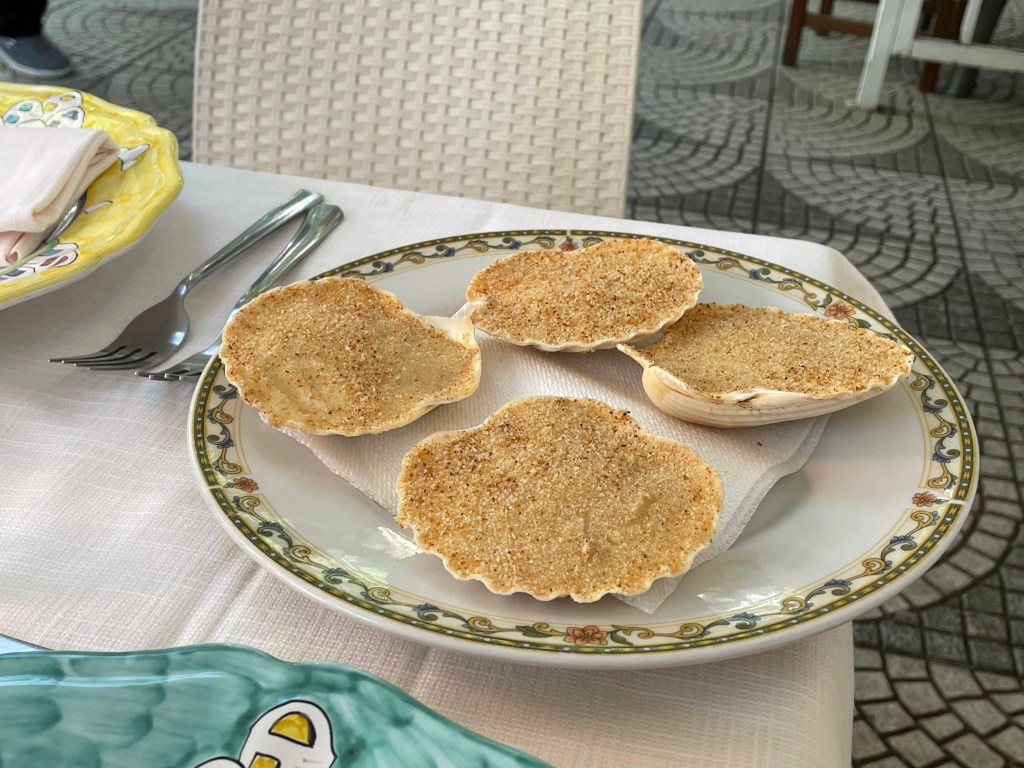
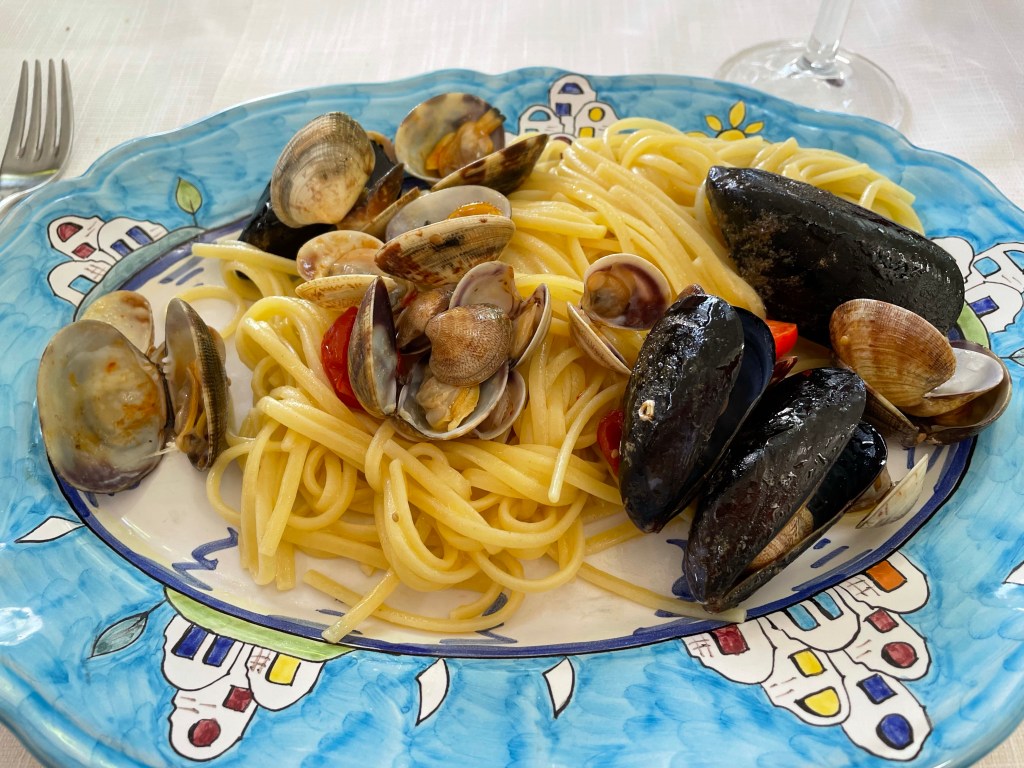
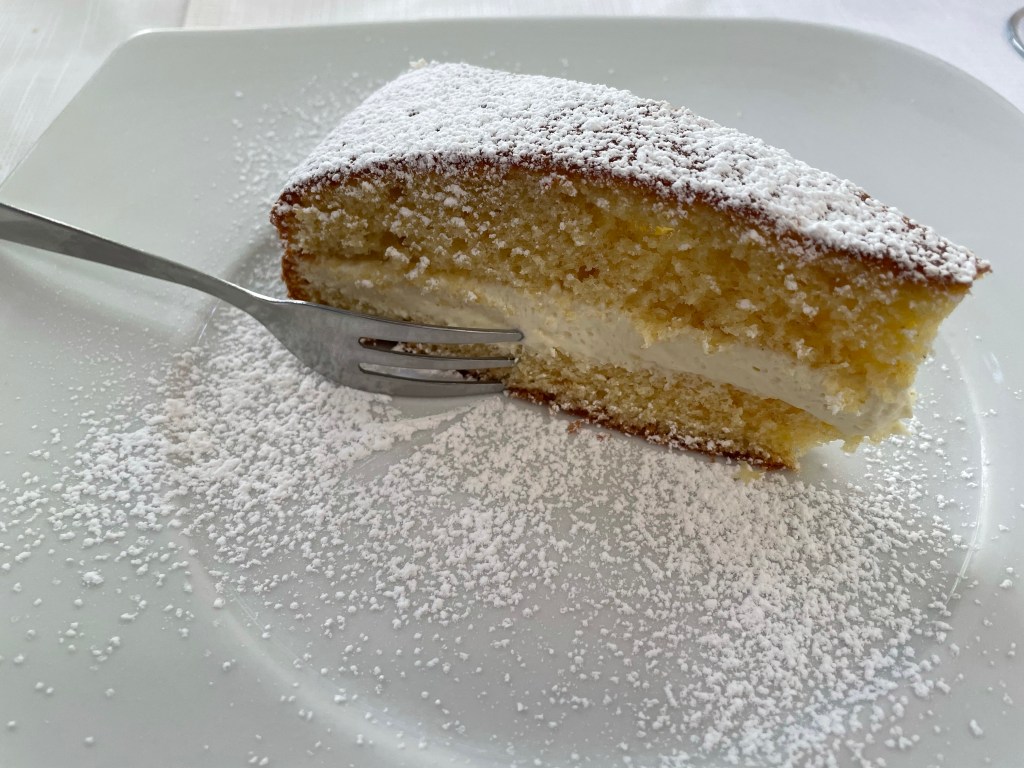
A seafood lunch was enjoyed at Taberna Martino in Bacioli, a nearby port town. We had a mixture of seafood antipasti and spaghetti with seafood. Dessert was lemon cake.

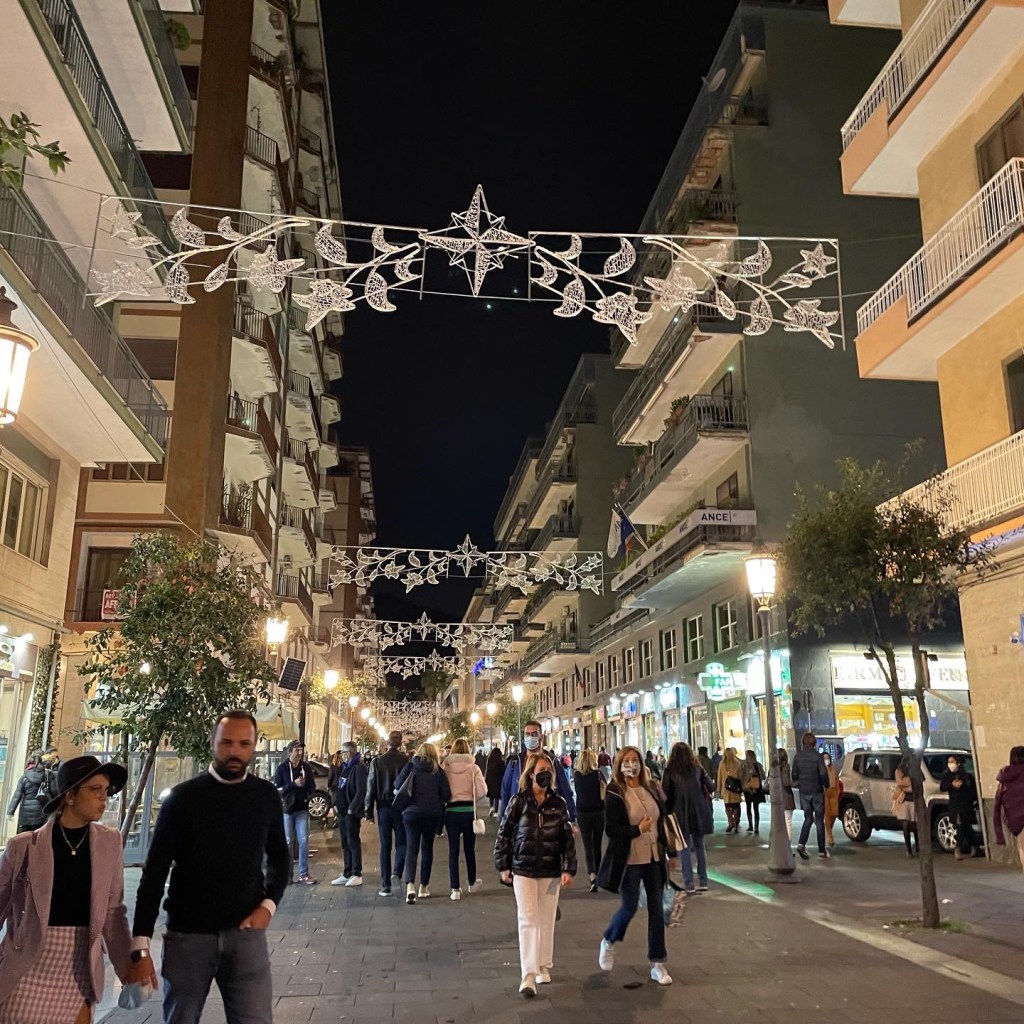
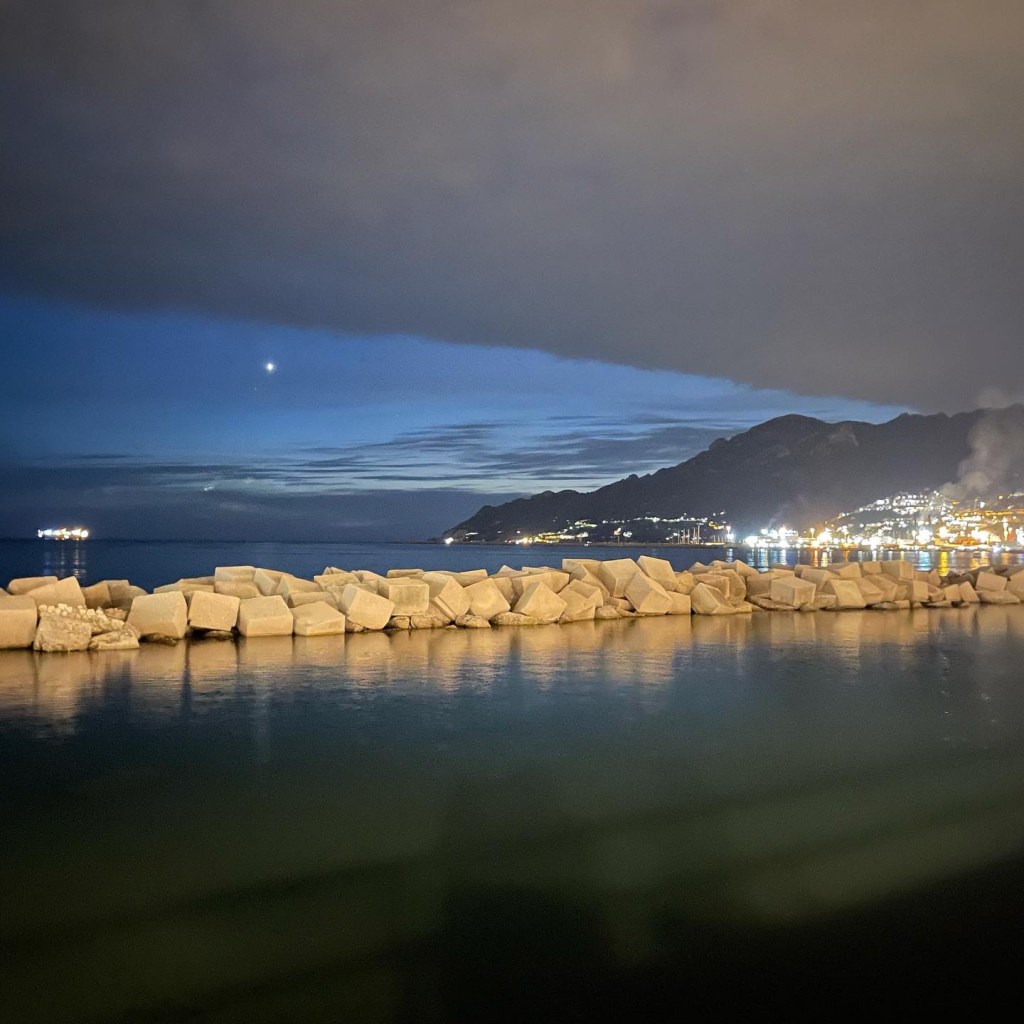
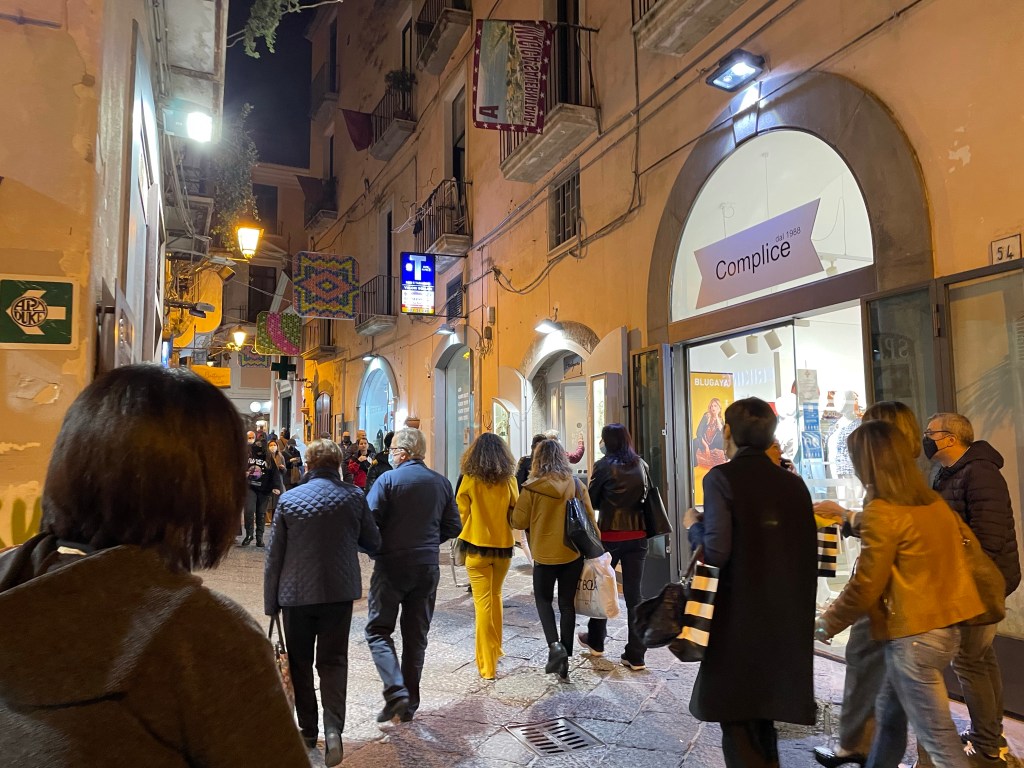
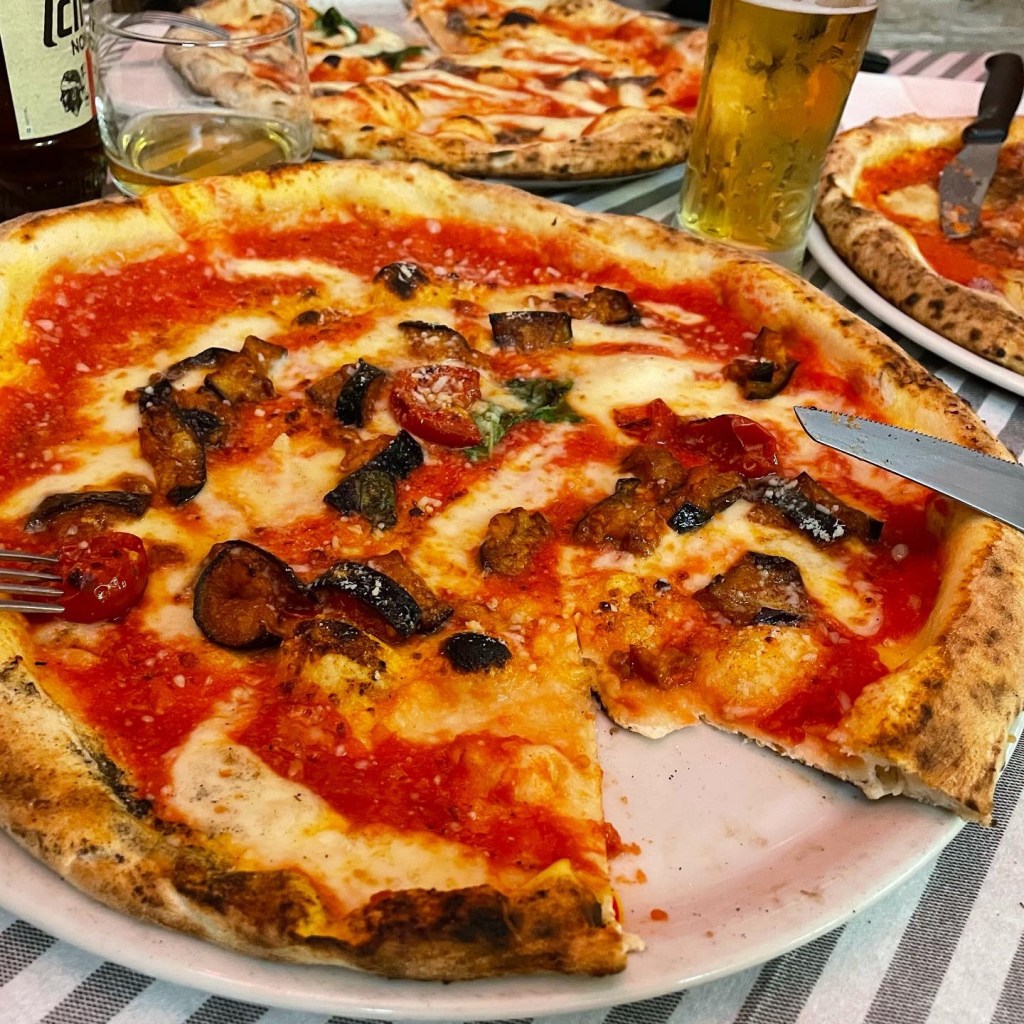
We returned to Naples by 4:30 but promptly left at 5 pm for the train station. We took the regional train south to Salerno, about 45 minutes away, to visit my Italian teacher. I had studied Italian for four weeks in 2018 and Pina was my tutor. We have since resumed lessons via Zoom and have become friends. After an evening stroll along the Lungomare Trieste and the centro storico, we dined on pizza and reminisced.

We returned to Naples three hours later, looking forward to spending more time in Salerno next year.

Under the shadow of Vesuvius

Because of high winds, the scheduled visit to the crater of Vesuvius was canceled. Tweaking the original schedule, the afternoon visit to Pompeii was shifted to the morning.

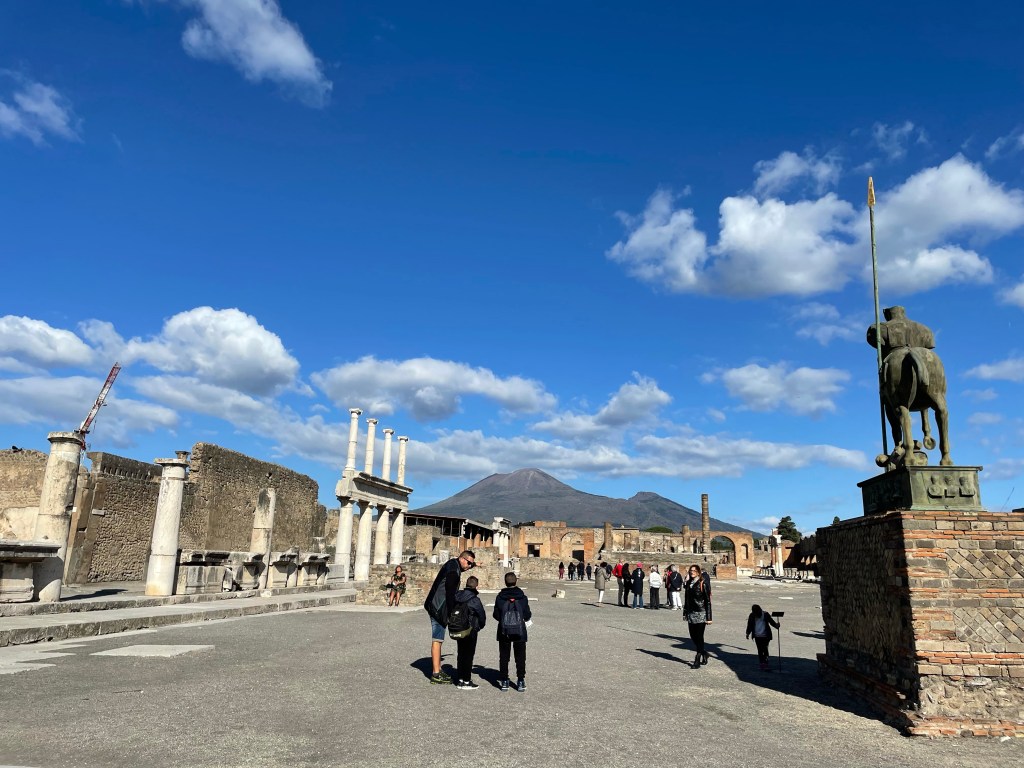
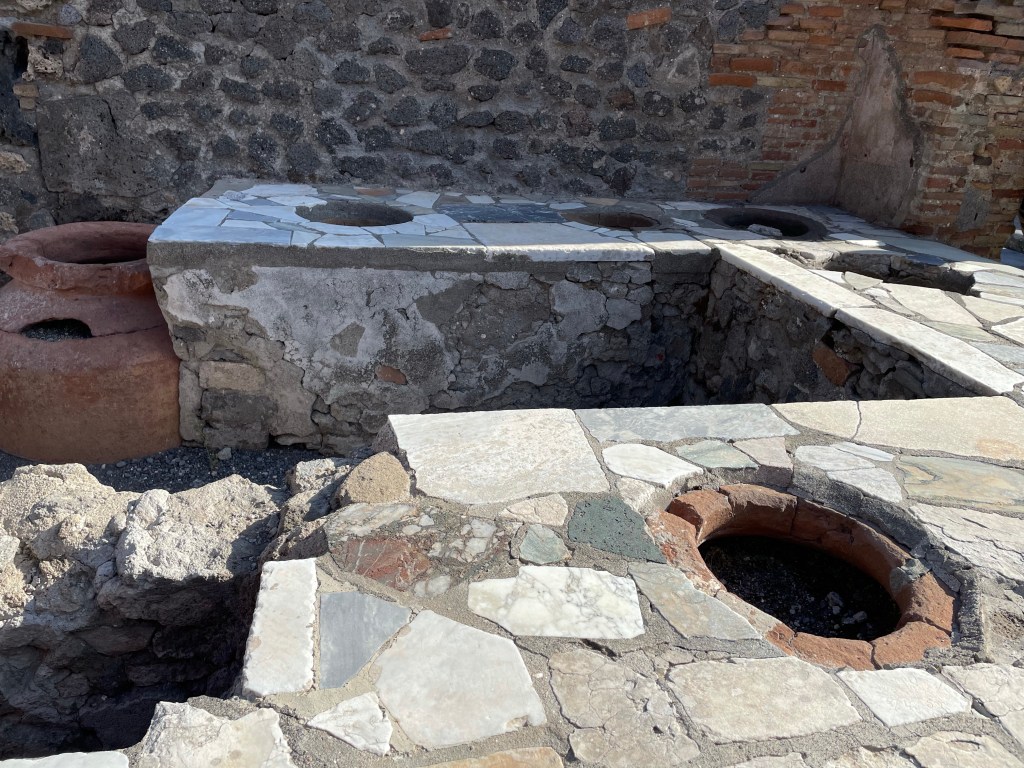
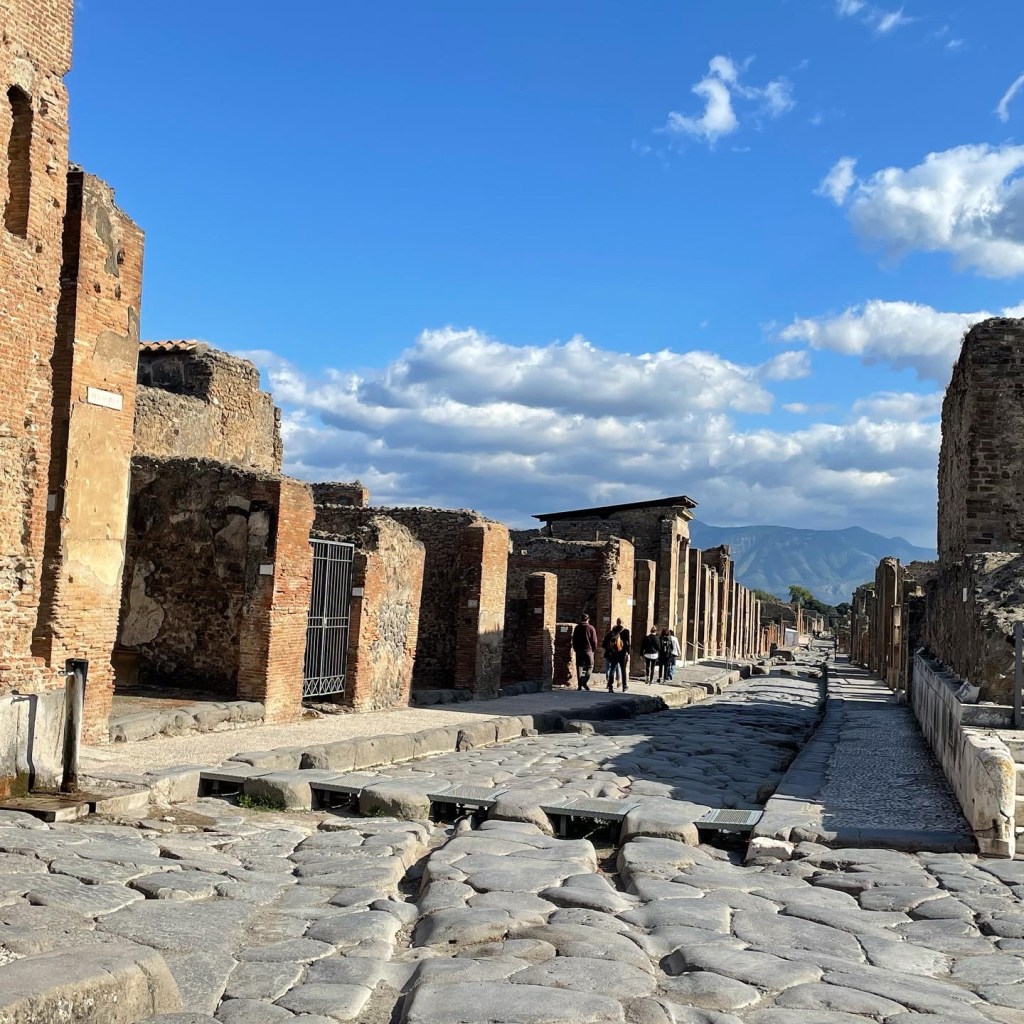
We were met by Gaetano, the third generation of his family to guide tourists through the ruins. The volume of tourists is noticeably less than in pre-COVID times and the weathers cool and breezy with brilliant sunshine. Gaetano is an energetic font of knowledge and brought to life the everyday workings of this seaport town that, pre-eruption in 79 AD, was a sort of Las Vegas of Ancient Rome. A spa (sanità per acqua) for men is located at the entrance to the city. The roads, bottom portion of the houses, frescoes and mosaic floors are quite well preserved as it was covered in ash for 1800 years. Of note is the predominance of phallic symbols (to ward off bad luck) and wind “bars” at intersections of streets.

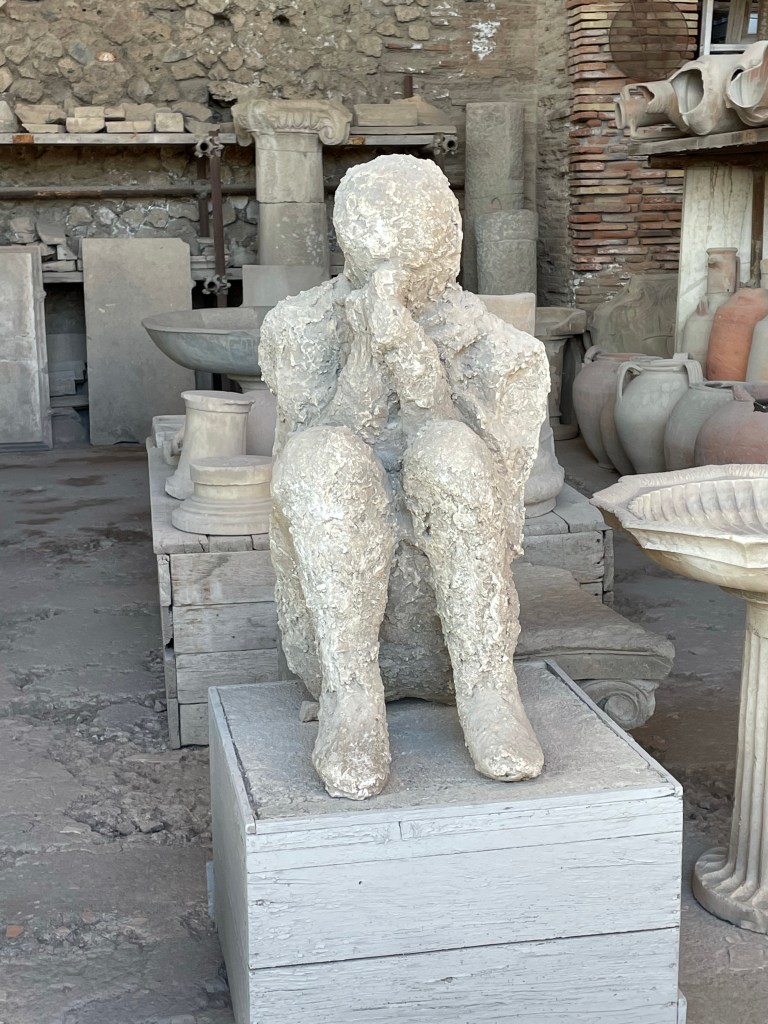
Plaster cast of victim
Phallic imagery
Wine bar

The inhabitants had a sophisticated system of water delivery using water tanks, aqueducts and lead pipes, a sewer system, sidewalks and crosswalks.

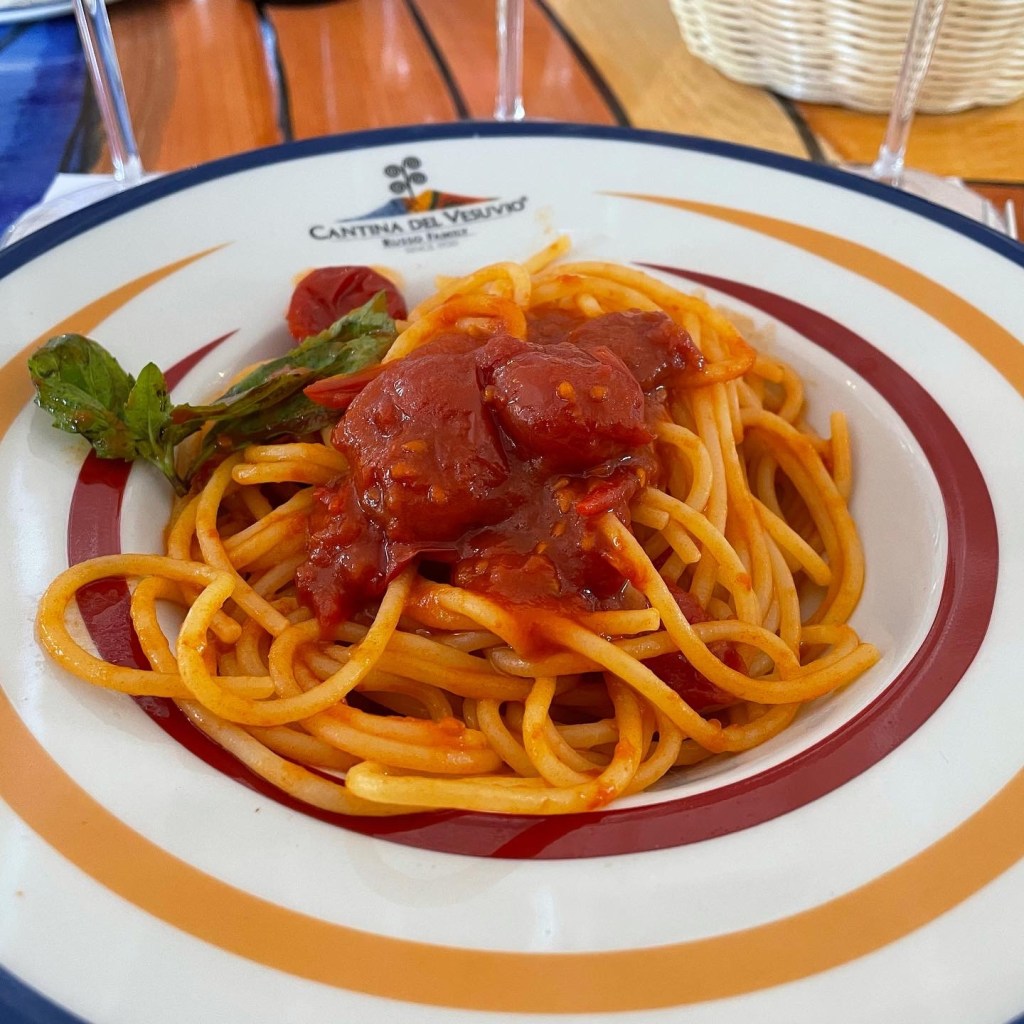
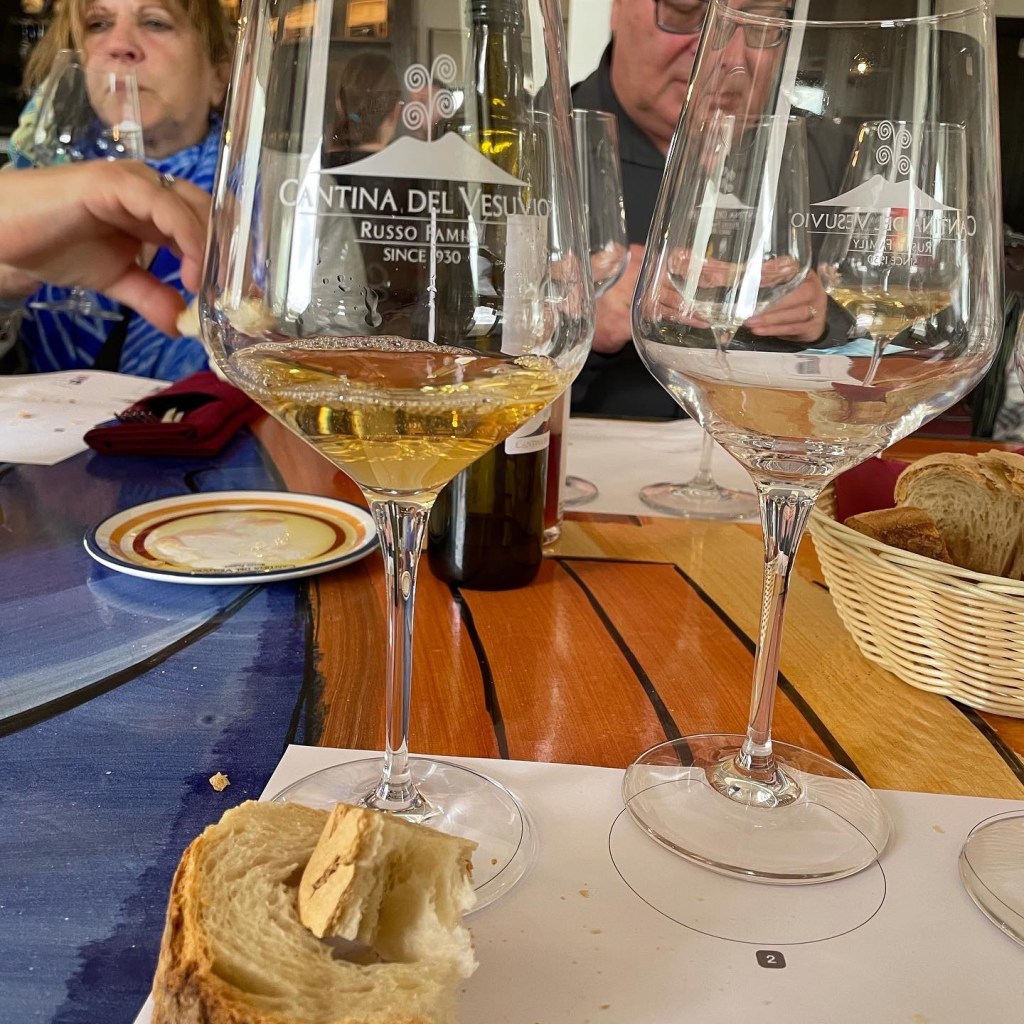
After the 2.5 hour tour, we went to the lower slopes of Vesuvius to visit the Cantina di Vesuvius, a biodynamic winer, to have a tour and wine tasting and lunch. The signature wind is Lacryma di Cristi (Tears of Christ), a dry white wine with an essence minerals.

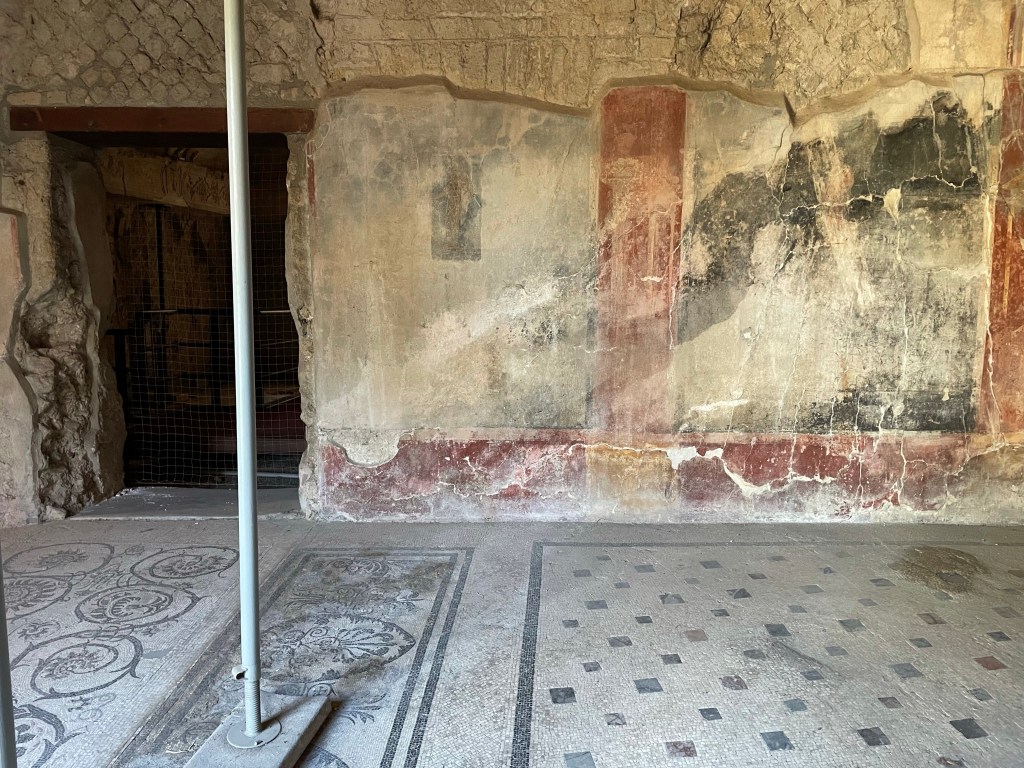
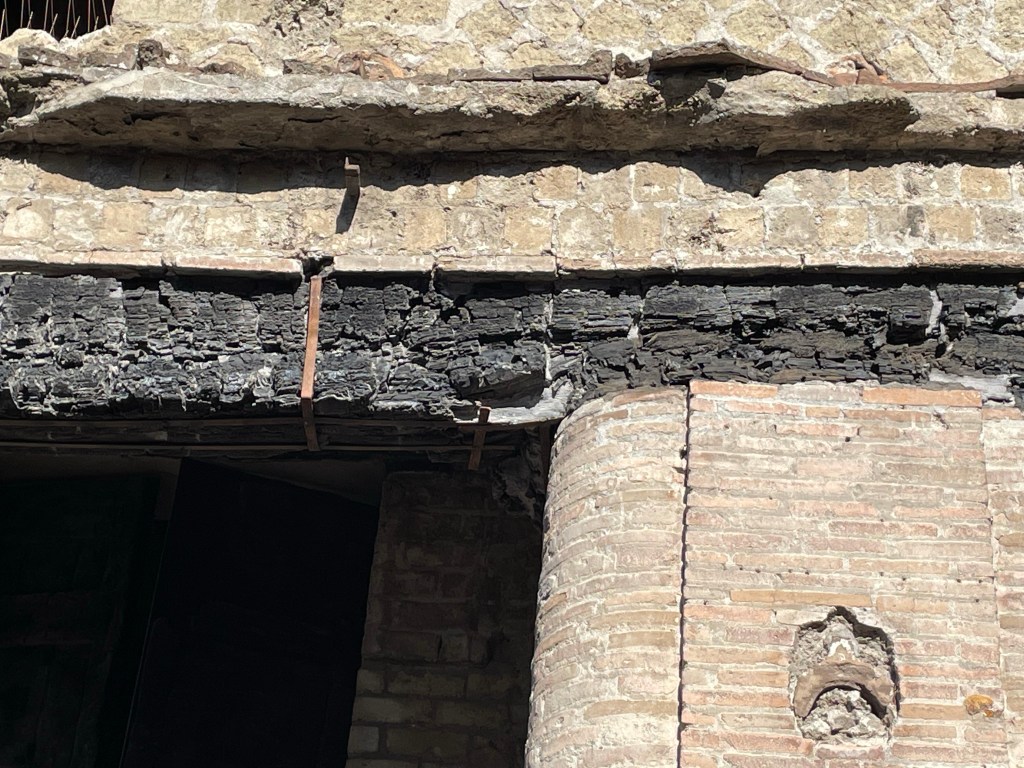
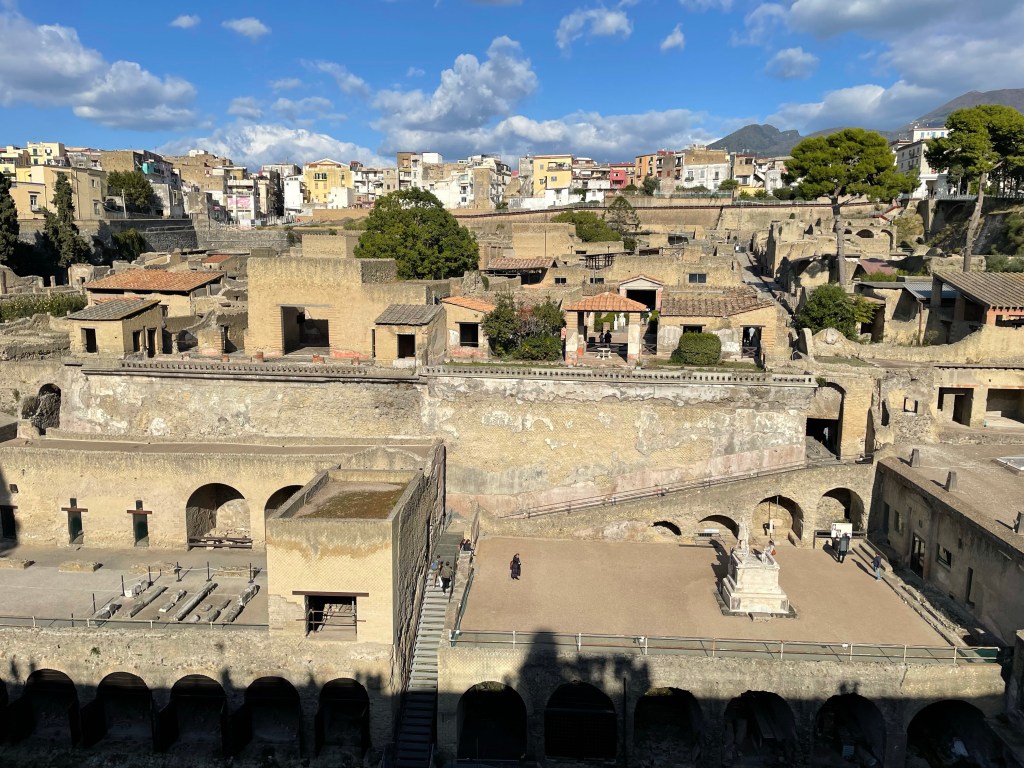
A brief stop at Ercolano (Herculaneum) ended the tour activities of the day. The town in found over 100 feet lower than the modern city. Instead of being covered in ash, the people were killed by high heat and gas. As a result, the second floors of the buildings are intact. The original wooden beams, though carbonized, still can be seen.

The evening was free so we enjoyed spritz o’clock, sampled a sfogliatella riccia at Caffè Gambrinus, joined in the passeggiata, and strolled the lungomare.

Kings and Gladiators

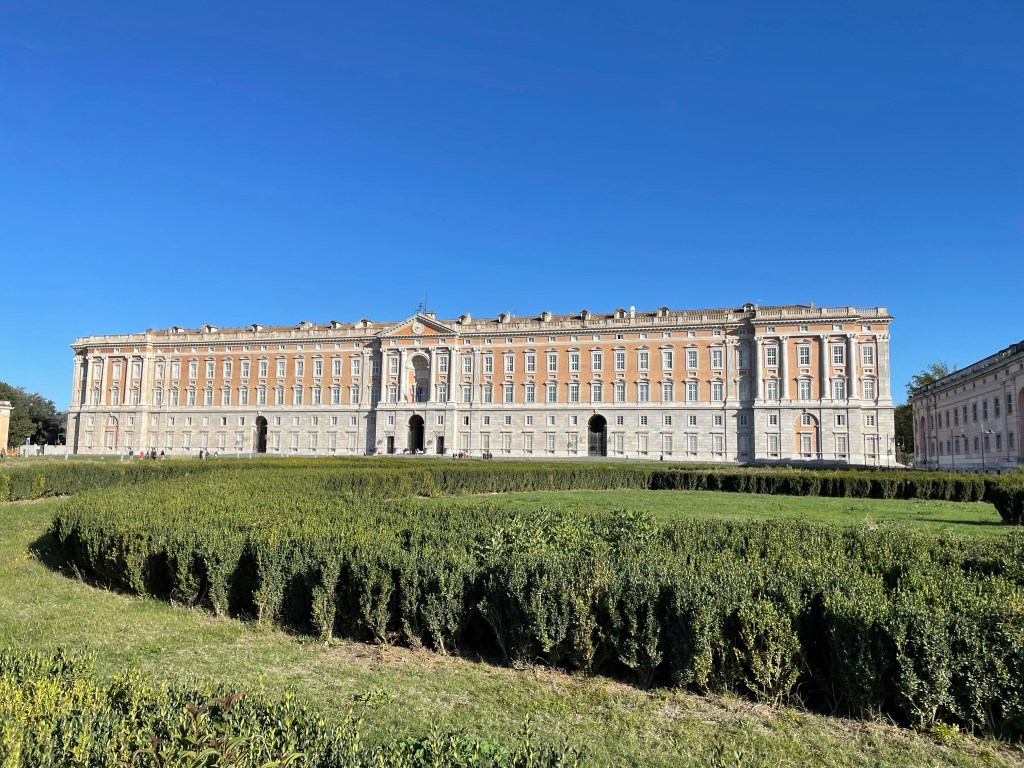
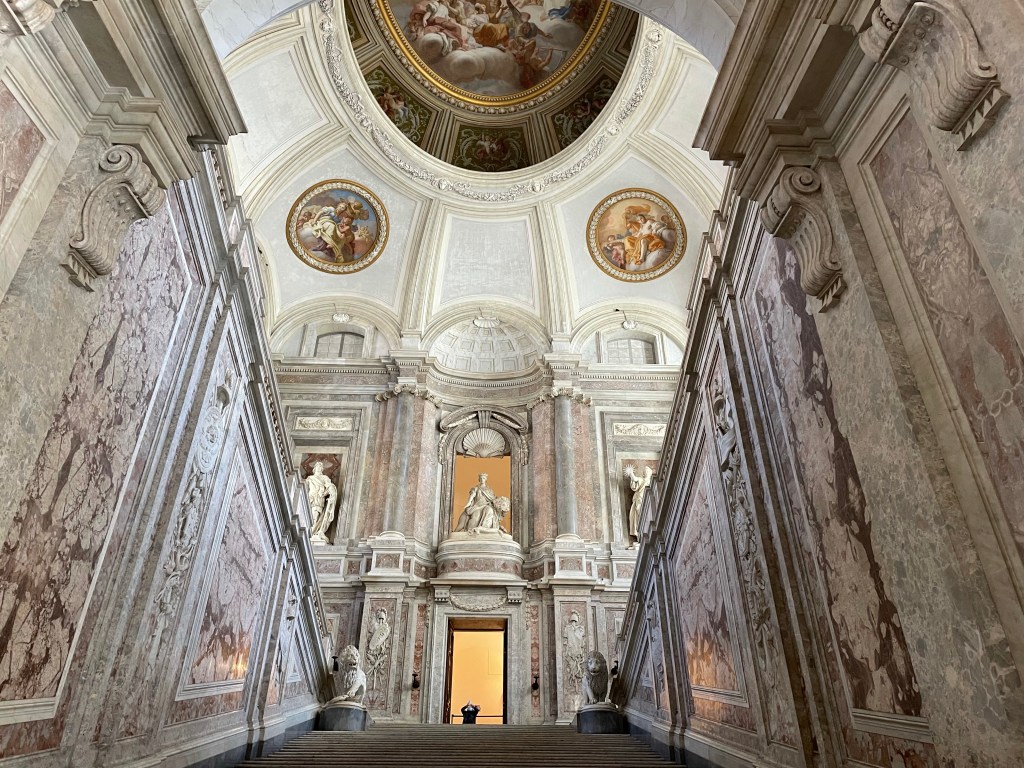
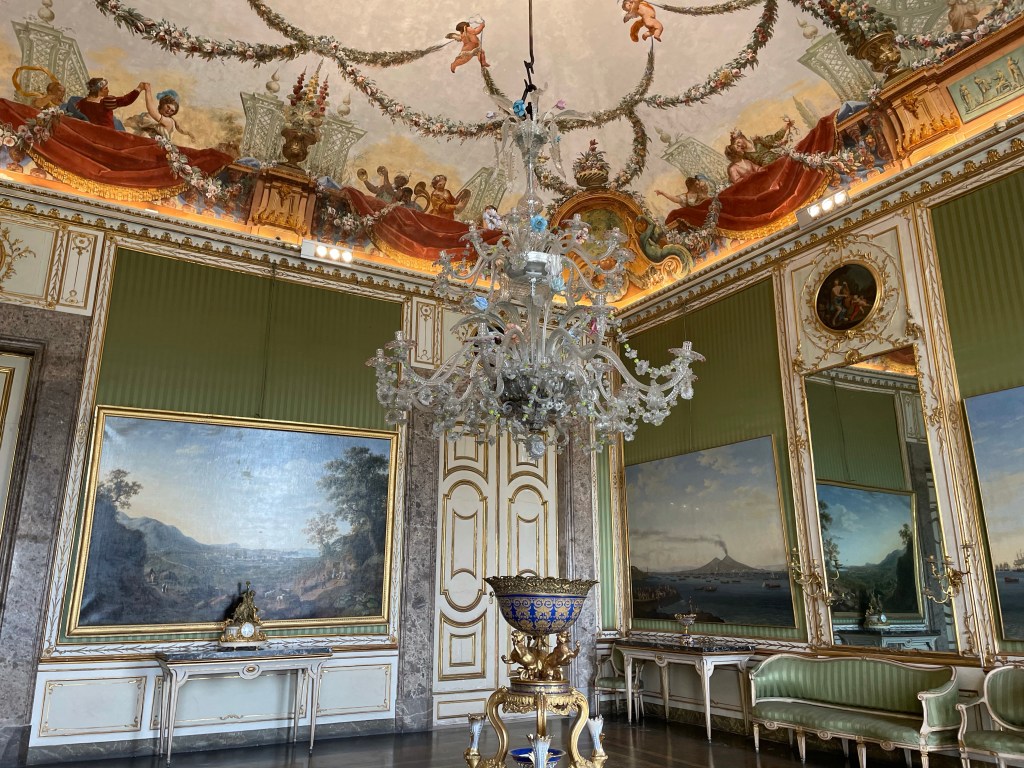
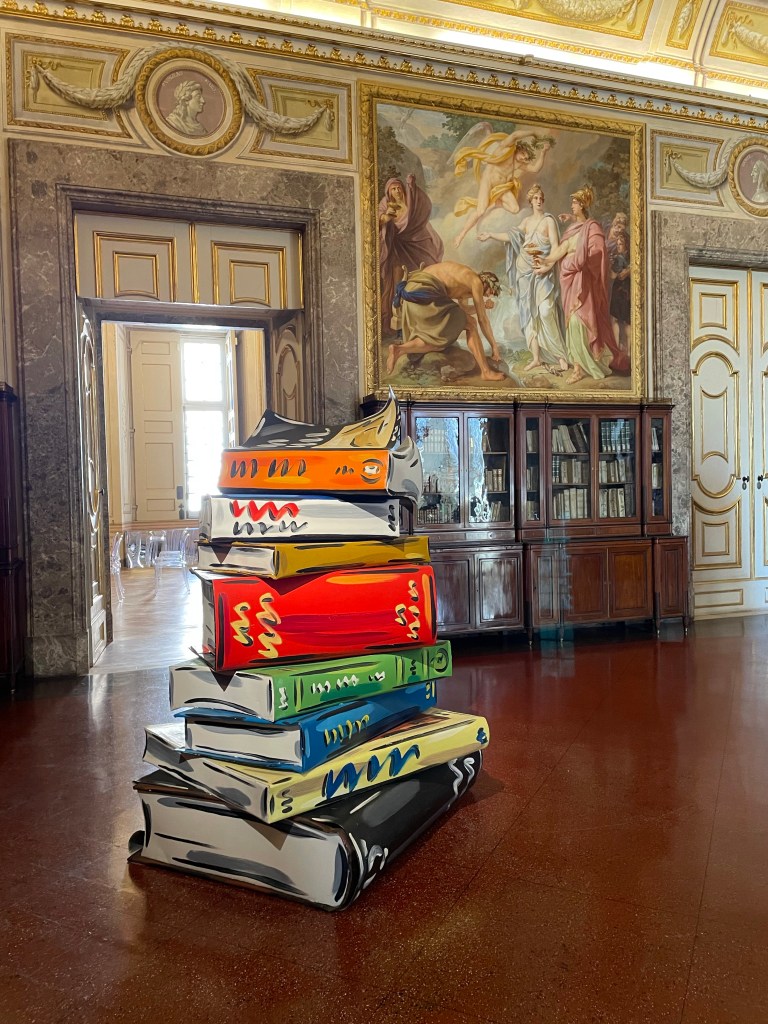
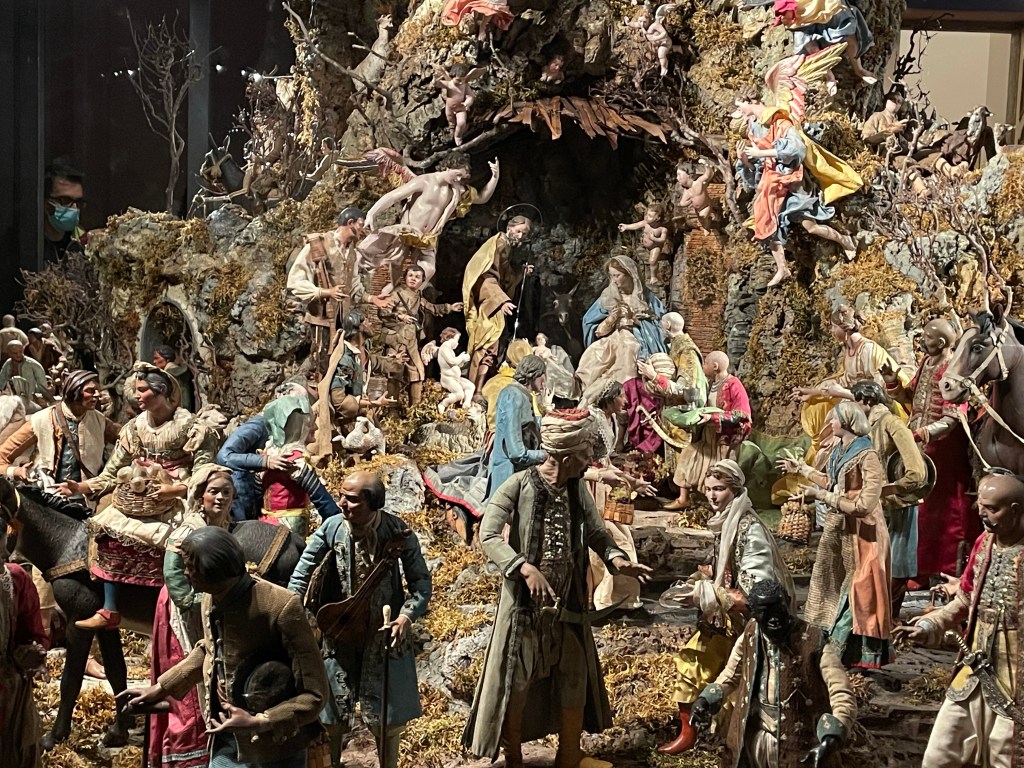
About a 45 minute drive northeast of Naples, in the city of Caserta, a palace rivaling the magnificence of Versailles was constructed in the mid 1750s by King Carlo, the ruler of the King of Naples. He left it to his 8-year-old son, Ferdinand, in 1759 when Carlo returned to Spain to take over its rule. Ferdinand ironically was married to Maria Carolina, the sister of Marie Antoinette, who lived in her own palace of Versailles. The 1800 room home of this ruler of the Spanish House of Borbone (Bourbon) contains elaborately decorated ceilings and walls, chandeliers from Venice, not much furniture and a a massive preseppi (Nativity scene) as well as a contemporary art exhibit with theme of terremoto (earthquake) that damaged the area in 1980. Ferdinand, who despite his Spanish heritage, was a true Neapolitan who spoke only the local dialect and no Spanish. He and his wife pretty much despised each other despite producing 11 heirs! She was cultured, attractive, well read and followed freemasonry, unlike her lanky and quite unattractive husband, who was known as il nasone (big nose).

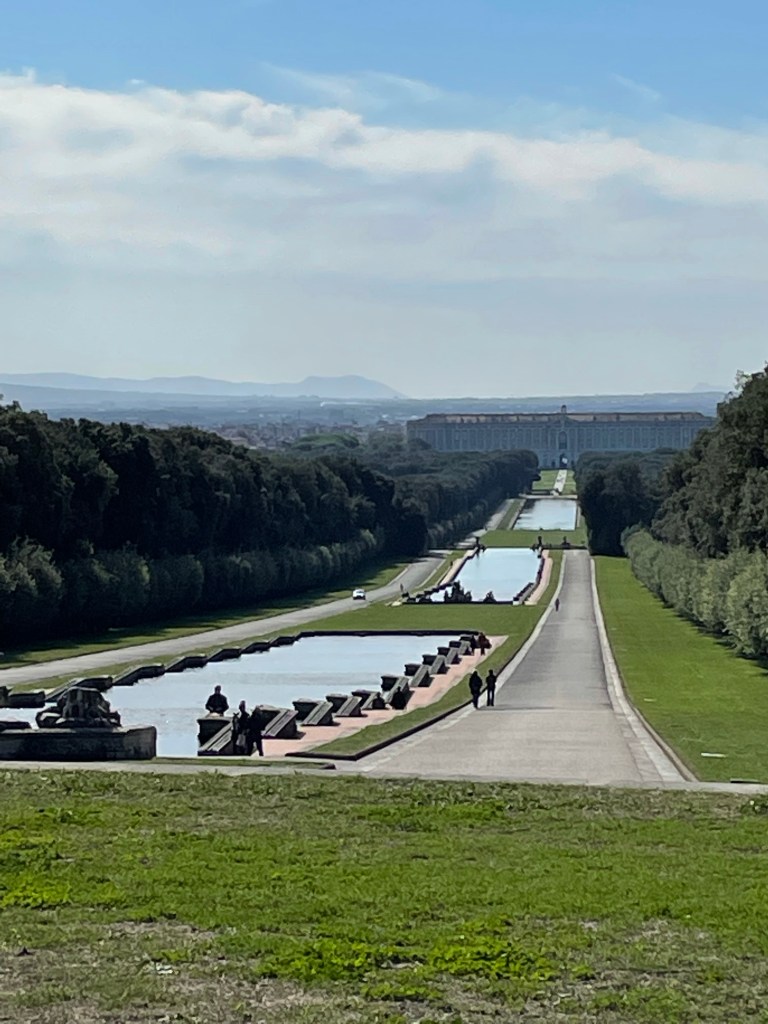
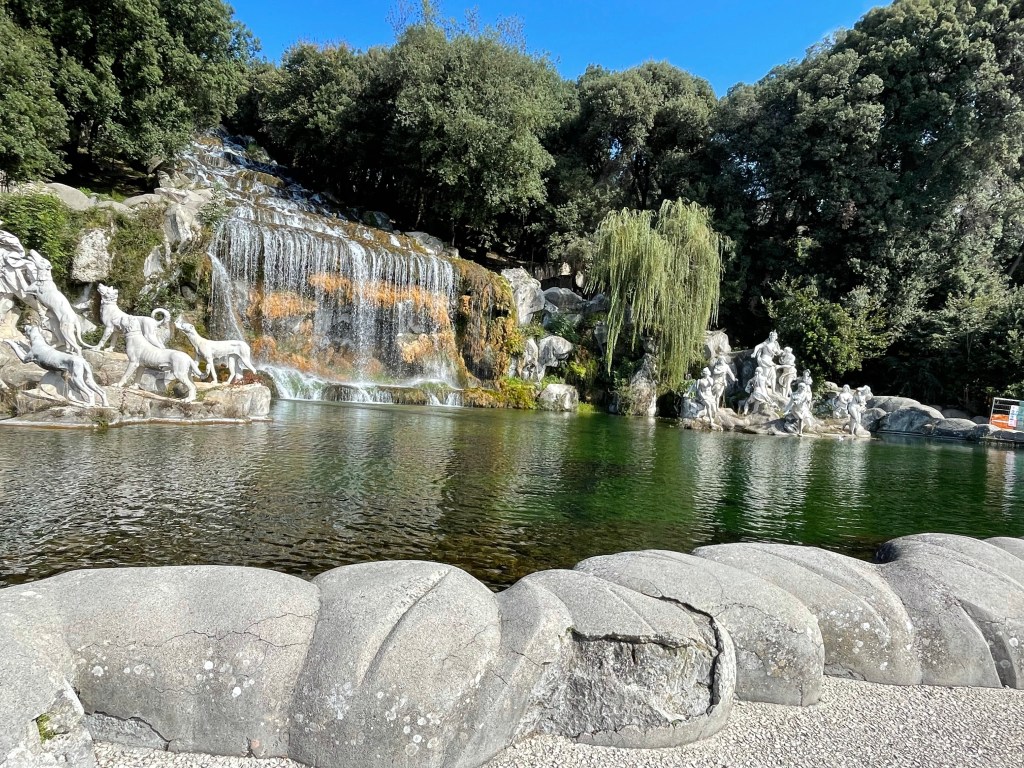
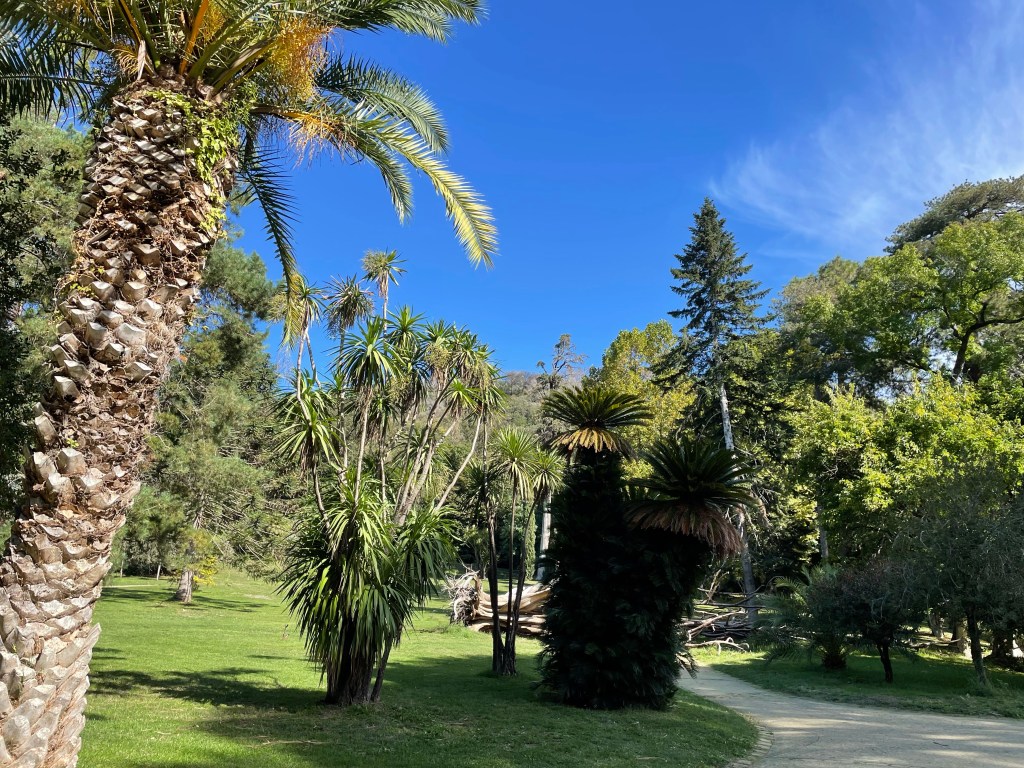
The grounds are stunning and massive, with a 3km long Italian style garden in the rear of the palace that contains many reflecting pools and fountains. Maria Carolina was instrumental in establishing an English style garden, probably to distance herself from her unbeloved husband.

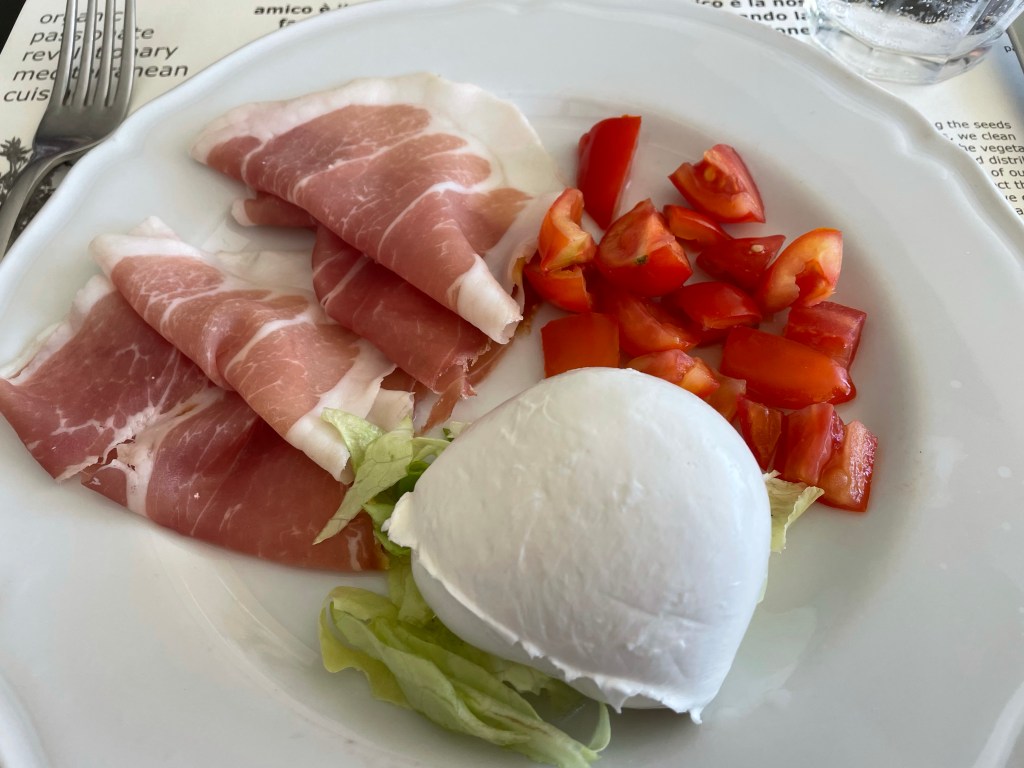
Because of the wind, a stroll of this garden was nixed and we proceeded to lunch at Santa Maria Capua Vetere at a biodynamic (organic) restaurant near the ancient Roman arena.

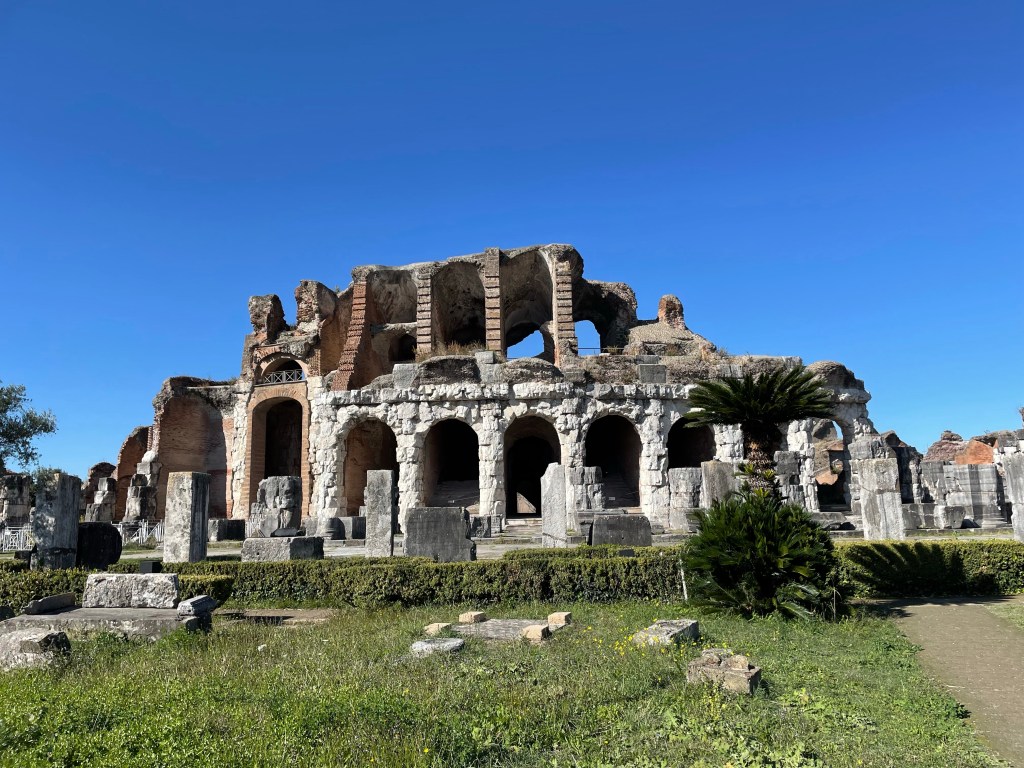
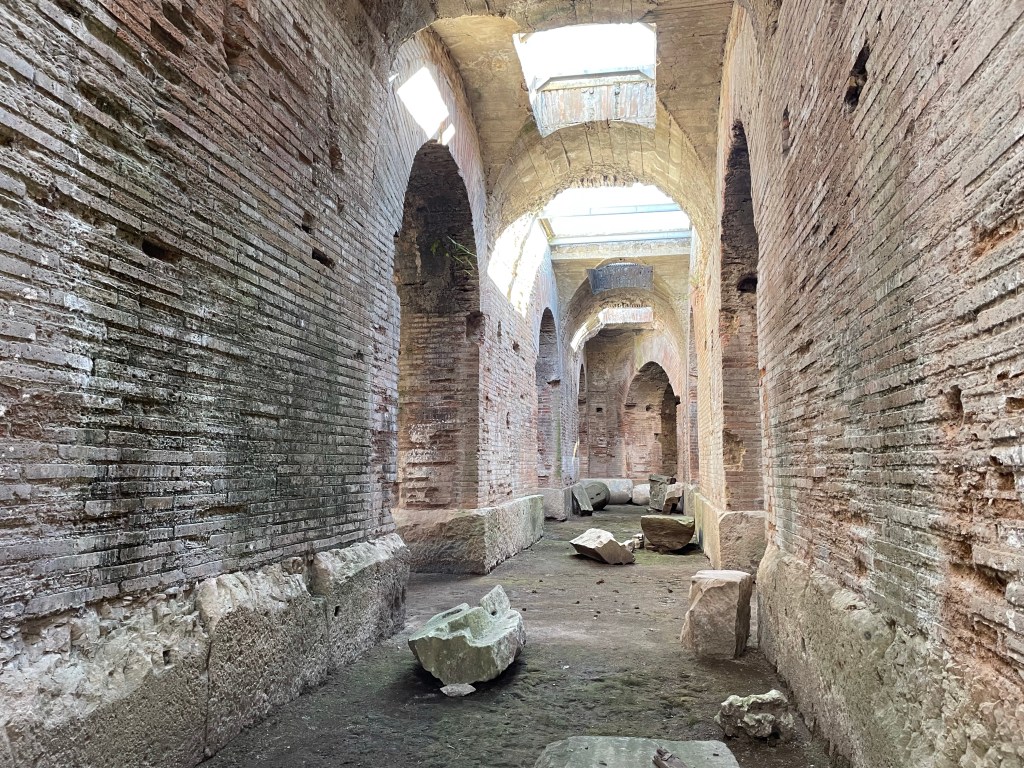
The arena was built in the 1st C AD and is second in size only to the Roman Colosseum. It was used as a training site for gladiators and was thought to be the site of the battle between Spartacus and the Roman army.

Unfortunately, most of the marble facade as well as the seats are missing. But one can explore the bowels of the arena without bumping into anyone else. Although this was such an important arena for gladiator games, it is not on the radar of guidebooks of Italy so it is blissfully free if tourists.

We made a quick stop in the town of Capua, but as it was time of the pausa (siesta), all the shops were closed. A new cathedral replaced the original that was destroyed by bombs in WW2.