This morning I finally got to meet Anna Piperato in person. I’ve been following her livestreams on Facebook and subscribed to many of her online Zoom art lectures and livestream walking tours of Siena and some of the surrounding Tuscan towns. When I decided to add a few days in Tuscany to our itinerary, I emailed her to see if she was available for a private tour. So, we will spend an entire day in Siena with her today and a day in Firenze on Thursday.
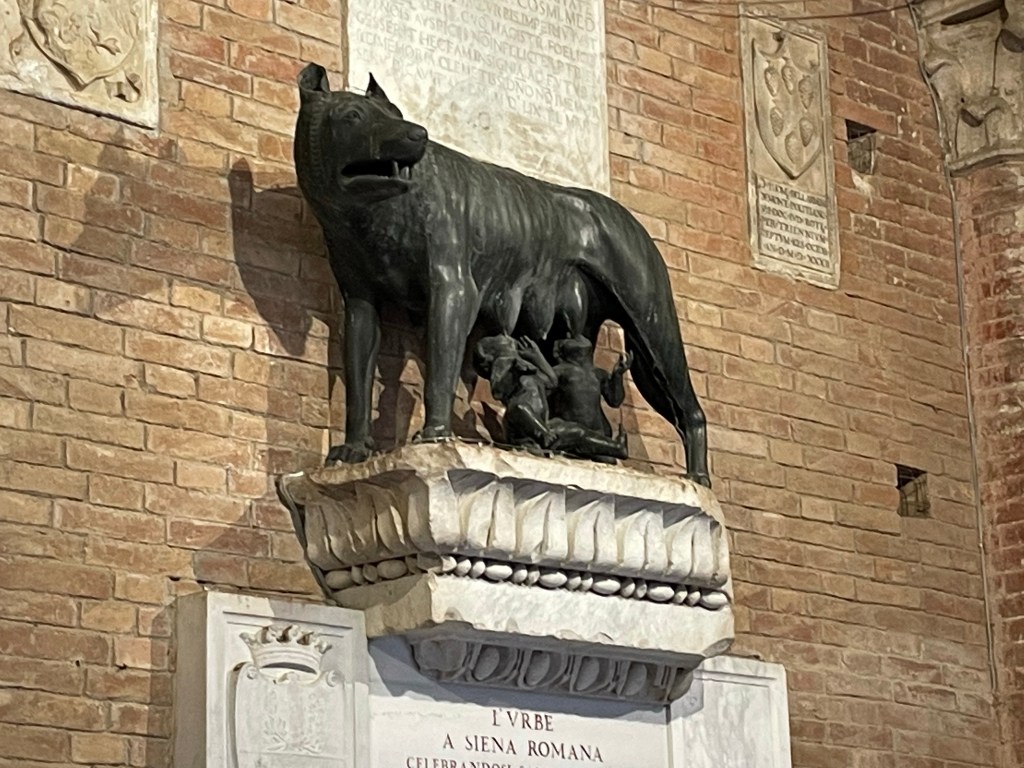
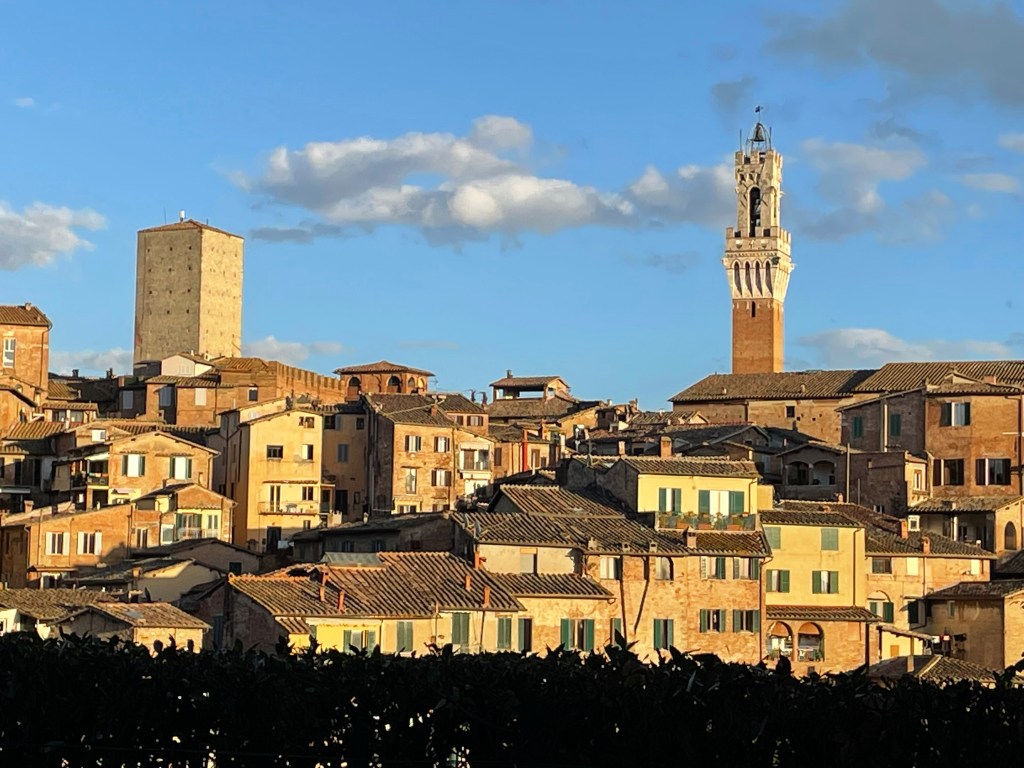
We started with a tour of the Chiocciola (snail) contrada, located near our hotel. Siena is divided into 17 contrada, each with a mascot (e.g. she-wolf/lupa, wave and dolphin/l’onda, pantera/panther), a chapel, museum, social hall and meeting rooms. Each contrada sponsors a horse in the biannual Palio (July 2 and August 16), the longest continually running race (over 500 years except for WW2 and COVID-19). For each date 10 contrade are chosen for the first date and on the second date, the 7 contrade not chosen for the first one are chosen to participate in the second race in addition to three randomly chosen contrade. The Palio (derived from premio or prize) is a unique silk banner designed by a different artist each year. There is a great traditional rivalry between some of the contrade.
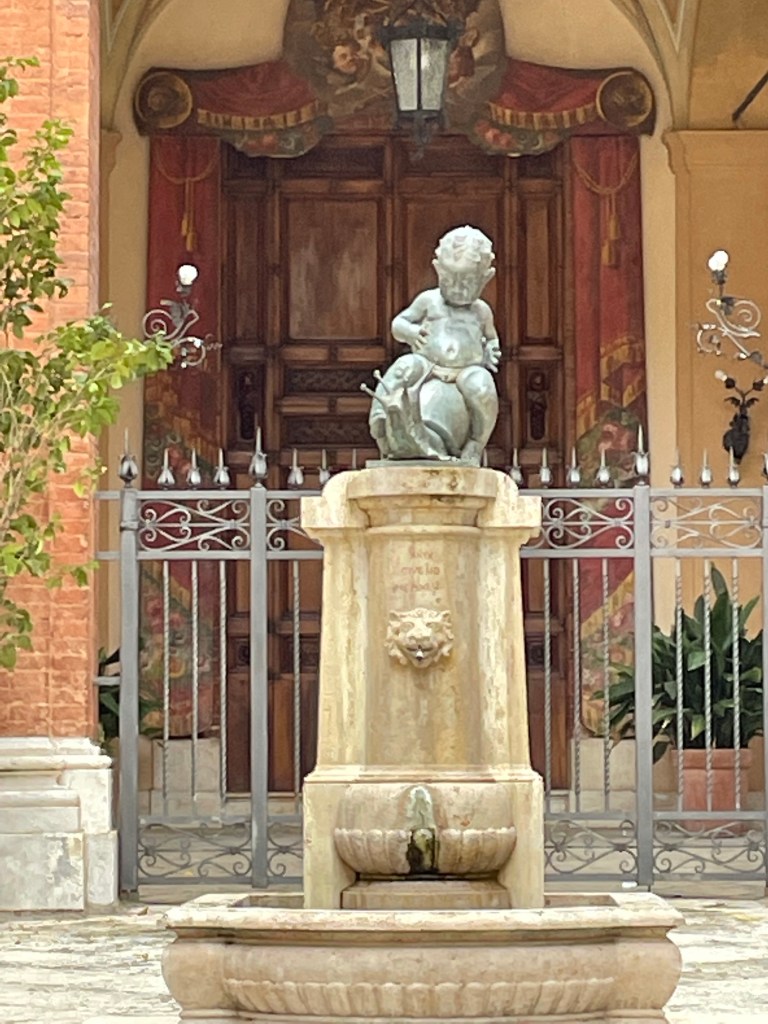
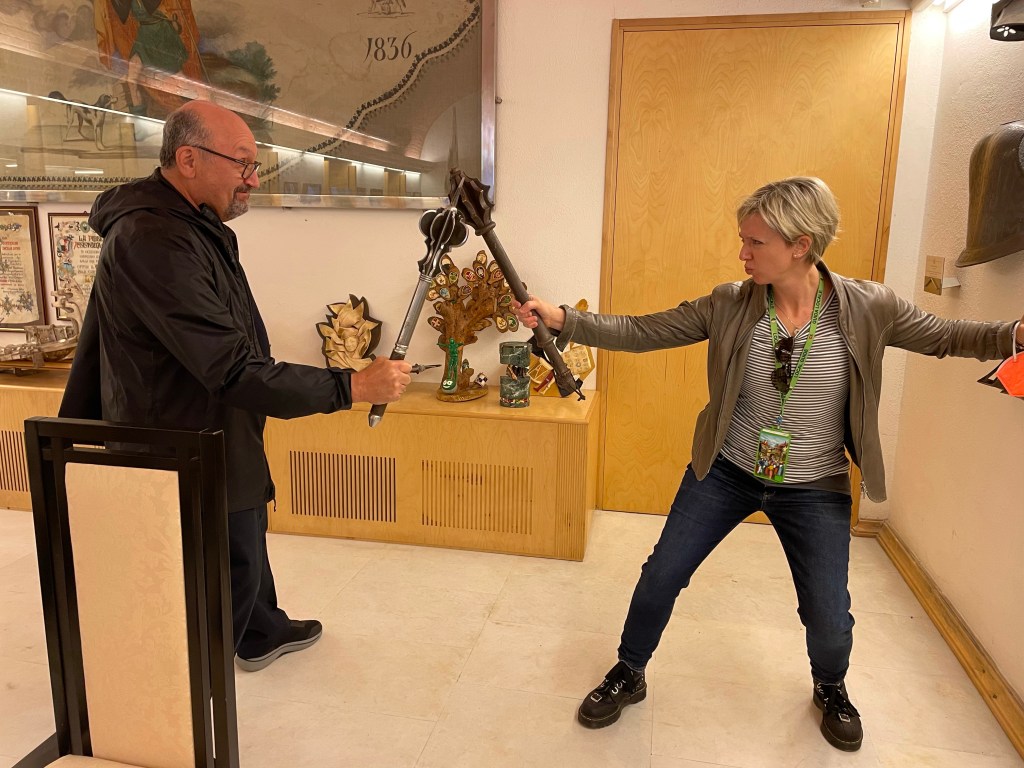
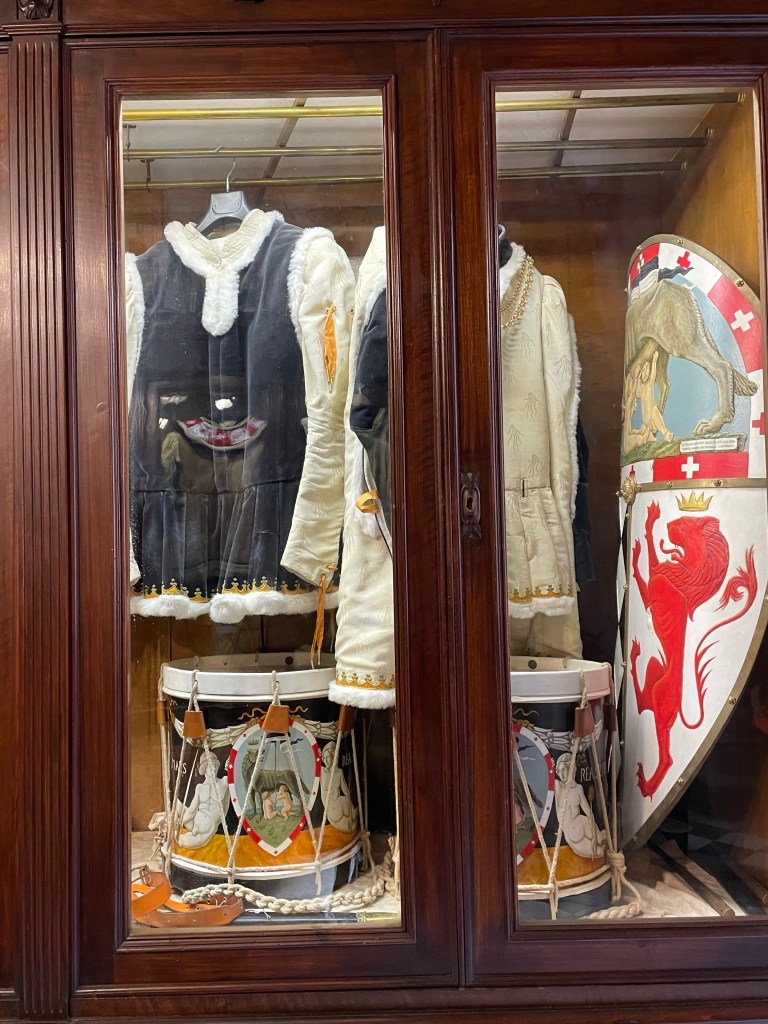
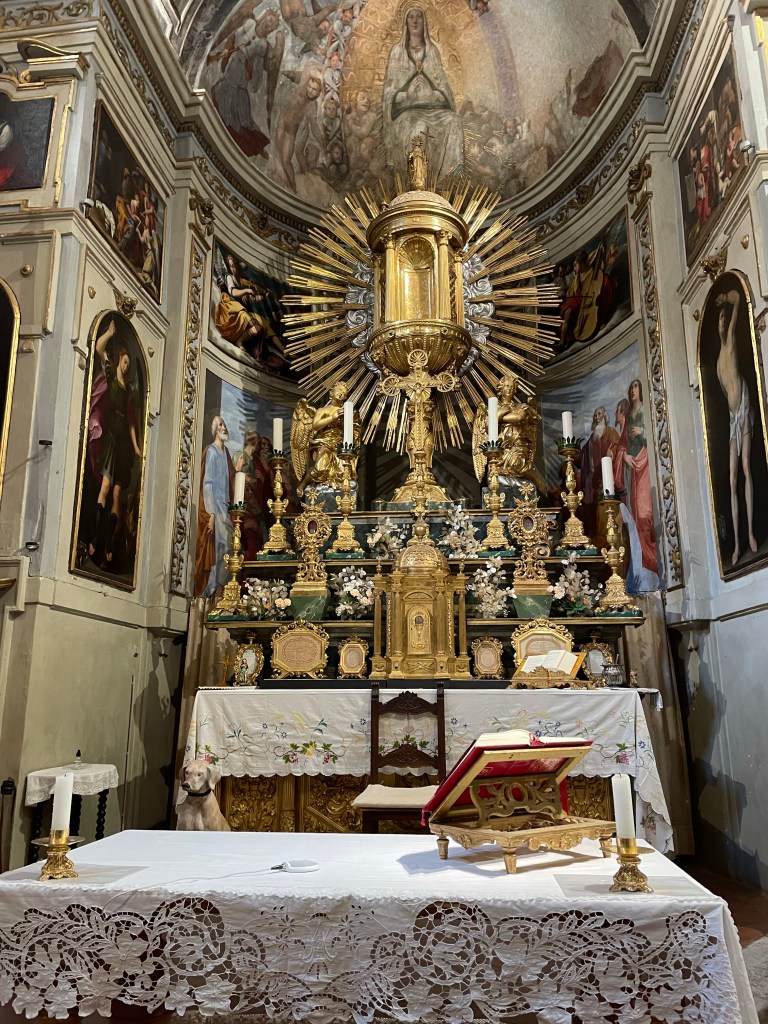
We were extremely lucky to have the opportunity to visit Anna’s contrada, the Lupa. It has an elaborately decorated consecrated chapel, a museum filled with costumes and banners, a formal meeting room, a room filled with Palio banners won over the centuries (it recently won back-to-back races in 2016 (a capotto) and a race in 2018).

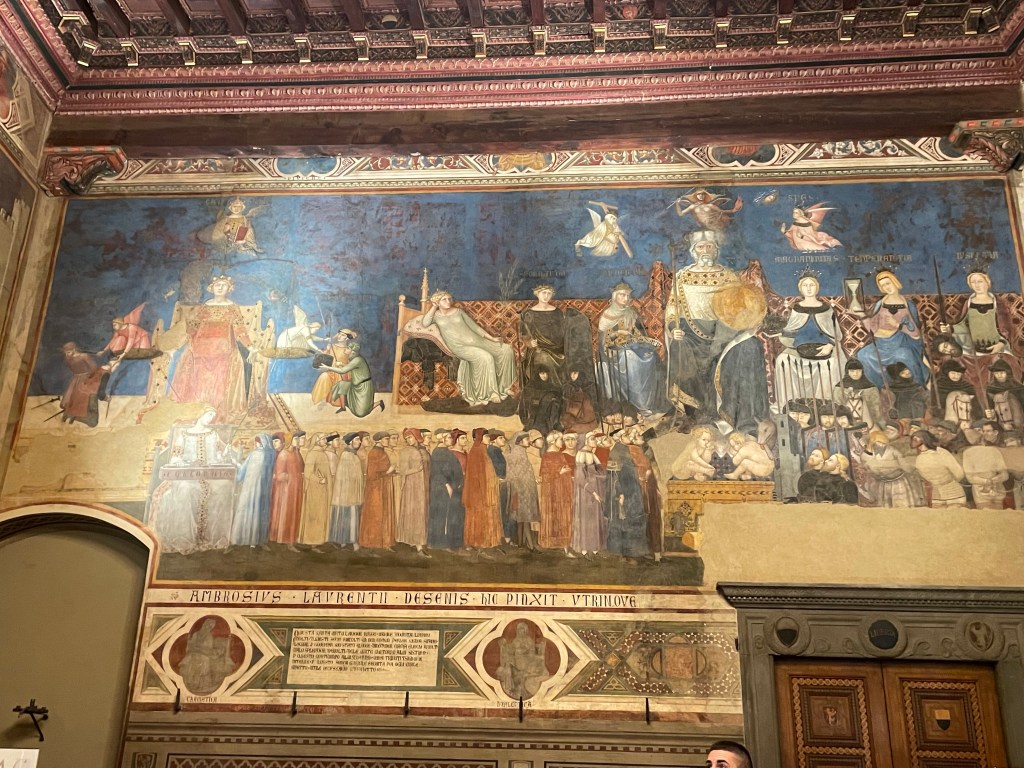
The Palazzo Pubblico, on the main piazza of Il Campo – not a town square but rather a pentagon- is the center of government, built in 1297, and it contains works by Simone Martini (Maestà) and the frescoes depicting good and bad government by Ambrogio Lorenzetti.

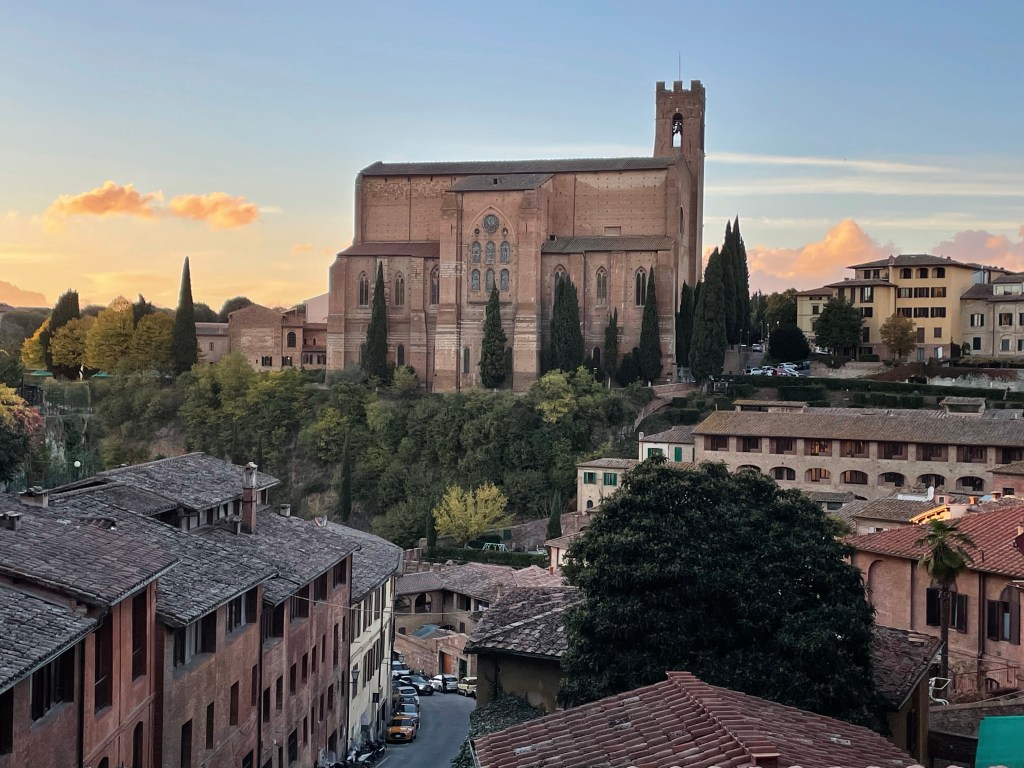
We also visited the church of San Domenico, an imposing structure, built in the first half of the 13th century by the mendicant Dominican order, with its modernist stained glass windows, vast empty interior and famous relics (right thumb and head) of St. Catherine of Siena, patron saint of Italy (but not Siena) and “doctor” of the church.

The house of St. Catherine is nearby but is a reconstructed building and a church completed centuries after her death.
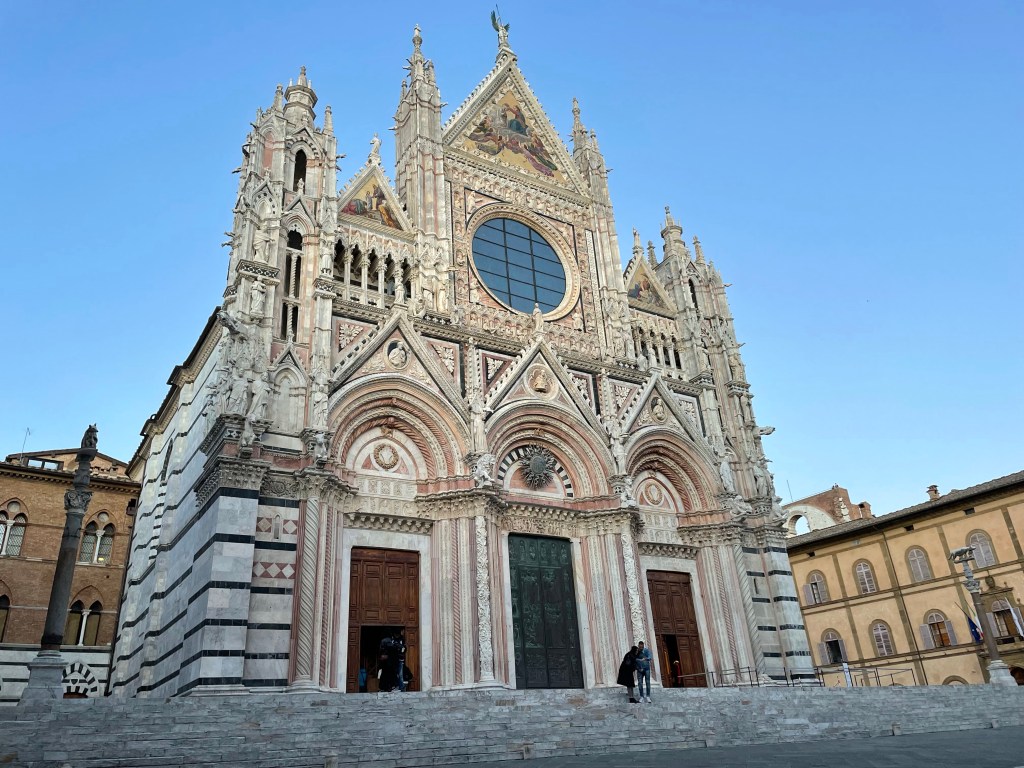
We finished the tour with a visit to the Duomo, which unfortunately was closing its doors for the day. We just got a quick glance inside before we were shooed off.
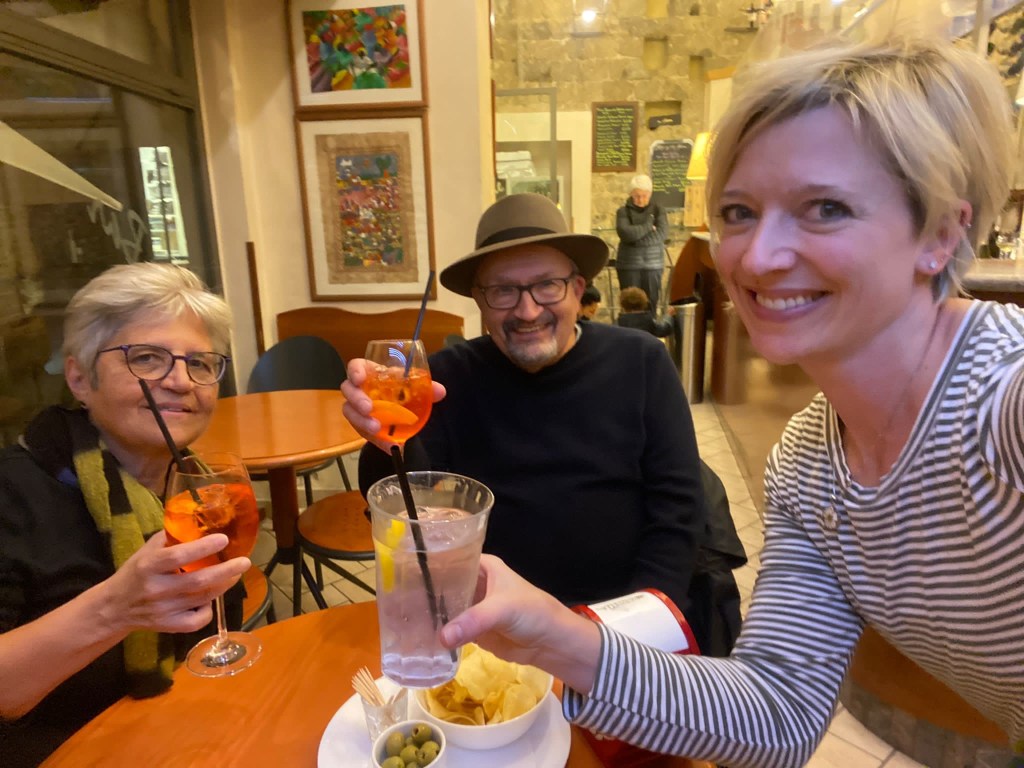
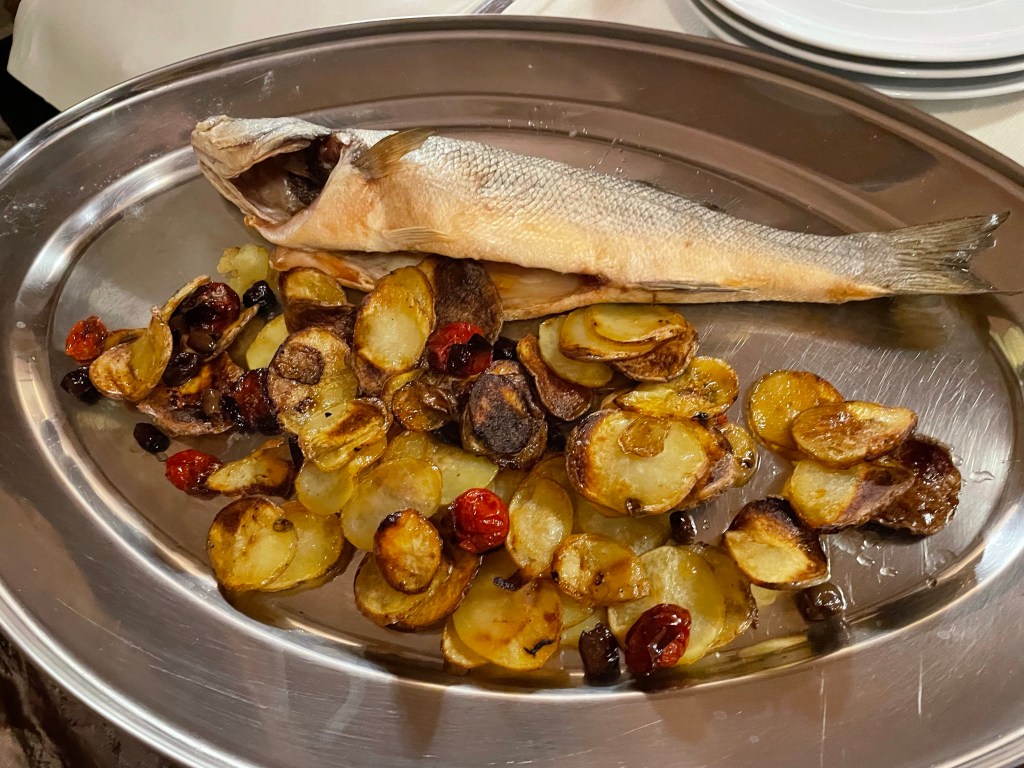
In between we stopped for a lunch of pici pasta (like a thick spaghetti) with wild boar (cinghiale) sauce, wine and grappa as a digestivo at Osteria Bionda. Spritz o’clock preceded dinner at the recently opened Ristorante Casa Tua for a seafood feast of gamberi rossi from Sicily, grilled cuttlefish with pea purée , and grilled sea bass with potatoes and olives and cherry tomatoes.
It was quite a long but fulfilling day and we were ready to get back for a well deserved rest.

 Camino Musings