Because of high winds, the scheduled visit to the crater of Vesuvius was canceled. Tweaking the original schedule, the afternoon visit to Pompeii was shifted to the morning.
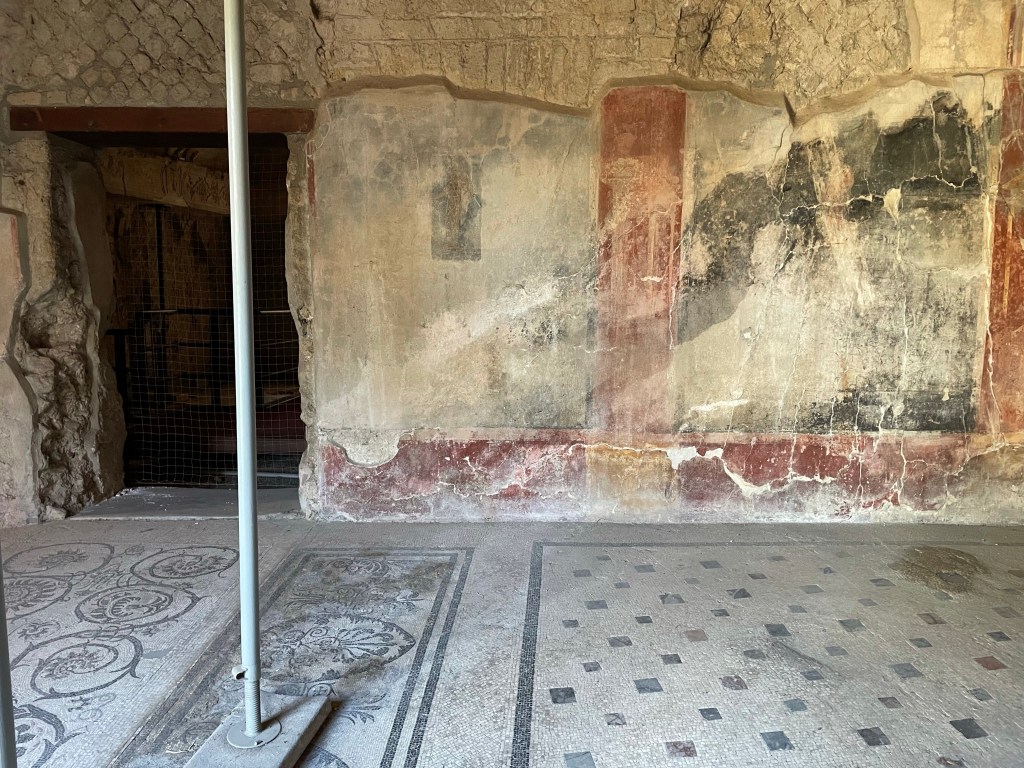
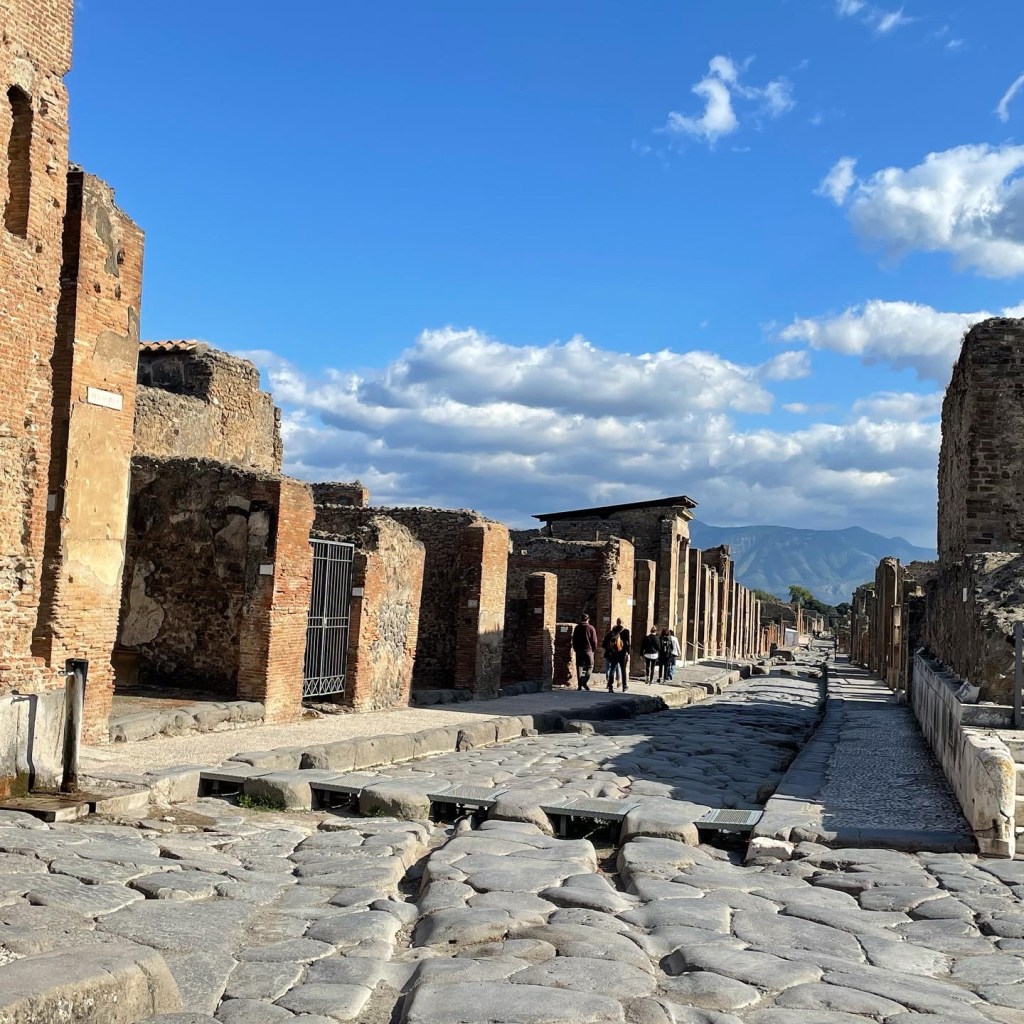
We were met by Gaetano, the third generation of his family to guide tourists through the ruins. The volume of tourists is noticeably less than in pre-COVID times and the weathers cool and breezy with brilliant sunshine. Gaetano is an energetic font of knowledge and brought to life the everyday workings of this seaport town that, pre-eruption in 79 AD, was a sort of Las Vegas of Ancient Rome. A spa (sanità per acqua) for men is located at the entrance to the city. The roads, bottom portion of the houses, frescoes and mosaic floors are quite well preserved as it was covered in ash for 1800 years. Of note is the predominance of phallic symbols (to ward off bad luck) and wind “bars” at intersections of streets.
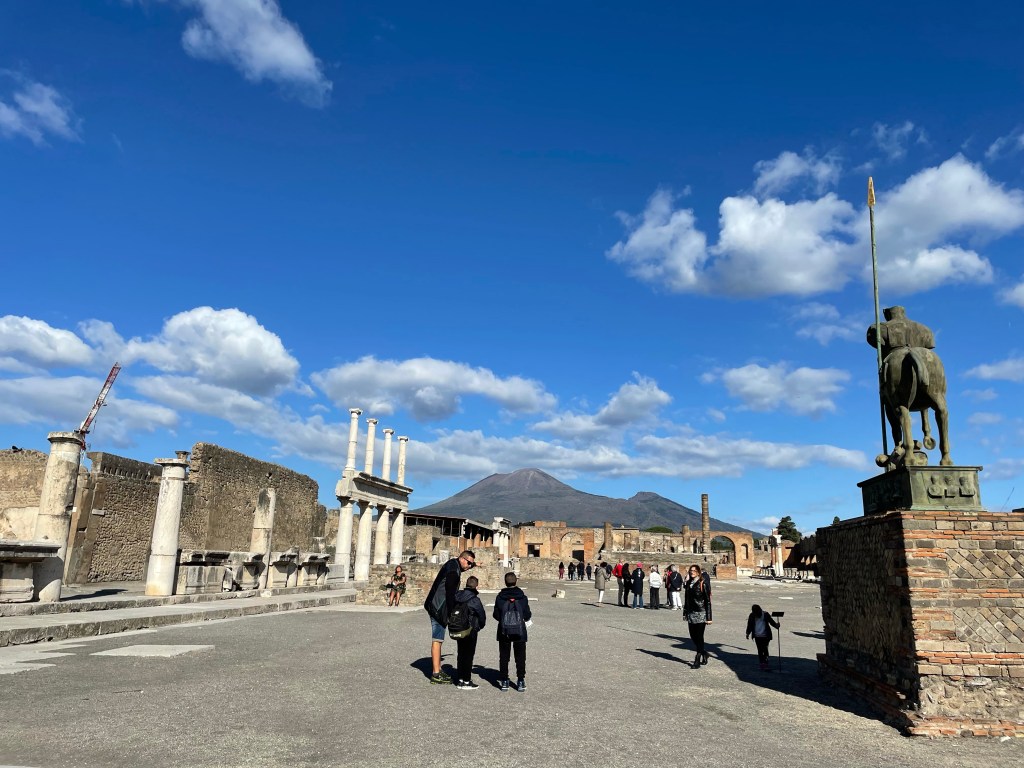
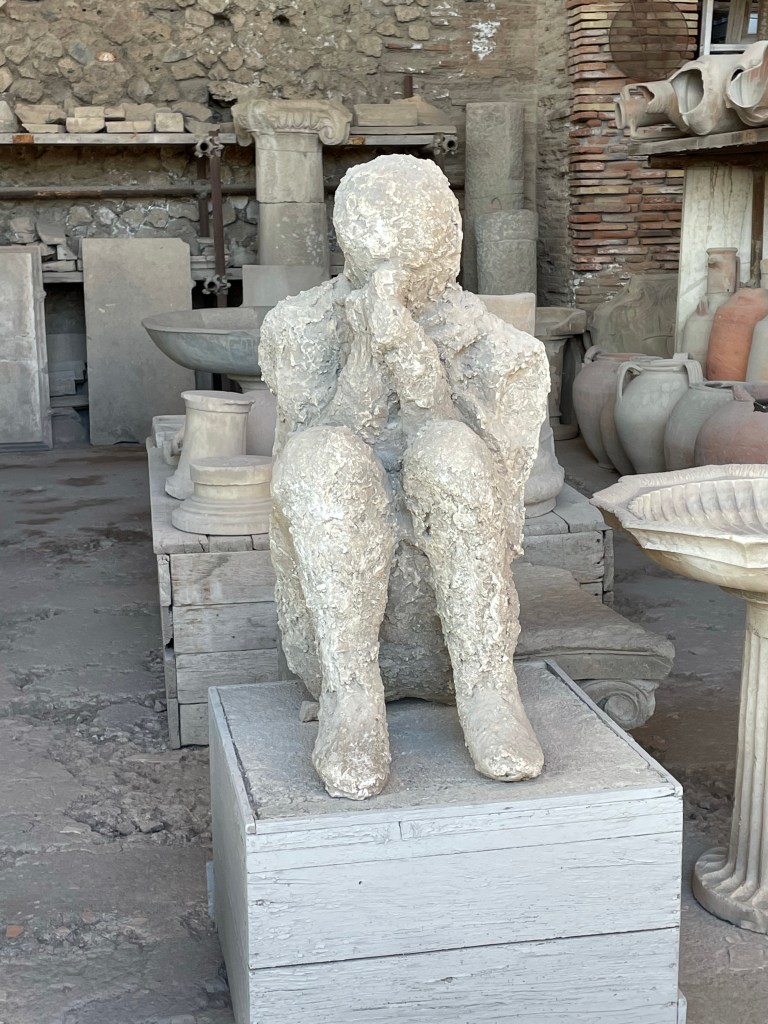

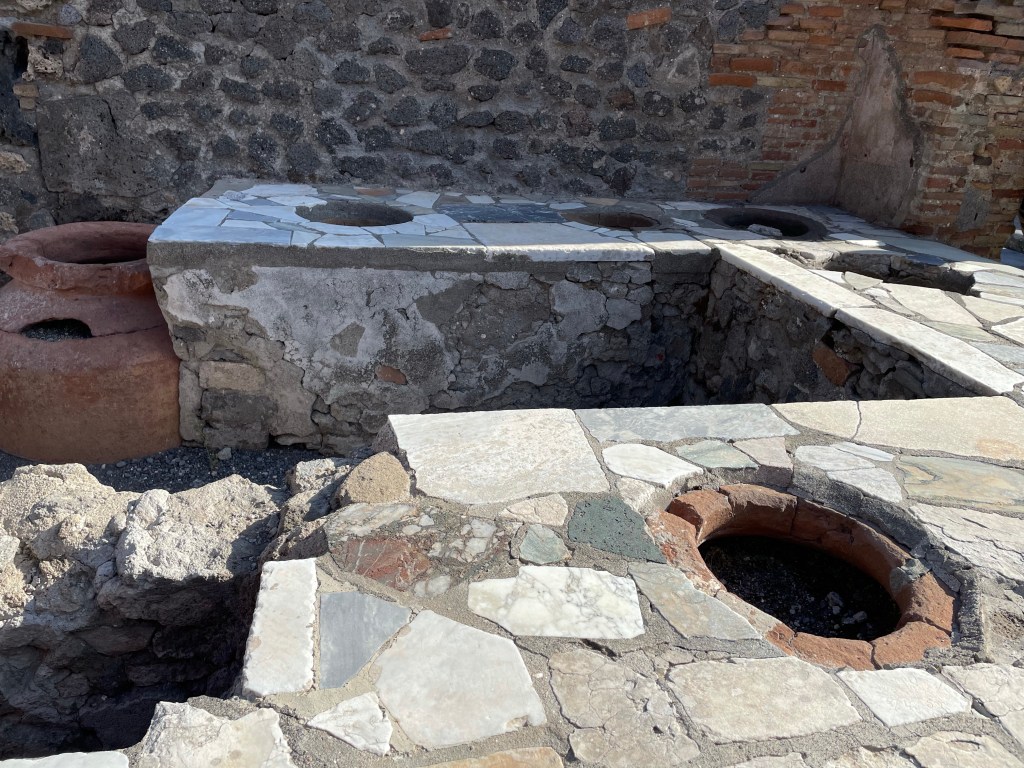
The inhabitants had a sophisticated system of water delivery using water tanks, aqueducts and lead pipes, a sewer system, sidewalks and crosswalks.
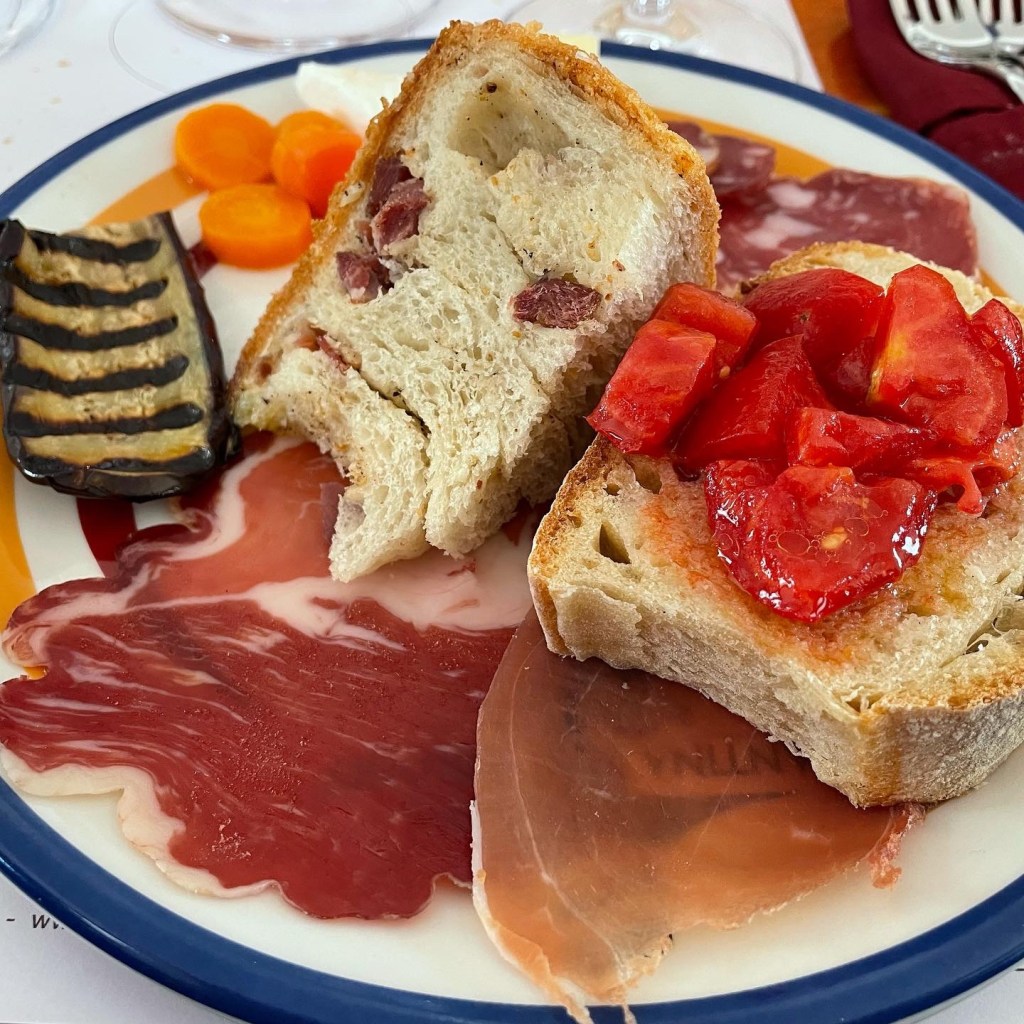
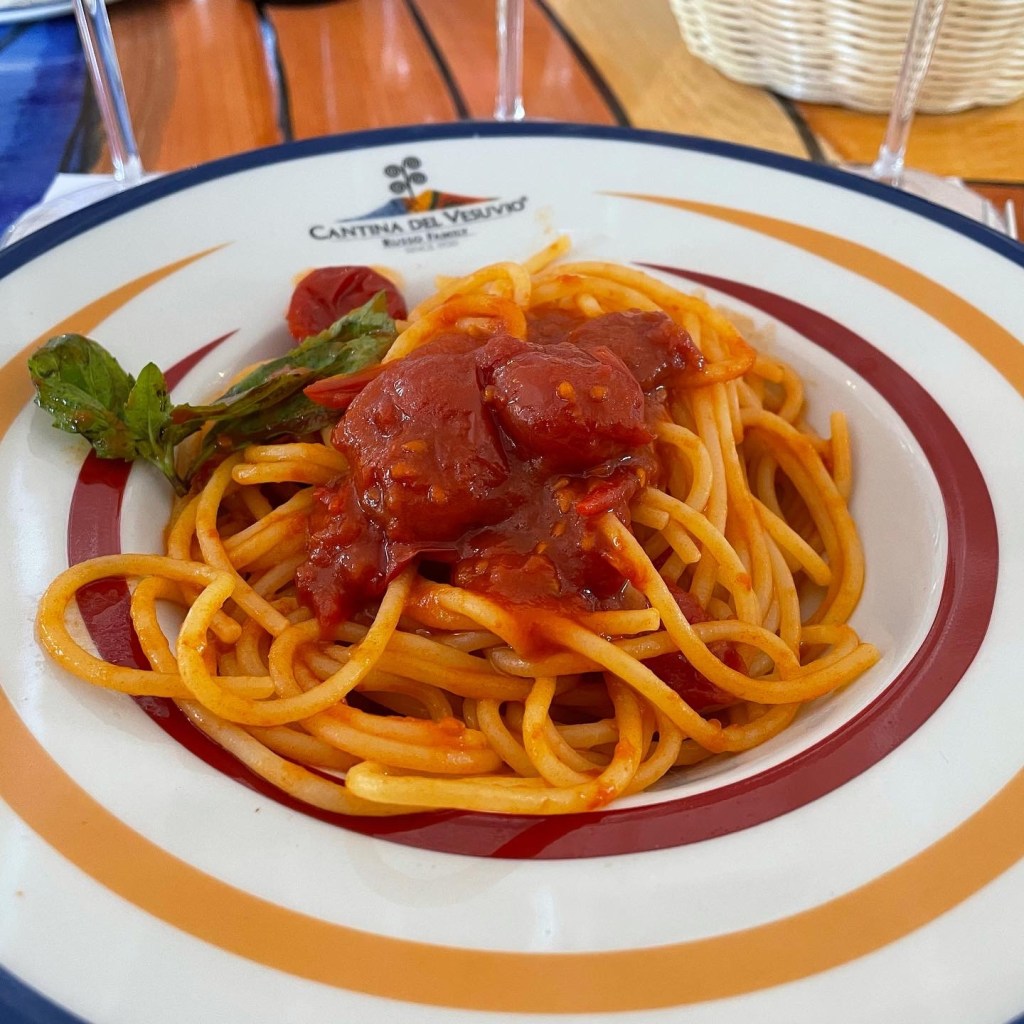
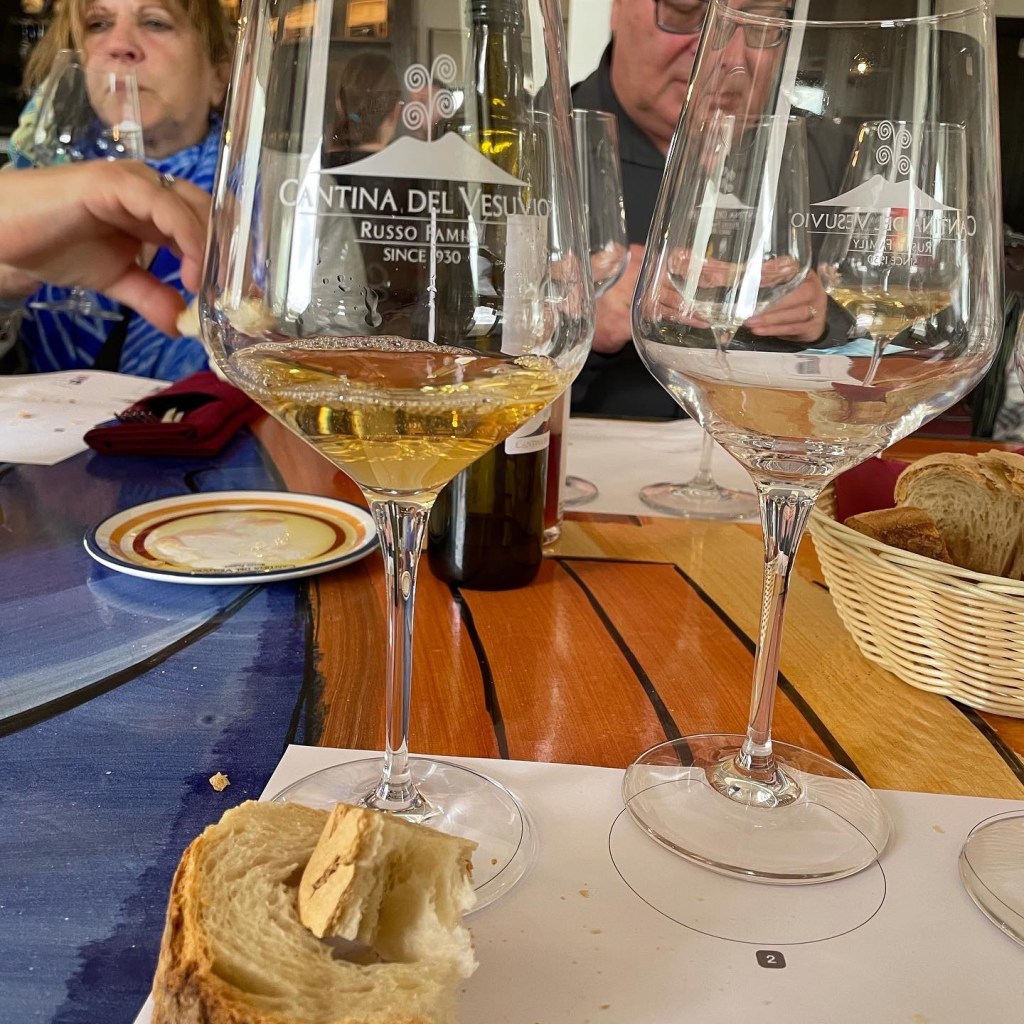
After the 2.5 hour tour, we went to the lower slopes of Vesuvius to visit the Cantina di Vesuvius, a biodynamic winer, to have a tour and wine tasting and lunch. The signature wind is Lacryma di Cristi (Tears of Christ), a dry white wine with an essence minerals.

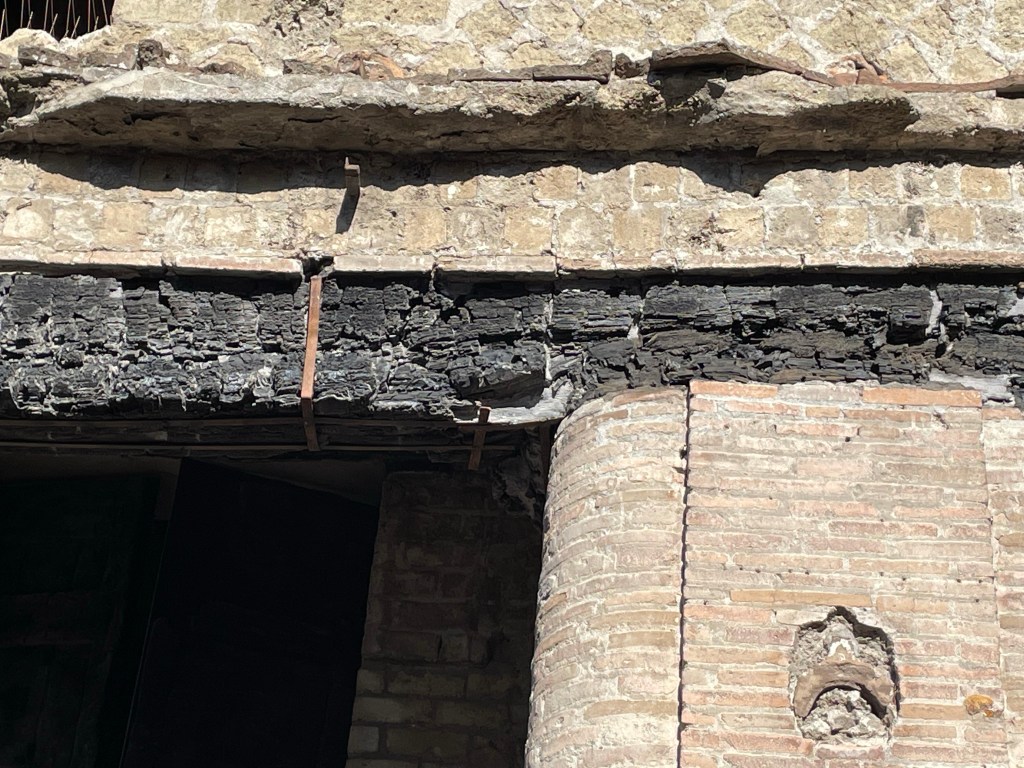
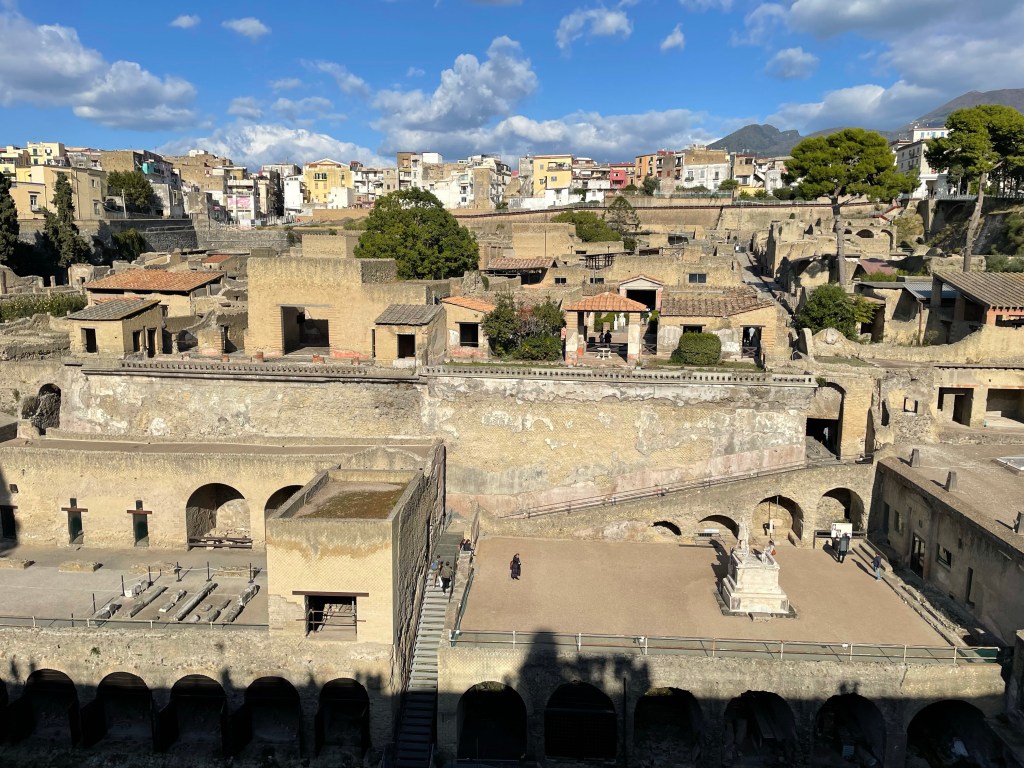
A brief stop at Ercolano (Herculaneum) ended the tour activities of the day. The town in found over 100 feet lower than the modern city. Instead of being covered in ash, the people were killed by high heat and gas. As a result, the second floors of the buildings are intact. The original wooden beams, though carbonized, still can be seen.
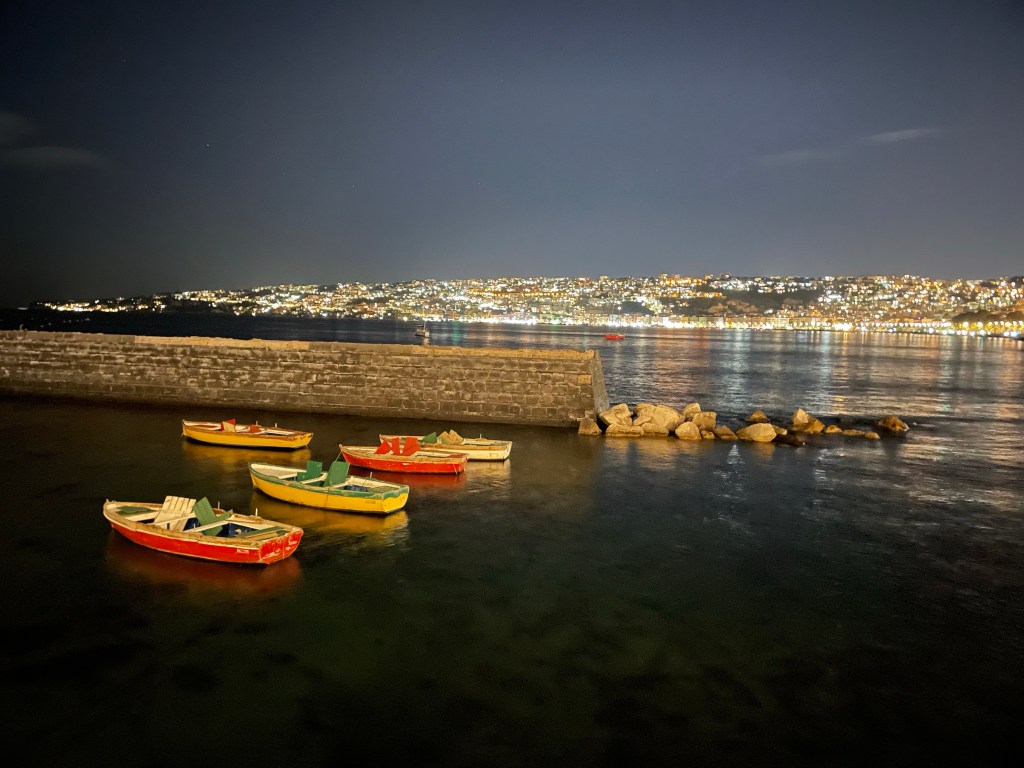
The evening was free so we enjoyed spritz o’clock, sampled a sfogliatella riccia at Caffè Gambrinus, joined in the passeggiata, and strolled the lungomare.



 Camino Musings