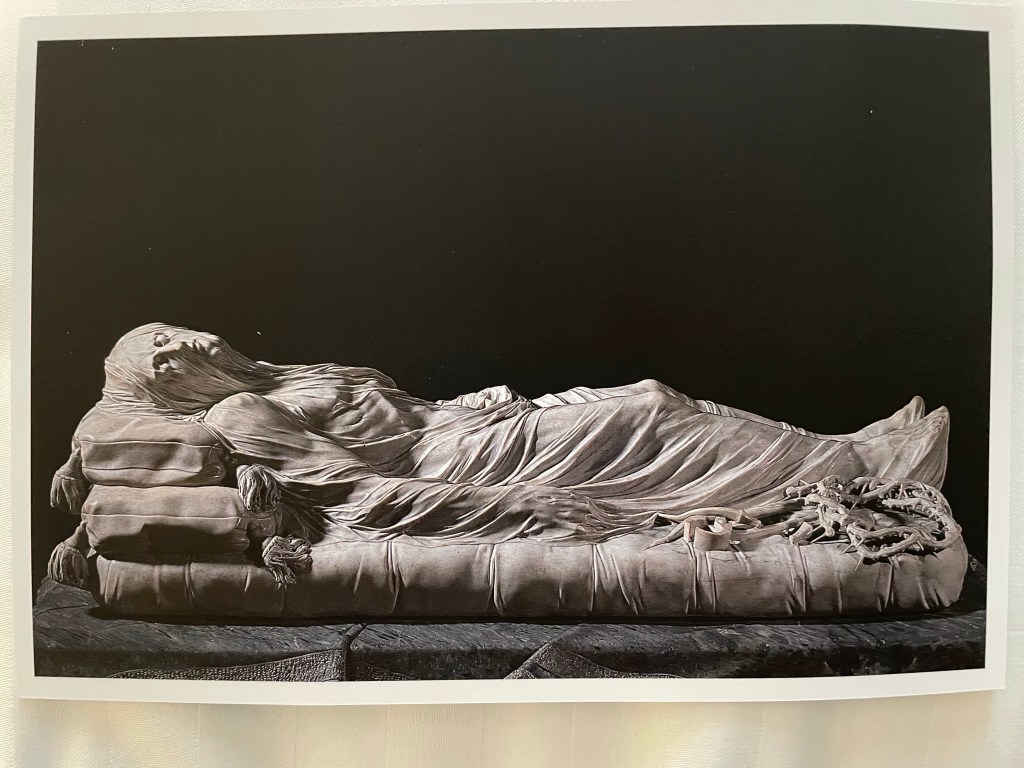
Today was a busy day. We started with a visit to the Chapel of Sansevero, the private chapel built in 1590 by the Giovanni di Sangro, a duke, near the gardens of the Sansevero family. It was remodeled in the mid 1700s by Raimondo di Sangro, duke of Sansevero and it contains over 30 incredible marble sculptures that incorporate iconography of freemasonry. Di Sangro was a type of Renaissance man, albeit 300 years too late. A soldier, physician, inventor, writer, and alchemist, he challenged the teachings of the Catholic Church through the use of symbols of the Freemasons. Some of Naples’s best sculptors created amazing works in marble. The most famous is by Giuseppe Sanmartino, Cristo Velato (Veiled Christ) completed in 1753. The sculptor makes marble almost transparent as there is an illusion that the features of Christ can be seen underneath a veil of marble.
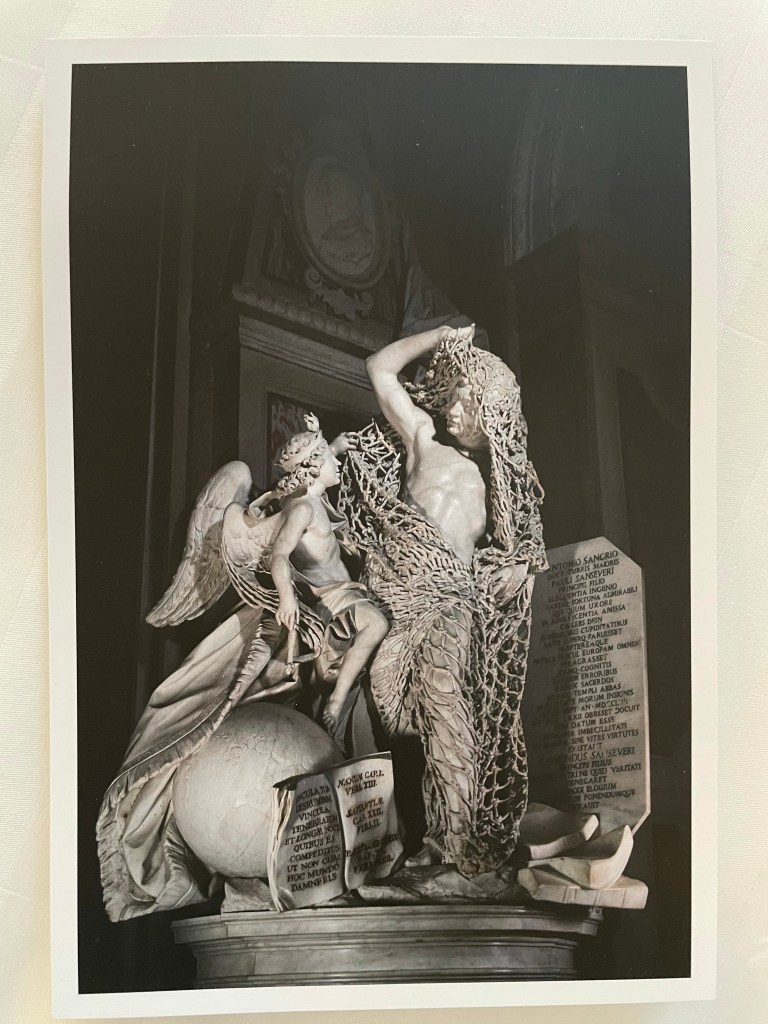
We also learned of the symbolism of the escape from the net covering the figure of the Disinganno (Release from Deception) by Francesco Queirolo. The sculptor spent seven years polishing just the net!
The chapel also contains two anatomical “machines” (models), the result of Di Sangro’s intensive study of the human body.
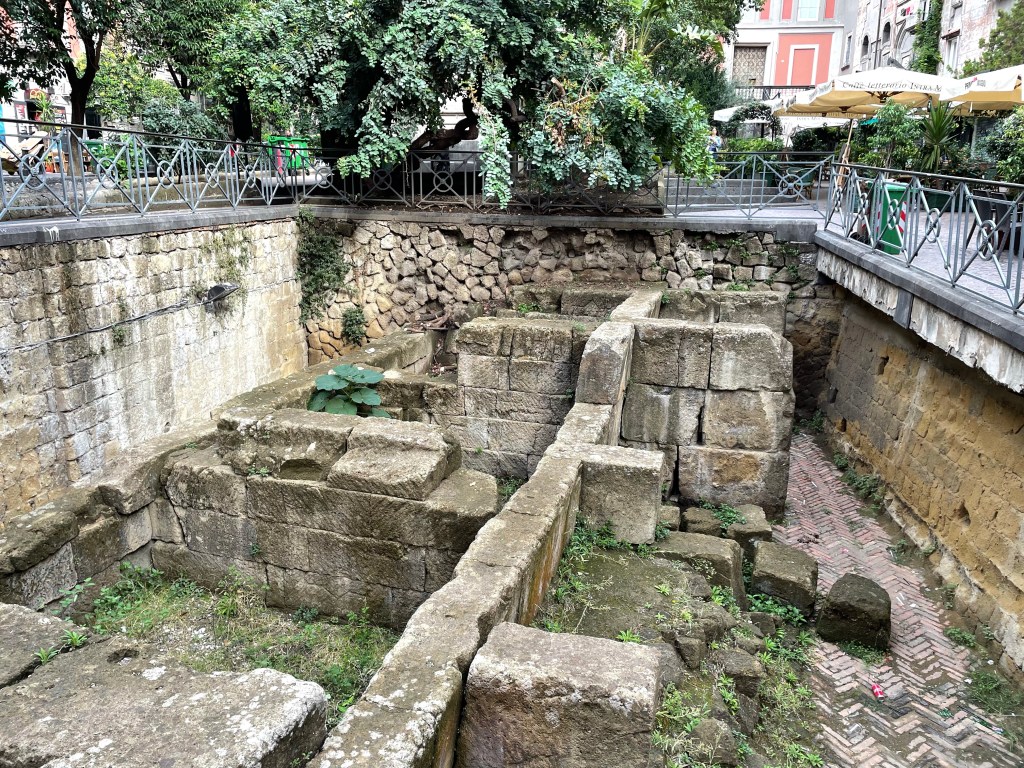
We then walked through Piazza Bellini and saw the remains of the Ancient Greek walls on our way to the Museo Nazionale Archeologico.

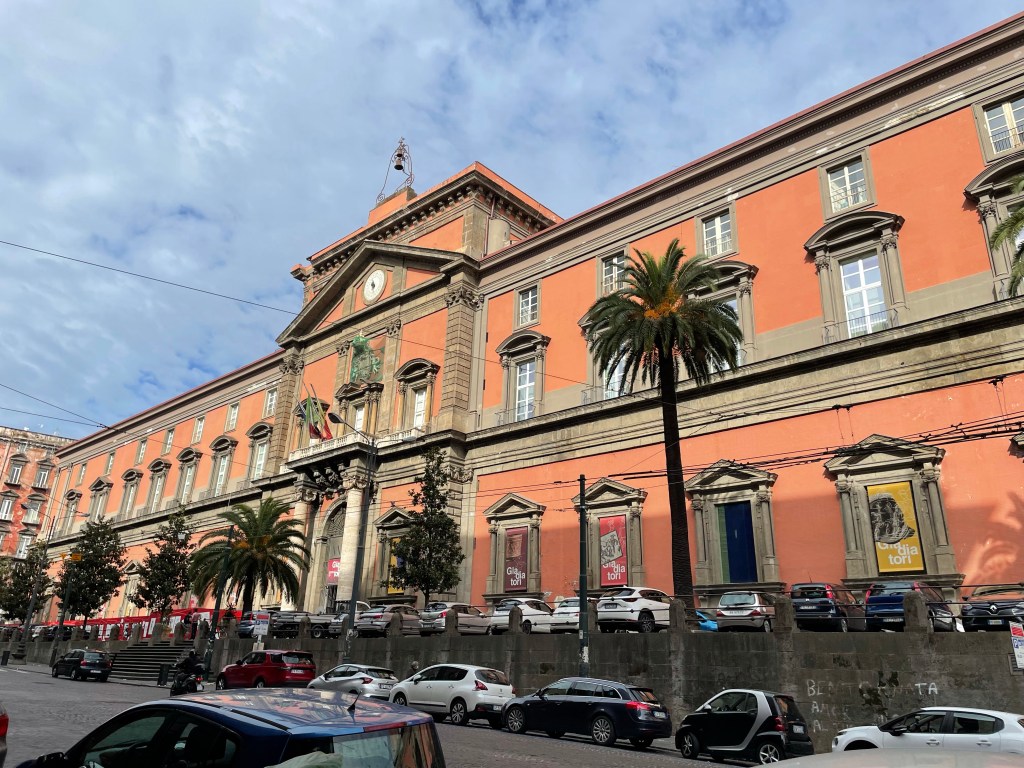
This museum conto the greatest collection of ancient Roman artifacts, bronze statues (7) copied by the Romans, artifacts, frescoes and mosaics from Pompeii and reconstructed statues from the Baths of Caracalla in Rome. Much of the statuary is from the private collection of the Farnese family (Pope Paul III). Of special interest are the bronzes, recovered in almost pristine condition from Pompeii. These are reproductions made by the Romans of Ancient Greek statues.
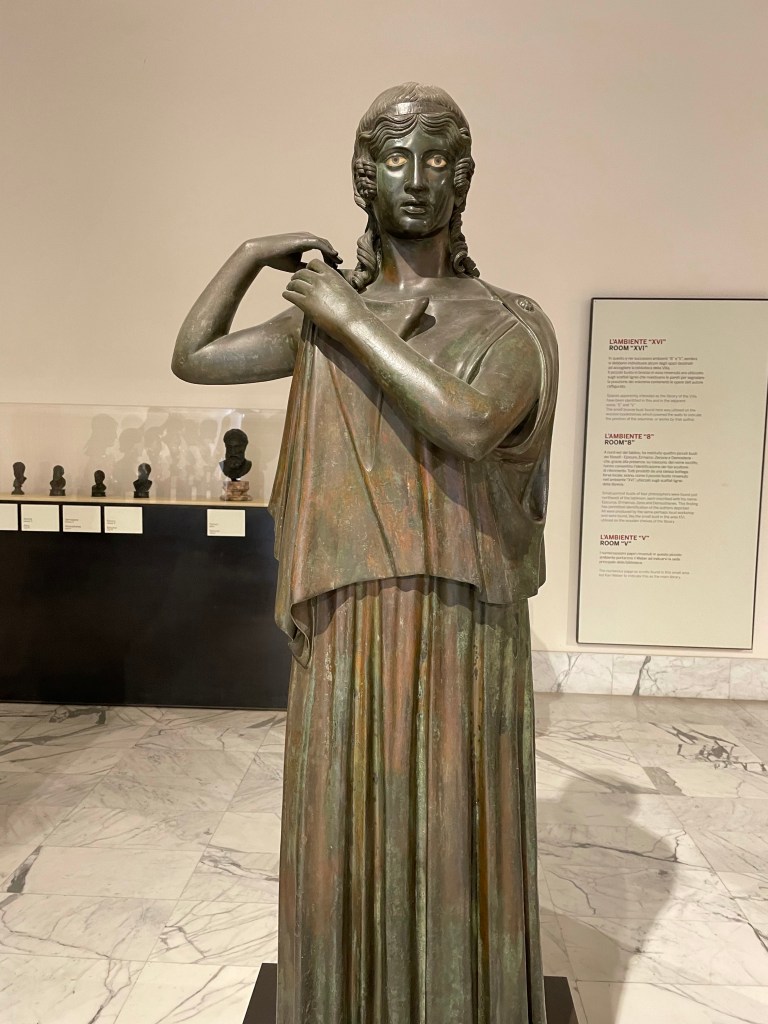
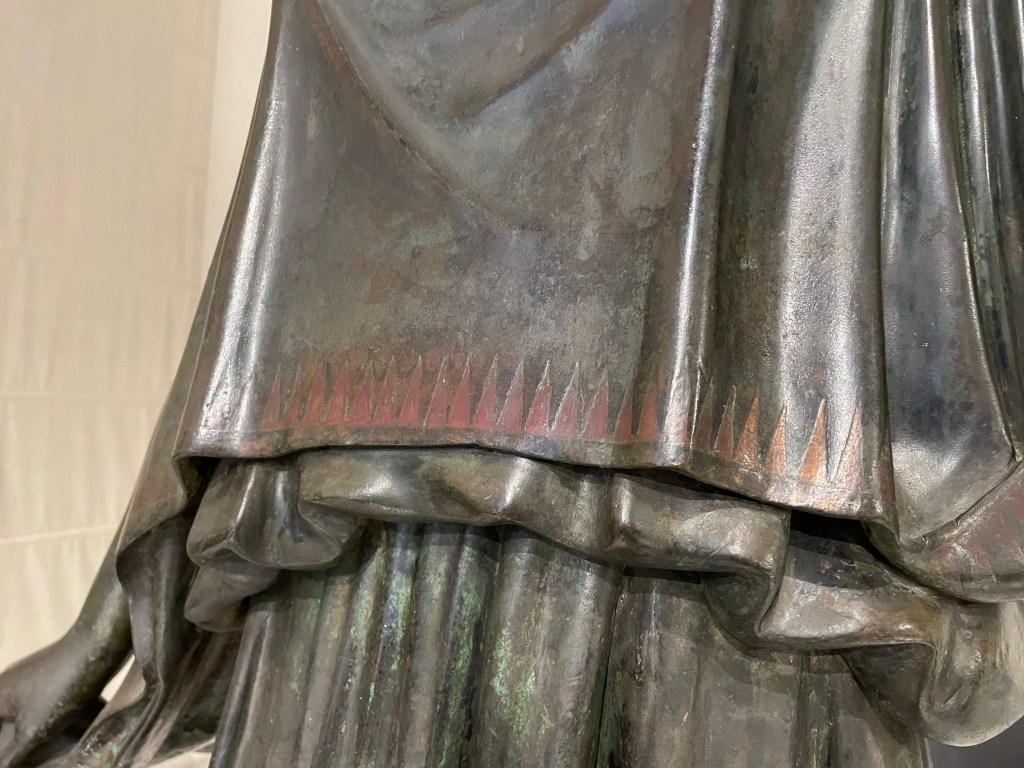
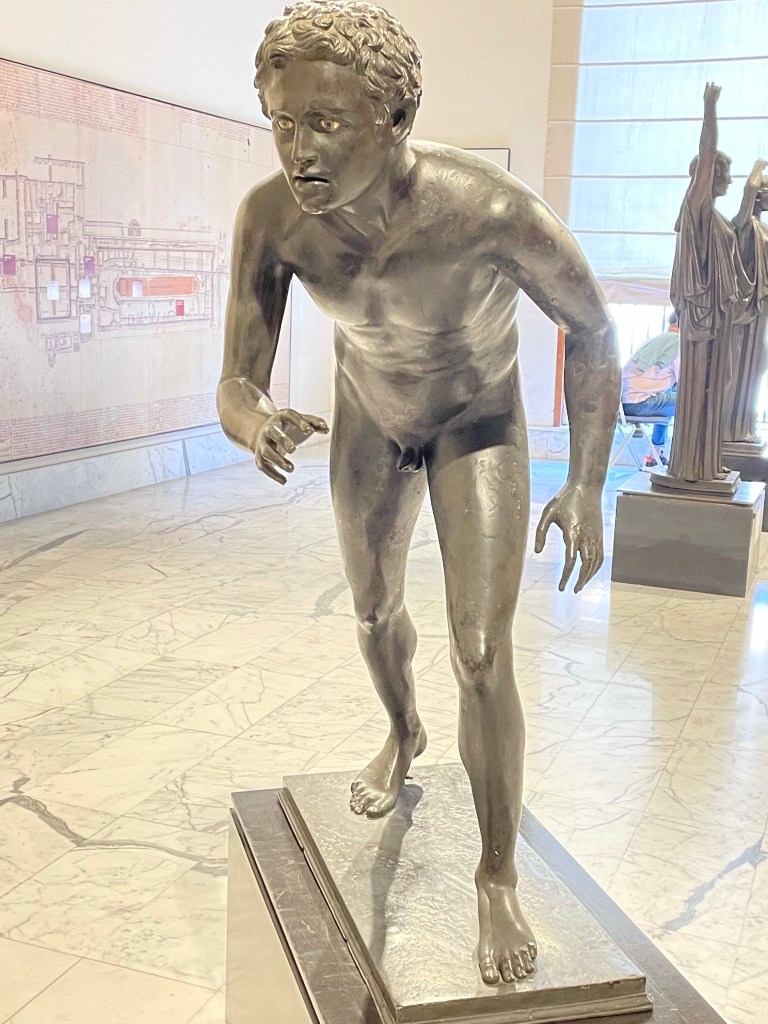
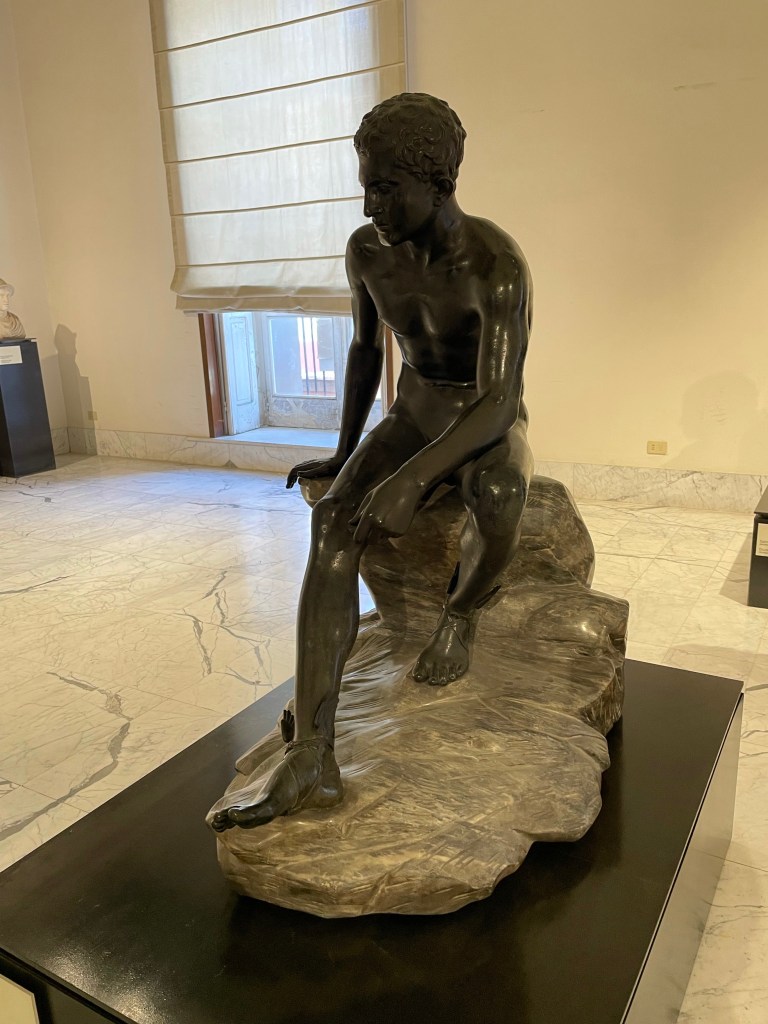
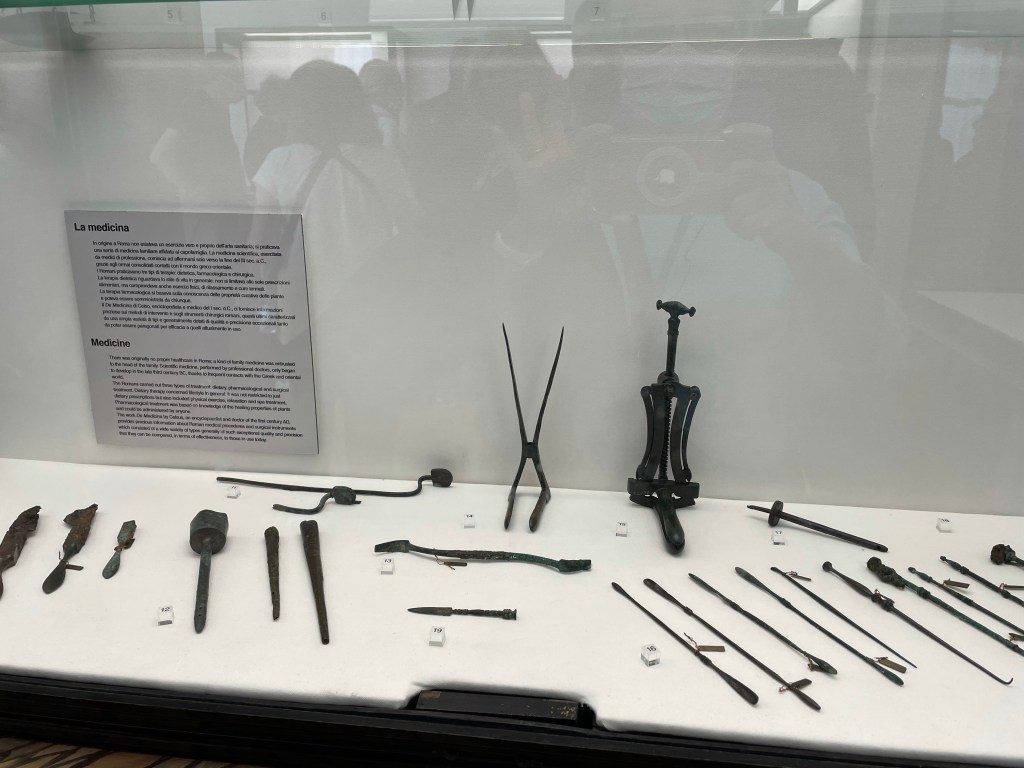
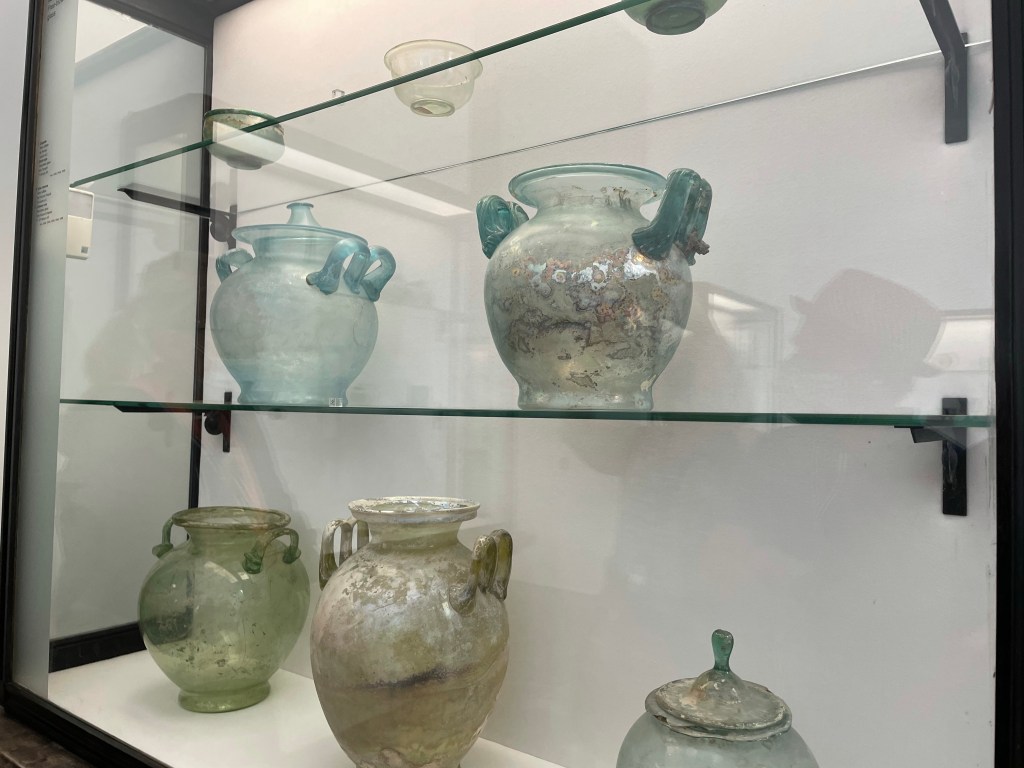
Other recovered artifacts from Pompeii include medical instruments, blown glass, silver serving pieces and the famous blue cameo jar, made completely of glass.

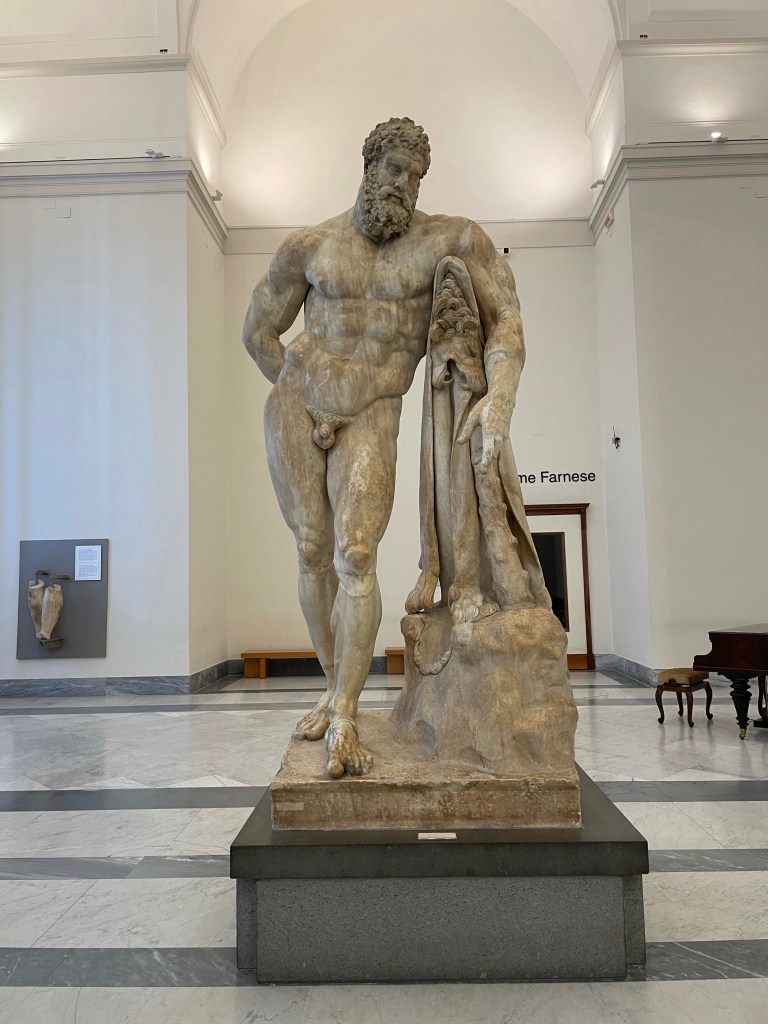
An impressive collection of galleries are present in this enormous building. One of the most impressive contains the Farnese family collection of restored statues from the Baths of Caracalla in Rome. Several were repaired and reconstructed by Michelangelo, including Hercules.
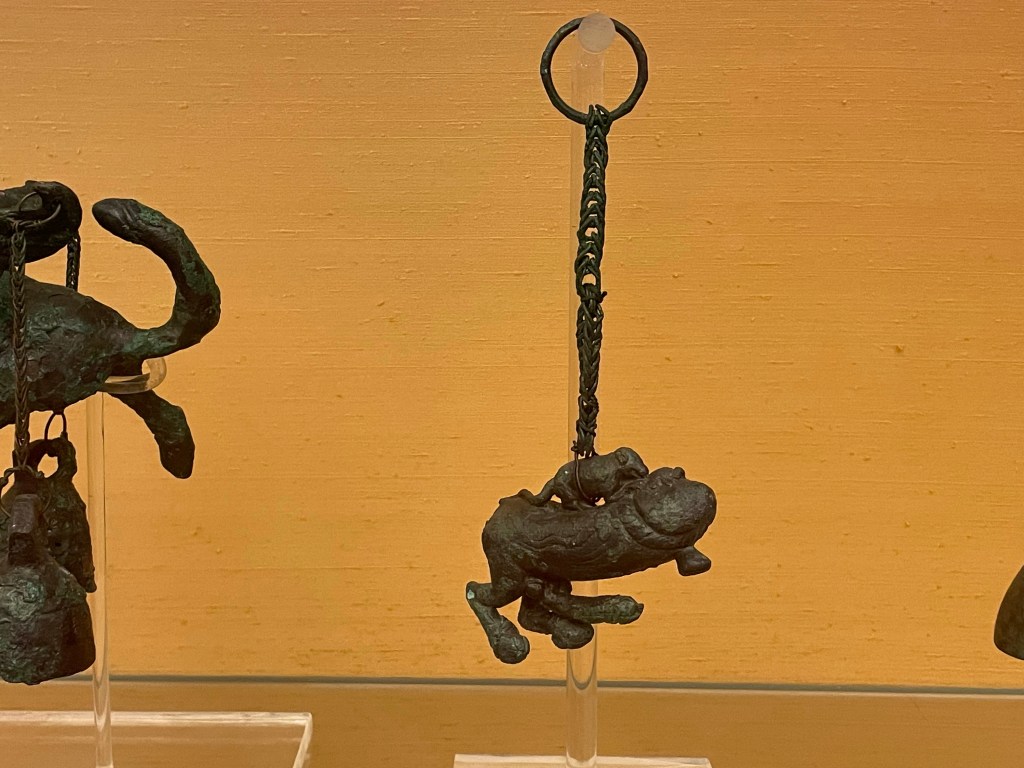
The most unique and entertaining ares is the Forbidden Room, previously restricted to men only and by appointment. It contains erotic frescoes, many of which were found on the brothel walls in Pompeii. The phallic symbol was thought to ward off bad luck, and many iterations can be seen in this collection.



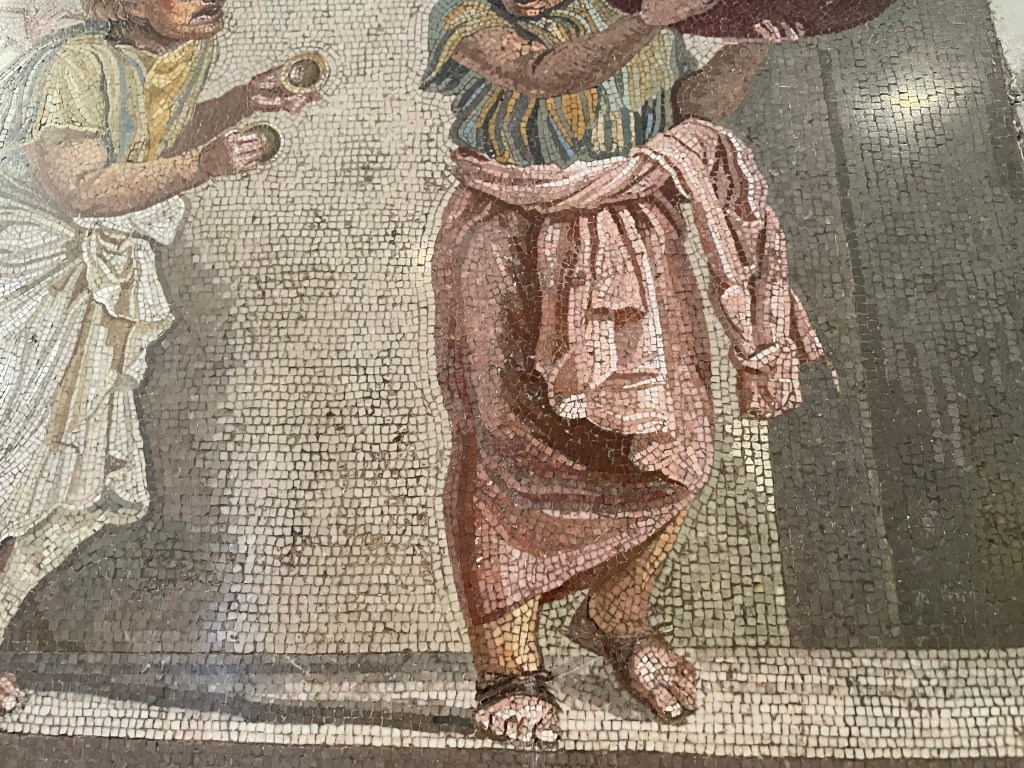
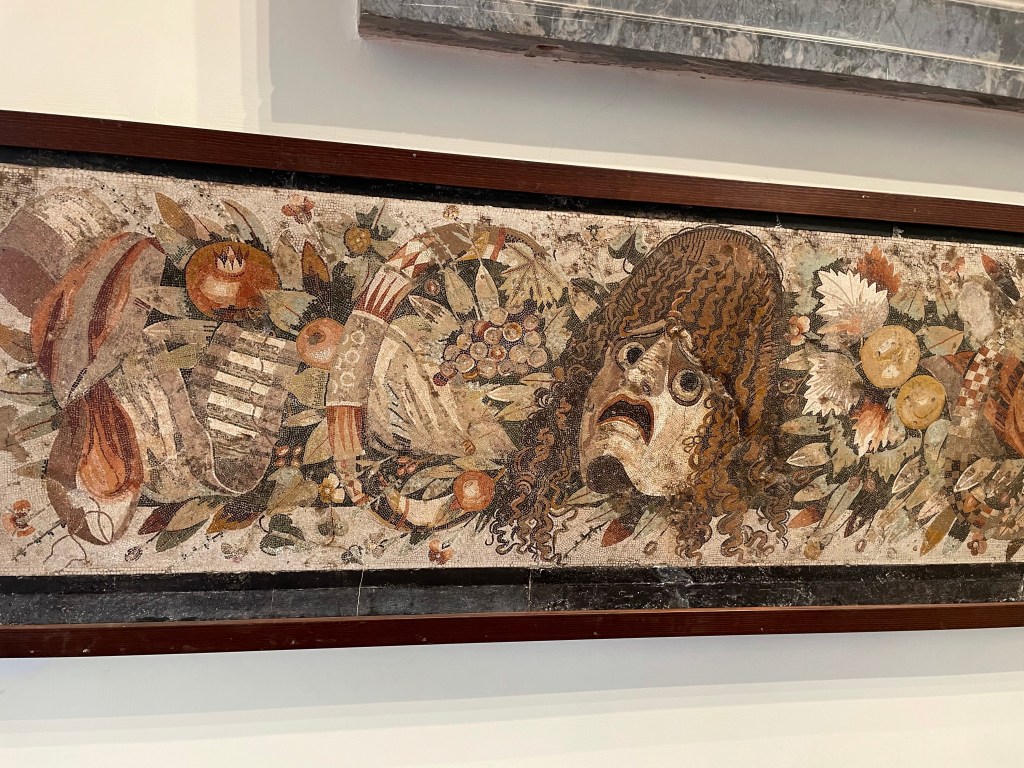
A large collection of mosaics from Pompeii are also present. The intricate patterns of the small tiles are amazing.

We walked back into the historic center and had a relaxing lunch with our guide, Lisa, and two of our tour companions at the Osteria Asti – we had seafood antipasti (salmon and anchovies marinated in oil and vine, bruschetta, and lots of mussels and clams (they had run out of octopus for the antipasti so they gave us lots of the mollusks! Then we shared pasta e patate and gnocchi alla sorrentina. We took a rest break at the hotel before our evening activities- dinner and a concert of traditional Neapolitan music.
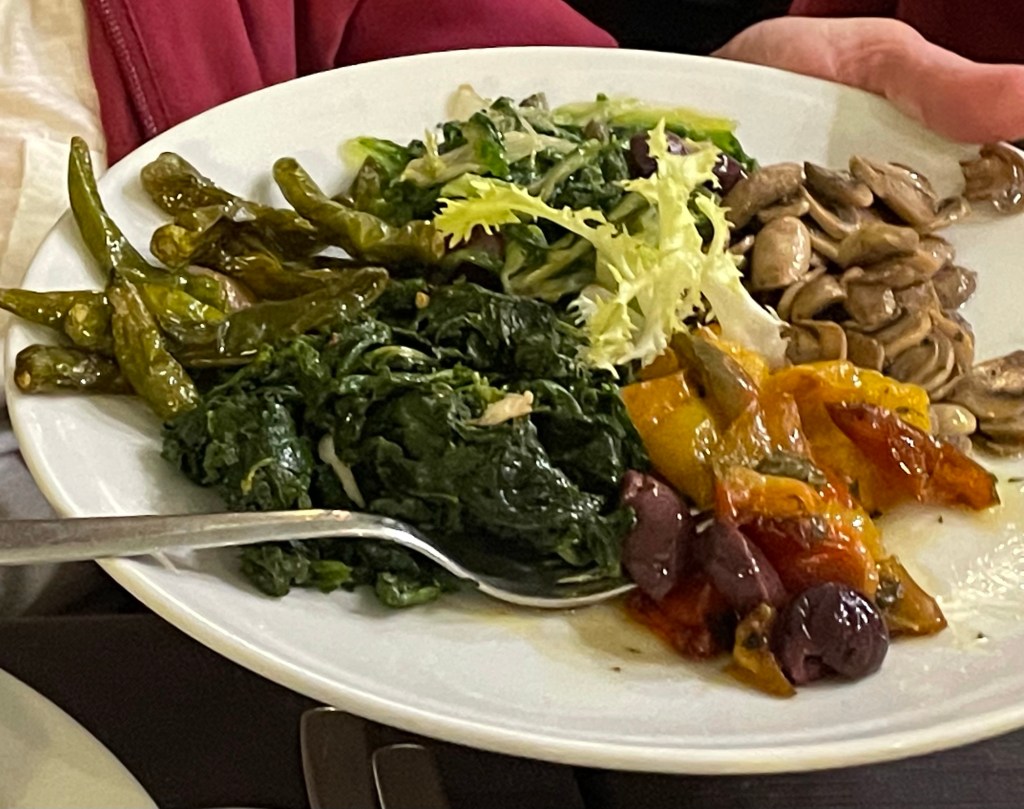
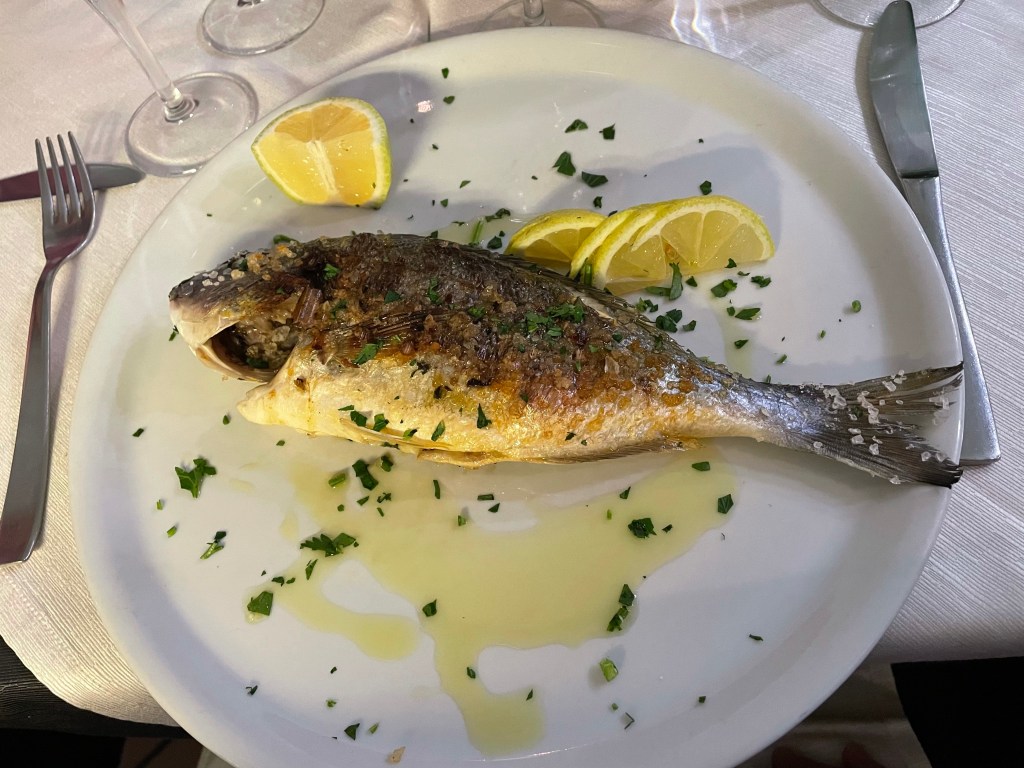
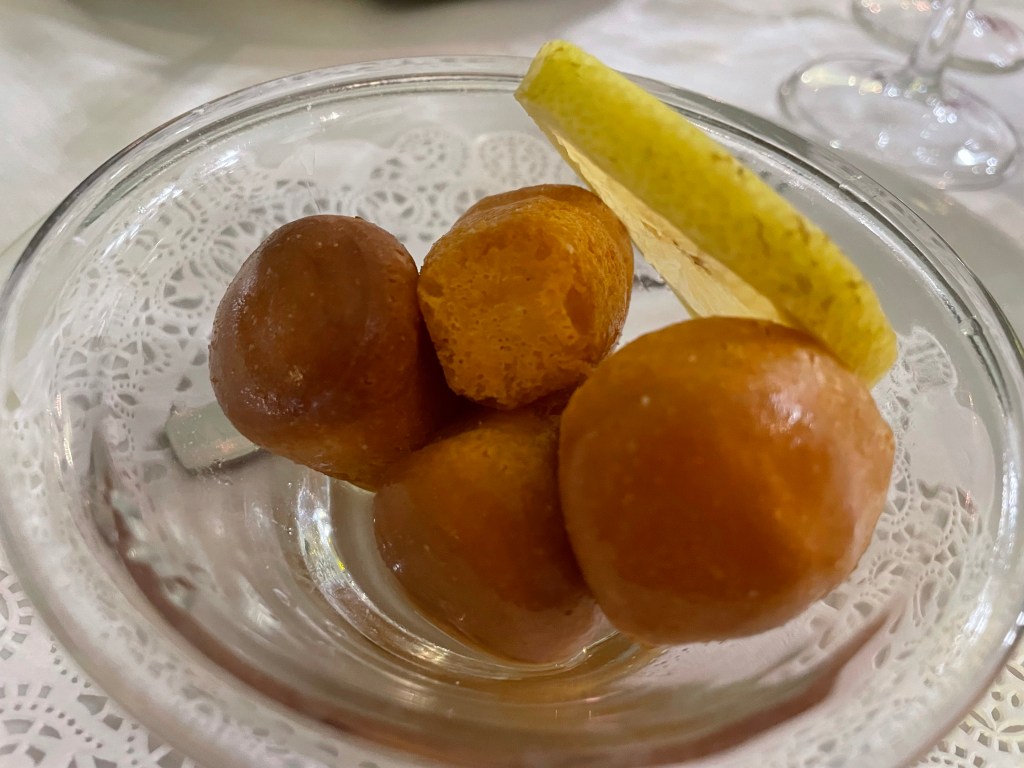
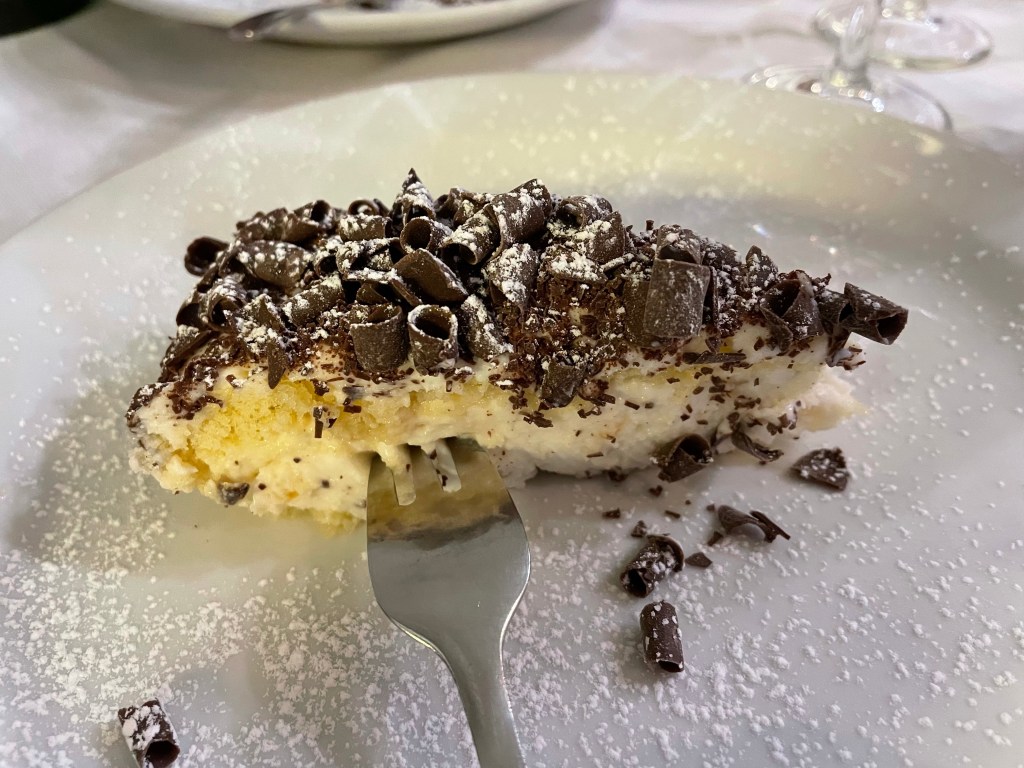
Dinner was at Osteria da Carmela. It was a small and cozy family run enterprise. We shared an antipasti of cold and warm vegetables, fried calamari, fried smelt and stuffed zucchini flowers. We had baked sea bream, spaghetti with clams and for dessert we had baba limoncello and cassata napolitano. A nice dry white wine was also served.


The evening was capped of with a performance by a group of young Neapolitan musicians who presented traditional music- Napulitanata. It was lively performance that incorporated music of the late 1800s to 1950s, from ballads to swing and jazz.
We ended up with 19,000 steps on the Fitbit and a full day in this fascinating city.

 Camino Musings