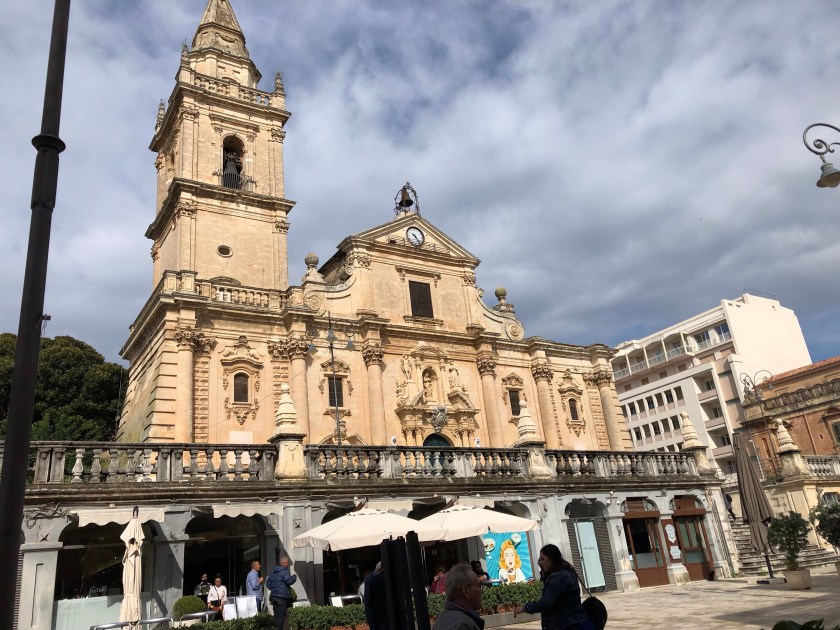
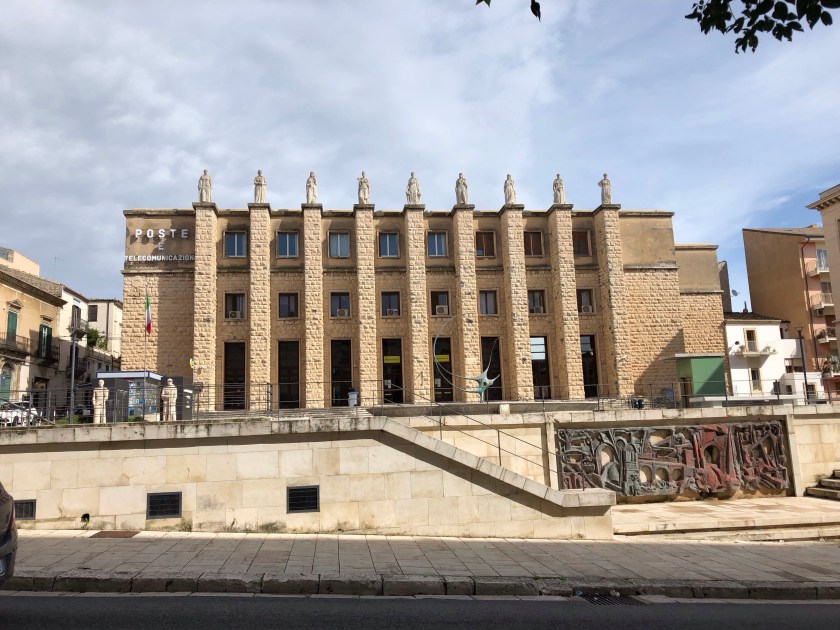
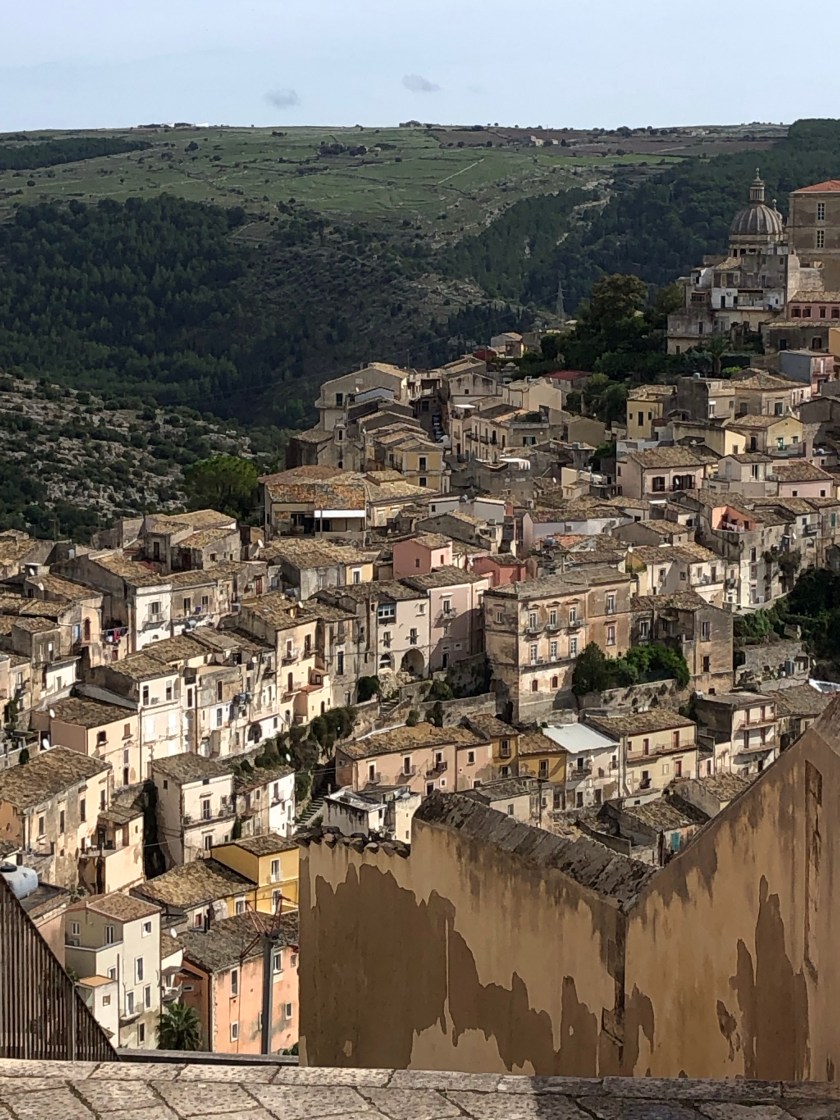
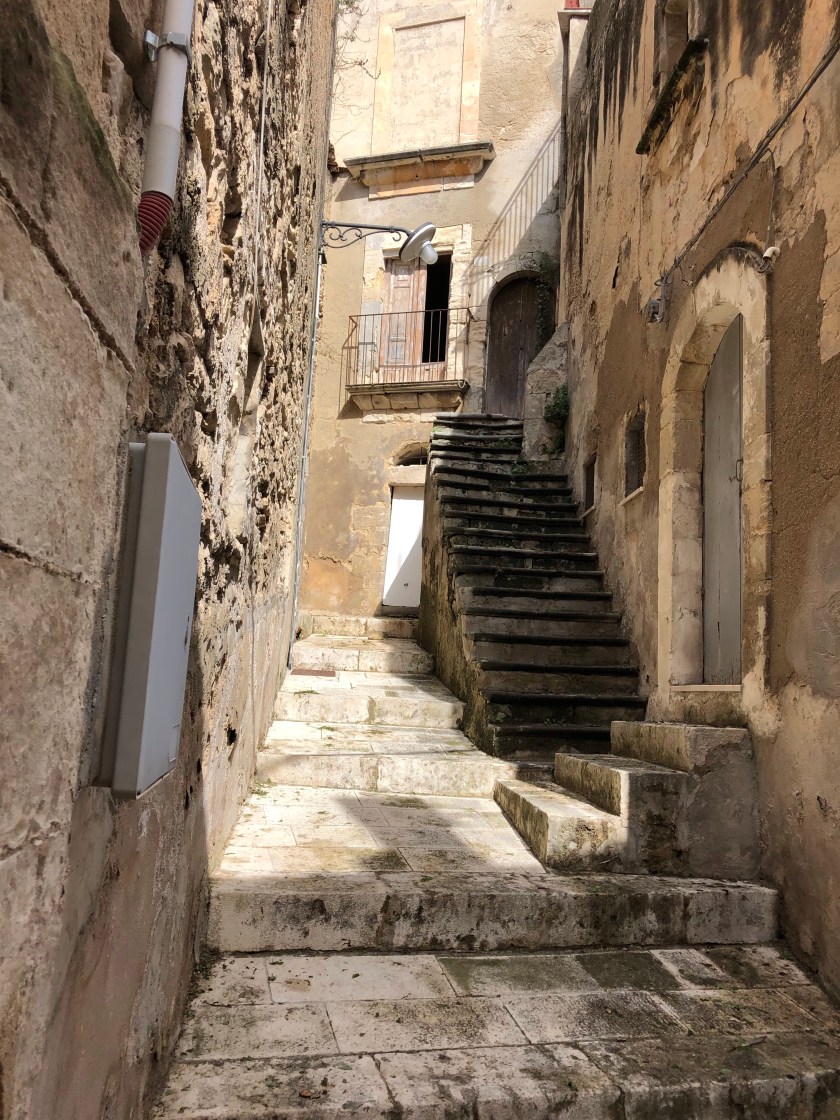
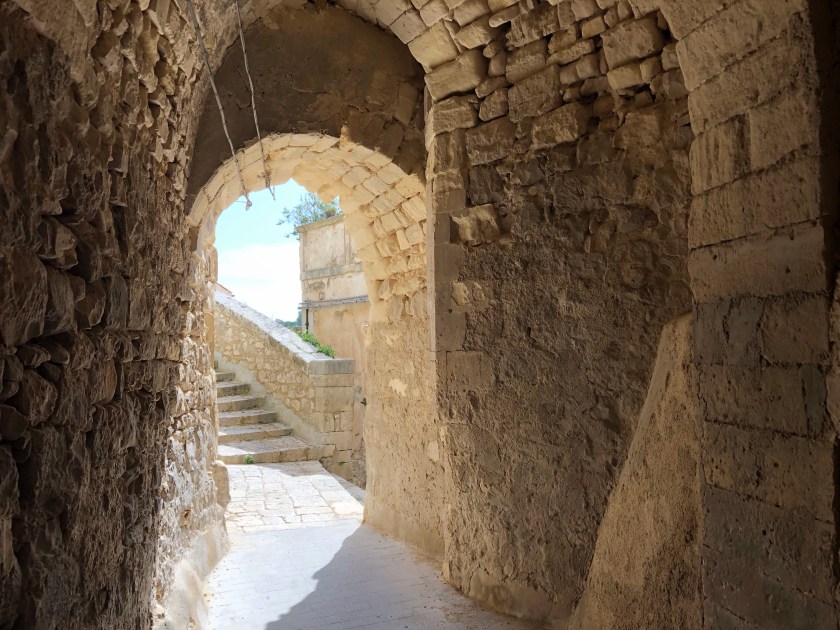
Our adventure continues with Alessandro. We met him this morning in Ragusa Superiore, the “new” half of the city which was built following the earthquake of 1693 that devastated this part of Sicily. After the quake, the nouveau riche ( that made its fortune as merchants) decided to relocate to the other side of the tracks ( or gorge, in this case!), with the city planners using the same template as was used in Noto, with a grid arrangement of streets and wider corsi (avenues), whereas the “common people” remained and rebuilt the old city, known as Ragusa Ibla. The labyrinth of narrow and winding streets with many steps climbing through the city remains and preserves the charm of this ancient but rebuilt place. Until the mid- 1920s, they remained as separate cities with independent governments until the fascist era when one of Mussolini’s top deputies wanted to join the two cities as one. The main church in Ragusa Superiore is dedicated to St.John the Baptist and overlooks the main piazza, where a large public market once took place. Its characteristic feature is the presence of two sundials on the facade, one utilizing traditional means of keeping time and the other using the Sicilian method that displays hours of remaining sunlight rather than the time. As Ragusa was pro-fascist, evidence of building projects are evident throughout Ragusa Superiore.
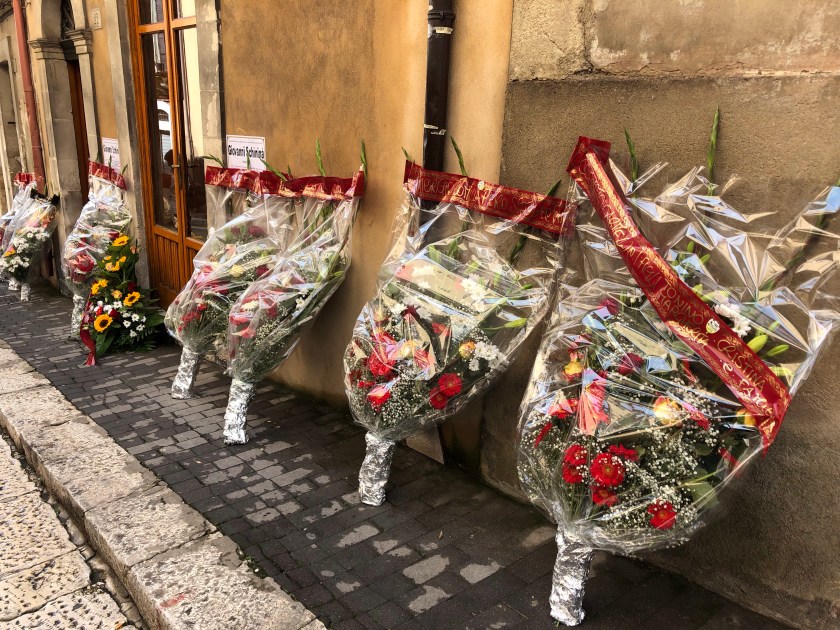
We wound our way down and across the gorge to Ragusa Ibla, passing the home of a recently deceased elderly gentleman who sat outside his home greeting people walking to Ragusa Ibla.
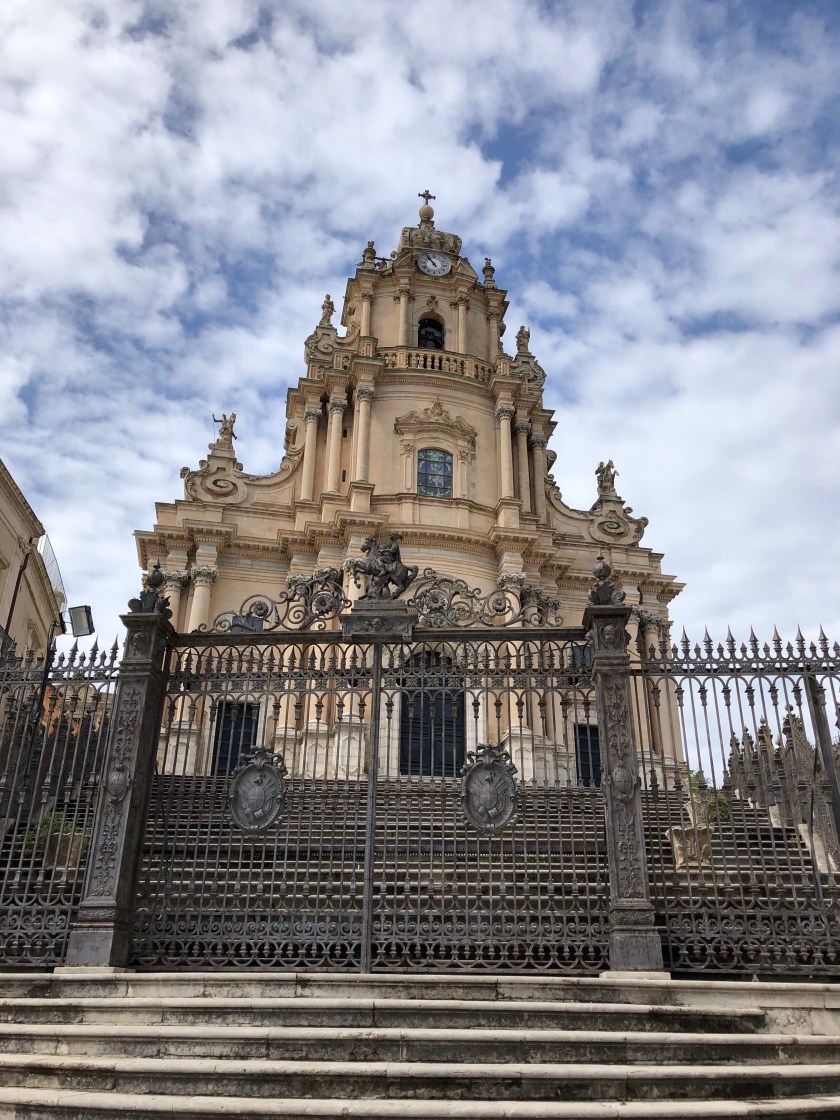
Ragusa Ibla is now predominantly a tourist attraction, with B&Bs, restaurants and shops and few residents. The Church of St. George is the most important in the city and dominates the main piazza. It is a bit off-kilter- not lined up because the piazza was constructed after the church.
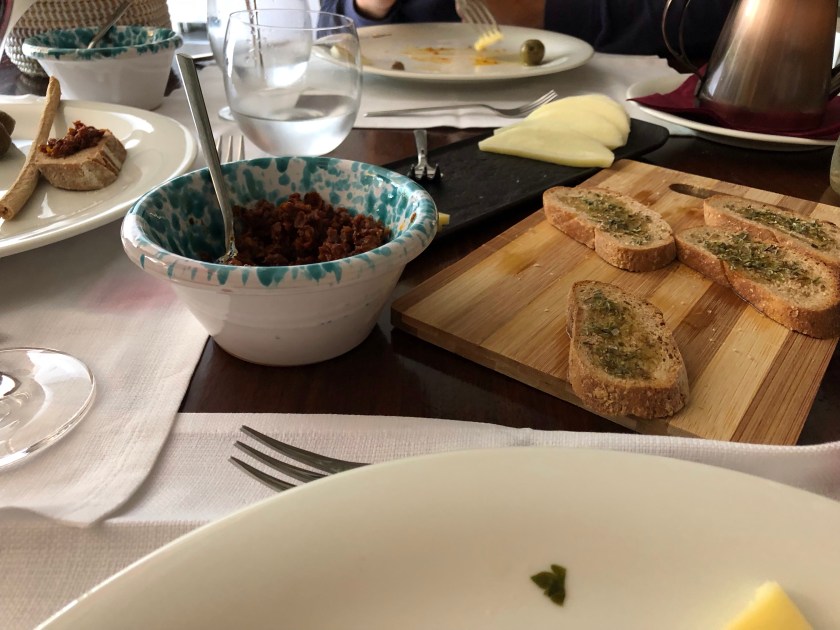
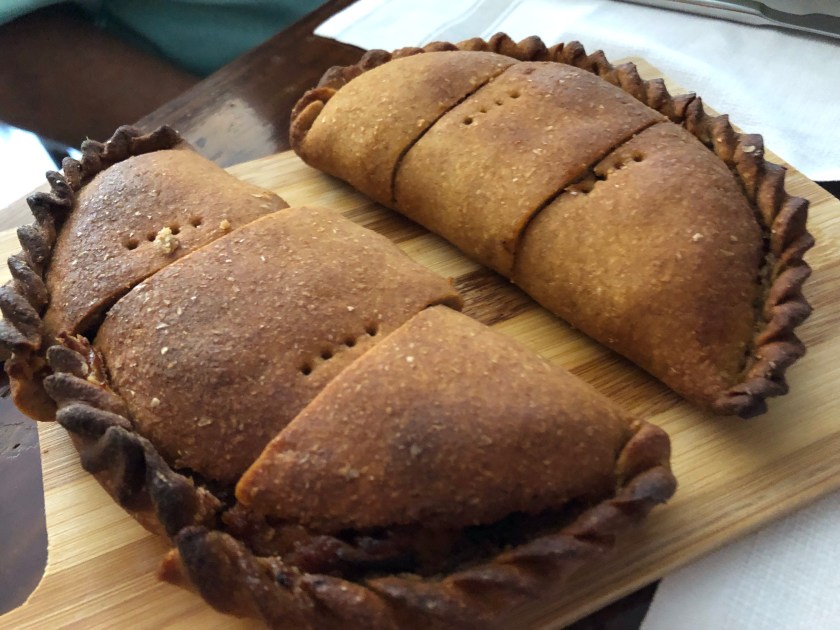
We left Ragusa Ibla for our lunch at a water mill that still makes flour from ancient grains. It is the only remaining and functional water mill on the river and it runs entirely on water power. After a demo on how the mill works, we enjoyed a grain-centric lunch with different kinds of bread, bruschetta, cheeses, sun dried tomato pesto, a scaccia ( looks like an empanada), frittata and a small muffin for dessert.
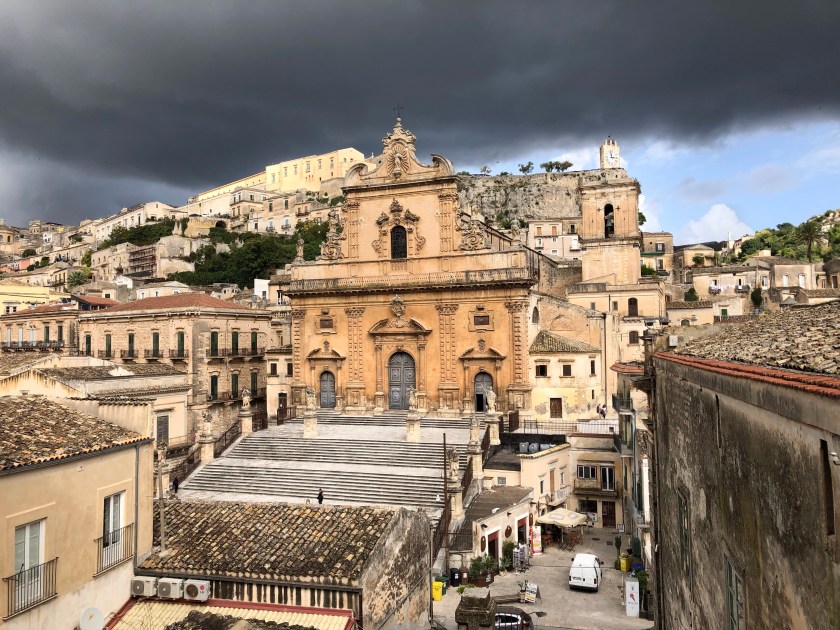
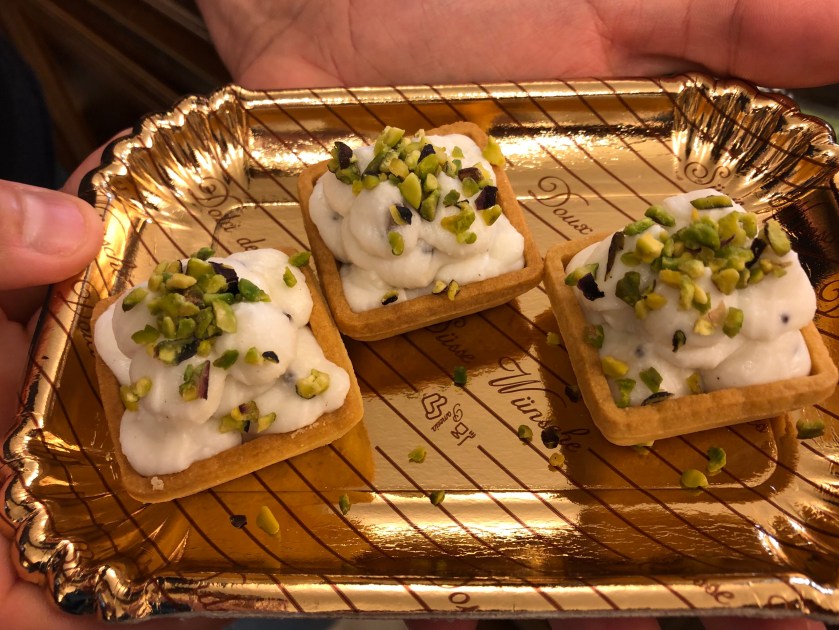
The next destination was Modica, an adjacent town also flanked by rivers and gorges. As we arrived, a huge and very dark cloud hung over the city. We parked our car way up on a nearby hill with a panoramic ire of the city. We walked down to the town, traveling narrow cobblestone streets that had steps. Just as we reached the bottom (and the town), huge raindrops began to fall, soon deteriorating into a torrential rainstorm. We ducked into a building courtyard as the streets became raging torrents. Tables, chairs, trash cans and garbage and even a tree were carried down the street. The rain finally stopped after an hour and the waters rapidly receded. We were able to sneak in a visit to the oldest pastry shop and the best chocolate shop and made a few purchases in addition to tasting chocolates and pastry samples.
We left Modica around 6 pm, hitting quite a bit of traffic. Too tired to do much else,we had an aperitif and the inadvertently bumped into Christina and Giuseppe who were having dinner.
We called it an evening and headed back by 10 pm.
Ragusa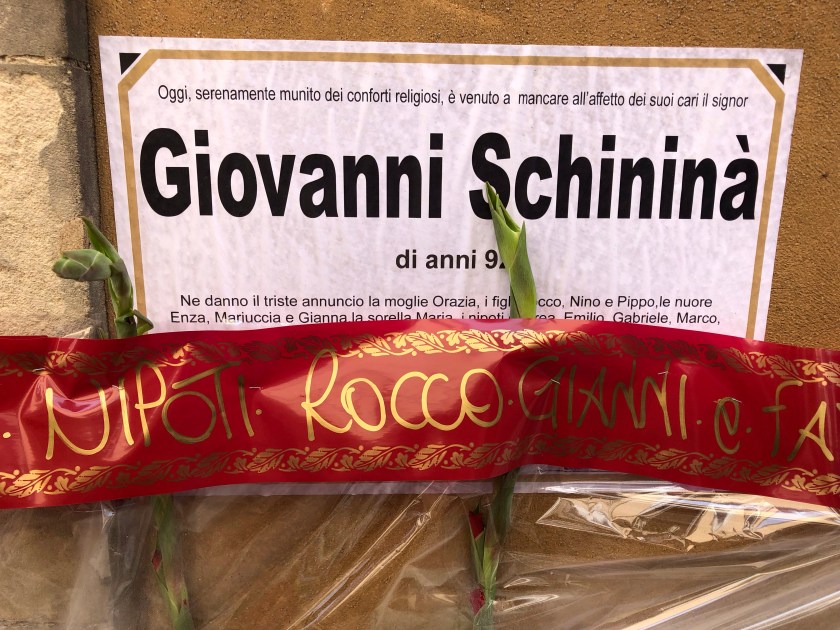
 Water mill and lunch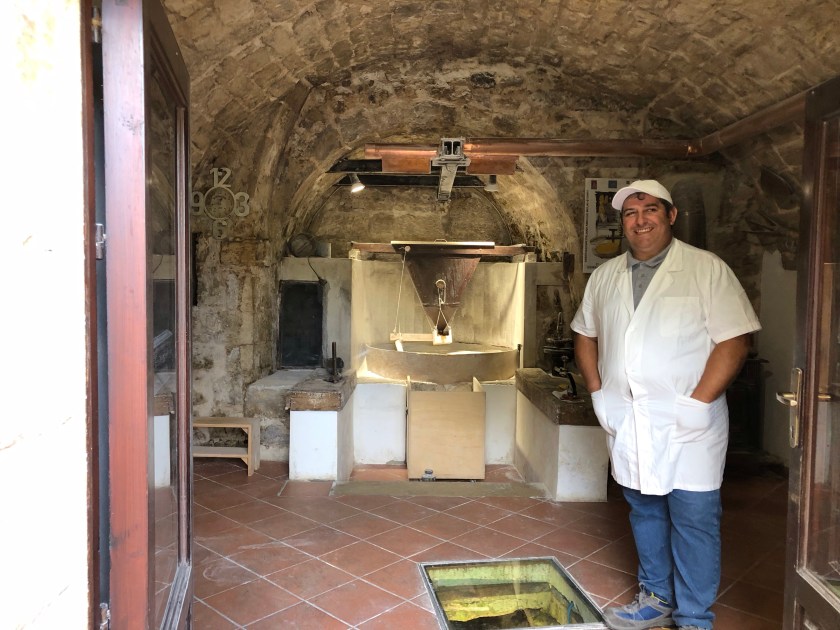
 Modica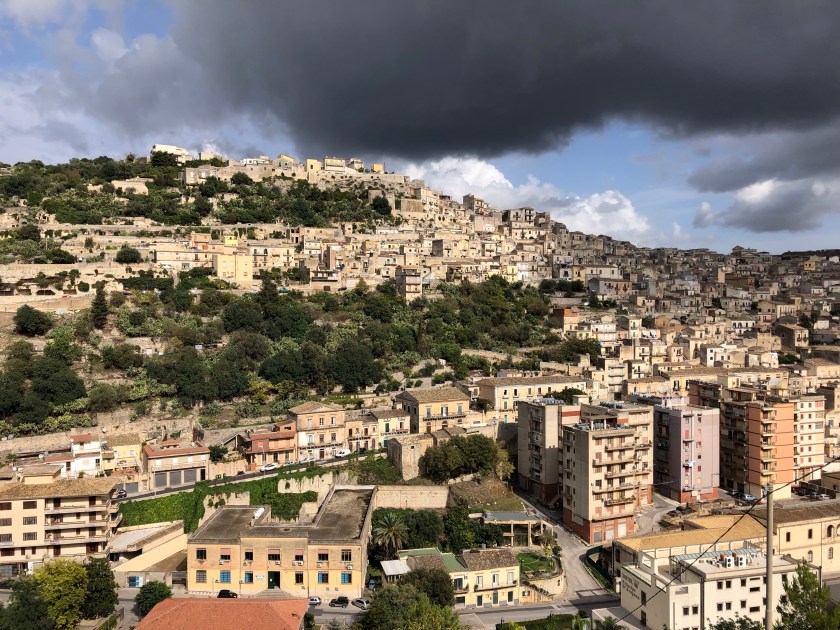

 Chance encounter with Christina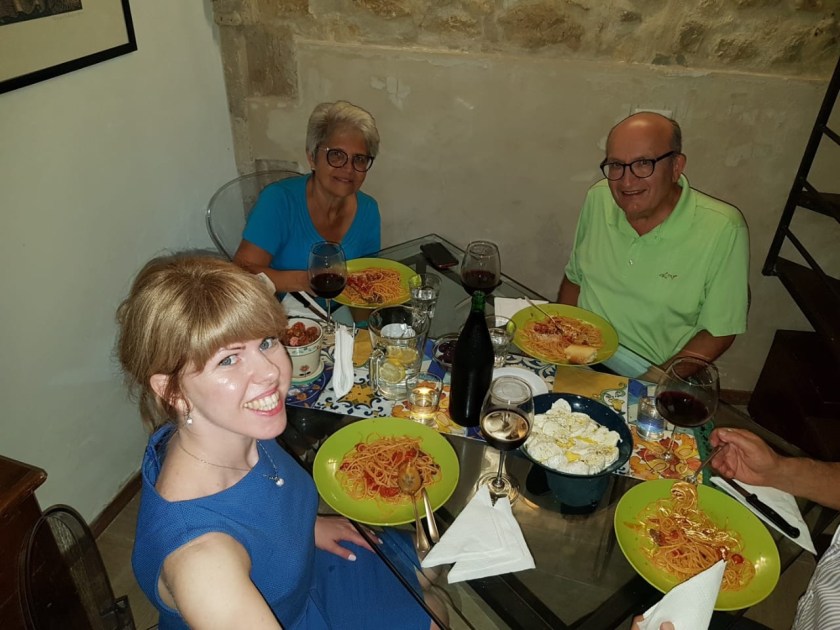

 Camino Musings