Taormina is a bit like Disneyland- too pretty and perfect – with its upscale shops, gorgeous views of the coast, lovely villas, lush vegetation and idyllic weather…and crowds of tourists, especially day trippers from cruise ships docked in Catania. Well, reality hit when we left what I call “pretty” Sicily as we descended southward to the second largest city on the island. Catania has a population of around 250,000 and is a port city on the eastern shore of Sicily. It dates back to the 8th Century BC and was colonized by the Greeks, However, unlike Agrigento (and Taormina), there is little trace of this ancient civilization as Catania was devastated first in 1638 by a lava flow from one of the lower craters of Mount Etna (which added distance from the old city wall to the water with the gardening of the lava) and a disastrous earthquake (7.4 on Richter scale) that pretty much leveled the city. As a result, the predominant architectural style is that of the Sicilian (late) Baroque. The city does not have the narrow medieval streets seen in other Italian/Sicilian towns, but rather wide streets and boulevards.
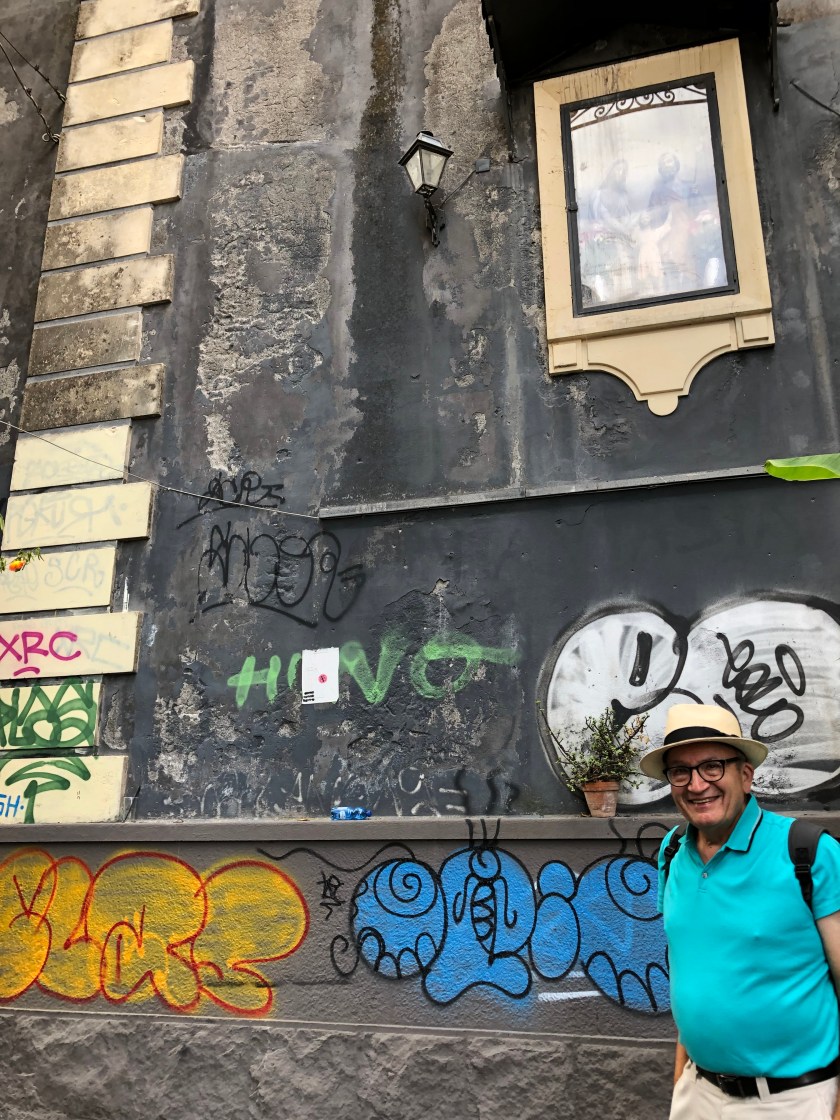
Catania (as well as the rest of Sicily) has never recovered from the Unification of Italy in 1861. Despite the presence of the port and oil refineries, the city suffers from high unemployment and poor infrastructure. The buildings are covered with graffiti and there’s more trash laying around, even when compared to the rest of Sicily and southern Italy. But Catania has a strange appeal, charming in its grittiness and the spirit of its inhabitants.
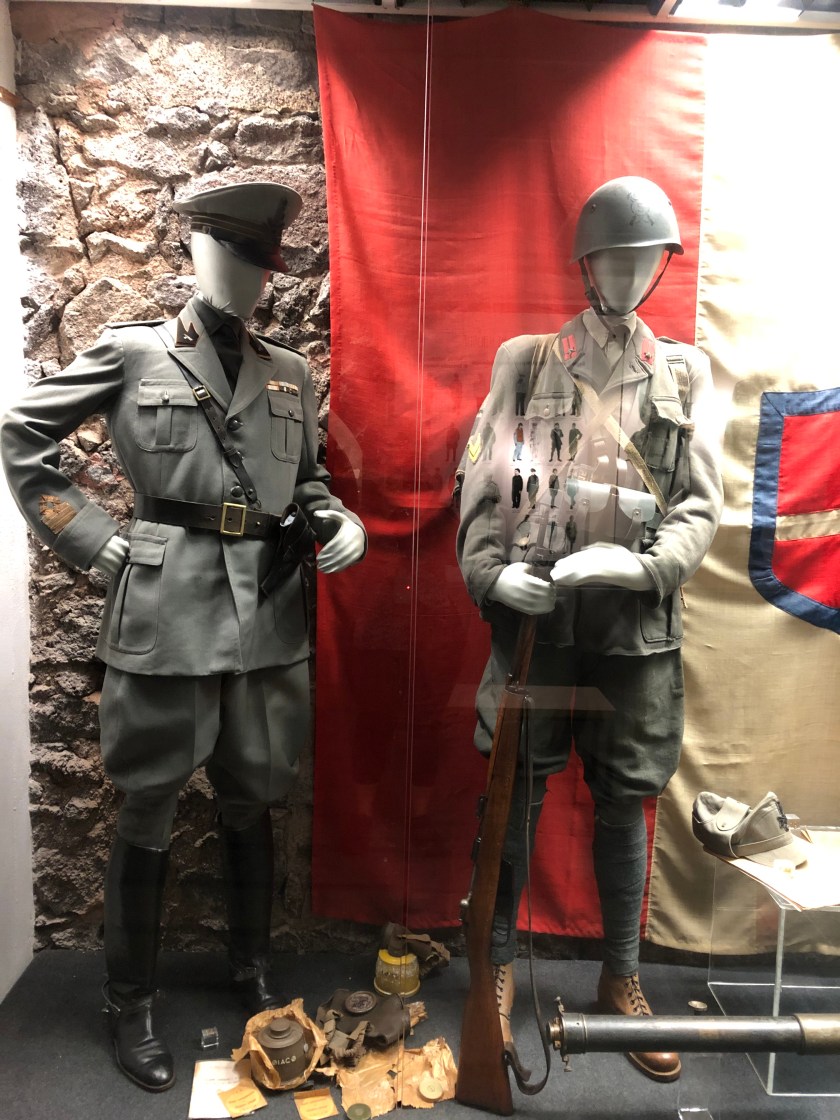
Our first view of the city was near the central train station. Some renovations have been made to an area bombed in WW2, transformed into museums (like the WW2 1943 Sicily Allied Landing Museum), but remnants of bombed buildings can still be seen.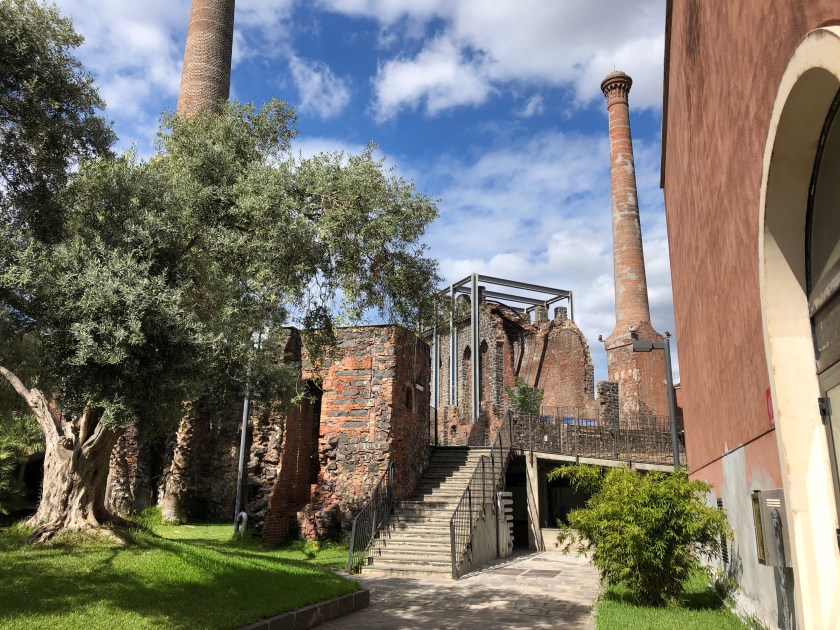
The WW2 museum, run by volunteers without government support, was an interesting and moving experience. There was an introductory film and two floors of exhibits, including replicas of a town before and after a bombing and a bomb shelter with audio simulation of a bombing. There were also multimedia displays of the Allied convergence on the island and displays of uniforms and weapons of Italian, German, American, and British armies.
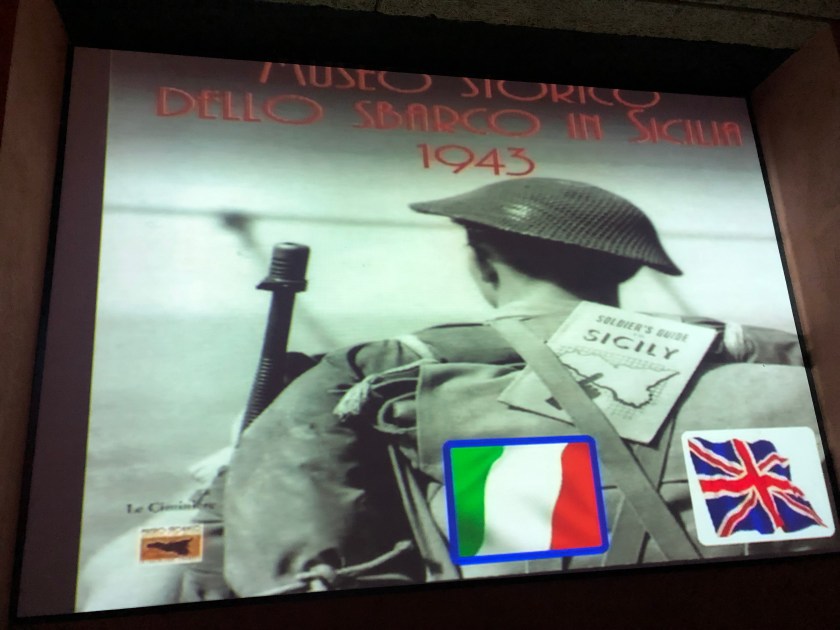
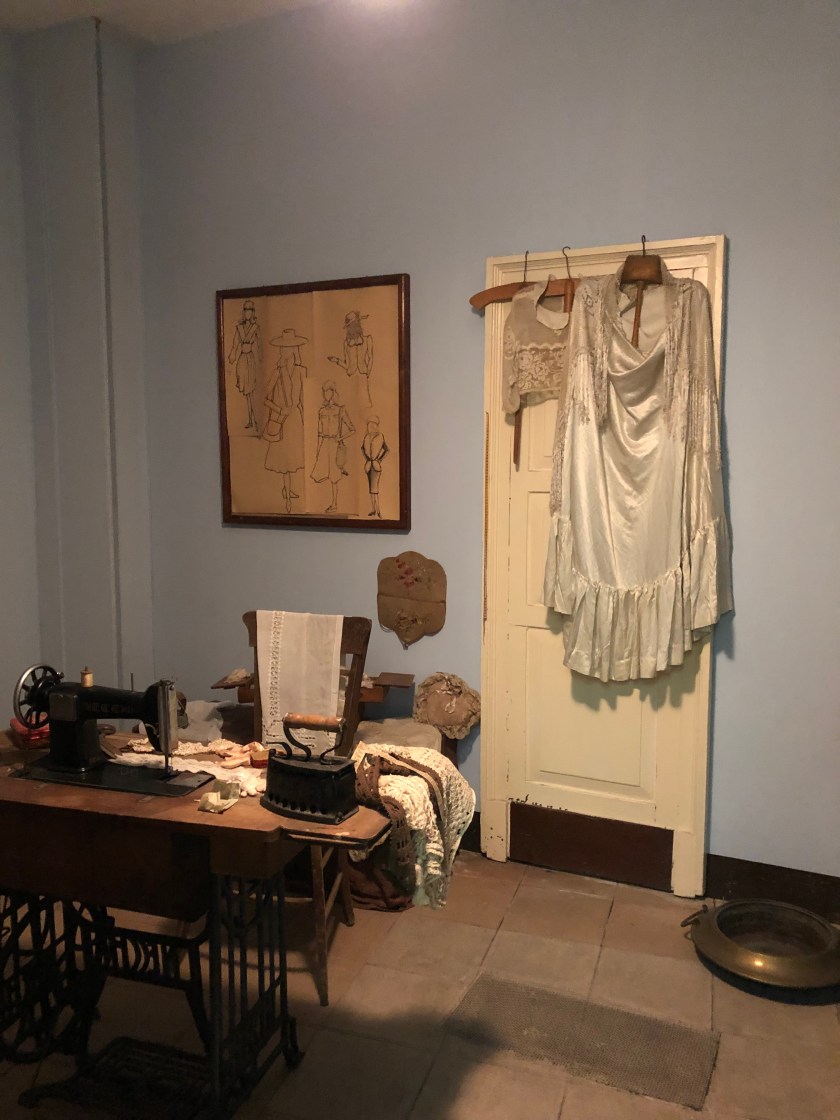
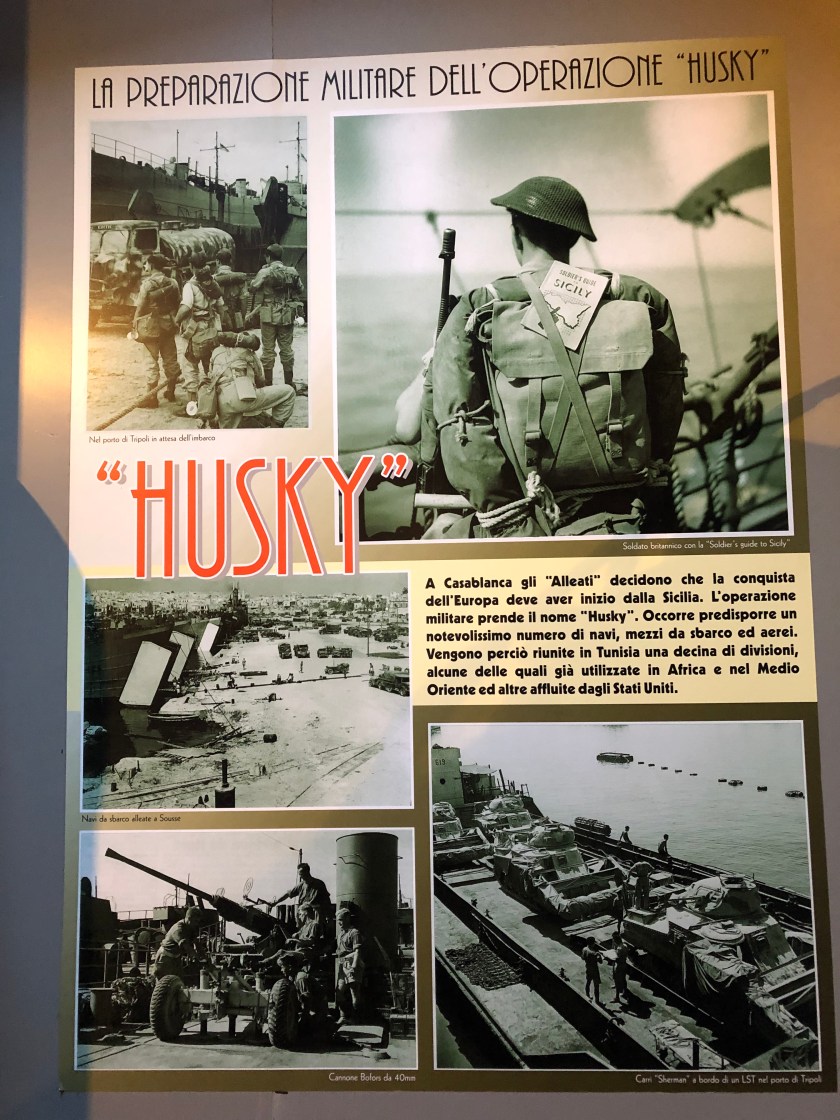
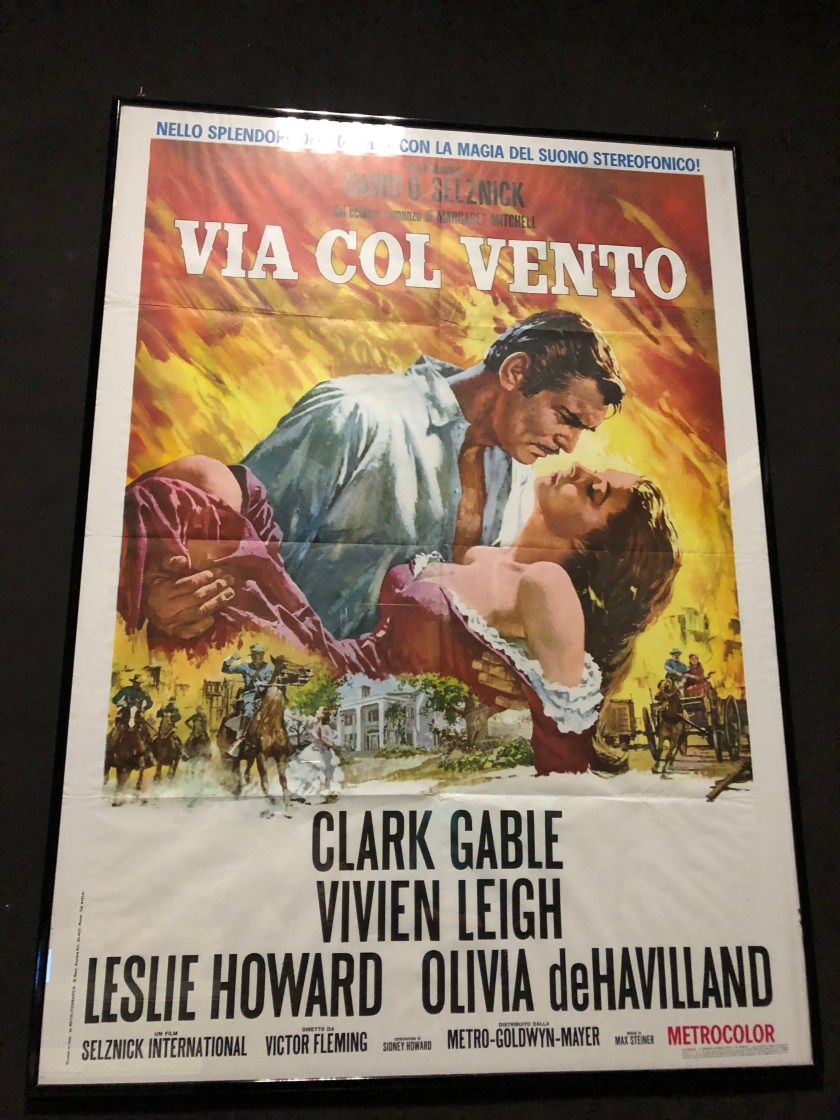
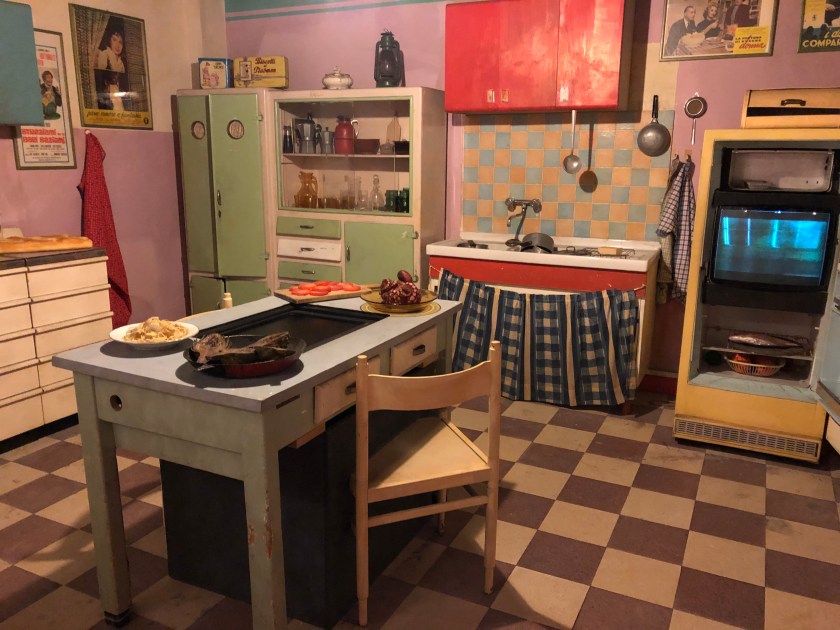
A Cinema Museum was next door and we spent about 45 minutes looking at old projectors, movie posters, film sets and an exhibition on the film industry in Catania (started in 1914!).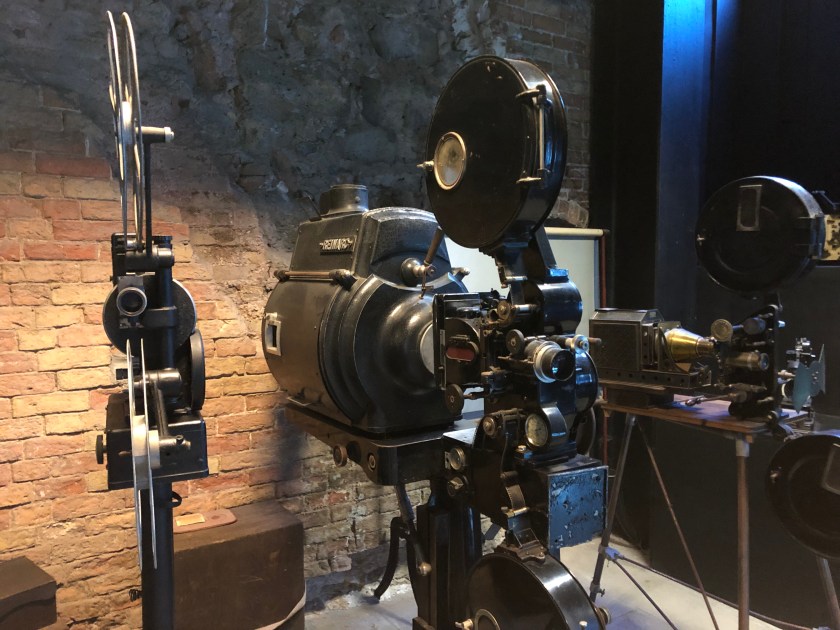
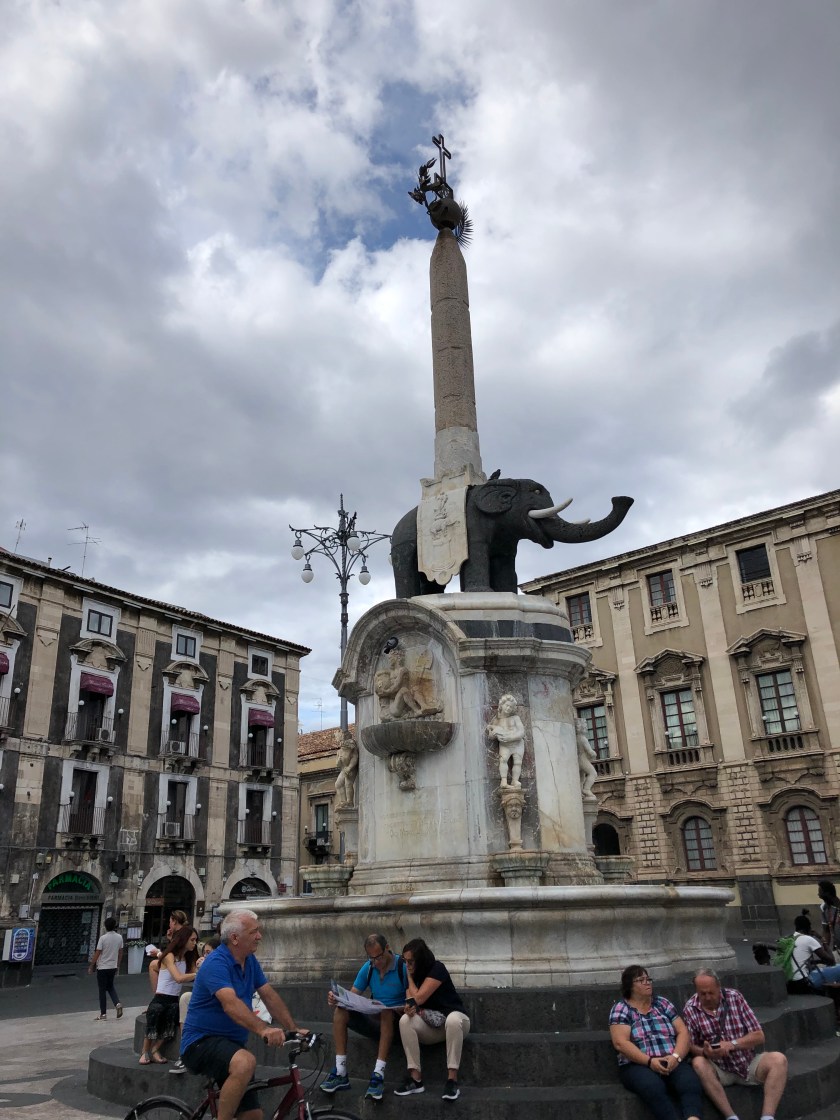
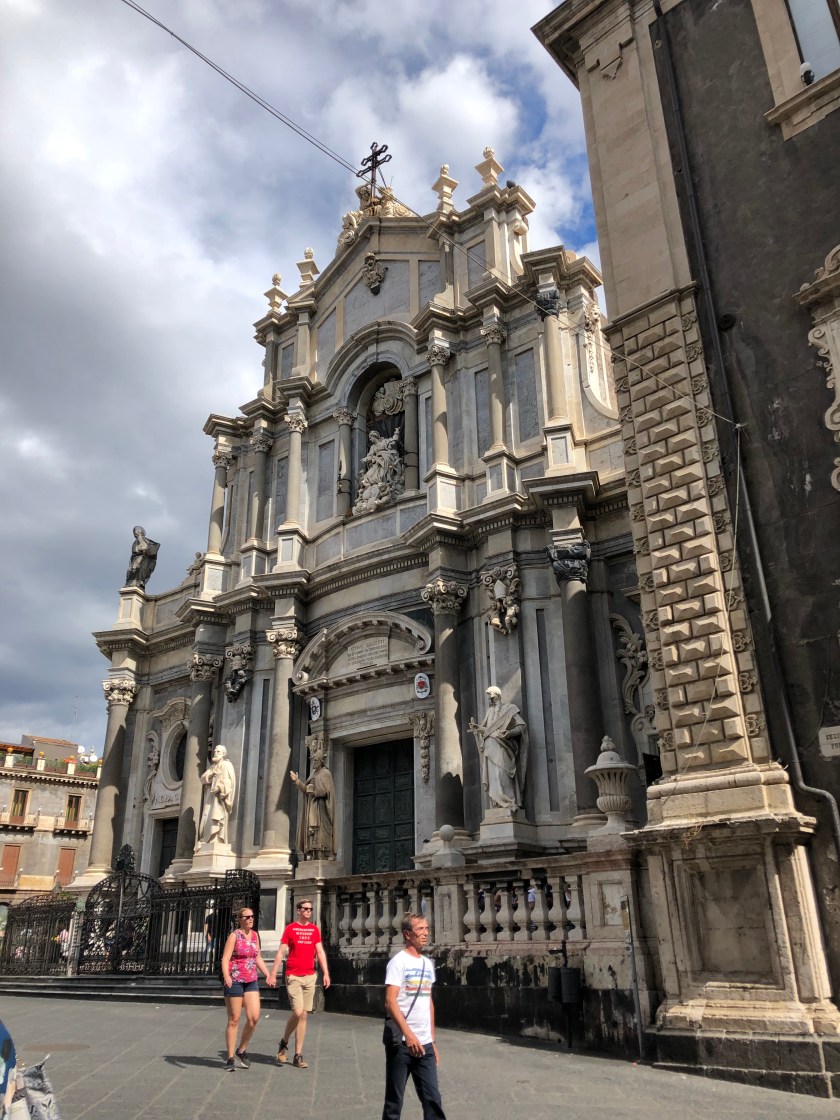
Next was a short orientation to the historic center and a quick lunch before checking in to our hotel. Walking through the city gate, the Piazza Duomo is expansive, with an obelisk with a statue of an elephant in the center and flanked by the Church of Sant’Agata (patron saint of Catania), city hall and several cafes. 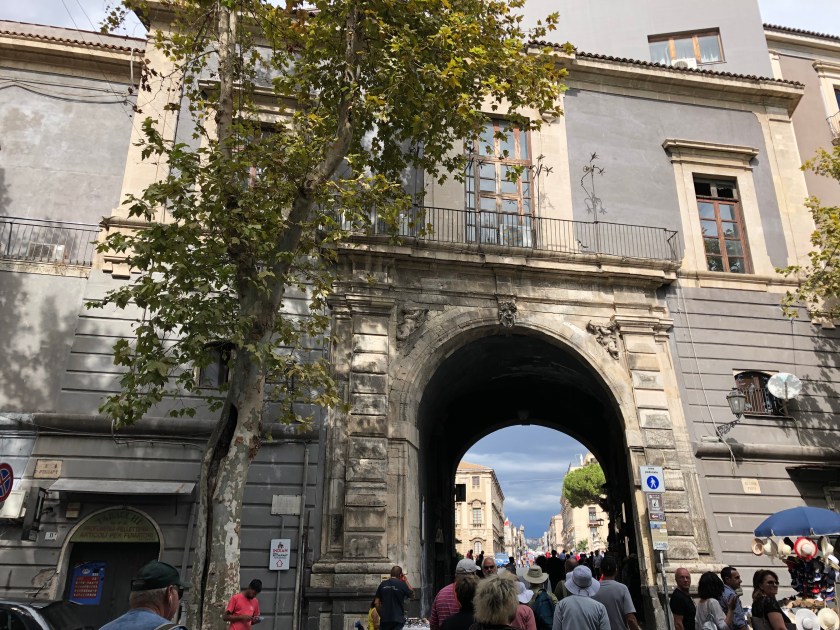
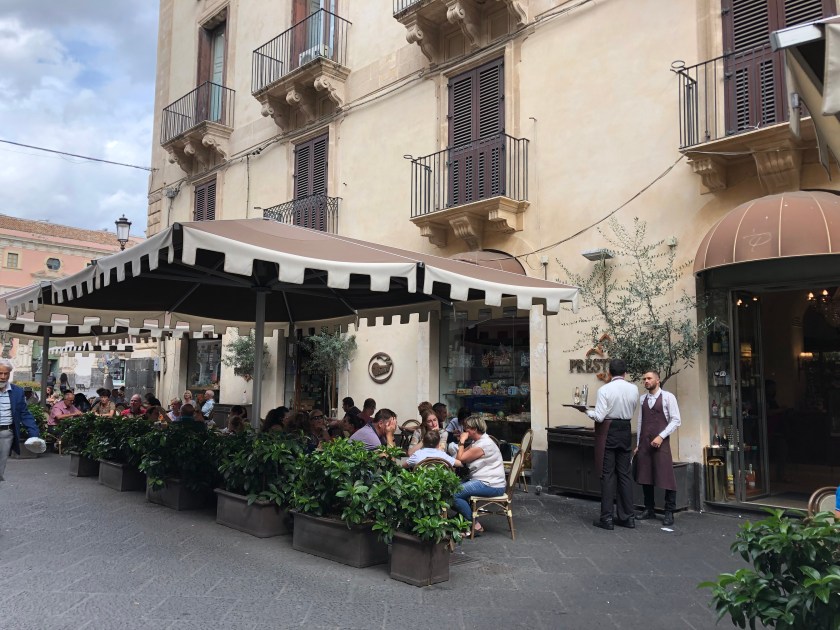
We had a quick “lunch” of an arancino, a siciliano ( like a calzone filled with cheese and eggplant), a beer and an almond milk.
We walked up via Etnea, one of the main streets, before meeting up with our group.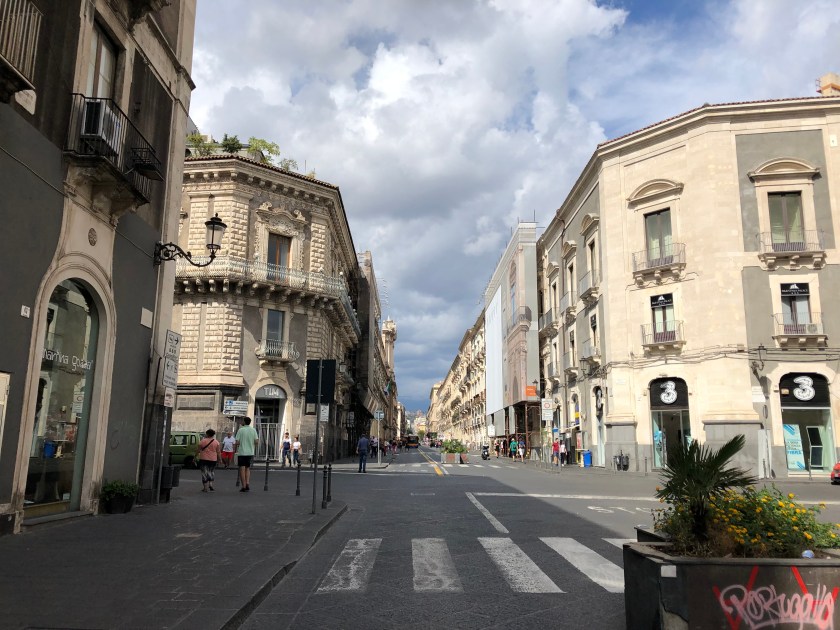
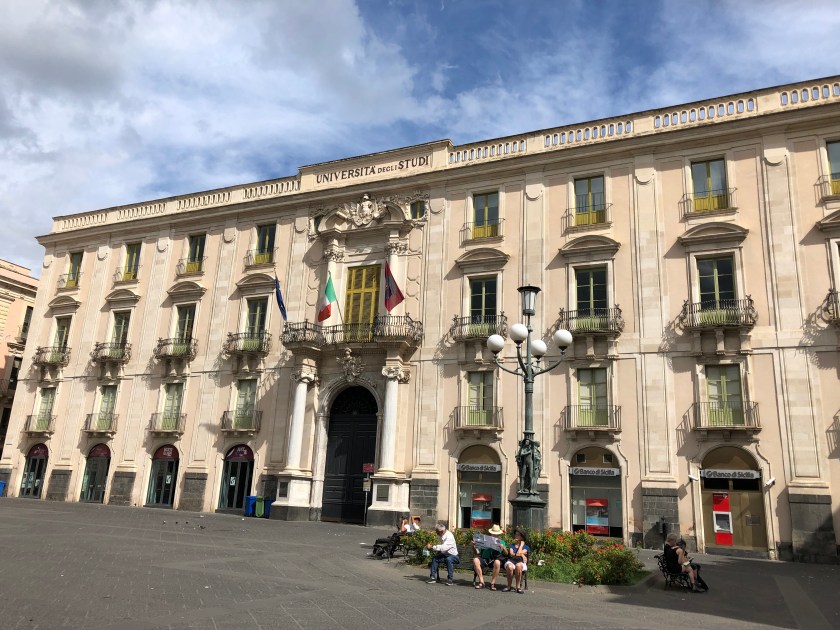

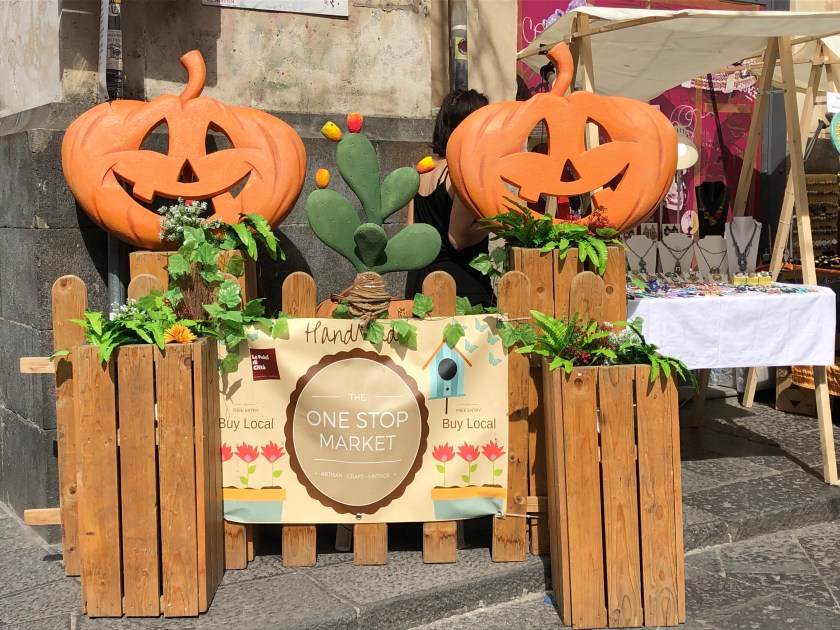

We passed a Faculty of the University of Catania, one of many Baroque churches and a craft show!
Our hotel, the Liberty, is about a 15 minute walk from the Duomo, on a side street. It used to be a palazzo housing two families and after a 17-year renovation had been transformed into a Victorian style hotel, with gorgeous light fixtures, wallpaper, drapes and antique furniture.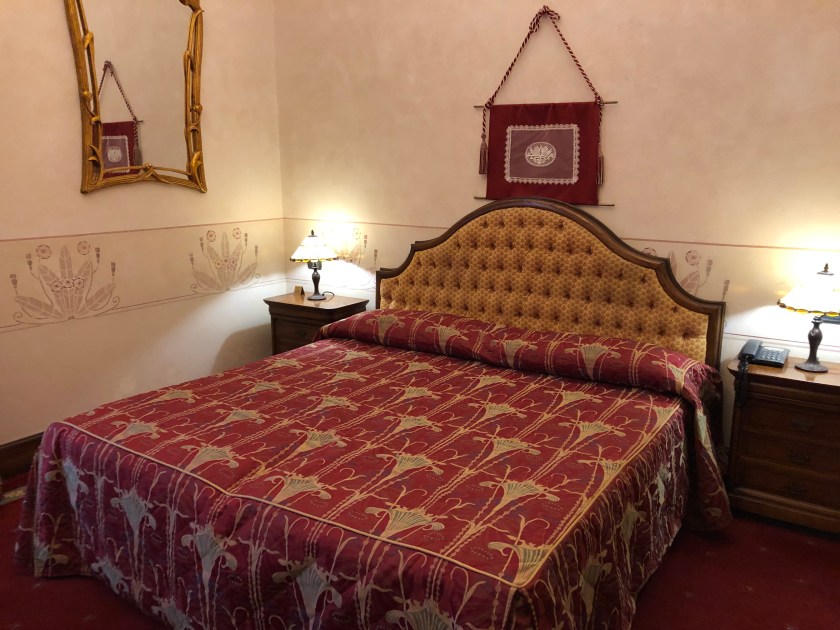
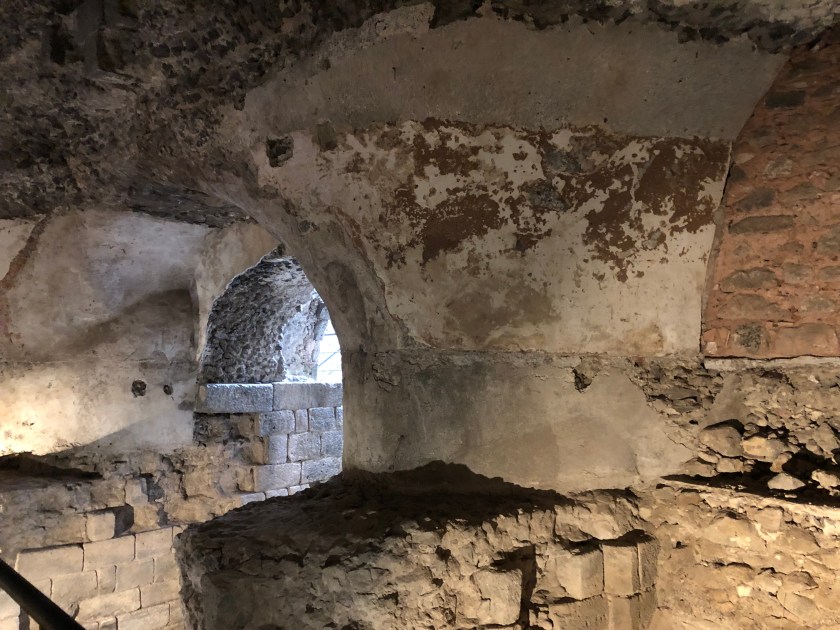
After a few minutes to get settled, we ventured out to explore the city. Being Sunday, most of the shops were closed but all the museums and monuments were free to the public (first Sunday of the month). We first visited the Roman amphitheater, most of which is still buried under existing buildings. It dated to the 2nd century AD.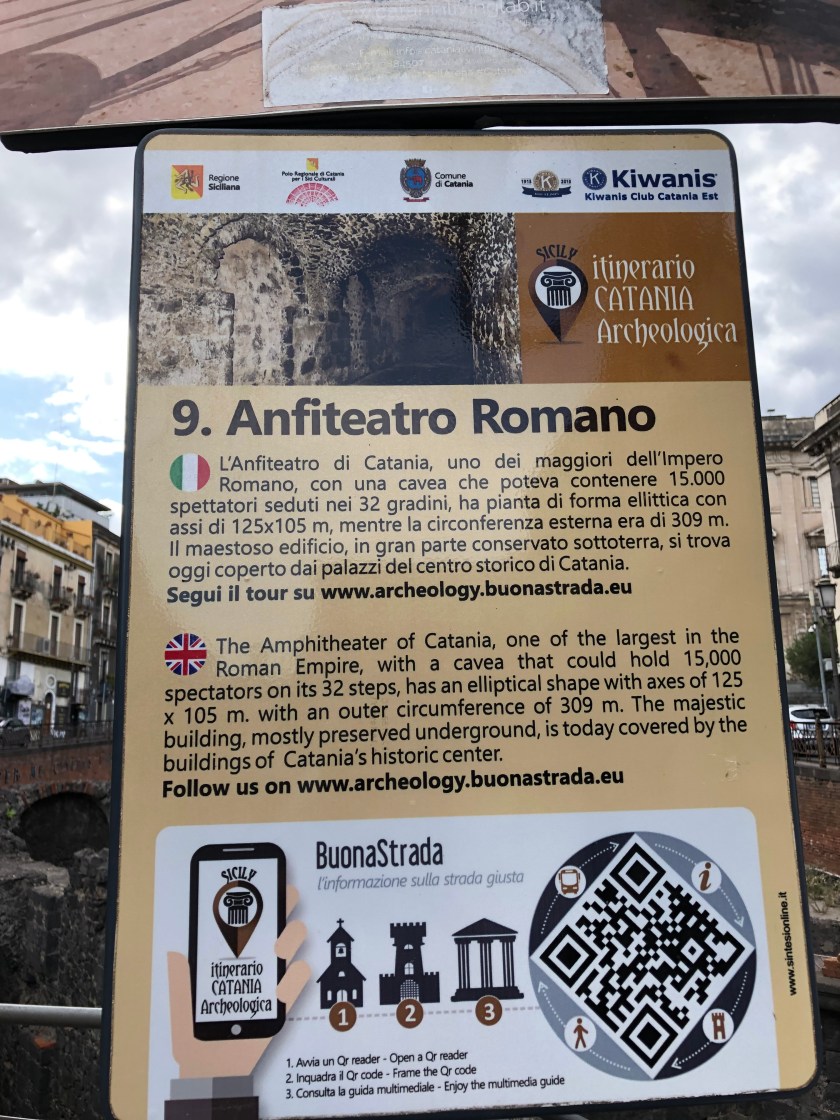
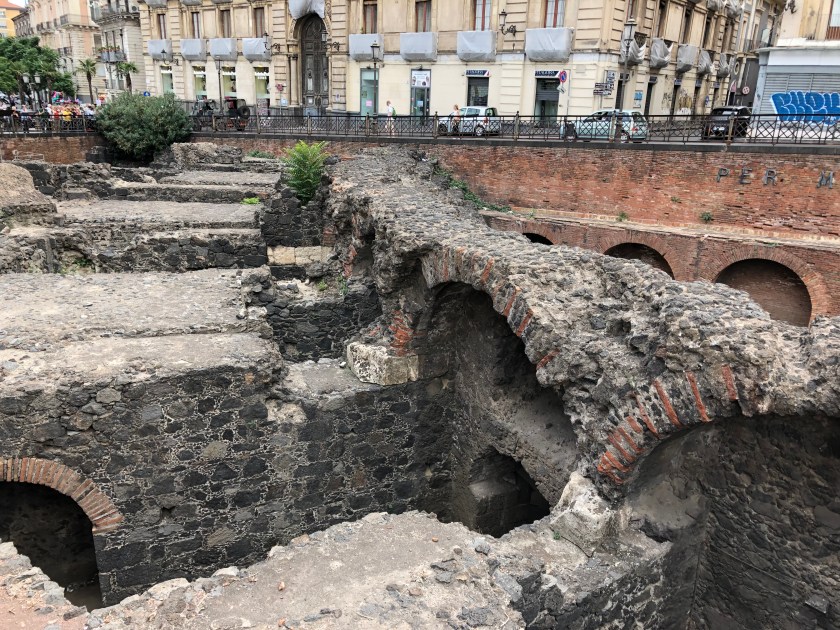
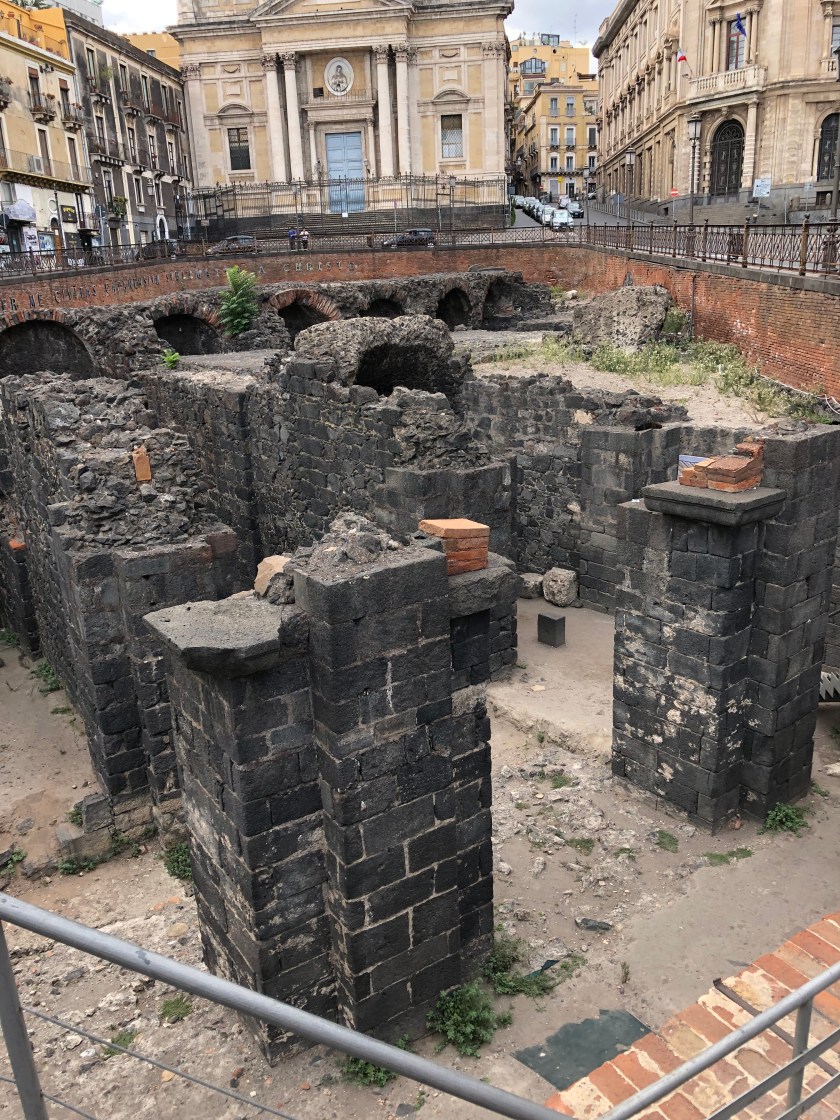
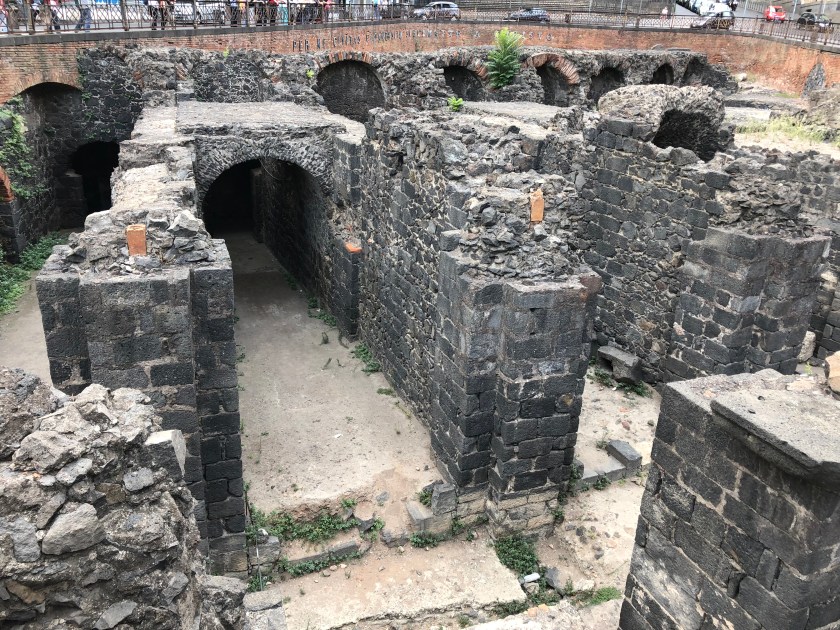

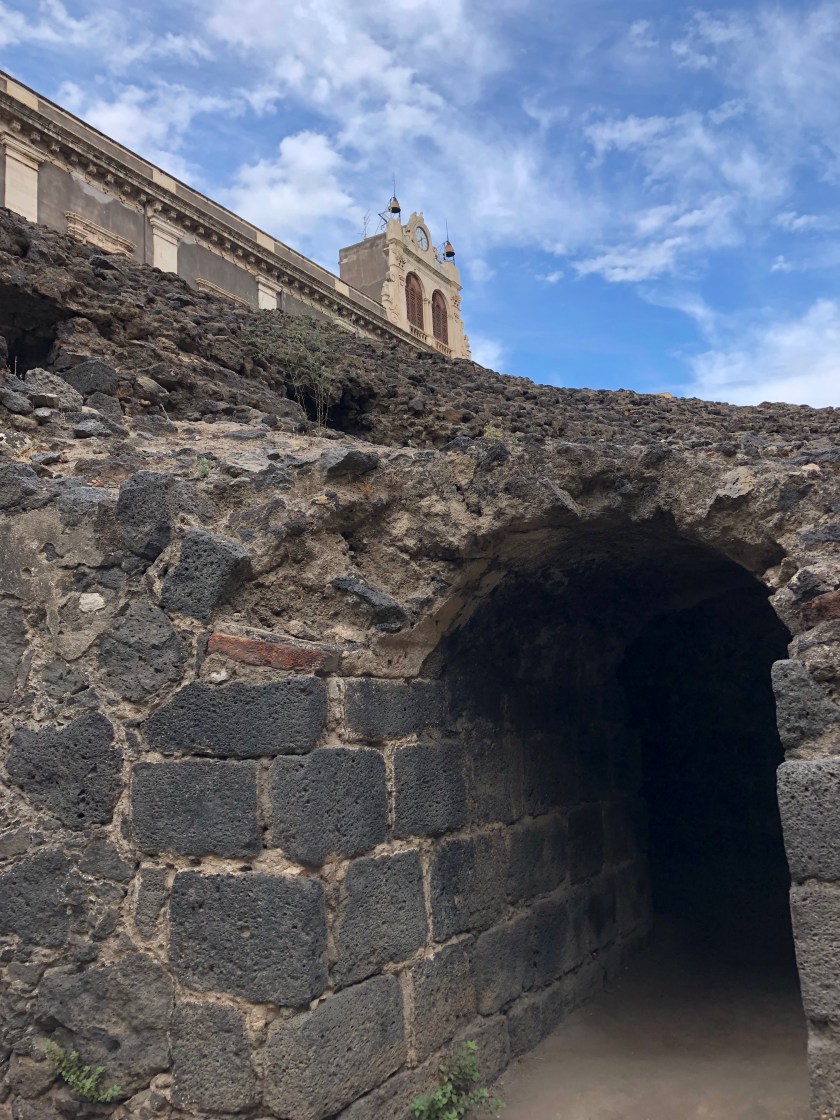
We then walked up a series of stairs to the via Crociferi, a 500 meter long stretch of which contains five churches and three religious institutions.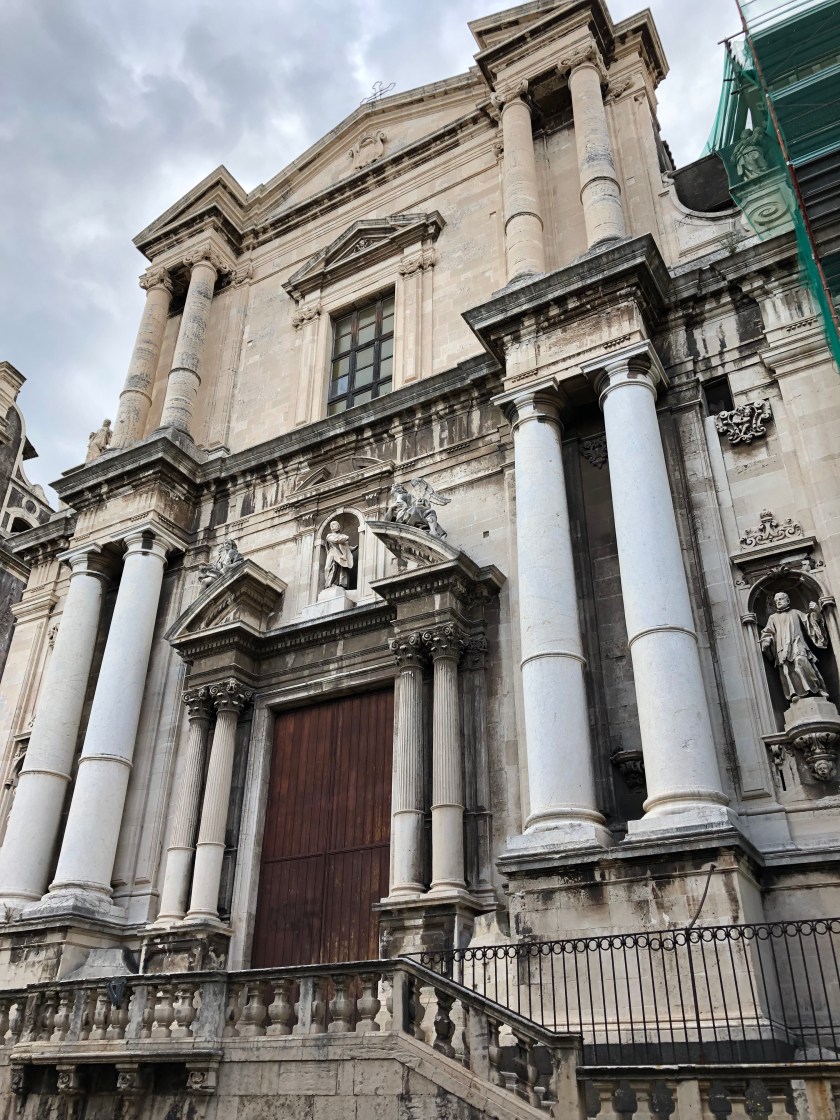
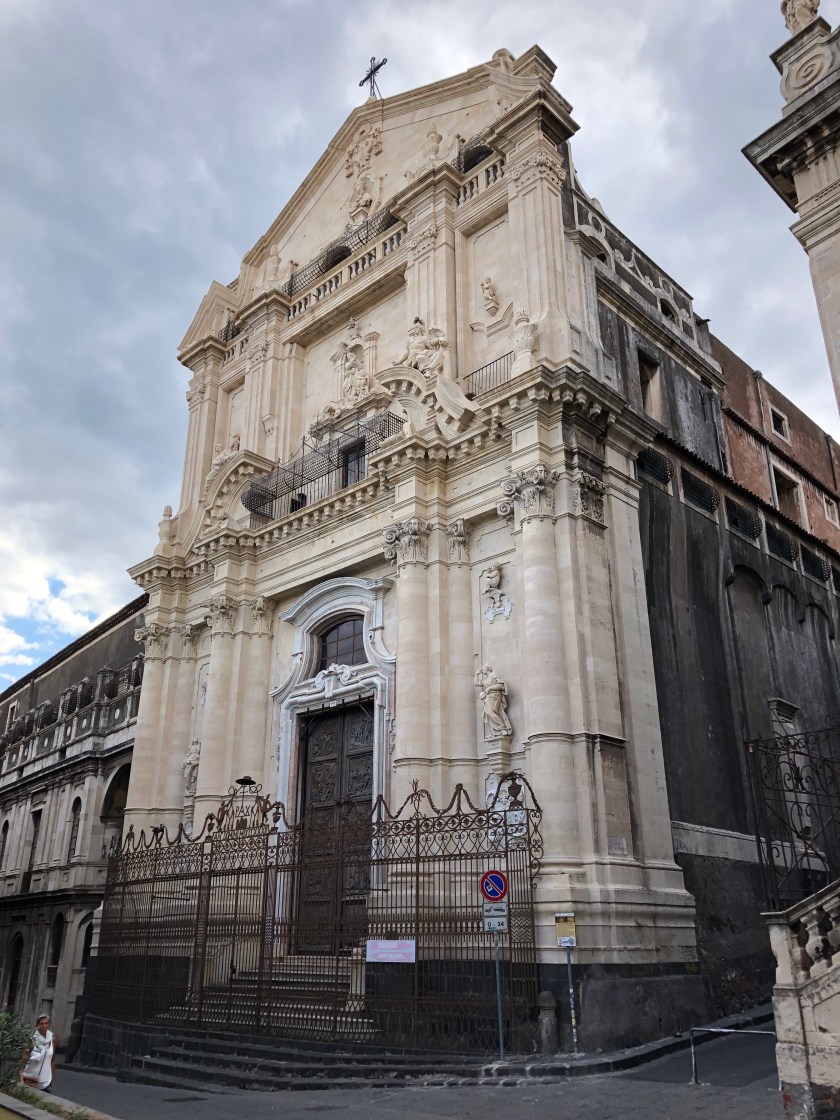
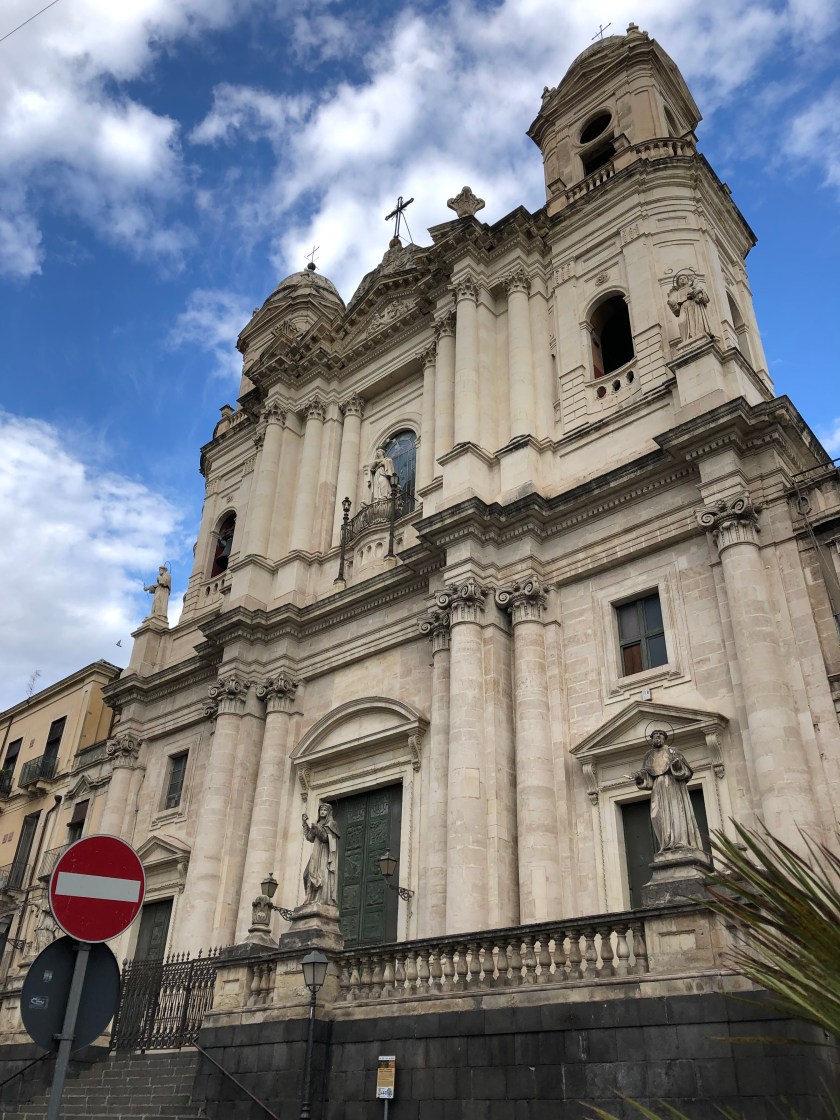
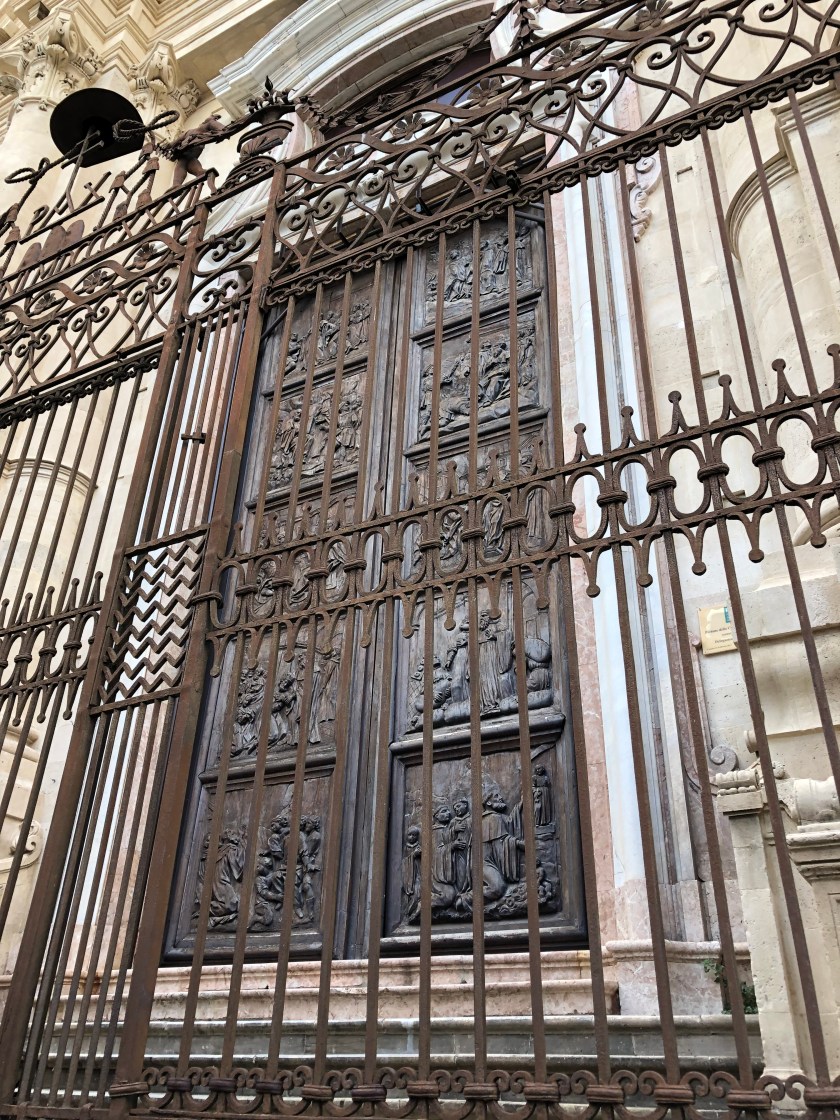
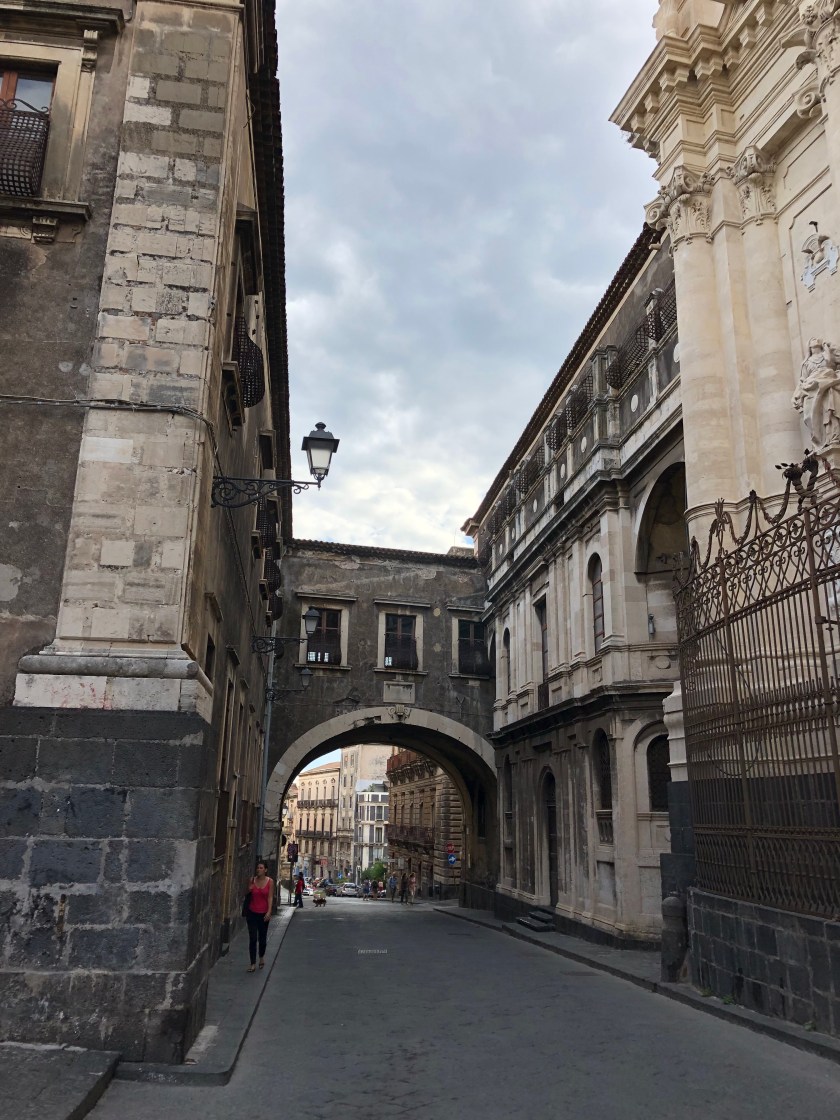
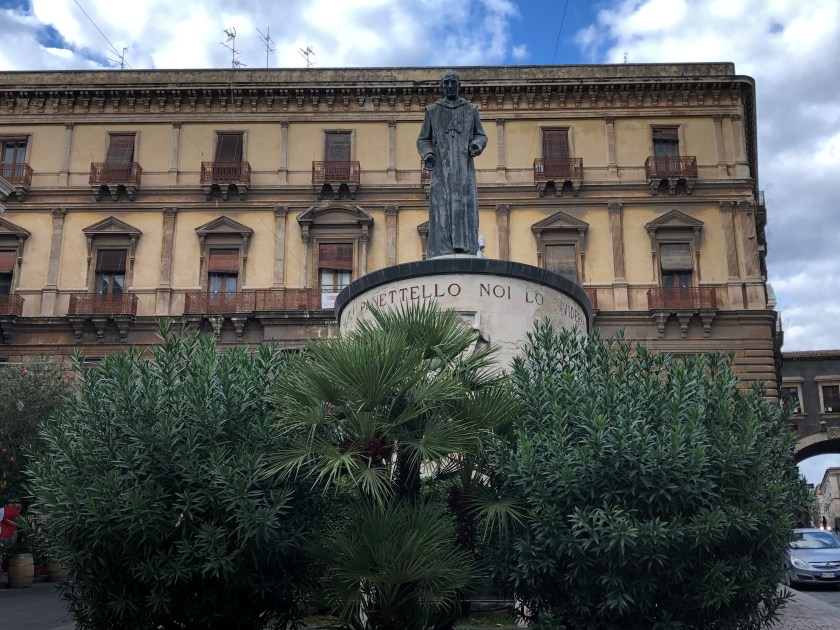
We passed some colorful street art along our walk.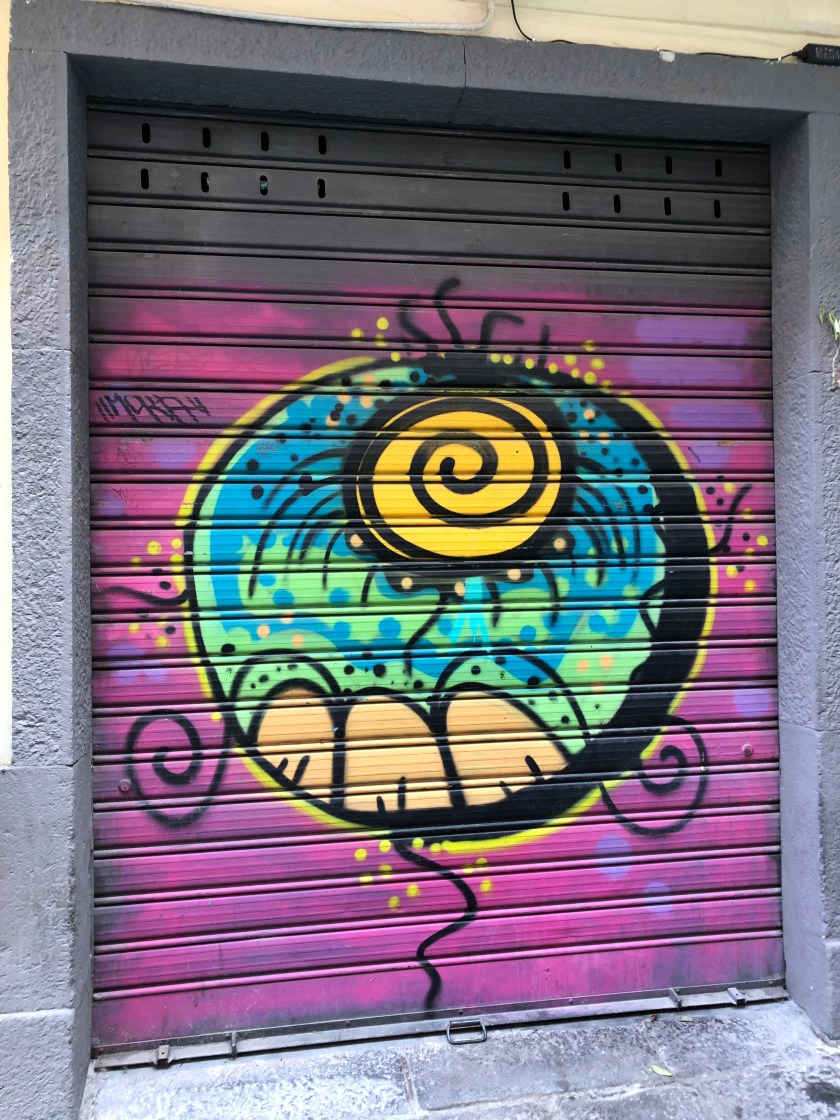
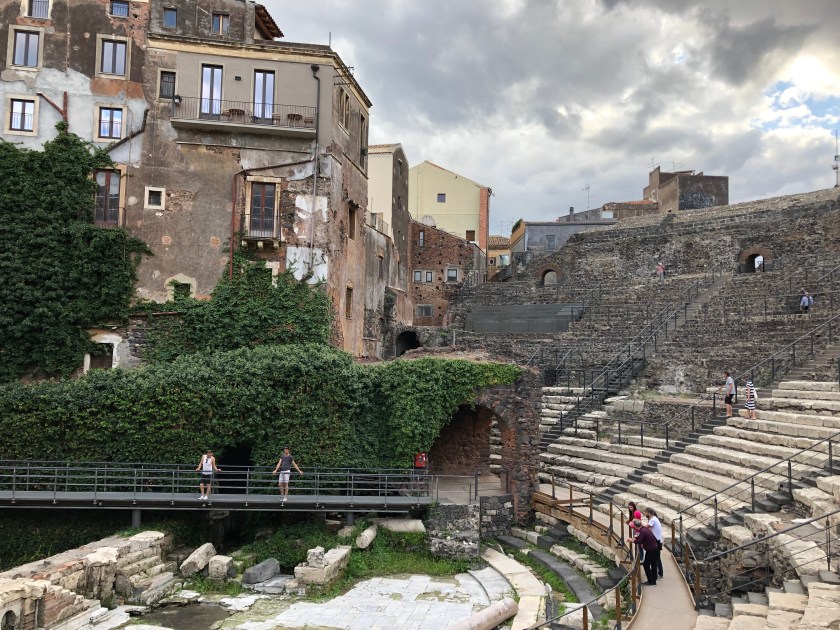
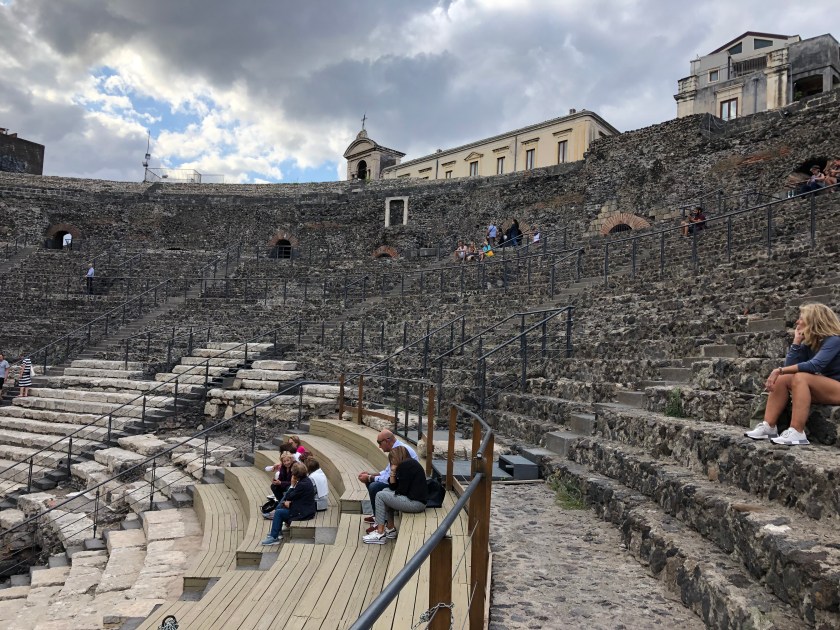
The next site was the Greek/ Roman theater, hidden away behind an innocuous door that opened out into an impressive well preserved amphitheater.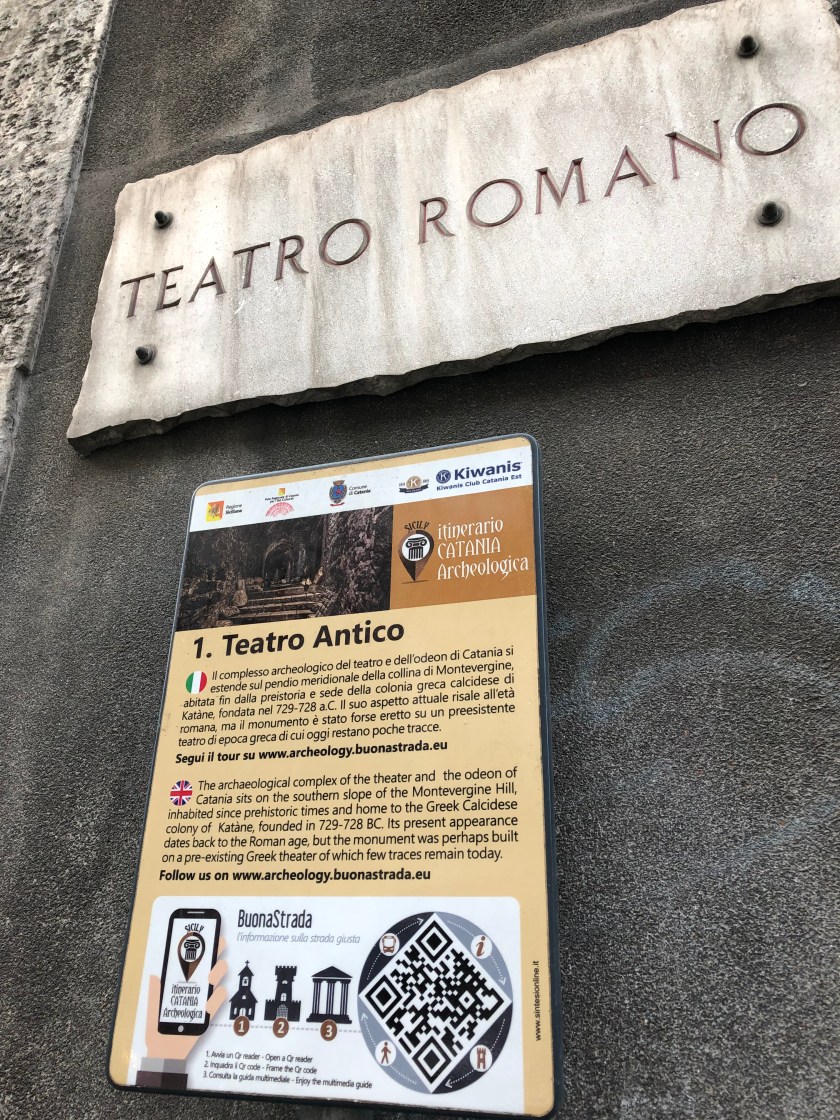
We wound our way back to the hotel before our farewell dinner. 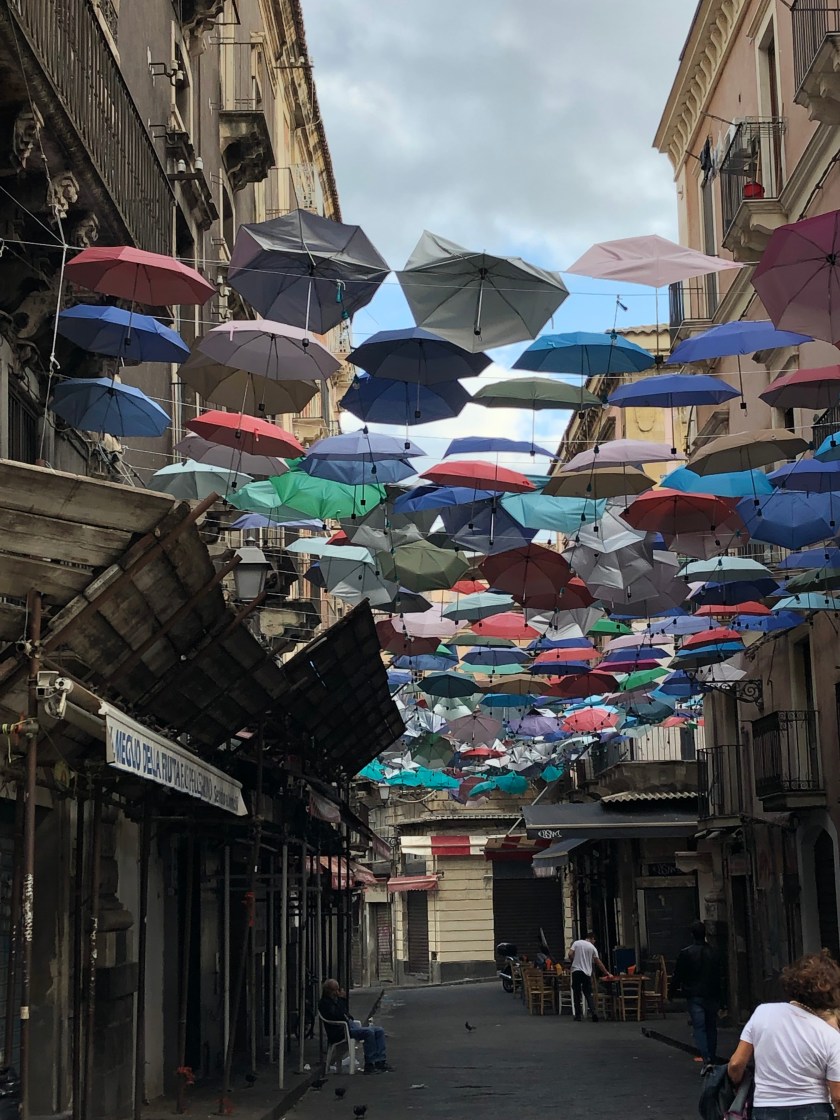
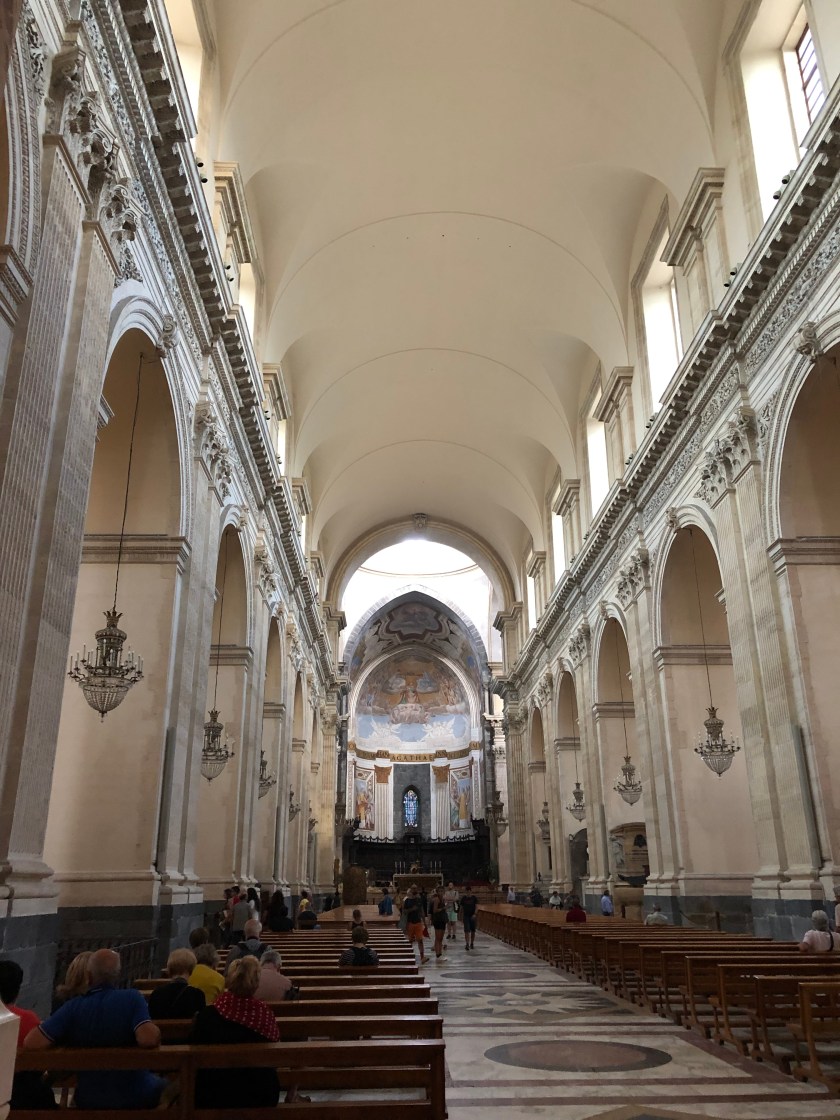


We visited the Duomo, witnessed two baptisms and joined in the evening passeggiata.
Our farewell dinner was preceded by a happy hour and the we proceeded to a nearby restaurant for a traditional meat/based meal starting with antipasto of grilled veggies and caponata, two pastas (a la Norma and with pistacchio pesto) and a platter of grilled sausage, meatball, and veal and a dessert of pistacchio cake.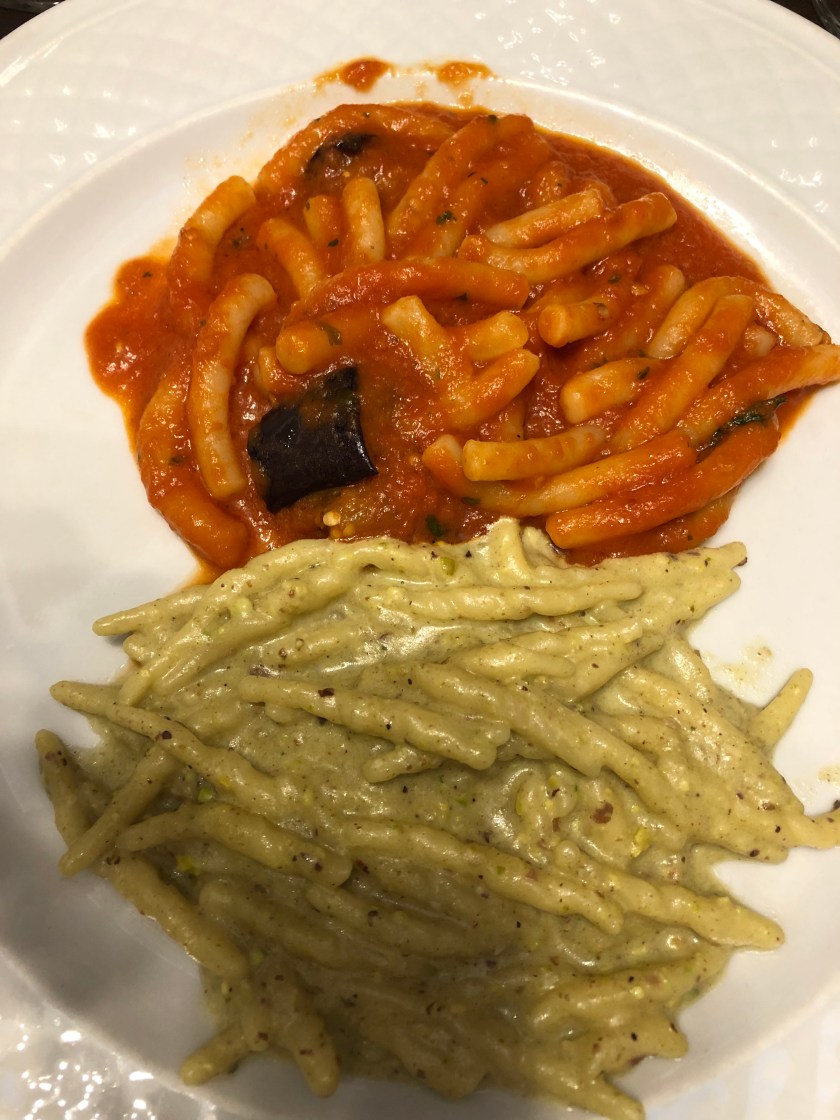
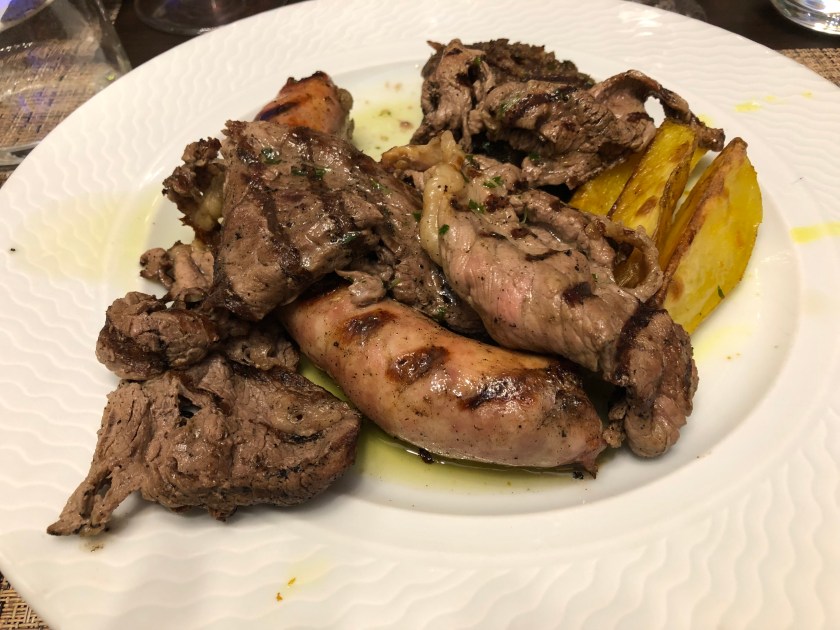
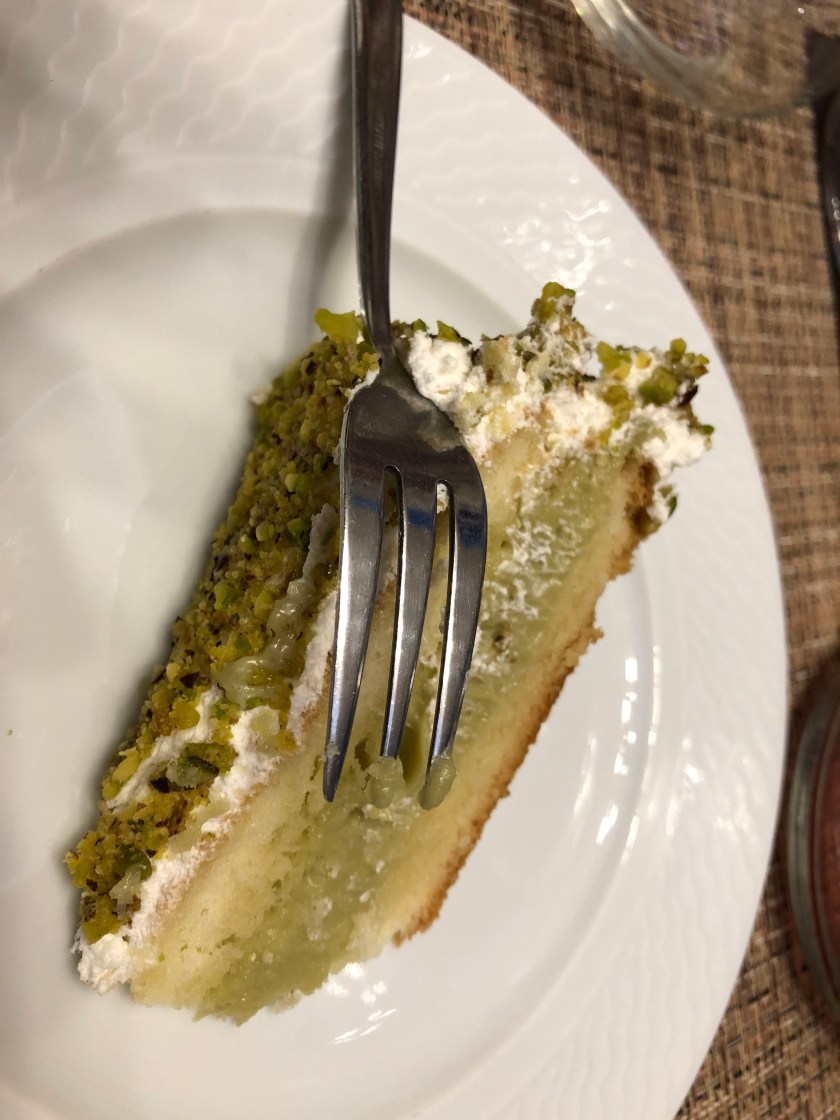
David, our guide, also gave a lesson on Italian gestures.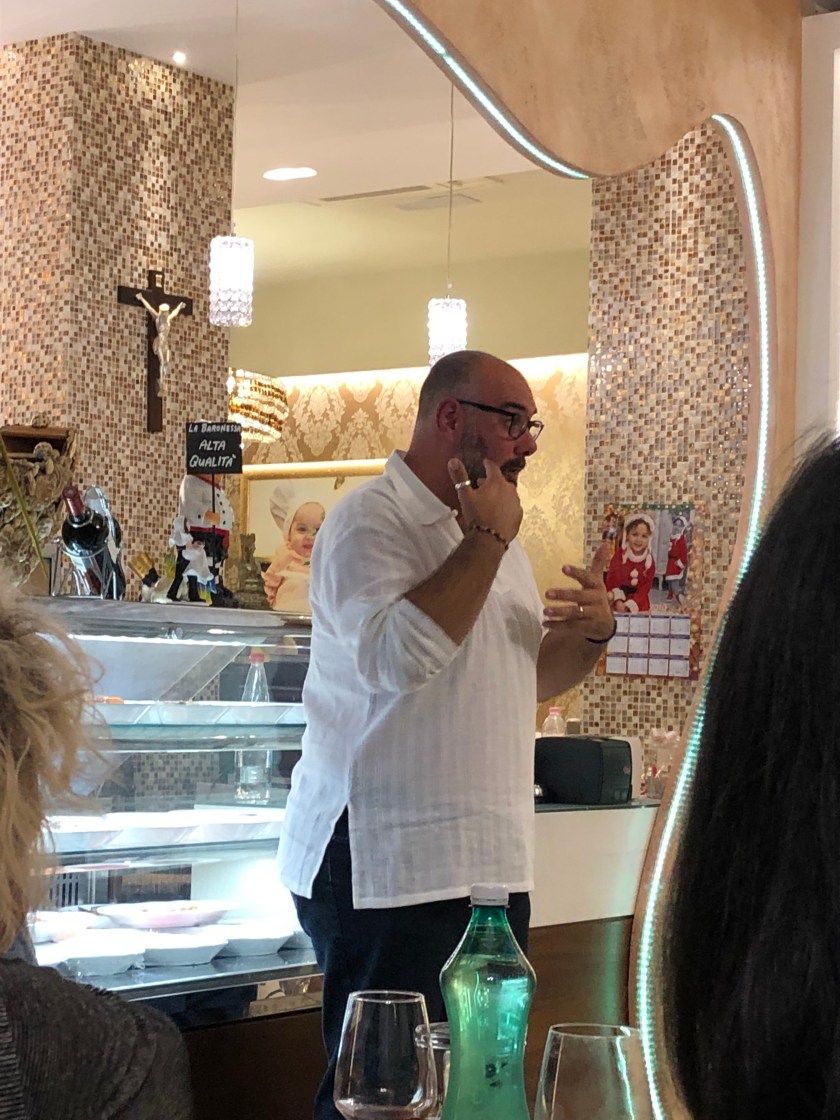
It was a lovely end to a great Rick Steves tour. Tomorrow we start off on our own for nine days.

 Camino Musings