Street food has become the rage of the contemporary culinary scene, from the plethora of food trucks at local festivals to street carts selling quick snacks to passers by. But in Palermo, street food has been around for centuries and this city , as well as other cities in Sicily, is renowned for the variety and quality of these inexpensive, filling treats that are sold from street corner carts or small storefronts. Today was our introduction to Palermitan street cuisine via a food tour run by Streaty ( a local tour company started by a young Palermo native). We met our guide,Angelo, in front of the opera house. He was young (looked like a boy but was in his 30s), thin, generously tattooed, and passionate about his city and its food. We started in the Capo market, located near the opera house. It is one of three city markets (il Ballarò is the largest and the Vucciria is now pretty much an evening dining scene). The five senses are in a heightened state of awareness while walking by the stalls of produce, fish, cheeses and prepared foods.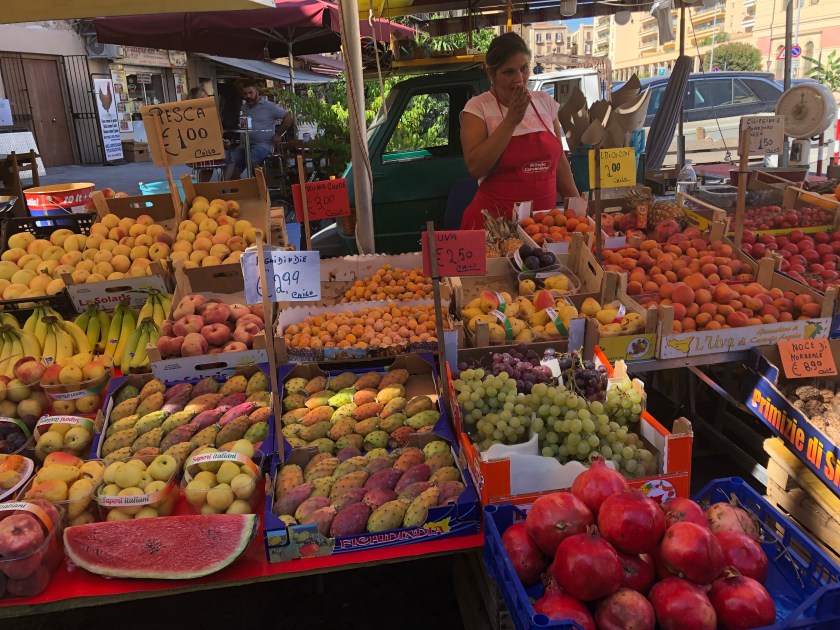
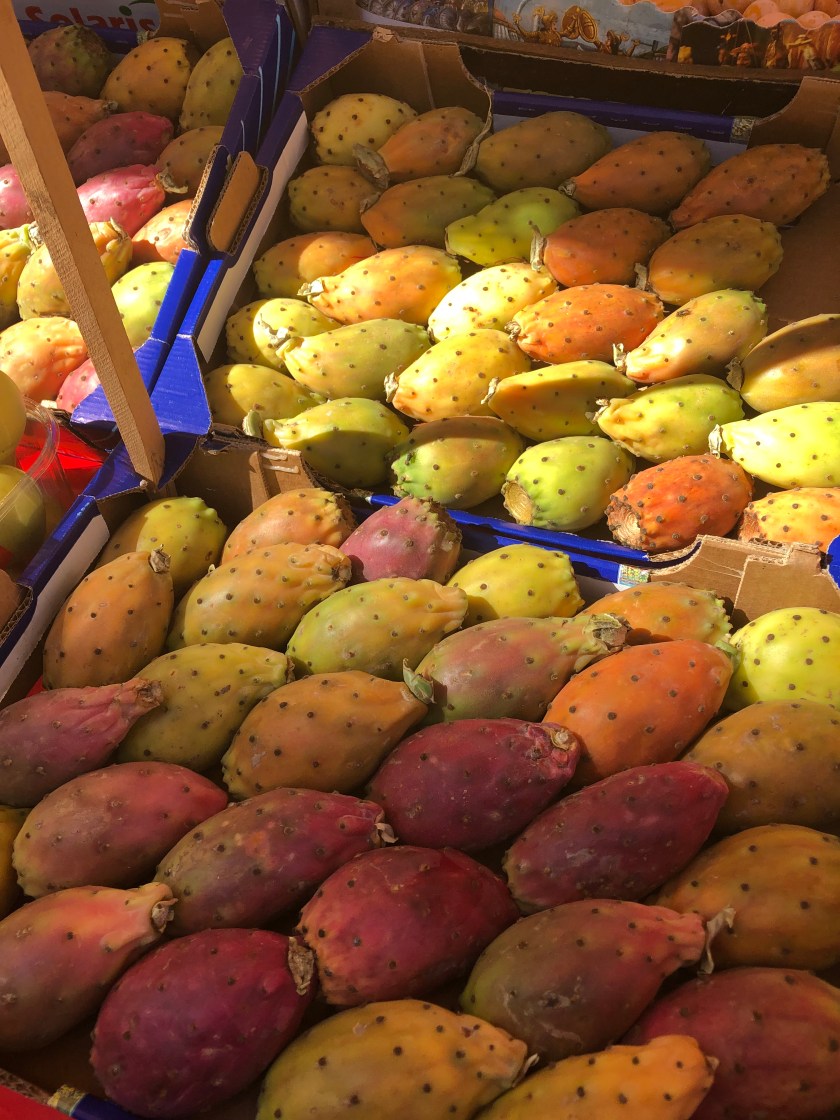
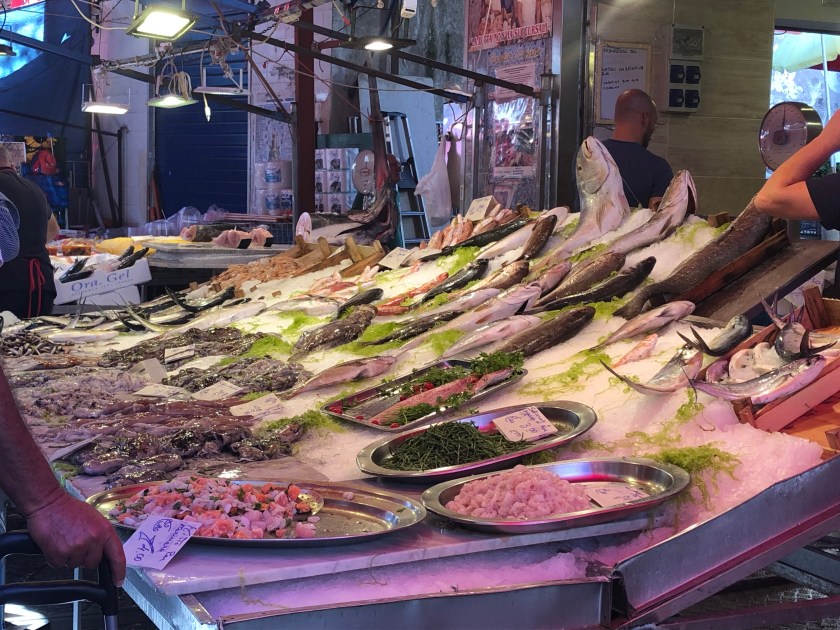

Our first food sampling stop was for a triple treat of fried foods- cazzilli (potato croquettes), panelle (chickpea flour flat fritters) and arancine (fried balls of rice seasoned with saffron and filled with meat and peas).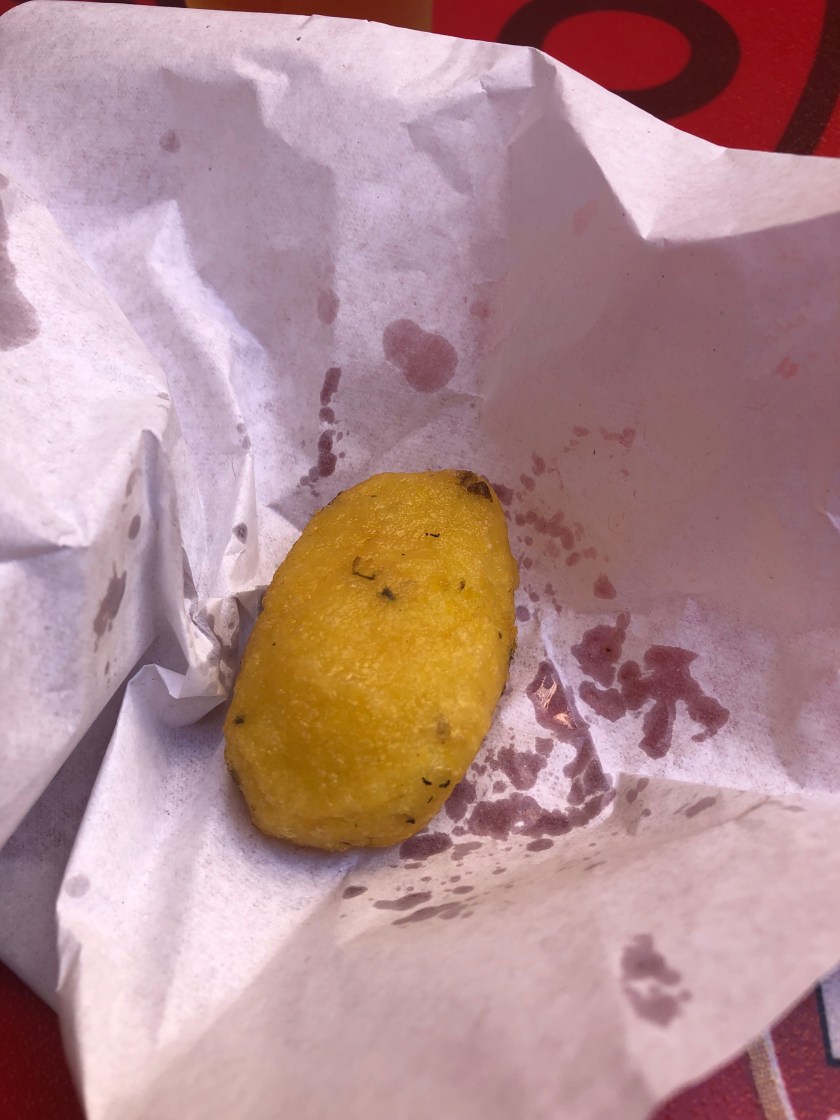
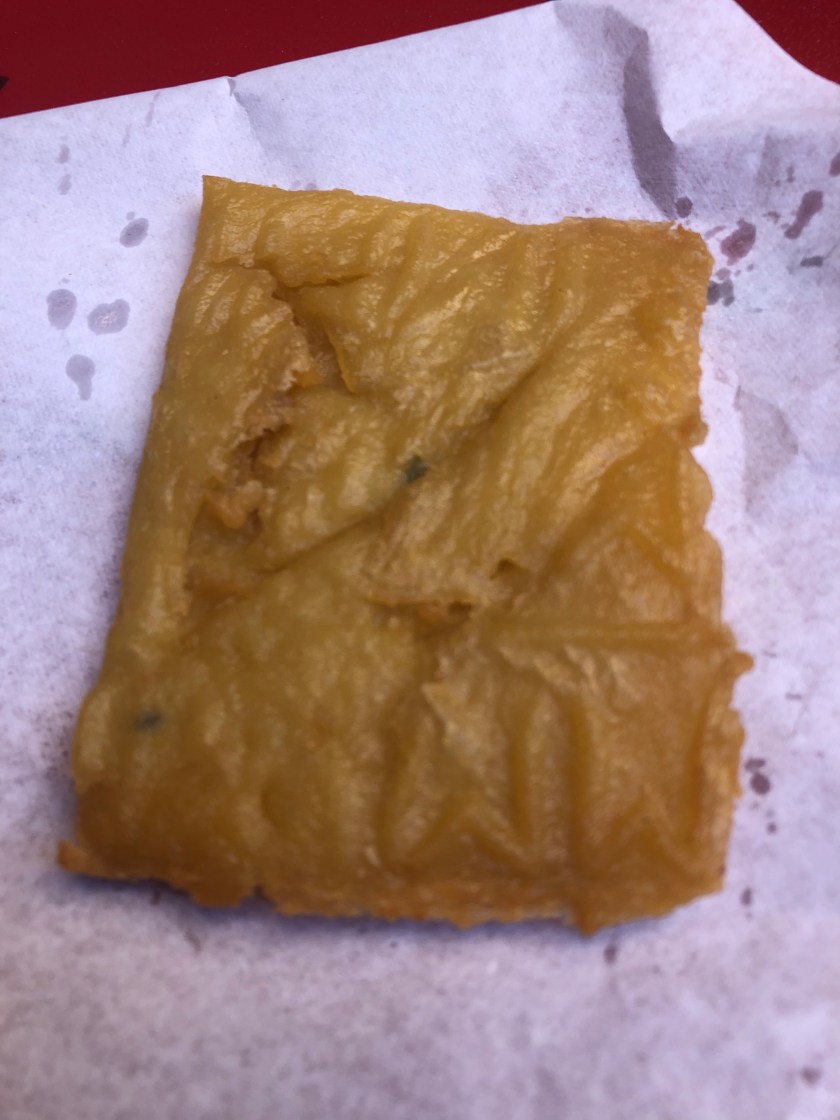
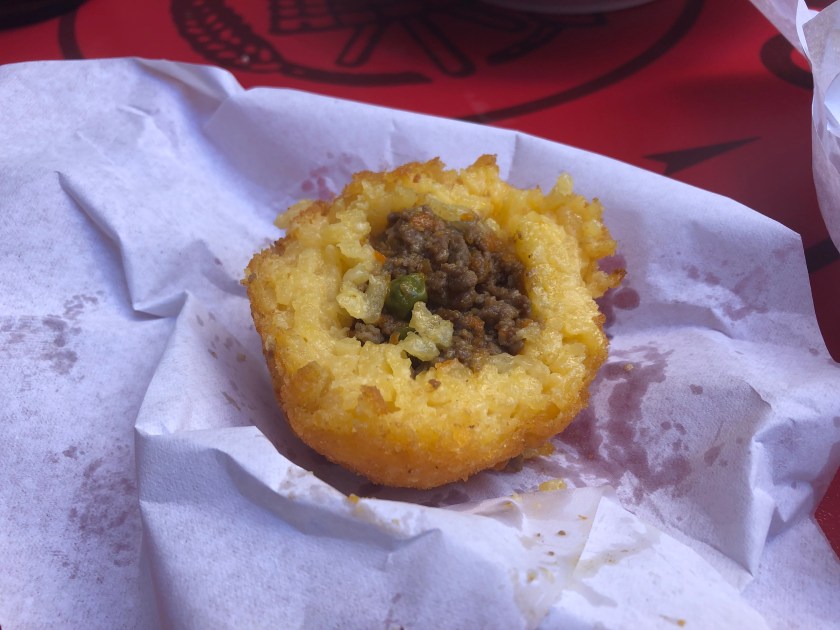
We also sampled shaved ice, creme di pistacchio and swordfish balls. As we exited the market, on the way to our next food destination, there was an informal history lesson – discussions of the residual evidence of the extensive bombing of the city during WW2,
street art,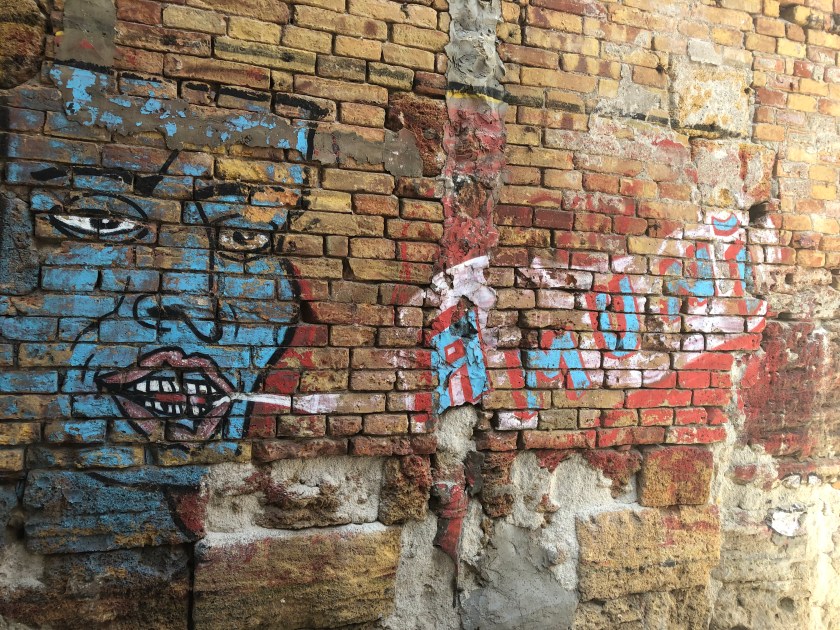
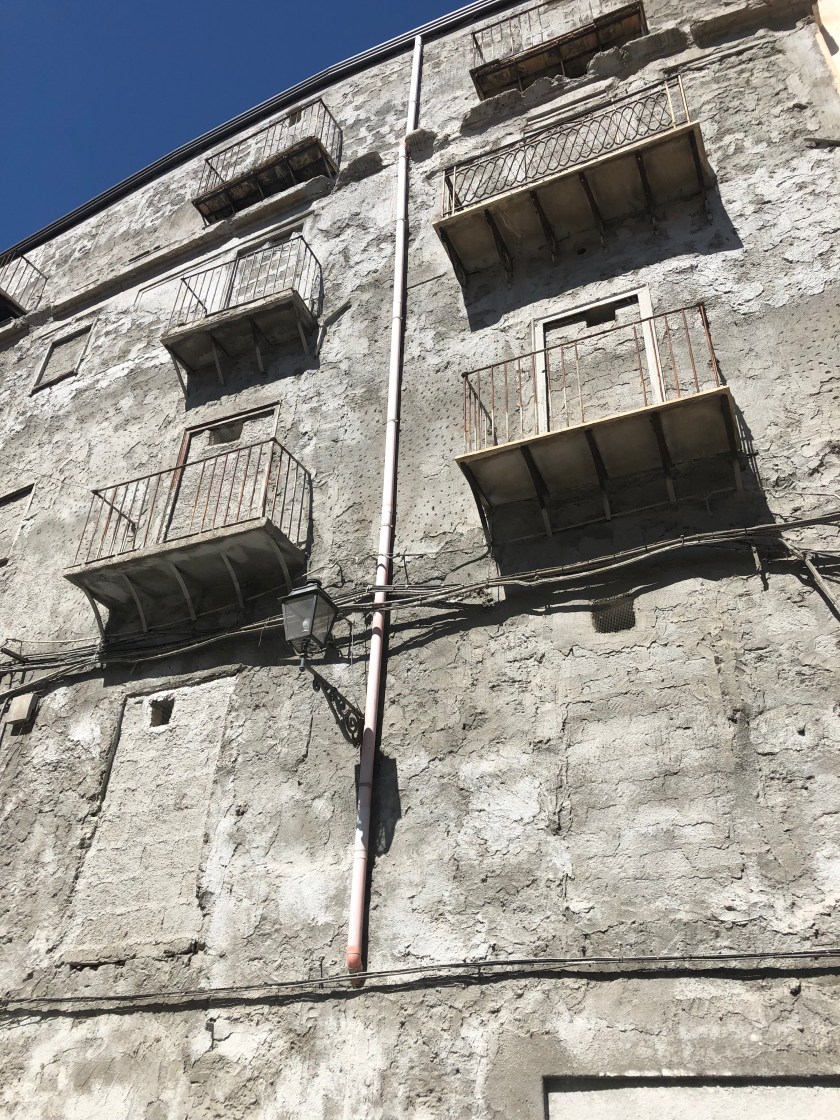
the immigrant situation ( and the government’s blocking off of abandoned buildings to keep out squatters), and the decline of the business in the markets due to shopping malls.
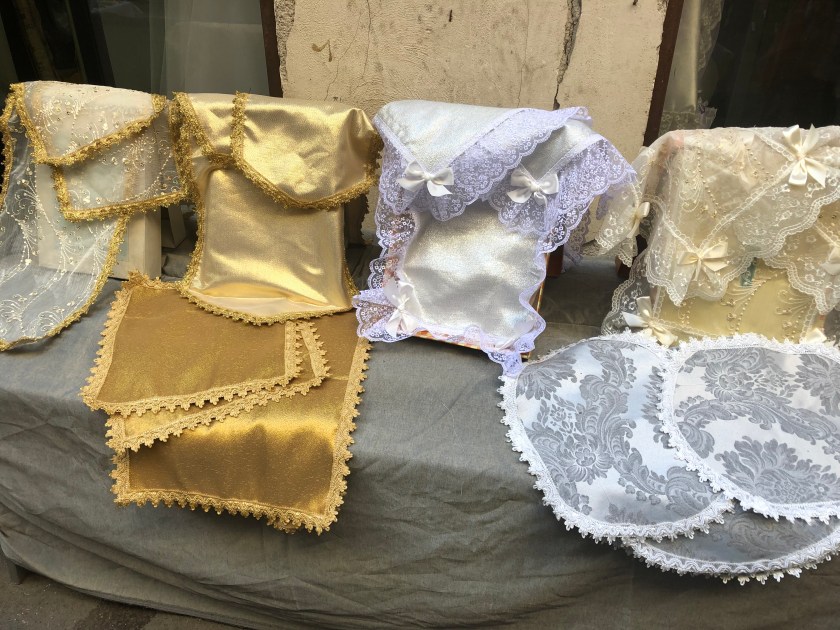
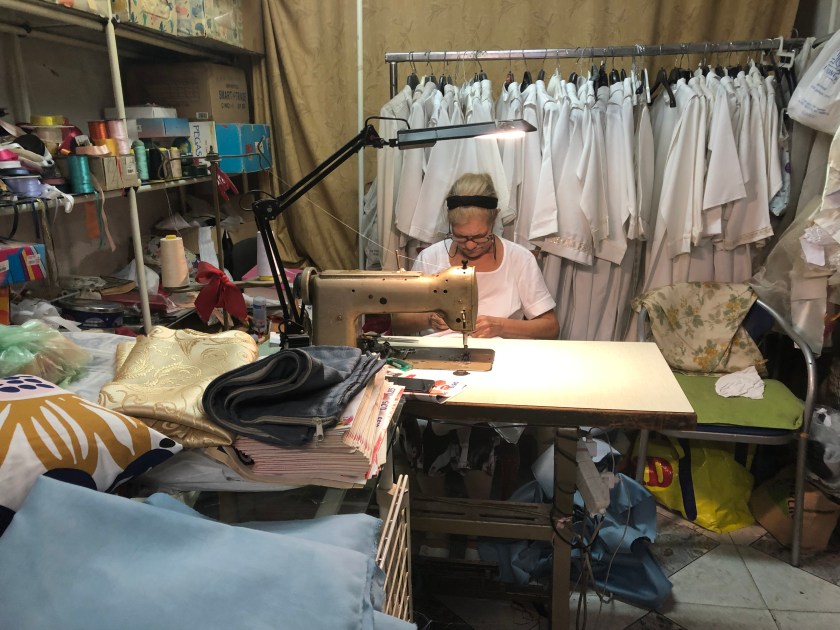
We also saw the textile area with shop after shop displaying huge bolts of amazing fabrics and displays of embroidered tableware and mer one of two women who is still crafting machine embroidered clothing using a foot pedal sewing machine.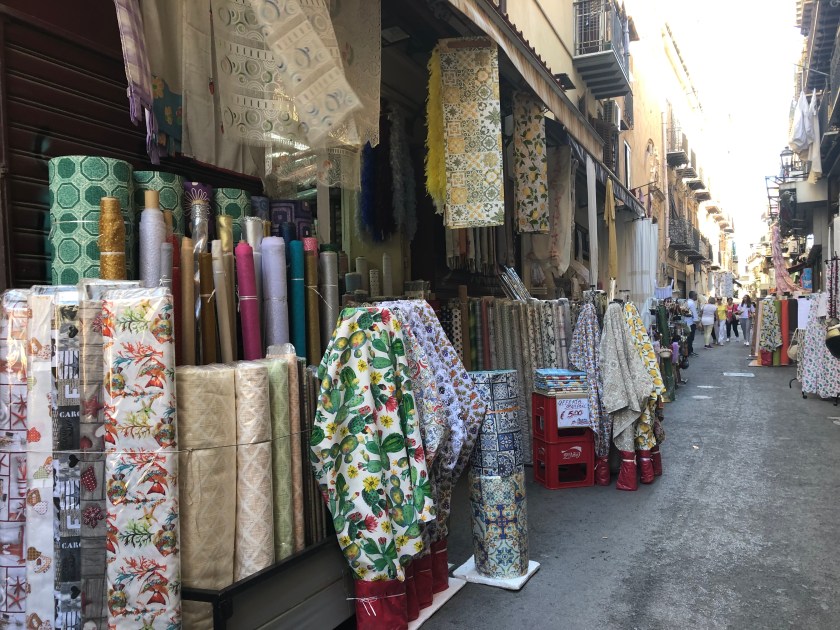
Next food stop was for sfincione, a peasant style pizza with tomato, onion, and breadcrumbs- the poor couldn’t afford cheeses or anchovies!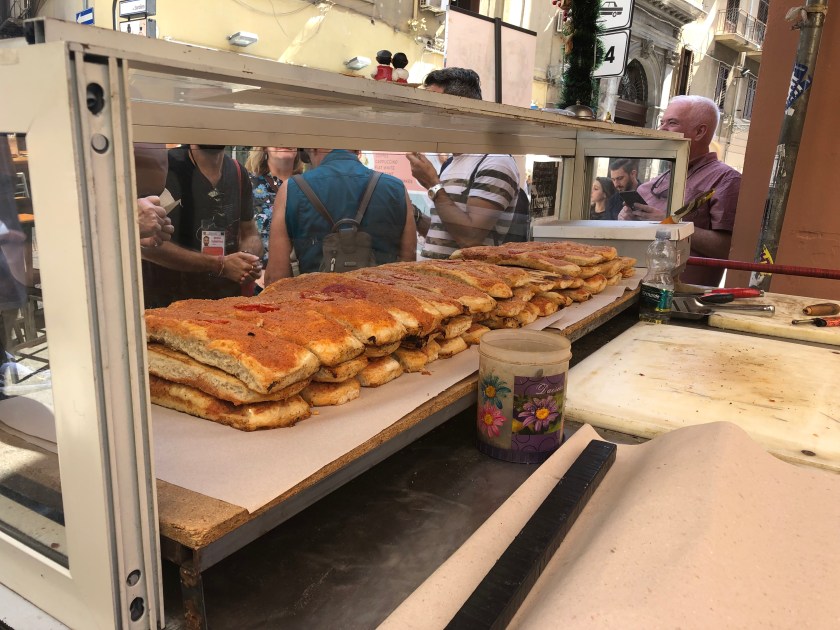
Along the way, there was more street art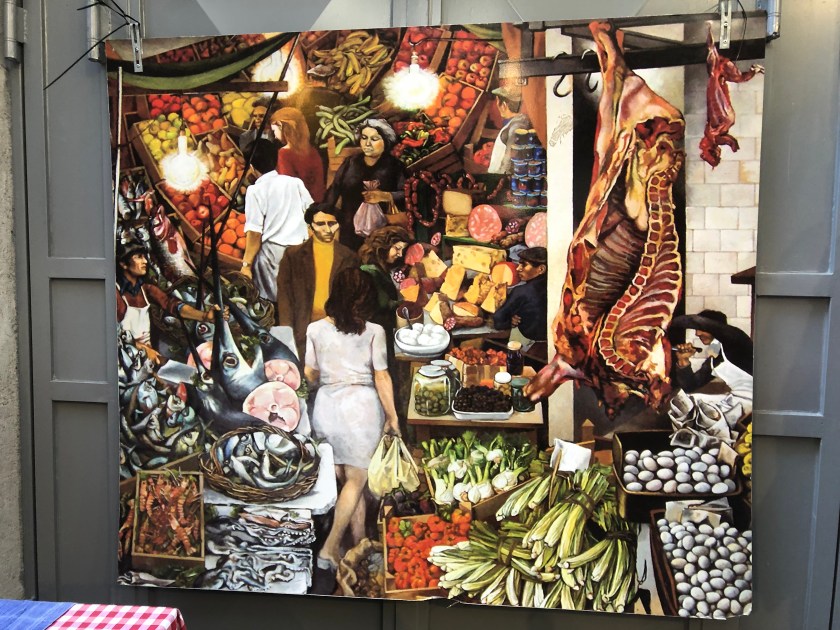
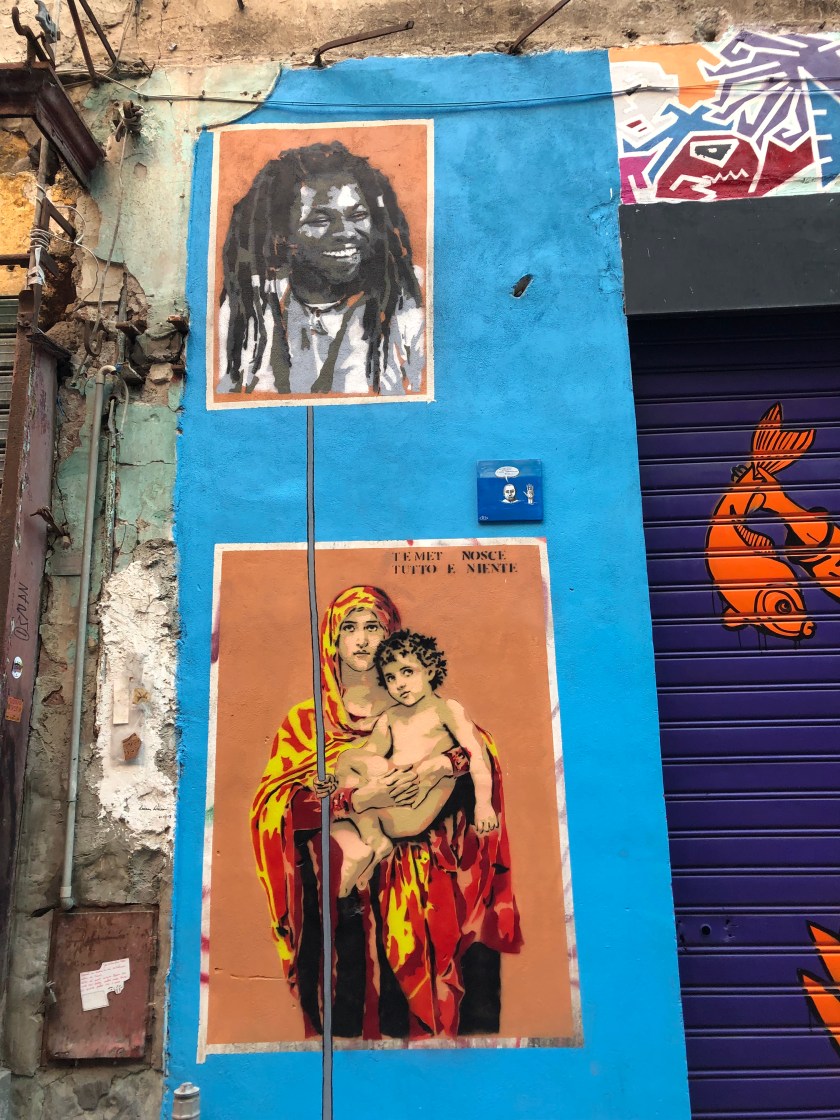
before we reached la Vucciria, traditionally the oldest market but now more of an evening entertainment district. There are few remaining vendors, it the most famous is Rocky Basile who sells the infamous pani ca’meusa (sandwich with spleen, lung and trachea cooked in lard).
After the spleen sandwich we went to a century old taverna for a sampling of Sangue- a fortified wine made of raisins.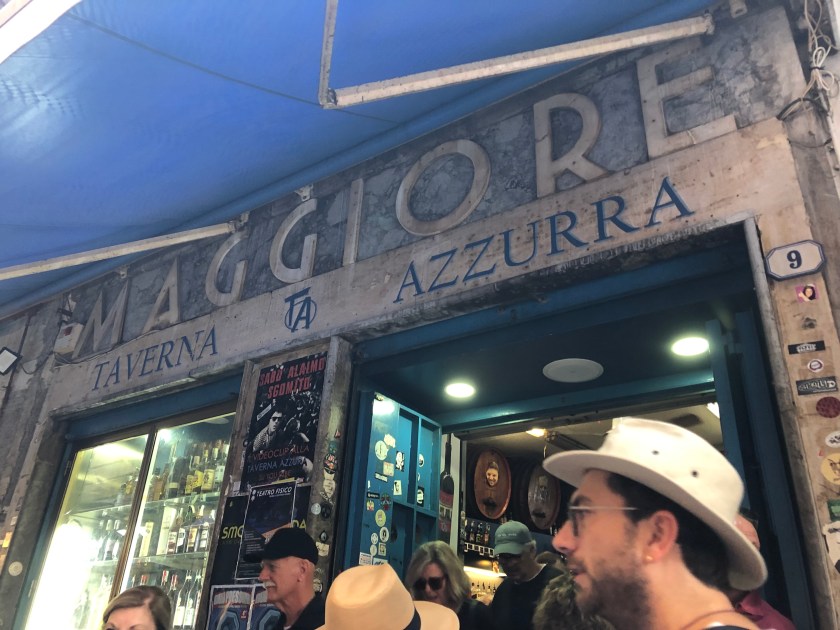
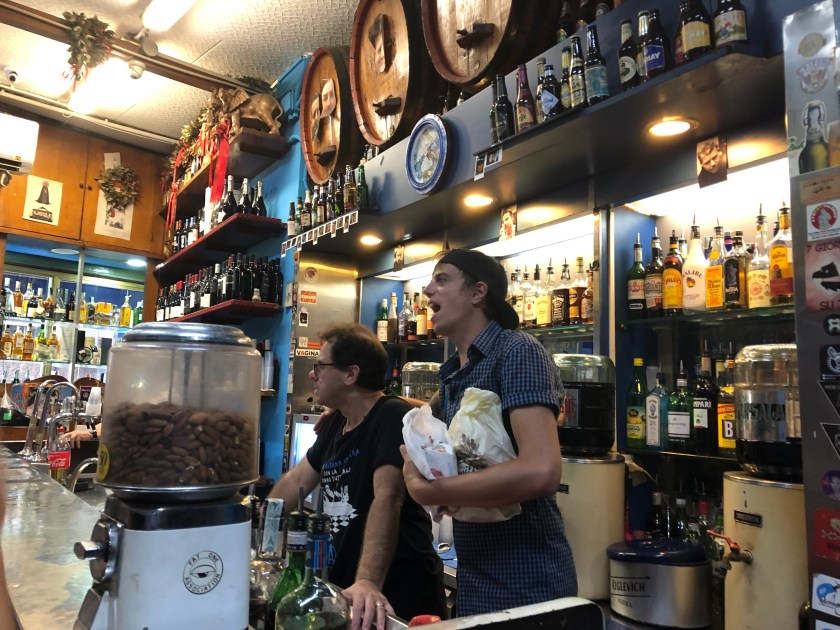
A taste of crema di pistacchio was a treat.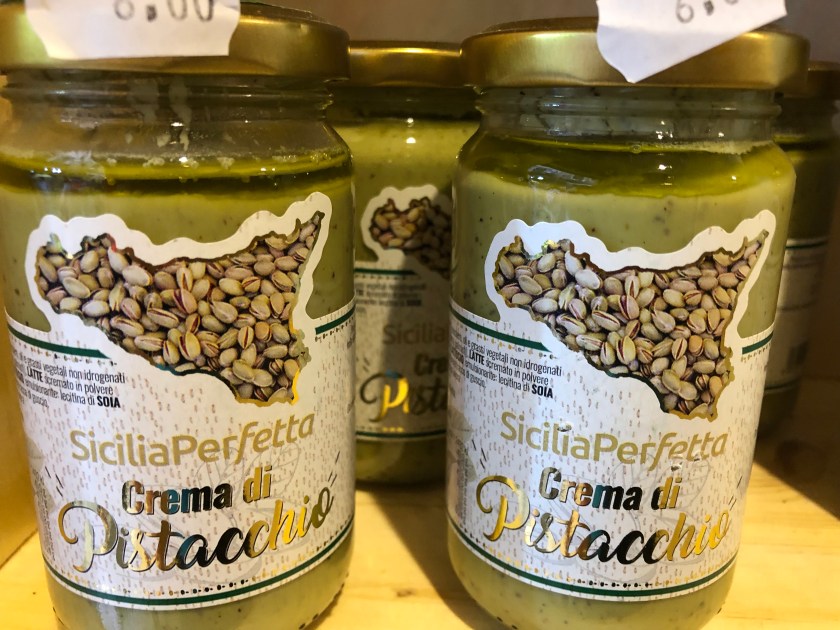
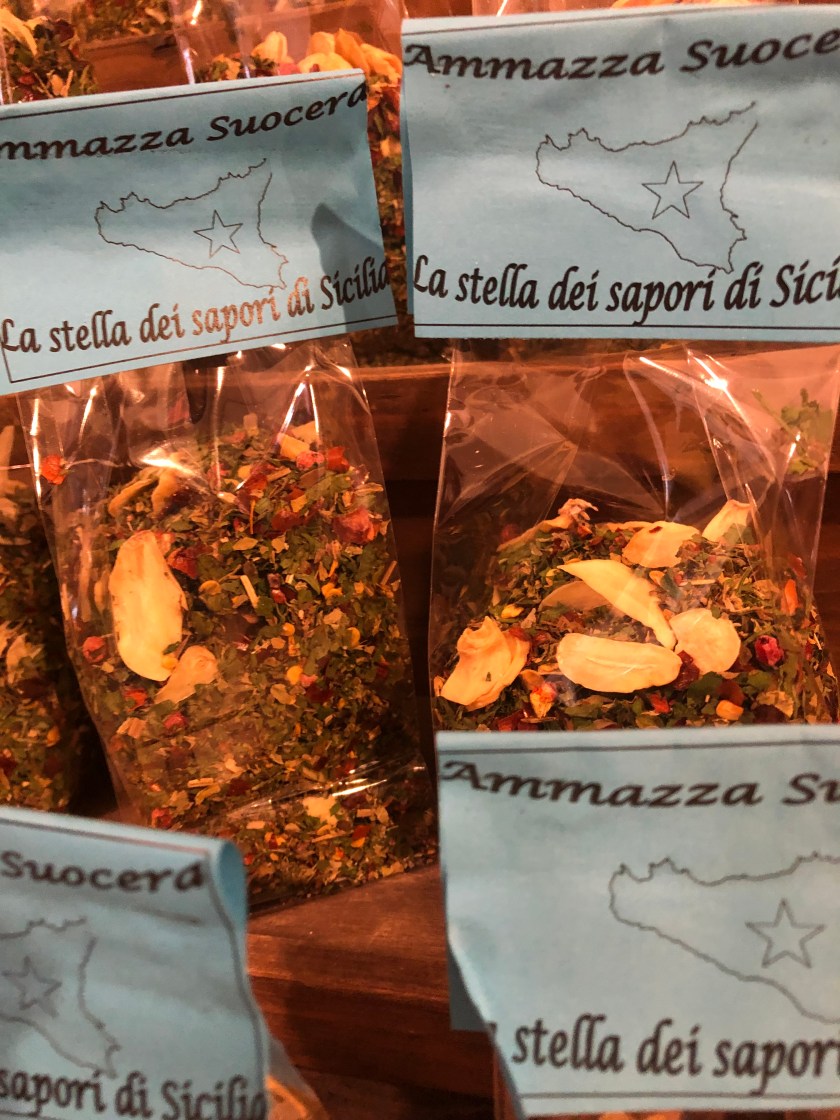
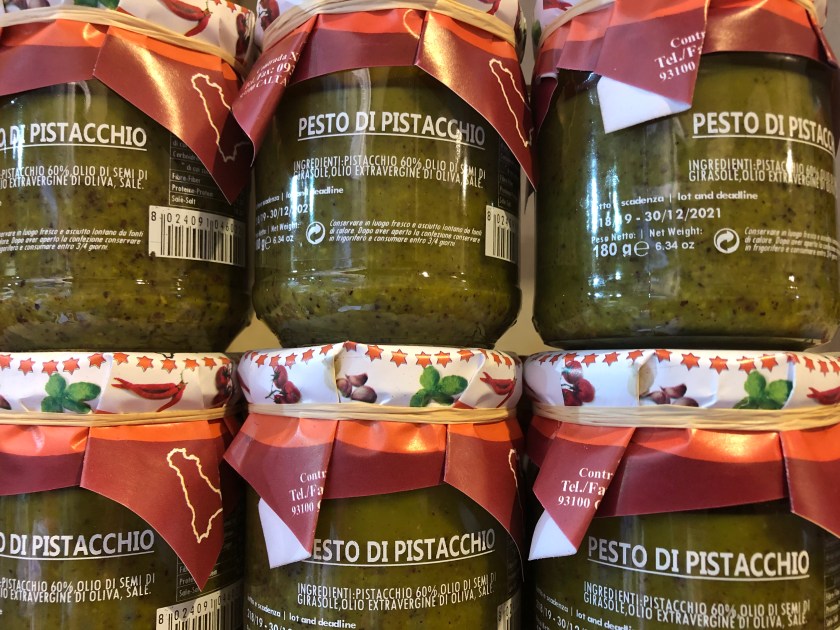
We ended at the port (la Kalsa) for a gelato in brioche.
Our guide Angelo bid us farewell and we returned to the B&B for a rest.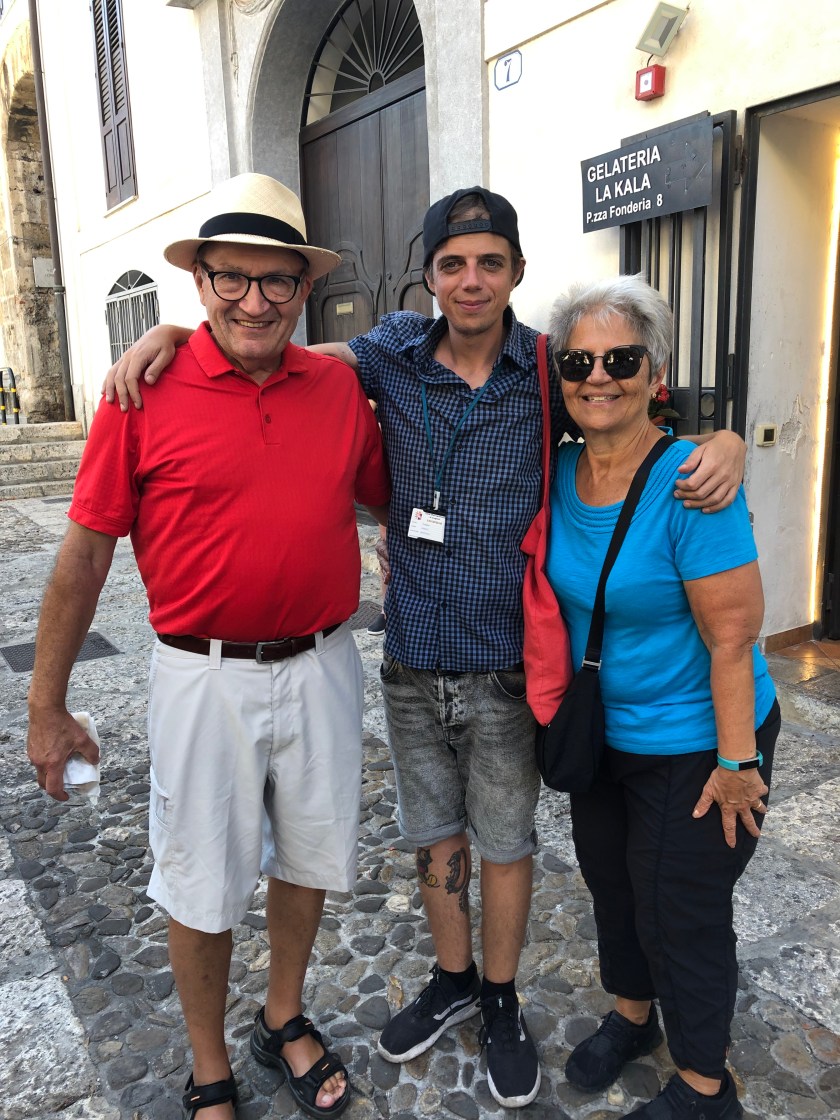
And to drop off dirty laundry at a little hole in the wall where a little old Sicilian mamma would wash it and we would several hours later pick up dry but very wrinkled clothing!
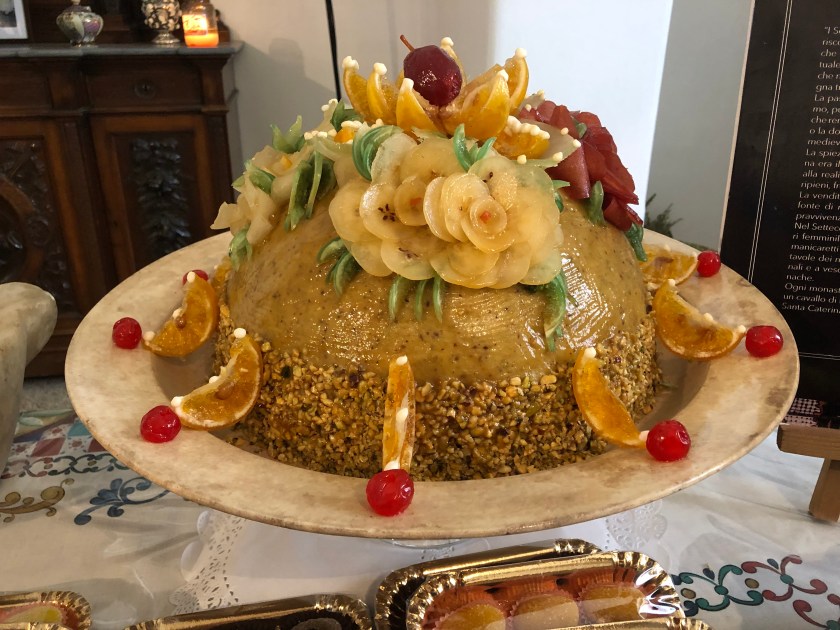
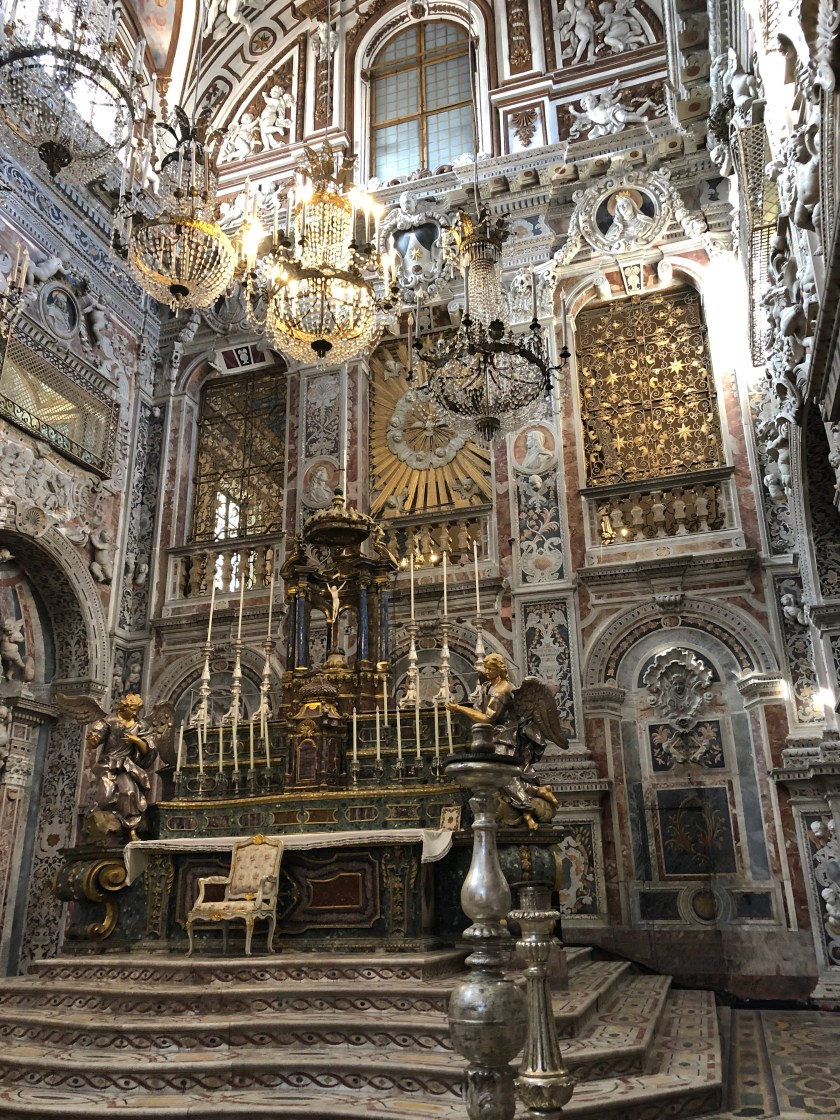
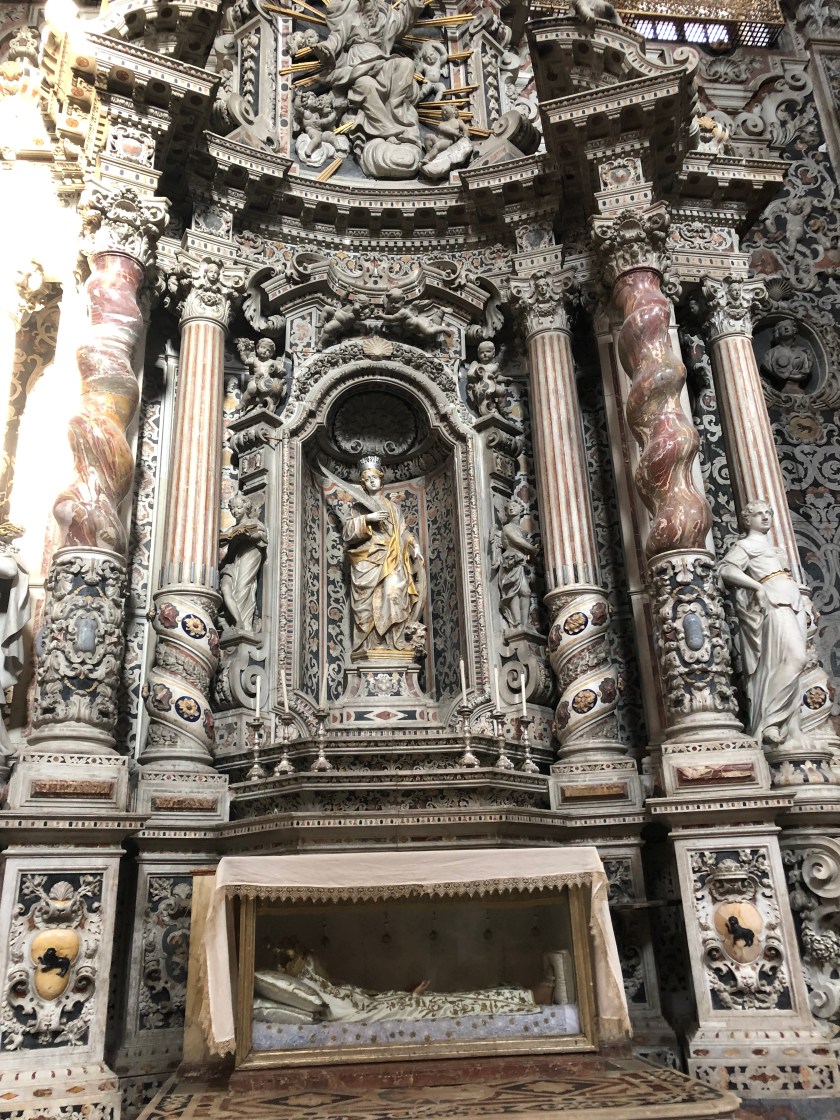
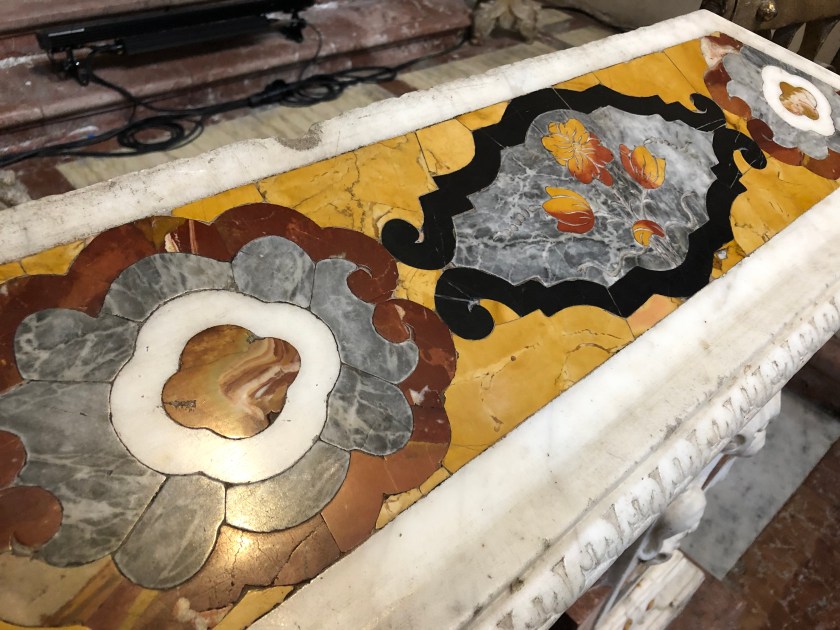
The rest of the day we visited some of the major churches. Santa Caterina is a Baroque gem, not impressive from the outside but an explosion of intricate inlaid marble on the inside. The nuns of the convent no longer live here but their pastries are world renowned as they perfected the method of creating realist fruit and vegetables from marzipan. Pastry are still sold here, especially famous sate the minne di vergine.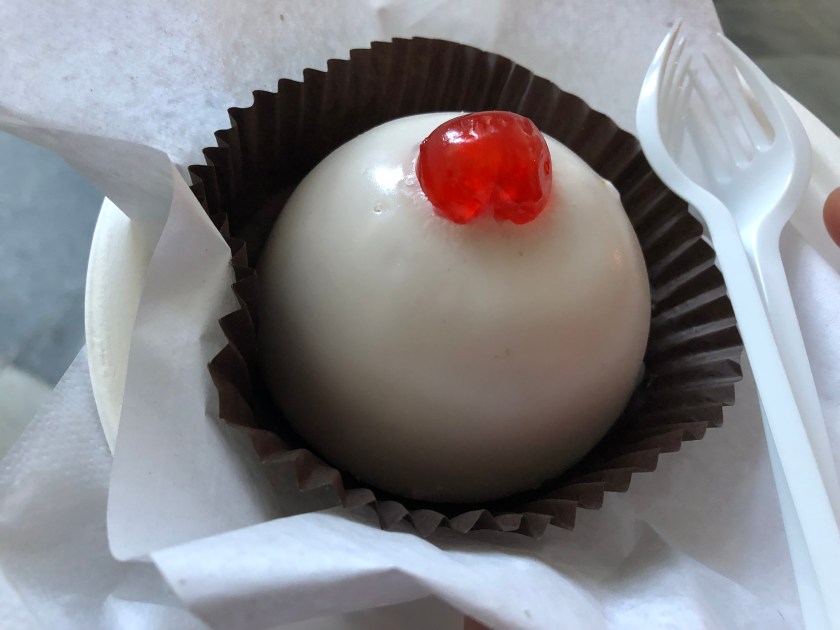
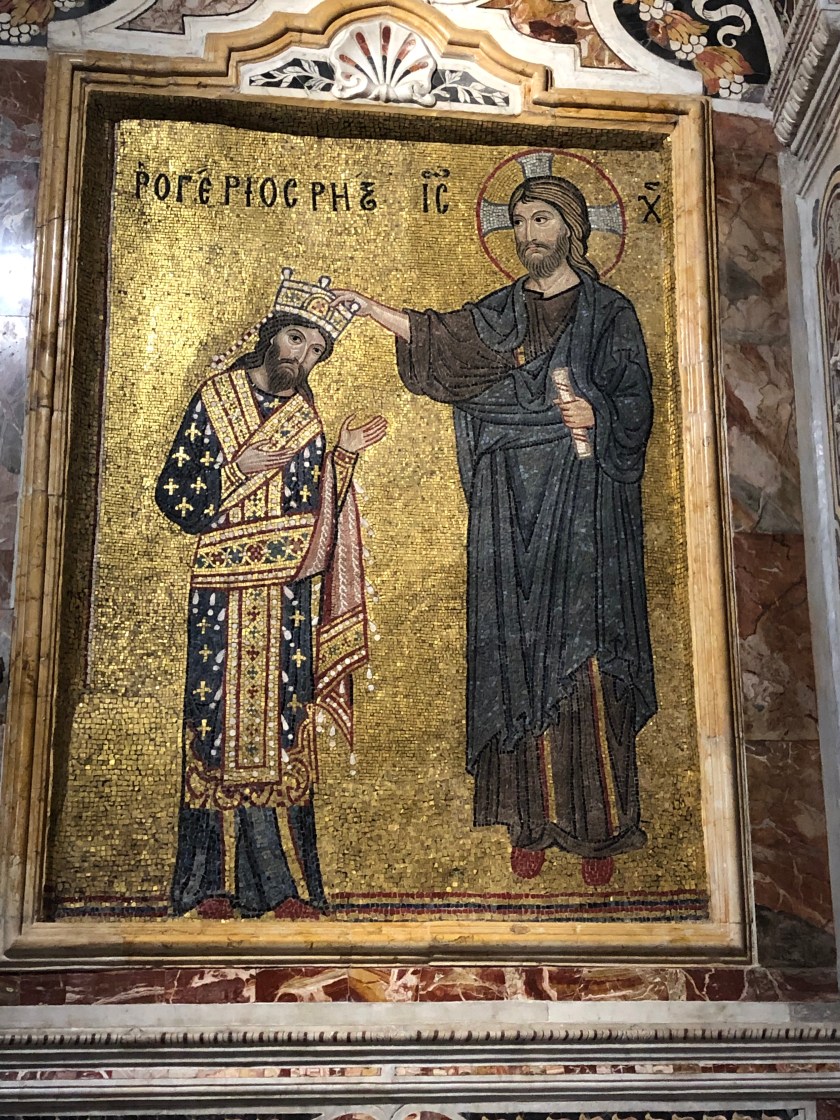
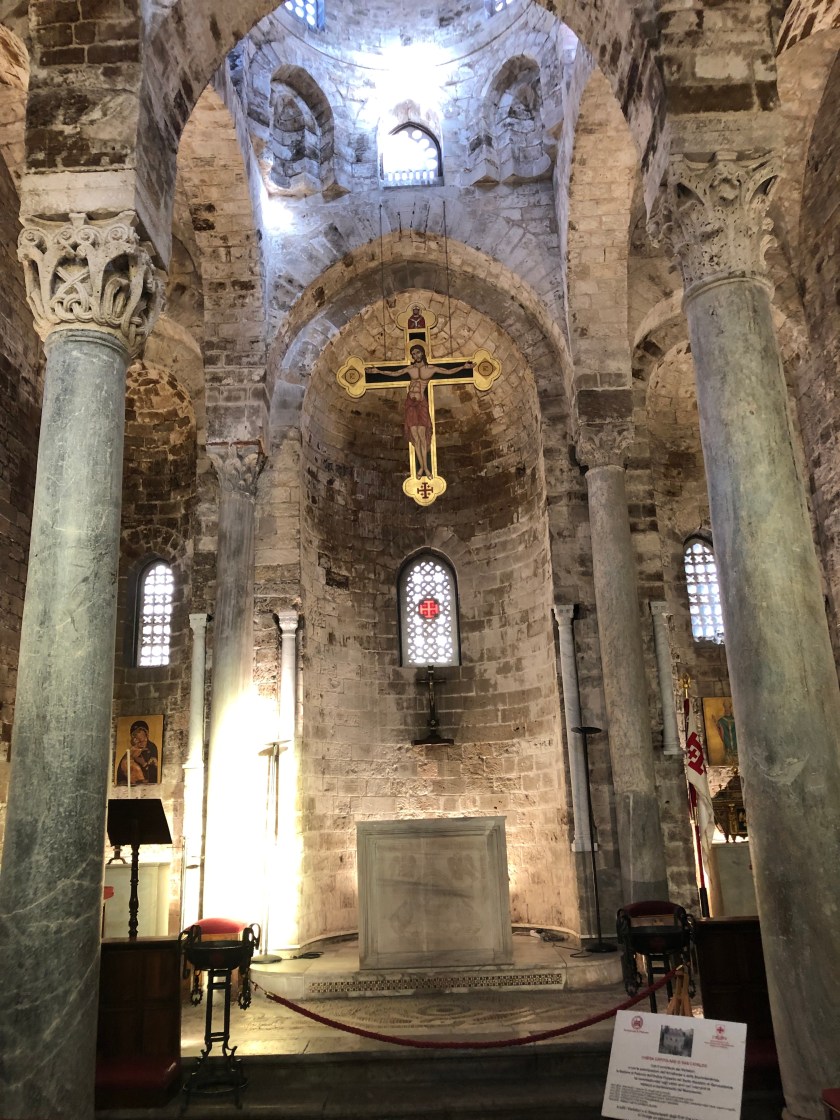
Across the piazza are two other churches of the Norman-Arabic style – La Martorana and Chiesa of San Cataldo, the first a mix of Byzantine and Baroque and the second with a stark almost Gothic appearance. Both churches date from the 11-12th centuries.



 Camino Musings