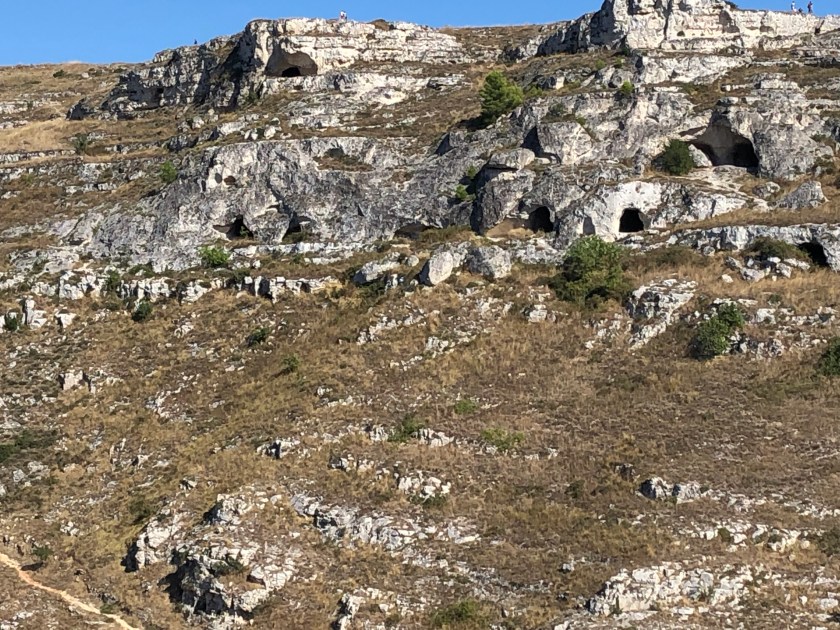
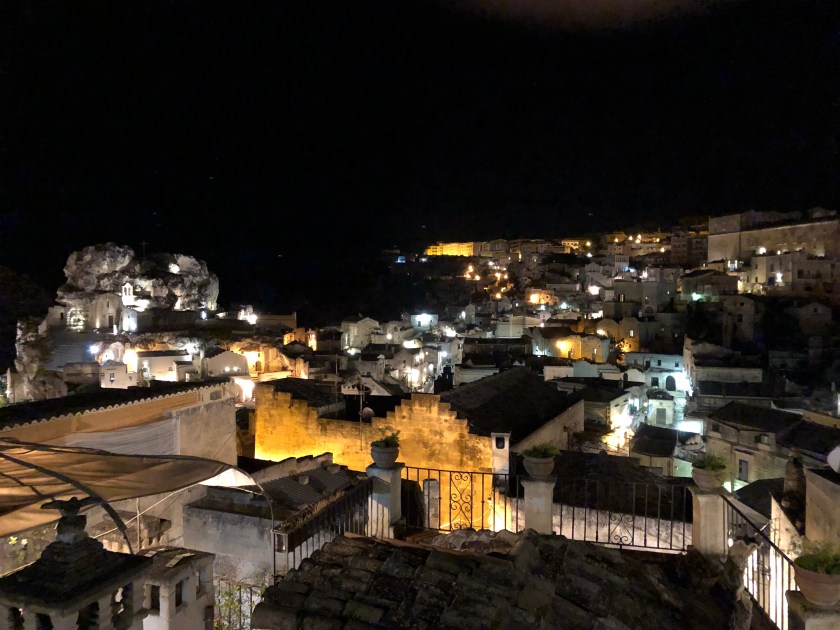
Up in the hills of Basilicata, the poorest region of Italy, located in the “instep” of the peninsular boot, is an ancient town of Paleolithic origin composed of cave dwellings carved into the sandstone and limestone cliffs. These “sassi” cover both sides of a ravine formed by the Gravina River gorge and are considered to be evidence of the first human habitation of what is now Italy.
These caves were inhabited up until the 1950s, albeit with a standard of living well below the poverty line, with infant mortality greater than 50%. Long considered the shame of Italy, the government constructed a new city nearby, providing subsidized housing to the inhabitants who were banished from the caves. These dwellings continued to deteriorate until the 1980s when enterprising local government officials began to encourage the local population to return to the sassi to renovate and move back. Many of the sassi have now converted into hotels, vacation homes, shops and restaurants.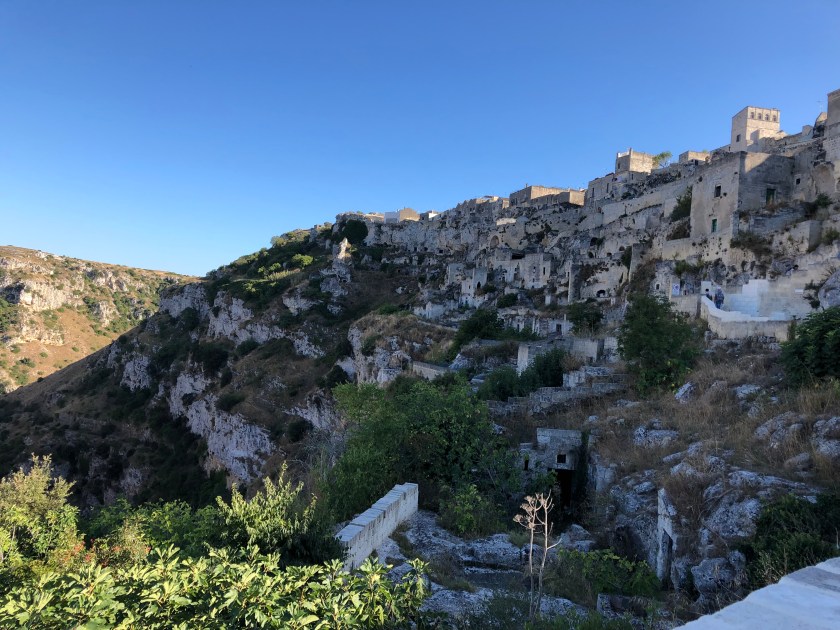
Lying between the two Sassi regions is a “modern” town, circa 16-17th centuries, with a bustling shopping district, banks and a collection of churches that range in architectural style from Romanesque to Baroque (but nothing like the Uber Baroque seen in Lecce).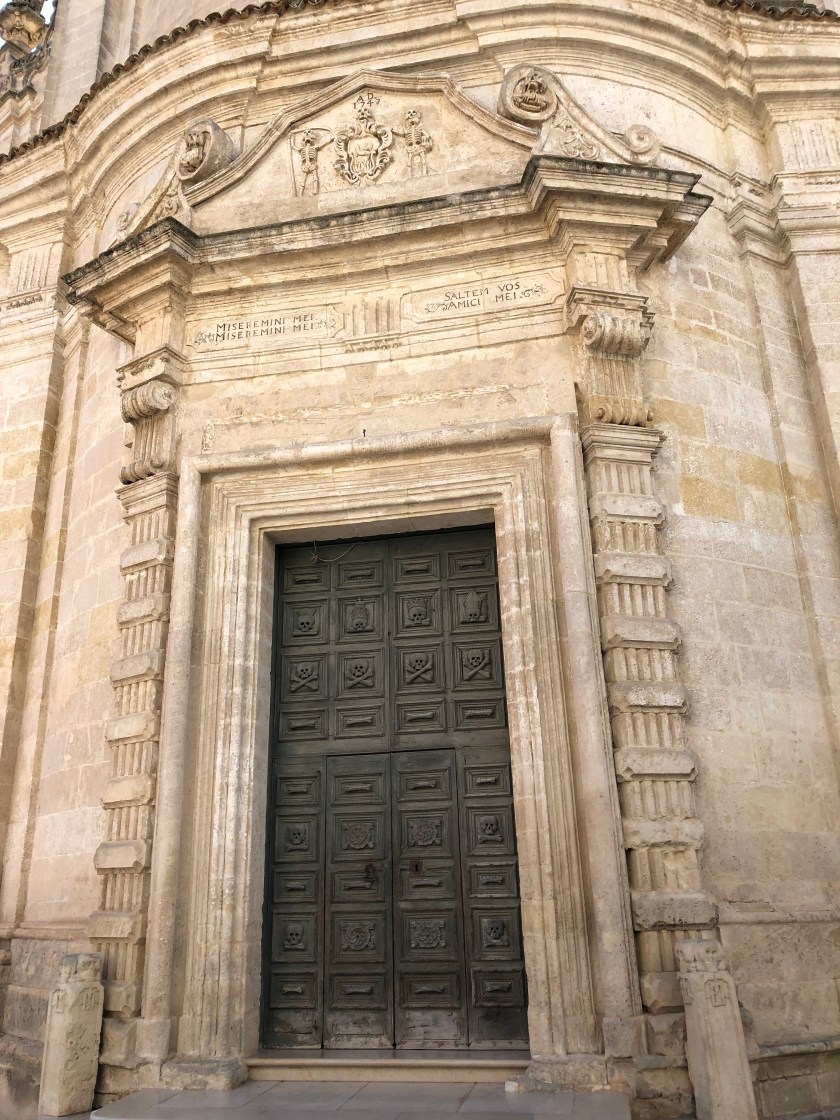

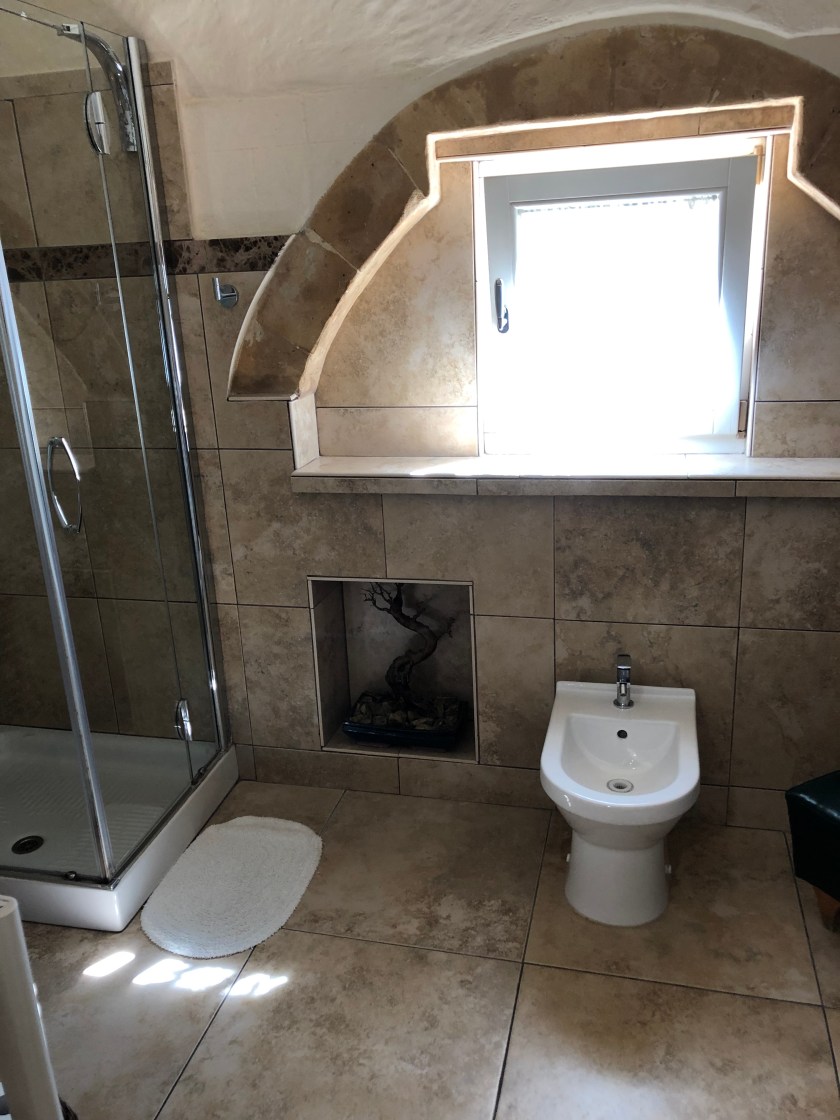
We arrived in Matera (from Lecce) around 11 a.m., grabbing the last parking spot in the parking garage (a typical Italian garage with very tight spots and very inconvenient large posts between the parking spaces). It took a while to find the B&B Gradelle Pennino, which was located down a very steep cobblestone lane (again Google maps is not your friend!). Giuseppe, our host, met us and oriented us to the B&B, with its spacious bedroom and bathroom (originally the kitchen in this house where he was born in the 1980s) and breathtaking views from the rooftop terrace (up a narrow almost spiral staircase with a very low overhang).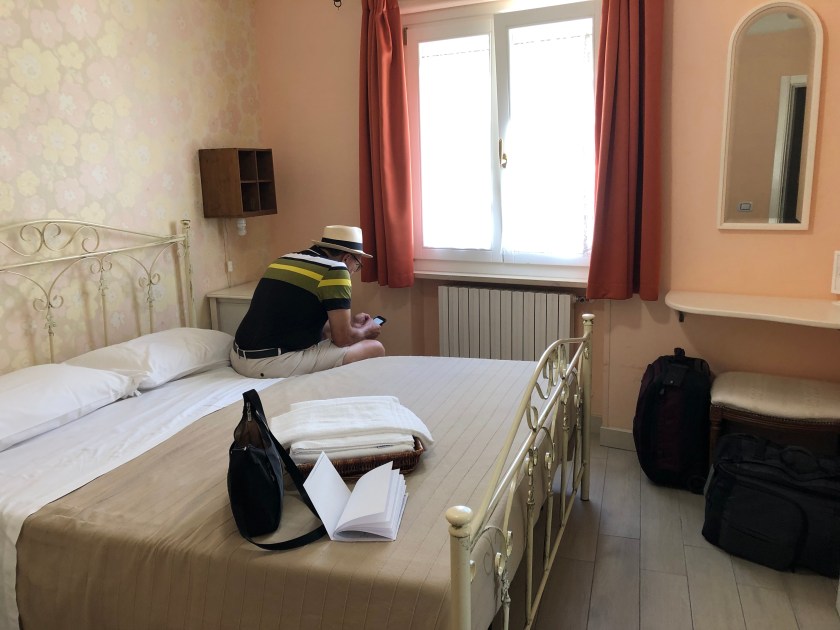
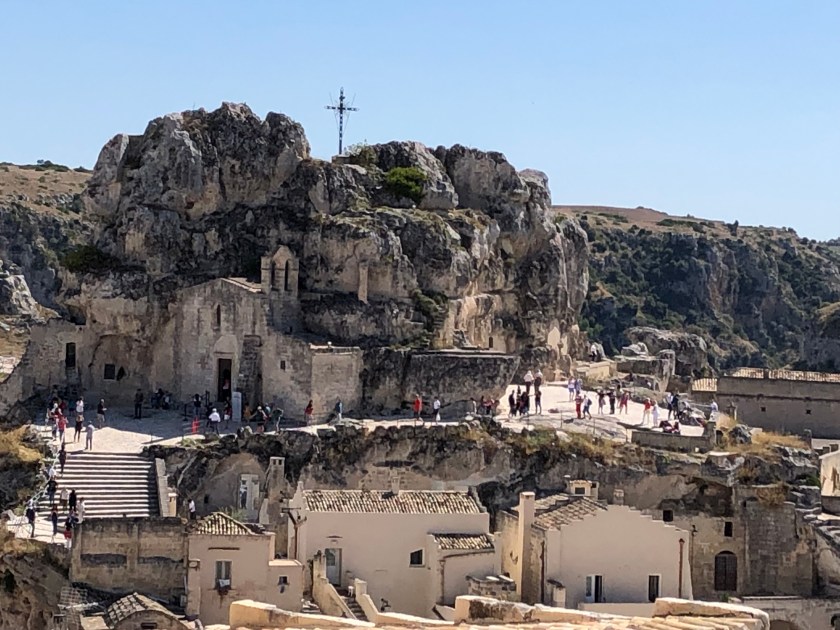 Then we met our private tour guide, Alessandro Perrone, for a four hour walking tour of Matera. This town is most definitely not handicap accessible as it is pretty much a jumbled maze of slippery cobblestone stairs! He gave us an overview of the history of Matera and we took in panoramic views, and
 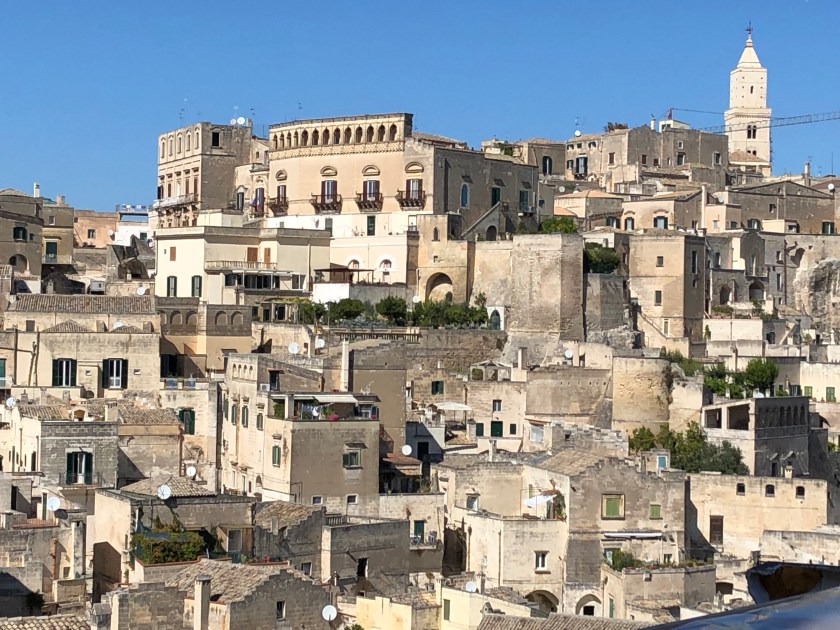 visited a few churches, including one that was carved into the stone, and a replica of a characteristic cave dwelling, where mule and sheep are housemates.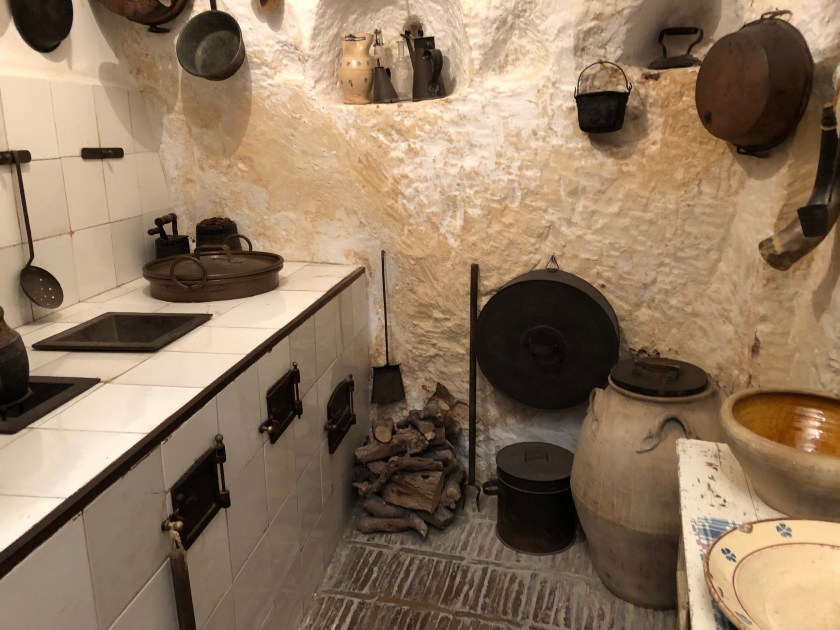
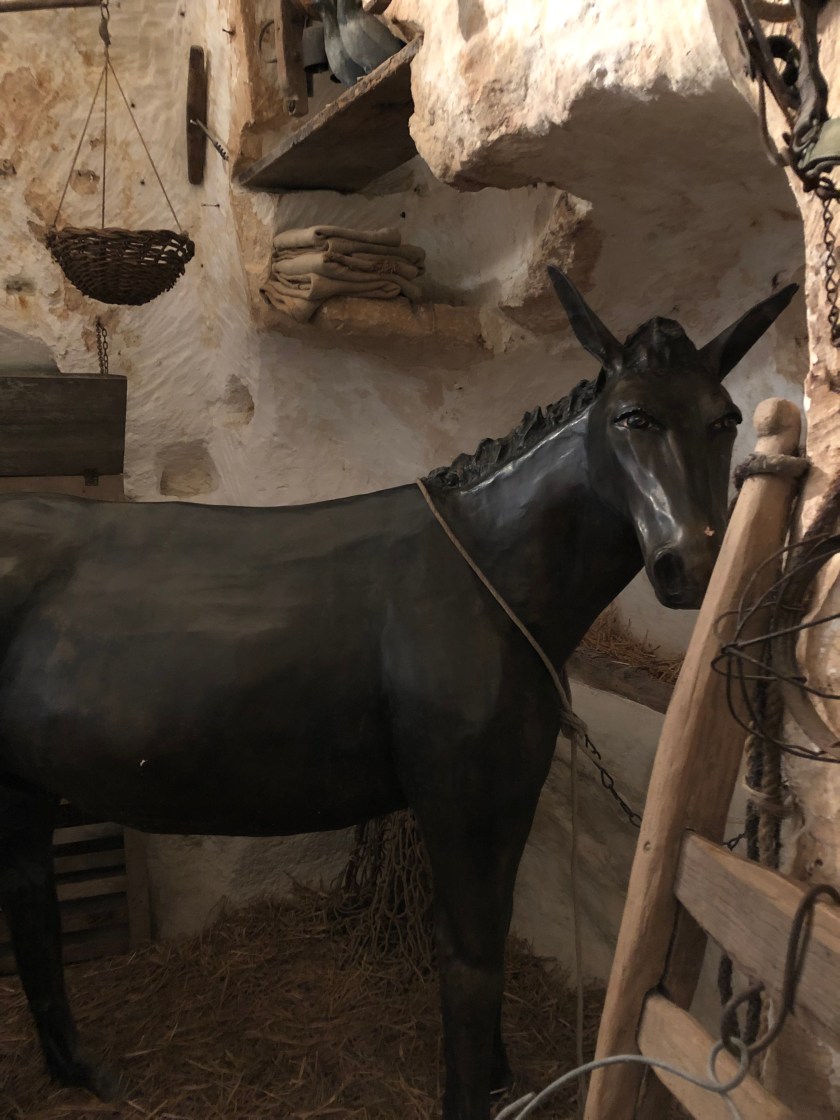
The cave dwellings are built on top of one another, with the floor of one building acting as the roof of another. An ingenious primitive heating system using manure was described to us. 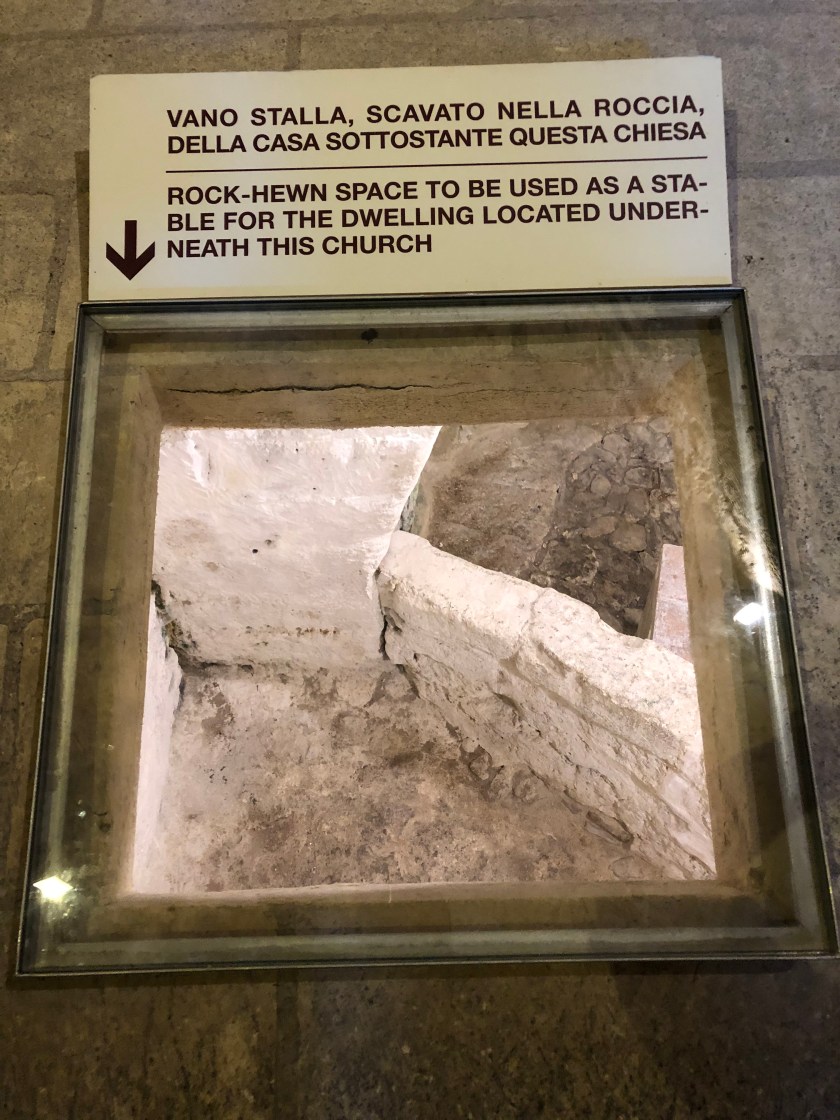 The new James Bond movie is being filmed in the area and a portion of the set could be seen.
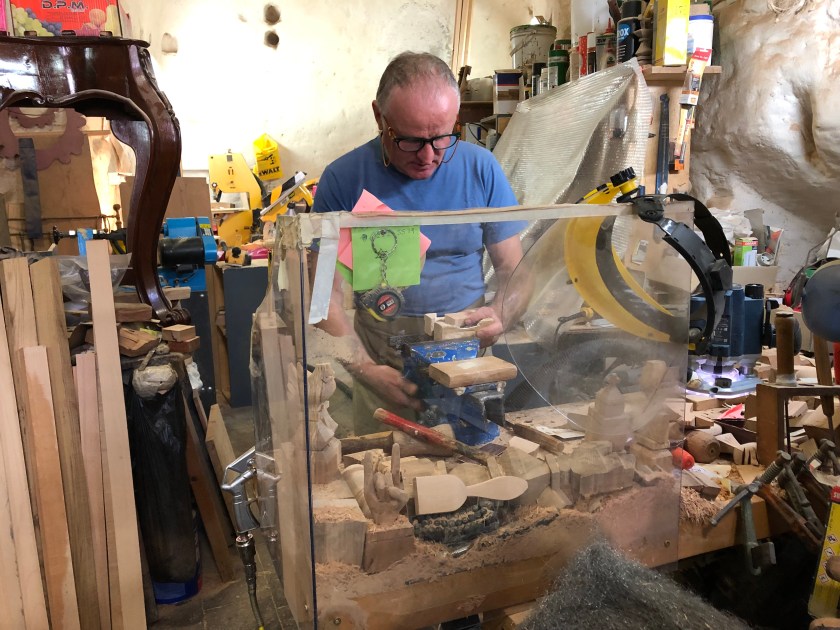
We also learned of the wooden stamps made to identify to whom loaves of bread belonged after being baked in the town oven.
A much need refreshment break (local craft beer) hit the spot before we finished the final leg of the tour.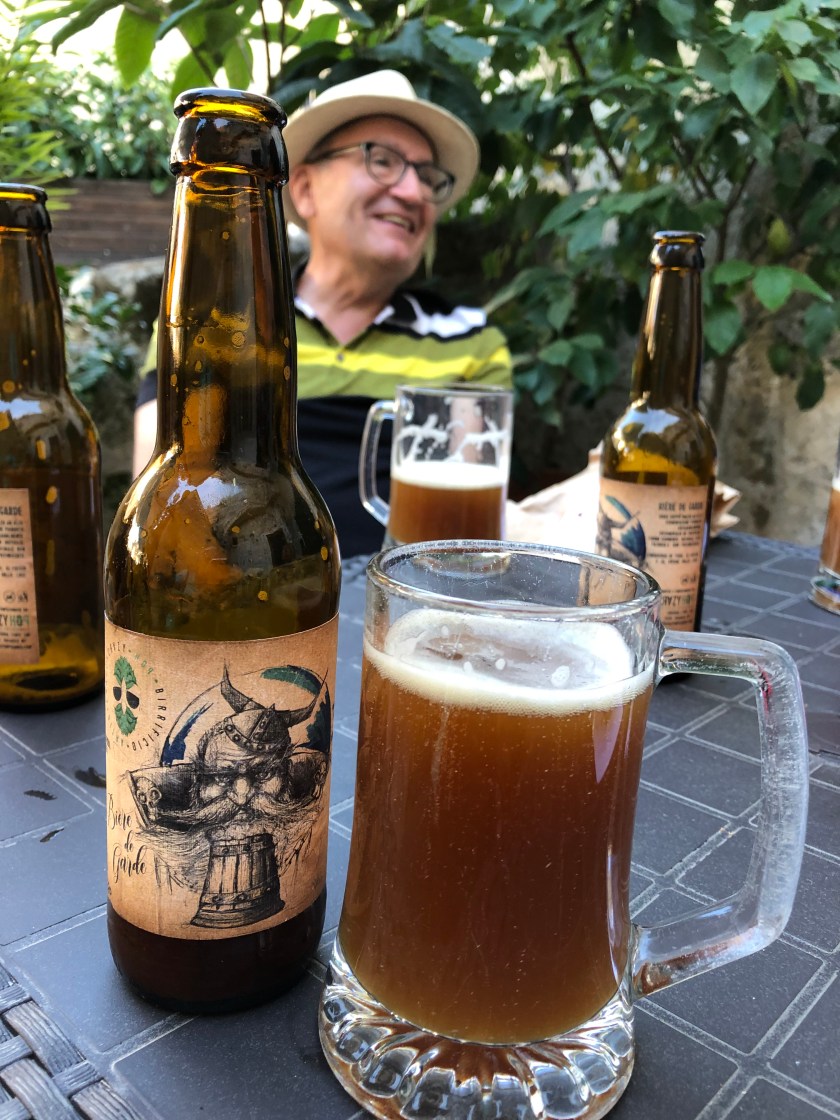
We finished with another panoramic view.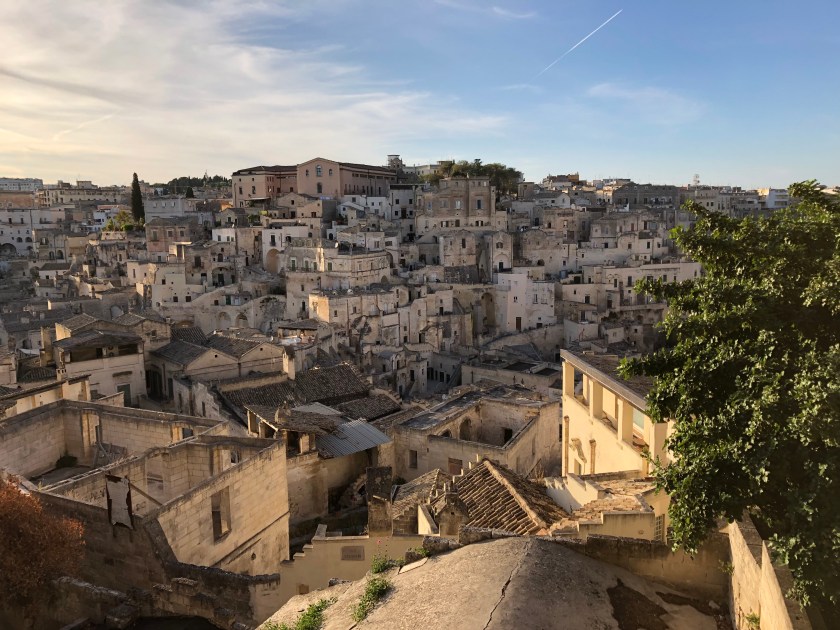
Dinner was at La Talpa, recently reviewed in The NY Times. Local specialties were featured, like a bacala and a pasta with ricotta and a bitter green sautéed in olive oil.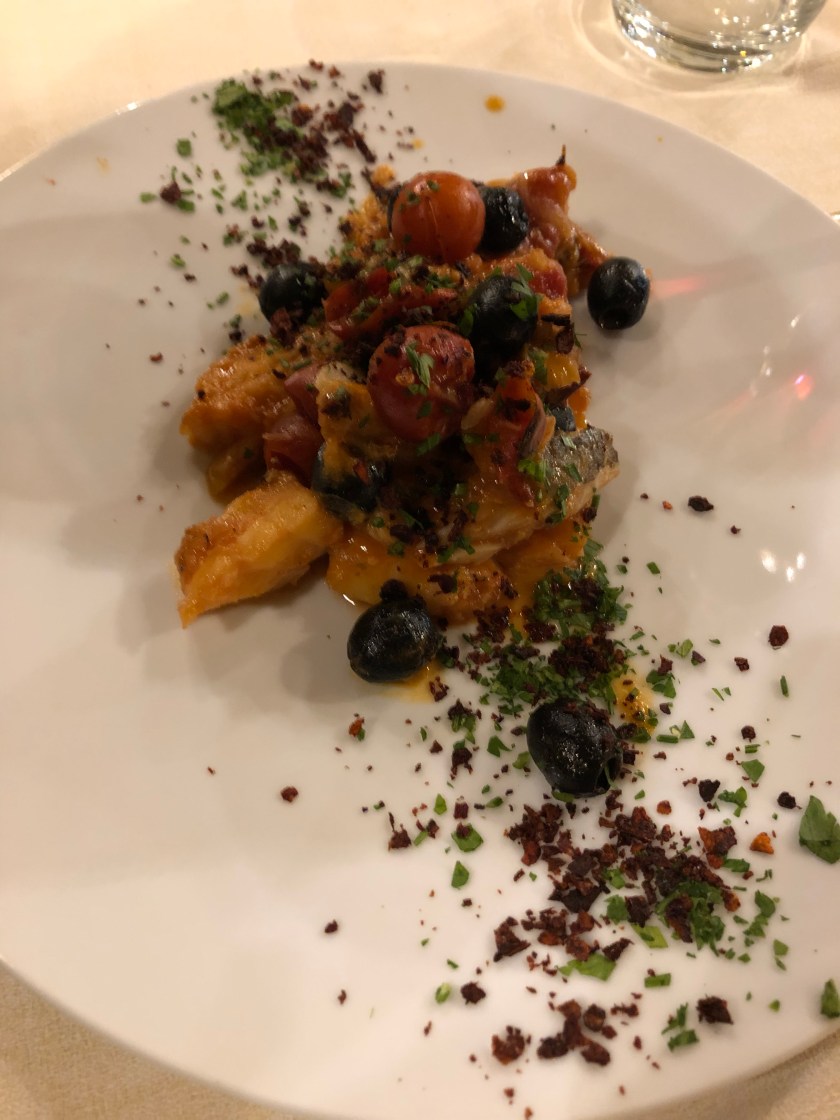
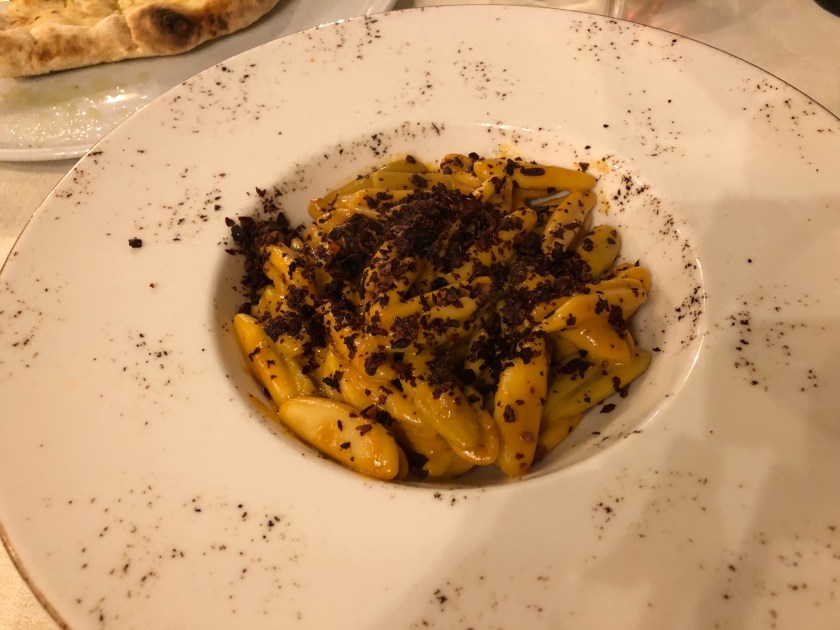
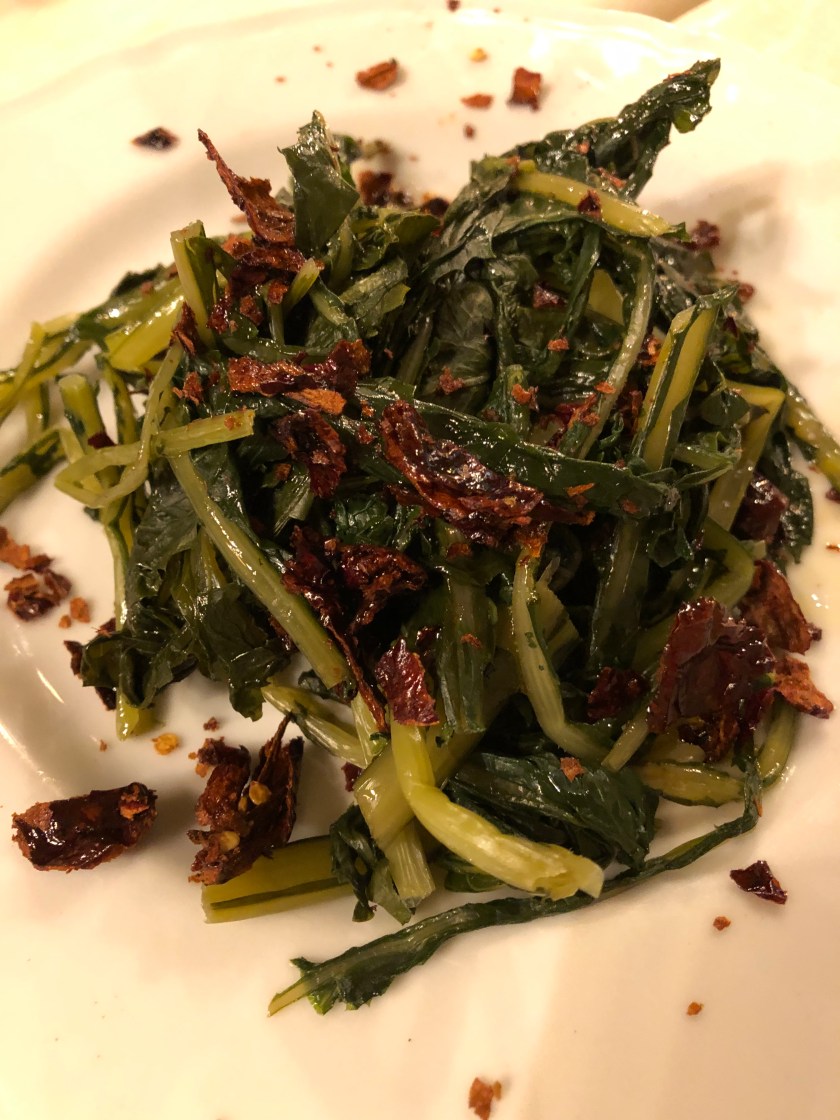
The evening ended with a brief passeggiata, joining the thousands of locals and tourists enjoying the cool autumn evening.
Ending with an evening vista-

 Camino Musings