The Douro River valley is located in northern Portugal, east of Porto. The River cuts through the granite and schist forming steep walls which are terraced with vineyards. 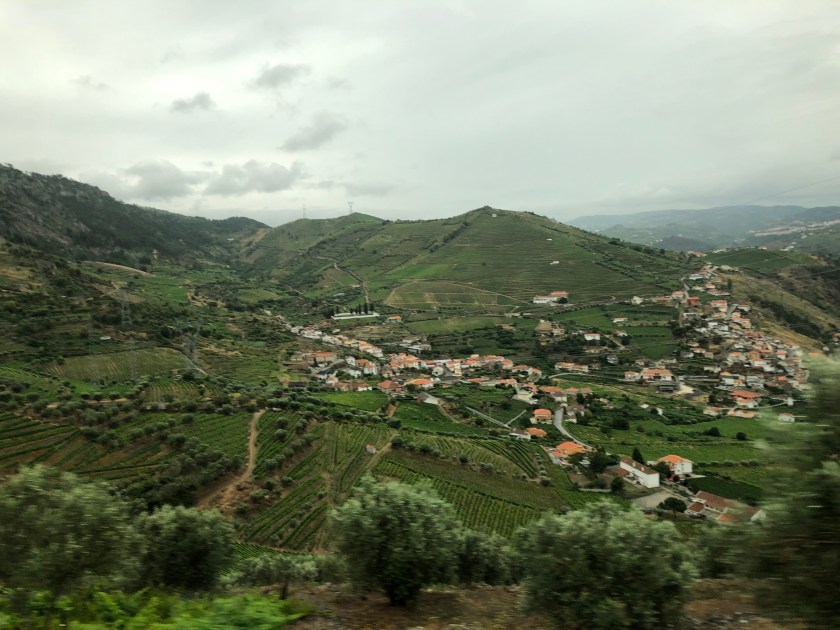
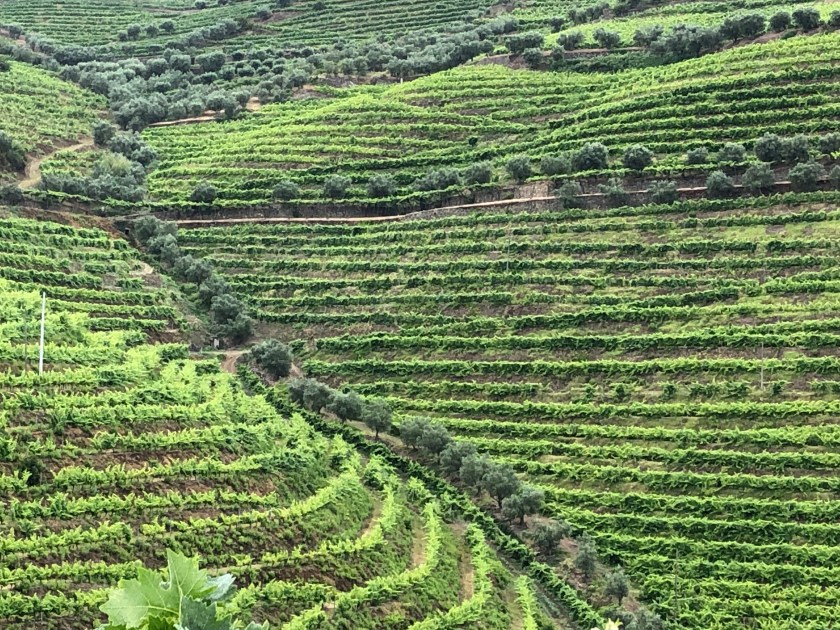 Grapes have been growing in this region since 4000 BC, and with the arrival of the Romans in the first century AD, agriculture became an important activity, with some villages dedicated to the production of wine. In 1757, the Marques de Pombal created the first regulated wine region in the world, thereby forever changing the economic situation. Evidence of this regulation can still be seen in the form of granite stone markers that demarcated the boundaries of this wine producing region.
We left Coimbra at 8:45 am, leaving behind this Hilltop charming university city for an overnight stay in the Douro Valley. As we arrived around 10:30 am, a light rain began to fall. The inclement weather of the past two days seemed to be following us! Our destination was the Quinta Santa Eufemia. 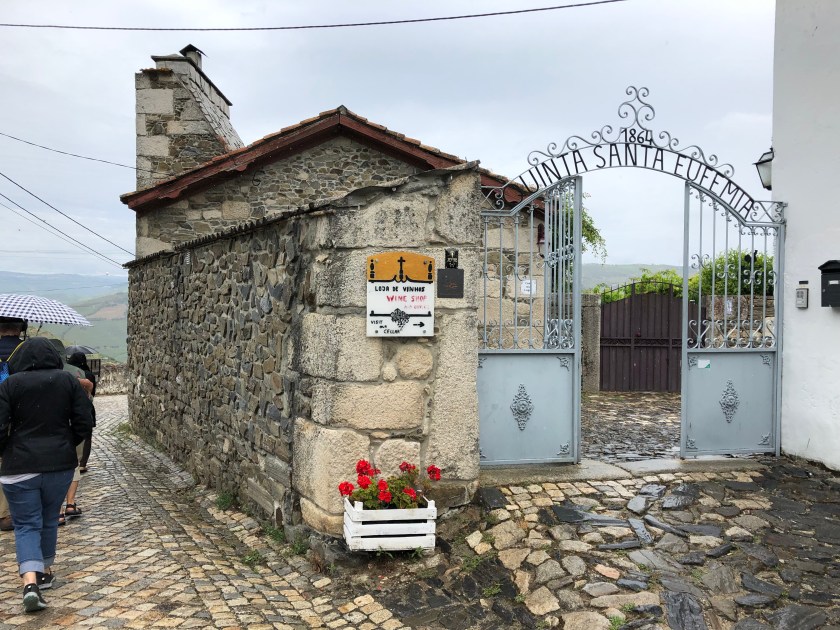 The ride to the vineyard was a serpentine narrow two lane road with many switchbacks, first uphill and then down. The remarkable driving skills of Alex, our bus driver, were certainly tested today.
Maria, our guide for the visit, is the granddaughter of the original owners and her proud connection to this place was quite evident. She first showed us the family’s private chapel, now used by members of the village, which also acted as a sort of “lighthouse” to mark where treacherous currents were found in the river. 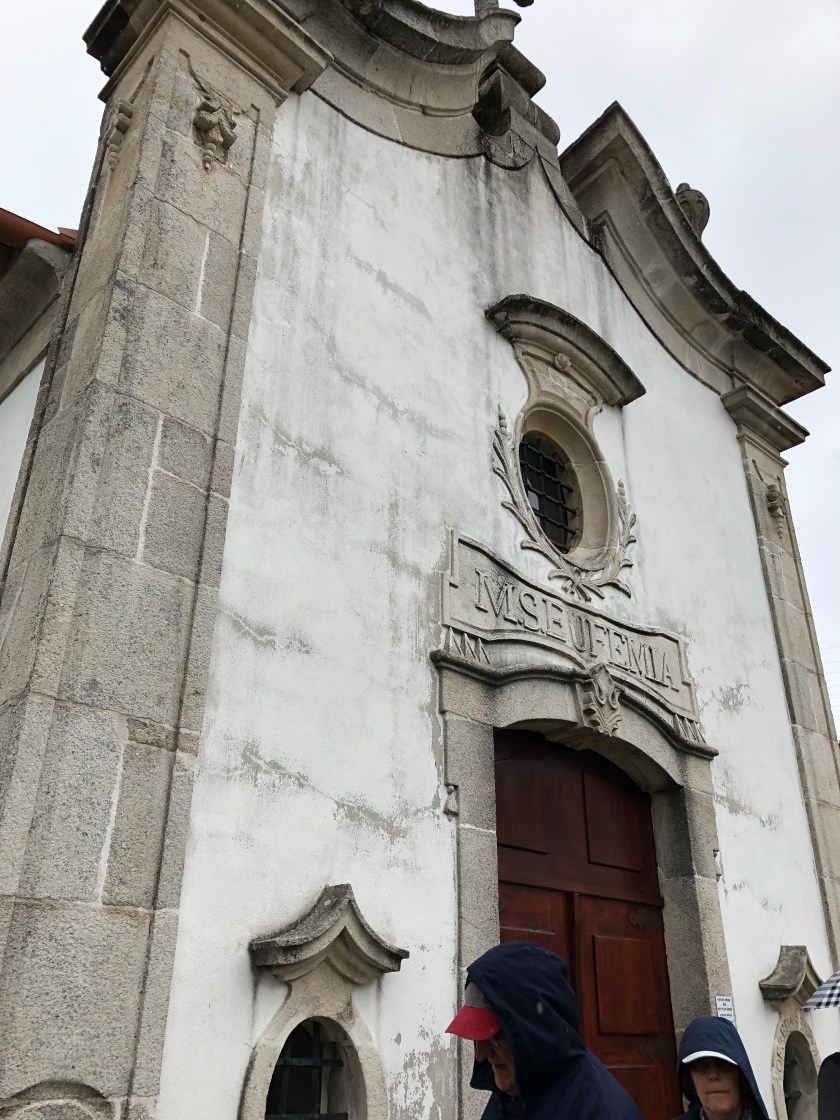
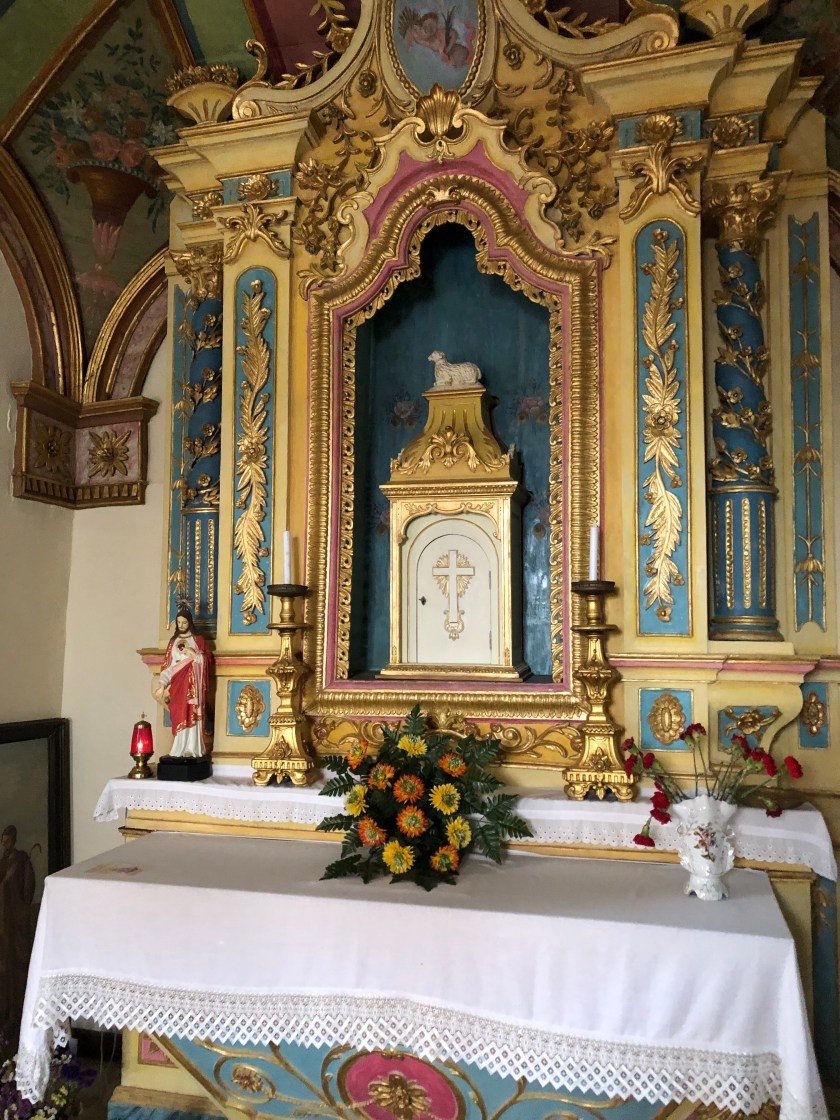 She then walked us through the rows of grapevines, despite the raindrops, explaining the different varieties and how they are grafted.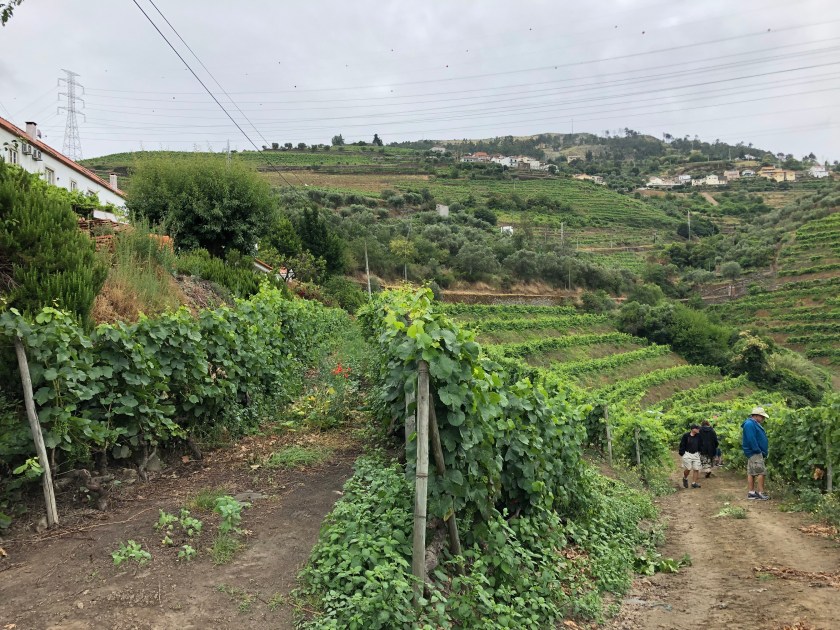
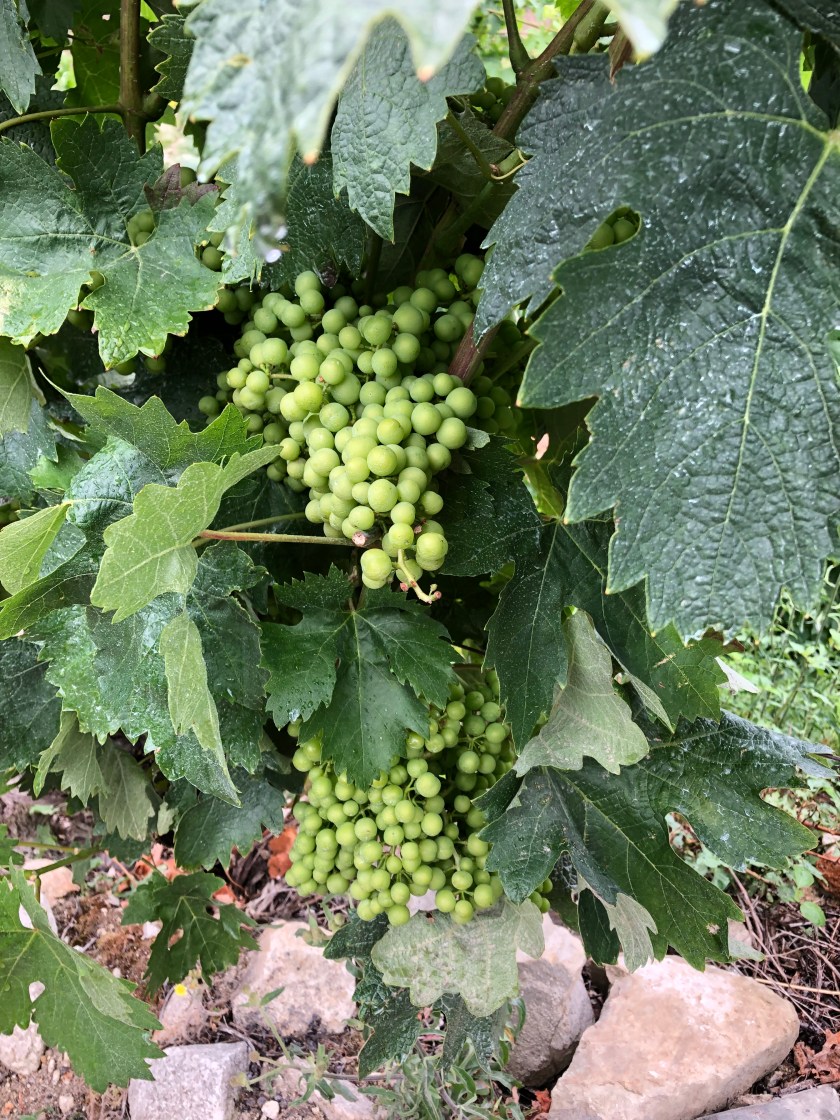 We were then shown the huge granite vats where the grapes for port wine are stomped by feet (shades of Lucille Ball/I Love Lucy).
After the grapes are crushed, the juice is filtered and placed in oak barrels to ferment into the white, tawny and ruby port wines. The color of the wine is related to the color and type of barrels used. Tawny port is a blended wine, with elements at least 10 years old whereas the reserve ruby port wines come from a single vintage.
We were then treated to a filling lunch of traditional food that would be served to the vineyard workers: bread, cheeses and sausages, a cod and potato stew that was out of this world 
and a rice and bean stew.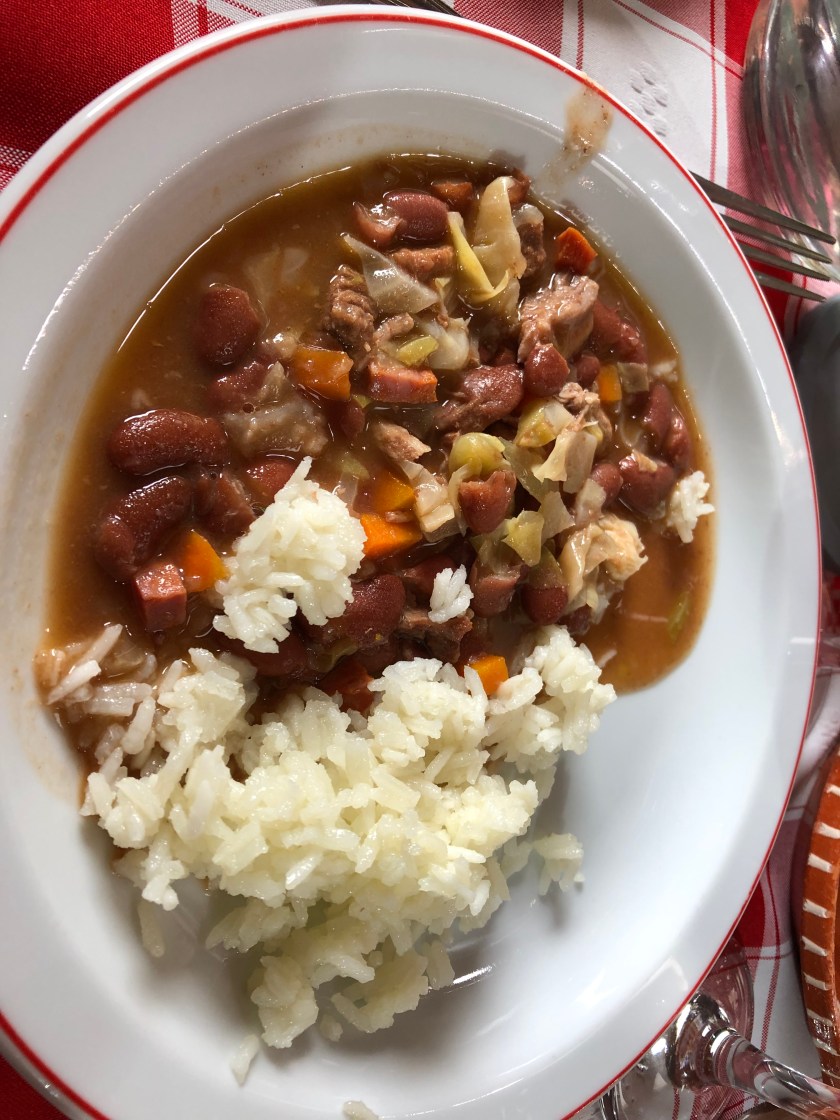
This was preceded by a tasting of white port as an aperitif. We had the vineyard’s shite and red wines with the meal.
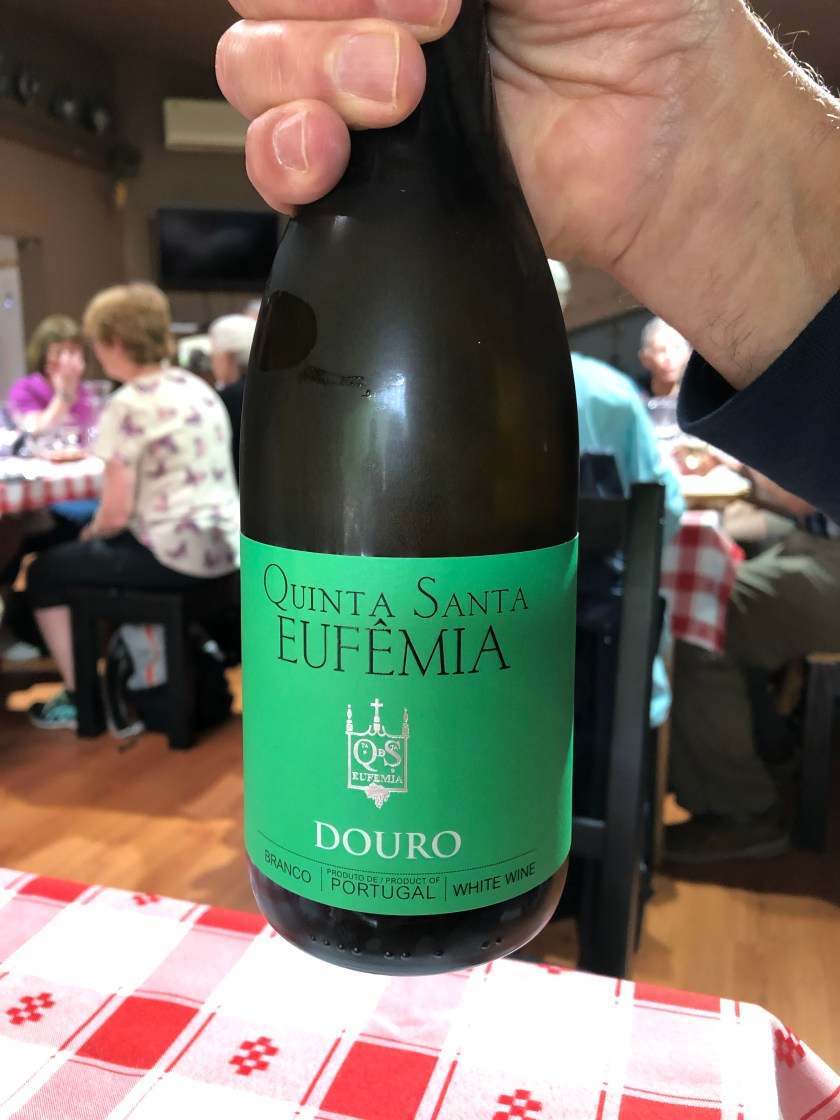
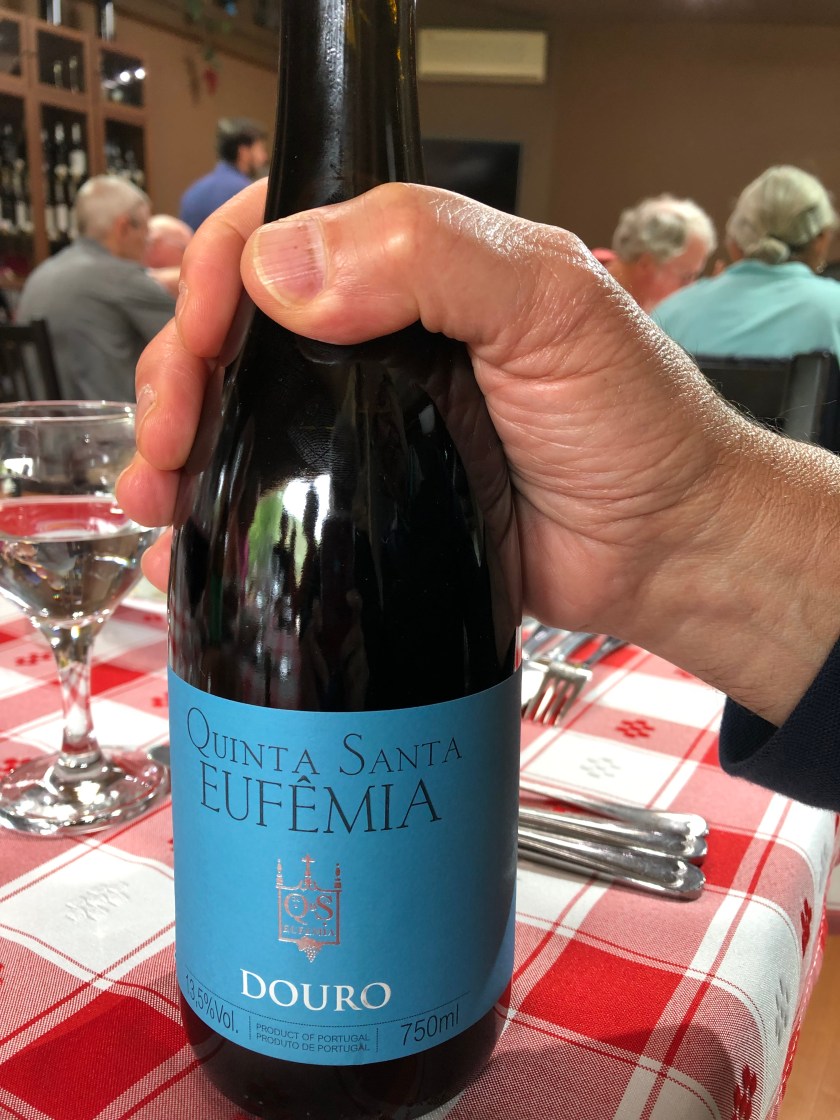
We then tried the 10 year tawny port and a reserve ruby port with the dessert of orange cake, fresh apricots and creme brûlée. Many of us purchased bottles of wine for tonight’s dinner. We also bought a bottle of 30 year old white port and a reserve ruby port.
We were then off to our hotel, the Vintage House, a five star hotel on the banks of the Douro in the town of Pinhao. 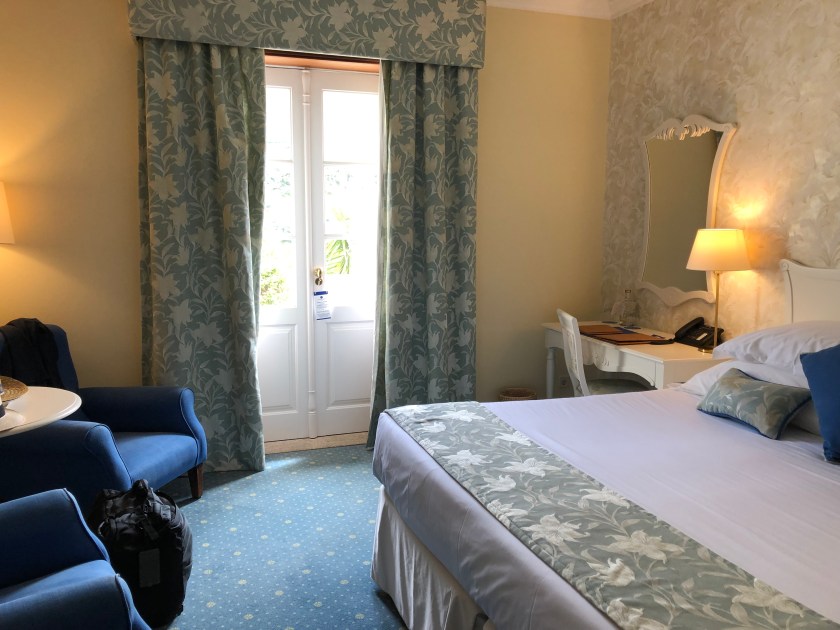
 There’s not much to see in the town (a few shops am small nondescript restaurants)
  but the train station did have beautiful blue and white tiles on the facade.

As in Coimbra, we saw the characteristic yellow arrows designating the path of the Camino de Santiago Compostela.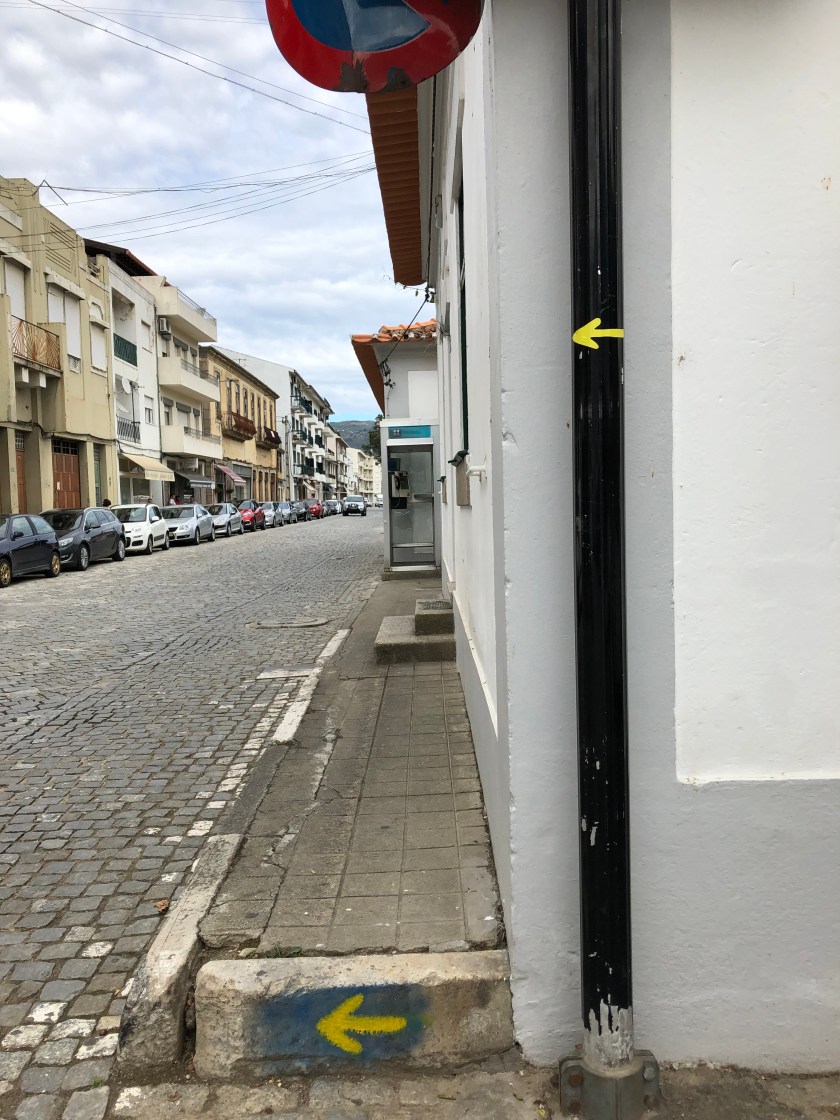

After a walk through this rather unimpressive town, we enjoyed a pre-dinner cocktail by the pool.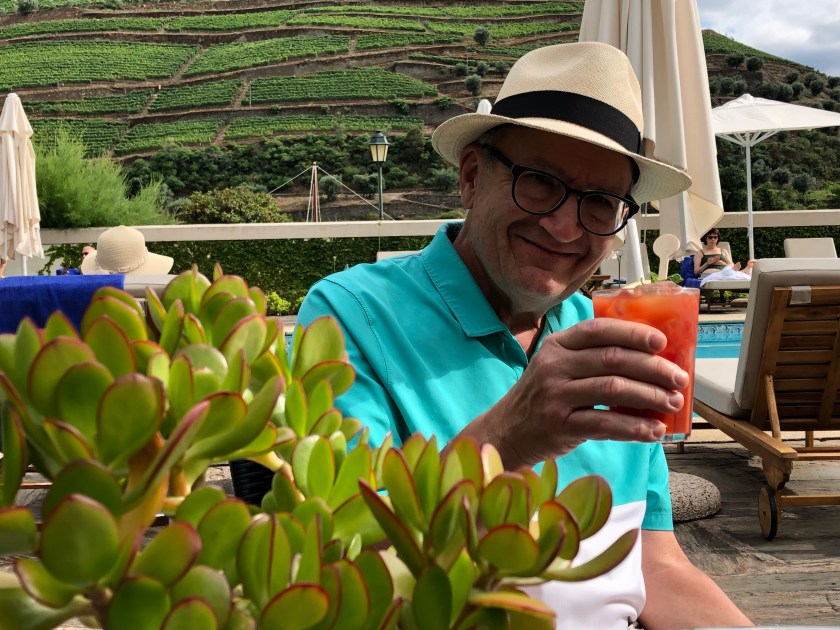
Luckily our dinner at the hotel was a buffet of salads, soup and fresh fruit rather than the heavy fare we had been eating these past few days (thank goodness no old goat!). We have an early departure tomorrow as the bus must arrive in Porto before 11am as they are not allowed to enter the city center after this time.

 Camino Musings