After ten days of almost perfect weather (sunny, temperatures in the low 70s/ low 20s Celsius), we were due for some precipitation. For most of the morning and early afternoon, this middle portion of Portugal experienced intermittent drizzle and light rain, although it wasn’t too uncomfortable because the temperatures held to the mid to upper 60s. We headed out from Óbidos at 8:30 am; destination Batalha Monastery. This imposing “flamboyant” Gothic structure was built in the 14th through 16th centuries to celebrate the victory of King João I for independence from the Castilian dynasty of Spain. The facade of the church epitomizes the flamboyant Gothic style with its pointed arches, intricate carvings and statues and gargoyles.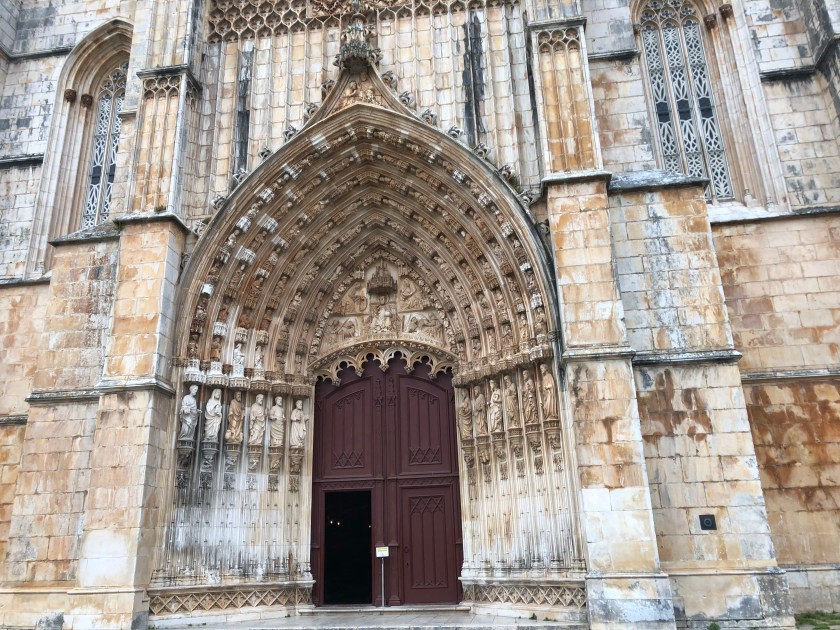
The church interior has a more Gothic feel, with closely placed pillars and arches that direct the eye to the altar.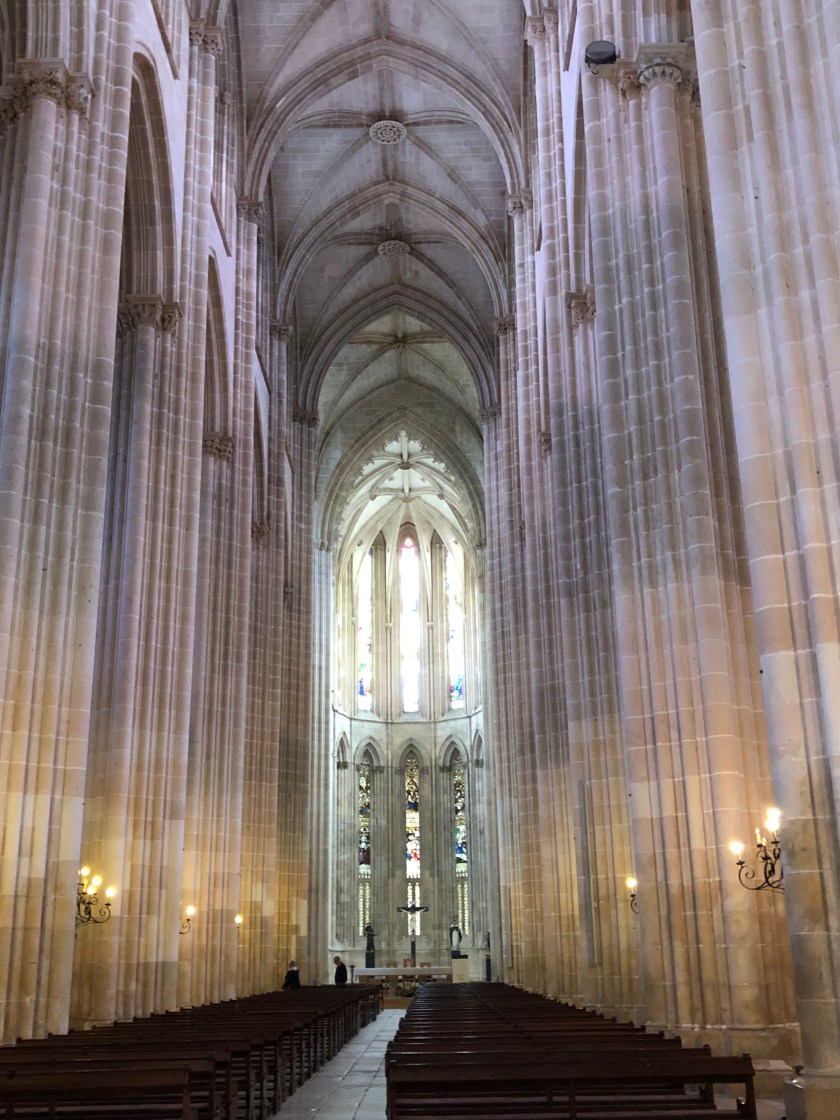
The Founders’ Chapel is a Parthenon with the tombs of King João I and his English wife, Philippa of Lancaster,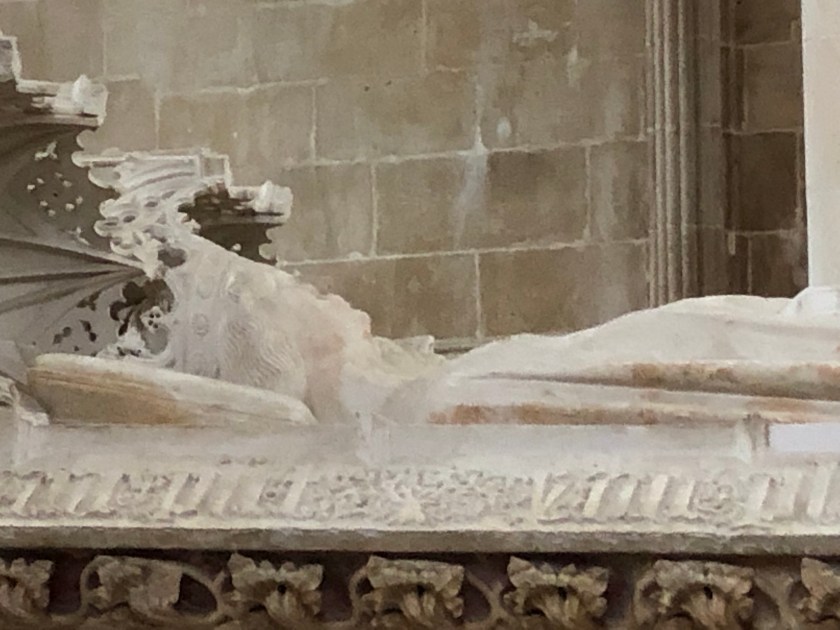
as well as those of their sons, including Henry the Navigator, the brains behind Portugal’s golden age of discovery.
We also learned about Portugal’s role in World War I in maintaining a 7-mile stretch of the Western Front, as we witnessed the changing of the guard at the Tomb of the Unknown Soldier.
The tomb lies beneath a damaged crucifix that was rescued from the site of an important battle that involved the Portuguese army in WWI.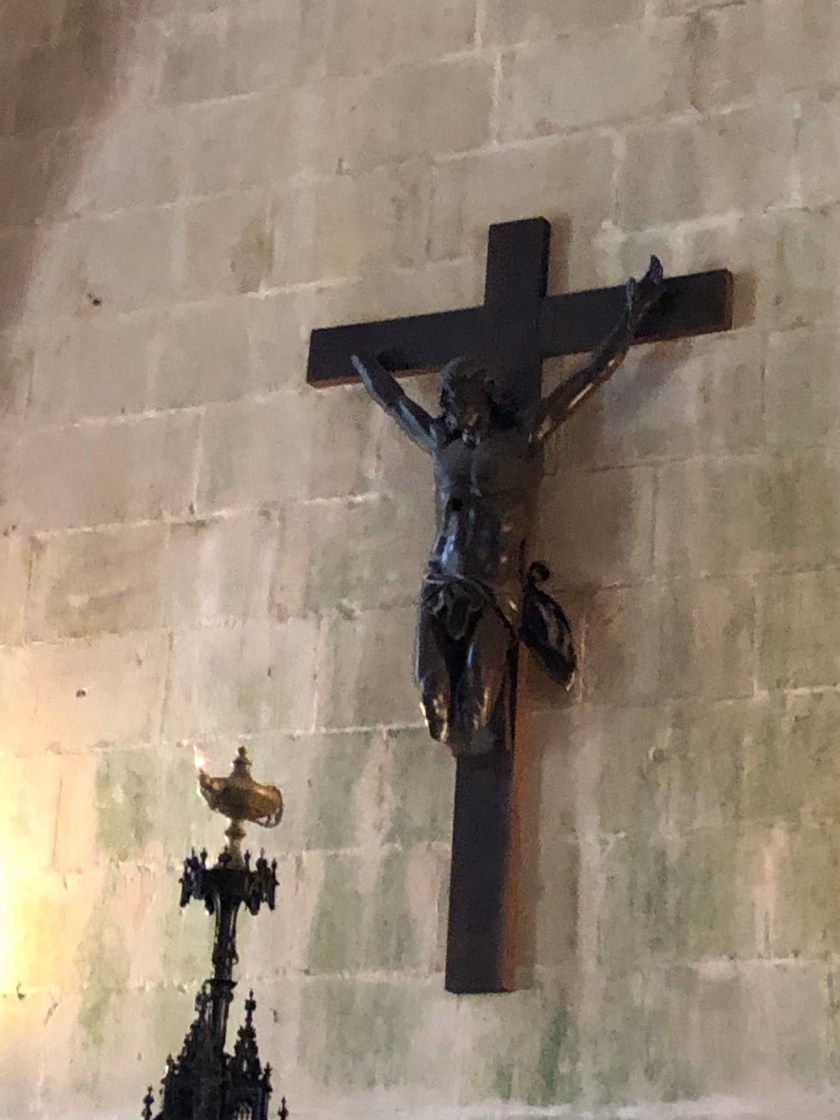
The drizzle persisted as we congregated outside the monastery and snacked on some “honey” cookies.
Our next destination was the Shrine of Fatima, one of the four most visited pilgrimage sites for Roman Catholics. It was at noon on May 13, 1917 that three peasant children saw an apparition of a “lady” while they were tending their sheep. For the next five months, on the 13th day, this “lady” appeared to them and spoke to the oldest girl. On October 13, over 70,000 people congregated at the site with these three children and witnessed the sun “dancing in the sky and then plunging to the earth”. When we arrived, there was an outdoor mass being celebrated in the main plaza. The crowd was diminished, likely due to the inclement weather. It was still inspiring to witness the faith of these pilgrims, some of whom proceeded through the main square on their knees while praying the rosary.
An area referred to as the “furnace” was the site where pilgrims lit candles or wax votives and prayed for divine intervention.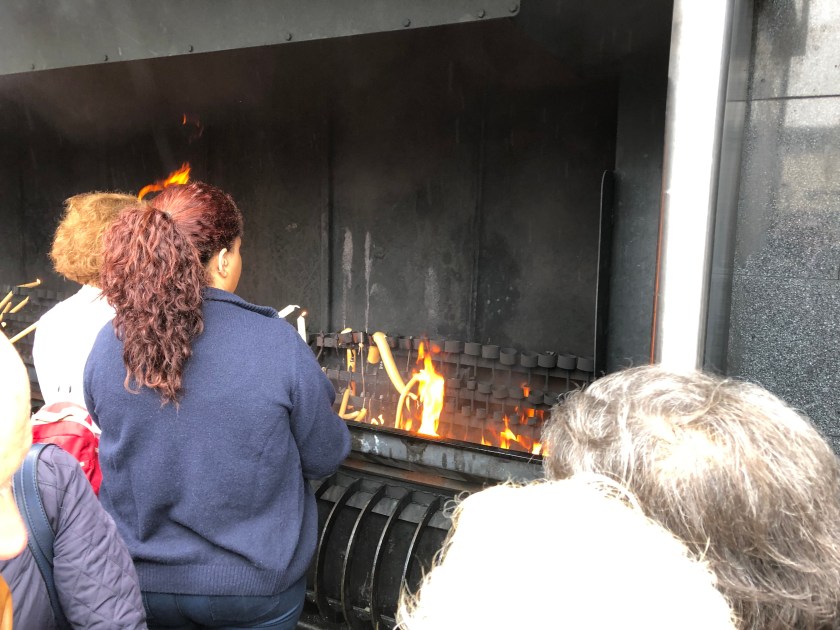
On the topic of votives, this is a uniquely Catholic tradition where an object represents a body part that needs to be healed or perhaps represents a situation that was resolved after the faithful person prayed to a saint or to God. This votive, which is usually made of a metal like tin, is left on an altar or pinned to a statue’s vestments. Here in Fátima, these votives are made of wax and are lit at the furnace and left to melt away. The variety of wax body parts is impressive and it almost became a game for me to identify the organs.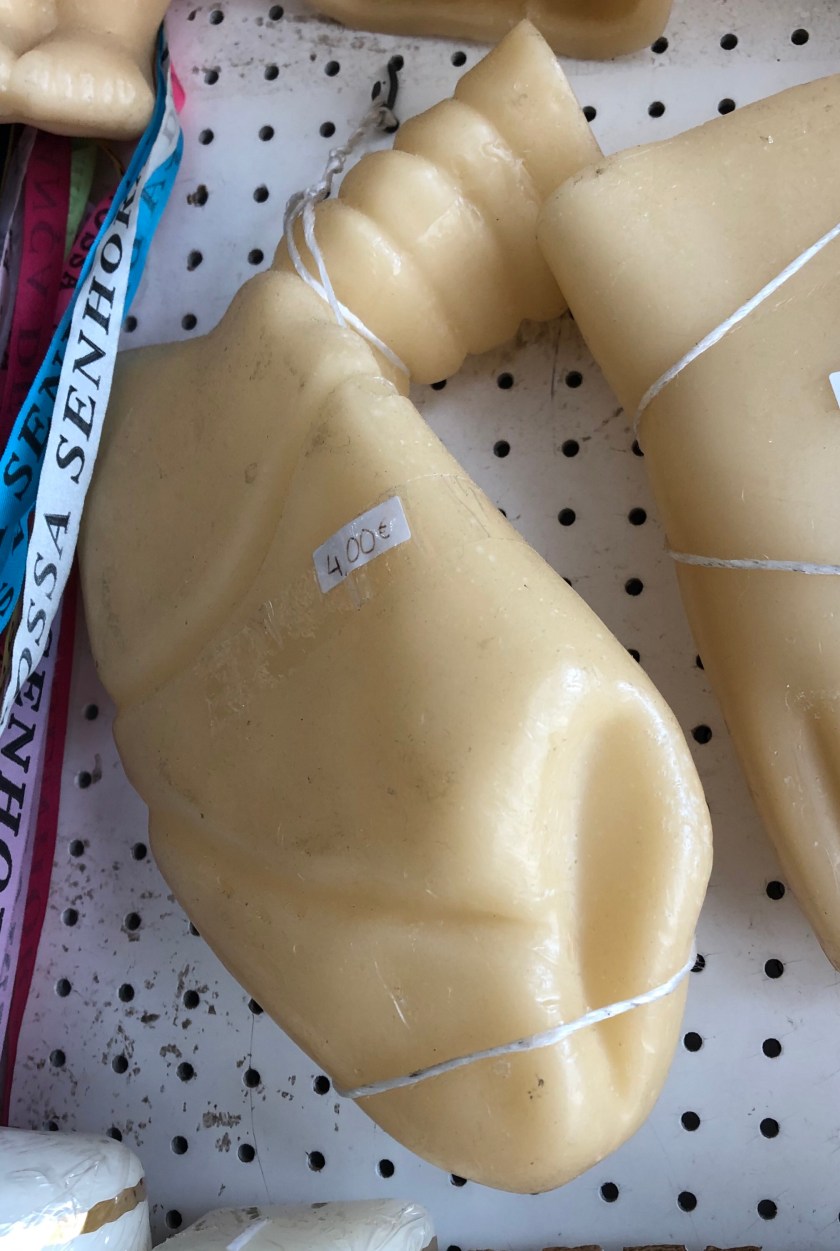
This sort of looks like a lung, probably the right lung, with three lobes.
I can see a uterus with ovaries and Fallopian tubes and part of the pancreas here.
How about intestine, breasts, heart, heads? One can use the imagination to speculate the different illnesses they could be used for.
Our final destination for the day was the university town of Coimbra. Before we boarded the bus, Rafael surprised us with a snack of ham and cheese pastry (like a hot pocket made of puff pastry) and a little meringue cookie. By the time we arrived in Coimbra, the rain had stopped for good. The hotel, the RiverSuites, located just on the other side of the bridge into the city, is quite unlike our other accommodations. It is similar to a Red Roof Inn (low end hotel), with tiny bathrooms (no tub), hard beds, and not much character. But it is clean and perfectly located and has a friendly staff. We took a short stroll into the center of town before our tour of the University.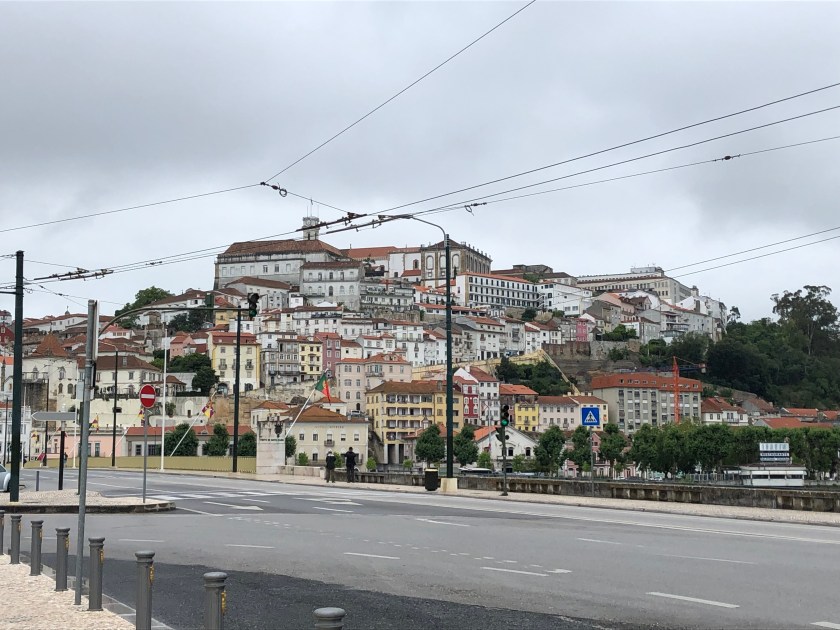


At first glance, there is a disproportionate number of pastry and ice cream shops, and the local specialty appears to be giant meringues!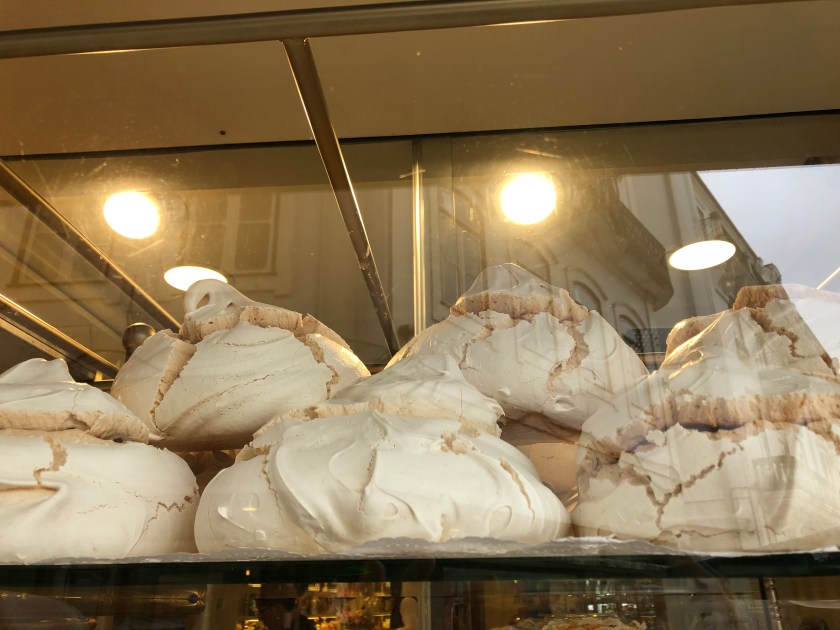
After a cursory bus “tour” around the city, we had a guided visit to the University, that was originally the quarters of the royal family. It has a classic old Ivy League feel, with its Manuelline architecture.

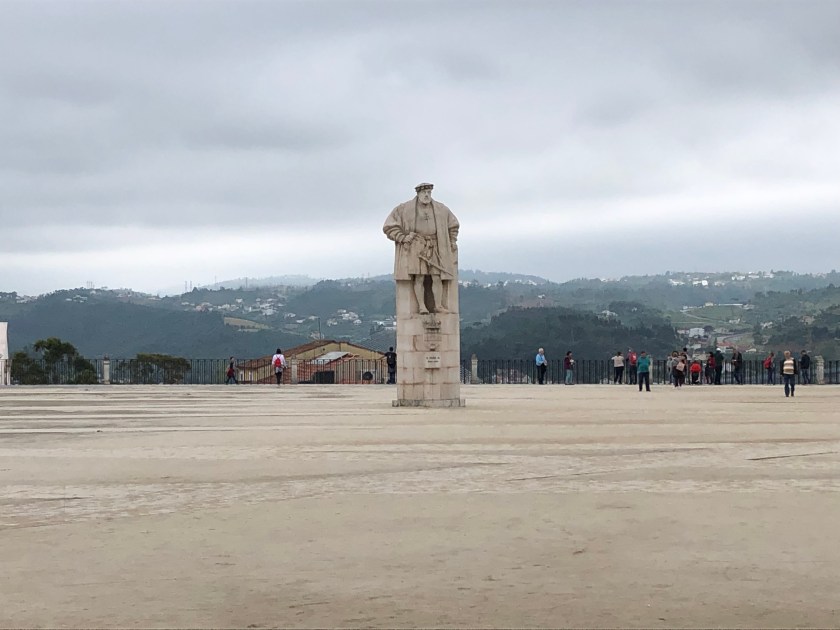
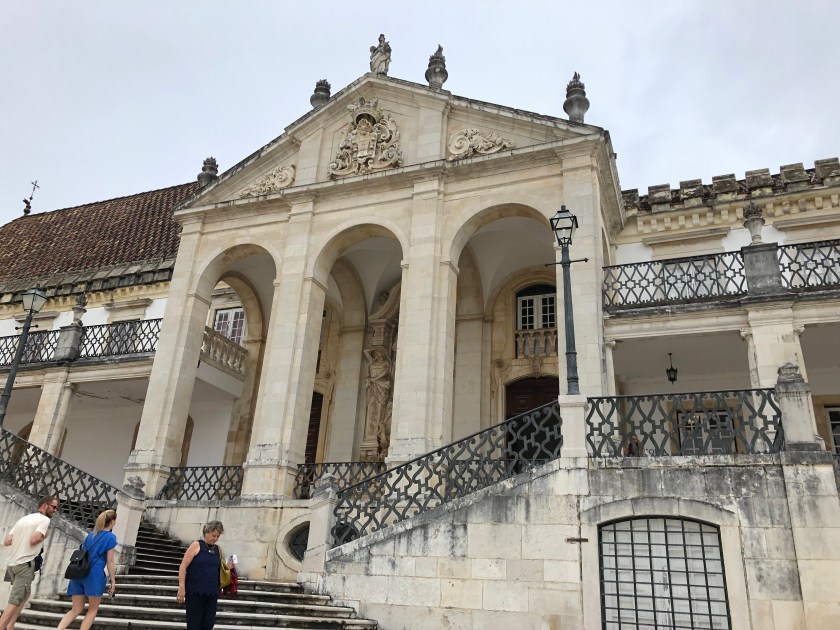
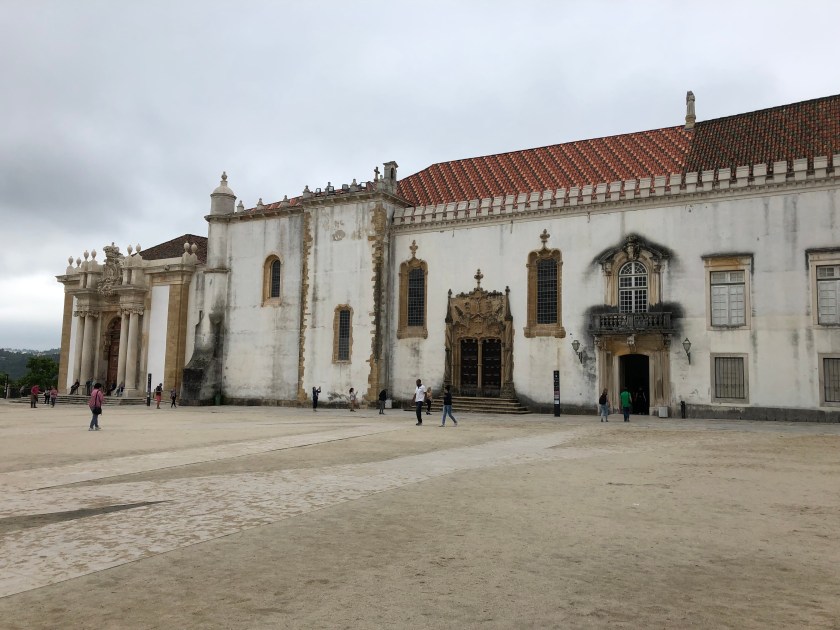
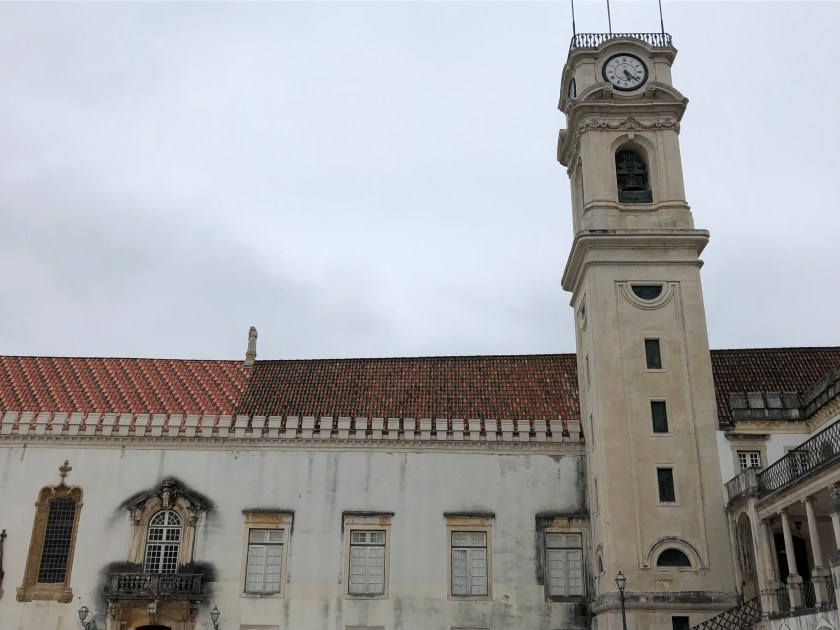
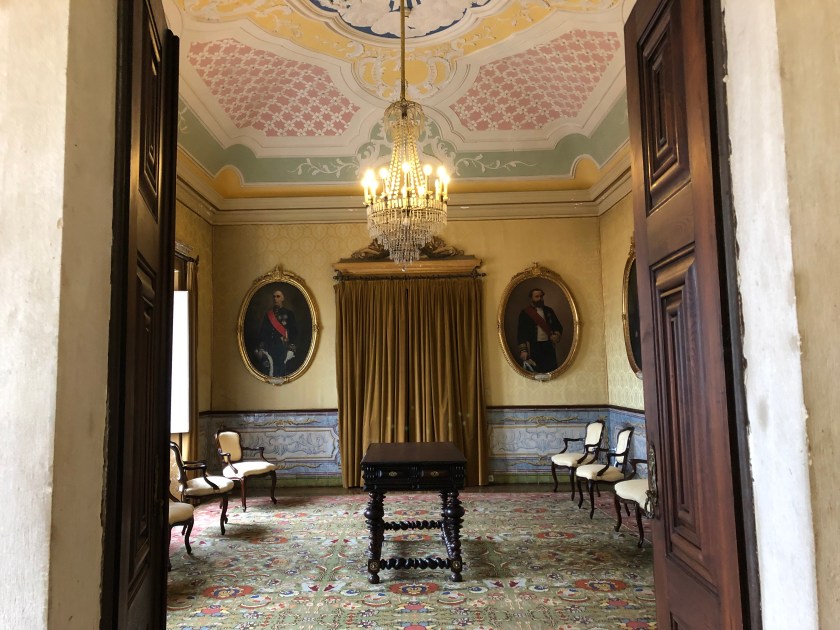
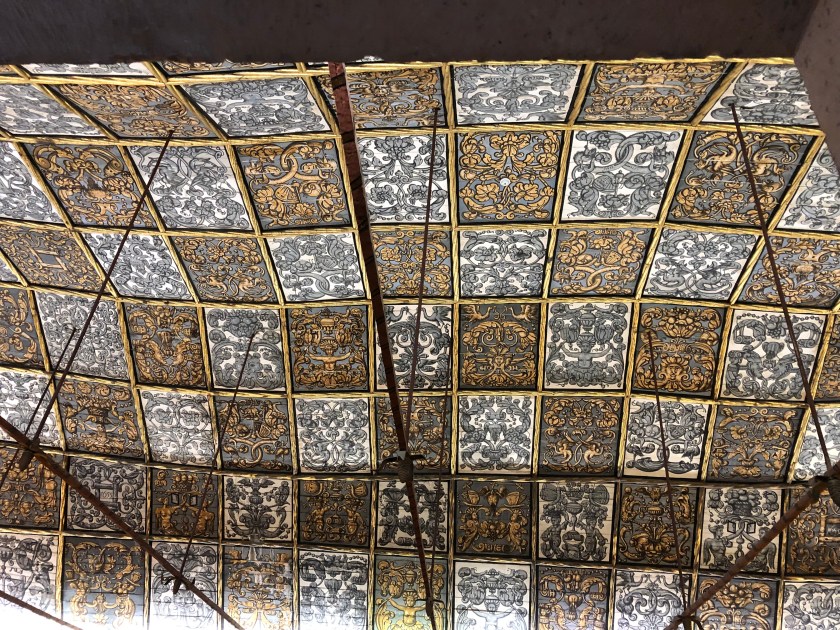
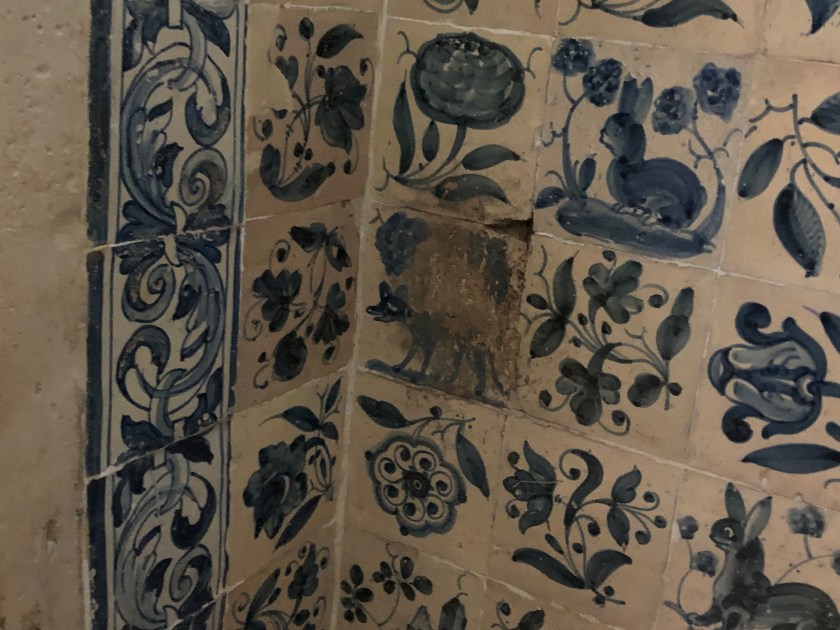
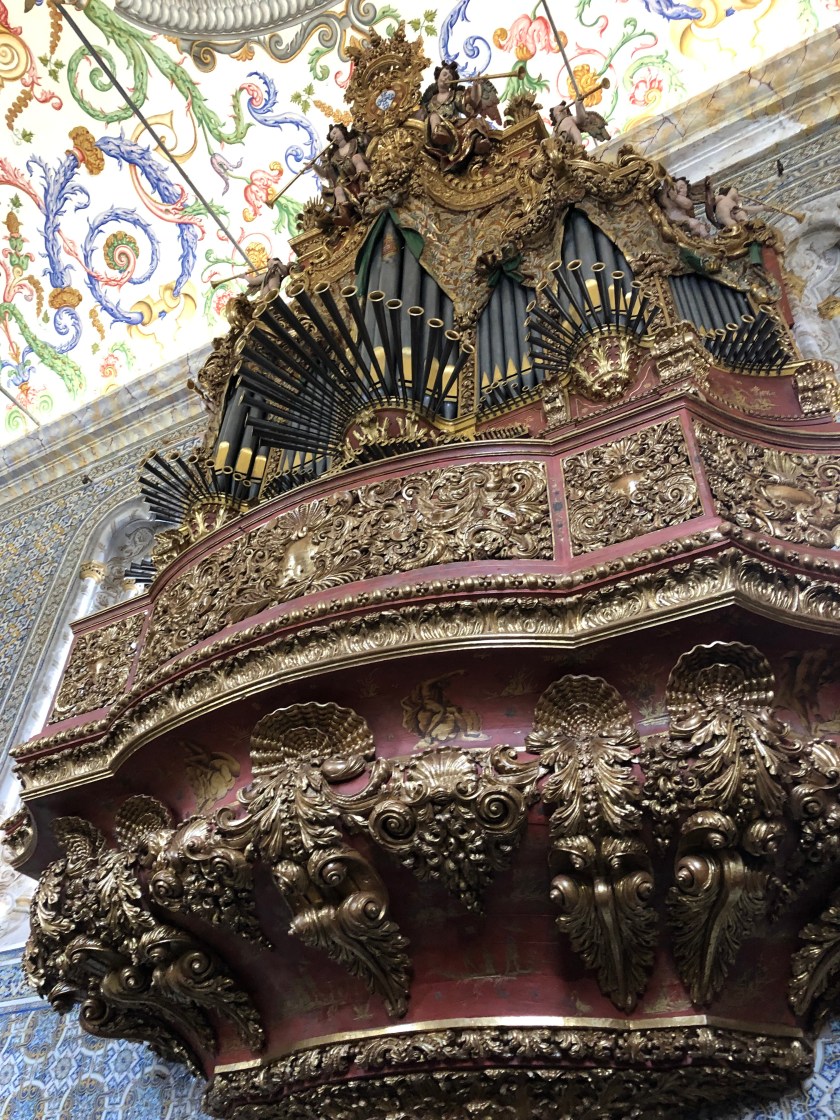
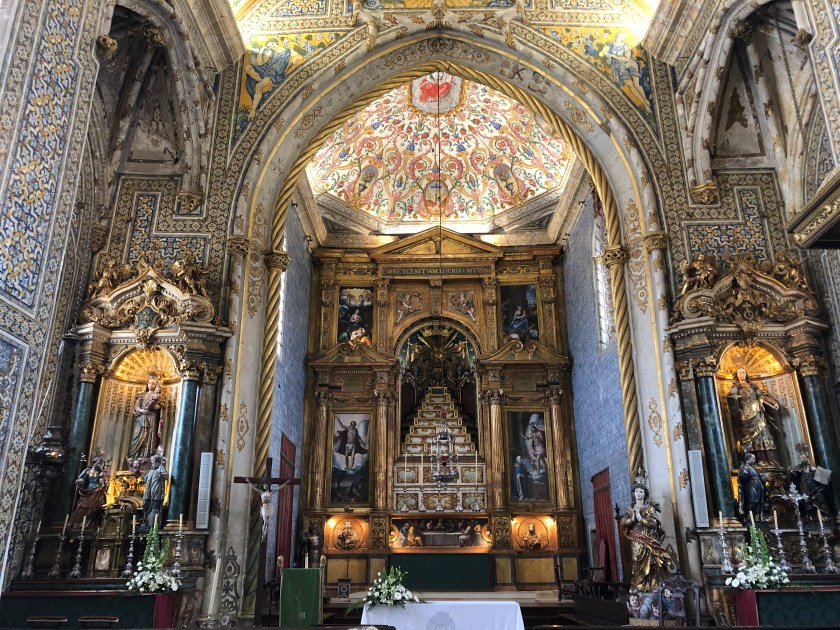
The visit included the queen’s quarters, the chapel and the library. Our day concluded with a group dinner where we feasted on suckling pig and grilled sea bass and unlimited wine!

 Camino Musings