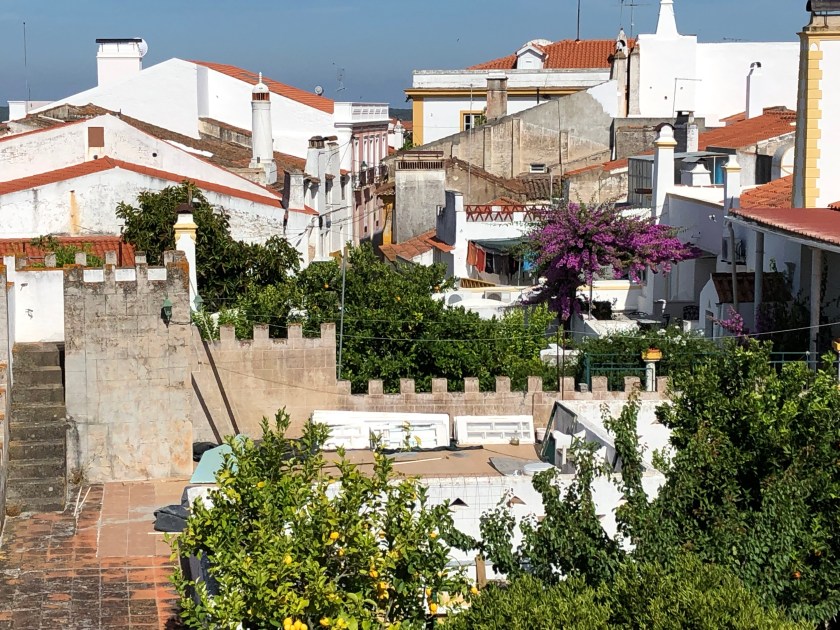
The morning g was sunny and crisp when we left Évora. After a one hour bus ride, we had a pit stop in Avis, fortified city in the Alentejo region of Portugal that was home to the Knights of the Order of Avis. This quaint whitewashed town of narrow streets was captured from the Moors in 1211 and remnants of the castle built several years later still remain. The view of the countryside from the ramparts was gorgeous. 

In the main square, a probably homeless scraggly, but adorable, dog ingratiated himself to our group and even attempted to board our bus!
Another 30 minute ride took us to one of our main destinations of the day – a cork farm – where we were not only given a demonstration of how cork is harvested from the cork oak tree and a tour of the extensive cork forest, but we were also instructed on how this particular farm uses sustainable practices in not only the harvesting of the cork but also in how they maintain biodiversity by also integrating sustainable techniques in their vineyards, cattle raising, production of olive oil from their grove of olive trees, and harvest of pine nuts from their forests of umbrella pines.
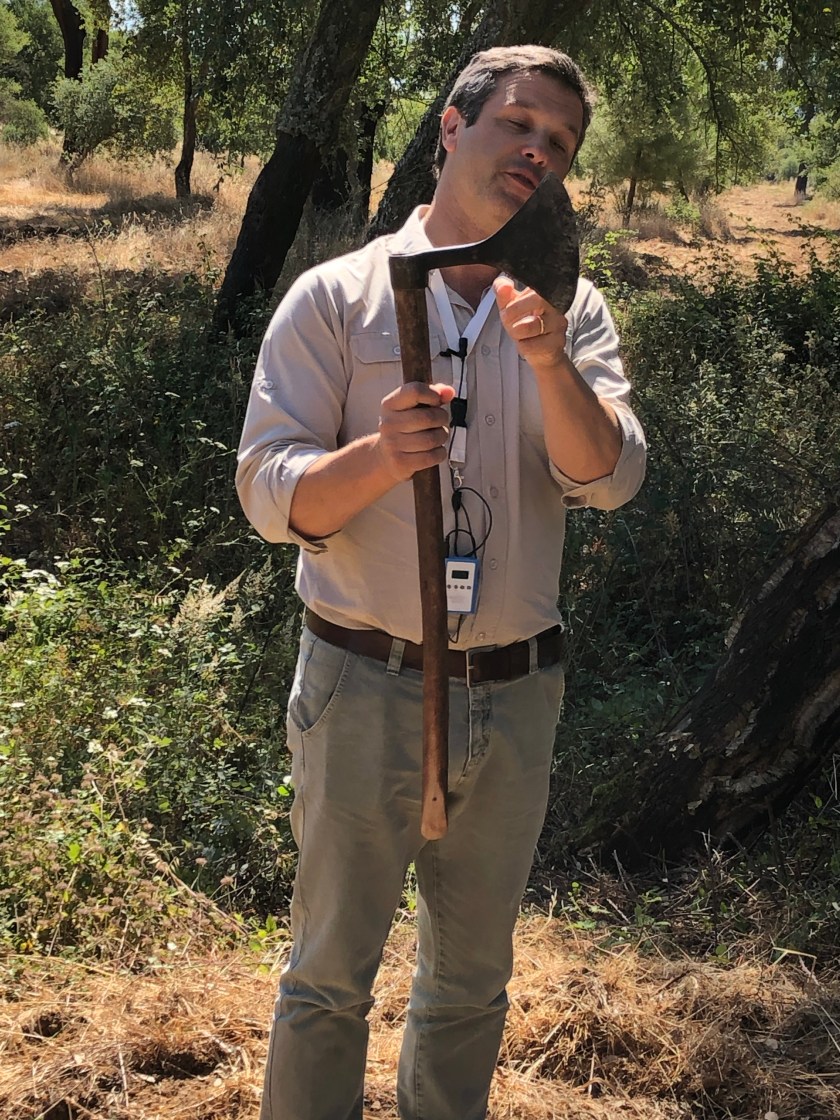
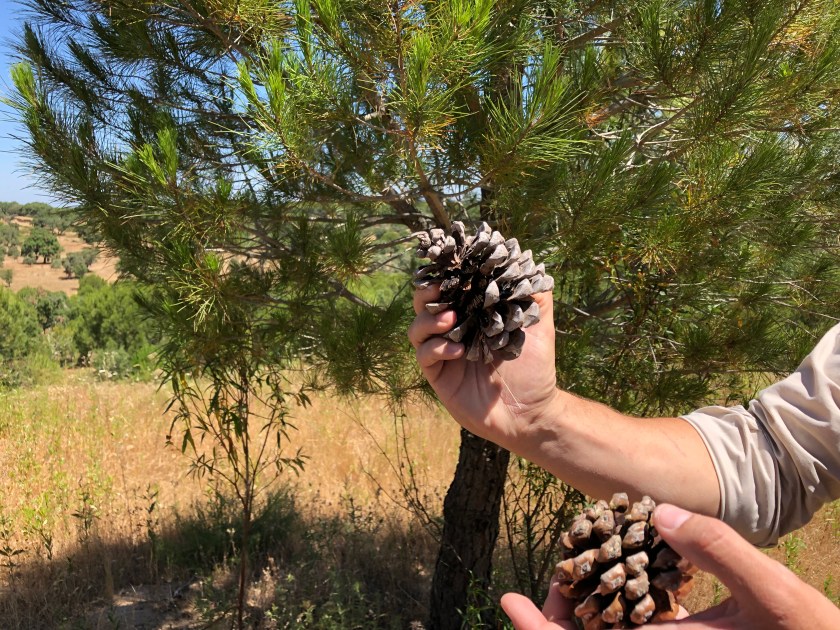
Managed hunting of deer and boar also takes place on the grounds. After the tour of the farm using a tractor-pulled wagon, we were treated to an olive oil tasting and a substantial lunch of chicken baked in a pastry pie crust, fresh cherry tomato salad, shredded carrot salad, lettuce salad, fresh pineapple, chocolate cake and a berry semifreddo. And of course we had unlimited red, white and rose wind from their vineyards.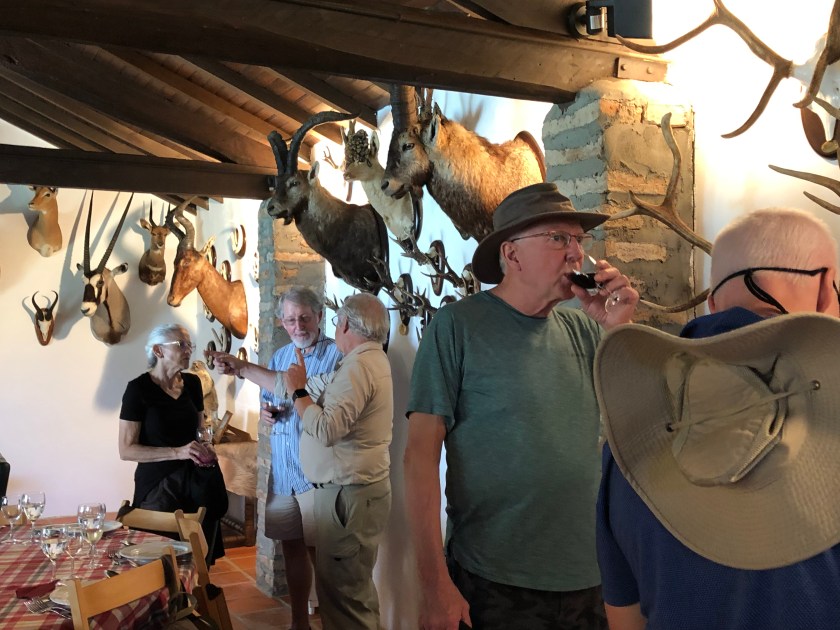
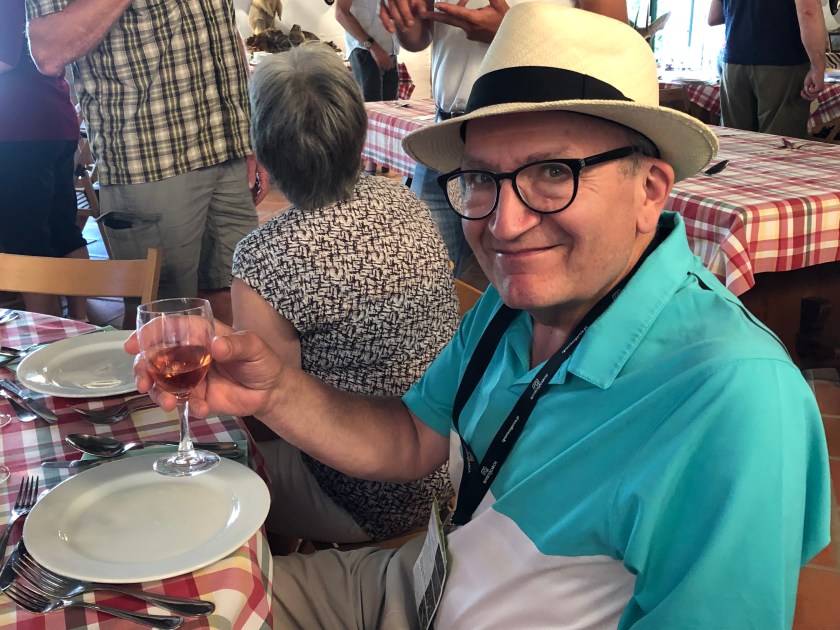
We were seated at the same table as the matriarch (Teresa) of this family operation (Rovisco Garcia). Her family refers to her as the “General” and she certainly is an intimidating force!
We returned to the bus sated and ready for a post prandial snooze. The first half of the three hour bus ride to Óbidos was quiet!
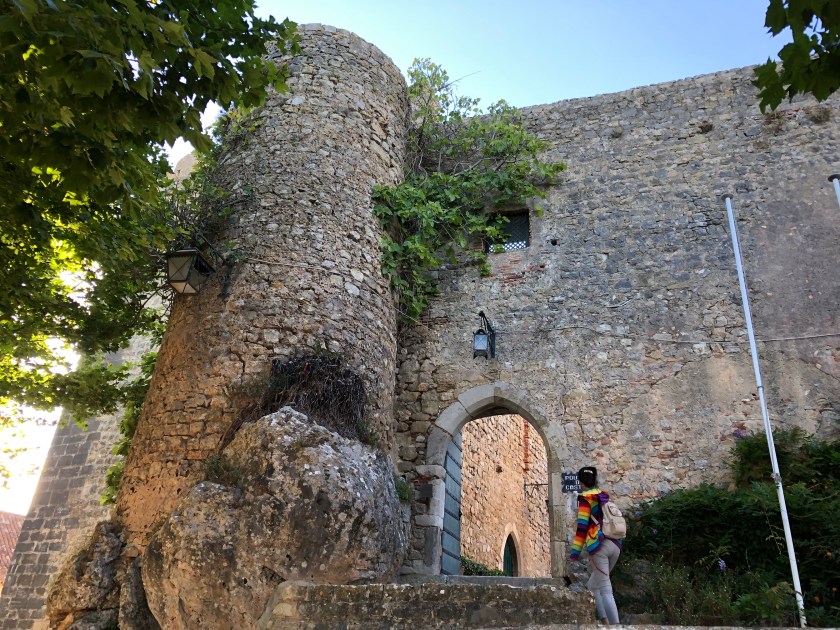
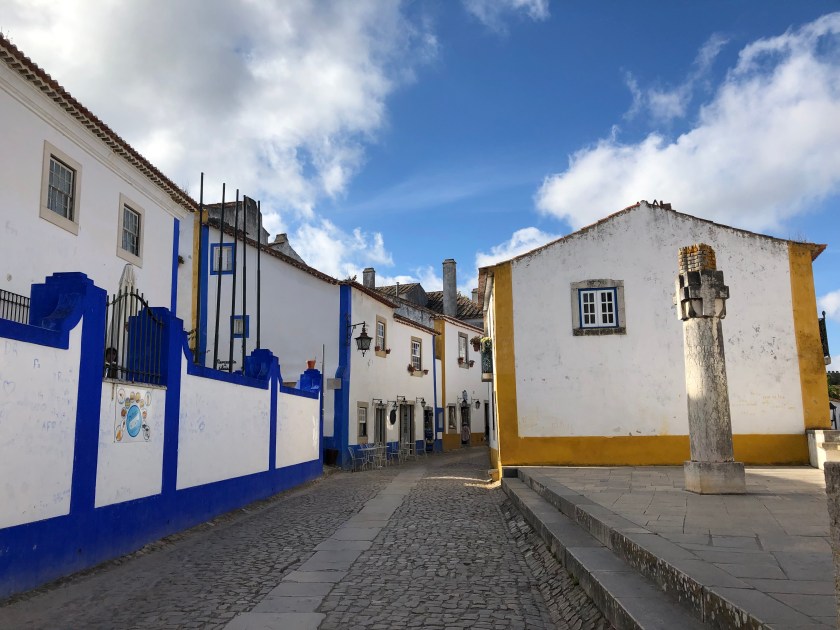
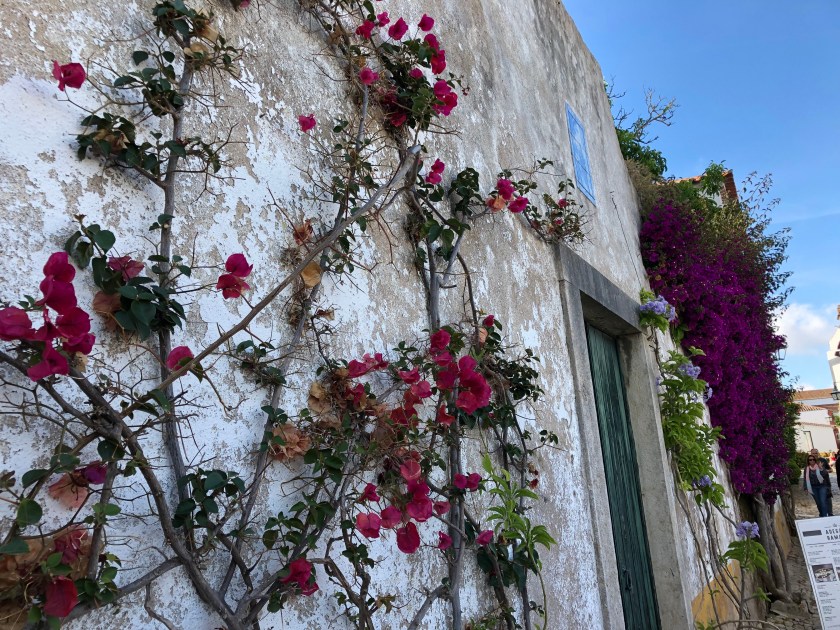
Óbidos was originally a Roman settlement located about one hour twenty minute drive north of Lisbon. Over the centuries this town was patronized by the queens of Portugal. The 1755 earthquake caused extensive damage to the town. The castle and surrounding walls were rebuilt in the 20th century during the period of dictatorship. The town, which has only about 500 residents within its walls, is now essentially a tourist town, with busloads arriving for a couple hour visit on the way to somewhere else. With its quain, fairy tale ambience, it is also the site of many weddings.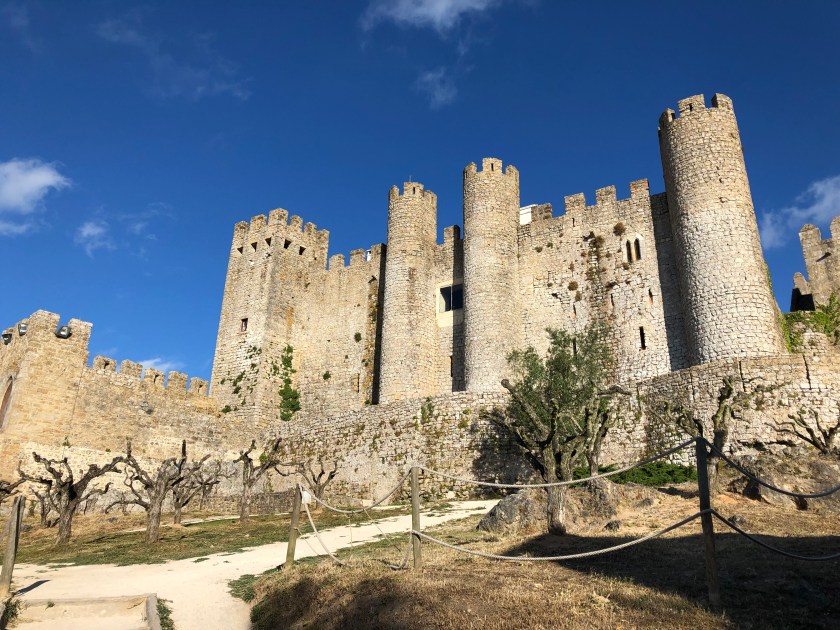
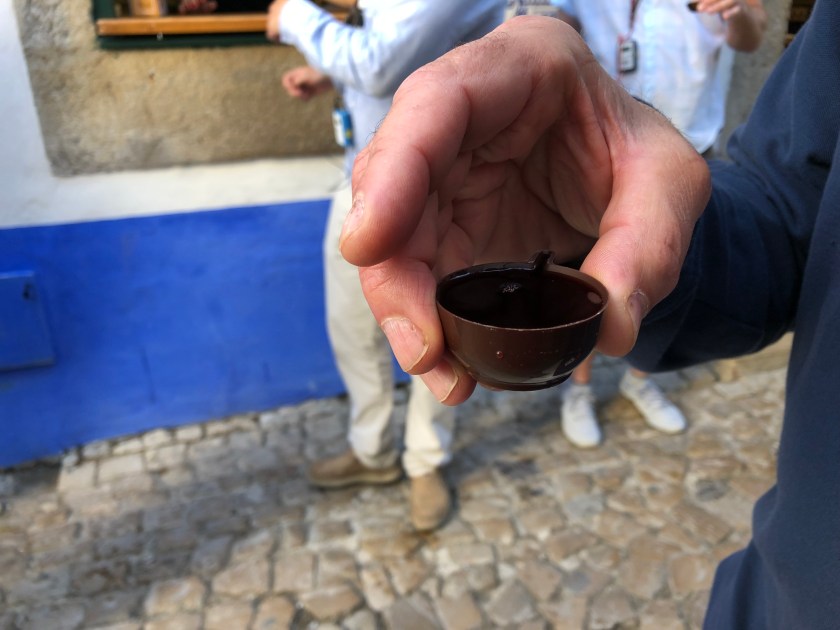
A special treat was the ginjinha served in little dark chocolate cups.
After a brief orientation walk, we were set free to explore, return to the hotel or find a place for dinner.
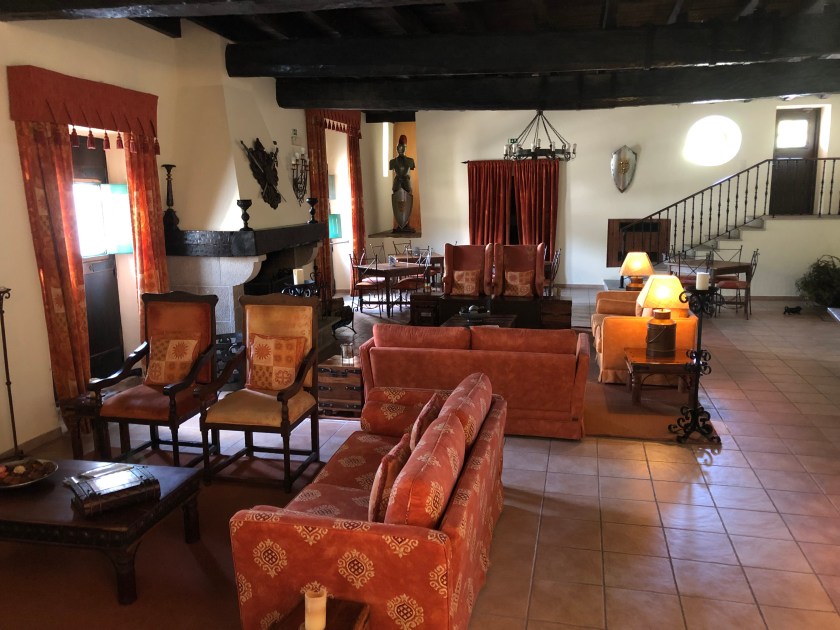
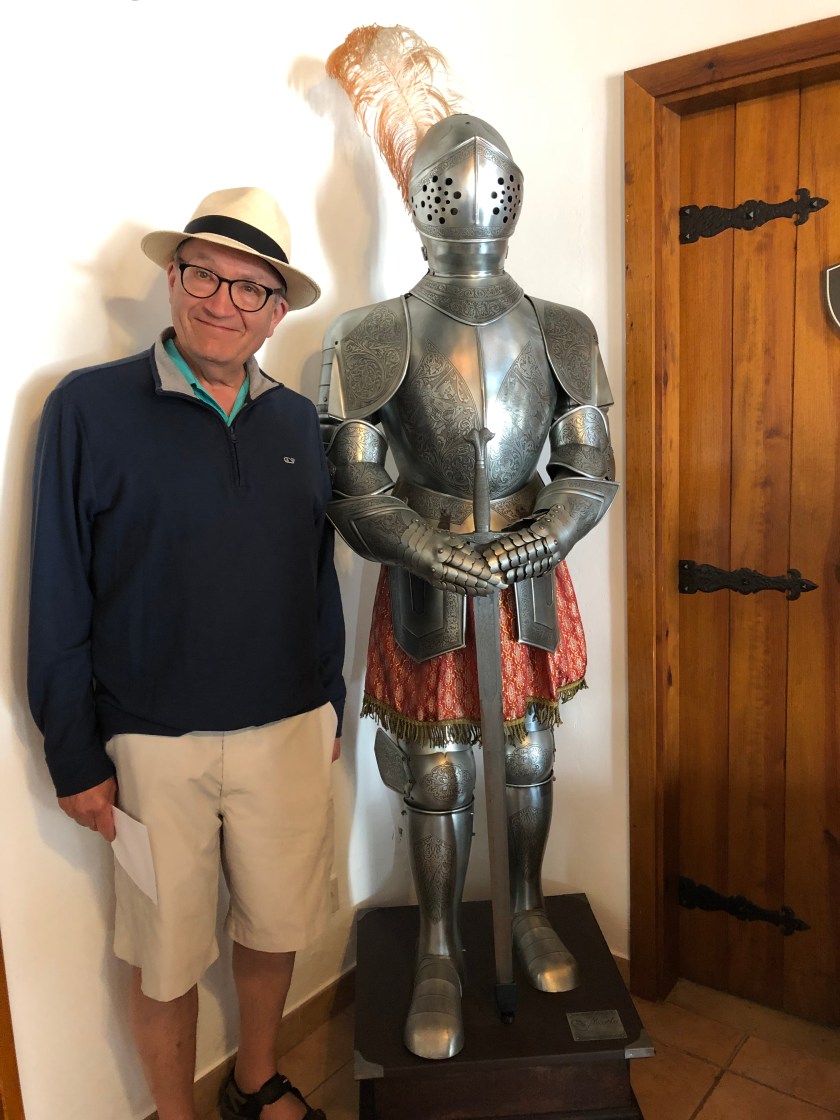
The Hotel Real is quite unusual. It has a medieval theme, with costumed employees, suits of armor and interesting rooms.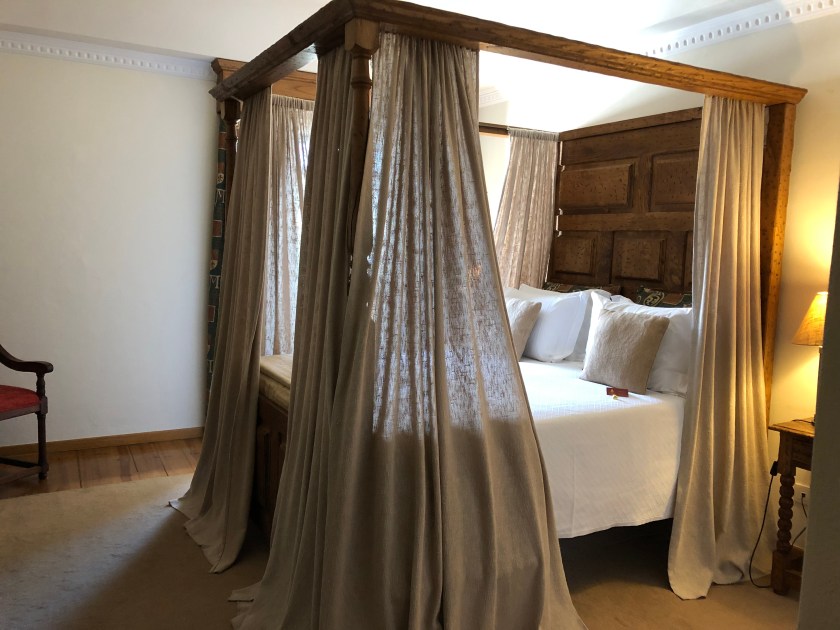
We decided that after such a heavy lunch, a light dinner (of pizza and salad) was in order. We joined some of our tour group for a pleasant evening of conversation along with a pizza portuguesa ( with chorizo and pimento peppers).

 Camino Musings