After a week in the bustling city of Lisbon, it was a relief to escape into the Portuguese countryside. We left via the Ponte 25 de Abril, almost the spitting image of the Golden Gate Bridge, for the region of the Alentejo, about a 90 minute drive southeast.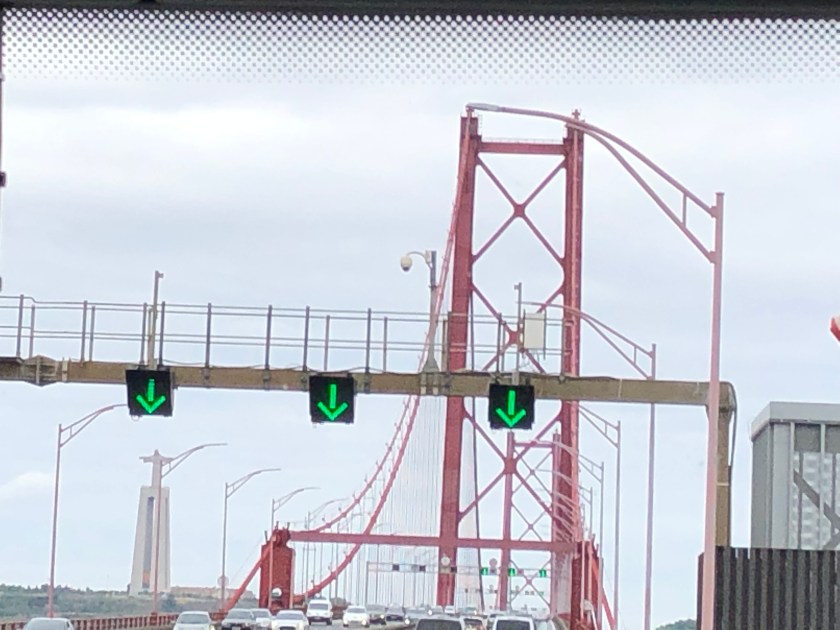
The landscape gradually changes from verdant hills to flat dry fields of wheat, vineyards, and farms of cork oak trees and eucalyptus groves. Nests of storks can be seen perched on high tension electric towers because these fields provide a never ending supply of bugs to eat.
We arrived at our hotel, the Mar d’Ar, located just inside the old town, at around 10:30 am. This five-star hotel opened in 2008 and was previously a 16th century palace. The remodel turned it into a sleek modernist structure with a portion of the town’s medieval aqueduct in its garden.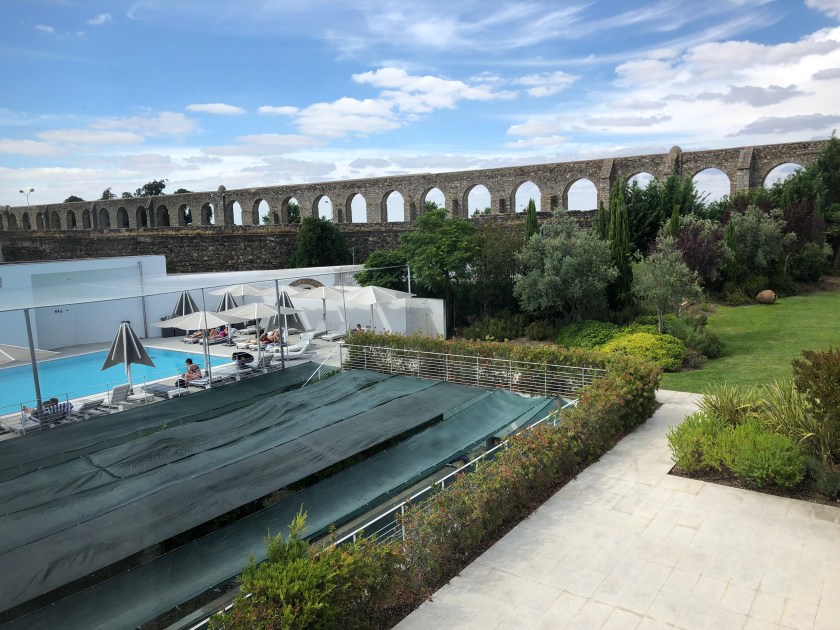
Our local guidenfor the morning walking tour was María, a charming woman with a wicked sense of humor and the characteristic demeanor of someone of the Alentejo (i.e. slow and deliberate and never in a hurry).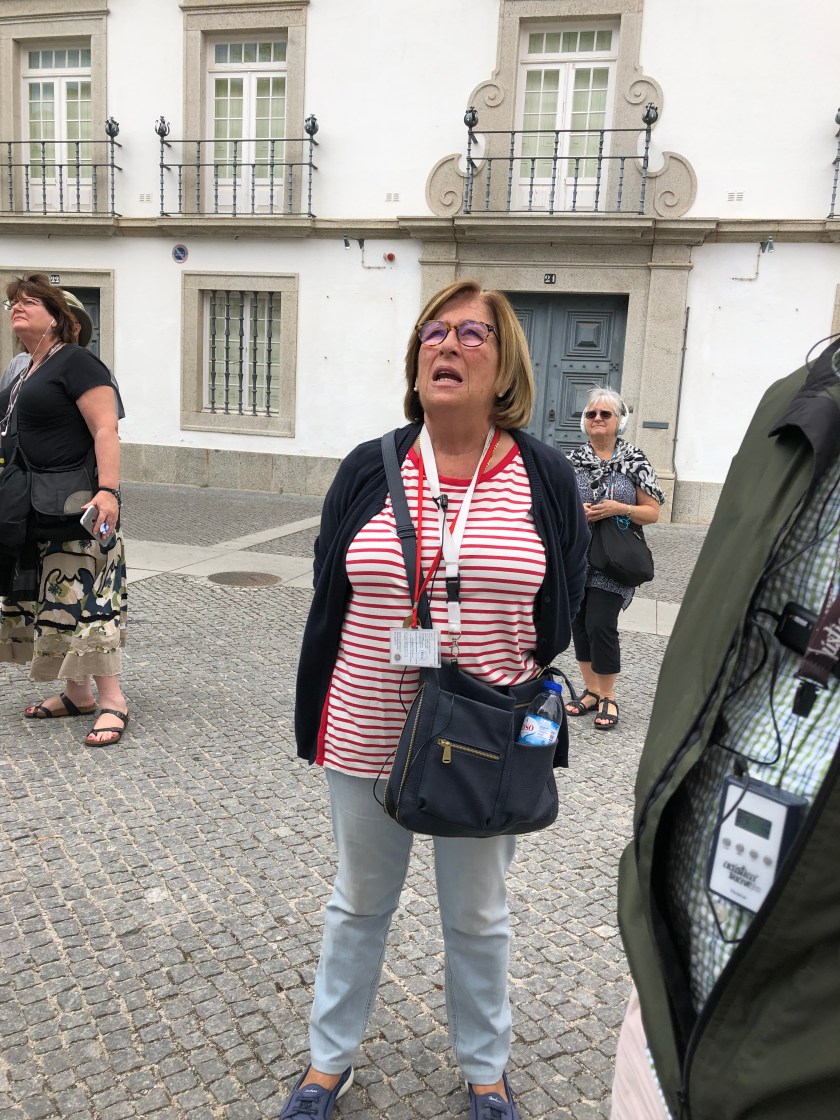
This town dates back to the time of the Romans (2nd Century BC) but megalithic ruins dating back to 4000 BC can be found in the area. The old town is surrounded by a 16th century aqueduct that was built on the remains of an ancient Roman one.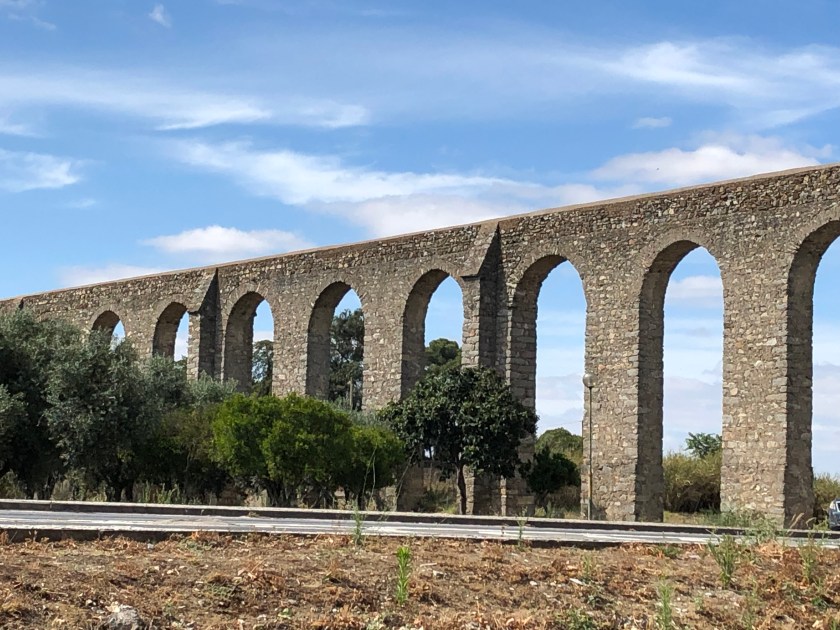
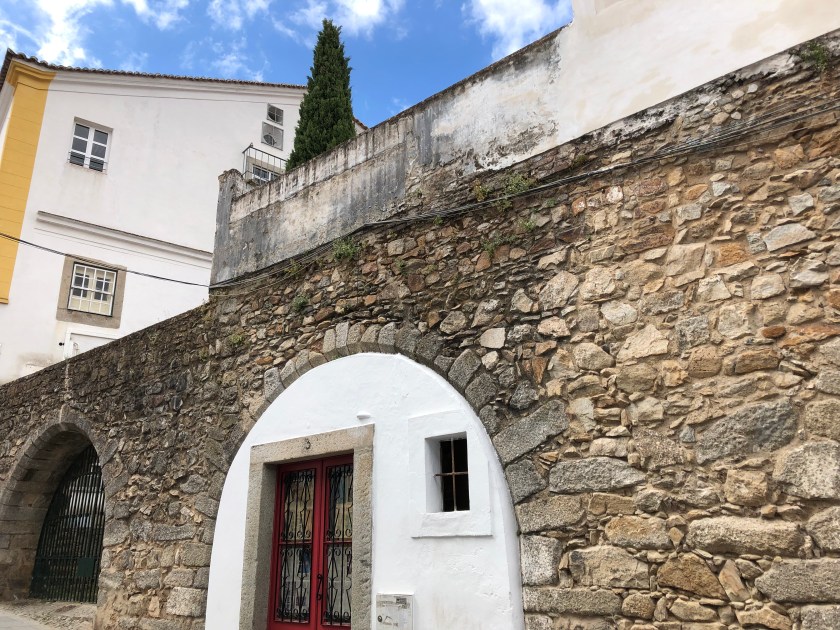
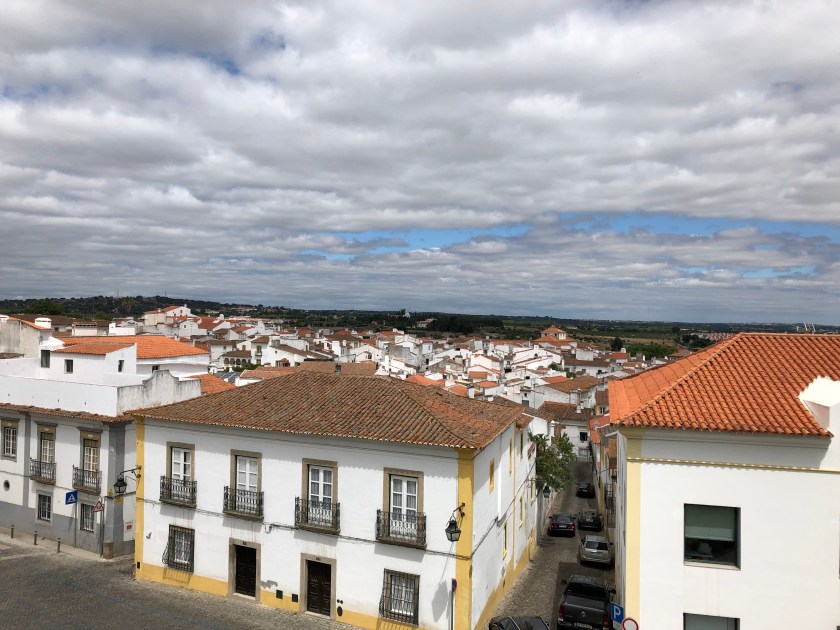
The architecture shows a Moorish influence, with arched and wrought iron balconies and the buildings are whitewashed and painted yellow and blue.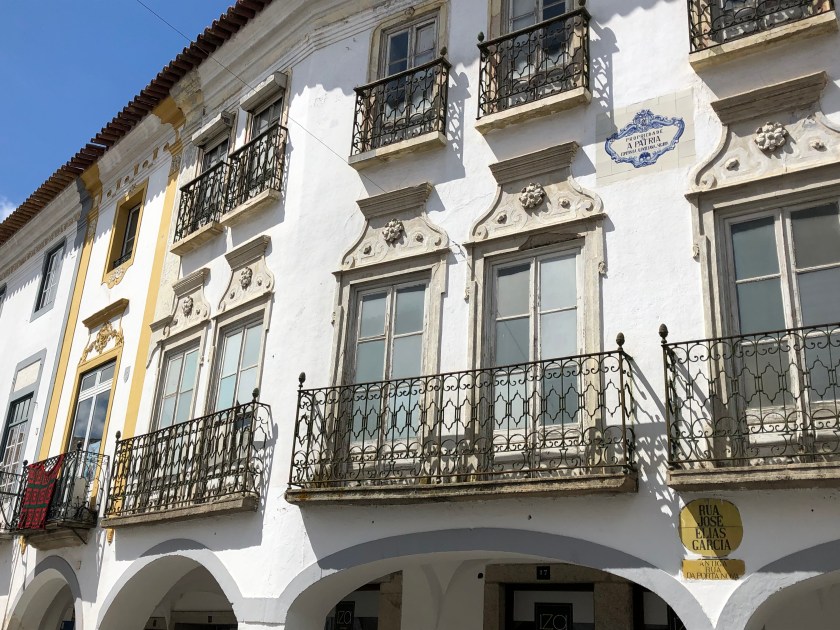
We saw the remnants of a Roman temple at the top of the town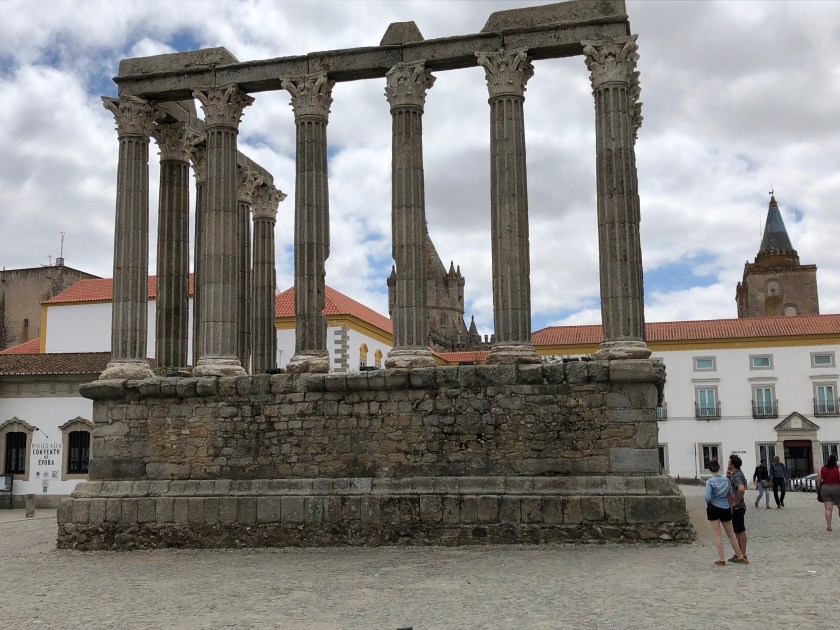
and there was an adjacent park with a magnificent view of the surrounding countryside.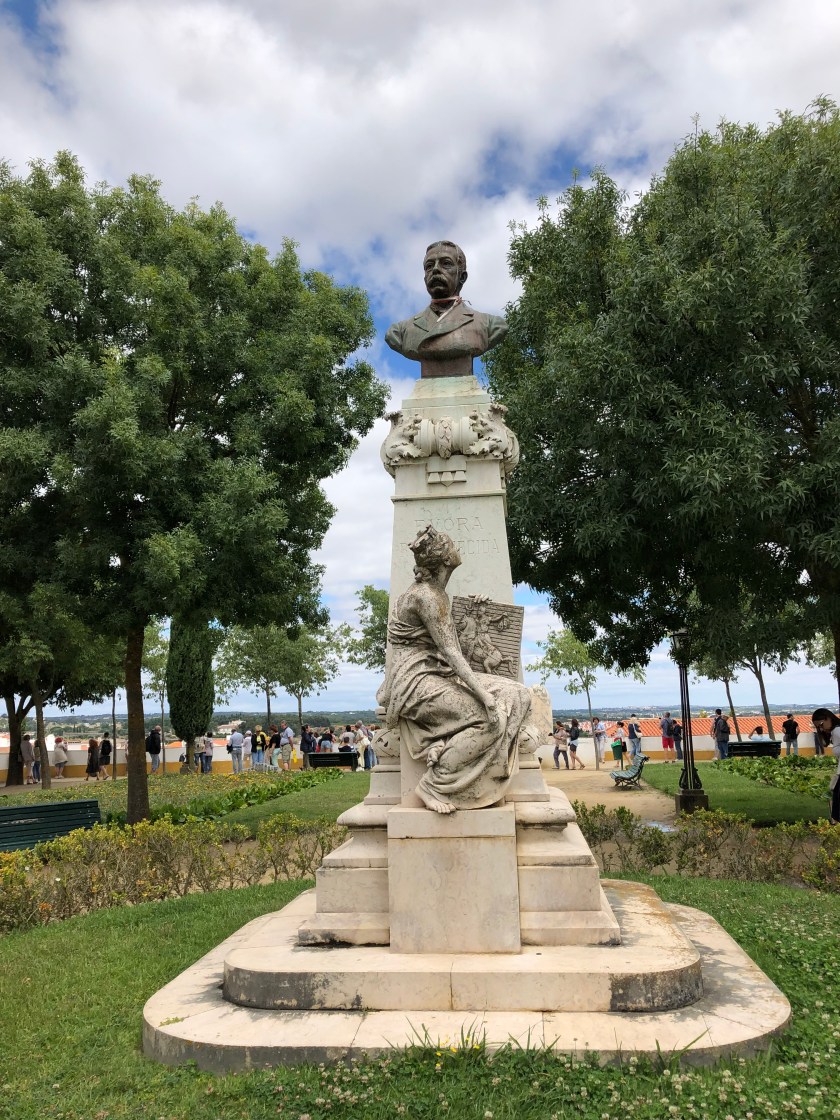
Other sights on our walking tour included the Church of St. James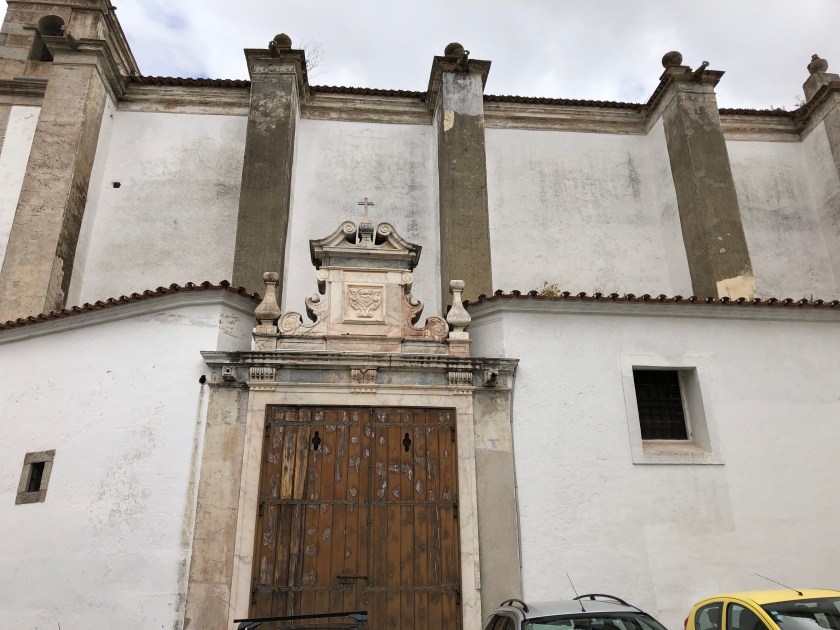
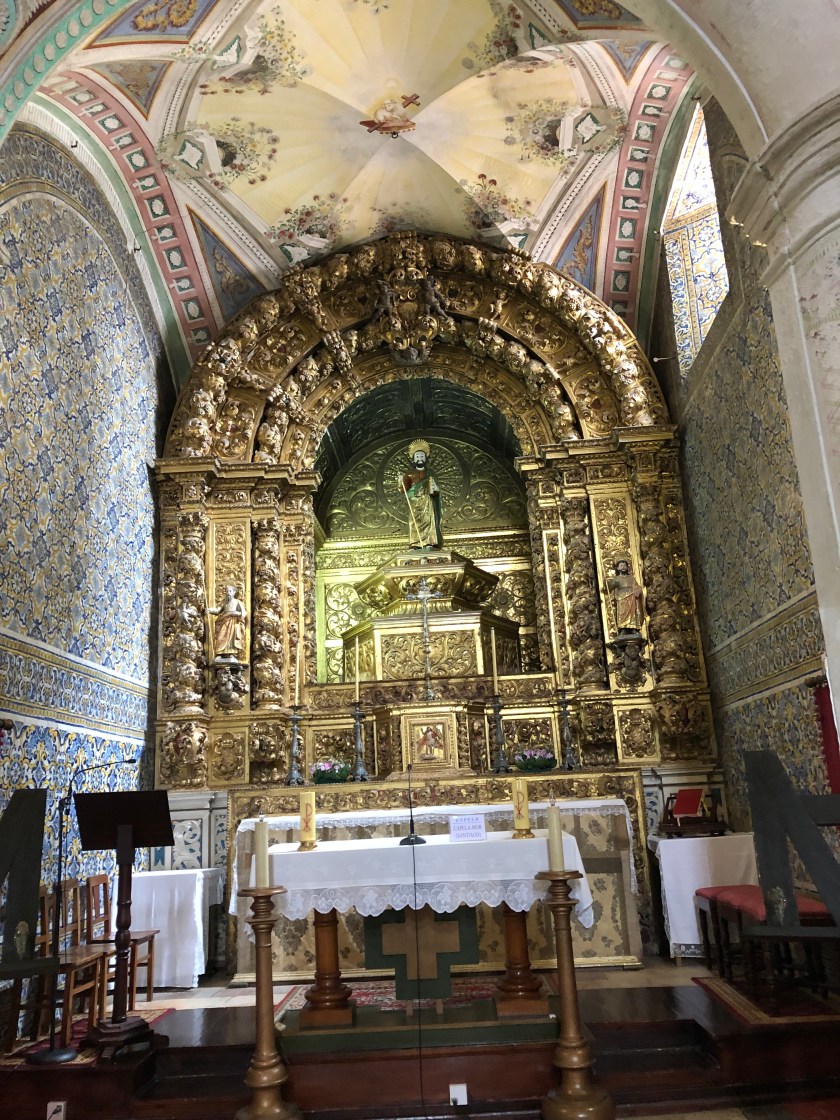
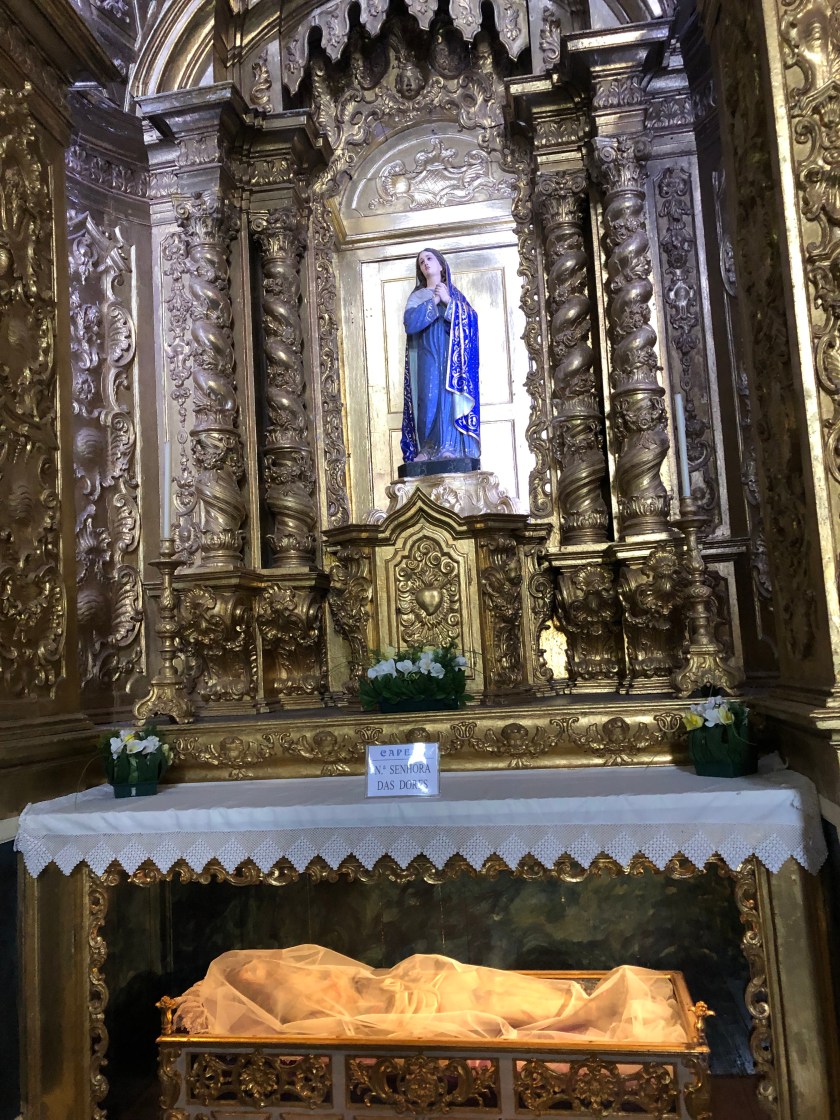
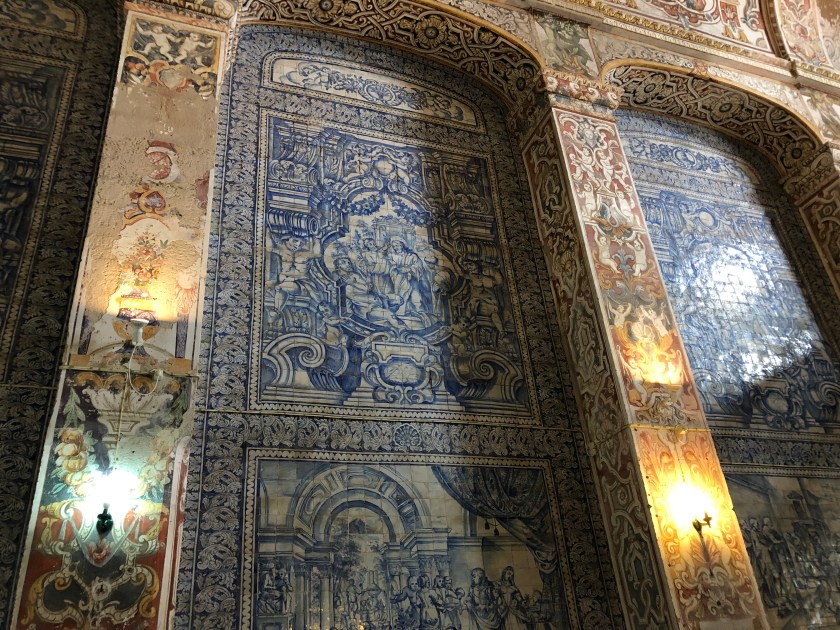
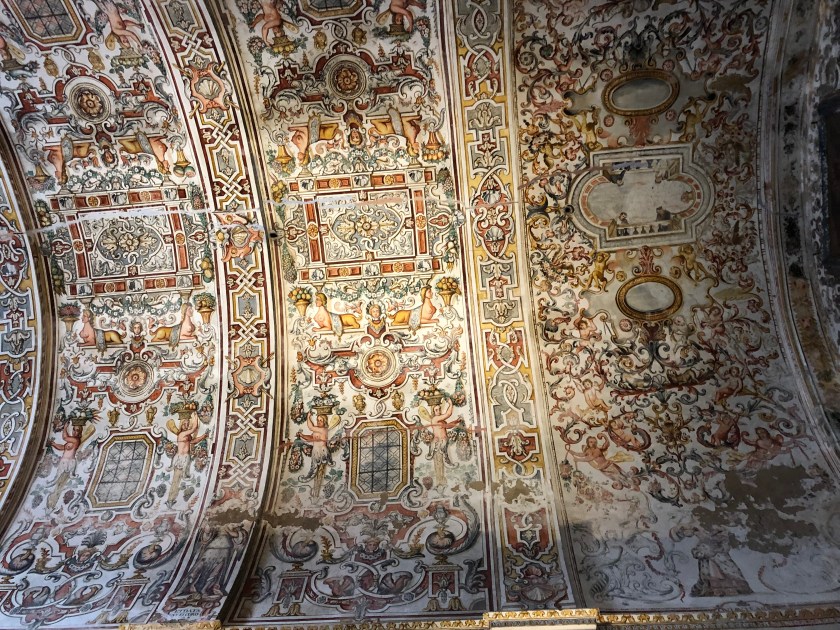
with its magnificent Baroque altar and chapel, tile covered walls and painted ceiling; the Basilica of the Virgin of the Assumption, built in the 12th-13th centuries on the remains of a Moorish mosque in the Romanesque-Gothic style with its unusual statue of a pregnant Virgin Mary,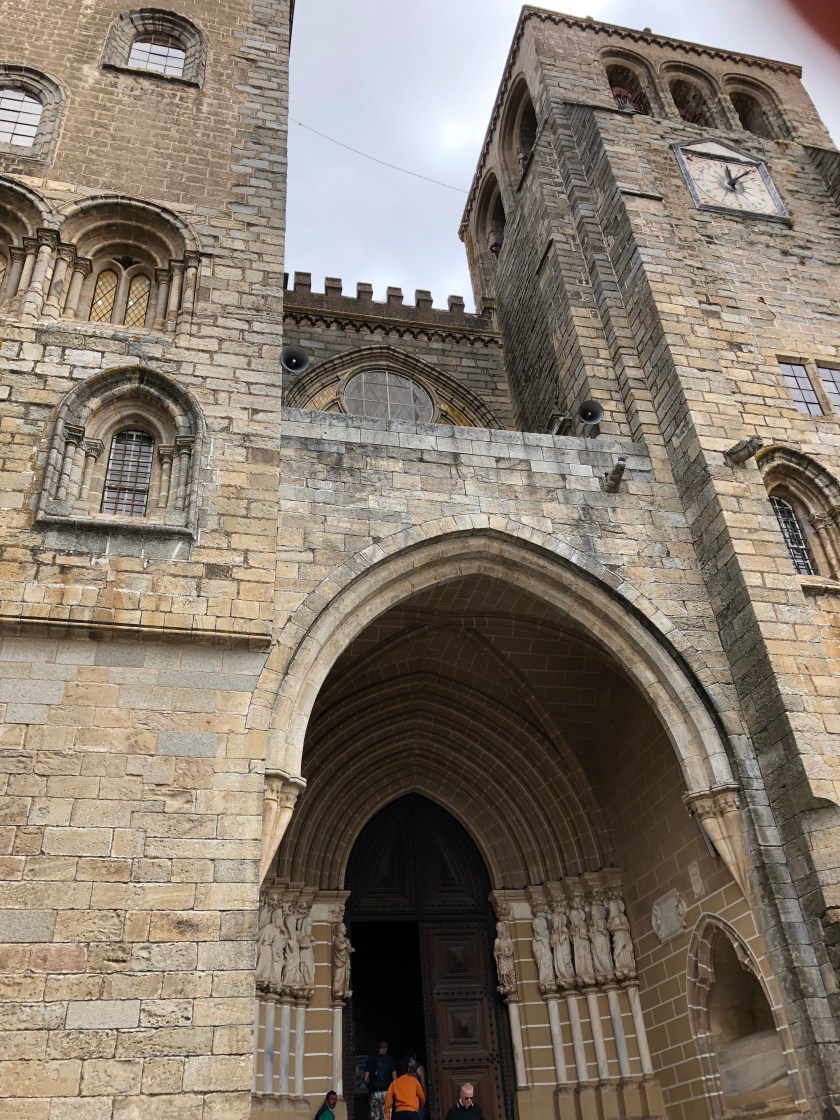
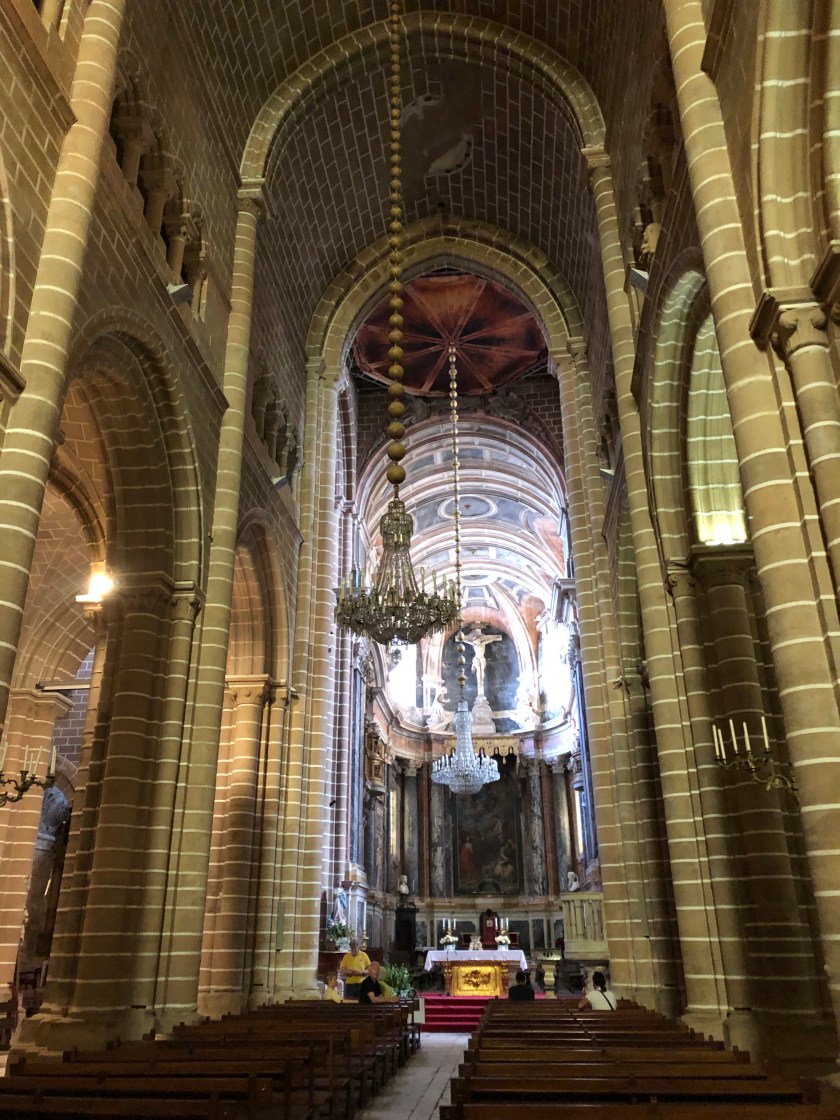
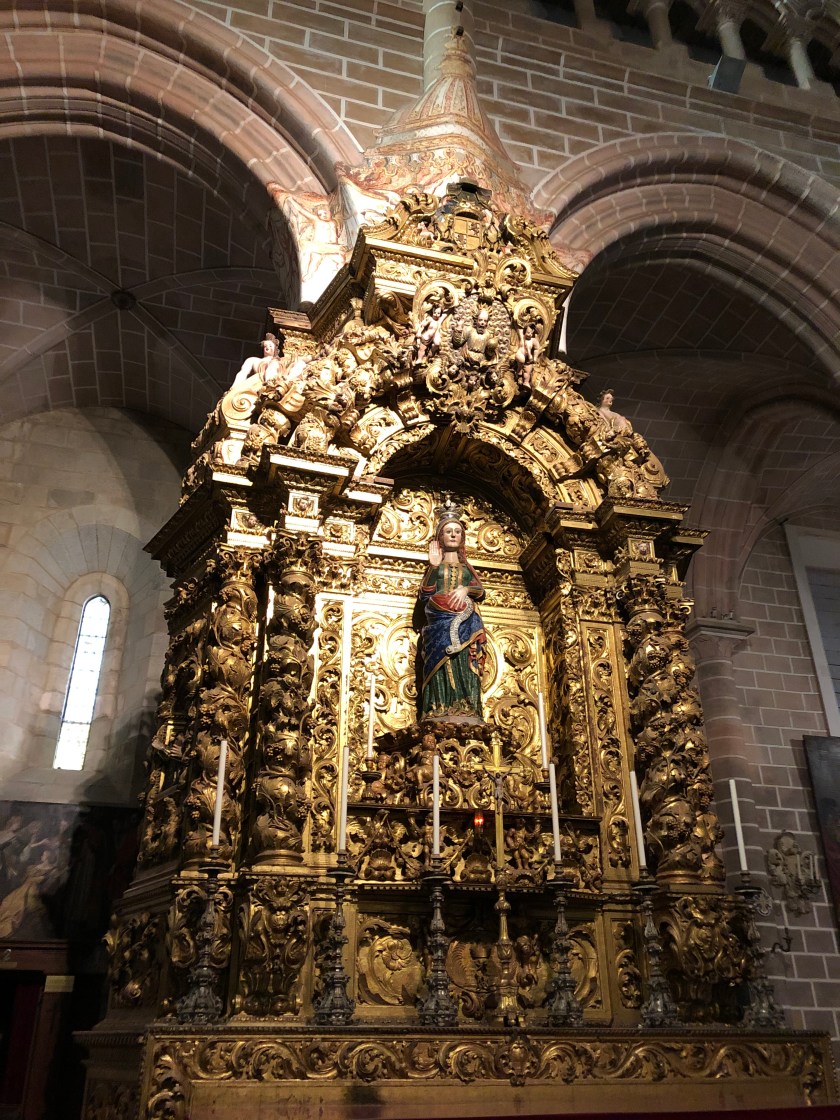
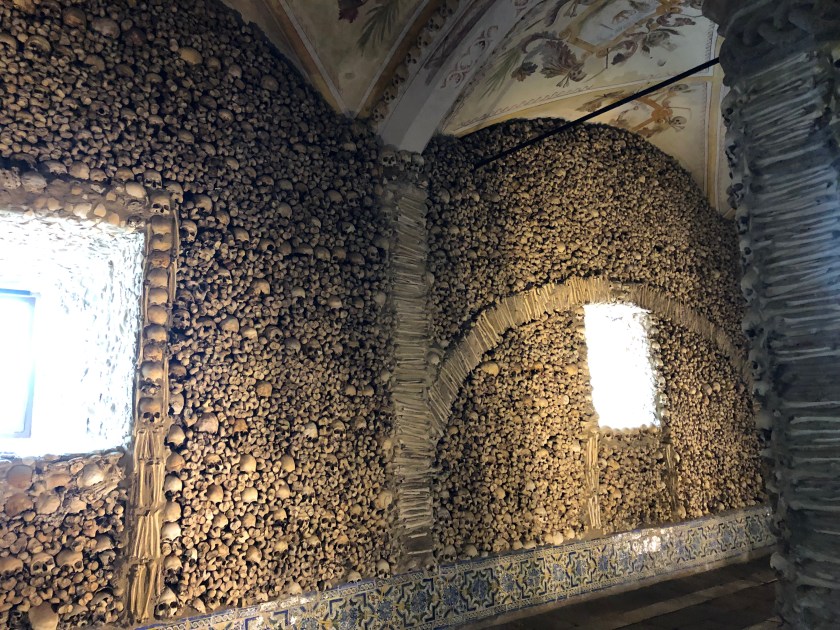
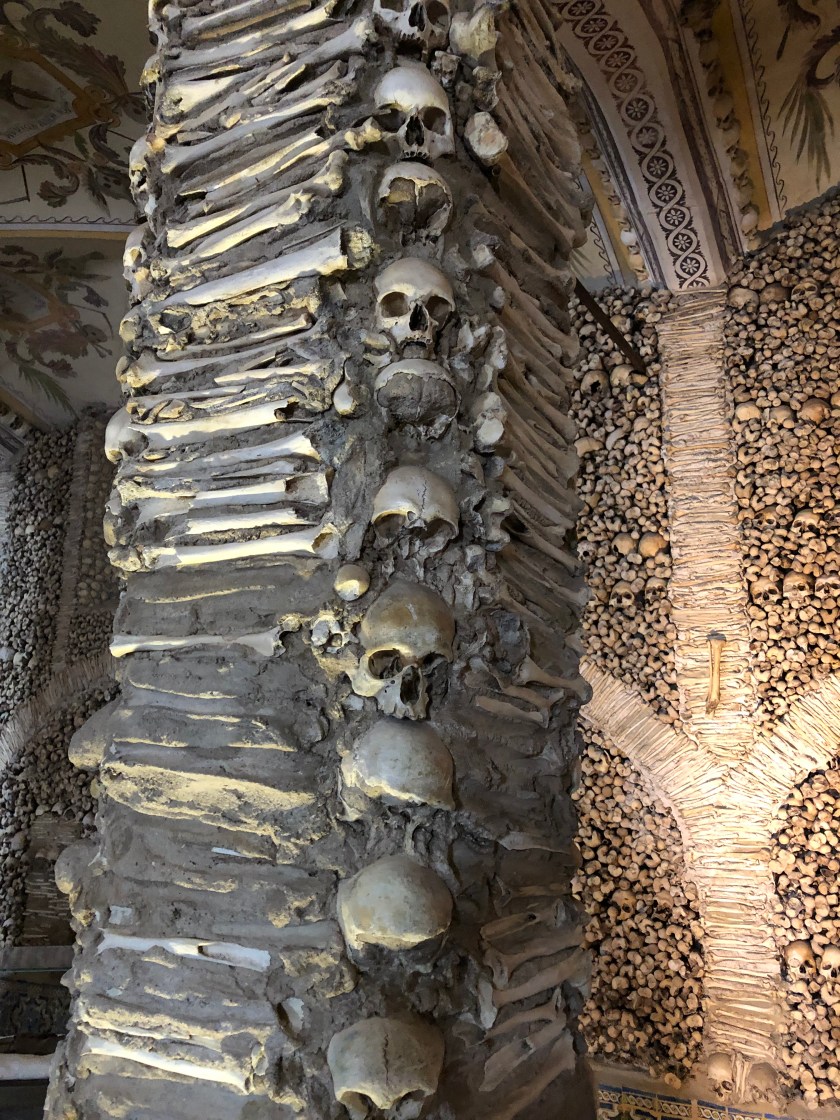
and the Chapel of the Bones in the Cloister of the Church of St. Francis Assisi.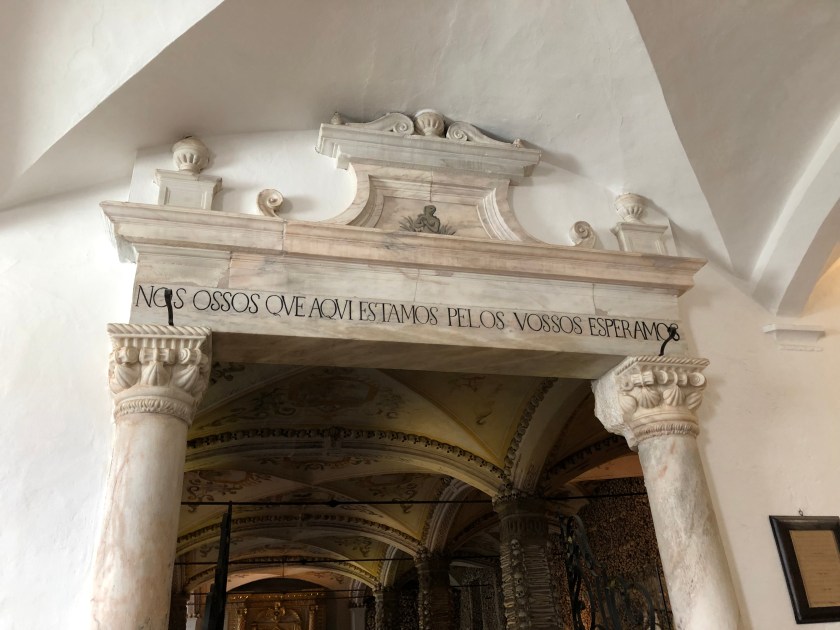
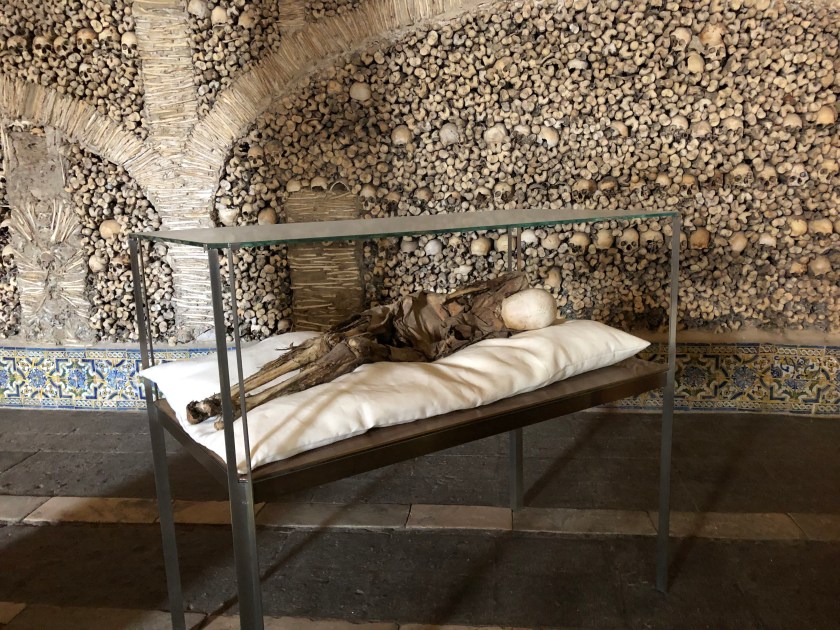
Midway through the tour, Raphael, our Rick Steves tour guide, surprised us with an impromptu treat of queijadas de Évora- a cheesecake-like pastry.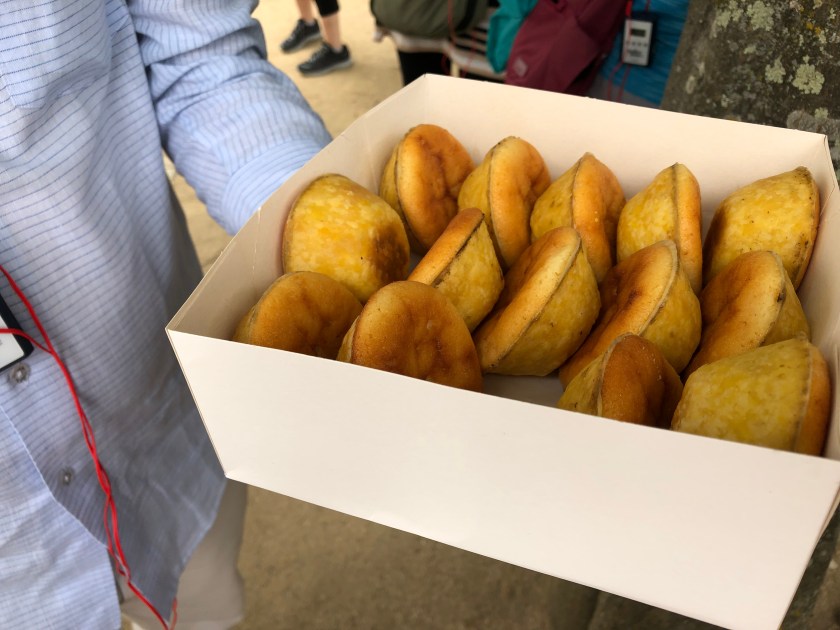
Despite this treat, our stomachs were rumbling so we decided to lunch at Cafe Alentejo, feasting on the local specialty of pork cheeks, from the local black pigs, braised in wine and the crusty local bread with olives and local red wine.
There was some time for shopping (no, we did not buy this cow!) and just relaxing in the main Praça 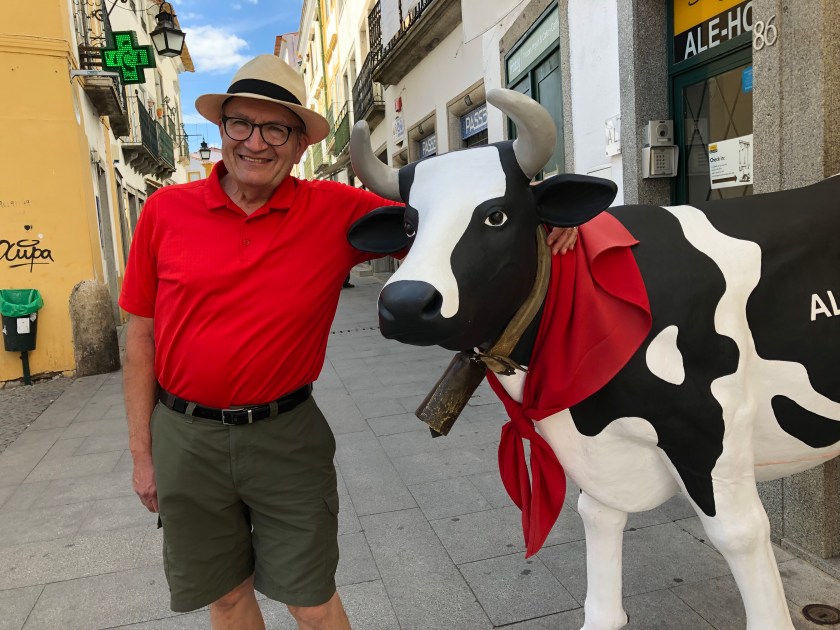
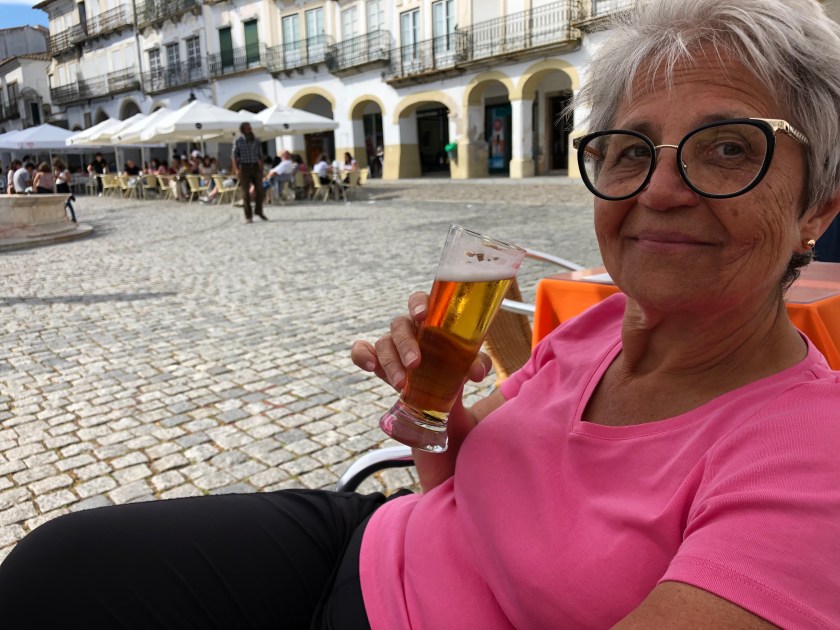 before the annual religious procession for the Feast of Corpus Christi.
We ended the evening at our hotel with a happy hour of local wines, bread, cheeses and cured meats, fresh cherries and figs. No need for dinner tonight!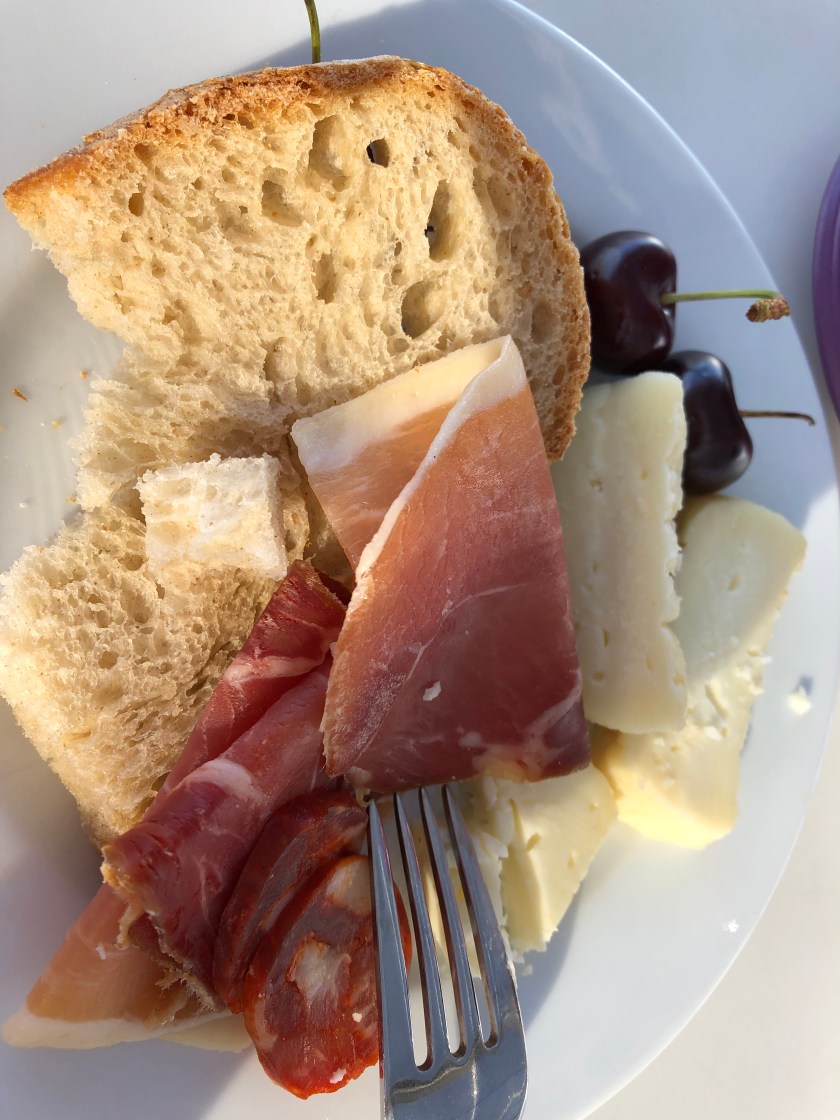

 Camino Musings