We started our day on the metro, with a wasted fare for a short ride to the next stop, most likely to introduce us on how it works.  Actually it’s just like every other subway (except for the beautiful tile murals that grace the walls) I’ve used – wave the fare card over the sensor and walk through the open turnstiles! After an introduction to the Rossio and Figueroia plazas, we began our climb up to the Castelo S. Jorge, which has a great view but virtually nothing remaining if the original structure. It was rebuilt in the 1940s by the Salazar government to resemble the original 1500s fortress. With its crenellations it certainly has a Moorish appearance. On the way up the hilly streets and many steps, examples of street art can be seen.
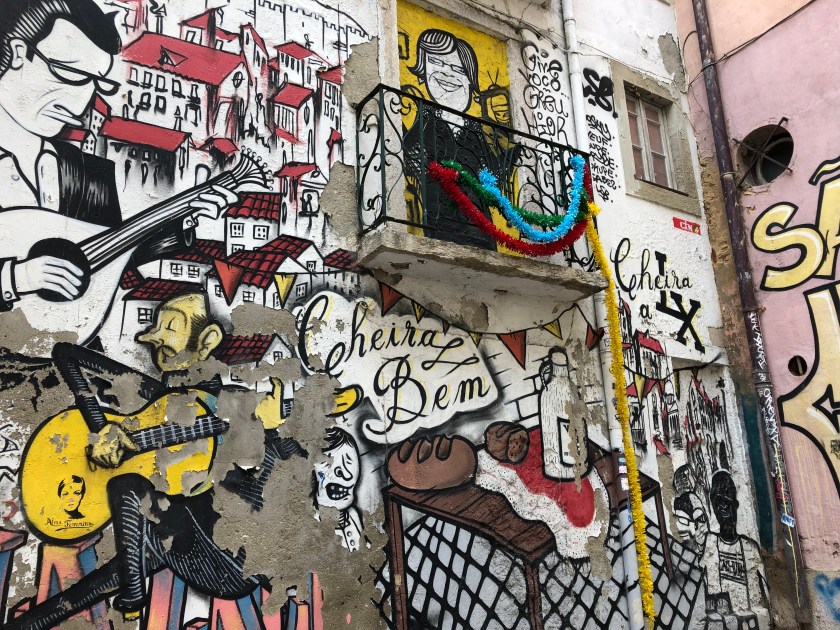
These murals celebrate Fado, a soulful form of singing that is characteristic of Portugal.
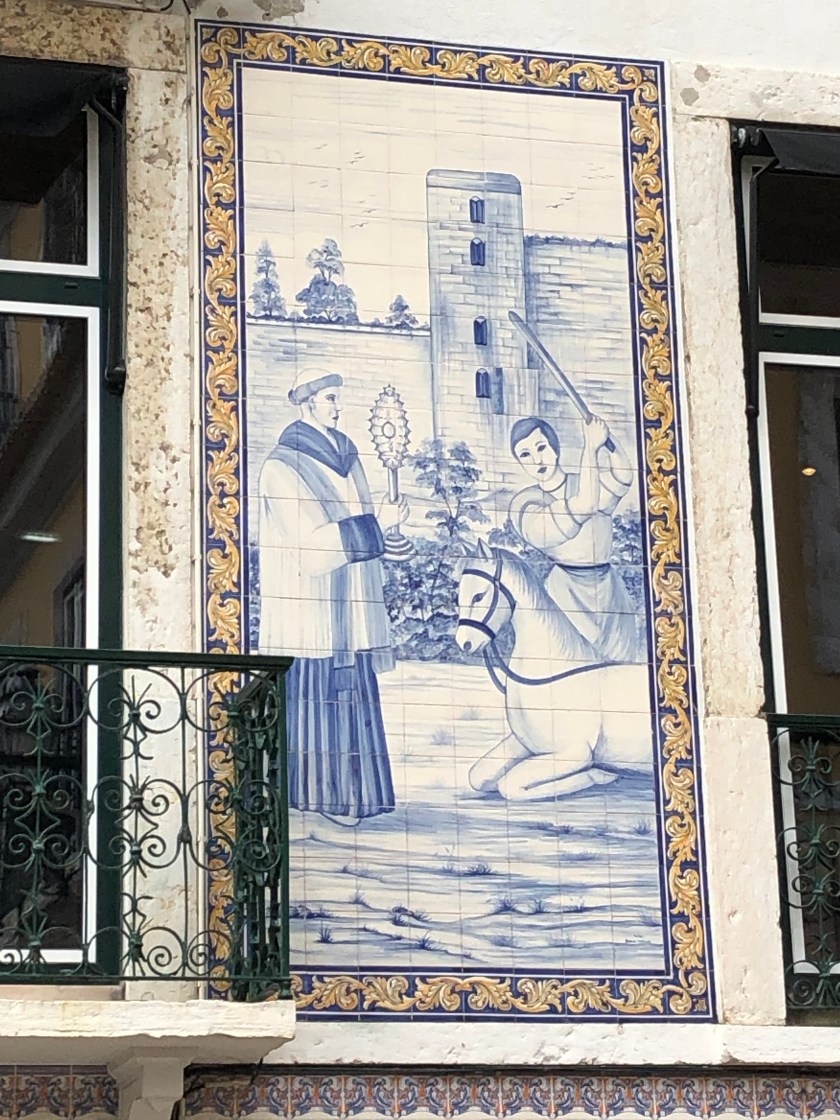
On the way to the castle we stopped to catch our breath in addition learning a few fact about St. Anthony who was born in Lisbon.
The castle is pretty much an expensive tourist trap. But they do have some interesting wildlife!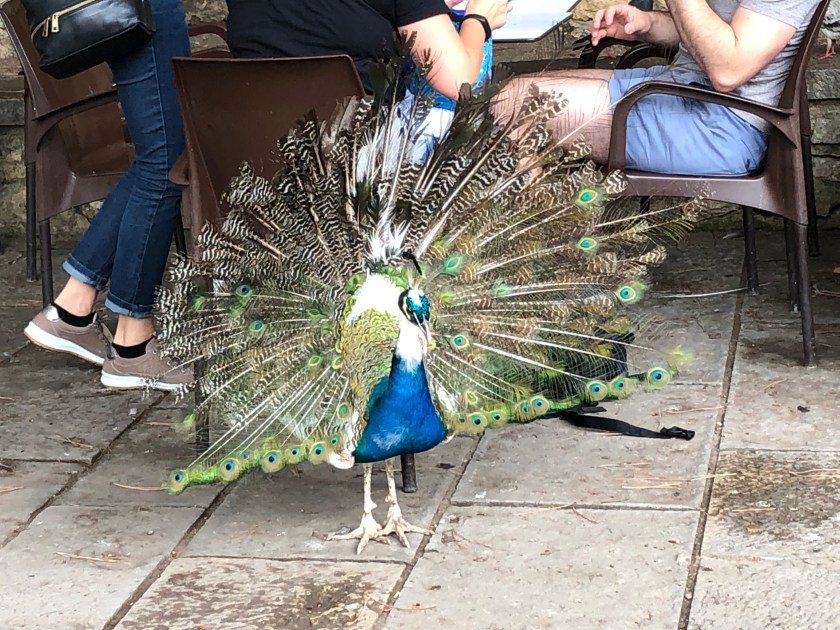
The views of the surrounding city were impressive, too.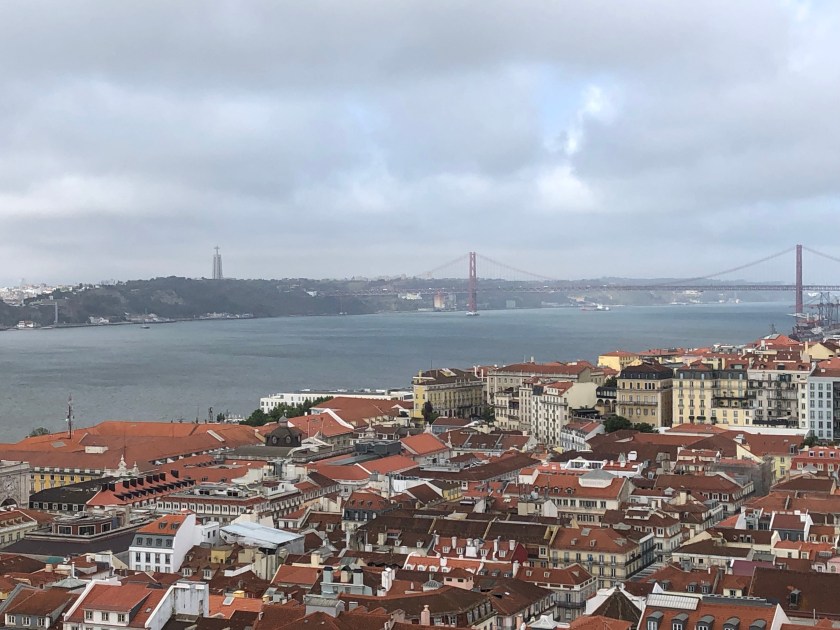
The bridge seen in the distance of this glorious view was designed by the same company as the Bay Bridge.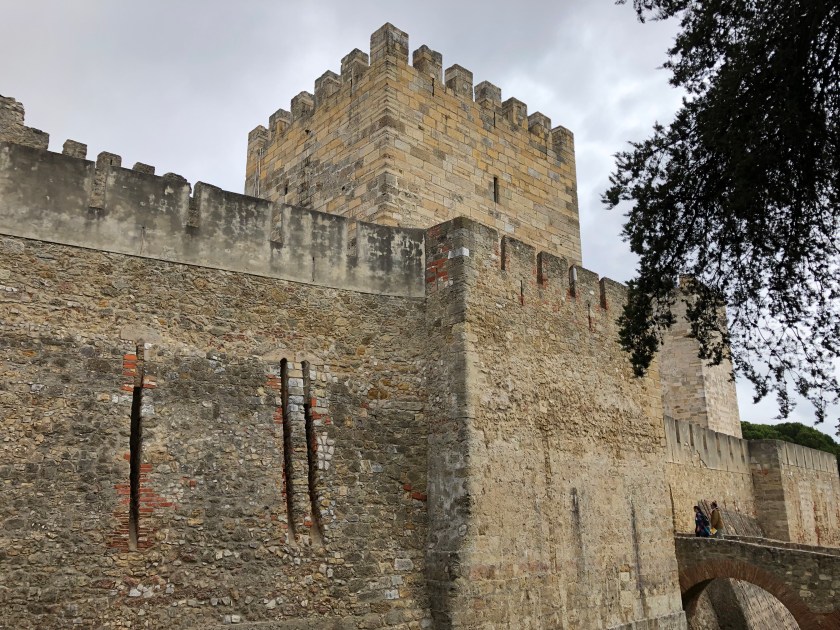
We then strolled down through the Alfama, learning of its unique culture, with a surprise stop for homemade bacalao fritters and ginjinha.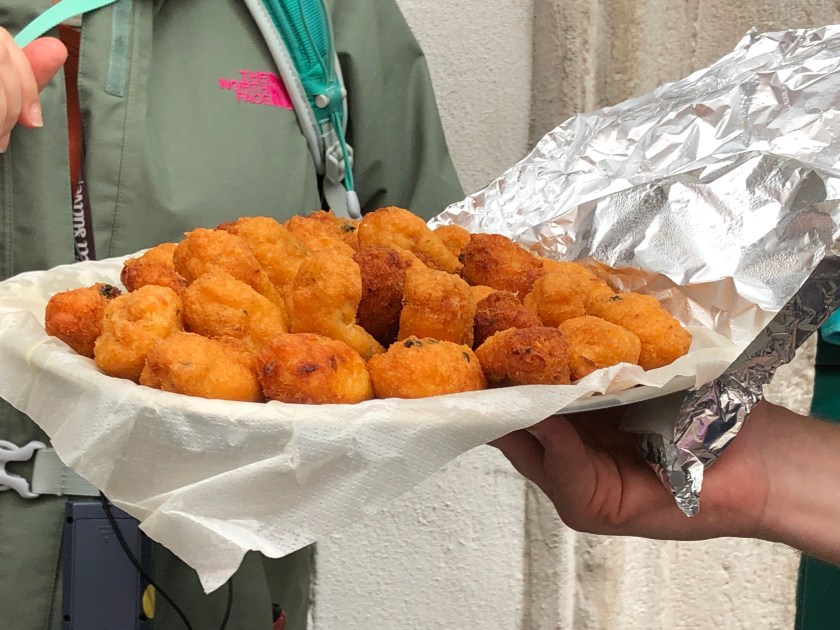
These tasted soooo much better than the one we sampled yesterday that had melted cheese in the center!
The walk ended around 12:30 pm and we retired to the hotel for a short rest, after which we returned to the oldest book store (in the world- established 1752) to look for translations of books by Pessoa and Camões. We came up empty-handed but did pass a couple of hours people watching at the outdoor seating of the Cafe Brasileiro when we each had a beer 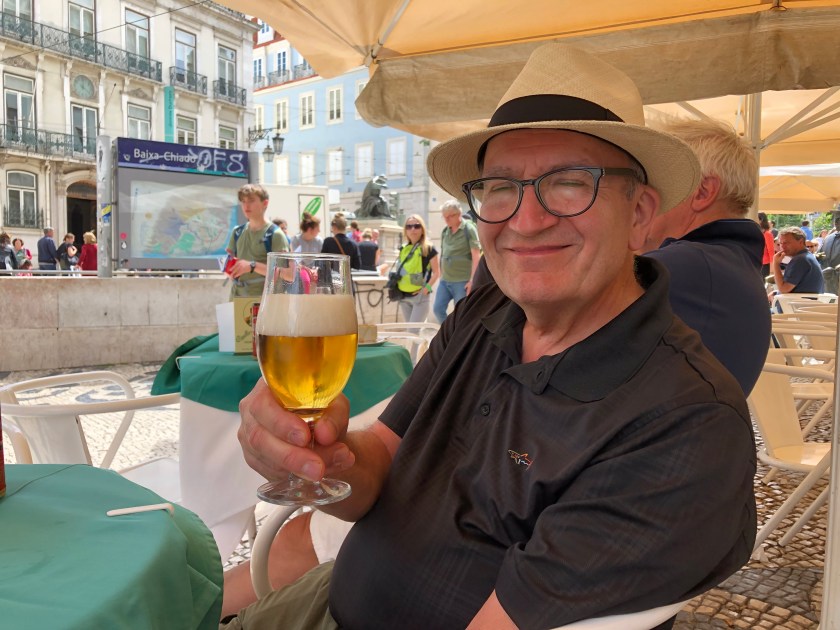
and shared a ham and cheese sandwich ( nothing special but tasted great!). We also sampled a pasteis da Nata straight out of the oven. The highlight was trying to figure out how this busker appears to be suspended in mid-air!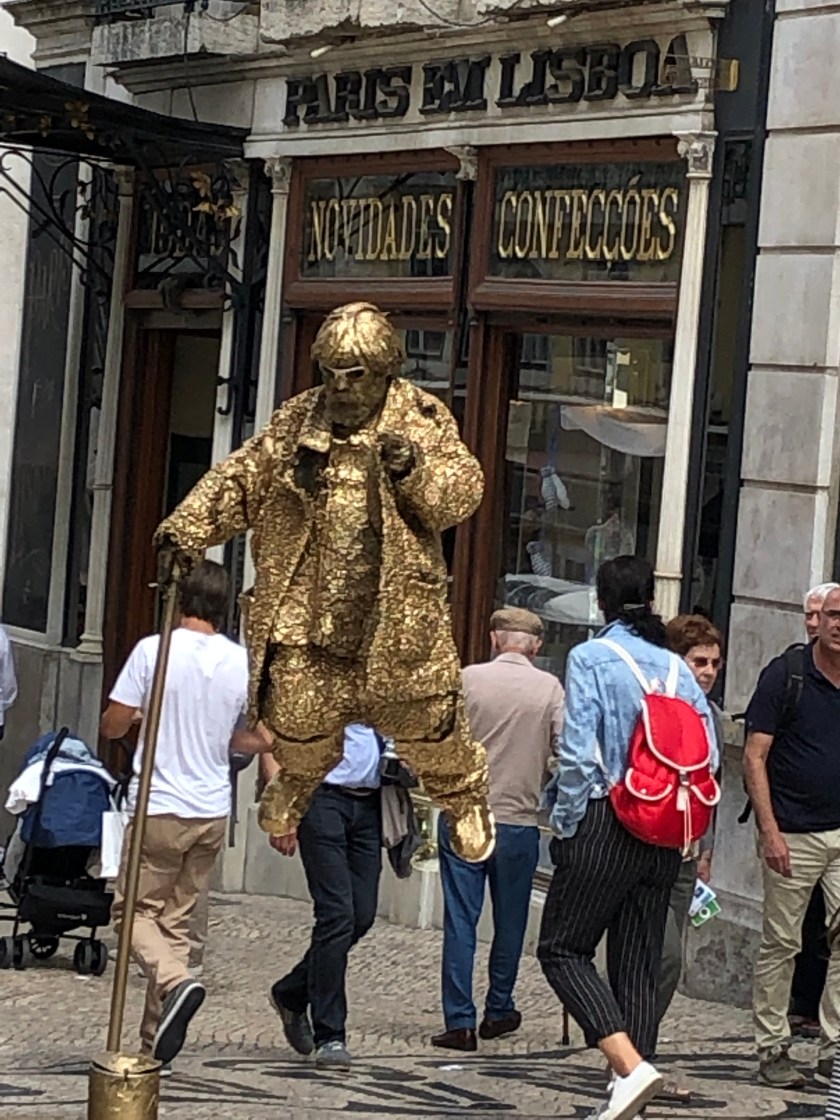
After a gelato, we went back to the hotel to relax before dinner and Fado. The venue was not a theater, but rather the Casa Alentejo, previously used as a casino but now used as a meeting place and event venue. Delicious appetizers (cheeses, cured sausage, fava beans, chick peas with cod and olives) preceded the meal of pork loin or salmon.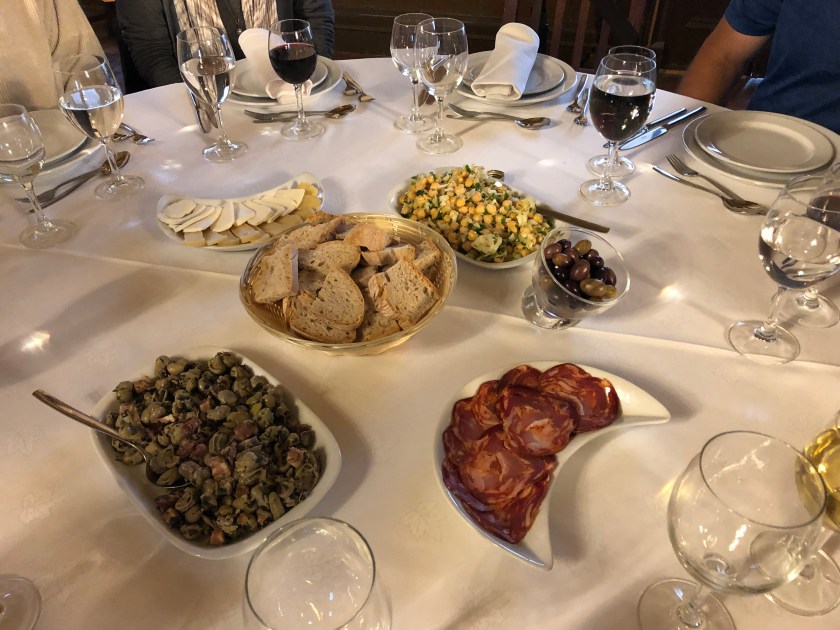
We had a private Fado performance by Ines Graca and Ines Briho accompanied by guitars.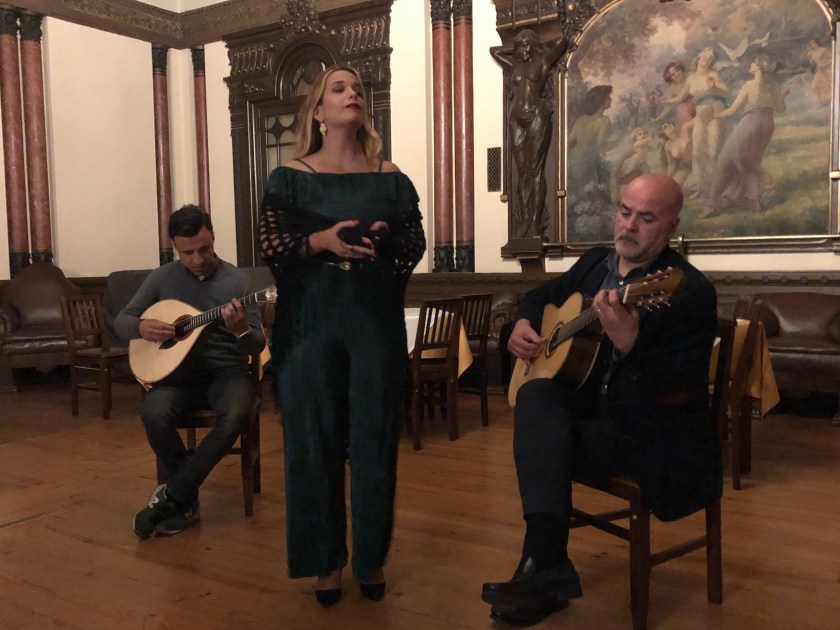
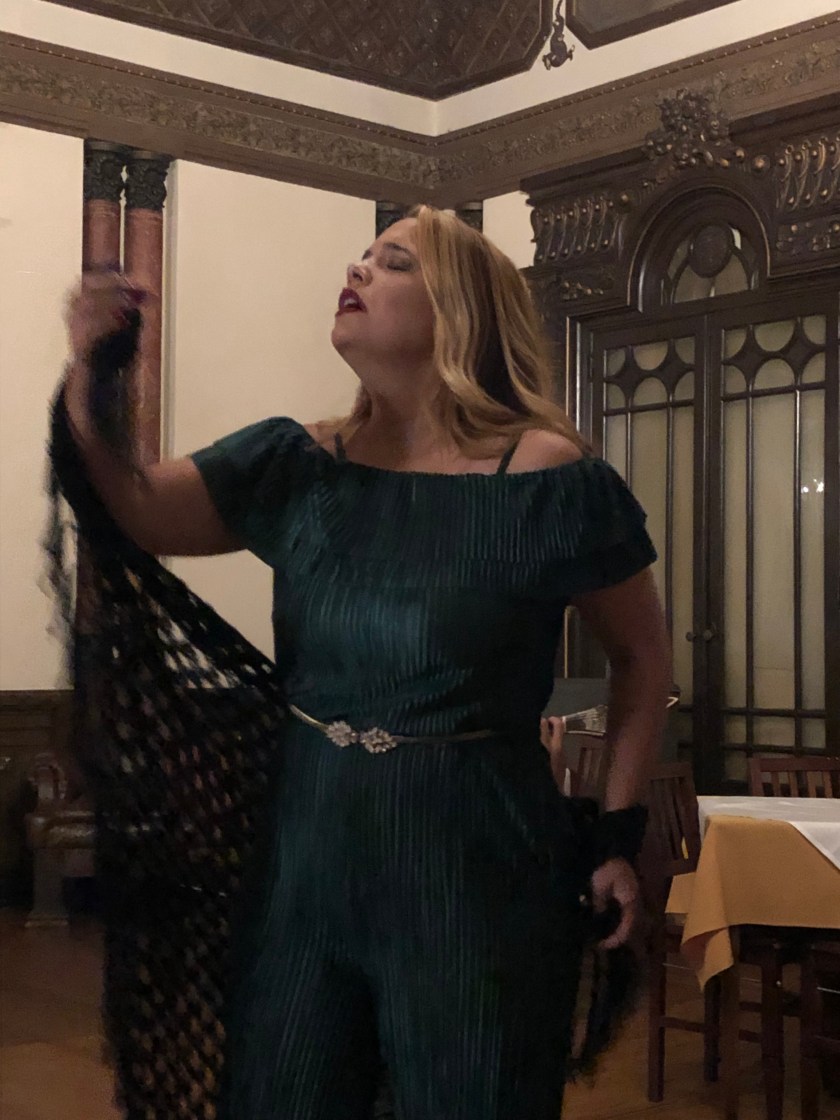
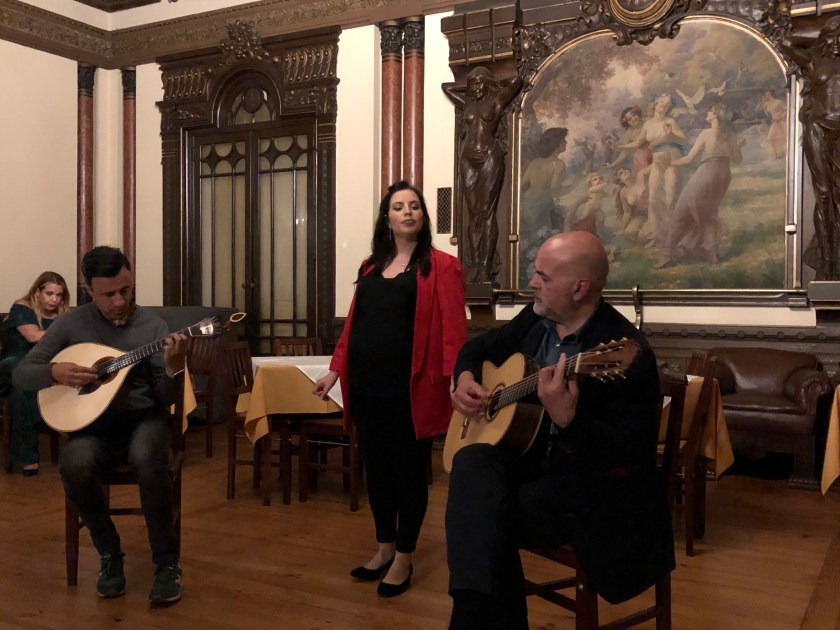
Fado, loosely translated as fate or destiny, is sung by women in Lisbon and many times tells the sad stories of lost love. It was a lovely evening with two talented vocal artists.

 Camino Musings