Well, we are winding up our stay in Lisbon. It’s been seven days of climbing hills, eating custard tarts (pasteis de nata) and drinking ginjinha and vinho verde. My main impression of this city is that of brilliant light- the sun reflecting off the yellow and white buildings, the limestone and basalt patterned Calçada pavement art and the open hearts of the Lisboeta (natives of Lisbon).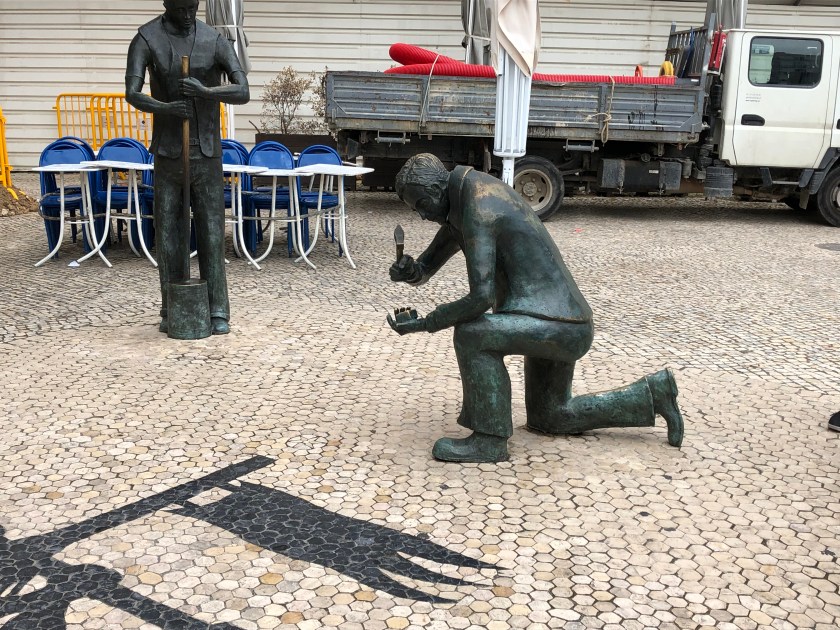
The most striking image of image is that of the patterns formed by small hexagonal bits of the characteristic white and black stones on the Praças and sidewalks, painstakingly placed by hand by skilled workers using only a hammer with only sand between the stones. However, these pavements become quite treacherous when wet, morphing into impromptu skating rinks!
On this last day in this charming city caught in a tourist boom, we visited sites west and north of the city center – Belém and the Gulbenkian Museum. After all the miles of walking these past six days, we were overjoyed to finally be taking a bus. Belém is only five miles from the city center and is the site of the Jeronimos Monastery (built in the 16th century), the Monument of the Explorers and the Tower of Belém. And one cannot forget the famous pasteis de Belém (the custard tart found throughout the city but most famous here because of its secret recipe). We first visited the Monument of the Explorers where Rafaele explained the voyages if the Portuguese Explorers who used the water route to expand the spice (and slave) trade, gain colonies in Africa and Asia, and develop into a world power in the late 15th and 16th centuries.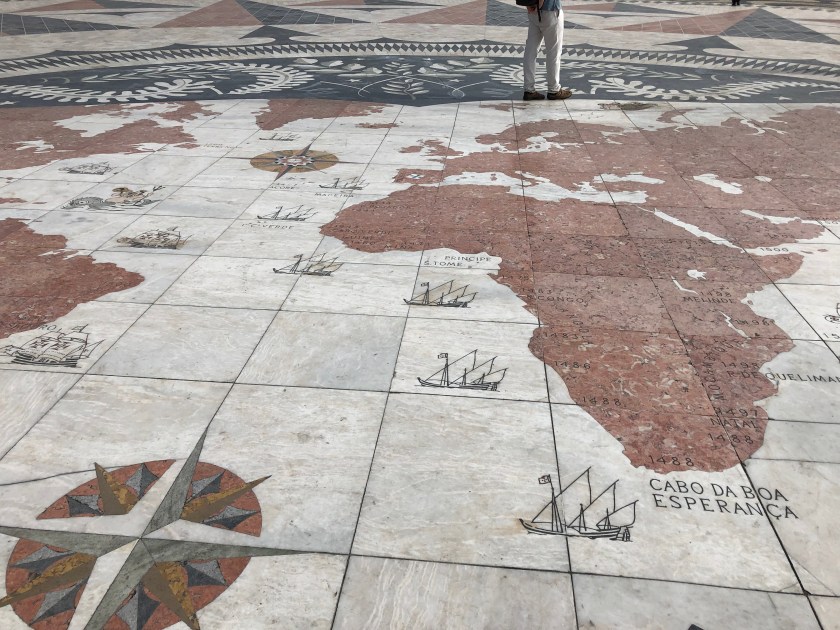
The monument depicts individuals who contributed to Portugal’s rapid rise to become one of the world’s greatest powers – from Vasco da Gama to St.Francis Xavier to Prince Henry the Navigator.
We then visited the Jeronimos Monastery cloister and church. This neo-Gothic Church miraculously escaped major damage in the earthquake of 1755 and hold the empty tombs of King Sebastian (killed in a battle with the Moors in Africa, dying without an heir, resulting in the crown transferring to Spain – his remains were never found and there remains to this day a cult Sebastianists that are still waiting for the king to return and solve Portugal’s problems) and Camões, the Portuguese Shakespeare who wrote a classic epic poem describing the history of the country.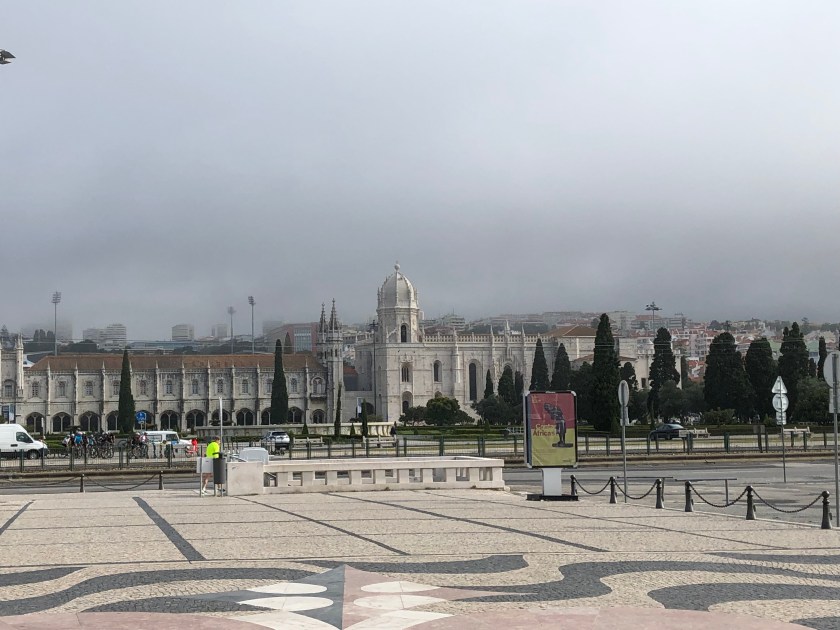
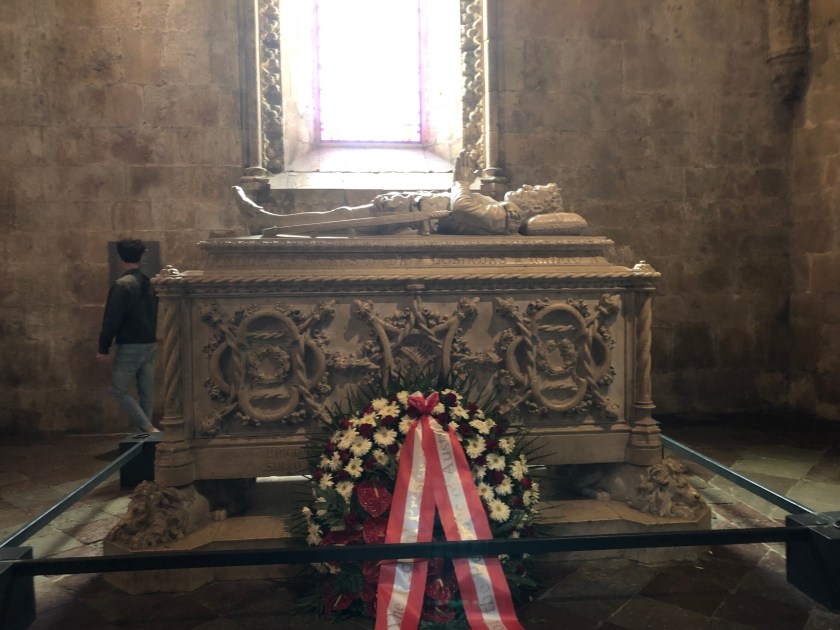
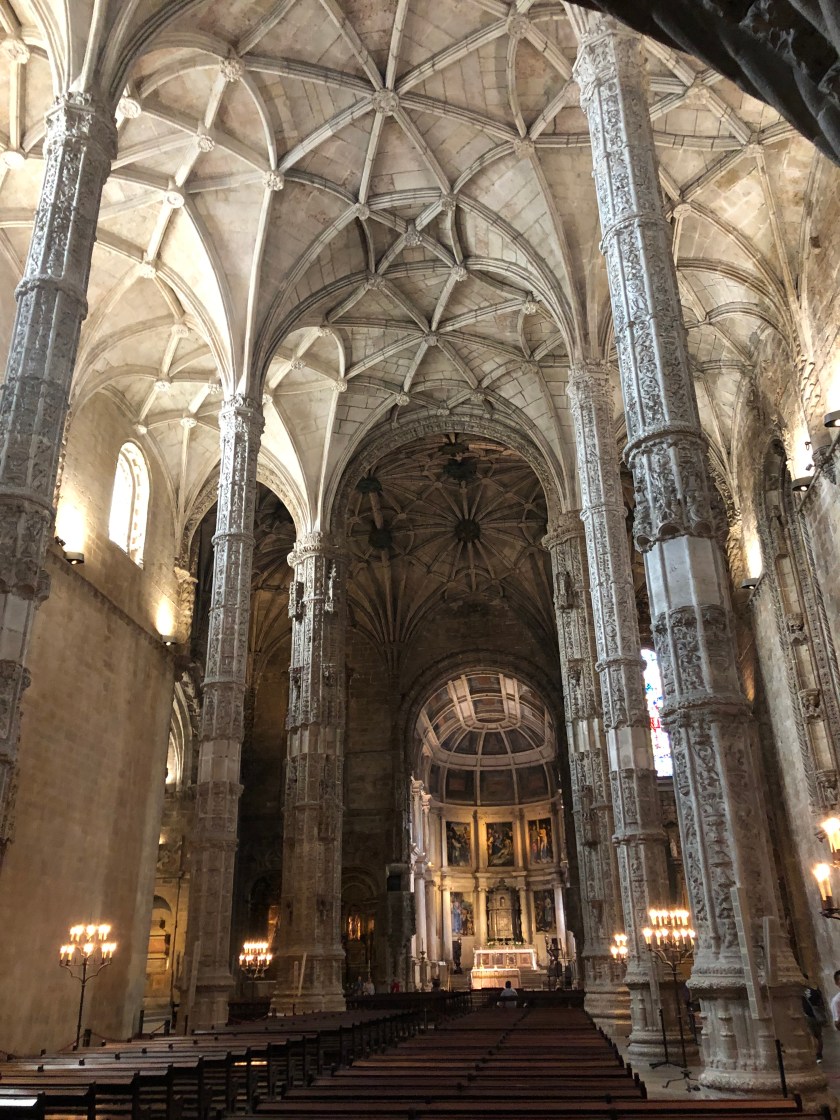
The Monastery at its height housed about 100 monks of the order of St. Jerome.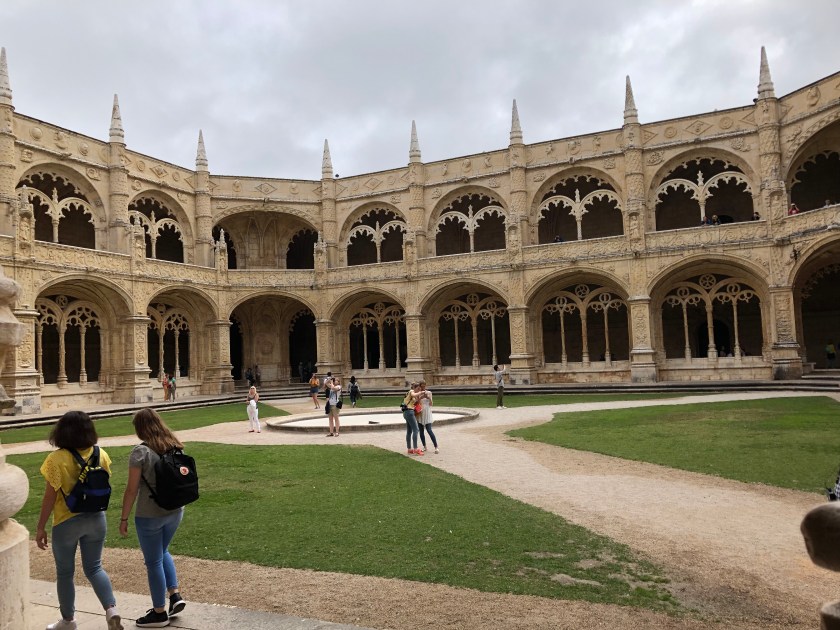
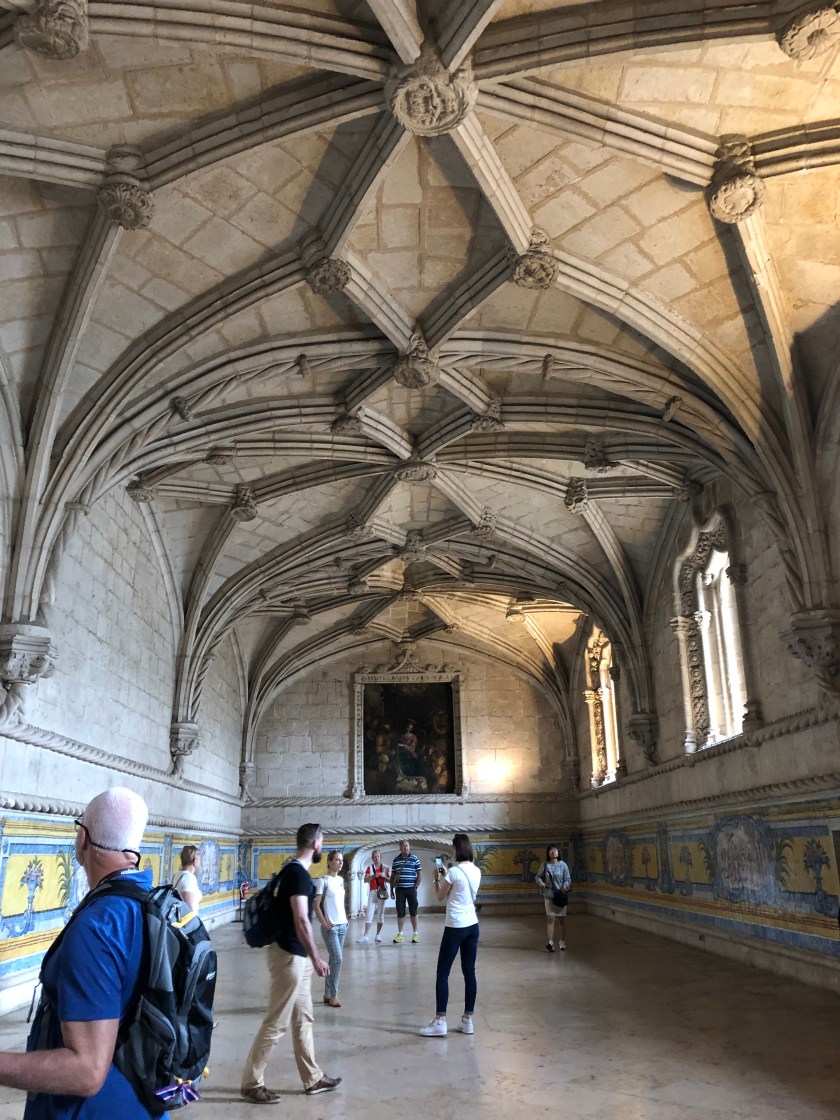
The Belém Tower was a strategic building that protected the harbor from foreign invaders. It is built on a basalt outcropping on the waterfront.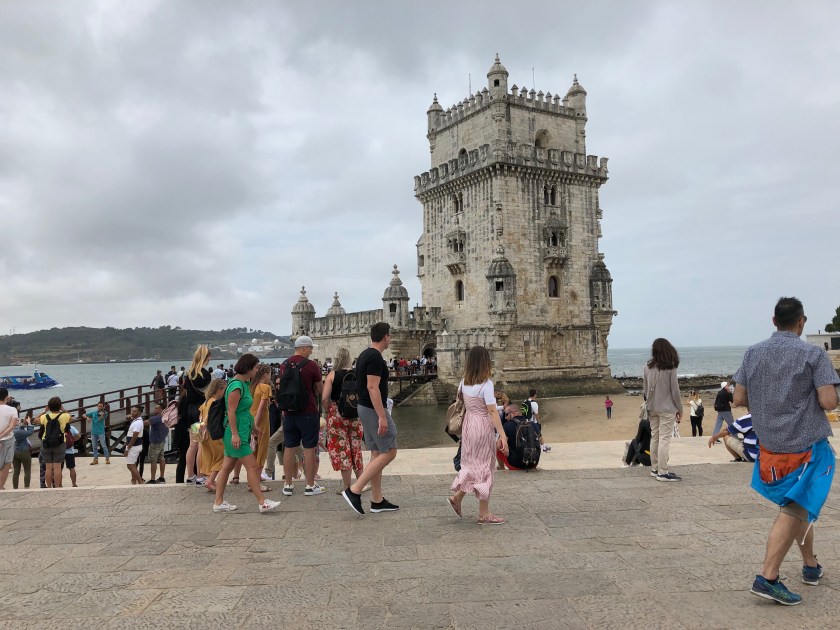
The church, Monastery, tower and voyages were in large part bankrolled by the Knights Templar and the symbol of the Templar cross is ubiquitous on these structures.
Of course, we sampled a custard tart, too, to complete the touristic experience!
We the rode the bus to the Gulbenkian Museum, one of the world’s greatest private art collections donated to the city by the famous Armenian oil magnate.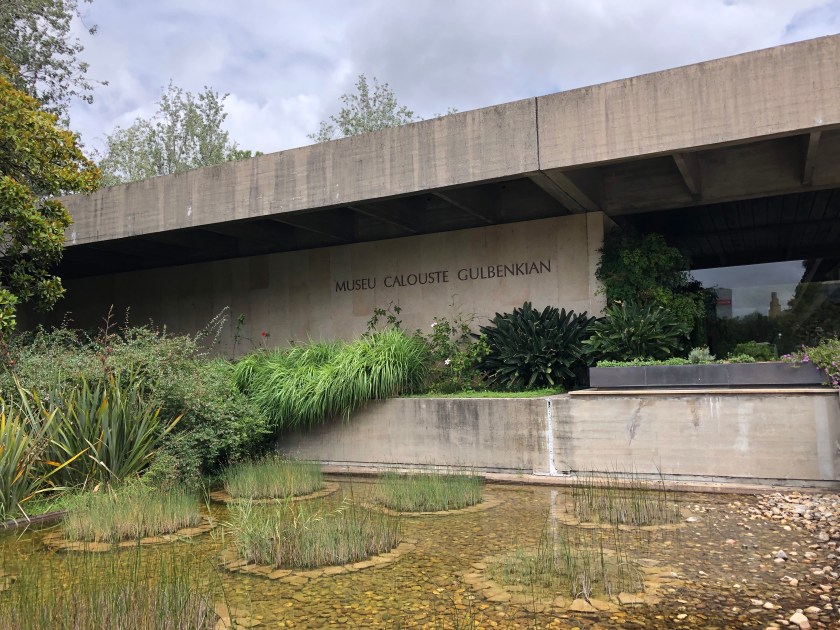
Mr. Gulbenkian really liked cats, as evidenced by one of the ancient Egyptian objects.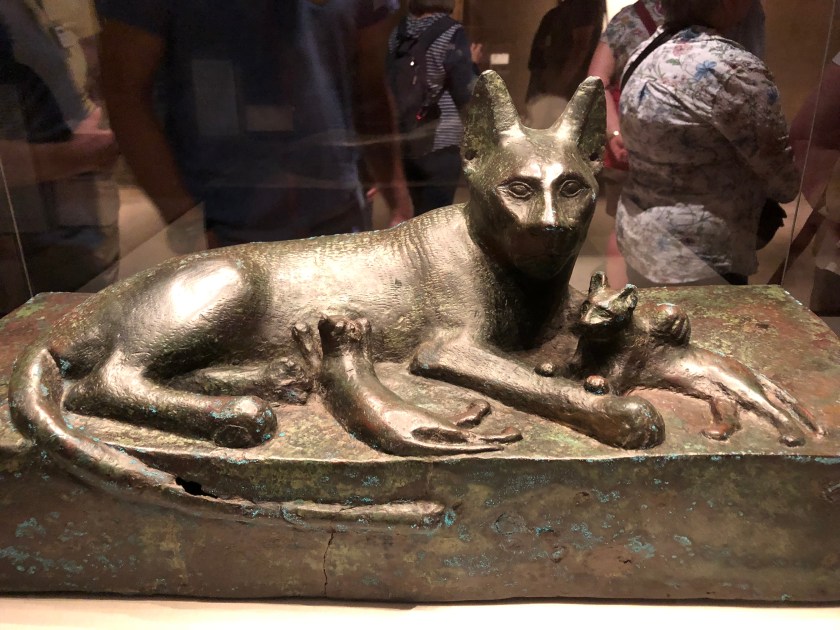
We walked back to the hotel (about a 45 minute stroll) and relaxed a couple of hours before riding in yuk-Turks to our final dinner at a small family restaurant, Casa Aberta, in the Graca neighborhood, high up on one of the hills.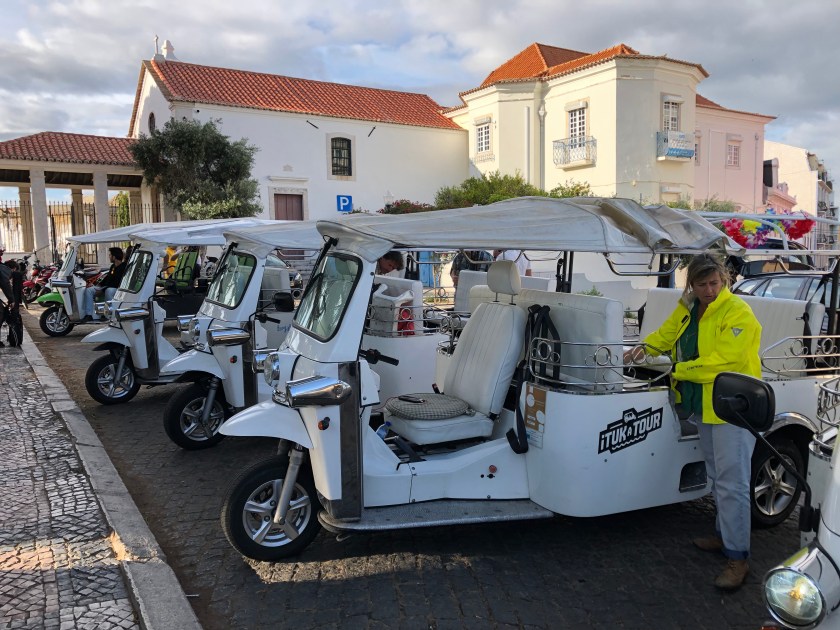
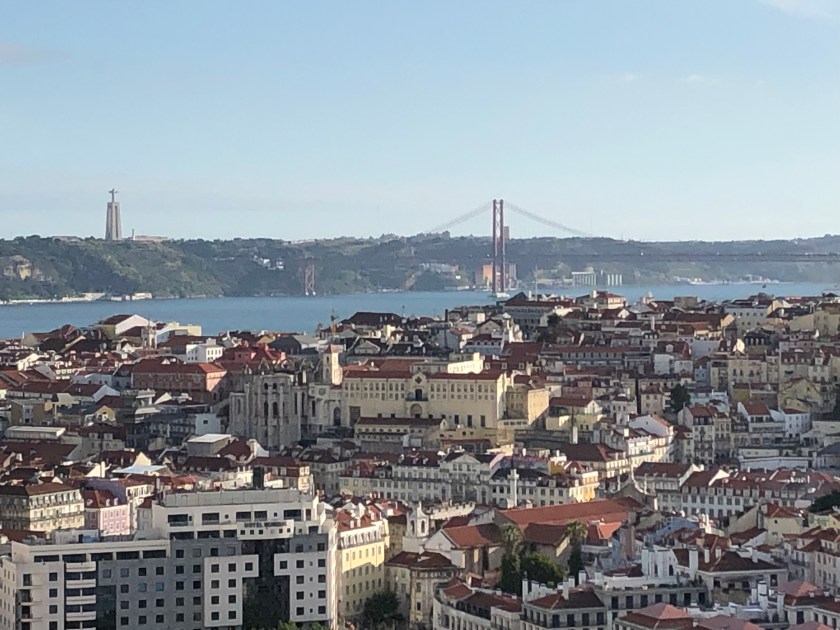
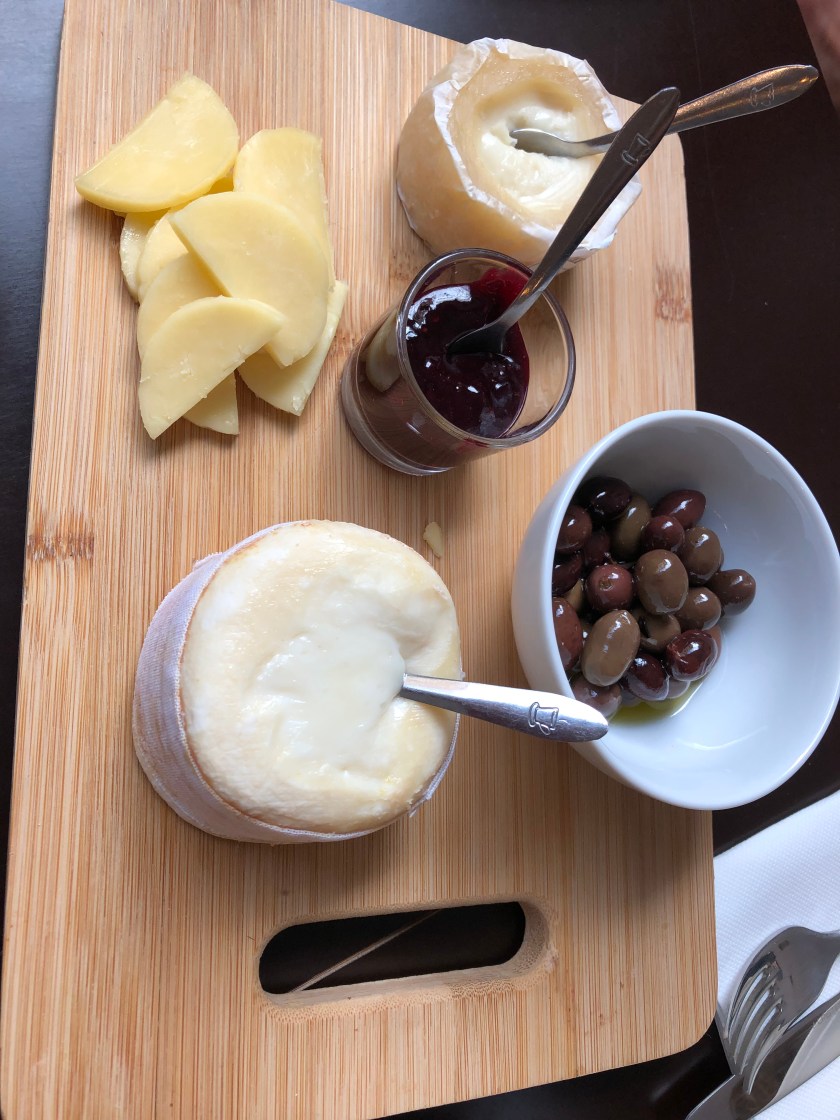
The view was outstanding and the meal was home style Portuguese cooking.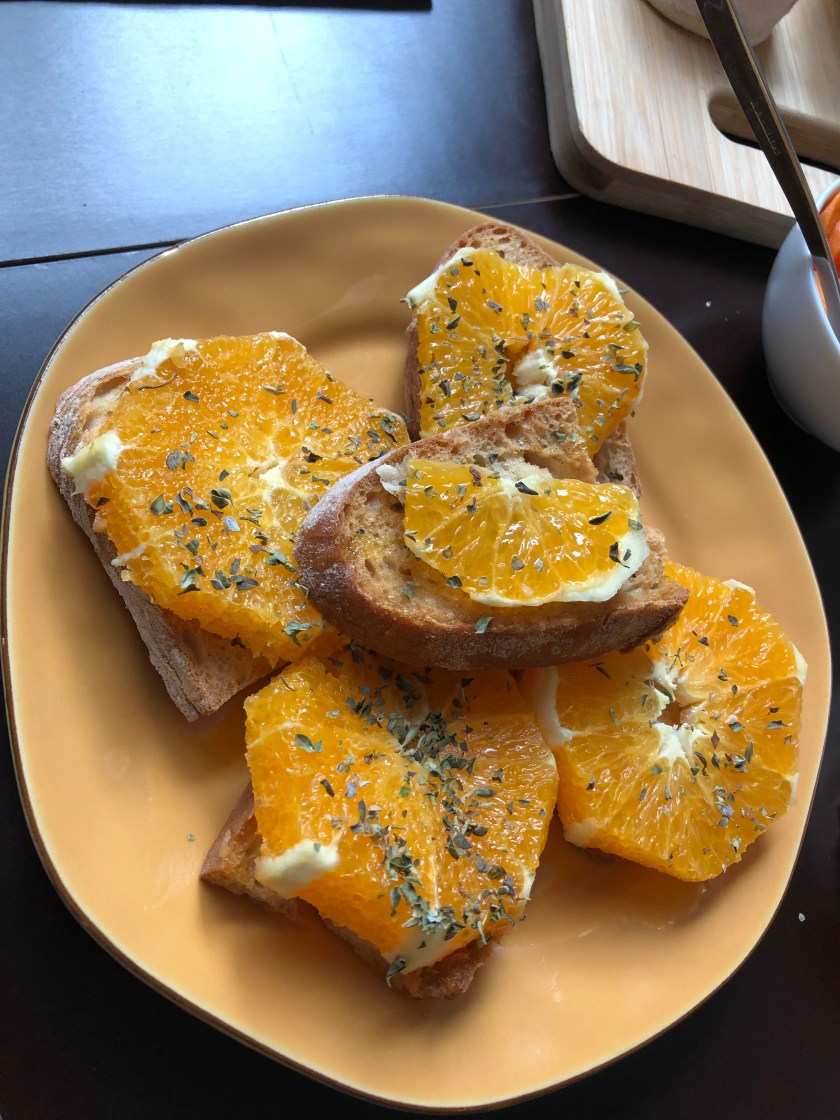

 Camino Musings