Lisbon’s topography consists of a flat central “valley” with the neighborhood of Baixa that extends from the waterfront along the Tagus River flanked by two hills, the Alfama to the east and the Bairro Alto to the west. Baixa was pretty much destroyed by the earthquake of 1755 that devastated the city and was entirely rebuilt in a grid pattern whereas the other two neighborhoods were relatively spared and maintain the tangle of steep and narrow streets that date back to the 1500s.
Today we took two walking tours led by Context Travel that explores these areas. We started at 9:30 am with Ian, our guide. Originally from Liverpool, England, he has been living in Lisbon for four years after a ten-year stay in Italy where he also worked as a guide for Context. He has a Masters degree in archeology and his engaging personality certainly made him quite entertaining. We were lucky to be the only clients for the morning tour. As we strolled the narrow winding streets that were deserted on this cool, sunny Sunday morning, he briefed us on the history of Portugal from the times of the Celts in 700 BC up to the great earthquake of 1755.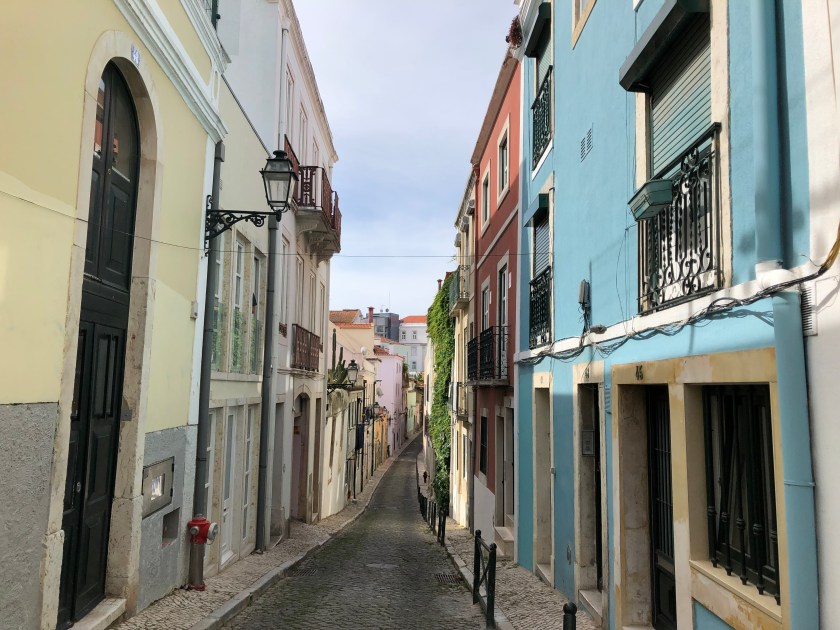
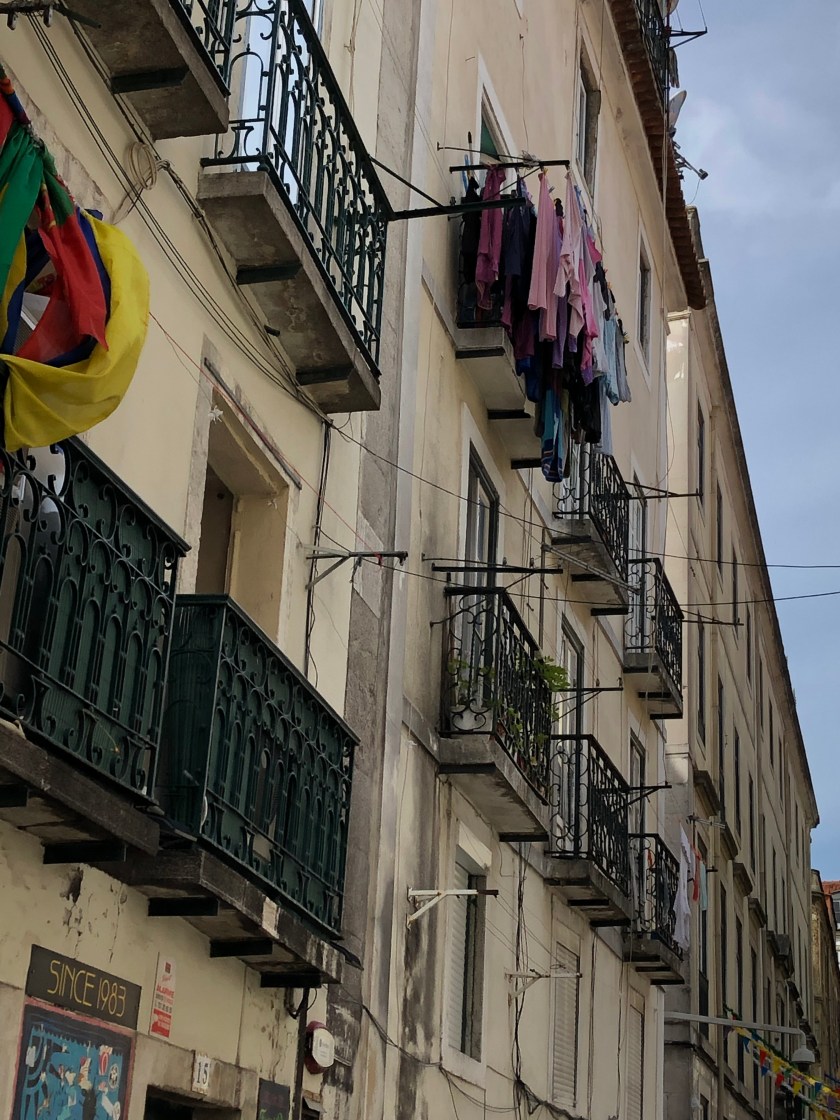
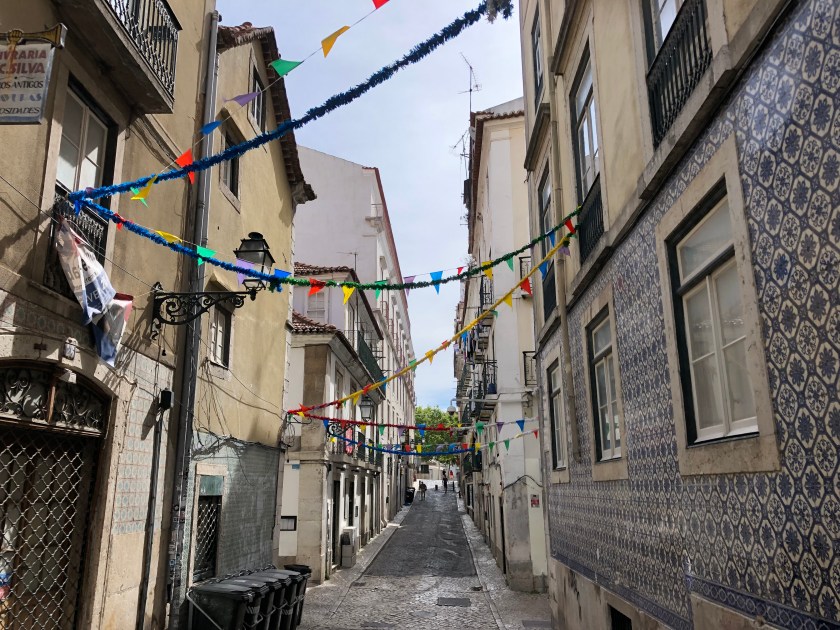
The streets were decorated for the month-long celebration of the Feast of St.Anthony but the revelers were probably sleeping off the libations of the prior evening and we were pretty much the only ones walking along the streets. This was traditionally (and still is) a rough neighborhood inhabited primarily by students. We visited Sao Roque Church, an incredibly elaborate 16th Century Jesuit house of worship dedicated to the patron saint who protects from disease and plague. 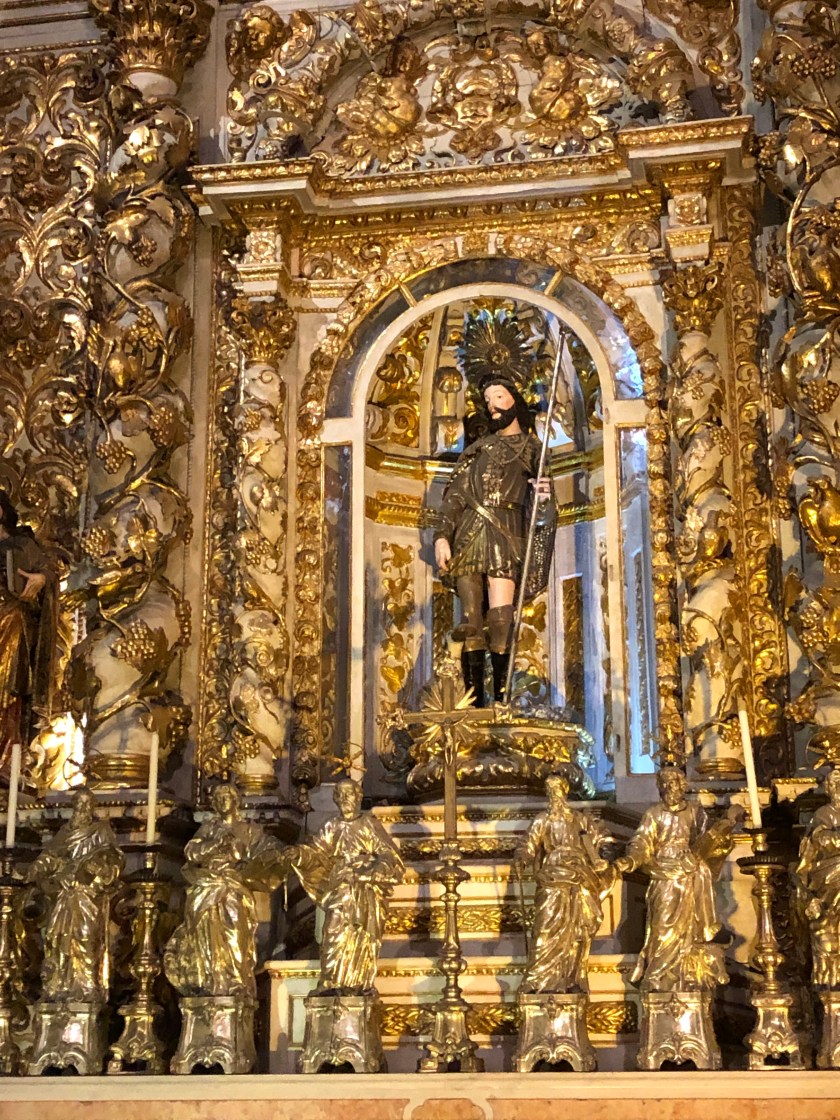 The most expensive chapel in Portugal was also constructed in Rome and transported to this church – the Chapel of St. John the Baptist. It is rich in precious materials such as gold, blue lapis, and marble and the “paintings” on the walls are actually mosaics!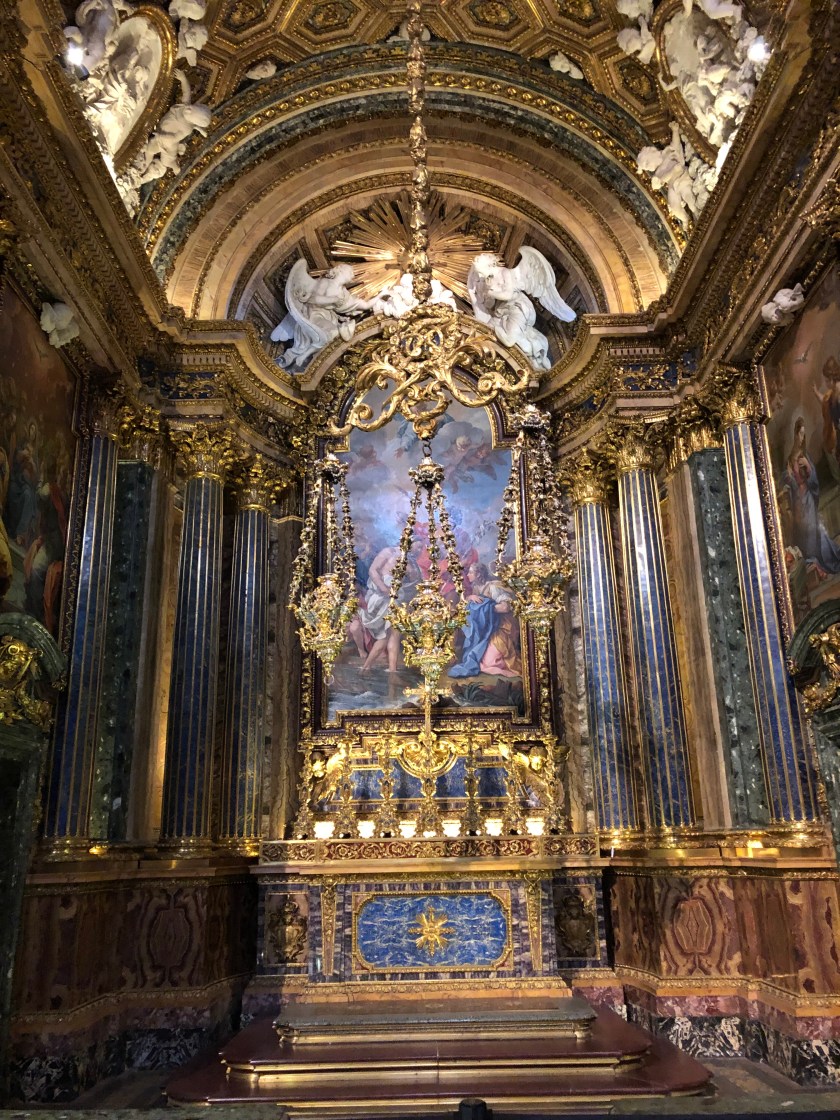
We also saw the ruins of the Convento do Carmo, destroyed by the 1755 earthquake. 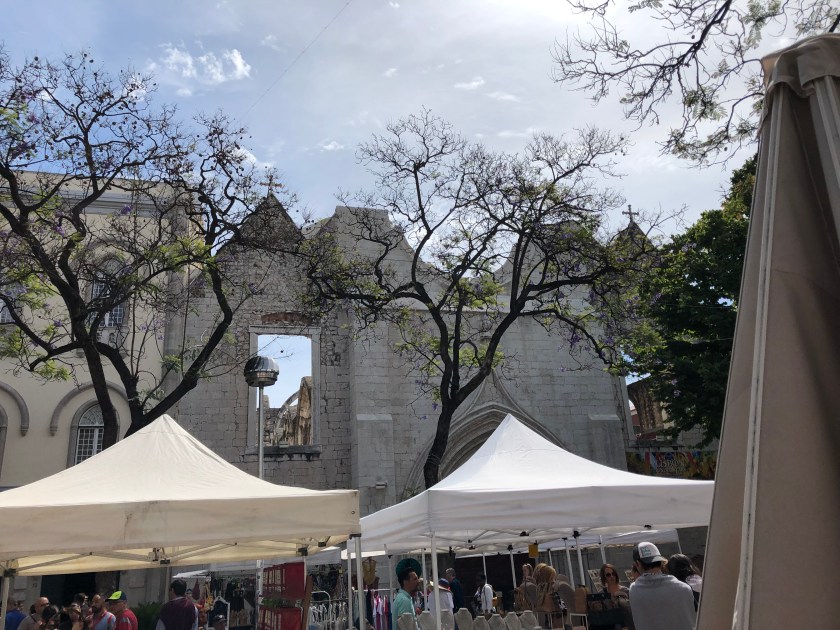 We then descended to the Baixa and walked down to the Praça do Comércio along the River, where our morning tour ended. We had a quick lunch break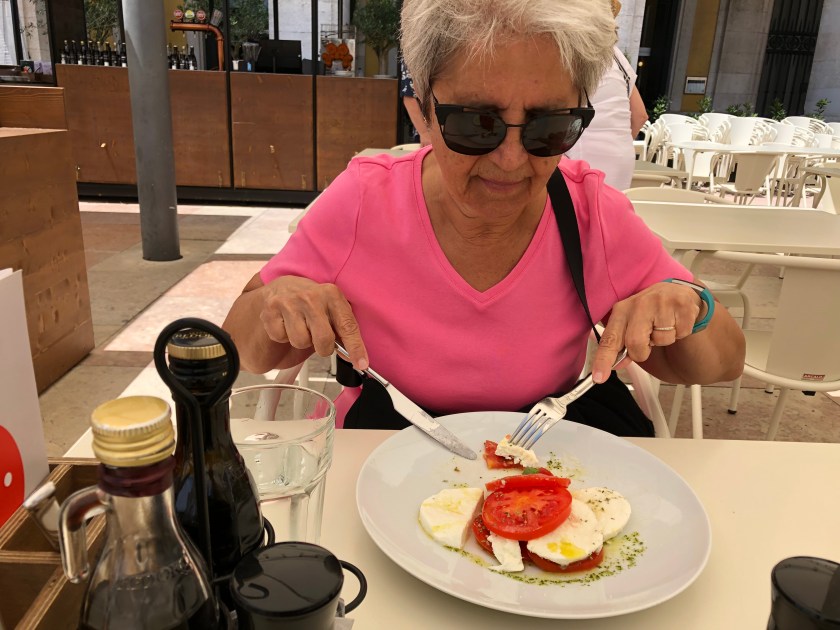
before our 2:00 pm afternoon tour of the Alfama. In contrast to the morning tour, this one was all uphill! The Alfama was the area where sailors resided, and, in contrast to the Bairro Alto, remains a vibrant residential neighborhood. 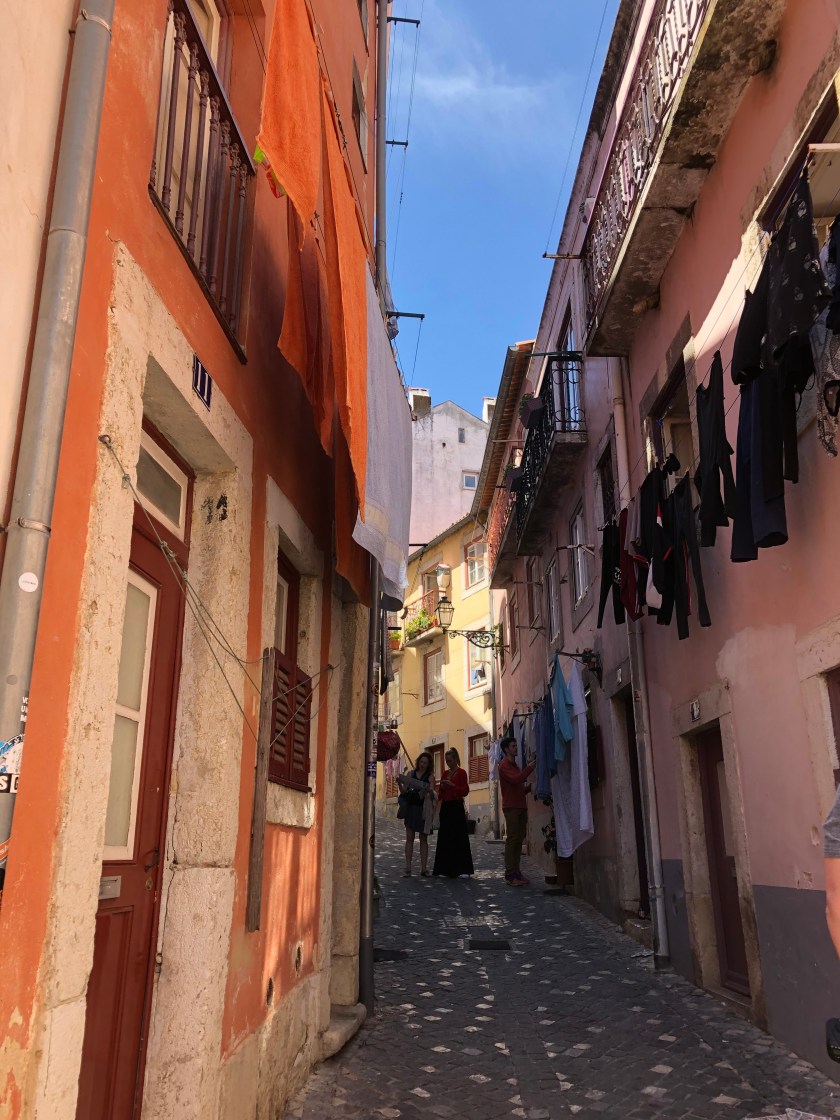 The area directly adjacent to the Castelo Sao Jorge, however, has transformed into a tourist Mecca, filled with air B&Bs, restaurants and souvenir shops. On the way up, we saw ruins of a Roman theater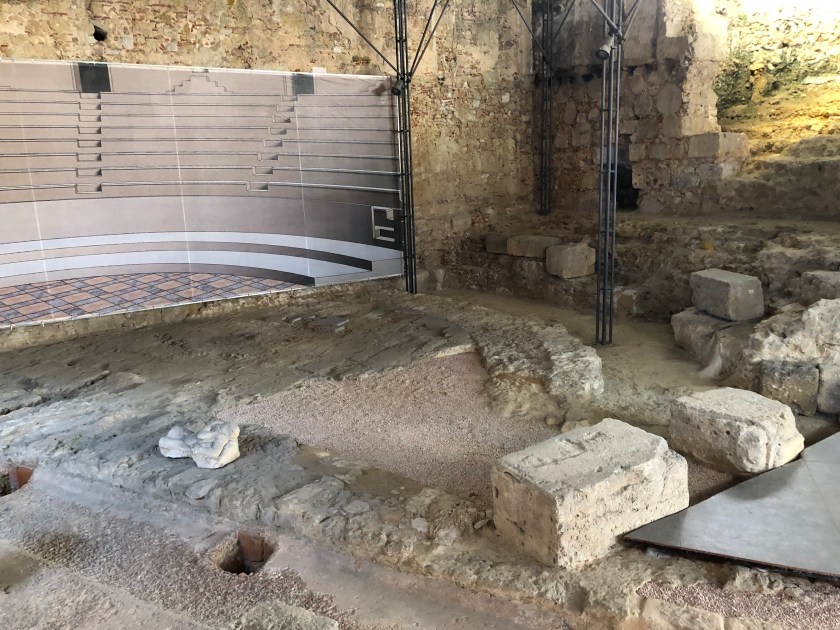
The Alfama really celebrates St. Anthony and remnants of the festival can be seen around every corner.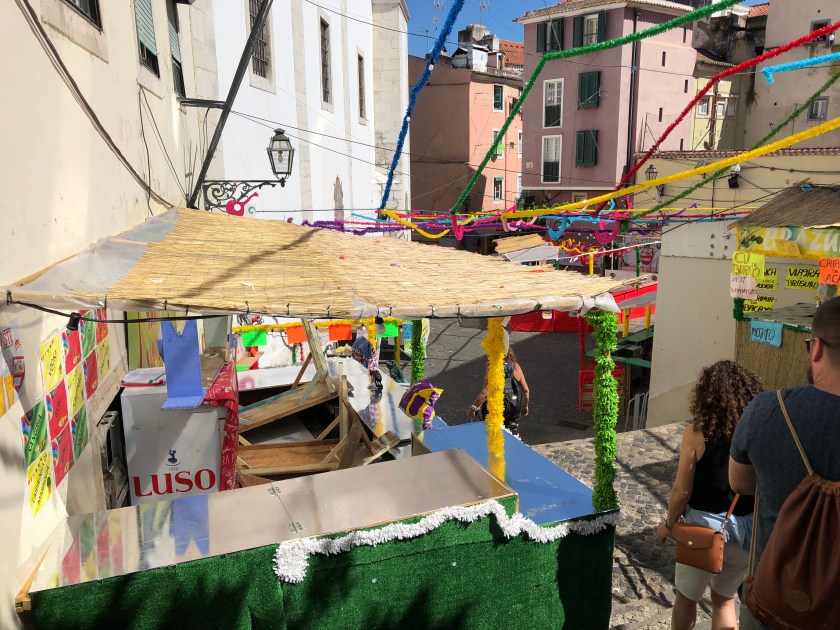
There was even an elderly woman selling homemade Ginjinha from her front door!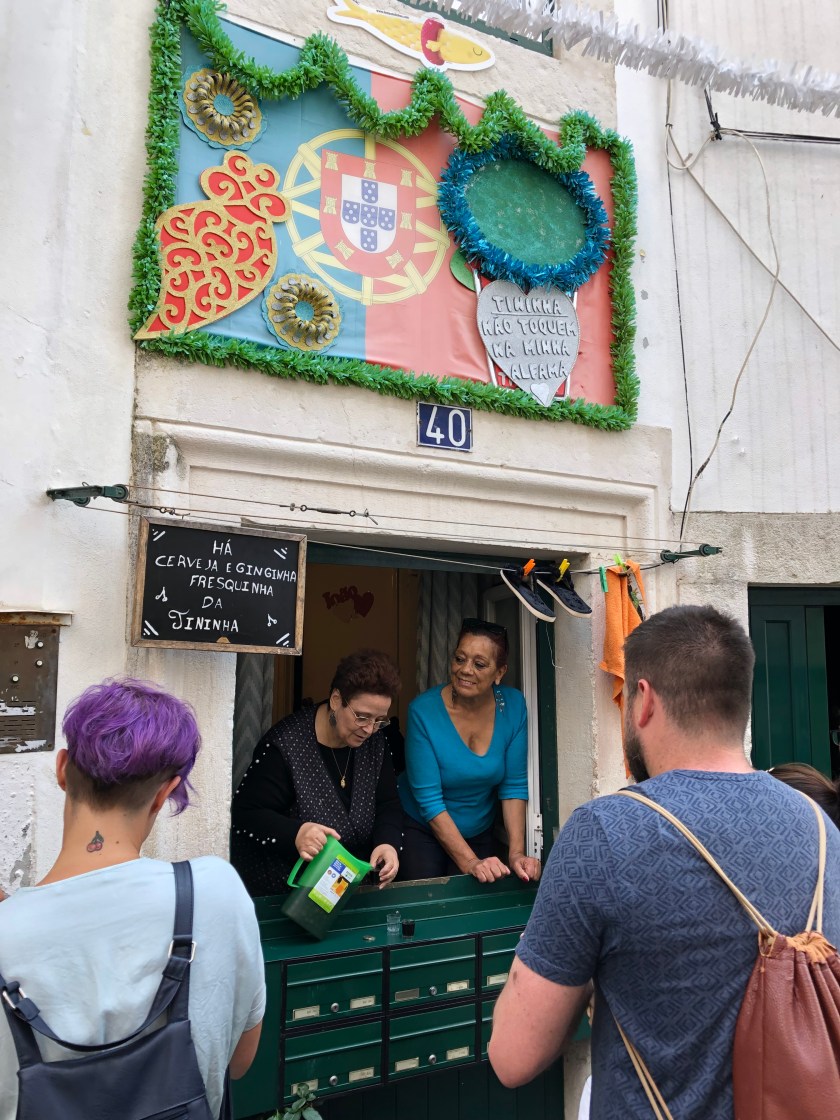
As we descended, we were able to get some great views of the city.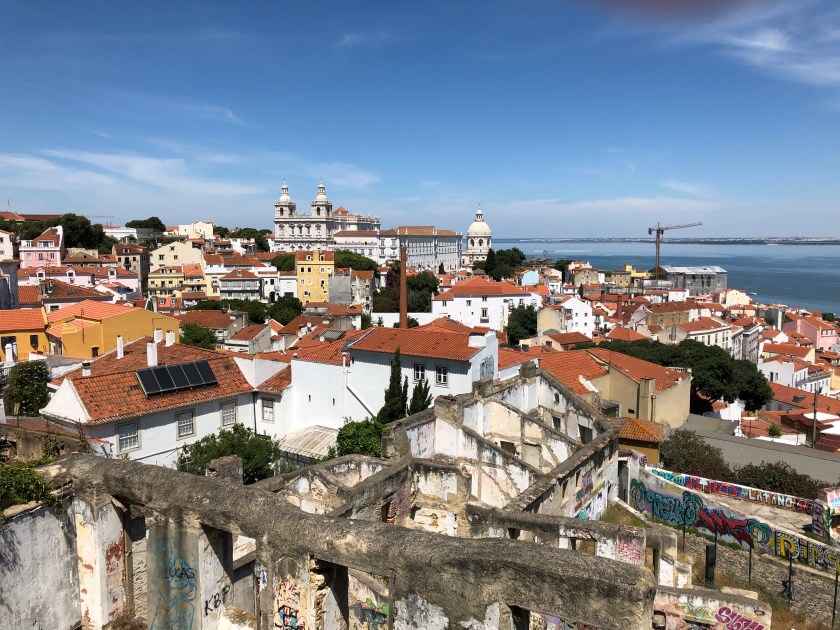
By this time, our feet were throbbing and a great thirst overcame us! We ended our tour at 5 pm with a tall cool beer in a small hole-in-the-wall bar in the basement of a church.
At this point, we had logged over 17,000 steps on the Fitbit, and we still had about another mile to get back to the hotel for a quick rest before our 7 pm dinner reservation at Maria Catita, an Azorean restaurant recommended by Estella, our Sintra guide.
Our final tally was over 24,000 steps, 9.75 miles, and I think we earned our dinner.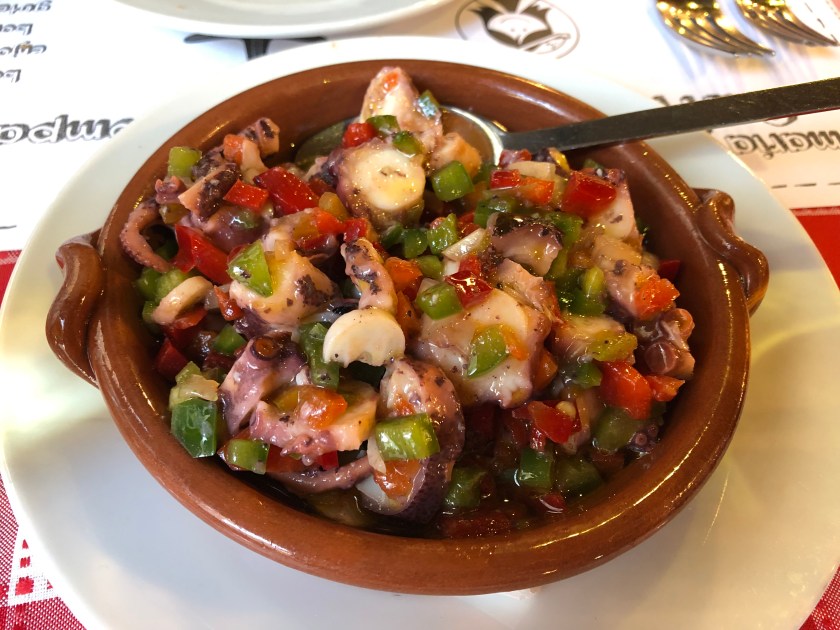
Octopus salad
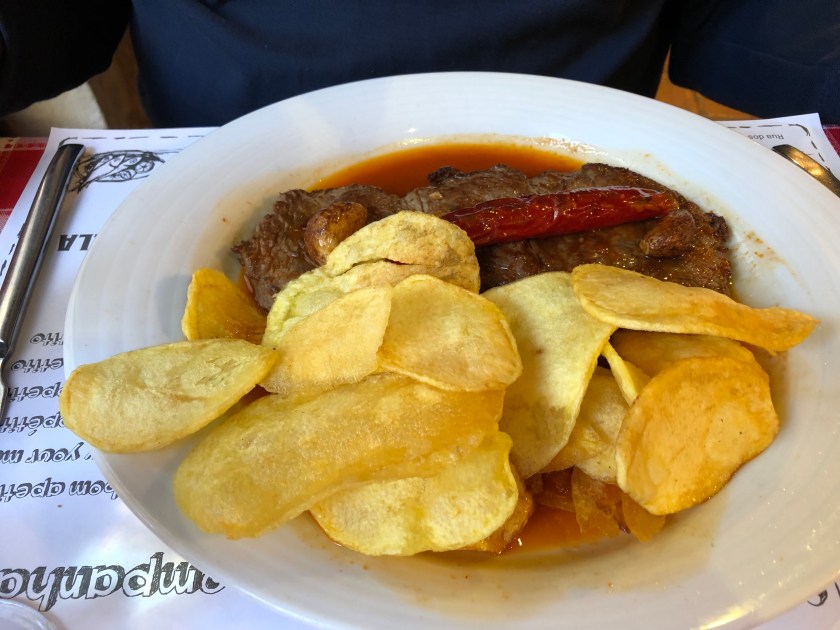
Azorean-style steak with fried potatoes for Tony
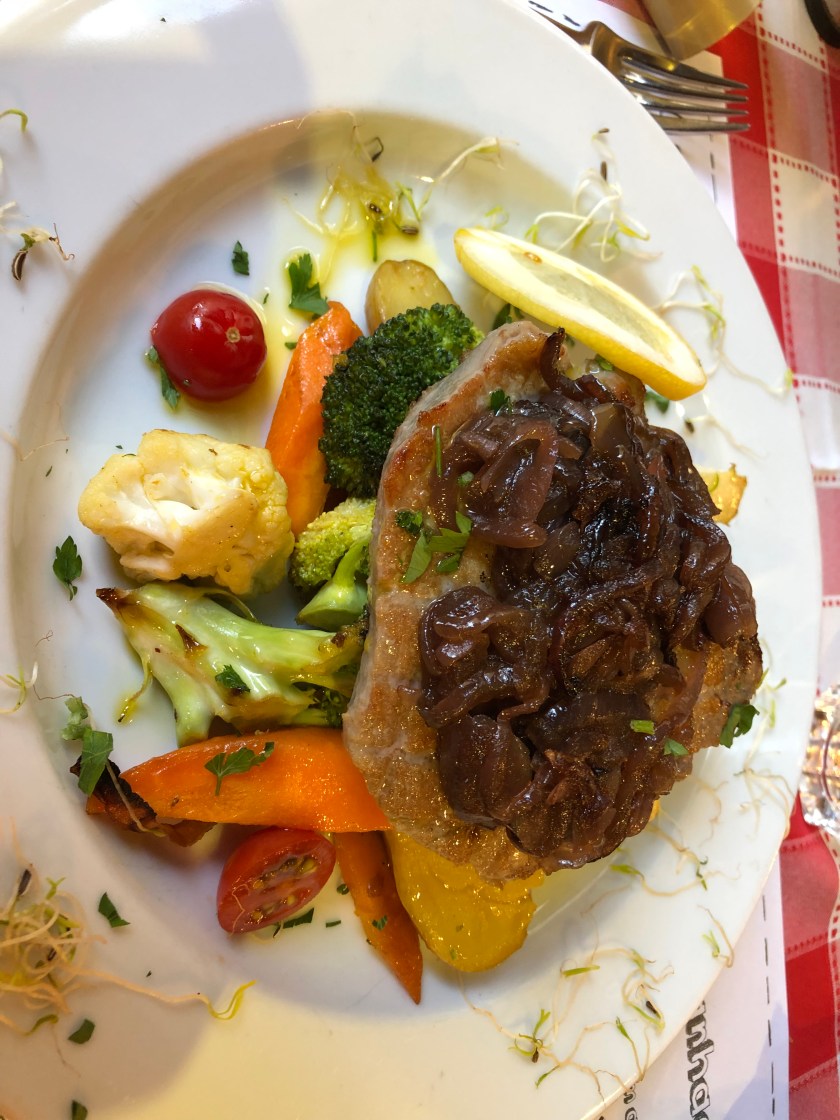
Grilled tuna with veggies and caramelized onions for me

 Camino Musings