The only pre-planned activity for today was a food tour. I have been on many food tours in many cities both in the United States and abroad, my first over 20 years ago in the Little Italy neighborhood of the North End in Boston, and I am a food tour junkie. The best ones take you off the beaten track, away from the tourist areas, to experience traditional and local delicacies prepared by local purveyors predominantly for the inhabitants of the neighborhood. In addition to filling your belly, you also get to learn about the natives’ customs and culture and even a dose of history! These food tours usually last for 3-4 hours and are frequently led by someone who hated his/her original job and decided to change professions because they “love food and love talking to clients”. I have experienced amazing food tours in Florence (Italy) led by a young man trained in political science who focused on political and social culinary history, in the Lower East Side of New York City focusing on Jewish cuisine led by a professional chef and cookbook author who was a Sephardic Jew, and a tapas tour of Madrid led by a young woman who was an expert in jamon iberico ( a super expensive ham similar to prosciutto, costing upwards of 120 euros per kilo – that’s more than $80 per pound). Then there are the more commercial touristy ones led by the disgruntled accountants or unemployed recent college grads that take clients to sample the “best” local pizza/chocolates/ beer/etc., with an additional 20% discount card if you return to the pizza joint/ candy store/brew house within 48 hours. After some research on the internet, I came across a company that specializes in the backstreet culinary experience, aptly called Culinary Backstreets, and offers tours in many international cities.
So, for more than SIX hours today, our merry band of six (a Canadian couple, two young women from London, and us) traipsed the streets of the Campo de Ourique residential neighborhood of Lisbon sampling traditional Portuguese cuisine and basically consuming three small meals in addition to many tastes of different foods.
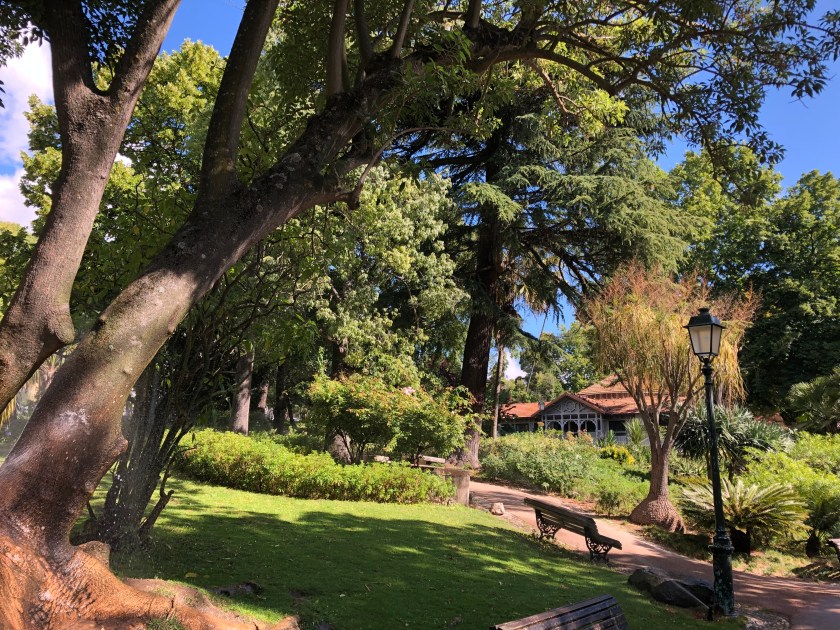
We met our guide, a young attorney who was disenchanted with the legal profession (sound familiar?), at the entrance to the Jardim da Estrela (a lovely park/public garden) where we strolled the grounds after having our morning cafe (espresso) and a Jesuite pastry (a flaky pastry originally made by a local Jesuit order).
Then we were off to the local indoor market in the Campo de Ourique. Martim explained some of the political history of the neighborhood, how it was a center for intellectuals during the 40+years of the fascist regime of Salazar. He also took us to various vendors, explaining the different seafood typically used in local cuisine.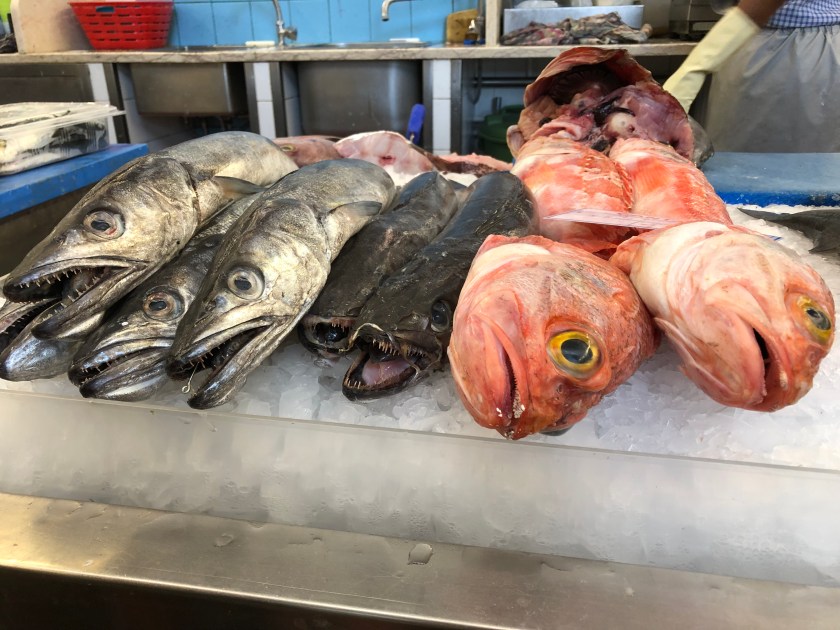

Snails are in season!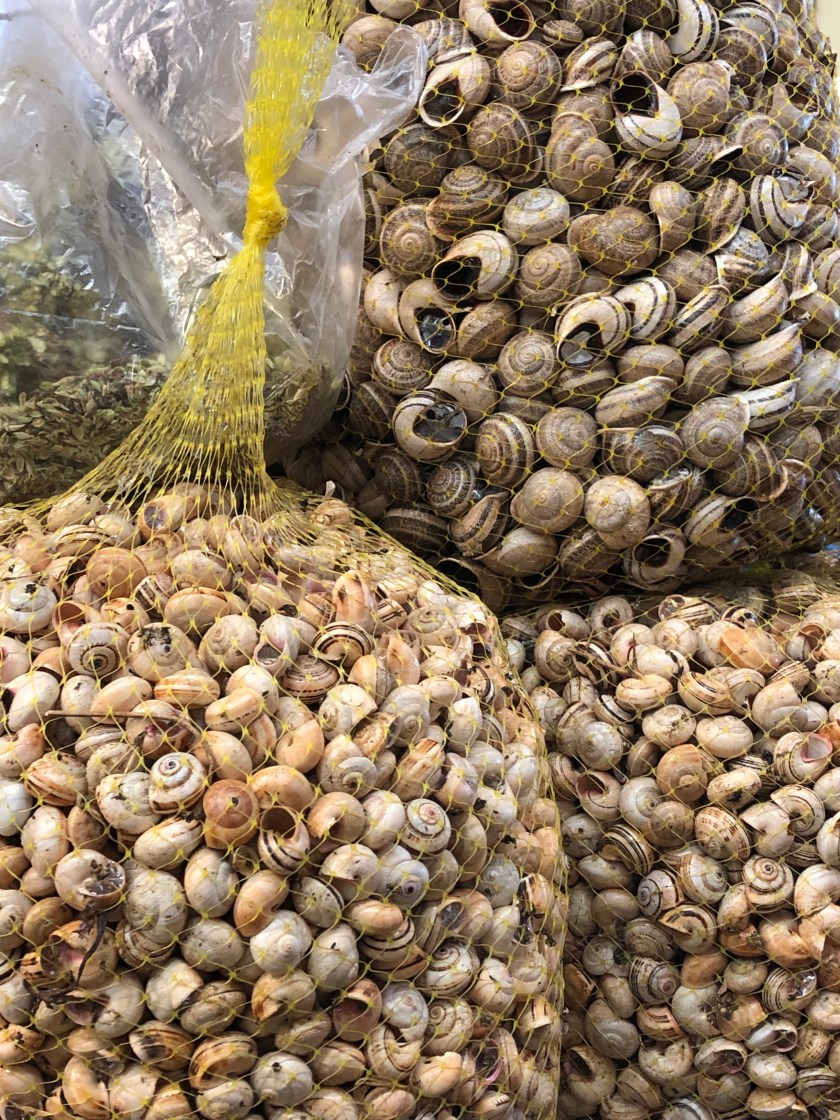
They are cooked in butter and garlic (we did not get to sample them). We learned about the piri-piri sauce made with Birdseye chili peppers 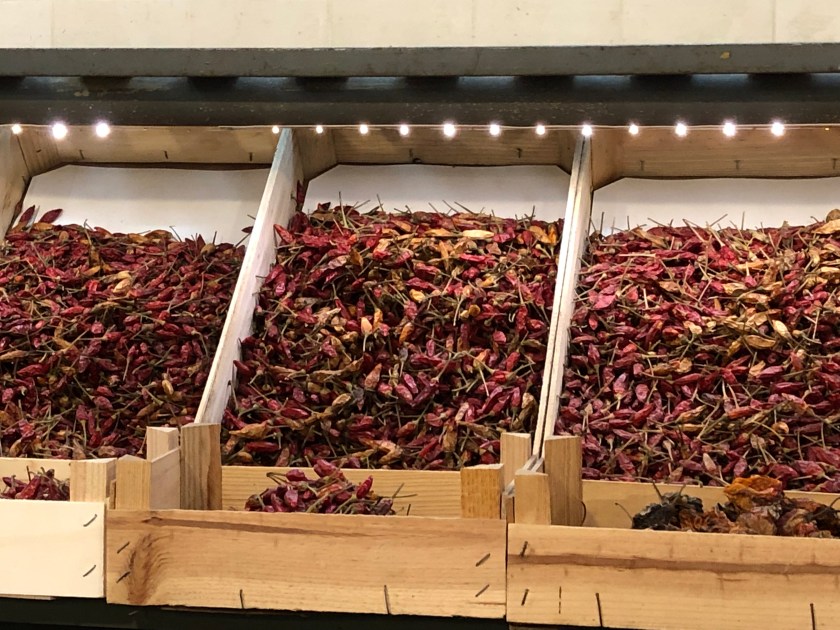
and sampled canned stuffed squid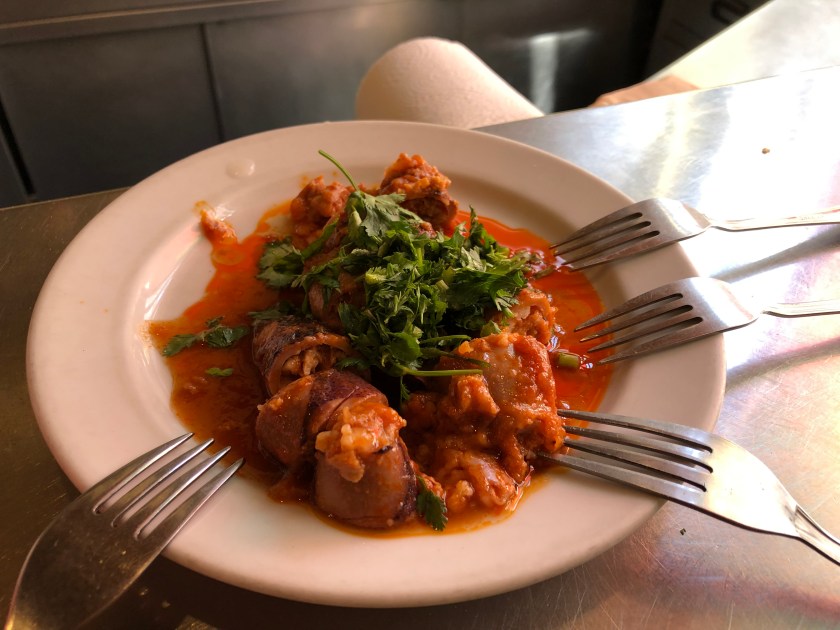
chorizo sausage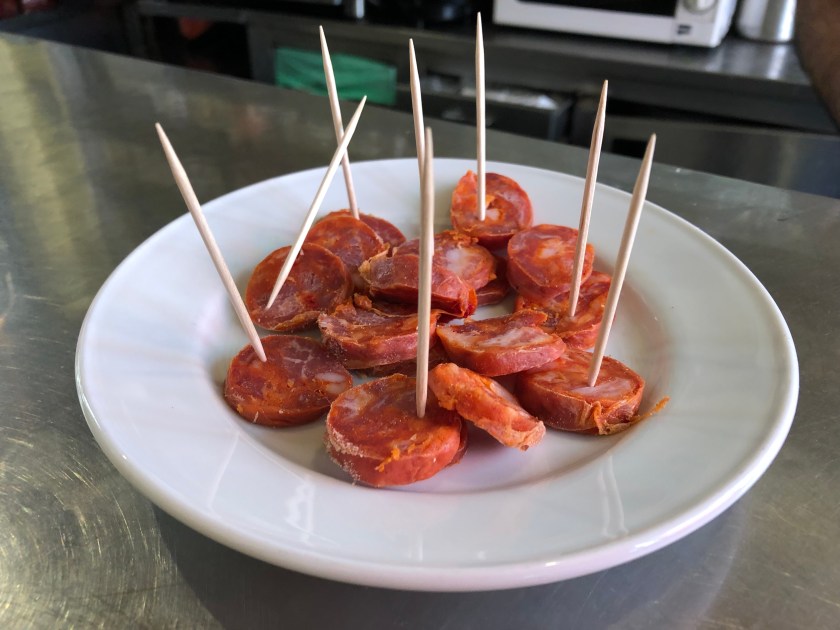
grilled sardines 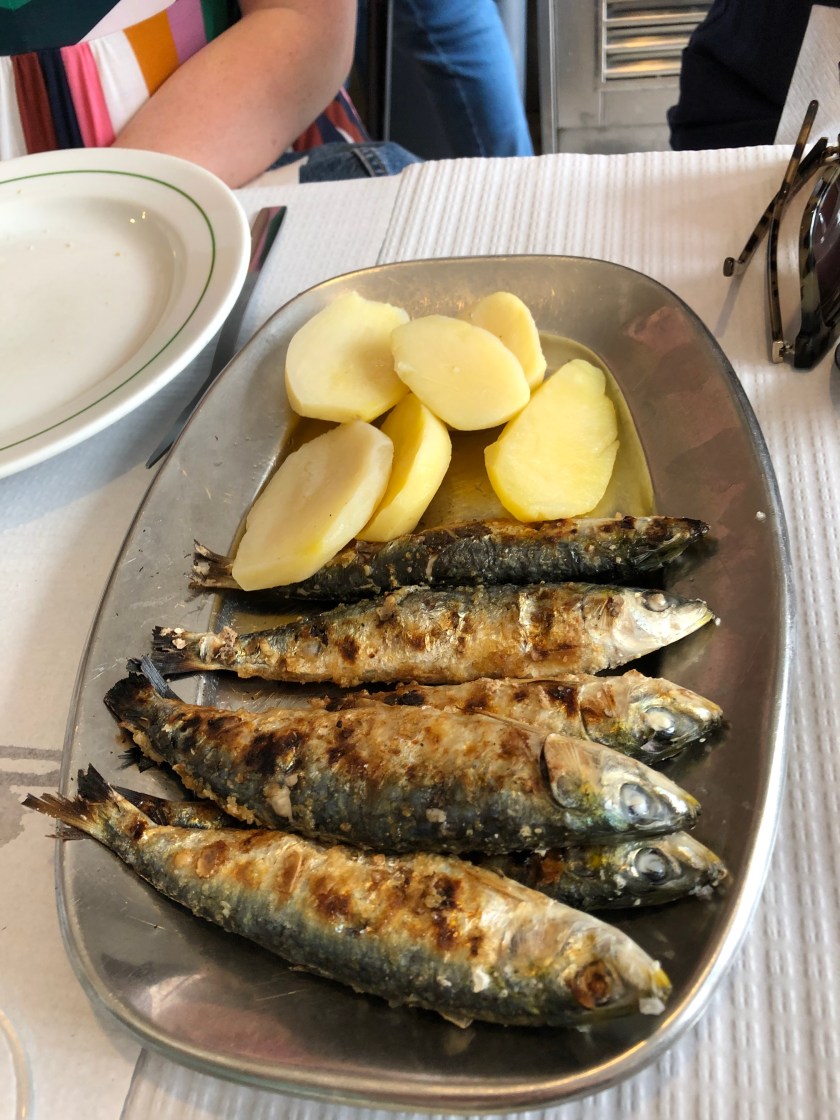
a stew made with fava beans, pork ribs and sausage 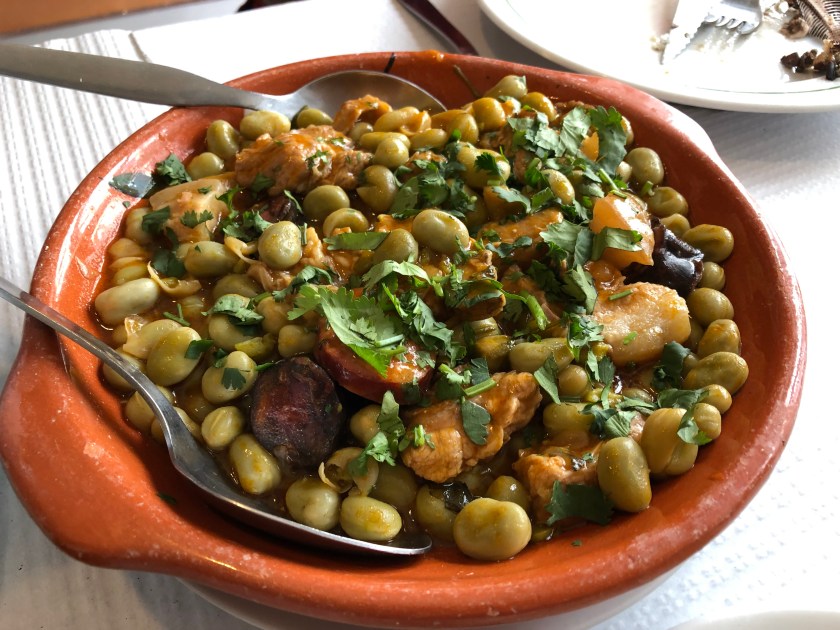
as well as a selection of cheeses, several bottles of vinho verde, local beers, gelato made in the traditional Italian style by a transplanted Calabrian, and we sampled examples of food inspired by the Portuguese colonies in India and Africa. We ended our tour, six hours and 5,000 steps later, with the traditional pasteis da Nata custard tart.
With bellies full, we walked the mostly downhill streets to the center of Lisbon. The rest of the evening included a postprandial snooze, another walk along the Avenida da Liberdade (a wide boulevard flanked by high end fashion designers’ shops, grand hotels, and fancy restaurants), and no dinner!

 Camino Musings