Just a 40-minute train ride from the Rossio train station in Lisbon lies the magical village of Sintra. A summer retreat for the aristocracy of Portugal, this charming, almost Disney-esque destination lies between Lisbon and the Atlantic Ocean. Context Travel, a unique company that specializes in small tour groups (maximum of six people) led by “docents” with at least a Masters degree in art history, archeology, or other relevant fields of study, was the venue we chose to guide us on our day trip to this popular location. Estella, our docent, has a Masters degree in art history as well as an extensive background working in museums in Lisbon as well as London ( at Buckingham Palace, no less!). She was personable, enthusiastic, and very knowledgeable in the history associated with the sights we visited. We joined up with her and the rest of our small group of six outside the Starbucks at the train station where she began by explaining the history of the train station and providing some interesting anecdotes including the story of the missing statue of King Sebastian that used to grace a niche at the front of the station but was irreparably damaged in 2016 by a tourist who had climbed up on the statue to take a “selfie”! The story of Sebastian would prove to be relevant later on the tour.
A quick 40 minutes later we disembarked at Sintra and walked to our first destination, the National Palace.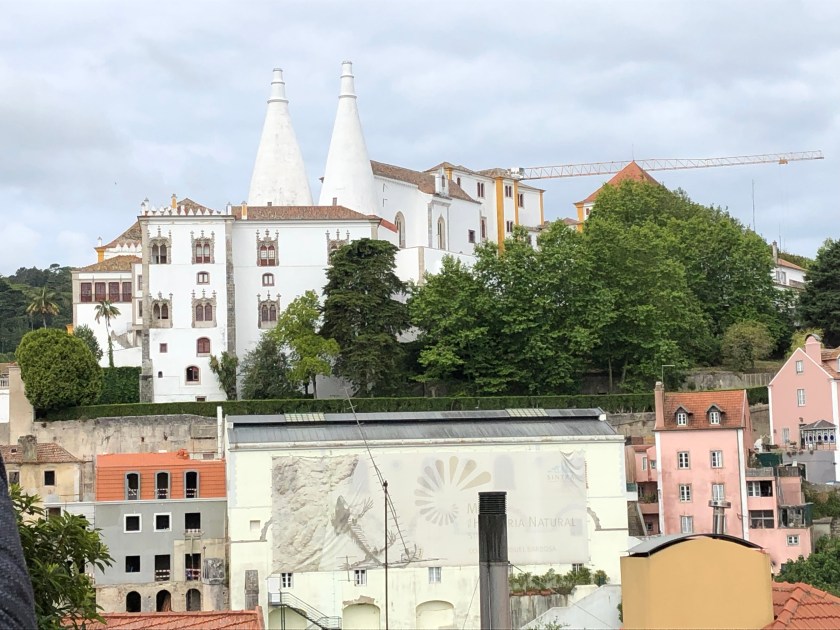
It dates back to the time of the Moorish domination in the 11th and 12th centuries, but most of the Palace was built during the 15th century reign of King Joao I. It housed the royal family until 1910. Most of the architecture is of the Manueline style. Although it is no longer inhabited, the Palace is still used for official government functions. 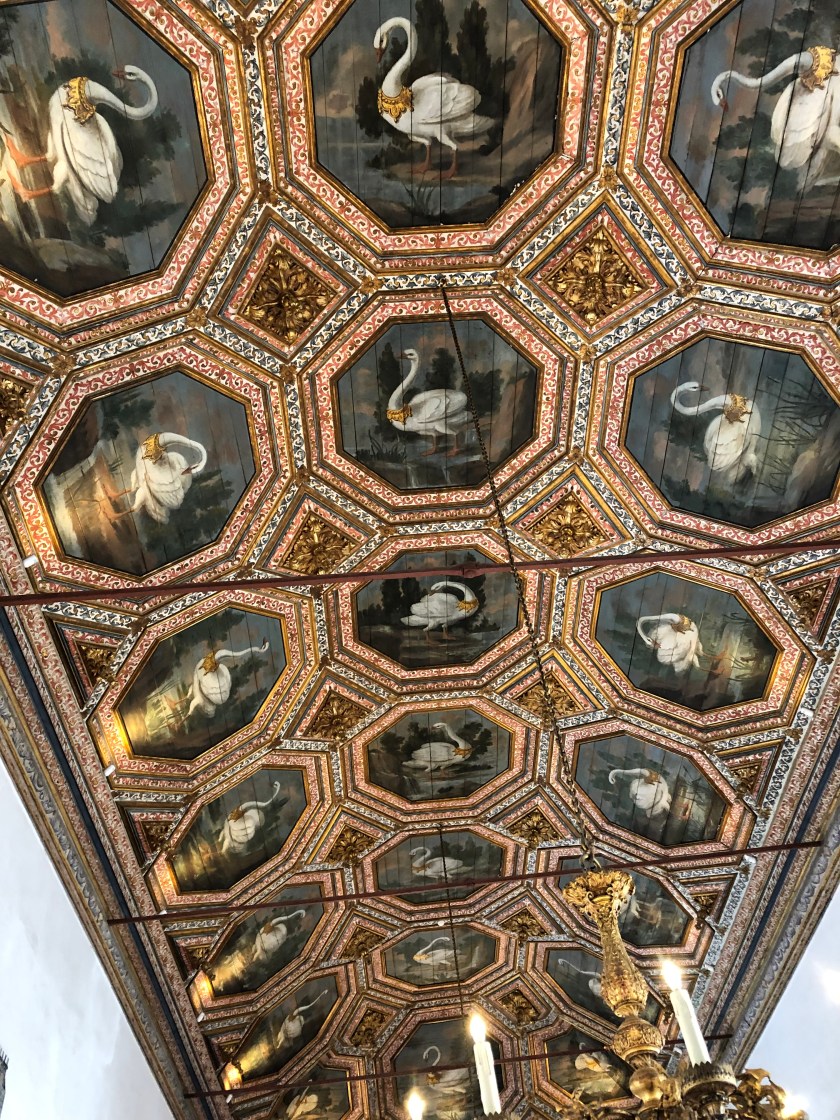
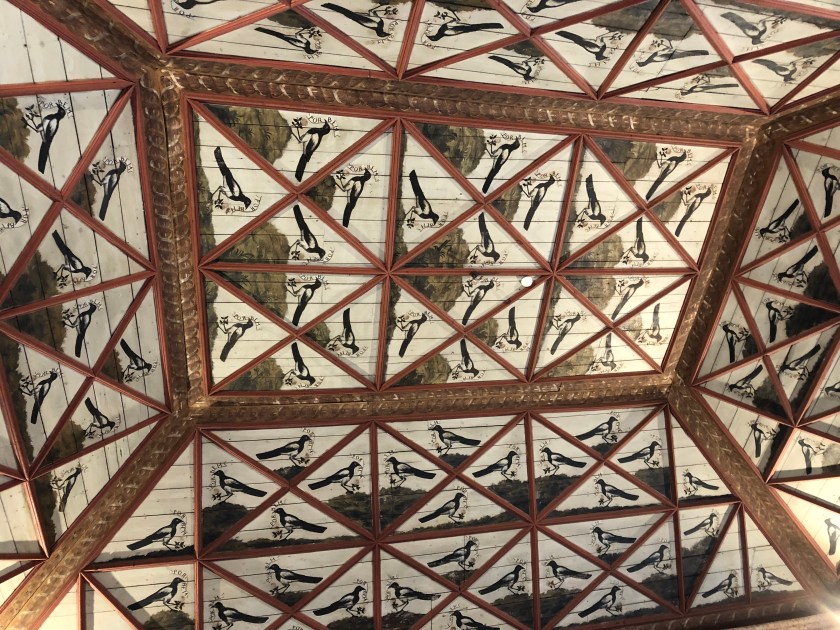
Several of the rooms had ceilings decorated with bird motifs- the swans representing an alliance with the British aristocracy, the magpies representing the stealing of the kingdom by Joao (who was not from Portugal) (or the alternative story that he was caught stealing the attentions of ladies in waiting).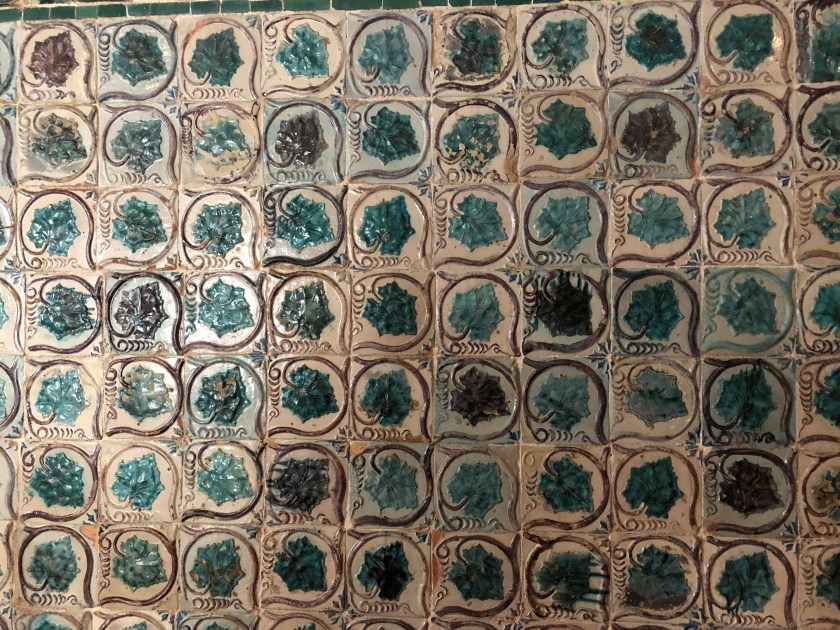
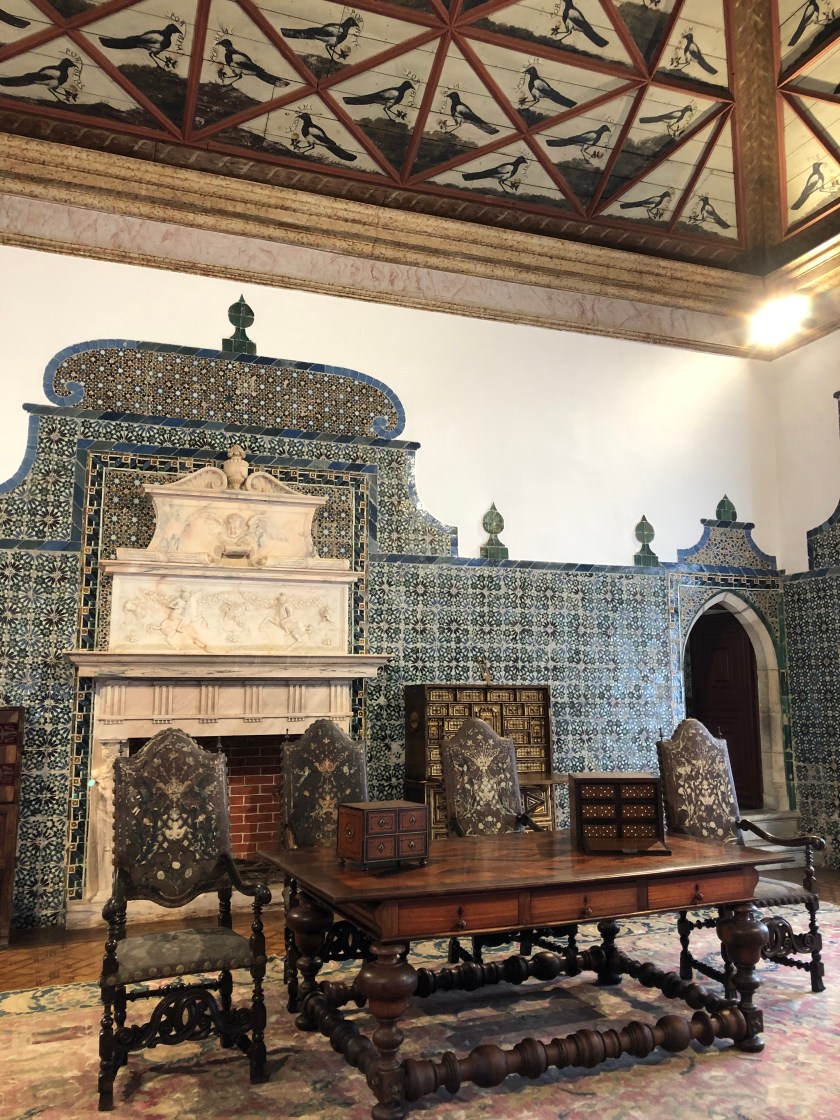
The walls were elaborately decorated with 15th century Moorish tiles brought from Spain.
The story of King Sebastian, the 23 year old ruler who was killed in a war with the Moors and whose remains were never found, was further elucidated, along with the story of the Sebastianists who waited (and are still waiting) for his return.
Probably the most photographed object is the portrait of John the Baptist who appears to be wearing a negligee (it’s actually an apron!)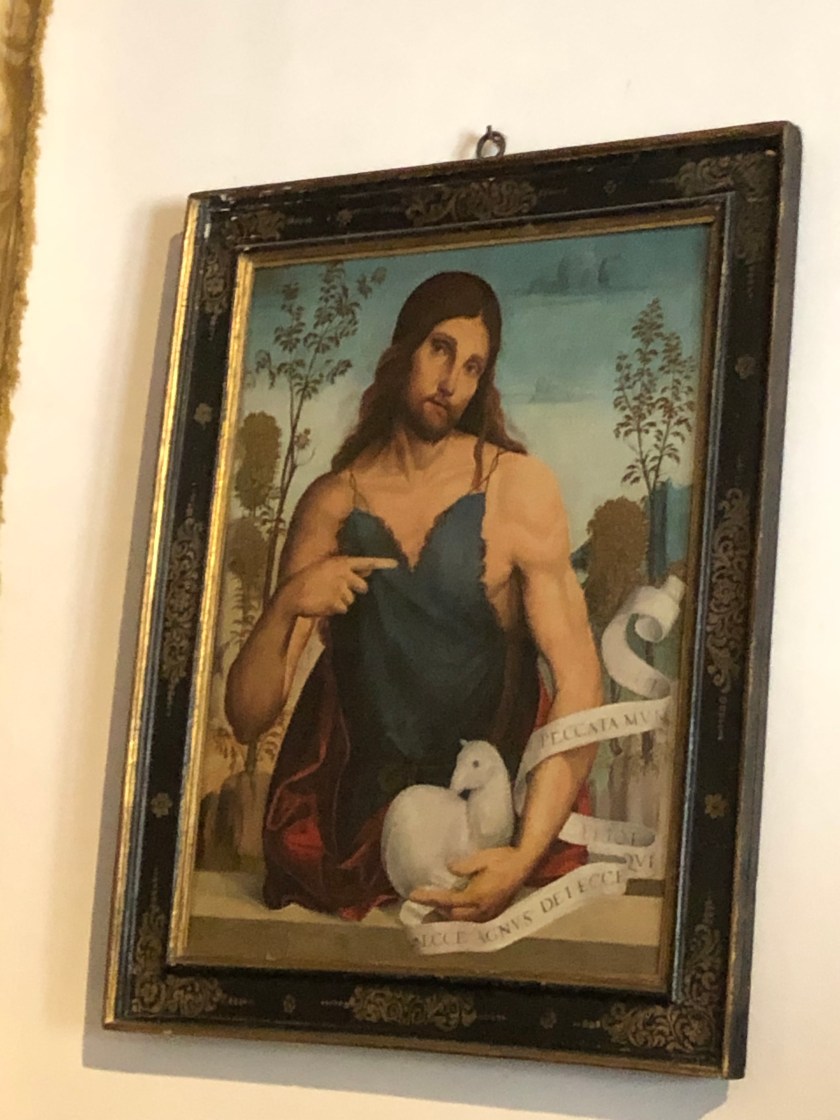
After a break for refreshments (and a traditional local pastry), 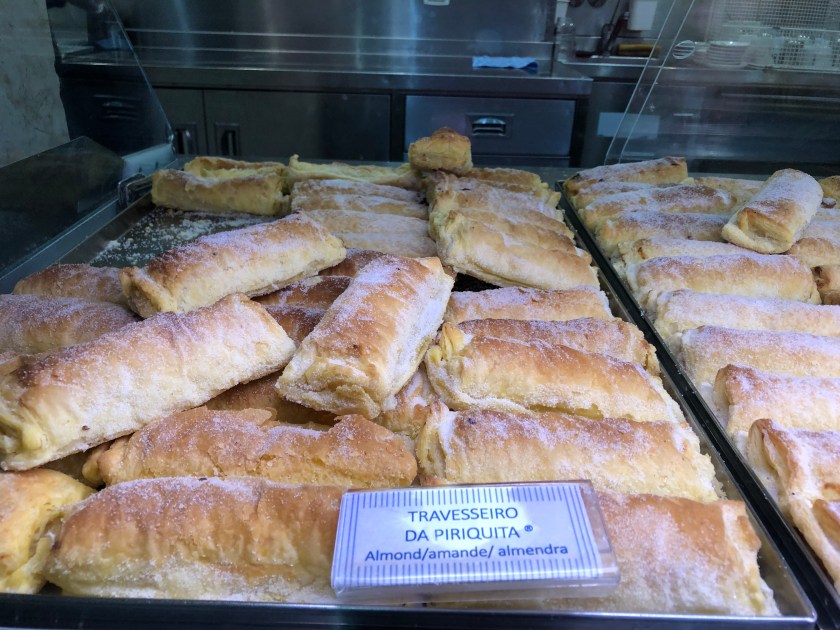 we began the long climb to the Quinta da Regaleira. The mansion and its elaborate gardens were built between 1896 and 1910 by a billionaire, Antonio Carvalho Montero, who made his fortune in Brazil, and designed by an Italian set designer, Luigi Manini, in a weird melange of Manueline, gothic and Renaissance styles. The gardens are magnificent, with waterfalls, exotic plants, tunnels, and a spiral staircase enclosed well that was reportedly used in the initiation rituals of the order of Masons.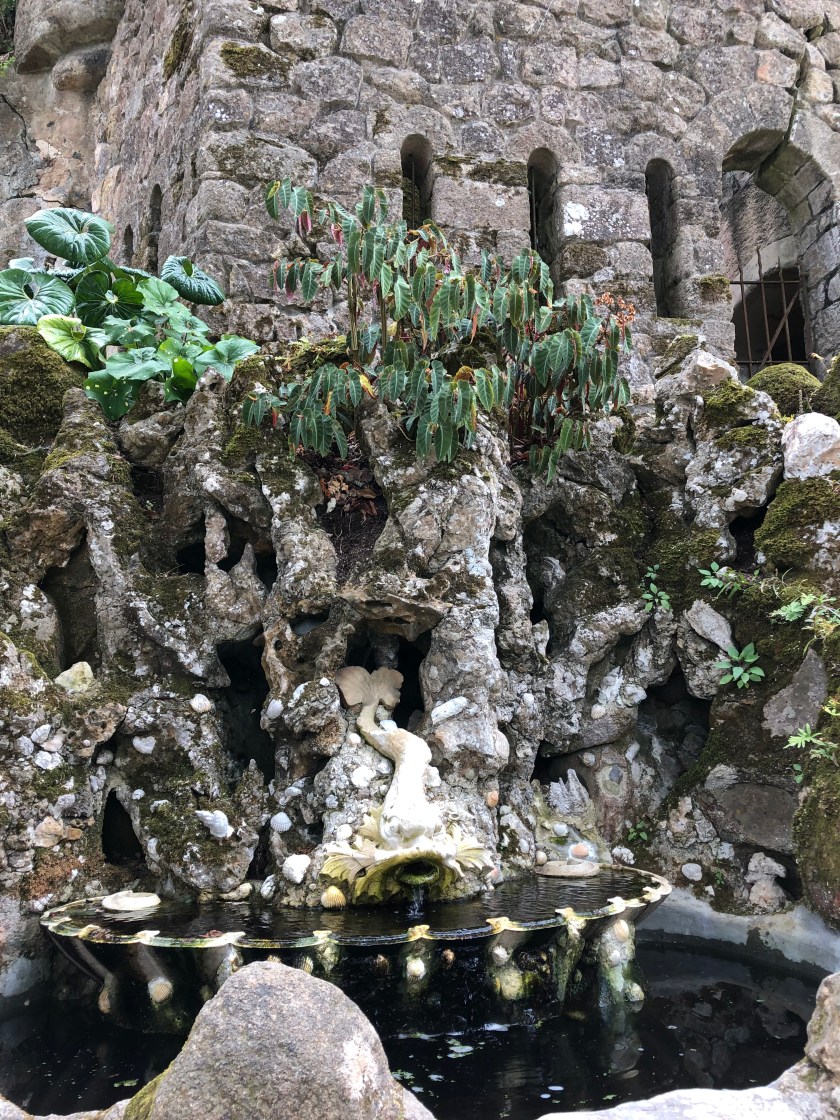
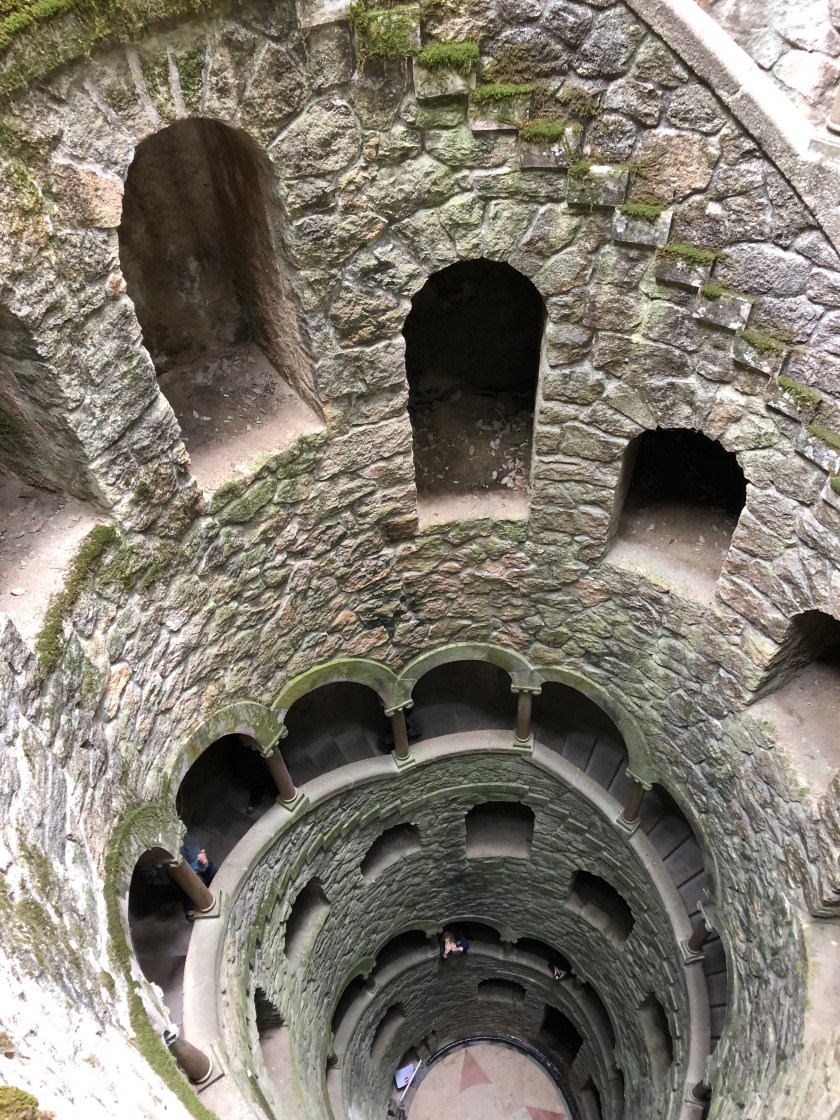 We descended the depths of the well and explored the tunnels before touring the less impressive mansion.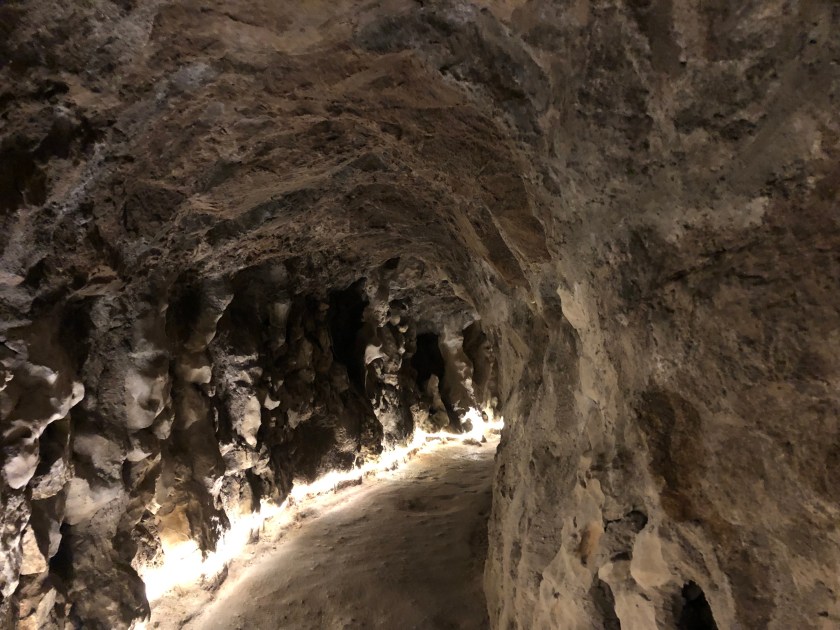
This concluded our official tour and we spent the rest of the afternoon (after a relaxing lunch at a small family restaurant with our tour mates) exploring the grounds of one of the other palaces, the Pena Palace, built by German-born Prince Ferdinand in the 19th century. The multicolored edifice is truly reminiscent of Cinderella’s castle in Disneyland! 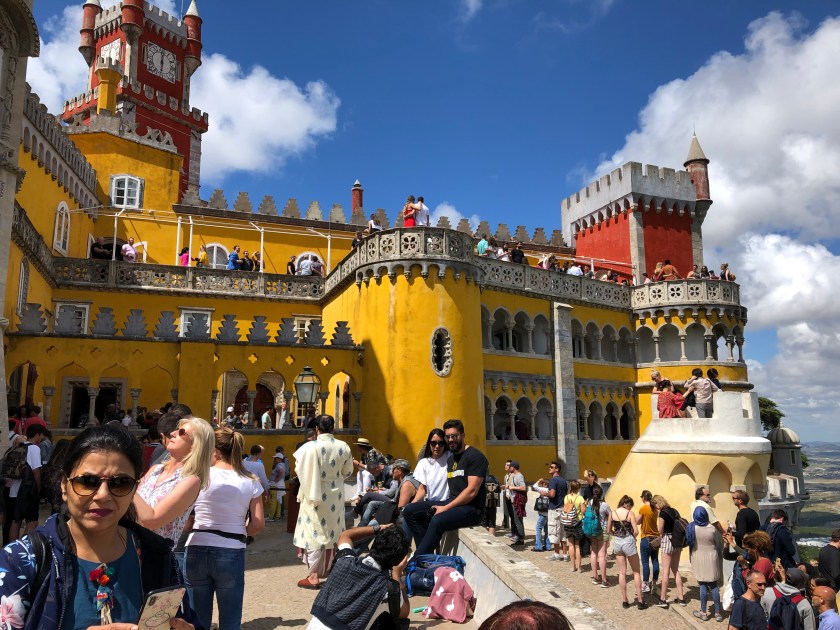 The castle is perched at the top of one of the many hills and a 15-minute hair raising taxi ride was preferable to a one hour uphill climb! There was still an additional 10 minute steep climb through the gardens to the castle. We decided to forgo the visit to the castle but the view of the surrounding countryside was amazing!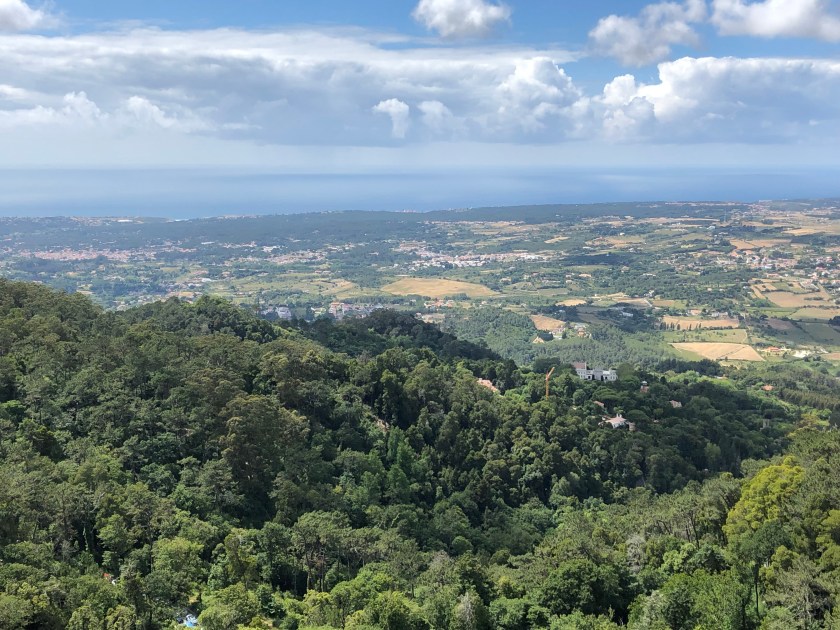
Another hair raising taxi ride down to the train station and we were back in Lisbon around 5:30 pm, and then we had to do a little shopping at Lisbon’s oldest hat store, Chapelaria Azevedo Rua, so Tony could purchase a chapeau to protect his scalp from the sun’s ultraviolet rays. We couldn’t resist the call of the Starbucks at the train station this time.
The evening was capped off with a pleasant dinner at a small family restaurant that specializes in tapas (Da Venda Lusitana) 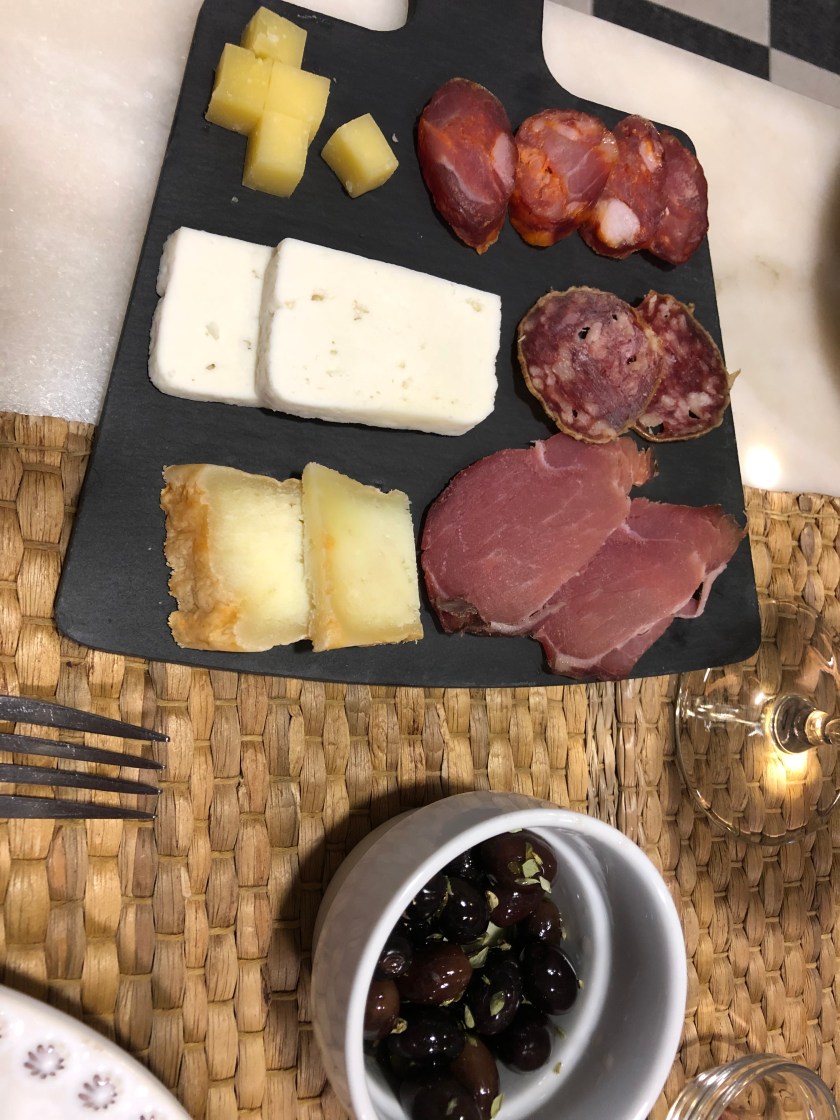 and an after dinner stroll to the waterfront.

 Camino Musings