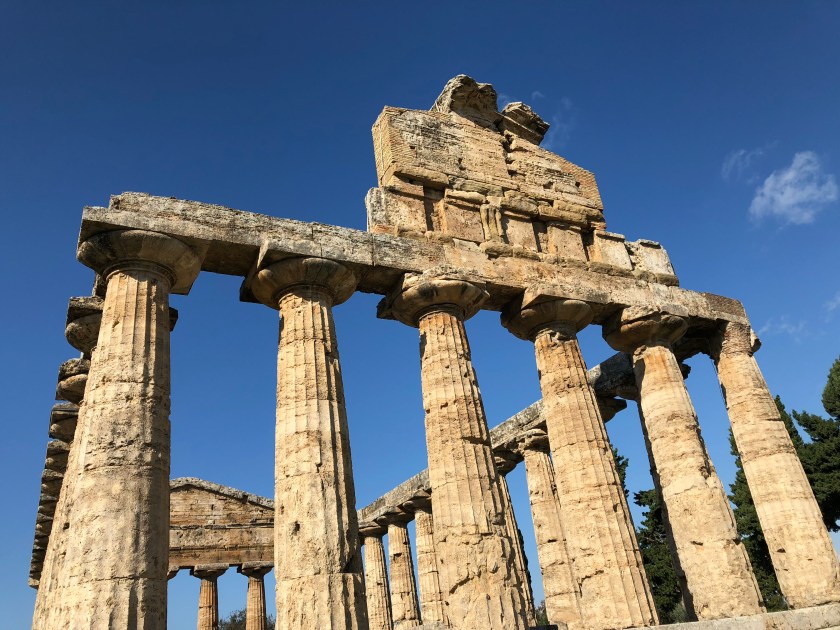
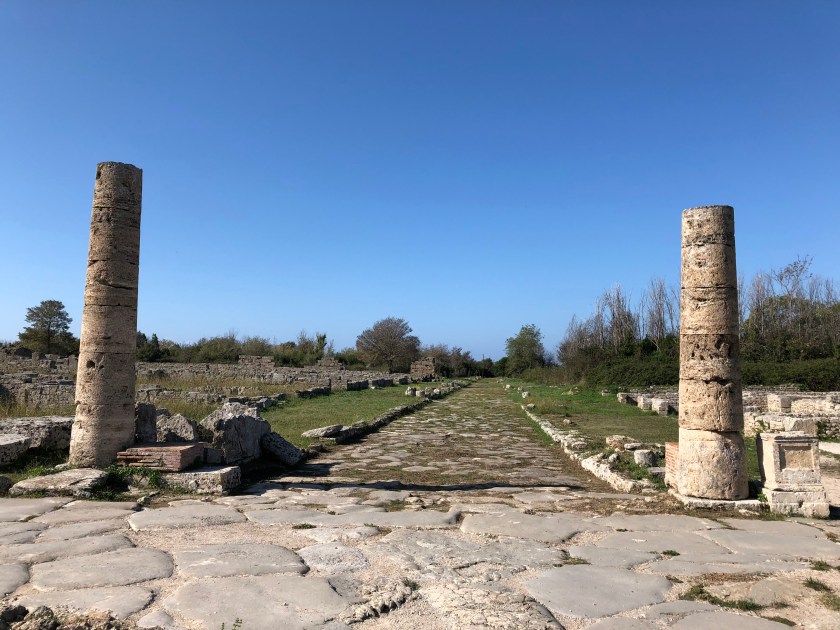
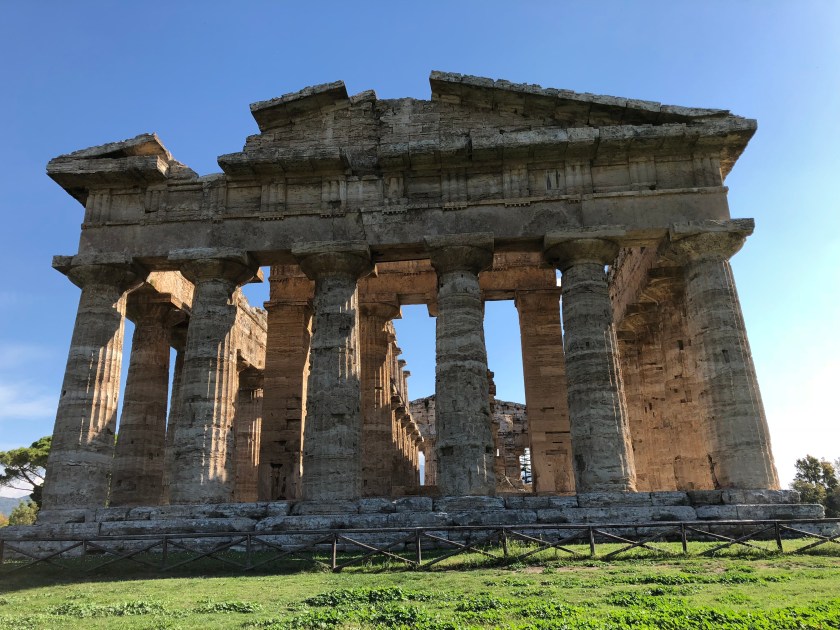
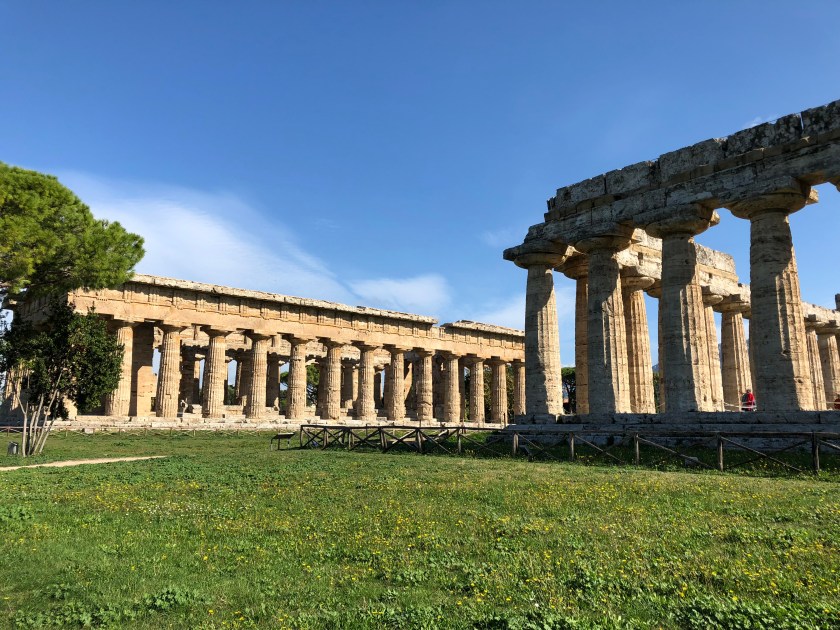
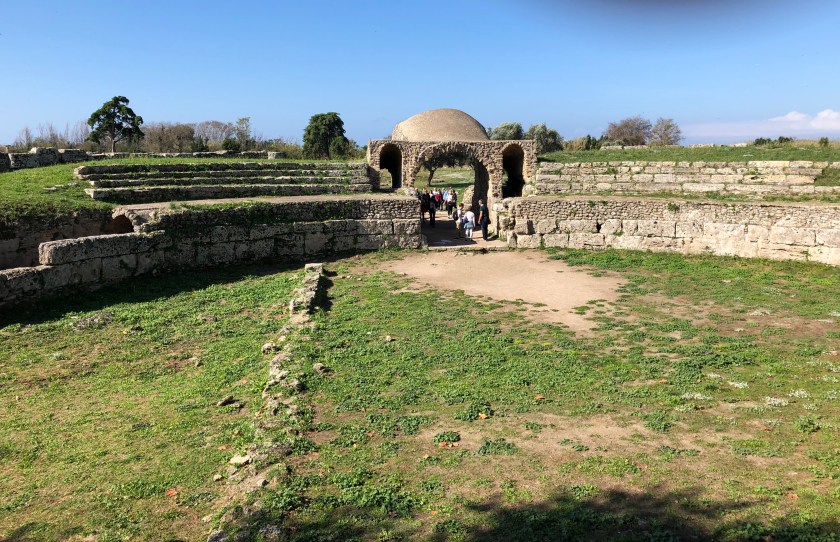
Southern Italy was populated by Greek settlers in the 8th century BC, who brought with them their language, religious beliefs and rich culture. This area, which encompassed the regions of Campania, Calabria, Basilicata, Puglia, and Sicily, was referred to as Magna Graecia by the Romans since it was so densely inhabited by the Greeks who migrated there due to famine, lost wars and a search for new commercial ports. One of the best preserved archeological remains are found in Paestum, located south of Salerno, only a 30 minute train ride away. Designated a UNESCO World Heritage site in 1998, this Ancient Greek city dates from the 7th century BC. Its outer walls, arena, paved roads and three temples are largely intact making it one of the best preserved sites of Ancient Greek civilization. The city was later overtaken by the Etruscans and later the Romans, but the influence of the Greeks persisted. It continued to thrive as part of the Roman Empire until the 4th century AD. The city was eventually abandoned in the Middle Ages and changing drainage patterns resulted in the land becoming marshy and a breeding ground for malaria. The city was rediscovered and excavated in the 17th and 18th centuries. Paestum also played a significant role in modern history as it was the beach landing site for American soldiers in 1943 during the Allied invasion of Italy.
So, today’s excursion was to this stunning and impressive archeological zone. It was the fourth stop on the train (regionale) and a 10 minute walk along a road lined by olive trees and farmland.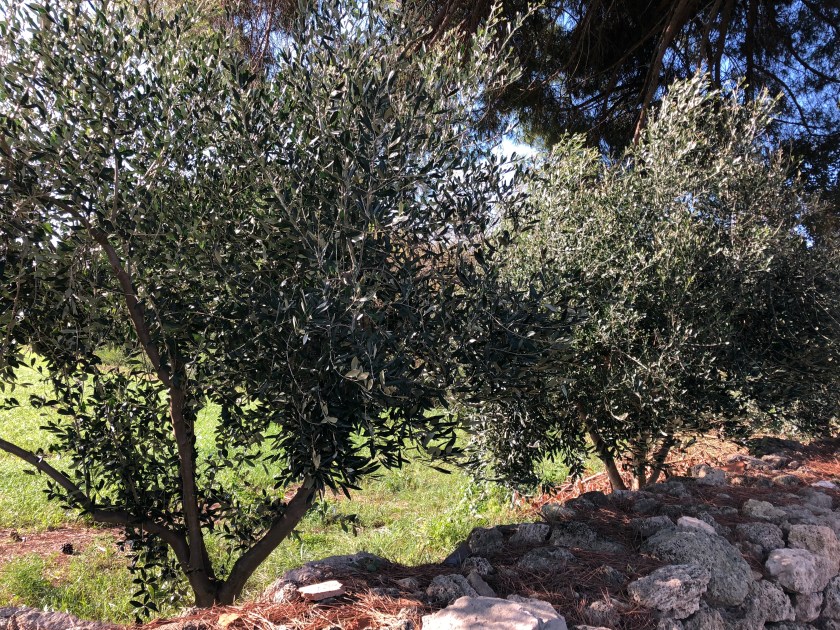
A break for a cappuccino at a bar near the site resulted in a conversation with a a 70-year-old American woman on a solo 5-week excursion in Italy. Barbara, from Alaska, was staying in Ercolano and doing day trips in the area before returning to Firenze and then back to the US next week. This was just one of many conversations with fellow travelers, all enthusiastic about sharing their personal stories.
The archeological park and museum have a combined admission ticket of 9.50 euros, a reasonable price for this well maintained site and modern museum. There were a few tour groups on this pleasant Saturday morning, but the site is quite expansive and one can stroll leisurely without crowds.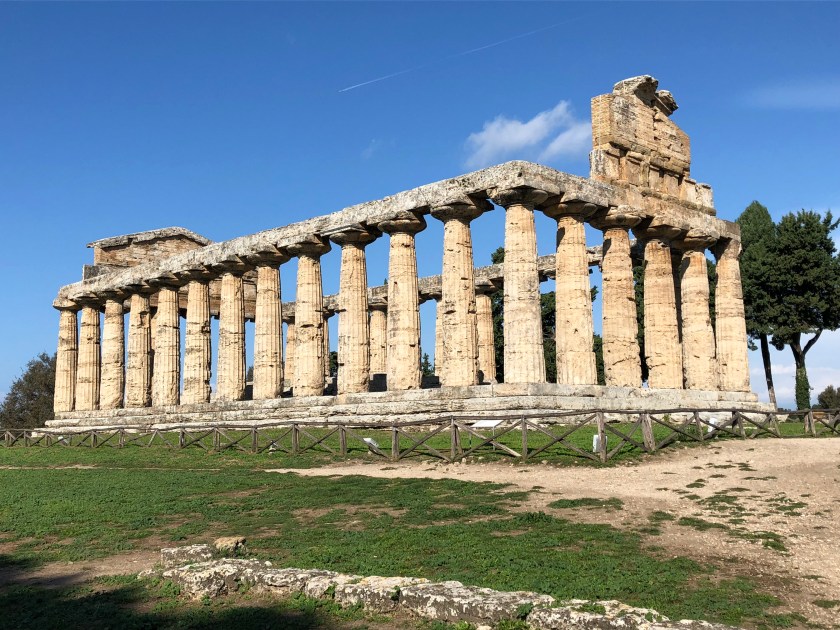
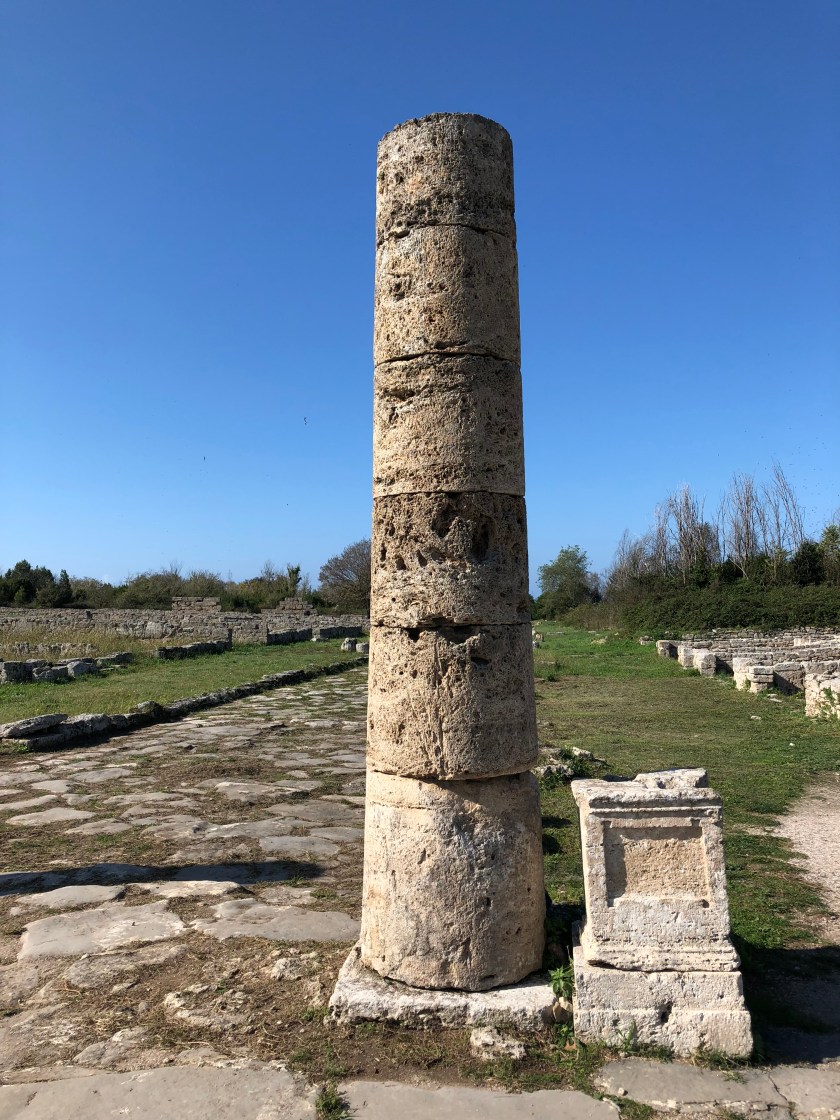
The museum contained numerous treasures found during the excavation of the site.
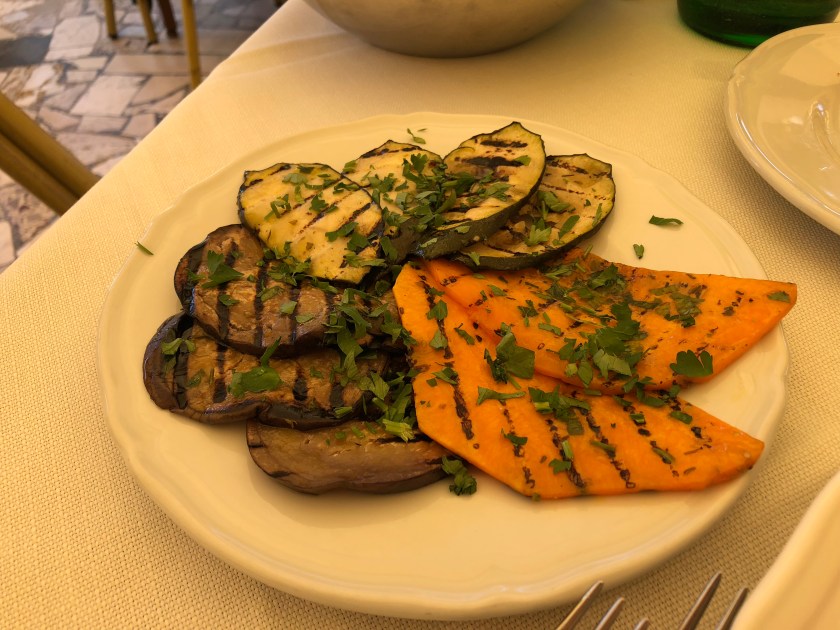
After a couple of hours, lunch was definitely on the agenda. A nice restaurant is found across the street from the site. After a caprese salad and some grilled veggies, we were off to the train station for the return trip to Salerno.

This photo of a dog on a car roof is just irresistible so it’s included for no other reason!
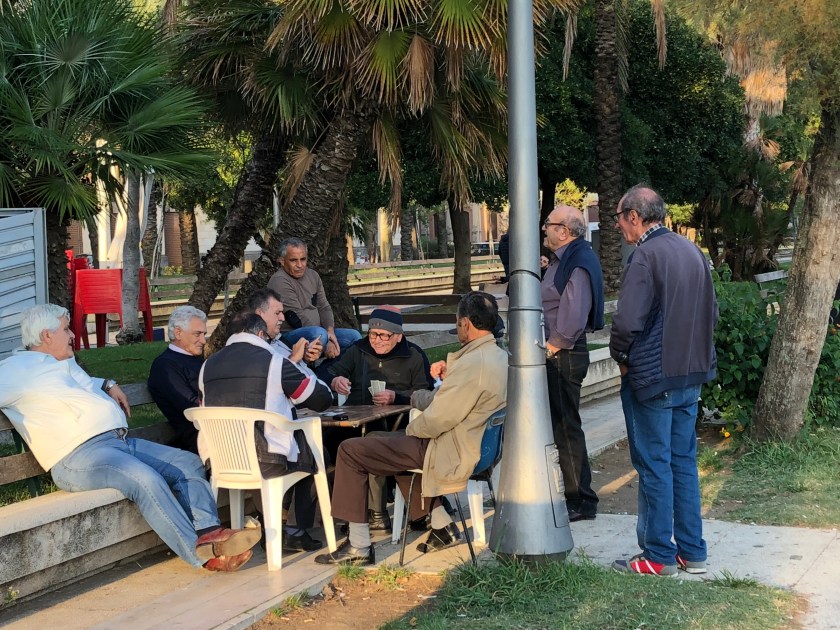
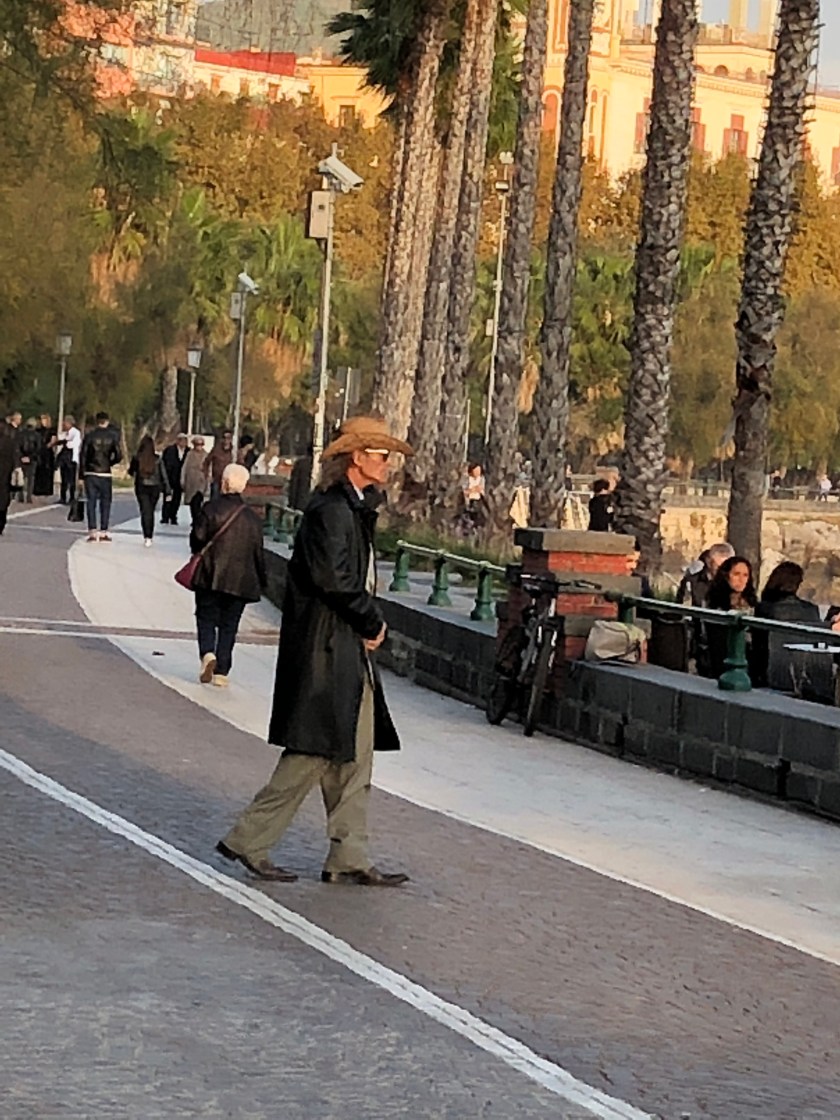
The rest of the day included yet another stroll along the lungomare to do some people watching before stormy weather arrived tomorrow.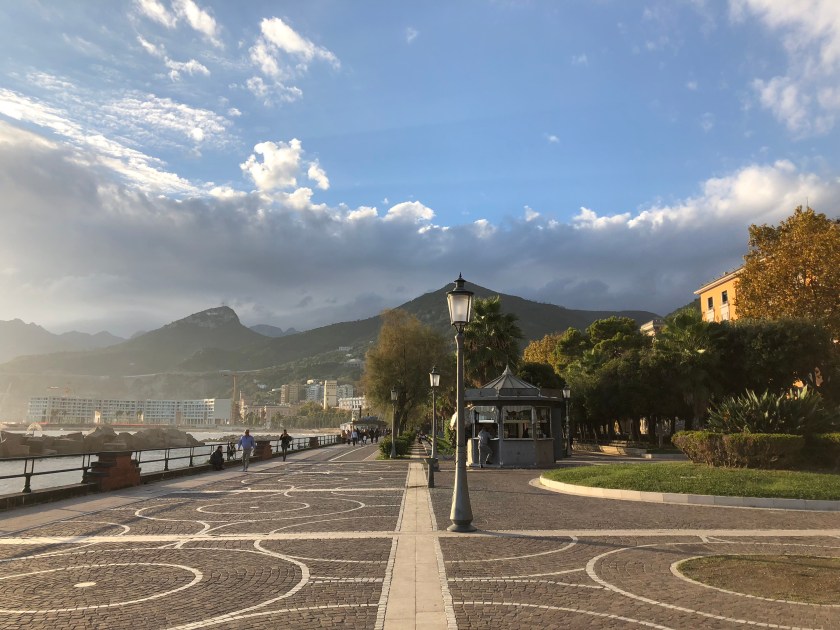
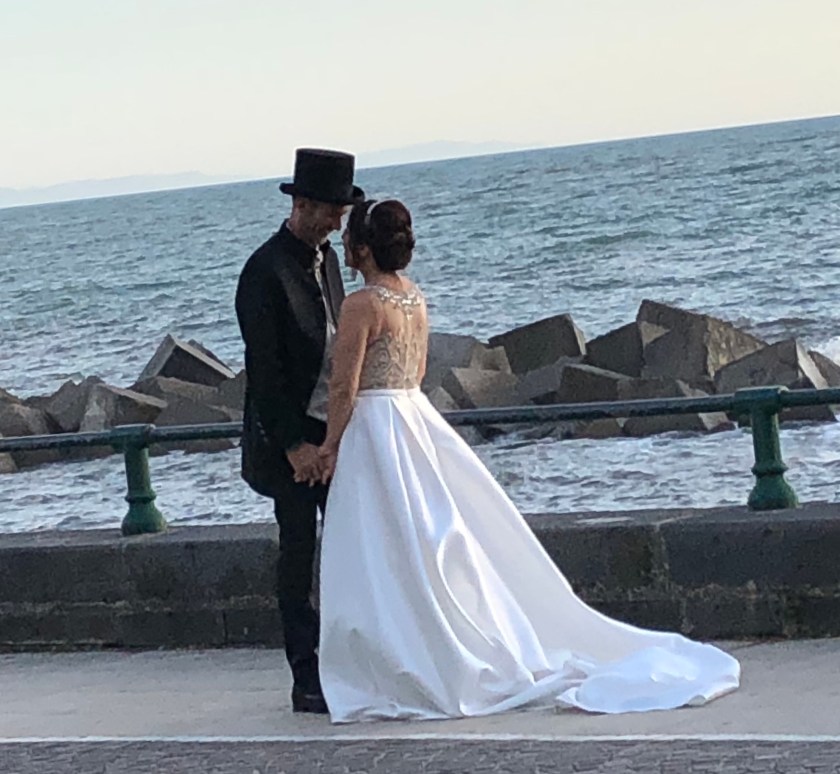
The cloud bank was quite evident and the waves were crashing on the beach, as the cold front approaches.
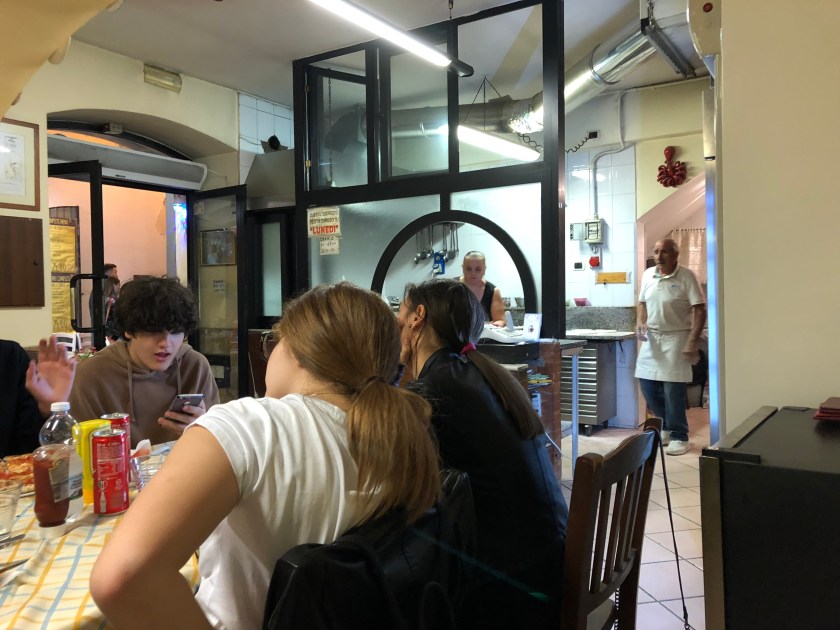
Dinner was an inexpensive pizza at L’Archetto, a tiny place run by an elderly couple (wife taking orders, serving food and making the French fries while the husband rolls out the dough and bakes the pizzas in a wood fired oven) – 8 euros for a Regina Margherita pizza and beer. 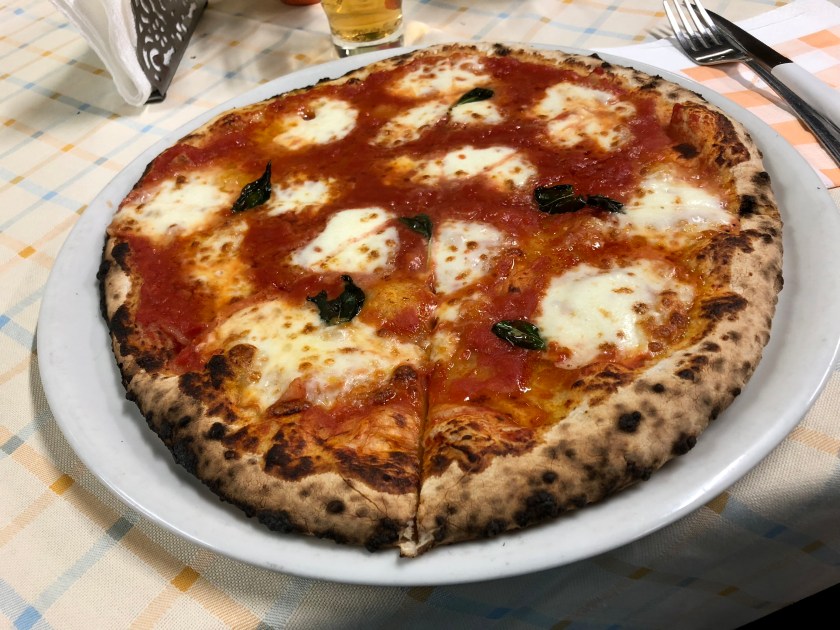
A final after dinner passeggiata along the Corso Vittorio Emanuele capped off the day.
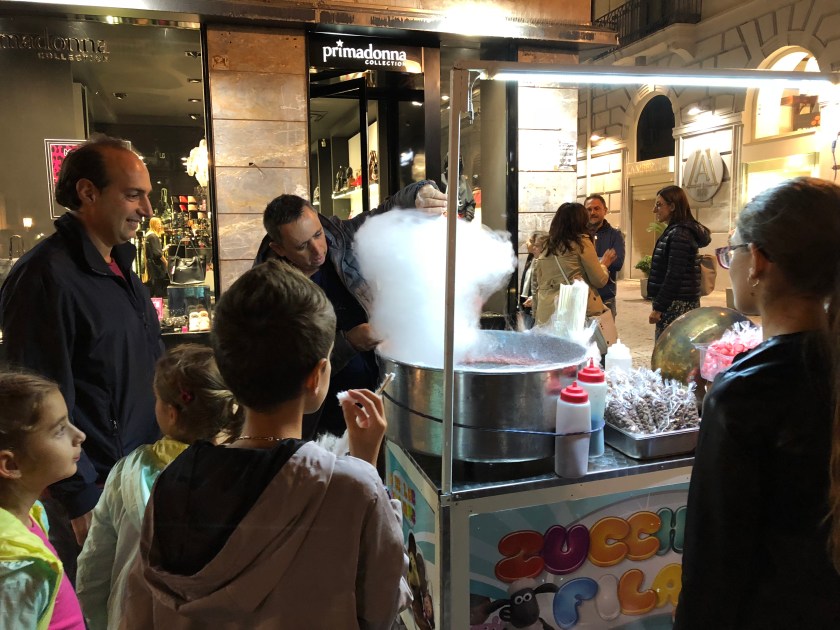
Photo above is Italian cotton candy.

 Camino Musings