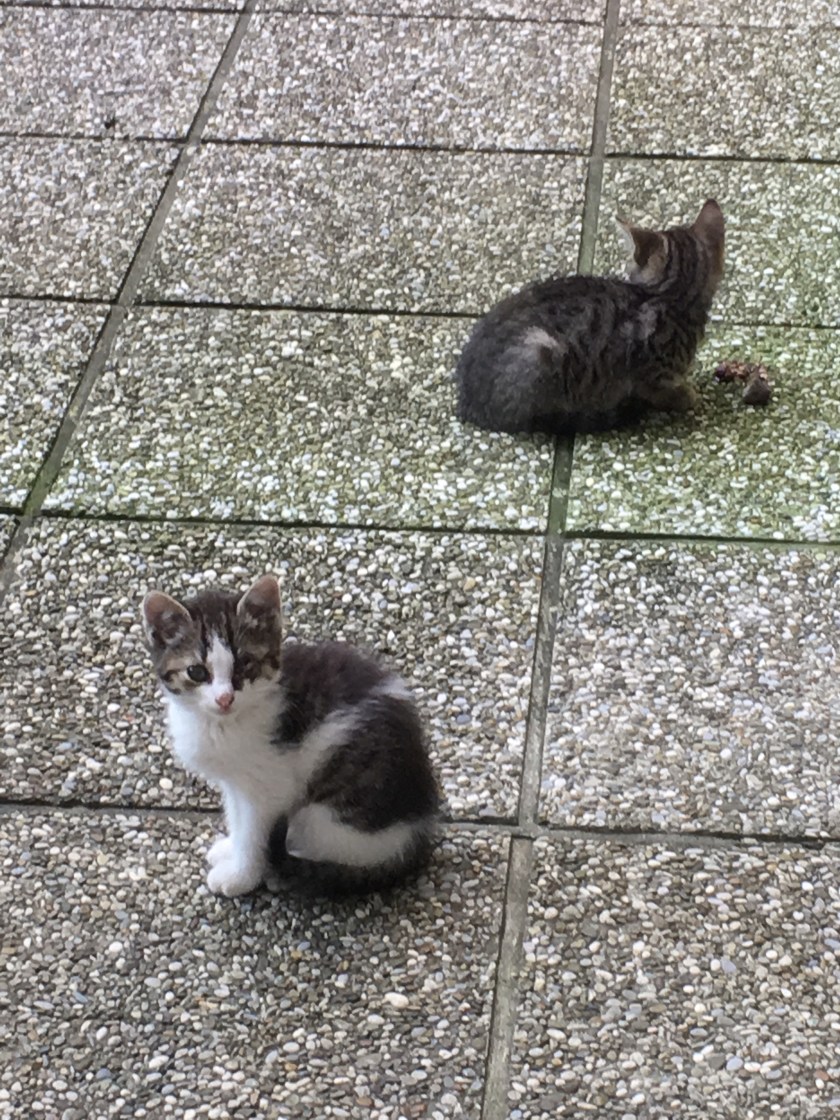
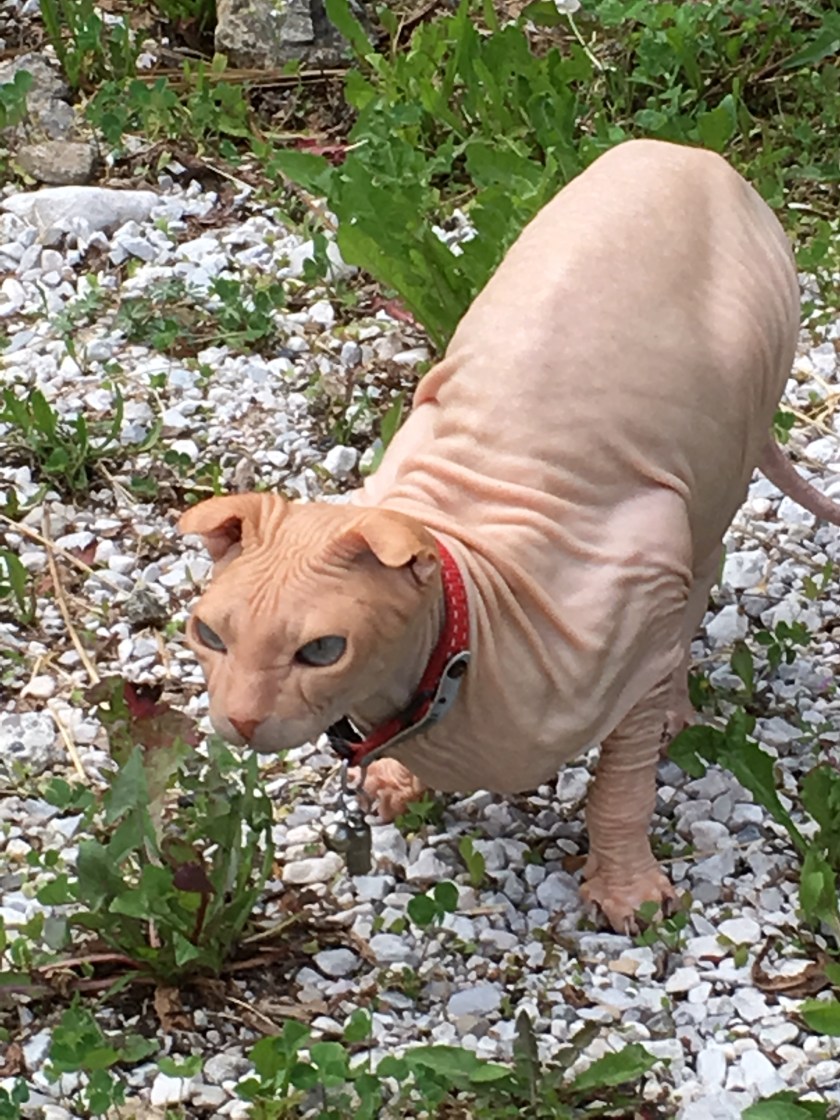
There are virtually no cats in Central/Eastern Europe….at least no feral cats. In Italy and especially Greece, you can’t walk ten feet (three meters) without encountering a feral (or pet) feline. They sun themselves on terraces, slink amongst ancient ruins, slither up to you while you are dining at an outdoor café hoping for a handout, snooze in the shade of shrubbery. But not in the Czech Republic, Poland, Slovakia, Hungary, Slovenia, Croatia or Austria! During the three weeks we traveled, I can count on one hand the total number of cats I spotted – three kittens at the Hotel Plitvice in Croatia and two adult kitties in Slovenia – a tortoise shell cat in Radovljica, and a weird 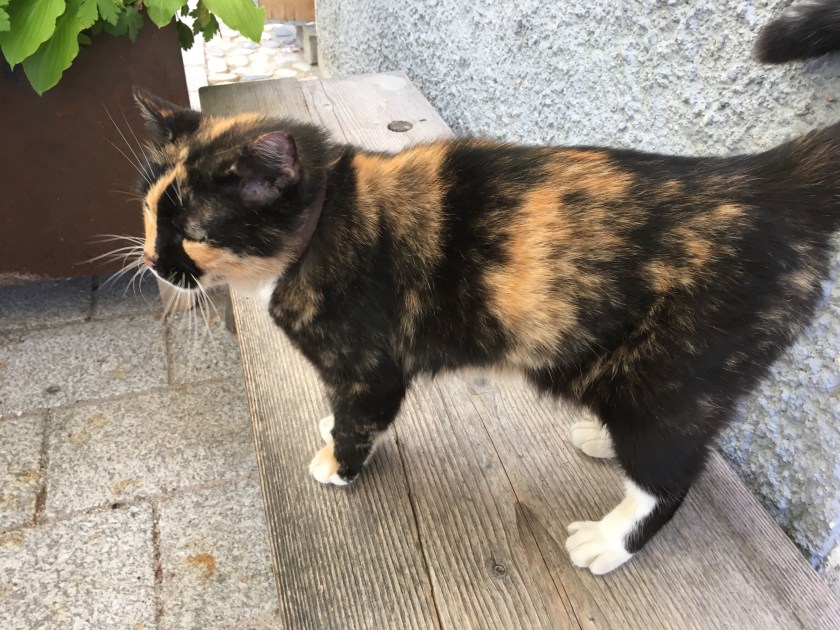
 hairless creature in Lake Bled.
  Maybe it’s the climate (too cold?), or the food (Mediterranean mice are tastier?), or the willingness of the human population to contribute to the kitty food supply (we witnessed many instances of elderly Greek women leaving a feast of kibble and leftovers on their doorsteps).
Why does a suitcase shrink as the vacation progresses? Or is it that dirty laundry is bigger/heavier than clean clothing?
The voltage converter (not plug adapter) is not necessary for a cell phone, iPad, Fitbit, battery charger or electric shaver. And the plug adapter for most of Europe is the two prong pin type. Then why do I continue to pack the bulky voltage converter apparatus with plug adapters for each of the seven continents?
When beer is cheaper than water (in Czech Republic, Poland), you end up drinking a hell of a lot of beer.
If your flight gets delayed for 15 minutes, then 30, then one hour, then two hours, the airline is easing you into the fact that they will cancel the flight. For an unspecified reason. Just because, I guess.
Public transportation is amazing in Europe. Trams, buses, subways negate the need for a personal vehicle (other than possibly a bicycle). And tickets are inexpensive and the subway tunnel walls are not covered in graffiti. And there isn’t very much graffiti in this part of Europe, anyway.
In the countries of the prior Communist bloc, no one checks (or it is rarely checked) to see if you actually have a ticket to ride on public transportation. On numerous tram and metro trips, we had tickets checked twice – both times in Budapest.
Despite the supposed love for Speedos by European men, at the public baths in Budapest, regular swim trunks were in mode. We saw only one Speedo, of course on an older gentleman, but the Speedo was hidden by the abdominal paunch, so he might have been naked for all we know! And Europeans are not so obsessed with body image at the baths or the pool or beach. There’s cellulite galore!
This blog has been fairly apolitical but since it is MY blog and I DO have some opinions, here goes! If you don’t agree, you can humor me or skip the next paragraph. But this is not a political discussion forum, so I am not engaging in any dialogue (i.e. Bots can stay away ’cause I ain’t taking the bait!).
In conversing with Europeans, when they discover that you are American, they will “feel you out” as to your political leanings. Trump supporters beware – he is not respected by most of the Europeans, at least the ones to which we spoke. Actually, he is considered to be a joke, albeit a quite dangerous one. His face was plastered all over the television news- the immigrant situation, separating children from parents at the border, the tariffs he put into effect on EU products- and the similarities between his agenda (nationalism, isolationism, suppression of the free press, “false news”) and his “tactics” are eerily similar to those used by Adolf Hitler and the Nazis during the 1930s. We witnessed the results of the fascist ideology at Auschwitz and Birkenau and in the Jewish ghettos of this part of Europe. We must be aware of our history, we must be educated ( considered as “elitist” to Trump), and we must be vigilant to not repeat the mistakes of the past.
All of the countries we visited still bear the emotional scars of World War II, fascism, and decades of Russian occupation. Although most of the physical damage caused by gunfire and bombing has been repaired and restored, the psyche needs longer to rebound from Communist oppression. Rumblings of rebellion against the occupiers started in 1956 in Hungary and in 1989 in Czechoslovakia, but it was not until the Velvet Revolution of 1989 and the immediate years following that the countries behind the Iron Curtain gained their independence from the USSR. Most of the Soviet statues have been relinquished to “memorial parks”, but many of the stark and austere Communist buildings remain as a reminder of a bygone era. Many of the people to whom we spoke recounted how their parents and grandparents were (and are still) affected by decades of fear and suspicion, living “schizophrenic” lives, voicing official party doctrine in public but real opinions at home. And the next door neighbor could turn you in to the authorities, if you weren’t careful! Although basic needs were provided. smuggling goods into the country was commonplace as luxury items ( like blue jeans and leather jackets and toilet paper) were not available.
Okay, now back to the frivolous content.
Australians can talk really loudly! Their exuberance manifests quite often in restaurants, with the other patrons “eavesdropping” on their conversations (but you’d have to be totally deaf not to do so!).
Asian tourists tend to travel in large groups, have selfie sticks permanently adhered to hands, and really like to shop (especially at high end designer stores).
American tourists can also be loud (though commonly not as loud as Australians), they consistently complain that they can’t get “good coffee”, and are not quite as addicted to selfie sticks.
Canadians are really polite🇨🇦. (Sorry, I couldn’t think of anything derogatory!)
Okay, now that I have insulted everyone except for Canadians (who aren’t too keen on Trump, either), I’ll continue on.
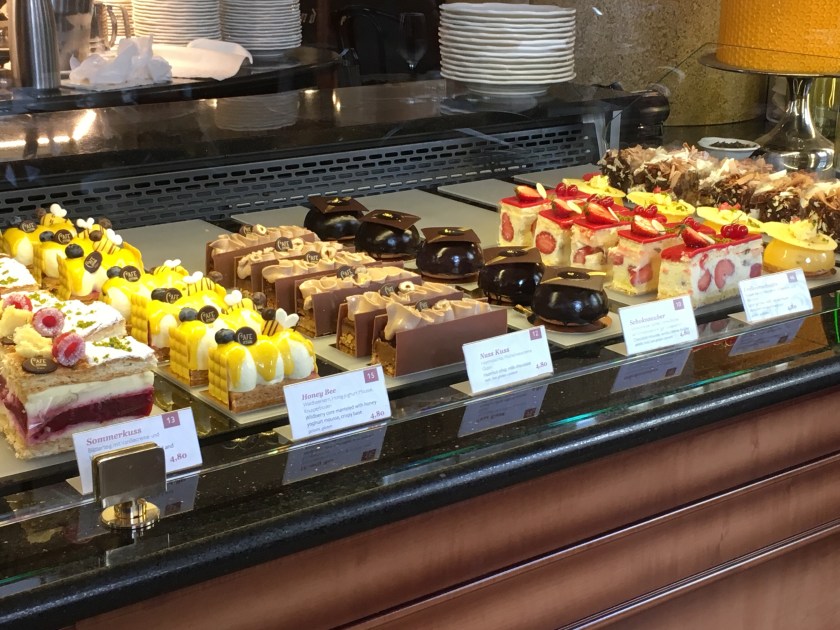
Fancy pastries always look better than they taste. The famous Sacher torte in Vienna, a must try according to guide books, is just a slightly dry piece of faintly chocolate tasting cake with a layer of apricot jam, covered in a glaze of dark chocolate. 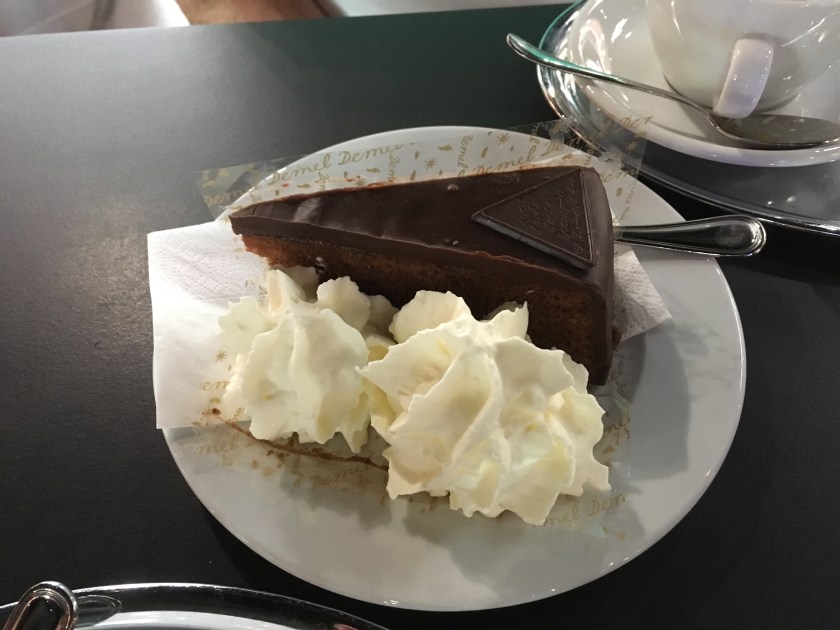 It’s the same for all those other froufrou desserts – meh!
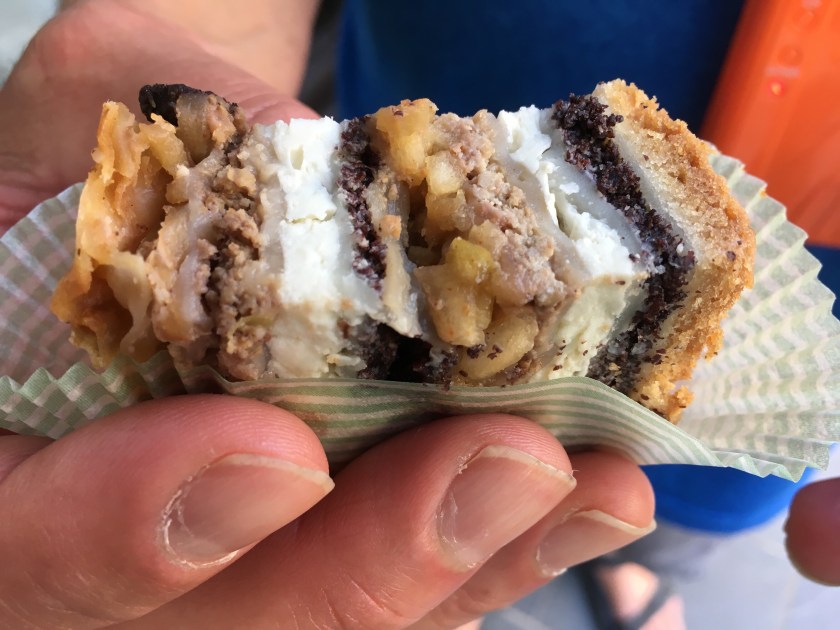
 Except for the strudels- apple, cherry, poppy seed, cheese- all delicious!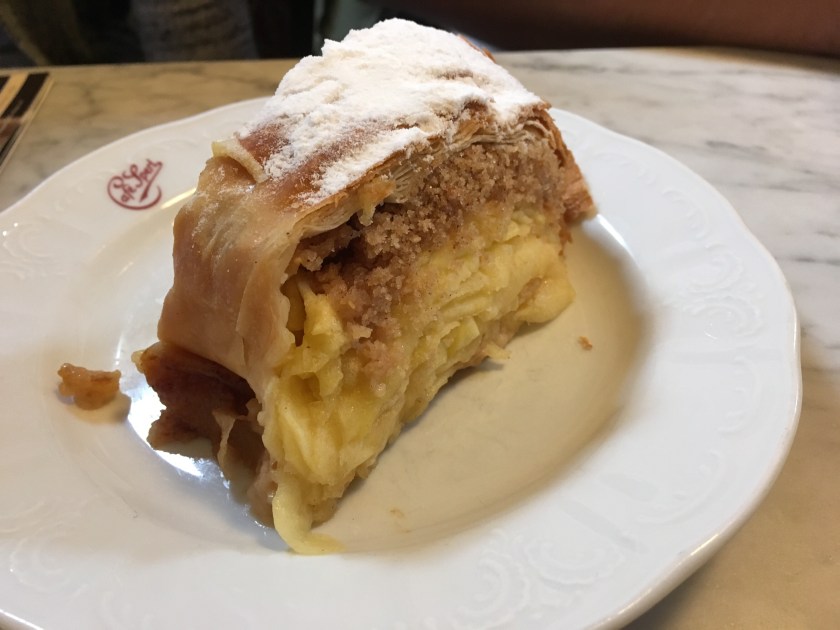
 Hungarian goulash in Hungary is not the goulash we think of in the States. It is a savory beef -based broth with chunks of potatoes and beef, flavored with paprika. It is not a beef stew over egg noodles! Also, goulash is different in the Czech Republic- it’s more like a meat with gravy instead of broth, but still no noodles.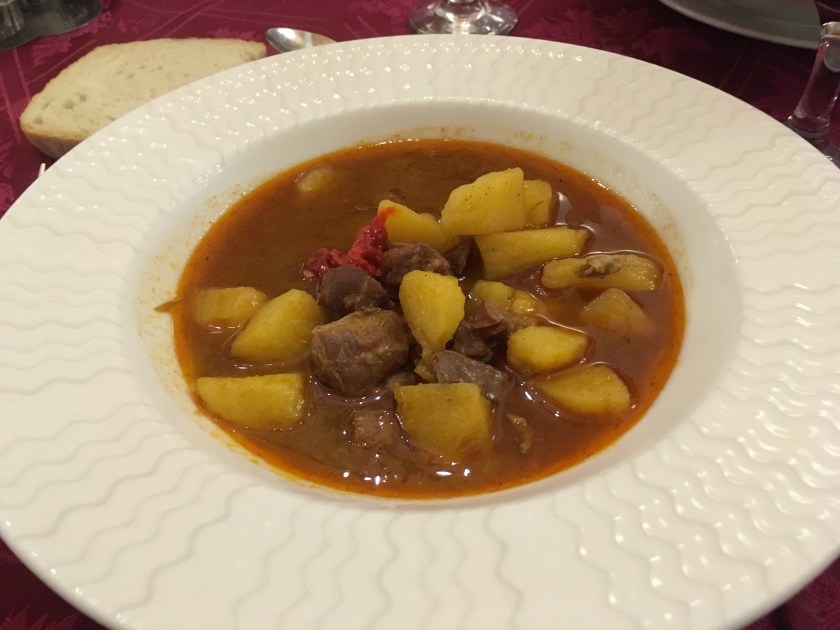
There are only two types of Hungarian paprika- sweet and hot – so forget about that smoked paprika stuff – if it’s smoked, it isn’t Hungarian.
It’s virtually impossible to be a vegetarian in this part of Europe – and a vegan, forget it! The cuisine is centered on meat, predominantly pork. 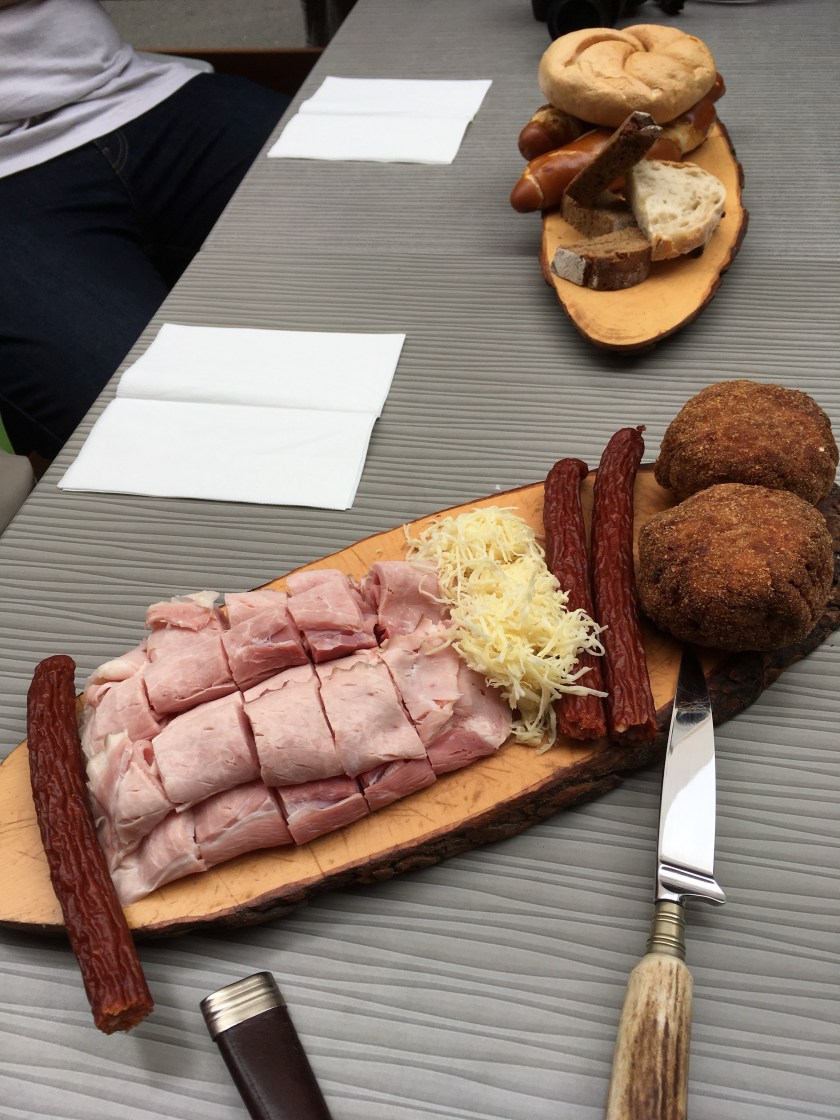 Sausages of all shapes and sizes, cured or smoked, served with mustard, shaved fresh horseradish, and/or pickled cabbage (AKA sauerkraut), on a roll or naked on a platter are ubiquitous.
  Pork cutlets, roasted pork, and pork ribs are also joined by variations of cooked beef- braised, boiled, pounded thin and fried as a cutlet
 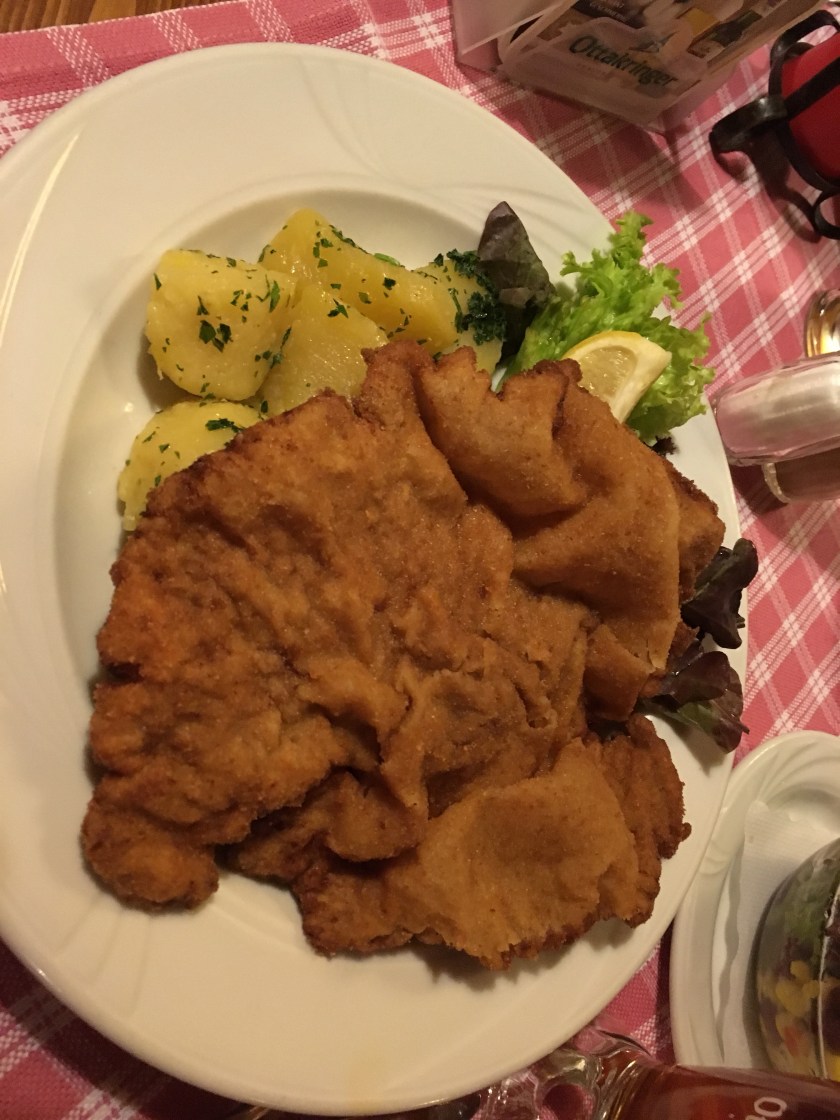 (Wiener schnitzel)- all served with potatoes (boiled, fried or as potato salad) and usually cabbage. Forget that low carb diet! When vegetables are listed as the accompaniment, it is frequently puréed into a gravy in which the meat will swim laps! Roasted duck is popular in Poland and the Czech Republic, also served with potatoes and cabbage. A Czech “dumpling” is not what we Americans consider a dumpling (a boiled doughy matzoh ball or gnocchi) but more like a boiled bread.
  It is made with flour, water, and yeast and is boiled in water or broth and it truly looks like boiled bread! A carrot or parsnip may rear its ugly head but there ain’t a drop of chlorophyll on that plate – nothing green for miles! A salad is composed of pickled cucumbers and cabbage with some kernels of corn thrown into a picking brine with perhaps a thin slice of tomato. Dairy products, like cheeses and yogurt, are also a significant part of the diet. Mushrooms, although a fungus, could be considered as a vegetable and are quite popular in Polish cuisine. But mushrooms aren’t green and they don’t have much fiber! Metamucil or laxatives must be big sellers! (Eastern Europeans tend not to be lactose intolerant, thank goodness!)
So, the food is brown or beige or variations thereof, in a nutshell (which would fit into the cuisine quite well as it is also brown).
But enough with the joking….the food is quite delicious, albeit heavy. It does “stick to your ribs” and hangs around the colon a bit longer than it should. The cuisine is a reflection of the climate (not conducive to warm weather veggies), the economic and political history ( basic, inexpensive, based on the agrarian lifestyle) and the need for calorie-rich nourishment. Unfortunately, tourists don’t expend a lot of calories, walking around looking at historical monuments instead of working out in the fields. So, the weight lost from all the dieting and exercise before going on vacation has been negated. Back to the gym tomorrow!
We had a great trip. But as Dorothy, in “The Wizard of Oz”, so astutely noted, “There’s no place like home.”

 Camino Musings