Ithaca, New York at the southern tip of Cayuga Lake in the Finger Lakes region is known for its waterfalls and gorges. Ergo the saying on those infamous green T-shirts, “Ithaca is Gorges”. Well, so is Plitvice, one of eight national parks in the interior mountainous region of Croatia.
After a restful sleep, we were up bright and early (again). Breakfast at 7, luggage on the bus at 8, a short walk to the shuttle bus stop, and we were off to the upper lake region of the park. 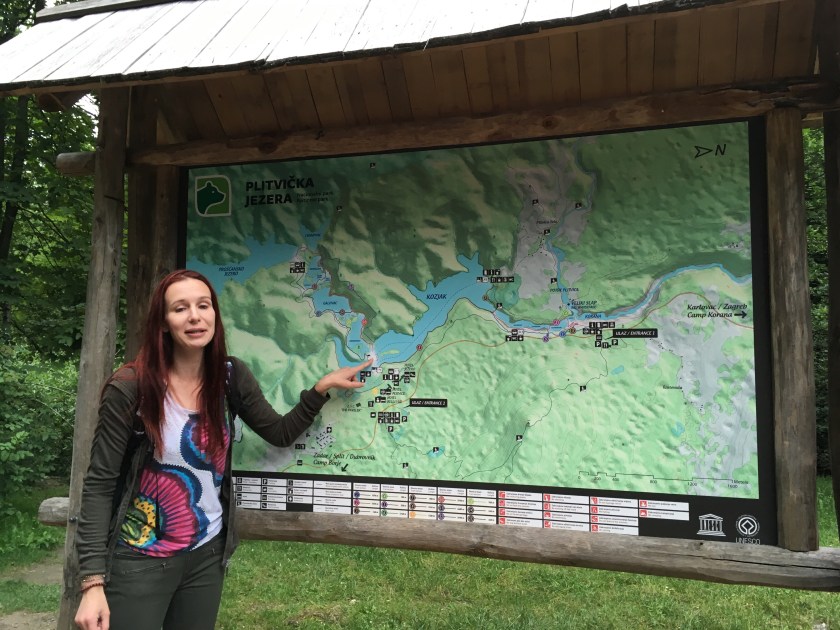 We were starting at the upper lake entrance so we would avoid (at least for the first half of the hike) the hordes of tourists who begin the trail at the lower entrance. It was cool, a bit humid, with threatening clouds but Katka assured us that, according to her very accurate Norwegian weather website, it would not rain.
The trail follows the shores of sixteen terraced lakes, with auxiliary trails branching off the main one. Small boats are available to transport visitors across the middle lake as a short cut. The major portion traverses wooded areas with many streams and waterfalls interspersed throughout. A good part of the trail is on a boardwalk, constructed of split logs, that goes over rushing streams and wetlands. Other parts of the trail resembled the Camino de Santiago in Galicia, Spain. It brought back memories of our 135-mile pilgrimage last summer from Ponferrada to Santiago de Compostela. As promised, we encountered few tourists on the first half of the five-mile hike. The landscape was stunning – reminiscent of the gorges of the Finger Lakes but on steroids. 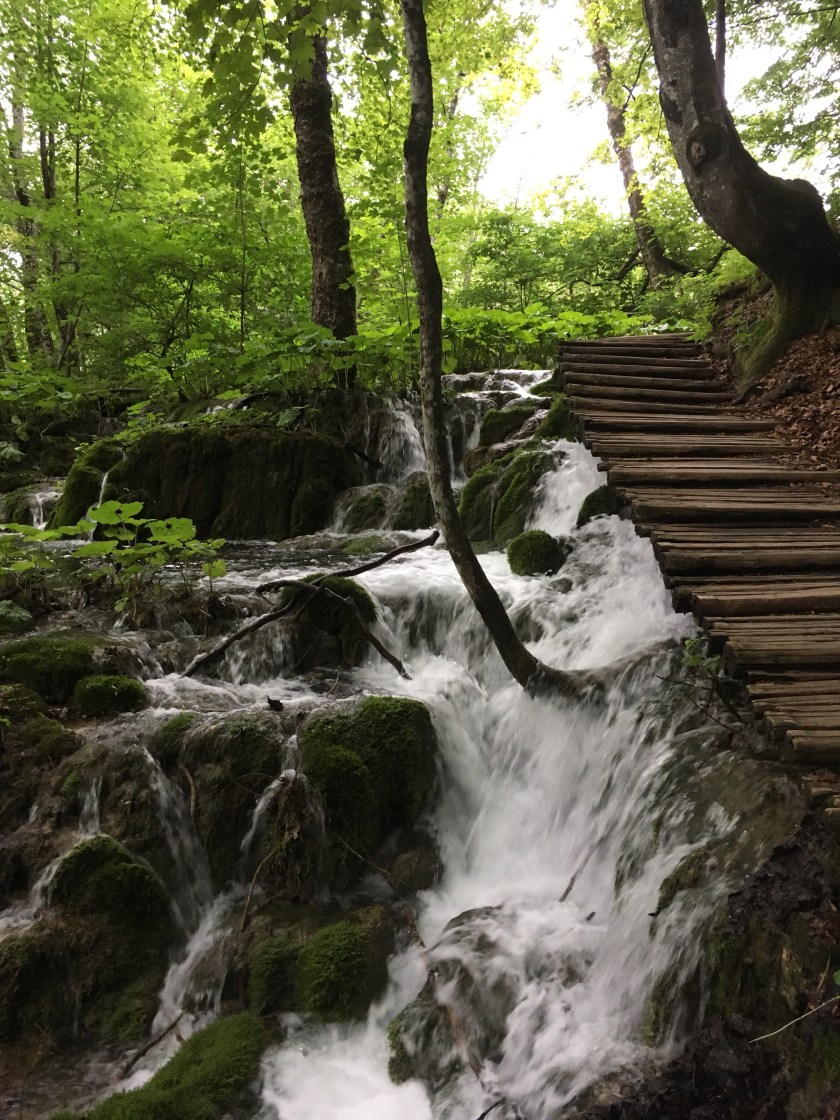
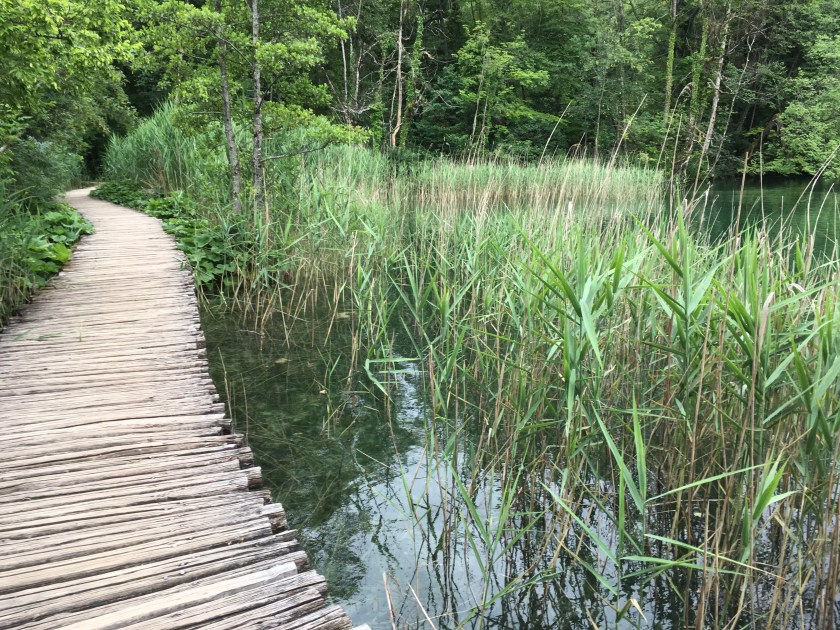
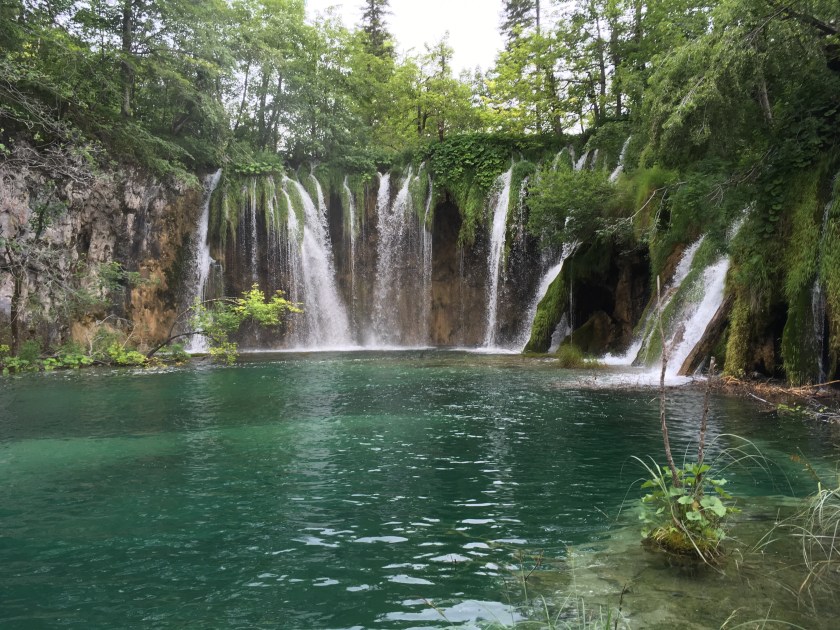
 About half way, at the large middle lake, we boarded a boat to the other side of the lake. One of our tour members got waylaid, and Katka went back to look for her as the rest of the group was instructed to continue onward to the entrance parking lot (our exit point) and to grab a quick lunch.
As soon as we got off the boat, the number of tourists grew exponentially. We were like salmon swimming upstream against the mob, assertively using our elbows to push through (I am exaggerating a bit; I’ve seen bigger crowds- like in the Sistine Chapel!) A steep set of switchbacks brought us to the entrance where we got in line at a refreshment hut – the choice was burger, cheeseburger, chicken burger, and Plitvice sausage (like a skinny kielbasa)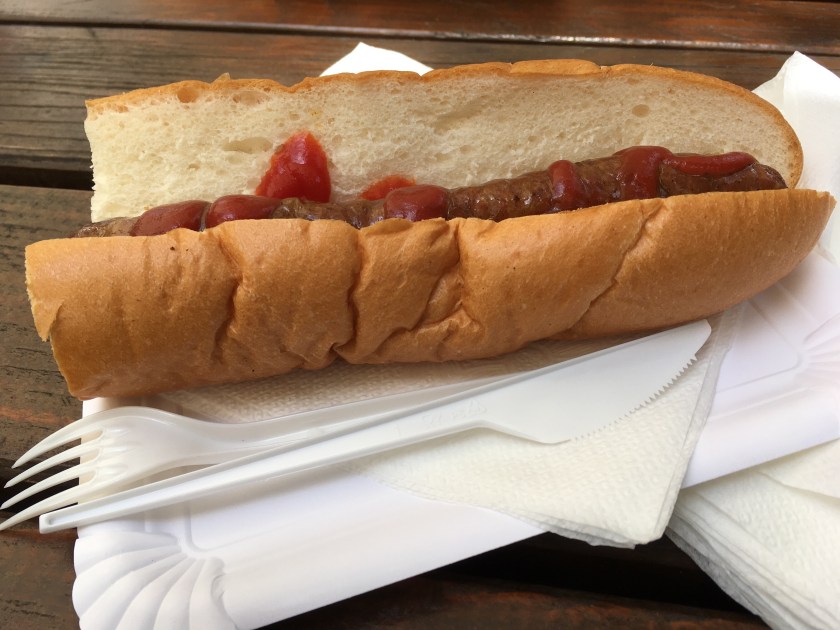 Coke, no Pepsi (shades of Saturday Night Live!), no fries – they ran out!
We all recongregated after lunch and were back on the bus at 12:45pm for the trip to Rovinj on the Istrian coast. We drove through the mountains on a serpentine local road with switchbacks, passing a village where Croats and Serbs once lived together in harmony. One can still see the remnants of the war in the 1990s – bullet holes in the buildings. 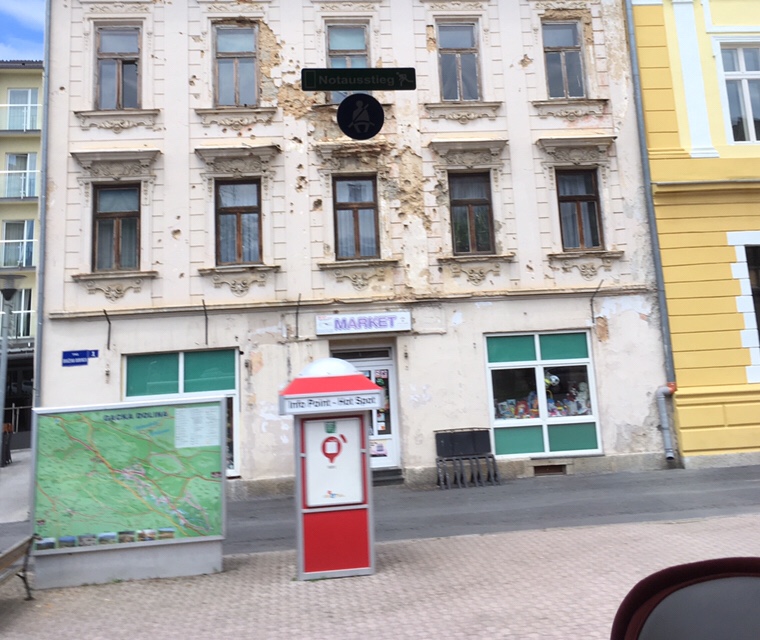 We passed through the Narik (spelling?) Alps, and as we passed over the crest, the Adriatic Sea came into view! After miles of switchbacks, Peter, our bus driver, maneuvered the bus safely down to sea level.
The rest stop was in Senj – this town was bombarded in 1943 by the Luftwaffe, killing most of the population. This is a fishing village on the Adriatic, a remnant of 15th century fortress wall still remains. We had a refreshing beer in a seaside café. 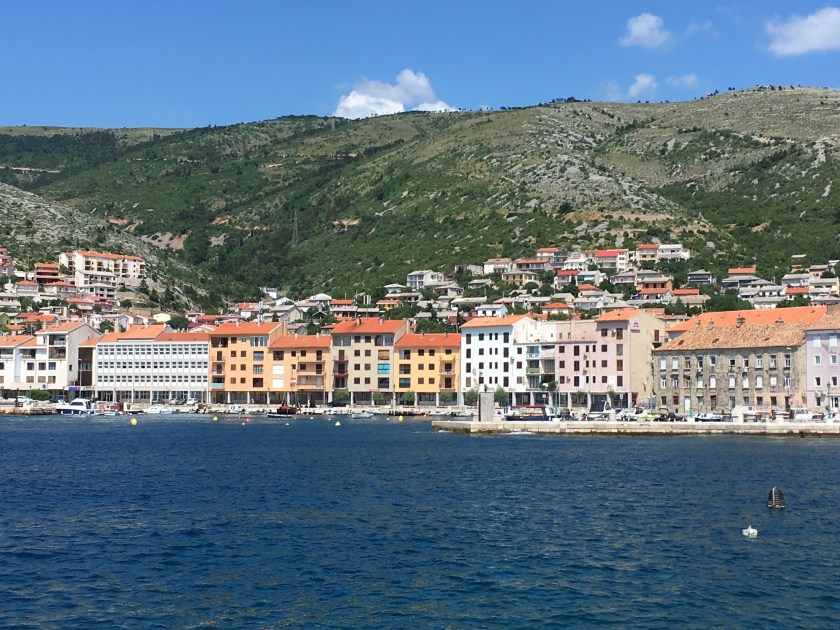 Interestingly, there are Tesla charging stations in the seaside parking lot (he was a Serbian Croatian). Leaving town, we followed the coast road to Rovinj.
After the rest stop it was time for our history lesson. Tito’s real name was Josef Broz. His mother was Serbian, father Croatian. He was a Bolshevist, joined the Communist party in 1920. He had many jobs after WW1, and eventually became a professional revolutionary. He had a relationship with Russians giving him more freedom to rule Yugoslavia. He granted autonomy to the different provinces. There was a liberal travel policy, unlike in the rest of Communist Europe. He died in 1980 of gangrene.
We drove along the Adriatic coast a while before heading into the peninsula on our way to Rovinj. We arrived in town just in time for the ferry to Katarina Island, the location of our hotel. This resort hotel has two salt water pools, a private beach, beachside grill, poolside bar, full service restaurant and activities like yoga, water aerobics, archery, riflery, and salsa dancing. All of our rooms have balconies. The rooms are a bit spartan, with a double bed and a set of bunk beds ( rooms are meant for families), but we have a lovely view of the Adriatic. 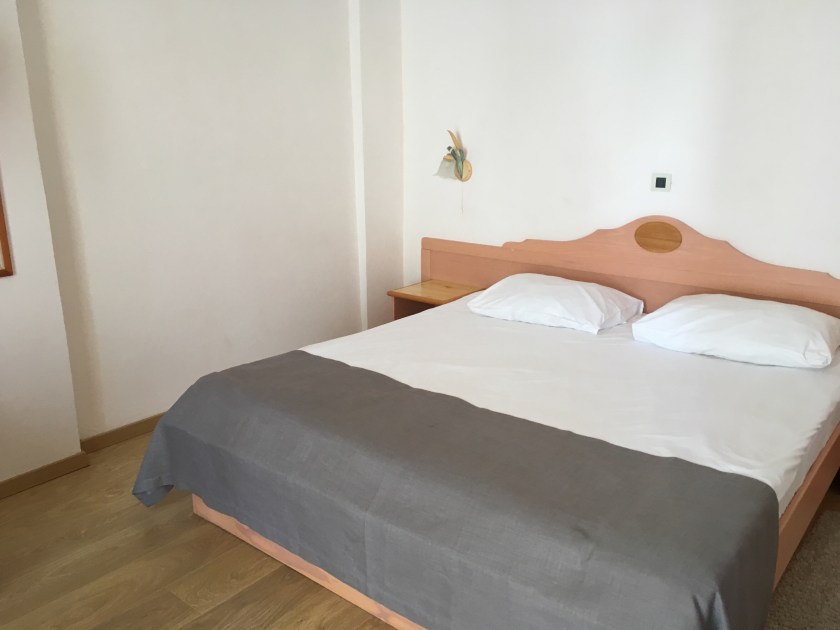
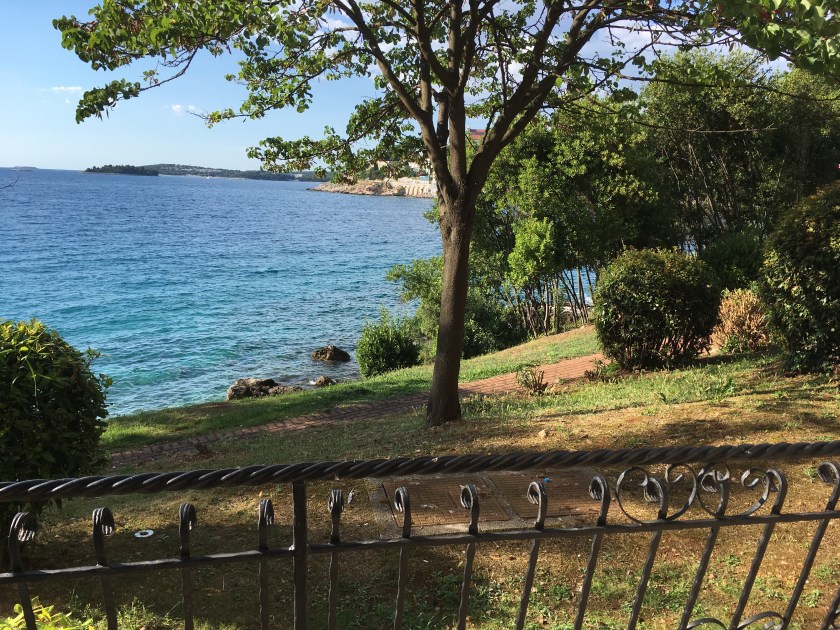
 This is a resort town with a decidedly Italian feel. In fact at one time it was under Italian (Venetian) rule. Olive trees are prevalent and the area is known for black truffles. The ferry between the mainland and the island leaves every hour (top of the hour from the island, at half past the hour from the town, although the Italian dolce vita attitude prevails and schedules are not strictly adhered to .
  We met for a delicious seafood- themed dinner (appetizer with grilled zucchini, anchovies, pickled fish, a primo piatto of seafood risotto, a fish filet with truffle cream sauce and grilled veggies and lemon sorbet for dessert) at Mastaral. Our dinner companions, Chris, Angela, Becky, Ruth, Abby, JoAnn, Sarah, and Katka , and several glasses of the local white wine (Malvasia) made for a wonderful and entertaining evening. We took the 9:30 pm ferry back to the hotel.
 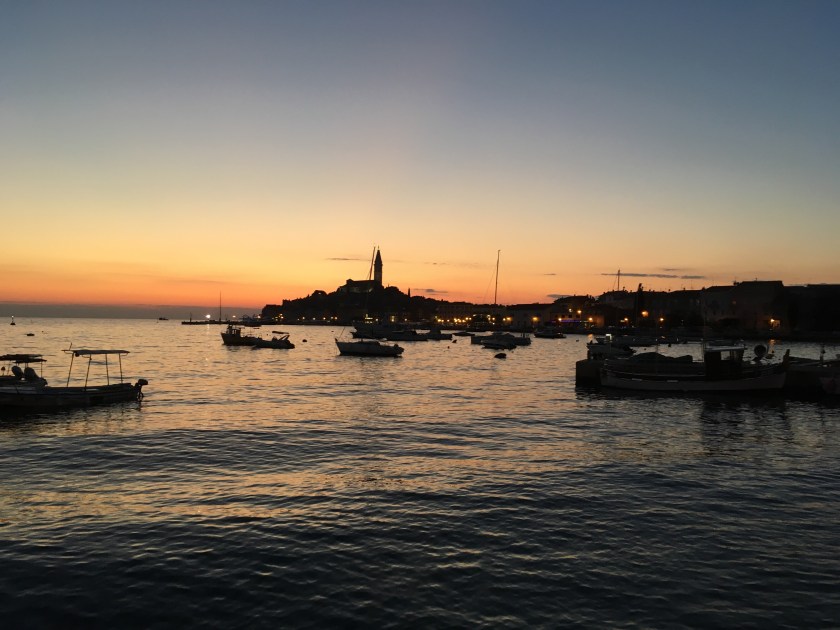 Tomorrow will be a totally free day- a vacation from our vacation- and I think that some beach/pool time is on the agenda!

 Camino Musings