After three nights in Budapest, we are back on the bus on the way to Croatia. The road out of Budapest is a major highway, with its requisite traffic backups. KFC and Burger King seem to be ubiquitous in the rest stops. The highway passes through wheat and corn fields, interrupted by the fields of blazing yellow sunflowers. Small towns are scattered along the route, the red tile roofs standing out from the verdant countryside.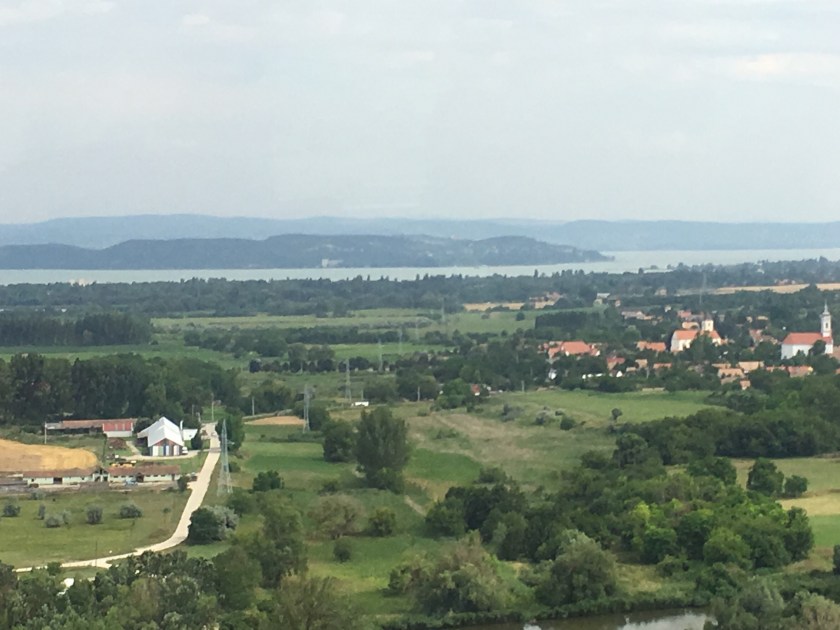
We passed Balaton Lake, 45 miles long, not very far from Budapest. Although the lake is substantial in size, it is quite shallow. There are now resort hotels along the shores, whereas camping tents were the preferred type of accommodation during Communist era.
Our first rest stop was at a gas station, but it was, shall we say a bit “upscale” when compared to the American version of a service station. There was a small herb garden outside, an adult “playground” for stretching stiff muscles, a “mini-mart” with the usual, albeit Hungarian, selection of drinks, candy, and other junk food, and a mini- café with an espresso machine for coffee drinks, selection of pastries and panino- style sandwiches. 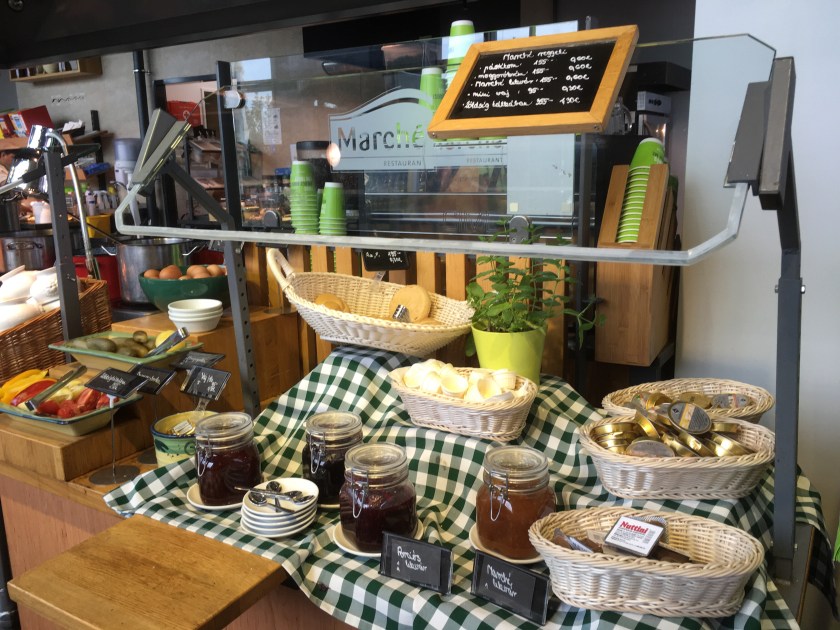
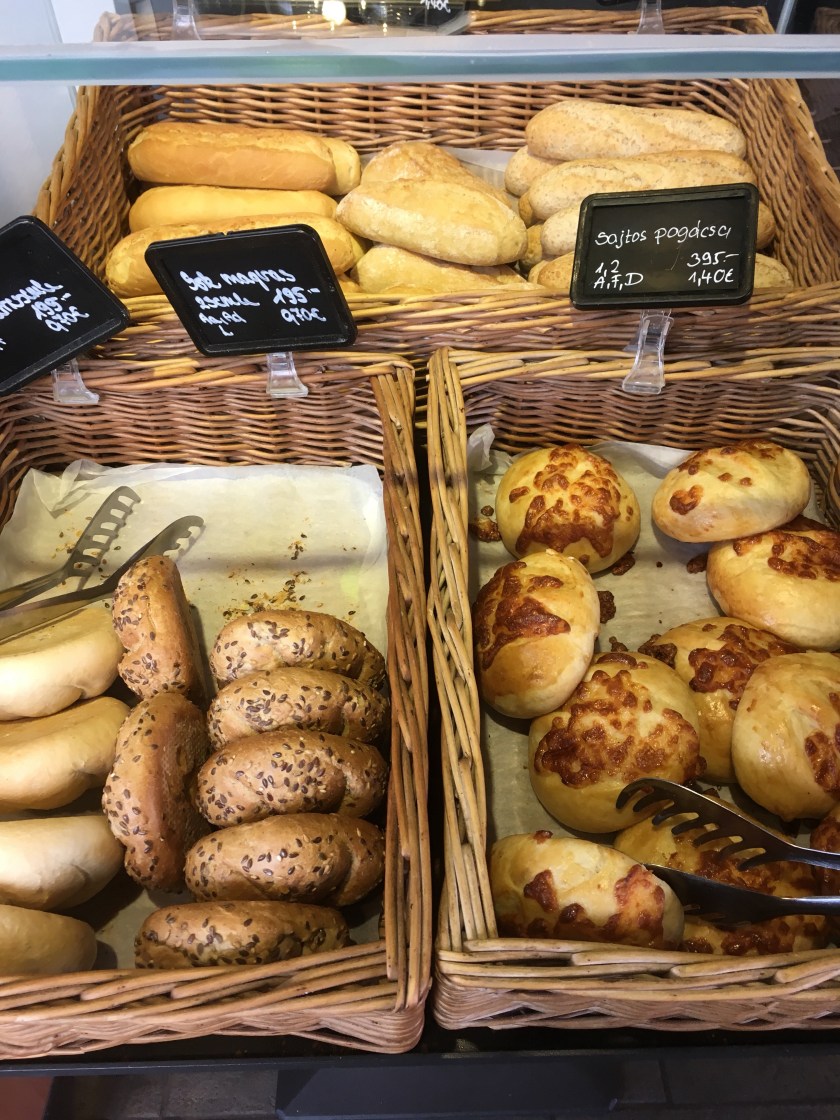 Encouraged to use up our Hungarian currency, especially the coins, we went on a shopping spree, purchasing chocolate, candy bars, nuts- the stuff I never buy at gas stations at home. The cappuccinos weren’t bad. And we used up some forints in addition to the 100 forint receipt/coupon from using the WC.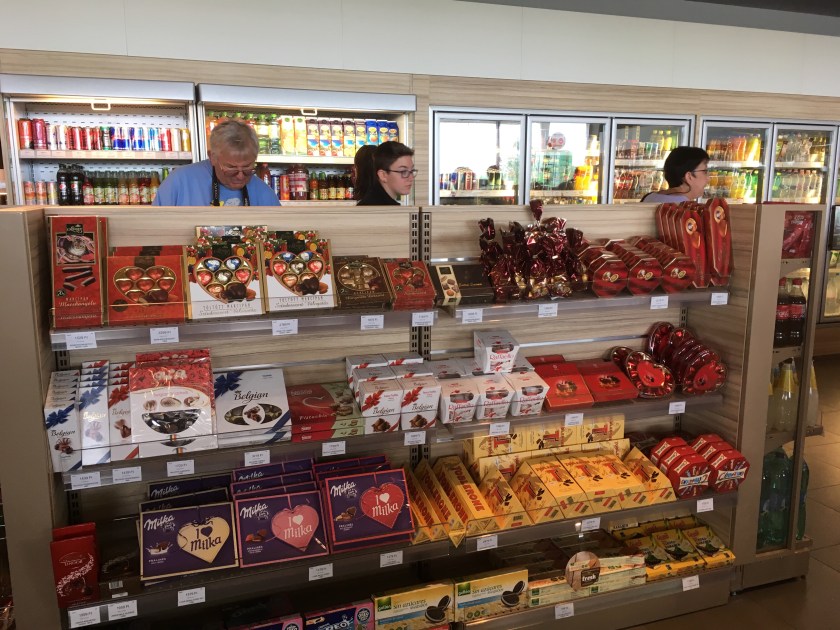
En route, Katka explained aspects of culture and daily life. Czech Republic has the best maternity benefits, up to three years of leave. There is mandatory stay of three days for uncomplicated births in state operated hospitals. If the husband/partner has the lower paying job, they can stay at home. The parent receives a government subsidy of $300/month. Flexible work hours and job security are offered. State-owned preschools begin at age 3. Of course there are private schools available but they can be quite expensive. There is still a large middle class, still a remnant of the Communist era.
Medical care recently changed in Czech Republic and Hungary in that citizens had to pay for the visit to a general practitioner – a whopping $1.50! There was public outcry and there are now exemptions for children and the elderly. For fathers/partners who want to be present during childbirth, there is a charge of $20. A private room in State-operated hospitals is $20/night. Emergency visits cost $4.50. Of course, there are private clinics and hospitals, but the cost differential is not that great between private and public institutions. A knee replacement with rehab is free in public hospitals but costs $2000 in private clinics. The proviso is that you might need to wait six months to a year in a public setting. Senior citizens bear the brunt because pensions average $700/month as pensions are based on prior salaries (and under Communism salaries were quite low). There is no significant difference in quality of care between private and public sectors. Medications are partially paid by the patent. Average physician salary is $1600/month. Social security is 6.5%, 4.5% for health care and 15% for taxes. Net pay is about $1000/month, which is quite comfortable for most.
Rents can be quite high in city centers ($1000/month). Government subsidized loans with 1% interest occurred prior to the financial crisis of 2008. Renting has become more common since then. Of course, living in the city centers is prohibitive for the average citizen. The VAT is always included for every purchase, with this tax automatically added into the price. Unemployment benefits are based on age. Under age 50, one receives 65% of most recent salary, up to five months. Retirement age is generally 65 with deduction of two years per child. Homelessness is not as widespread as in the USA, especially of those with mental illness (clinics and hospitals are readily available) or drug abuse. They tend to beg for money with head’s down. The elderly tend to stay in an extended family living arrangement. We in the USA exist in very isolated and lonely lives in comparison to our European friends. Perhaps because of work obligations or personal choice, families are split, with grandparents and even siblings living hundreds or even thousands of miles apart. This lack of connection to our families- our roots- make us a very disjointed society. Interestingly, opioid addiction is not a problem in Eastern Europe. Perhaps this lack of connection to other people, the absence of a sense of community and deep loneliness makes our society more vulnerable to the dangers of drugs.
The impact of communism varied from country to country, with a much better life in Hungary than in Czech Republic and Poland. Many factors contribute to this, primarily related to the relationship of the country to Russia. The conversion to the Euro has been blocked in the countries in Eastern Europe, except for Slovenia. The next date for the possible change is the year 2020. One of the problems is related to inflation as prices tend to rise with conversion to the Euro. Like the choice relating to the use of the Euro, a country can decide to join the Schengen zone. This makes border crossing quite easy, not requiring passports to cross borders.
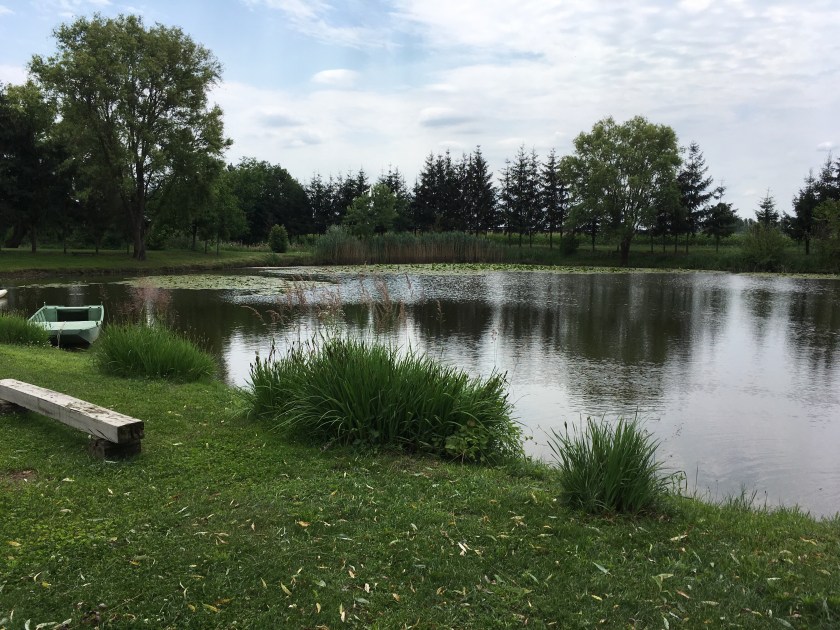
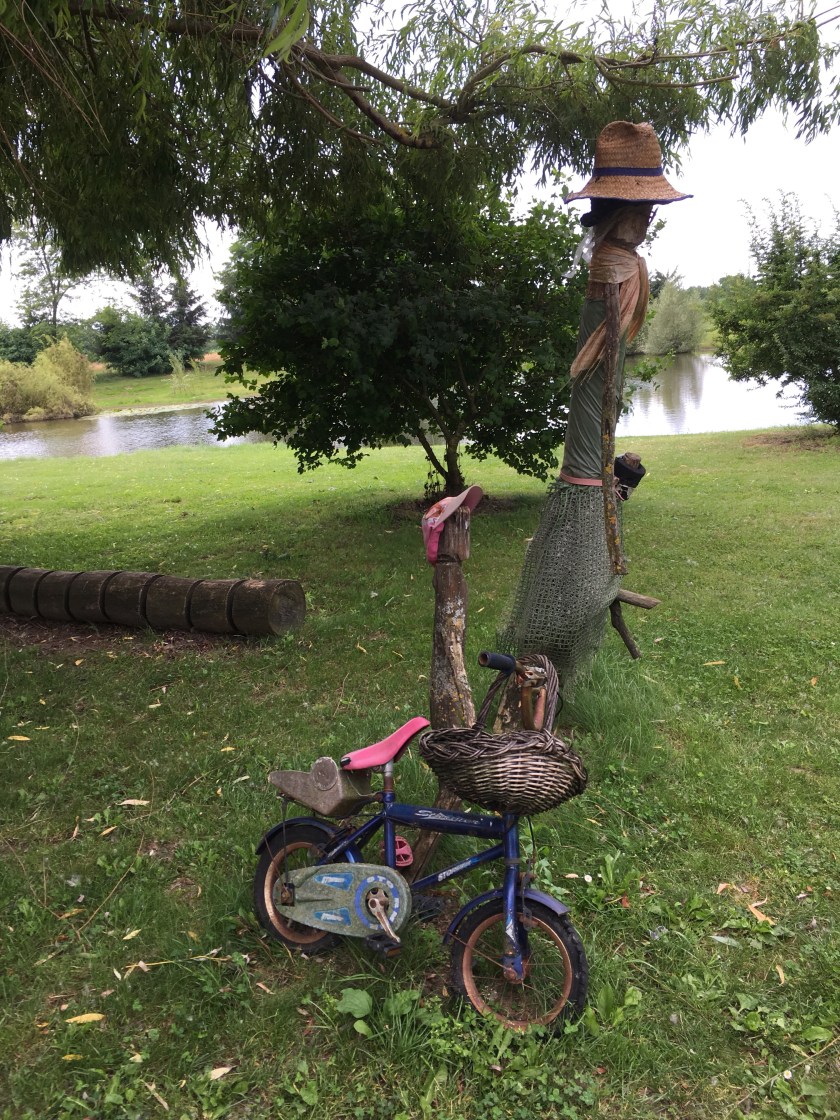
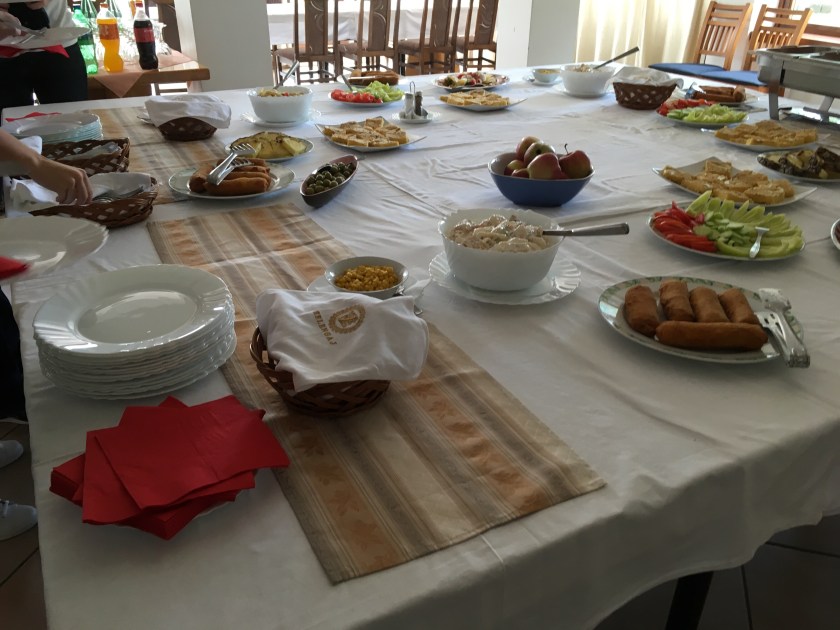
After a hearty lunch ( selection of meats, fried crepe and meat roll ups that look like egg rolls, pasta salads, chicken, spinach “burgers”, and a crumbly cornbread-like slightly sweet dessert, and I almost forgot….LARD!) at Restaurant Zelengaj, just over the Croatia border, nestled in a rural area off the highway. The peaceful setting was graced by a pond, some funky sculptures and lovely flower beds.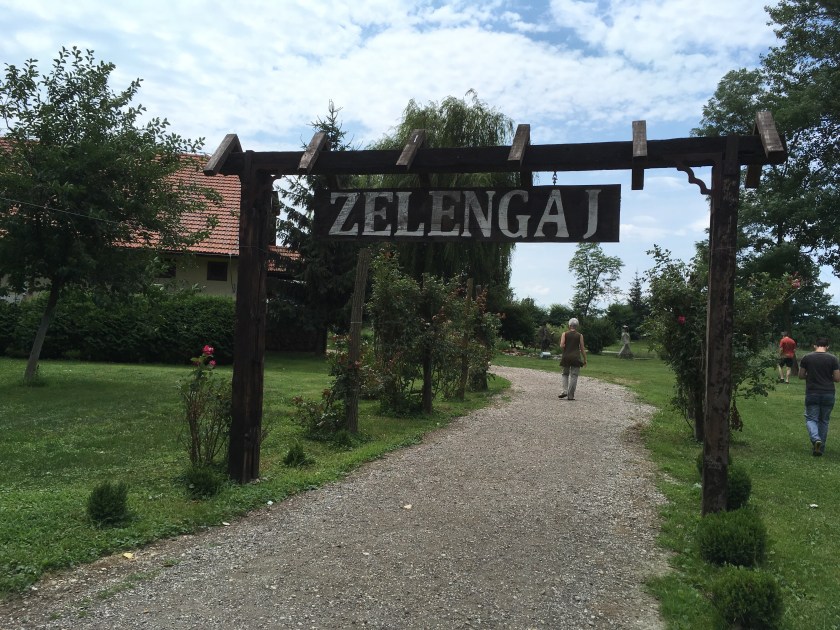
FYI, I tried a little of the lard on a slice of bread – it didn’t have much of a flavor.
There was one more rest stop in Croatia, of course, another gas station. This one wasn’t quite as elegant as the last, but it did have an ATM. 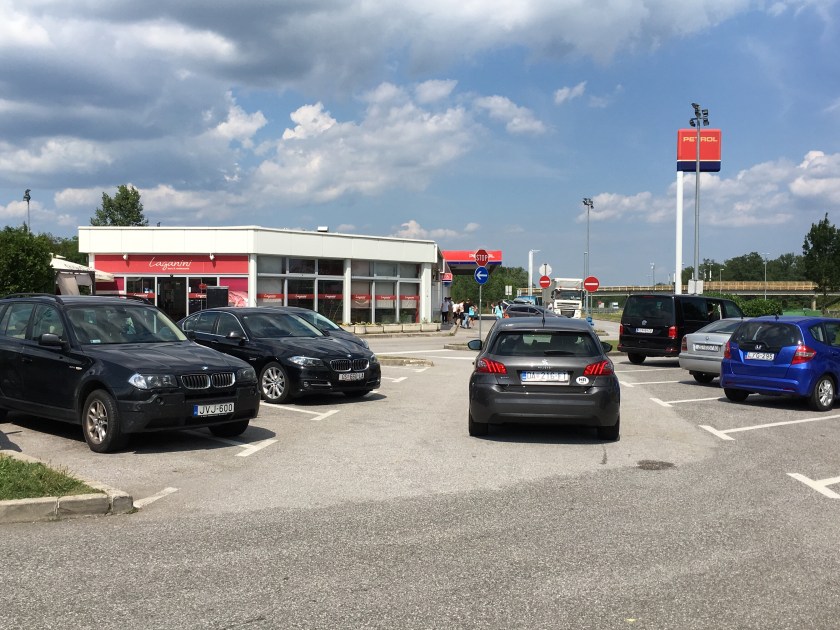
Croatia is one of the newest members of the EU, and is not yet part of the Schengen zone. There are 3600 miles of beaches and more than 1000 islands. However, we are riding through the interior of the country today, passing farms and wooded areas on the way to Plitvice National Park. The population of Croatia 4.5 million, mostly Roman Catholic. Mean GDP is $24,100. Croatia was part of the former Yugoslavia. The country has been under Venetian, Hungarian, Ottoman, and Austria-Hungary rule. The nation of Yugoslavia was formed in 1918. Communism was a different “animal” under Tito, who had a cordial relationship with the USSR. With the death of Tito, it broke up into separate countries, divided by religious and cultural backgrounds. The political tensions ignited the war in 1990. The ravages of war can still be seen (bullet holes, bombed buildings). A 21-year- old soldier was the first killed in the war, with the body found in the Plitvice National Park.
As we approach our destination, the landscape changes from farmland to forest. Waterfalls and gorges with homes straddling the river suddenly appear as we ascend up into the mountains. Views of waterfalls continued to appear along the route to the hotel.
Our home for the night is the Hotel Plitvice, built during the Communist era 1980s, but was recently renovated. It is located in the park, amid the forest. Our room is massive with a minimalist decor. And the bathroom has a bidet, the first we’ve seen on this trip. 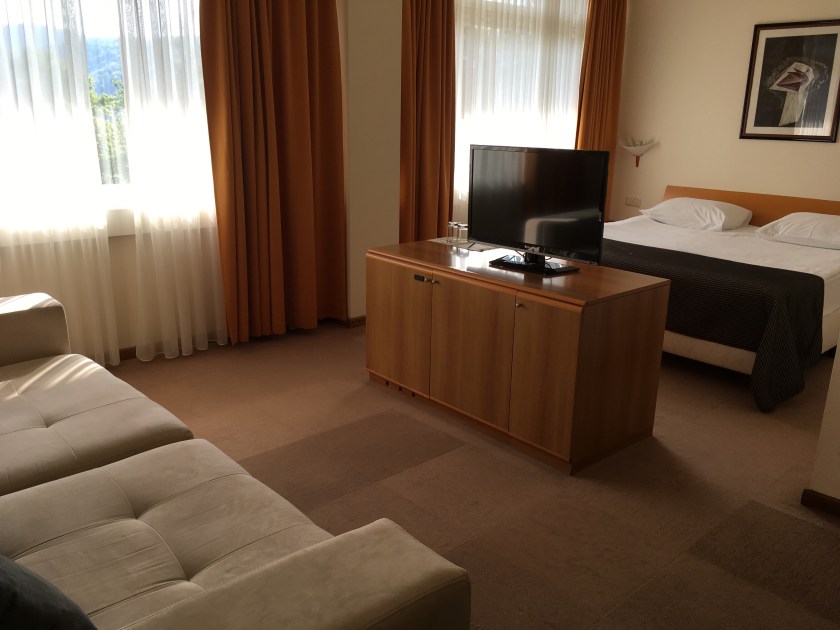 Tonight we are having a happy hour prior to dinner. The agenda for tomorrow is a hike to see the waterfalls and lakes. It will be a welcome respite from the bustling cities of the first half of the trip. Stay tuned for the photos tomorrow!

 Camino Musings