As mentioned in the last post, the city of Budapest is divided by the Danube River; Buda is the hilly portion on the west side and Pest is located on the flats of the east. The city center is located in Pest – that’s where the action is – restaurants, shopping, museums, the government offices.
After a hearty breakfast in the hotel ( scrambled and fried eggs, weird looking “bacon” that looked like chipped ham, funky little wiener sausages, baked beans for all those British tourists, and the usual sliced meat and cheese selection, mini- croissants, yogurt, and watermelon), we met our local guide Monika in the hotel lobby. We headed out, following her red polka dot umbrella. She pointed out the Hungarian version of the Statue of Liberty, a Communist statue celebrating the defeat of the Germans in WW2, high up on the hill in the Buda section across the river. Unlike most of the other statues erected in the Communist era which were taken down and relocated out of town (in Monument Park), this particular statue remains but the wording on it slightly altered to focus more on Hungary and less on the Communists. 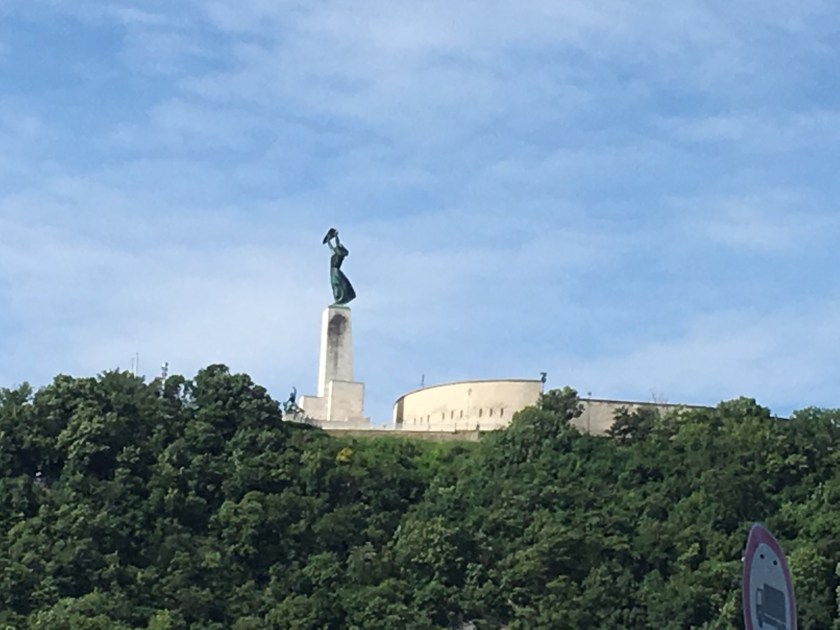 She also explained the early history of the country with the Magyars from Central Asia settling in the area in the year 896 and the eventual conversion of the country to Christianity in 1000 A.D. with the deal made between King István (Steven) and the pope. (So much for the separation of Church and State!!!😉) One of the pope’s archbishops was diverted from his pilgrimage to Jerusalem to assist Istvan. When Istvan died, Archbishop Gellart met an untimely end as he was placed in a barrel, long nails driven in, and the barrel rolled down the tall hill of Buda. Ouch!!!! Another important date is October 23, 1956, the date Hungarian students staged an uprising against the Communist regime. They marched to City Park, tore down the Stalin statue, and the following day Soviet troops descended upon the city. In the area near the Parliament, Hungarian and Soviet soldiers opened fire, killing at least 72 and injuring hundred. Bullet hole can still be seen on the second and third floor levels of buildings as the soldiers also targeted the innocent inhabitants of the buildings. The uprising lasted for another week and 2500 Hungarians were killed, 20,000 injured. It was not until the Velvet Revolution in 1989 that Hungary, along with the other countries behind the Iron Curtain, became independent from Russian control.
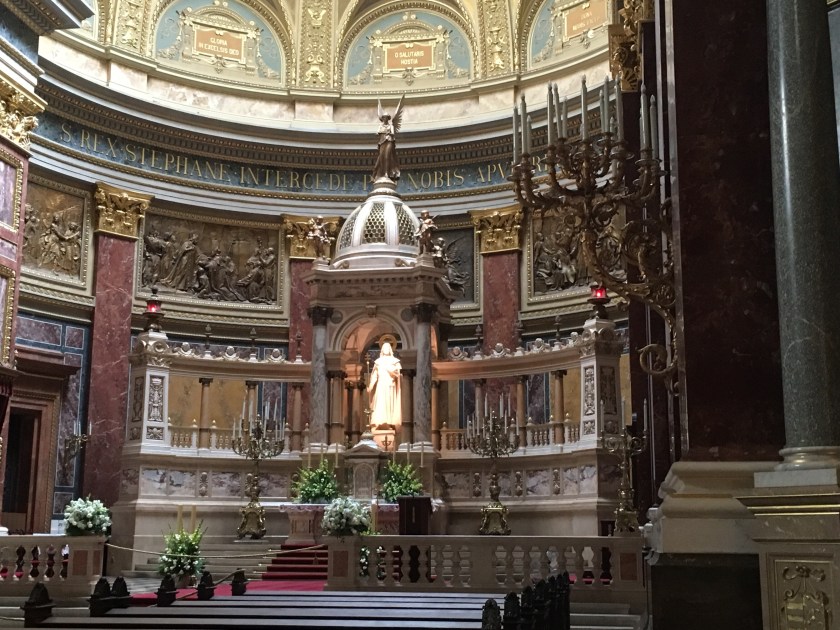
St. Istvan’s Cathedral, the second largest church in Hungary. It was built to celebrate the city’s survival after a flood with 50 types of marble, completed in 1868, and the dome promptly collapsed, and the architect died one week prior. It was eventually completed in 1906. 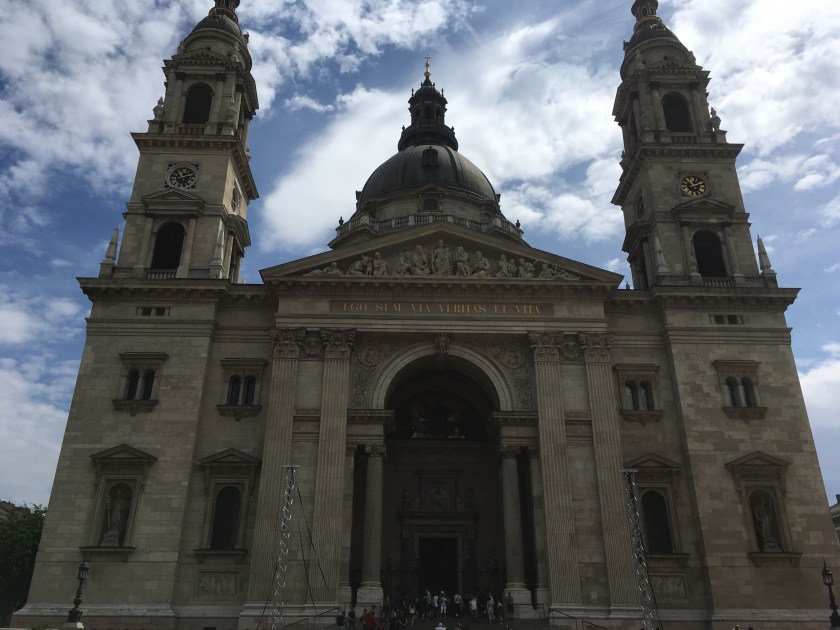 The altar features St. Istvan, rather than Jesus.
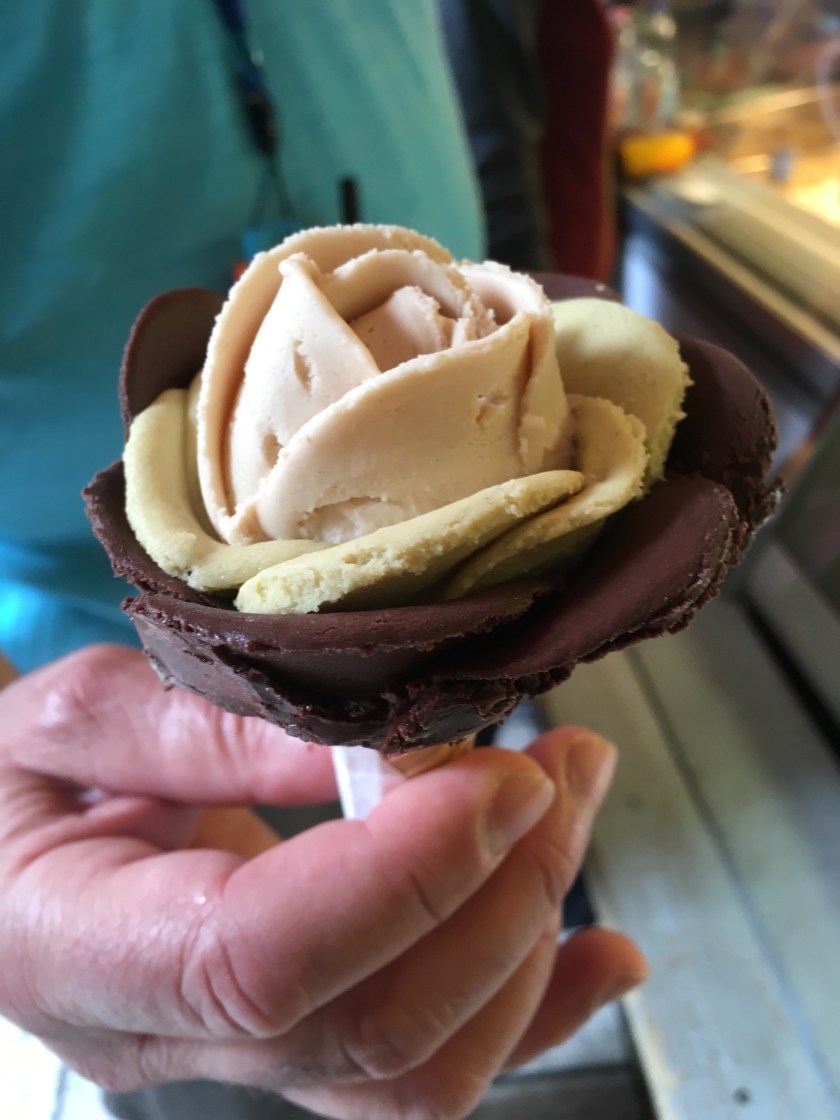
  A brief break for coffee ( or for some of us some artfully created gelato cones)
  before proceeding to one of the main squares where a controversial monument to the Hungarians who died in WW2 was described. The monument to lives lost depicts an eagle (representing Germany) trying to suppress an angel (representing a Catholic Hungary), entirely ignoring the loss of Jewish, Roma, and other individuals. This elicited an angry response by the local population, with an unofficial remembrance consisting of notes, mementos and other symbols that commemorate lives list in the Holocaust.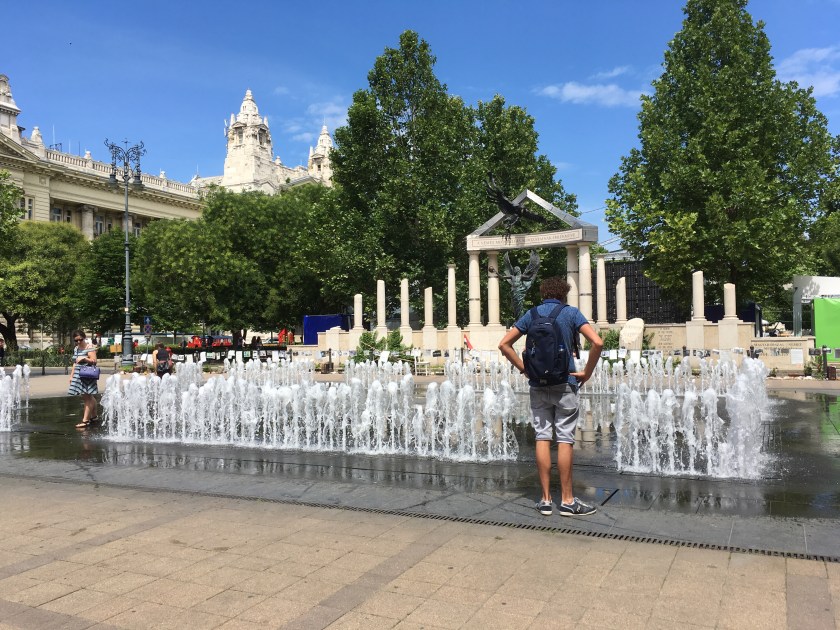
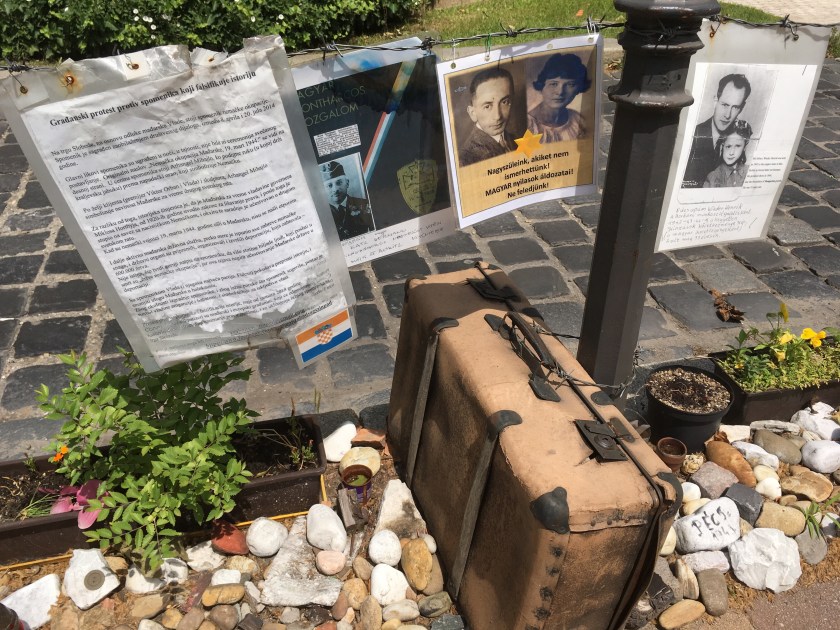 Because Hungary aligned itself with Germany in WW2, its citizens did not suffer the fate of the Poles and Czechs, at least until March 1944. Certainly there was no love for the Germans and in fact the Nazi soldiers used Hungarian military as human shields. Up until then, General Horte, the Hungarian overseer of the Nazis, was able to shield Hungarians, especially Budapest Jews, from the extermination camps. As such, there was no ghetto in Budapest. This uneasy marriage ended when the “cordial” arrangement between the General and Hitler ended. The result: Jews lined up along the banks of the Danube in their stocking feet, shot and killed. A monument of 23 pairs of shoes lined up along the bank memorializes this tragedy. After March 1944, Hungarians- Jews, gays, Roma, political enemies, were sent to join the millions of Poles, Czechs, French, Dutch, and other “undesirables” in the extermination camps.
Budapest has the world’s third oldest subway (New York and London are the first two). Line 1 is quite shallow, as horse drawn carriages were the vehicles used when the subway opened. Descending about 20 steps, you are in a well-lit ornate tunnel with hard wood ticket booths and immaculate tile-lined walls. 
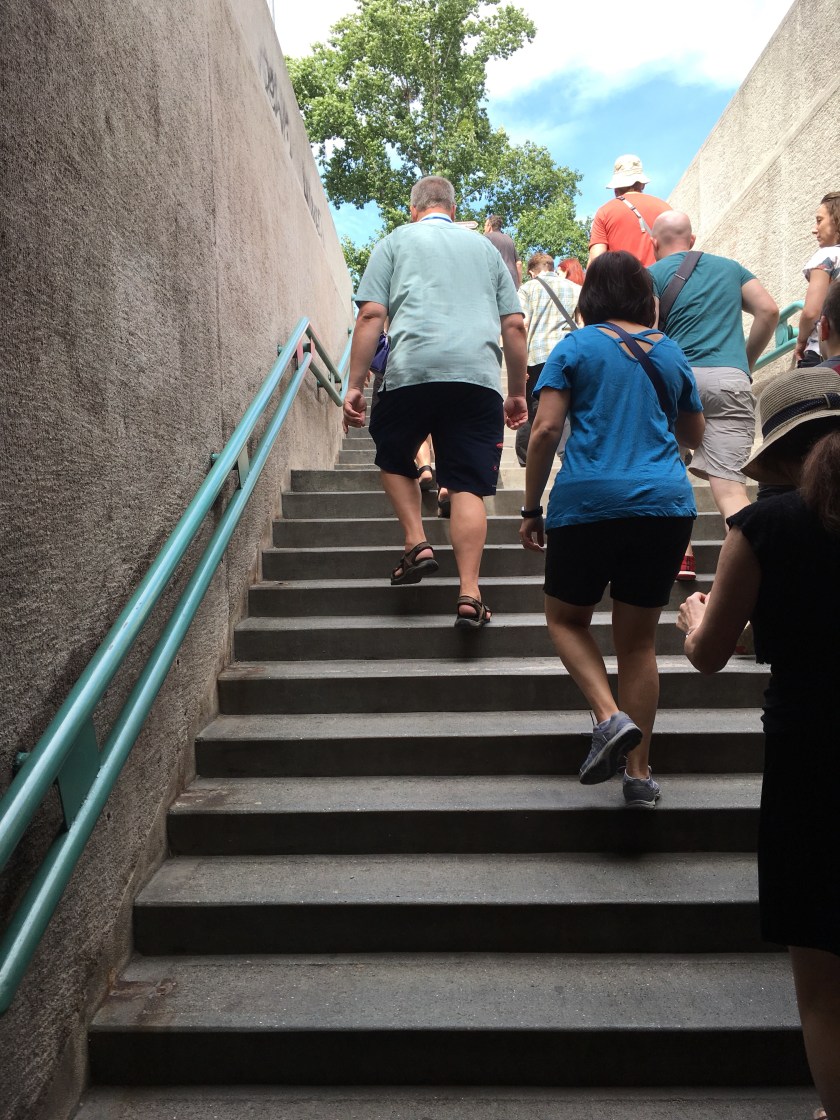 We traveled 8 stops in a short amount of time to the City Park, location of the public baths (Hungary sits on a geothermal basin), a zoo, a circus, and a lake.
 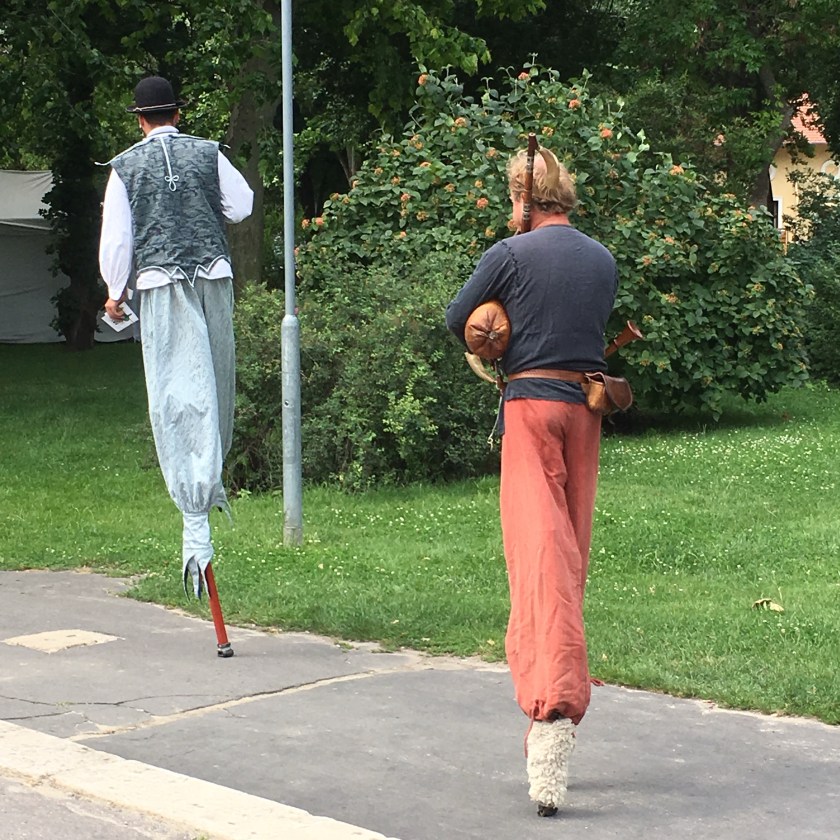 We peeked into the Széchenyi public baths – the site of an outdoor pool, numerous heated pools, and saunas, and Monika described the procedure if we wanted to take advantage of this typical Hungarian experience.
  Other sites included the Parliament
 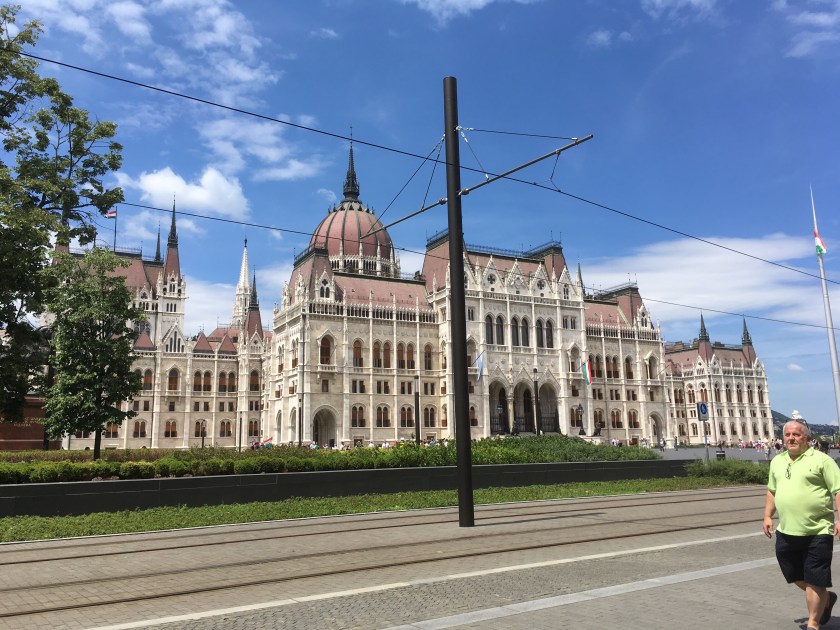 a discussion of the art nouveau architecture
 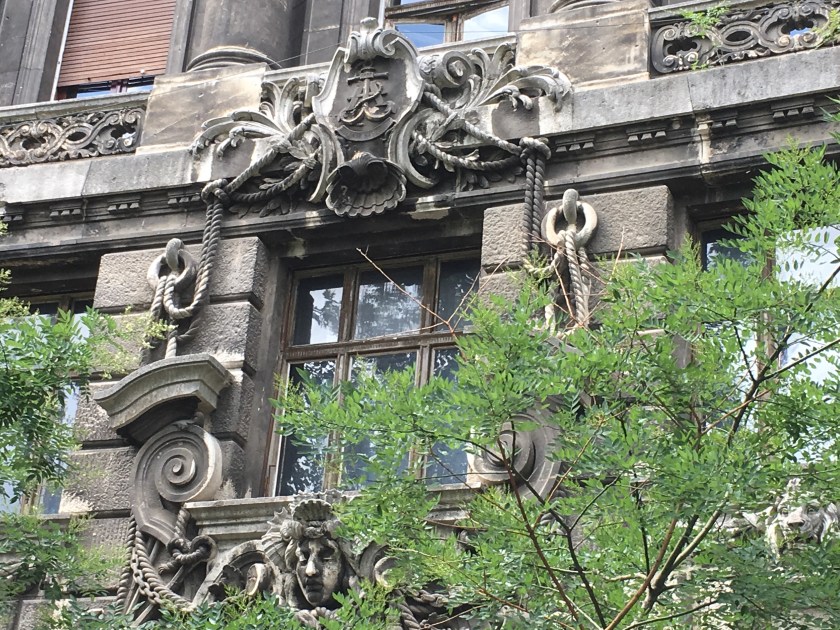 and the large screen TVs scattered throughout the city showing the World Cup.
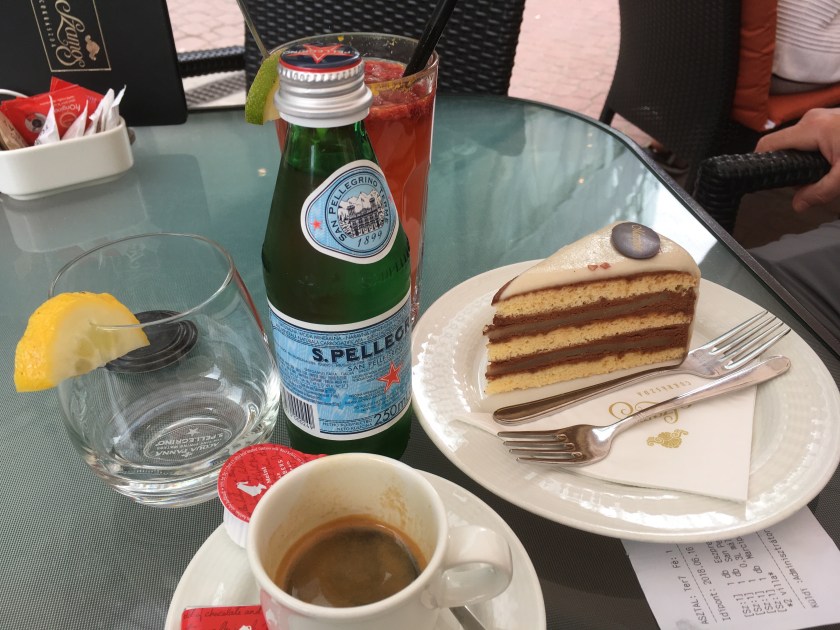
 Of course, we also learned where to sample amazing pastries (at Szamos)
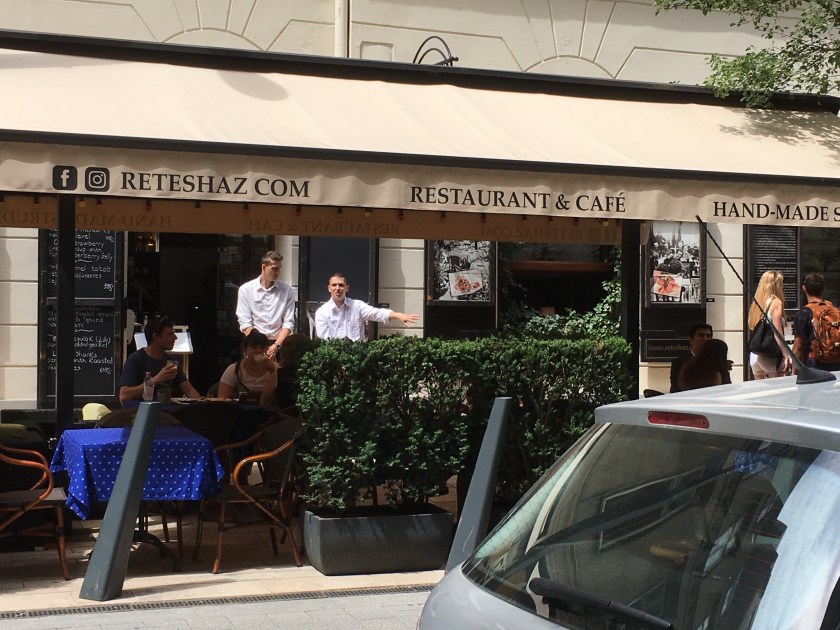
 and where to get great and authentic Hungarian strudel made with phyllo pastry.
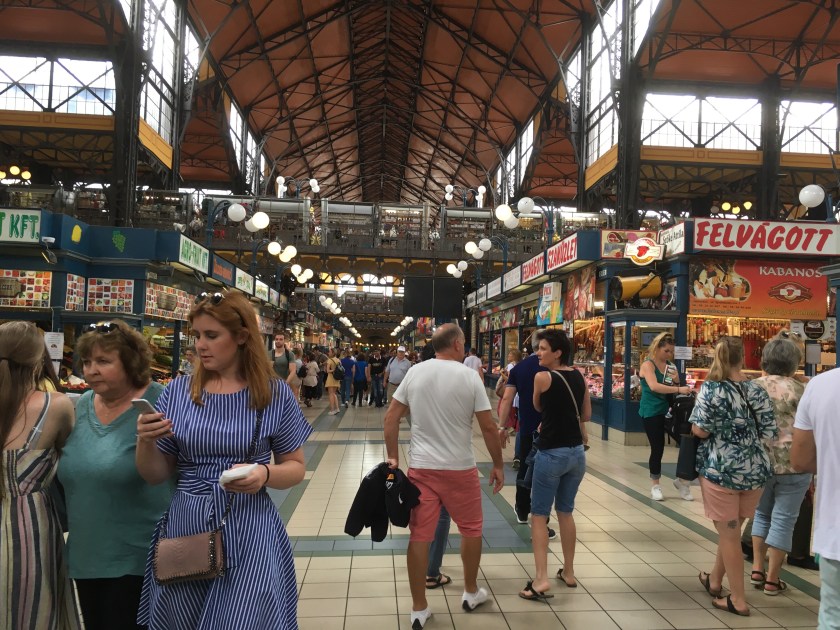
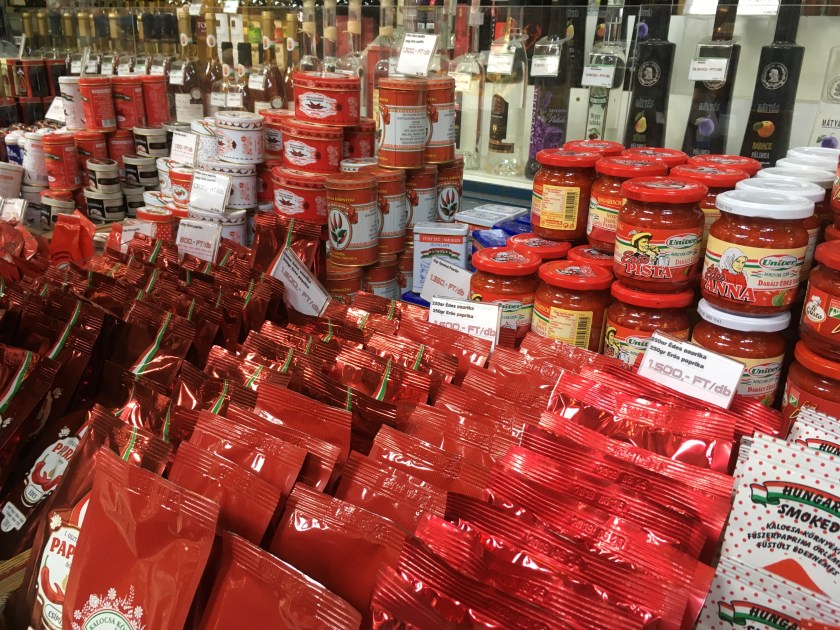
 Back on the metro, we ended at the Great Market Hall, one of the largest in Europe, with its fruit and vegetable stands, placed to buy all versions of paprika, and souvenir stands with local goods such as embroidered table cloths in addition to the usual schlocky stuff.
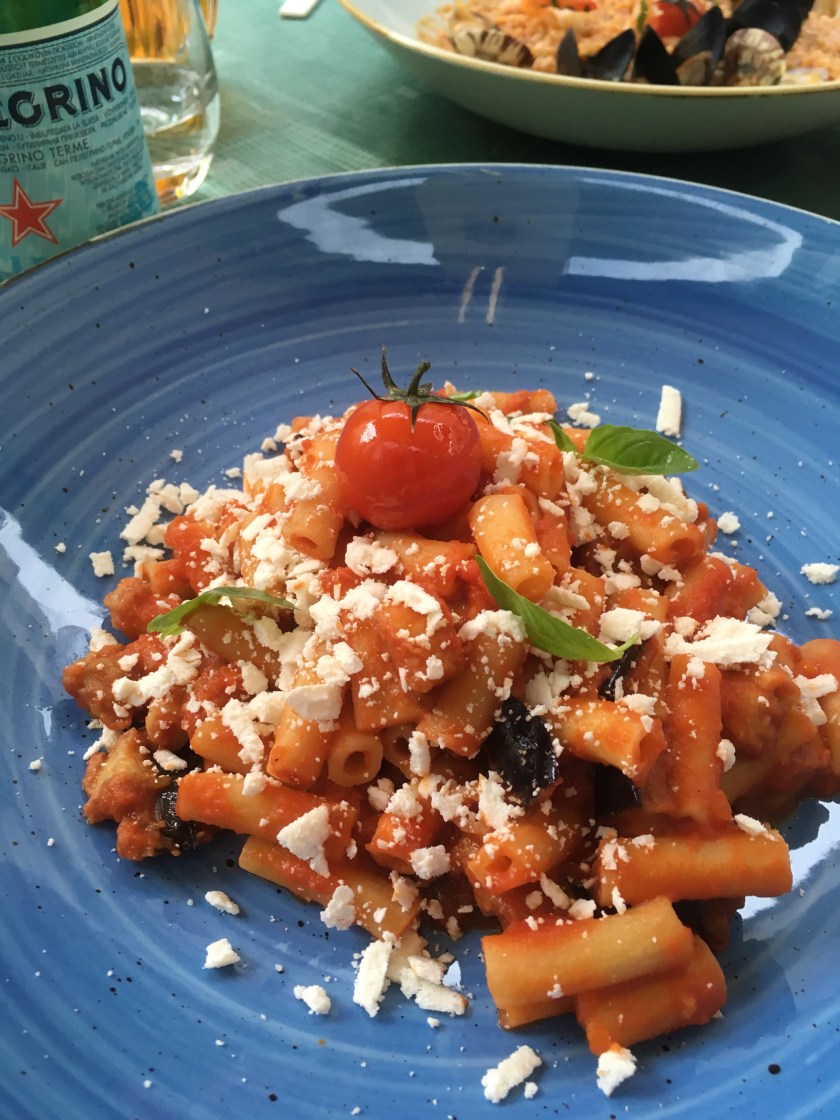
 The afternoon was free to do whatever one chose. We just walked all over the town center and strolled along the Danube. As we were getting pretty tired of pork, cabbage, potatoes and goulash, dinner was at La Coppola, a Sicilian trattoria. Seafood risotto and pasta alla Norma (with eggplant) were welcome alternatives to the past week’s Slavic cuisine.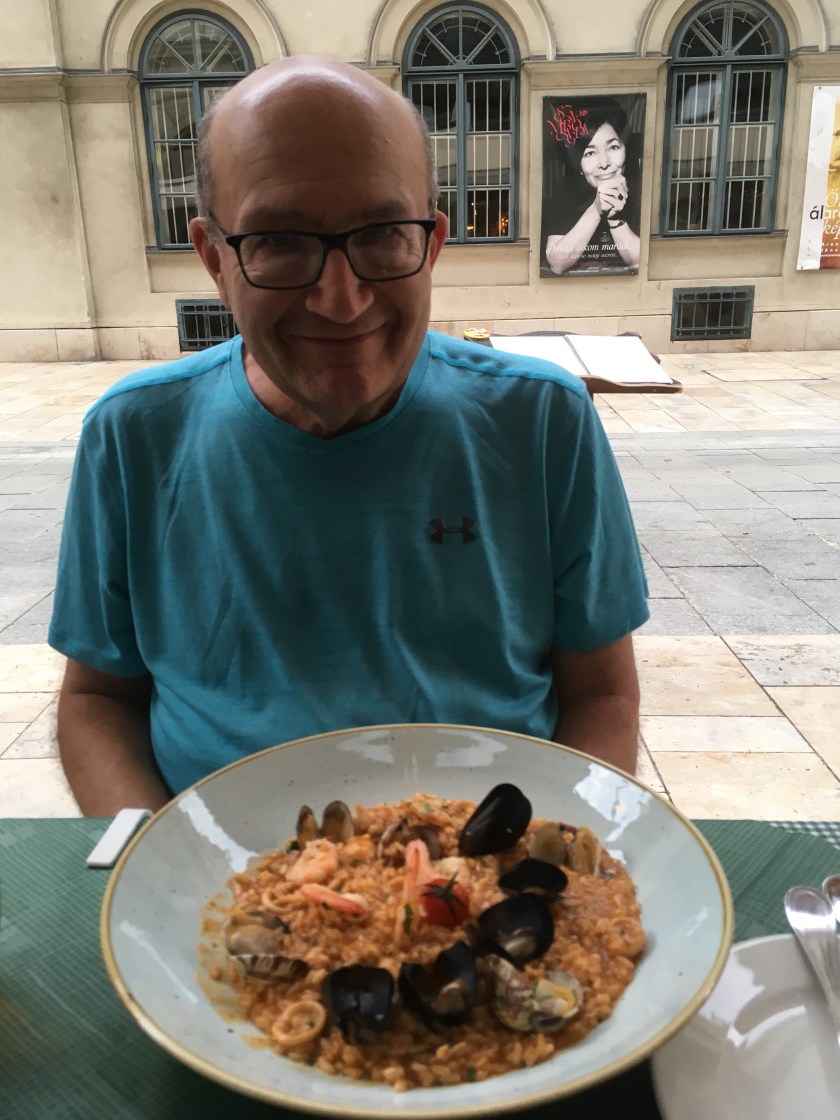
The evening activity was a boat cruise on the Danube. The hour long journey took us past many of the buildings we saw earlier in the day, now lit up against the evening sky, imparting an aura of enchantment. 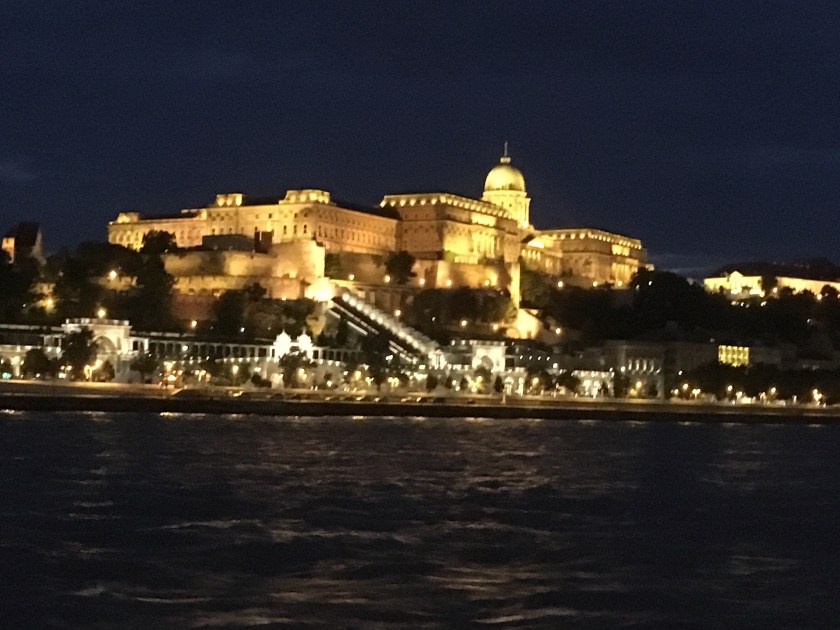
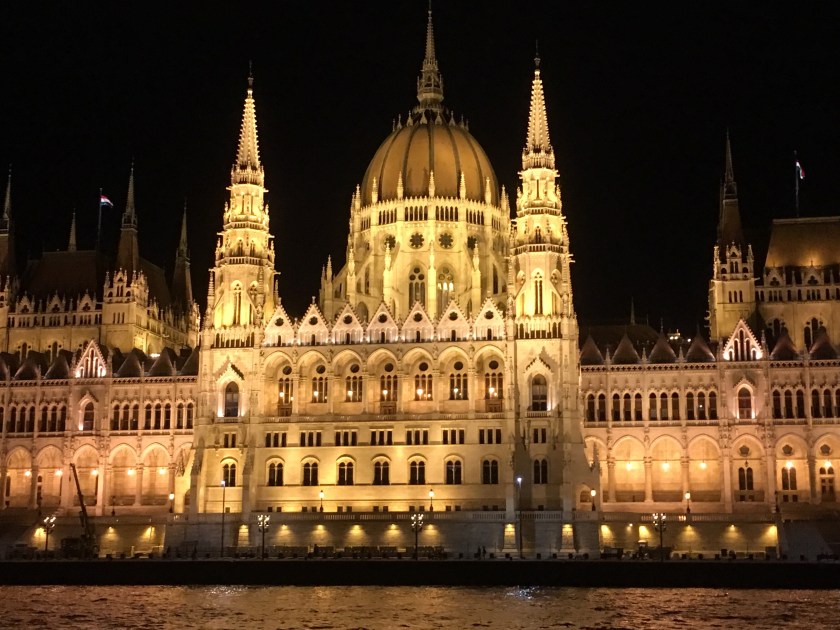
 A quick stroll back to the hotel ended this busy day in Pest. We get to sleep in as we congregate at 10 a.m. tomorrow.

 Camino Musings