Two choices: sleep in (after yesterday’s long day) or be ready by 9 a.m. for transport to Eger for some independent sight seeing. We chose the latter, since we are in Hungary probably for the first and only time, and we can relax later on in this tour.
We were dropped off at the Minaret and given directions to the main square (where we will meet the rest of the group at 11:45 a.m.) and an ATM machine where we can get a mix of bank notes instead of just 20,000 Florint bills. After withdrawing 75K (sounds impressive, no?), we headed to the Market. I love local markets- the selection of local produce, meats and cheeses makes this foodie envious of what is commonly found in Europe but so infrequently encountered on most US cities. Gooseberries and currants. fruits not commonly found in American farm markets, were being sold by elderly women who could have been living in the early 20th century.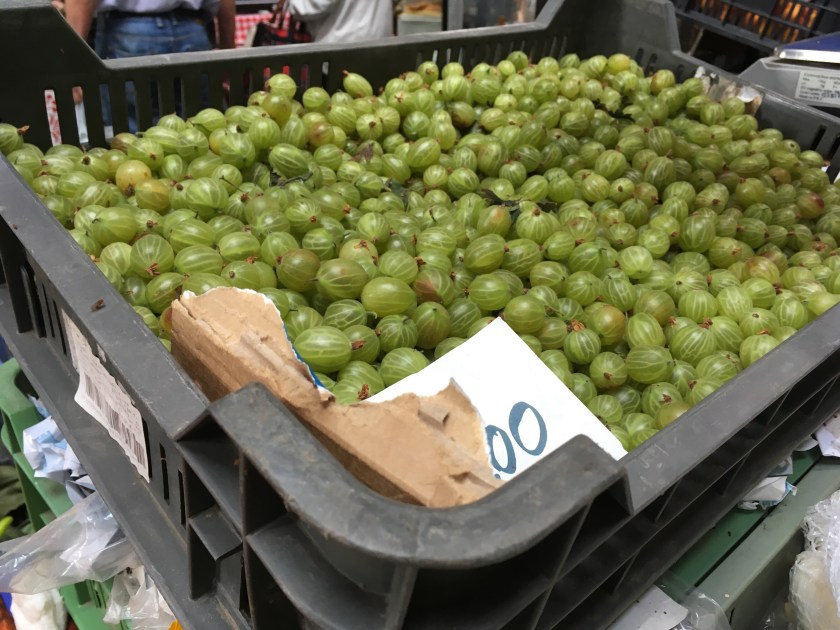
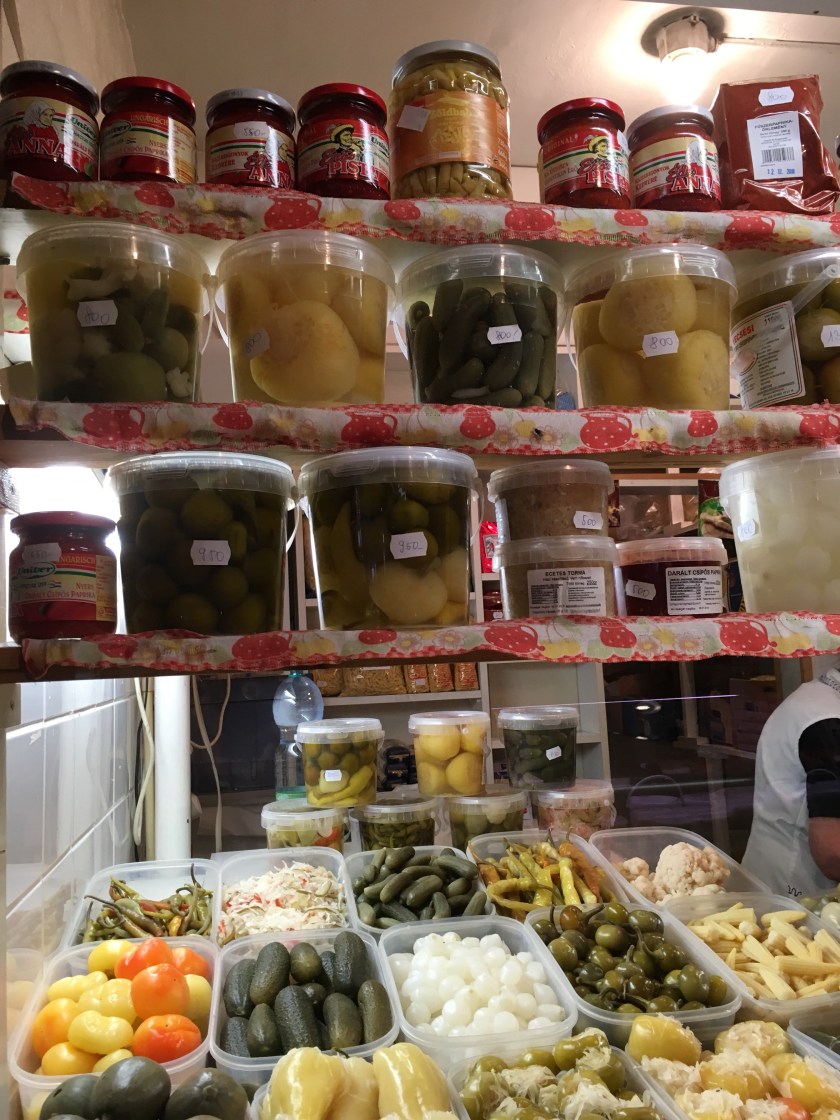
Pickled veggies!
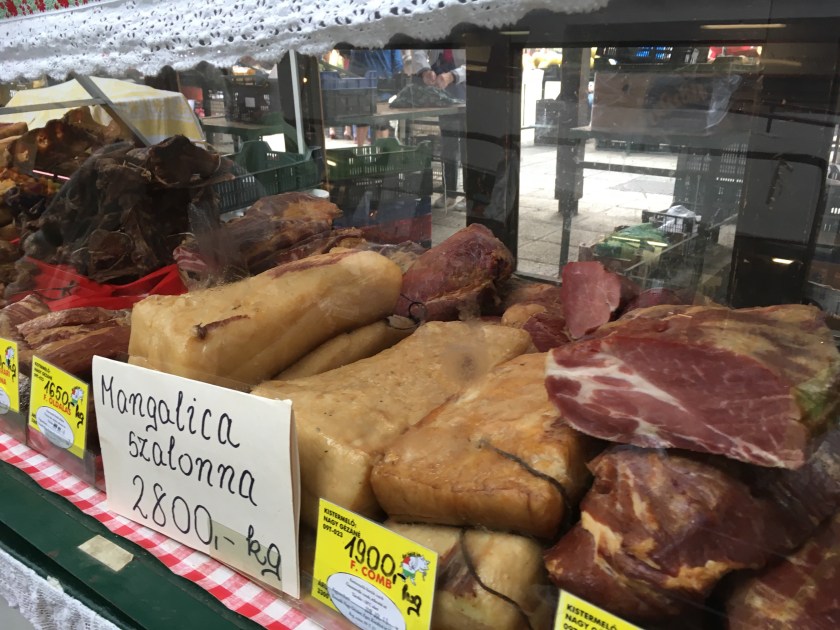 Cured meats!
We purchased apricots and a couple of peaches and then proceeded to explore this charming city center. We first visited the Church of the Cicercian order of monks and then proceeded to the Cathedral. As this was the last day of school in Hungary, there were groups of joyful students In the streets. A graduation ceremony was about to occur in the Cathedral as we witnessed a procession of high school students entering the church. The girls were all attired in a sailor-type blouse with black skirts (some quite short!) or pants and the boys dressed in dark suits, a religious lapel pin and a variety of neckties. bow ties. The cathedral’s exterior was reminiscent of a Greek temple, with columns at the front, and the interior was of a dark Baroque style.
We then proceeded to the Marzipan Museum – a variety of different things (Russian nesting dolls, Venetian masks. map of the EU, art reproductions like Van Gogh’s sunflowers painting constructed of sugar, egg whites and tempera paint. The intricacy of the handiwork was impressive. 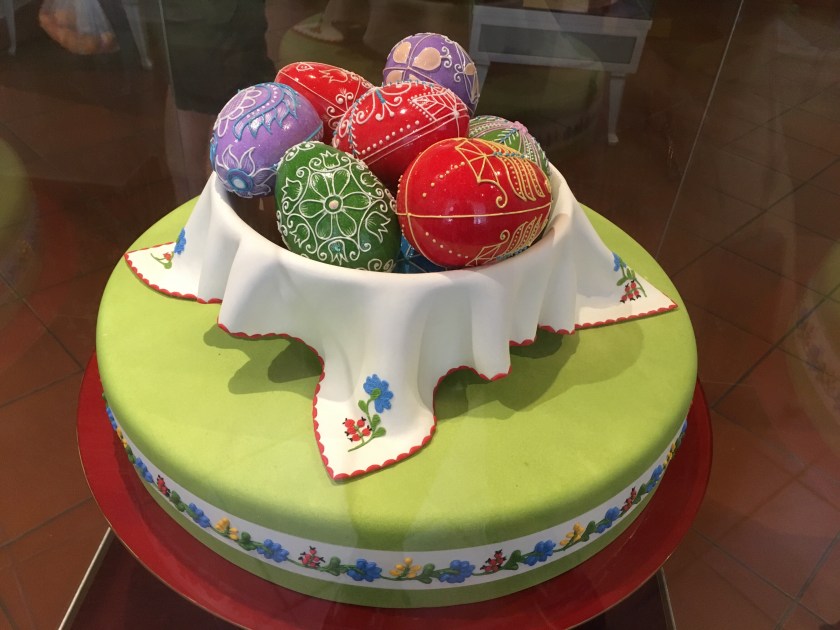

 We strolled back to the main square, the site of the statue of Istvan Dobos,
 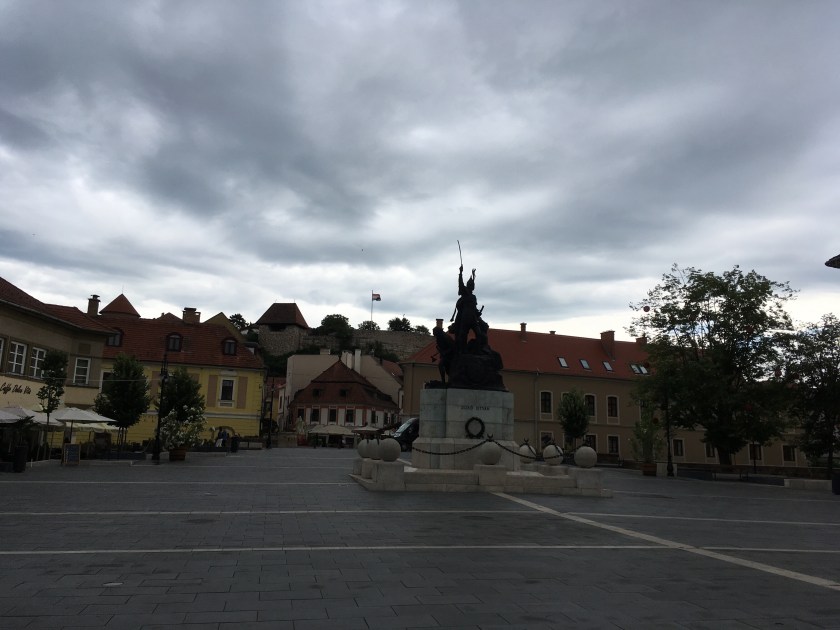 and enjoyed a cappuccino while watching a group of costumed high school students perform the Macarena.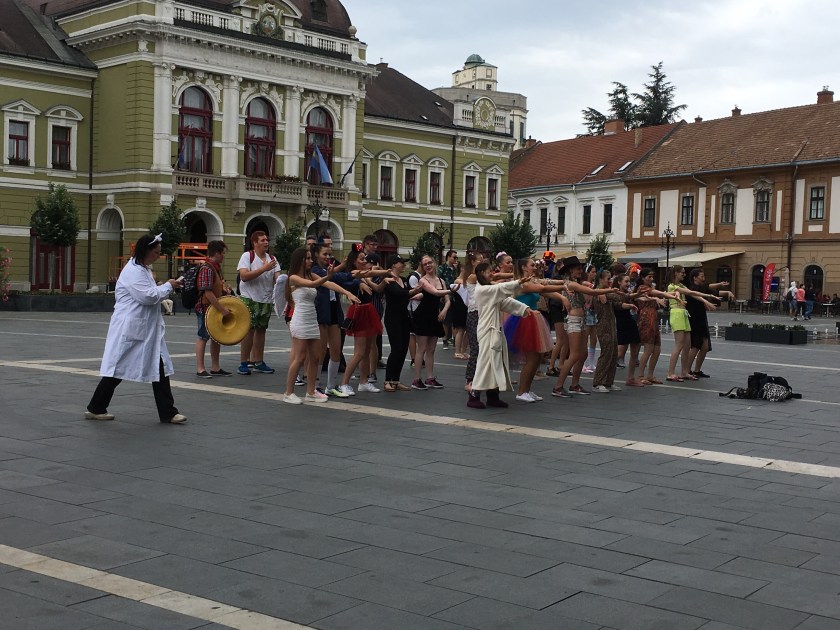
Katka and the rest of our group joined us at 11:45 a.m. and we continued to a local elementary school where a small group of third graders impressed us with their knowledge of English.They sang songs (“Head, shoulders,knees and toes” and their version of the ABC song) and were eager to show off their knowledge of the English words for colors and fruits. Their teacher answered some questions about the educational system (teachers aren’t paid very well here either) and then several 7th graders joined us for some informal conversation in English. Their knowledge of our language is quite impressive. All elementary students start studying a second language ( usually English, but also German or French) in the third grade. They pick up another foreign language in high school. In fact, proficiency in a foreign language is required for a university degree.
When was the last time you had lunch in a school cafeteria? Unlike the USA, Hungarian students are provided with a hearty lunch (not microwaved and not fast food) – a stew, rice, juice and fresh fruit ( a peach). We queued up for a similar repast- chicken breast, rice, mixed veggies, a tomato type soup ( resembled Campbell’s), chocolate cake and espresso. No fresh fruit – but hey we’re pampered Americans!
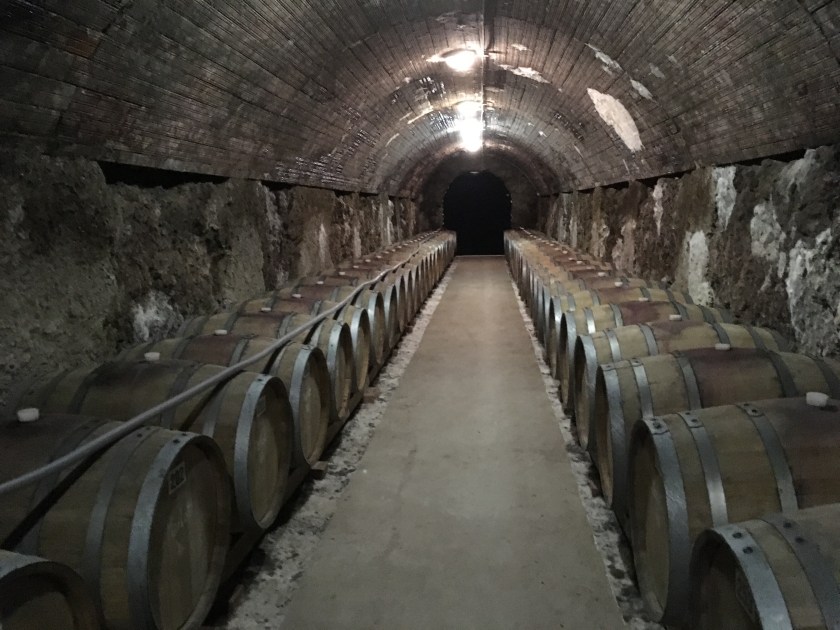
After lunch, we boarded the bus for our visit to the Koharic wine cellar in Egerszalok. We were greeted by the owners, Istvan (Istvan is a common name in Hungary as St. Steven is the patron saint of Hungary) and Aggi, with a shot of Palinka, a grappa-like liqueur that is good for digestion. 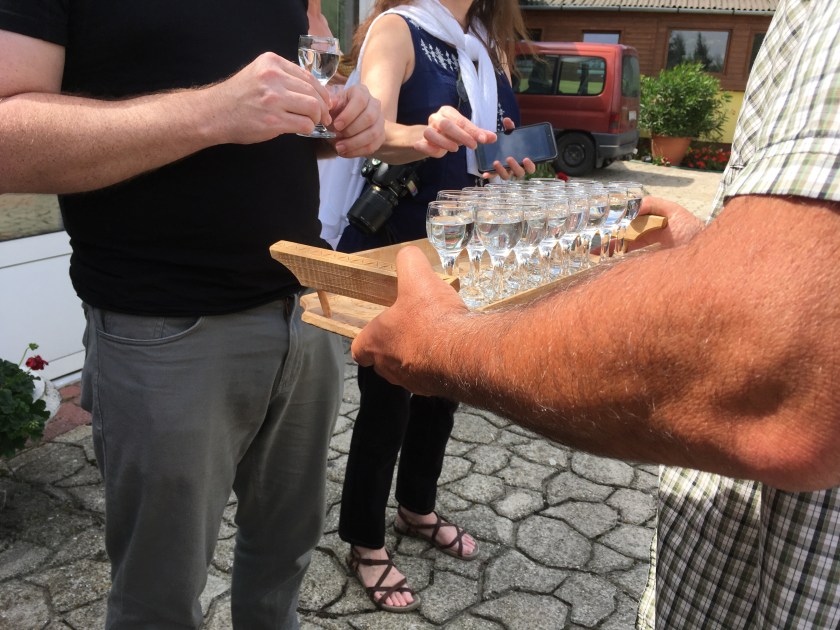 Seated at two long tables, we sampled (with generous pours) two white wines (Leanyka and Je t’aime) and three reds (Turan, Madame Menoire and Cabernet Sauvignon).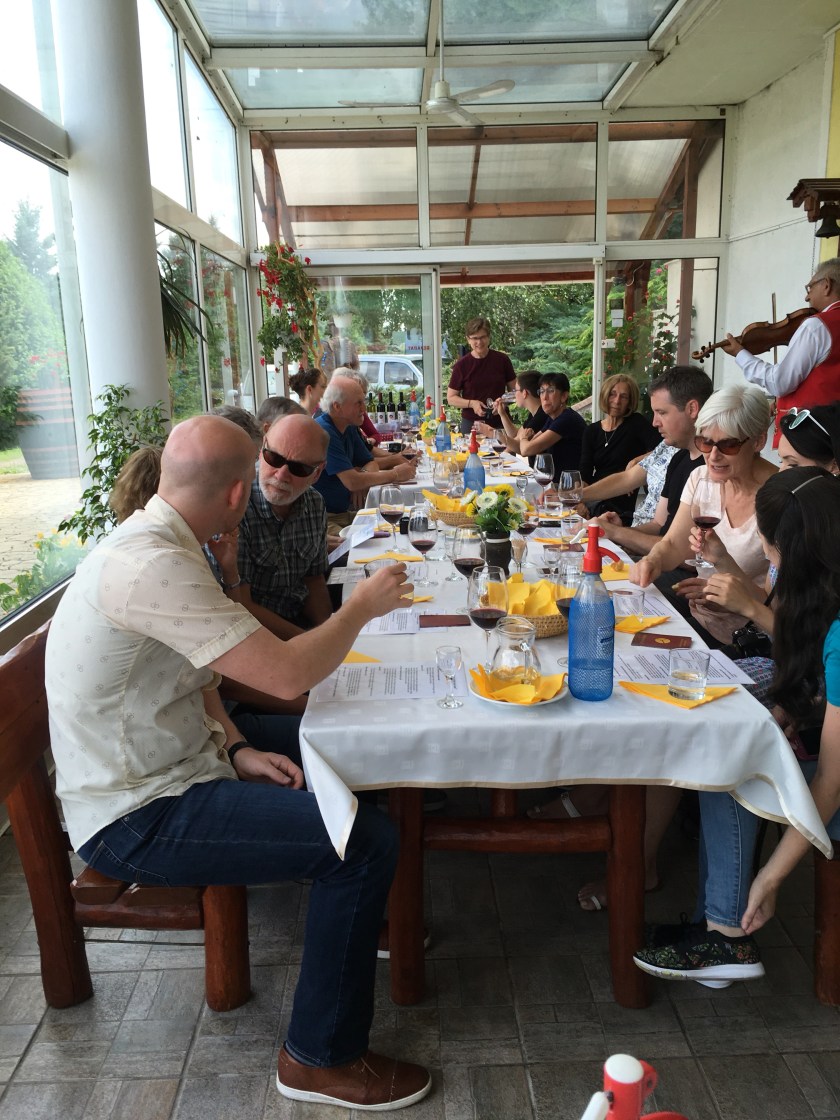
 There was musical accompaniment, Tony, a retired violinist from a very famous Gypsy band.
A little inebriated, we all stumbled back to the bus for our two-hour trip to Budapest. The road traverses fields of wheat and sunflowers. We soon entered the four-lane highway and unfortunately encountered a traffic jam.
Budapest, a city of two million, is referred to as the “Paris of Eastern Europe” and , with its broad boulevards and architecture reminiscent of Haussmann’s Napoleonic era redesign of Paris truly does resemble the “City of Lights”. 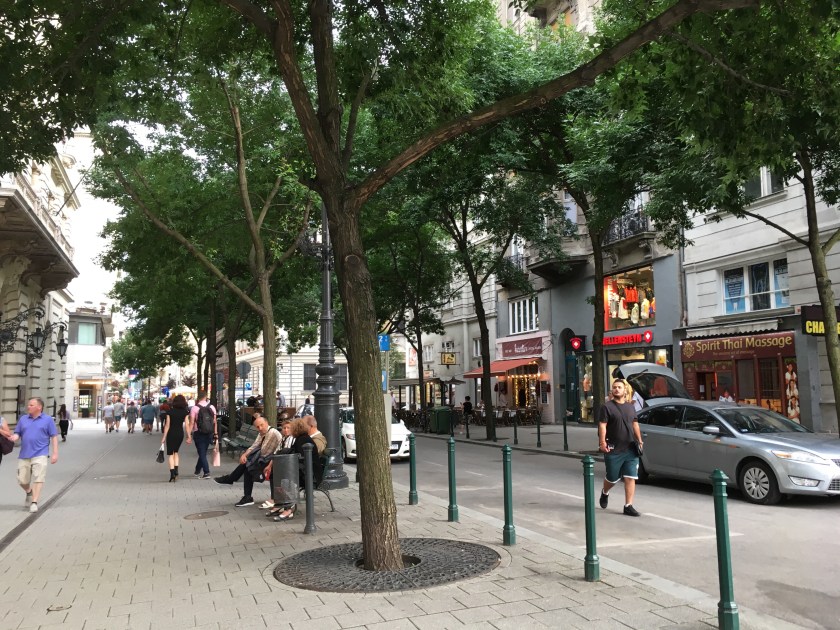 We are staying at the Hotel Erzsebet, conveniently located in Pest ( the city is divided into two parts, Buda and Pest, by the Danube River). We are just steps away from one of the main boulevards and the Great Market Hall, the city’s largest and most expansive market that not only sells fruits and vegetables but also embroidered goods and the famous Hungarian paprika.
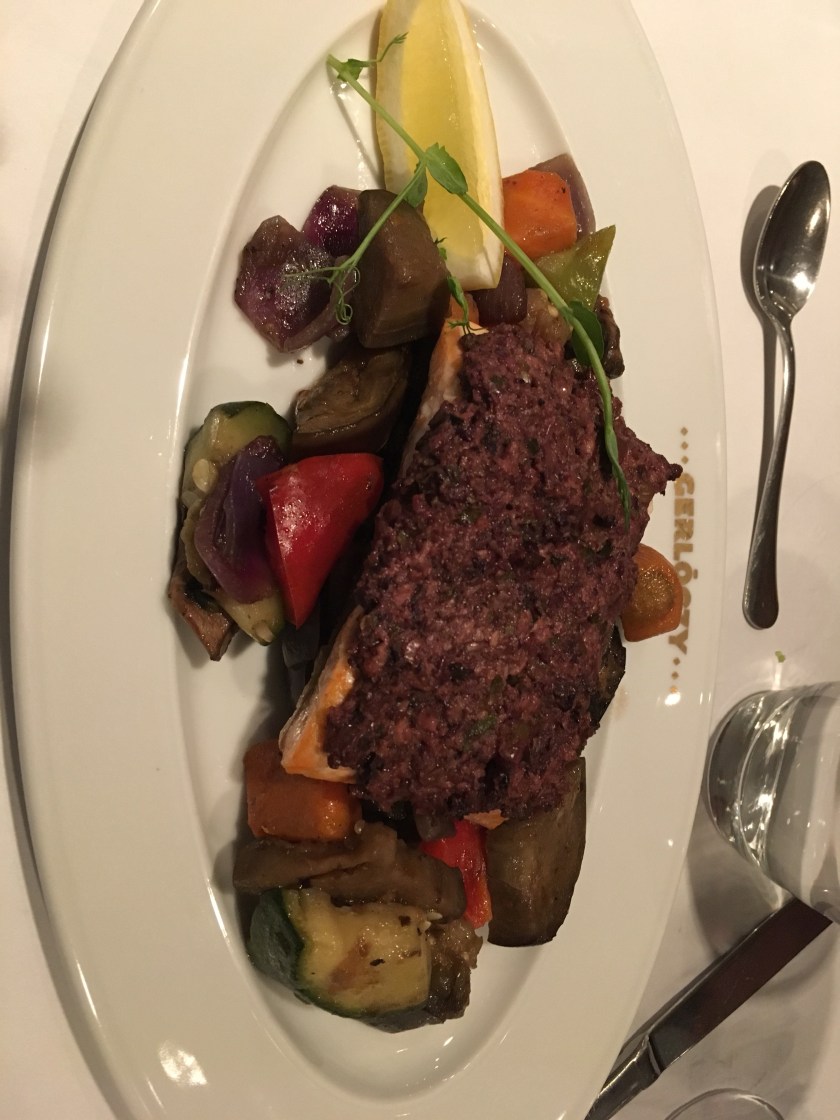
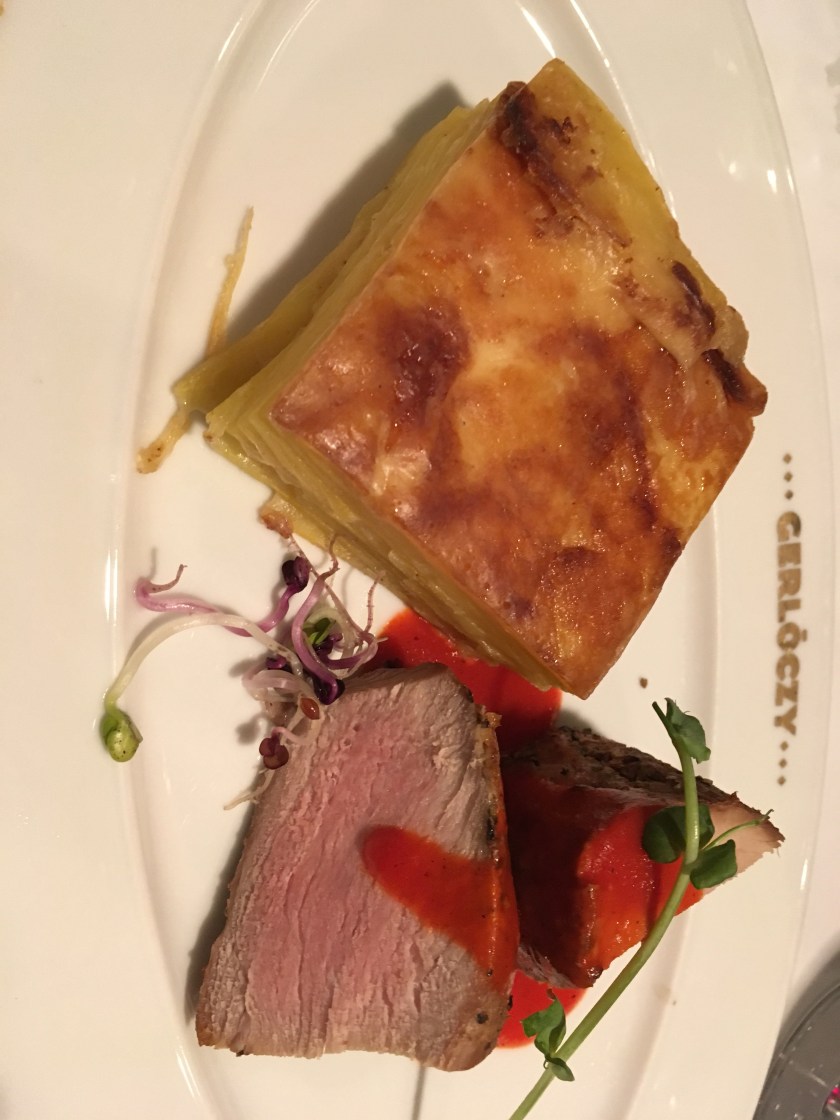
Dinner was at Gerloczy Café- in the style of a Parisian cafe/ bistro. We actually had a veggie extravaganza for dinner- salad with goat cheese as a starter and either salmon with a Kalamata olive topping and roasted eggplant, pepper, zucchini and onions or roast pork with potatoes Anna (pommes Anna) or vegetarian quiche and chocolate mousse for dessert. 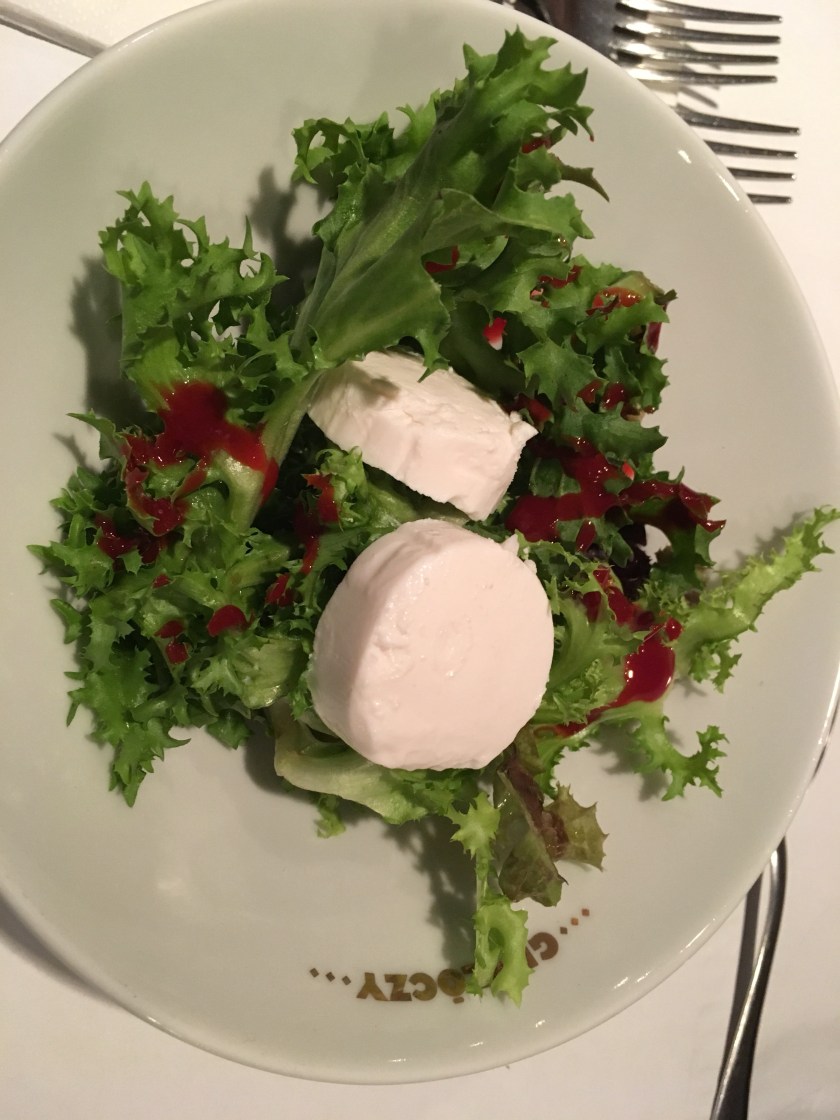
 We had musical entertainment with a piano player performing throughout the meal. We all joined in a verse of Billy Joel’s “Piano Man” near the end of the evening. A short walk brought us back to the hotel where we will rest up for our tour of Pest tomorrow morning.

 Camino Musings