An overcast cool morning with light, but constant, precipitation greeted us as we stepped out of the hotel following a unique (at least from the American perspective) Polish breakfast – an assortment of savory and pickled foods (pickled herring, smoked salmon, cucumber slices topped with an egg salad or a salmon spread, an assortment of smoked sausages, and lard) in addition to the usual breads, rolls, fruit, and cereal. After filling up on several of these delicacies ( but not the lard), we weren’t aware that we could have ordered eggs, omelets, or pancakes in addition!
We met our guide Ania in the hotel lobby and we then proceeded to the main square where she pointed out the Old Cloth Market, where fabrics were sold beginning in the 13th and 14th centuries (now filled with vendors selling locally produced souvenirs such as amber jewelry, wooden gifts, embroidered clothing, and little tshotskes). The legend of the trumpeter in the clock tower of St. Mary’s Church was explained ( every hour, 24/7, at the top of the hour, for the past 600 years a trumpet is played to warn the townspeople of impending attack by the Mongols). Crowds of school children of all ages have descended on the city for their end of year field trips, so we were trying to get to the Wawel Cathedral before an enormous line formed. On the way, we walked through one of the oldest universities in Europe- the Jagellonian University founded in 1364. We were also told of the professors arrested by the Nazis in November 1939 because the continued to hold classes and exams without the permission of the Nazi occupiers.
We walked through part of the Planty Park, a greenway surround the old town in the place of the old city wall. The hike up the hill to the Wawel Cathedral and Castle grounds in the rain was a bit slick and the aforementioned crowds of students were joined by the hordes of tourists from all over the world. 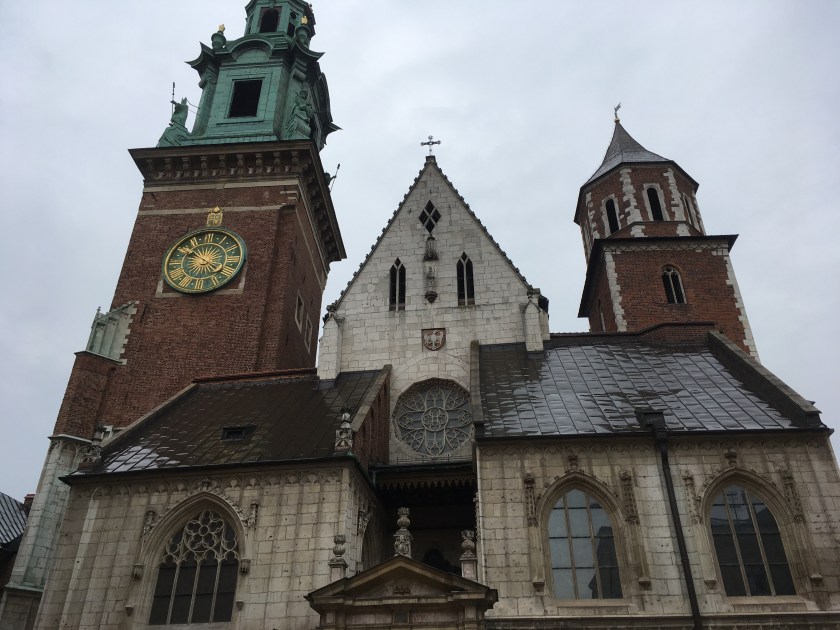
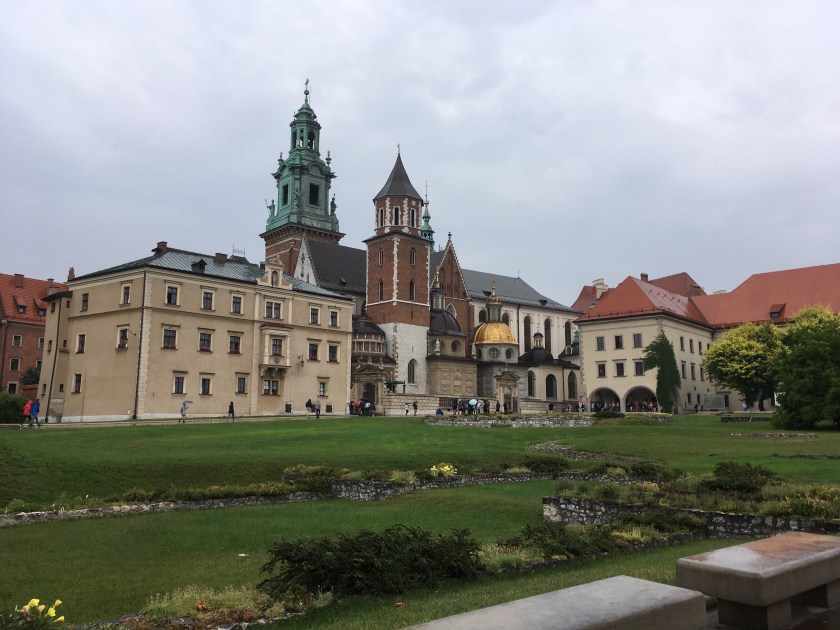 We were lucky that the line for the cathedral was short. This is the home church for the bishop of Kraków and was the church of Karol Woytyla – later to be Pope (and now Saint) John Paul II.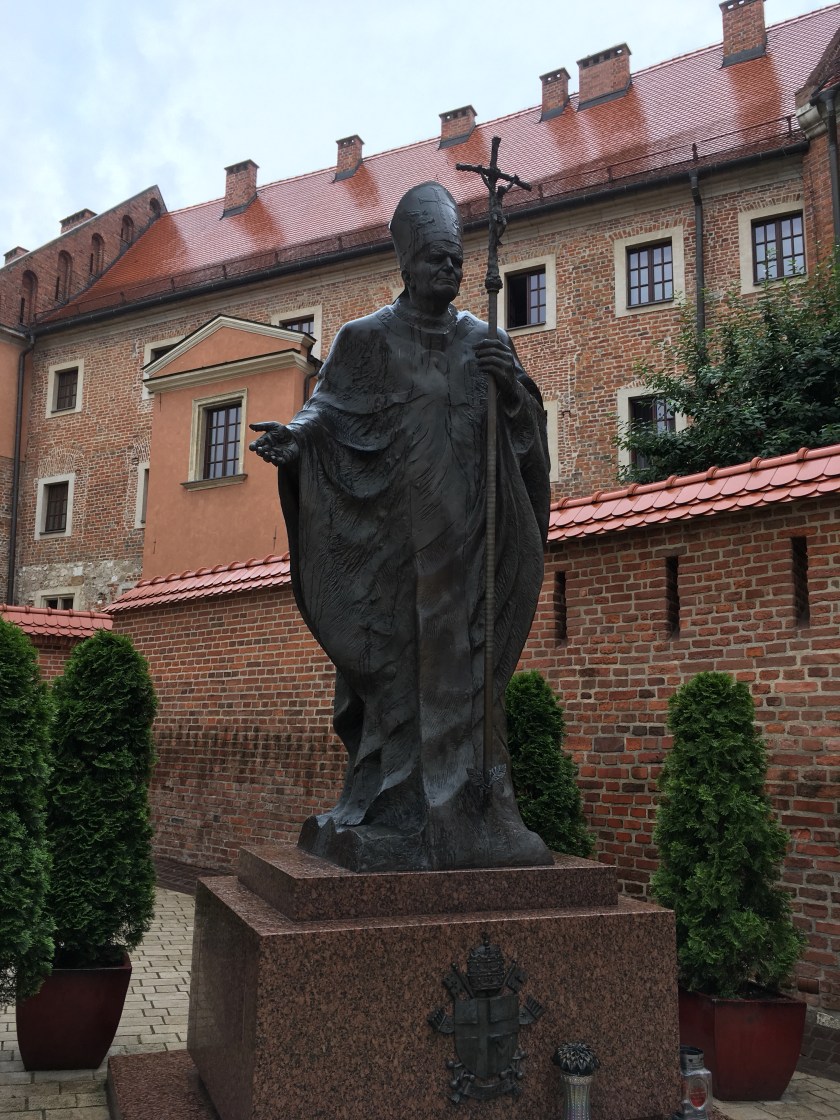
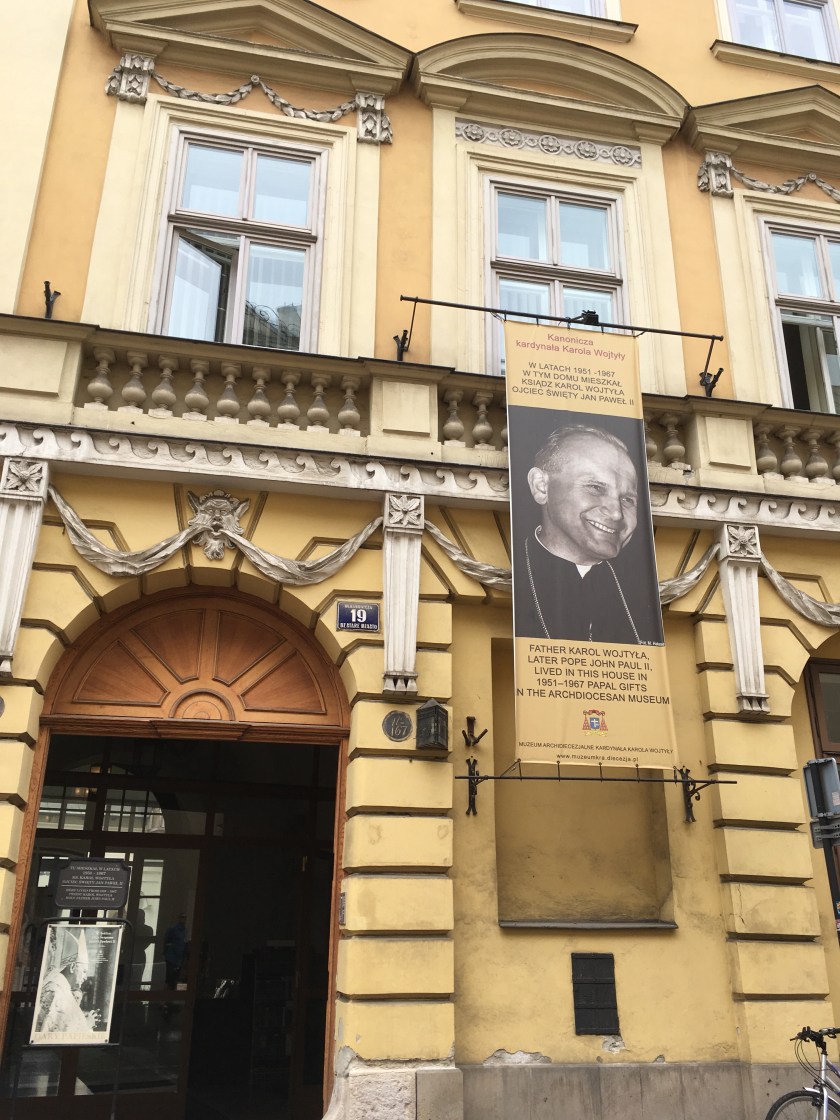 Although he is buried in the Vatican, there were many other important Poles entombed there- kings and queens as well as important clergy. The church exhibits many styles, including baroque and Romanesque. We strolled the grounds and enjoyed the view of the Vistula River.
  Our next destination was St.Mary’s Church in the Old Town Square. It has the largest altar carved out of wood ( predominantly linden wood) and instead of the usual triptych seen in Renaissance churches, this altar has 5 panels.
Our official tour ended and for our free afternoon, we walked past the Jewish ghetto (Kacmiersze) to visit the Schindler Factory Museum. It was a 40 minute stroll outside of the tourist area. We treated ourselves to some delicious ice cream (lody) at a small shop that makes their own ( it was mentioned in the Rick Steves guide) located on the Main Street heading towards the museum.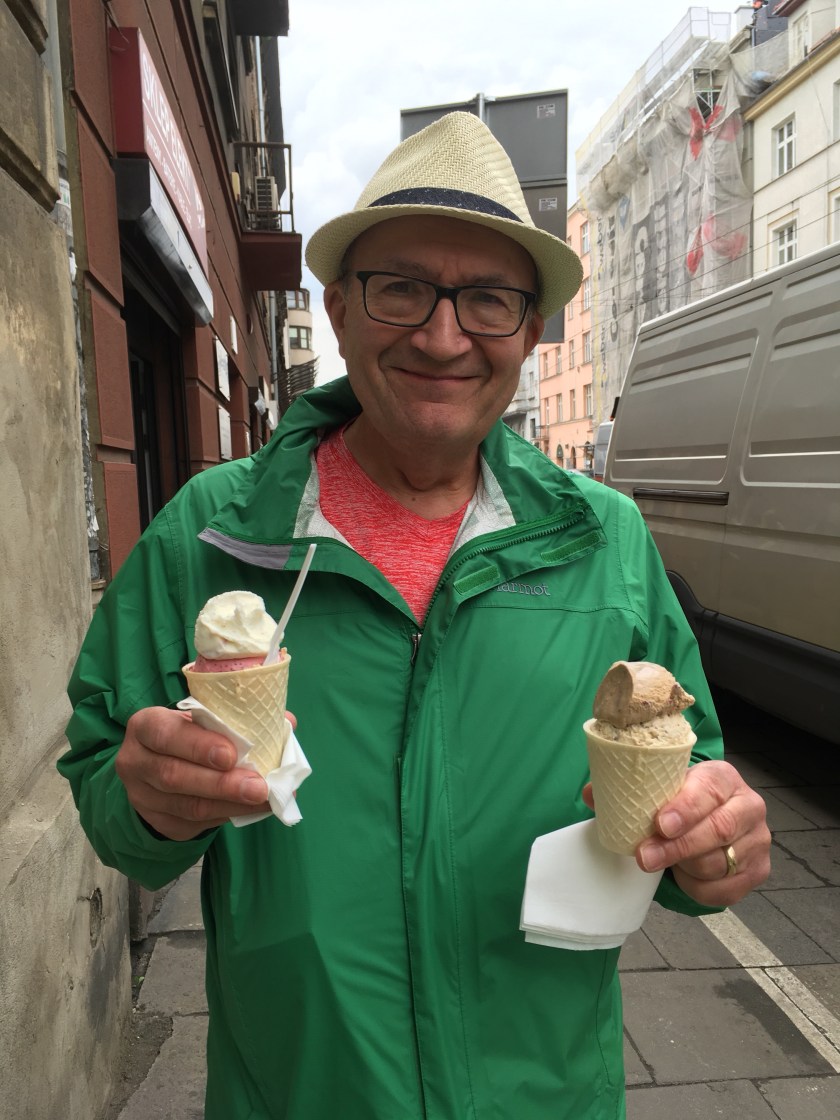
The Schindler museum focuses on the Nazi occupation of Krakow starting on September 1, 1939. Using multimedia in addition to displays of artifacts it was a chilling representation of war and the oppression and attempted extermination of innocent people. The museum is reminiscent of the Holocaust Museum in Washington, DC, although much smaller and more limited in scope. There is only a minor mention of Oskar Schindler’s successful attempt to save the lives of many Jews.
We then proceeded to the Kacmiersce, the Old Jewish Ghetto, that now has a hipster/ trendy ambience. There are many restaurants, bistros, bars and a few shops as well as a food truck area. The choice includes Kosher, traditional Polish, an Irish pub and Argentinian food. We ate at Starka, a traditional Polish restaurant. We had pierogies ( filled with potatoes, with fried onions and sour cream), beet soup, duck breast with red cabbage, stuffed cabbage and apple cake – of course all beautifully presented. Of course there was beer and plum flavored vodka as a finisher. 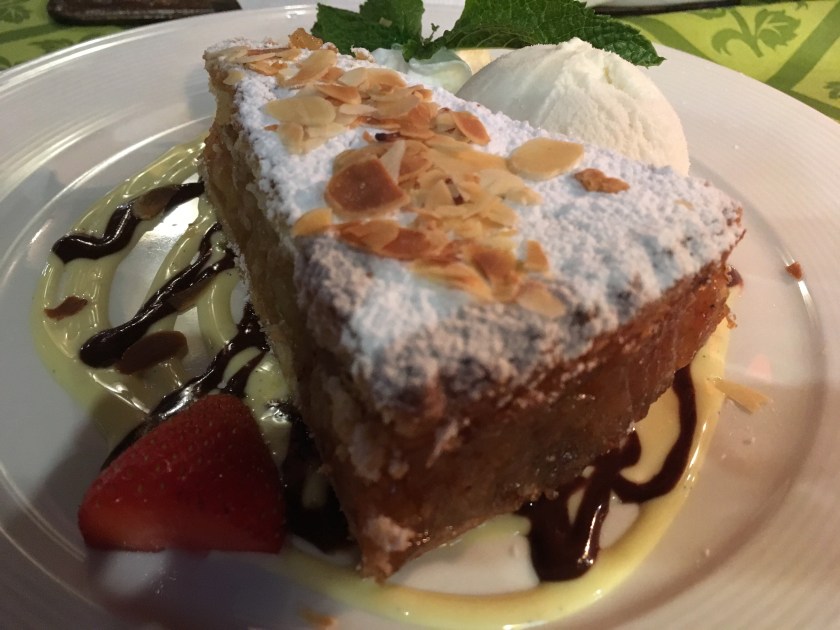
The stroll back was lovely – the rain had stopped hours ago and the evening was cool. The old town was filled with people enjoying meals and drinks in outdoor cafes. 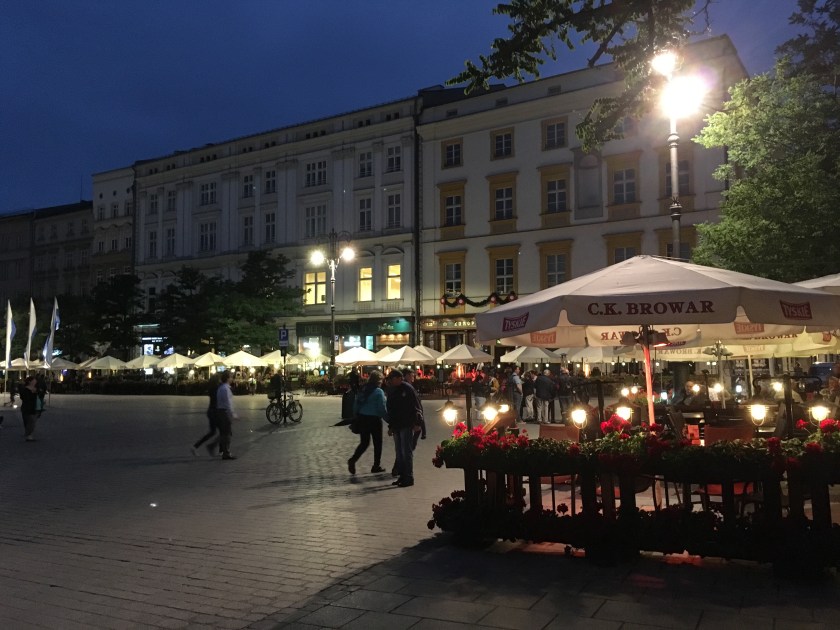 We have an early morning wake up as we leave to see Auschwitz and head through Slovakia to Eger, Hungary.

 Camino Musings