Sure, the official Camino de Santiago ends in Santiago de Compostela, whether it is the Camino Francés (the oldest and the most traveled Camino starting in the Pyrenees) or the Camino Portugues (obviously starting in Portugal) or the Camino Primitivo (traversing the northern coast of Spain) or the multitude of other pilgrimage routes to Santiago, but some pilgrims choose to extend their journey to Finisterre, approximately 80 km west of Santiago. Finisterre (translated to “end of the earth”) is the farthest western point in Spain, and this was considered by the peoples that originally populated the northwestern Iberian peninsula as the true end of the earth, the place where the sun disappeared into the horizon at sunset. Therefore, it was quite appropriate for us to end our Camino (at least our Camino in Spain, more to follow on that later) at the tip of the western coast of Spain overlooking the Atlantic Ocean.
No, we did not don our hiking shoes nor did we pick up our trekking poles that were tidily packed away in a suitcase! We took a bus tour – well, not actually a bus, more like a passenger van, as the buses were on strike – to Finisterre and Muxia, further north on the Costa da Morte, along with a van full of other pilgrims from Lithuania, Russia, Czech Republic, Canada, and Germany, a veritable United Nations crammed into a Citroen minivan.
Our driver/guide was an intriguing young man from Santiago who has walked the Camino many times. The Camino (“the Way”, as he called it) becomes addictive and many pilgrims return, either to repeat the same route or follow one of the other Caminos to Santiago. With dreadlocks gathered into a sort of “man bun” and pierced tongue, he was most certainly not the stereotypic version of the pious religious pilgrim, rosary beads in hand, praying novenas! But truly the spirit and passion of the Camino lived within him as he enthusiastically shared how the Camino changed his outlook on life.
As we traveled the Costa da Morte (so named because of all those who have perished in the violent waves crashing this mostly rocky shoreline), we made several stops. We first visited Pontemaceira, an ancient Roman bridge traversing a small waterfall with an adjacent water mill.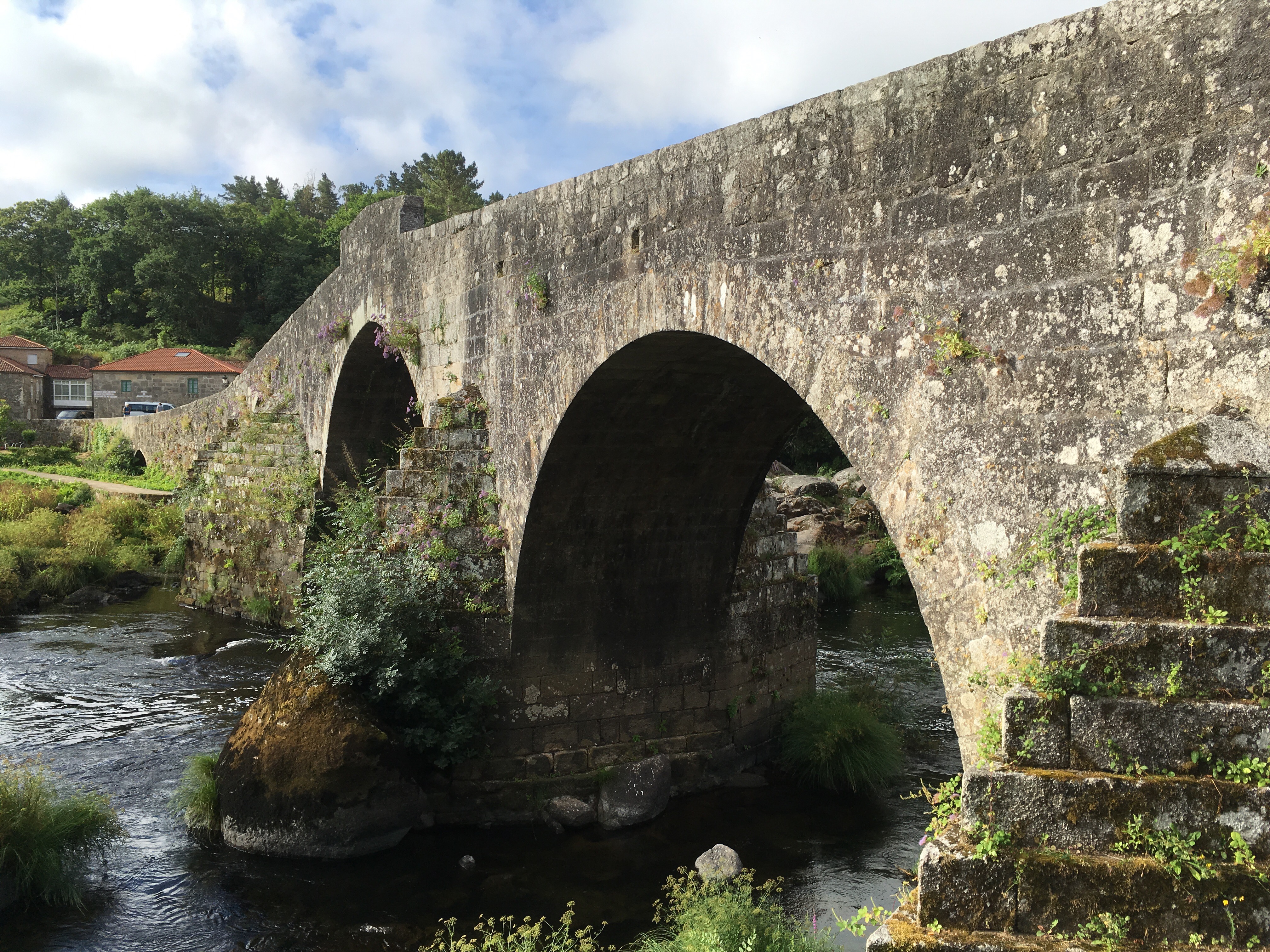
Then we had a brief stop in the fishing village of Moros, famous for being the second largest producer of mussels that are grown on platforms offshore ( the largest producer of mussels is China, by the way) and also known for tiny clams that are harvested from the beach at low tide by the local women (men are too clumsy, and probably not meticulous enough to gather these mollusks that are the size of a dime!).
It was here in Moros that we finally had an opportunity to sample chocolate con churro, a thick warm chocolate pudding-like beverage, usually eaten with a spoon, garnished with a bit of cinnamon and accompanied by a fried crispy donut-like pastry sprinkled with sugar.
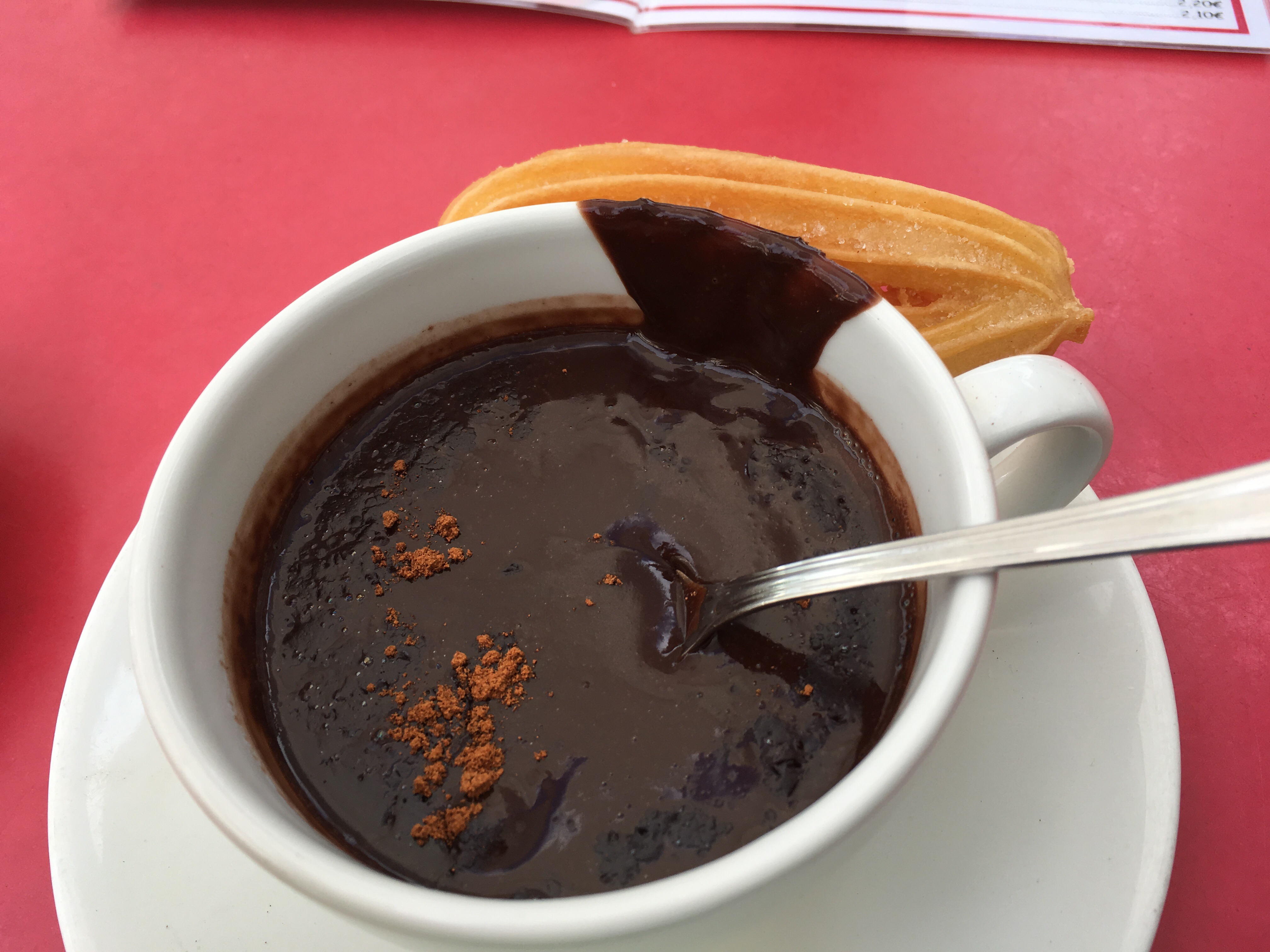
And it only cost 1 euro 70 cents – about $2.00 (USD)!
The next stop was Cascada do Ezaro, the only waterfall in Europe that cascades into the saltwater ocean. Because there has been a drought in Galicia, Antonio (our driver) informed us that we were witnessing only a fraction of the volume of water that normally crashes through this ravine. It was still impressive, nonetheless.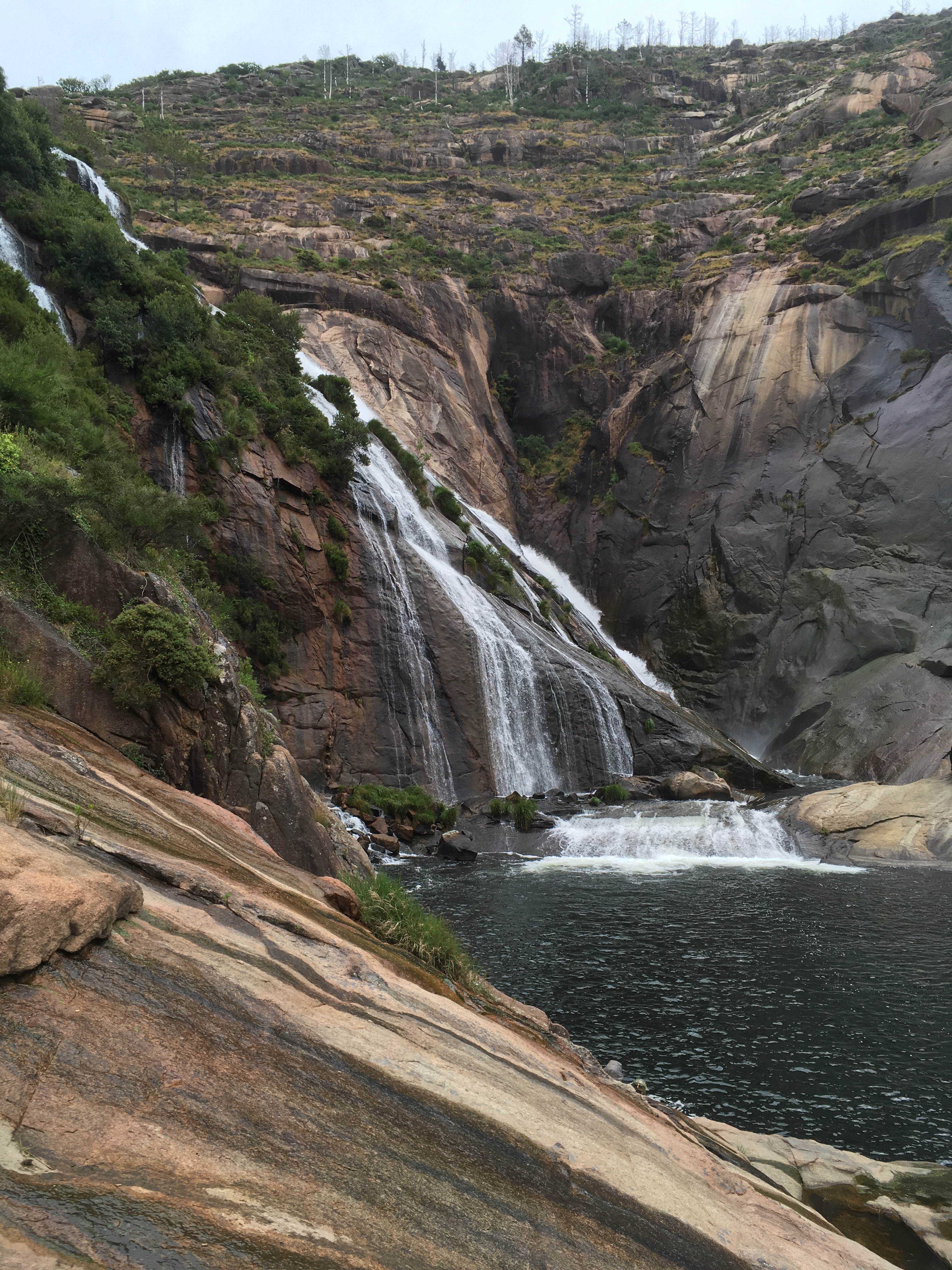
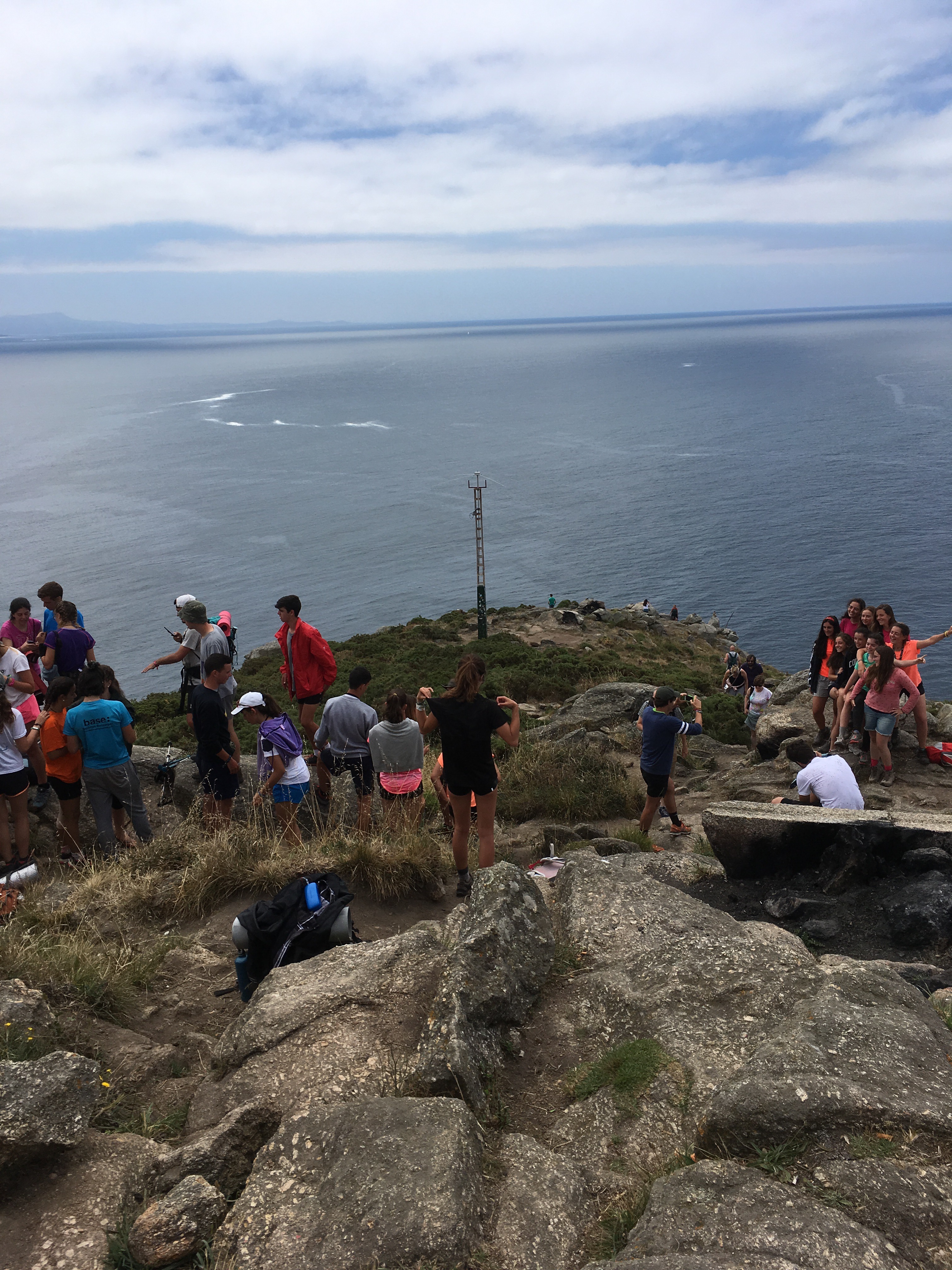
After a scenic drive along the coast, passing by lovely and unpopulated sandy beaches ( among the cleanest and unadulterated in the world), we reached Finisterre, designated “0 km” on the Camino milestone marker. A lighthouse teeters at the edge of the rocks. This is the place that pilgrim’s traditionally would burn the clothes they had worn on their journey. But no more – it is expressly forbidden because of the risk of burning down the lighthouse. A bronzed man’s shoe sits upon one of the highest rocks, commemorating the shoe worn by Martin Sheen in the film, “The Way”, released in 2010 and probably responsible for the dramatic increase in numbers of Americans on the Camino. A group of teenagers was singing and celebrating their arrival at Finisterre so we were unable to approach the statue of St. James located at the edge of the coastline.
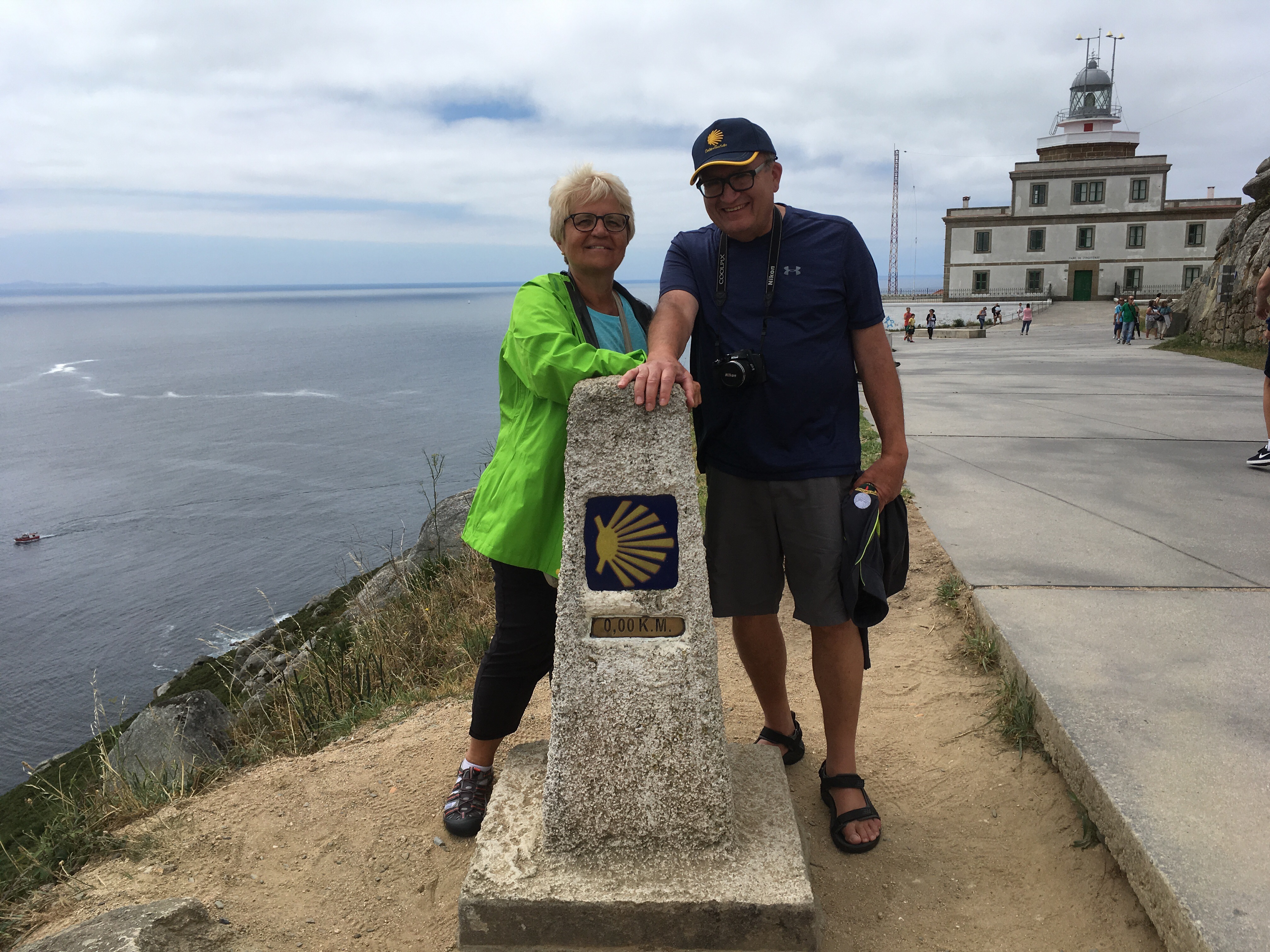
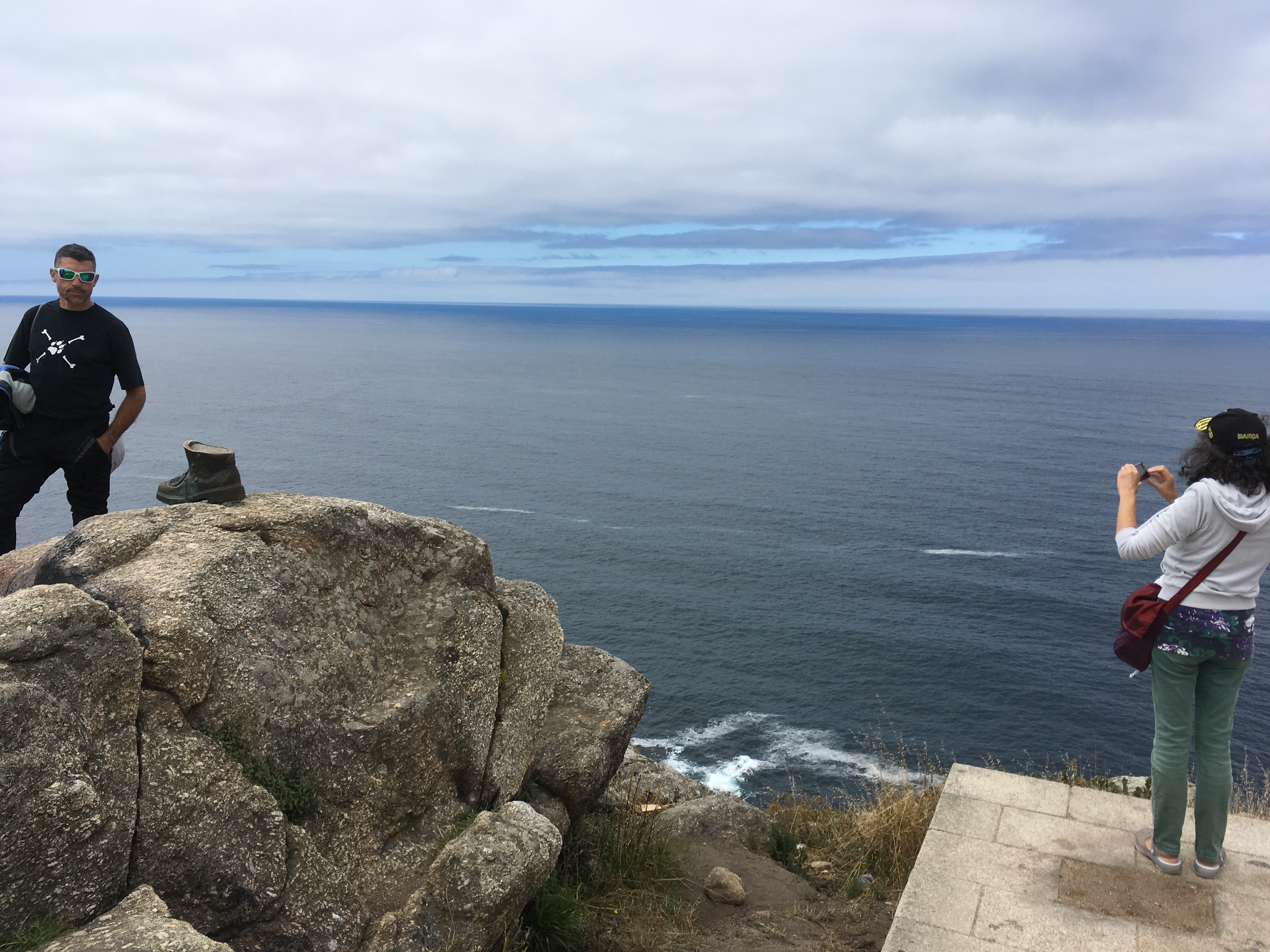
See the shoe on the left side of the photo above?
We stopped for lunch along the beach. Tony was craving paella, on his list of “must-haves”, so since it was on the menu, he was able to sample this specialty of Valencia along the eastern coast of Spain.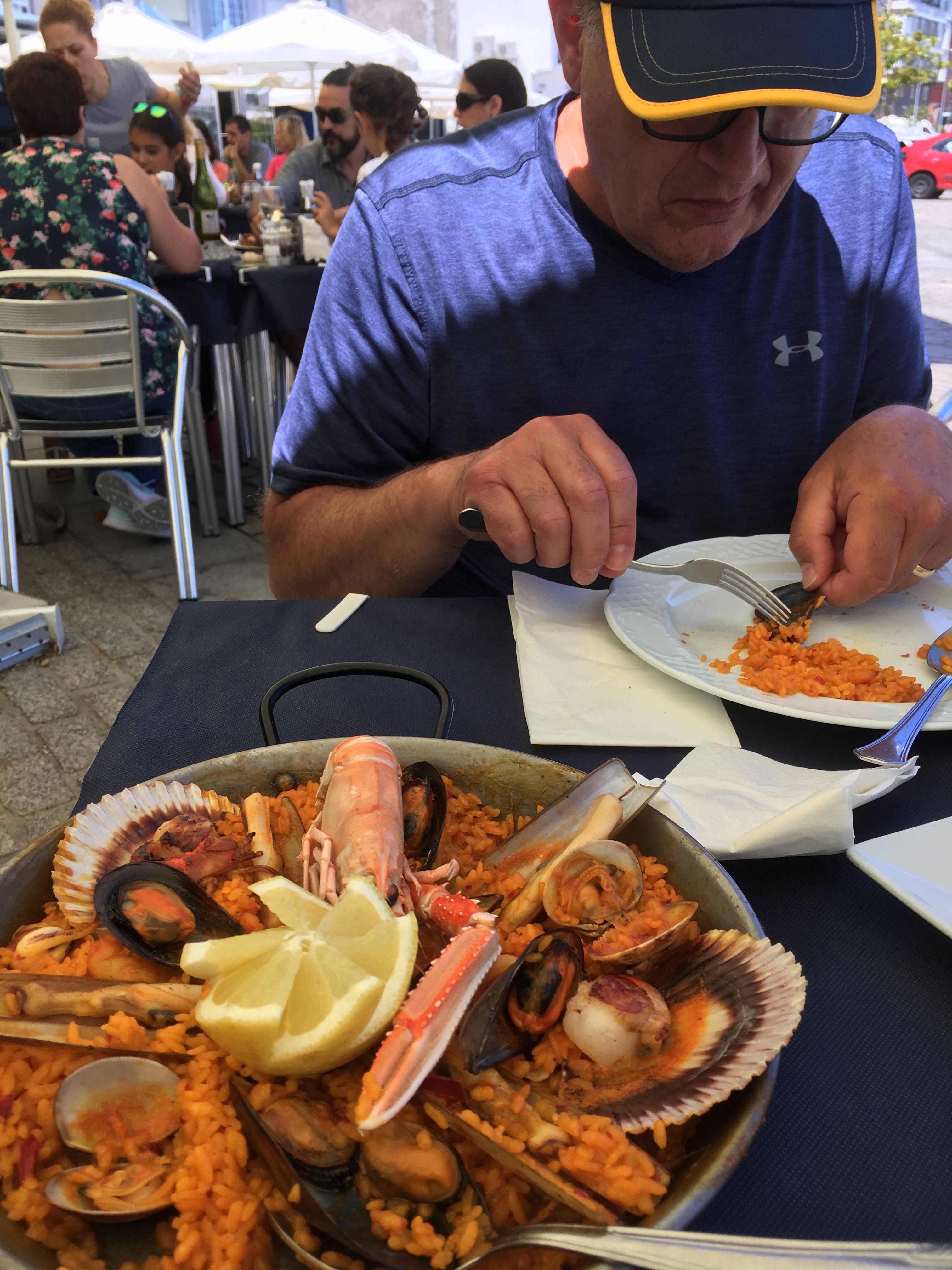 Fully sated and feeling pretty mellow after polishing off a bottle of Albariño (characteristic wine of the Galicia region), we were off to our final stop, Muxia. This is the site, where according to legend the remains of the apostle St. James washed ashore in a boat of stone.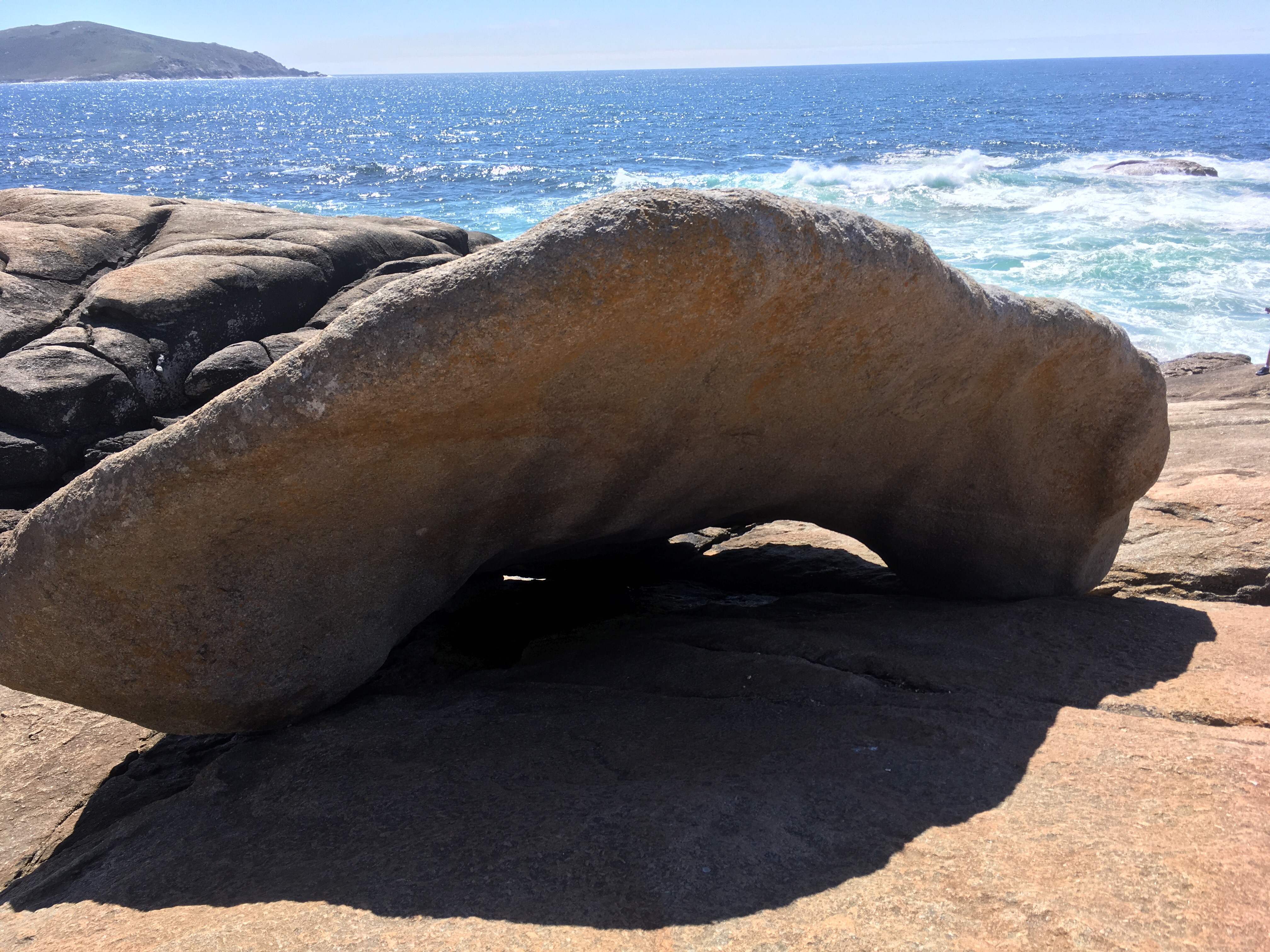
This giant stone is thought to be the hull of the aforementioned boat. The other legend related to this petrous structure is that is one crawls under it three times, all back and kidney health issues are cured. Frankly, if I crawled under this I would probably end up with back problems!
The other claim to fame of Muxia is that this is the actual site in the film “The Way” where Martin Sheen’s character throws the cremated remains of the son that perished in the Pyrenees during his Camino. (In the film, Sheen does this in what was referred to as Finisterre – artistic license!).
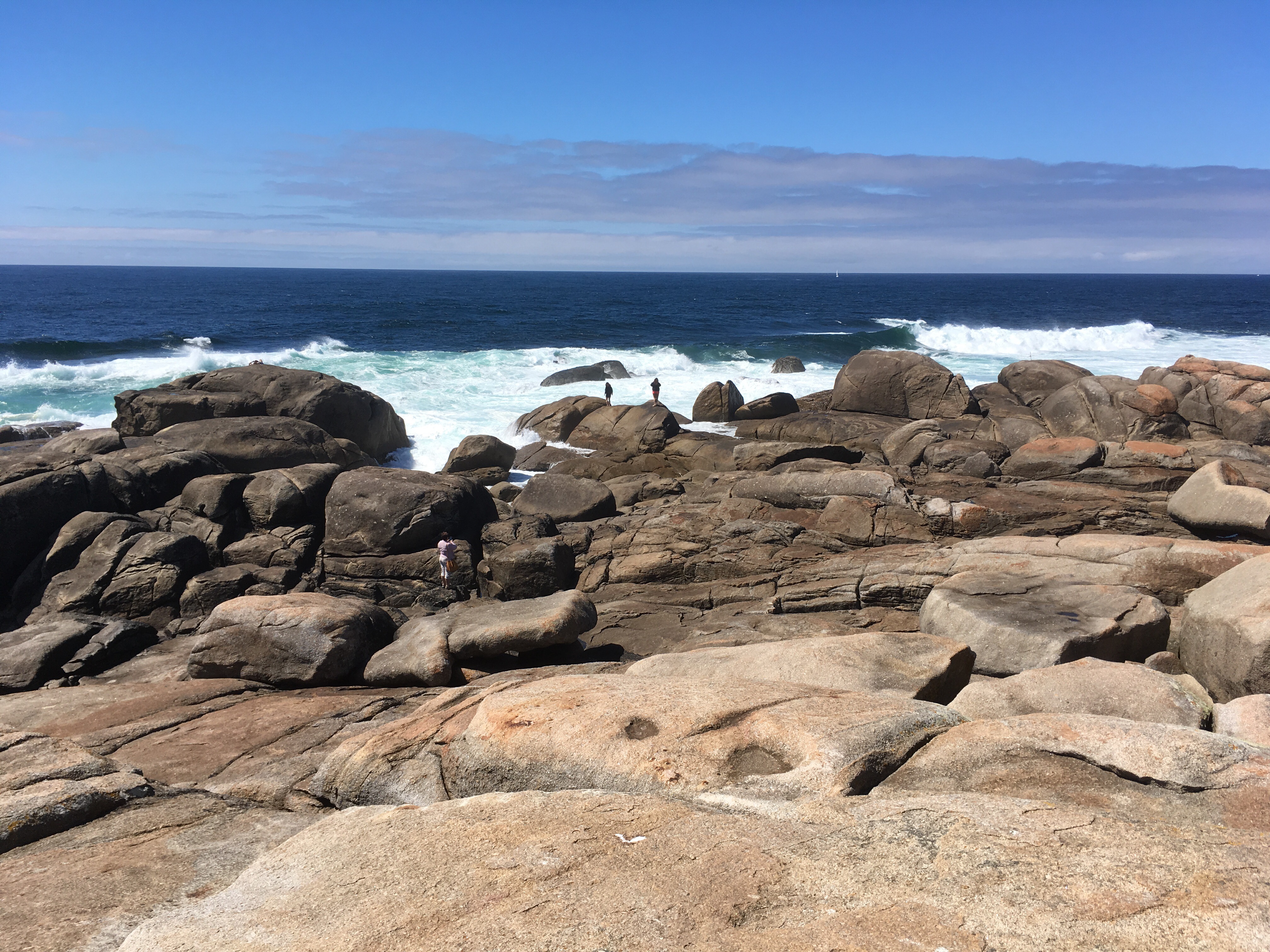
Muxia is a truly dramatic location – huge waves crashing on gigantic rock formations. A church perched near the shoreline was destroyed by lightening a few years ago and was promptly rebuilt because of public (and probably pilgrim) demand.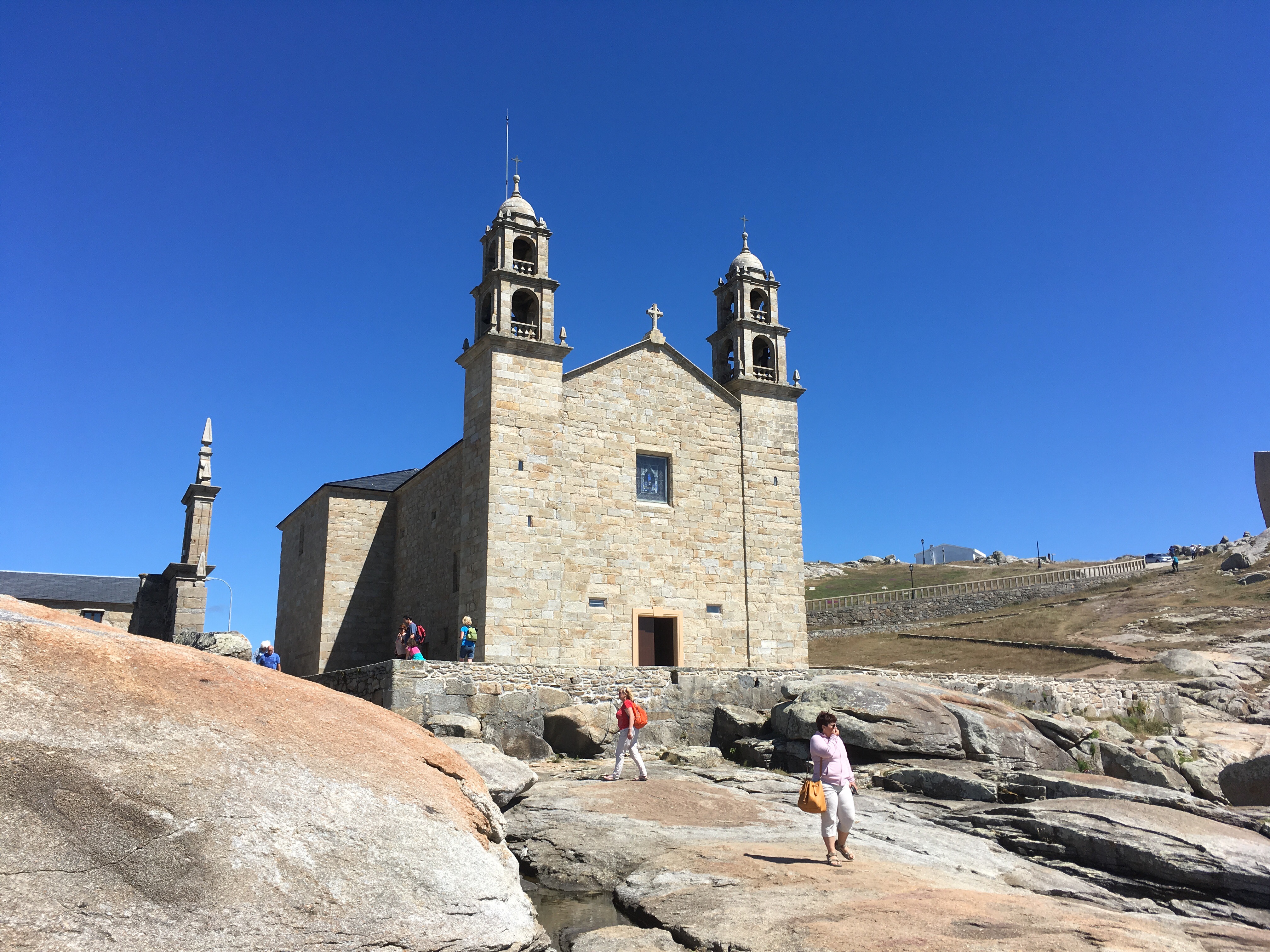
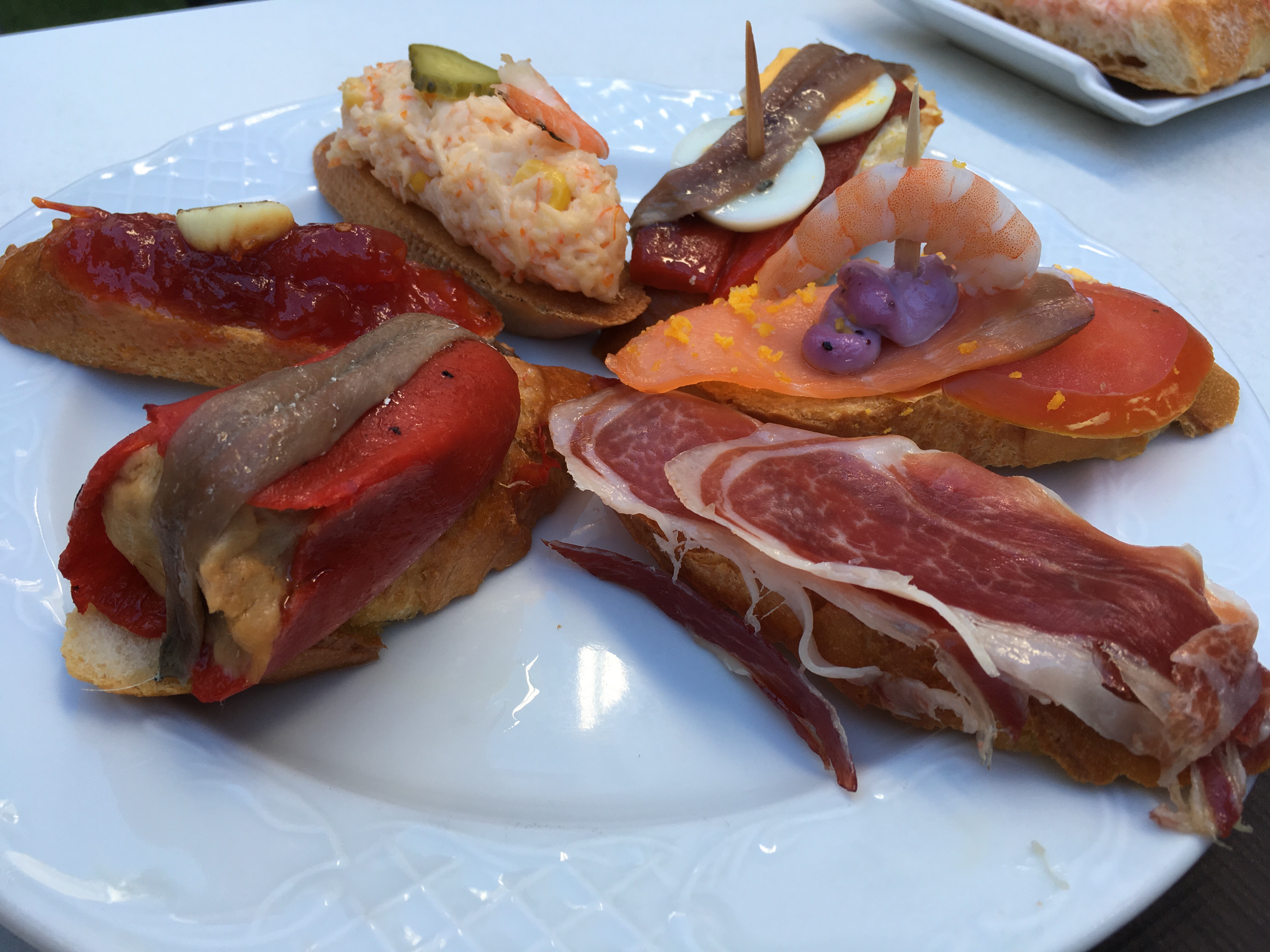
We returned to Santiago after a glorious day, emotionally refreshed and ready to continue our trip home. We had one last dinner of tapas, packed our bags and set the alarm for 3:30 am in anticipation of the taxi ride to the airport at 4:15 am.
This journey to the coast truly culminated our Camino in Spain. It was the physical end of our Camino, but it was in reality a commencement of our Camino of life. As we contemplate the experiences of the past several weeks, we will strive to effect the lessons learned along this brief physical journey.
Post Camino reflections will follow. This is most DEFINITELY not the end of our Camino!

 Camino Musings